Even if you’ve never visited Grace Estate Winery, you’ve probably enjoyed their product – the grapes that is. At 50 acres of vines (and 1,500 cases/year) they sell a considerable amount of fruit locally, using only a portion for themselves. In fact, the majestic house on the hill surrounded by acres and acres of vines is the very first thing you notice as you drive by.
The vineyard has many of your standard Bordeaux grapes (including Malbec!) plus a few other varietals you don’t see as often, including Sauvignon Blanc, Tannat, even an experimental row of Chenin Blanc. The only hybrid they grow is Vidal Blanc, which tells me these people are definitely not taking any ‘easy outs’ in their vineyard.
The Grace family is all about history; not only are many of their wines named after different historical family members, their family tree is on display as you walk in. Today the owners split their time between Switzerland and Charlottesville, in addition to traveling everywhere else. A home in Switzerland plus a 450-acre Virginia mansion surrounded by vineyards? I’d call that ‘living the dream’.
General Manager Peter Dimmick was nice enough to grand me an interview despite being an exceptionally busy summer day. While he was proud of his wines, he seemed just as excited to talk about the vineyard. That’s always a good sign! He explained how over the past few years Grace had carefully replanting parts of the vineyard to maximize its potential, although they still retained some of its oldest vines (going back to 1995, way before the tasting room opened).
While the tasting room near the road is nothing to sneeze at, I still miss the one they had in the mansion. The views from there were amazing.
The tasting menu was expansive, but Peter let me sample a
good cross-section of what was available. The only one that I wish I could have
tried (but was unavailable) was their Malbec, which they have a considerable
planting of.
2017 Sauvignon Blanc: Some citrus notes, made in neutral
oak.
2016 Chardonnay: Toasty nose made in French Oak
Burgundy-style. Excellent! My favorite style of Chardonnay.
Le Gras (Malbec Rosé): This was unusual; I almost NEVER see Malbec in Rosés. Very fruity, with low acid and strong strawberry notes.
2016 Cabernet Franc: Pepper and leather notes
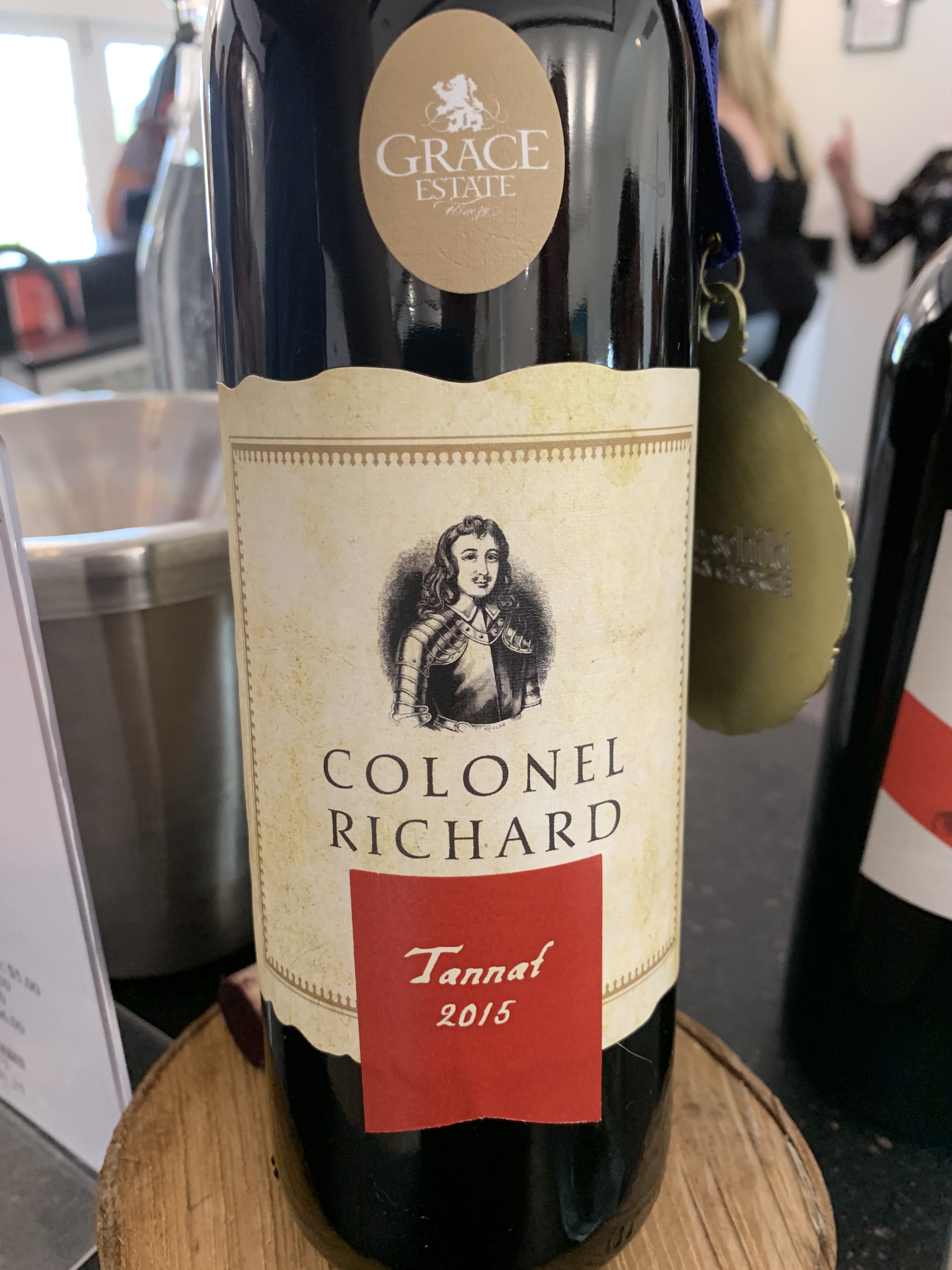
2015 Tannat: My favorite! Elegant, not overly bold, great
balance. I’d put this against any Tannat in the state.
Ice wine (made with Vidal): This was a treat! Made in a true
ice wine style, as a few years back they took a risk and let the fruit hang on
the vine just long enough to get frosty. Great acid and a refreshing change of
pace.
Not tried was their vineyard tour, which sadly I didn’t have time for. Maybe during my inevitable follow on visit?
Valley Road’s motto should be ‘Go big or go home’. I first visited when they opened at the end of 2016, right after they converted the old plant nursery into a tasting room. Not a year later, one of their wines was included in the Virginia Governor’s Cup. If that’s an indication of their future, sign me up!
Owners Barbara and Stan Joynes didn’t start off with plans to open a winery, but their ideas kept morphing until that’s what occurred. “How hard could it be?” Stan mused as I questioned him, as he recounted the days when they first debated building a vineyard (and ONLY a vineyard). When this location became available, the Joyners snapped it up – mostly because the granite slope behind the nursery was an excellent site. Well…if you already have a vineyard, a winery seems a lot less farfetched. And so a winery was born.
Of course they had help – in fact, the best kind of help you could hope for in such a venture. Their friends the King family gave them access to their excellent production facility, just down the road. But least as important was the assistance of Matthieu Finot, who hands down is one of the best wine makers in Virginia. Mix together a great vineyard & wine maker, and a dream came to fruition (pun intended).
I started my visit with a tour of the vineyard – which is nearly tied with wine drinking as my favorite part of any winery visit. Their vineyard manager took me to their 3.75 acres of vines, right behind the winery (they have another 6 acres in Lovingston). This location has a lot of great ingredients; it sits right outside Rockfish Gap, giving their vineyard great airflow. It has a really steep slope, so excellent drainage and elevation. The granite underneath the clay forces the vines to struggle. The view tops it all off.
Vineyard touring is thirsty work, so back to the tasting room we went. All the wines were products of Matthieu except the sparklings (from Mike Shaps). They make around 2000 cases/year.
2018 Sauvignon Blanc: Stan’s favorite; citrus notes but not
overwhelmingly so.
2017 Chardonnay: Light, hint of oak.
2016 Destana (Nearly split into 1/3 of Pinot Gris, Viognier
and Petit Manseng each): An off dry (I think) wine that had a nice nose and
natural sweetness.
2018 Viognier: More body than I’m used to, plus honey notes.
2016 Petit Verdot: Soft by PV standards.
Sparking Viognier: Not overly sweet but I swear, you could
taste the bubbles! Lots of strawberry notes, plus some body.
Sparkling Rose: What you might call a ‘kitchen sink style’, since it’s made with all the grapes that were left over. Some body to it.
2017 Cabernet Franc: Baking spice notes, as opposed to the
pepper that I’m used to. Medium bodied.
2017 Torn Curtain (93% Chambourcin with 7% PV): Strong
cherry notes; the PV was an excellent edition since I’m not always a
Chambourcin fan but I liked this one a lot.
2014 Merlot: Amazing!!! One of my favorite Merlots in all
Virginia. I was very surprised this one didn’t make it into the Governor’s
Case. Perfect amount of body.
2015 Meritage: Pepper and leather notes
2014 Meritage: Lighter, more black cherry.
Not tasted today was their 2014 Petit Verdot. How good is it? If getting into the Governor’s Cup wasn’t enough, a good friend who’s a PV fanatic said this was the best PV she’s ever had. Now THAT’S a compliment!
I visited Revalation on their opening weekend in early 2018 and loved it so much I knew I wanted to revisit. The wine of course was excellent – made in a very French style (no doubt thanks to wine maker Matthieu Finot, of King Family fame). But the highlight was chatting up owners Francoise and Julian as they poured.
Francoise was working the tasting room when I visited this time. Originally from Belgium, she came to the U.S. working as a professor before she and Julian decided to open a winery. When I asked about her background (I pried from her that she studied in Berkley and Stanford, taught in Georgetown, and has a PhD in Statistical Science) she very modestly described herself as a bartender. If so, she’s the most modest and over-educated bartender I’d ever met!
BEST EDUCATED BARTENDER EVER!!!
She and her hubby were inspired by the story of surgeon/medical innovator-turned-wine maker Tom Fogarty to open a winery. If you’re unaware, Fogarty is a really big deal in medicine; he invented the tools we use today to treat blood clots. But if that wasn’t enough, he retired to open a very prestigious California winery. With an idol like that, you can understand how a statistician/dentist pair decided to open a winery with no background in farming.
Revalation’s wines are 100% estate; they have over 12 acres under vine, mostly down the road. The tasting room is a wooden cabin that was taken from the grounds of an old plantation. It’s tiny but cozy – you won’t have space for a party but you can definitely sit down with a few friends with a bottle. Since they are on the foothills of the Shenandoah, the view of course is amazing.
I found the wines to have a special emphasis on blends; likely a reflection of the owner’s background in Europe and that their wine maker is a Frenchman. Even the white wines tended to have a little ‘extra’ to spice them up.
What I tried:
2017 Petit Manseng: Light for a Petit Manseng; no sugary notes. Nice but not heavy.
2017 Sauvignon Blanc: Light and fruitier than I
remember most Sauv Blancs.
2015 Melange de Rouges (Rose): Cab Franc heavy;
strawberry/rhubarb notes.
2016 Quatre Blanc (70% Petit Manseng, plus Sauv Blanc,
Pinot Gris and Viognier): High acidity; definitely liked it.
2017 Melange a Quatre (Merlot, Cabernet Franc, Cabernet
Sauvignon, and 1% Tannat): Very fruity! Could easily be chilled.
2017 Village (77% Cab Sauv, 16% Tannat, 7% Cab Franc):
Very nice blend that worked well together; bold-ish but not overly bold.
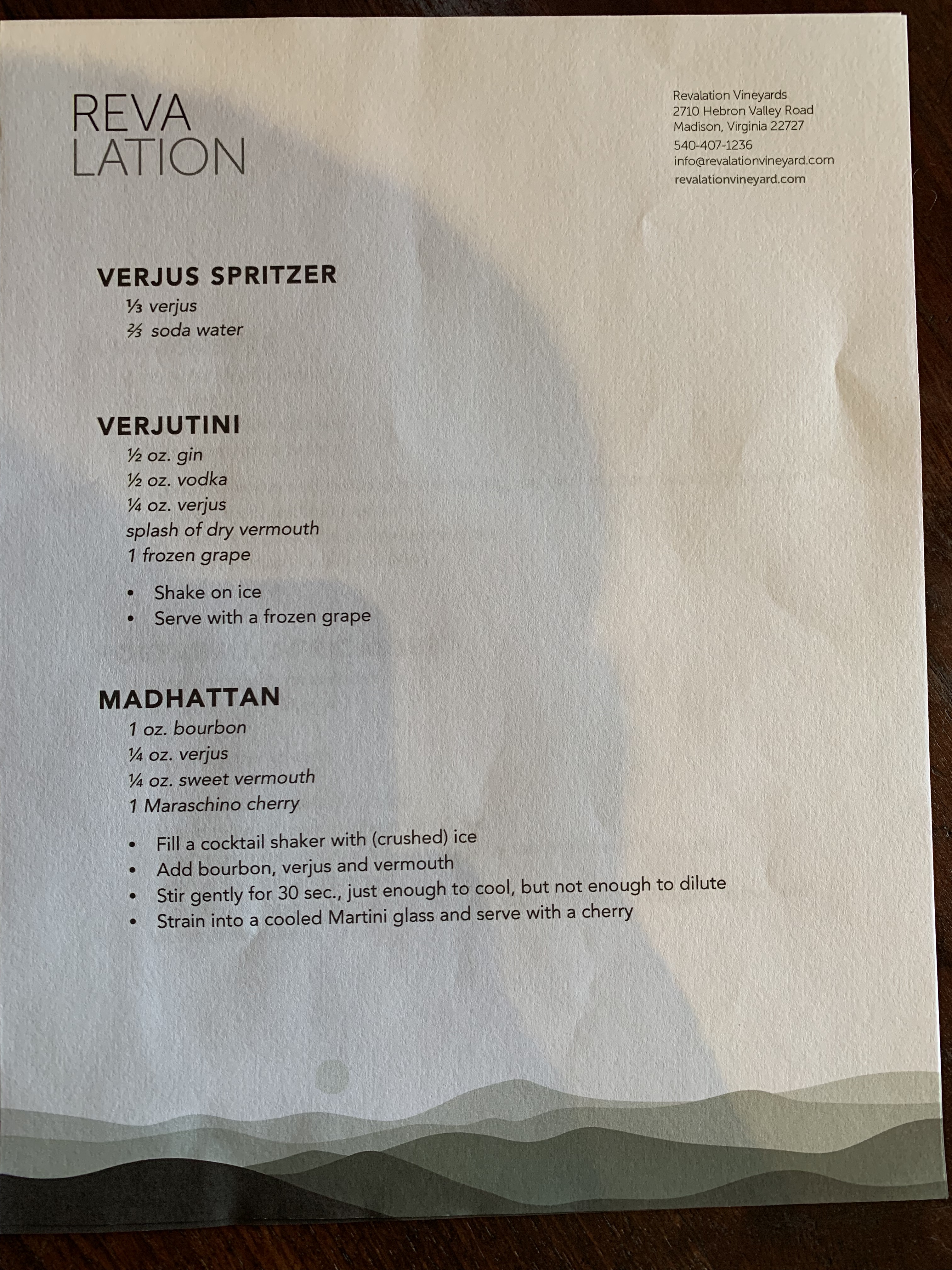
“Verjus”, or “Green Juice”: Not tried but worth a
note. Verjus a high acid juice made from unripe grapes; a French creation, of
course. Francoise had several suggestions on how to make into a spritzer but
can be used as a dressing.
A special shout out goes to their 2015 Villages; one of my favorite Virginia 100% Cabernet Sauvignons! Come winter I’m definitely revisiting for their Tannat.
Thanks again to Revalation for my visit; I’d love to know what everyone else thinks.
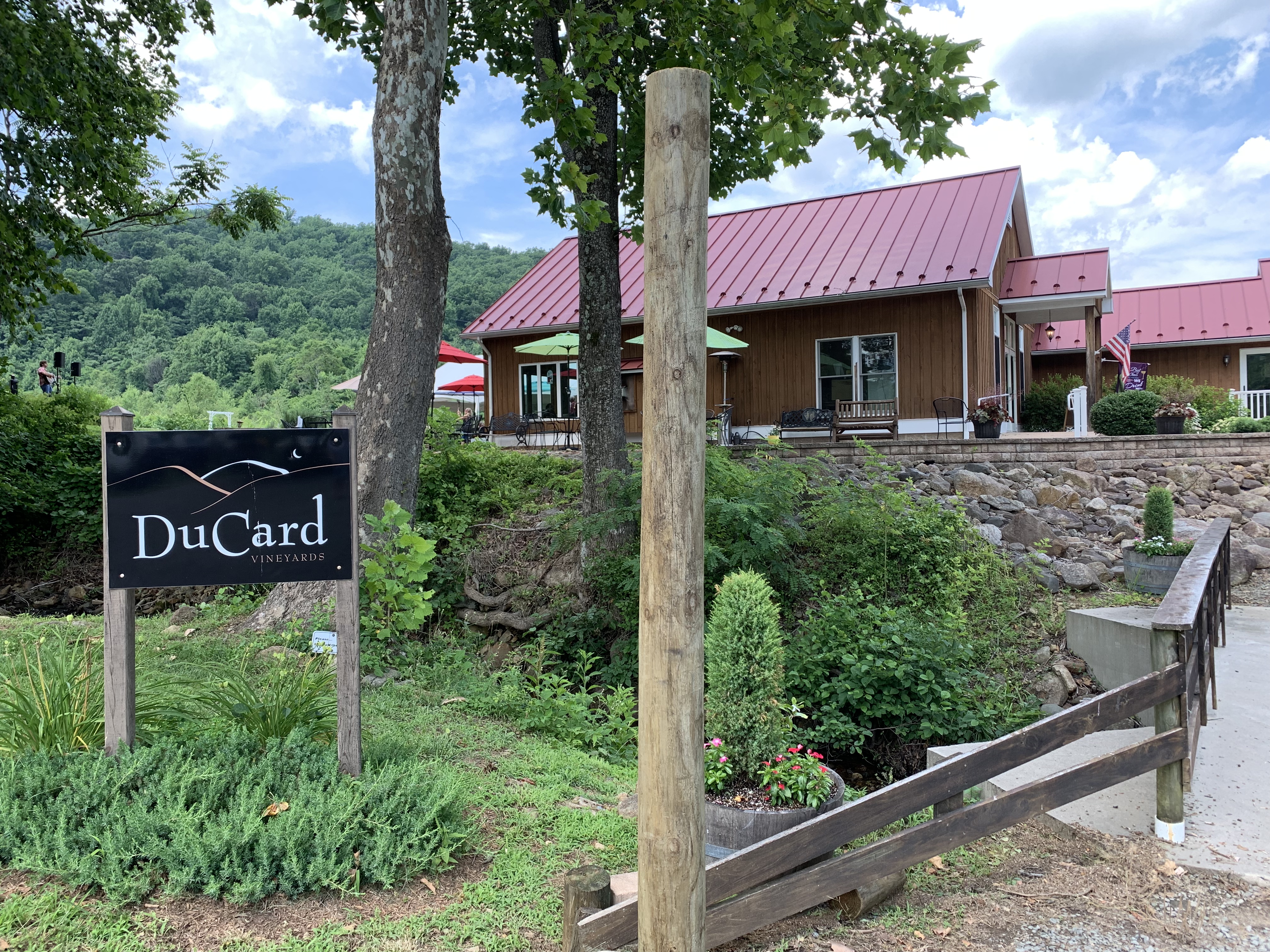
I often wonder if a winery’s convenience is inversely proportional to the quality of its wine. It makes sense – if it was super easy to visit, then wineries would have little incentive to provide a high quality product. The fact that DuCard inspires loyalty despite being off the beaten trail tells me they must have great wine.
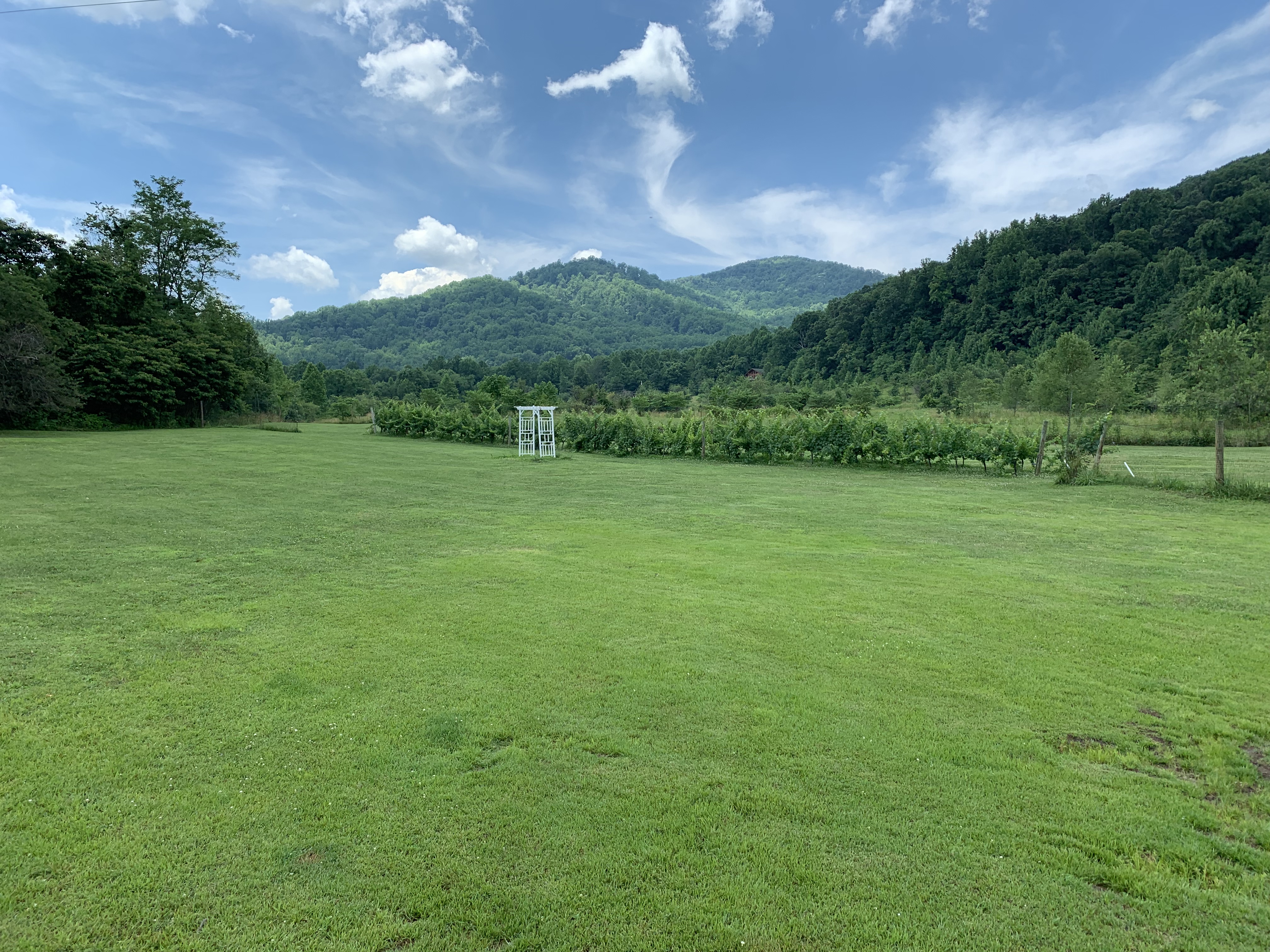
DuCard is in a natural bowl-shaped valley, not far from Old Rag Mountain & Shenandoah National Park. In fact, lots of patrons are hikers unwinding after a long excursion. Given its location, visiting here is one of the prettiest drives you’ll take to any Virginia winery.
Currently they manage 3 vineyards totaling 17 acres. In
fact, except for their Traminette all of their 2000 cases/year are made with
estate fruit. But what makes their vineyards extra-special is it isn’t just a
vineyard – it’s a classroom!
Students from Piedmont Virginia Community College ‘adopt’ a row of vines as part of their viticulture certification program. As I was visiting a class lead by their winemaker Julien had just finished an event and were relaxing on the patio. Where were these classes when I was in college? I didn’t know enology was even a thing! Oh…the path not taken…
DuCard is also very “green”, and I’m not talking about the scenery. The entire place is solar powered, to the point they sell back electricity. Heck, even the cutlery is bio-degradable. That’s admirable, but what really captured my heart was how they donate to local charities, including one of my favorite historical locations – James Madison’s Montpelier.
Neither owner Scott Elliff or tasting room manager Marty
Mitchell were available the day I visit – which is a shame since they’ve
greeting me nearly every other time I visited. Fortunately Cora was more than
up to the task of going over their wines with me.
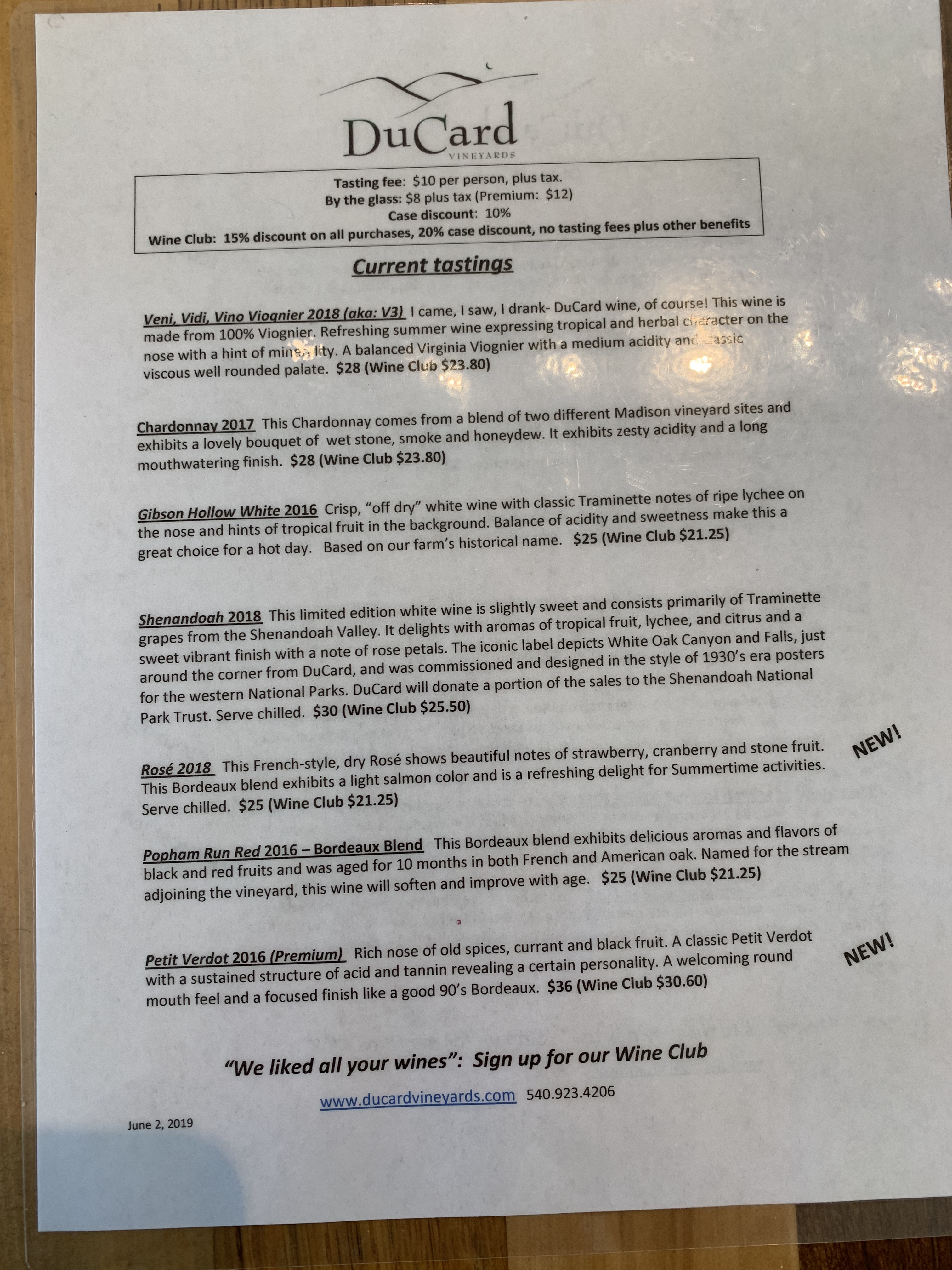
2018 Vendi Viognier: Light notes of honeysuckle and a really
nice finish
2016 Gibson Hollow: Off dry Traminette; easy drinking,
without the bite that I sometimes see on this grape
2018 Shenandoah: Another Traminette made in an off dry
style. Kudos to DuCard for donating part of the sales of this wine to the
Shenandoah National Trust.
2018 Rose (40% Petit Verdot/60% Cabernet Franc): Dry and had
great color, enough to remind you of Provence (which shouldn’t surprise you
given who their wine maker is).
2016 Popam Run Red (Bordeaux blend that was high on the Cab
Sauv): Medium bodied, red fruit notes, spreads out nicely over the palate.
2016 Petit Verdot: Dark fruit, soft for a PV (but of course
still liked it)
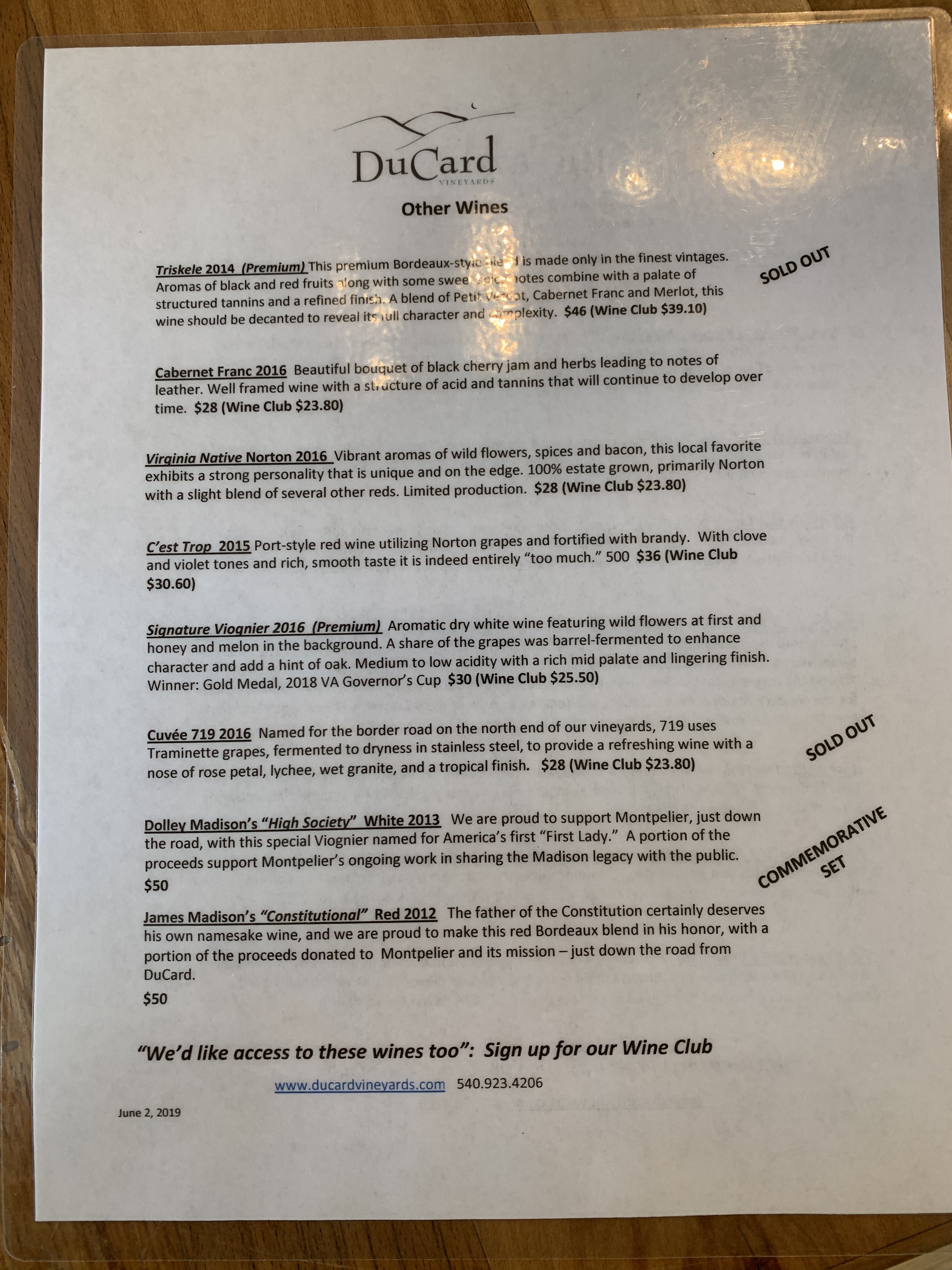
2016 Cabernet Franc: Not spicy or leathery, light on the
nose.
2016 Norton: Nice nose, some spice. Blended with a little
Cab Franc I think to take away the ‘foxiness’ characteristic. Actually one of
my favorite Nortons around.
2014 Triskelle (Bordeaux blend): Good fruit flavors,
bold-ish
2015 C’est Trop: Very nice!!! One of my favorite ports in all Virginia. And somehow even better with chocolate
When it came time to pick sites for a vineyard, Hillsborough hit the jackpot. Resting on a hill at the base of Loudoun Valley, Hillsborough looks like what you’d think a winery SHOULD look like. Great views of the sunset. Long rows of vines in front and behind you. Picturesque stone farmhouse tasting room. Even before tasting the wines (and beer) – how can you not love this place?
The Baki family are the owners. Transplants from Izmir, Turkey, they arrived in the D.C. area in 1978 and eventually founded the farm that would become their vineyard. Their oldest son Kerem may have been the inspiration for this venture; he was studying enology at the time so a vineyard was a good way to support his ambitions.
Zeynep’s art
Today, the Bakis are still very much involved in the business. Kerem is the wine maker, his brother Tolga is the brewer (more onthat in a moment), and Kerem’s wife Asli is their wine club manager. Owners Bora and Zeynep are retired, but the place is decorated with Zeynep’s art.
I’m as much of a vineyard geek as a wine geek, so this place was a huge find for me. Hillsborough loves to experiment with different styles of wines, and grows several varietals of grapes that are difficult to find in the area. I hardly ever see white Merlot – but there’s one here. Roussanne is exceptionally rare in Virginia, but they have a full acre. In fact almost all their wine is produced from their 15 acres of vines.
But their Fer Servadou deserves its own shout-out. Usuallyfound in south-central France (home of Tannat), Hillsborough has the largest planting of Fer in the United States. Dark skinned, medium-bodied but with good tannin, I’d never even heard of this grape until I visited here. But the owners did their homework, and chose Fer as they recognized it would do well in their terroir.
Asli was kind enough to give me a run-down of the family’s history, as well as what they are up to now. I was surprised they no longer host weddings; while it was lucrative weddings were simply too distracting for their regular patrons. Fortunately that means more space for the rest of us to enjoy the patio views that otherwise would have been unavailable.
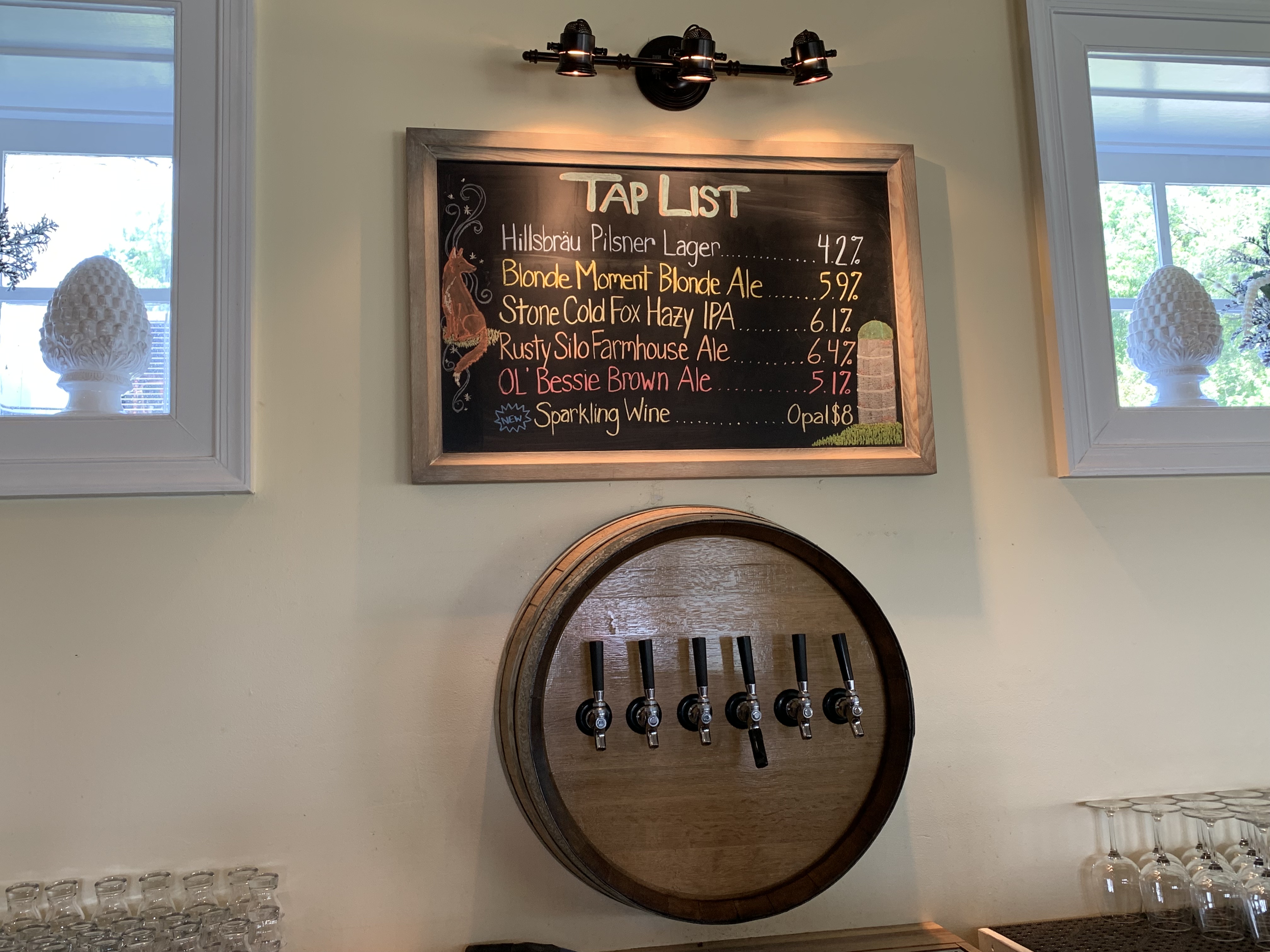
But what was really fascinating was something much more recent; in late 2018 they opened a brewery on premise! Tolga is their brew master (he also owns Belly Love brewery in Purcellville), so this is one of the few places in Virginia you can enjoy both a pint of beer as well as a glass of wine in the same location.
Of course, no visit to a winery would be complete without talking about the wine.
2016 Vidal Blanc: Light and citrusy
2015 Opal (Petit Manseng): Dry but has what I’d call a heavy nose and body. Notes of honey and figs are good descriptors.
2016 Serefiina (90% Petit Manseng/10% Tannat): Interesting combo; think of it as Petit Manseng with extra bite.
2015 Ruby’s Blush: Very interesting combo of red wines that includes Tannat and Fer Servadou. Very fruity, reminded me of a sangria.
2014 Cabernet Sauvignon: Low tannin for a Cab, lingering pepper notes. Good roundness on the palate. Very nice overall.
2016 Petit Verdot: Smooth, almost chocolaty. Not a bold ‘in your face’ PV.
Not tried this time is their signature wine “Ruby” – a blend of Tannat, Fer, and Petit Verdot. But I’ve had it before and it’s yummy!
Hiddencroft is about as ‘authentic’ as it gets when it comes to farm wineries. Owners Clyde and Terry Housel are nearly always in the tasting room (at least when he’s not tending to the vineyard) and often have corn bread or another snack on hand as a treat. So hospitality – check. It’s set in an old farm that dates back to the mid-19th century, so rustic charm – check. Their 6 acres of vines produce 90% of their wines (they have apples, blackberries & cherries too), making them mostly estate. So ‘authenticity’- check; the trifecta is complete.
Clyde’s philosophy is “no wine before its time”. One of the qualities that defines his wines is how long he lets them age; anywhere from 22 months to 42 months. One of my favorites was his (now sold out) 2009 Merlot, which was available for purchase until very recently. I mean seriously; where else can you find a wine that is nearly 10 years old in Virginia? I’m happy to find places serving wines that are 3 years behind the current date. But here – for the reds think 4 or 5 years, and even older wines are available by the bottle.
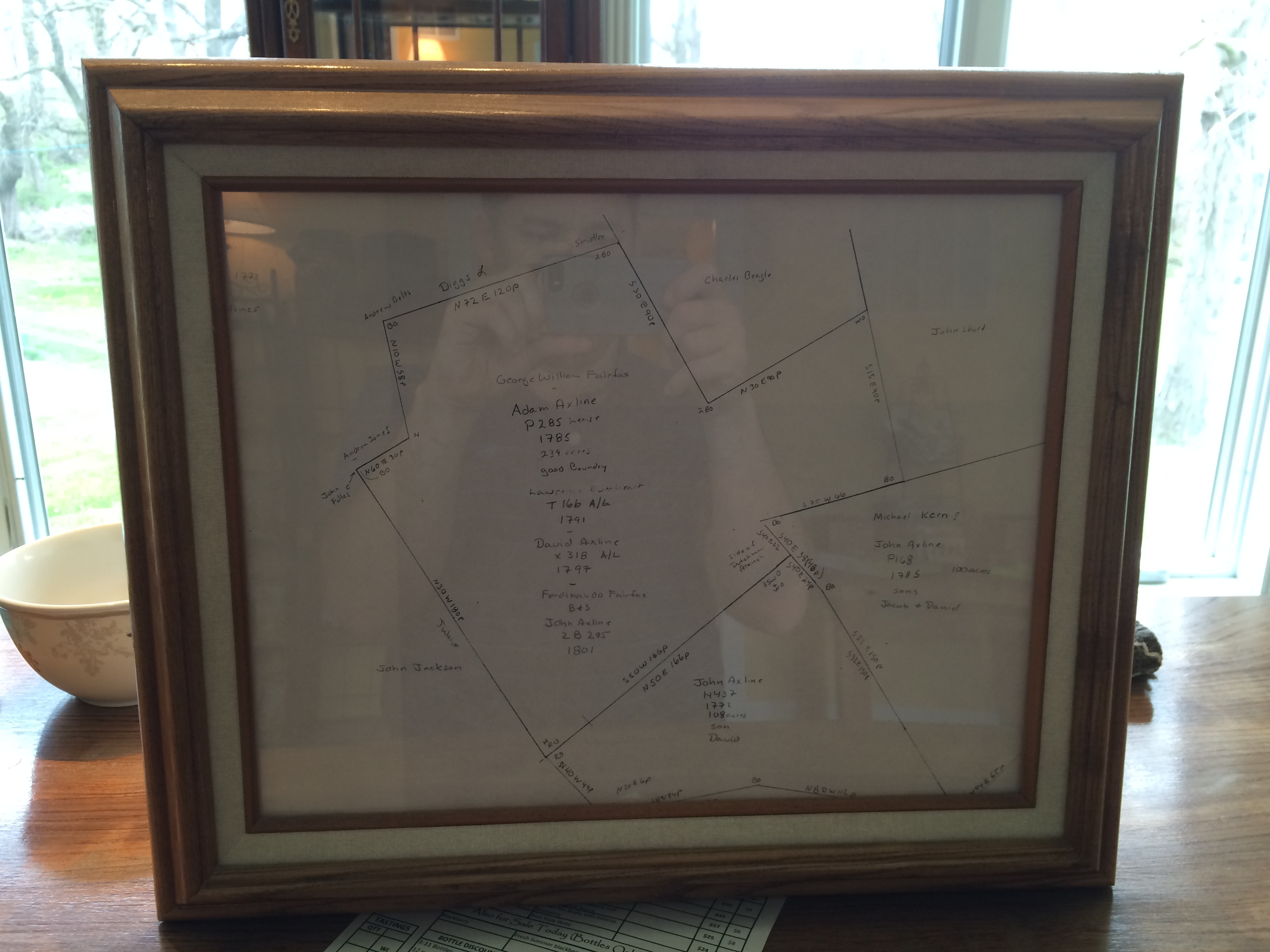
History is another defining feature here. Hiddencroft has seasonal history tours of the farm, taking you to the renovated spring house, summer kitchen, and curing house, with storytelling and wine/food pairings at each stop. Even while I was visiting, the family of the previous owners came by and were telling stories about how they would visit the place years ago. If you’re lucky Clyde will bring out the old farm ledger that goes back to 1875, or show you the sketch of the original property boundaries.
Clyde says he’s a self taught wine maker. You could fool me though; there’s nothing ‘amateur’ about what he makes. Hiddencroft produces 1,500 cases/year and grows a number of varietals. But in addition to making mostly off dry or dry wines they have a large assortment of fruit wines. Before anybody scoffs at fruit wines try these first because DANG…these are really good!
What I tried:
2017 Cabernet Franc Rose: Very light, which surprised me
coming from this grape
2017 Chambourcin Rose: Lots of zing, with watermelon notes
2016 Chardonnay: Made in steel and oak
2017 Traminette: Reminded me of drinking flowers
Dutchman’s Creek (NV): Great nose, big mouthfeel, fruity;
simply amazing
2014 Chambourcin Reserve: 4 years in barrel. Big and bold
for a Chambourcin but not a fruit bomb.
2014 Cabernet Franc: Very smooth, not spicy, and lighter
than I expected
2015 Petit Verdot: 3 years in barrel. I would have expected
this to be bold but it wasn’t; in fact it was downright fruity.
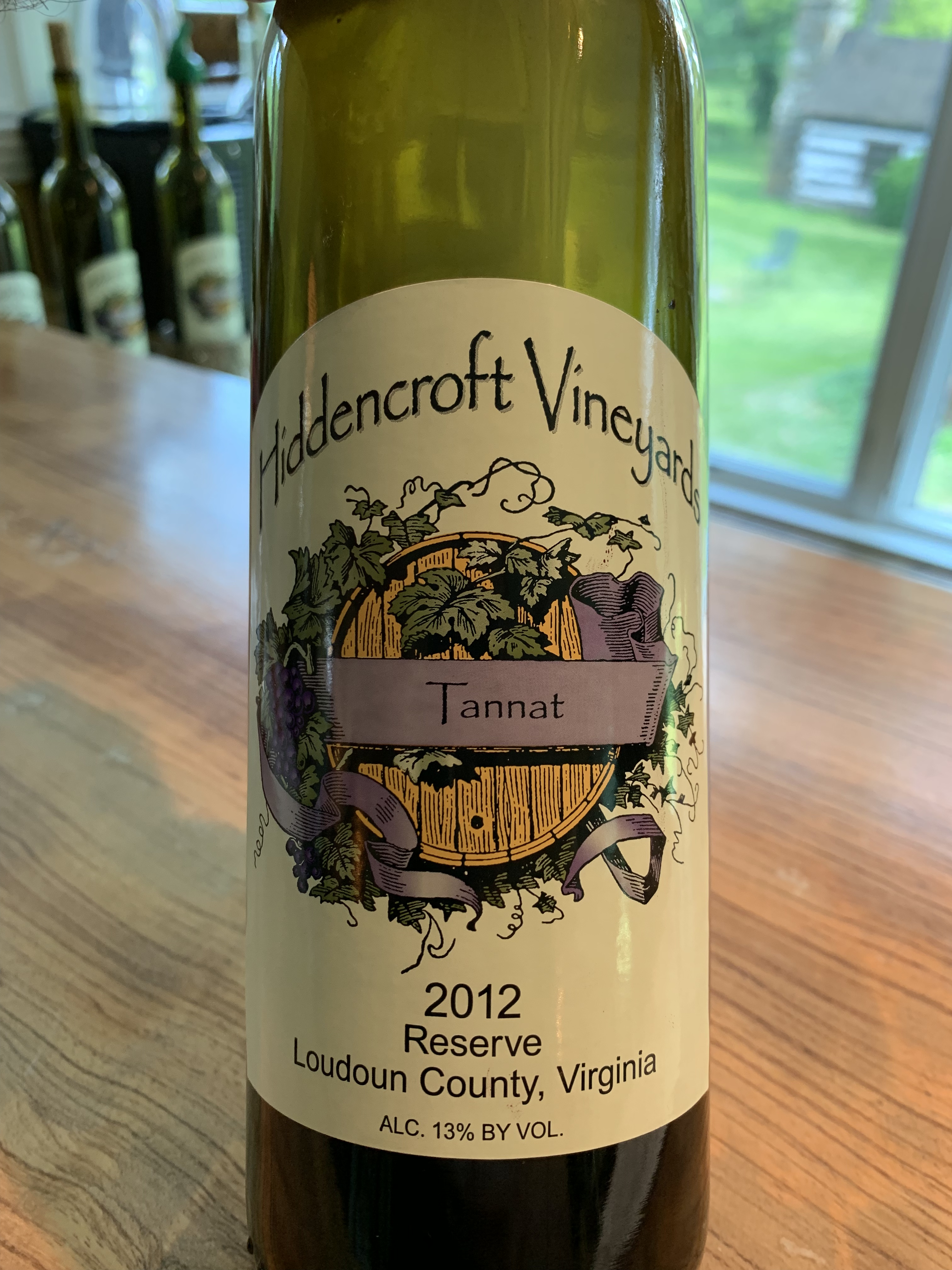
2012 Tannat: Very different from other Tannats I’ve had lately but loved it. Expresso notes, f ull bodied
Blackberry wine: 2/3 blackberry and 1/3 Chambourcin; great
combo that I never would have expected, and one of the best of the lineup
Vitus Rubus: Lots of fruit! Raspberry/Chambourcin blend
Persephone’s Punch: 100% blueberry wine, very intense.
Not tried today but old favorites of mine are the amazing cherry wine and “Grandma’s Love Potion”, which is a blueberry wine made into a port-style.
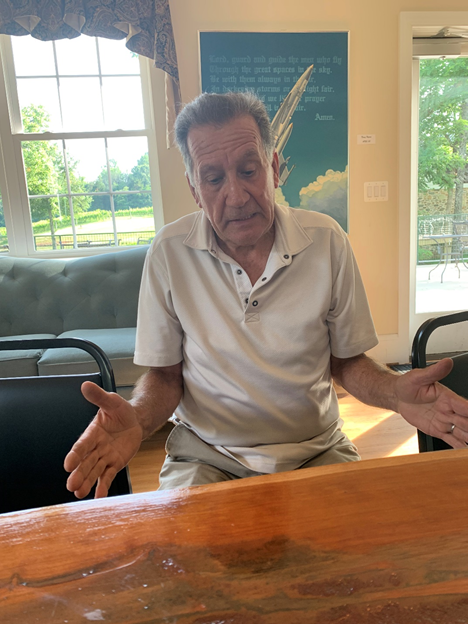
If Nelson DeSouza wrote an autobiography, nobody would believe it. Born in 1942 in an impoverished part of Rio de Janeiro, Brazil, the man is a rags-to-riches tale come true.
I first met him around 2014 when I started exploring the
Virginia wine scene. The guy was – is – charismatic as heck. Even today, at 76
years young Nelson still mows the lawn and does handiwork around the property
(ask him about the tables he’s crafted from wood taken from the property – he’s
very proud of them). Nelson started off by telling me how he was born with a
hammer in his arm; at first I thought he was bragging. An hour later, I came to
believe it.
Nelson first visited the U.S. in 1957 on a 90-day visa to
visit his father, a naval officer who at the time was stationed in the here as
part of a submarine purchase deal. The culture shock was profound, but it left
enough of an impression on him that he resolved to return as soon as he could.
That turned out to be a 5 year delay, but eventually he made it.
He started off doing carpentry and other odd jobs until moving on to construction. From there, Nelson became a businessman (he still brags about his concrete business) and eventually starting Casanel Vineyards. The winery’s name is a combination of the first name of his wife (Casey) and his name (Nelson).
To me, Neslon is the epitome of the “American Dream”. He was
kind enough to share part of his story.
“When I was a baby, my parents didn’t have a crib; they took
two chairs and put them together and put the box on top of it. That was my
crib. We didn’t have electricity. But when you’re born an American, it’s like
you’re born in a golden crib.”
“I didn’t know how poor I was until I asked my father for a bicycle. But a new bike would cost him 6 months of his salary. So when I was 12 I worked some jobs until I could buy my own bicycle. It’s not like here in the USA, where you can get a new bike every year. That bike was at least 10 years old, but I had my bike”.
“My father worked in the naval attaché office in the USA. I
visited him in September 1957 on a 90 day visa. I didn’t know what to do, so I
worked little jobs, building things. America was paradise! So after I left, it
was like going to hell. I had to wait 5 years in hell until I could get back to
paradise.”
“Would you take responsibility for someone you didn’t know? Maybe for a month? How about a year? My father knew an Argentinian-Brazilian man named Julio Gallo. He convinced Julio to write me a Letter of Call so I could immigrate to the USA. Julio figured he could find work for me since he saw me working when I was visiting. He had to sign a document promising to take responsibility for me for 5 years. Would you take responsibility for someone you barely knew for 5 years?”
“I went to the US embassy in Rio for my interview. The ambassador was the most important man in the country. He asked me a lot of questions; I only had a 2nd grade education so I thought I was going to fail. Then he asked me if I was a communist. I told him – my father was a Naval officer; I wanted to go to the USA to work. How could I be a communist? Eventually he had me raise my right hand and swear. Then I got to return to paradise. I was born again on September 22, 1962. That’s my American birthday”
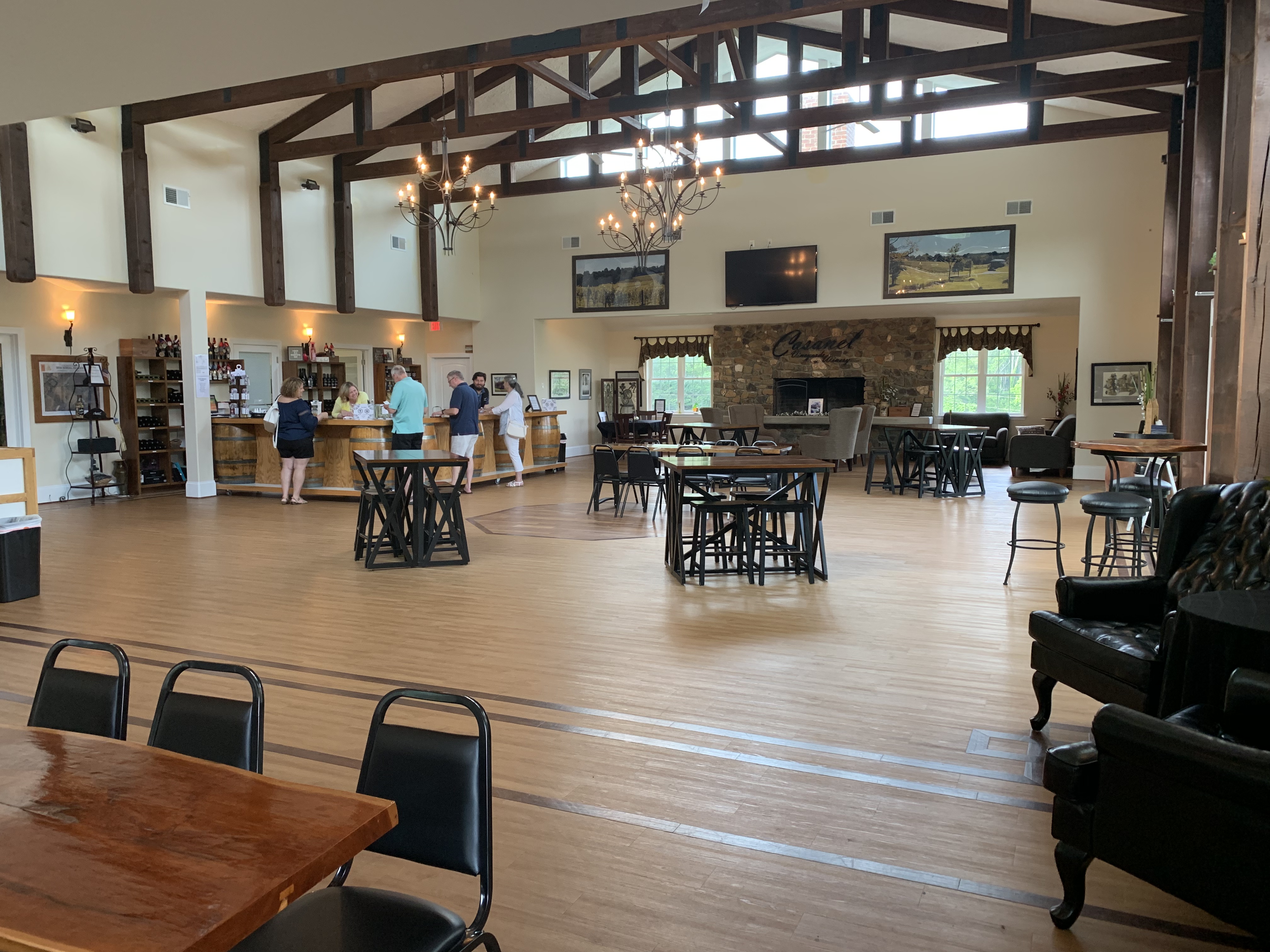
I’m biased when it comes to discussing Casanel; not only is it the very first winery I’ve ever been to, it set a high bar for every subsequent winery I’ve ever visited. It’s small enough that the owners greet you and remember your name, yet also produces high-quality wine. Heck – EVERY winery should be judged by this standard.
While a lot of wineries are family-run businesses, few of
them put the owners as front & center into their story as this places does.
Even the name “Casanel” is a combination of the first names of the owners
(Casey + Nelson = Casanel).
Speaking of which, you can’t talk about Casanel without discussing owner Nelson DeSouza. Nelson is an immigrant from Brazil who arrived here when he was 20 and worked various construction jobs until he became a businessman himself. He’s also one of the most charming, colorful guys I’ve ever met. Nelson can say he literally made Casanel from the ground up; it was his business that built the tasting room, he renovated the old log cabin into a home, and he personally crafted the wooden tables from trees taken off the property.
While the place brims with his personality, the ladies of
Casanal balance things out. Both daughters work here; Katie is the winemaker;
Anne their general manager. A third lady was also a key contributor; Katell
Griaud was their wine consultant for several years, and hers and Katie’s names
are the initials of their “K2” red blend (Katell now works at nearby Slater
Run). So “machismo” – this palace is not.
Katie guided me through a tasting. With 7 acres of vines & a production of 1000 cases/year, they are mostly estate but still get some fruit from elsewhere in Virginia (including Muse – one of my favorite vineyards in the state). The view was really picturesque as well; I mean seriously; who gets tired of looking at a vineyard next to a pond?
As you can expect, Katie was really proud of her wines;
she’s one of the few lady wine makers in all Virginia. Between herself and
Katell you might say their wines have a feminine touch; the reds tend to be low
on tannin as opposed to in-your-face bold, and they were willing to experiment
with styles and varietals you don’t see elsewhere in Virginia.
Casanel also holds the distinction one of the few places in the state that grows Carménère; a grape that originated in Bordeaux but now basically extinct there. To date their Carménère is the only 100% varietal made in Virginia. She also makes Loudoun County’s first vintage sparkling wine. You WON’T find wine slushies or sangria here!
The wines were generally dry, but were soft enough that my
sweet-wine loving friend enjoyed a lot of the samples. What I tried:
2017 Elliana: Pinot Gris; bright & summery, lemon notes.
Made without malolactic fermentation to retain the fruitiness.
2017 Patricia Marie: Another Pinot Gris but this one has
some American Oak, French Oak, and some steel. Toasty and some vanilla notes;
nice complexity
Full Nelson: Norton port-style made in Cognac barrels. Sweet
but not overly alcohol-y.
2017 Chardonnay: Light, bright and good acid
“Jose” Rose: Strawberry notes and great color but otherwise
clean
2016 K2: Bordeaux blend: Medium body with a long finish.
Strong fruit notes; enough so that my sweet-wine drinking friend really enjoyed
despite it being a dry red
2016 Cabernet Sauvignon: Plumb and spice notes but no
pepper.
2016 Carménère: Spicy! Also notes of clove and cherry. Not
coincidentally, declared the best Carménère in North America by the San
Francisco Wine Competition.
2016 Petit Verdot: 18 months in oak (half that new French oak). Well rounded but lower on the tannin. Katie called this a “feminine PV”
White Spark sparking (made in the methode champenoise): Full of mineral and apple notes; I liked it a lot!
As a native New Yorker and a wine drinker you’d think I’d be
more familiar with the Finger Lakes. To the contrary – they always seemed a
world away to me. Besides, as someone who primarily drinks reds the idea of an
area that
is white-focused didn’t seem appealing for the longest time.
That said, summer in Virginia is hot! Lately I’ve found my palate slowly transitioning from being red all the time to a seasonal drinker. Plus, a trip to the Finger Lakes afforded me the opportunity to do some parental bonding (OK – dad’s a beer drinker but mom is all about wine). So with the bare amount of planning, off to the Finger Lakes we went.
The Finger Lakes seems a surprising choice for a wine growing region; decades ago the conventional wisdom was the weather was too cold for most vinifera to survive in this part of the state. But in the late 1950s a guy named Konstantin Frank proved the critics wrong. Not only did he introduce cold-hardy vinifera, he realized the Finger Lakes act as a temperature sponge for the worst of upstate New York’s weather. With that discovery, the this area became one of the America’s top wine regions.
Riesling is king of the Finger Lakes, although other German or Austrian varietals like Grüner Veltliner, Lemberger (aka Blaufränkisch) and especially Gewürztraminer are also common. This shouldn’t be a surprise; the terroir in the Finger Lakes closely mirrors that of the Mosel. Terroir isn’t the area’s only connection; I found several German winemakers in some of the higher-end places. I can only assume they were recruited specifically because of their skill with these particular grapes.
Not as prevalent but still easy to find were Chardonnay and Pinot Noir, which seemed to do well-enough to justify the effort. Cabernet Franc also seemed to endure New York’s cold weather in decent shape. On the other hand, Cabernet Sauvignon and Merlot are tough to grow, and usually found at the bigger wineries that were willing to accept significant crop losses in bad years. Honorable mentions go to a number of hybrids, including Marechal Fosh, Seval Blanc and Vignoles.
As for the wines, my parents & I managed to visit 17 wineries (plus a cidery/meadery) in 3 days. Some places we specifically picked in advance, others were visited because they happened to be convenient. Some I won’t bother writing about (including one that advertised itself as a ‘redneck winery’) but there were many good and a few great locations that were well worth the visit.
The top 5 are in rough order, although really #3-5 are tied, #6-8 were tied and #9-11 were tied.
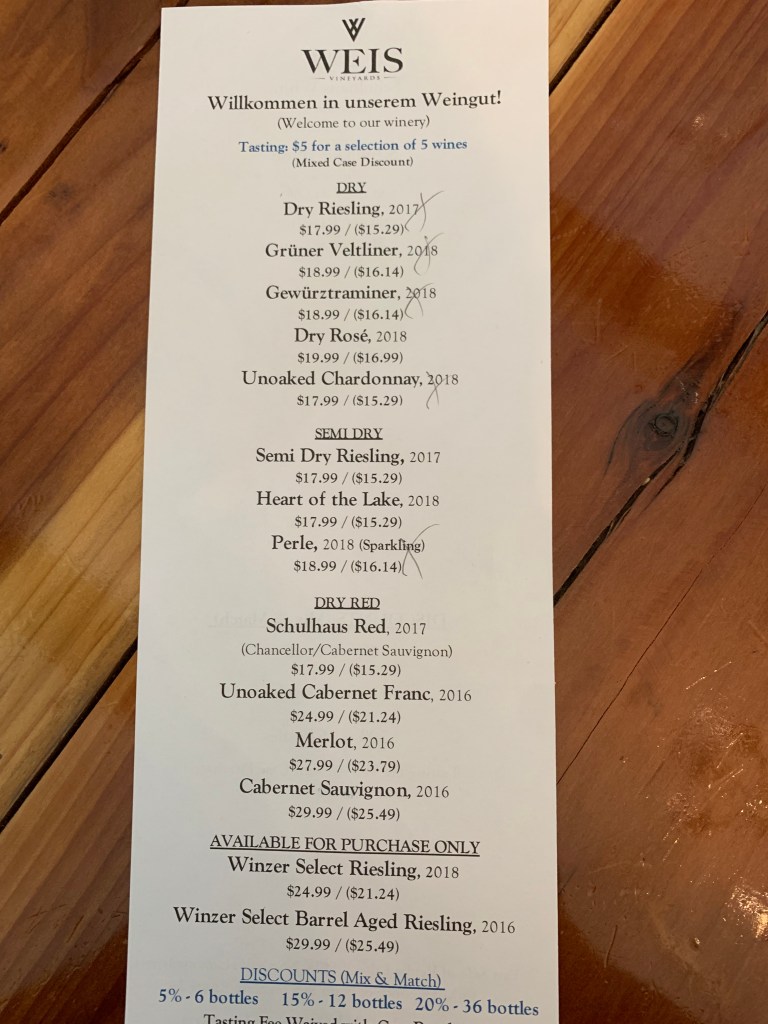
1) Weis: Brand new winery, probably my favorite of the trip – although I may be biased since I got to chat up the German owner/wine maker so the experience was as good as the wines on their own. Excellent Riesling and very good Gewürztraminer. The 2016 Barrel Aged Winzer Select was a contender for best of the trip. The Cab Franc was made in steel and came out very fruity. I left with a sparkling.
Owner/wine maker Hans Peter Weis
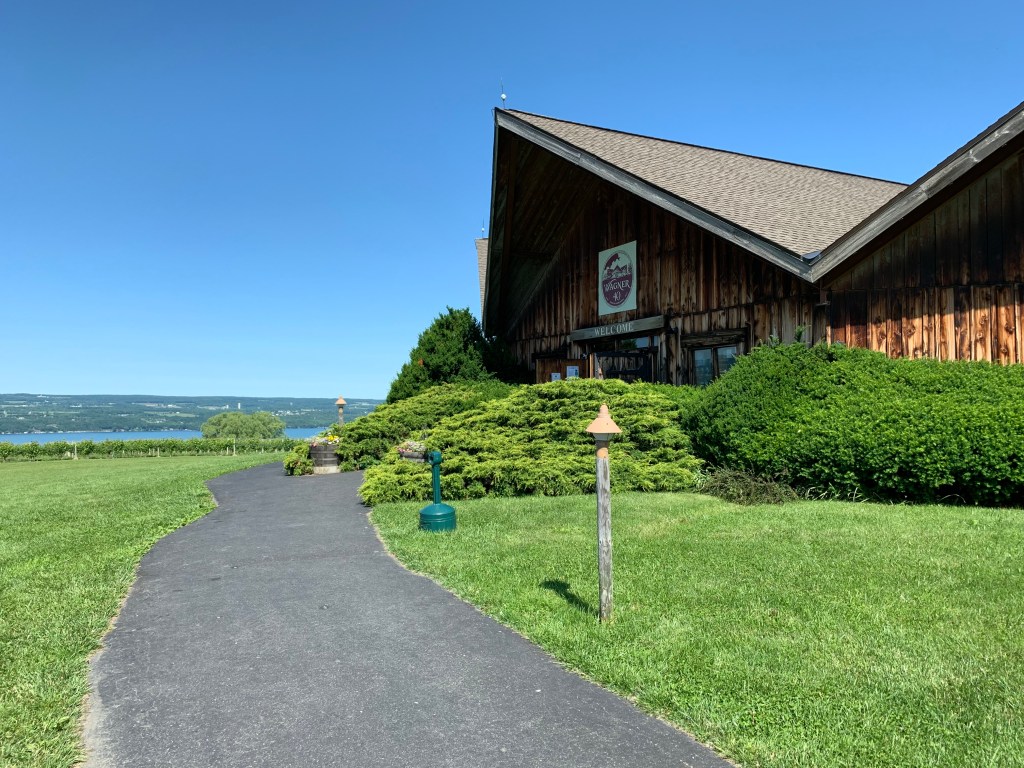
2) Wagner: A close contender for favorite visit of the trip, which was oddly surprising since they initially came off as very ‘commercial’ which I view as a negative. But my server was an older gentleman named John who was ON POINT with his descriptions and was an overall fantastic salesman. 60,000 cases/year and 225 acres of vines, making them the largest farm winery in the region. They even had a brewery, which I wanted to try but didn’t have a chance to. And if this isn’t enough, it has a great view.
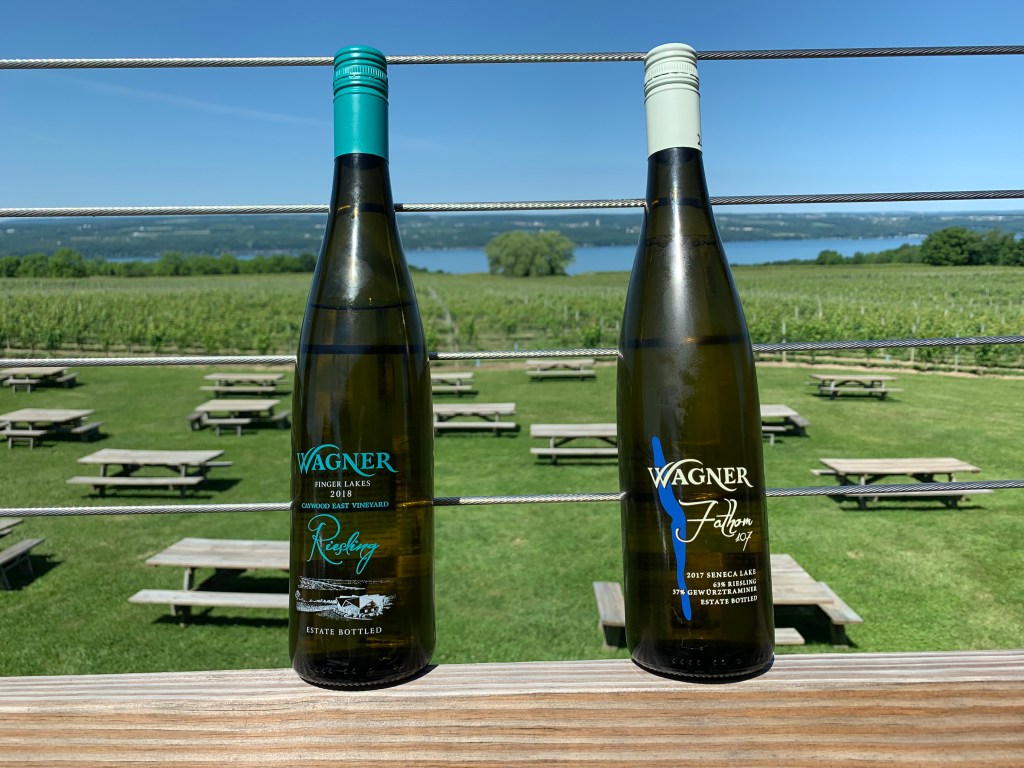
For the wines: I bought two bottles, which should tell you something. The Fathom 107 was a fascinating blend of Riesling and Gewürztraminer, and the Eastside Riesling was excellent and nice had body. The 2017 unoaked Chard was good; just a tad bit of fruit but didn’t overdo it. 2017 Rose was mostly clean but some strawberry notes. The 2016 Merlot was good and had a nice finish. The 2012 Meritage was also good (and from a good vintage).
3) Keuka Lake: 3rd of my top 5 visits, including possibly the two best Rieslings I had the entire trip. Oddly enough I’d never, ever heard of this place despite asking for multiple recommendations – I just randomly showed up to try their samples. 43 acres vines/3,000 case a year. Had they been cheaper this would have been my favorite winery in the Finger Lakes.
I LOVED the 2017 “Upper Eastside” and the 2017 “Evergreen” Rieslings (both $30). The 2017 “Falling Man” Riesling was fruit forward and really good (but $40?). Even their 2017 Leon Millot was good (if a bit vegetal, but that isn’t a negative descriptor in this case). Heck, I also liked the Cab Franc, which (oddly enough) had green apple notes.
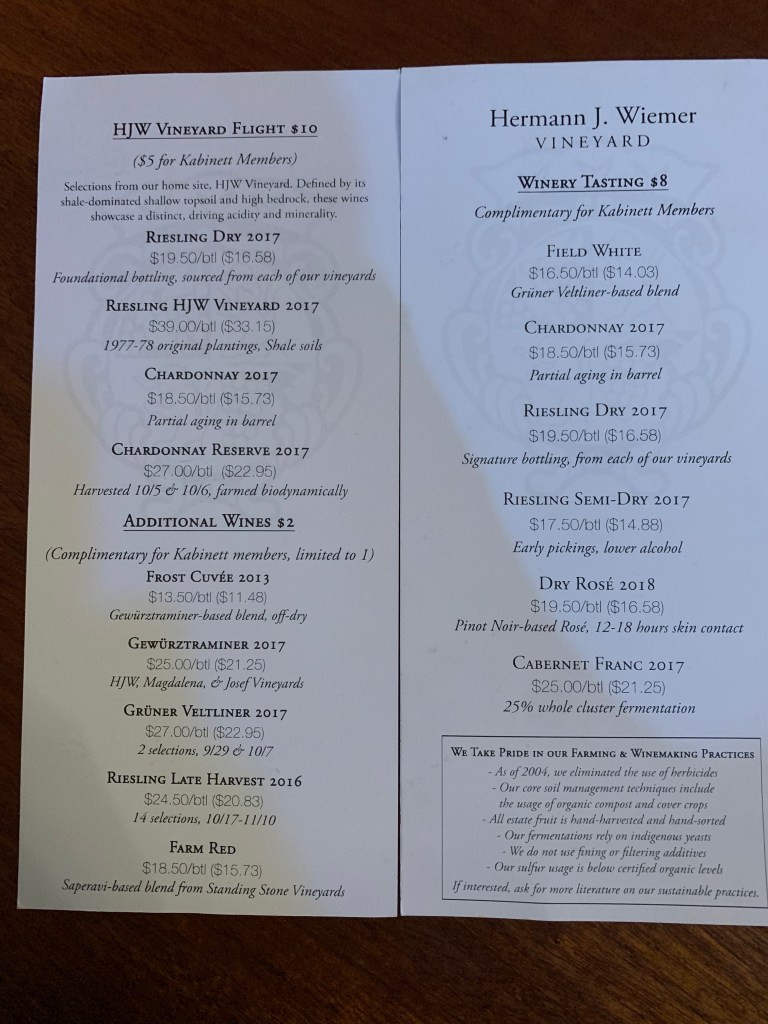
4) Hermann J. Wiemer: World-famous winery and one of the overall best selections of the trip. No hybrids – nothing but vinifera here. I really enjoyed their Rieslings, even the semi-sweet version which I never thought I’d appreciate. The 100% Grüner was also good. I ended up leaving with 3 bottles for myself and other friends.
5) Dr. Konstantin Frank: Another top 5 visits of the trip, and certainly the most famous in the area. I love the backstory though – the namesake was a Ukrainian immigrant who eventually found his way to Cornell University. With a PdD in viticulture and lots of experience growing rapes in very cold environments, he pioneered winemaking in the Finger Lakes and eventually founded his own winery. 150 acres of vines, with vineyards on several of the Finger Lakes.
There wasn’t a single ‘meh’ wine here. Several high-end Rieslings were very good although I think my favorite was the well balanced ‘traditional’ dry Riesling, with the Margrit dry Riesling with nice bite & minerality coming second . Also very notable were the “Old Vine” Pinot Noir with cherry notes, a Pinot-heavy red blend, a Gewürztraminer with lots of character, and a Sauv Blanc with big mouthfeel that mom especially liked. I also liked the Grüner, Pinot Blanc and sweet or semi-sweet Rieslings, despite not being a sweet wine drinker. Excellent view and overall presentation as well.
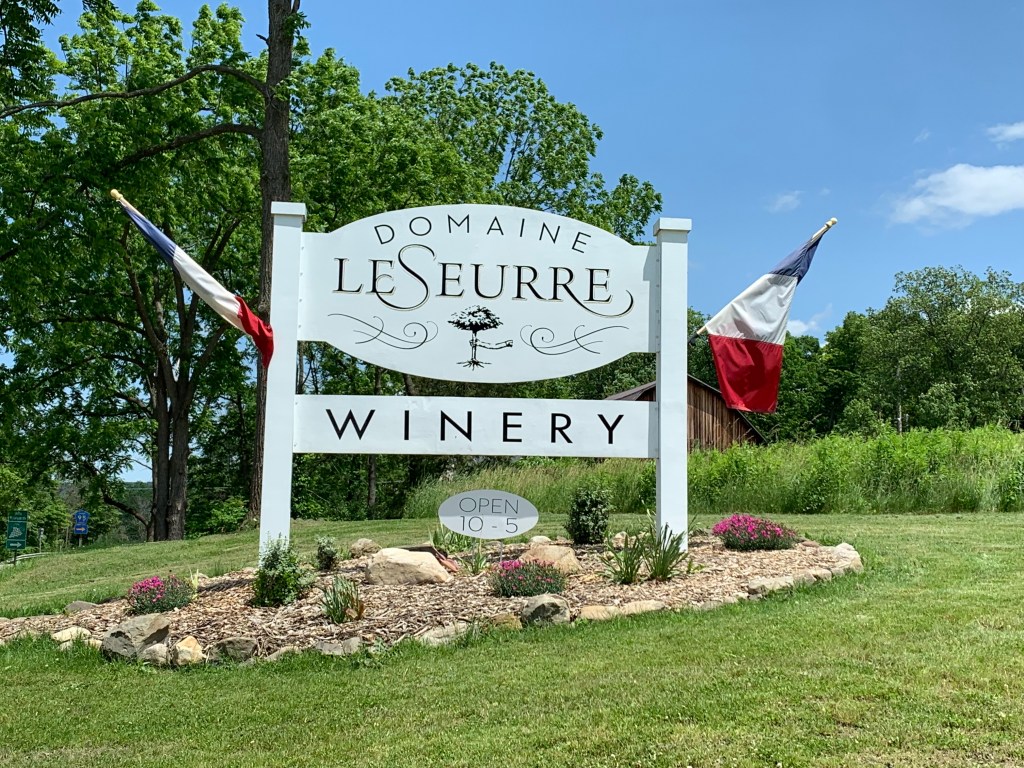
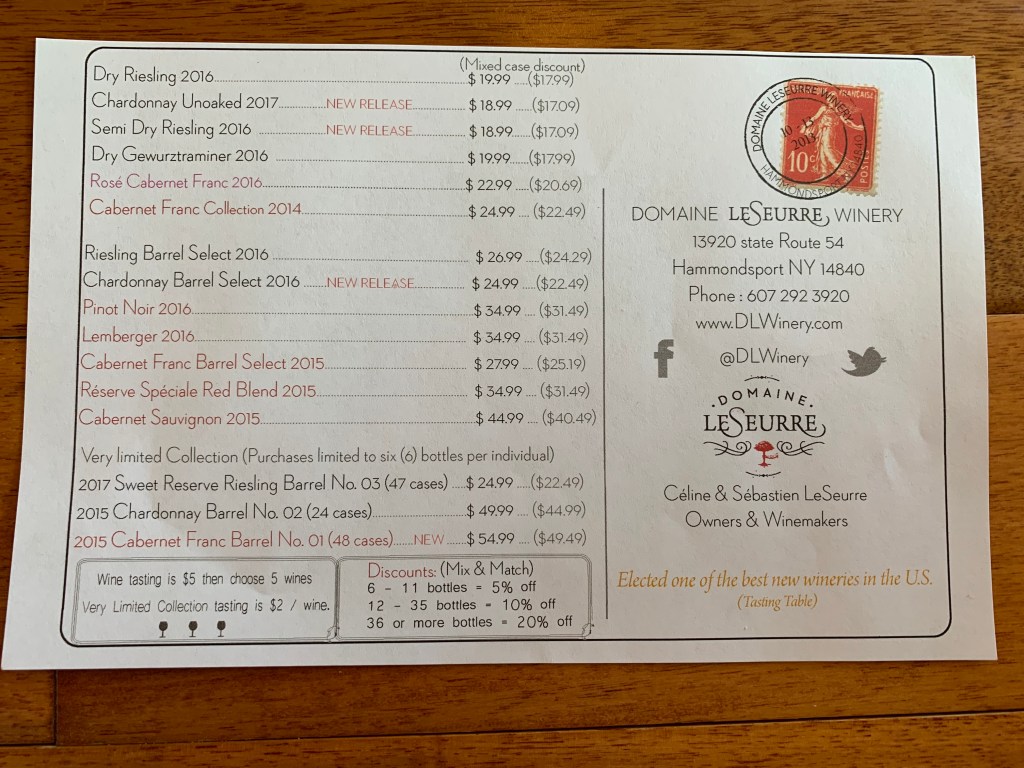
6) Domaine LeSurre: Owned by a couple from France, no vineyard but locally sourced fruit. Excelled in Chardonnay and reds. I especially liked oaked Chard but unoaked was good too. Had a nice Pinot with cherry notes. Also enjoyed their other reds, including an excellent 2014 Cab Franc, Lemberger, and “Reserve” red.
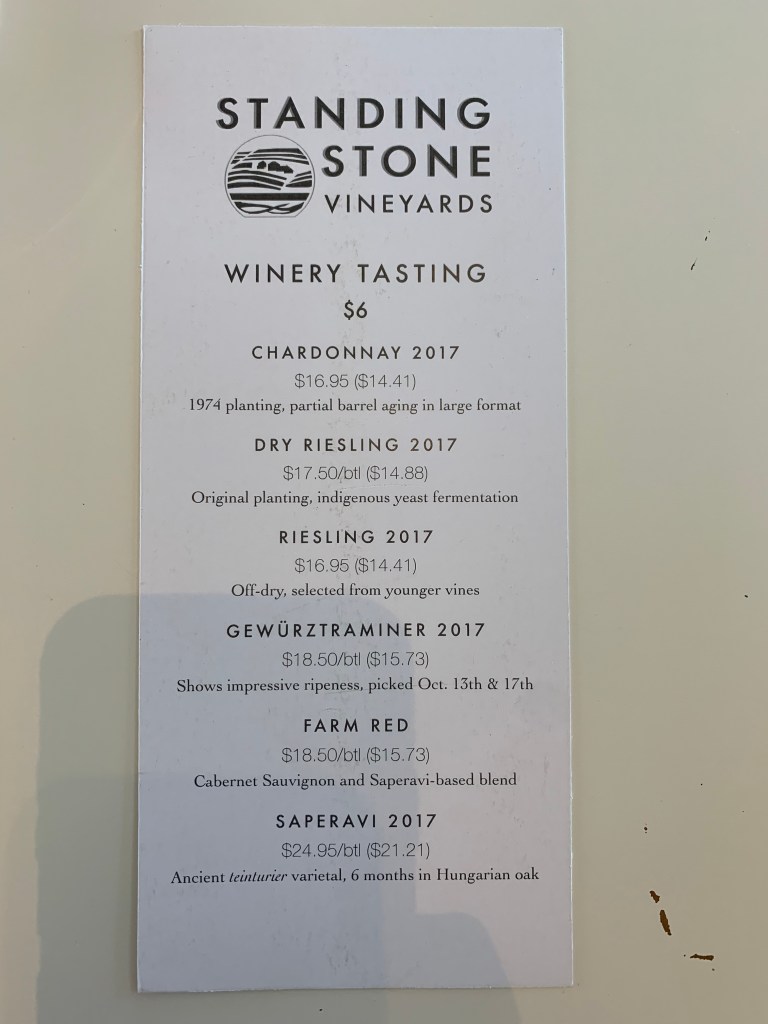
7) Standing Stone Vineyard: Now owned by Hermann Wiemer; 46 acres of vines. One of the oldest wineries in the area. Good Riesling and Gewürztraminer, although the surprise was their Saperavi which had a dark color and rubarb-ish notes. The Cabernet Sauvignon was good too.
8) Barnstormer Winery: Cute tasting room. Nice Sangiovese Rose; I think this was the only time I saw this varietal. Good dry Riesling with grassy notes.
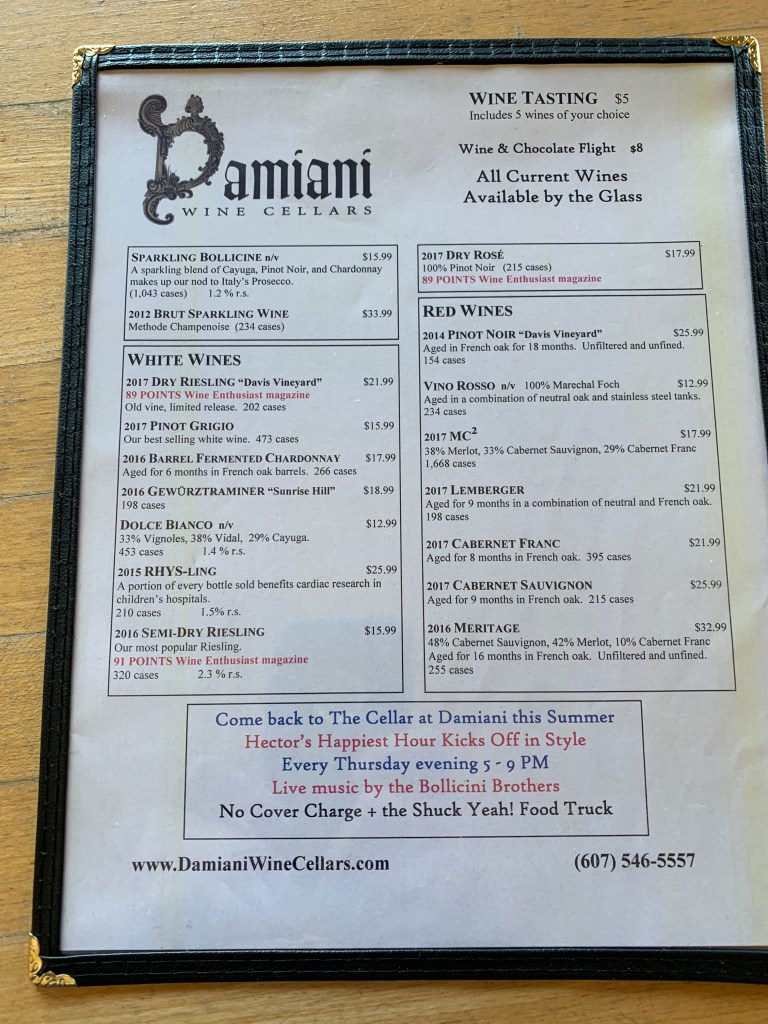
9) Damiani Wine Cellars: Rare red-focused winery. 40 acres of vines, 80% estate (the rest local). Located on one of the warmer areas of the region. Very good 2017 Cabernet Franc, not overly peppery. Interesting Marchael Fosh, with a long finish. Good 2017 Lemberger with a white pepper finish and good tannin. Pinot and semi-dry wines were OK.
10) Lakewood Vineyards: My very first Finger Lakes winery ever! Nice, light bodied Cabernet Franc, although their Riesling was my favorite of the bunch. They did a good job with their Concord and Niagara grapes, although those aren’t my favorite varietals.
11) Heron Hill: This was the last winery of day #1 so while I *think* the wines were good my taste buds were most definitely shot at this point. Their main winery at the southern end of Keuka Lake was beautiful, but I actually did my tasting at their smaller tasting room on Seneca. But the Seneca location had beer, which made dad very happy. He deserved it after having to drive mom & I around all day.
We also visited Shaw, Bully Hill, Ravines, Miles, McGregor, and Earle
Estate Meadery/Torry Ridge Winery.
Not tried: Kemmenter or Forge Cellars, which are appointment-only locations that are definitely on my list for next time. I also need to visit Shalestone and Ryan Williams.
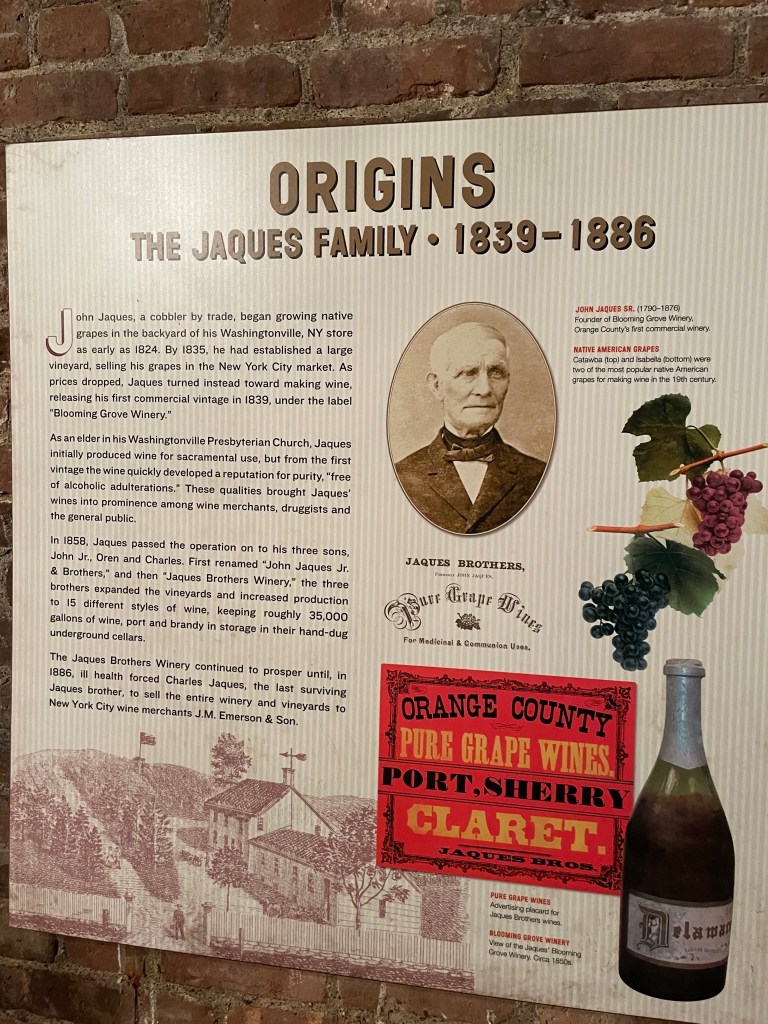
A blog about Brotherhood feels like a blog about the history of the American wine industry. It picked its first commercial vintage in 1839, which means Brotherhood was making wine before California even joined the United States.
Brotherhood was one of the few wineries to continue making wine during Prohibition (more on that in a moment). It even pioneered modern wine tourism; apparently this was quite the party spot ‘back in the day’. So next time you visit a winery, you can thank Brotherhood for inspiring that idea.
Founder Jean Jaques was French cobbler who in 1837 planted a vineyard in the town of Washingtonville, selling fruit to customers in New York City. When grape prices dropped he decided to switch from selling grapes to making wine, naming his business Blooming Grove Winery.
Blooming Grove – which after several changes of ownership was renamed the Brotherhood Wine Company around 1886 – was a commercial success. While its profits were originally driven by the sale of ‘medicinal tonic’ and sacramental wine, over time they also produced more wine for commercial sale. It appears most of their wines used American grape varieties, although they did source grapes from elsewhere.
Brotherhood also made sparkling wine labeled as ‘champagne’, long before that term was exclusively used by the French.
The advent of Prohibition in 1920 hurt business but didn’t shut it down, as they returned to their roots of making ‘medicinal’ and church wine. Fortunately, they never relinquished their stockpile of sparkling wine, so when Prohibition ended in 1933 they had a stock of sparkling on hand to celebrate.
Brotherhood also pioneered modern wine tourism. While wine sales slumped in the 1970s the owners capitalized on their location outside New York City and historic backdrop and organized tours (and parties).
Today, Brotherhood is owned by a South American wine consortium. They purchase grapes from around the United States, although New York fruit seem to get a special focus. I didn’t learn its production numbers, but I get the sense they do a lot of custom crush and bottling for other NY wineries. Brotherhood doesn’t own any vineyards though, so don’t show up expecting long rows of picture-perfect vines.
Brotherhood has a religious connection in their history, but not what you might think. No, they never had monks planting vines or stomping grapes. It’s much weirder than that – the name was inspired by what might be considered a religious cult!
Not far from the winery was spiritual commune called “the Brotherhood of New Life”. This community had some interesting ideas, among which was that God is bisexual (I swear, I’m not making this up) and promoting the use tobacco.
The wine merchants who owned the winery also sold wine made by this commune. New owners Jesse and Edward Emerson liked this name so much they adopted it, becoming “The Brotherhood Wine Company”.
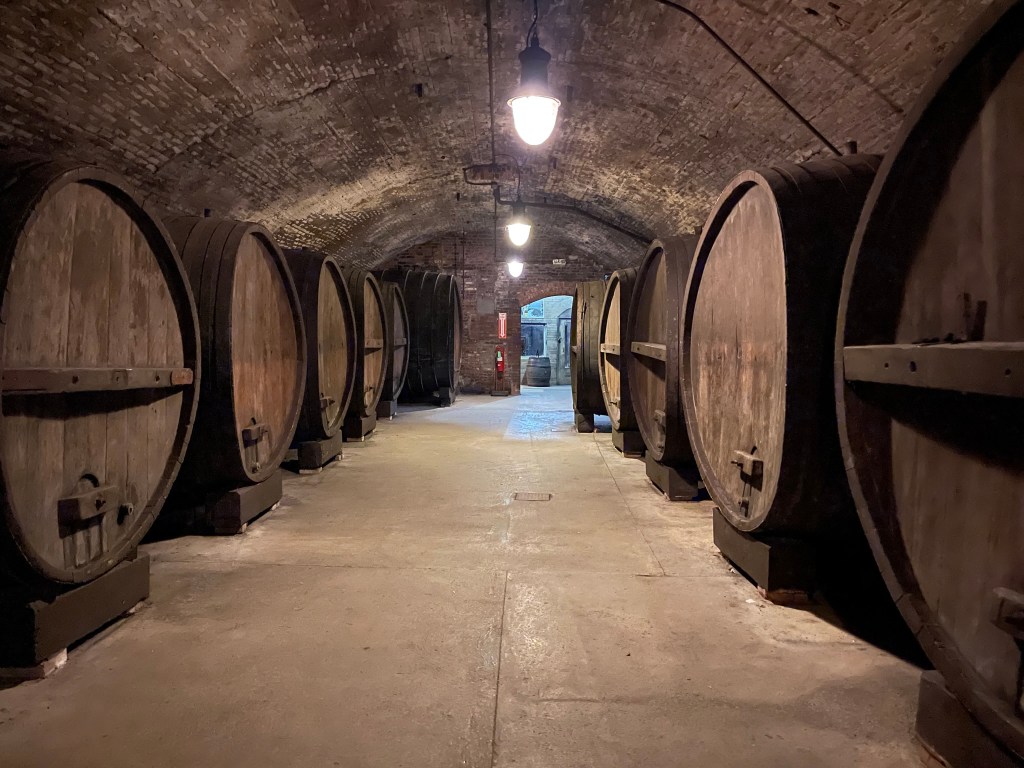
If you’re going to visit, make sure to do a tour first. The cellars – also dating back to 1839 – and are so big they actually doubled as a bomb shelter. PS – if you MUST utilize a bomb shelter, this is the one to stay in because it’s stocked with some of the most massive wine barrels that I’ve ever seen. The tour lasts about half an hour but it’s definitely worth it.
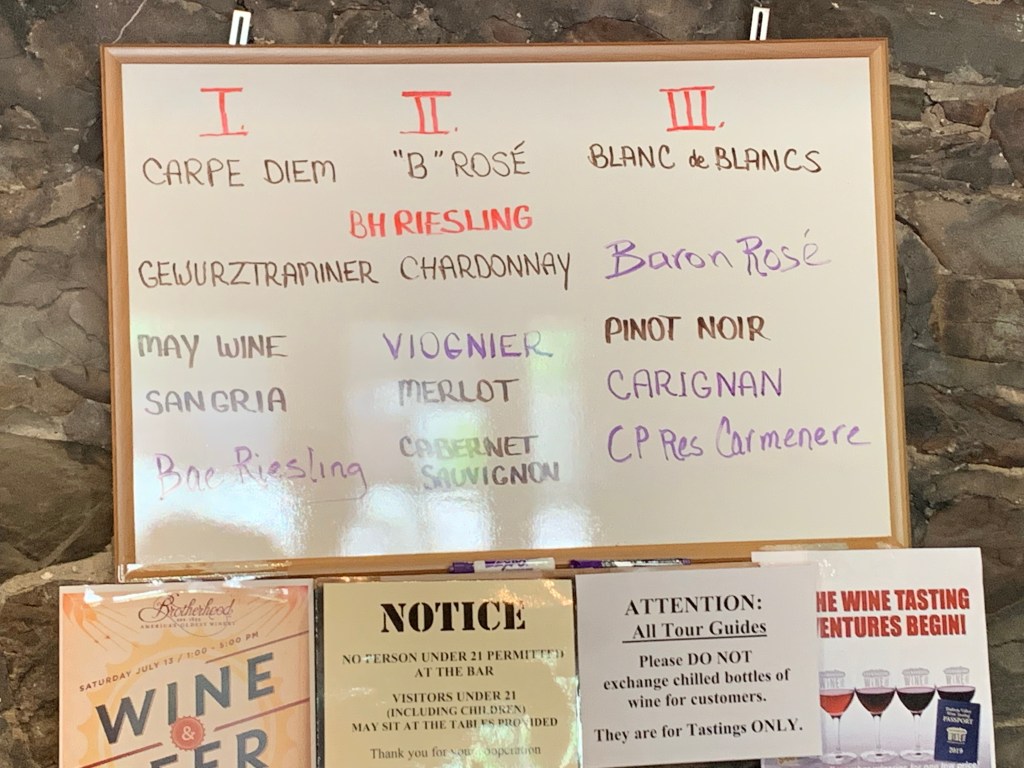
As for the wines, they are most famous for their Rieslings (a lot of fruit comes from Wagner Vineyards) but they sell everything from sweet wines to port-styles to Carménère and Pinot Noir. Their port-style has consistently been my favorite, although I’ve also enjoyed their carménère and pinot noir.








































 Wine Trails and Wanderlust