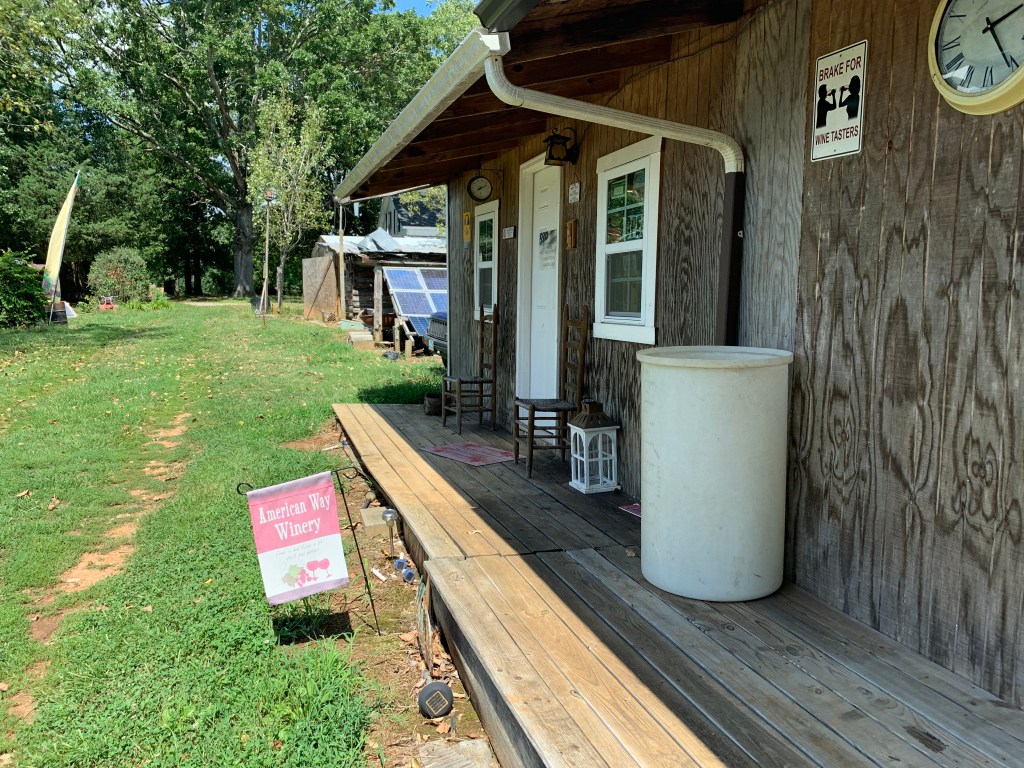
When it comes to wineries, American Way is about as different as you can get from your competitors. Not only do they lack vineyards, their wines lack grapes! Every wine is made from fruits or vegetables. If it can be made into a wine, American Way will find a way to do it.
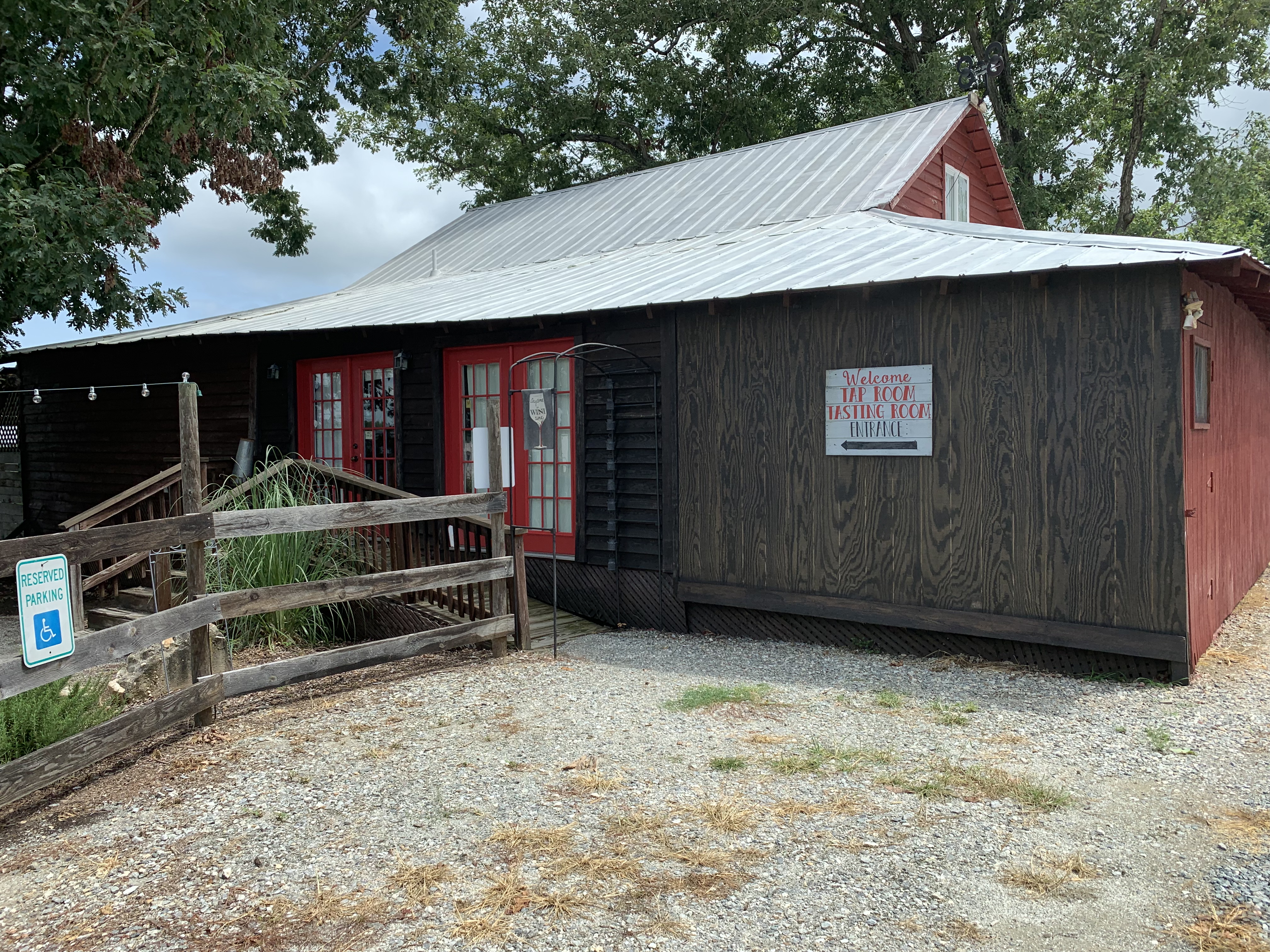
The tasting room is, shall way say, humble – a very non-descript wooden building right off Highway 47. This is strictly a sales room – not a party place. Owner Bill Hill sources his wines from his 15 acres of blackberries, raspberries, apples, pumpkins, strawberries, watermelons, cantaloupe, pear, tomatoes, elderberries and (if that’s not enough) persimmon, making 500-800 gallons of wine a year.
Bill gave me the low-down on his wines as he poured. He started it as a hobby in the 1970s, slowly expanding as he realized he could make a business out of it. Most of his sales comes from festivals, although he takes special orders as well.
18 wines were available for tasting – more than I could possibly try. Instead he guided me through some of his more popular concoctions. A few I tried almost on a dare!
Elderberry: Tart. Cuz your mother was a hamster, and…
Persimmon: Made as an ice-style wine.
Pumpkin: Actually really good; reminded me of a pumpkin
donut.
Tomato wine: Yes, really! And it tastes like it sounds.
Altillo (formerly known as Alta Vista) produces some of the best Virginia wines you’ve tasted but didn’t realize the true source of. That’s because its business model is unique in the state; rather than focusing on selling Altillo-labeled wine to customers, it produces wine for other Virginia wineries – a process called custom crush.
Photo cred: Altillo Vineyard
Don’t get me wrong – Altillo DOES have its own wine, and it’s excellent (and at $20/bottle a steal). First planted in 2001, their vineyard has 5 acres of French varietals, including ½ acre of Shiraz. The location is actually an especially nice looking home – just go around the side to access the tasting room.
Photo cred: Altillo Vineyard
Owner Bob Schenkel was pouring for several guests and I joined in around half way through their flight. He explained how years ago he tried running it as a ‘regular’ winery but there wasn’t enough foot traffic in the area to keep it profitable, leading him to focus on custom crush. He’s actually luckier than most – there were more than a few wineries in his area that are no longer in operation, so this move saved the business. Now, wineries elsewhere in Virginia reach out to Altillo when they are short of their own estate wine, or lack the ability (or desire) to make wine themselves.
Photo cred: Altillo Vineyard
Bob’s son is the wine maker; they only use this building for
wine making. Hopefully they also rent it out as an Air B&B, because who
wouldn’t want to stay overnight in a winery?
What I tried:
16 Chardonnay: My notes fail me except to say made in oak.
17 Viognier: Made in steel. Full bodied for a Viognier, and
not a lot of the honeysuckle notes that often define this wine.
17 Cabernet Franc: Spicy – in a good way. No green pepper
notes here.
17 Meritage: Also spicy; my palate fooled me into thinking
it was Cab Franc heavy but actually it’s not.
17 Shiraz: One of the rare Shiraz plantings in Virginia; a
difficult grape to grow but they do it well here. Earthy.
17 Petit Verdot: I can’t wait for this one to be bottled because
it’s awesome! Good balance, bold but not too bold, just all around great.
17 Merlot: 2nd favorite after the Petit Verdot,
with definite earthy notes.
Hunting Creek broke the mold of what was in danger of becoming a very repetitive series of Southern Virginia wine region blogs. In nearly all my previous (and many subsequent) visits to local wineries, the vineyard was either an old farm that turned to growing hybrid or American grapes, or they used sources other than grapes. But Hunting Creek; they are dedicated to wonderful, wonderful vinifera.
Owners Milt and Sandy Ligon first planted in 2002 as a purpose-built vineyard. Unlike their neighbors, they knew early on they wanted to focus on vinifera. Fortunately, they picked a great location for it – a low hill overlooking the nearby farms. I was shocked to hear that Jason Murray – co owner of Arterra Wines and one of my all-time favorite wine makers – was one of their early consultants. I knew I was going to like this place, but my jaw dropped when they mentioned him.
Finding the winery is a bit of a challenge. The road looks like the beginning of a driveway (somehow I missed the big sign saying “Hunting Creek Vineyards”), and your phone signal is likely to be weak. But after a half mile or so, I found the tasting room – a reconstructed barn that was brought here from New York. Sadly they are only open on Saturdays, so plan appropriately.
Sandy (who’s also the wine maker, BTW) brought me up to speed on the wines. Currently they only have 5 acres of vines (plus a pair of local growers including Pinehaven Vineyard) and make 600-800 cases/year. If they wanted to they could expand a little more, but she seems to like it on the small side. And fun fact – her son Jeremy is the winemaker at Creek’s Edge.
I forget how it got started, but most of the wine names follow the same theme; Decadence; Innocence; Repentance; Indulgence; Confession; Forbidden; Seduction. It’s like going to church, but with better wine! Actually the barn doors did come from an old church, so maybe there’s something to that.
What I tried:
Pure Luck (Viognier & some Chardonnay): Liked it a lot; very dry.
Pinot Gris: Very flowery.
Innocence (Traminette): One of only two hybrids they utilize. I liked it even though I’m not usually a fan of this grape. Kudos for lacking the overpowering nose I’m usually accustomed to.
Rose: Made of Chambourcin (the second hybrid they use).
2017 Indulgence: Signature red blend. Good body, big
mouthfeel; I liked it so much I bought 2 bottles. That little bit of Malbec
went a long way!
2017 Decadence: 95% Petit Verdot and – unusually enough – 5%
Viognier. Unlikely any other PV’s I’ve had recently; very soft.
Repentance: Light, semi-sweet Merlot and Cab Sauv blend (probably from 2018). Not my style, but I bet my sweet-wine drinking friends would go for this.
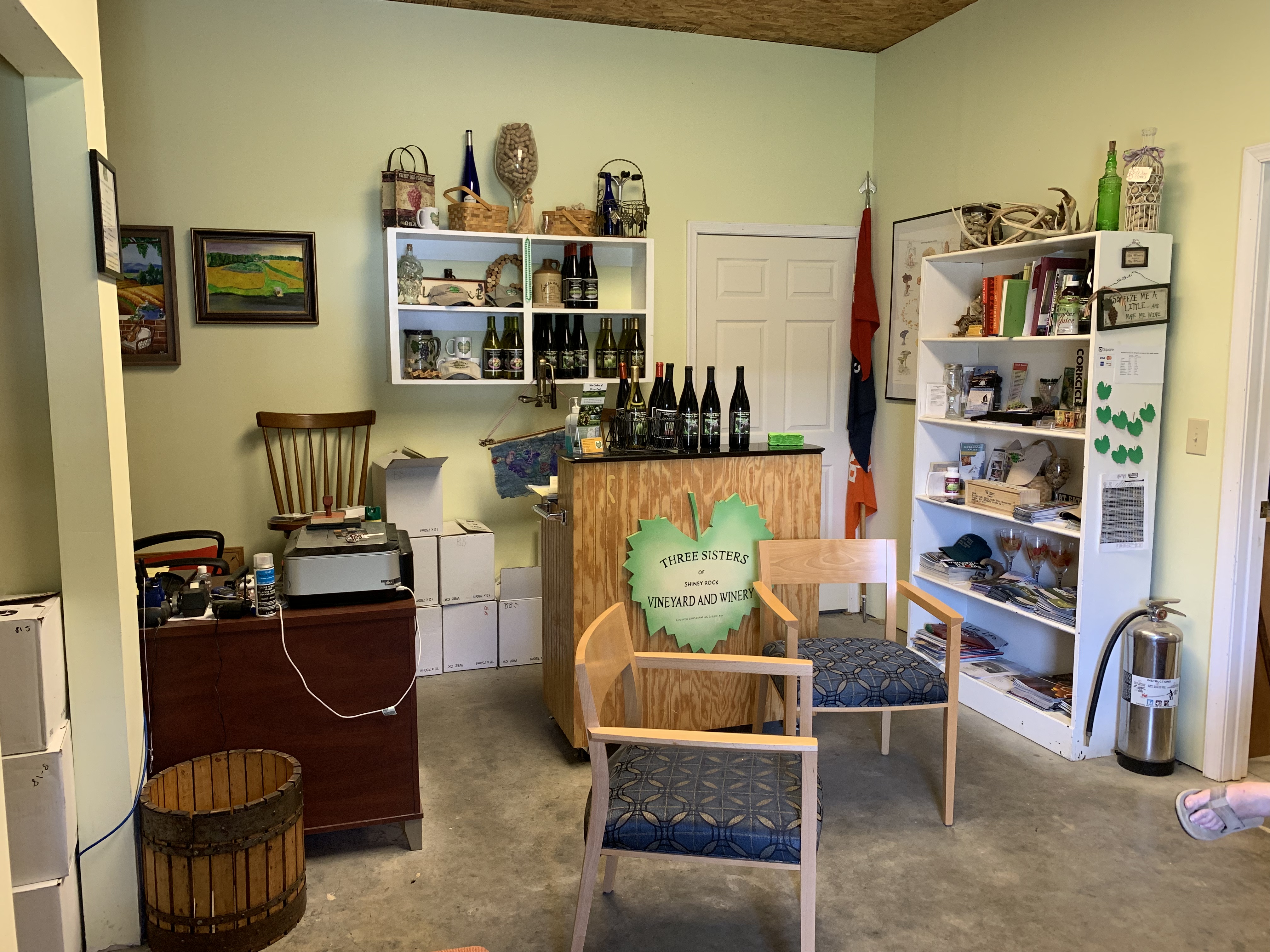
Three Sisters is Virginia’s most Southern winery – in geography and character. Once you experience their hospitality, you’d understand why I make that later statement.
Susan – one of the “Three Sisters” – was my wine pourer. She explained how the extended family were long-time tobacco farmers and decided to open a winery to keep the farm going when the tobacco trade died out. Her brother in law Ed is the wine maker, although various family members all help out.
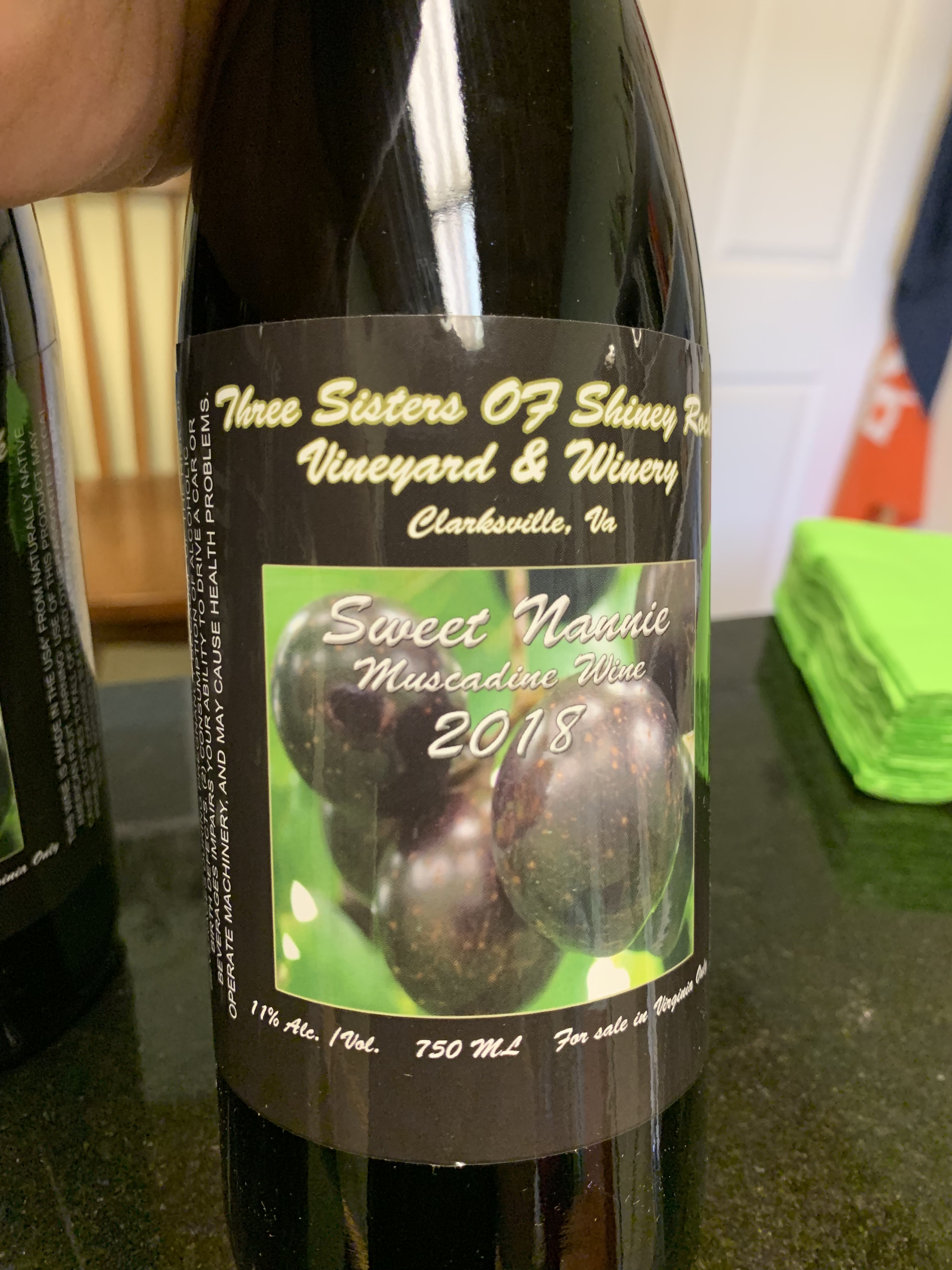
All of Three Sisters’ wines come from their 2 acres of Muscadine and Scuppernong (a white version of Muscadine), along with acres of blackberries and apple orchards. You’ll most likely find them at festivals south of Richmond. That said, a few out of towners also dropped by during my visit, mostly likely traveling to Virginia Beach or local campgrounds. They are otherwise open on Saturdays – “Or whenever you call!”, according to Susan.
Susan praised Muscadine for being easy for wine making and a good fit for the area’s drinking palate – the locals here seem to enjoy their wine on the sweet side. No food is sold on site, although they have a BBQ grill with picnic tables next to the winery.
What I tried:
2016/2017/2018 Muscadine wine flight: Definitely for sweet wine lovers. The 2017 was the fullest bodied, while the 2018 was least so.
2017/2018 Scuppernong. Super clear – which might make you
think its light on alcohol. I’m sure it’s a trap to get you to drink a lot
without realizing the bottle is already gone.
Pomegranate/Muscadine blend: The pomegranate notes definitely shine through.
Blackberry wine: Very nice! Had a natural sweetness to it.
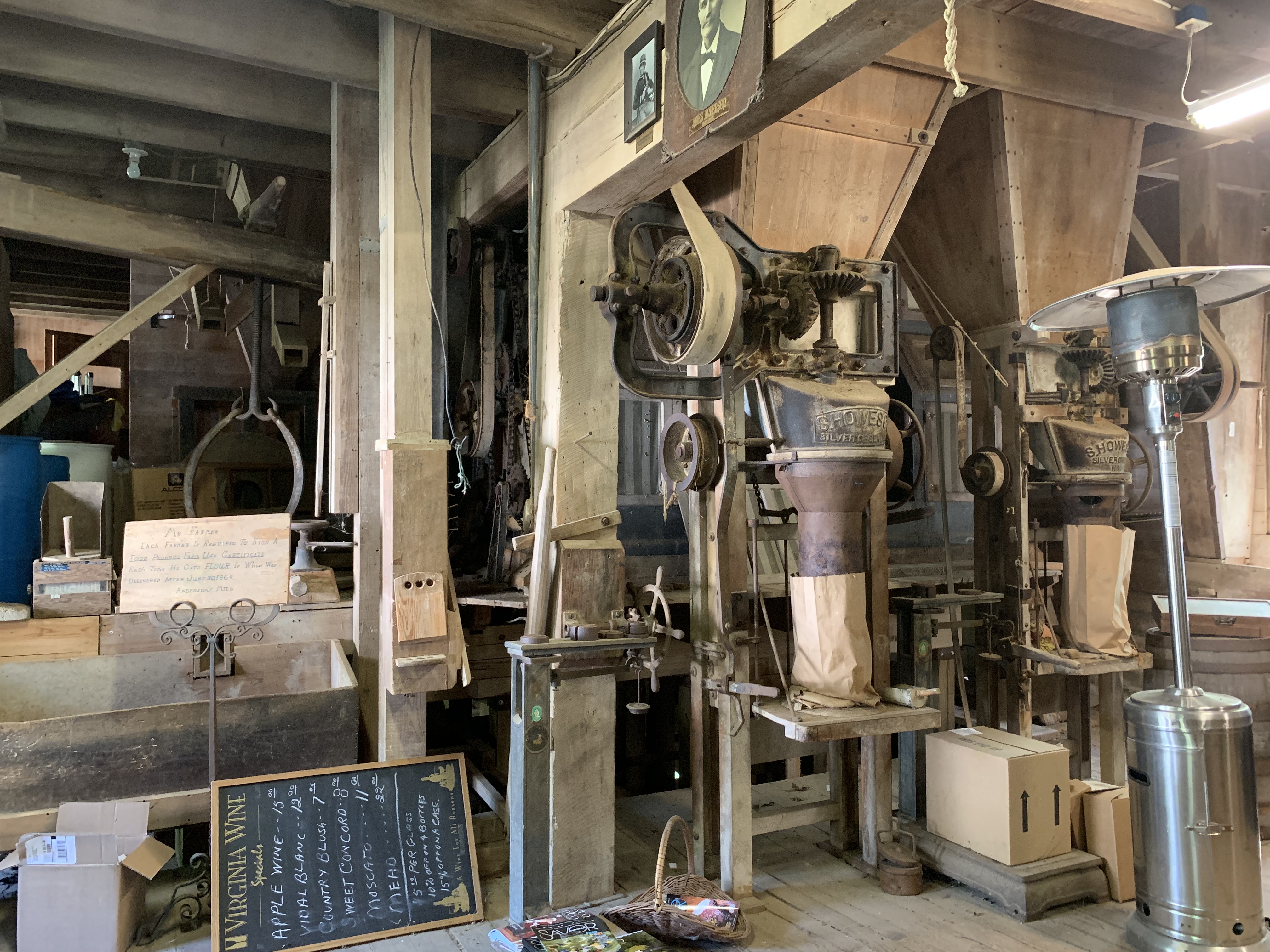
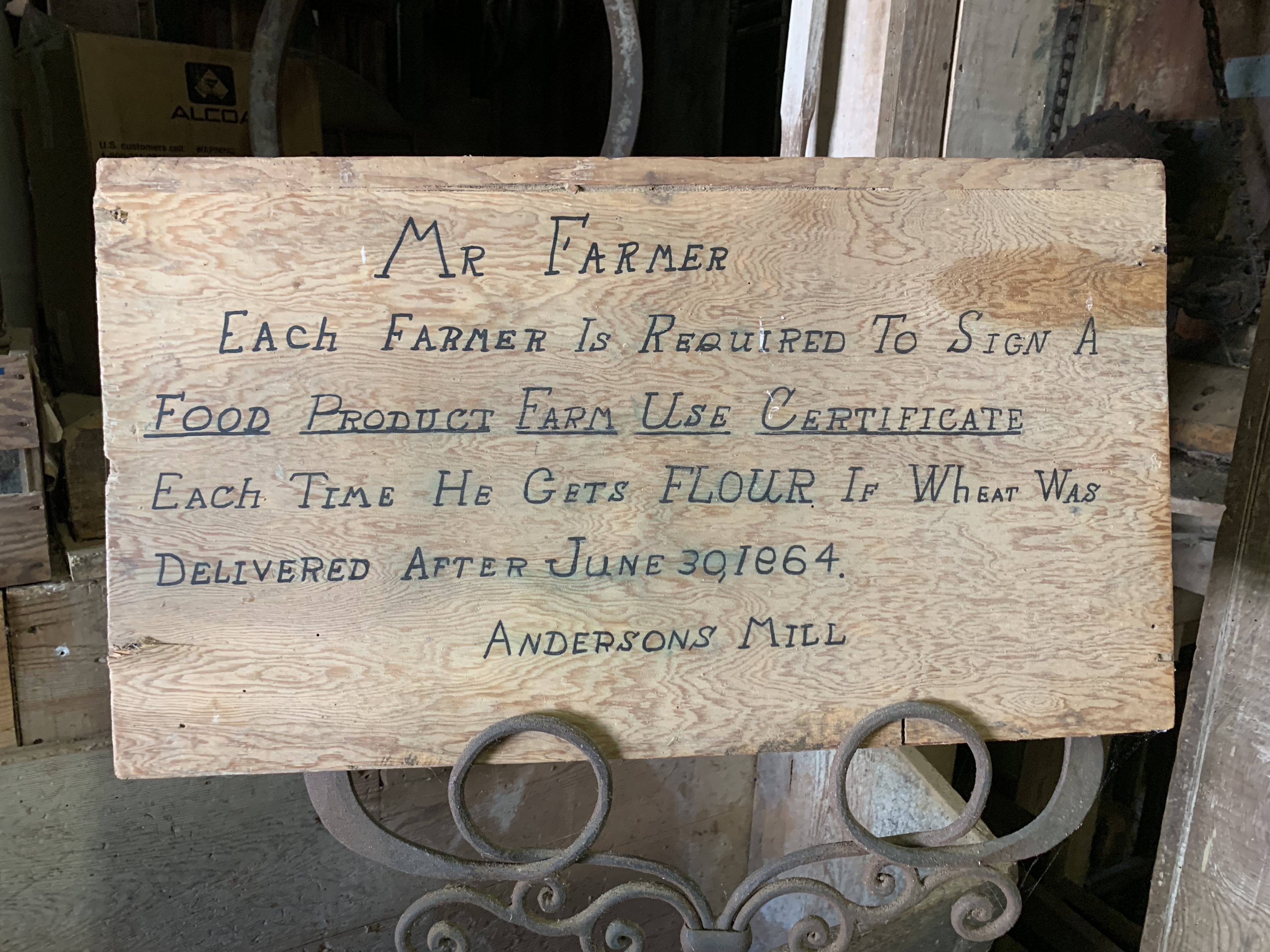
Tomahawk Mill Vineyard wins the award for coolest tasting room – a 19th century flower mill that looks like it can get right back into operation. Winemaker and co-owner Corky Medaglia was already pouring for a visitor, but other than that I had the place to myself. I wandered around the lovely grounds first before I headed inside.
The Medaglias purchased the mill in 1996 in what must have been a pique of madness – the same madness that seems to overcome many aspiring wine makers when they lay their eyes on a piece of historic property that also has a vineyard. Currently they have 4 acres of vines and make around 800 cases/year.
Corky was unintentionally hilarious. A Navy vet who spent some time in Greece, he obviously spends a lot of time chatting up his patrons. While he originally wanted to put the mill back in operation, Corky seems content to let it be while he concentrates on the wine. Tomahawk is open nearly year round, but festivals seem to be where they move most of their wine.
The wines were an eclectic mix of sweet, dry, plus a few
outliers. What I tried:
Anister: A Greek-inspired wine that was gin-like. Made of
Chardonnay but fermented in pine. Saying it was ‘different’ is an understatement,
as that pine really came through.
Non-vintage Chardonnay: Oaked, light with an almost honey
flavor.
Chambourcin: Very fruity.
Tobacco Road blues: Chambourcin and Cabernet Sauvignon
blend; reminded me of the 100% Chambourcin but not quite as fruity.
Apple wine: Favorite of the lineup. This tasting continued a
trend of fruit wine being some of the biggest hits during my visit to this
area.
Vidal Blanc: No offense to anybody, but this is just not my
grape!
Sweet Concord: Sweet but actually had some bite to it.
Mead: “Old Style” mead; nothing but water and honey.
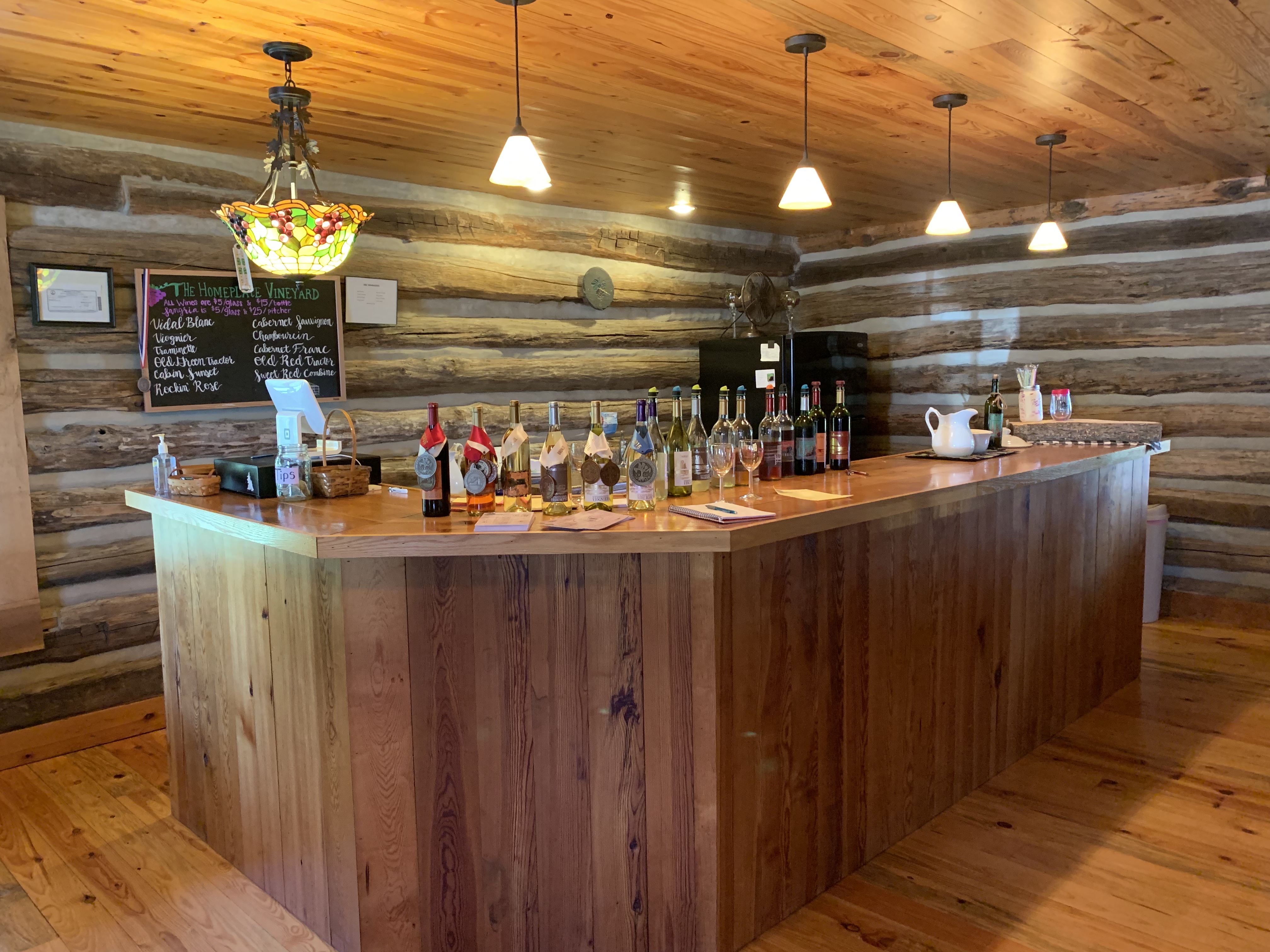
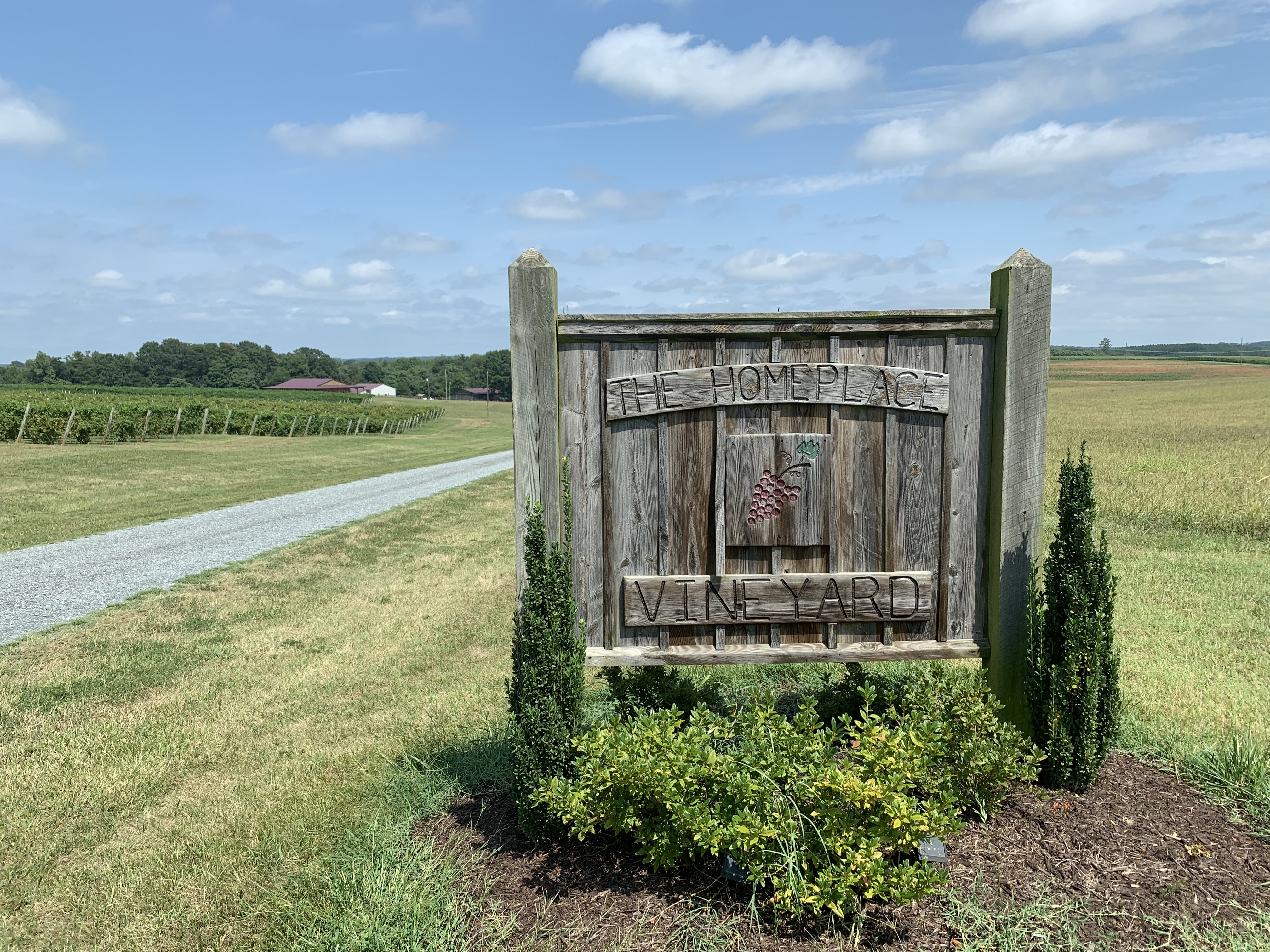
The Homeplace Vineyard is a small family business / local hangout / winery all wrapped up in a log cabin. The vines were planted in 2005 so they’ve likely been selling wine for a bit. While I bet they do brisk business at festivals, they also have a large event space that seems like a good place for a party. Even after only visiting for a short while, you could tell the place had a laid back, home-away-from-home vibe.
The name is a callback to how the tasting room is on the original location of family’s homestead. Built from the logs of an old tobacco barn, it now looks like a camping cabin. That actually sounds like fun; who wouldn’t want to spend overnight in log cabin on a winery!
The land around us was once produced tobacco, although that
industry has long faded away. In need of a way to keep the land productive, the
family set up a vineyard instead (another common theme for the area’s
wineries).
Penny was my server, and she adeptly talked me through their wine selection. Most of their 9.5 acres of vines are hybrids, although they have some Cabernet Sauvignon as well. This continued a trend in this area of focusing on varietals that are both weather resistant and don’t need expensive chemical spraying. It’s a smart move for smaller operations, especially if their target crowd leans more towards sweet wine.
The wines tended towards sweet, which is a preference in
this area. What I tried:
Vidal: Semi sweet, light and easy drinking.
Viognier: Light, but unusual as it lacked the overpowering
honeysuckle I find on the nose.
Traminette: Sweet but almost overpowering nose to it, as is
common with this grape.
Old Green Tractor (white blend): Traminette heavy, but also
with some Viognier.
Strawberry wine: Made from local fruit; great nose and very
yummy.
Rockn’ Rose: Tart!
Old Red Tractor: Chambourcin and Cabernet Sauvignon; the biggest
bodied red of the bunch.
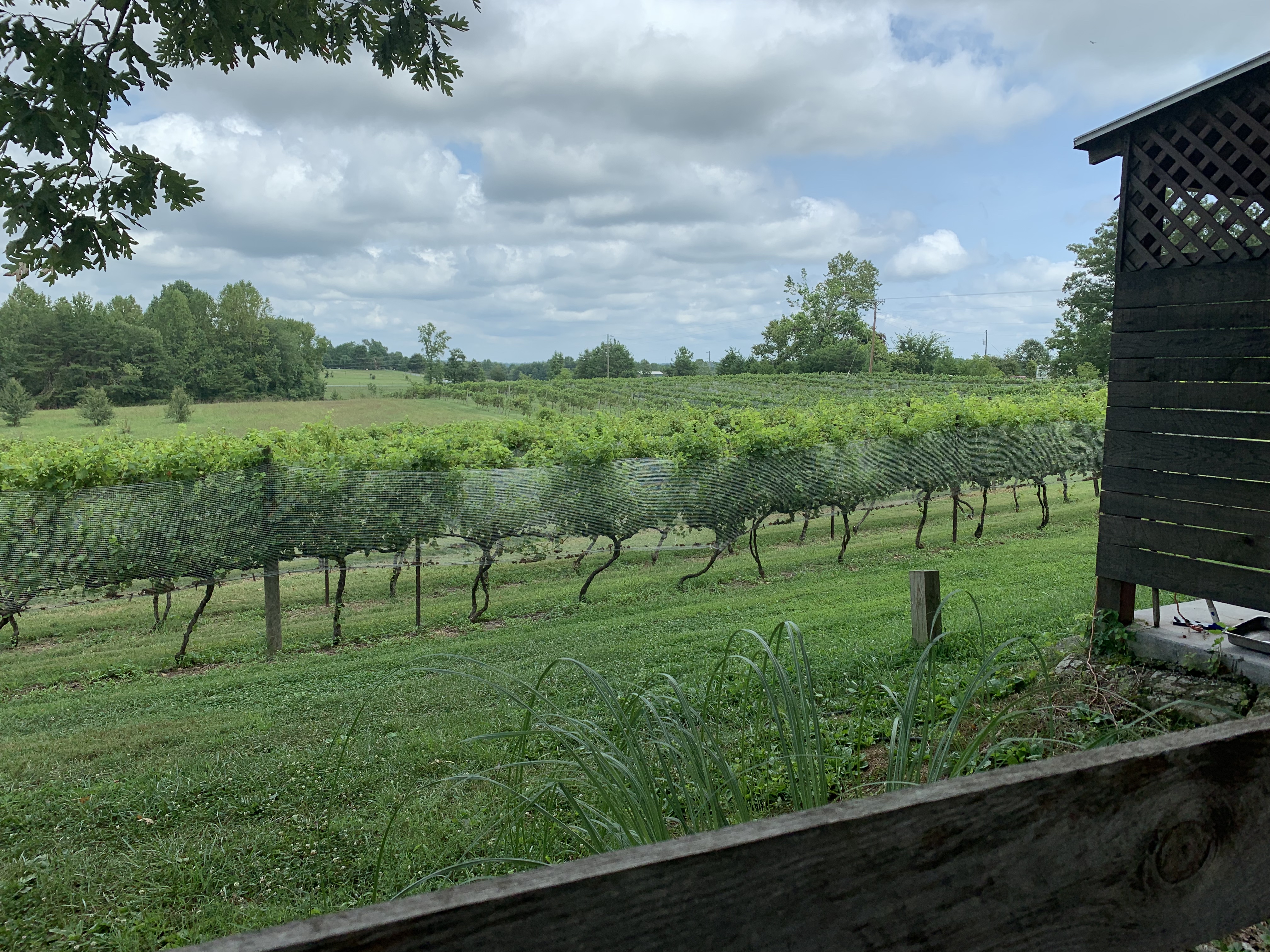
Sans Soucy (pronounced “San Soo-see”) means “without worry” in French. It’s a somewhat tongue-in-cheek proclamation since farming is a profession full of worry. But owner/winemaker Paul Anctil seemed worry free during my visit – likely in part because the weather had been fairly good recently, so 2019 had the makings of a good harvest.
This is one of the larger and older operations in the area. Vines were first planted in 2000, while the winery opened in 2008. Their 7 acres of vines are enough to supply around 2000 estate cases/year. While that seems small-to-medium for most places, in this area is was positively huge!
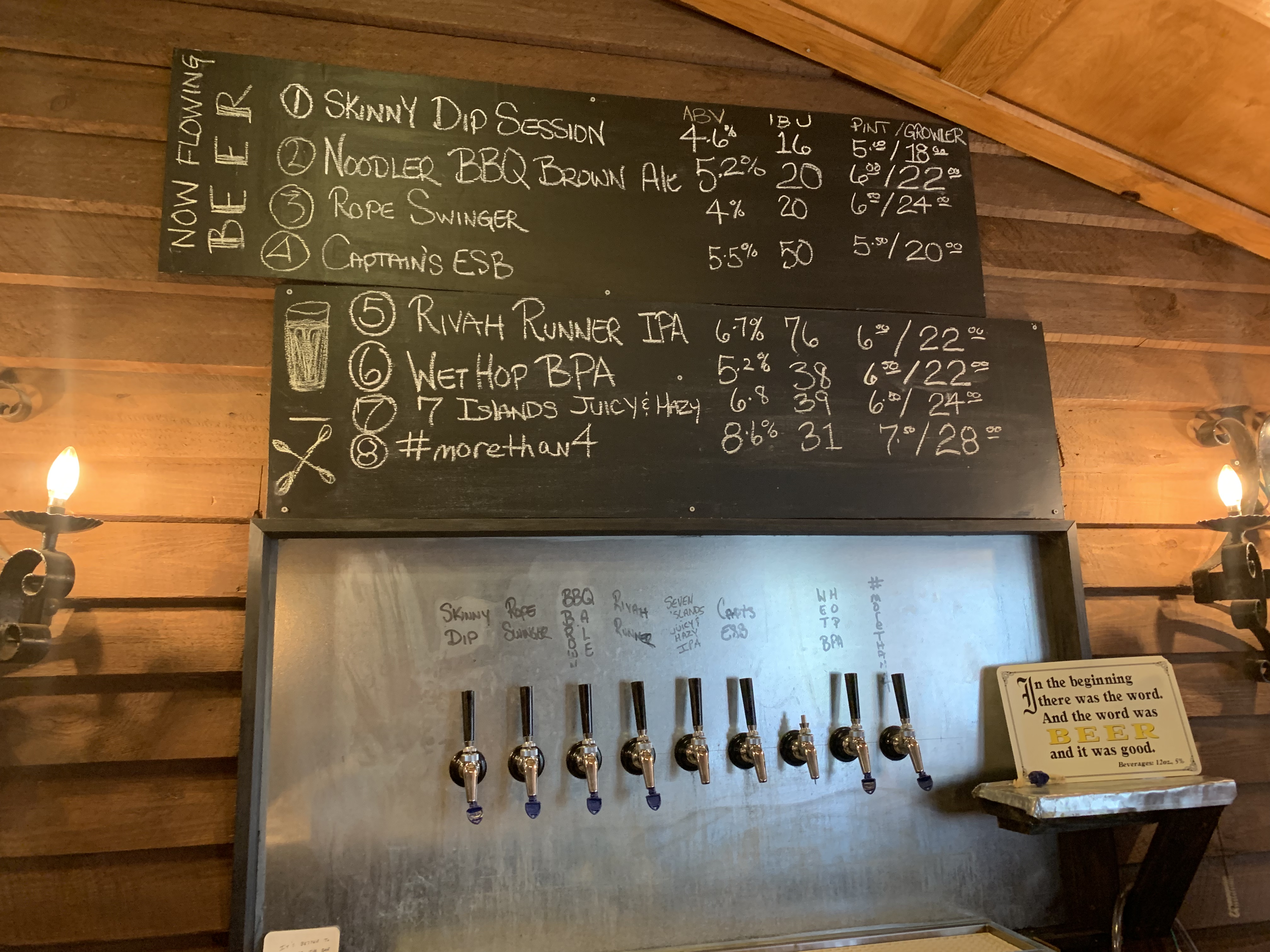
Sans Soucy is also one of a handful of locations that has
both a winery and brewery on the premise. A growing trend in Virginia, Paul
explained it allows him to capture a larger portion of the local crowd. He and
his son share brewing duties, although his son focuses on the beer while Paul
takes care of the wine making.
Paul was kind enough to give me a quick education about Virginia’s ABC laws. While it was becoming more flexible regarding beer, there still seemed to be some silly regulations – including how (depending on your license) you can take wine anywhere on the property but the beer has to stay in a much more confined space. Still, this was an encouraging trend so hopefully we’ll see Virginia relax these rules further.
The tasting room reminds me of drinking in a man cave –
especially if that man cave had a keg and extensive wine rack. A picture of
John Wayne and the USMC emblem were on the wall. OK I admit – I liked this
guy’s style!
Sadly I didn’t get a chance to linger here; this was stop #2
of 4 (and it ended up being 5) for the day, so off I went to my next
destination.
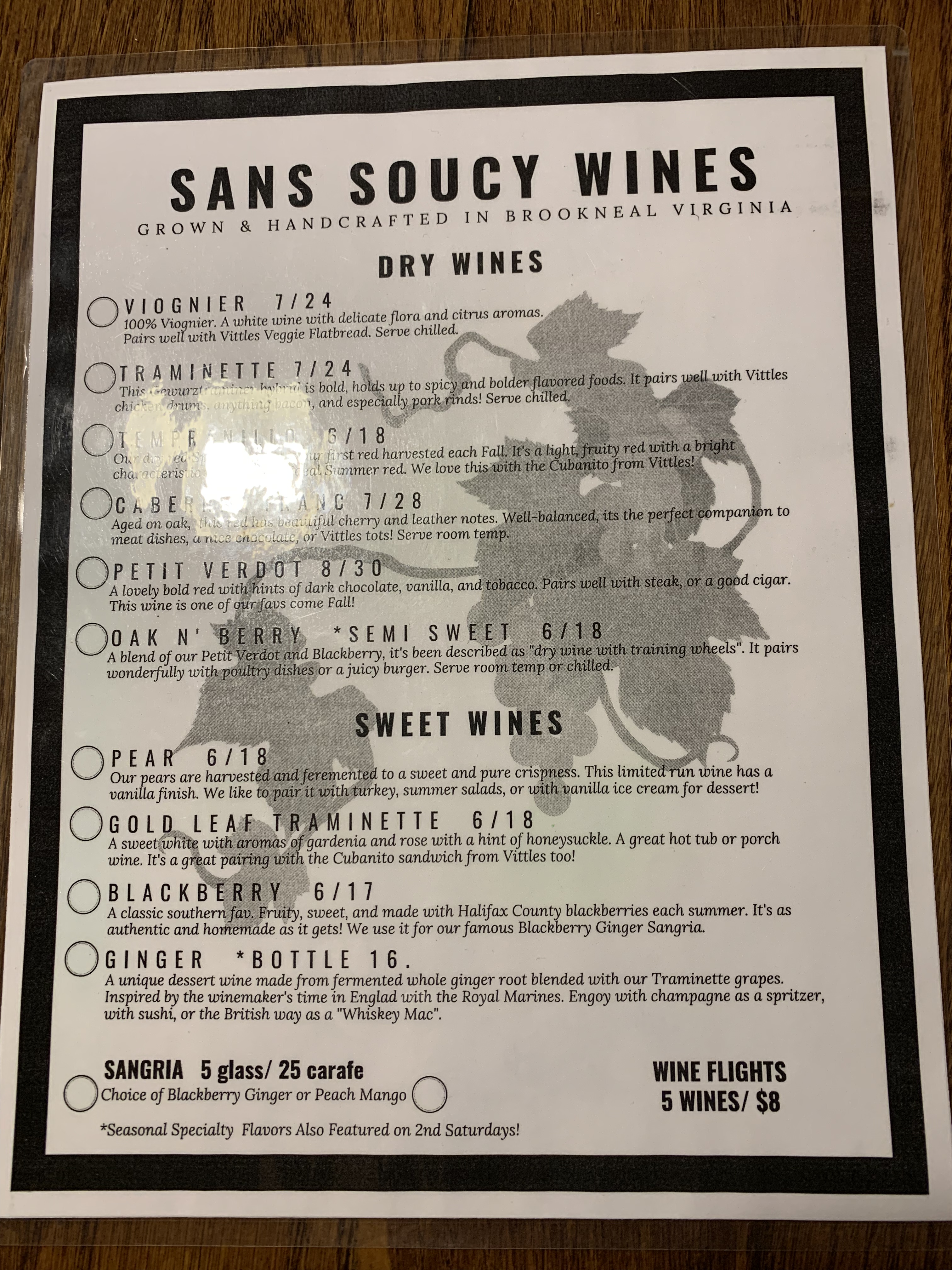
What I tried:
Viognier: Heavy;
honey-ish on the palate.
Traminette: Very spicy!
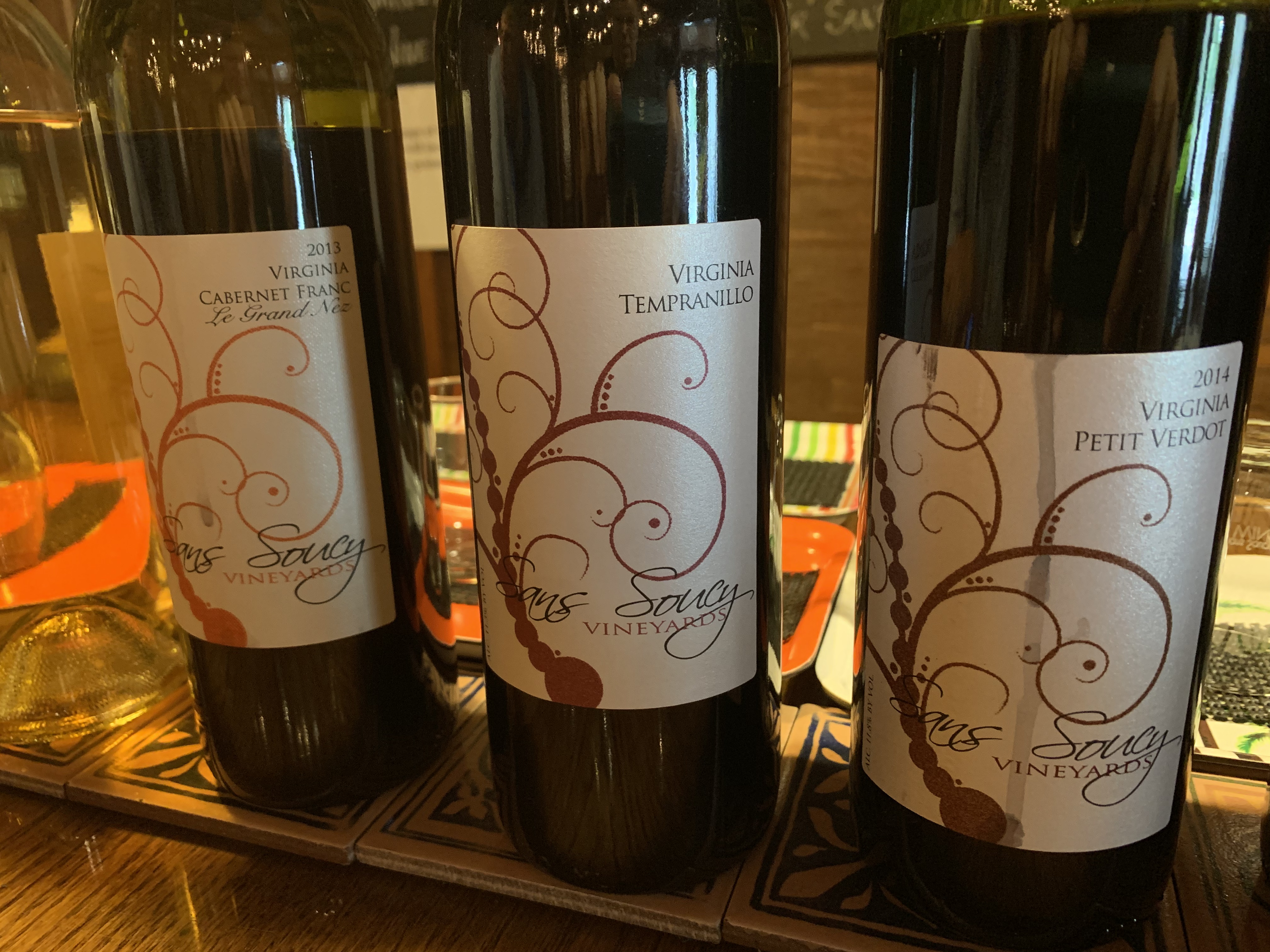
2013 Cabernet Franc: Baking spice notes; very good.
2013 Tempranillo: A very finicky grower, Sans Soucy is one
of the very few places to have it – and sadly, they are likely to tear it out
because of it’s difficult to grow in this terroir. Also had spice notes,
although different from the Cab Franc.
Oak N’ Berry: This is what I call a ‘fun wine’. Blend of
Petit Verdot and blackberries. I bet you didn’t see that one coming! Paul
called it a ‘red on training wheels’. Tannin structure of a red but with
sweetness.
2014 Petit Verdot: Medium body, long finish, soft.
Winery #1 of my 3 day trip! Not coincidentally, this was one
of my longest visits – entirely due to the hospitality of the owners, Boyd and Shirley
Archer.
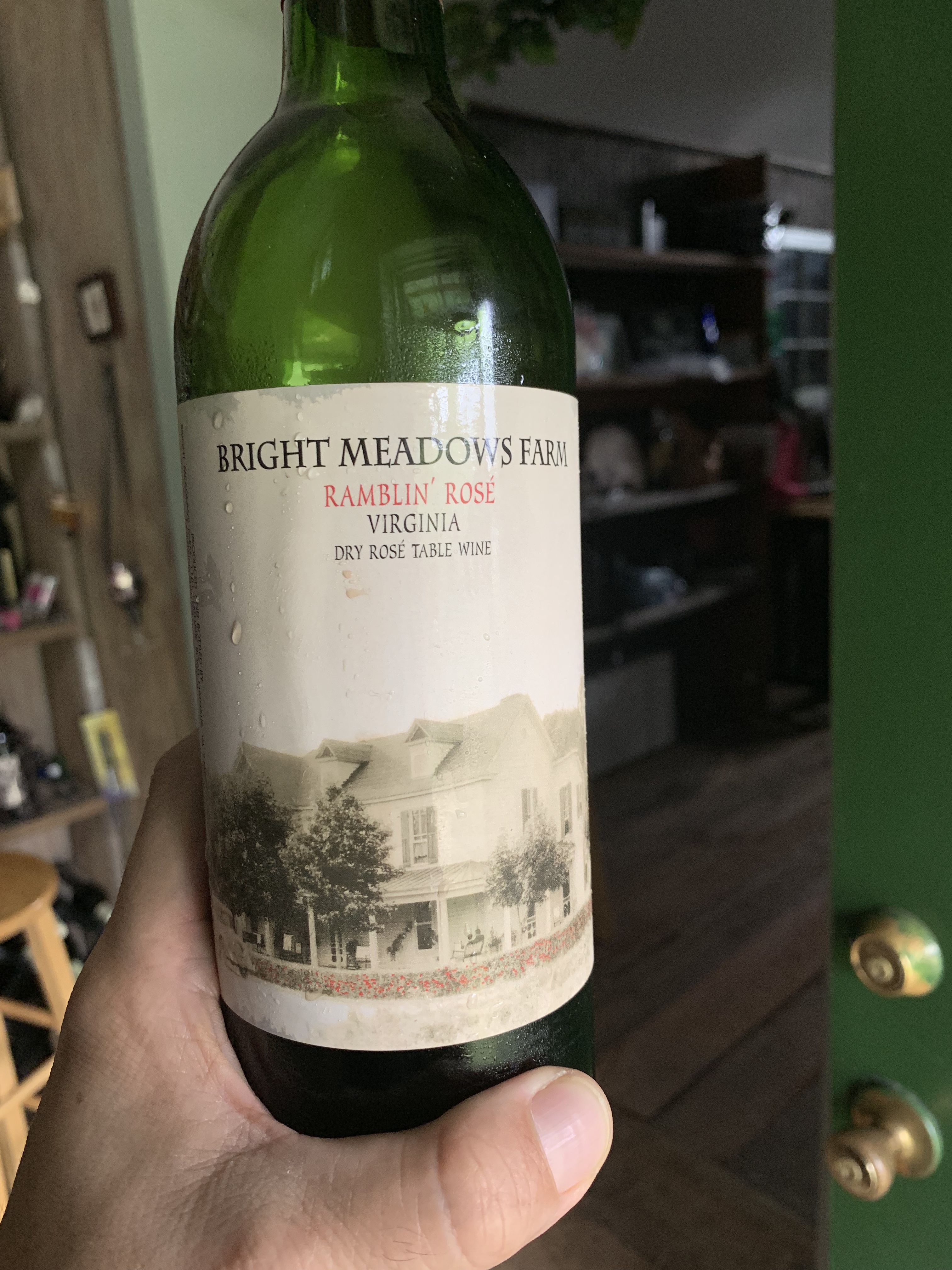
Bright Meadows Farm looks humble from the outside, but the Archers were very generous with their time. They explained to their farm’s history, including how they opened in 2005 as ‘retirement’ gig after Boyd left the FAA as an air traffic controller. Boyd’s mom taught him wine making (using Muscatine grapes no less), so I suppose the wine itch never left him.
“American wines from American Vines” is their motto. The
farm has 10 acres of vines, plus patches of blueberries and blackberries. They
grow hybrid (Norton, Vidal, Chambourcin, and formerly Steuben) and American
(Catawba, Cayuga, Concord and Niagara) grapes, plus a small test plot of Petit
Verdot. Bright Meadows also sells fruit – especially the Norton – to other
Virginia wineries, so you may well have tasted their grapes even if you didn’t
know the source.
This winery isn’t exactly close to…anything…so you’re more
likely to find them at festivals than as a visitor. Fortunately, Sans Soucy and
Hunting Creek Vineyard are nearby, so this is one of the few places in the
Southern Virginia AVA that could be called a winery cluster. As I drove by, I
passed a horse-pulled buggy – no doubt owned by some of the local Amish.
Hopefully, the rest of the locals are wine drinkers!
Shirley took me on a tour of the vineyard, explaining how while they aren’t certified organic (too much paperwork!) they try to be as organic as possible. Fortunately all their grapes are hardy varietals, so that allows them to minimalize chemical intervention.
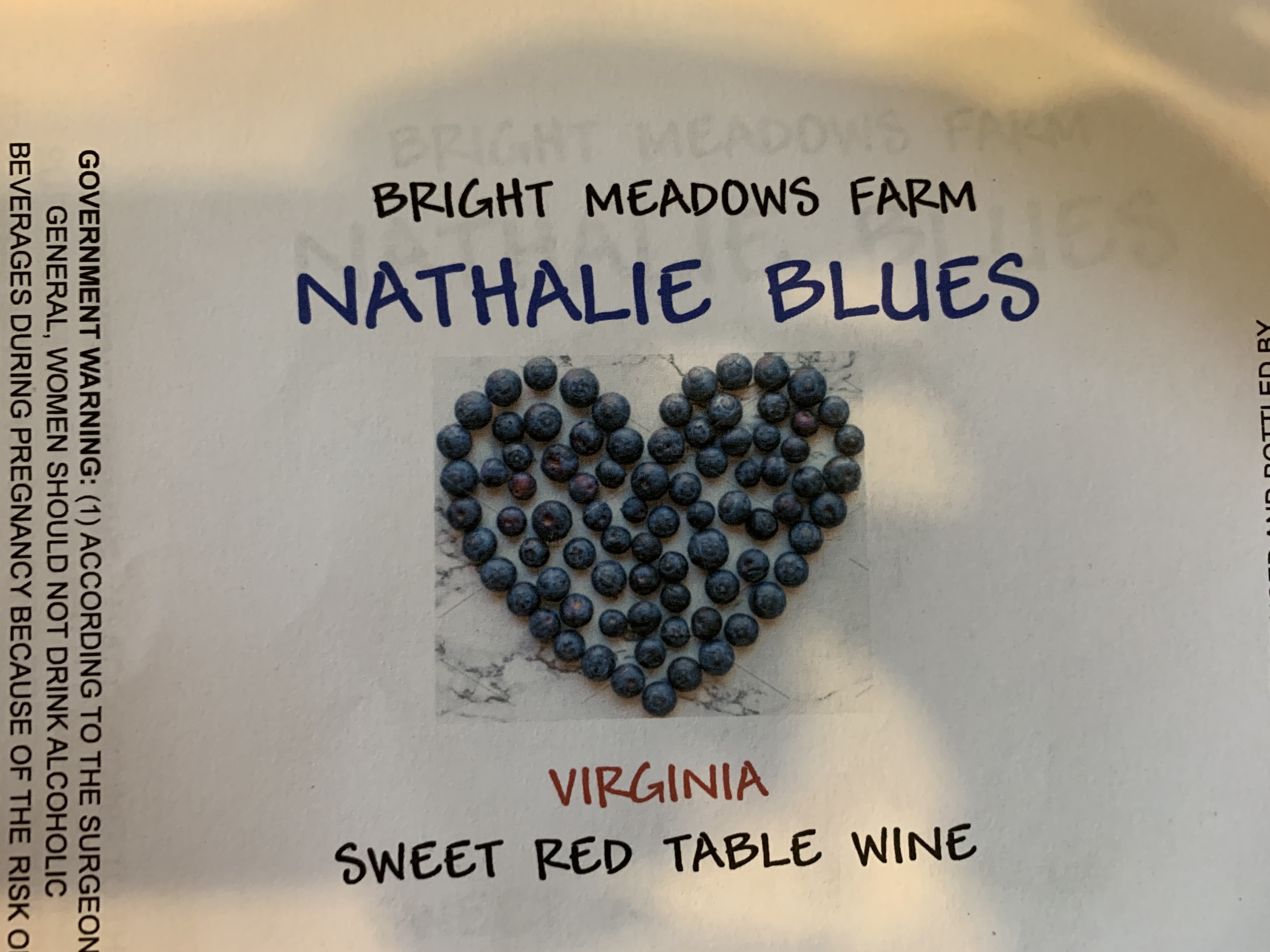
While 10 acres of vines & over 1200 cases/year is a lot (all made in steel), they seemed especially excited by their fruit wines. Their blackberry has been a huge hit, and they were awaiting ABC approval of the label for their blueberry wine. This was a trend I noticed all over this AVA; nearly all the smaller wineries made fruit wine, which thrived in their terroir and was welcomed by their local customer base. I suspect it’s also easier to manage than a vineyard, so it was a good practice all around.
The tasting room is on the small side. They have some tables
in back, but this isn’t exactly a party place. But as an old barn renovated
into a wine room, it had a charm of its own – sorta like drinking in someone’s
living room. Boyd even sat down with me outside as I enjoyed my lunch with a
glass of the Sunrise.
What I tried:
Sunrise Surrender: Steuben blend.
Bright Meadows White: Sweet, made with Niagara.
Apple Wine: Made with Macintosh apples; I liked this one a
lot.
Bright Leaf White: Semi-sweet Vidal; had a thickness to this
that was heavy on the tongue.
Rambling Rose: White Norton, made possible by pressing but
not crushing the grape. I found this took away the ‘foxy’ taste of the Norton,
so this may appeal to those who don’t usually enjoy this grape (including me).
Concord: Light, semi-sweet and easy drinking.
Blackberry: Tart, light and very yummy. I get it why so many
locals like the fruit wines from here.
BAG (Blackberries Apples Grapes): Fruit wine made with a
blend of Concord.
Dan River: Semi-sweet Chambourcin.
Halifax red: Tart, dry…maybe raspberries on the palate?
Burley Red: Full bodied Chambourcin.
Rebellion Red: Norton, which had spent 5 years in the barrel.
Sometimes I forget how big Virginia is. Having lived outside D.C. for over a decade, I’m long accustomed to having a few dozen excellent wineries within an hour’s distance. An hour further, Charlottesville or the Shenandoah Valley beckons. But given my quest to visit every single winery in Virginia, sometimes you gotta hit the road for days at a time. This is one such trip.
A note about the author…
The Southern Virginia AVA has about a dozen wineries, many placed on old tobacco farms. On the face of it, that sounds pretty good. That is…until you realize these locations are usually an hour’s drive away from each other. This lack of wine clusters makes it challenging for all but the truly insane Virginia wine purists to make a dedicated wine-focused trip to this area.
That said, there’s a lot of good wine to be had down here, with everything from sweet Muscadine to hybrids to traditional Bordeaux-style blends, served in tasting rooms that range from someone’s home to outright mansions. Yes – go ahead and scoff at sweet wine or native American vines (I admit – I do). But as the old adage goes, the customer is never wrong – and they definitely have customers.
Three Sisters at Shiney Rock
I asked around why this AVA seems to have such a focus on sweet wines and found it has more to do with good business sense than with issues with the terroir. See, a disproportionate number of these “southern” wineries are tiny, mom-and-pop farms who decided to put their land to more productive use and realized (shocker!) that alcohol is a big seller. Lacking the money or experience to grow European Vitus vinifera, they turned to varietals or styles that are easy to produce – namely hybrids, vines native to North America (aka Vitis labrusca), or fruit wines.
The area’s demographics also favor of this approach. Southern Virginia is both thinly populated and lack many well-known tourist attractions. As locals are often the main audience, these wineries must cater to local tastes – which translates to sweet and/or fruity. Not surprisingly, a few also have breweries on site.
Beer tasting at Sans Soucy
But vinifera lovers – don’t despair! Despite the area’s rep for sweet wines, I found several excellent wineries that catered to my own palate. As with everywhere else, vinifera can thrive when care is put into good site selection and maintenance, and having a growing season that’s 2-3 weeks earlier than the rest of the state brings its own advantages. I dare you to drink anything from Rosemont and other vinifera-focused vineyards and walk away thinking this area can’t produce world-class wine.
One thing you won’t find are many fancy tasting buildings. Everywhere has a small-town vibe to it, with most places opting for more modest setups in transplanted or refurbished barns, side-buildings adjacent to their homes, or (for Tomahawk Mill) a flour mill. Maybe these aren’t the places you’d have a big event, but the scenery is just as pretty as you’ll find elsewhere in the state. As an added bonus, in nearly every case the wine maker (usually also the owner) was pouring my wine at the tasting bar, which is become rarer and rarer everywhere else.
Three Sisters of Shiney RockTomahawk Mill Vineyard
Despite the miles on my car, I’m very happy I made this trip. I got to see a side of Virginia that few transplanted yankees get to see, and walked away with a fresh realization that you don’t need a fancy tasting room to have a good time.

















 Wine Trails and Wanderlust