Fall Foliage in Virginia Wine Country

Fall is one of the most popular times to visit Virginia wine country. While the season has everything from wine festivals, new vintage release parties, and harvest dinners, my favorite activity is to combine winery visits with a tour of Virginia’s fall foliage.

The two themes overlap perfectly. Vineyards are generally located at higher elevation sites, guaranteeing great photos of the surrounding countryside. Many are also near state or national parks. The addition of fall colors guarantees the slogan “Grapes don’t grow in ugly places” becomes doubly accurate.

Different parts of Virginia will reach their peak color anywhere between mid-October and early November, according to Explorefall.com.

For ‘leaf peepers’ who want to get the most out of fall foliage in Virginia wine country, here is a guide on where and when to go.

Mid to Late October: The Shenandoah Valley

Peak foliage season begins in the Shenandoah Valley, Virginia’s oldest wine region. The valley’s relatively cool and dry climate create ideal conditions for viticulture, and the mountains that frame the area become a canvas for the season’s changing colors.

While the Shenandoah Valley is home to a dozen wineries, two that particularly stand out for their fall colors are Muse Vineyards and Star in the Valley.

Muse Vineyards (Woodstock). Muse issnuggled between the contours of the North Fork of the Shenandoah River, Seven Bends State Park, and the western slope of the Massanutten Mountains. While the best views are likely to be found from their deck, more adventurous wine drinkers should visit the elevated foot bridge that crosses the river.

Optimized by JPEGmini 3.18.8.220254041-AP 0xdab15faa

Make sure to try their Erato white blend, winner of the 2024 Shenandoah Wine Cup.

Star in the Valley (Strasburg). Star is located along the edge of the valley’s northern entrance, hugging the contours of Devil’s Backbone State Forest. At 1,000-feet it’s also one of the higher elevation vineyards in the area, guaranteeing great views.

This elevation is one of the reasons Star founded the “Peak Shenandoah” wine trail, which includes a half-dozen wineries likewise situated around Shenandoah Park. While my favorite wine is their cabernet franc, visitors should also join one of Star’s periodic star-gazing events.

Late October to early November: Northern Virginia

Peak foliage will reach Northern Virginia in late October. While Shenandoah National Park is arguably the region’s most popular fall destination, smart travelers can avoid these crowds by visiting any combination of wineries and smaller parks in the surrounding area.

Barrel Oak Winery and Brewery (Delaplane). “BOW” isn’t just the winery’s initials; it’s also a reference to how it’s one of the most dog friendly venues in the state. BOW’s location near Sky Meadows State Park gives foliage travelers extra incentive to visit here in the fall.

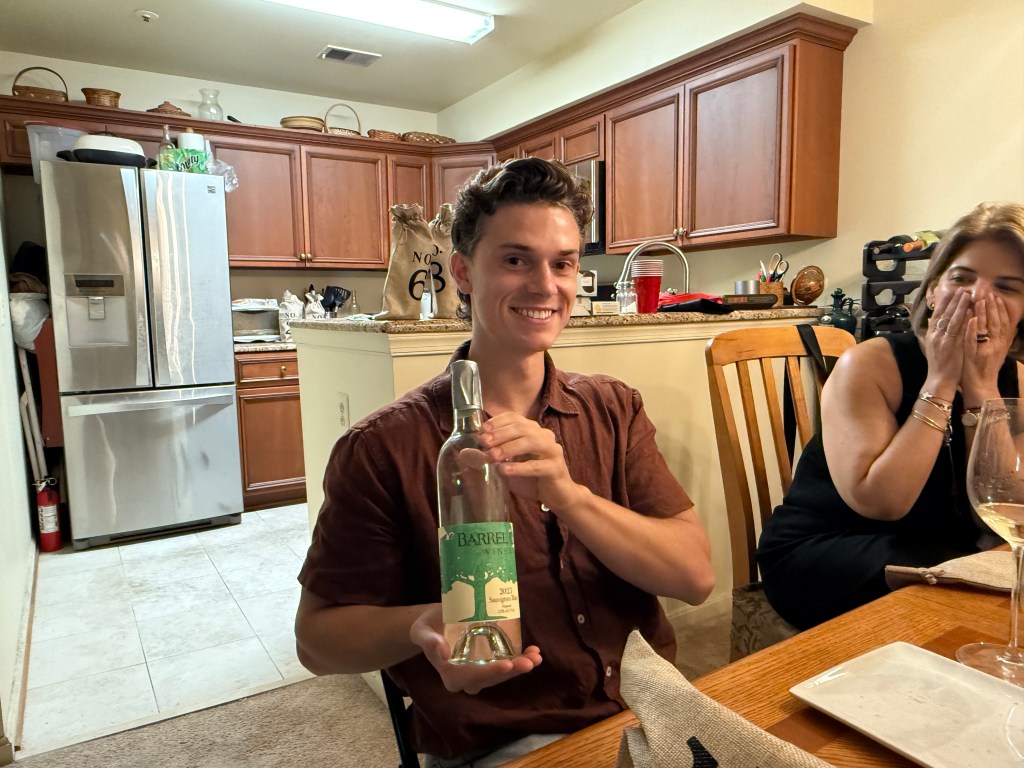
Those who haven’t visited recently will be wowed by their revamped wine list. Start with their 2023 Sauvignon Blanc, which a panel of judges at the 2024 San Francisco Chronicle decreed as one of the best wines at the event.
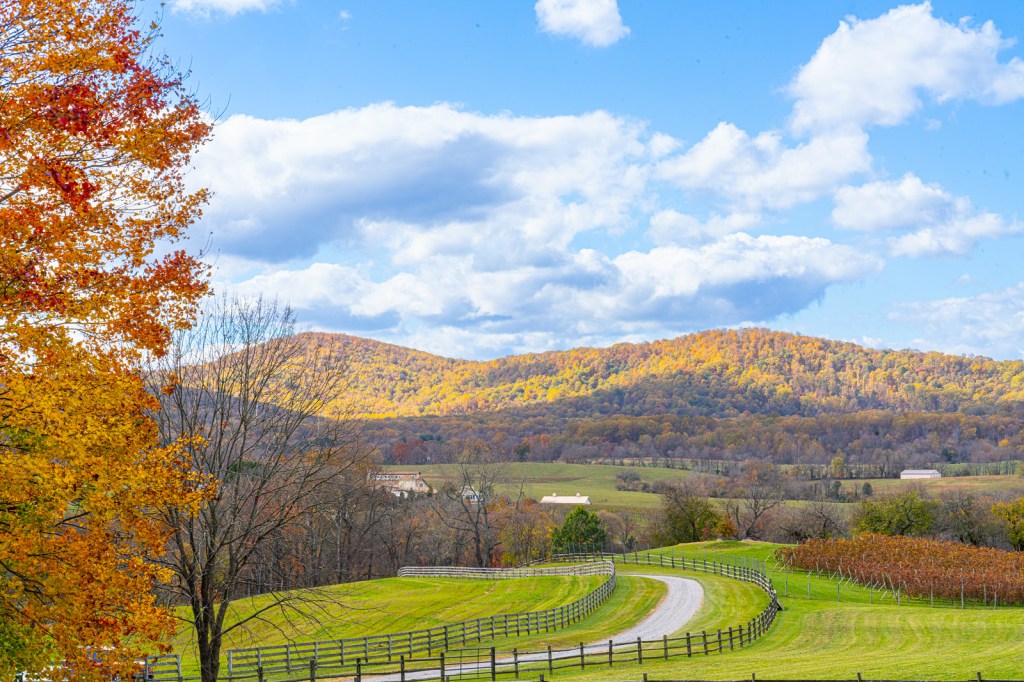
Breaux Vineyards (Loudoun Valley). Breaux’s location between Catoctin Mountain and the Blue Ridge isn’t just scenic, it creates a microclimate that facilitates viticulture. This is one of the reasons nebbiolo, a grape commonly associated with Italy’s Piedmont region, can thrive here.

Visitors looking for additional foliage pictures can visit historic Harper’s Ferry or Sweet Run State Park, both a short drive away.
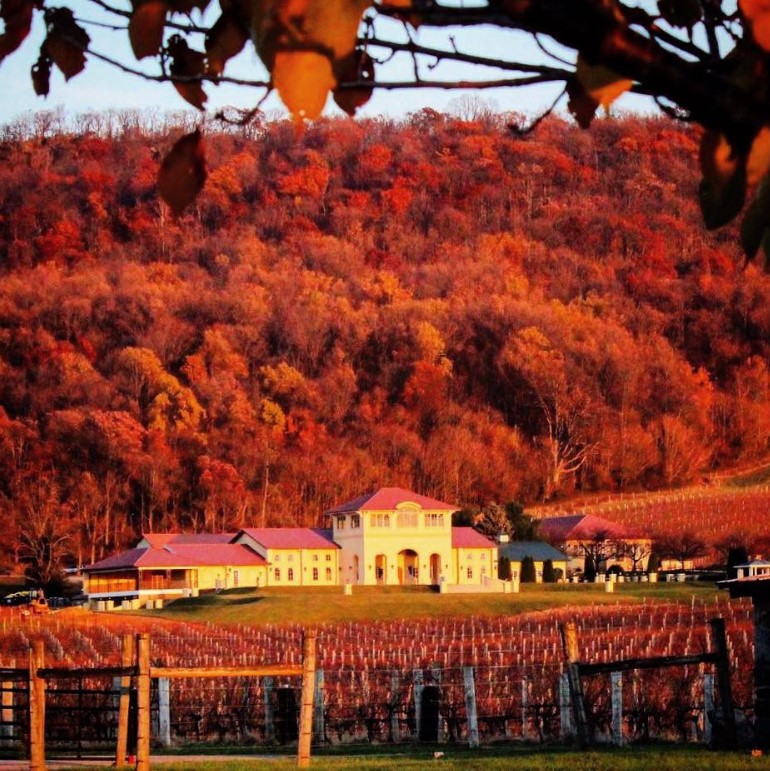
Twin Oaks Tavern Winery (Bluemont). Twin Oaks already boasts one of the best views in Virginia, with or without fall foliage. Its proximity to Bear’s Den Scenic Lookout makes it packed with extra opportunities for leaf peeping.

The winery’s name comes from its history as a mountain retreat for Washingtonians looking to beat the summer heat. The opening of the Little Acorn Cottage Airbnb on the property allows travelers to continue this tradition.

Beginning of November: Amherst and the Shenandoah Foothills

The start of November is typically the pinnacle of fall foliage season, so save the best for last. Two exceptional locations to see these colors are Ankida Ridge and DuCard Vineyards.

Ankida Ridge Vineyards (Amherst). Ankida’s perch at 1,800 ft makes it one of the highest elevation vineyards in Virginia. This unique microclimate allows them to grow pinot noir, a grape so difficult to cultivate, it has acquired the nickname “The Heartbreak Grape”.

Owner Christine Vrooman’s hospitality may make it unlikely visitors would want to leave. If they do, be sure to visit Chimney Rock Mountain Overlook, part of the Blue Ridge Parkway.

DuCard Vineyards (Eltan). DuCard offers views of Shenandoah National Park without the need to fight for space on Skyline Drive. Its location near both Old Rag Mountain and White Oak Canyon, two of Virginia’s most famous hiking trails, makes it a guaranteed hotspot for fall foliage.

Visitors who don’t want to relax with DuCard’s award-winning 2024 Rosé can easily visit Shenandoah National Park via its Thorton Gap entrance, which is guaranteed to be less busy than the more famous gate at Front Royal.

Virginia Wine Month Insert:

October is when local wineries celebrate Virginia Wine Month. Here are a few favorite activities:

For additional suggestions on offerings and events, see https://www.virginiawine.org/virginia-wine-month.

Milea Estate Vineyard

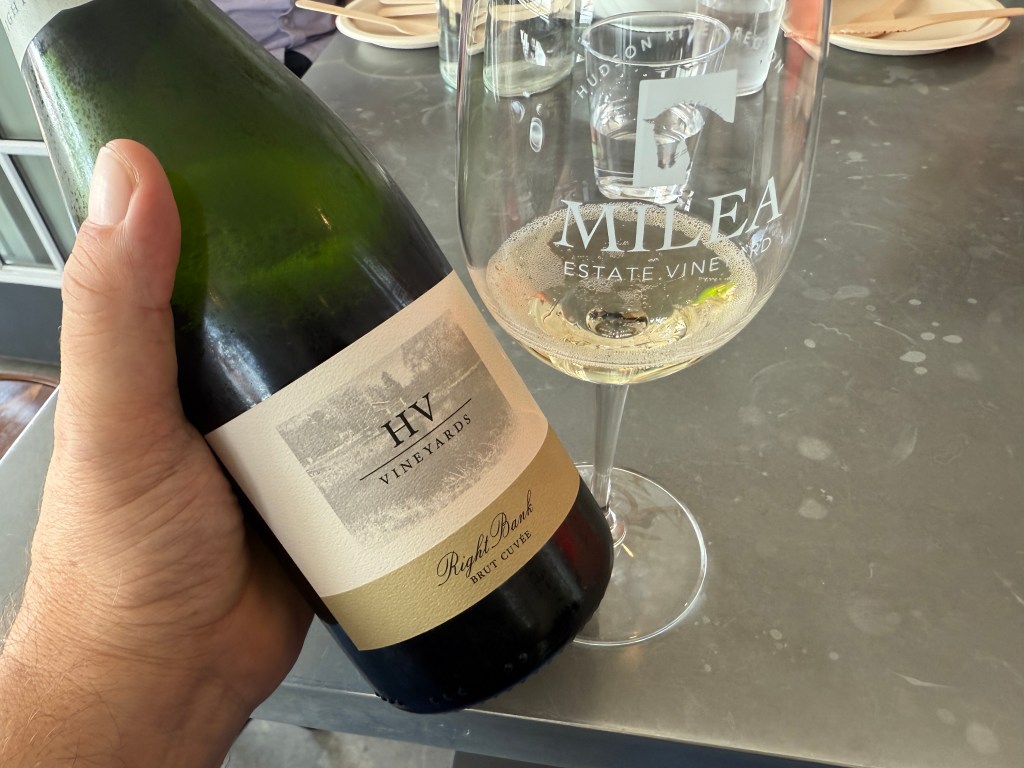
Milea Estate Vineyard is located not far from where I grew up. Ironically, I didn’t know much about it until I met owner Sang Milea at the 2024 Atlantic Seaboard Wine Competition award ceremony in DC, where she accepted a Best in Class award for her 2022 Vincenza Reserve BDX blend.

Sang extended an invitation to meet her and husband Barry Milea at their winery. During a sunny early September day, I was finally able to sit down and get the full story of how the winery was founded.

The story started decades ago, when Barry’s transportation company was hired by several Finger Lakes wineries. This then-new wine region was showcasing their wines in New York City and needed temperature-controlled trucks for the journey. Some of them gifted him bottles as a ‘thank you’.

Ironically, Barry wasn’t initially impressed with what he tasted. While famous today, back then the Finger Lakes wine region was still in its infancy, and the wines must have showed it. Barry wondered if he could do better.

One advantage he had was his proximity to New York City. Barry’s home in the Hudson Valley was just 80 miles from the biggest single wine market in the US. If the Finger Lakes could make wine, why couldn’t the Hudson Valley?

This interest led to several test plantings at Barry’s home. While he learned Riesling didn’t love his vineyard site, the overall results were promising enough that Barry purchased the neighboring farm, which became the site of his main vineyard and tasting room.

Now, Milea has 14 acres under vine, including Cabernet Franc, Blaufränkisch, Chardonnay, and several hybrid grapes

Barry discussed the relatively ‘virgin’ nature of viticulture in the Hudson Valley. While vineyards have long been found in the area (NY state’s oldest vineyard isn’t far from here), many of them were relatively small mom-and-pop operations that lacked the capital necessary to elevate their businesses.

He emphasized hiring top talent is necessary to attract wine drinkers who are normally spoiled by the NYC wine scene. To this end, Milea upped their game by hiring a chef from the nearby Culinary Institute of America and a Napa winemaker. They also purchased nearby Clinton winery, which Milea is currently turning into a sparkling wine house.

Sang was especially proud of the kitchen, which allows Milea to be a one-stop-shop for visitors. I especially loved the fig and burrata and couldn’t say ‘no’ when Sang was offering me more cookies.

I also was able to explore the wine list in depth. I started with an excellent a great sparkling, which had lots of toasty brioche notes and great acidity, and followed it with their “Queen Medow” a Chambourcin-heavy rosé made with a dash of Merlot.

Next up was a Grüner Veltliner and a pair of Chardonnays. The former had a spicy nose and notes of flint and minerality…maybe some apricot? The unoaked Chardonnay was very clean with apple notes. The Reserve Chard had a lot of texture and was probably my favorite non-sparkling wine of the day.

Then came the reds. The 2022 Cabernet Franc was really aromatic, with notes of raspberry and black cherry on the nose and dried fruit on the palate. No pyrazines here; this was more of a Loire-style wine.

We finished up with their ‘Sang’ Cabernet Franc, a Blau, and the 2022 Vincenza Bordeaux blend.

I loved my visit here. They spared no expense on hospitality and overall presentation, with a great mix of food and wine. Next time I’ll have to revisit the Cabernet Francs with the sliders.

2024 Shenandoah Cup Wine Competition Top Medalists

Earlier this year I was gifted a half-case of the top-medaling wines from the 2024 Shenandoah Cup wine competition. I had planned on sampling them earlier, but life got in the way and it wasn’t until recently I had a tasting group come over to help me pop some corks.

If you follow my blog, you’d know that I believe the Shenandoah Valley is the best place for viticulture in Virginia. There are a lot of reasons for this, but the short answer comes down to a combination of the valley’s dry climate and limestone soils. These factors give Shenandoah vineyards great growing conditions, plus a bright acidity that’s hard to replicate elsewhere in the state.

Since 2019, the Shenandoah Wine Trail has held a competition to highlight wines made in the valley. The event winner is announced at a November gala, now held at The Yellow Barn at Shenandoah Caverns. The next event is November 14th; tickets are on sale now.

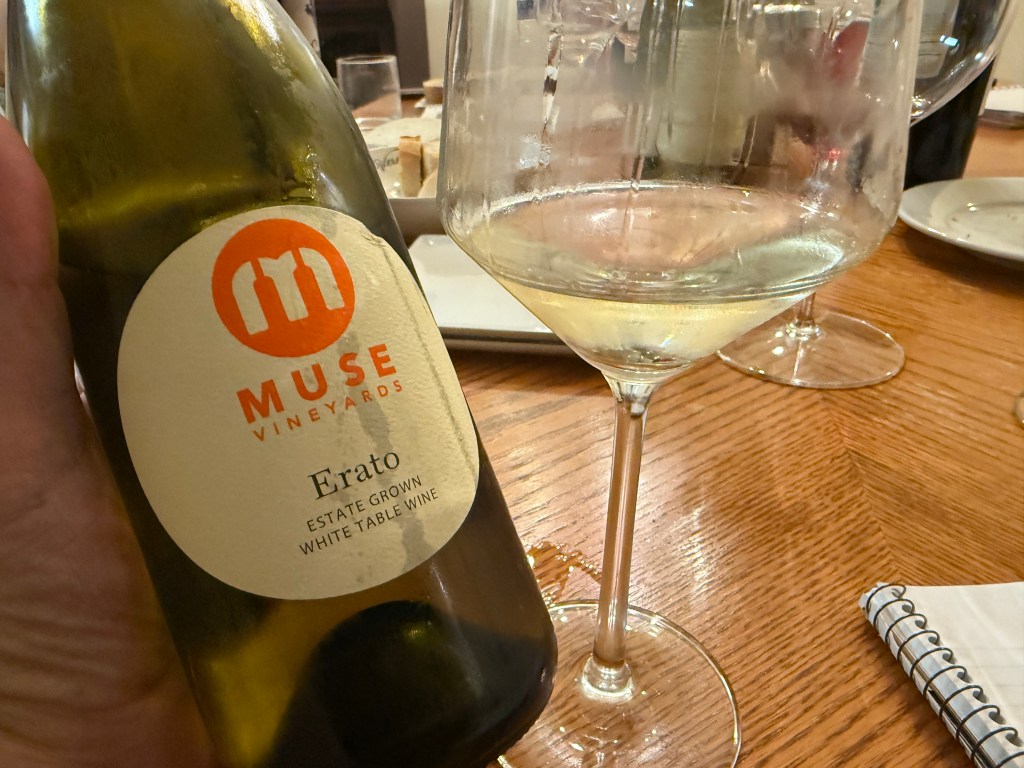
The 2024 Cup winner was Muse Vineyards’ “Erato” white blend. This aromatic white is something of a departure from the style of previous winners, but I think it was a very suitable pick as it highlights the region’s ability to create a diverse set of offerings.

Yes, you can find plenty of traditional Bordeaux-style reds, plus more Virginia-esque petit verdot and cabernet francs. But the Shenandoah Valley also offers excellent sparkling wines, next-generation hybrids, plus wines made from a growing number of varieties (pinot noir, refosco, grüner veltliner) that are hard to find in Virginia, if not the East Coast.

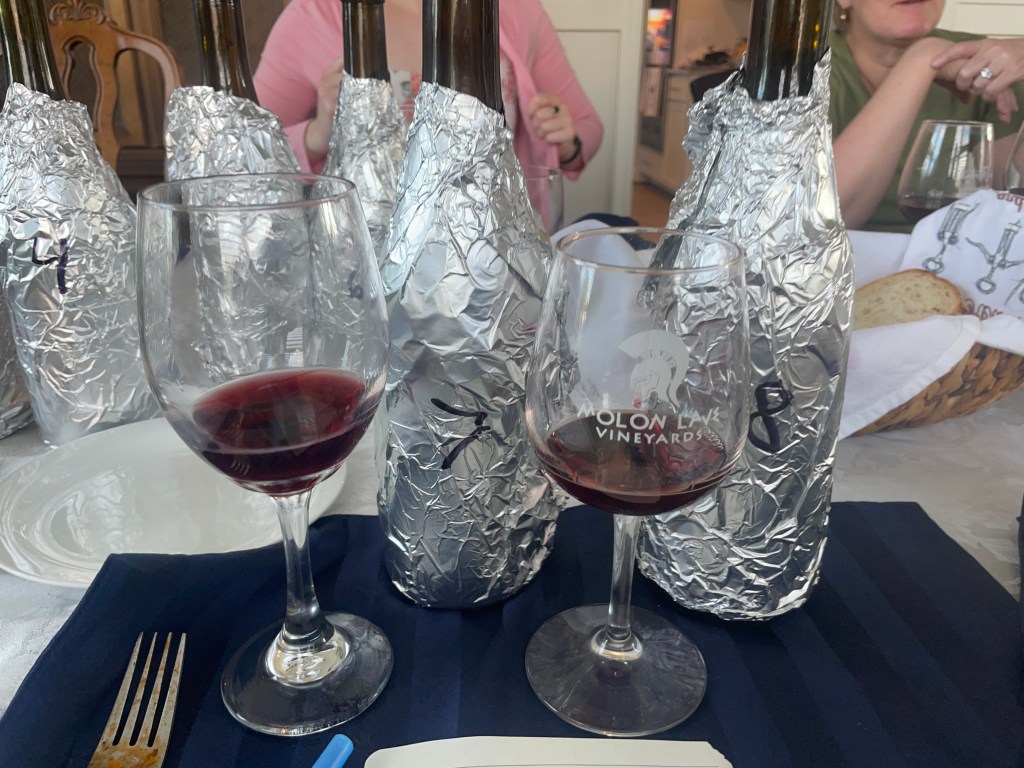
For my event, I had eight Shenandoah Valley wines that I shared with a group of friends. Six of these wines were in last year’s cup, plus I added a previous winner (Bluestone Vineyard’s Blue Ice) and a new pinot noir from Cave Ridge (which will likely be in this year’s Cup).

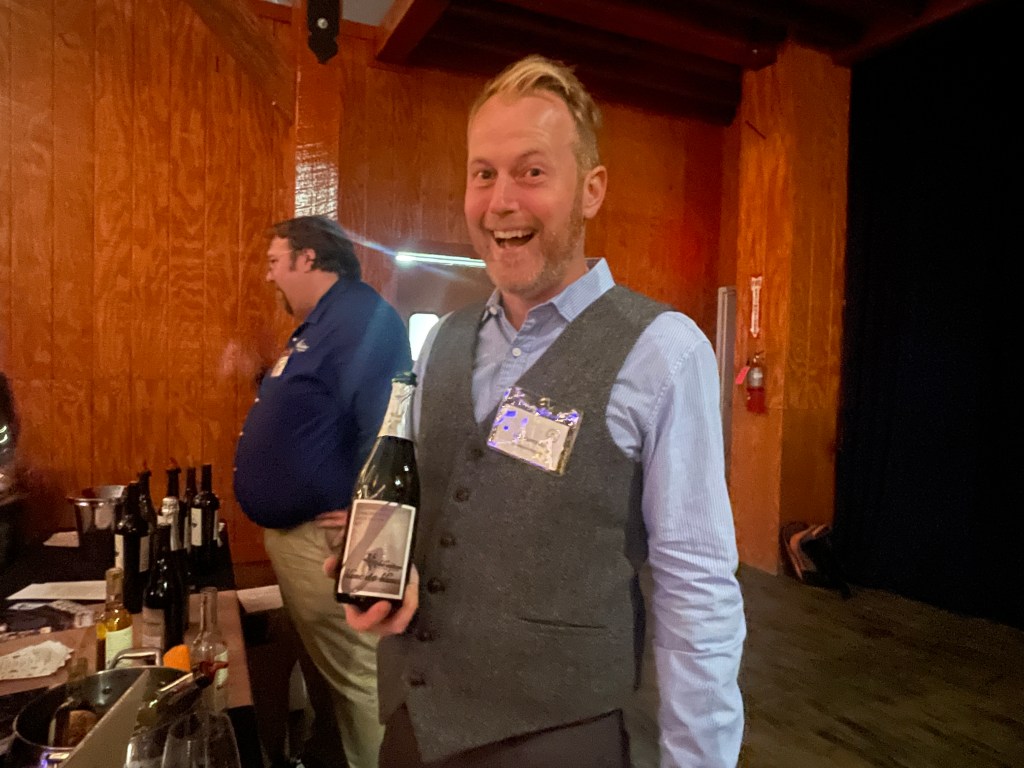
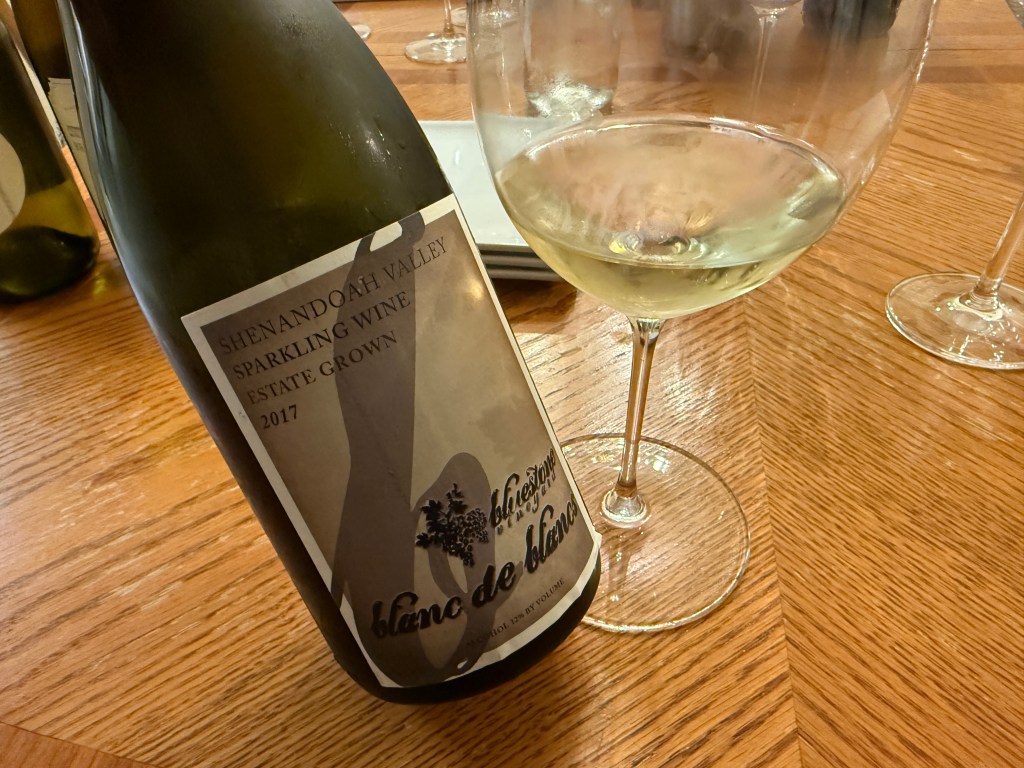
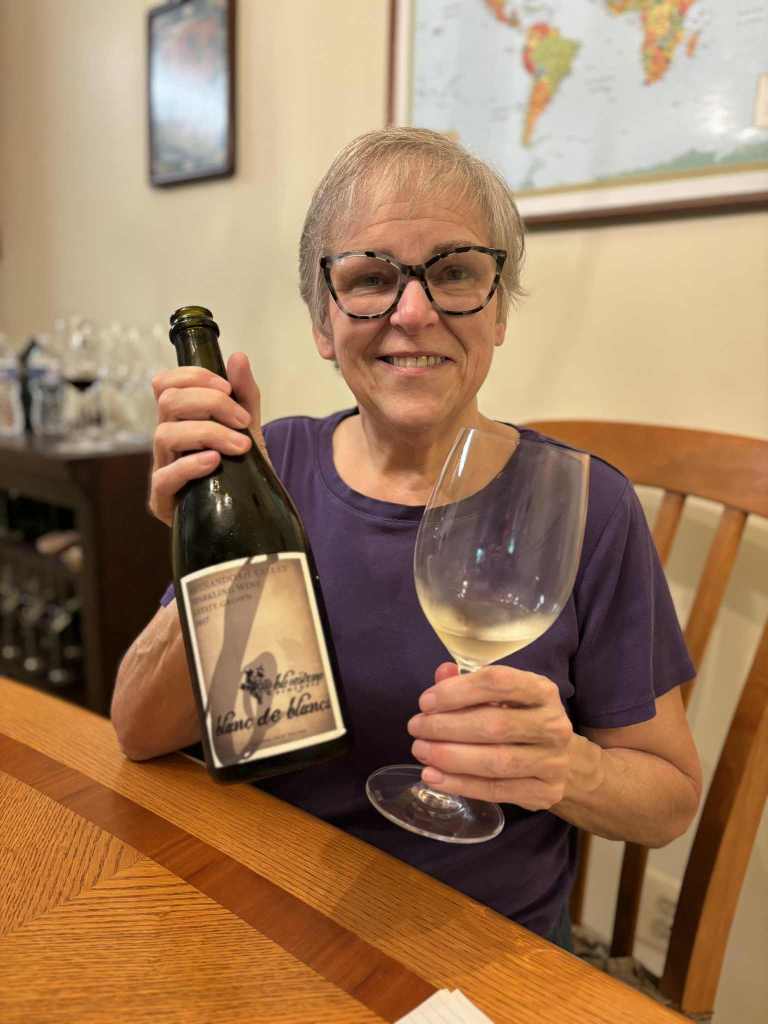
Bluestone Vineyards 2017 Blanc de Blancs. We kicked things off with a sparkling wine, made by Lee Hartman of Bluestone Vineyards.

On the nose we had notes of brioche, perhaps with notes of toast. Some noted notes of lemon cake or lemon icing, but they faded quickly. On the palate, we found notes of green apple, lemon, and Crème Brûlée.

Overall we felt this was a really outstanding sparkling. Rich palate, lingering finish, well balanced. Definitely a winner.

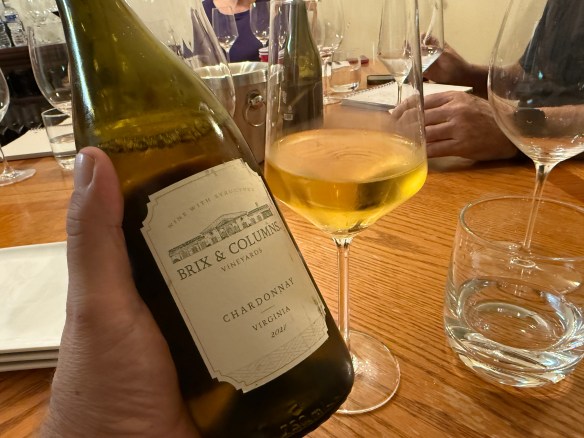
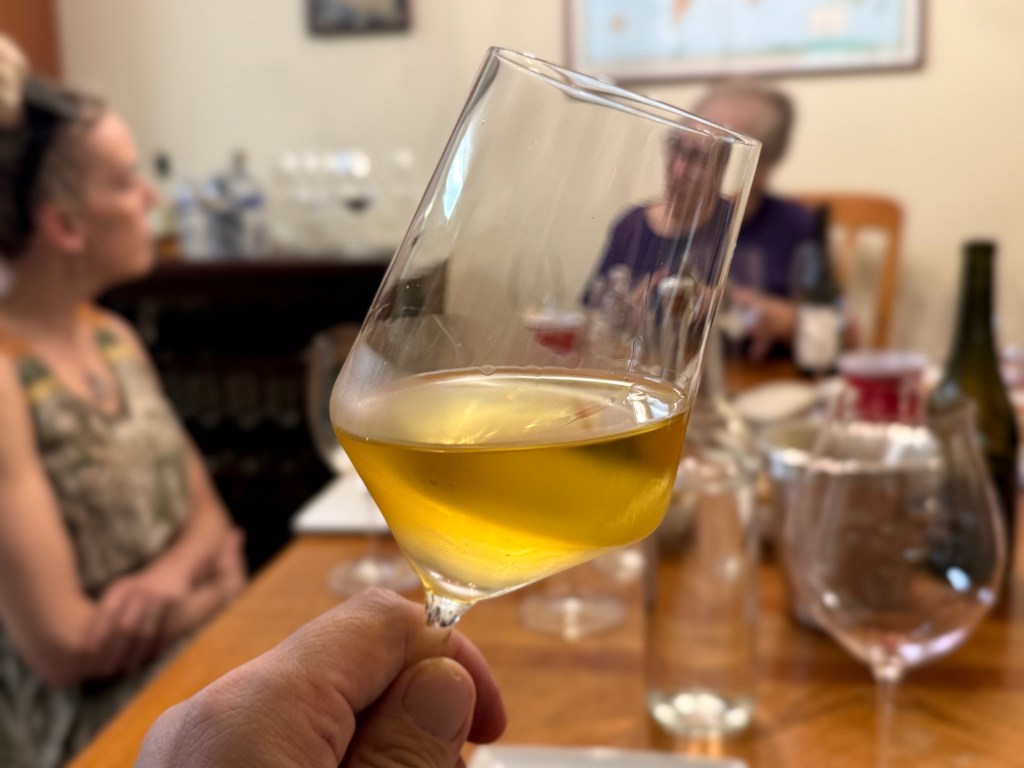
Brix & Columns 2021 Chardonnay. This chardonnay’s rich, almost orange color enthralled us even before we sampled it.

On the nose, my group found a plethora of differing notes ranging from caramel and toast, maybe some butterscotch or lemon peel. At least one of us found a little mustiness.

On the palate it had intense notes of lemon, maybe butterscotch. Butter rum finish. It felt ‘big’ but was actually only 12.4% alcohol.
I’m guessing that those who like oaky California-style Chardonnay lovers would love this wine, even if it actually isn’t buttery. If anything, it had a ‘hot toddy’ quality to it.

While that sounds like a lot of descriptors, this wine was very well balanced. It wasn’t necessarily the style of Chardonnay I would have asked for, but everyone at my table enjoyed it. And again – that color!

Muse Vineyards NV Erato. Winner of the 2024 Shenandoah Cup. At $21 it’s also a great value for your money.

This white blend of 82% vidal, 7% picpoul, 4% muscat, and dashes of albarino, marsanne, and roussanne is something of an outlier from my usual go-to styles of white wines. That said, it was so interesting I found myself sampling it over and over.

We all LOVED the nose on this wine; perfumy and complex. The 4% muscat went a long way.

My group was all over the place when describing the nose, ranging from jasmine flower, fresh lemon juice, grapefruit, or white peach.

On the palate it was bright, vibrant, presenting higher acid initially but then the white peach notes came out.

I don’t know whether to describe Erato as a porch wine, or a starter to a meal. But I can definitely say it was a really well-crafted wine, with a great mid palate.

Cave Ridge 2023 Pinot Noir. This wine wasn’t part of the 2024 Shenandoah Case, but since it fit with the “Shenandoah Wine” theme I decided to add it in anyway. Cave Ridge planted pinot 5 years ago and is now one of a handful of pinot growers in the state.

This pinot has gorgeous color. Red fruit, cedar and smoke on the nose. Very clean and varietally correct. The complexity makes you want to keep drinking.

This wine was all about the front palate, with good acidity and earthiness. Maybe more fruit on the nose than palate. Very impressive for Cave Ridge’s first pinot noir ever.

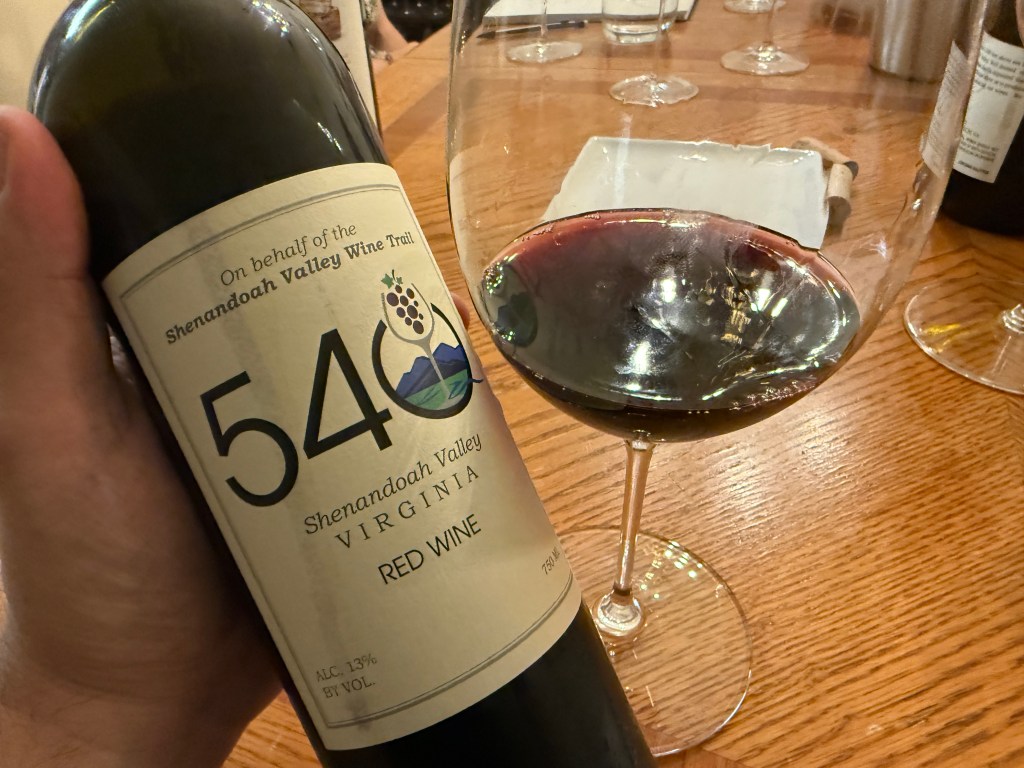
Shenandoah Valley Wine Trail “540”. Named after the local area code, this collaboration between Bluestone Vineyard, Wolf Gap Vineyard, and Kindred Pointe is blend of 2/3rds petit verdot and 1/3rd cab sauv. It’s also a non-vintage wine, using fruit from 2021 and 2022.

I felt it had a vegetal nose, perhaps some pyrazines, but it was by no means ‘green’. It was soft on the palate, with notes of mocha, coffee and smoke. We also found dark fruit notes, but that seemed in the background.

This wine didn’t have the markers of a PV, which I found surprising given its blend. It was easy-drinking enough you could bring this to an event and everyone could enjoy it.

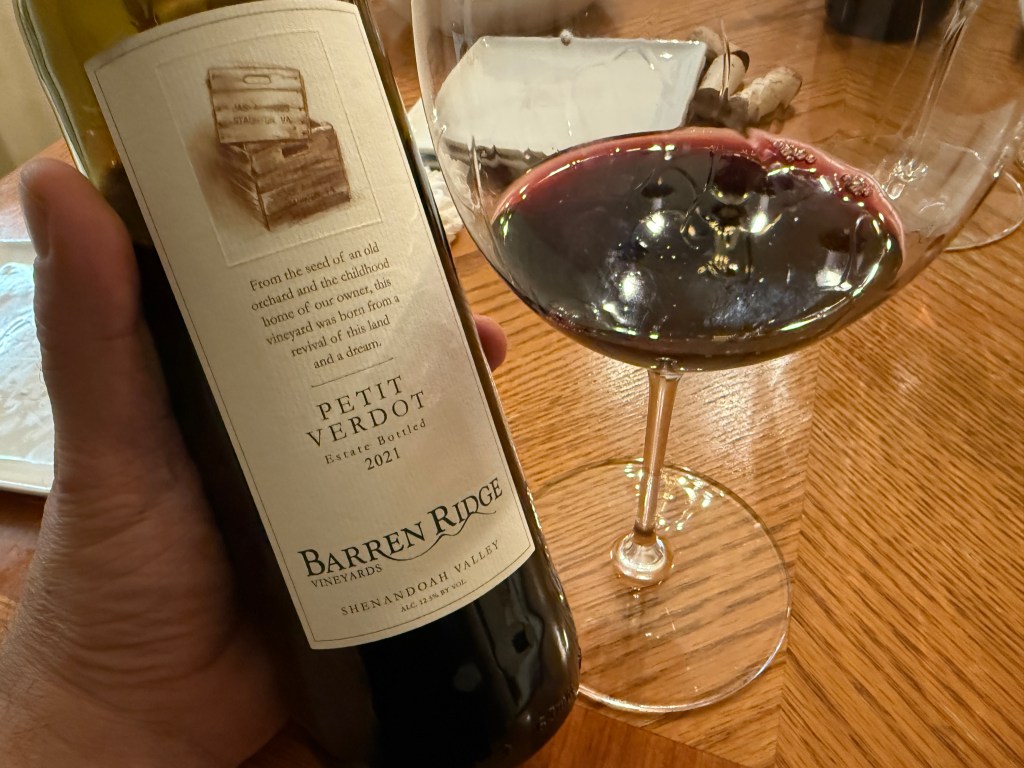
Barren Ridge 2021 Petit Verdot. I tasted and later wrote on Facebook, “This is one of the most PV PVs that has ever PVed. It’s seriously everything you want in a Virginia Petit Verdot.”

I stand by that assessment. On the nose it was a combination of violets, cedar, and black fruit – especially blueberries. There was no mistaking what variety was in this bottle.

The acidity was there, but it wasn’t as prominent as I’ve seen in other PVs. This particular wine was rather fruit forward with tart, ripe fruit, especially blackberry and plum.

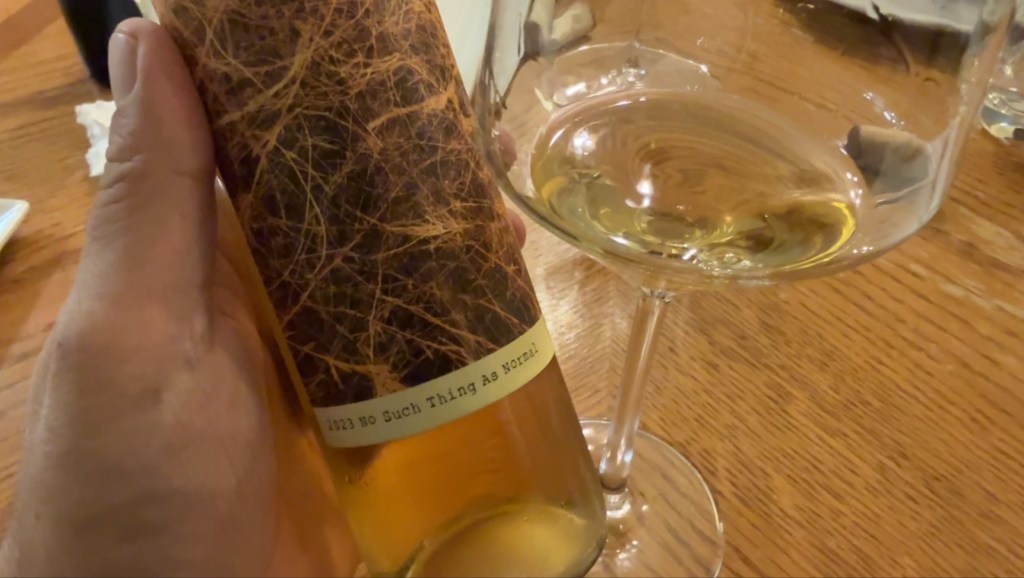
Bluestone Vineyard “No Such Things as Normal” appassimento-style dessert wine. This is part of winemaker Lee Hartman’s ‘Vinyard Designated Series’, made with traminette, petit manseng, and golden muscat.

From the description online, I get the idea this wine wasn’t necessarily planned out in advance. Typically Lee makes ice-style wines, but the year this was made no freezer was available so instead he dried the fruit in a tobacco barn. The result was a barrel-fermented wine with lower sugar and higher alcohol.

The “NSTAN” was very perfume-y, with notes of honey, lime, jasmine flowers, and maybe even a ‘7-Up’ spiff to it. Those notes largely continued on the palate, maybe heavier on the honey and some additional nuttiness. It was sweet, but it wasn’t cloying sweet.

Winemakers love making dessert wines, as such beverages are known for their complexity and ability to be paired with a variety of dishes. But all too often, fancy dessert wines are a hard sell for consumers. That’s a shame because we really enjoyed this one.

Bluestone Vineyard 2017 Blue Ice. This is the style of dessert wine Bluestone is known for, made with traminette. If “NSTAN” is their appassimento-style, this is Bluestone’s equivalent of a German Eiswein.

This wine came off as concentrated honey, with an intoxicating nose. Sweet, but not cloying sweet because the acidity is so high.

The 2025 Shenandoah Cup is only weeks away as I write this…I wonder what’s in the next case! I’m hoping it will include the Cave Ridge Pinot Noir, but we’ll see.

Fjord Vineyards

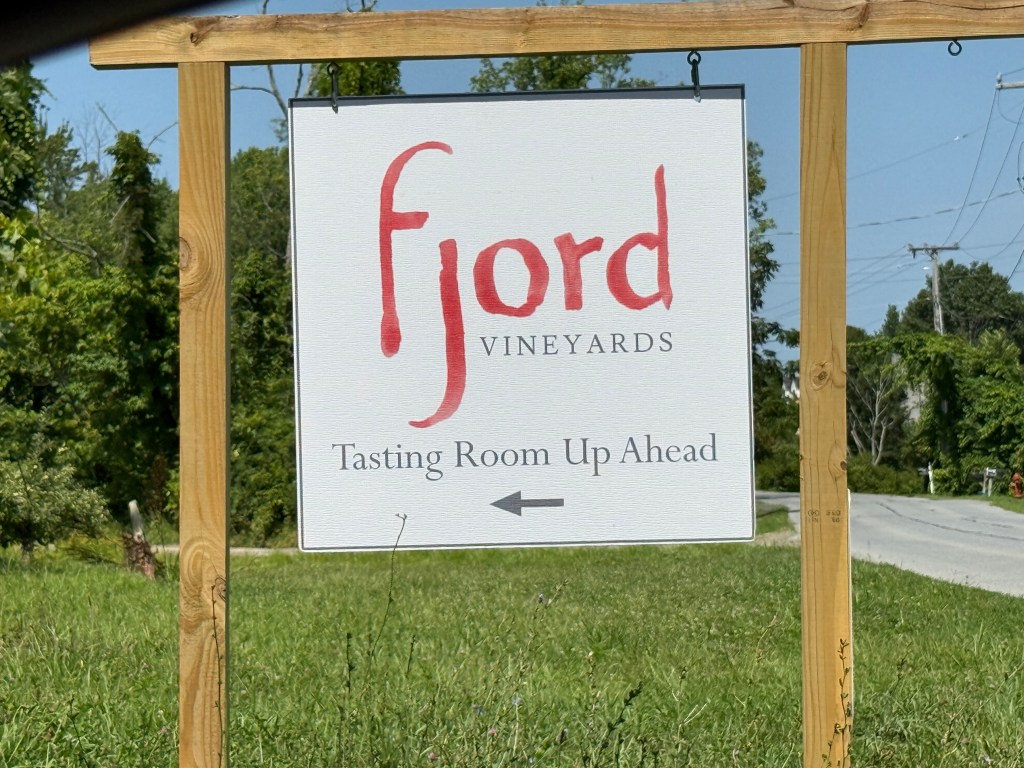
As a native of the Hudson Valley, you can imagine how pleased I am at the proliferation of vineyards in the area. When Fjord opened along Route 9 at a site not far from the Hudson River, I marked it as a must-visit, even if it took me a while.

Fjord Vineyards is owned by Matt Spaccarelli, part of the same family that owns nearby Benmarl Winery. Matt was already making Benmarl’s wines but wanted to branch out. He founded Fjord in 2013 as a 2nd label, giving him the flexibility to be a little more experimental.

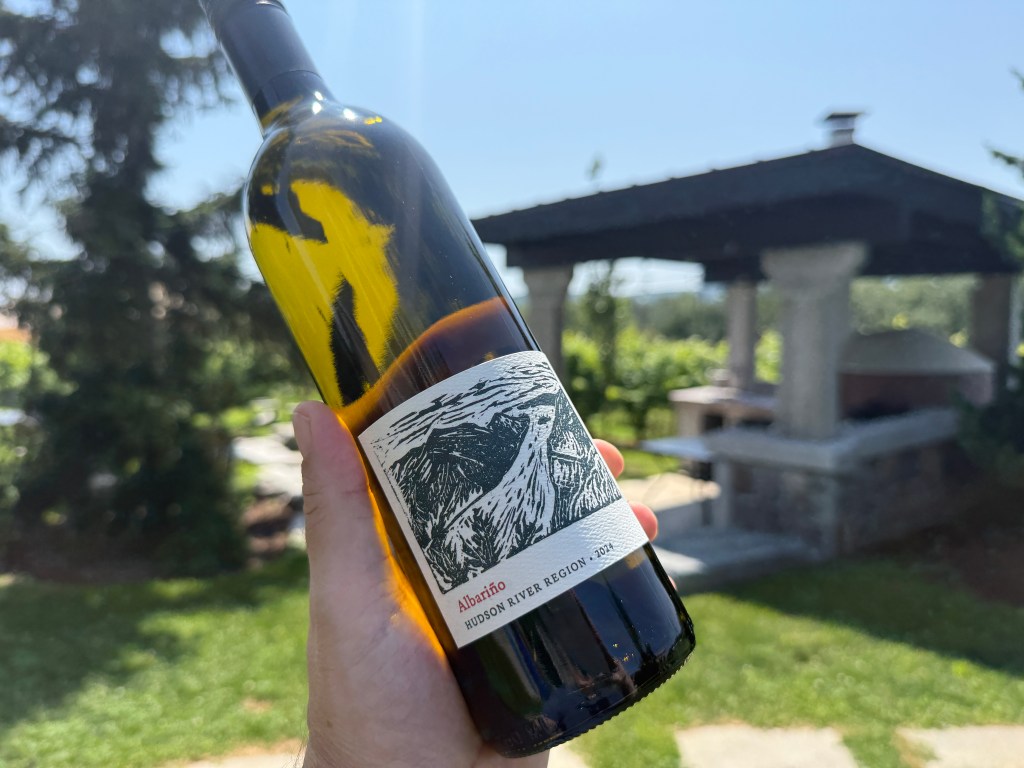
Now, Matt makes wine for both locations. Fjord’s wines are made with their 42 acres of estate grapes, which include 3 acres of Albariño (the largest planting of this variety in New York State).

At first, I thought the name was a homage to a cool piece of Norwegian topography, but it’s more than that.

It turns out a nearby section of the Hudson River might properly be called a fjord, defined by wiki as a “long, narrow sea inlet with steep sides or cliffs, created by a glacier”. This waterway helps remove cold air from the vineyard, allowing them to produce varieties that otherwise wouldn’t survive elsewhere.

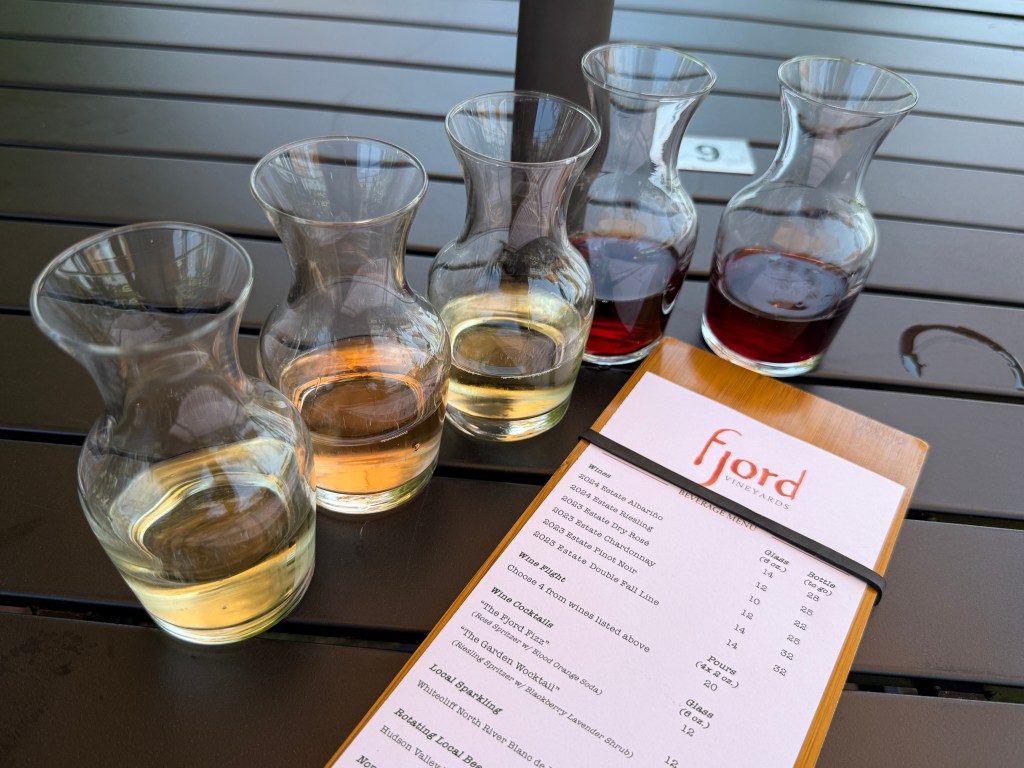
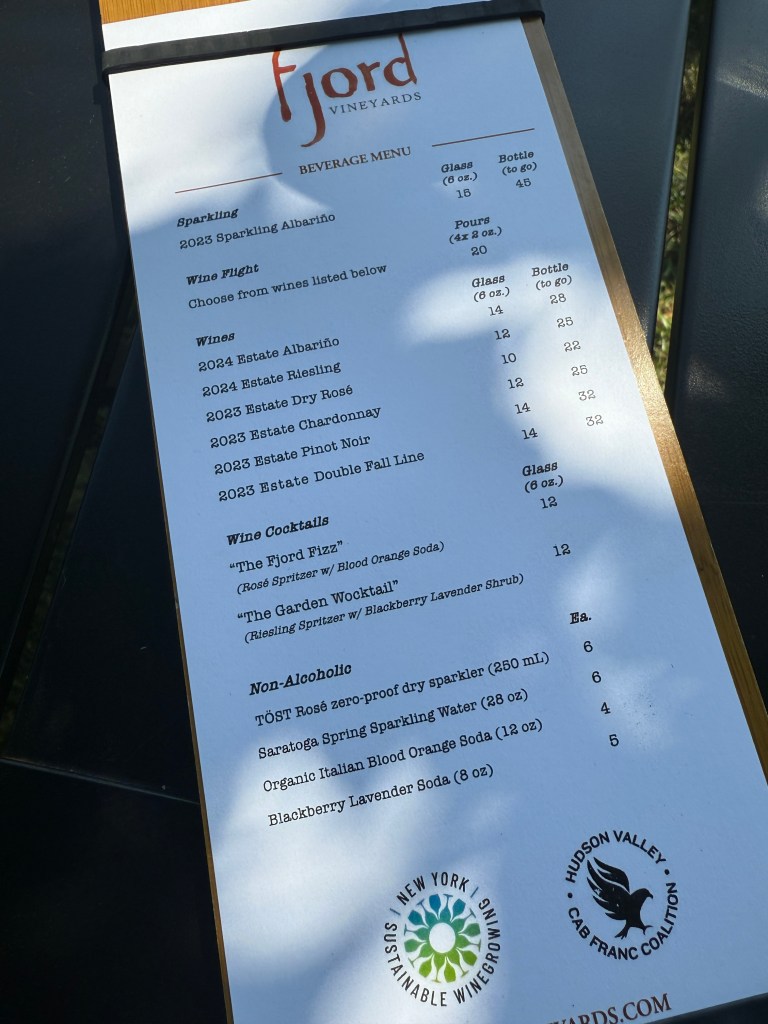
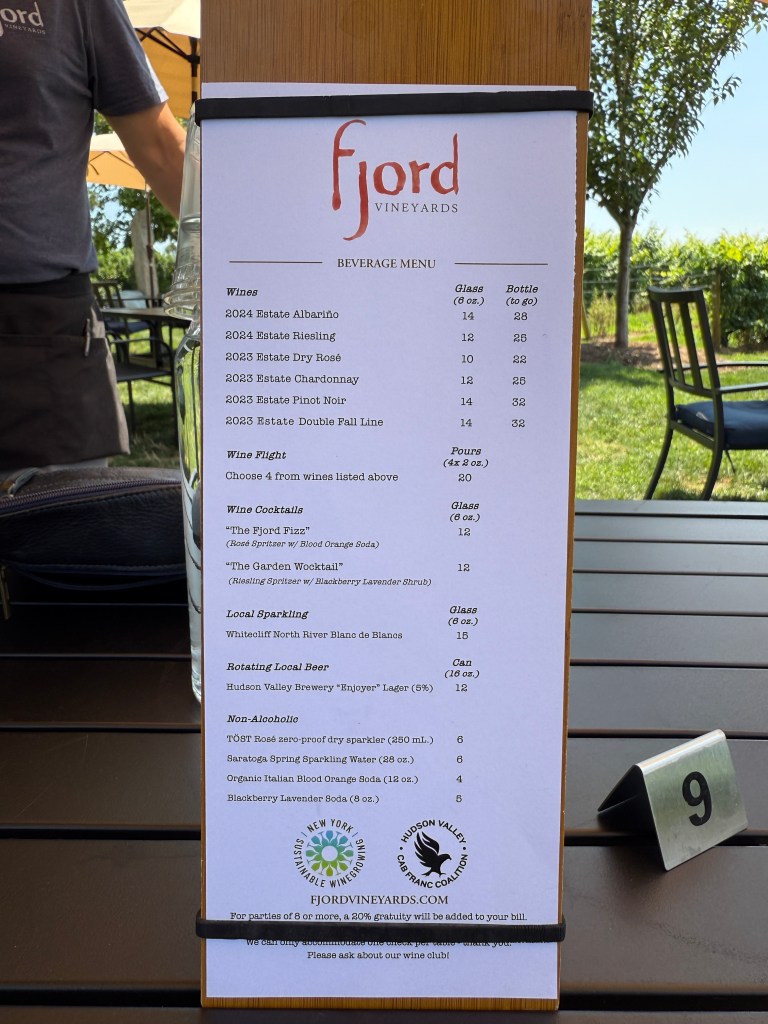
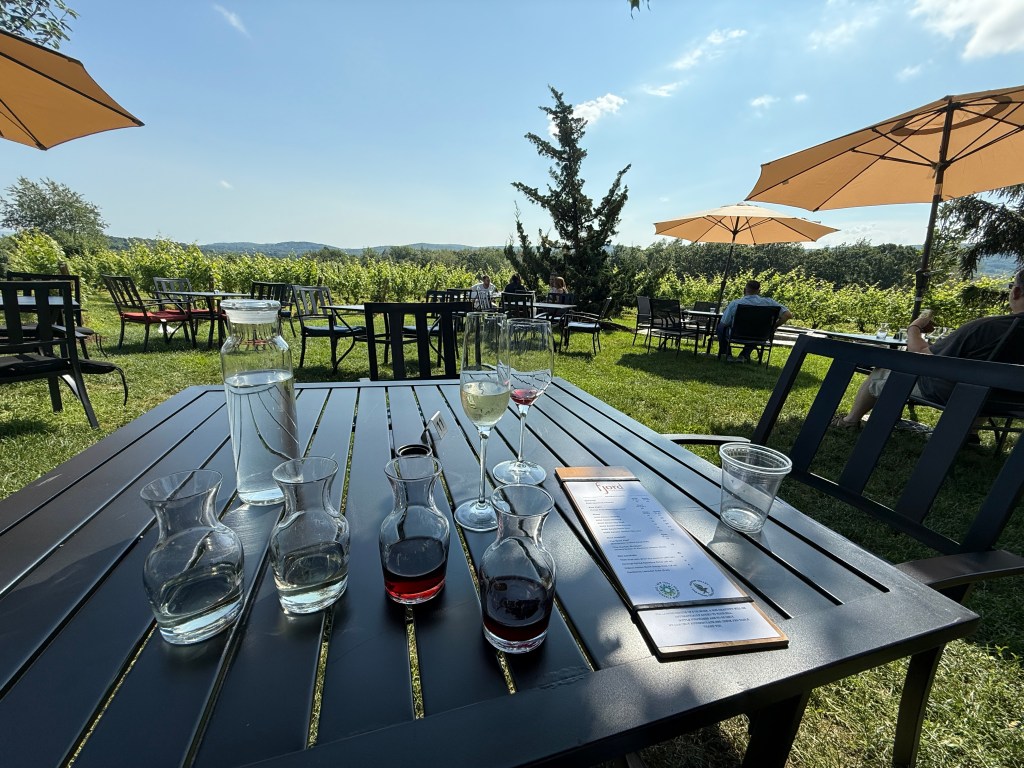
My server gave me the low-down on their wines; $20 for 4 samples, out of a total of 6 options including Riesling, Albariño, Chardonnay, Pinot Noir, a red blend, and a rosé. They also had other beverage options, including wine cocktails, beer (outsourced), and a Blanc de Blanc.

At this point I did a double take. Wait…what did you say? An Albariño? In New York?!?

It turns out this variety is one of those ‘experimental’ varies my server was referring to, and one they were especially proud of. Albariño is typically a warm weather grape found in Spain and Portugal, hence an unusual choice for cool-weather New York. But it was doing well enough to warrant keeping it.

It’s lucky they did. About a month after my visit, this Albariño won “Best white” at the Hudson Valley Wine Competition (and Fjord earned “Best Winery”). So I guess I’m not the only one who liked it.

Wines I tried:

  • Albariño: Heavy on the minerality, with stone fruit on the side. Not as much citrus as I would have expected. Very aromatic, with notes of lemon added in.
  • Chardonnay: Bright, lots of stone fruit, especially apricot. I also detected some vanilla notes, perhaps from the barrel. But it definitely wasn’t over oaked; just enough to be detectable.
  • Rosé: Red fruit; maybe notes of pepper or spice
  • Riesling: Very bright, leaning off-dry
  • Pinot Noir: A winner! And tough to grow in this area. Some earth and cherry notes (more the later than the former); very traditional flavors for this variety.
  • “Double Fall Line” red blend: Notes of earth and red currant. Very smooth.

Definitely visit on a sunny day so you can enjoy the view!

Between my guests and I were covered all six options (doubling up on the Albariño).

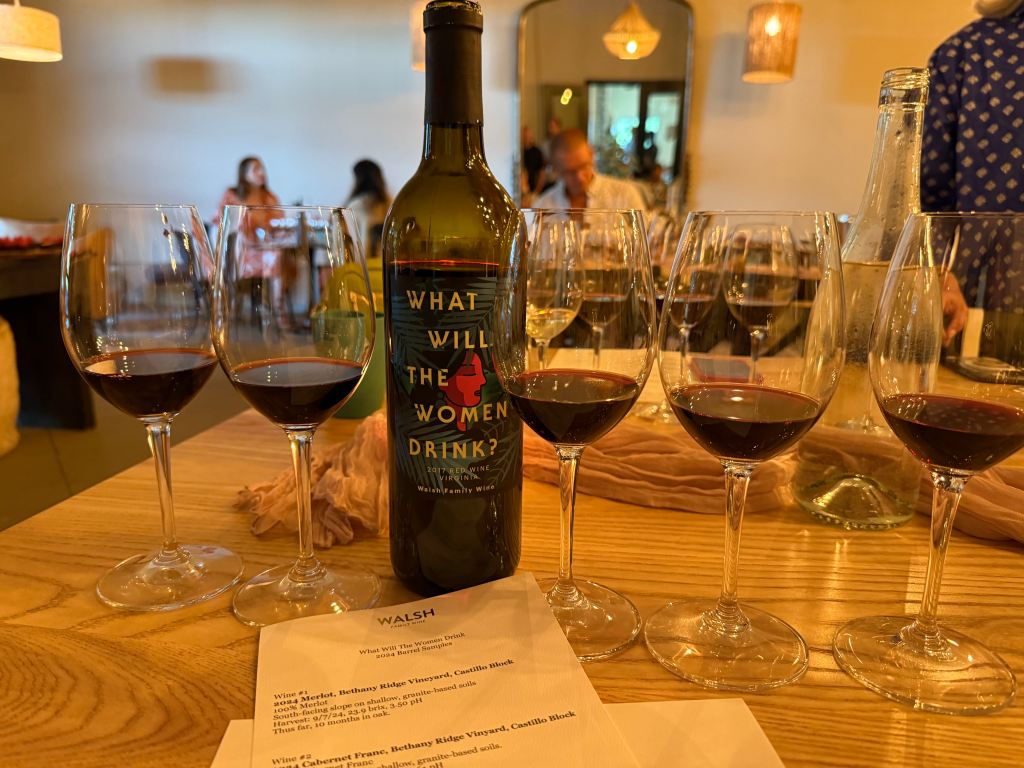
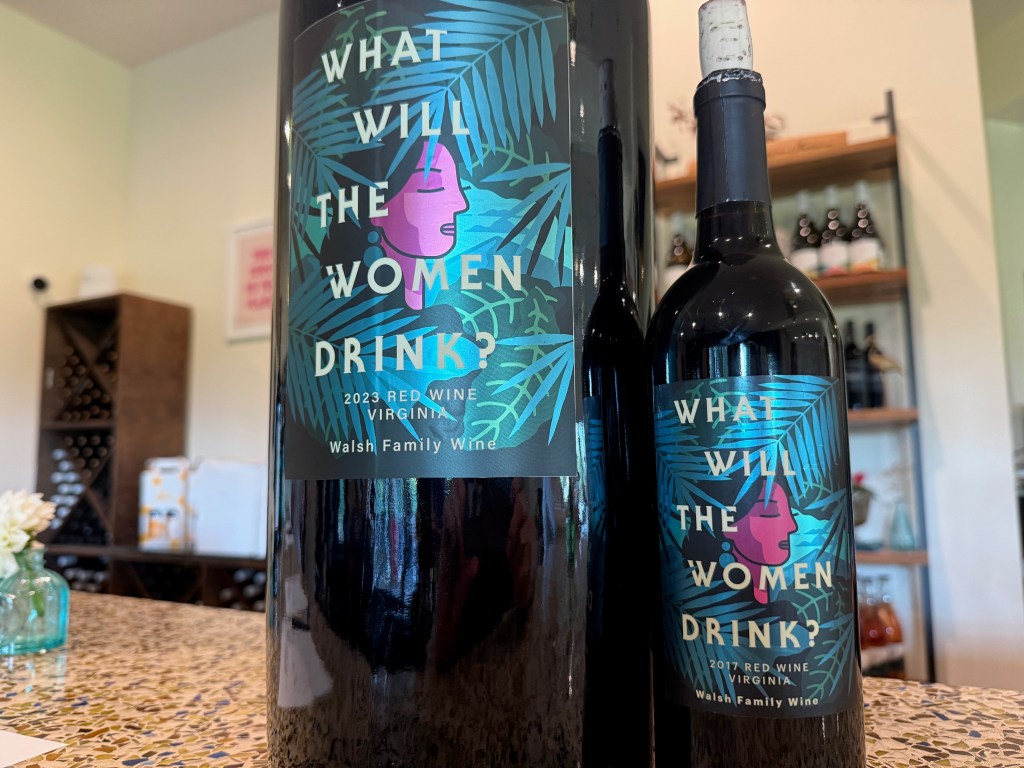
Walsh Family “What Will The Women Drink?” Vertical

If wine competitions gave awards for witty comebacks, Walsh Family Wine’s “What Will The Women Drink?” would win hands-down.

During a 4-wine vertical of previous vintages of WWTWD, Walsh Family Wine co-owners Nate and Sarah Walsh shared the event that inspired this wine.

The story started not long after they got married; at the time, Sarah was working as a wine importer and Nate as the winemaker for Sunset Hills. Around 2013, they started discussing the possibility of a passion project, where she could learn his side of the business and he could learn hers.

Fast forward a number of years, this ‘passion project’ became a full-on winery – Walsh Family Wine, which opened in 2019.

During their opening day, Sarah was confronted by a patron who asked her, “Excuse me, but are you the owner? I have some advice I’d like to give you”… and he proceeded to explain to Sarah how she should run her business, not letting Sarah get in a word.

Eventually this guy looks around and asks, “Exactly where will you be putting your wine slushy machine?”. Sarah tried to laugh it off, insisting they would never get one. Then the man looked at her, and with zero irony asks, “But what will the women drink?”.

This comment would be bad enough if it was an isolated incident…but it’s not. Sarah has heard versions of this story for her entire professional career selling high-end wine. During many of her visits to places like Napa, winemakers almost always cater to a male demographic. Rarely are big, bold reds marketed to women.

Later recounting the story to her family, she told them, “I want to make this big, bold, dark red blend, and I’m going to call it “What Will The Women Drink?”.

Her family was like “Yeah! That’s a great idea!” (she doesn’t think they believed her).

Then Sarah followed up with, “And I’m going to charge men more!” and they’re like….”Well…maybe not this part, but we love the idea of a What Will The Women Drink? wine!”.

WWTWD is not only marketed towards women, but it also supports women in need. Part of the wage gap of every dollar spent on WWTWD goes to a women’s rights group. This year, Walsh is supporting Women Giving Back, a local non-profit.

5 Vintage WWTWD Vertical

Walsh shared 4 vintages of WWTWD. I made it a 5-vintage tasting, as I brought a 2017 of my own.

  • 2017 WWTWD (40% Petit Verdot, 40% Tannat, 20% Cabernet Sauvignon): This wine needed time to open up. But once it did, oh boy! The 2017 was hitting that ‘old world’ phase, with notes of forest floor, mushroom, and or/earth the palate. Rich nose.
  • 2019 WWTWD (55% Petit Verdot, 25% Cabernet Sauvignon, 20% Tannat): A bit higher in alcohol, with more red fruit on the plate.
  • 2020 WWTWD (45% Petit Verdot, 35% Cabernet Sauvignon, 20% Tannat): The nose was more muted compared to the 2019. More black currant on the palate. It was very approachable, probably because of it was relatively lighter year for reds.
  • 2021 WWTWD (45% Petit Verdot, 40% Tannat, 15% Cabernet Sauvignon): More bramble fruit on the nose, black fruit on the palate. Notes of graphite and purple flower. Very graceful; my favorite of the evening.
  • 2022 WWTWD (67% Petit Verdot, 21% Tannat, 7% Merlot, 5% Cabernet Franc): This seemed a little young and still tight. This was my least favorite, although my neighbors absolutely loved it.

My rankings (from most to least favorite) were 2021 (because of its approachability), 2017 (because of its old world qualities), 2020, 2019, and 2022.

We also tried some younger wines; a 2024 Bethany Ridge Merlot, 2024 Cab Franc, and a 2024 Tannat. All are potential components of the 2024 WWTWD blend.

Women Giving Back

We also heard from a representative of “Women Giving Back”, a non-profit based in Sterling that provides clothing and other accessories to women in crisis, many of which are survivors of domestic abuse. It was a powerful speech.

Speaking right to the audience, co-chair Dave Baer rhetorically asked, “How do they get their lives restarted? What’s the basic thing to give yourself a little self-respect and dignity?

Where are they going to get their clothing when they are leaving their homes in the middle of the night, being escorted by a police officer?

Women Give Back started by doing clothing drives throughout the DMV, donating gently used clothing to women vetted by social service organizations. These women can come in and shop at no cost to them and pick up anywhere from 50-75 clothing items, ranging from children’s items to professional attire.”

Women Giving Back has recently expanded their footprint, not only servicing abused men but also partnering with Loudoun Hunger Relief and LAWS Domestic Violence & Sexual Assault Services. This allows this grouping to provide a comprehensive approach to which now includes clothing, emergency groceries, and counseling.

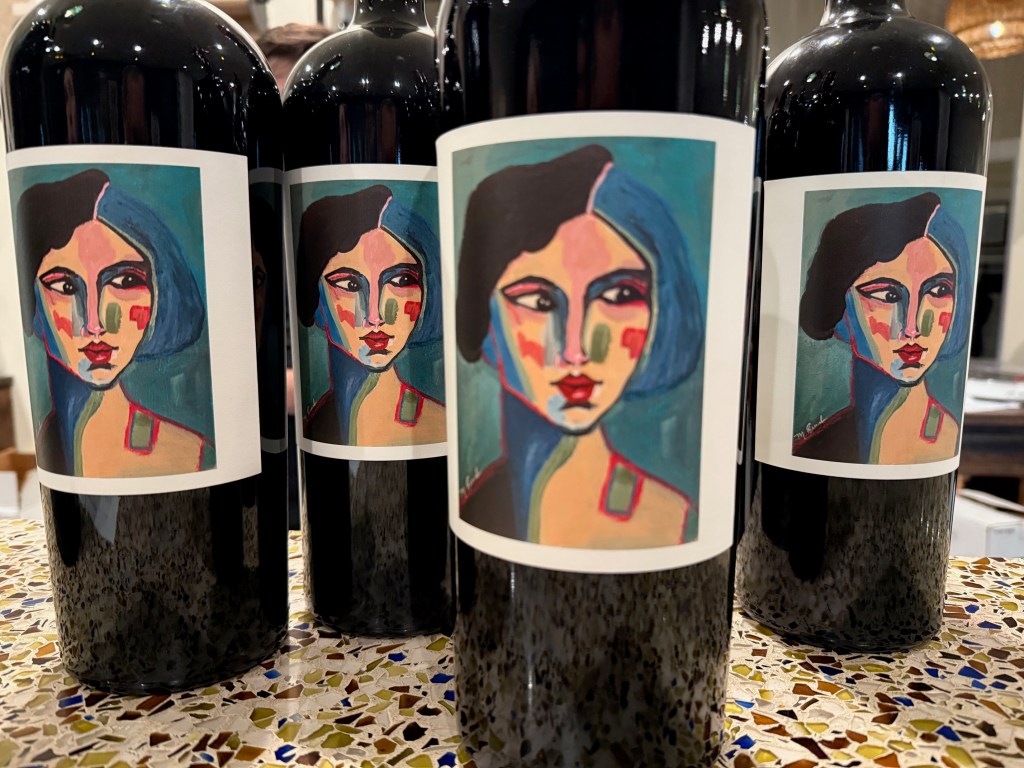
The event also included an auction, which included a Salmanazer of WWTWD (the equivalent of 12 bottles), a 4-wine WWTWD vertical, a magnum of donated from Early Mountain Vineyard, several WWTWD magnums with limited-edition labels, and other gifts provided for the auction.

To top it off, all WWTWD profits from this evening were donated to Women Give Back, including the proceeds from the auction. The event resulted in $4K in donations.

Linden Vineyards Cellar Tasting (2025)

Last weekend a group of friends and I went on what amounts to a pilgrimage to one of our favorite wineries in the state – Linden Vineyards.

I say ‘pilgrimage’ only half-jokingly. While I’ve seen owner/winegrower Jim Law described as the ‘high priest of Virginia terroir winemaking’, he actually dislikes lavish praise. Jim’s favorite title by far is ‘winegrower’, and he’s modest enough to still bus tables at his own winery.

Moreover, this wasn’t my standard visit. This event marked the return of Linden’s cellar tastings, an event that disappeared when COVID hit.

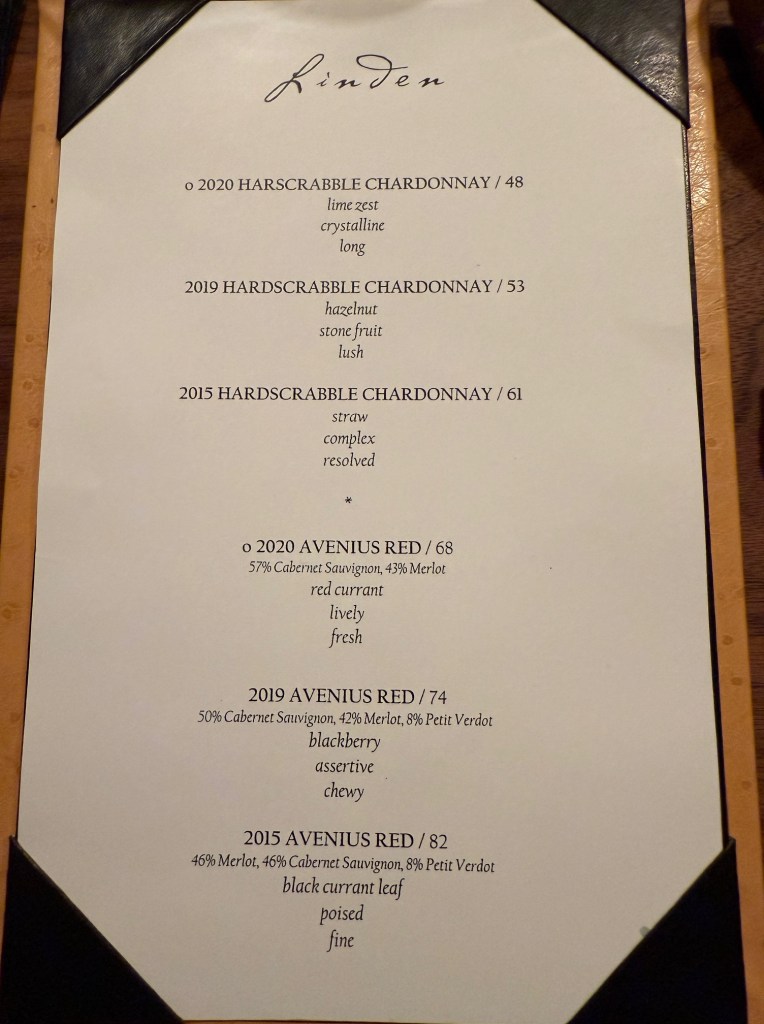
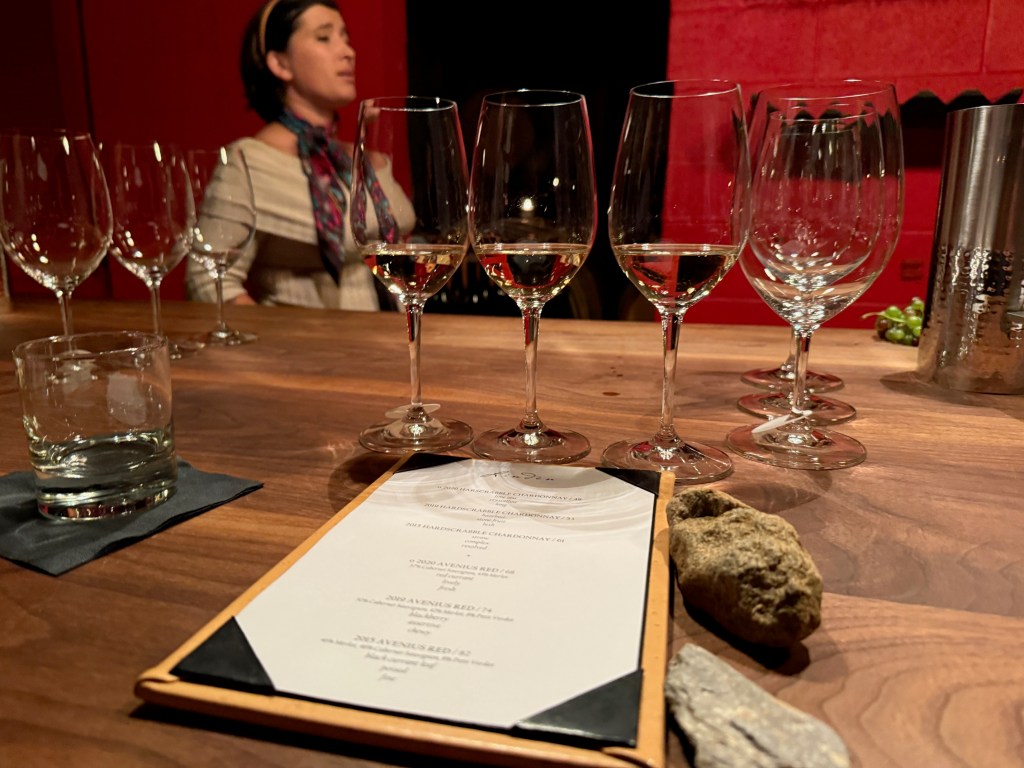
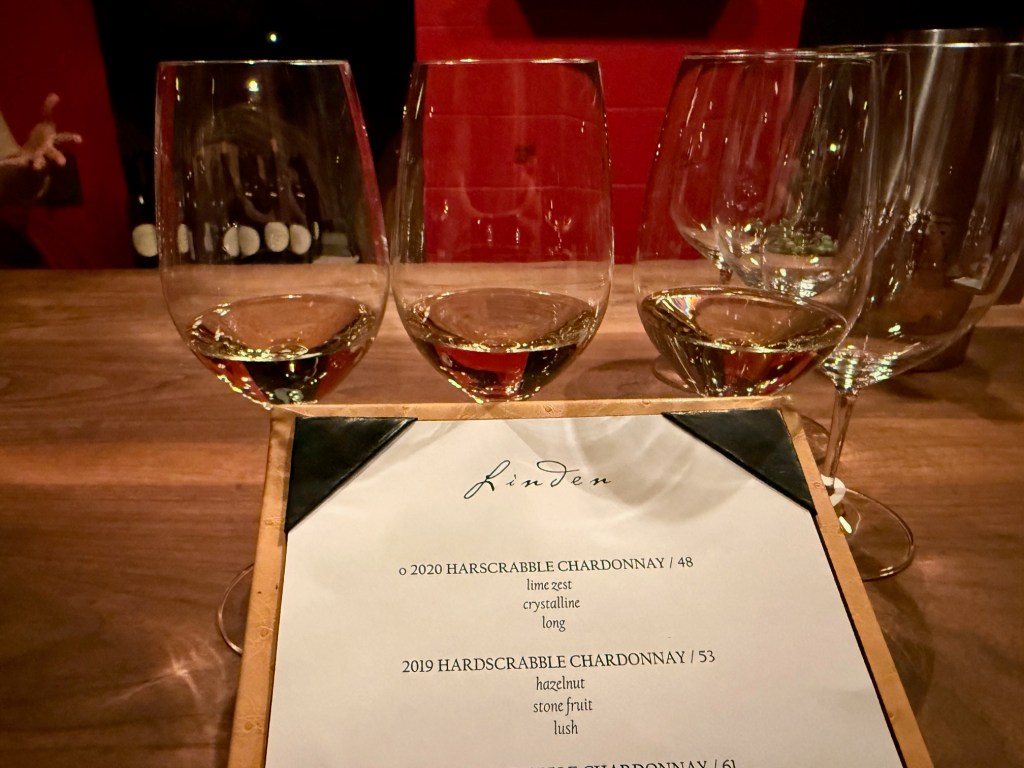
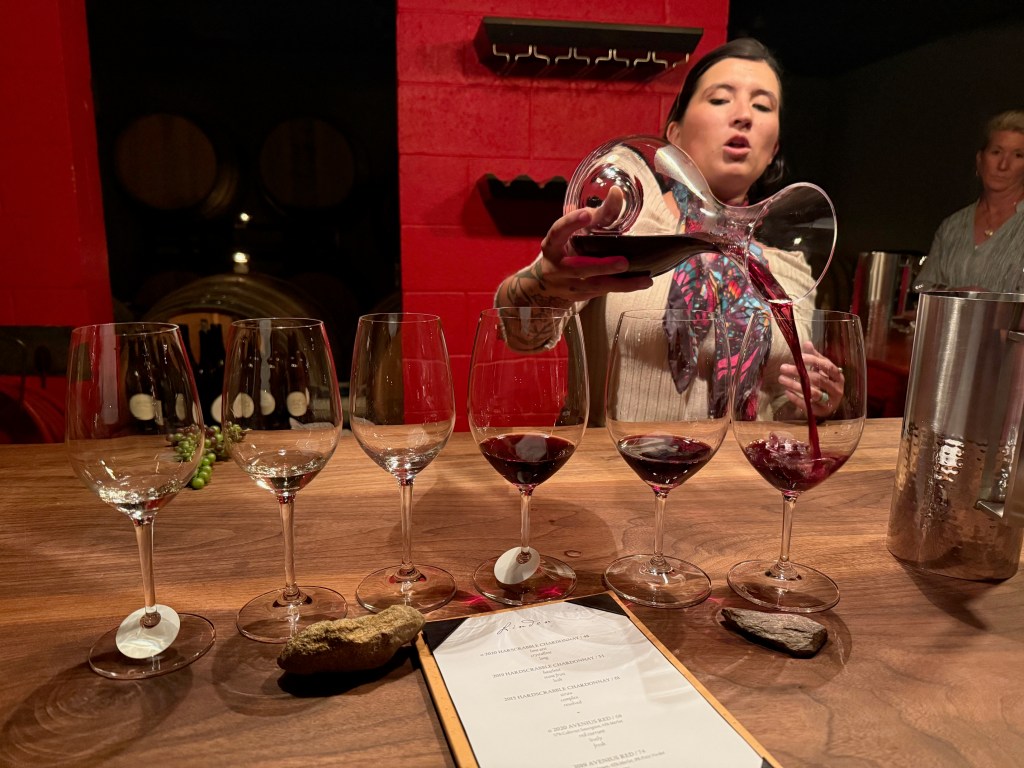
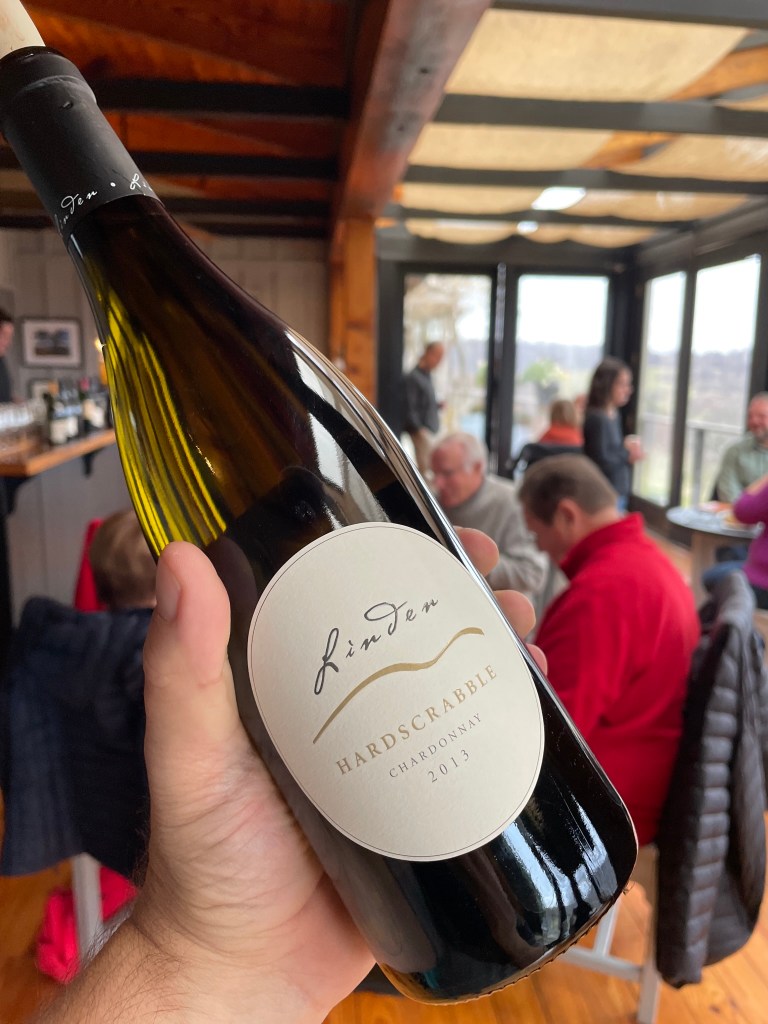
Linden’s cellar tastings include either a vertical (same vineyard different years) or horizontal (same vintage year but different vineyards). This particular event included verticals of Hardscrabble chardonnay (2015, 2019, 2020), and Avenius red (2015, 2019, 2020), plus a barrel sample of their 2024 Petit Verdot.

Weather-wise, we lucked out with a warm but not overly hot afternoon. I didn’t get a chance to chat with Jim, but I did catch up with his daughter Samantha, who was running tastings at the bar.

I did learn that despite the rain, things were looking OK in the vineyard. It also looks like this will be their last vintage of their Wabi Sabi white blend, which I’m not entirely sad about. Jim did spray earlier than usual to address the Spotted Lanternfly issue, which is unavoidable now given their prevalence in the state.

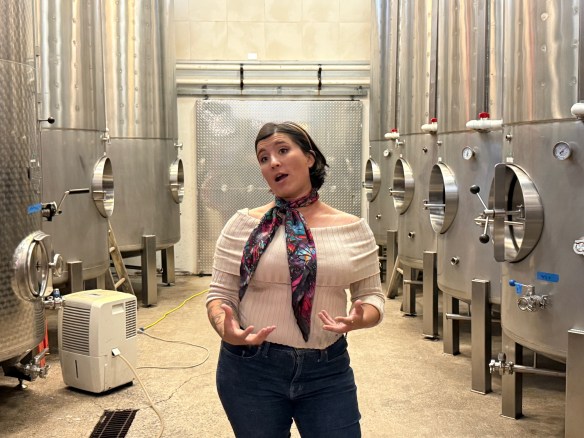
Once the last person arrived, we headed down to the cellar with McKenzie, a new addition to Team Linden. I didn’t get her full background, but she did have experience working the DC restaurant scene prior to moving to Culpepper. Hopefully we’ll see more of her.

I believe nearly everyone who attended this event was familiar with Linden’s wines, so we didn’t need to spend too much time on Jim’s low-intervention winemaking philosophy. That said, McKenzie was very extroverted host who loved telling us about the 6 wines before us.

We kicked off with our Hardscrabble Chardonnay flight (made from the estate vineyard). I’ve had all of these before, but except for the 2019s not recently. I was especially excited by the 2015 Chardonnay, which Jim once said was one of the favorite wines he’s ever made.

  • 2015 Hardscrabble Chardonnay: Very ‘full’ as white wines go. While it was starting to turn nutty, it still doesn’t present itself as a decade-old wine. Except for ‘age’ on the nose, it was still pretty vibrant and a tribute to the ageability of Jim’s wines. That said, Jim once told me this wine was probably at its peak, so it wouldn’t get any better than it was now.
  • 2019 Hardscrabble Chardonnay: Very different from the other two. Much more stone fruit, plus very ‘bright’ due to being the product of a very warm year. I did detect a tad bit of newer oak on it. I think this wine will only get better.
  • 2020 Hardscrabble Chardonnay: Stylistically similar to 2015, but riper. Good acidity; Kenny Bumbaco said it was ‘Chablis-y’. It was better than I remembered, although not quite in the same league as the other two. Still, it was a good wine from a vintage that isn’t well regarded in Virginia wine.

Next up was the Avenius red blend flight, grown just down the road at Shari Avenius’ vineyard. Shari has retired from the tasting room so I haven’t seen her in a long time, but it seems she is still tending her vineyard.

  • 2015 Avenius (46% Cab Sauv, 46% Merlot, 8% Petit Verdot): Earthy nose. Not a lot of fruit but doesn’t need any, as it was an overall amazing wine. I have ‘persistent and chewy’ in my notes. I’m very glad I have a bottle of this in my cellar, although I probably should drink it sooner than later.
  • 2019 Avenius (50% Cab Sauv, 42% Merlot, 8% Petit Verdot): Mix of fruit and earth on the nose. Good fruit on palate. You could likewise tell this was the product of a hot year, due to its ripeness.
  • 2020 Avenius (57% Cab Sauv, 47% Merlot): OK; admittedly not my favorite. Brett on the nose and some on the palate, which gave it that barnyard/funk quality. I think you have to appreciate a little bit of brett to enjoy this, although it did give this wine an extra oomph of complexity and earthiness.

With the cellar tasting complete we adjourned upstairs for their regular tasting. Linden only recently switched over to a ‘summer’ tasting, now comprised of the 2023 Avenius Sauv Blanc, the 2023 Hardscrabble Sauv Blanc, the new 2022 Claret, and a full-varietal Cabernet Franc. And oh yeah – that 2024 Petit Verdot sample!

  • 2024 Petit Verdot: Fruitier and lower in tannin than I expected. While different from what I usually expect, I definitely liked it. I believe it was made in steel, which is likewise unusual for PVs.
  • 2023 Hardscrabble Sauvignon Blanc: Something a return to form, as this wine had a dash of Sémillon. Layered. In a way, it was like a riper version of a white Bordeaux.
  • 2023 Avenius Sauvignon Blanc: Notes of boxwood…which is sometimes referred to as ‘cat pee’ (I hate that term, BTW). It was higher in alcohol, which meant the acidity wasn’t as prominent as it usually is.
  • 2022 Cabernet Franc: This was the first full Cab Franc I’ve ever seen from Linden; certainly the first since 2010. All Hardscrabble vineyard fruit. It had a slight hint of the pyrazine notes that Cab Franc is known for, but they didn’t lean into that direction at all.
  • 2022 Claret: I don’t have any notes for this one!

Afterwards we adjourned for snacks on their patio on a perfect summer day, ordering a 2015 Hardscrabble Chardonnay for the table and eating charcuterie. Then it was off to Barrel Oak, which has been upping its game of late (click this link for Dan’s blog on Barrel Oak; he loves more hits!).

Why Virginia Winemakers Prize Old Vines

Few Virginia wineries have what are sometimes called ‘old vines’. Those that do will most likely happily let you know about them, with the implication that “old vines = better wines”.

But what does the term ‘old vines’ actually mean, and why are they important?

There is no legal definition for what constitutes a wine made with ‘old vines,’ although private organizations have their own criteria.

In 2024, the International Organization of Vine and Wine defined an “old vine” as a plant that is documented to be 35 years or older. Plots where 85% of such vines meet this criterion may be considered ‘old vineyards.’ Several other organizations, including the South African Old Vine Project and the Old Vine Registry, use these definitions.

The Historic Vineyard Society has a different set of criteria, only certifying California vineyards with vines that are a minimum of 50 years old and when at least 1/3rd of producing vines can be traced to the original planting.

Few old vines exist in Virginia. Prohibition wiped out Virginia’s wine industry, and it wasn’t until the 1970s that it started making a comeback. Even Virginia’s oldest wineries seldom have anything left of their original vineyards.

Fortunately, a number of older vineyard plots do survive. Such vines are living time capsules, representing the kind of wines Virginia’s viticultural trail blazers thought would perform best.

Many of these surviving vines are Burgundy or Bordeaux varieties that remain popular today. Chardonnay is still produced at Virginia’s two oldest commercial vineyards, Meriwether Vineyard and Montdomaine Vineyard. Founded in 1976 and located at Pearmund Cellars, Meriwether is recognized by the Old Vine Registry as Virginia’s oldest vineyard. Montdomaine was founded in 1978 and is located just below Michael Shaps Winery.

Founded in 1976, Meriwether Vineyard is Virginia’s oldest vineyard (Photo credit: Pearmund Cellars)

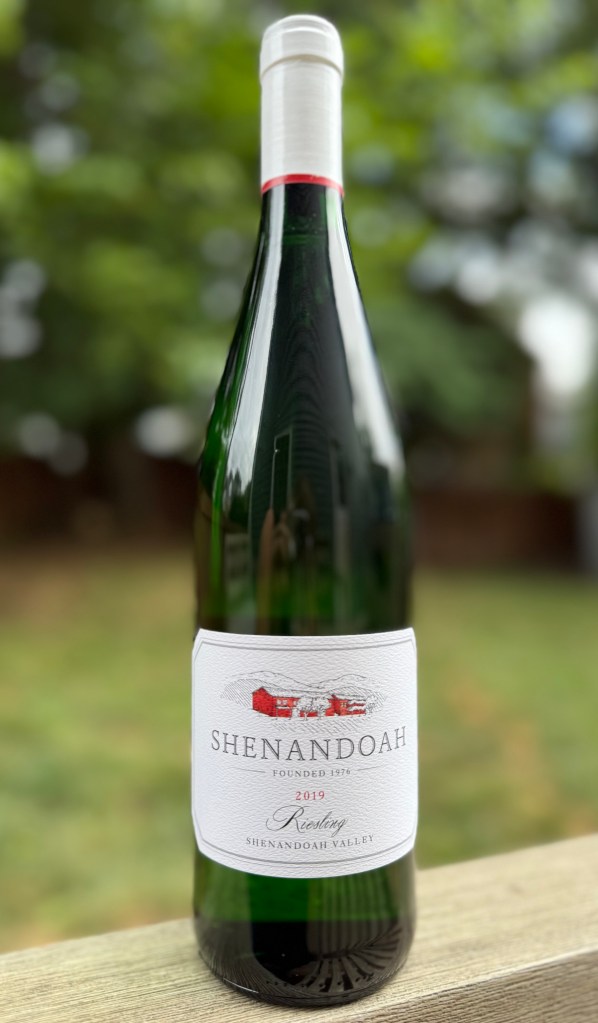
Older vineyards are also the home of varieties that were once more prevalent in the state. Cool-climate vines often struggle in Virginia, a fact only appreciated after decades of trial-and-error. While many wineries have since torn out their riesling, Gray Ghost Vineyards, Shenandoah Vineyards, and a handful of others still tend to their plots.

Virginia’s first vineyards also widely utilized French American hybrid grapes, such as chambourcin and seyval blanc. These vines are relatively easier to maintain; an important consideration in a then-young industry with little institutional knowledge of how to handle more finicky vinifera.

Why Winemakers Prize Older Vines

A well-tended grape vine can last 50 years or more, which makes ‘old vine’ status obtainable. The “Mother Vine” in Roanoke, considered the oldest grapevine in North America, was first recorded in 1584.

While younger vines are more productive, older ones are often thought to produce higher quality fruit. The reasons for this are complex, but much of the credit goes to how older vines have deeper root systems.

Deep roots allow older vines to more easily access water and nutrients that are inaccessible to younger vines, which is especially beneficial during periods of drought. This more balanced intake allows them to create more complex, intensely flavored fruit.

Older vines have an additional advantage in wet regions, such as Virginia.

The roots of younger vines are more likely to become saturated during periods of heavy rainfall, diluting their fruit’s flavor profile.

Older vines are less likely to encounter this problem. The soil above them acts like a shield, preventing water from penetrating to the roots far below. This allows their fruit to maintain good chemistry, despite pre-harvest deluges.

Linden Vineyards winegrower Jim Law has observed older blocks have additional benefits beyond deep roots.

“Older vines sometimes ripen up to 10 days later. This helps keep them in the sweet spot of late September/early October when nights are cool; a big advantage in our warmer climate. They are also more homogenous, which leads to more synchronistic ripening. This is important for quality,” he wrote over email.

Jim Law, owner and winegrower of Linden Vineyards

Even so, it’s overly simplistic to assume old vines are superior to younger ones, according to winegrower David Lambert. David manages the winegrowing at both Shenandoah Vineyards and Stoney Creek Vineyards, two of the oldest in the state.

In answering a question about the quality of ‘old vine’ wine, David opined, “The answer is not as simple as old vines vs. young vines. Newer clones are superior to the older clones with questionable genetics. In particular, the 2018 riesling plantings at Shenandoah Vineyards ripen fruit sooner, have clusters that are looser, and are less prone to bunch rots, allowing them to produce wine superior to our 1981 riesling plants.”

Finding “Old Vine” Wine In Virginia

There are opportunities to sample wine from Virginia’s oldest vines, if you know where to look.

Pearmund Cellars is one of the few wineries in Virginia that makes wine exclusively from ‘old vine’ blocks. Next year Pearmund will celebrate the 50th anniversary of its Meriwether Vineyard with a special labeling of its “Old Vine” chardonnay, vinified from these blocks.

Gray Ghost Vineyards produces a Reserve Cabernet Sauvignon that is only made from its 1988 block. Fruit from these vines have been consistent award winners, most recently earning a Best in Class award from the 2024 East Meets West Challenge at Santa Rosa, California.

Linden Vineyards uses fruit from its 1985 and 1988 blocks (as well as its 2010 block) for its Hardscrabble Chardonnay, although the proportions differ every year.

Shenandoah Vineyards’ 2019 Riesling, made with vines planted in 1981, won Gold at the 2023 Virginia Governor’s Cup.

If you ever find yourself at a vineyard with old, gnarly trunks – ask about them! There’s likely a story behind how they’ve persevered.

Virginia Sauvignon Blanc Showdown (2025)

Virginia wine seems to excel in certain varieties. Petit Verdot, Petit Manseng, and Cabernet Franc often come to mind. Tannat and Albariño are up-and-comers, from what I’ve seen.

But if you had told me Virginia was a hotspot for its Sauvignon Blancs, I’d have been…skeptical. The 99 acres currently in the state (according to 2023 figures) is a fairly large planting, but it seems to trail other whites in terms of awards. Only over the last few years have Virginia Sauv Blancs really surged in recognition.

That’s fairly surprising, as I’ve had a number of excellent examples. Linden and Walsh Family often come to mind, but I’ve found others that are also lovely. Unfortunately for me, the Sauv Blancs I most gravitate towards tend to be high-acid, mineral-driven Sancerre styles, which are tough to find in Virginia.

So when the 2025 San Francisco Chronical (SFC) Wine Competition gave two “Best in Class” awards (out of 5 Sauv blanc price categories and 198 bottles) to Virginia Sauv Blancs, and a 3rd Virginia wine was runner-up for one of these “Best in Class” awards, I was equally surprised and thrilled.

The competition judges seemed equally surprised. SFC wine judge Mike Dunne said of Virginia’s entries; “Each year, some wine region of North America sems to gain recognition for a disproportionate share of high awards at the San Francisco Chronical Wine competition. In 2024, it was Virginia”.

Tasting & Scoring Methodology

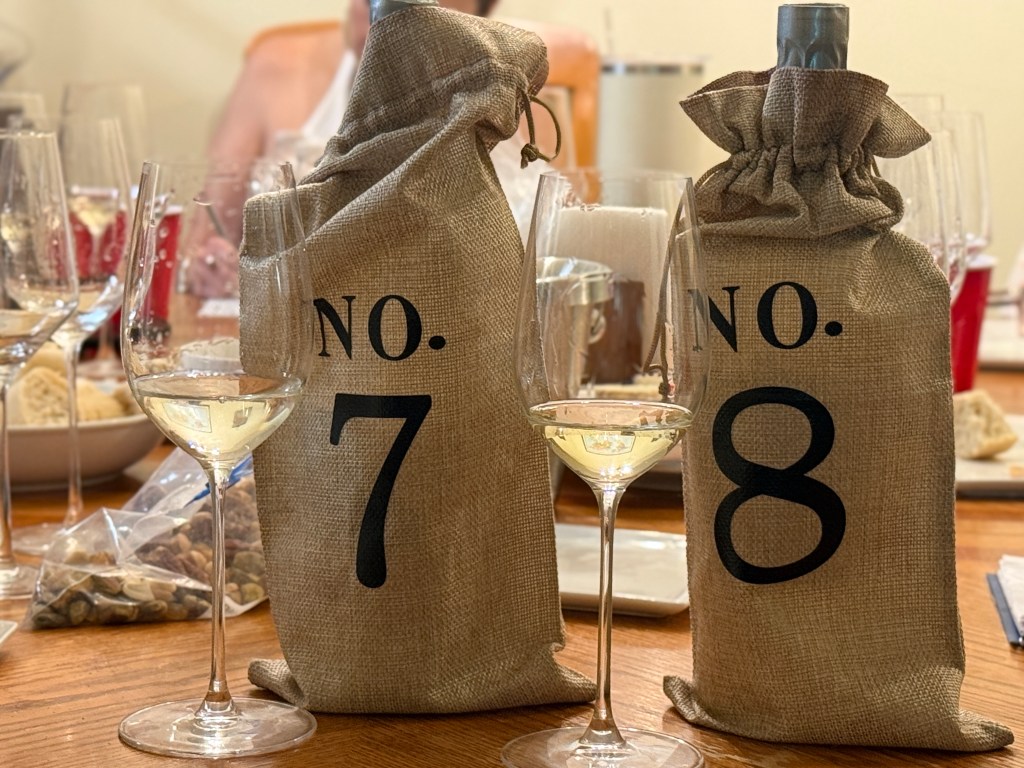
Every round my guests picked a favorite. After we finished all 8 wines, we voted to decide the Top 2 of the day. By coincidence we had a tie in picking which to go into the Top 2, so Top 2 became Top 3. We took a food break, then revisited the Top 3 finalist a second time

Caveat; there are a few other excellent examples that could have been used here. But being in NOVA my selection tends to be NOVA-heavy. Moreover; I don’t pretend what we chose were the “best”. I’d say that these were the “best” this day, but on another day or vintage, we may have selected differently.

The Contenders:

  1. The Winery at LaGrange 2021 Sauvignon Blanc (Washington State fruit)
  2. Glen Manor Vineyards 2023 Sauvignon Blanc
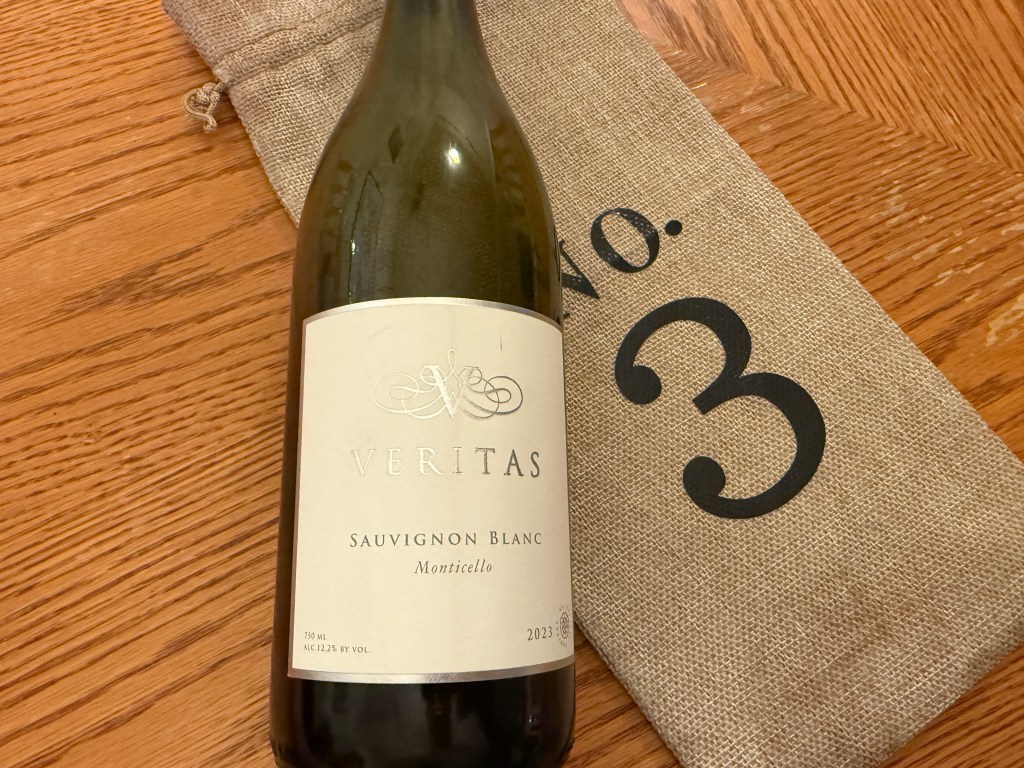
  3. Veritas Winery 2023 Sauvignon Blanc (2025 SFCWC Best in Class/$30-$34.99)
  4. Linden Vineyards 2021 Hardscrabble Sauvignon Blanc
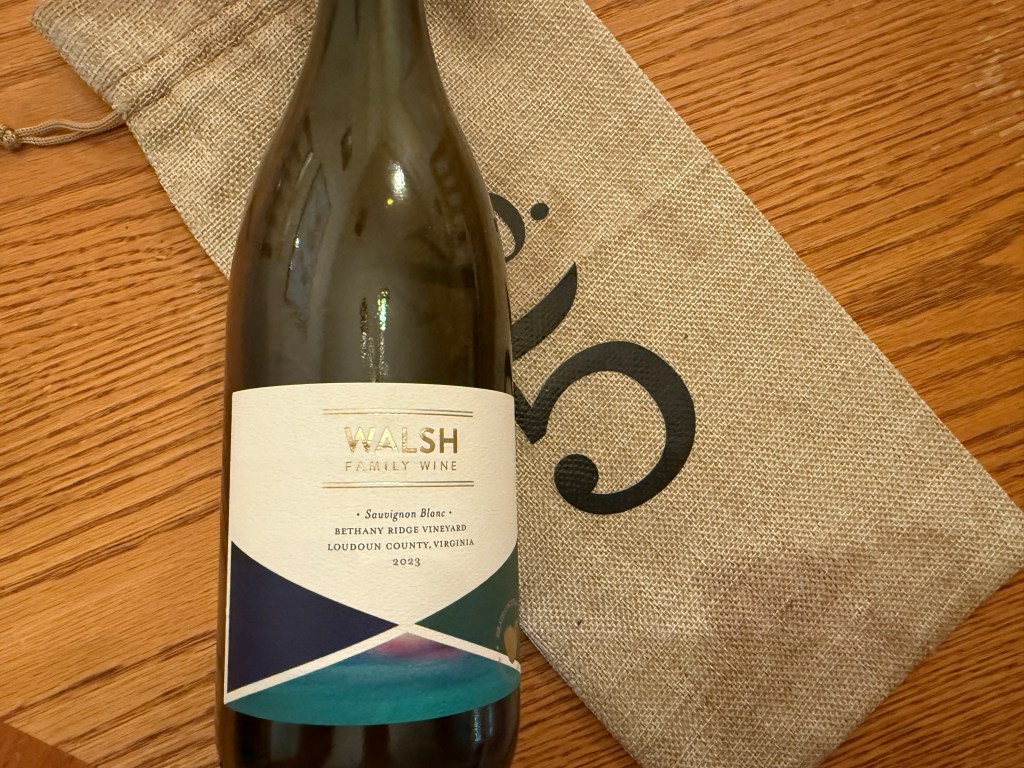
  5. Walsh Family Wine 2023 Bethany Ridge Sauvignon Blanc
  6. Capstone Vineyards 2023 Sauvignon Blanc
  7. Barrel Oak Winery 2023 Sauvignon Blanc (2025 SFCWC Best in Class/$34 and up)
  8. Endhardt Vineyards 2023 Sauvignon Blanc (2025 SFCWC Double Gold/$30-$34.99)

Flight #1

  • Bottle #1: LaGrange 2021 Sauvignon Blanc (Washington State) (7 votes, round winner)
  • Bottle #2: Glen Manor 2023 Sauvignon Blanc

While the original plan was to do all Virginia wine, we didn’t realize that the LaGrange’s fruit was sourced from Washington State. Oh well; it was made in Virginia, at least.

Looking back we were surprised that #2 was a Glen Manor wine; we thought we’d have enjoyed it more since they have a great reputation overall, but this one wasn’t a favorite.

Bottle #1 / LaGrange 2021 Sauvignon Blanc. This was our “patio wine”. Round; good finish and balanced. Somewhat golden in appearance. Someone mentioned green apple on the palate, plus notes of lime.

Bottle #2 / Glen Manor Vineyards 2023 Sauvignon Blanc. Aromatic and pale. Multiple people commented how fruit-forward this wine was. One said it was like ‘pop rocks on your tongue’. Cameron mentioned the citric acid was too high for his preference; maybe they let the fruit hang too long?

Votes:

  1. Matt: Voted #1
  2. Sarah: Voted #1
  3. Laura: Voted #1
  4. Isabel: Voted #1
  5. Emily: Voted #1
  6. Cameron: Voted #1
  7. Ashley: Voted #1

Flight #2

  • Bottle #3: Veritas Winery 2023 Sauvignon Blanc (3 votes)
  • Bottle #4: Linden Vineyards 2021 Hardscrabble Sauvignon Blanc (4 votes; round winner)

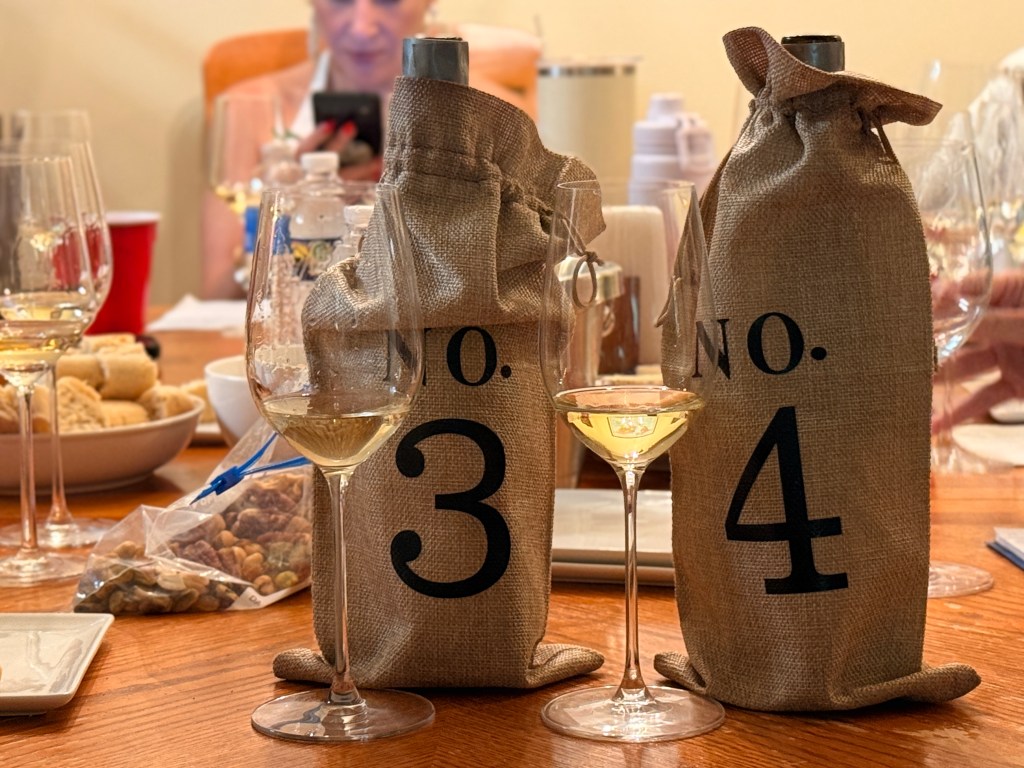
This was the favorite round for several attendees. Stylistically speaking, this was a “patio wine” (#3) vs a “dinner wine” (#4) comparison, and attendees tended to vote according to that preference.

I had more tasting notes than I could easily write down; the mark of a good round.

Bottle #3 / Veritas Winery 2023 Sauvignon Blanc. Lighter in acid, but the acid was definitely there. Comments including grapefruit, green apple, honey, and lime notes, but none were overwhelming present. I felt it had honey and grapefruit qualities.

It had great complexity, which opened up as the chill came off. It was very bright once it warmed up.

Bottle #4 / Linden Vineyards 2021 Hardscrabble Sauvignon Blanc. This was the fullest wine of the day, with more ‘aged’ and/or barrel notes (but definitely not newer oak). A few mentioned it had a caramel finish. Others mentioned candied lemon, stone fruit, hay, and herbs on the nose.

Votes:

  1. Matt: Voted #4
  2. Sarah: Voted #4, although #3 was ‘like a rave on the palate’
  3. Laura: Voted #4
  4. Isabel: Voted #3
  5. Emily: Voted #3
  6. Cameron: Voted #3
  7. Ashley: Voted #4

Flight #3

  • Bottle #5: Walsh Family Wine 2023 Bethany Ridge Sauvignon Blanc (4 votes; round winner)
  • Bottle #6: Capstone Vineyards 2023 Sauvignon Blanc (3 votes)

Bottle #5 / Walsh Family Wine 2023 Bethany Ridge Sauvignon Blanc. Peppery! Notes of honeysuckle and lemongrass on the nose and palate. Tart, citrusy and grassy on the palate. The tartness threw some people off. Smooth texture.

Bottle #6 / Capstone Vineyards 2023 Sauvignon Blanc. Pineapple and mango were mentioned. Had weight. Long lingering finish. We speculated these tropical notes indicated this was the Washington State wine we accidentally included in the lineup (nope; 100% grown in Virginia).

Votes:

  1. Matt: Voted #6
  2. Sarah: Voted #5
  3. Laura: Voted #5
  4. Isabel: Voted #6
  5. Emily: Voted #5
  6. Cameron: Voted #5
  7. Ashley: Voted #6

Flight #4

  • Bottle #7: Barrel Oak Winery 2023 Sauvignon Blanc (4 Votes; Winner)
  • Bottle #8: Endhardt Vineyards 2023 Sauvignon Blanc (3 Votes)

If Round #2 was the group favorite, this round was a close runner up. It also contained a SFC Best in Class ($35 and up), and a Double Gold (which was runner up for the Best in Class) winner.

Bottle #7 / Barrel Oak Winery 2023 Sauvignon Blanc. The color was very light and the nose wasn’t overly aromatic, but this wine packed a punch! Well balanced; notes of citrus and lemon were especially mentioned. I could have written more notes, but I was too busy just enjoying it.

Bottle #8 / Endhardt Vineyards 2023 Sauvignon Blanc. Had a ‘new tennis ball’ aroma to it. Bigger in body and more fruit forward than what we’d seen in the lineup so far (right below #4). Someone mentioned a note of vanilla cream at the end. Apricot on the nose and white peach on the nose and palate. Also well balanced.

Votes:

  1. Matt: Voted #8
  2. Sarah: Voted #7
  3. Laura: Voted #7; liked its smoothness
  4. Isabel: Voted #7
  5. Emily: Voted #8
  6. Cameron: Voted #7; said it had a ‘crescendo’ of different fruits
  7. Ashley: Voted #8

Finalist Flight

  • Bottle #3: Veritas Winery 2023 Sauvignon Blanc
  • Bottle #4: Linden Vineyards 2021 Hardscrabble Sauvignon Blanc
  • Bottle #7: Barrel Oak Winery 2023 Sauvignon Blanc

We tried to narrow it down to a “Top 2”, but we loved several so much I decided to add a 3rd glass to the finalist round. We ended up with #3/ #4/ #7 going into the finals.

#8 was also well loved, narrowing missing the finalist round (I tried, but got outvoted). #6 received a handful of votes as well.

We tasted the finalist and I awarded 3 ‘points’ for people’s 1st place choice, 2 points for 2nd place, and 1 point for 3rd place choice.

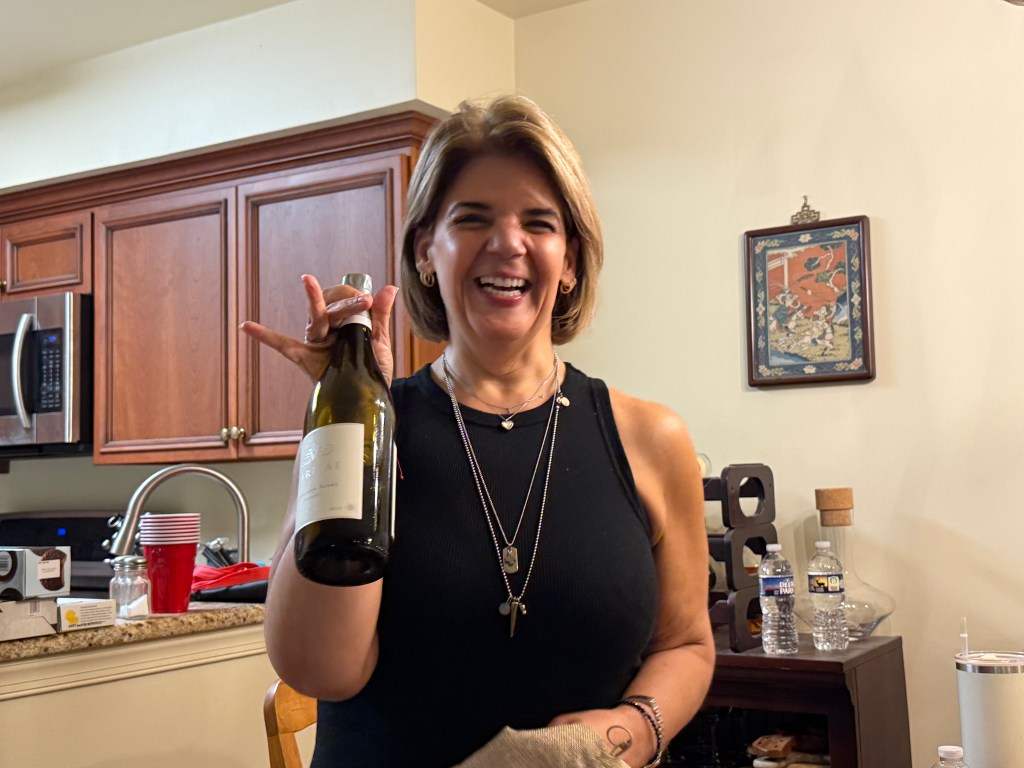
The final tally was 15 points for Barrel Oak, 14 points for Veritas, and 13 points for Linden. The 2023 Barrel Oak Winery Sauvignon Blanc was the overall favorite of the day.

  1. Matt: Voted #7 / #4 / #3
  2. Sarah: Voted #4 / #7 / #3. Felt #4 was the most complex; liked the ‘barnyard’ and hay qualities.
  3. Laura: Voted #7 / #3 / #4. Felt #7 was refreshing and smooth, but enjoyed the balance and dryness of #3.
  4. Isabel: Voted #3 / #7 / #4. #3 had developed a sweetness she liked
  5. Emily: Voted #3 / #4 / #7. Agreed that #3 was landing sweeter, while #7 was more consistent.
  6. Cameron: Voted #7 / #3 / #4. Really liked the complexity of #7.
  7. Ashley: Voted #4 / #3 / #7. Really liked the soft, caramel finish of #4.

I asked Barrel Oak winemaker Jeremy Ligon about his 2023 Sauv Blanc, and he shared these tech notes:

“In 2023 we partnered with a local vineyard in Paeonian Springs Virginia to bring in their beautiful Sauvignon Blanc. We harvested 7.57 tons on 8/31/2023. This Sauvignon Blanc is grown at over 700 feet in elevation with rolling hills with ideal airflow and soil conditions. We produce a Sauvignon Blanc that showcases Virginia Terrior, which is closer to a New Zealand style Sav Blanc than California, but still with its very own uniqueness. This Sauvignon Blanc is fermented and aged in 100% stainless steel, we forego malolactic fermentation to retain malic acid creating a bright and crisp wine.”

SFC described the Barrel Oak wine as “ripe and round” and “fleshy and saturating”, while the Veritas was “lithe, dry, citric, and astonishingly persistent”.

Lessons Learned:

A few observations:

The first is the Virginia Sauv Blancs were tried were very reflective of the specific site they came from. This resulted in an assortment of stylistic differences, with some presenting as West Coast-ish, a few as Bordeaux Blanc-ish, and others not fitting any particular regional profile (although none we had today were New Zealand or Sancerre-ish).

That’s not to say Virginia *must* fit into any stereotype. Virginia wine must represent Virginia; not try to copy someone else. Yet the variation was so dizzying that I couldn’t guess these wines were from the same state.

My second observation was how people seemed to separate these wines into ‘dinner’ and ‘patio’ styles, the former being ‘bigger’ and the later easier drinking. My group’s voting tended to fall along these preferences.

My last observation is I was very impressed with the judging of the San Francisco Chronicle. Wine judging in general can be very hit-or-miss, as I’ve seen the same wines get Bronze in one competition but get Double Gold (!) in another, or ‘shiners’ with the same wine but different labels get different scores.

But this time, 3 of the 4 top wines we tried today (except Linden, which doesn’t do competitions) were all Double Gold winners from the 2025 SFC wine competition. Except for Linden, none of the other wines were even close.

Virginia Pinot Noir Showdown: VA vs Oregon Blind Tasting

I’ve been on something of a Virginia Pinot kick of late. I recently emceed an industry roundtable on Virginia Pinot Noir, which later inspired an article discussing the evolution of Virginia Pinot.

To summarize my findings; Pinot Noir struggles in the warm-weather sites that characterize much of Virginia. The reputation of locally grown Pinot was so bad that when wine-legend Jancis Robinson tasted an Ankida Ridge Pinot in 2011 that she exclaimed in the most back-handed compliment ever; “It tastes like Pinot!”.

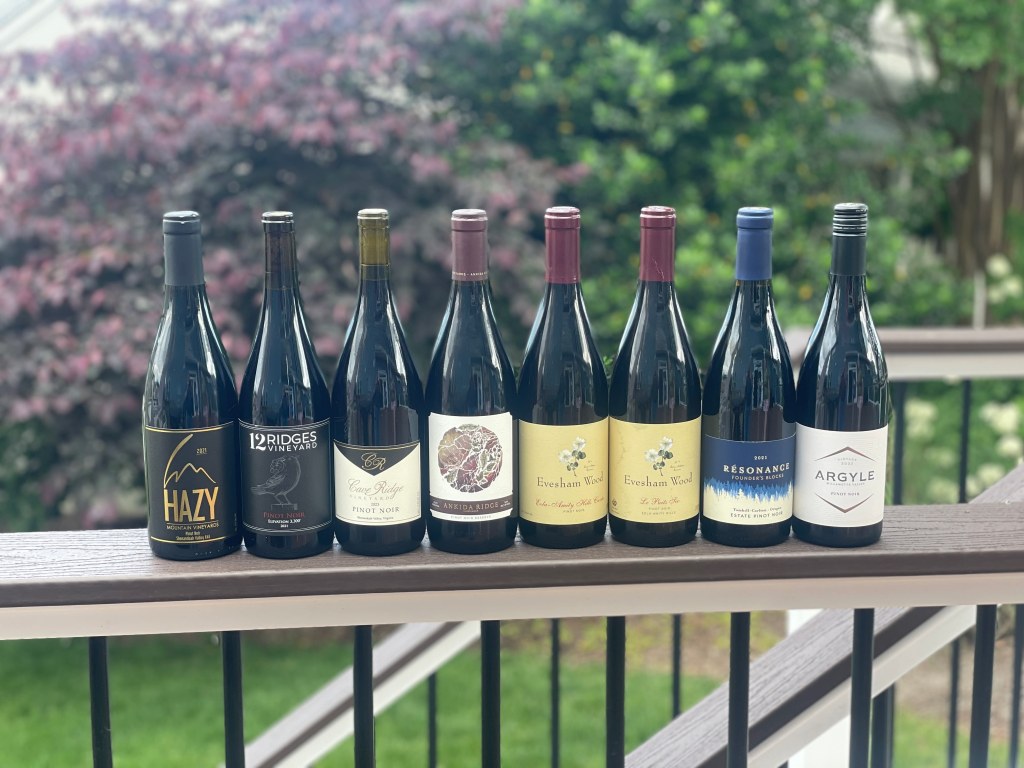
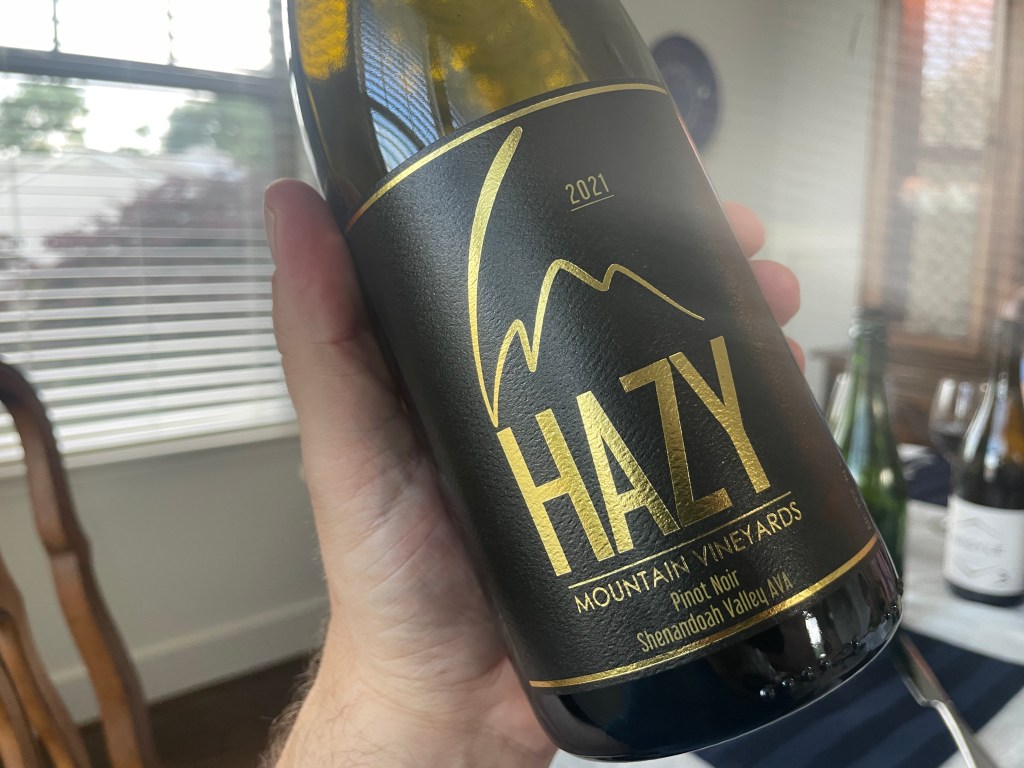
For my event I picked what I felt are the best 4 Pinot growers Virginia has to offer. These vineyards succeed in growing Pinot where previous ones had failed by planting at relatively high elevations: 12 Ridges (3,300 ft), Ankida Ridge (1,800 ft.), Cave Ridge (1,200 ft), and Hazy Mountain (1,600 ft). All are located in the Shenandoah Valley or the adjoining Blue Ridge Mountains, areas that have strong track records for growing cool weather varieties.

My group picked 4 Oregon Pinots to pair them against. I recently attended a wine dinner with Evesham Wood, so I had 2 wines from this quality producer. Other guests brought two more wines; a low-cost Pinot from Argyle, and a high-quality wine from Résonance.

I honestly had no idea how Virginia would fare here. Oregon has a great reputation for Pinot Noir, so I would have been happy if Virginia simply showed well against a heavy hitter in this category.

Tasting & Scoring Methodology

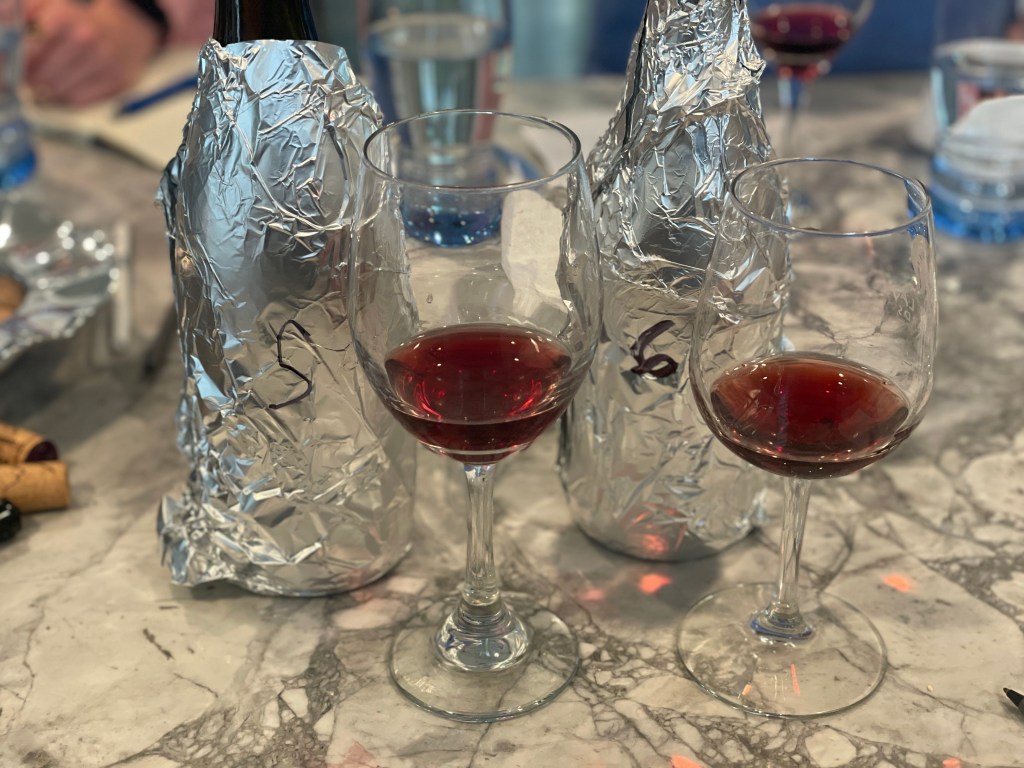
We did 4 rounds of 2 wines, consisting of a Virginia and Oregon Pinot Noir side-by-side, served blind. After we finished all 8 wines, we voted which were our Top 2 of the day. The Top 2 were set aside and revisited during a ‘Finalist” round.

The advantage of revisiting these wines is this gave the Top 2 more time to open up. The introduction of food changed our palates, adding another dimension to the event. After re-tasting them, we declared an overall winner.

The 4 flights were generally arranged lowest-to-highest in terms of price point.

The Contenders:

  1. 2022 Evesham “Eola-Amity Hills Cuvée” (Oregon; $34)
  2. 2021 Hazy Mountain (Virginia; $38)
  3. 2023 Argyle (Oregon; $28)
  4. 2023 Cave Ridge (Virginia; pricing TBD)
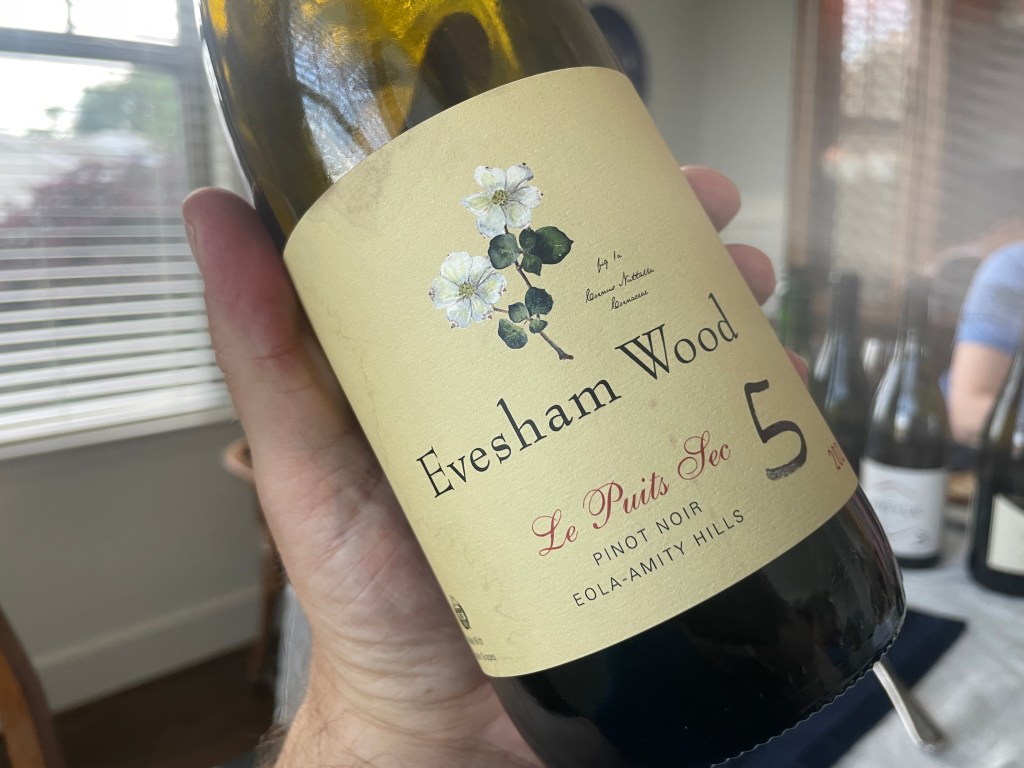
  5. 2021 Evesham Wood Le Puits Sec (Oregon; $55)
  6. 2021 12 Ridges (Virginia; $60? Currently not for sale)
  7. 2021 Résonance Founders Blocks (Oregon; ~$75)
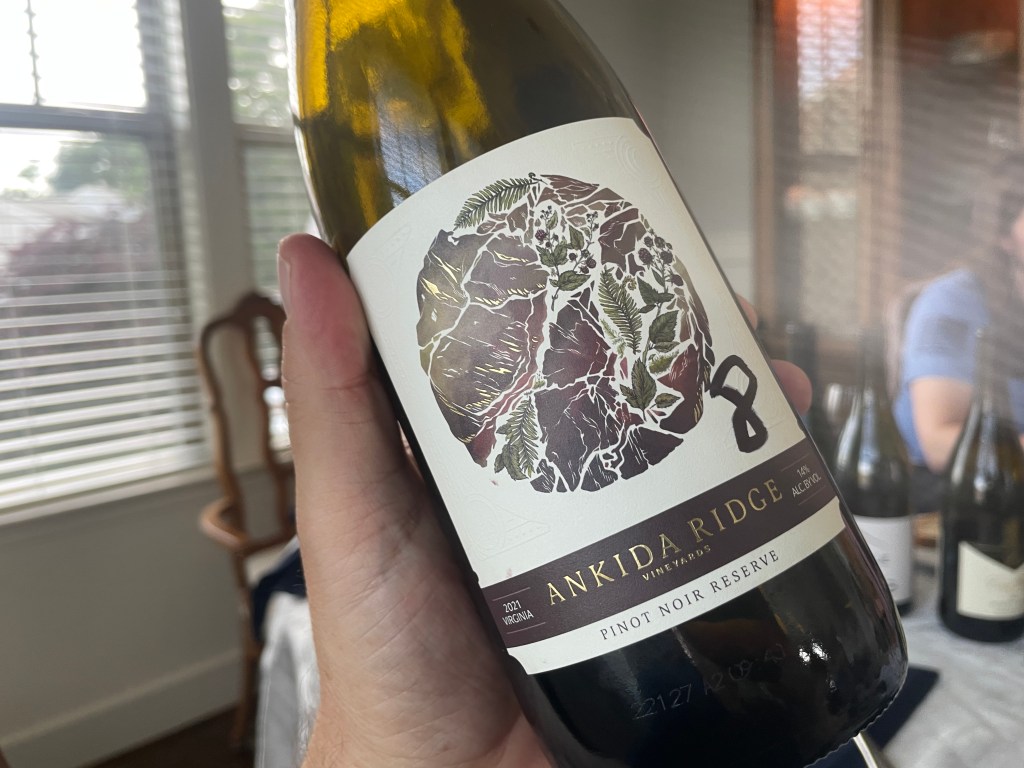
  8. 2021 Ankida Ridge Reserve (Virginia; $95)

Flight #1

  • Bottle #1: 2022 Evesham “Eola-Amity Hills Cuvée” (Oregon; 7 votes; round winner)
  • Bottle #2: 2021 Hazy Mountain (Virginia; 1 vote).

Admittedly this was not our favorite round; not surprisingly as I started with the lower-priced wines and worked my way up.

This round ended with Oregon as the favorite by a wide margin. While this particular Oregon wine isn’t this producer’s top-tier wine, it did have all the rich fruit qualities you’d want from a mid-$30 Oregon Pinot Noir.

Bottle #1 / 2022 Evesham “Eola-Amity Hills Cuvée”. Overall we felt this wine showcased fresh fruit, with some earthiness. Most attendees felt this was the Oregon bottle, although not everyone felt confident enough to vote.

Bottle #2 / 2021 Hazy Mountain. This wine was more expressive on the nose; maybe with some notes of oak. On the palate several guests detected notes of earth and allspice.

Votes:

  • Annie: Voted #1
  • Chris: Voted #1
  • Larry: Voted #2, since he preferred the more earthy, ‘aged’ qualities of this wine.
  • Matt: Voted #1
  • Kathy: Voted #1. Noted #1 was fresher, while #2 had notes of forest floor but seemed too cooked.
  • Stacy: Voted #1
  • Patti: Voted #1. Enjoyed #1 for its richer body; could tell it was Oregon. Felt #2 was too tart.
  • Rob: Voted #1. Likewise felt #2 was too tart. 

Flight #2

  • Bottle #3: 2023 Argyle (Oregon; 1 Vote)
  • Bottle #4: 2023 Cave Ridge Vineyards (Virginia; 7 Votes; round winner)

In retrospect I should have paired #1 vs #4, since the #3/Argyle was arguably our least favorite wine of the day. But since Cave Ridge’s Pinot isn’t yet priced, I wasn’t sure which wine to pair against it.

That said, I think Cave Ridge was the surprise of the night. 8 out of 8 attendees felt this wine was from Oregon, which I’ll take as a compliment for this wine.

Bottle #3 / 2023 Argyle. We could tell this wine was mass produced. It had too much of an effervescent ‘cherry coke’ quality to it, or maybe candy notes.

Bottle #4 / 2023 Cave Ridge. Lots of compliments regarding the fruit notes in this wine. Others noted it had notes of almond or marzipan. Multiple people (including myself) really enjoyed the initial ‘attack’ on our first sip.

Votes:

  • Matt: Voted #4
  • Annie: Voted #4
  • Chris: Voted #4
  • Larry: Voted #3.
  • Kathy: Voted #4
  • Stacy: Voted #4
  • Patti: Voted #4
  • Rob: Voted #4

Flight #3

  • Bottle #5: 2021 Evesham Woods Le Puits Sec (Oregon; 7 votes; round winner)
  • Bottle #6: 2021 12 Ridges Vineyard (Virginia; 1 vote)

Now we’re talking! At 3,300’, 12 Ridges is the 2nd highest-elevation vineyard on the east coast. Evesham’s Le Puits Sec was also an excellent wine.

While we definitely liked the 12 Ridges, it just didn’t compare well to an excellent vineyard-specific Oregon wine.

Bottle #5 / 2021 Evesham Woods Le Puits Sec. We generally identified this as the Oregon wine, although not universally. This was very well-enjoyed with lots of great descriptors, ranging from “Fresh and well-integrated”, “delicate”, and “balanced”. A few picked up on notes of baking spice, maybe dark cherry. Harissa was mentioned by one guest. I detected a lot of mushroom on the nose.

I felt this particular wine had, hands down, the best nose of any wine enjoyed that evening.

Bottle #6 / 2021 12 Ridges. This was definitely a higher-acid wine, which in retrospect makes sense since it was grown at 3,300 ft’.

Our tasting notes were all over the place. One guest mentioned notes of salted caramel; another said they got notes of sea salt. Yet another mentioned smoke or sour cherry. I didn’t get a lot on the nose, but I did feel it had nice complexity.

Votes:

  • Annie: Voted #5
  • Chris: Voted #5
  • Kathy: Voted #5
  • Larry: Voted #6 (still the outlier!)
  • Matt: Voted #5
  • Patti: Voted #5; her ‘happy place’ since she’s a big Oregon pinot fan
  • Rob: Voted #5
  • Stacy: Voted #5

Flight #4

  • Bottle #7: 2021 Résonance Founders Blocks (4 votes; tied)
  • Bottle #8: 2021 Ankida Ridge Pinot Noir Reserve (4 votes; tied)

This was by far our favorite pairing of the night. Not everyone voted to identify the region, although most of the guesses were accurate. It was very much a competition between ‘grace (#7)’ vs ‘power (#8)’. We were evenly divided on which we preferred, so it was a tie.

The #7 was rounder and more balanced. #8 was a ‘big’, but in a good way. Someone said it was “ready to party”, if you will. Both had great complexity, and opinions differed on which was heavier.

Bottle #7 / 2021 Résonance Founders Block. Notes of sour cherries and mushrooms. It had a perceived sweetness; not from sugar levels but had a ‘fruit sweet’ quality to it.

Bottle #8 / 2021 Ankida Ridge Pinot Noir Reserve. “Grabby” was my favorite descriptor. Several mentioned notes of sour cherry. The wine was lighter than I expected, although conversely it was still a ‘big’ win in terms of tannin. Kathy mentioned it was ‘layered, had complexity, and notes of forest floor’.

Of all the wines we tasted that evening, #8/Ankida was the most capable of standing up to heavier foods, especially a dish like steak. It was very drinkable now but could still use more time. I later learned the tannin came from the heavy use of stem inclusion.

Votes:

  • Annie: Voted #7
  • Chris: Voted #7
  • Kathy: Voted #8
  • Larry: Voted #8
  • Matt: Voted #8
  • Patti: Voted #7
  • Rob: Voted #7
  • Stacy: Voted #8

Finalist Flight

After the last round we did a poll to pick two wines from any flight to go into the finalist round. 7 votes went to wine #7/Résonance, 5 votes went to wine #8/Ankida, and 3 votes went to wine #5/Evesham Woods Le Puits Sec. #4/Cave Ridge was generally considered the #4 wine of the evening.

With the votes in, #7 and #8 went to the finalist round, and we enjoyed dinner drinking the remaining wines.

This food break worked to our favor as #7 and #8 opened up. The complexity of both improved, with the Ankida especially becoming more graceful. An Ox Eye Blanc de Noir accompanied our beef bourguignon.

We voted a second time…and for the second time in a row, it was again a tie. Ironically, 2 people from each ‘team’ switched sides.

  • Bottle #7: 2021 Résonance Founders Blocks (4 votes; tied)
  • Bottle #8: 2021 Ankida Ridge Pinot Noir Reserve (4 votes; tied)

Lessons Learned:

Virginia represented very well; far better than I could have hoped for. It’s fair to say that the state has very few high-quality examples to pull from, but the top ones we used were well received.

I should note that most of the attendees didn’t have pre-conceived notions of what Pinot should taste like. Our self-described Oregon wine aficionado almost always went for the Oregon wine (the Cave Ridge being the exception), but overall the attendees simply wanted something tasty.

  1. Round #1: 2022 Eola-Amity Hills Cuvée (Oregon)
  2. Round #2: 2023 Cave Ridge (Virginia)
  3. Round #3: 2021 Evesham Wood Le Puits Sec (Oregon)
  4. Round #4: Tie; 2021 Résonance Founders Blocks and 2021 Ankida Pinot Noir Reserve
  5. Winners round: Our “Top 2” wines were the Résonance and Ankida…and they tied again.

PS – the 2021 Ankida Reserve and 2023 Cave Ridge were both gifted to me for this event (thank you Christine and Randy!). While the Reserve is Ankida’s ‘top’ wine currently being sold, their 2022 Pinot is also getting headlines of its own.

For Virginia to tie Oregon as the evening’s ‘best’ wine is remarkable. Ankida Ridge should be very happy with that result.

I still say that the 2023 Cave Ridge Pinot Noir was the surprise of the evening. It was only recently bottled, so it has time to go. Yet it could easily have fared well against an Oregon wine in the mid-$30 price range.

The Monticello Wine Trail “Women in Wine” Dinner at The Doyle Hotel

This June, the Monticello Wine Trail went into celebration mode. Its Wine Week kicked off with a pair of Friday night wine dinners, then segued to a Saturday gala that announced Afton Mountain Vineyard’s 2024 Albariño as winner of the 34th Monticello Wine Competition. This year also featured a number of special events, including a sparkling wine brunch, rosé picnic, and elevated wine tastings.

A key part of Wine Week’s popularity is it allows enthusiasts to mingle with their favorite Monticello winemakers. Recent media coverage of the “the birthplace of American wine” has given these vintners extra reason to celebrate.

Wine Enthusiast has proven to be a huge cheerleader for Virginia wine, crowning Charlottesville and the Monticello AVA as its “Wine Region of the Year” in 2023. More recently it pronounced “Its Ingénue Era Over, Virginia Wine Takes Center Stage”.

Not to be outdone, in late May the New York Times published “Virginia Wine Grows Up”, featuring several Charlottesville winemakers. Decanter, VinePair, Vogue, The Wall Street Journal, and other major outlets have likewise recently spotlighted Virginia wine.

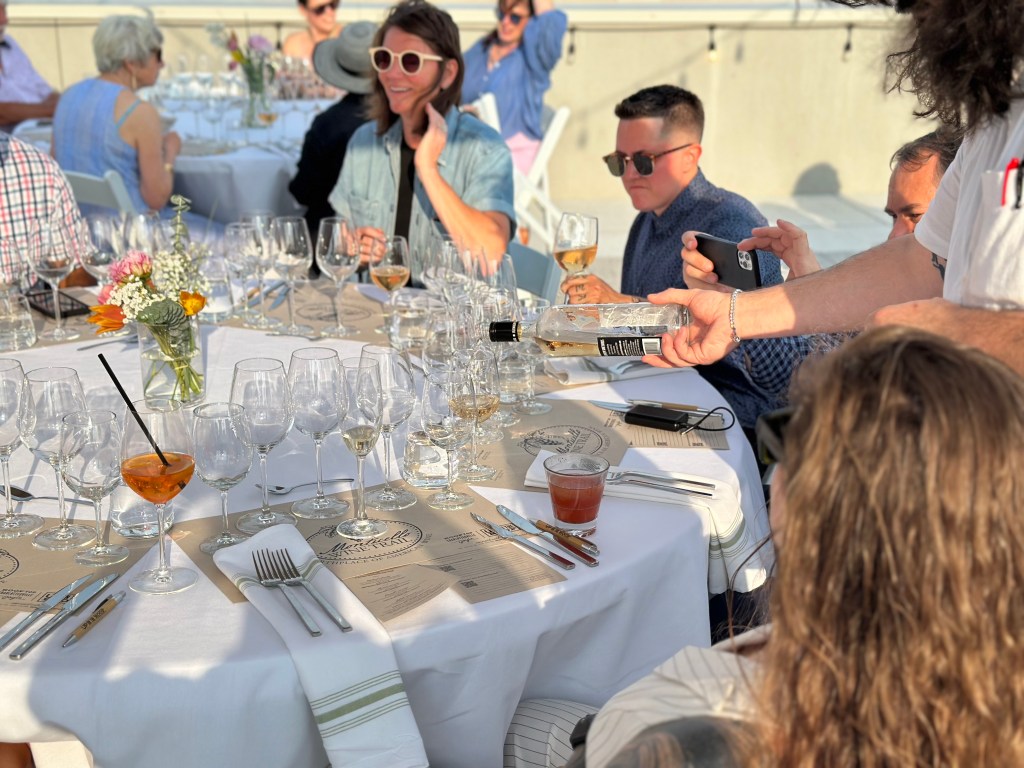
With this backdrop, it would be an understatement saying the mood at the Monticello winemaker dinner on the rooftop of Charlottsville’s Doyle hotel was festive. The theme of the evening; “Women in Wine”, was also a topic near to the audience’s heart.

Dining at The Doyle Hotel

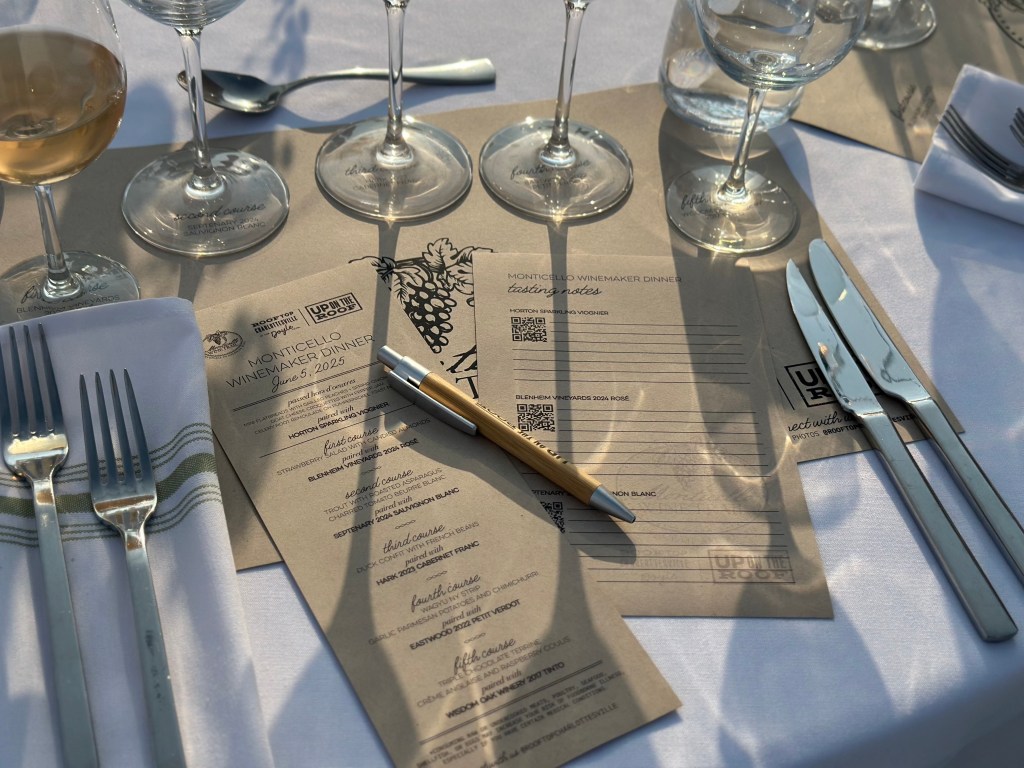
Our 5-course dinner included wine pairings from six wineries, nearly all of them represented by their female owner or winemaker. These vintners mingled with the crowd and shared their stories as their wine was poured.

First up was Shannon Horton, pouring Horton Vineyards’ Sparkling Viognier, paired with our hors d’oeuvres.

Shannon explained how the idea behind this Méthode Champenoise crafted wine is an example of how quickly her father, Horton Vineyards founder Dennis Horton, could improvise.

Years ago, Dennis had an overly bountiful crop of viognier that needed to be thinned before harvest. Rather than waste fruit, he realized these still underripe grapes could potentially be used for sparkling wine. The chemistry was spot-on, and they’ve been making a sparkling Viognier ever since.

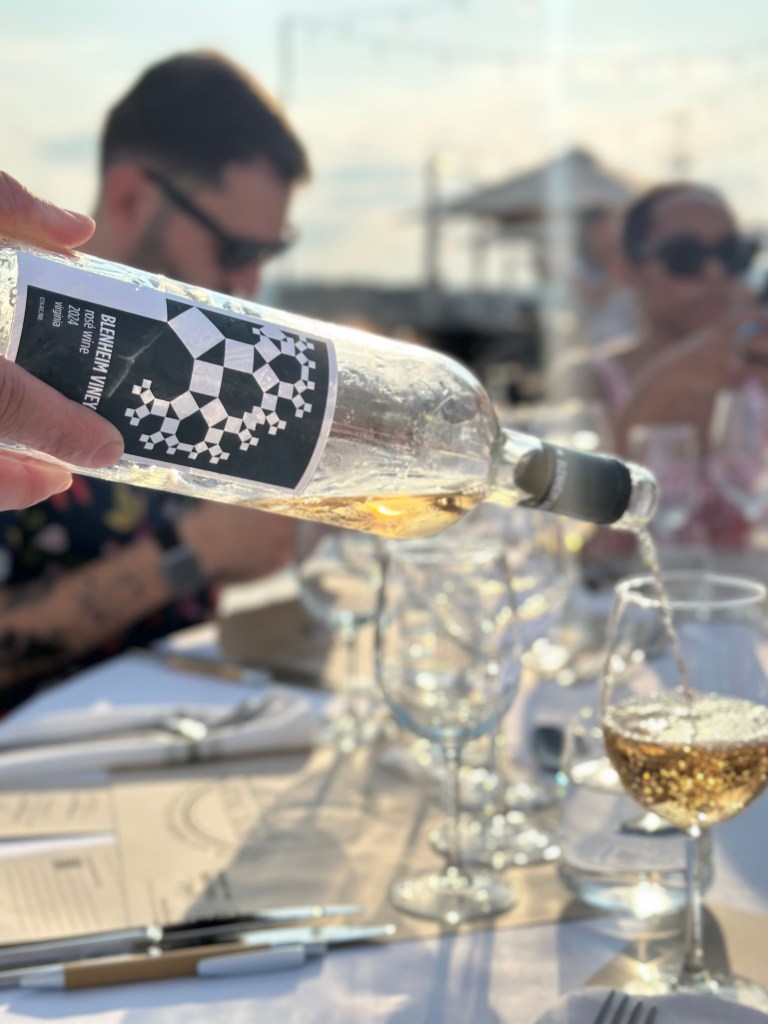
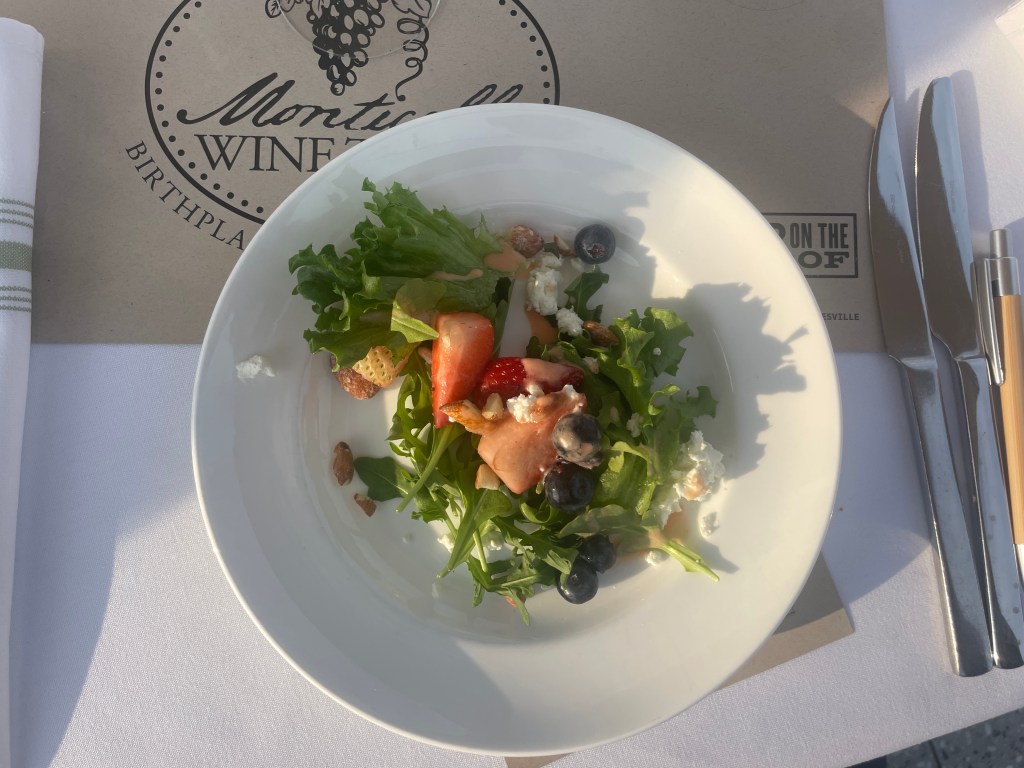
We then moved to the dining area where Kirsty Harmon of Blenheim Vineyards poured a 2024 rosé paired with our first course; a strawberry salad with candied almonds.

Kirsty is a big fan of rosés blended from multiple varieties, with this vintage using a combination of Merlot, Cabernet Franc, Cabernet Sauvignon, and Malbec (but no Pinot Noir or Syrah this time).

Corry Craighill’s 2024 Sauvignon Blanc from Septenary Winery was our next pairing, served with trout and a charred tomato beurre blanc.

Corry joined my table for a while and explained how owners Todd and Sarah Zimmerman love New Zealand-style Sauvignon Blanc, so she made this wine in a style that’s reminiscent of that region.

While her red wines have yet to hit the tasting room, Corry is the winemaker behind Septenary’s most recent white wine releases. Corry also owns Wound Tight, her personal label where she gets to be more experimental.

Once the starting dishes were finished, the red wine pairings with our main courses were served.

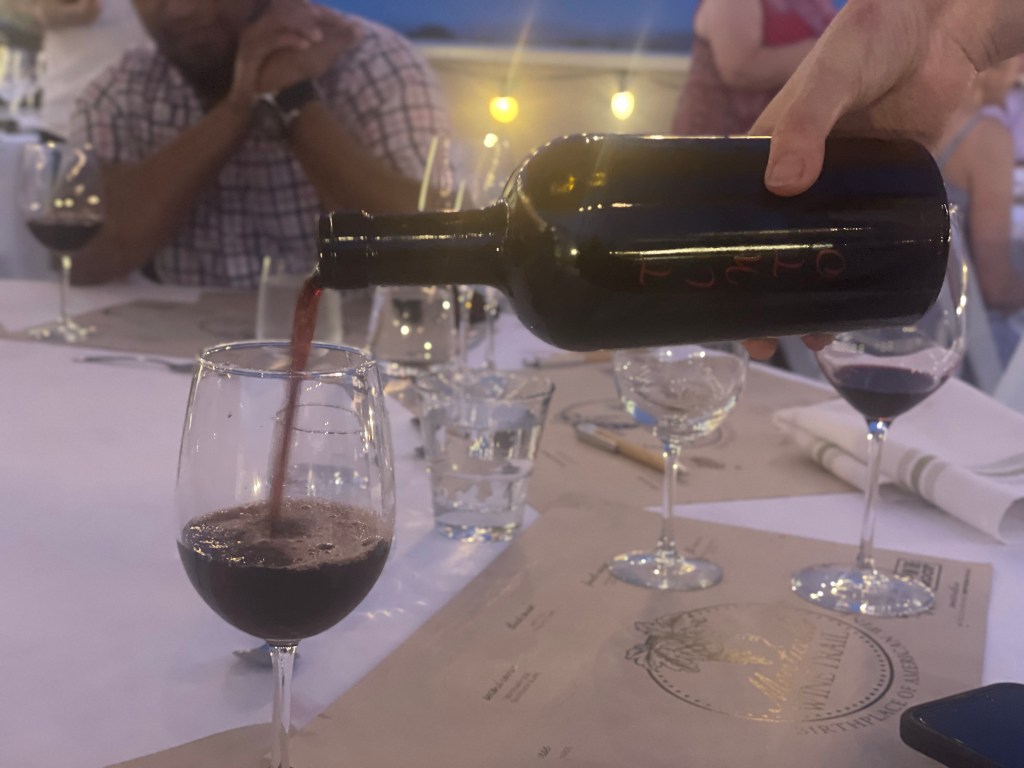
AJ Greely of Hark Vineyards poured our first red; a 2023 Cabernet Franc served with duck confit.

2023 was an exceptional year for Virginia wine, and AJ explained this was Hark’s biggest Cabernet Franc crop to date. I loved how AJ didn’t try to make it into a ‘big’ red and instead let the grape’s varietal characteristics shine through.

AJ hung out at my table for a bit and invited us to visit Hark’s brand new tasting room, which was opening that weekend.

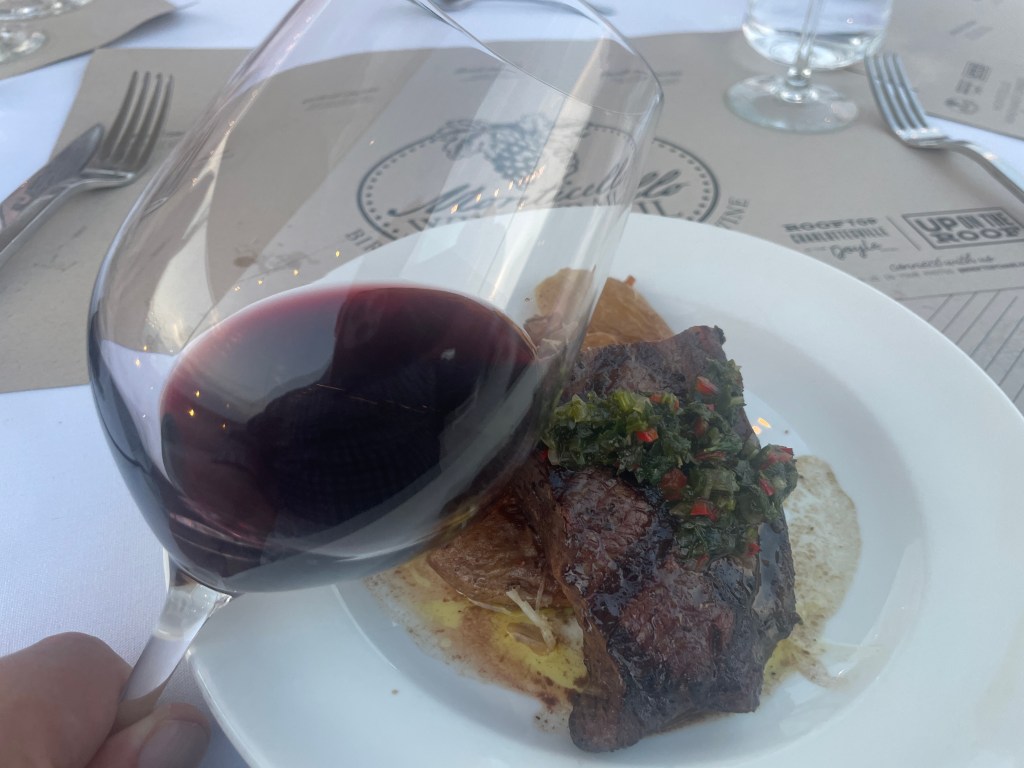
Next to last was Eastwood Farm winemaker Jake Busching sharing his 2022 Petit Verdot, served with wagyu NY strip and potatoes. Owner Athena Eastwood couldn’t attend, so Jake represented in her stead.

Petit Verdot is often thought of as a ‘steak wine’, with tannin and acid that can stand up to heavy foods. While those characteristics often means PVs need time to age, Jake crafted this wine to be fruit forward and easy drinking, enjoyable even without a food pairing.

Jake also told us about Athena’s newest venture, the Virginia Wine Collective. The Collective recently opened in downtown Charlottsville and features a number of micro wine brands that are difficult to find elsewhere.

Owner Laura Lavalle finished the evening with Wisdom Oak Winery’s 2017 Tinto, paired with a triple chocolate terrine.

Laura explained Tinto is Wisdom Oak’s interpretation of a port style wine, using a blend of Cabernet Sauvignon and brandy, aged in Kentucky Bourbon barrels.

Recognizing Monticello’s “Women in Wine”

The selection of female hosts to lead this event wasn’t coincidental. The “Women in Wine” theme continues to receive considerable attention in the world of Virginia wine.

In August of last year, local wine promoter Nancy Bauer launched the Virginia Women in Wine (VWW) professional organization. VWW has since partnered with the Monticello Wine Trail and other organizations to host additional events, ranging from winemaker dinners, communications roundtables, and the unveiling of the VWW’s “Closing the Gender Gap” white paper.

A breakdown of the demographics of the Virginia wine industry demonstrates the need for these initiatives. Only 18% of Virginia wineries employ a female Head Winemaker, yet females compose roughly 2/3rds of local winery staff.

The opening of Eastwood’s Wine Collective promises to open additional (cellar) doors for entrepreneurs by reducing startup costs that might bar them from the wine industry.

The Collective’s unique design includes individually rentable winemaking spaces, a shared production area, and a joint tasting room, all under the same roof. This allows participants to control their own winemaking process, while sharing equipment and retail space that would normally be outside the financial reach of a small operation.

This setup is especially important for female and BIPOC entrepreneurs, who often lack the networking opportunities and financial backing open to the majority of the industry. Members of the Collective also have the option to utilize Jake as a consultant to tutor them in winemaking.

Wine enthusiasts that missed Monticello Wine Week will soon have additional opportunities to engage the winemaking community. The Doyle will soon host Oeno Camp, an immersive experience that cultivates and supports BIPOC wine entrepreneurs.