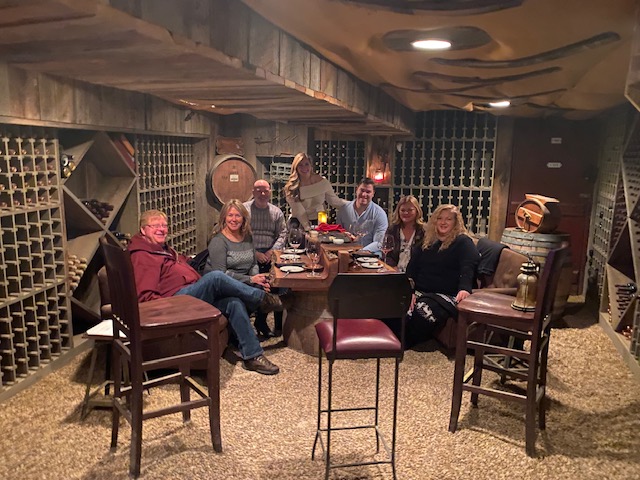
Hampton Roads Vineyard and Winery

Hampton Roads Vineyard has one of the best marketing ideas I’ve ever seen in the Virginia wine industry. After a long search for a good place to open a winery/vineyard, in 2008 David Sheldon and his wife Dianne found their future home in a rural area halfway between Richmond and Norfolk. He called it a retirement plan, – although I hate calling it that because owning a winery is a LOT of work.
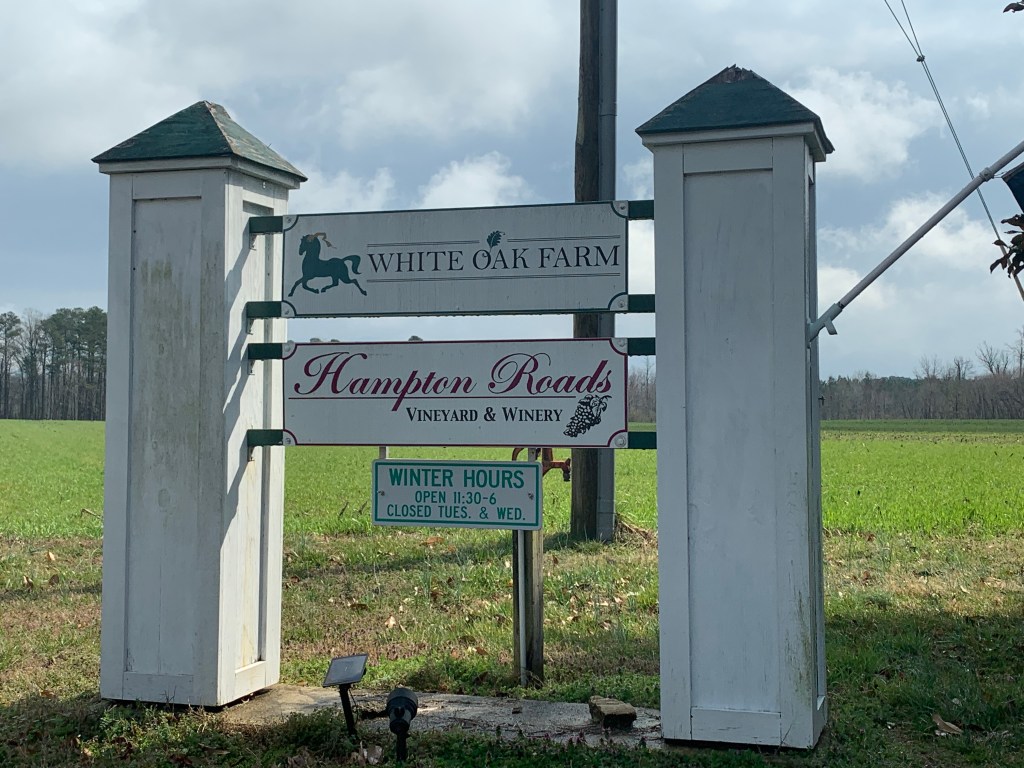
The property had a lot of history, including a house once owned by a famous carriage maker and horse enthusiast. It’s also good for growing alfalfa and raising Red Angus cattle. But you know what David decided it needed to complete things? A goat tower.

Say again? A WHAT?

That’s right – Dave got the idea from a book named “The Greatest Wineries in the World” which included a picture of a goat tower at a South African winery. That planted an idea how he could distinguish Hampton Roads from all the other wineries in the state. The 34-foot goat tower is his own design, and is the largest such structure in the world. Visitors can’t go inside, but they can watch the goats run up and down the steps.

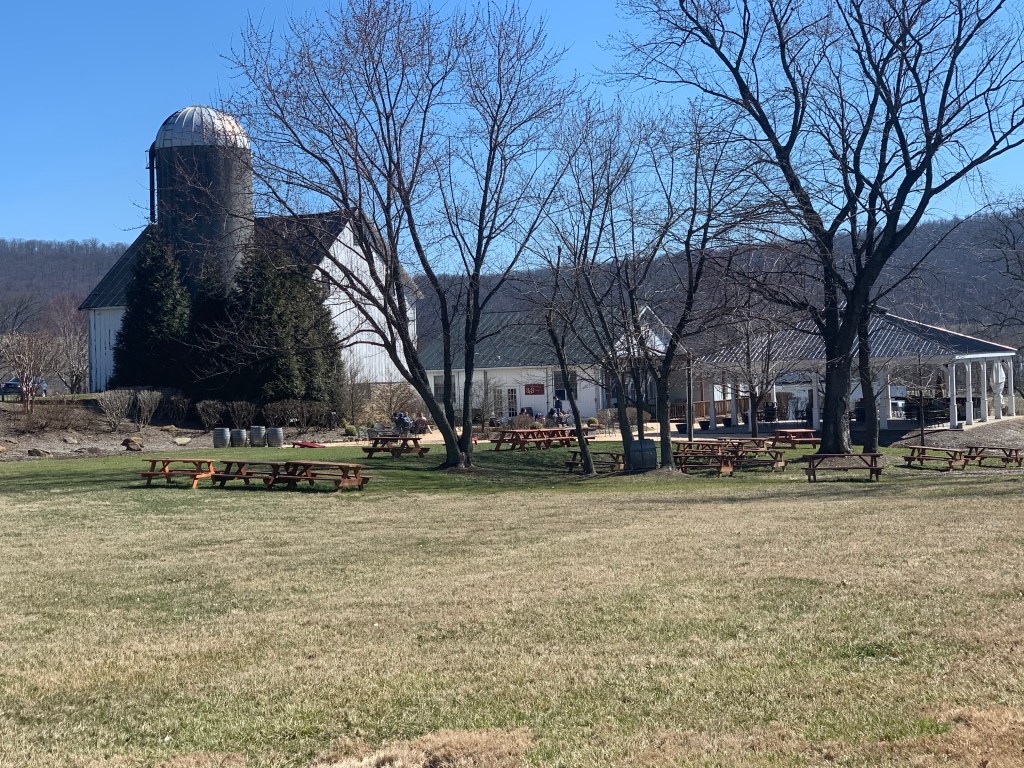
The goat tower is fun, but I was just as taken with the tasting room. Inspired by the trade of his home’s original owners, the building outwardly looks like a carriage house. It’s quite spacious inside, and being decorated with the works of local artists is a nice touch.

While some come for the goat tower – they stay for the wine. Visitors are a mix of locals as well as travelers from Williamsburg and Norfolk. So to satisfy this crowd, Dianne makes an assortment of wines ranging from on the sweet side to bold and dry. All in all they make 2-3000 cases/year using their 15 acres of vines. All their wine is made in steel, although a handful received some oak from wooden staves.

For the white wines, my favorite was the 2017 Chardonnay. Fermented in steel, it was light and easy drinking (I think I detected notes of pear). I also tried the “White Oak White” white blend which had grassy notes and a bigger mouthfeel, the Simply Seyval that was higher in sugar and more citrusy, and finishing the lighter wines was the Norton Blush which had a GREAT nose and color.

Moving on to the reds, I started with the 2018 Merlot and moved to the 2018 Petit Verdot. But my favorite? This sounds odd…but my favorite was their Hog Island Sweet Red – a Norton heavy blend. Now, I don’t typically like either Norton or sweet wines. But you know what? There was something about this that just hit the right spot!

Next time you’re visiting Norfolk or Williamsburg, swing on by. You might even be able to get a tour of the goat pen.

Upper Shirley Vineyards

Wow, what a difference a few weeks makes! I visited here in early March right after I participated in the Virginia Wine Expo in Richmond. Now I’m ‘social distancing’. You have no idea how much I miss this place now!

Upper Shirley Vineyards has a different vibe from other Virginia wineries. While some serve light fare, they have a full restaurant. Many wineries are part of a trail with 3-4 other places; Upper Shirley stands alone. Most tasting rooms are on the small side; this place is huge by comparison.

But you know what? This strategy is spot on! Upper Shirley goes all-out so you don’t have to visit anywhere else. Given what I saw, I don’t know why anybody would want to.

Located on the banks of the James River next to a historic plantation, Upper Shirley is definitely in “the countryside”. That sounds odd given it’s only half an hour from Richmond, yet very true.

Upper Shirley is the brainchild of Tayloe Dameron, who saw potential in putting a winery in an otherwise undeveloped stretch of land outside Richmond. At the top of his ‘to do’ list was to figure out how to make great wine. Fortunately Dameron partnered up with Michael Shaps, who’s likely won more wine awards than anyone in Virginia. So winemaker – check.

Tayloe also researched how to plant a vineyard in an area that’s challenging for vinifera. The local soil is exceptionally vigorous so he planted the vines well apart to ensure maximum sun exposure, facilitating ripening. He also found a gravely plot of land that has great drainage. Through careful growing and site selection practices like these Tayloe managed to get his 22 acres vines in balance. So vineyard – check.

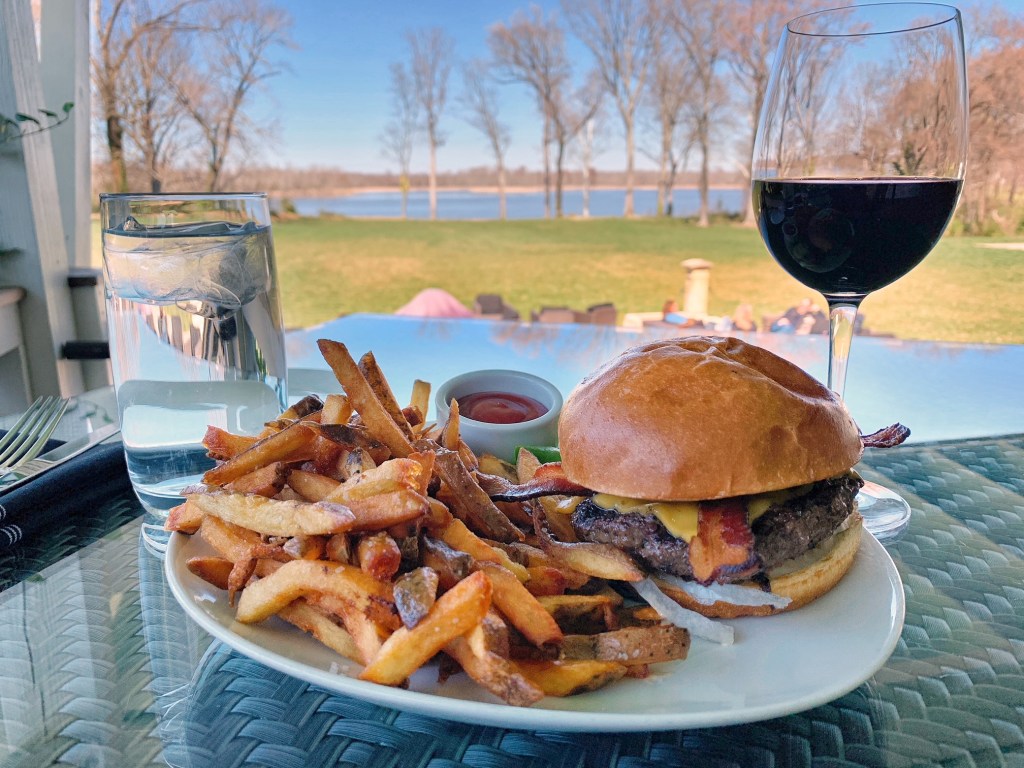
As we chatted you could tell Tayloe is (justifiably) proud of his wine, although he wasn’t shy about talking up his food menu either (try their burger!). Within an hour of opening Upper Shirley’s indoor space was PACKED. Luckily I found additional seating on their patio overlooking the river, which provided me with an amazing view.

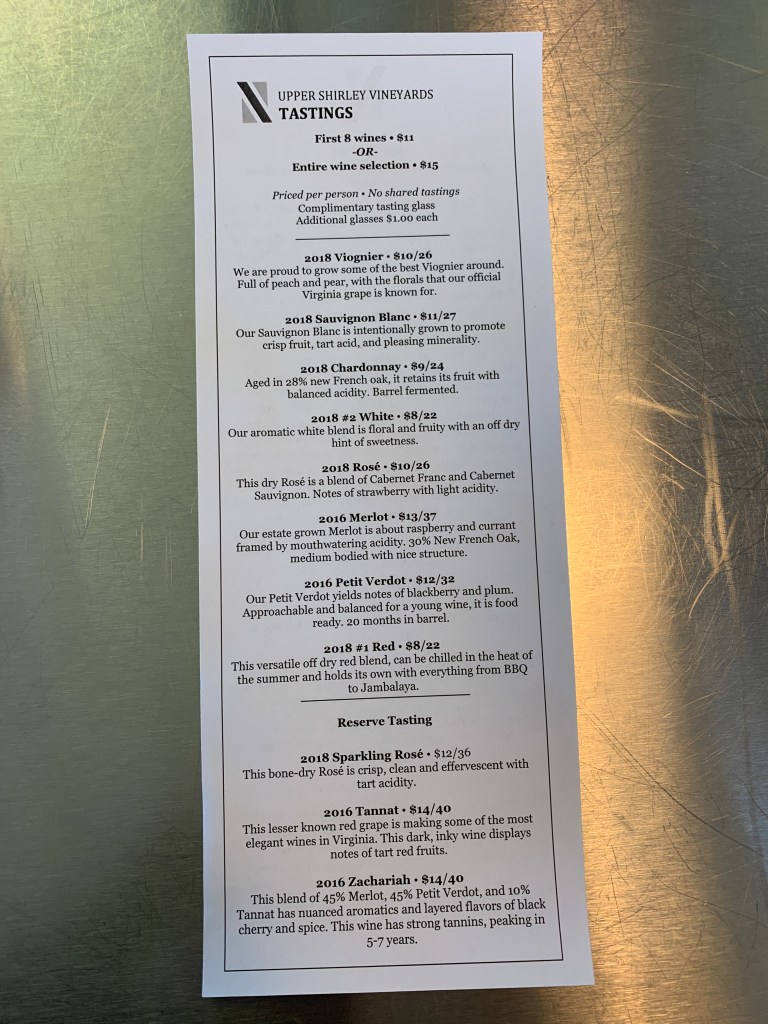
Of course this is still a winery first and foremost, so I got down to sampling. The white wines were all from the 2018 growing season, which worried me at first – until I tried them. While many others gave up on the 2018 vintage, I think Michael pulled a hat trick here and made some damn good whites.

I really liked the Viognier, which was light with notes of honeysuckle. Following that was their Sauvignon Blanc; aromatic and reminiscent of a cool-climate wine. The Chardonnay had a great nose and the partial French oak did wonders for its long finish. Finishing up the lineup was a semi-sweet “#2 White”, their Provence-style Rosé, and a very clean & crisp sparkling.

We then moved on to the reds, all from the 2016 harvest. The Merlot had a nice cherry nose and I found it to be very fruit driven. The Petit Verdot had a big mouthfeel, with black fruit up front. Following that was their “Zachariah” red blend, and last but not least a Tannat that was bold but not slap-your-face tannic bold. I loved all of them, but hands down the smooth Zachariah (which has a dash of Tannat) was my favorite.
I came by for a tasting and ended up staying a few hours. Tayloe wasn’t joking when he explained his entire goal is to give you enough that you don’t have to go anywhere else.

868 Estate Vineyards

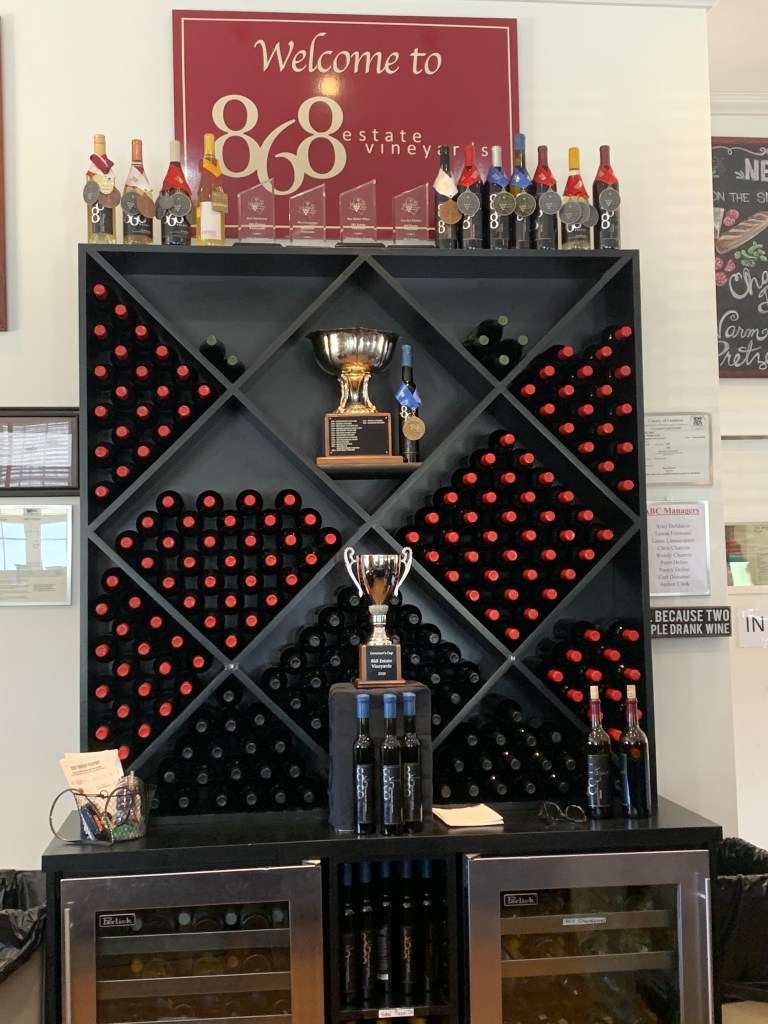
Several weeks ago I had the pleasure of visiting 868 Estate Vineyards under happier circumstances than what we face today. Nevertheless, I think it’s important to recognize a good news story for a change. Winning the 2020 Virginia’s Governor’s Cup award certainly qualifies!

I’d been trying to visit them for a while, but no particular date seemed to work. Then…they WON THE GOVERNOR’S CUP with their 2017 Vidal Blanc Passito, the first desert wine to ever do so! If that’s not enough reason to rush over, then I don’t know what is.

That’s the Governor’s Cup right there!!!

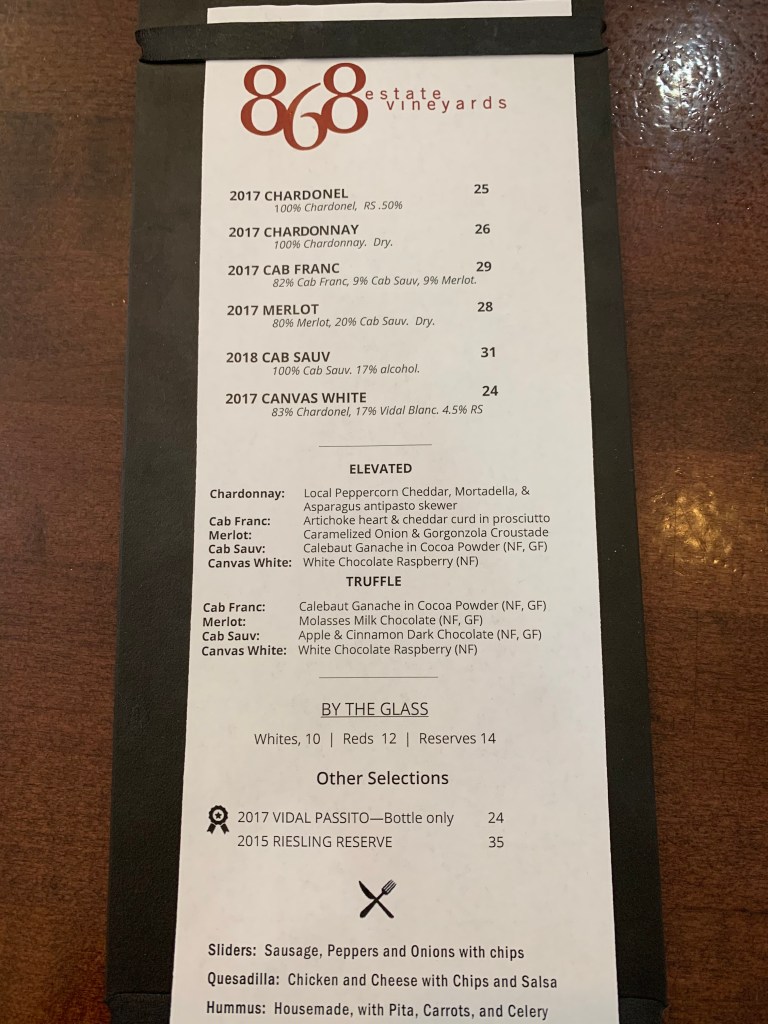
Not only is 868 a winery, it has a full-service restaurant called Grandale Vintner’s Table next to the tasting room. It’s great synergy because it allows them to serve great light fare options at the tasting room. Probably my favorite is the truffle & wine pairing. New flavors are selected every year with their “Shuffle the Truffle” event, which sounds like a delicious way to pick new favorites.

Nancy Deliso showed me around on a Friday afternoon. 868 has 22 acres under vine (plus some on lease), including a mix of vinifera plus Chardonel, Chambourcin, and some Vidal. I was surprise how little Vidal they actually have planted, all of which goes into their desert wine. All in all they make 3500 cases/year, usually using 100% estate fruit.
As I did my tasting I found myself admiring the art on their bottles. It turned out the tasting room is decorated with works from local artists, and the best of those are picked to decorate next year’s bottles. Had the weather been better I would have loved to sit outside on the expansive patio. Next time I’ll have to revisit Grandale for lunch, which I’d frequented several times (I’m a sucker for their pork shank).

Carl DeManno is their wine maker and the one who came up with the idea of making a “Passito” style desert wine; it’s an Italian style which calls for the grapes to be dried until they are raisin-y. The goal isn’t to make a sweet wine as much as something that is rich in texture (although it does have 8% residual sugar). Carl joked it was a “good experiment”, which is the wine understatement of the year.

Carl in the barrel room

Sadly the Vidal was off the tasting menu, but I did get to sample basically everything else. I started with their 2017 Chardonel and Chardonnay; the first was light with notes of grass and citrus, the later I could sense was dry with a tad of oak. The 2017 Canvas White was semi-sweet (their only sweet option, besides the desert wine) with good acidity.

Moving on to the reds, I REALLY liked that 2017 Cabernet Franc. Like many of their reds, it was a blend (this time using Cab Sauv and Merlot), which went a long way. The 2017 Merlot was also lovely, with a nice roundness on the palate.

Before I left I had one more place to visit: the barrel room. It so happened Carl was sampling two wines for their members. I tried their 2017 Petit Verdot, which while young was coming along VERY nicely. It seemed smooth up front but spread out nicely. I also tried their 2017 Chardonnay again, this time with some Swiss cheese which definitely mellowed it out. The 2017 vintage kick a@$, and these were great examples.

I’m SO tired of staying indoors already. I want to go out and visit again.

Doing my own truffle pairing

Lake Anna Winery

It had been a while since I’ve visited Lake Anna Winery, but it appeared back on my radar when they won 3 Gold Medals for their Chardonnay, Petit Verdot, and Tannat in the 2020 Virginia Governor’s Cup competition; the Tannat went on to the Governor’s Case. This was a huge coup for a smaller winery; definitely one of the best showings in the entire competition. As I’m a fan of both Tannat and Petit Verdot, I definitely needed a revisit.

It so happened that owner Jeff Heidig and winemaker Graham Bell were available on a Friday afternoon, so I was able to sneak in before the inevitable crowds came down to buy-up all the award winning wine. Both gents still seemed a little dazed at the newfound recognition, to say the least.

Tastes like – VICTORY

I love the location; the winery is only a short drive from the lake it’s named after (the park also has great hiking trails!). Although mid-sized by Virginia standards, the tasting room is very spacious. There is plenty of room for events, plus a cozy fireplace. Jeff explained that the lake is a magnet for tourists, who often congregate here on rainy days.

Jeff also gave me some background on his vineyard; 19 acres of vines, with a mix of vinifera and hybrids. While much of their wine is estate, they still purchase some fruit from places like Horton. One surprising fact is they grow Dornfelder, a rarity in Virginia. While most often it goes into blends, in good years they sometimes have enough to bottle it on its own.

As Lake Anna has a diverse set of customers, their lineup of wines runs the range of dry to sweet options. Graham led me through a tasting while explaining his thought process in the creation of his Gold Medal winners.

For the white and sweet options, I really liked the 2019 Seyval, which was grassy and reminded me of a Sauvignon Blanc. The 2018 Seyval had strong apple notes, like a Granny Smith. The 2017 “Totally White” was an easy drinking semi-sweet that seems a good all-around crowd pleaser. The NV Claret was an easy drinking red blend with a hint of sweetness. I also enjoyed their “Concerto” red wine (enhanced with cherries) and the “Essential”, made in an ice-wine style. Needless to say, anyone partial to sweeter wines will find lots to love here.

From there we moved into the bolder reds. 2017 Merlot had notes of dark cherry and great acidity and roundness (no doubt assisted by the 10% Petit Verdot blended in). The 2015 Petit Verdot was fairly fruit-forward by PV standards. I even had a chance to sample some wines still in barrel; I especially liked the Dornfelder, which is a varietal I almost never see in Virginia.

But the highlight were those Gold-medal reds. I loved that 2017 Tannat; it had more fruit notes than I expected, and an interesting complexity that came from being fermented in neutral barrels but assisted with oaken staves. The 2017 Petit Verdot had strong tannin and acid, but with time this will soften up (plus this is a VERY age-worthy vintage).

If you haven’t been to Lake Anna – GO!

Tannat Taste-Off at Maggie Malick Wine Caves

One of the joys of being a wine blogger is you get to fool people into thinking you’re smarter about wine than you really are. Such was the case with my invite by Mark and Maggie Malick (of Maggie Malick Wine Caves) to join them in a tasting of Tannat wines from around the world.

The Malicks have a special love for the Tannat grape. High in acid and tannin, I usually see it paired with rich foods like beef or aged cheese. While otherwise known as the national grape of Uruguay, Tannat does well in Virginia as our gradual summers facilitate the kind of slow ripening that Tannat needs to thrive.

Mark guarding his tannat vines

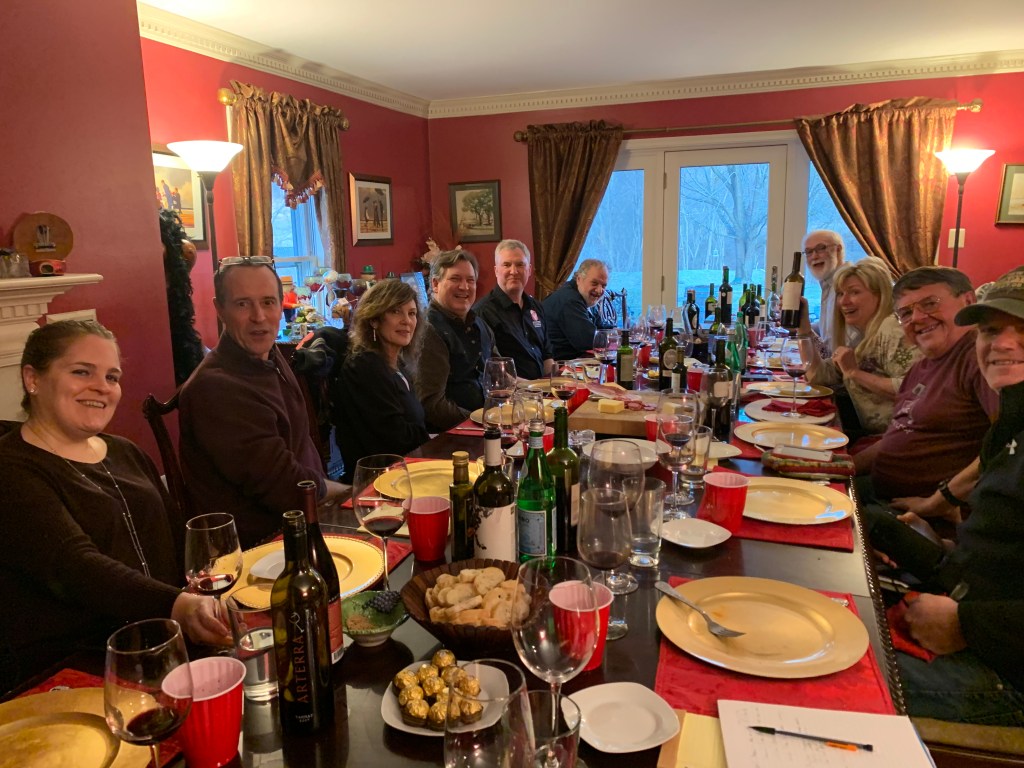
Mark invited a group of Tannat winemakers from around Virginia to bring their wines for a comparison; non-winemakers like myself brought bottles from California, Oregon, even Israel. Toping that off were a half-dozen Tannats from Uruguay; the spoils of the Malick’s most recent ‘research’ visit. All told, we had over a dozen people gathered around their dinner table eating cassoulet & cheese and – most importantly – sampling about 20 bottles of Tannat.

While it’s impossible not to have a great time while drinking a lot of wine, the winemakers used this as an opportunity for some cross-talk regarding how they made their wines, what audiences they sell it to, and speculation on Tannat’s place in the portfolio of Virginia wines. The consensus was Tannat is unlikely to become a top seller in Virginia, but it does serve as an effective replacement to bold California-style reds such as Cabernet Sauvignon.

In addition to the Malicks and some friends, in attendance were Mark Beckel of Chateau O’Brien, Doug Fabbioli of Fabbioli Cellars, Michael Heny of Michael Shaps Wineworks, Chris Pearmund of Pearmund Cellars, and Scott Spelbring of Bluemont. If anybody could ‘talk Tannat’, it was this crew.

What did I learn? Well, I’d say two main things:

First, Tannats have distinct regional differences. Very often the nose of the Uruguayan Tannats had a mustiness that was a dead give-away, and they trended towards being on the fruitier side. The California & Oregon Tannats were both softer and less tannic than anything else on the table. The short finish of the Israeli Tannat made it something of an outlier. The Virginia selections were the most diverse, with some trending towards tannic and weighty but others more fruit-forward. “Rounder” might be the best single adjective to describe Virginia’s Tannat lineup.

Second, cellar time really does matter. That’s true about wine in general, but I think it’s doubly so with the Tannat grape. Tannin need time to smooth out, and you could easily tell the difference between wines that were 8 years old vs ones that were 3-4 years old. Unfortunately Virginia’s Tannats were almost uniformly young. The good news is if they were good now, they will only get better over time.

Paring #1:

  • 2017 Effingham (Virginia). Smooth but young, with notes of caramel. The super ripe 2017 fruit and the luxurious Virginia Oak (Culpeper!) will only further knit together over time.
  • 2011 Amat (Uruguay): This was one of the hits of the day, and ended up being Mark’s favorite. Chris started off with noting how it had some weight to it but was still well balanced.  The tannins on this one were smooth.

Pairing #2

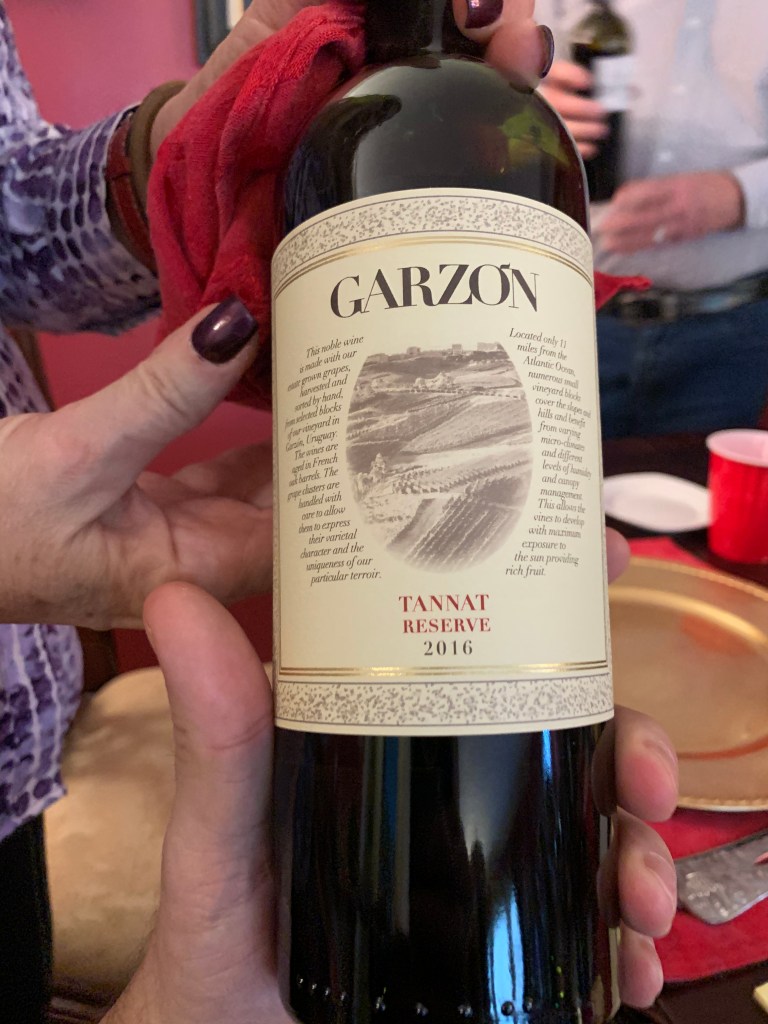
  • 2016 Garzon (Uruguay): “Ripe” was the key word here. There seemed an underlying mustiness to it with a hint of oak; maybe the wine was made in older barrels?
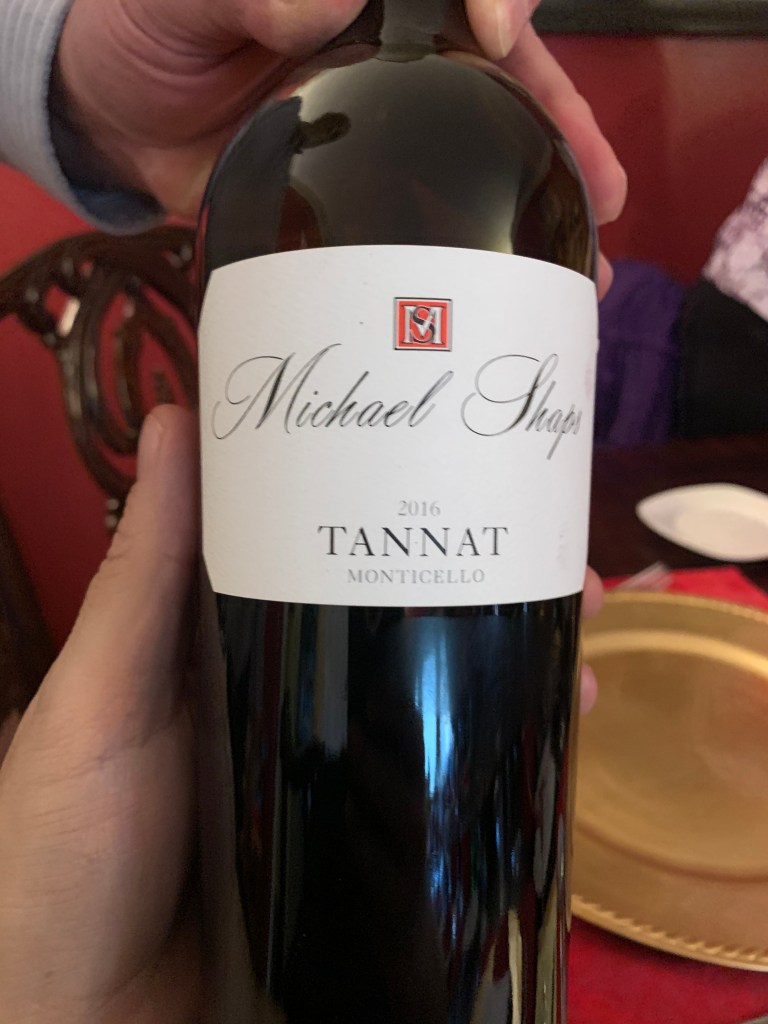
  • 2016 Michael Shaps (Virginia): The charred oak was noticeable, and we could tell it was a younger wine. Grippy tannins. But overall very enjoyable, and we agreed it will only get better with age.

Pairing #3

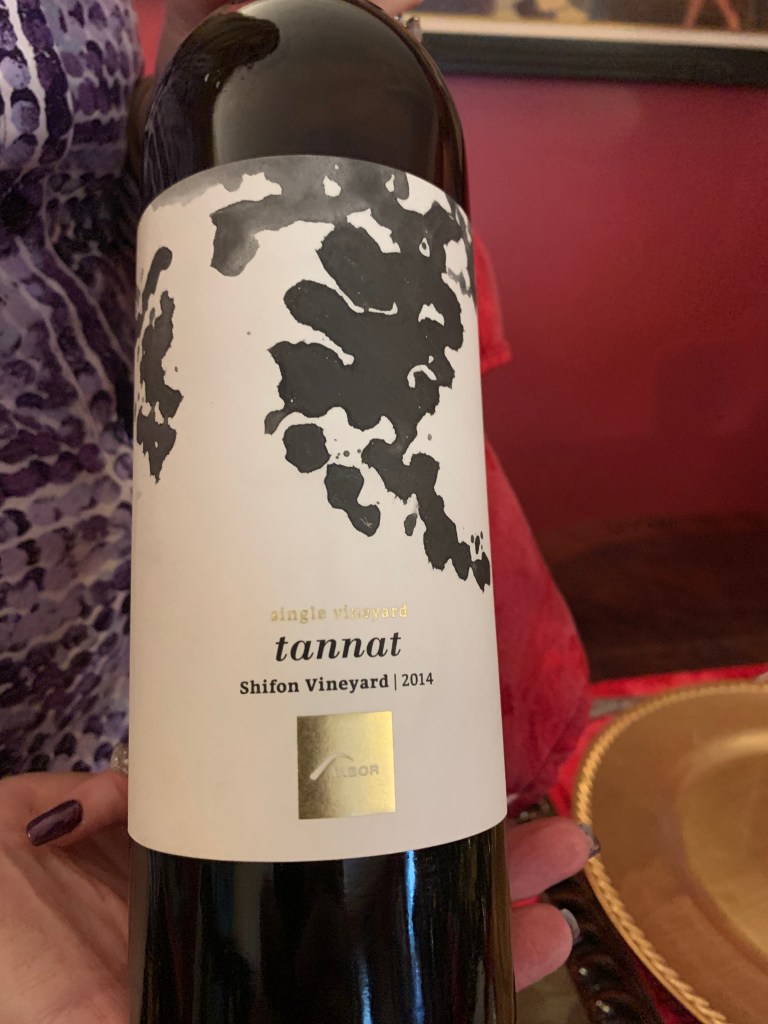
  • 2016 Tabor (Israel): This was one of the more unusual wines of the evening.  It came from a vineyard on the Golan Heights, a distinction that caused some to joke they tasted notes of ‘gun smoke and shrapnel’. Doug said it tasted ‘funky’ but in a good way. The musty nose and short finish were noticeable. One taster noted it has “unresolved” tannin (aka firm, tight tannin structure associated with younger wines).
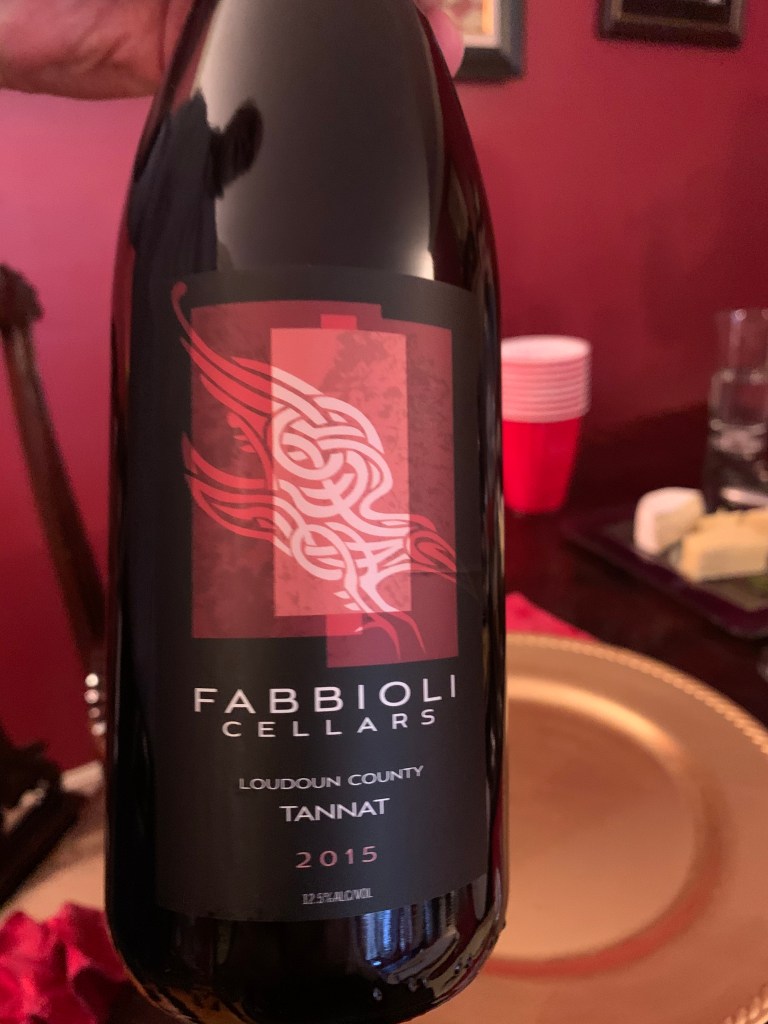
  • 2015 Fabbioli (Virginia). One of higher-acid wines of the night, which along with the delicate fruit character and restrained use of oak made it a welcome contrast to the riper, more heavily extracted examples of the evening. Notably this wine won the 2019 Loudoun County Wine Award’s “Best Tannat”.

Pairing #4

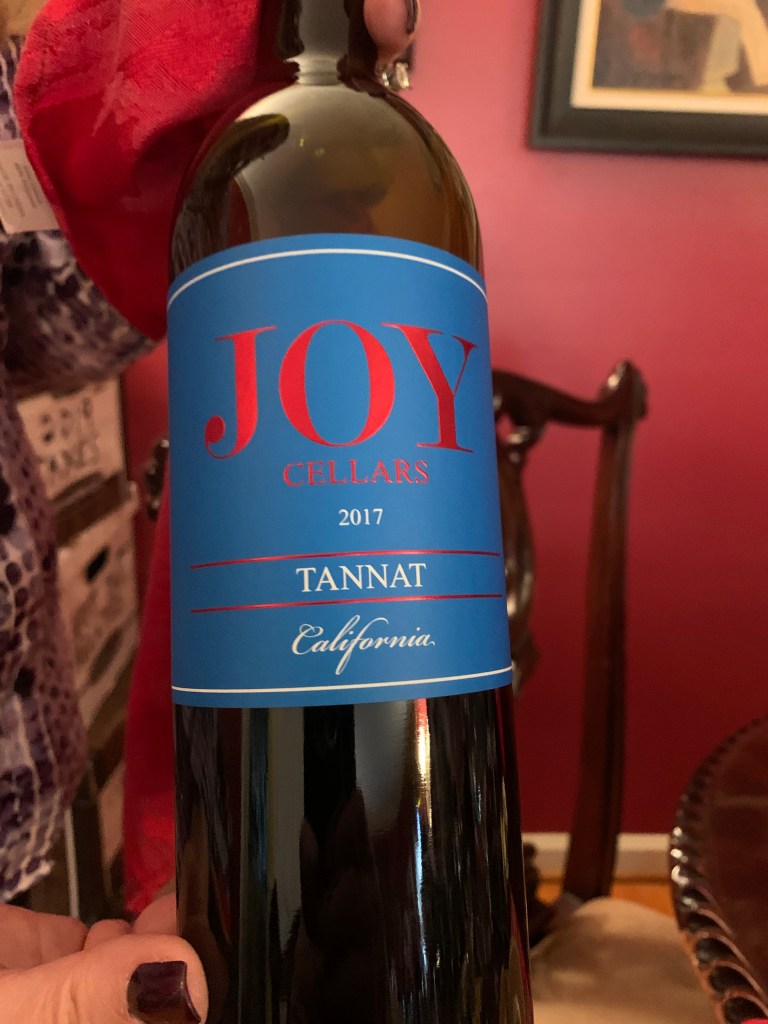
  • 2017 Joy (Lodi, California): A “smaller” wine. We didn’t see any notable flaws to it but neither did it have a lot of oomph, especially in comparison to several bottles we had already enjoyed.
  • 2017 Arterra (Virginia): Black fruit on the nose, but had noticeable acidity and a nice finish. It was one of the more interesting wines of the night, likely a result of having been fermented using native yeast (winemaker Jason Murray’s signature style). The only downside is it tasted young.

Pairing #5

  • 2016 Troon Vineyard (Oregon): I looked this one up and discovered it was also made using native yeast, but the Troon couldn’t be more different from the Arterra. Not a lot going on in the nose. Very soft, made in a lighter style. We suspect this was a Tannat made for Pinot drinkers, and was the least Tannat-like wine of the entire lineup.
  • 2017 Maggie Malick (Virginia): Blended with 5% Petit Verdot & 5% Merlot. Coconut notes from the American oak popped out. Christmas spices on the palate. We liked it but like many of the 2017s on the menu, we felt it was young; the notes needed time to integrate.

Pairing #6:

  • 2016 Batovi (Uruguay): Weak nose, except for some musty notes. Not a lot of weight on the palate; more fruit driven than many of the others we were trying. I looked it up and later saw Wine Enthusiast gave it 93 points, which was a higher rating than I suspect people at the table were giving it. Maybe it’s a stylistic preference that Virginia’s Tannat winemakers are more focus on weight and tannin than Uruguay’s Tannat winemakers are?
  • 2017 Upper Shirley (Virginia): The second entry of a Michael Shaps wine. Good length and roundness on the palate. Not as heavy as we were expecting.

Pairing #7

  • Spinoglio (Uruguay): This one also required some research; I believe it’s a Tannat blend and/or non-vintage wine. It did seem more aged than other offerings, and was easier drinking. Despite its background Doug said it had a ‘monolithic’ taste to it, as if the winemakers tried too hard for consistency over complexity.
  • 2012 Chateau O’Brien (Virginia): Strong, refined and weighty. The acidity dried my mouth up quickly. Although it was 15% alcohol it didn’t taste remotely like it. One of the hits of the night, alongside the Amat.

Pairing #8

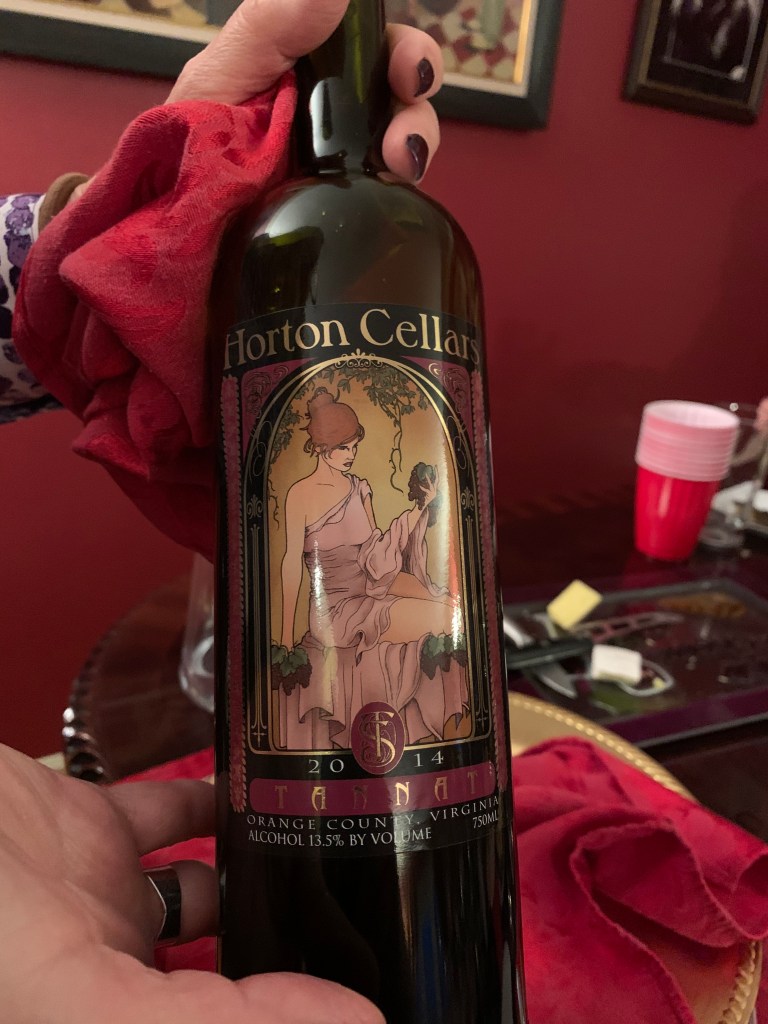
  • 2014 Horton (Virginia): Tiny bit of musk on the nose. Leather and dark fruit notes. Tannic, medium-to-long finish.
  • 2017 Bluemont (Virginia): This wine was made with fruit from the Maggie Malick vineyard. Candy finish. Brambleberry notes. Someone noted this wine was a good representation of what a Virginia Tannat should taste like.

Pairing #9

  • 2017 Pippin Hill (Tannat blend, Virginia): Young, easier drinking and less tannic than most others.
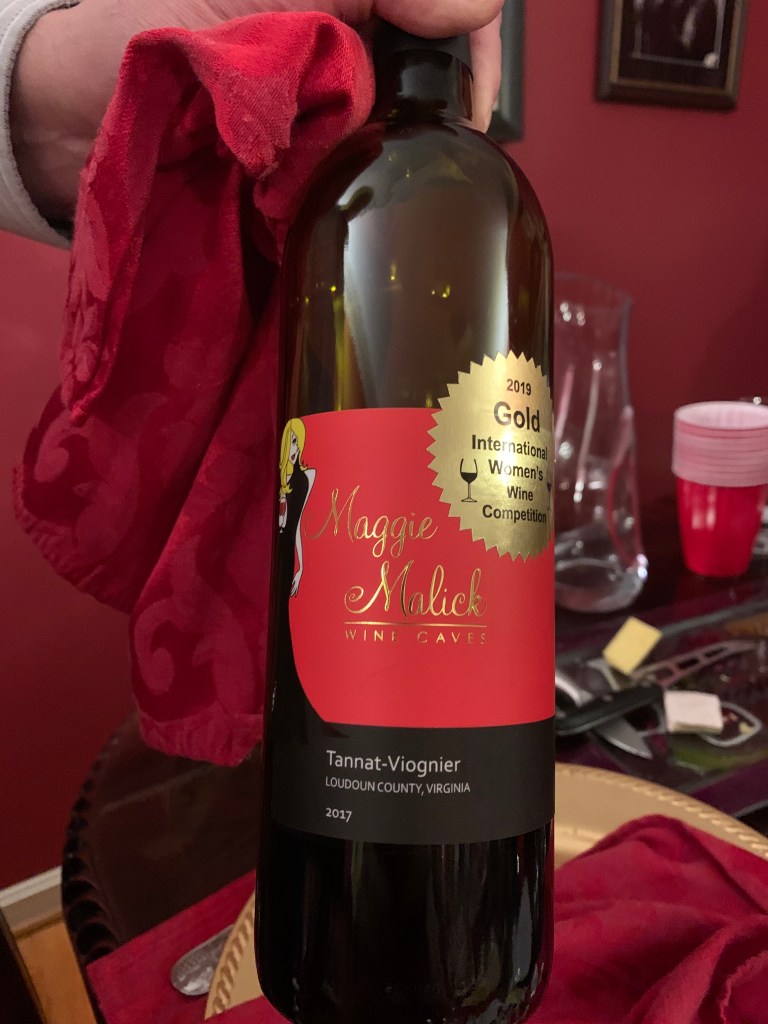
  • 2017 Maggie Malick Tannat-Viognier (90% Tannat/10% Viognier, Virginia): Easy drinking, aromatic. This is the kind of wine that doesn’t need a food pairing to enjoy it. It’s also Maggie’s best-selling wine and the only winery in Virginia that sells this blend.

Pairing #10

  • Bone Orchard (tannat port-style): Crushed blackberry notes. It was also…getting more difficult to taste anything at this point, given were now on our 19th and 20th wines of the night.
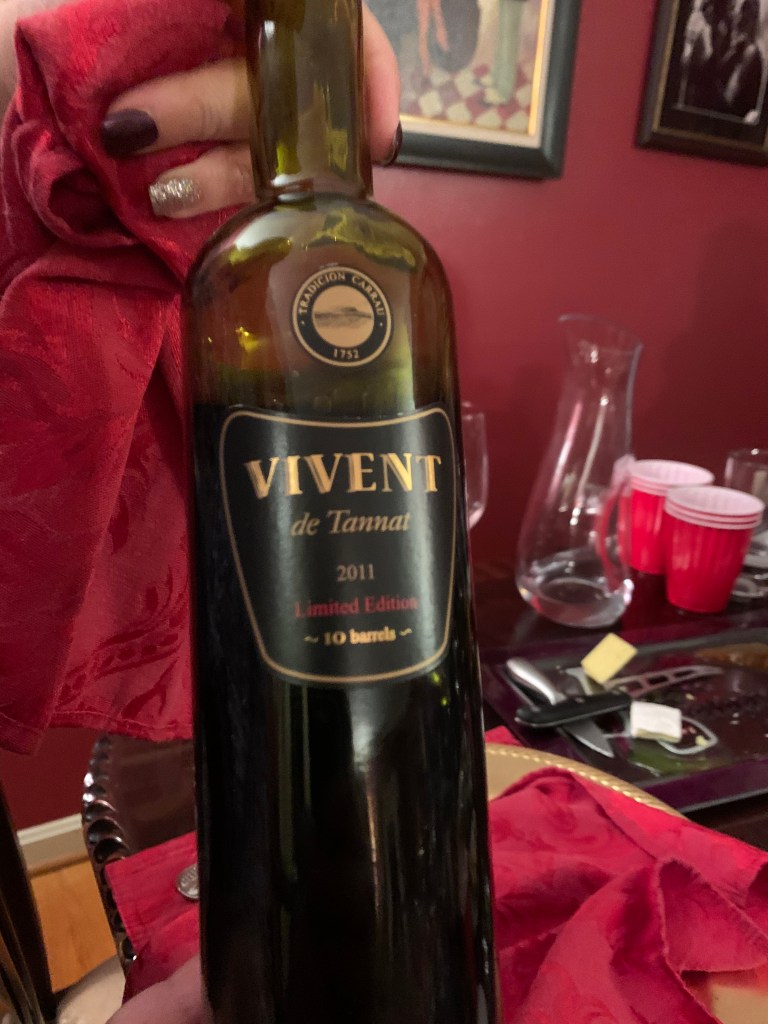
  • 2011 Vivent de Tannat (Uruguay): Classic port-style. Weight-driven not tannin driven. Christmas spice notes and noticeably high alcohol.

Was there a favorite? Based on what could tell, the consensus was the 2012 Chateau O’Brien and the 2011 Amat were the top two. I thought the O’Brien was the smoothest of the evening, while the Amat was the most complex. Which is better depends on what style you preferred.

PS; I actually learned a third lesson of the night. When doing wine tastings, ALWAYS write your notes down immediately! Because the next morning might be…fuzzy…

Windridge Vineyards

Maryland wineries are the same driving distance as the ones I visit in Virginia, yet somehow I don’t visit them nearly as often. But I really should – Maryland’s wine scene is growing fast; every time I look at my map I find a new winery had popped up. Such was the case with Windridge Vineyards.

Windridge is west of Gaithersburg, somewhere along that invisible boundary where the burbs turns into farm country. It’s also a very new winery, opening in July 2019.

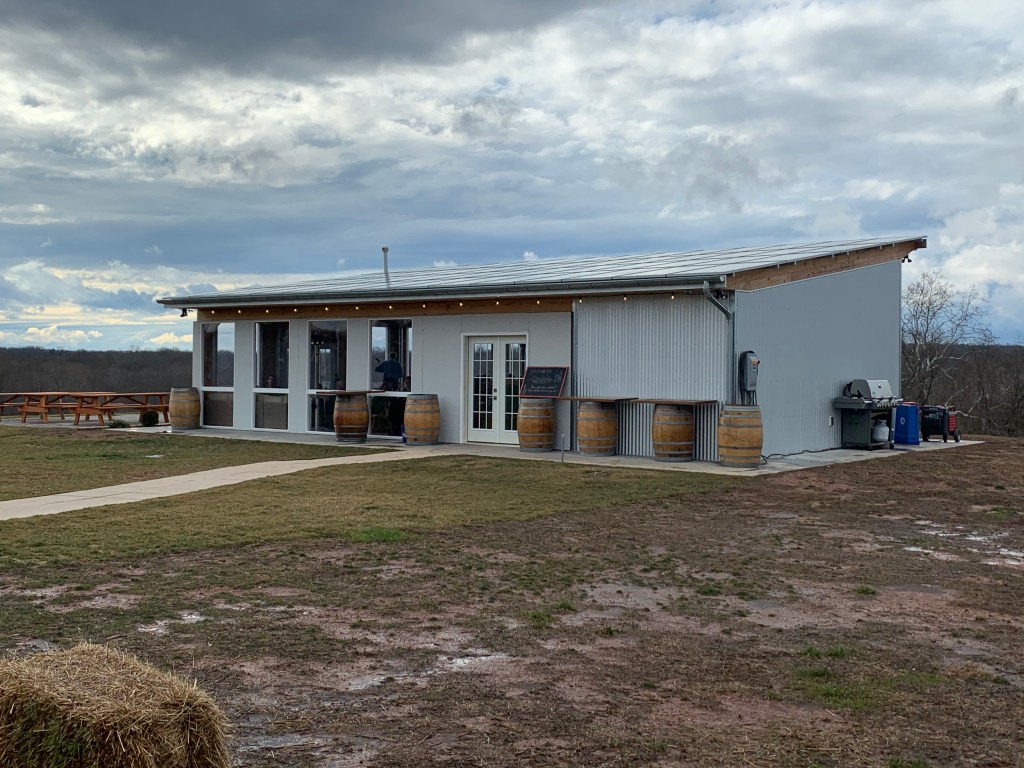
But ‘new’ is relative here; they’ve had vineyards for a while and only recently took the plunge to open a full-fledged winery. The current tasting room is a temporary setup while they build their permanent one. Fortunately that didn’t stop a friend & I from grabbing a seat inside while doing some wine ‘research’.

With the exception of a Riesling, all of Windridge’s wines were made with estate fruit or purchased in Maryland. Currently they have 27 acres of vines planted, including Syrah and Albariño.  It excites me to see wineries planting vines that I don’t see that often; Albariño especially is well suited to the local terroir.

I was particularly taken with the Cabernet Franc and their Seneca red-blend, but across the board I enjoyed the lineup. And if this wasn’t enough, winemaker Nick Maliska poured a sample of their 2019 Cabernet Franc juice taken from a barrel. 2019 is going to be a fantastic year up and down the east coast, and Maryland wines from that vintage will be outstanding.

What I tried:

2018 Rose: Merlot/Cab Sauv/Cab Franc blend, strawberry in color and strawberry-watermelon notes on the palate.

2017 & 2018 Chardonnays: I enjoyed both, but for different reasons. The 2017 had some nice lemon notes, while 2018 had a surprisingly long finish. Although this may seem counter-intuitive, I think I liked the 2018 better even though it was from a horrible growing year.

2017 Chambourcin: This was a full-flavored Chambourcin, without becoming a fruit bomb. Also had some pepper notes.

2017 Ithaca Reserve (Chambourcin): Less pepper and more fruit-forward.

Chardonel: I’m not always a fan of this hybrid but I liked this one quite a bit. It was off dry and its acidity gave it a nice ‘fresh’ quality.

Seneca (red blend): Earthy, mushroom on the nose. Some acidity and fruit that appeared in the finish.

2017 Cabernet Franc Reserve: This was on the lighter side of the Cab Franc spectrum, with some fruit notes.

2016 “The Old Line” port-style: Strong bourbon notes, which I LOVE in my port-styles. One of the nicer port-styles I’ve enjoyed recently. Made with Cabernet Franc and Petit Verdot.

Philip Carter Winery

Two of my favorite subjects are history and wine. Fortunately, these things intersect at Philip Carter Winery.

The founder of Philip Carter is a descendant of North America’s the first internationally recognized winemaker, who back in colonial days sent London’s Royal Society of Arts a dozen bottles of wine made at his plantation. Nobody is sure what type of grapes he used, but the Society thought well enough of the wine they awarded him a gold medal. Not bad for a beginner!

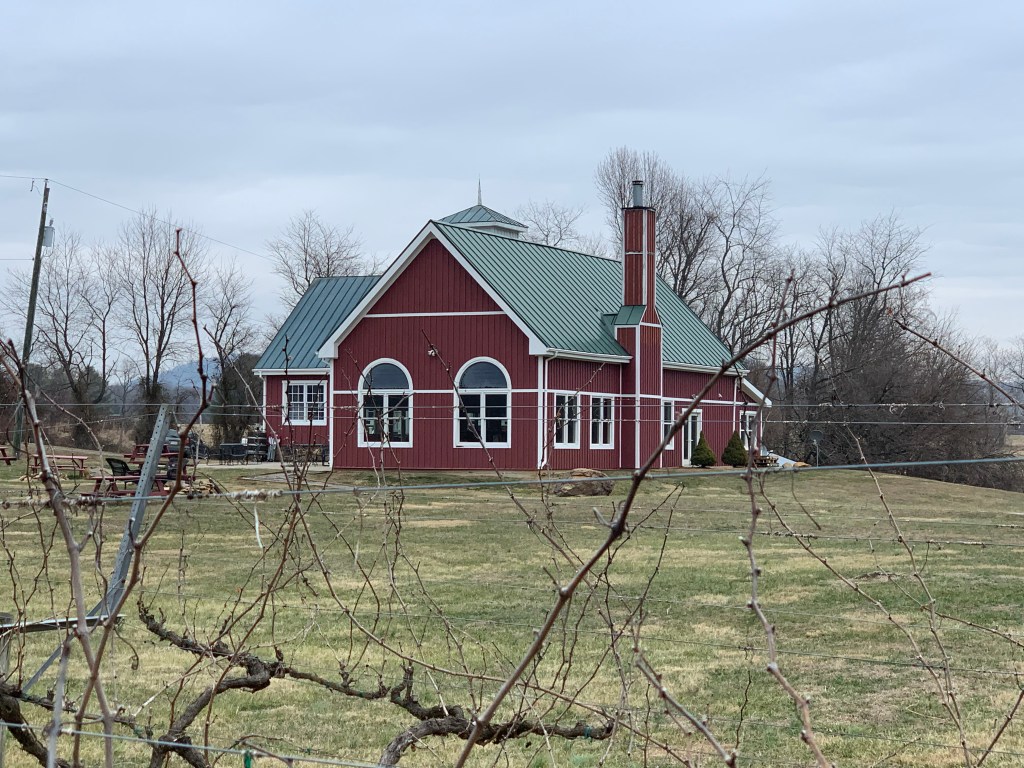
Club manager Kristel greeted me as I came in – and took great care of me for the next hour. The tasting room reminds me of a barn, only it’s also surrounded by about a dozen acres of vines. There’s plenty of seating both inside and out as well.

12 acres of vines is mid-sized by Virginia standards, but new vines planted at their sister winery at Valley View Farm will expand its acreage of vinifera. Most of their fruit is estate, with a small portion purchased locally. Although both locations source from the same vines and made at the same location, stylistically speaking the intent is to keep the two separate.

Two things brought me to Philip Carter. One was the recommendation of their former winemaker, Jeremy Ligon (now at Creek’s Edge). The second was a sampling of their signature blend – Cleve.

Calling me a Tannat fanatic might be an exaggeration…but not by much. Cleve is a 50/50 split of Tannat and Petit Verdot; my second favorite grape. I couldn’t tell you why putting two high-tannin grapes together works so well, but they seem to bring the best out of one another. Having had a sample of this once before, I was hooked.

I lucked out as Kristelle allowed me to sample much of their portfolio of wines. While I’m partial to reds – especially red blends – there was something on the tasting menu for all palates. This is one of the few places I’m confident I can bring friends regardless if they prefer sweet or dry wines.

What I tried:

2014 Chardonnay: Apple on the nose and palate; Kristelle explained this was a Chardonnay for non-Chard drinkers. I heartily concurred.

2018 Viognier: Soft as Viogniers go; no honeysuckle on the nose but I found it on the palate.

2016 Valley View (Chardonnay/Vidal blend): Semi-sweet. You can smell the Vidal in it, despite those notes being more subdued.

2016 Governor Fauquier (Vidal): Definitely on the sweet side.

2017 Nomini (Cab Franc): Light in color with some pepper notes.

Valley View Red (Cab Franc/Merlot): Light fruit on the nose but I could taste darker fruit…maybe even cranberry?

2016 Corotoman (Meritage): Must be Cabernet Franc heavy; definitely darker fruit notes.

2016 Cleve: Now we’re talking! 50/50 Petit Verdot/Tannat blend. Much smoother than I was expecting, especially with that chocolate pairing. Mushroom on the nose. My favorite of the entirely lineup.

Sweet Danielle (Vidal desert wine): Sweet (as expected) although the pineapple notes surprised me.

“1762” port-style: Very, very smooth. This brand has consistently been one of my favorites in the state. So good that on a previous visit I almost bribed a club member to buy it for me!

Riedel Tasting at Tarara Winery

For someone who drinks a lot of wine, I still have a lot to learn about the subject. The use of correct glassware to maximize your wine experience is one of them. So when I found out that Tarara was having a class on Riedel glasses, it was hard to pass up.

Why is glassware important? Because every type of wine has unique characteristics which can be accentuated (or masked) by the shape of your glass. The glass’s lip directs the wine to specific parts of the tongue, thus emphasizing qualities such as acidity or sweetness. A large bowl-shaped glass helps release a wine’s aroma, while a taller, thinner bowl captures it. There’s a science to it, but a lot of it is common sense.

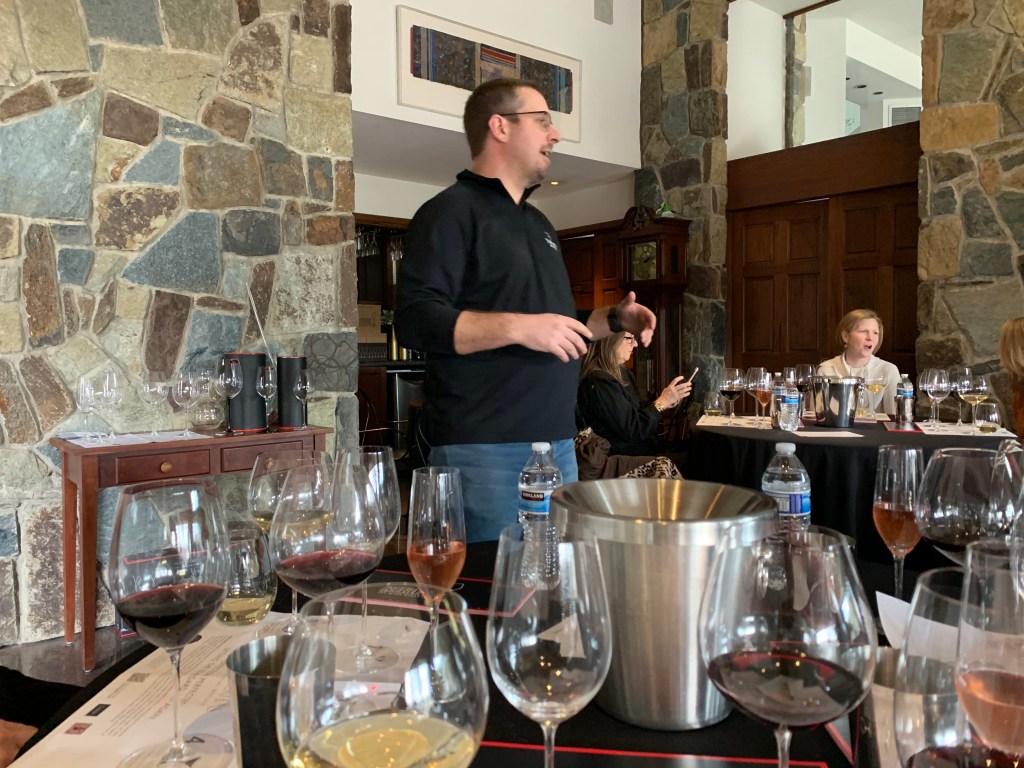
The class was led by winemaker Jordan Harris, who made the event a lot of fun. He spent almost as much time poking fun at himself for his very extensive glassware collection (most of which he never uses out of fear of breakage) as he did teaching us the dos and don’ts about good glassware.

Jordan started with two really great pieces of advice. First, the price of the glasses you use should correspond with the price of the wine you usually drink. If you’re going to pay for expensive wine, then you’d better get the most out of it.

Second…drink your best wines on Tuesdays. Why? Because when you open on a ‘special occasion’, your memories are of the occasion; the details of an expensive wine are wasted on you. So to best enjoy your expensive wine, open it on a slow day so you’ll remember every detail. It’s also a great way to liven up your Tuesdays!

You’d think an over hour-long event about glassware would be boring…but it wasn’t. Pairing it with good wine helps as well.

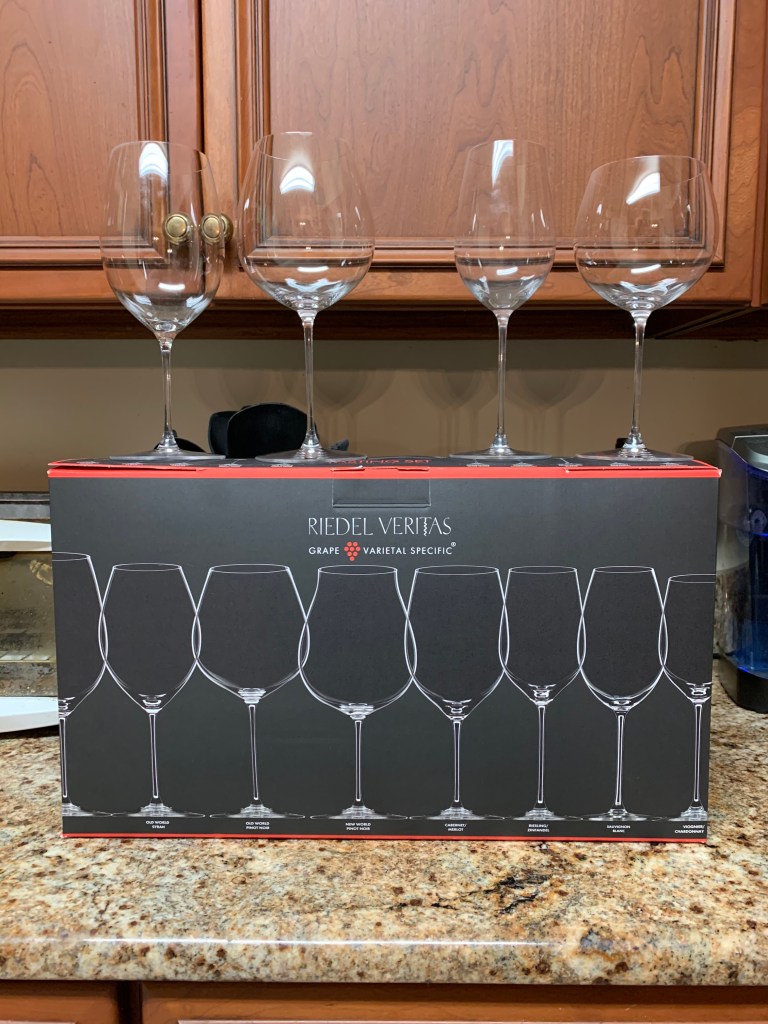
We used the 4 pieces from their “Riedel Veritas” collection, specifically glasses for Oaked Chardonnay, Riesling/Zinfandel, Old World Pinot Noir, and Cabernet/Merlot. Smaller tumblers were used for comparison purposes. If you take their class, you keep the glassware afterwards; education and new glasses as a package deal!

I didn’t realize Riedel has over a hundred glasses in all shapes and sizes (and price points). Want a glass for Rheingau Riesling? Riedel has one for that. How about a Chablis Chardonnay? Sure thing. Brunello? Got that too! Just about every major varietal or region had at least one glass type dedicated to its maximum enjoyment. 

Glass #1: Flute (served with a pét-nat)

Not a Riedel, but this was a great demonstration on the importance of good glassware. Flutes are traditionally the way sparkling is served. But flutes have a major problem – the narrow aperture reduces the aromas you can detect. It pretty to look at and useful for preventing the glass from warming up in your hand, but it detracts from smelling (and thus tasting) the wine. I thought could detect something on the nose, but the notes were subdued.

We took a sip from the flute and poured the rest into the Riesling/Zinfandel glass. Big difference! I’d go with the later in the future when tasting sparklings.

Glass #2: Riedel Veritas Riesling/Zinfandel glass (served with the 2015 “Boneyard Magic Dragon” Viognier):

This longer, narrowing glass is designed for aromatic white wines. The lip directs your wine to the front of your palate, while the smaller aperture concentrates aromas. I found the Viognier to be highly aromatic, with high acidity and some weight to it.

After a sample we poured this into the tumbler. The difference was significant; I just didn’t get the same nose. The Riesling/Viognier glass was definitely the way to go for ‘delicate’ whites.

Glass #3: Riedel Veritas Oak Chardonnay glass (served with the 2017 Chardonnay from their “1987” old vines label)

The Oak Chardonnay glass is big and round, which gives you a lot of surface area for aeration. The lip directs the wine to the sides of your palate, accentuating the acidity and deemphasizing any oaky characteristics.

We tried that same wine in the Riesling/Zin glass and I had a very different experience. The oak seemed more pronounced in taller Riesling glass as the wine hit the front instead of the sides of my palate, giving it more depth.

Glass #4: Riedel Veritas Old World Pinot glass (served with the 2018 Boneyard red)

The Pinot glass aims to the tip of your tongue – the part which accentuates sweetness. I think this type of glass would be exceptionally good for showcasing fruit notes. As a light but fruity red, the Boneyard definitely fit this category.

Glass #5: Riedel Veritas Cabernet/Merlot glass (served with the 2016 Bethany Ridge)

This is your glass for Bordeaux style wines, or tannic reds in general. The shape is designed to aim for the back of your palate and smooth out the tannins. This is my new go-to glass for all red tastings in the future.

The Bethany Ridge seemed to be one of Jordan’s favorite wines, as he was commenting on the quality of the growing site (actually owned by Walsh Family).

Chateau O’Brien Winery & Vineyard

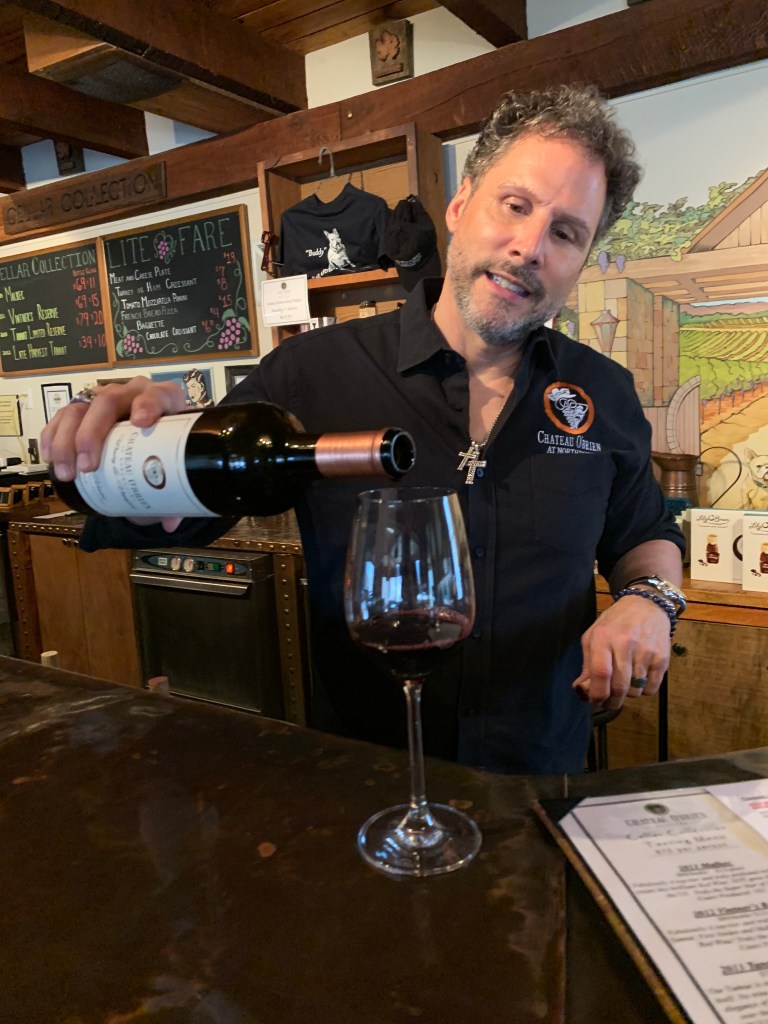
I don’t know what it is about wine tasting, but wine always seems to taste better when the owner is pouring it. Do the stories make it taste better? The setting? Or just the idea you’re getting some kind of special treatment? Well, all of the above was true when I did the cellar tasting at Chateau O’Brien.

Owner Howard O’Brien takes a very hands-on approach to his winery, from blending trials to bottling the wine. But one of his favorite parts of the job is doing cellar tastings, all of which he leads personally. Howard is also a big proponent of my all-time favorite grape in the world – Tannat.

I’d like to think Howard’s Tannat wines helped put this grape on the Virginia wine map. Of the 40-something acres planted in the state, 8 belong to Chateau O’Brien. Not coincidentally, his Tannat won Gold at Uruguay’s Concurso Internacional Tannat Al Mundo wine competition – the only American wine to do so. If you’re going to compete against other Tannat wines, the country whose national grape is Tannat is the place to win.

Located in a refurbished farmhouse with views of the hills of the Blue Ridge, the tasting room has exactly the rustic feel that I look for in a Virginia winery. Although they hold events (I’m especially partial to his St. Patty’s Day celebrations), parties aren’t the centerpiece here – O’Brien is one of the most wine-centric locations I know.

For starters, the wines on the tasting menu are aged longer than possibly any other place in the state. When most Virginia wineries are serving red wines that are 2-3 years old, O’Brien is serving wines that are 7-8 years old.  Their ‘average’ upstairs tasting is the equivalent to a special reserve tasting at most places. To top things off, they serve their wines in Riedel glasses – a touch I rarely see elsewhere in Virginia.

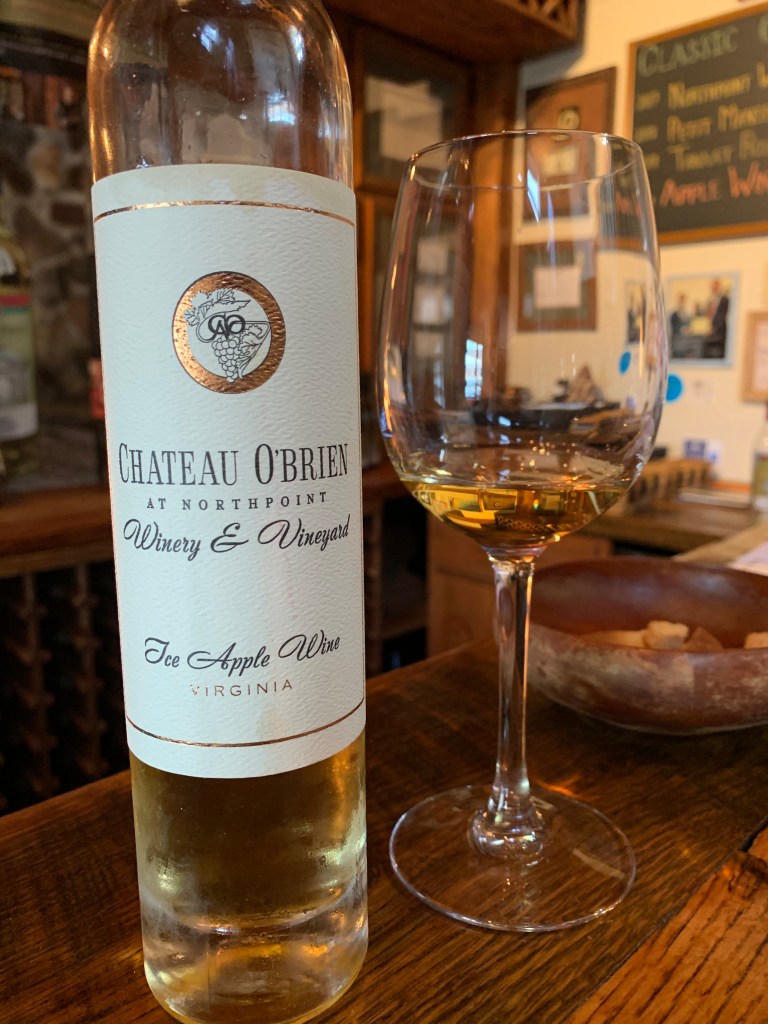
While most of my visits are spent tasting his selection of reds, this time I sampled Howard’s whites and roses. I really enjoyed the easy-drinking 2017 Northpoint White (Chardonnay) and Tannat Rosé, but my favorite this time around was April’s Apple Rosé – one of the most complex roses I’ve had in a while. Rounding out the white tasting was the Apple Ice Wine, an Apple/Blueberry, and a Petit Manseng.

Then off to the reds! But to make this visit special I wasn’t here for regular tasting; today was a visit to the cellar.

It’s not just the wines that make cellar tastings special. I love the intimacy – and the stories. Howard is a real character who’s owned a number of businesses before opening this winery in 2006. As he pours he tells you about the winery and the particular vintages you’re tasting.

You can tell he has an excellent growing location because the fruit profiles of his reds tend towards exceptional ripeness, even varietals like Malbec and Cabernet Sauvignon that aren’t great producers in Virginia. Cellar tastings include at least four wines, although occasionally he throws in a surprise.

2013 Malbec: Excellent! Fruity and complex at the same time. O’Brien is one of the few places in Virginia that consistently produces full-flavored Malbec.

Luigi’s Luscious Red (NV?): I didn’t get the varietals, but my suspicion is its Cab Franc heavy with lots of Bordeaux friends. Spice notes on the nose and palate.

2012 Vintner’s Reserve (Tannat/Petit Verdot/Malbec): Super smooth with a long finish. I mean, George Clooney smooth. It was that good.

2012 Tannat: I’d say ‘save the best for last’ although this was up there with the Vintner’s. Long, long finish, full bodied. You could sense the tannin, but the age allowed them to smooth out.

The Staff (Desert style, Norton/Apple wine blend): This was not part of the cellar tasting but I’ll mention it anyway, since I got it as a treat upstairs. Caveat: I’m not a big fan of Norton. But this was unlike any Norton-based wine I’ve had. It isn’t fortified but it’s exceptionally strong.