I ate sooooo much writing this article. It was glorious. Thank you to Shenandoah Vineyard, Walsh Family Wine, Rogers Ford Farm Winery, and many others.
Virginia Food and Wine Pairings You Should Try

I ate sooooo much writing this article. It was glorious. Thank you to Shenandoah Vineyard, Walsh Family Wine, Rogers Ford Farm Winery, and many others.
Virginia Food and Wine Pairings You Should Try


Carriage House Wineworks is (at the time of writing) Virginia’s newest winery, opening in September 2020. Right now they are taking visitors by appointment only, but that shouldn’t scare you off! Co-owner and winemaker Mike Fritze is happy to do a tasting at his vineyard.

Managing a winery is a tough business, but since Mike was already a home winemaker/wine judge and his partner Bruce Beddow is a longtime wine grower, they likely had a fair idea of what they were getting into. Bruce was already selling fruit to other Virginia wineries, so making a full-fledged winery was a logical next step.
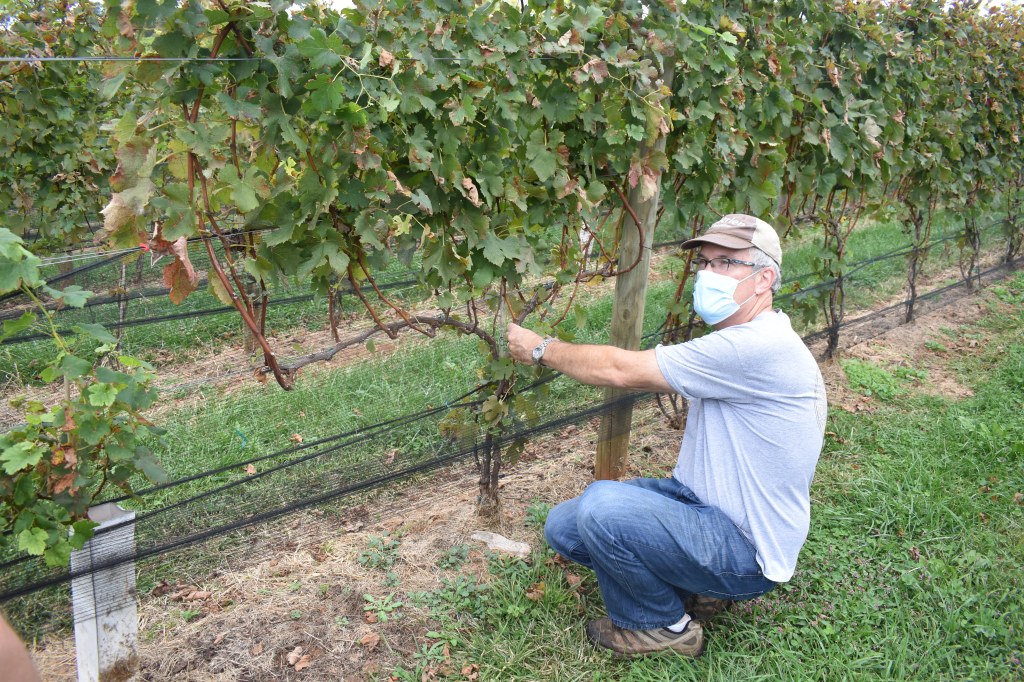
Today, Mike owns 5 acres of vines at his property of Quartz Creek, while Bruce owns another 12 at nearby Windhorn Vineyard. Having 17 acres of estate vines (almost all vinifera) is a great way for any winery to start, but for vineyards as well as wineries it’s all about LOCATION LOCATION LOCATION.
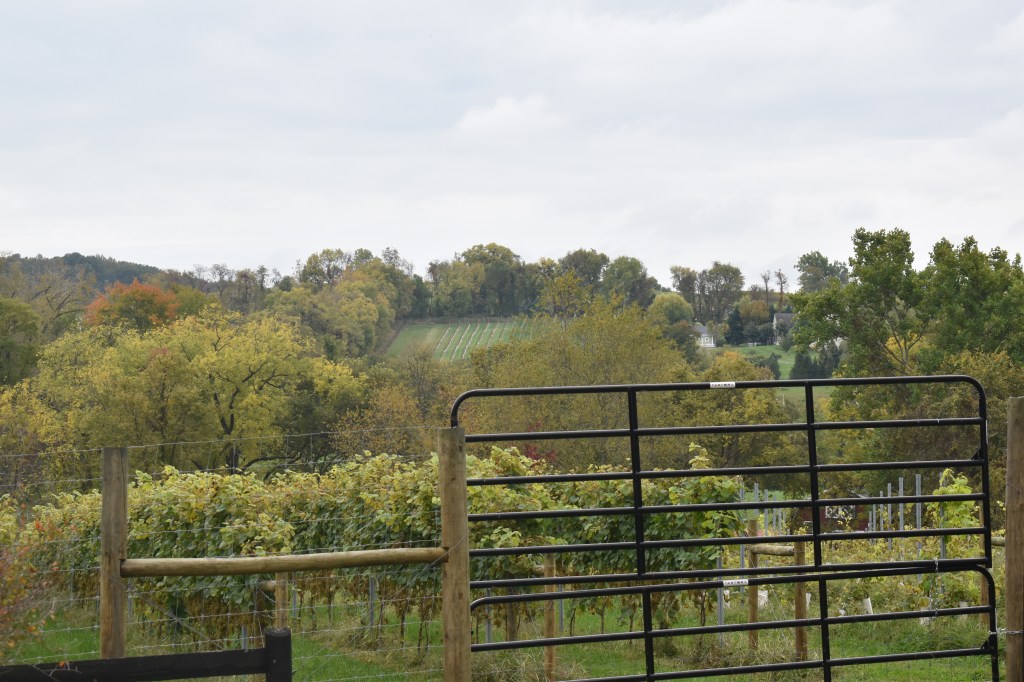
It so happens, both the vineyards and winery are in a great spot. Planted on a gentle slope above Catoctin Creek, the vineyard is well positioned to shrug off cold air and excess water. Mike isn’t the only guy to realize this; you can see Staggerwing Vineyard and Bethany Ridge one hill over. Given Nate Walsh’s high praise of those sites, I’m confident Carriage House is in a good neighborhood. It also helps over a dozen other wineries are not far away.
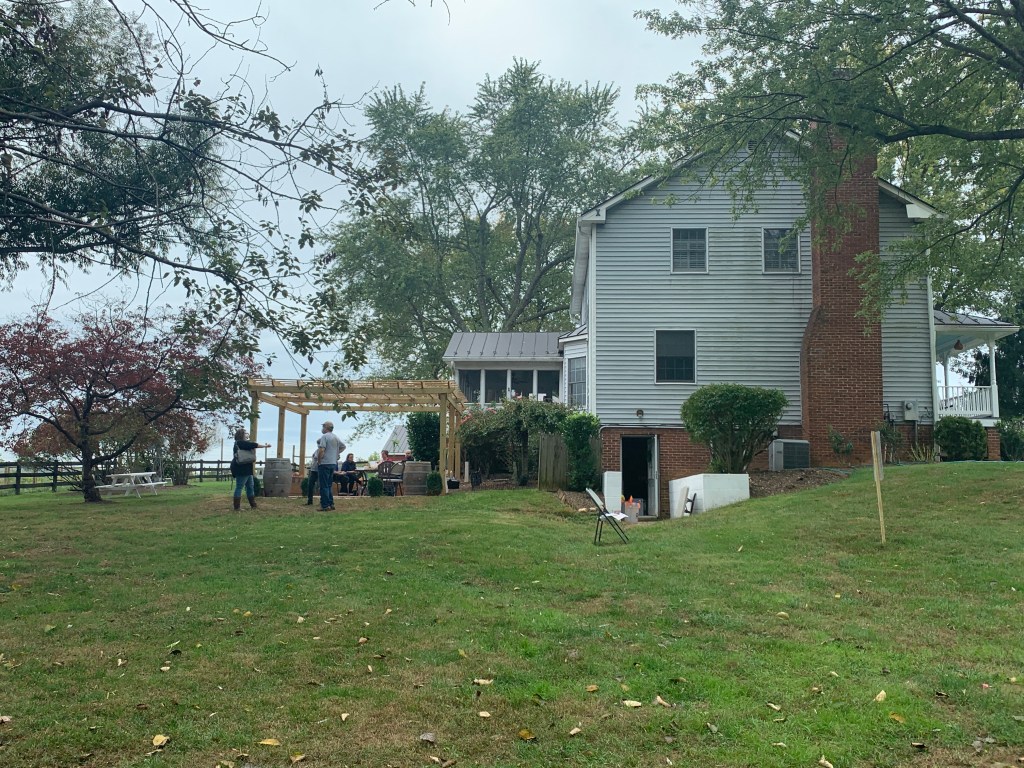
While Carriage House has a tasting room, right now it’s only for club members. Not to worry; Mike is doing tastings by appointment at the vineyard – which not coincidentally is adjacent to his house. Hopefully when the COVID-19 situation is better visitors can do their tastings indoors, but I definitely enjoyed my visit in his backyard looking at the vines.
Mike and his wife Gerri sat us down during a rare brake for a tasting and chat about vines. Mike was especially proud that all his wines were made from fruit produced within a several mile radius of his farm. Following the tasting, we went on a tour of the vineyard.
All of Mike’s wine is on the younger side. That said, 2019 is a great vintage to start with, so no complaint there.

2019 Rosé (Chambourcin, with a little Cab Sauv): Good acid, nice color. The Cab gave it some earthy notes and complexity. I went home with a bottle.
2019 Vidal: Liked it! Dry, herbal notes.
2019 Chardonnay: Citrusy, made in steel.
2019 Petit Manseng: Little bit of pepper, which I found to be unusual. Also unusual is it was lower on the acid levels than I’m accustomed to (which in this case was a good thing).
2019 Merlot: Black currant on the nose. Soft, would be nice chilled.
2019 Cabernet Franc: Savory! Fruit on the nose. Not viscus.
Late Harvest Vidal: Very light and citrusy. Paired well with the rice crispy shared with us by some fellow guests.
Make sure to call ahead for an appointment!

I admit; there are days I wish I had a hobby where my destinations are closer. But when I arrive, everything seems magically better. Such was my experience at Abingdon Vineyards.
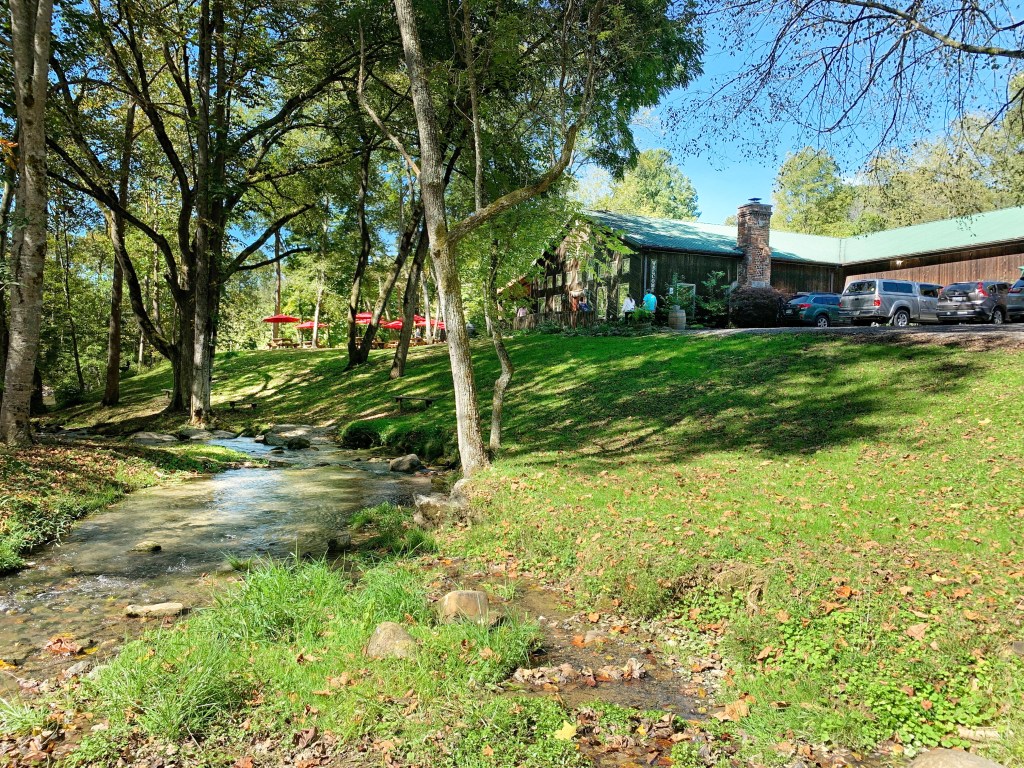
Abingdon is located in the southwest corner of Virginia, not far from the border of Tennessee. This is definitely Blue Ridge Mountains country, right here. Abington opened in 2001 but was purchased by the current owners Loren and Elizabeth Gardner a few years back, who proceeded to revamp the vineyard and wine menu.
I chatted with Elizabeth a bit and she told me the story of how they were visiting this area with some friends, not expecting to stay – until they accidentally passed a vineyard with a ‘for sale’ sign. Given her background in education and marketing and Justin’s experience in winemaking, the jump doesn’t seem as crazy as it seems.
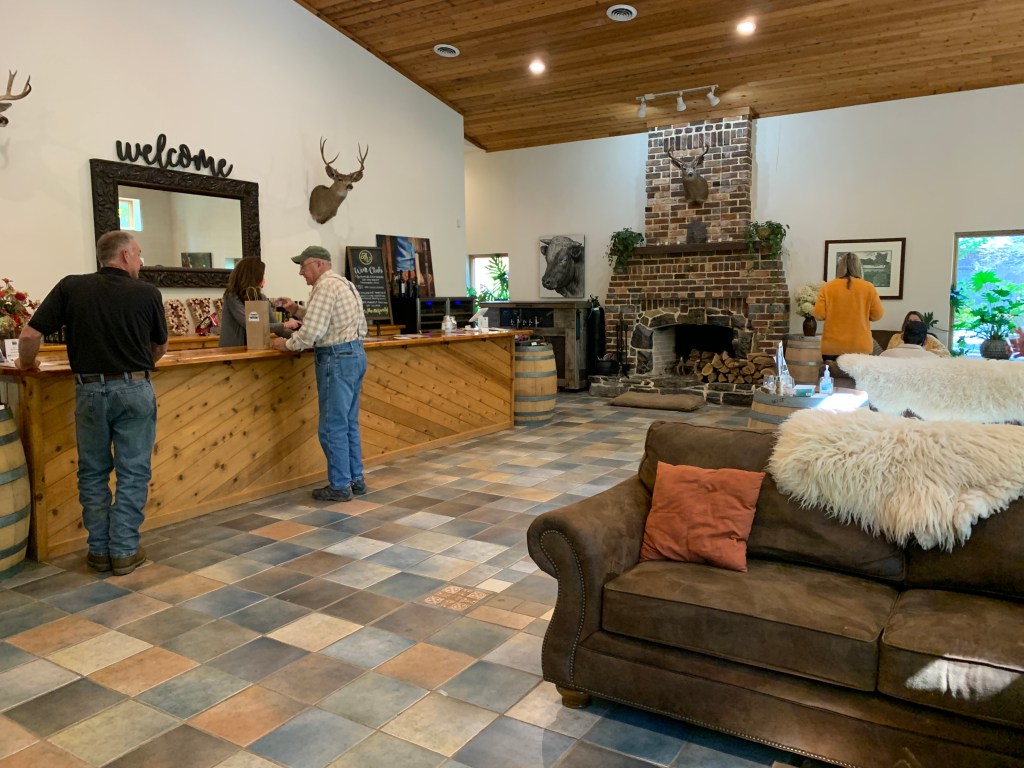

The tasting room has a log-cabin feel to it, which goes well with the surrounding woodland scenery. They also recently cleared out a lot of space near the stream, with tables to sit outside. Abingdon even rents out kayaks for the more adventurous (note – kayak first and drink later).
Even more exciting were their plans for a distillery and farm-to-table café. I can definitely see the appeal of a distillery here, not just to reach a new demographic but because this is moonshine country.
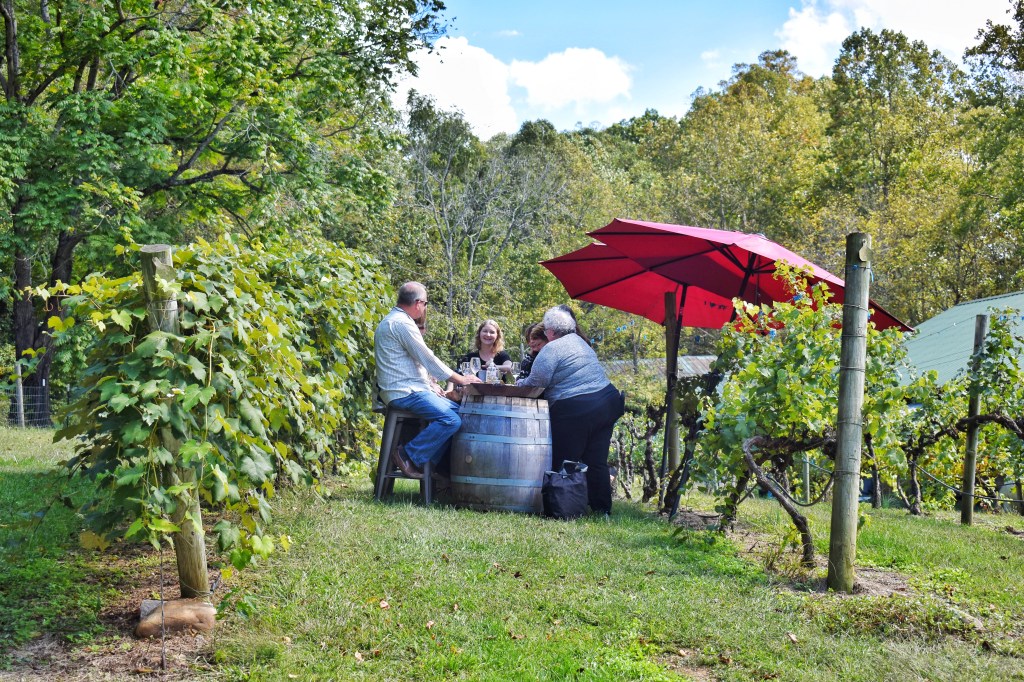
They currently have 13 acres of vines planted (both here and elsewhere), including hybrids including Chardonel, Chambourcin, Traminette and Norton plus vinifera like Cabernet Franc and Riesling. The Riesling particularly excited me, as this grape is tough to find in Virginia.
I tried the entire wine lineup, but my favorite by far was the “Game Changer”, a well-balanced blend of Cab Sauv, Cab Franc, Chambourcin and Norton with good complexity. I also really liked the Pioneer port-style, and the lightly oaked White Oak Chardonnay.

I give Loren a lot of credit on his blending of hybrids with vinifera. Too many places either give up on vinifera because it’s too difficult, or ignore hybrids because they aren’t as commercially popular. But Loren seems to have a knack of how to blend the two, and the results were excellent.
Abingdon is out of the way, but hey – this was my 2nd visit, and I’m pretty sure I’ll visit again. If you do, let me know what you thought of it.

I’ll say it right now – Nicewonder Farm & Vineyards is the best Virginia wine experience that people don’t know about. A year ago if you had told me a Pippin Hill-esque designation winery was planning to open in the far reaches of the state, I would have thought you were crazy. But Nicewonder is prepared to break the mold of your perception.
Part of the reason people haven’t heard of Nicewonder is because of their location in Bristol – a town literally divided between Virginia and Tennessee. While it’s hubris to think that great Virginia wine can only be found in certain parts of the state, the reality is southwest Virginia is better known for its Appalachian scenery than its vineyards.
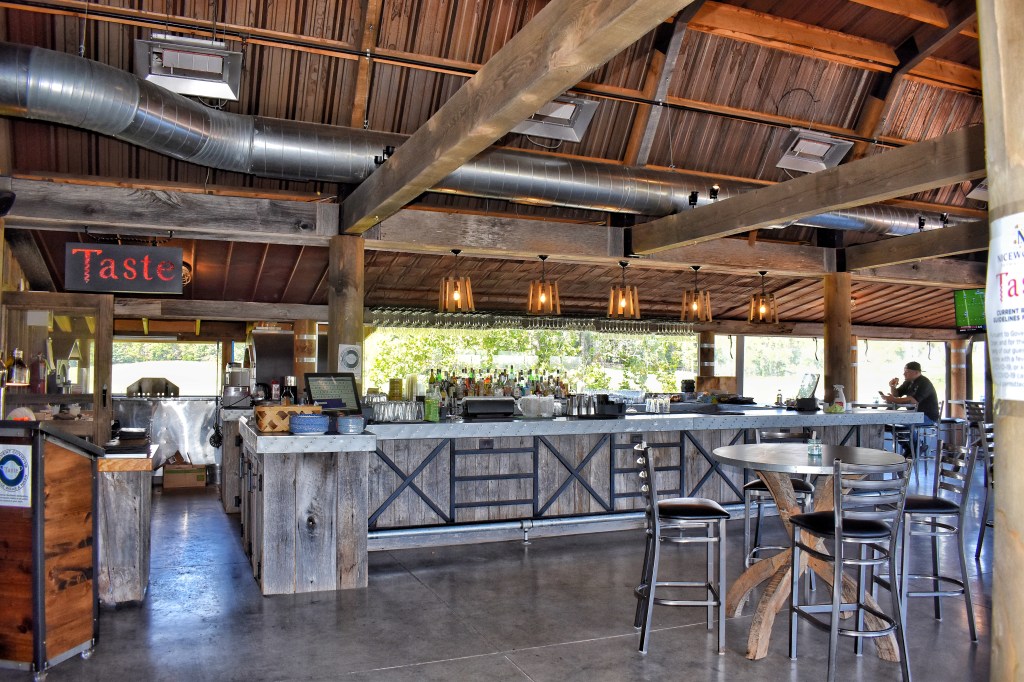
The other reason is the winery is only one part of a larger set of properties – not all of which have been unveiled. The centerpiece is The Virginian Golf Club, a luxury course designed by Tom Fazio (PS – he’s a big deal; Fazio has made more top 100 golf courses in the U.S. than anyone else in the business). A more recent addition is Taste, their open walled restaurant/tasting room. In 2021 Taste will be joined by a resort hotel which overlooks their 10 acre vineyard.

Top-notch properties need to be paired with first-rate wine, so understandably they turned to Charlottesville-based winemaker Michael Shaps. Despite only making wine since 2016, their Viognier has already won gold two years in a row in the Virginia Governor’s Cup competition. With their attention focused on a thirsty local clientele and future plans, Nicewonder has been happy to keep a low profile within the larger Virginia wine scene.
Tariq Zaidi, who represents the property, and Chef Travis Milton gave me a tour of part of the property. Travis explained how his goal is to “Change the cultural perception of southwest Virginia”. A native of the area, he knows how to create dishes that will knock your socks off yet remains true to the local cuisine.
While Milton talked food and wine, Tariq gave me the rundown of their longer term goals. The Nicewonder family plans on making The Virginian and Taste a self-contained vacation/event space where patrons can enjoy golf, wine, fine dining, even cooking classes all in one spot. Once the main resort is complete, Nicewonder will be set to become a destination hotspot.
We finished our tour and sat down at Taste – and the real fun began.
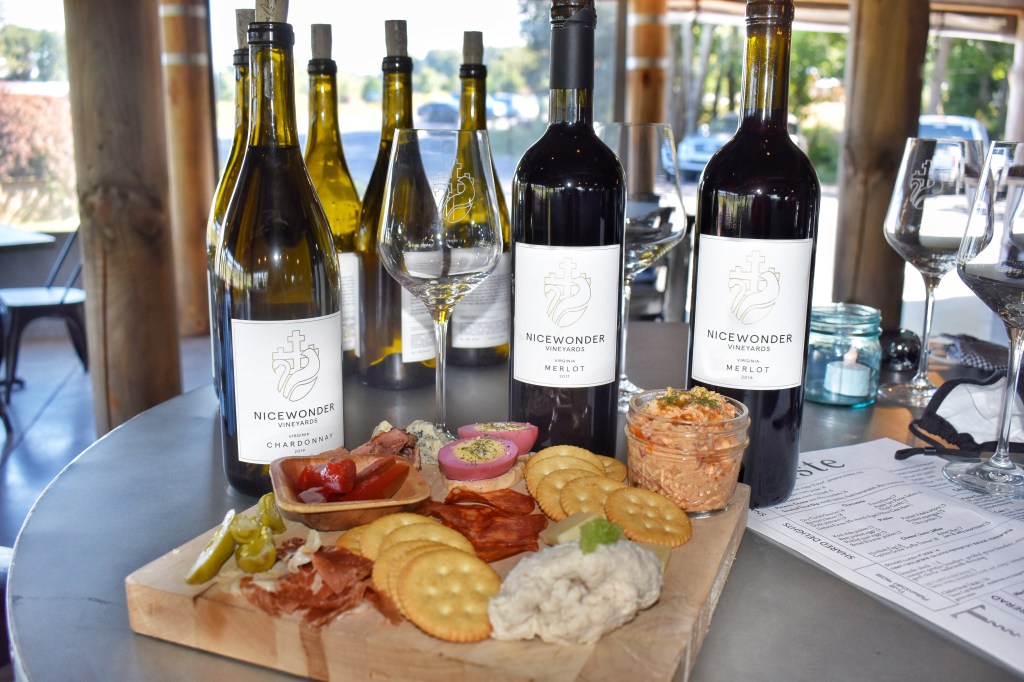
Travis is all about food and wine pairings, and his creations were amazing. When setting up pairings most often you see them done in a manner that’s complementary, where the food and wine amplify one another. But Travis alternated between complementary parings and contrasting ones where the two would balance each other out. Normally I only write about wine, but during this visit it was impossible to separate the two.

2016 Chardonnay (and trout dip): Tropical notes on the palate. Paired with trout dip, which provided a strong contrast which balanced out the Chardonnay.
2017 Chardonnay (with Kentucky ham): Lighter, more aromatic than the 2016 with green apple notes and higher acidity. Paired with a fatty Kentucky ham, which diluted the green apple flavors and lowered the perceived acidity of the wine.
2019 Chardonnay (with oysters): Made in steel. I detected notes of melon. Paired with Rappahannock oysters, it was a complementary pairing that intensified both the food and wine. I also loved pairing this with blue cheese.
2017 Viognier (with duck pastrami): This wine had the traditional color and heaviness on the tongue that I’m accustomed to in Viognier, but not the heavy floral notes. We paired it with duck pastrami, which had pepper and fat that rounded out the fat sensation of the food and changed the perception of the wine to something less heavy and more tropical.
2018 Viognier (with beet picked eggs): Softer than the 2017, with more lemon-green apple notes. Paired with beet picked eggs. Seriously – this pairing was delicious. The wine was less round and more tropical with the food.
2019 Rosé (with chorizo): Lots of strawberry notes in this one. Paired with chorizo, which took away the berry notes and emphasized the pepper.
2016 Merlot (with okra): Fairly aromatic as Merlot goes, soft, plus lovely notes of plumb. The wine was definitely rounded out by the food. It was enhanced with pickled okra, then cut by the duck pastrami.
2017 Merlot (with blue cheese): Black pepper and some fruit notes. Paired with blue cheese, which enhanced the fruit qualities while also giving it an almost savory quality.
Before we started, the Chef said that he wanted to “change the cultural perception of southwest Virginia”. Milton – mission accomplished.
Virginia has around ‘300 wineries’. But did you know that cideries fall within this number? That’s because under Virginia’s ABC law, ‘cideries’ hold the same license as a winery. Since cideries are (in theory) under the same category as wineries, I’ve been doing my best to knock out as many cideries as I can during my wine travels.
Tumbling Creek Cider came across my radar because it’s sold at nearby Abingdon winery. Not only that, they were about to open a tasting room in town (I missed it by days). Given I was already headed this way, I added them to my ‘to do’ list.
Cider is an up-and-coming beverage in Virginia. With its agricultural tradition, the south-west corner of the state seems particularly well suited for this endeavor. Five years ago I could only find a handful of cideries. But along with the surge in craft beer, cideries are popping up everywhere.
Since the tasting room wasn’t yet open partner Justen Kelly Dick invited me to visit him at their production facility at his family farm of Kelly Ridge Farms. I love driving country roads, but I strongly suspect that Uber Eats doesn’t deliver to this neck of the woods.

The production building looks like a large garage with cider-making equipment everywhere. I admit I’m not particularly mechanically inclined, but even I could appreciate the ‘do it yourself’ engineering that went into putting the operation together. Now that the official tasting room was finished visitors may not need to visit here for their cider fix, but there was still a small sitting area overlooking the farm.
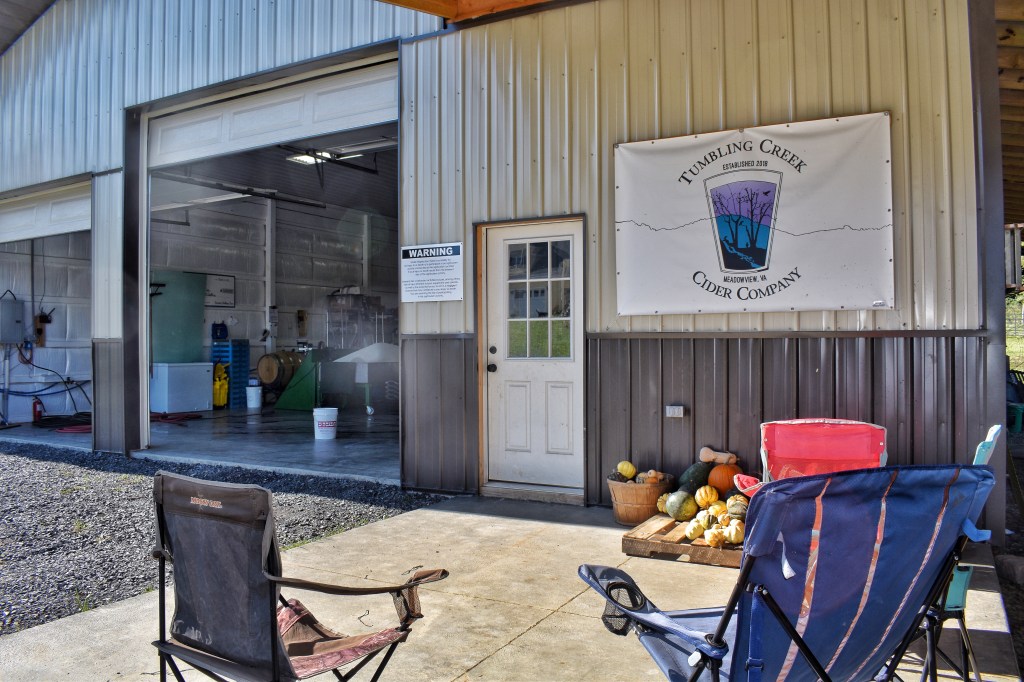
Justen kicked things off by explaining his connection to the farm goes back 10 (!!!) generations. In addition to having an orchard, he grows hops and raises pigs. Wanting to make the farm productive spurred his research into cider making.
Farming is a tough trade for anyone, but with a background in environmental consulting and family ties to a centuries-old farm, the jump wasn’t as crazy as it sounds. Justen and three friends put together a business plan and eventually, Tumbling Creek Cider was born.
Local ties was a recurring theme here, be it family ties to the land, sourcing their apples locally, and wanting to create business opportunities in community they came from. The four were also mentored by the owner of Foggy Ridge, a well-regarded local cidery that has since closed but still sells apples.

After a quick tour, we got down to drinking some cider! What I tried:
Ridge Runner: Bone dry, made about as ‘natural’ as you can make a cider. Definitely my favorite of the lineup.
Moonshot: Semi dry, and their flagship cider. I actually found it closer to ‘dry’ than ‘semi dry’, but that may be because it was very well balanced. It also had more body than the Ridge Runner.
Hellbender Hopped: For lack of a better term, my first thoughts it had a ‘green’ quality to it. Not the color of course! It so happens my palate was spot-on, because I later learned it’s made with fresh green hops which gave it a ‘fresh’ quality.
Whitetop: Grassy nose, with some tartness on the palate.
High Trestle Cherry: Cherry flavored cider. Second favorite of the bunch
I wish I had visited the new tasting room, but this was a great alternative. Look for Tumbling Creek’s ciders anytime you’re in the Roanoke area, or visit their brand-spanking new location in Abingdon.

Lots of wineries boast having a secluded, rural tasting room, but Rock Roadhouse might be the winner in this category. Located in Bath County (between Shenandoah Valley and West Virginia), Rock Roadhouse is roughly a 4 hour drive from the DC area. Even so, it’s STILL worth the trip.
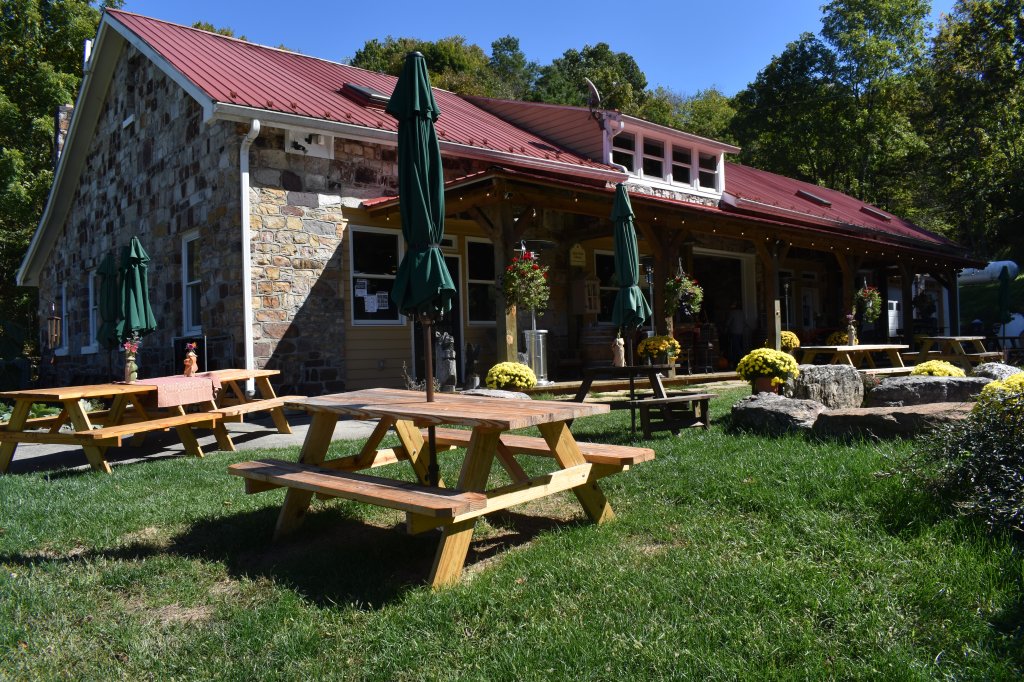
Bob and Rhonda Donze purchased this previous civilian conservation corps – turned schoolhouse – property in 2012 and planted vines in 2016. The 3000 foot elevation makes them the 2nd highest winery in the state (behind 12 Ridges and ahead of Ankida Ridge), with a mix of hybrids and vinifera planted. To say the Donzes picked this location for its beauty, not its accessibility, would be an understatement.
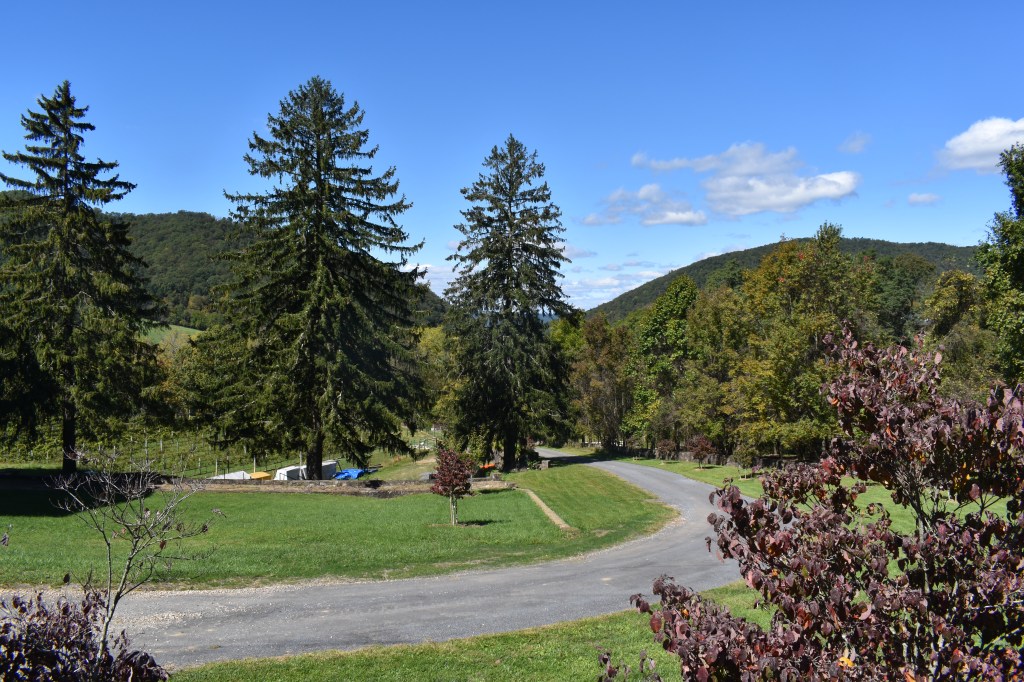
That said, Rock Roadhouse is the perfect location for Bob’s style of winemaking. First, Bob is particularly inspired by the wine from the heights of northern Italy. Second, he insists on making ‘natural wine’.
Defining ‘natural wine’ takes some explanation. Winemaking almost inevitably requires some degree of human intervention, both in the vineyard (spraying chemicals to protect against disease) and the cellar (adding different strains of yeast to spark fermentation and sulfites to preserve the wine from spoilage).
Advocates of ‘natural wine’ call for these factors to be eliminated, reduced or replaced with more native factors. It’s not the same as ‘organic’, which is a legally defined term which requires winemakers to adhere to even stricter limitations, including zero non-organic chemical sprays. Even so, the ‘natural wine’ crowd is largely inspired by organic wine, even if they don’t adhere to the same strict regimen in the vineyard or cellar.

In a nutshell – natural winemaking is hard to practice. But Bob found a way to make it work here.
The location’s cool mountain air naturally slows the fermentation process and wards off humidity (and the disease humidity brings). He also invested in specialized Italian equipment which protects against oxidation and allows him to avoid the use of sulfites. But his most creative solution is the use of a special low-fermentation yeast called Alpha which extends the fermentation process.
This process preserves microbes which would otherwise be lost, giving the wine with extra character end depth – and closer to the original varietal it came from. The result? Natural wine!
If it sounds like a big science experiment – you’re right. During our chat Bob sounded more like a scientist looking to prove a theory than a winery owner looking to turn a profit. Fortunately, the Donze’s have the financial luxury of running their winery as they see fit, so Bob can indulge in his passion to make wine his own way.
As interesting as the science behind it is, it’s time to talk about the visit!
The location is stunning. You’re not so much looking AT the mountains; you’re IN the mountains. The tasting room – a converted civilian conversation corps building – is loaded with rustic charm. As I chatted with Bob, his wife brought out a great cheese spread. They make it super easy to just hang out with a glass and enjoy the view.

Since they were serving a lot from the 2019 vintage, the wines were young but often had a complexity that went beyond its vintage year. For the reds I liked the 2019 Roadhouse red, a blend with Corot Noir with a peppery nose. Even better was the earth driven 2019 Cab Franc, which lacked any of the ‘green’ qualities a young bottle usually has (this required me to get a bottle for later sampling….for science…). The full Corot Noir was soft with hints of spiciness. Finishing the red lineup was the 2019 Touriga, which was soft and somewhat fruity.
For the others in the lineup, I was especially impressed with rosé, a blend of Merlot and Cayuga which was heavier than I was used to (another item for the cellar). The Vidal Blanc was great substitute for my go-to Sauvignon blanc, with lemongrass on the nose and a palate that was fresh and tart. Rounding things out was the Roadhouse White, which I totally did not guess was a Chardonnay.
If you ever make it to Rocky Roadhouse, let me know what you think!
This may be my favorite article of all time. See my link to the Old Town Crier.
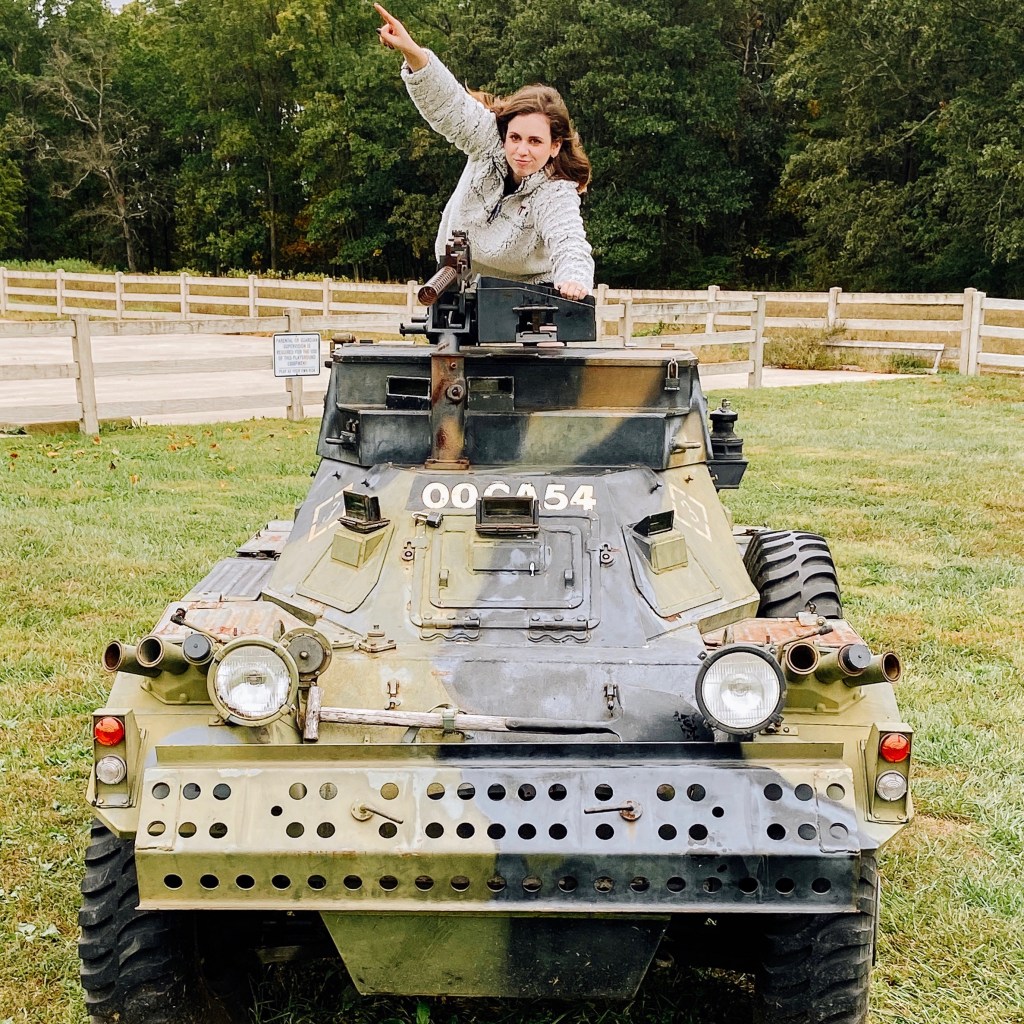

“Is everyone happy?” asked winemaker Deon Abrams, as he came out to check on the growing crowd. If there was a theme of the day, this was it.

Grayhaven is one of the more accessible wineries in the state, located roughly mid-way between Charlottesville and Richmond. Not nearly enough people from NOVA head this way, which is a shame because not only is it a great place on its own, it shares a wine trail with 53rd Winery (another favorite) just north of here.
The first thing you notice is the VIEW! Grayhaven looks something out of a Tolkien novel. Walking towards the tasting room you cross a tiny bridge over a koi pond, then approach a pair of doors that would be at home guarding a castle. There’s even a classic merry go round around the corner. With views like this, it’s understandable why Grayhaven has been used as a filming location for music videos and even a movie – including one with the awesome title of Attack of the Vegan Zombies (because why eat flesh when you can feast on wine grapes?).
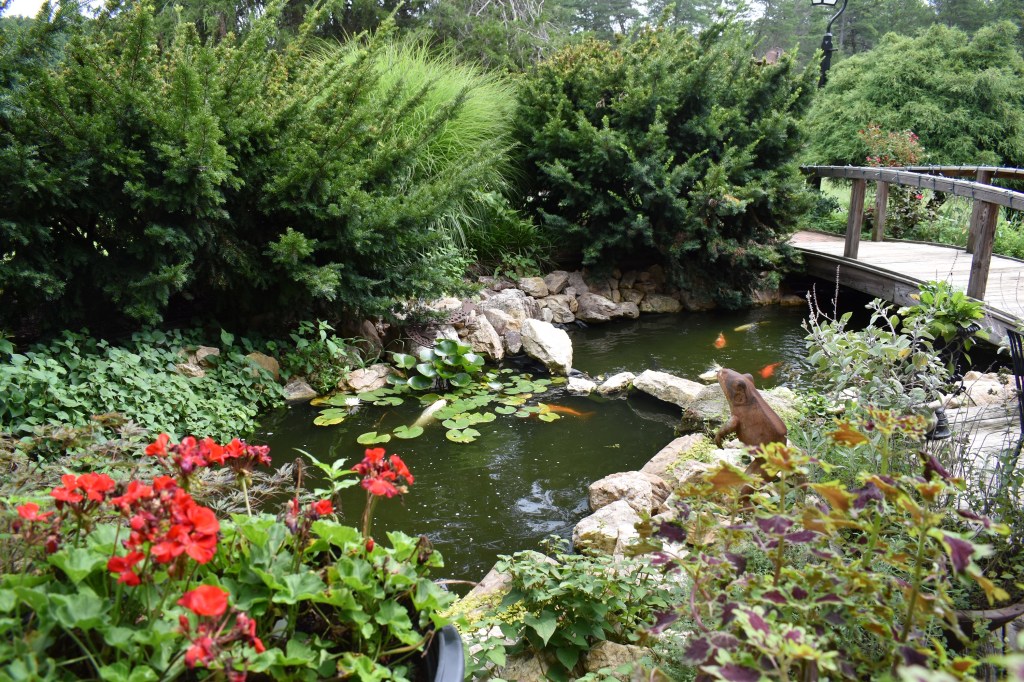
Grayhaven is also one of the older wineries in the state, planting its vineyard in 1978 and opening the winery in 1994. Small to mid-sized by Virginia standards (translation: still very boutique), it has 9 acres of vines including Touriga Nacional, Pinotage, Frontenac, and a few other grapes you don’t often see in Virginia.

The vineyard-geek in me shouted for joy I heard about the sheer variety of vines. Pinotage is South Africa’s signature grape – a cross between Pinot Noir and Cinsault that provides a full bodied, low acid red wine. Touriga is the national grape of Portugal, used as the basis for Port. If you’re itching for a Virginia made wine made with these varietals, this is the place to find them.
Another thing that distinguishes Grayhaven is its South African theme – no doubt because it’s Deon’s birthplace. The Pinotage was definitely a nod to that heritage, but they also sell a variety of South African wines to supplement what the vineyard produces, and host an annual South African festival (well…with the exception of 2020).

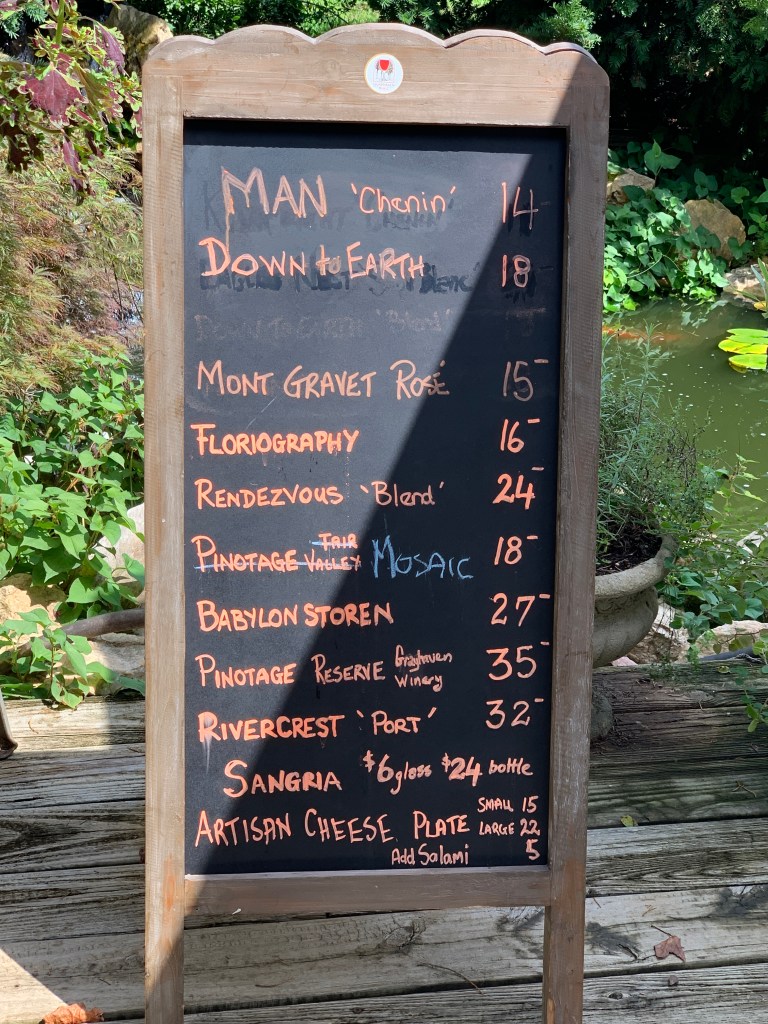
What I tried:
‘M A N’ Chenin Blanc: A South African Chenin that was a great value-for-your-money wine. High acid, crisp and light.
‘Villiera’ (Semillon/Sauvignon Blanc blend): Bright and very lemon up front.
‘Blooming White’ (Gewürztraminer, Riesling and Cheinin): Floral, almost spicy notes. Perfect for hot weather.
‘Rendezvous’ (Pinot, Chambourcin and Sauvignon Blanc): This vintage was super light; I detected strawberry notes.
Pinotage: Dion seemed especially happy with this one; fruity, with spice notes on the finish.
Indaba ‘Mosaic’ (South African blend with all 5 Bordeaux grapes): More fruit than I expected. Long finish.
Rivercrest: Touriga/Pinotage blend. Smooth! So good I had to buy a bottle.
I would be remiss in not including a shot of their amazing cheese plate. The goat cheese with South African chutney was off the charts, but also loved the Tuscan Fontina and Wisconsin Bellavitano. If the South African heritage festival isn’t enough they ALSO host several cheese events every year.

Eastwood Farm is one of Charlottesville’s newest wineries, opening this past May. I’ve been on their mailing list for a long time and was intrigued by their unique pitch; they have a hiking trail that you can book, in addition to enjoying their wine! It’s a cool idea at any time, but in the midst of a pandemic the idea of a private outdoor walk seems especially appealing.

They serve their own wine (made by Brad Hanson at Prince Michel) but don’t have their own vineyard. But no matter; they make fruit wine out of pears, apples, blackberries, blueberries and sour cherries grown on the property, so they can still boast of having ‘estate’ wine on the menu.
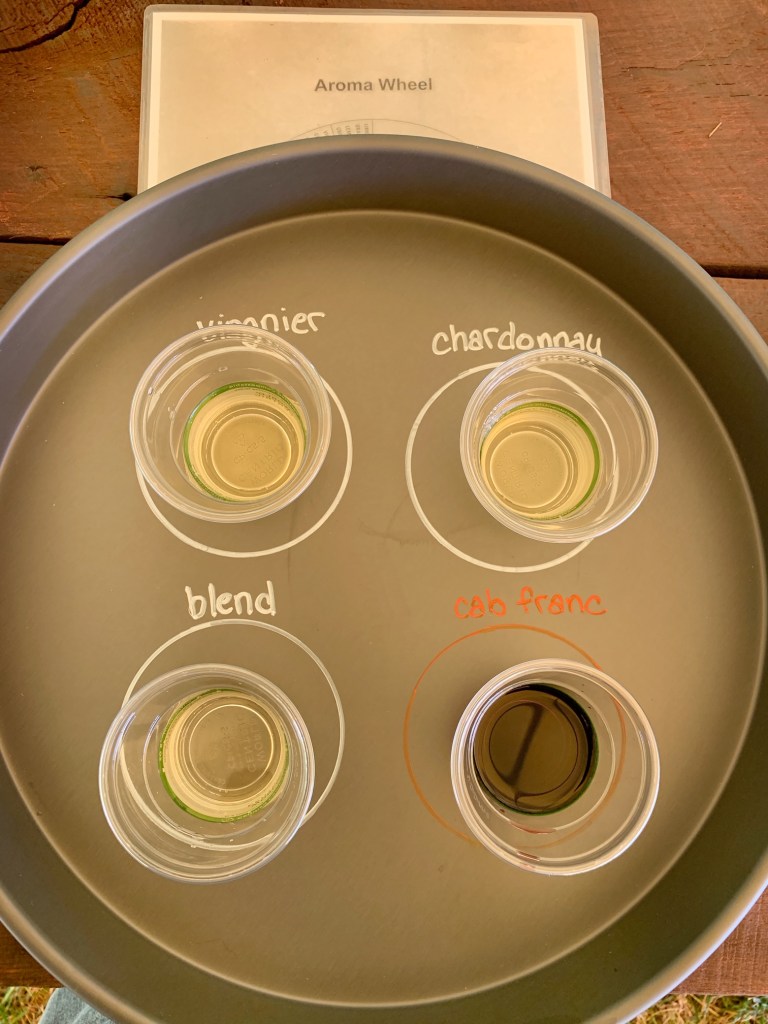

For the time being the ‘tasting room’ is actually an outdoor tent at the top of the hill. Although their main tasting room likely won’t open until October 2020, this location gives them sweeping views of the surrounding area, access to the hiking trail, and lots of outdoor space for social distancing.

My server gave me the lowdown about how family matriarch Athena Eastwood wanted a venture that all their family members could participate in, and after brainstorming the idea they decided on a winery. Dog and kid friendly, ‘family friendly’ is the theme of this location as well.
The tasting menu is on the smaller side, likely due to them being fairly new. My favorite was the Tall Tails fruit wine, which was a blend of apple and pear – that pear shown through even though it had a natural apple sweetness to it. But they were also happy with their Viognier that had hints of honey and a Chardonnay that had a fair bit of (I suspect) new American oak. I was told to expect a Blueberry rosé in the future, which sounds like a good reason to return.
Eventually I sat down and enjoyed a wine slushy while taking in the view.


 Wine Trails and Wanderlust