Above Ground Winery

Above Ground might be a familiar name for those who have spent years visiting Loudoun wineries. Owners Matt and Mary Barbagallo formerly had a tasting room in Purcellville before moving to the Shenandoah Valley. Not only is vineyard acreage cheaper there, the Barbagallos wanted a nice place in the countryside to retire. The Shenandoah offers both. They planted several years ago and (re)opened this summer.

While nearly all Virginia wineries advertise themselves as a ‘Farm Winery’, this place definitely emphasizes the ‘Farm’ part of that phrase. That’s partially due to their remote location, about halfway between Staunton and Lexington. But it’s also because the Barbagallos put nearly all their effort into the vineyard as opposed to a fancy tasting room.

Don’t get me wrong – you’ll love the drive here and the view from the top of the vineyard is lovely (and yes, they do plan a new tasting area to take advantage of it). But mostly, visitors are here for the wine.

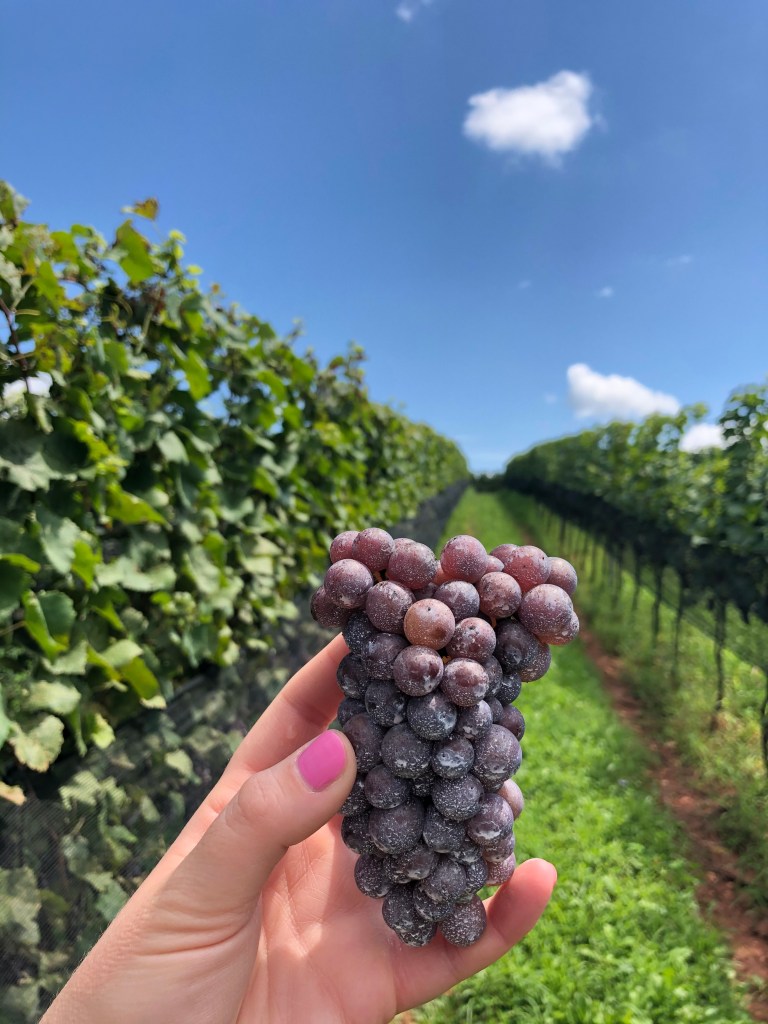
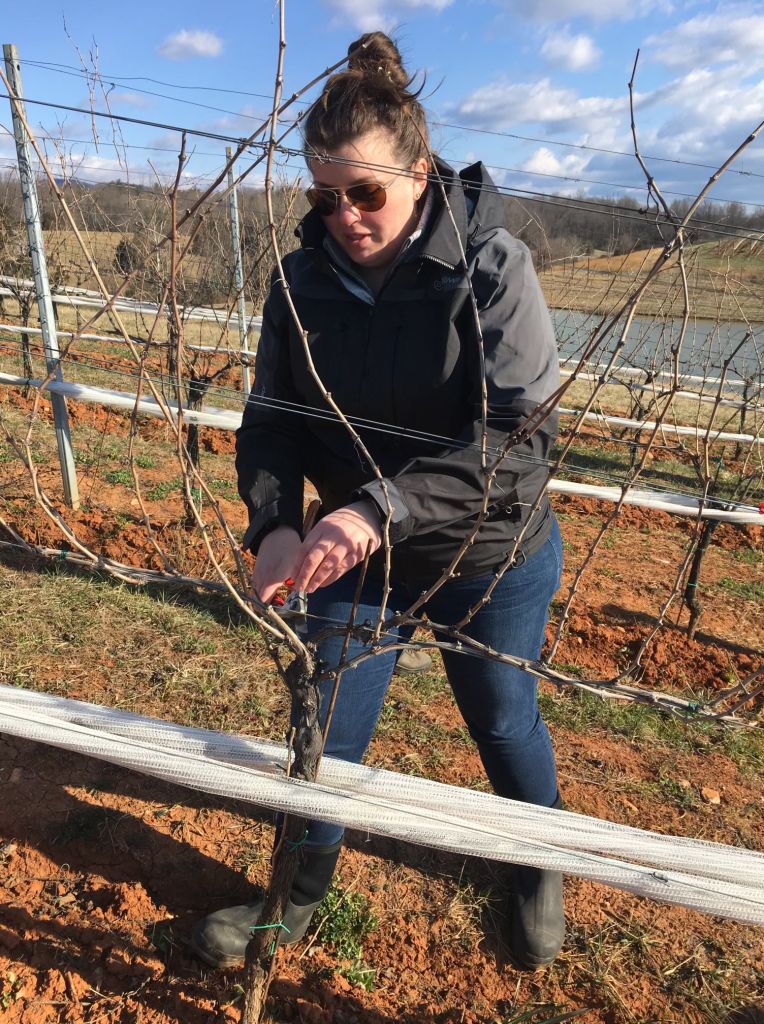
Matt took me on a tour of the vineyard to better explain why they picked this location. With an elevation of 2100 feet and a rain shadow from the surrounding mountains, this is a great place for vines. It helps they planted on Frederick-Christian soil, which offers great drainage with mixes of limestone and other minerals. I admit – I’m a geek when it comes to checking out vineyards, so I was more than happy to test my skills at trying to identify which vines were riesling vs pinot noir (PS – I still stink at guessing).

Right now Above Ground has 7 acres of vines, including several Bordeaux reds, Chardonnay, Riesling, and some Pinot Noir. The last two I’m especially excited about, since Virginia has so little of it.

Above Ground crafts most of their wine according to the local palate, so you won’t find anything fancy. Most of their current lineup is either blended with fruit or made into lighter, juicier styles. People who style themselves wine snobs may wonder about the relative lack of dry wines. But I enjoyed the entire lineup – especially the Chardonnay.

  • “Exit Strategy” 2020 Chardonnay: This was mostly steel and a little bit of oak. Clean, with a nice mouthfeel. I bought a bottle of this to take home.
  • “Dividing Ridge White”: A light white wine/fruit wine blend, made with riesling and apples. This is more of a picnic, porch-sipping wine.
  • “Karma” (Merlot/Cabernet Franc): Light and juicy.
  • “Wild River Red”: Sweet wine made with elderberries and west coast fruit. Definitely a porch sipper.
  • “Dividing Ridge” Red: Blend of raspberries and grapes (Cab Franc?)

Above Ground reminds me the type of tasting experiences that used to be common elsewhere in Virginia but are increasingly rare, where the owners/winemaker pours for you while shooting the breeze. If you’re looking for a laid back, unpretentious experience, definitely visit.
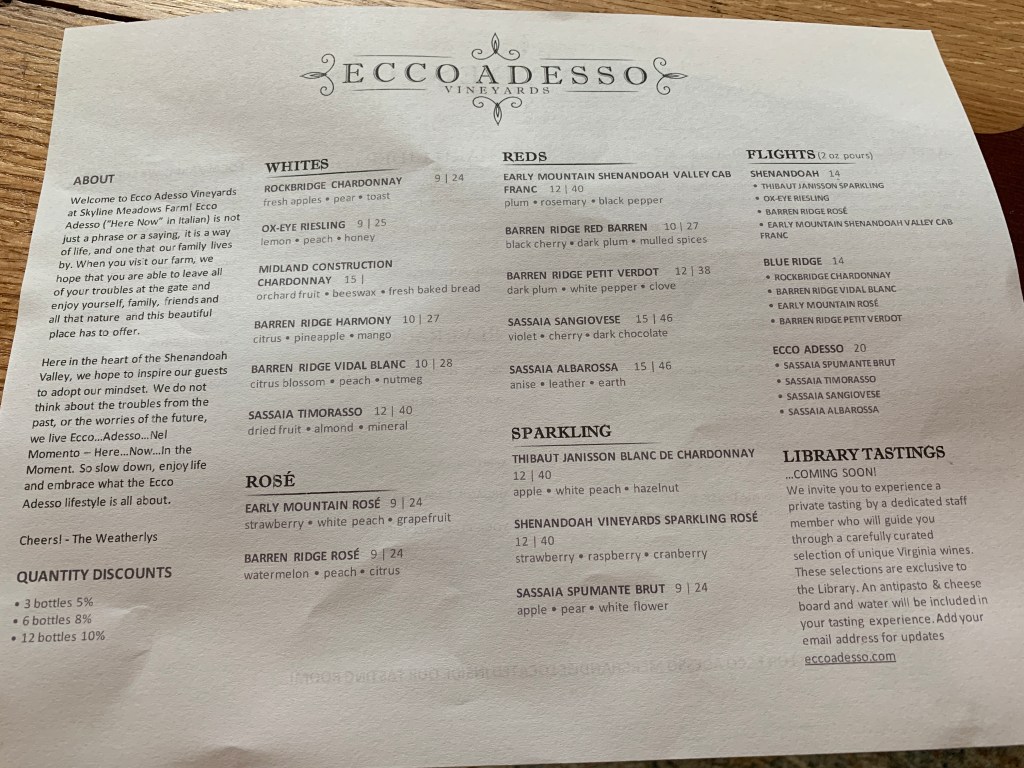
Ecco Adesso Vineyards

New wineries are like magnets to me – as soon as I hear a rumor of one I rush to visit. So it’s no surprise I visited Ecco Adesso during its soft opening in late July. Located in the southern (or upper) Shenandoah Valley near Lexington, its Virginia’s newest winery.

The name is an Italian phrase which means “Here Now”. Owners Cierra & Michael Weatherly explained it was inspired by the idea that when with family, one should avoid distractions and live ‘there’ in the moment. It’s seems a good adage to live by.

The Weatherly’s love of Italy played a big role in the winery’s backstory. Pre-COVID they’d visit Italy yearly and were no doubt inspired by its wine. Unfortunately, COVID caused their 2020 plans to be postponed. The good news for us is that gave them time to think of new ventures, including opening what became Ecco Adesso.

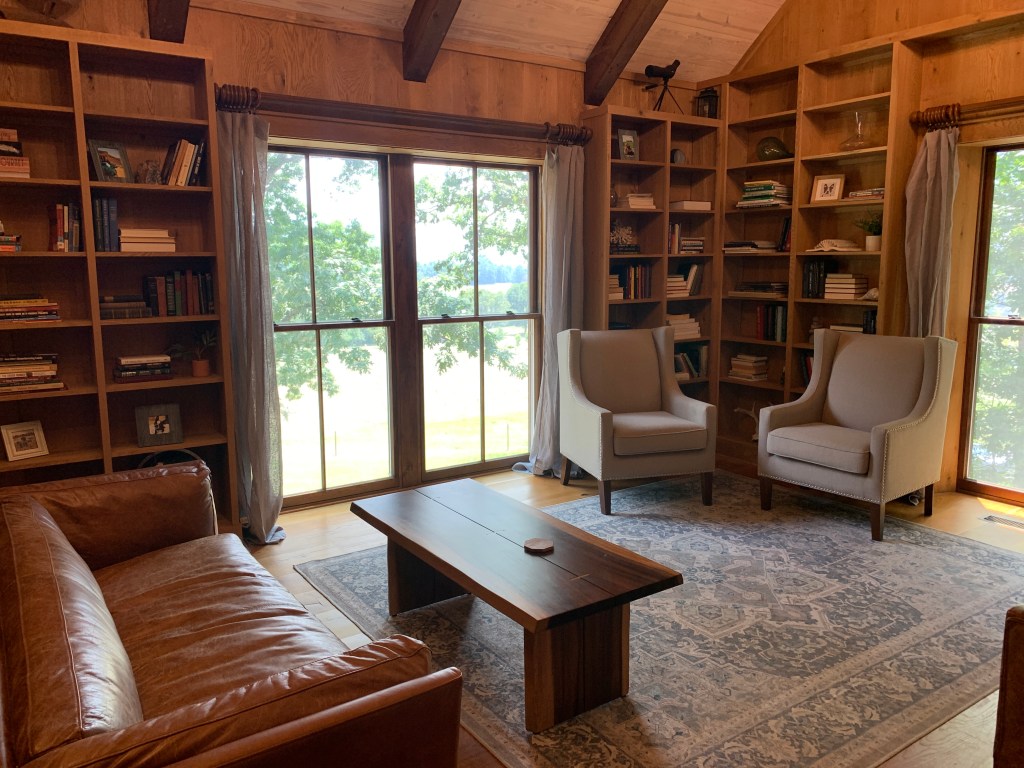
Ecco is a huge property – around 350 acres in total, at an elevation of 1800 feet. You drive down a long driveway to what looks like an alpine chalet. It was once a private residence but the new owners have since converted it into a tasting room. Now Ecco is all decked out for visitors – using wood harvested from the property. There’s even three Airbnbs on the property as well.

GM Janine Aquino gave me a quick tour of the grounds, pointing out their casual hiking trail, future tasting room, and an events area. Put simply, the Weatherly’s picked a great site. The only (temporary) downside is since they planted in late 2020, Ecco won’t have estate wine for several years.

That said, what’s planted is very exciting. They currently have 6 acres of vines (with 5 more planned) including Saperavi (a high acid grape from Georgia), Lagrein (a high-elevation red found in Italy) and Sauvignon Ketos (a hybrid of Sauv Blanc). None of these varieties are common to Virginia, but winemaker/grower Tim Jordan is something of a rebel. He felt given their soil and high elevation, these varieties are good choices for Ecco. I’m stoked to see what he does with them.

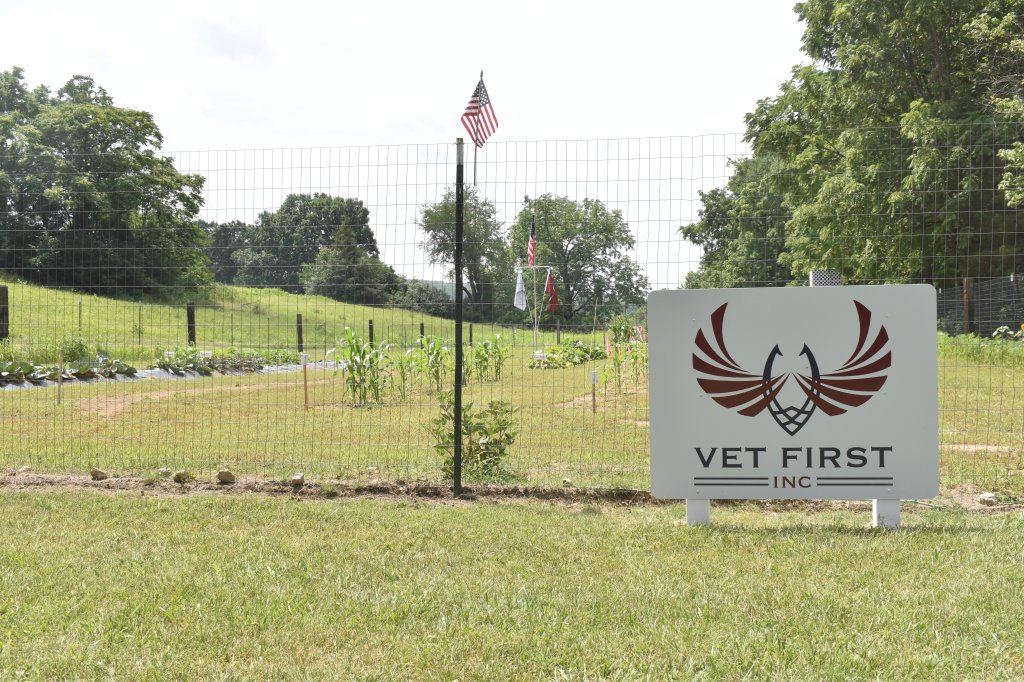
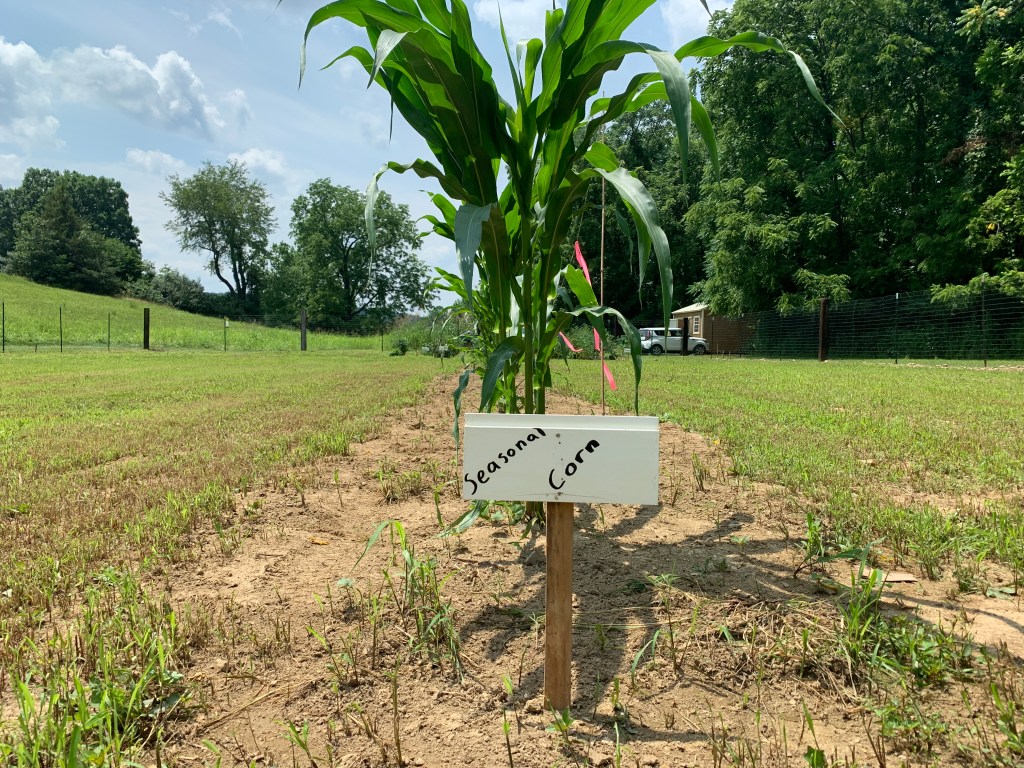
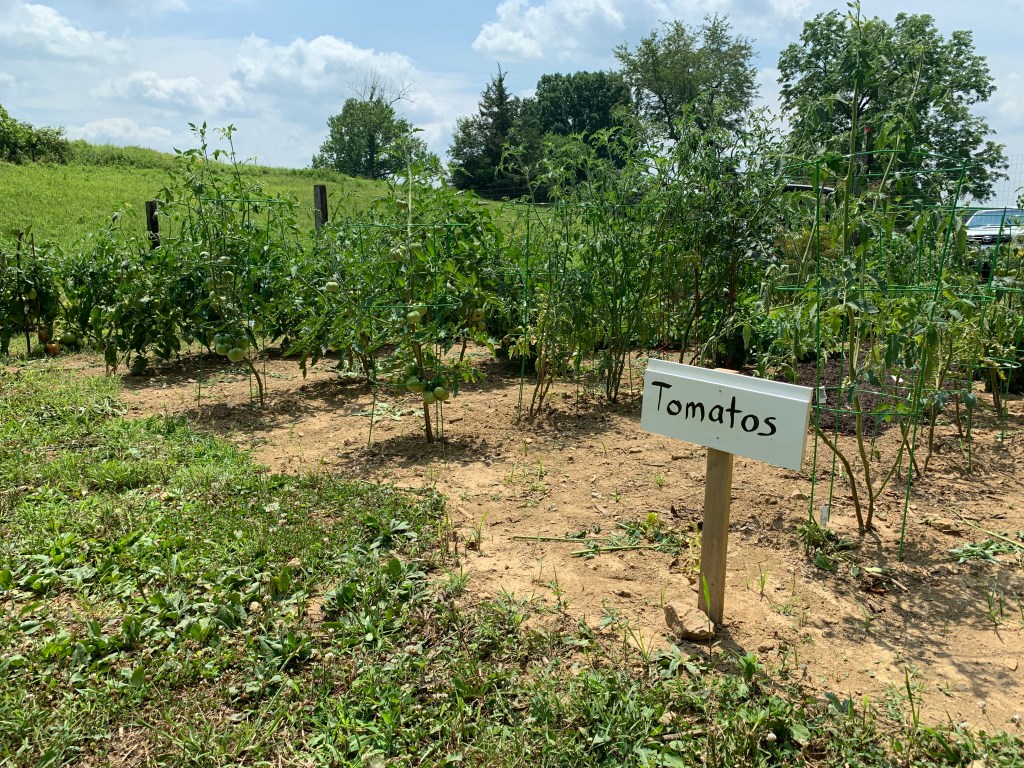
Grapes aren’t the only things planted. Ecco produces apples, plumbs, apricots and paw paws (a fruit indigenous to the mid-west/east coast). But the coolest item was their “Vets First” garden.

To understand Vets First, you have to understand the Weatherly’s. I’ve met a lot of winery owners who do good work for charities, but few seem to embrace it as deeply as Cierra & Michael. The Vets First garden is run entirely by military veterans, and the bounty is donated to the local food bank.

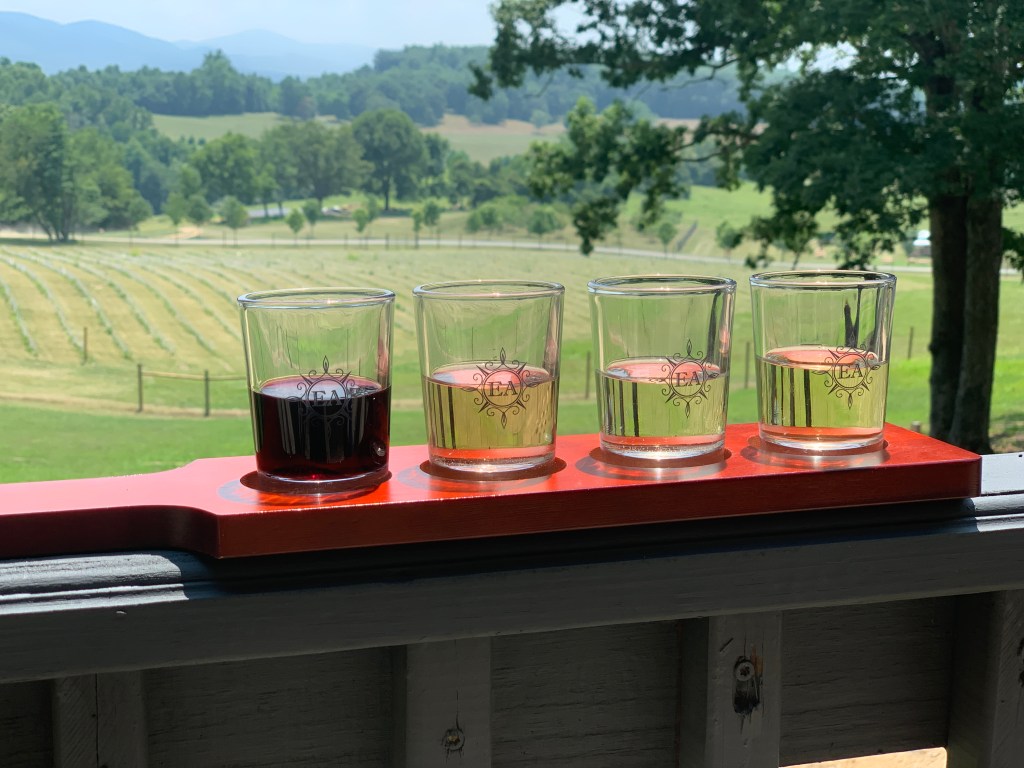
While they won’t have their own wine for another year, they do serve a mixture of bottles from Early Mountain, several Shenandoah wineries, and Italy. I even spotted Midland Construction, grown on the Jordan family farm. I sipped a flight on their porch overlooking the vineyard.

The Weatherly’s and Janine were very hospitable and excited about this venture. If you visit them, tell them Matt from Winetrails and Wanderlust sent you!

Merrie Mill Farm & Vineyard

It’s not often that a brand-new Virginia winery makes such a huge splash among my wino-friends, but Merrie Mill did just that. I had no idea they even existed until my Facebook feed was filled with photos of a spectacularly decorated brand-new winery in the town of Keswick.

Merrie Mill opened the end of May, making it one of the latest of a series of excellent wineries to open around the state. Owners Guy and Elizabeth Pelly were inspired by a 2017 visit to Charlottesville from their home in the U.K., when they fell in love with the area. The purchased the property a year later, and the building (and planting) began.

I asked my friend (and expert winemaker/winegrower) Jake Busching about the property and he had nothing but praise for the vineyard site. Their soil is largely maneto with spots of granite. This mixture allows them the flexibility to plant different grape varieties, as different grapes have different soil needs. Manento also drains very well – hugely important in a state who’s vineyards struggle with excess rainfall. It’s much the same soil shared by their neighbor at Keswick Vineyards, whose winemaker is praised for the quality of his Cabernet Sauvignon.

As soon as you walk in, you are blown away by the tasting room. I feel like that statement is easily overdone, because let’s face it – Virginia wineries are almost always pretty (it helps that grapes don’t grow in ugly places). But seriously…I’ve been to 300 plus wineries. Even with that background, I was STILL blown away.

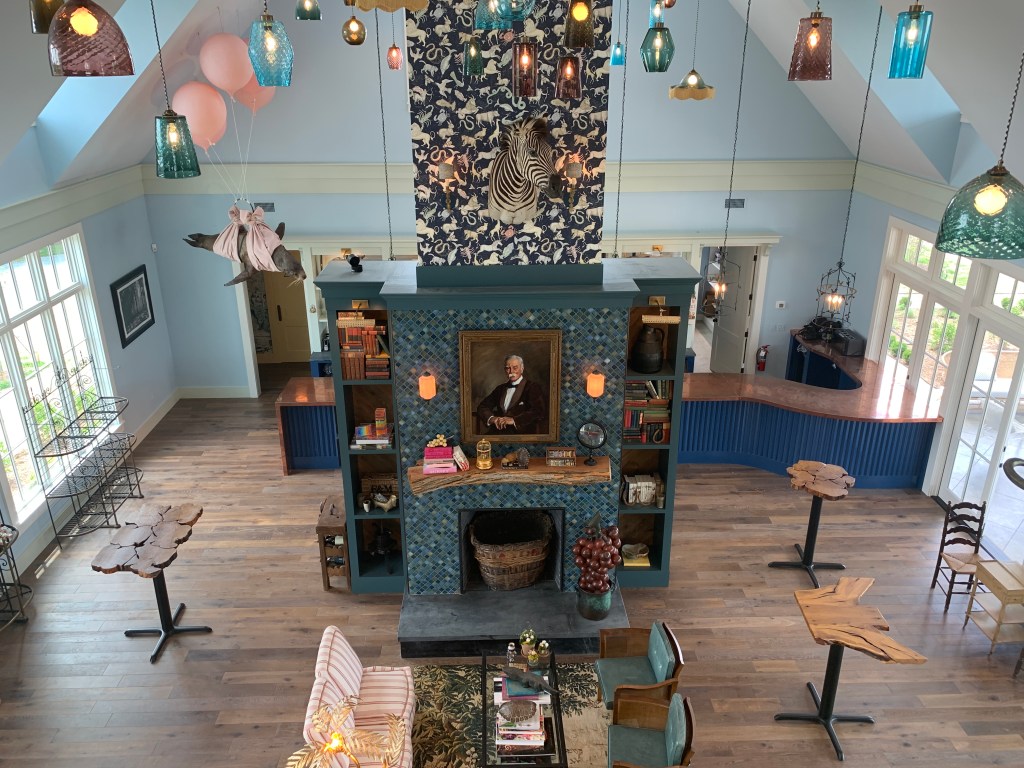
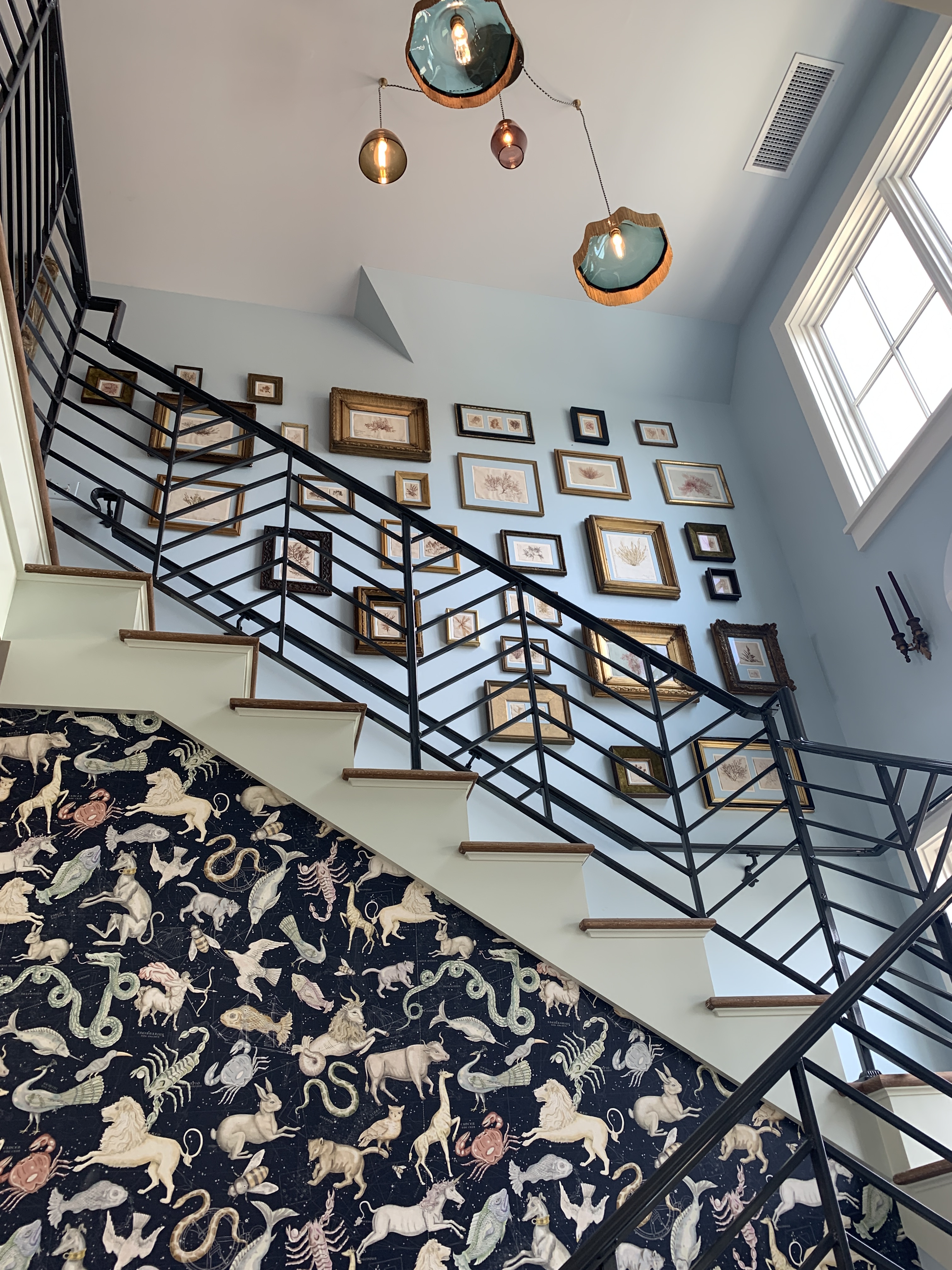
Bright, eclectic and whimsical are they key words here. This isn’t your stereotypical Virginia barn-turn-tasting building; Merrie feels more like an art gallery whose owners shopped curio shops from around the world, and was able to tastefully put their findings together.

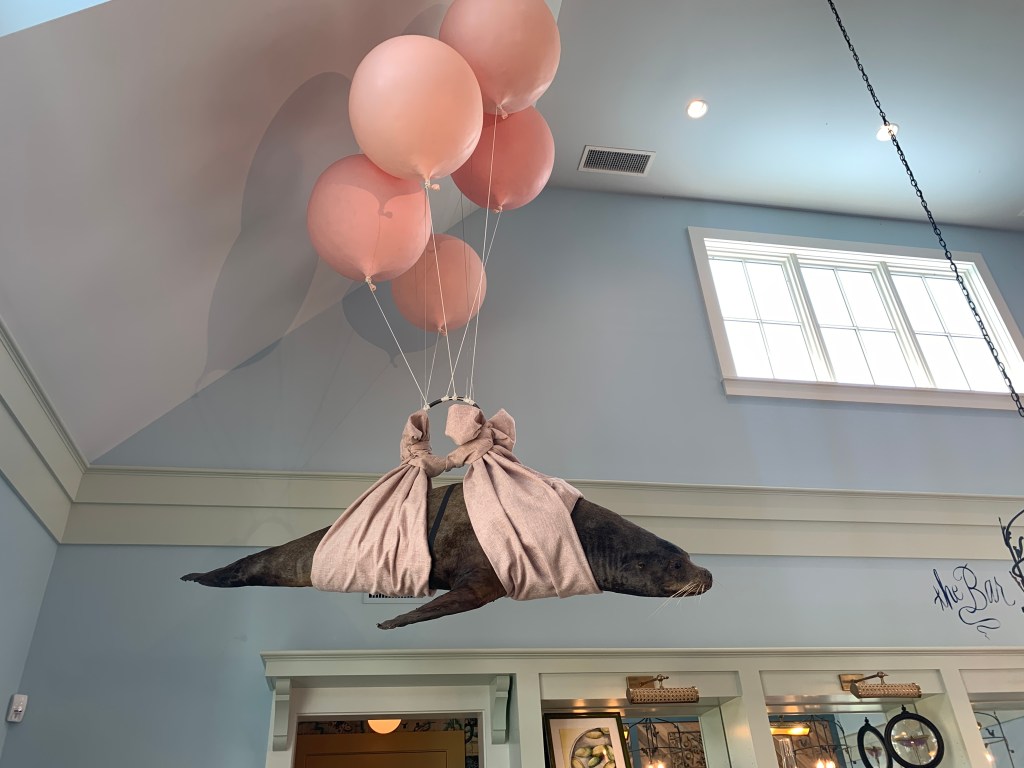
Instead of rustic wooden planks, the walls are a soft blue. Photos and other artwork greet you as you go upstairs. Every table has differently-designed chairs. A replica of a sea lion floating from pink balloons (I kid you not) hangs from the wall. The vibe was modern-meets-Alice in Wonderland.

In the middle of the room over their mantelpiece is a painting of John Pelly, Guy’s great-great grandfather. I lucked out and even got to chat with Guy, who gave all the decorating credit to his wife. While he is new in the wine business, he’s also an entrepreneur with experience running some clubs in the U.K., which is a stronger background than many new winery-owners have.

I sat outside and enjoyed a flight from True Heritage wine. While Merrie has 12 acres of vinifera planted (with space for more), the 2020 frost did a number on them so they lost nearly all their first vintage.

Fortunately True Heritage is not only a great brand (made by Emily at Veritas, who is Merrie’s winemaker as well) it’s actually grown next door. If this is reflective of their terroir, then they would be lucky indeed. I was very partial to their Petit Verdot, although given the heat I stuck with their Rosé.

It wasn’t planned, but I also ran into a few other Virginia wine-Instagramers (shout-outs to @anolaloveswine, @vineyardingacrossvirginia, and @miss_alk). It’s always nice to look up and see someone you ‘virtually’ know and get to meet them in person.

Glass House Winery

My last visit to Glass House demonstrates to me why I need to revisit wineries more quickly. My previous trip was around 2015, and the tasting I remember the most was their chocolate wine. This time around they had a remarkably diverse array of reds and whites to satisfy any palate, but the oasis-like tasting room was every bit as cute as before.

The place’s name is very suitable. While most wineries go for a ‘rustic barn’ style or perhaps a ‘cute/contemporary’ setup, Glass House is a tropically-themed glass walled tasting room. I promise, you really will think you’re in a botanical garden.

Located in the foothills of the Blue Ridge about 30 minutes from Charlottesville, Glass House is….somewhat off the beaten path. Fortunately they also have some great neighbors. I visited Hark just up the road, who picked their location based on the great terroir. I presume many of the factors that they decided makes it great for them likely applies here.

The original owners opened Glass House in 2010 but recently sold to a friend, who’s continued the vineyard and styles of wine. They also have a bed & breakfast on site, although I’ve never had the chance to stay there.

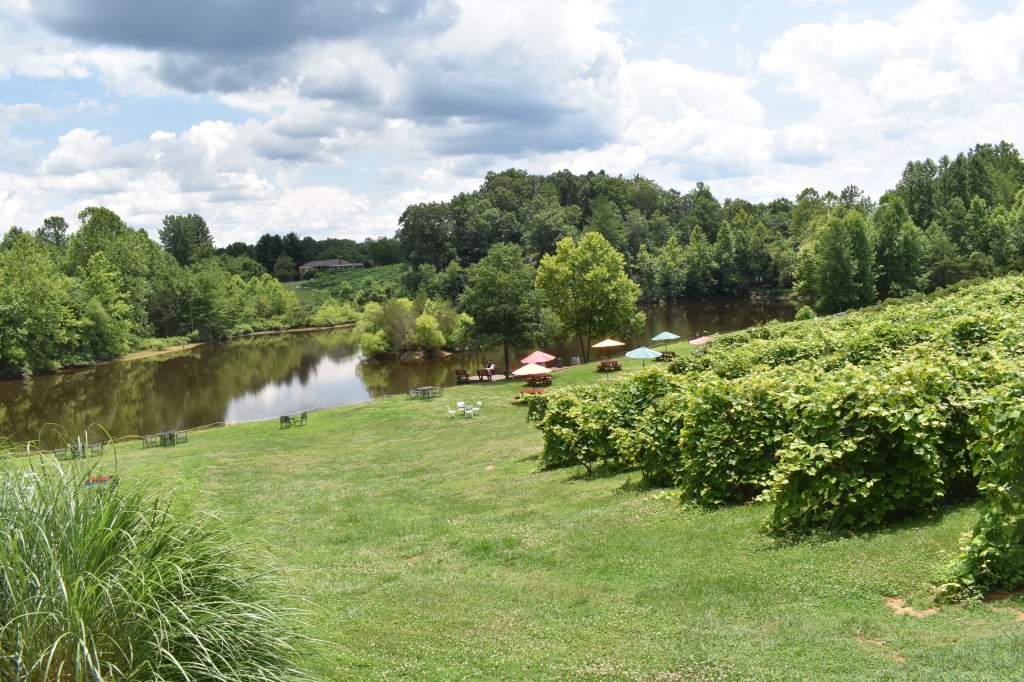
The outdoors were nearly as scenic as the indoors. This must have been a popular place at the height of COVID when everyone wanted to be outdoors, since there were tables everywhere along the pond.

Catherine was my server, and I’m not sure which of us was more thrilled to actually be able to chat with a stranger at a winery tasting bar. I mean seriously – it’s been so long! Sit-down flights are OK, but since the crowds had yet to arrive I was able to get the low-down from her on all her wines.

Their winemaker seems to have a thing for steel-fermented whites, and I’m HERE FOR IT. I was also surprised by their different Chambourcin wines, a varietal I’m often meh about but I liked theirs.

But the biggest surprise was their Barbera, an Italian grape rarely seen in Virginia. They even have a “Brose Rosé” made with Barbera, in a not-so-subtle attempt to get dudes to drink more rosé (fortunately I’m confident enough I can drink whatever I like).

My biggest regret though was not trying their chocolate pairing, which are made in-house. I occasionally see places with truffles, but those are almost always outsourced. Had I not had an appointment at another winery I definitely would have stayed for a chocolate-and-wine pairing.

What I tried:

  • 2019 Chardonnay: Made in steel. Lychee notes, but otherwise fresh and clean
  • 2018 Chardonnay: Lighter than the 2018; also made in steel
  • 2019 Chardonnay/Viognier blend (60/40%): I lack specific tasting notes but…very nice! Why can’t we find this combo more often?
  • 2020 “E-Ville” Rosé (Cab Sauv): Good fruit notes; made with Cab from Wolf Gap Vineyard in the Shenandoah
  • 2017 C-Villian (100% Chambourcin): Definitely a fruit-forward Chambourcin
  • 2017 Estratto (another 100% Chambourcin): I can’t find my notes!
  • 2015 Barbera: Sour notes on the nose? Definitely sour cherries on the palate
  • 2017 Audace: Described as an Amarone-style wine, made with Barbera. Dry, but it had a thick, strawberry syrup quality to it.
  • 2019 Cabernet Franc: Good fruit quality, lighter color. Hardly any pepper notes until the very end, and even then it was more white pepper than green pepper.

All in all it was a great visit to a little oasis in wine country. If you’ve been there, tell me your thoughts!

Virginia Malbecs vs the World

Malbec is a grape that’s grown worldwide but seldom bottled alone. Cahors is its spiritual home but it’s since been adopted by Argentina, one of the few places that bottles 100% Malbec wines. Even Bordeaux considers it something of a stepchild, the least planted grape out of the 5 noble Bordeaux reds.

Out of 3000 planted acres of grapes, Virginia grows only 17 acres of Malbec – in the entire state. Saying its rare in Virginia is an understatement.

The reason for this rarity is simple – it generally does poorly in Virginia’s humidity, struggling to ripen in most years. In all my travels I’ve only seen 7-8 places in Virginia & Maryland which are either willing to put in the extra work to grow large plantings of Malbec, or possess the ‘Goldilocks’ combination of terroir it needs to express itself. More than a handful of wineries have since ripped out its Malbec vines or were forced to replant due to frost damage.

Still, the opportunity to do a side-by-side comparison of Malbec poised an interesting dilemma. Are there any defining characteristics for Virginia Malbec? How will it compare to France and Argentina?

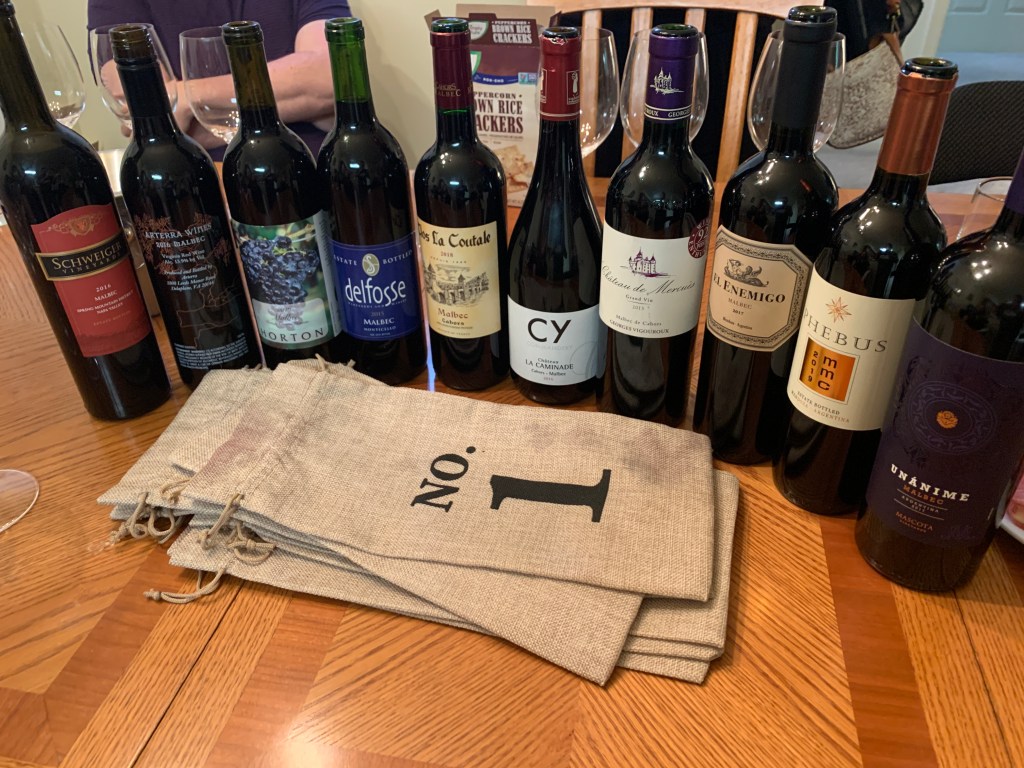
To answer this question, some friends and I tasted 9 wines from three different regions, including Mendoza (Argentina), Cahors (France), and Virginia (mostly central VA but also one from Fauquier).

The contenders:

  1. Argentina (Mendoza) 2017 El Enemigo
  2. Argentina (Mendoza) 2017 Mascota
  3. Argentina (Mendoza) 2019 Phebus
  4. France (Cahors) 2015 Chateau de Mercuès
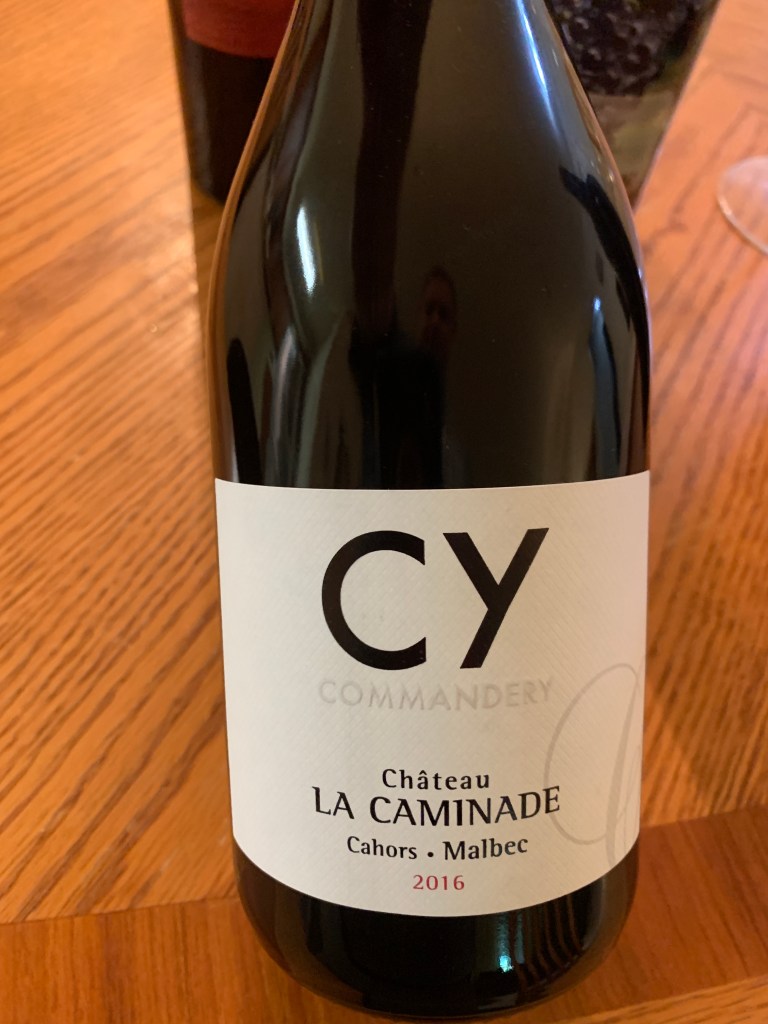
  5. France (Cahors) 2016 La Caminade
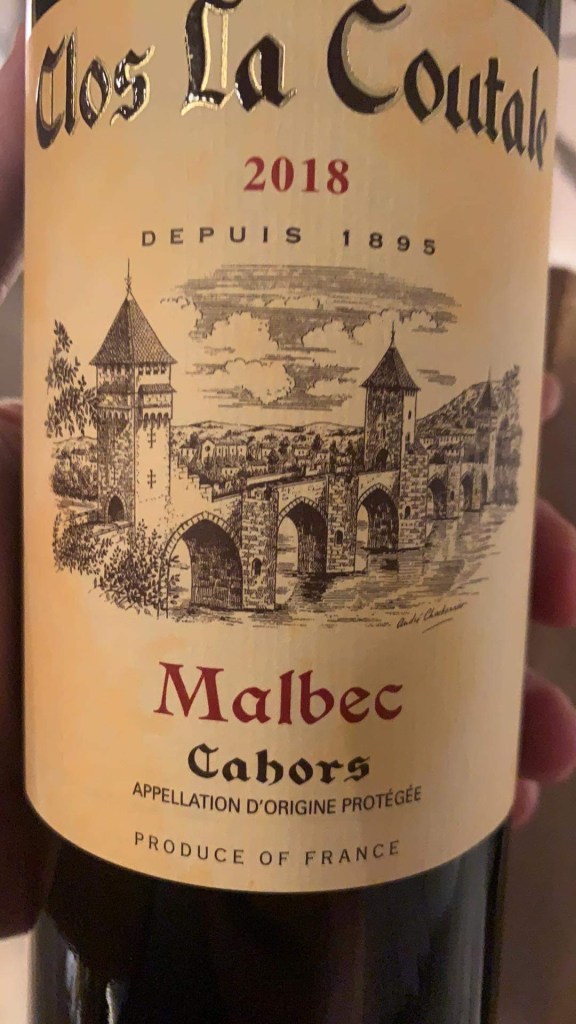
  6. France (Cahors) 2018 Clos La Coutale
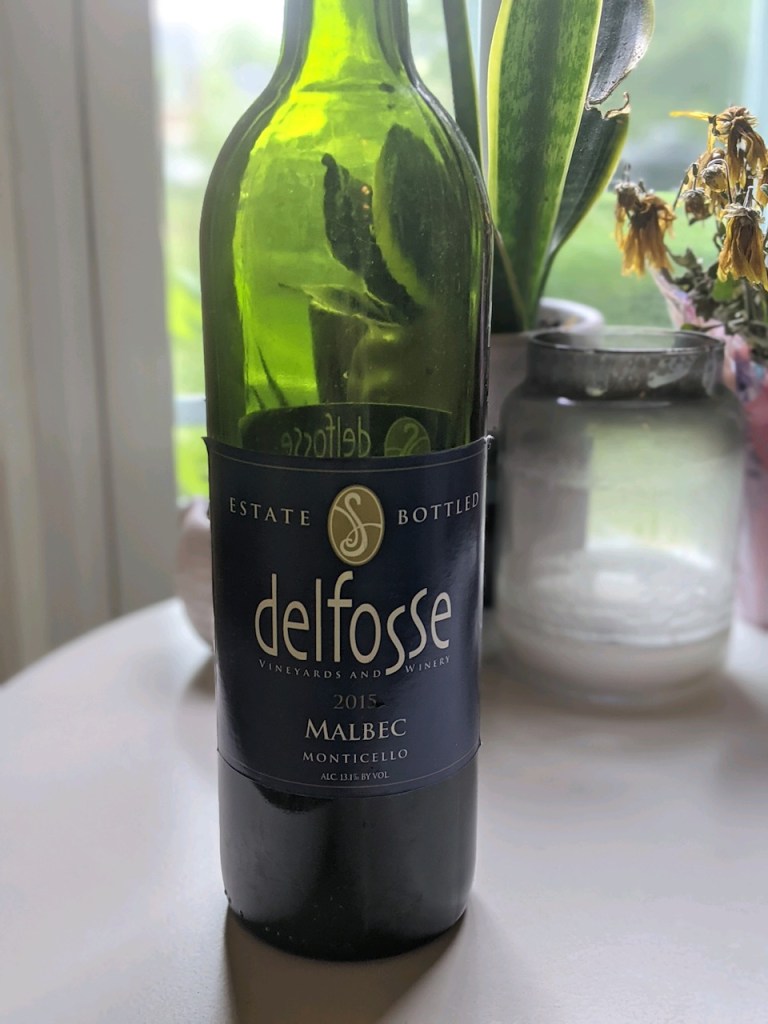
  7. Virginia 2015 DelFosse
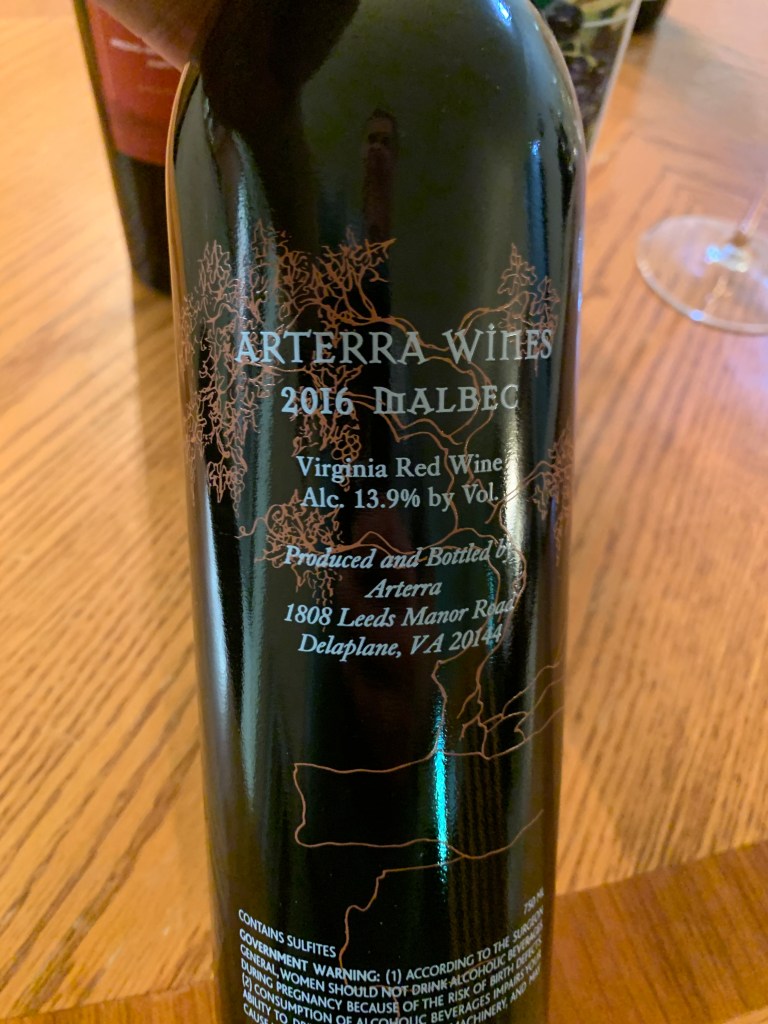
  8. Virginia 2016 Arterra
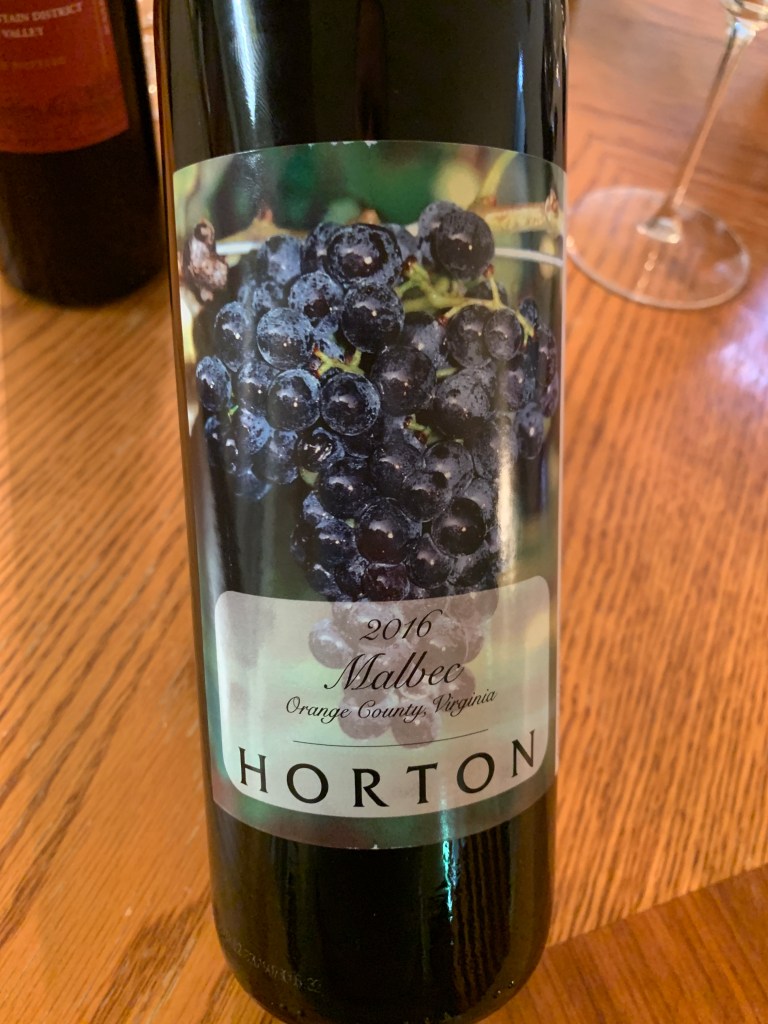
  9. Virginia 2016 Horton
  10. Bonus: California 2016 Schweiger

The tasting was done completely blind. We did 3 flights, with each flight consisting of a wine from each region. We conducted a “Finalist’s Round” of the winners from each of the three flights.

First off, nearly all of these wines were nearly the same jet-ink color. A few were slightly lighter than others (possibly because some had some other grapes blended in), but any differences were going to have to be determined by nose and palate.

Flight #1

  • 2015 DelFosse ($26): Earth floor on the nose. Tobacco notes yet fruity. Overall not especially complex but still a well-received wine. (2.5 votes)
  • 2017 El Enemigo ($22): Earthy notes and some funk on the nose. Lighter bodied than the previous one but still strong tannin. Some fruit notes on the palate. Favorite of the 1st flight. (3.5 votes)
  • 2015 Chateau de Mercuès ($28): Blended with Merlot. Raspberry notes but also some bitterness. I picked this up at Total Wine and while it had good reviews it wasn’t well received here. (1 vote)

Flight #2

  • 2016 Arterra ($35?): Spicy and bright. Arterra makes their wines via natural yeast fermentation, which I’ve found is a love-it-or-hate-it quality. I enjoyed it but not the winner of this round. (2.5 votes)
  • 2019 Phebus ($16): This was the youngest wine of the night – and it showed. Despite that, we seemed to really enjoy the fruitiness. A bit tart and minerally as well. Overall it was on point, and twice in a row Argentina takes the win for favorite of the flight. (4 votes)
  • 2018 Clos La Coutale ($18): One of my participants gave it the weirdest tasting note descriptor of the night; “mash potatoes”. Another said notes of herb garden and tart on the palate. I thought it had a ‘weird’ nose and fruit notes. Not a winner for us. (1 vote)

Flight #3

  • 2016 “Cy” La Caminade ($22): I picked this up at a local wine store based on their recommendation. Different participants provided different descriptors, ranging from bell pepper, blackberry, and/or leather on the nose. One participant noted a bit of sourness. Not my favorite but got outvoted! (3 votes)
  • 2017 Mascota Vineyards ($15): One of the most widespread commercial producers in Argentina. Tobacco nose, black cherry palate. (1.5 votes)
  • 2016 Horton ($30): Bright, fruity. My favorite of the night! Words were hard for me by then, but I crowdsourced the tasting notes “Earthy nose and cranberry notes on the palate”. Sadly, this was Horton’s last vintage of this grape. (2.5 votes)

Finalist Round

  • Argentina 2017 El Enemigo: Funky nose. Words were hard by this point so no tasting descriptors. 4 votes
  • Argentina 2019 Phebus: Musty. 3 votes
  • Cahors 2019 La Caminade: Slight must, some fruit, brighter than others. Zero votes.

For our bonus round, we tried the Napa 2016 Schweiger. Very ripe! It was a totally different wine than the rest- and not just because we had an evening full of Malbec.

Overall, I’d say our tasting notes were all over the place. I knew this would be a challenging grape for Virginia to compare, but I still think it did well. Notably, Virginia Malbecs were voted in the middle of each flight, while Argentina was consistently #1 and France ended up last.

My personal favorite was Horton but I did like the Phebus as well. I suspect younger, more fruit-driven wines appealed to the crowd I was with so that may have impacted the results.

The winner!

Port of Leonardtown Winery

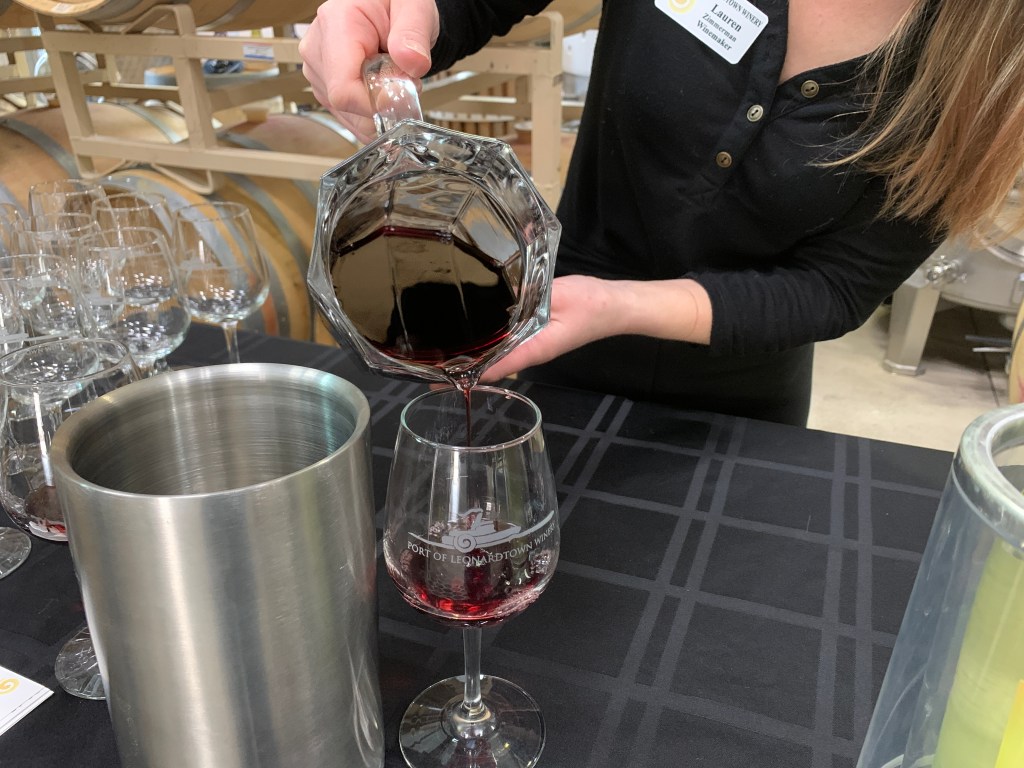
Since it’s Women’s History Month it seems appropriate to end March with an interview with winemaker Lauren Zimmerman of Port of Leonardtown.

If you aren’t following Lauren’s Instagram (@laurenwinegirl), you’re missing out. Her stories are incredibly fun to follow along, whether you’re a wino or not. But in person, she was every bit as fun as her stories are.

My visit was inspired by news of their recent Maryland Governor’s Cup awards, but more broadly because I was curious about Maryland wine in general. Port of Leonardtown had recently earned the Jack Aellen award for the state’s best fruit wine, and best in class for their 2020 Sauvignon Blanc. While that Sauv Blanc made the entire trip worthwhile, there was plenty to love here.

I started with a barrel tasting, chatting with Lauren about the state’s wineries in-between sips. She explained how Maryland has over 100 x wineries and 1000 x acres of grapes, making Maryland something of a ‘little brother’ to Virginia’s own wineries. Since many Maryland wineries are closer to me than Virginia counterparts in Charlottesville or the Shenandoah, I began to wonder why I don’t visit here more often.

But even within Maryland, Port of Leonardtown is a unique enterprise. It’s comprised of 13 x independent vineyards from around the state who banded together to form a winery co-op under one roof (and one winemaker). The wines resulting from this cooperation showcase a variety of terroirs from coastline to mountains to flat farmland.

Unlike most winery tasting rooms, Port of Leonardtown is set in a suburban area. While they have a picnic area and some ‘show vines’ in front, don’t expect the sweeping vineyard views that you might see elsewhere. But not to worry; they make up for it with great wine.

One observation about Maryland wine is since its terroir has a little bit of everything it’s hard to define a signature ‘Maryland’ style. Fortunately, this suits Lauren well. While she comes from Canada (and definitely misses Riesling) Lauren has jumped between wineries all over the world before finding a cute guy and settling here to start a family, so she’s accustomed to dealing with a range of styles and grapes.

Lauren’s most consistent grape is definitely Chambourcin – which she praised for its versatility. She also felt Chambourcin grown in eastern Maryland was richer than what you can find elsewhere. Port of Leonardtown’s vineyards also produce Barbera, Vidal, Albariño, Chardonnay, Cab Franc, Petit Verdot, and Merlot.

Since I had her full attention, I took the opportunity to ask her own favorite wines. The unreleased 2020 Sauv Blanc and her steel-fermented Chardonnay were up there, along with her Governor’s Cup-winning 2015 Barbera.

Since it was Women’s History month I also asked her a few questions about women’s representation in the Maryland winery scene. She agreed that while the field is dominated by men, that trend is dying out. She also pointed out that women generally have better olfactory skills then men, so biology seems to be on her side here.

As for the wine, I enjoyed the entire lineup. We started with the whites, with the 2020 Sauvignon Blanc quickly becoming my favorite – young and juicy, with lots of grapefruit notes. The 2020 Vidal was also good, leaning towards a more citrusy style.

For reds, the Cabernet Franc was bright and peppery, while the 2019 “Old Line” red (Merlot / Cabernet Franc / Petit Verdot) was richer. Finishing things off were the Vidal dessert wine, which Lauren called a ‘porch sipper’ because it wasn’t overly sweet. Finally we had a dry, rich port-style made with Chambourcin.

If you haven’t been to Maryland wineries before, start here!

The Winery at Sunshine Ridge Farm

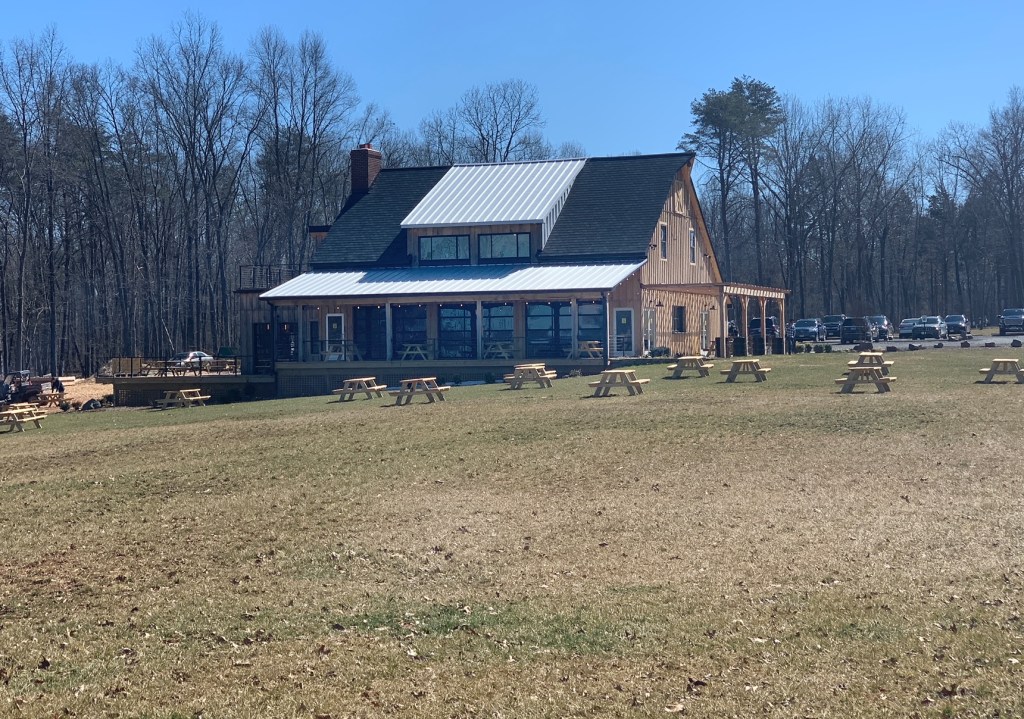
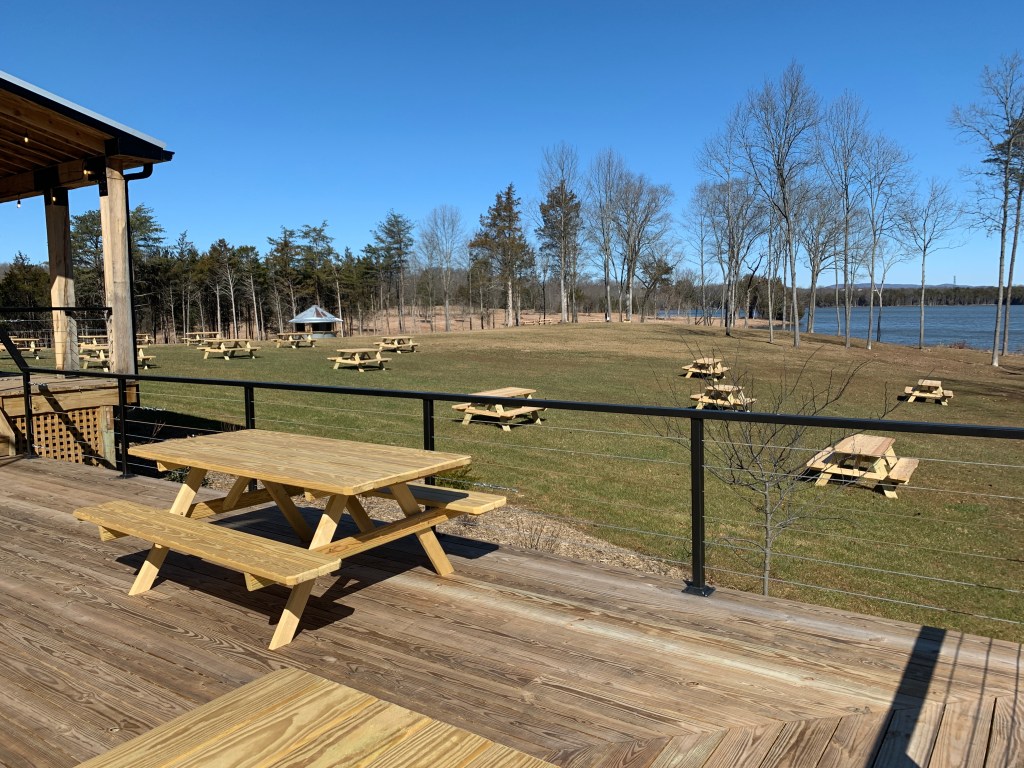
Sunshine Ridge is Virginia’s newest winery, located along the edge of Lake Manassas and very close to Vint Hill. And I’ll say it out loud – it also has some of the most stunning views of any winery in Virginia.

Owners Maria & Tom Rafferty bought the property with an eye for building a new home, but they felt the space gave them the opportunity to do something hospitality related as well. Fortunately their friend (and future business partner) Tom Schrade was looking to do something similar, so they were able to team up and build Sunshine Ridge Farm.

You can tell that Tom is a landscaper by trade, because the location has great views of the lake and a lot of attention to detail. Tom must also be a carpenter because he helped build the tasting room – using wood harnessed from the property. He did a great job, although Maria can’t help but poke fun at the single support column that is just a little bit crooked. I’m sure he could fit it but she won’t let him because it’s a better story that way.

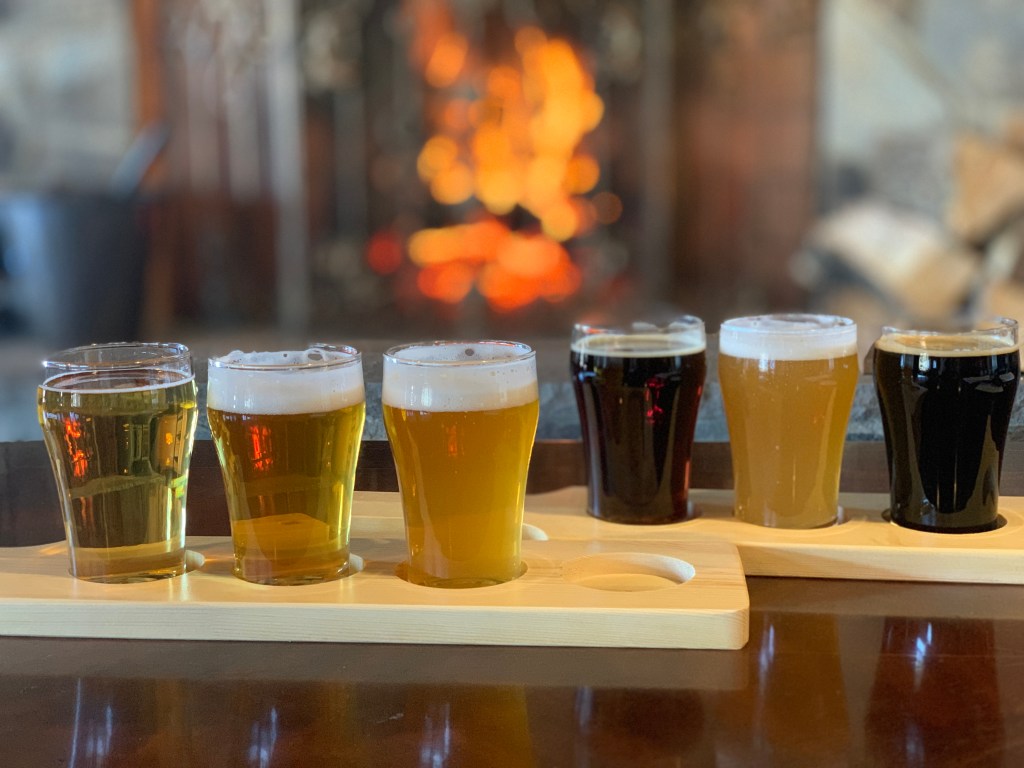
I particularly loved the garage doors that opened up towards the lake, as well as the fireplace. It was chilly when I visited so the doors remained closed, but I did grab a prime seat near the fire.

I get the sense that Sunshine Ridge is designed to entertain large crowds, both inside the tasting room and on the extensive lawn outside. Maria gave me a tour and I was impressed by the building’s coziness. They also have a large upstairs area for club members and a separate room for the brewery. I can only imagine how this place will be in the summertime, with the breeze coming off the lake and maybe a concert going on.

Right now Ashton Lough of Bull Run Winery makes their wine, and that will continue to be the case for a while. While Sunshine is planting a quarter acre of Vidal Blanc, most of their fruit will come from 11 acres leased from Bull Run’s vineyard in Rappahannock or purchased elsewhere.

Another item that is certain to be a crowd-pleaser is they are a brewery as well as a winery. Right now Cedar Run Brewery is supplying the beer, but Sunshine will brew their own beer in the future. Add some food trucks. music, and maybe lounge chairs near the lake, and this place is a one-stop-stop for all your recreational needs.

I sampled the wine lineup and was particularly taken with the Meritage (nice complexity) and the Chardonnay (which hit the right balance of new and used French oak). They also had a citrusy Riesling, off-dry rosé with strawberry notes, a Pinot Gris, Cab Franc, and a Norton. The last one surprised me; I’m rarely a Norton drinker but I would drink this one again as the 20% Merlot they used cut through the ‘foxy’ characteristics that I don’t like. It was a Norton for those who don’t usually try Norton!

Right now all their wine is from the 2019 vintage so several reds tasted young, but give it some time and they will mellow out. Most of their wine use Virginia fruit, with the exception of the Riesling (100% Washington State) and the Pinot Gris (a mix of Virginia and Washington fruit).

Since I would be remiss not to try the entire lineup, I also tried the beer. My favorites were the Trice Ax Stout (nice coffee and earthy notes), Farmhouse Saison, and the Light Lager, which is served in a room styled after an Irish-style pub.

While I anticipate Sunshine Ridge will a favorite for those planning to meet groups of friends, for the time being they are reservation-only. That said they was plenty of space to spread out. They also have a no-children under 16 years old policy, specifically due to the risk that small kids will wander off to close to the water.

RdV Vineyards

Saying you’re a fan of RdV is basically Virginia wine code for “I want the best that Virginia has to offer…and I’m not afraid to pay for it”.

RdV’s fame goes far beyond Virginia’s borders, and for good reason. The team provides a curated experience with wine that easily matches high-quality bottles from Bordeaux or California. The closest analogy in the wine-world is visiting RdV is the equivalent of visiting a Micheline-star restaurant.

RdV also has an amazing lineage, since owner and namesake Rutger de Vink was mentored by Jim Law of Linden Vineyards – one of the few acceptable alternatives for those who don’t point to RdV as the best winery in the state.

“How I found my vineyard”

Rutger comes from a well-heeled Dutch family but in his younger days apparently felt the need for some personal direction – so he joined the U.S. Marines and became a member of their Force Reconnaissance element (think Navy SEALs or Army Special Forces-level training). This background (that, plus an MBA and experience in a tech company) explains his devotion to methodical planning, which no doubt paid off here.

RdV also has perhaps the most famous “How I found my vineyard” story in Virginia. As the legend is told, he was driving on a back road in search of a vineyard site when his car was halted by some sheep crossing the road. After pausing he looked around, only to realize the hills around him seemed to have all the things he needed.

Turns out the property belong to a sheep farmer who only used this location for grazing as it was too barren for farming. Initially this gent wasn’t interested in selling, but not long afterwards the farmer realized his kids weren’t interested in keeping the land so he called Rutger asking for an offer. The rest is history.

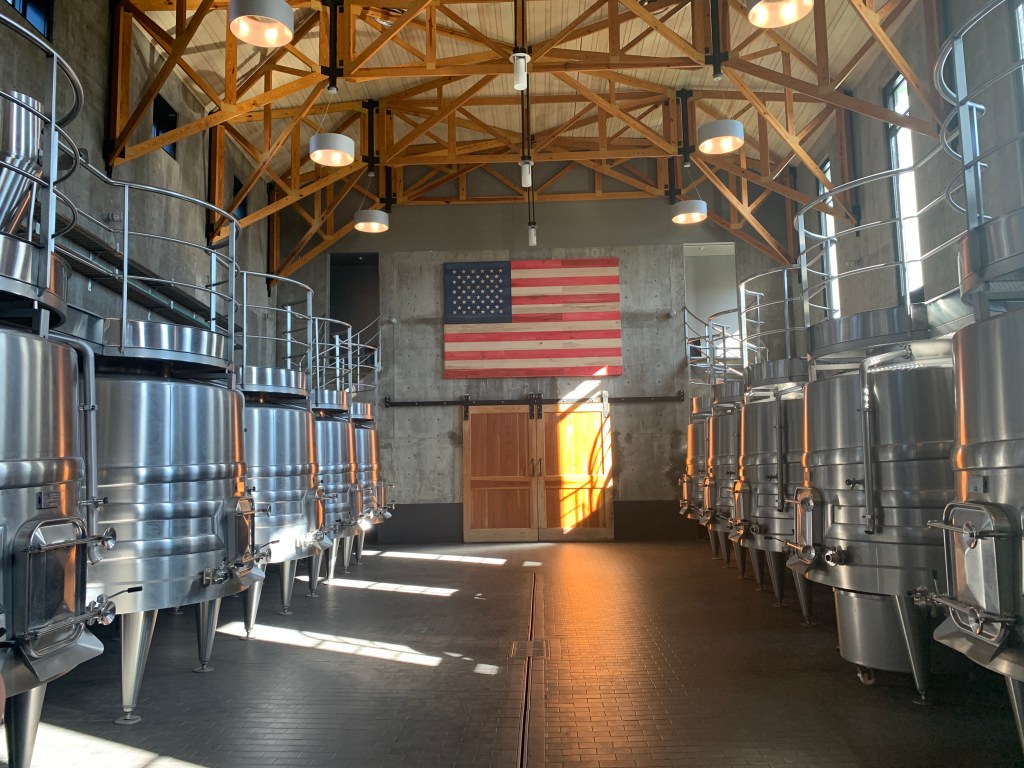
Rutger must have gone ALL IN when designing this place; the winery is one of the most picturesque in Virginia. But it isn’t just about looks; a lot of thought went into the design, be it the long underground passageway or the tower/lightwell in the middle of the building. These are just a few of the details that come together perfectly.

The Tour

I’d visited before, but that was before I learned to appreciate Virginia wine in the way I do now. At $120 a person, you aren’t just signing up for a tasting – you sign up for an education.

You start with a personal tour of the building, while the guide explained why this location is so special for viticulture. Put simply – it comes down to rock. Lots of very, very hard rock.

The winery sits on a large hill of granite. This is actually perfect for a vineyard; granite minimizes water retention and soil nutrients, forcing the vines to struggle. It’s a counter-intuitive way to farm; ‘happy’ vines don’t produce good wine grapes, but vines that struggle put all their effort into ripening their grapes –which results in great wine.

The tour continues through an underground tunnel which doubles as their long-term storage and barrel aging area. The most interesting part of this walk is the bare rock face. While it may have been planned more for show, RdV realized this wall serves a useful purpose – it shows how deeply rainfall has penetrated the ground. That’s the type of info that vineyard managers love, so ‘art’ here serves a purpose.

After that, you finish with a stop by the bottling line and chemistry lab then moved upstairs for a tasting.

The Wine

RdV is known for two wines; “Lost Mountain” (left bank, Cabernet Sauvignon-heavy blend) and “Rendezvous” (right bank, Merlot-heavy blend). Their 16 acres of vines are entirely composed of Cabernet Sauvignon, Merlot, Petit Verdot and Cabernet Franc (no Malbec). If you can’t remember which wine is which, remember the left-bank style wine starts with “L” and the right-bank style starts with “R”.

In the future they will also have a white blend, based on a more recent planting.

RdV does make several other wines, although those aren’t typically sold to the public. The best known is their more price-friendly “Friends and Family” red blend found at wine stores and restaurants – made from grapes that aren’t used for the two main wines. But on rare occasions RdV also makes a single-varietal wine (I’ve had their “Outlier” Petit Verdot at Field & Main restaurant) and even a dry rosé they serve to club members.

Their blending master is Eric Boissenot. I admit I didn’t know the name, but wine connoisseurs likely do – he decides the blends for 4 out of 5 of France’s “First Growth” wineries. RdV is his only American client – that’s how fancy this place is.

Normally I go into long tasting descriptions of the wine; but here I won’t. Suffice to say, RdV wine is world-class. I tried the 2017 vintages of Lost Mountain and Rendezvous; both were amazing, although I actually leaned more towards the right bank style than the left bank one (much to my wallet’s relief). I’m actually in deep regret not getting more bottles while I could – it was that good.

Your tasting is accompanied by a small charcuterie board and a serving of Dom Pérignon.

Some would say that this event is overpriced. My response – it depends what you are looking for.

If you just want to drink some wine, skip the tour and buy a bottle. But if you enjoy being feted and receiving a full-on wine education (that I enjoyed almost as much as the wine), make a visit. You’ll walk away with confidence that Virginia really can make wine on par with the best in the world.
Linden Vineyards 2017 Wine Release

Another Virginia winemaker recently called Jim Law “The guru on the hill”, who’s dedication has elevated the entire Virginia wine industry. The roster of those who’ve worked for him at Linden is something of a who’s-who of Virginia wine royalty, including (but certainly not limited to) Rutger de Vink of RdV Vineyards and Jeff White of Glen Manor Vineyards. Two of Jim’s Chardonnays received 94 points from Robert Parker – the highest score he’s given any Virginia wine. So when the guru speaks – you listen.

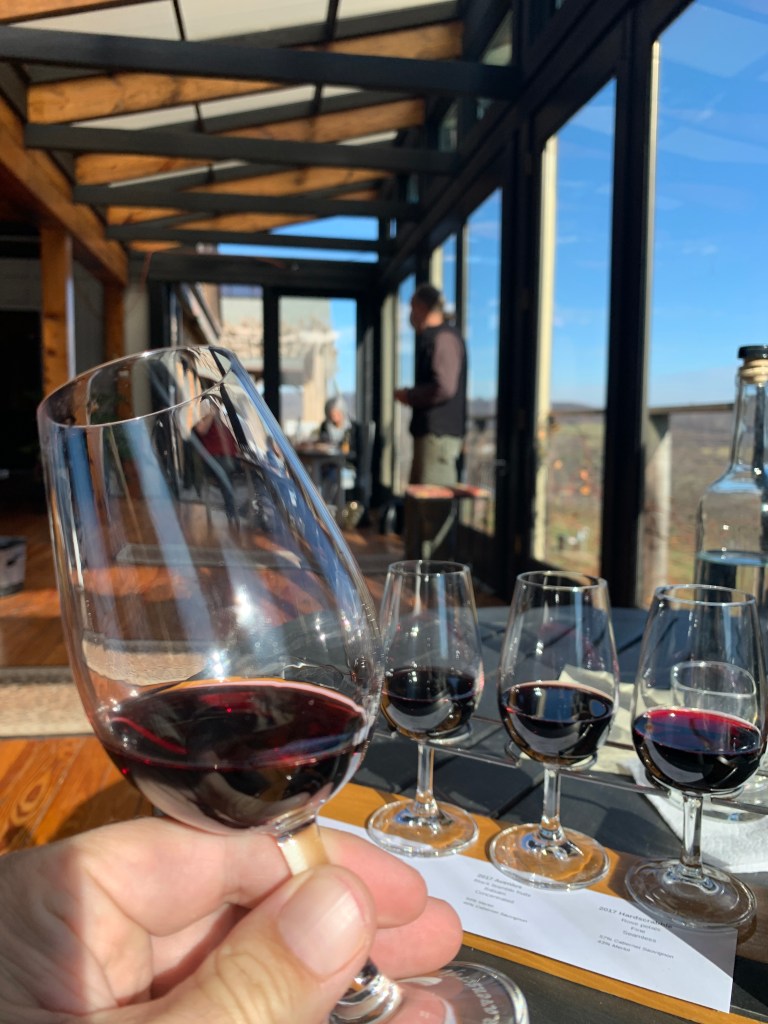
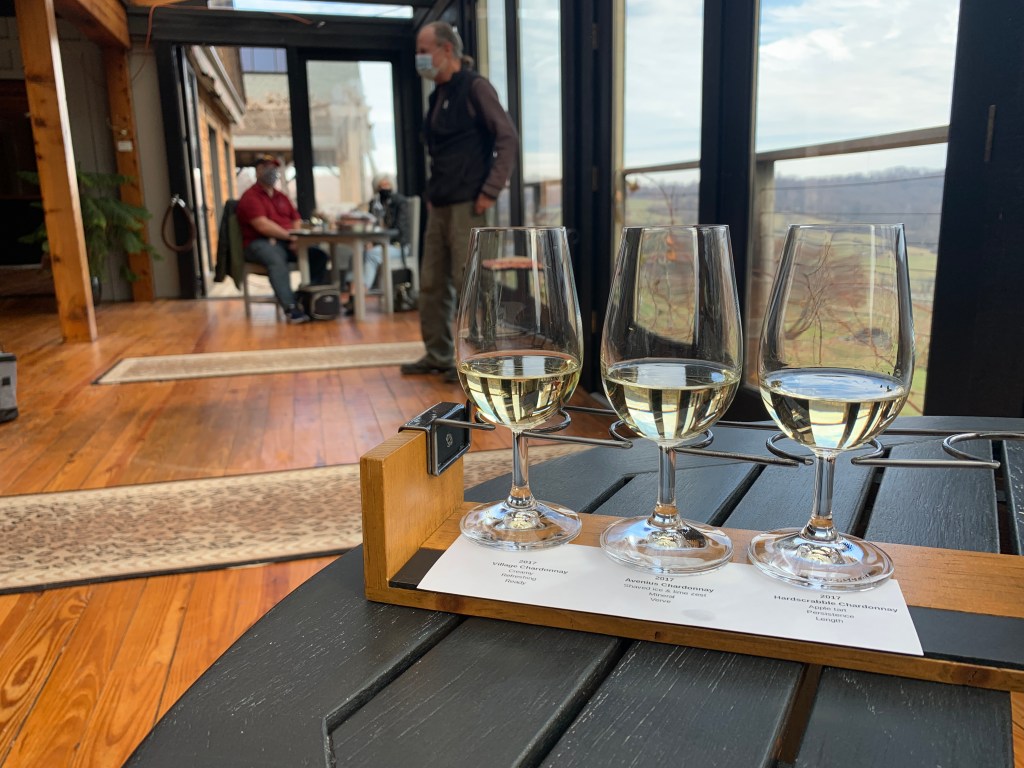
I’d been a member for several years, so when Jim announced he would be releasing his 2017 vintages I rushed to get my tickets. In a very socially-distanced event, Jim introduced 3 x Chardonnays, 4 x Bordeaux blends, plus a dessert wine. He also treated us to a long discussion about his wine and winemaking philosophy in general.

For background, Linden draws from three vineyards; Hardscrabble, Avenius, and Boisseau. Hardscrabble is their 20 acre estate vineyard located at the winery, primarily growing Chardonnay and Cabernet Sauvignon (although less Cabernet and more Chardonnay than it used to have) but home to several other varietals. Avenius a cooler 5 acre site down the road with soil composed of shale, granite and greenstone; they have a mix of vinifera but the largest planting is 1.5 acres of Sauvignon Blanc. Boisseau is the warmest site near Front Royal, its 4 acres likewise a mix. Many of his wines are bottled according the vineyard they came from; it’s not uncommon to have vertical flights of the same varietal but from different vineyards.

Although most Virginia wineries designate their red blends as their flagship wines, Jim’s first love is Chardonnay so his Hardscrabble Chardonnay is the wine he’s often proudest of. In my opinion, this is the best Chardonnay in Virginia – and I dare anyone to show me otherwise.

Jim explained that 2017 was a great vintage for both reds and whites, which is an unusual combination – usually it’s one or the other. Fortunately they were blessed with cool nights and warm days, particularly in September/October. He actually likes his 2017s better than his 2019s, mostly because the weather in 2017 was more even.

He also discussed climate change and his vineyard replanting project. Regarding the former, he has a small experimental vineyard where he’s planted several hybrids and Italian varietals, and discussed how unpredictable Virginia’s weather has become. Jim even installed several huge solar panels outdoors, in an effort to not be a contributor to the problem of global warming that has beset his own vineyards.

As for his replanting his vineyards, right now Jim is on ‘year 20 of his 15 year plan’. He freely admits to undergoing a long period of education which resulted him in revising his methodology for planting vineyards, and how water retention is the single most important factor in planting vines in Virginia.

He spoke at length about his Chardonnay planting from decades ago; right now there’s only around 10% of the original vines. While he enjoys the freshness that younger Chardonnay vines offer his wines, they lack the depth and character of older vines.

Usually I try to take my own notes for tastings – but the descriptors Jim provided were so dead-on that I decided to use them.

What I tried:

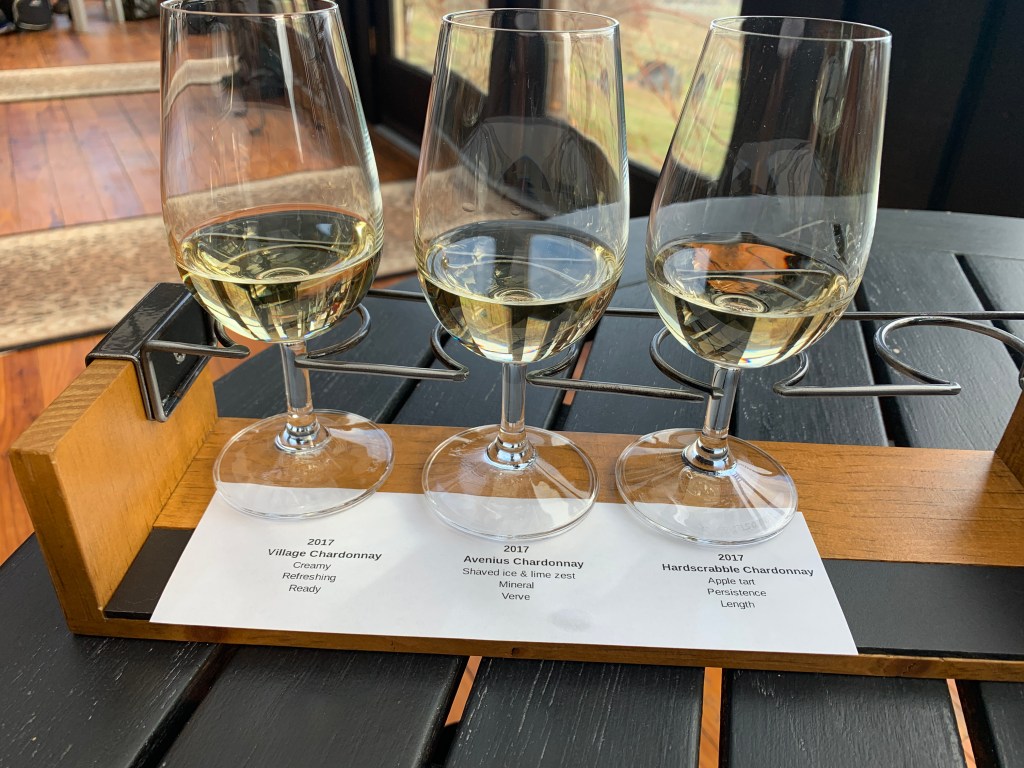
2017 “Village” Chardonnay: Jim’s “Village” is a mixture of all three vineyards, but this year drawing heavily from Hardscrabble. “Creamy” was the optional word.  He said this wine will improve over several years but damn, this was easy to drink now. This was also my favorite wine of the day (which I was rather grateful for, since it was one of the cheapest).

2017 Avenius Chardonnay: This had an almost Sauv Blanc quality to it. Higher acid and mineral notes. Has lots of personality.
2017 Hardscrabble Chardonnay: His flagship wine. Some newer oak to give it some toastiness, which is unusual since he’s usually a fan of neutral oak. Apple notes and long finish.

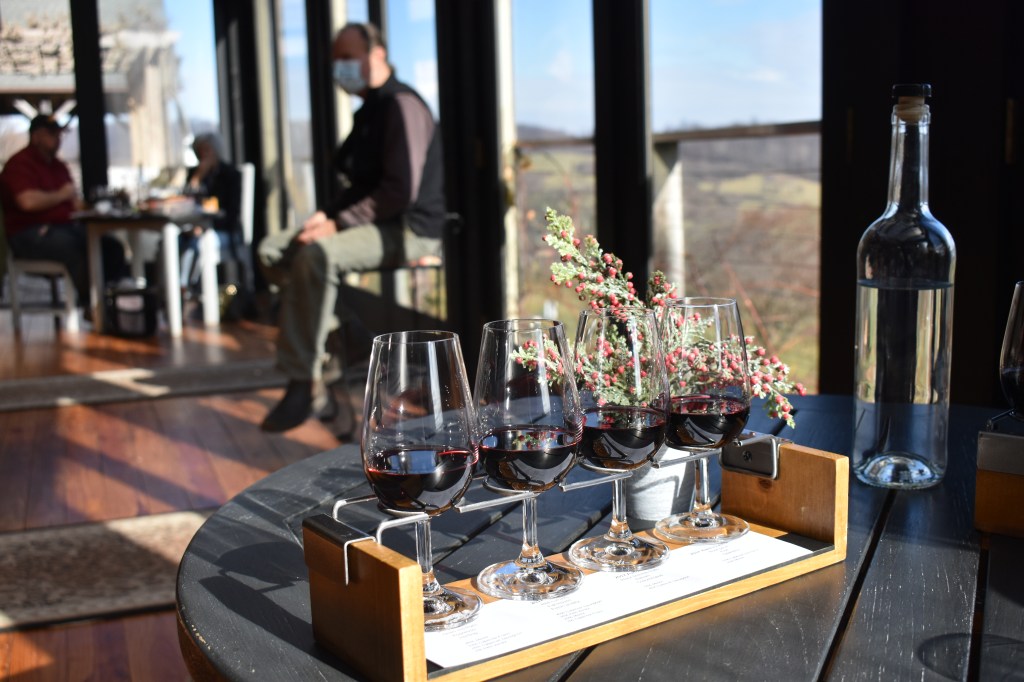
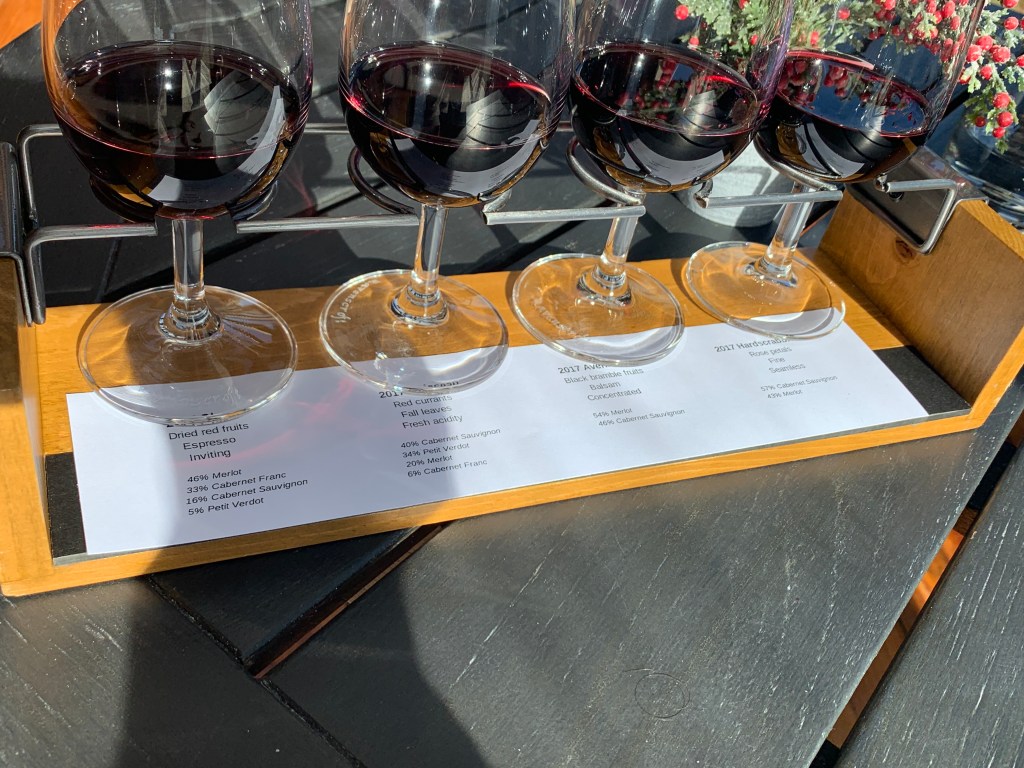
2017 Claret: Usually half of Linden’s reds are Claret but the 2017 vintage was so great he used most of his fruit for his site-specific vintages. I got currant notes, although his tasting sheet said red fruit (close enough).

2017 Boisseau: Fresh, not as heavy as I would have expected from a Petit Verdot/Cabernet heavy blend.

2017 Avenius: Black fruit notes and the acidity was on the higher side.

2017 Hardscrabble (red): “Rose pedals” was the tasting note. I’d keep this one for a few years though.