As soon as you walk into Preston Ridge, you realize this is a local hangout joint. A slushy machine is right behind the bar, and wine supplies hang off the far wall like you’d expect to see at a hardware store. This place isn’t fancy, but like most watering holes it doesn’t pretend to be.
Lawrence Penn is the wine maker. As descendant of a long
line of bootleggers, he proudly (if jokingly) says he’s the first ‘legal’
winemaker in his family line. But he honed his trade by using homemaking wine
(and beer) sets, so I guess bootlegging is in his blood.
Given his previous job was in demolition, he probably didn’t plan to be a winery owner. When he told me how he got started I had to chuckle; demolition man to wine maker? I’ve heard of plenty of interesting backgrounds in Virginia’s wine industry, but that was definitely a first!
Preston Ridge makes 600-2500 cases of wine a year and leases 4 acres of vines. But he sources fruit anywhere he can, including California. A considerable amount of his wine aren’t even from grapes; I tried a lot of fruit wine during my visit. Lawrence explained a lot of locals make their own wine, so this allows him to cater to the local palate. Sourcing from multiple places also allowed him to have an expansive lineup.
For those who visit this area, you’ve likely tasted their wines at local festivals – that seems their bread & butter. Lawrence and his daughter went through a full tasting with me while other patrons dropped by for their own libations.
For grape wines, I found I especially liked the 2016
Chambourcin, which was dark and almost chocolaty. But the steel fermented
Chardonnay was also light and refreshing.
But my favorites were the fruit wines. The Strawberry reminded me of a strawberry ice cream! But my very favorite was the apple wine, which was lightly oaked and had cinnamon notes. I think any of these would be welcome during a warm day (or even a not so warm day!).
I went into this trip with the full intention of treating
all my wine visits equally. After all, there’s SOMETHING good to be said about
everyplace I visited, even if it’s not the style of wine that I drink. I’m an
advocate for ‘drink what you like’, so if you like hybrids and/or sweet wine –
go for it!
But I have an admission: Hamlet was my favorite of this trip.
Hamlet has two big things going for them; an excellent vineyard that’s focused on vinifera…and Michael Shaps. Combine the two, and you have a clear winner.
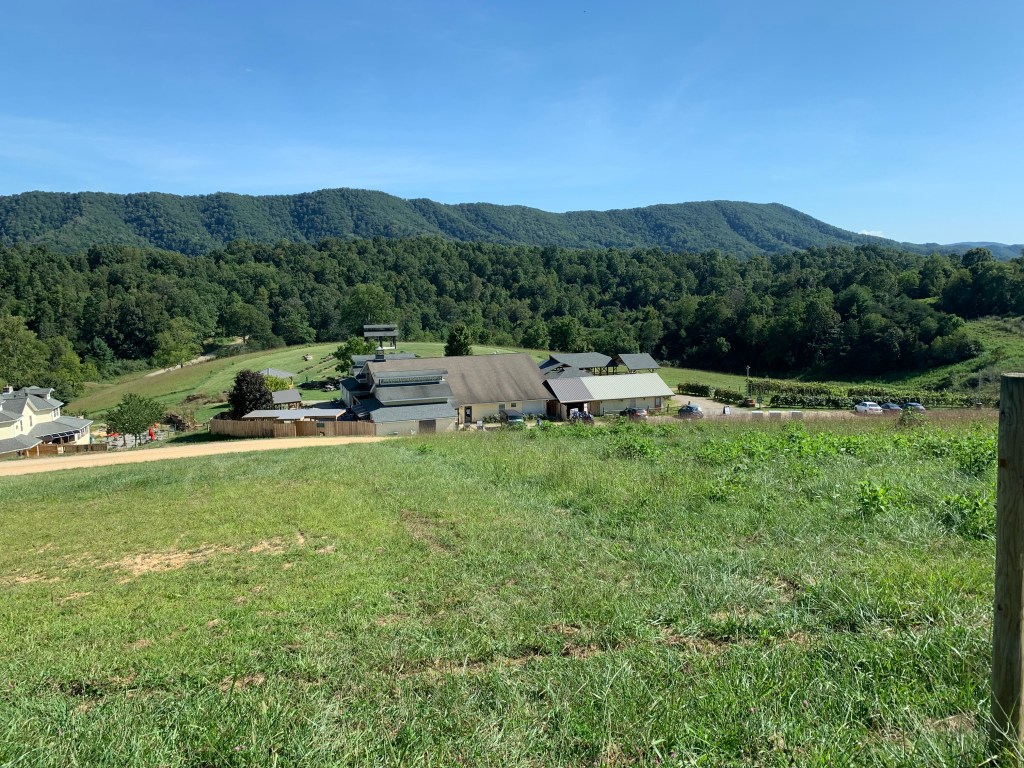
Butch and Virginia Hamlet got into wine making the traditional Virginia way – by accident. They already owned 300 acres of land, so they decided they may as well put it to productive use. I suppose having a love of wine was another motivation, since despite not having a background in agriculture they chose to open a vineyard.
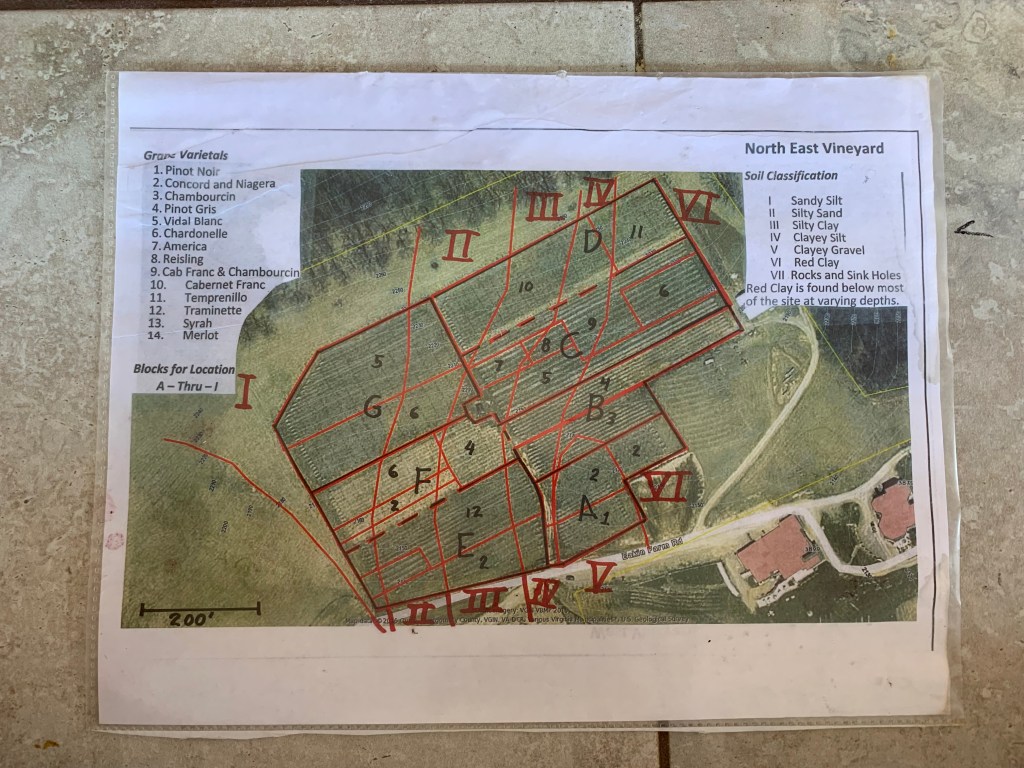
But the Hamlets bonded with their vineyard, as nobody wants to sell grapes that they invested so much time in growing. By happy accident one year Chateau Morrisette didn’t purchase Hamlet’s crop, so they sought the assistance of Michael Shaps to turn their grapes into wine. Now Hamlet makes estate wine out of its 5 acres of grapes – mostly vinifera.
I asked about Hamlet’s partnership with Shaps, and Virginia was a huge advocate of his custom crush program. Hamlet’s wines are 100% estate, and Shaps definitely knows what to do with them. Since Virginia knows her customers’ palates, she and Michael are able to collaborate on the styles that best suit Hamlet’s needs. That partnership has definitely worked out well; their 2016 Eltham made its way to the 2017 Virginia’s Governor’s Case, and having tried the entire Case lineup I thought it was one of the best of the bunch.
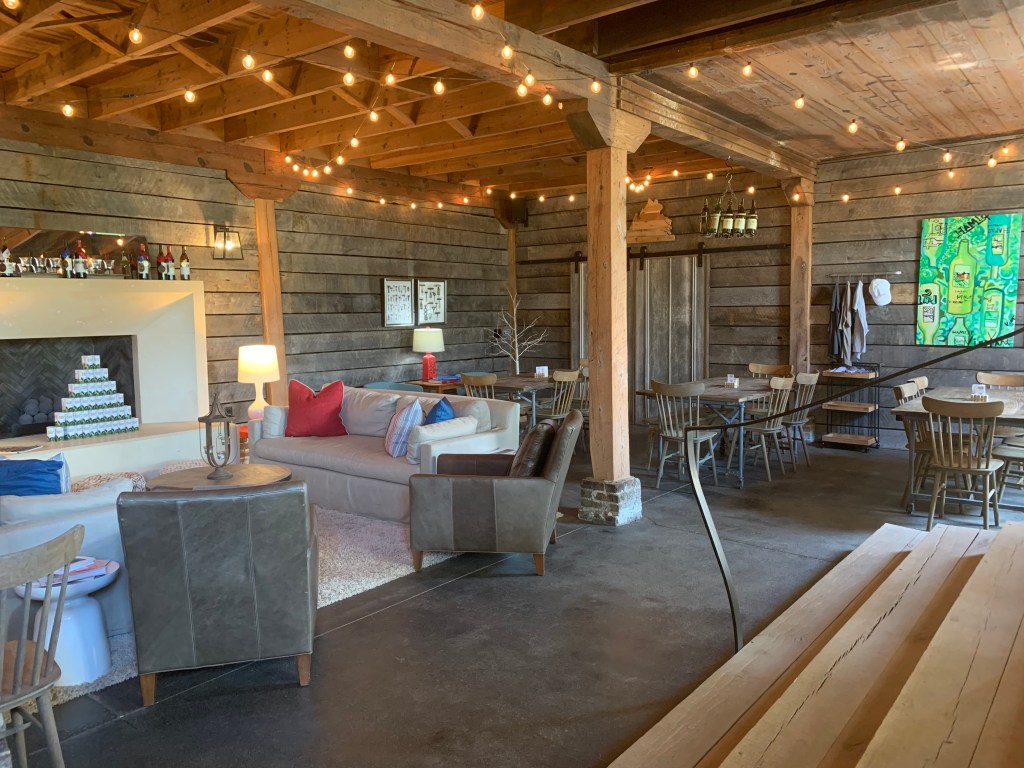
The tasting room is small and cozy. They have a small patio with pull down walls that has served them well for years, but that should be replaced in the future with something more durable. Given their location, I thought it was just the right amount of space.
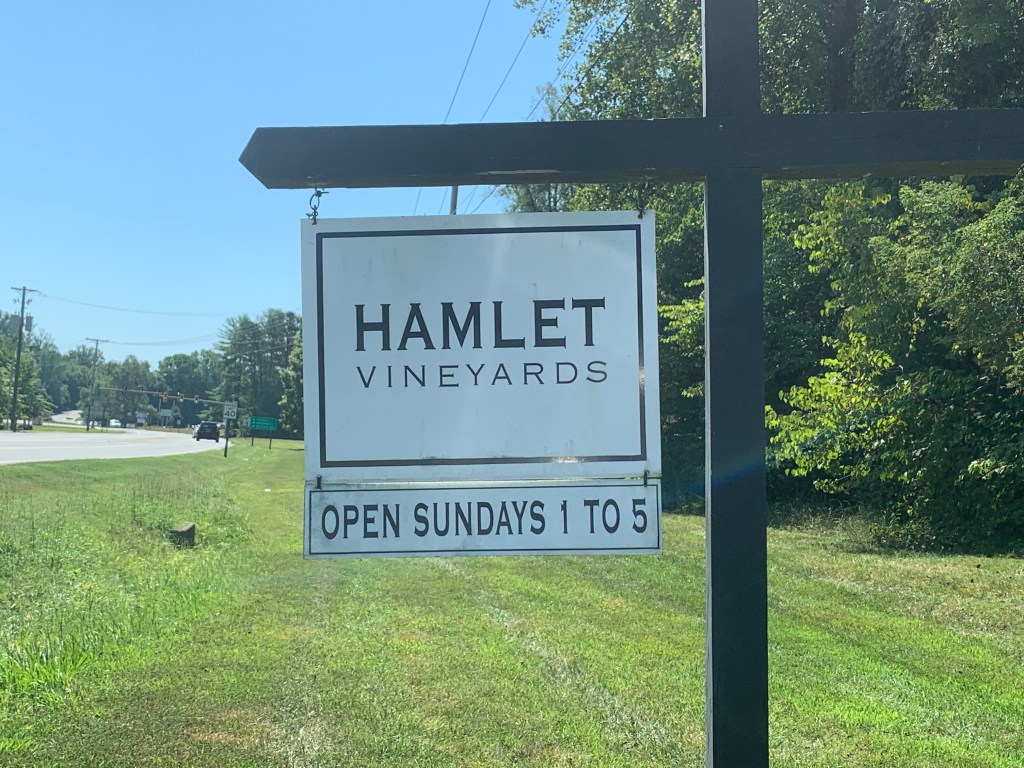
Hamlet is only open on Sundays. That’s an unusual decision but one that makes sense for them, given how many Saturday evenings Hamlet’s space is rented out for events. I definitely got the feeling this was a popular watering hole, although being open all weekend might dilute the crowd for both days.
Despite that, Virginia was kind enough to allow me to visit
her on a Saturday. I got to try the entire lineup of wines while she went over
the business.
Pinot Gris: Light, refreshing, with citrus notes.
Viognier: Honey-ish notes. Also sharp and dry, without the
perfume nose that I often find.
“Bottle Blond”: Sweet wine made with Pinot
Gris/Vidal/Chardonel. Local favorite. Virginia explained it took a while for
Hamlet to introduce a sweet wine into their repertoire as they didn’t want to
have a reputation as a sweet-wine focused winery, but there was so much demand
eventually they gave in.
Rose (Merlot): Merlot is a workhorse for their vineyard.
Strawberry notes; just barely off dry. A good compromise that can satisfy sweet
and dry wine drinkers.
“Old Virginia Red”: Soft red; also bridges the gap between
sweet and dry wine drinkers. Fruity; can be chilled. It sorta reminded me of a
sangria.
2016 Cabernet Sauvignon: Light, bramble fruit notes.
2016 Petit Verdot: Smokey!
2015 Eltham: Very yummy…soft fruit notes.
2016 Eltham (50/50 Petit Verdot and Merlot): Sooooo gooooooooood…and a worthy edition to the 2019 Virginia Governor’s Case competition. Very good complexity, very smooth.
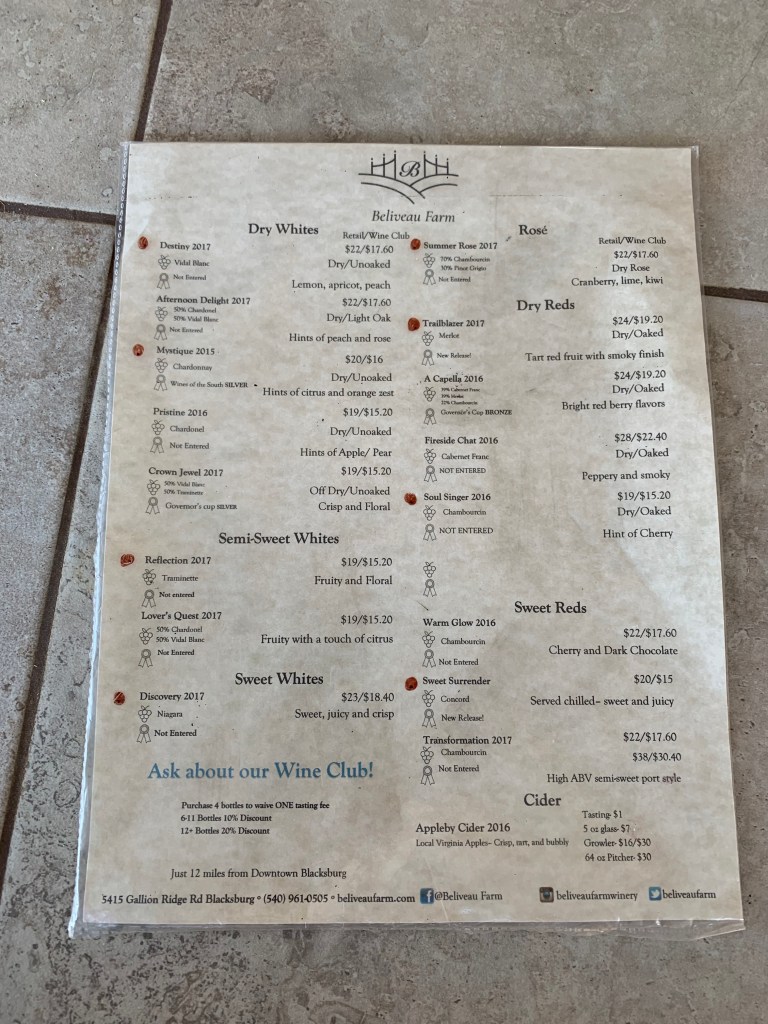
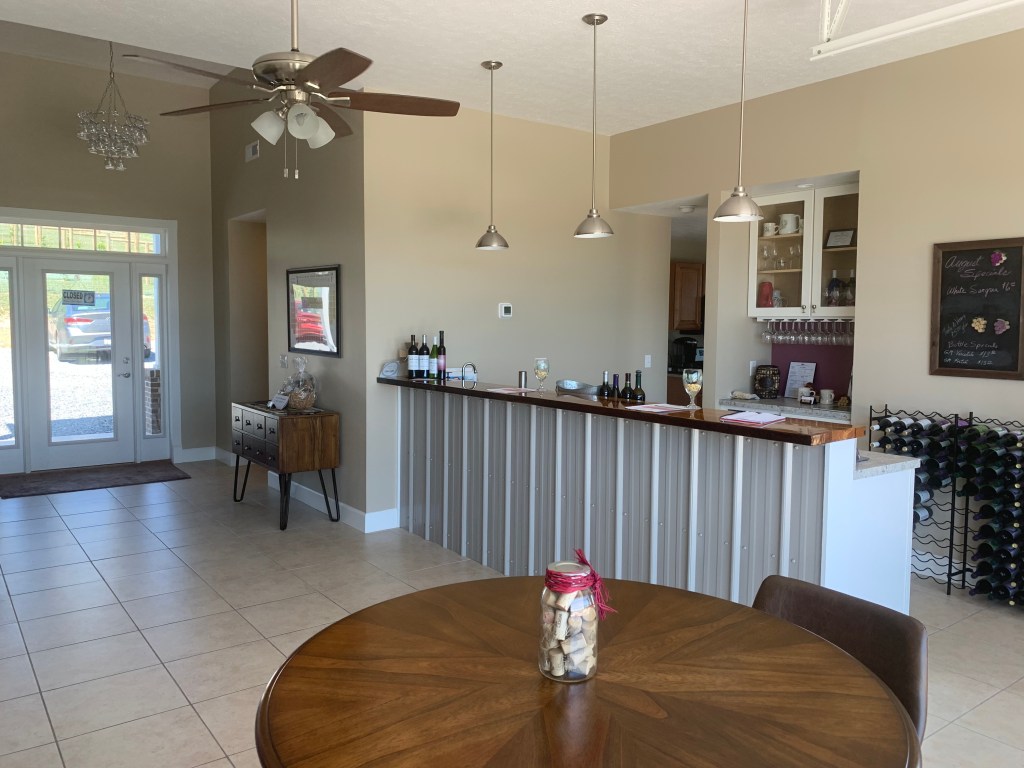
Beliveau is the quintessential place to get away from town to enjoy the view while drinking adult beverages. While only 45 minutes from Roanoke, my GPS signal almost gave up on me as this area is definitely rural, given its location at the edge of the Blue Ridge Mountains. If you’re into ending your hike with adult beverages, this is your place.
I called ahead and was told I could meet up with their winemaker, Derek Gassler. Derek gave me the low-down of the vineyard, starting with how they first planted in 2009 and progressively added more after that. He seemed especially proud how as of 2018 they had finally become 100% estate-grown and for the first time were selling fruit – an uncommon feature in Virginia.
At 3-5000 cases/year this is still a small operation; Beliveau’s wines are rare outside the winery itself. Derek said he made their wine in what he called “High Mountain” style – light and low tannin. Their 12 acres of vines were 60%/40% split between hybrids and vinifera, sitting anywhere between 2100-2500 feet. While I’m don’t style myself an expert, this seemed like an especially good place for wine growing.
Wine isn’t the only thing on the menu. Derek wasn’t just a winemaker; he was a brewer. That’s right – Beliveau is about to join a growing trend of hybrid winery/brewery operations. If that’s not enough they are a Bed & Breakfast, plus they do a lot of events. Suffice to say, there’s a lot going on here.
After chatting about the vineyard I made my down to their outside tasting bar where Bob poured my wine. We chatted a bit as I enjoyed the view outside. He seemed just as thrilled as I was that Derek authorized him to open a bottle of their Petit Verdot, which definitely seemed to be on his ‘must drink after work’ list.
What I tried:
2016/2017 Destiny (Vidal): Both were quite nice, with the
2016 being more citrusy.
2017 Afternoon Delight (50/50 Chardonnel/Vidal): Lightly
oaked and bright notes.
2015 Mystique (Chardonnay): Unoaked. Nutty and very sharp.
Reflection (Traminette): Floral nose, maybe lemon on my
palate?
2017 Crown Jewel: Derek’s current favorite; an off dry
Traminette/Vidal blend. Very crisp and clean.
2016 Pristine (Chardonnel): Apple notes; I’m finding I’m
really starting to like Chardonnel (including this one) despite my usual apathy
towards most hybrids.
Rose: Definite cranberry notes.
2017 Trailblazer (Merlot): Smokey!
2016 A Capallela: Fruit forward but still peppery. It’s a red blend but I suspect it’s Cabernet Franc heavy.
Fireside Chat (Cab Franc): Light and peppery.
2016 Soul Singer (Chambourcin): Cherry forward
Warm Glow (Chambourcin): This couldn’t be more different
than the Soul Singer; semi sweet, kinda reminded me of melted chocolate in a
good way.
******DRUM ROLL******
2017 Petit Verdot (with a tad bit of Tempranillo): Outstanding! Just enough pepper to make me happy but not overwhelming.
I don’t know what it is about southern Virginia that attracts self-made winemakers who set up shop on practically their front yard. Maybe retirement just isn’t for some people. Or maybe the passion for wine just runs that strong. But whatever the reason, the wine bug definitely hit the owners of Spinning Jenny.
Jenny planted its vineyard in 2015 and opened to the public in early 2019. After some helpful suggestions from their neighbors at Iron Heart and Giles wineries, owners Curtis and Jenny decided to plant an acre of grapes – some hybrids but also Pinot Gris, Chardonnay, Cabernet Franc, even some Cab Sauv. Well, if you’re going to own a winery, you may as well pant things you like, because you’re going to be your own #1 customer!
On the face of it neither of them had winemaking experience
prior to this venture. That said they did have something going for them –
Jennifer is an infection control nurse. You’d think these fields are totally
different, but I’d disagree. Maintaining a vineyard in Virginia is all about
disease control. What ails the grapes? When to spray? What to spray? I suspect
Jennifer came to this field better prepared than she thought.
The tasting room is on the edge of their property, right off of I-81. It’s not a big place but doesn’t need to be. Some visitors are simply looking for a way stop, others are locals looking for a get-away.
The wines were almost universally soft and light, especially
the whites. I especially liked the 2018 Chardonnay; nice mouthfeel, made in a
Chablis style. But the 2018 Viognier was good too, especially considering what
a wet year it was.
If you’re a red drinker, have no fear – they also have a fruity Cabernet Sauvignon/Chambourcin blend (80%/20%) which is probably best served chilled. Since Jenny is low on their own reds they are supplemented by bottles from Iron Heart. I especially like Iron Heart’s Cabernet Franc, which I purchased a bottle of when I visited them last year (it ended up with mom).
Fun facts – a “Spinning Jenny” is a fencing tool used to spool out wire. They are also in the running for smallest winery in Virginia, with a production of under 100 cases. While the production may grow, I really hope it never loses its homey vibe.
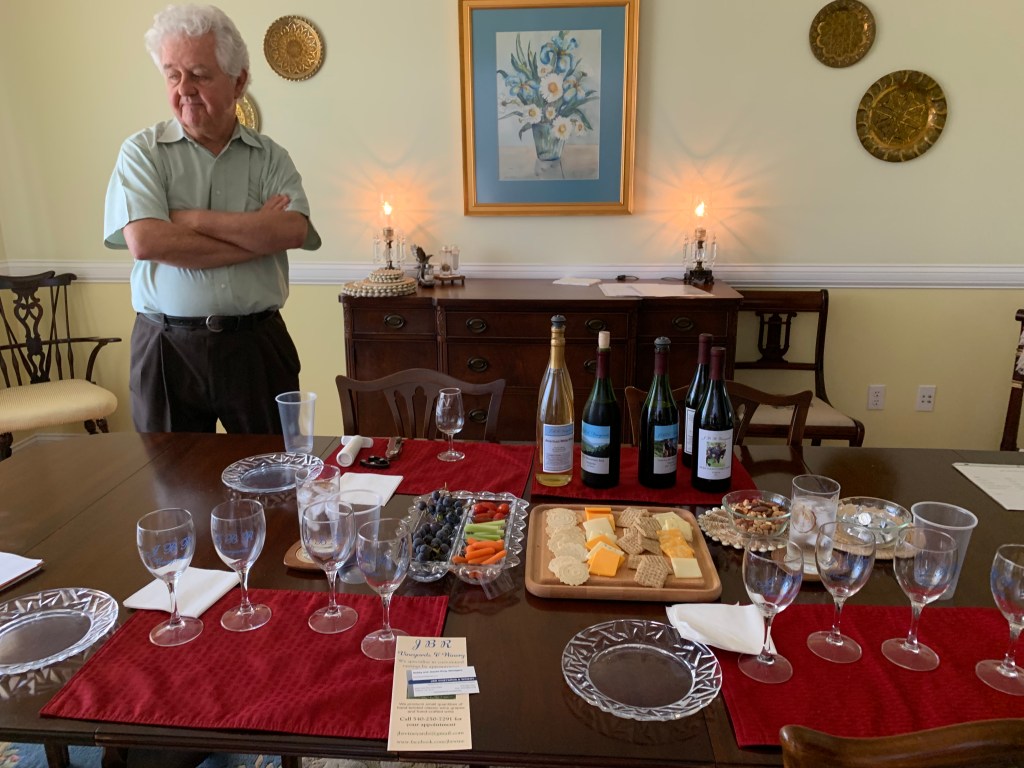
JBR Vineyard – the initials of the owner/winemaker, Jessee B Ring – is practically the definition of a mom & pop winery. The tasting room is actually the owner’s home, and your wine is served at their dining room table. How’s that for a welcome!
This was my first visit of a 3 day excursion to this part of Virginia. Fortunately I was able to get an early appointment, so after a 4.5 hour drive from home, here I was.
You might say JBR Vineyard is a hobby gone wild. The owners
bounced around the USA for work until returning to Jessee’s roots here in SW
Virginia. In 2006 he planted a few trial rows of grapes, eventually deciding to
concentrate on only two; Riesling and Pinot Noir. Now, they have a total of 2.5
acres between an off-site vineyard and a much smaller one in their front yard.
That JBR focuses on only two wines is a good thing. For one,
it simplifies their vine management. Moreover, if you’re going to do something,
you may as well do it well. JBR does both well.
You’ve probably not had many Virginia wines made from either Riesling or Pinot Noir. There’s a reason for that – both are notoriously difficult to grow in the state. They produce very tight clusters of grapes, making airflow difficult – hence susceptible to mold in Virginia’s humid climate. Fortunately, at 1800 feet JBR has the type of terroir to mitigate this problem. Jessee must have been thrilled to know that his front yard has the right conditions to grow some of his favorite wines.
I sat down for a flight of both wines accompanied by a
cheese board. As I sampled, Jessee and his son gave me the run-down of the
winery. What I tried:
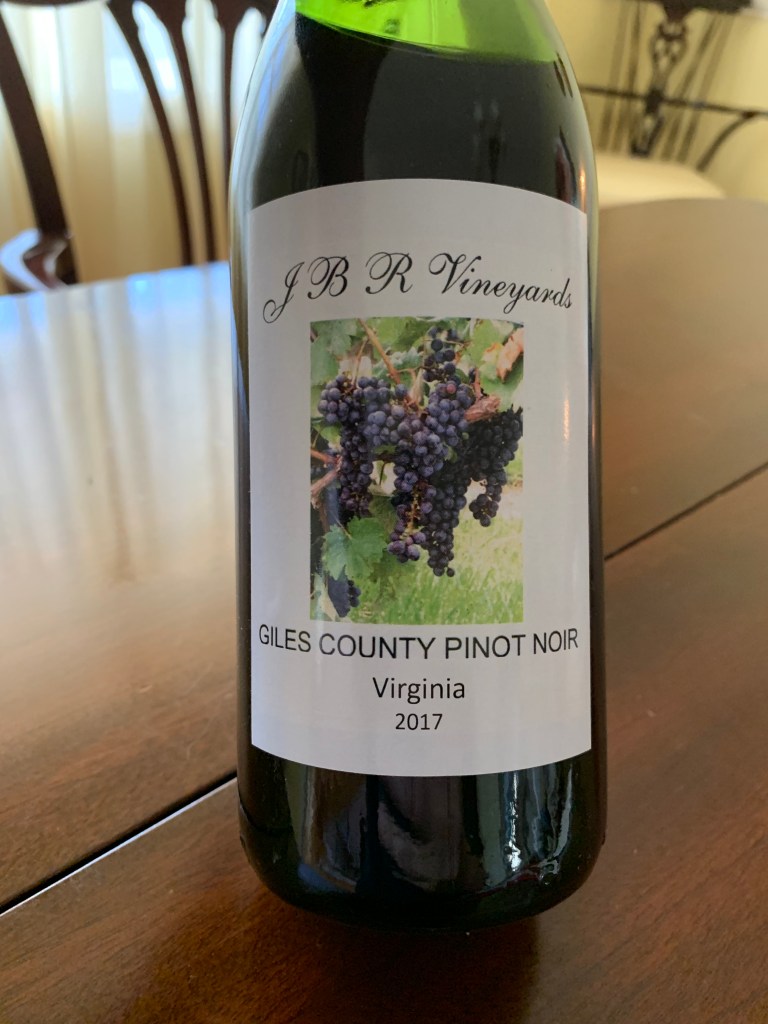
2017 “Giles County” Pinot Noir: Jessee called this his steak wine. Cherry notes, very nice.
2017 “Virginia Mountain Red” Pinot Noir: Served chilled. Very light color; more of a festival or pizza wine.
2017 “Country Gentleman” Pinot Noir: Tiny bit lighter; more plumb than cherry. His ‘pasta wine’.
2018 Riesling: Made with juice from Washington State, as in 2018 JBR lost their own Riesling crop. Excellent wine; full mouthfeel.
2017 Riesling: Lemony, almost citrus notes, full mouthfeel. More citrus-forward than other Rieslings but still very enjoyable.
If I were make a list of my Top 10 wineries in all Virginia, Muse would definitely be on there. It literally has the entire package; an amazing vineyard, great service, epic scenery, and some of the best wine I’ve had anywhere. Even though it’s an almost 2 hour drive for me, I make the pilgrimage several times a year.
Husband/wife team Robert Muse and Sally Cowal found the
land advertised in the Washington Post as a ‘vineyard for sale’ and purchased
it in 2003. Being wine lovers, the opportunity seemed too good to resist. It’s
location in the middle of the lovely Shenandoah Valley must have been an
additional bonus.
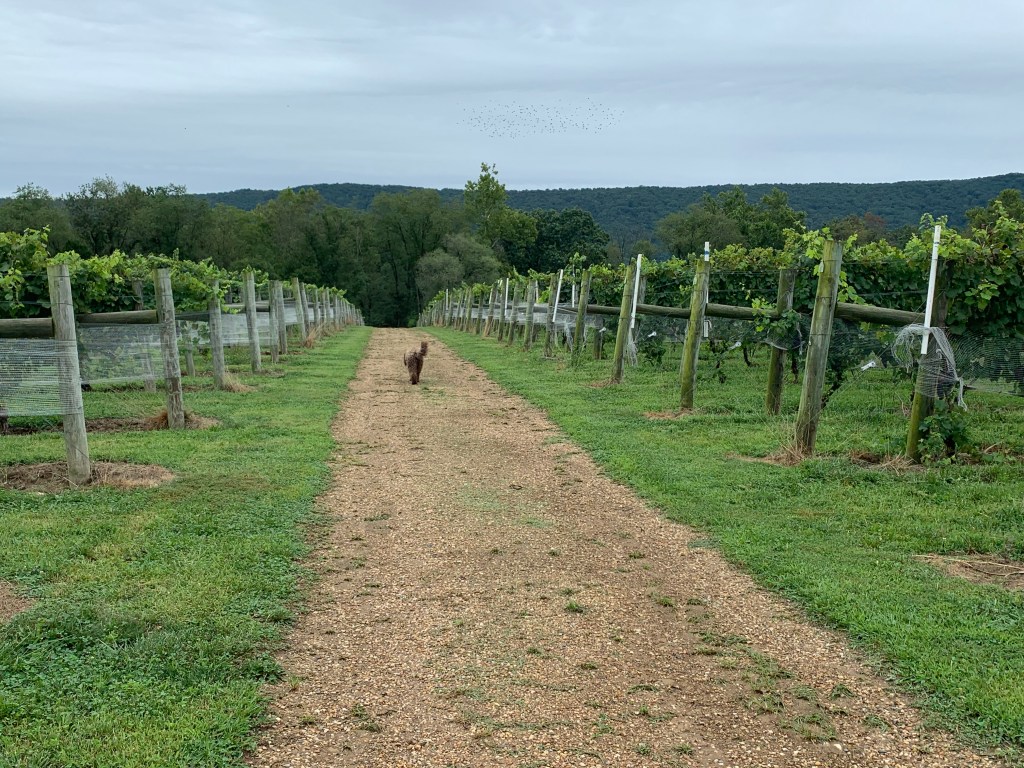
Getting there is sometimes a challenge. The vineyard is adjacent to the North Fork of the Shenandoah River, which occasionally floods the low bridge. Those in dire need of a drink in bad weather can cross an elevated walkway. Fortunately most of the time you can easily drive to the tasting room, set on a low hill that gives you a great view of the surrounding valley.
Sally was kind enough to give me a tour of the vineyard – which arguably is tied with the tasting room as my favorite part of their winery (note: I can drink in the vineyard so I’m not actually sacrificing anything here). When she explained what they are growing, it was jaw-dropping.
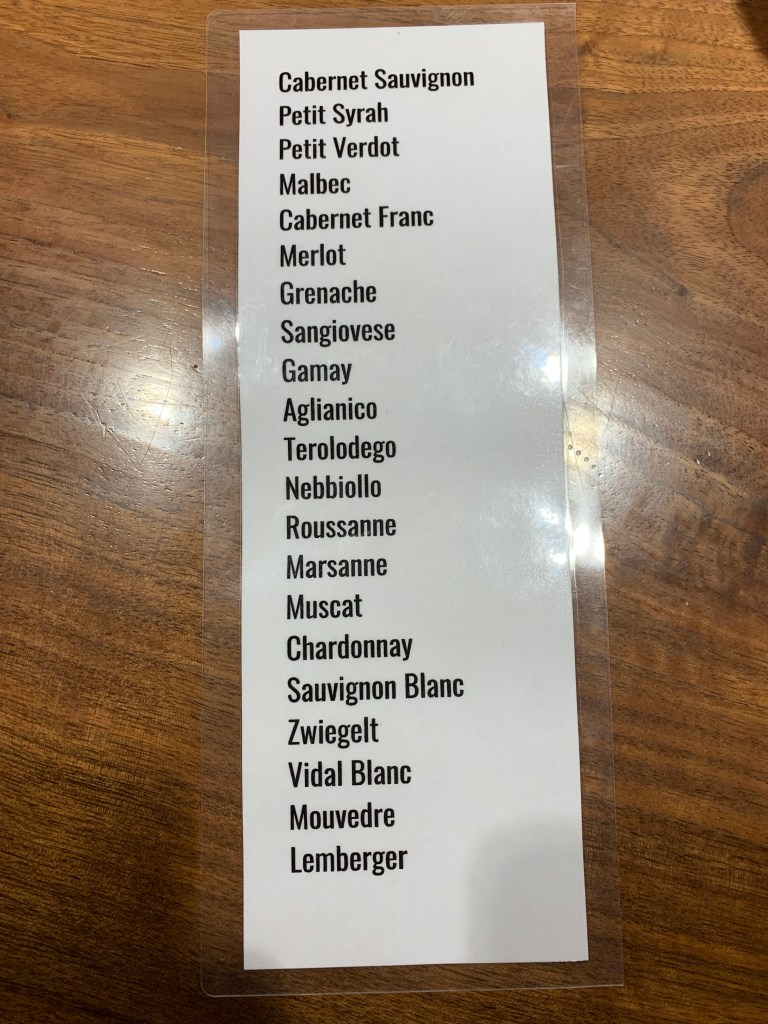
Muse currently has 21 grape varietals on 34 acres. That’s impressive, but what’s shocking is this includes vines seldom – if ever – seen in Virginia. Sally pointed out rows of Petit Syrah, Aglianico, Gamay, Grenache, Marsanne, Roussanne, Mourvèdre, Blaufränkisch (Lemberger), Terolodego and more…in addition to all your traditional Bordeaux-style grapes. Outside of Horton, it’s one of the most diverse vineyards of the state.
When I followed up with Robert on how he picked these varietals,
he explained he didn’t use a consultant – he was just following his palate.
That sounds rather shocking to me, as I often find those who plant what they like
as opposed to what is proven to do well often find themselves with grapes that
struggle in the local terroir (Virginian Cabernet Sauvignon lovers know what I’m
talking about). Fortunately, he must have done his research because most of
these grapes – especially the higher-elevation Italian ones – are doing quite
well. Hopefully other wineries will take notice.
Their current winemaker is Tim Rausse; you may
recognize the family name from his dad’s place, Gabrielle Rausse Winery. In fact,
Gabrielle used to source fruit from Muse back when they sold grapes, which tells
you something about their quality. Thus far I haven’t been able to catch Tim at
work here, but if you do he’s not hard to notice – he’s a tall guy with a
shaggy mountain man look.
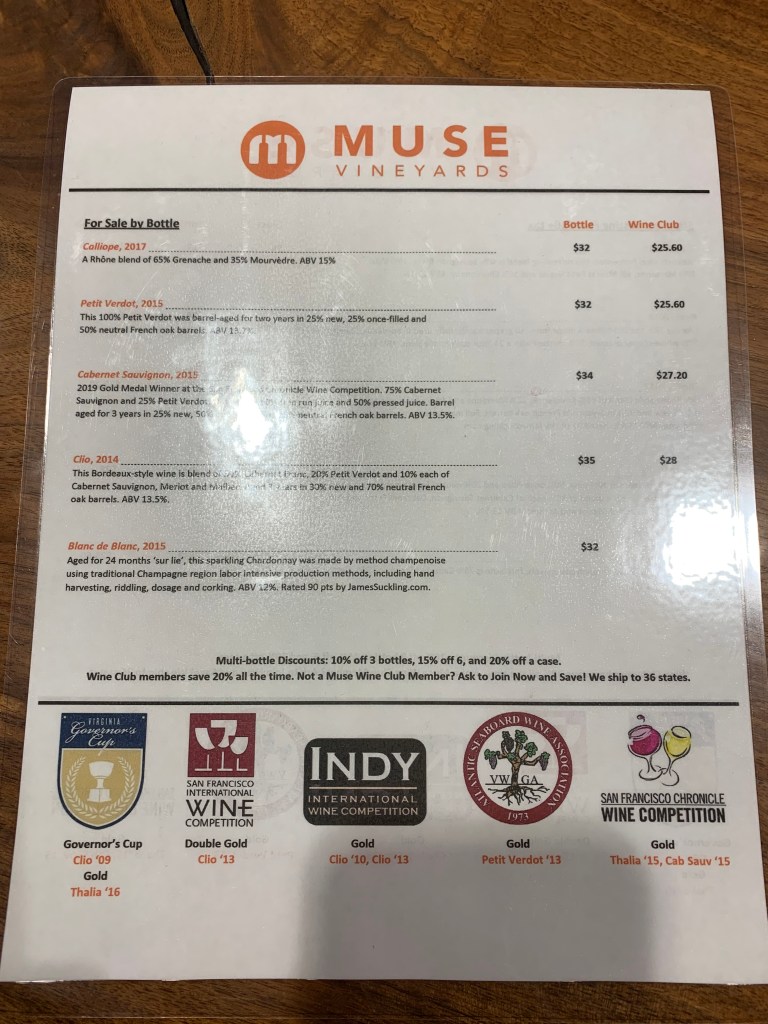
When you see the tasting menu, you’ll understand the vineyard’s diversity is well represented. Muse seems to specialize in blends, including the whites. While I personally tend to focus on big reds all the time, this is one of the few places where I’ll carry home more than a few white wines.
What I tried:
2018 Erato: Made with Sauvignon Blanc & friends in
stainless steel. Light, almost botanical notes.
2018 Rose: Practically a Bordeaux-blend of grapes with
a lovely pale pink color.
2017 Thalia: Blend of Marsanne, Roussanne and a little
Viognier, with just enough oak to compliment it. A very complex white.
2015 Cabernet Sauvignon: Actually 75% Cab Sauv with
25% Petit Verdot – and that PV goes a long way to make an excellent full bodied
red.
2015 Petit Verdot: Full bodied red with a big
mouthfeel. As a PV fanatic I loved this one.
2017 Calliope: 65% Grenache and 35% Mourvèdre, with
lots of spice notes.
2015 Clio: Their signature red blend, with nearly 1/3
Cabernet Franc/Cabernet Sauvignon/Petit Verdot each (and a splash of Malbec).
Good fruit flavors, light nose, made in a mix of neutral and new oak.
2015 Cabernet Franc: Good earth notes, but not enough
to be overpowering. Another winner!
Blanc d blanc: Sparkling Chardonnay aged 24 months. To
say I loved it is an understatement.
Not tried was the Teroldego, which Robert seems especially proud of.
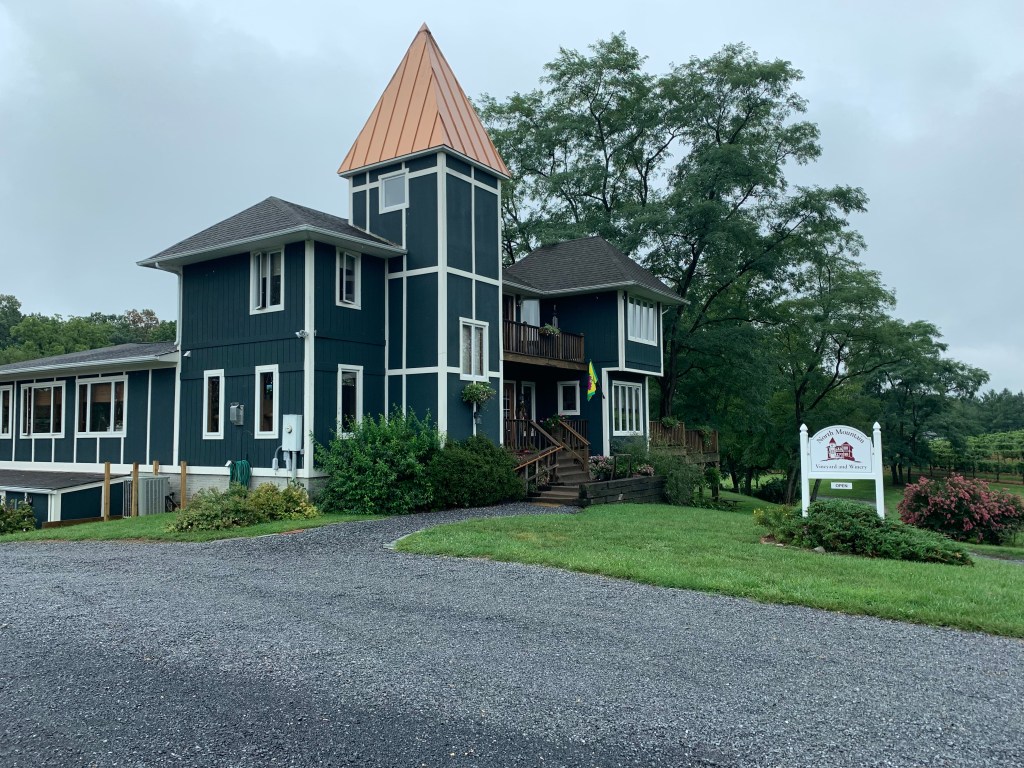
My second stop of the day. North Mountain is one of the older vineyards in Virginia, founded in 1982 by a couple who loved Germany so much they built a German themed winery. I’d been there a bunch of times, especially because this is one of the few places that my dry and sweet-wine drinking friends could equally agree was a hit.
The tasting room looks like a Bavarian inn, but the similarities don’t stop there. This is one of the few places in Virginia that grows Austrian/German-style grapes, including Riesling, Grüner Veltliner and Zweigelt. They even have a yearly Octoberfest-themed event to top the theme off.
15 acres are planted, including Cabernet Sauvignon, Cabernet Franc, Chardonnay and several hybrids. Situated right between two close mountain ranges in the Shenandoah Valley, it’s also in one of the best grape-growing regions in the state due to its low rainfall and high elevation. I’ve long been an advocate for Shenandoah wines; I just wish they were closer!
The winery is currently up for sale for $2 million – for those willing to become full-fledged farmers. I admire the dedication of those who can make that commitment. But personally, I’d rather just drink wine than make it.
2017 Zweigelt Rose: North Mountain is the only grower of this
grape in Virginia. A cross between Blaufränkisch
and St. Laurent (itself a child of Pinot Noir), it’s a soft-tannin red that
grows well in cool climates.
2016 Vidal Blanc: Strong lemon notes.
2017 Grüner Veltliner: Another rarity in Virginia. Full bodied for
a white; you might call this a white wine for red drinkers. White peppercorn
and lemon notes.
2017 Zweigelt: Pink-orange in color, dry. Cranberry notes.
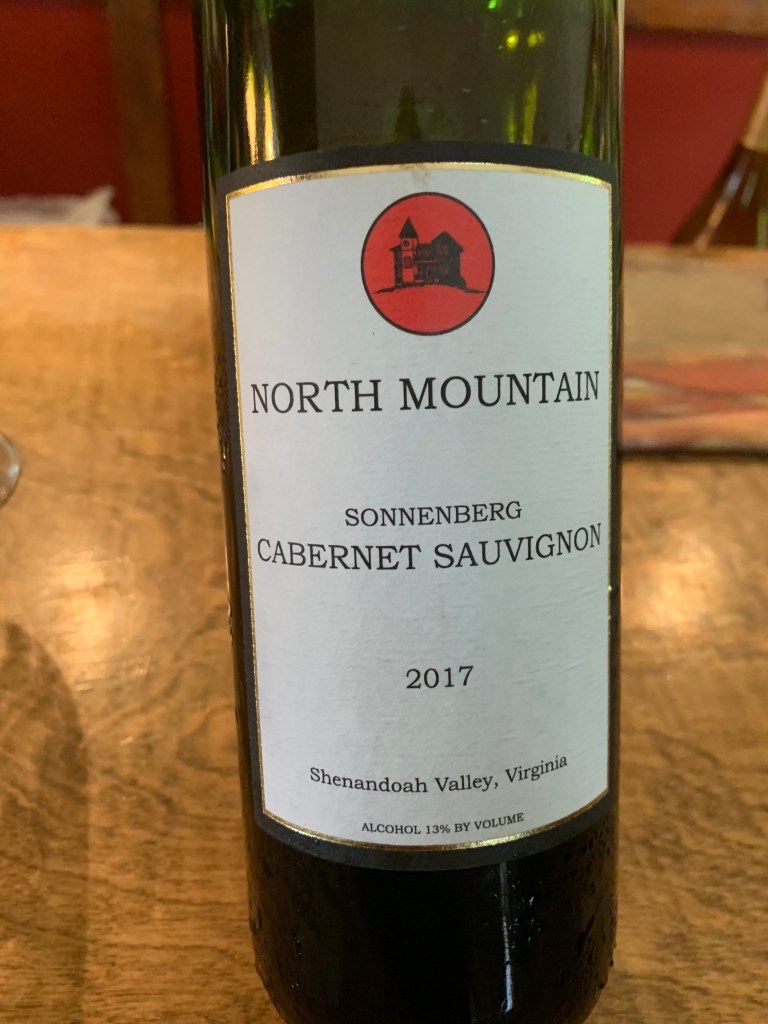
2017 Sonnenburg (Cabernet Sauvignon): Bright, almost sweet for a
red.
2017 Cabernet Franc: Fruit forward.
Tom’s Brook (75% Chambourcin/25% Cab Sauv): Very fruity!
Spice Apple Wine: I’m a sucker for apple wine, and I especially
liked this one. It reminded me of mulled cider with all spice notes.
Not tried this trip were the Petit Verdot, Riesling, or Mountain Midnight (a sweet, high alcohol Chambourcin that my sweet-wine loving friends loved).
The first stop of a leisurely (if rainy) Friday of visiting wineries. I’m not saying that drinking wine isn’t a good enough reason to visit a winery – it IS, and I do it all the time. That said, I love scenic drives and historic homes as well. When you combine all three, it’s like a magnet.
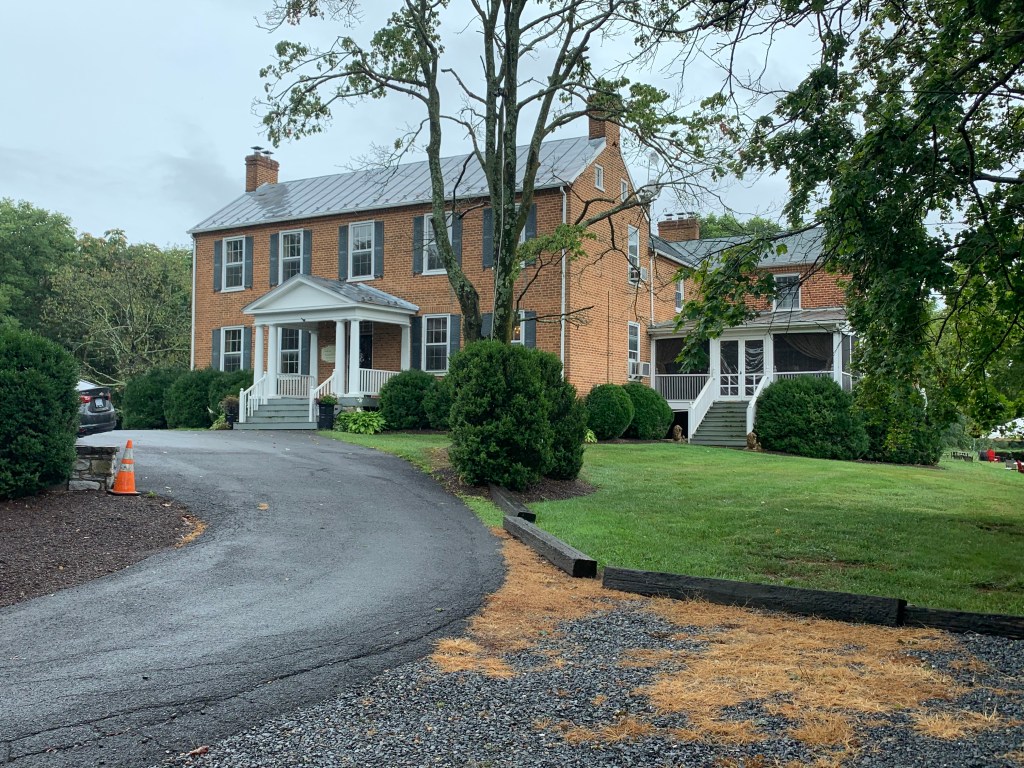
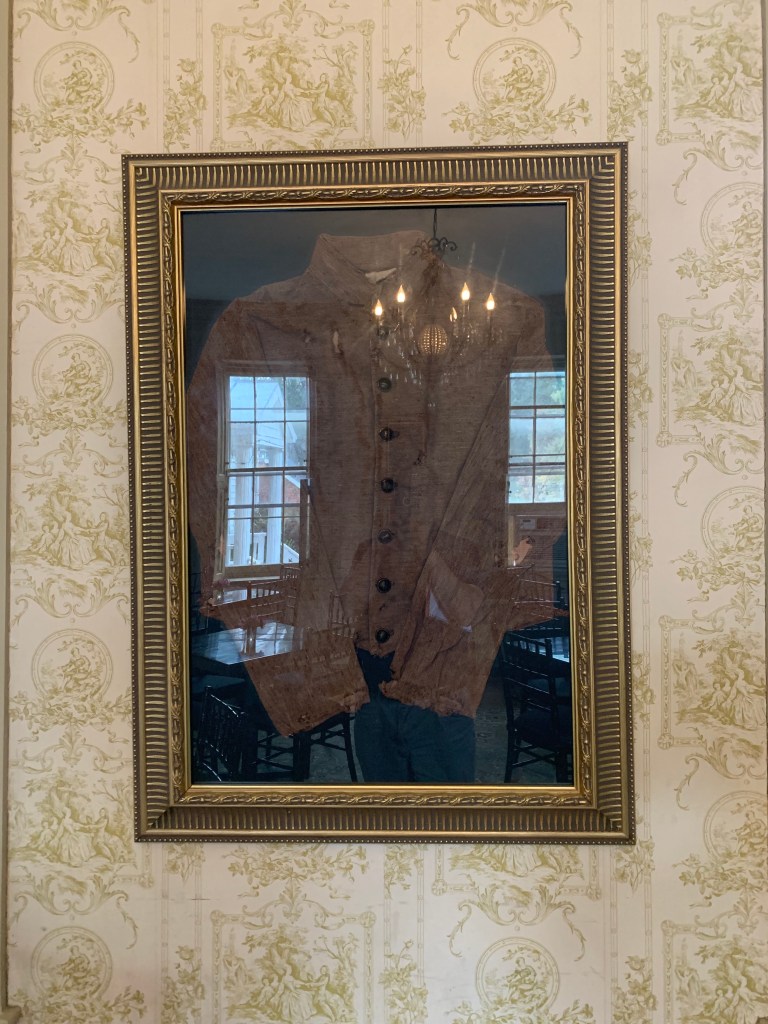
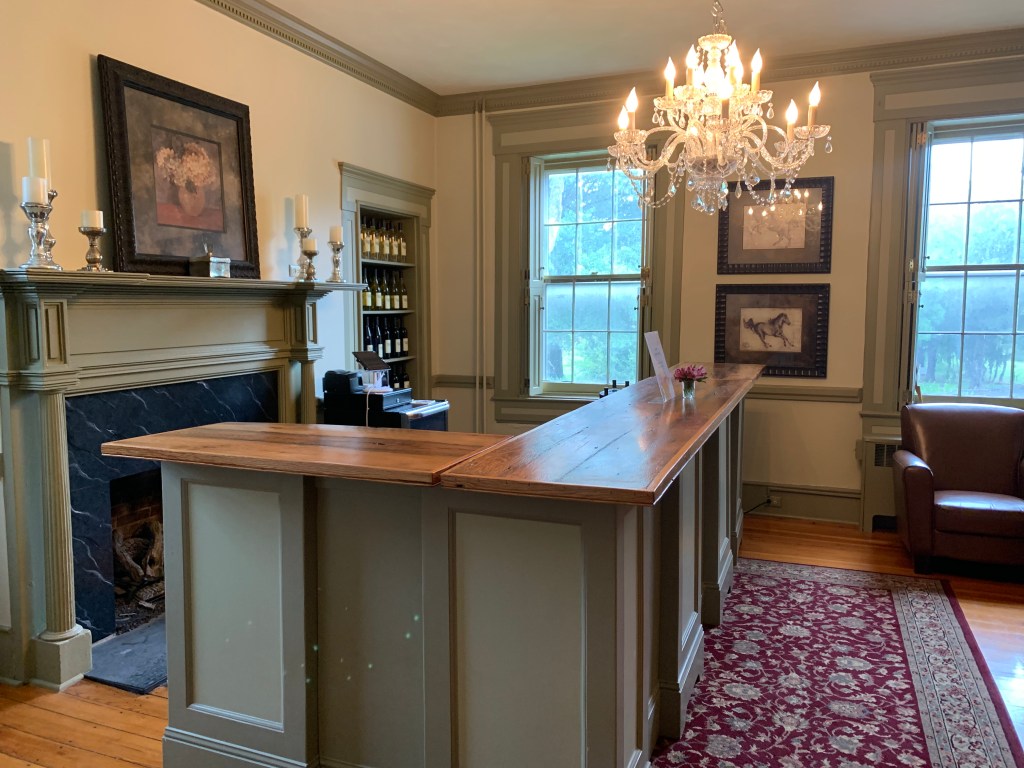
Located at the northern edge of the Shenandoah Valley, Valerie Hill is a brick manor house dating back to 1807 and was used as a hospital during the Civil War – an important part of its history. Even now, it feels very homey. It’s not often you get to enjoy your wine & cheese plate while sitting in the drawing room of a manor, while looking at an authentic Civil War uniform on display (with bullet holes!).
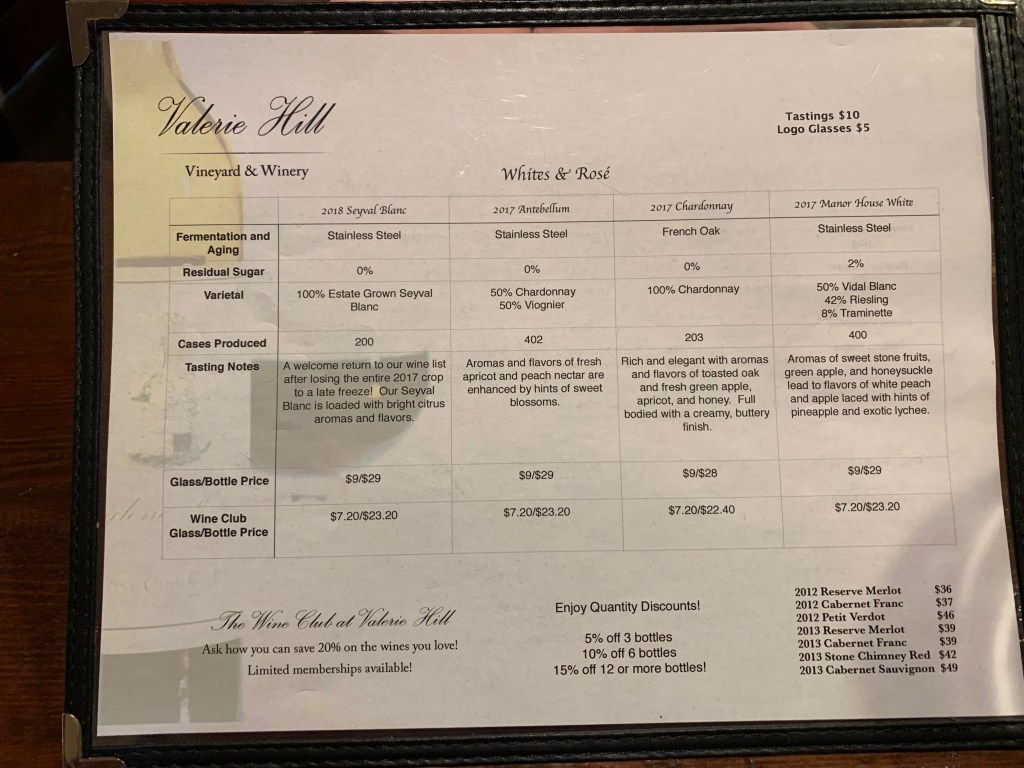
Currently they have 6 acres of vines – all hybrids. This is supplemented by fruit from the Shenandoah AVA, allowing them to produce around 4000 cases/year. Mike Shaps is the winemaker, which is a good fit since it allows them to pull from a wide number of vineyards.
Besides the wine, Valerie Hill also famous for its ghost stories – including one of a child who was declared insane and sequestered to the attic. Add to this the apparitions of Civil War dead you have yourself a no-kidding haunted home. I haven’t done it yet, but they also have dinners where they go into greater detail about their paranormal sightings. And yes – guests HAVE been known to report such sightings.
Josh was the tasting room manager on duty, and he loved talking about his wines as much as I loved trying them. I lucked out that he even pulled a bottle of their 2012 Petit Verdot off the shelf. SCORE!!!
What I tried:
2018 Seyval Blanc: Lemon notes.
2017 Antebellum (50/50 Chardonnay/Viognier blend): Light and
peachy.
2017 Chardonnay: Reminiscent of California Chardonnays, with
a creamy butter finish.
2017 Manor House White: Vidal/Riesling blend with some
Traminette, made in stainless steel. Green apple notes.
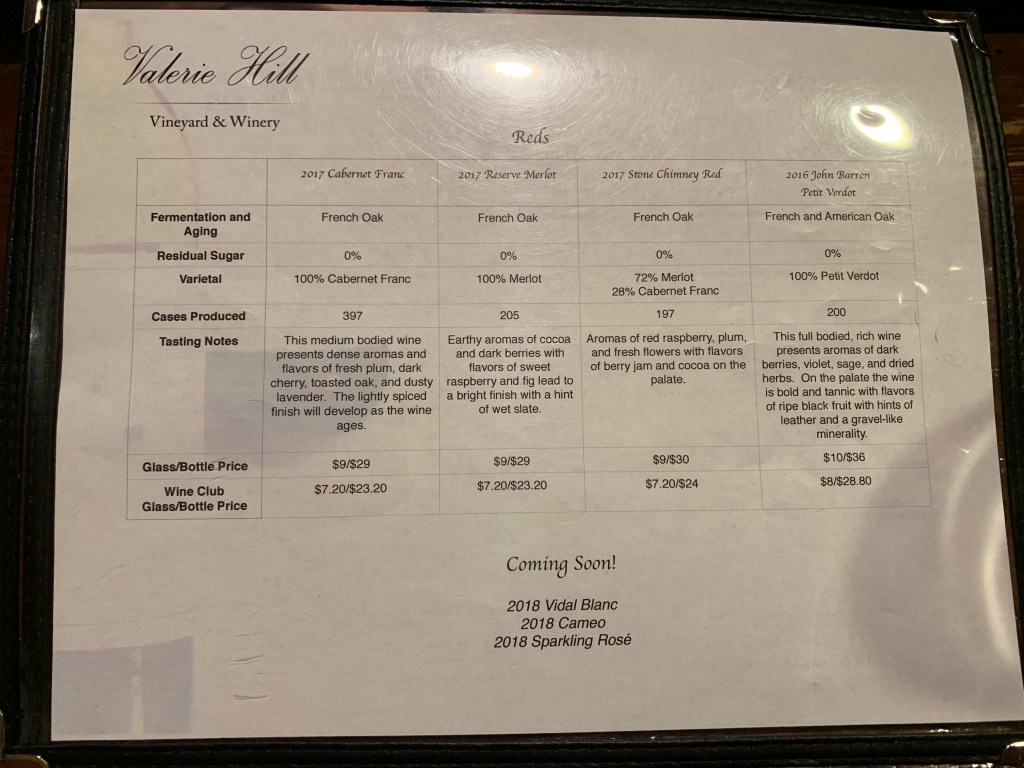
2017 Cabernet Franc: Light color and some cherry notes; I
liked this a lot. Maybe it’s still young, but I was surprised to see this is a
Cab Franc given the lack of spice, bell pepper or tobacco notes.
2017 Reserve Merlot: Earthy up front but smooths out;
another winner. Josh described the taste as ‘wet slate’. Maybe I need to lick
more chalk boards to be sure?
2017 Stone Chimney (Cab Franc/Merlot) Tasting young; very
tart and bright. It was almost sweet but not sugar sweet. Sweet wine lovers
would appreciate this red.
2016 John Barron (Petit Verdot): “Fat” was the key adjective
here (high fruit but low acid). Dark berry notes.
2012 John Barron (PV): Bold, strong on the plumb. I really loved this one.
As they say – you should save the best for last. Rosemont
qualifies for that distinction.
I first encountered Rosemont’s wines while visiting Early
Mountain. It’s rare for me to not immediately recognize the name of a Virginia
winery; when I looked them up I realized why! Located in the far southern reaches
of the state, it’s definitely…out of the way…shall we say?
Roots go deep here – and I’m not just talking about the
vineyard. Now on its sixth generation, the Rose family has owned this land
since 1858, with patriarch Stephen turning the historic family farm into a
vineyard in 2003. Son Justin is the wine maker, and his wife Aubrey is their
marking manager. Aubrey was kind enough to invite me over for a pre-opening
tasting before I returned home (obviously I was quick to accept).
The drive in rewards you with a fantastic view of the tasting room overlooking rows of grape vines. The building looks historic but that’s slightly deceiving; it was finished in 2008 using wood from old tobacco barns, making it a mix of the old and new.
Good wine needs good grapes, and this place delivers. They have 27 acres of vines, mostly French varietals. It’s not a matter of luck this is one of a handful southern Virginia wineries that has successfully focused on vinifera; famed viticulturist Lucie Morton helped set their vineyard up years ago. A few hybrids are also in the mix, including Chardonel (the lovechild of Seyval Blanc and Chardonnay). Not seen often enough, Lucie is a big advocate for Chardonel as it does well in the state’s climate.
I could probably do an entire blog on Rosemont’s geography –
it’s just that fascinating to me. Aubrey called their location “The Bracey
bubble”, named after the local town. See, Rosemont is very close to Lake
Gaston, a man-made reservoir whose beaches are also a major tourist draw. As lakes
are helpful in deflecting storm fronts (cold lakes can generate a dense pocket
of cold air that steals the ‘fuel’ needed for warm-air generated storms), it’s
not unknown for rain to be pouring just a few miles away but leave Rosemont
relatively unscathed.
Rosemont is this area’s biggest producer by far; 6000 cases/year, 1000 of which goes wine club alone. Their customers are a mix of tourists, part-time residents with second homes around the lake, and locals who are more casual wine drinkers. I imagine this eclectic mix of wine drinkers requires Rosemont to be flexible in the styles of wines they produce.
Lucky for me, lots of bottles were opened. Of course I had
to try them – it would have been impolite not to.
Brut Chardonel: I really enjoyed this one; green apple
notes. Made in the Charmat method (a cost-effective means of producing sparking
where secondary fermentation is done in a large tank vs the bottle; it’s the
same method used for prosecco). Very dry.
Traminette: As is common with this grape, it had a big nose
coupled with soft mouthfeel and good acid. Made in steel. At 0.5 sugar it could
satisfy a sweet-drinker.
Virginia White: 70% Vidal/30% Chardonnay. Easy drinking.
Block A: Fancy name for their Pinot Grigio/Chardonel blend
(OK not so fancy, but they needed a name and this worked in a pinch).
Strawberry notes.
2018 Lineage (100% Chardonel): Hits that sweet spot of
having juuuust enough oak without overpowering it. Zesty, hazelnut notes. I
ended up taking a bottle home with me.
2018 Rose (Chambourcin): Dry but the brightness fools your palate into thinking it has sweetness to it.
Virginia Red (Cabernet Franc/Merlot/Chambourcin): Fruit forward
but with some bite.
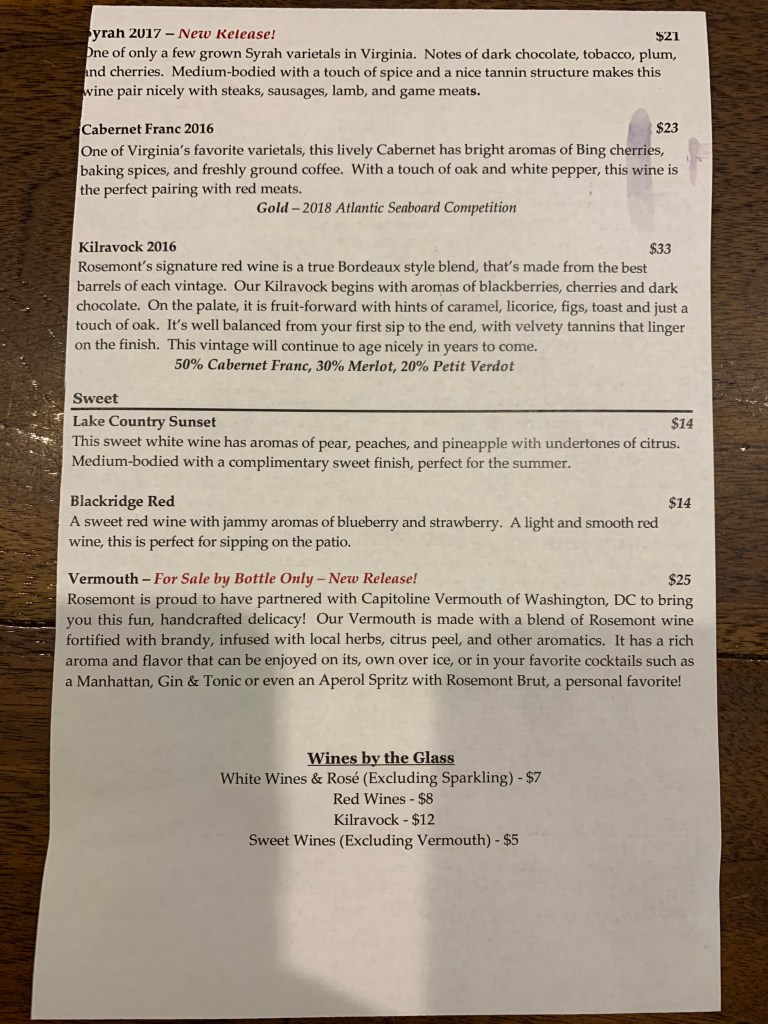
2017 Syrah: Complex, chocolaty.
2016 Cabernet Franc: The fruit notes were practically
jumping out of the glass. Fruity but not pepperty.
2017 Merlot: Bold, black cherry and bramble fruit notes.
Strong finish.
2016 Kilvarock (Bordeaux style). Signature red blend. Great
complexity! Very good.
1858 (red blend): Club red blend with Cabernet
Franc/Merlot/Petit Verdot/Tannat. Also very good.
Vidal Blanc: Semi sweet, easy drinking.
Blackridge Red: Semi-sweet Cabernet Sauvignon.
Vermouth: Fun fact – vermouth is actually a wine! And only the second one in Virginia that I know of (along with Flying Fox). Great nose with powerful botanical notes. I liked it but probably better as a cocktail mixer.
The last stop of my southern Virginia AVA trip. But this stop
wasn’t to a winery – it’s something unique in my Virginia travels.
See, not all Virginia wineries are accessible to the general public. Some have tasting rooms, but are in the far reaches of the state. Others don’t have tasting rooms at all. Many sell the wines via retail, but that takes away the most fun part – tasting the wines before you buy them.
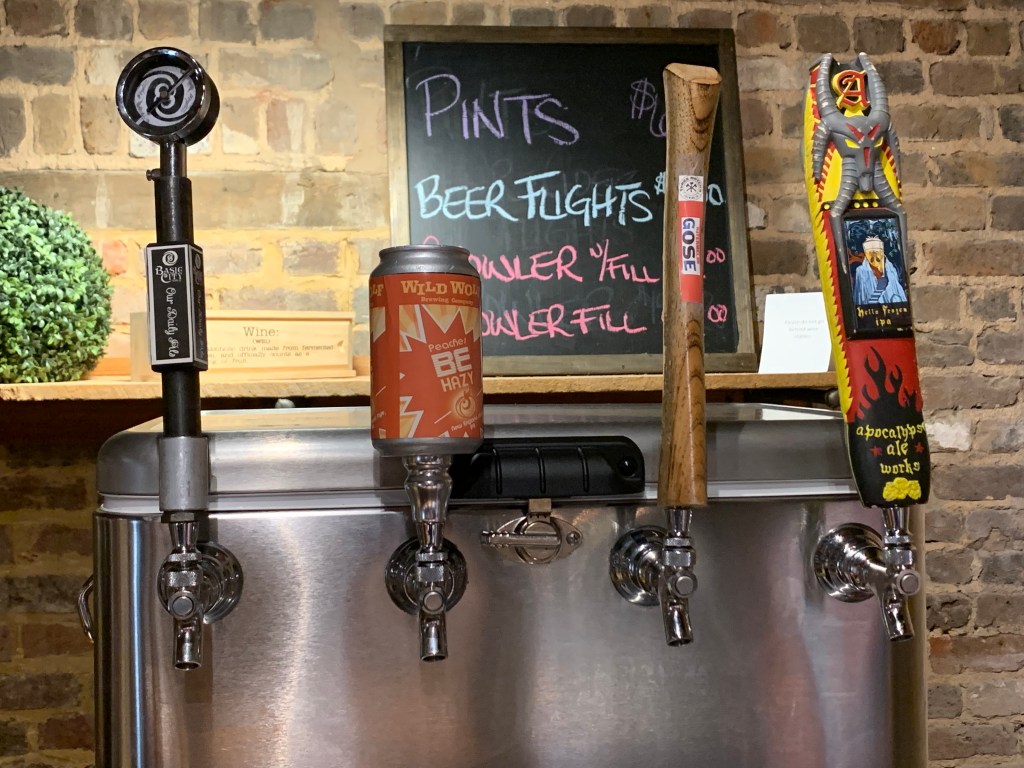
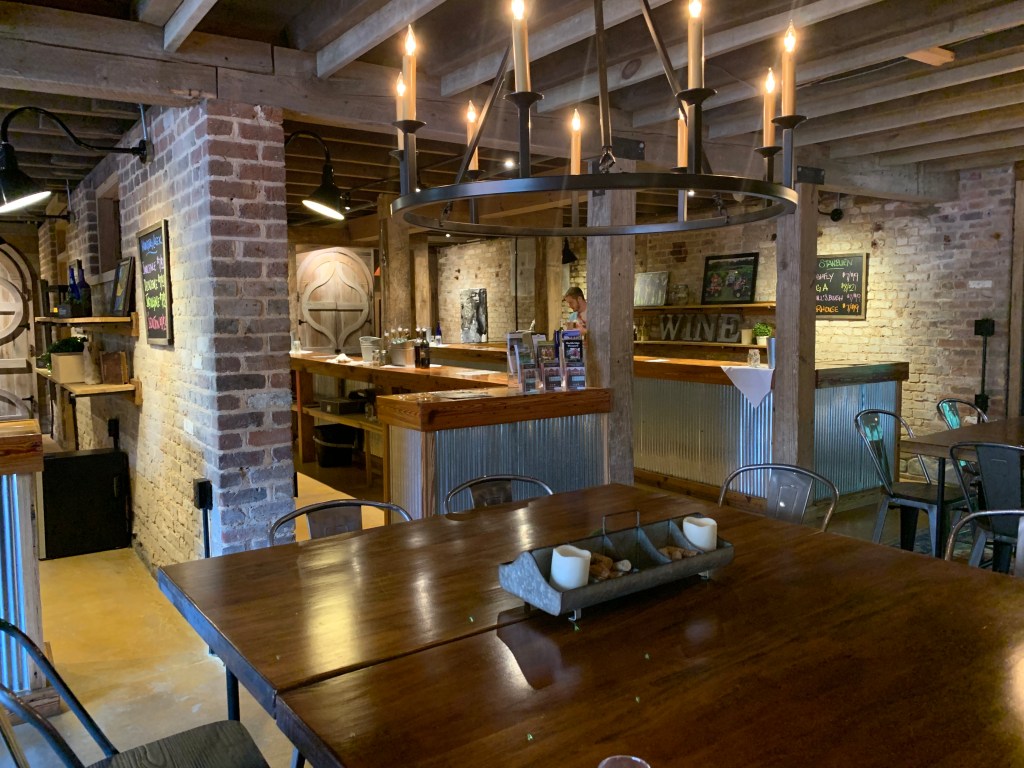
The solution? Have a multi-winery tasting room which incorporates wines from not just southern Virginia but all over the state. It’s actually a common practice in California and Oregon, but seen limited visibility here. It’s sorta like a wine bar, except nearly all the wines are from places you can actually visit.
You pay a $12 fee and get a wristband with 10 pull-off tokens. There were around 9 bars, all showcasing a different winery (plus a cidery and a brewery). You use your tokens in whatever order you want, one token per tasting.
Jamie and Shannon took turns pouring for me as I (literally)
wandered from bar to bar. It was late and bottles were open, so instead of
stopping at 10 tastings I had some mini-tastings of a few extra places. My
notes are unusually thin because I floated from bar to bar so quickly.
I really love the concept. Virginia wineries tend to be centered on agro-tourism, but unless you love driving that’s not feasible for everyone. Visiting a place like this makes it easy to taste a wide selection in one spot.
The diversity of wines and styles was good too. While I ended up with a lot of fruit-forward wines, I did see some dryer, bolder wines at certain stops (hello again, Hunting Creek! Nice to meet you, Rockbridge Meritage!).
The beer and cider were the biggest surprises. Apparently they change the beer options frequently (it was late so I’ll have to try another time). But I did love those ciders on tap.
Hunts Vineyard
Sauvignon Blanc: Light, pear notes
2016 Cabernet Sauvignon: Light, strawberry notes
Stanburn Vineyard:
Big A Red (Cabernet Franc and Chambourcin): Fruit forward
High Fly (Traminette and Vidal): Soft, almost citrus notes.
Thatch Vineyard (formerly First Colony)
016 Meritage: Fruit-forward
Thistle GateSt George: Fruity but bold (80% Chambourcin/20% Cab Franc)
Rockbridge:
2014 Dechiel Meritage (58% Cabernet Sauv, plus Merlot and Cab Franc): Very good!
2014 Tuscarola Red (Chambourcin/Cab Franc/DeChanc): Smooth. DeChaunac a new grape in my travels
Courthouse Creek:
Rostico: Very good; bright but dry with only a hint of sweetness


























 Wine Trails and Wanderlust