Milea Estate Vineyard is located not far from where I grew up. Ironically, I didn’t know much about it until I met owner Sang Milea at the 2024 Atlantic Seaboard Wine Competition award ceremony in DC, where she accepted a Best in Class award for her 2022 Vincenza Reserve BDX blend.
Sang extended an invitation to meet her and husband Barry Milea at their winery. During a sunny early September day, I was finally able to sit down and get the full story of how the winery was founded.
The story started decades ago, when Barry’s transportation company was hired by several Finger Lakes wineries. This then-new wine region was showcasing their wines in New York City and needed temperature-controlled trucks for the journey. Some of them gifted him bottles as a ‘thank you’.
Ironically, Barry wasn’t initially impressed with what he tasted. While famous today, back then the Finger Lakes wine region was still in its infancy, and the wines must have showed it. Barry wondered if he could do better.
One advantage he had was his proximity to New York City. Barry’s home in the Hudson Valley was just 80 miles from the biggest single wine market in the US. If the Finger Lakes could make wine, why couldn’t the Hudson Valley?
This interest led to several test plantings at Barry’s home. While he learned Riesling didn’t love his vineyard site, the overall results were promising enough that Barry purchased the neighboring farm, which became the site of his main vineyard and tasting room.
Now, Milea has 14 acres under vine, including Cabernet Franc, Blaufränkisch, Chardonnay, and several hybrid grapes
Barry discussed the relatively ‘virgin’ nature of viticulture in the Hudson Valley. While vineyards have long been found in the area (NY state’s oldest vineyard isn’t far from here), many of them were relatively small mom-and-pop operations that lacked the capital necessary to elevate their businesses.
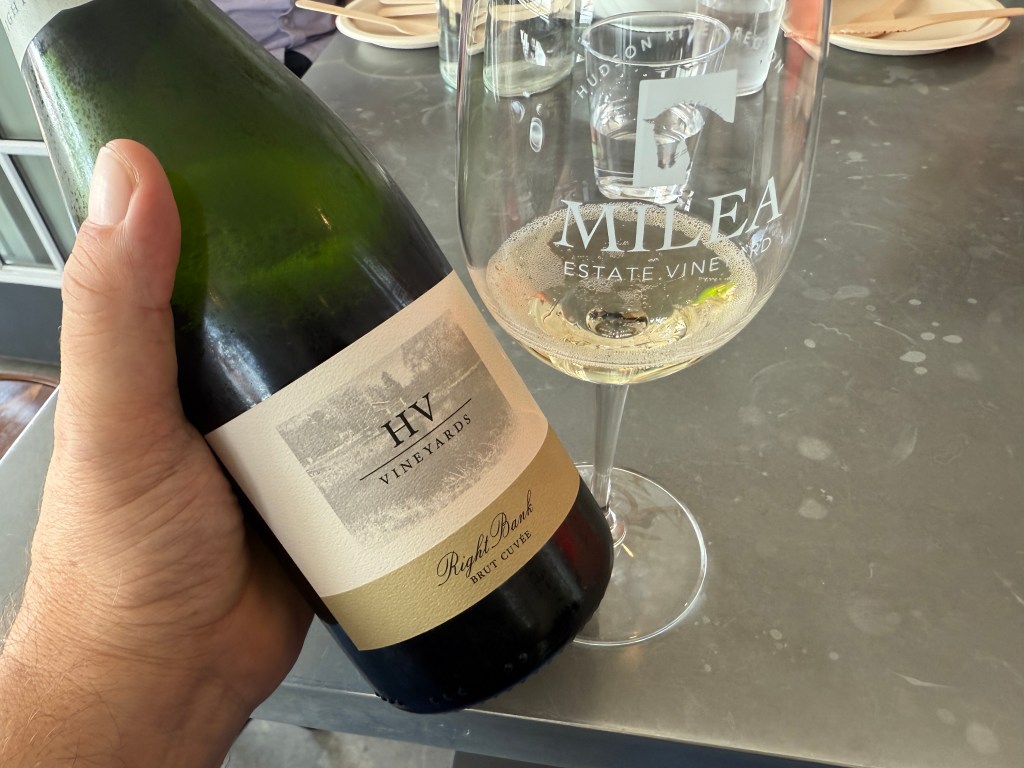
He emphasized hiring top talent is necessary to attract wine drinkers who are normally spoiled by the NYC wine scene. To this end, Milea upped their game by hiring a chef from the nearby Culinary Institute of America and a Napa winemaker. They also purchased nearby Clinton winery, which Milea is currently turning into a sparkling wine house.
Sang was especially proud of the kitchen, which allows Milea to be a one-stop-shop for visitors. I especially loved the fig and burrata and couldn’t say ‘no’ when Sang was offering me more cookies.
I also was able to explore the wine list in depth. I started with an excellent a great sparkling, which had lots of toasty brioche notes and great acidity, and followed it with their “Queen Medow” a Chambourcin-heavy rosé made with a dash of Merlot.
Next up was a Grüner Veltliner and a pair of Chardonnays. The former had a spicy nose and notes of flint and minerality…maybe some apricot? The unoaked Chardonnay was very clean with apple notes. The Reserve Chard had a lot of texture and was probably my favorite non-sparkling wine of the day.
Then came the reds. The 2022 Cabernet Franc was really aromatic, with notes of raspberry and black cherry on the nose and dried fruit on the palate. No pyrazines here; this was more of a Loire-style wine.
We finished up with their ‘Sang’ Cabernet Franc, a Blau, and the 2022 Vincenza Bordeaux blend.
I loved my visit here. They spared no expense on hospitality and overall presentation, with a great mix of food and wine. Next time I’ll have to revisit the Cabernet Francs with the sliders.
Earlier this year I was gifted a half-case of the top-medaling wines from the 2024 Shenandoah Cup wine competition. I had planned on sampling them earlier, but life got in the way and it wasn’t until recently I had a tasting group come over to help me pop some corks.
If you follow my blog, you’d know that I believe the Shenandoah Valley is the best place for viticulture in Virginia. There are a lot of reasons for this, but the short answer comes down to a combination of the valley’s dry climate and limestone soils. These factors give Shenandoah vineyards great growing conditions, plus a bright acidity that’s hard to replicate elsewhere in the state.
Since 2019, the Shenandoah Wine Trail has held a competition to highlight wines made in the valley. The event winner is announced at a November gala, now held at The Yellow Barn at Shenandoah Caverns. The next event is November 14th; tickets are on sale now.
The 2024 Cup winner was Muse Vineyards’ “Erato” white blend. This aromatic white is something of a departure from the style of previous winners, but I think it was a very suitable pick as it highlights the region’s ability to create a diverse set of offerings.
Yes, you can find plenty of traditional Bordeaux-style reds, plus more Virginia-esque petit verdot and cabernet francs. But the Shenandoah Valley also offers excellent sparkling wines, next-generation hybrids, plus wines made from a growing number of varieties (pinot noir, refosco, grüner veltliner) that are hard to find in Virginia, if not the East Coast.
For my event, I had eight Shenandoah Valley wines that I shared with a group of friends. Six of these wines were in last year’s cup, plus I added a previous winner (Bluestone Vineyard’s Blue Ice) and a new pinot noir from Cave Ridge (which will likely be in this year’s Cup).
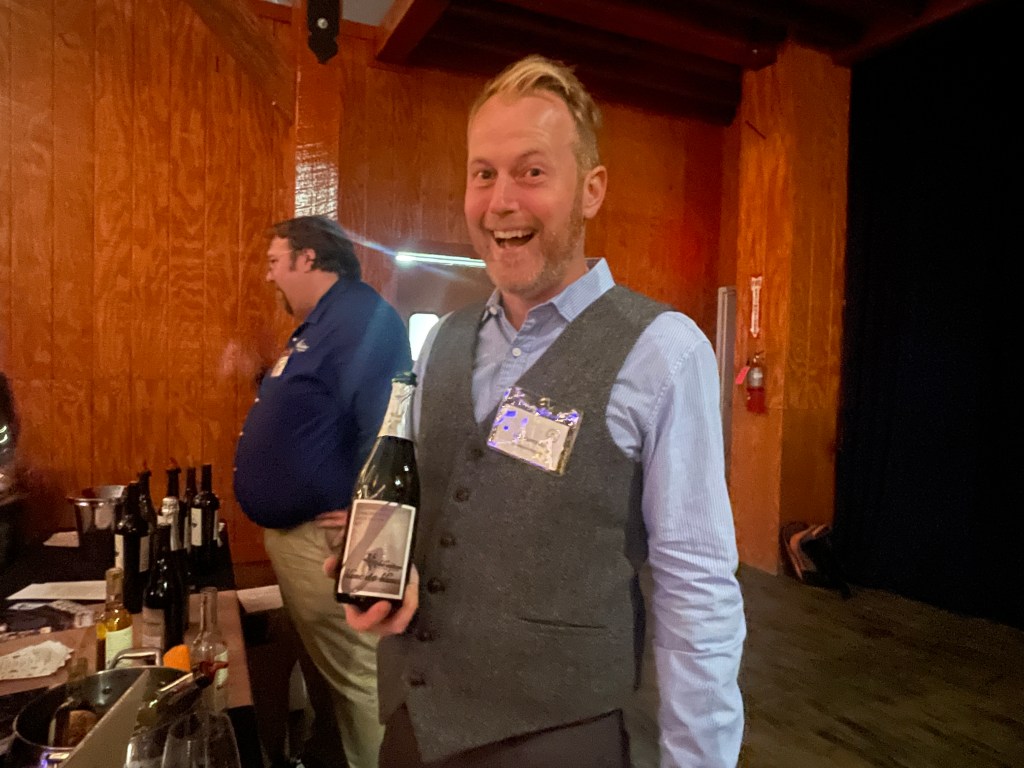
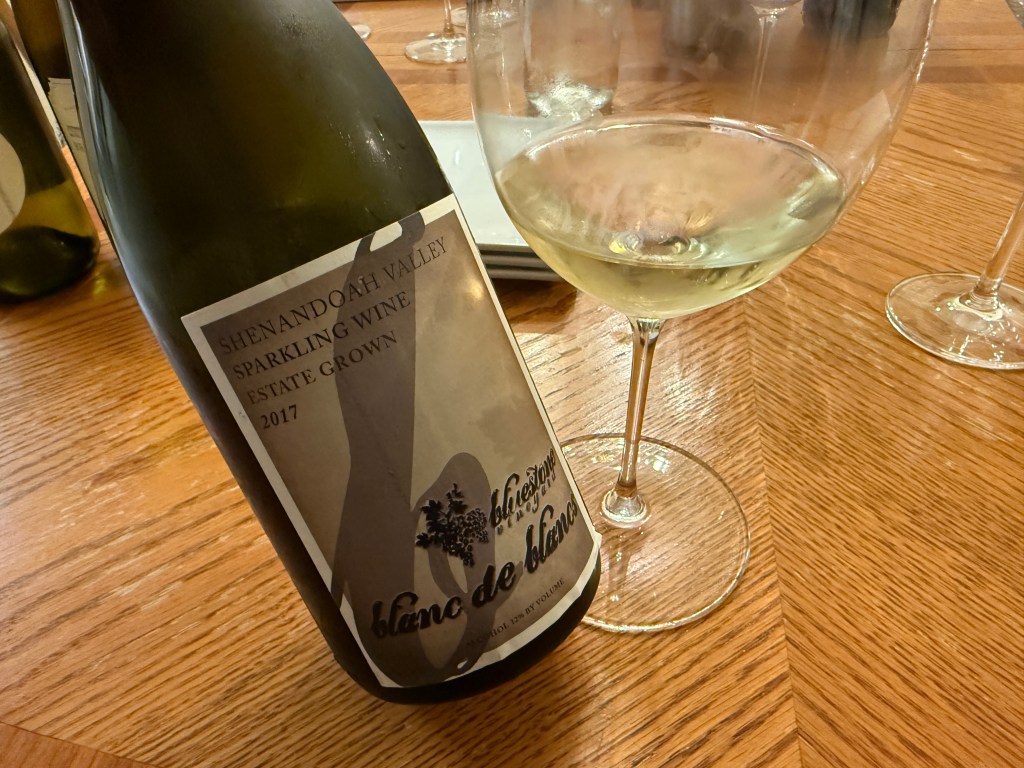
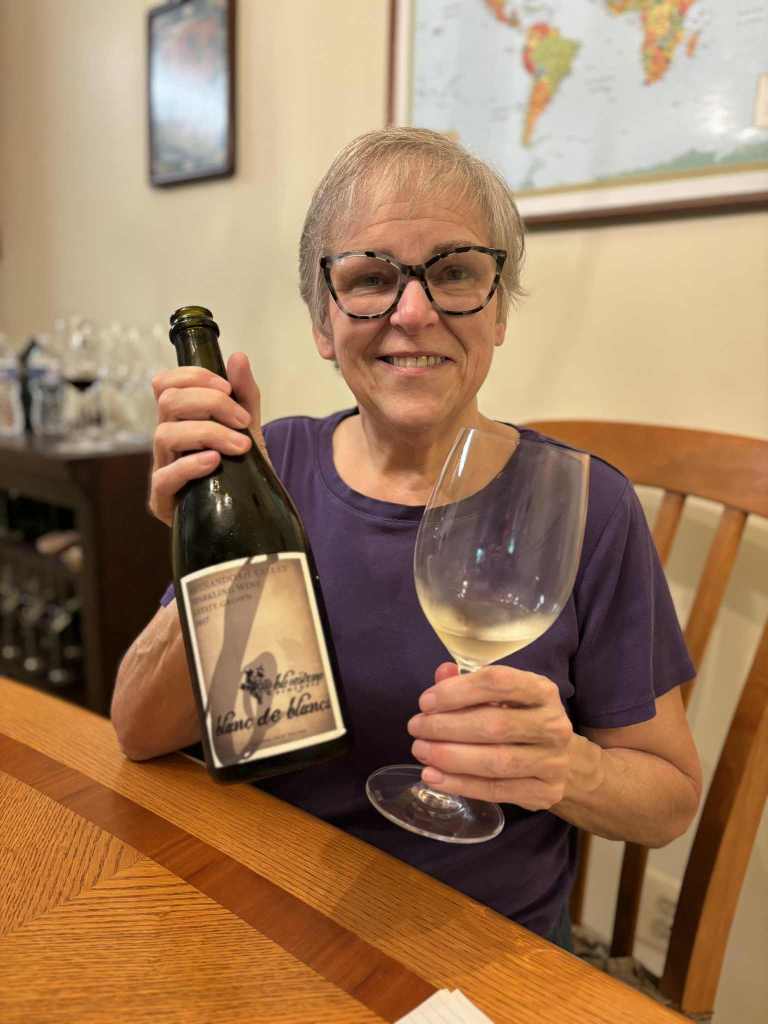
Bluestone Vineyards 2017 Blanc de Blancs. We kicked things off with a sparkling wine, made by Lee Hartman of Bluestone Vineyards.
On the nose we had notes of brioche, perhaps with notes of toast. Some noted notes of lemon cake or lemon icing, but they faded quickly. On the palate, we found notes of green apple, lemon, and Crème Brûlée.
Overall we felt this was a really outstanding sparkling. Rich palate, lingering finish, well balanced. Definitely a winner.
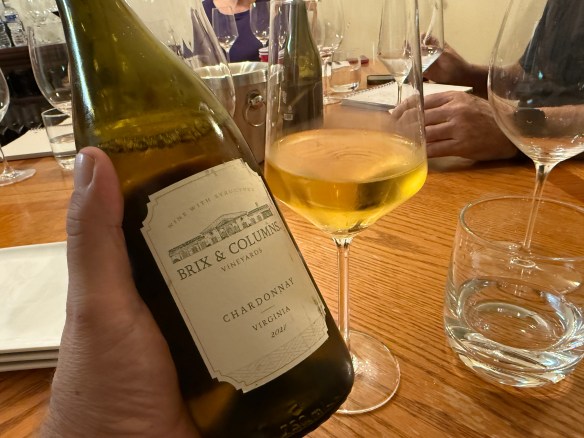
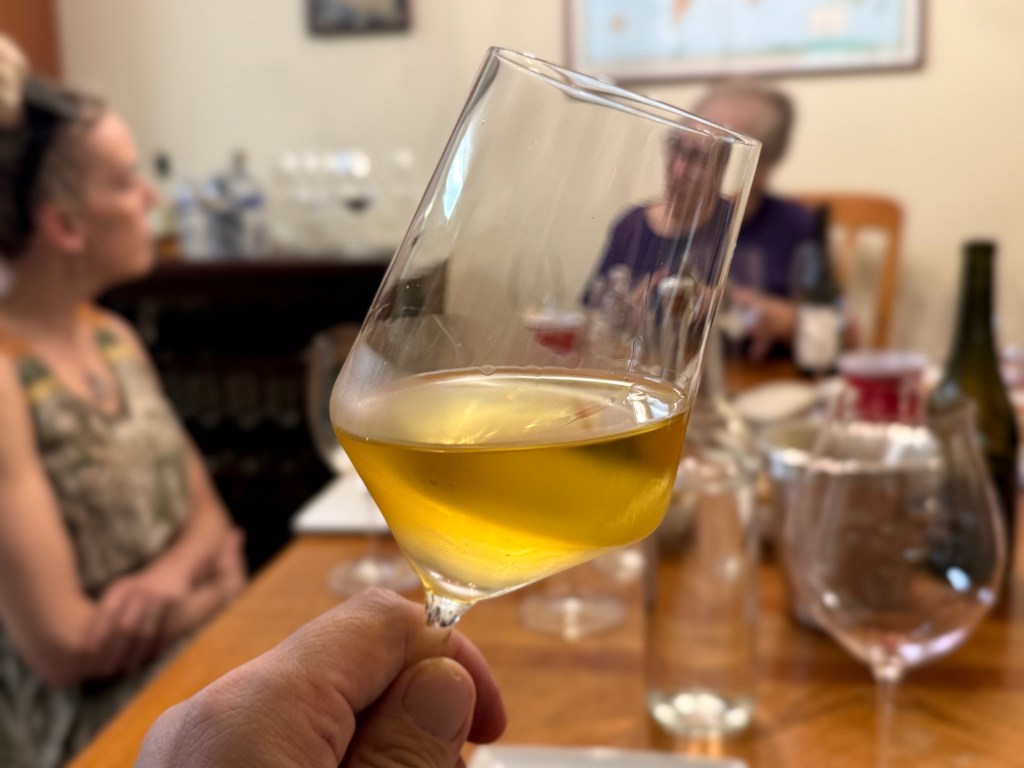
Brix & Columns 2021 Chardonnay. This chardonnay’s rich, almost orange color enthralled us even before we sampled it.
On the nose, my group found a plethora of differing notes ranging from caramel and toast, maybe some butterscotch or lemon peel. At least one of us found a little mustiness.
On the palate it had intense notes of lemon, maybe butterscotch. Butter rum finish. It felt ‘big’ but was actually only 12.4% alcohol.
I’m guessing that those who like oaky California-style Chardonnay lovers would love this wine, even if it actually isn’t buttery. If anything, it had a ‘hot toddy’ quality to it.
While that sounds like a lot of descriptors, this wine was very well balanced. It wasn’t necessarily the style of Chardonnay I would have asked for, but everyone at my table enjoyed it. And again – that color!
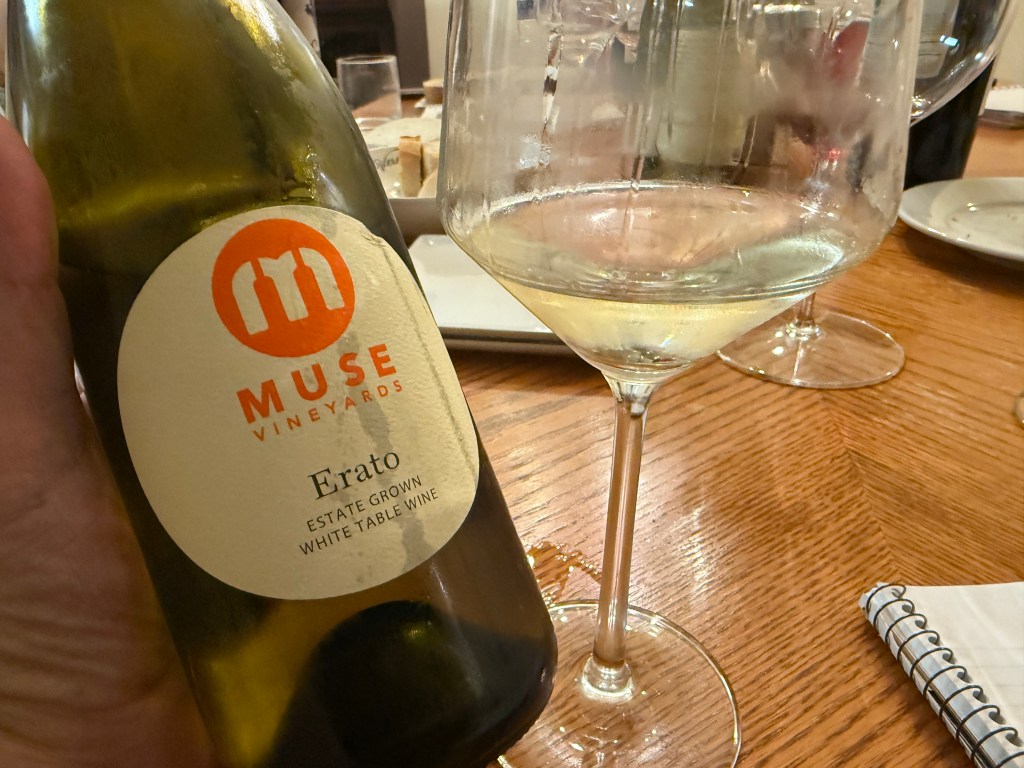
Muse Vineyards NV Erato. Winner of the 2024 Shenandoah Cup. At $21 it’s also a great value for your money.
This white blend of 82% vidal, 7% picpoul, 4% muscat, and dashes of albarino, marsanne, and roussanne is something of an outlier from my usual go-to styles of white wines. That said, it was so interesting I found myself sampling it over and over.
We all LOVED the nose on this wine; perfumy and complex. The 4% muscat went a long way.
My group was all over the place when describing the nose, ranging from jasmine flower, fresh lemon juice, grapefruit, or white peach.
On the palate it was bright, vibrant, presenting higher acid initially but then the white peach notes came out.
I don’t know whether to describe Erato as a porch wine, or a starter to a meal. But I can definitely say it was a really well-crafted wine, with a great mid palate.
Cave Ridge 2023 Pinot Noir. This wine wasn’t part of the 2024 Shenandoah Case, but since it fit with the “Shenandoah Wine” theme I decided to add it in anyway. Cave Ridge planted pinot 5 years ago and is now one of a handful of pinot growers in the state.
This pinot has gorgeous color. Red fruit, cedar and smoke on the nose. Very clean and varietally correct. The complexity makes you want to keep drinking.
This wine was all about the front palate, with good acidity and earthiness. Maybe more fruit on the nose than palate. Very impressive for Cave Ridge’s first pinot noir ever.
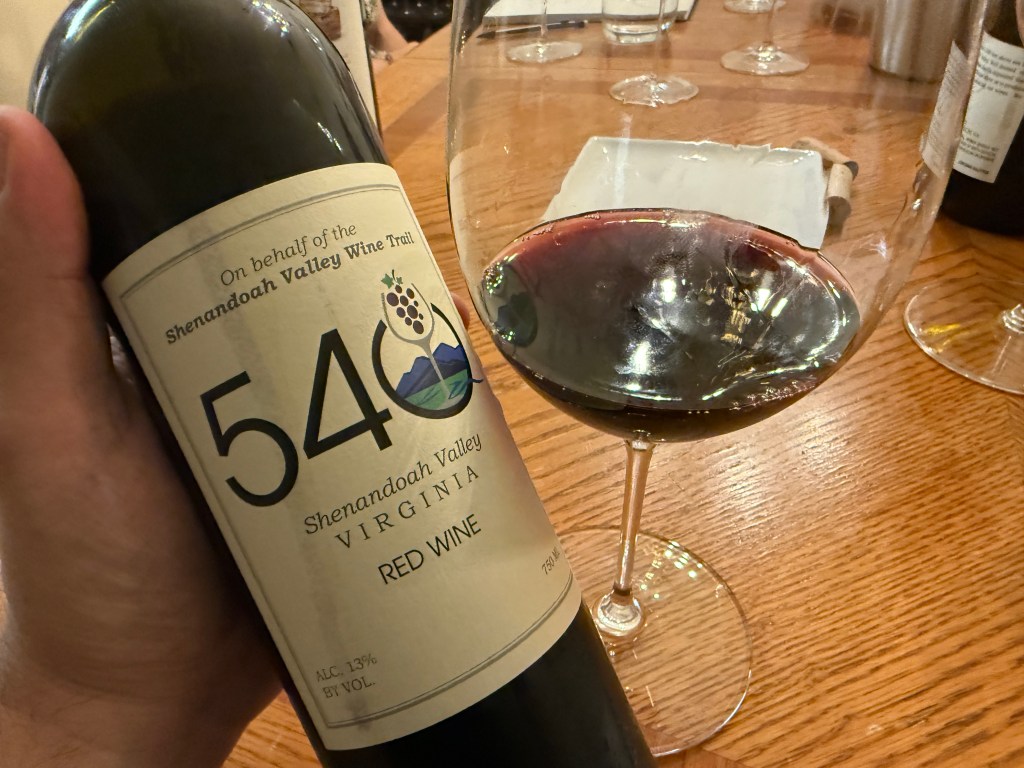
Shenandoah Valley Wine Trail “540”. Named after the local area code, this collaboration between Bluestone Vineyard, Wolf Gap Vineyard, and Kindred Pointe is blend of 2/3rds petit verdot and 1/3rd cab sauv. It’s also a non-vintage wine, using fruit from 2021 and 2022.
I felt it had a vegetal nose, perhaps some pyrazines, but it was by no means ‘green’. It was soft on the palate, with notes of mocha, coffee and smoke. We also found dark fruit notes, but that seemed in the background.
This wine didn’t have the markers of a PV, which I found surprising given its blend. It was easy-drinking enough you could bring this to an event and everyone could enjoy it.
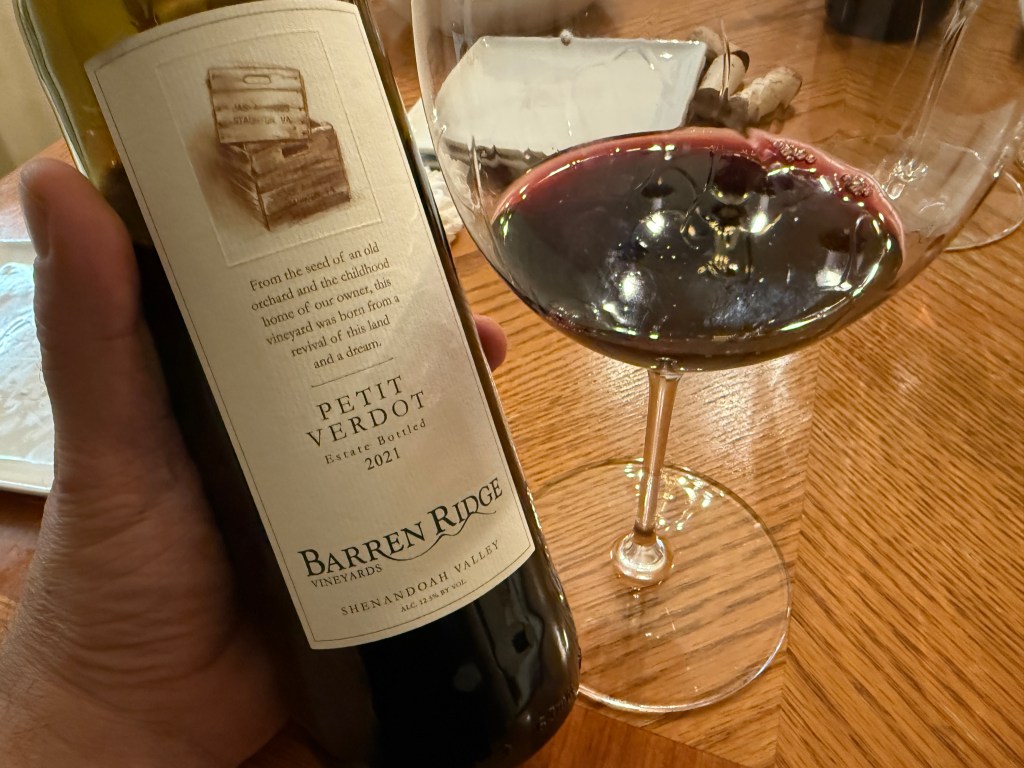
Barren Ridge 2021 Petit Verdot. I tasted and later wrote on Facebook, “This is one of the most PV PVs that has ever PVed. It’s seriously everything you want in a Virginia Petit Verdot.”
I stand by that assessment. On the nose it was a combination of violets, cedar, and black fruit – especially blueberries. There was no mistaking what variety was in this bottle.
The acidity was there, but it wasn’t as prominent as I’ve seen in other PVs. This particular wine was rather fruit forward with tart, ripe fruit, especially blackberry and plum.
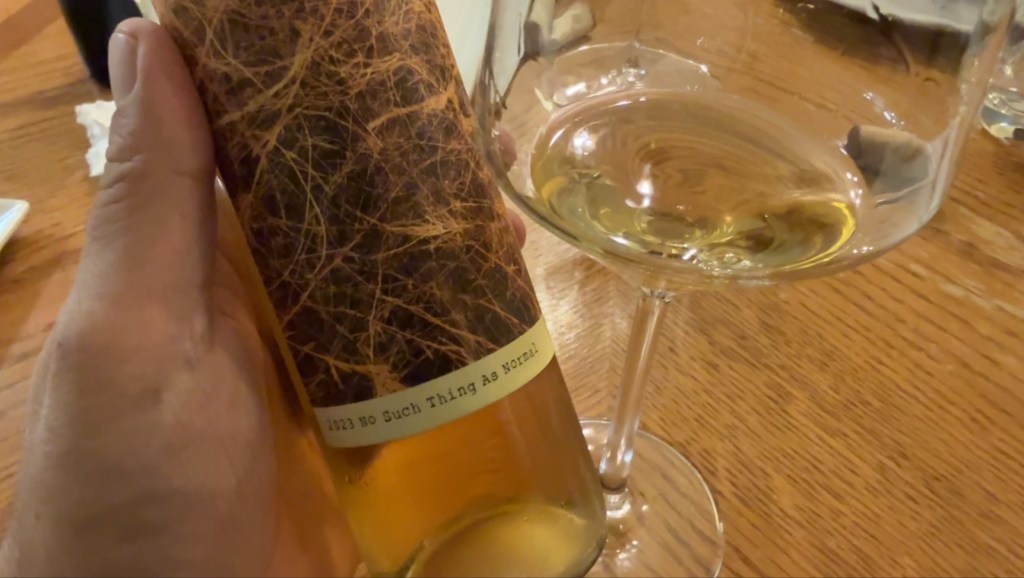
Bluestone Vineyard “No Such Things as Normal” appassimento-style dessert wine. This is part of winemaker Lee Hartman’s ‘Vinyard Designated Series’, made with traminette, petit manseng, and golden muscat.
From the description online, I get the idea this wine wasn’t necessarily planned out in advance. Typically Lee makes ice-style wines, but the year this was made no freezer was available so instead he dried the fruit in a tobacco barn. The result was a barrel-fermented wine with lower sugar and higher alcohol.
The “NSTAN” was very perfume-y, with notes of honey, lime, jasmine flowers, and maybe even a ‘7-Up’ spiff to it. Those notes largely continued on the palate, maybe heavier on the honey and some additional nuttiness. It was sweet, but it wasn’t cloying sweet.
Winemakers love making dessert wines, as such beverages are known for their complexity and ability to be paired with a variety of dishes. But all too often, fancy dessert wines are a hard sell for consumers. That’s a shame because we really enjoyed this one.
Bluestone Vineyard 2017 Blue Ice. This is the style of dessert wine Bluestone is known for, made with traminette. If “NSTAN” is their appassimento-style, this is Bluestone’s equivalent of a German Eiswein.
This wine came off as concentrated honey, with an intoxicating nose. Sweet, but not cloying sweet because the acidity is so high.
The 2025 Shenandoah Cup is only weeks away as I write this…I wonder what’s in the next case! I’m hoping it will include the Cave Ridge Pinot Noir, but we’ll see.
As a native of the Hudson Valley, you can imagine how pleased I am at the proliferation of vineyards in the area. When Fjord opened along Route 9 at a site not far from the Hudson River, I marked it as a must-visit, even if it took me a while.
Fjord Vineyards is owned by Matt Spaccarelli, part of the same family that owns nearby Benmarl Winery. Matt was already making Benmarl’s wines but wanted to branch out. He founded Fjord in 2013 as a 2nd label, giving him the flexibility to be a little more experimental.
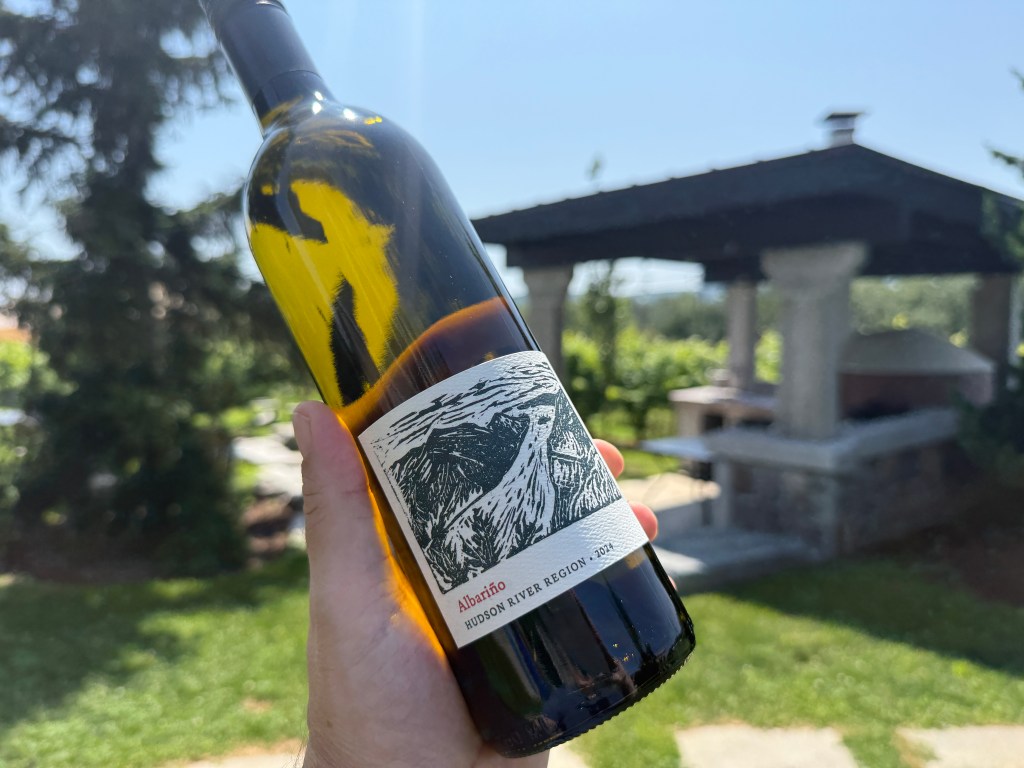
Now, Matt makes wine for both locations. Fjord’s wines are made with their 42 acres of estate grapes, which include 3 acres of Albariño (the largest planting of this variety in New York State).
At first, I thought the name was a homage to a cool piece of Norwegian topography, but it’s more than that.
It turns out a nearby section of the Hudson River might properly be called a fjord, defined by wiki as a “long, narrow sea inlet with steep sides or cliffs, created by a glacier”. This waterway helps remove cold air from the vineyard, allowing them to produce varieties that otherwise wouldn’t survive elsewhere.
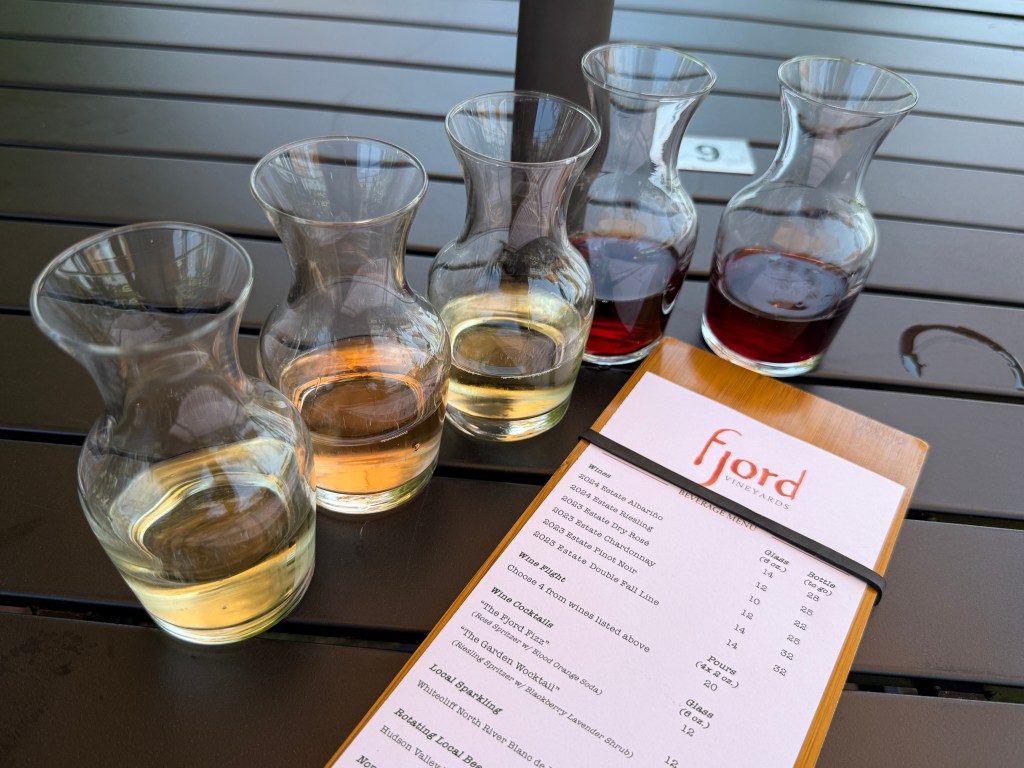
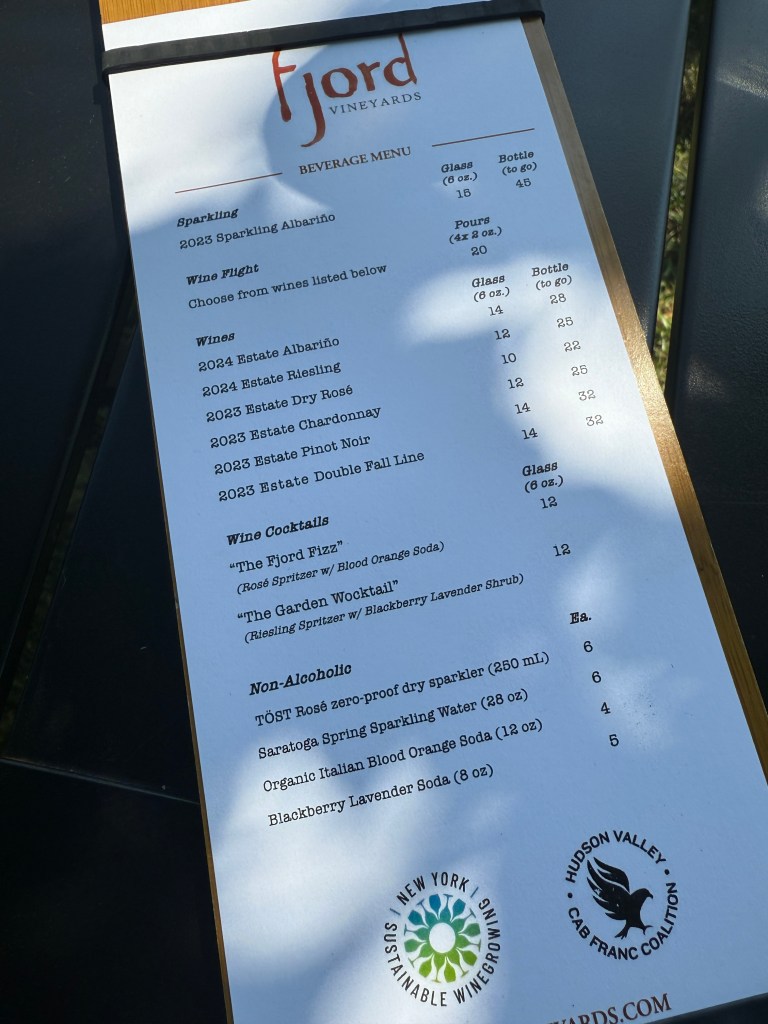
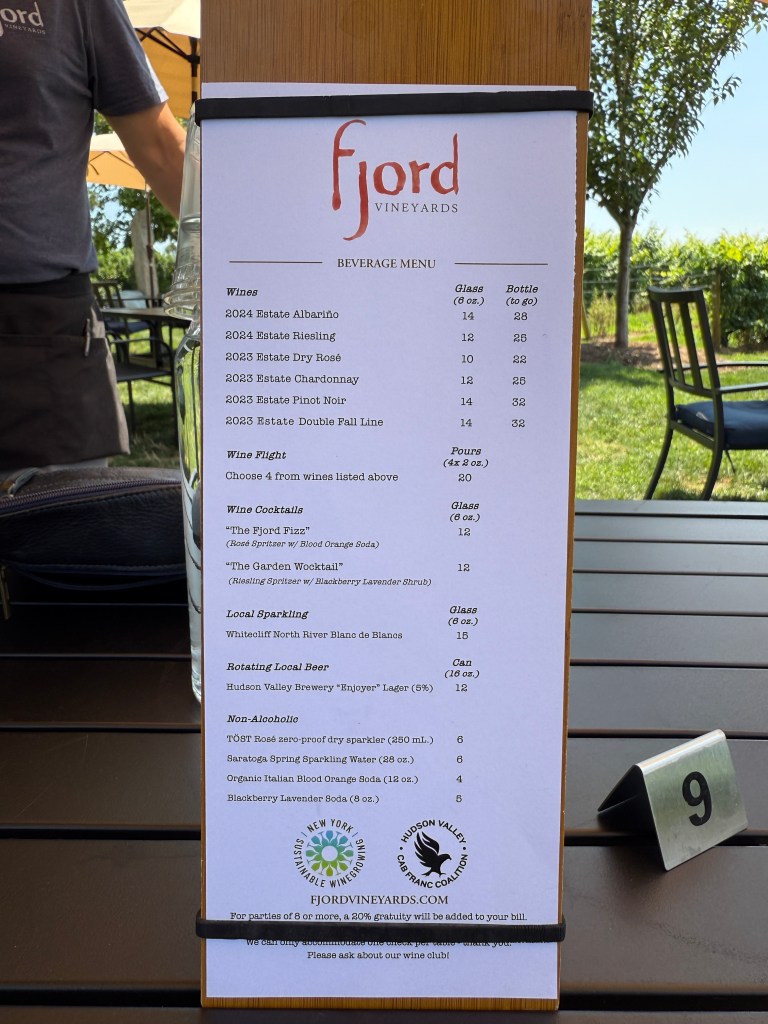
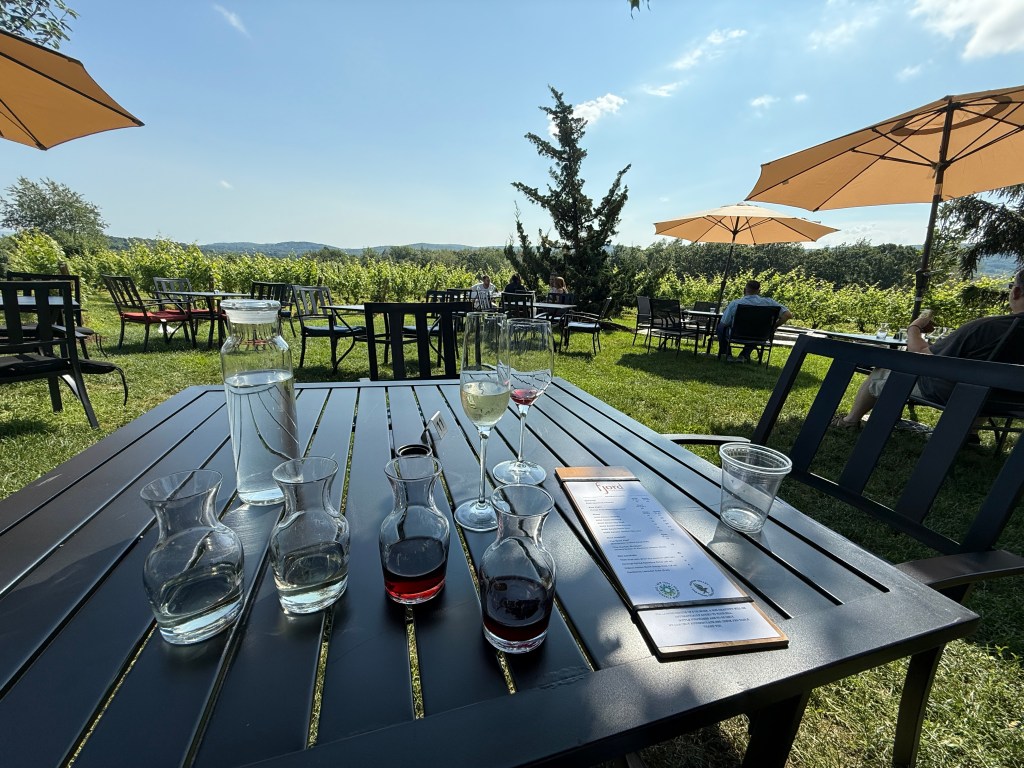
My server gave me the low-down on their wines; $20 for 4 samples, out of a total of 6 options including Riesling, Albariño, Chardonnay, Pinot Noir, a red blend, and a rosé. They also had other beverage options, including wine cocktails, beer (outsourced), and a Blanc de Blanc.
At this point I did a double take. Wait…what did you say? An Albariño? In New York?!?
It turns out this variety is one of those ‘experimental’ varies my server was referring to, and one they were especially proud of. Albariño is typically a warm weather grape found in Spain and Portugal, hence an unusual choice for cool-weather New York. But it was doing well enough to warrant keeping it.
It’s lucky they did. About a month after my visit, this Albariño won “Best white” at the Hudson Valley Wine Competition (and Fjord earned “Best Winery”). So I guess I’m not the only one who liked it.
Wines I tried:
Albariño: Heavy on the minerality, with stone fruit on the side. Not as much citrus as I would have expected. Very aromatic, with notes of lemon added in.
Chardonnay: Bright, lots of stone fruit, especially apricot. I also detected some vanilla notes, perhaps from the barrel. But it definitely wasn’t over oaked; just enough to be detectable.
Rosé: Red fruit; maybe notes of pepper or spice
Riesling: Very bright, leaning off-dry
Pinot Noir: A winner! And tough to grow in this area. Some earth and cherry notes (more the later than the former); very traditional flavors for this variety.
“Double Fall Line” red blend: Notes of earth and red currant. Very smooth.
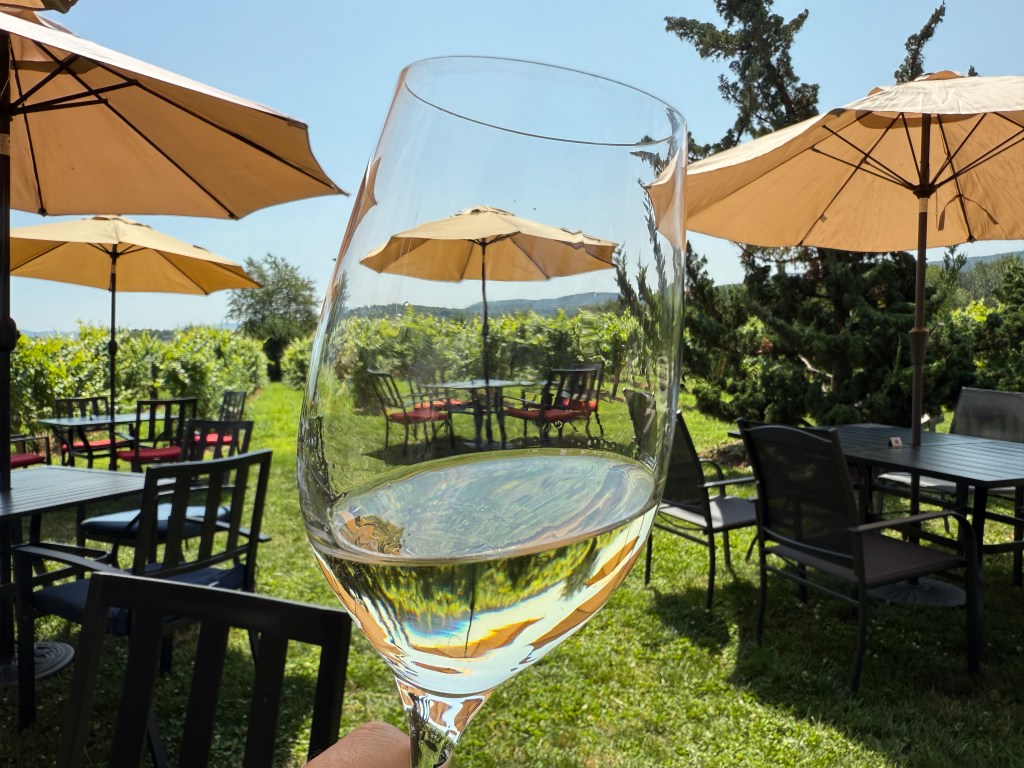
Definitely visit on a sunny day so you can enjoy the view!
Between my guests and I were covered all six options (doubling up on the Albariño).







 Wine Trails and Wanderlust