Few Virginia wineries have what are sometimes called ‘old vines’. Those that do will most likely happily let you know about them, with the implication that “old vines = better wines”.
But what does the term ‘old vines’ actually mean, and why are they important?
There is no legal definition for what constitutes a wine made with ‘old vines,’ although private organizations have their own criteria.
In 2024, the International Organization of Vine and Wine defined an “old vine” as a plant that is documented to be 35 years or older. Plots where 85% of such vines meet this criterion may be considered ‘old vineyards.’ Several other organizations, including the South African Old Vine Project and the Old Vine Registry, use these definitions.
The Historic Vineyard Society has a different set of criteria, only certifying California vineyards with vines that are a minimum of 50 years old and when at least 1/3rd of producing vines can be traced to the original planting.
Few old vines exist in Virginia. Prohibition wiped out Virginia’s wine industry, and it wasn’t until the 1970s that it started making a comeback. Even Virginia’s oldest wineries seldom have anything left of their original vineyards.
Fortunately, a number of older vineyard plots do survive. Such vines are living time capsules, representing the kind of wines Virginia’s viticultural trail blazers thought would perform best.
Many of these surviving vines are Burgundy or Bordeaux varieties that remain popular today. Chardonnay is still produced at Virginia’s two oldest commercial vineyards, Meriwether Vineyard and Montdomaine Vineyard. Founded in 1976 and located at Pearmund Cellars, Meriwether is recognized by the Old Vine Registry as Virginia’s oldest vineyard. Montdomaine was founded in 1978 and is located just below Michael Shaps Winery.
Founded in 1976, Meriwether Vineyard is Virginia’s oldest vineyard (Photo credit: Pearmund Cellars)
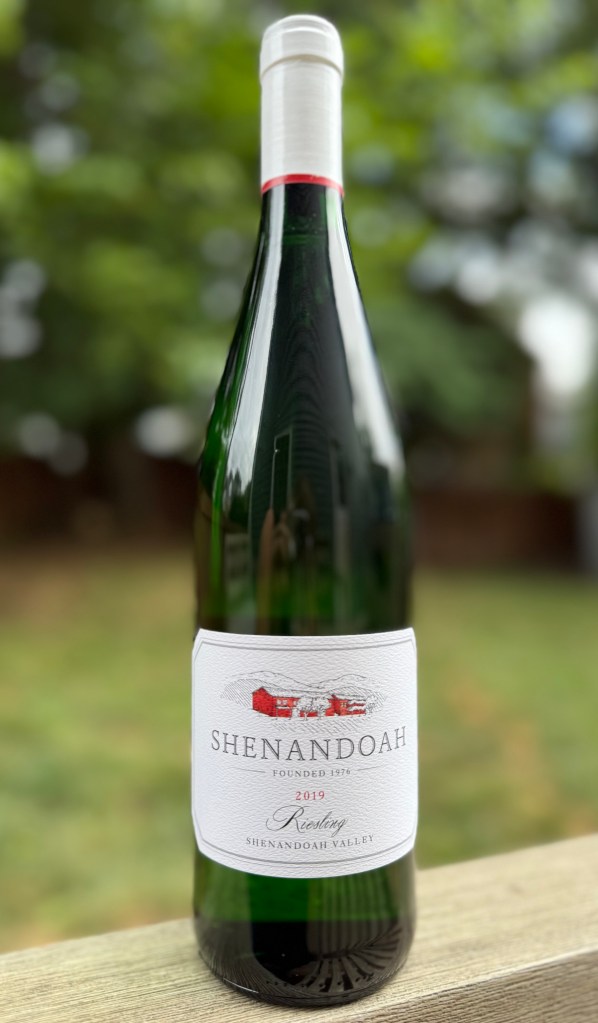
Older vineyards are also the home of varieties that were once more prevalent in the state. Cool-climate vines often struggle in Virginia, a fact only appreciated after decades of trial-and-error. While many wineries have since torn out their riesling, Gray Ghost Vineyards, Shenandoah Vineyards, and a handful of others still tend to their plots.
Virginia’s first vineyards also widely utilized French American hybrid grapes, such as chambourcin and seyval blanc. These vines are relatively easier to maintain; an important consideration in a then-young industry with little institutional knowledge of how to handle more finicky vinifera.
Why Winemakers Prize Older Vines
A well-tended grape vine can last 50 years or more, which makes ‘old vine’ status obtainable. The “Mother Vine” in Roanoke, considered the oldest grapevine in North America, was first recorded in 1584.
While younger vines are more productive, older ones are often thought to produce higher quality fruit. The reasons for this are complex, but much of the credit goes to how older vines have deeper root systems.
Deep roots allow older vines to more easily access water and nutrients that are inaccessible to younger vines, which is especially beneficial during periods of drought. This more balanced intake allows them to create more complex, intensely flavored fruit.
Older vines have an additional advantage in wet regions, such as Virginia.
The roots of younger vines are more likely to become saturated during periods of heavy rainfall, diluting their fruit’s flavor profile.
Older vines are less likely to encounter this problem. The soil above them acts like a shield, preventing water from penetrating to the roots far below. This allows their fruit to maintain good chemistry, despite pre-harvest deluges.
Linden Vineyards winegrower Jim Law has observed older blocks have additional benefits beyond deep roots.
“Older vines sometimes ripen up to 10 days later. This helps keep them in the sweet spot of late September/early October when nights are cool; a big advantage in our warmer climate. They are also more homogenous, which leads to more synchronistic ripening. This is important for quality,” he wrote over email.
Jim Law, owner and winegrower of Linden Vineyards
Even so, it’s overly simplistic to assume old vines are superior to younger ones, according to winegrower David Lambert. David manages the winegrowing at both Shenandoah Vineyards and Stoney Creek Vineyards, two of the oldest in the state.
In answering a question about the quality of ‘old vine’ wine, David opined, “The answer is not as simple as old vines vs. young vines. Newer clones are superior to the older clones with questionable genetics. In particular, the 2018 riesling plantings at Shenandoah Vineyards ripen fruit sooner, have clusters that are looser, and are less prone to bunch rots, allowing them to produce wine superior to our 1981 riesling plants.”
Finding “Old Vine” Wine In Virginia
There are opportunities to sample wine from Virginia’s oldest vines, if you know where to look.
Pearmund Cellars is one of the few wineries in Virginia that makes wine exclusively from ‘old vine’ blocks. Next year Pearmund will celebrate the 50th anniversary of its Meriwether Vineyard with a special labeling of its “Old Vine” chardonnay, vinified from these blocks.
Gray Ghost Vineyards produces a Reserve Cabernet Sauvignon that is only made from its 1988 block. Fruit from these vines have been consistent award winners, most recently earning a Best in Class award from the 2024 East Meets West Challenge at Santa Rosa, California.
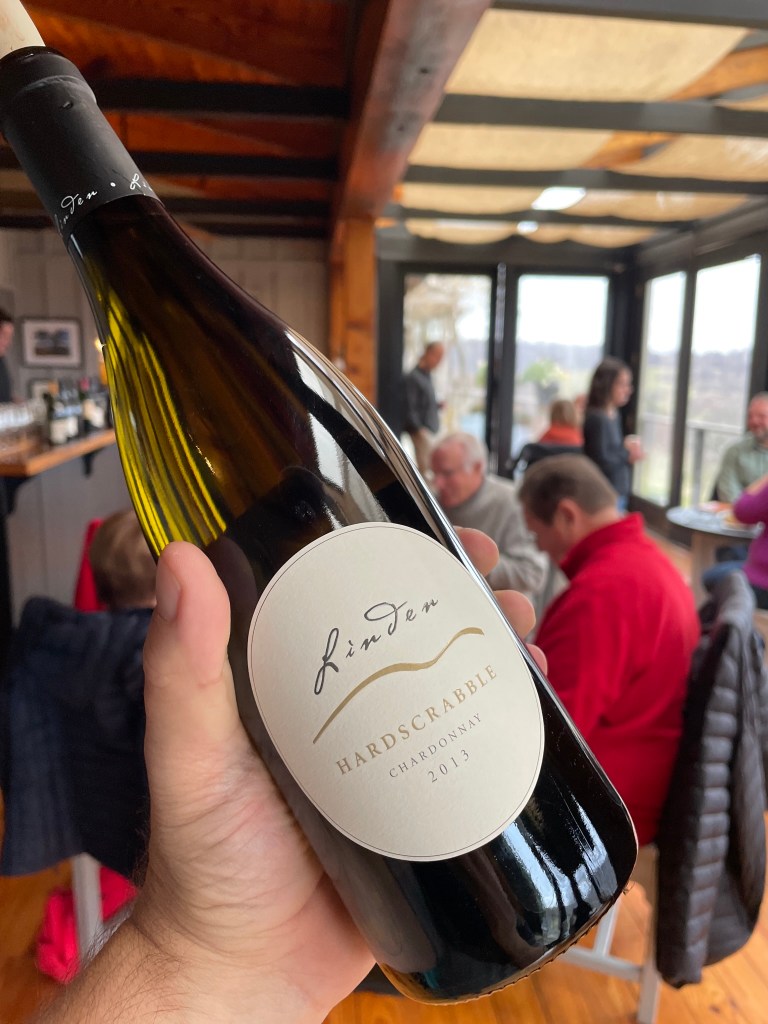
Linden Vineyards uses fruit from its 1985 and 1988 blocks (as well as its 2010 block) for its Hardscrabble Chardonnay, although the proportions differ every year.
Shenandoah Vineyards’ 2019 Riesling, made with vines planted in 1981, won Gold at the 2023 Virginia Governor’s Cup.
If you ever find yourself at a vineyard with old, gnarly trunks – ask about them! There’s likely a story behind how they’ve persevered.
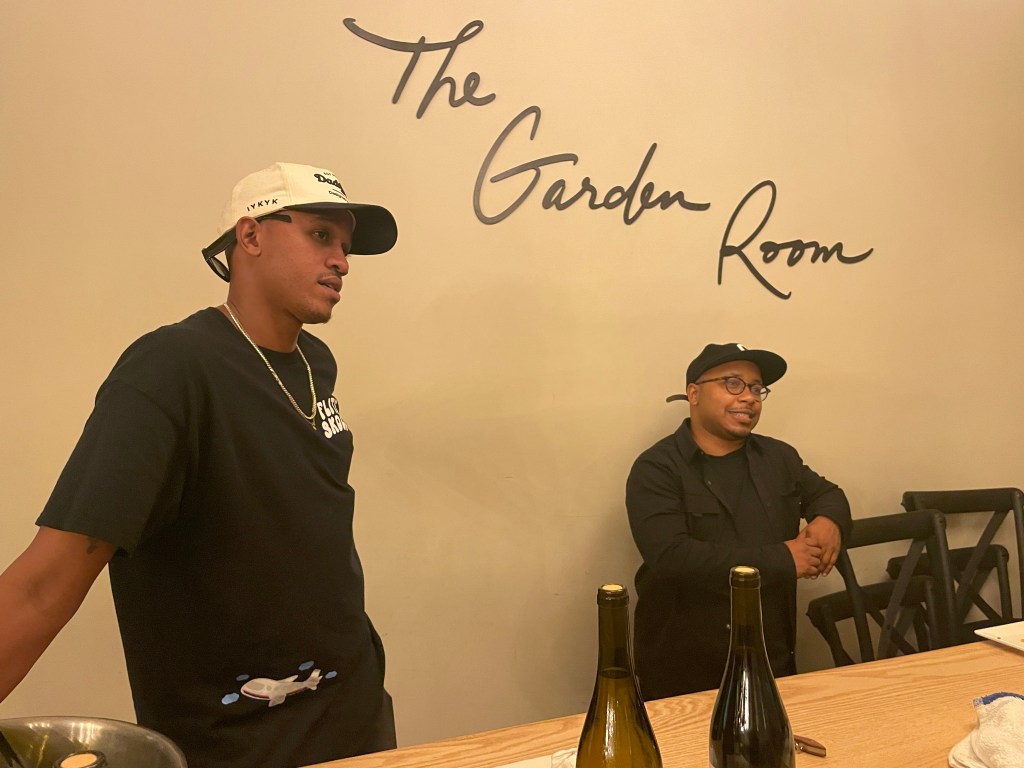
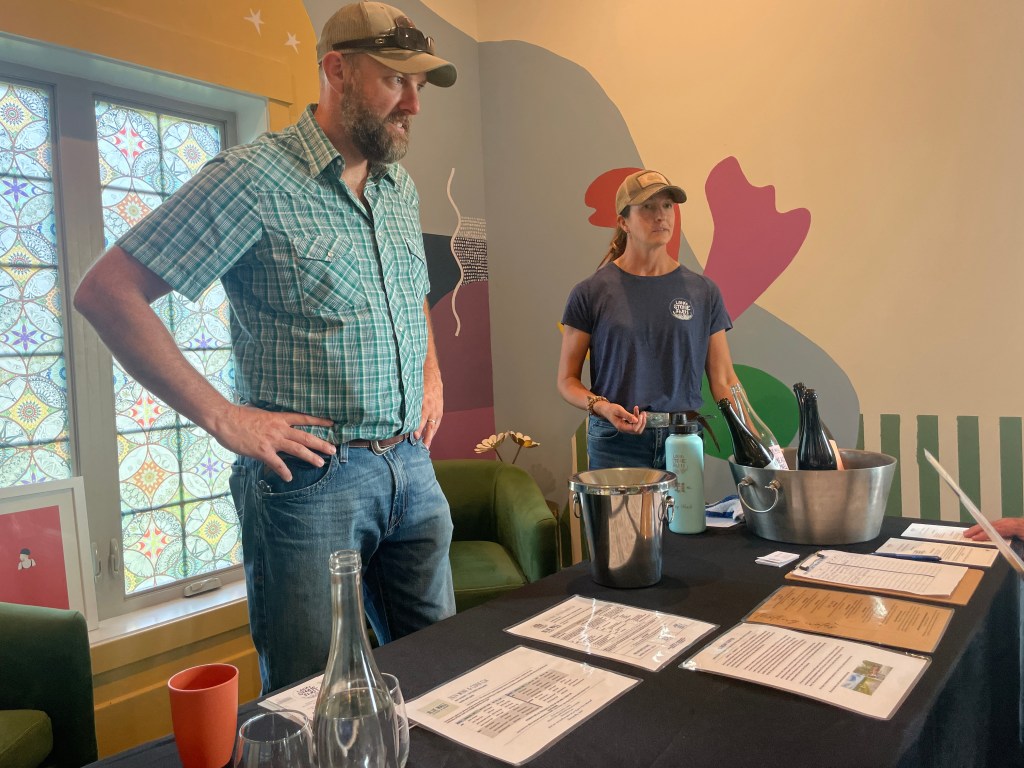
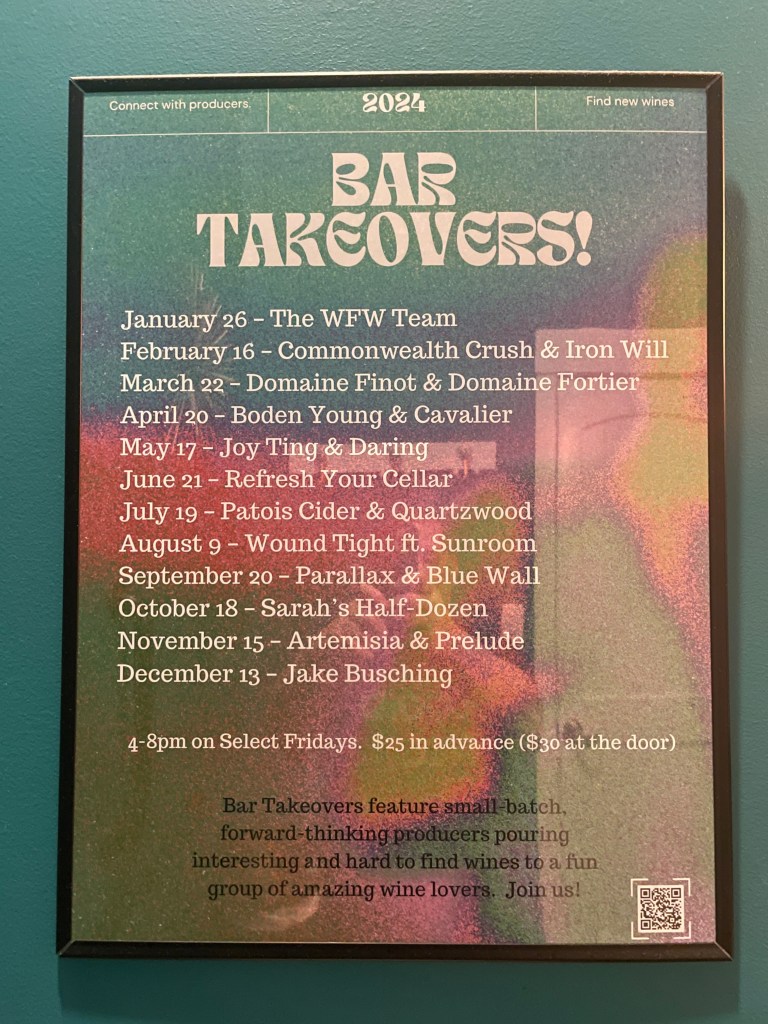
Last month (after a hard day of sorting grapes at Linden) I went over to Walsh for their latest Friday Bar Takeover. This event included a pair of new participants, The Parallax Project and Blue Wall Cider & Wine.
I’ve become accustomed to visiting old friends at these Bar Takeovers (looking at you, Jake Busching, Joy Ting, Daring Wine Co) but it’s exciting to try new, small brands. Some projects showcased here are actually produced at Walsh Family Wine, while others are what you might call ‘visiting friends’.
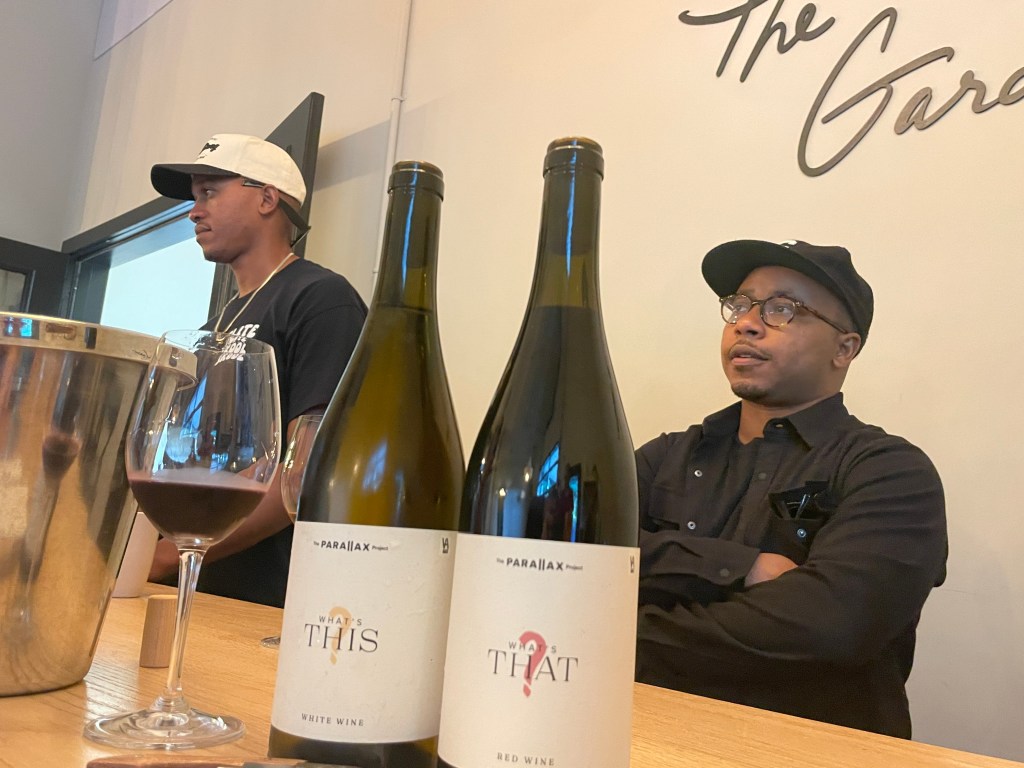
Parallax falls into the ‘visiting friends’ category. The brand is owned by entrepreneur and jack-of-all-trades Lance Lemon & “Virginia wine hype guy” Reggie Leonard, friends who decided to collaborate with Commonwealth Crush Co to create wines unique to them. These gents are also helping lead the charge for greater diversity in the Virginia wine scene.
Blue Wall is owned by Justin and Casey Wisch, who also own nearby Long Stone Farm. Blue Wall is one of the many small projects that Nate Walsh and his winemaking team support. The Wisches source their apples from their estate orchard and grapes from Nate’s vineyards, all of which is made at Walsh Family and labeled under the Blue Wall brand name.
The Parallax Project
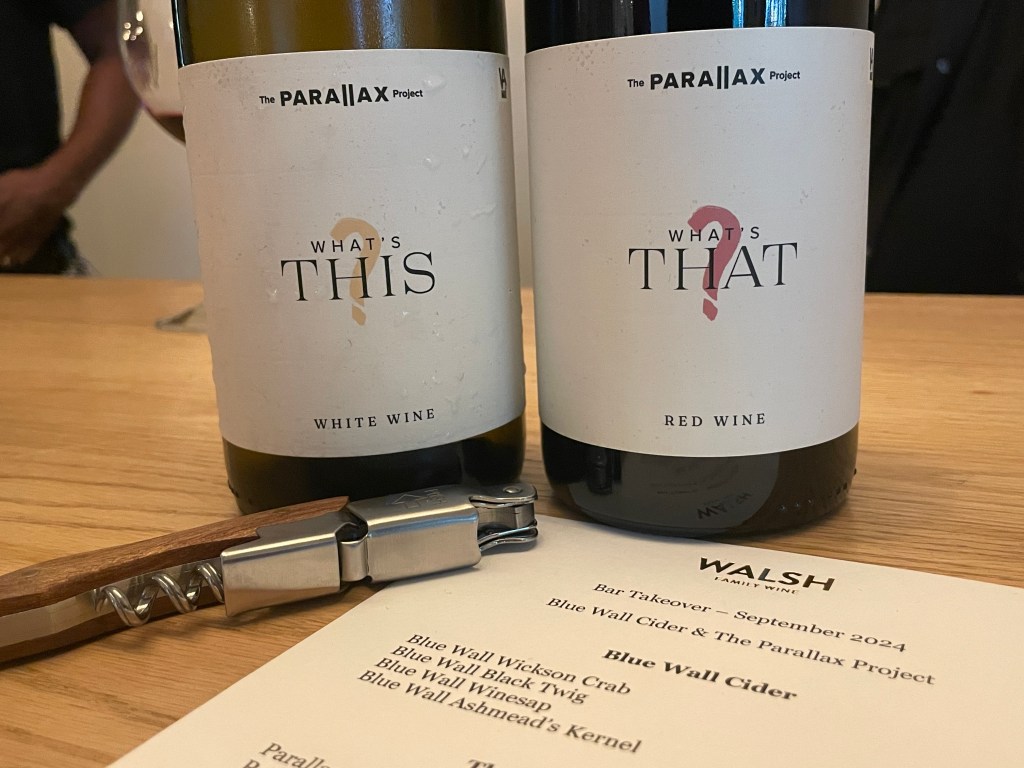
Kathy Wiedemann & I decided to start our visit with Parallax, who were hanging out in Walsh’s Garden Room. Reggie and Lance have so far produced two wines; “What’s This”, and “What’s That”.
The project’s name was inspired by what’s called “The Parallax Effect”, which is “a difference in the apparent position of an object when viewed along two different lines of sight”.
Lance and Reggie applied this principle to their wines. While one is a red wine and the other is a white, both were made using nearly the same grapes but in different blends and winemaking styles.
The 2023 “What’s This” is their white wine, a blend of 32% Vidal Blanc, 29% Chardonel, 29% Tannat (direct press), 6% Petit Manseng, 3% Traminette, 1% Albariño.
I’d never heard of a blend that even approaches this wine, and it was just as tasty as it was interesting; the kind of wine you need to keep sipping just to figure out what’s in your glass. Very floral with citrus notes (amongst others). I bought a bottle.
The 2023 “What’s That” is 83% Tannat, 8% Vidal Blanc, 7% Chardonel, 1% Petit Manseng, and 1% Traminette. While technically you could call this a ‘tannat’, it’s the farthest thing from one. Lower on the tannin, more fruit, and also highly aromatic.
The blending may seem odd – but they work. Both wines were designed to be enjoyed young and are very much in line with the off-beat style I’ve come to expect from their wine mentors, Ben and Tim Jordan of Commonwealth Crush.
Blue Wall Cider & Wine
In the main tasting room was Justin and Casey Wisch, who were pouring four of their ciders; Black Twig, Wickson Crab, Ashmead’s Kernel, and Virginia WineSap.
Blue Wall is actually just one component of Long Stone Farm, a sustainable farming operation that offers everything from CSA shares, a farm store for their meat and produce (which doubles as a wine/cider tasting room), even a monthly ‘Sunday Supper’.
The last is perhaps my favorite initiative of theirs, as it showcases everything that’s made at their farm but served by a local chef.
Blue Wall’s ciders are made in a ‘traditional’ style, which I nickname ‘wine cider’. No carbonation here; these ciders are meant to showcase the fruit they came from.
Wickson Crab was the ‘biggest’ of the four in terms of flavor, probably because it was barrel aged. It was my favorite of the more standard ciders.
Next up were Black Twig and Ashmead. Black Twig is off dry, while Ashmead is definitely the sweetest of the lineup. Had it been warmer the Ashmead would be a summer pounder outside (in fact it was when I attended their dinner).
But my favorite was Winesap, made as a sparkling pet-nat style cider. Very light and drinkable, and I suspect extremely food friendly. I got a bottle of this to go and will definitely open it with friends at dinner.
Special shout-out to Kathy’s husband, who brought the pizza that we ate outside.
If you’re reading this, you probably know all about the “Judgement of Paris”. It’s a huge inspiration to my own wine comparisons, although mine tend to include a broader selection of varieties than the original event (and Virginia wine is always in the mix).
I often hear that both in style and geography, Virginia wine is a half-way point between California and France. But having tried a great deal of both, I’d only somewhat agree with that statement.
My observation is stylistically speaking, Virginia wine trends more towards France than it does California. That said, truly successful Virginia winemakers focus on being ‘Virginia’ rather than try to emulate one region or the other.
I’d already done one “Judgement of Virginia” comparison, but after a few years it was time to apply the lessons-learned from the first time and try again.
Tasting & Scoring Methodology
A group of friends & I blind tasted 5 comparison flights. All the flights were bagged blind. It wasn’t planned that way, but many of the same wineries I selected for my 2022 event were again represented.
The goal was to pick a ‘favorite’ every round, as opposed to rating them and determining which one we thought was the ‘best’. In many cases, ‘best’ was entirely subjective.
This particular event included an abundance of industry professionals. Of the six of us, two had side-gigs at wine stores, two were working on their WSET Diplomas (and one was a wine judge), and one was born in Bordeaux and had experience working at both California and Virginia wineries.
While all were familiar with Virginia wine, I didn’t need to worry about having a bias in favor of either France or Virginia. At least one (gasp!) may have even expressed doubts what Virginia could bring to the table, so I was on a bit of a mission to show the best of what Virginia had to offer.
Because of that, it’s fair to say that my Virginia wines represented a good cross-section of the ‘elite’ of the local industry. But that didn’t mean we slouched on our French pairings; I did my best to compare a wine from each area that was roughly equal in terms of blends and price points.
I specifically told my attendees to not share their guess on which wine came from which region until the end of the event. It was about the best wine of each round, not ‘guess the Virginia bottle’. All the bottles were unveiled at the end.
The contenders:
Charles Heidsieck blanc de blancs (France) ($95 Wine Searcher)
2016 Trump “Brut Reserve” (Virginia) ($95 for the 2017 vintage)
Bottle #1: Charles Heidsieck blanc de blancs (France; I believe it was bottled in 2017)
Bottle #2: 2016 Trump “Brut Reserve” (Virginia) (Round winner; 6 votes as favorite; all incorrectly guessed Champagne)
Of course, we start with sparkling.
This was arguably the biggest surprises of the day. All of us voted for Bottle #2 (Trump) as our favorite. During a last-minute pre-unveiling tally to guess its area of origin, all of us guessed it was Champagne. Nope; this was Albemarle County’s very own Trump Winery.
This is where I wish I took a video of the reactions. We were SURE this was Champagne; nobody even floated the idea it was Virginia (even those who’ve had it). The tasting notes also seemed to back that assessment up, with #2/Trump seeming a bit more ‘aged’ and having finer bubbles.
I’ve said in the past that “Trump sparkling can go toe-to-toe with anything”. But now, I need to edit that statement. It would likely take a +$100 Champagne to surpass a Trump Winery Brut Reserve.
Bottle #1 / Charles Heidsieck blanc de blancs (France). More brioche on the nose than #2. “Bigger” on the palate. Creamy and fresh. One of us mentioned it was more reminiscent of “American” butter while #2 (Trump) was reminiscent of French butter, and several backed that assessment up. It had thicker bubbles with more citrus notes.
Bottle #2 / 2016 Trump “Brut Reserve” (Virginia). The brioche was there on the nose but I personally thought there was a mineral note to it. Lemony, creamy and fresh. More ‘aged’ notes, including nuttiness. More ‘European butter’ notes, which (I’m told) is fattier and more delicious than its American counterpart.
Kathy: Voted #2 (Trump). Guessed Champagne (it was Virginia). Thought #1 had more aggressive bubbles, maybe more reductive. #2 was more oxidative and citrusy.
Lieven: Voted #2 (Trump). Guessed Champagne (it was Virginia). Lots of similarities between the two, although thought #1 was ‘narrower’. Thought #2 had probably a few more grams of sugar than #1, although both were Brut. He also came up with the idea that #1 (Champagne’s Heidsieck) was more ‘American’ butter while #2 was ‘European’ butter
Marine: Voted #2 (Trump). Guessed Champagne (it was Virginia). Concurred with Lieven’s comment about “American butter” vs “European butter”.
Matt C: Voted #2 (Trump). Guessed Champagne (it was Virginia). Thought #2 had more dosage. #1 was more kumquat notes while #2 was more mandarin orange.
Matt F: Voted #2 (Trump). Guessed Champagne (it was Virginia). No tasting notes (too busy writing).
Robrette: Voted #2 (Trump). Guessed Champagne (it was Virginia). Thought #1 was more acidic while #2 was ‘rounder’. Also liked the texture of #2.
Bottle #4: 2023 Walsh Family Bethany Ridge (Round winner; 6 votes for favorite; 3 guessed were Virginia)
This round was surprising because the Bordeaux Blanc came off as “New World”, while the Walsh was much more Sancerre-like.
At first I was upset I didn’t ask for a more ‘classic’ expression of French Sauv Blanc, but in retrospect I’m happy how it came out. It just goes to show you that not only can Virginia wine present as “Old World”, there are times when “Old World” wine comes off as “New World”.
The Bordeaux Blanc was so overpowering floral that I could have guessed it was a Torrontés in a blind tasting. A very off-brand Sauv Blanc, especially for France. But still very quaffable.
Bottle #3 / 2022 Chateau Picque-Caillou Blanc. The nose was aggressive, nearly overpowering. It was so off-brand it threw us for a loop, and I suspect those who weren’t familiar with Walsh Family assumed this had to be the “New World” wine.
Grassy, almost New Zealand-style perfume-y nose. Lighter in color, and maybe a dab of oak. Lots of texture. Notes of citrus, jasmine, tarragon, and gooseberry were mentioned.
Bottle #4 / 2023 Walsh Family Bethany Ridge. “Shy” was the key descriptor, which I assume was due to it being recently bottled. The nose took a while to make an appearance but was lovely when it finally arrived.
Notes of dry grass (as opposed to freshly cut grass). Delicate and elegant. Citrus and lingering stone fruit notes. I completely understand why people thought this was France; maybe my next pairing will be Sancerre instead of a Bordeaux Blanc.
Kathy: Voted for #4 and guessed #4 was Virginia. Thought #3 had nice acidity and was perfume-y. #4 had notes of quince, mineral, and dried herbs.
Lieven: Voted for #4 and guessed #4 was France. #3 had notes of stone fruit, papaya, tarragon, and was floral and bright. #4 had a sharper nose.
Marine: Voted for #4 and guessed #4 was Virginia. #3 was ‘flamboyant’. Notes of cat pee, passion fruit, and was smooth. #4 was more subtle, notes of fresh herbs and had a lovely finish.
Matt C: Voted for #4 and guessed #4 was France. Thought #3 had notes of honeysuckle and grapefruit.
Matt F: Voted for #4 and guessed #4 was Virginia (mostly because I know and love Walsh’s SB) but never could have guessed #3 was French.
Robrette: Voted for #4 and guessed #4 was France. Thought #3 was grassy, fleshy, notes of dragon fruit. #4 was lmon-lime, grape fruit, hint of herbs.
Flight #3: Chardonnay
Bottle #5: 2015 Linden “Hardscrabble” (Chardonnay) (Virginia) (3 votes, tie; all guessed it was Virginia)
Bottle #6: 2015 Louis Jadot Beaune (France) (3 votes, tie)
This round was special because I LOVE aged Chardonnay. The 2015 Linden is one of owner/winegrower Jim Law’s favorite (and highest rated) Chardonnay vintages ever, and bottles of Hardscrabble Chardonnay are basically his ‘flagship wine’. I’m not familiar with the Louis Jadot but dang, that one aged beautifully as well.
I didn’t take great notes on why we all thought #5 was Virginia, but we all must have found something about it that stood out since we were all accurate.
Bottle #5 / 2015 Linden “Hardscrabble” (white) (Virginia). It had a ‘hot note’ of higher alcohol. Lemon notes, nutty nose. This seemed more ‘fruit’ driven.
Bottle #6 / 2016 Chateau Tour des Termes (France). “Big”, nutty qualities as well. Lots of complexity on the nose. Complex palate. This seemed a tad bit more ‘winemaker’ driven, at least on the nose.
Kathy: Voted for #5 and thought #5 was Virginia. Thought #5 was fresher, more fruit vs #6 showcased ‘the winemaker’, and #5 had a note of salinity.
Lieven: Voted for #6 and thought #5 was Virginia. Thought #5 was more bruised fruit, lemony but also cooked, with notes of marmalade. #6 was more lemon drop, with a sour note. Both had notes of baking spice.
Marine: Voted for #6 and thought #5 was Virginia. #5 was more pronounced bruised apple, lighter and more acidic than #6. #6 was shy, smooth, balanced and toasty.
Matt C: Voted for #5 and thought #5 was Virginia. #6 was ripe pair, fresh butter on the nose. Saw a hot note to it. #6 had a reductive nose, notes of melted butter, cooked apple, and baking spice
Matt F: Voted for #6, and thought #5 was Virginia.
Robrette: Voted for #5 and thought #5 was Virginia. Thought #5 as rounder and had more mouth feel. #6 was sharper.
Flight #4: Red Flight #1
Bottle #7: 2016 Chateau Tour des Termes (France) (Round winner, 6 votes)
Bottle #8: 2019 Fifty-Third Winery “Romulus” (Virginia; all guessed it was Virginia)
This round was our mid-price ranged red comparison. The differences between them were more pounced than the other rounds (at least in my opinion). It was relatively easy to guess the Virginia wine since it was brighter and more fruit-driven than the Bordeaux.
This was a fight between ‘easy drinking vs serious & complex’. They were slightly further apart in vintage than I would have preferred – but you take what you can get.
Bottle #7 / 2016 Chateau Tour des Termes (France). I wrote most of the notes below for this round.
Kathy: Voted for #7 and thought #8 was Virginia. Thought #7 had black plumb, notes of peppercorn, was rustic, and had more complexity. #8 was more black cherry vanilla (like the ice cream), notes of cherry cola.
Lieven: Voted for #7 and thought #7 was Virginia. Thought #7 was red and black fruit, notes of cassis and char, with a savory note. #8 was more blue and black fruit, note of violet, and had a lighter palate.
Marine: Voted for #7 and thought #8 was Virginia. #7 had notes of fresh herbs, black cherry, rustic, more ‘serious’. #8 was fresher, more crushed berry, and liked the brightness.
Matt C: Voted for #7 and thought #8 was Virginia. Thought #7 had a “Virginia nose”, notes of cassis, maybe a little new oak. #8 was softer, leaned into the fresh fruit, was softer and had a lingering berry note.
Matt F: Voted for #7 and thought #8 was Virginia. I thought #8 had a sour note on the palate, and wasn’t as well integrated when compared to #7.
Robrette: Voted for #7 and thought #7 was Virginia. #7 was more complex while #8 was brighter and was less complex, with cola notes.
Flight #5: Red Flight #2
Bottle #9: 2018 Chateau de la Brede Rouge (France) (3 votes; tie)
Bottle #10: 2017 Linden “Hardscrabble” (red) (Virginia) (3 votes; tie, 2 out of 6 guessed it was Virginia)
While Jim Law’s flagship wine is his Hardscrabble white (Chardonnay), he makes some damn good reds. His wines are always well balanced, and that was evident here.
But the Brede Rouge wasn’t a slouch either, everyone loved it just as much. Votes were tied between them.
Surprisingly (or not, depending on how high your estimation of Linden is), 4 out of 6 of us thought the Virginia wine was Bordeaux (even my guest from Bordeaux thought so). I’ll take that as a huge vote of confidence for Linden Vineyards.
It wasn’t until the next day that I got the ‘musty’ notes that are indicative of Bordeaux on the nose, although both bottles were well aerated before this event.
Bottle #9 / 2018 Chateau de la Brede Rouge (France). It was late so most of my tasting notes are below. Several thought they detected an ‘olive oil’ note to #9, which threw people off.
Bottle #10 / 2017 Linden “Hardscrabble” (red) (Virginia). Guests generally identified this as smooth, balanced, and fruit-driven.
Kathy: Voted for #9, thought #10 was Virginia. Thought #9 was brine-y and had a note of olive oil which was unusual for Bordeaux. #10 was fresher, more raspberry and herbs and fewer barnyard notes.
Lieven: Voted for #10, thought #9 was Virginia. Thought #9 was more red cherry, plumb, pomegranate, and potting soil. #10 was more red cherry, plumb, earth and forest floor. Thought this wine was more about the mid-palate.
Marine: Voted for #10, thought #9 was Virginia. Thought #9 had notes of cinnamon, pepper, nutmeg, prune-y and tobacco. I think she mentioned notes of nutmeg and spice. #10 had notes of black current, cherry, and ‘juicy’
Matt C: Voted for #9, thought #9 was Virginia. #9 was black cherry, liquorish, brine, notes of baked fruit and had a cooked quality to it. #10 was black current, cigar box, red and black fruit and cedar.
Matt F: Voted for #10, thought #10 was Virginia.
Robrette: Voted for #9, thought #9 was Virginia. Thought #9 was more red fruit, black cherry, but balanced and smooth. #10 was more red fruit, and lighter, smoother, softer.
Lessons Learned:
Normally I talk about how similar a well-made Virginia wine can be to a classic expression of the same variety from France. What surprised me was how French wine can, on occasion, showcase “New World” notes.
The Chardonnay and the 1st red flight were easy; 100% of guests correctly identified each country of origin. The Sauvignon Blanc flight was harder to guess, with only 4 out of 6 guessing correctly. Even more difficult was the 2nd flight (with Linden) where only 2 out of 6 guessed correctly.
The sparkling round was the real stumper. Was it conceit to assume Virginia couldn’t match a $80-$100 bottle from Champagne? Maybe! I stand by my assessment that Trump Winery’s sparklings hit above their price point.
I also loved how wrong people were about the Linden Hardscrabble red vs Bordeaux flight, which stumped most of us.
So was it that Virginia wines are expressive of “Old World”? Or a few of these French wines were New World-ish? A bit of both, at least in this case.
In the end of our 5 comparisons, Virginia won 2 rounds, Bordeaux 1 round, and we had 2 ties.
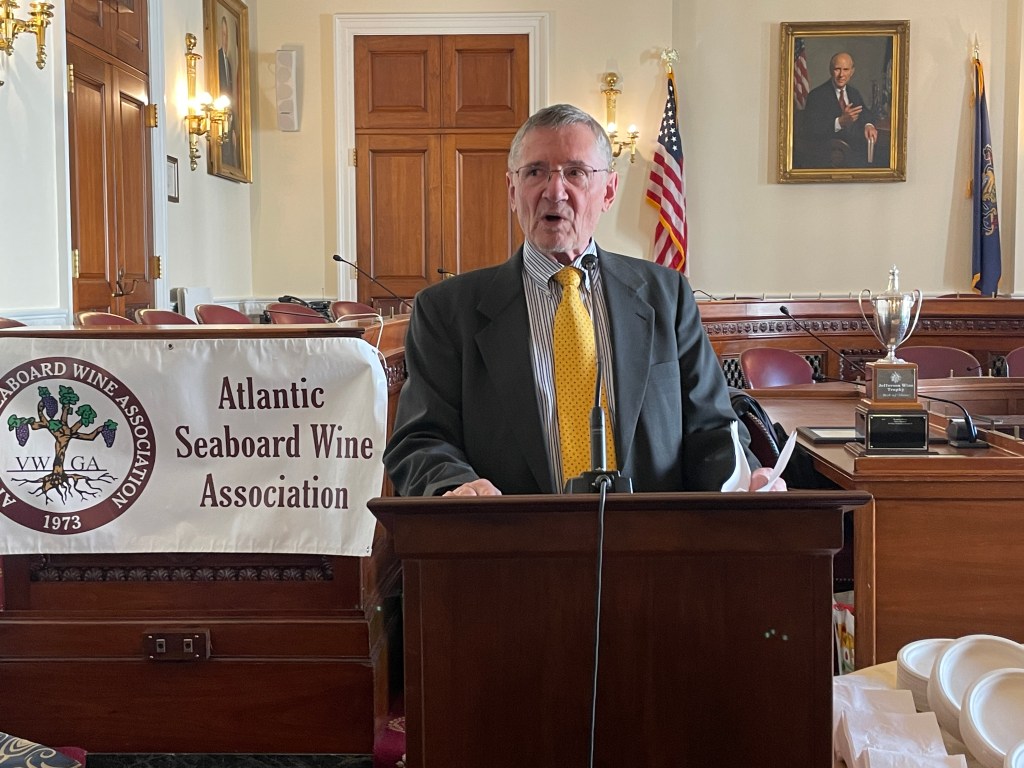
It’s not often you get to sip local-ish wine at a semi-formal event at the US Capitol, but that’s exactly what I was able to do this past week.
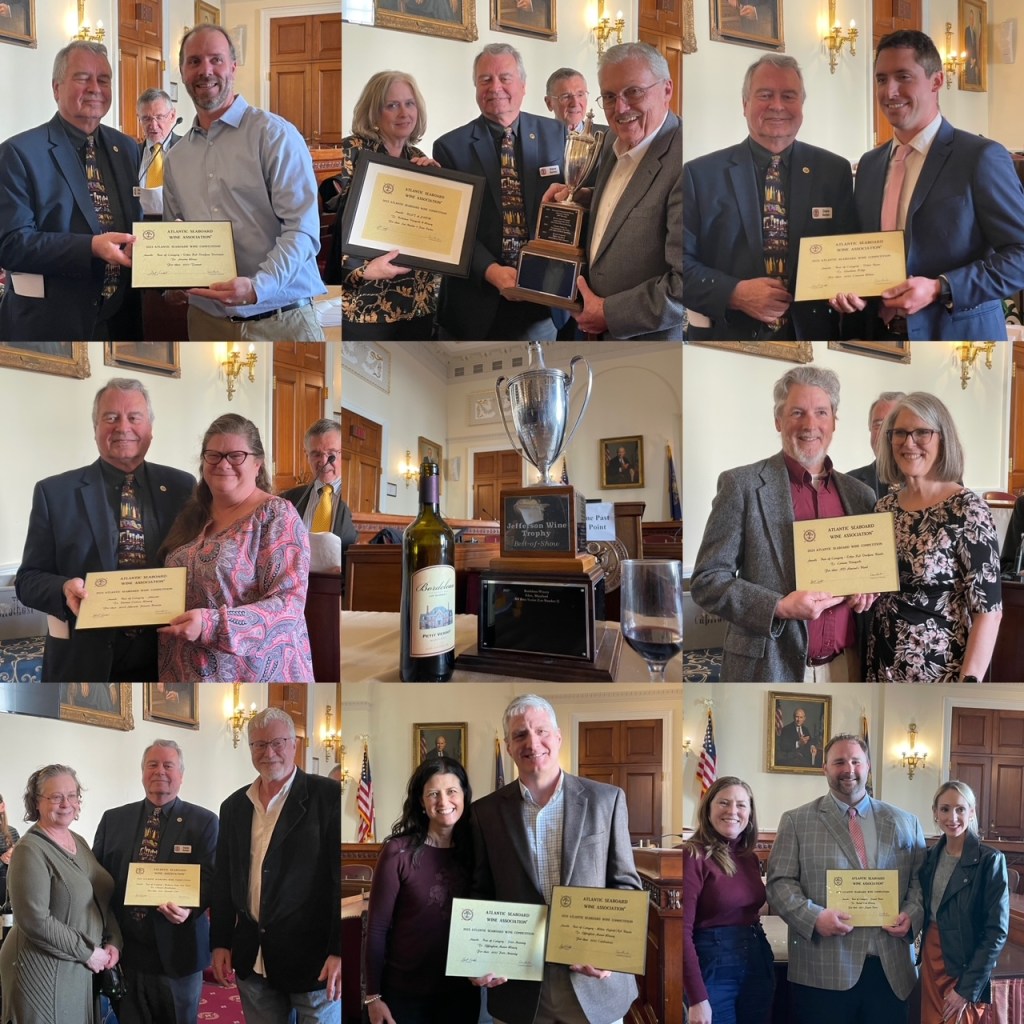
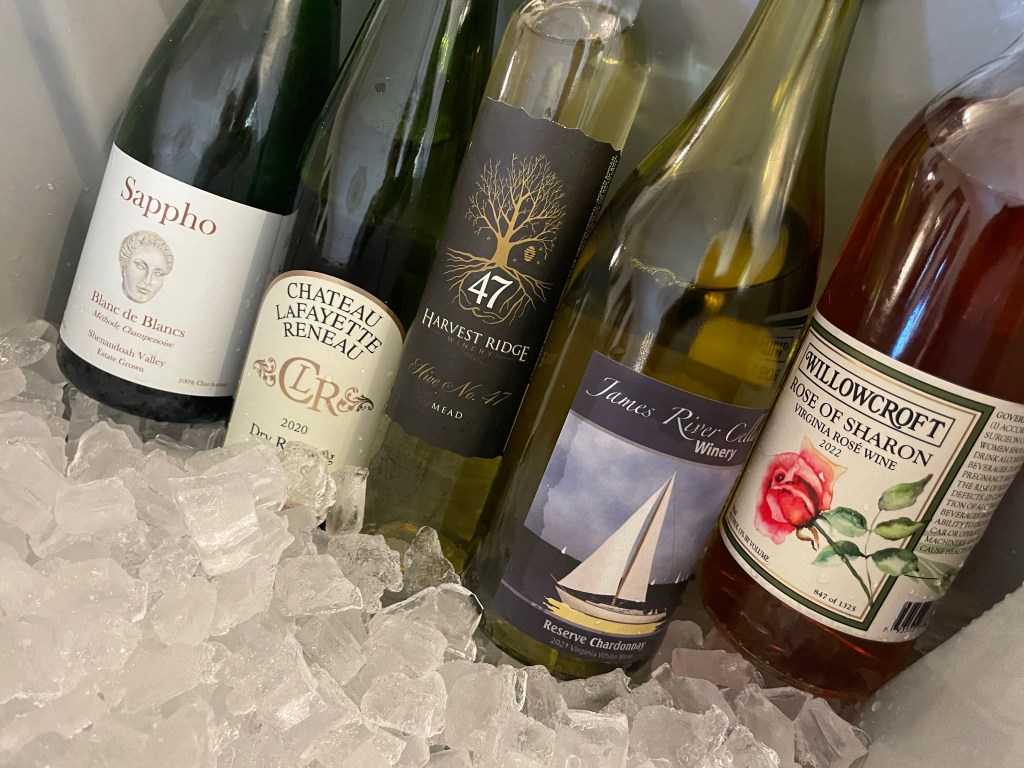
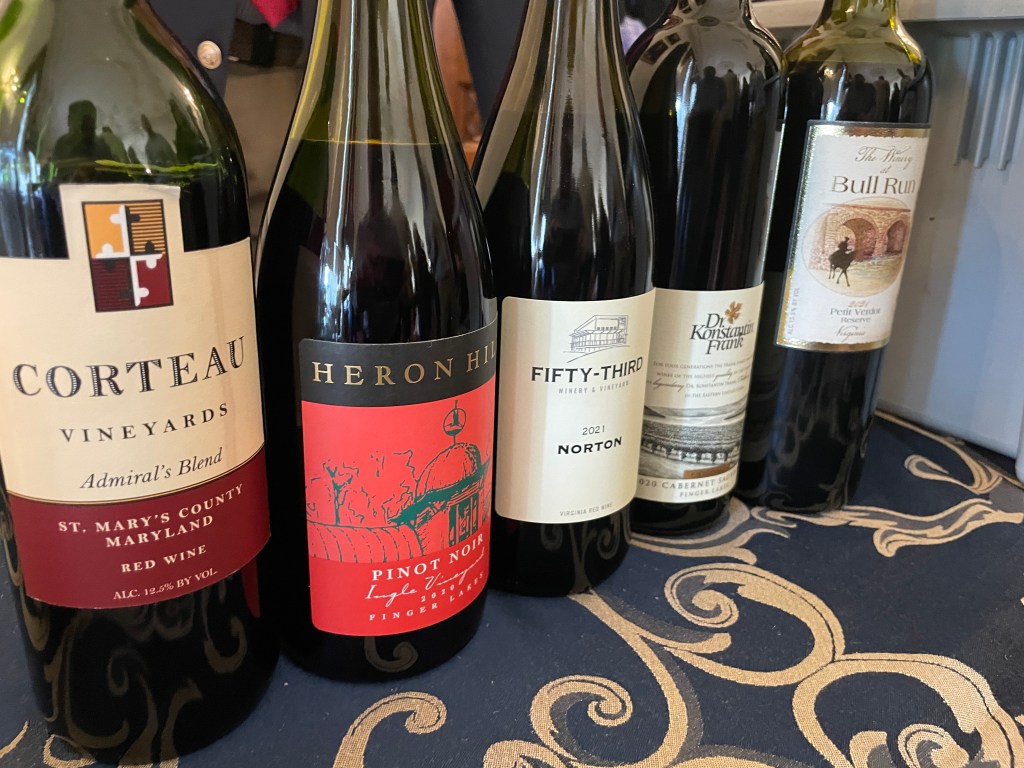
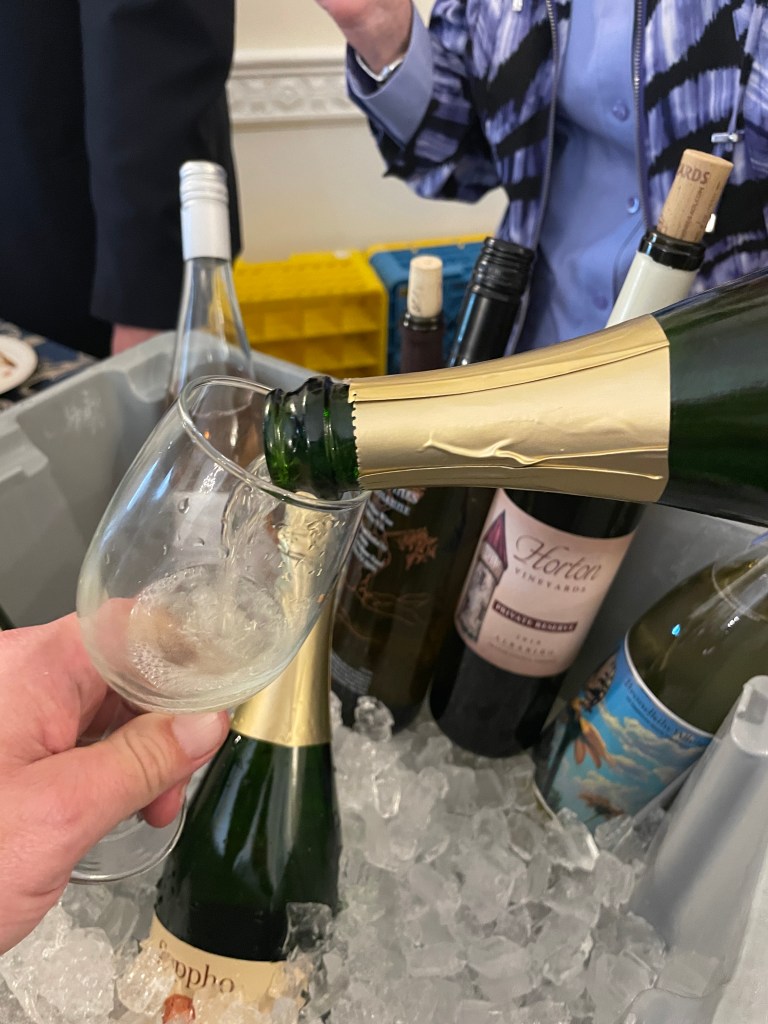
The event in question was the annual Jefferson Loving Cup Trophy award ceremony, sponsored by the Atlantic Seaboard Wine Association (ASWA) and hosted by the Congressional Wine Caucus. Guests were able to enjoy light bites and tastings of over 45 wines, including the ASWA’s 2023 Best of Show and Best of Category winners.
It would be easy to poke fun at Congress for taking time off for a wine event on the eve of a shutdown, but for this event I’ll give them a pass. After all, the wine industry contributes an estimated $276 billion to the U.S. economy annually and creates the equivalent of almost two million full-time jobs. That’s a lot of $$$, especially for enterprises that are often based in rural areas.
More importantly for me, these particular wines all hailed from the east coast; specifically the 14 states that touch the Atlantic, plus Pennsylvania, Vermont, and West Virginia. Altogether, this area produces around 45 million gallons of wine annually.
That sounds like a lot, but it’s still just over 6% of total US wine production. It’s also just a splash compared to the west coast’s 90% market dominance – and exactly why the ASWA’s role is important.
West coast brands hog up much of the wine world’s shelf and advertising space, so east coast regions need an organization to advocate for them. Bonus points for how the ASWA highlights grapes that would otherwise be overlooked (hello petit verdot and petit manseng).
Mike Thompson (D-CA) stopped in for a few minutes and joked how the Congressional Wine Caucus was one of the largest such caucuses, in no small part because it’s far easier to negotiate over a glass of wine than from behind a desk. After a few remarks, we kicked off the “Best in Class” awards.
We were lucky to have a number of local growers in attendance. I didn’t catch everyone’s name, but I did get to see Jason Murray and Sandy Gray-Murray of Arterra Wines, Shannon Horton of Horton Vineyards, Mark Ward of Pearmund Cellars/Effingham/Vint Hill, Jeremy Ligon of Barrel Oak Winery, and Emily and Kenny White of Chateau Merrillanne, amongst others.
I know the Pearmund ‘family’ must have been exceptionally excited that three separate wines won Best in Class in their categories; their 2022 Petit Manseng and 2022 ‘Celebration’ from Effingham, and the “Misty” from Vint Hill.
Mark joked that one of his hardest jobs is to decide if he should make wine that he likes vs what the public likes. His palate preferred drier wines, but several of these would make those with a sweeter palate happy.
One winemaker that was new to me was Tom Shelton of Bordeleau Winery, located on Maryland’s Eastern Shore. Bordeleau won not just Best in Class for their “Lot Number 3” Non-Vintage Petit Verdot, but it went on to win the overall “Best in Show”.
This PV is a rare example of a non-vintage wine. Tom explained he recognizes that Maryland’s variable climates creates ‘peaks and valleys’, making it difficult to produce stylistically-similar wine year after year. To get around that, he makes all of his wines non-vintage, with the exception of a few whites.
This particular PV used fruit from 2016, 2017, and a bit from 2019. I was struck by its smoothness and complexity; it had just enough fruit to make it pleasant but it still had a tannic backbone. This was the 3rd petit verdot they’ve ever produced.
My other favorite wines were the 2021 Chardonnay from Fox Run, Herron Hill’s 2020 Pinot Noir (both in the Finger Lakes), Virginia’s Horton Vineyards’ 2019 Albariño, plus several sparklings (of course).
I also got to try Fifty-Third Winery’s 2021 Norton, which I had just written about. Norton is a love-it-or-hate-it grape but I was pleasantly surprised by its smoothness, so I can understand why it was awarded “Best Norton” at the separate Norton Cup event last year.
While Bordeleau Winery’s Petit Verdot was the star, plenty of other wines were recognized. The 2023 ASWA competition awarded 33 “Best of Class” wines from amongst 455 entries.
In addition to popular categories such as Best of Class Bordeaux-style wine, chardonnay, and sparkling, they also had winners for various categories of mead, sweet wine, fruit wine, cider, hybrids, and other vinifera wines.
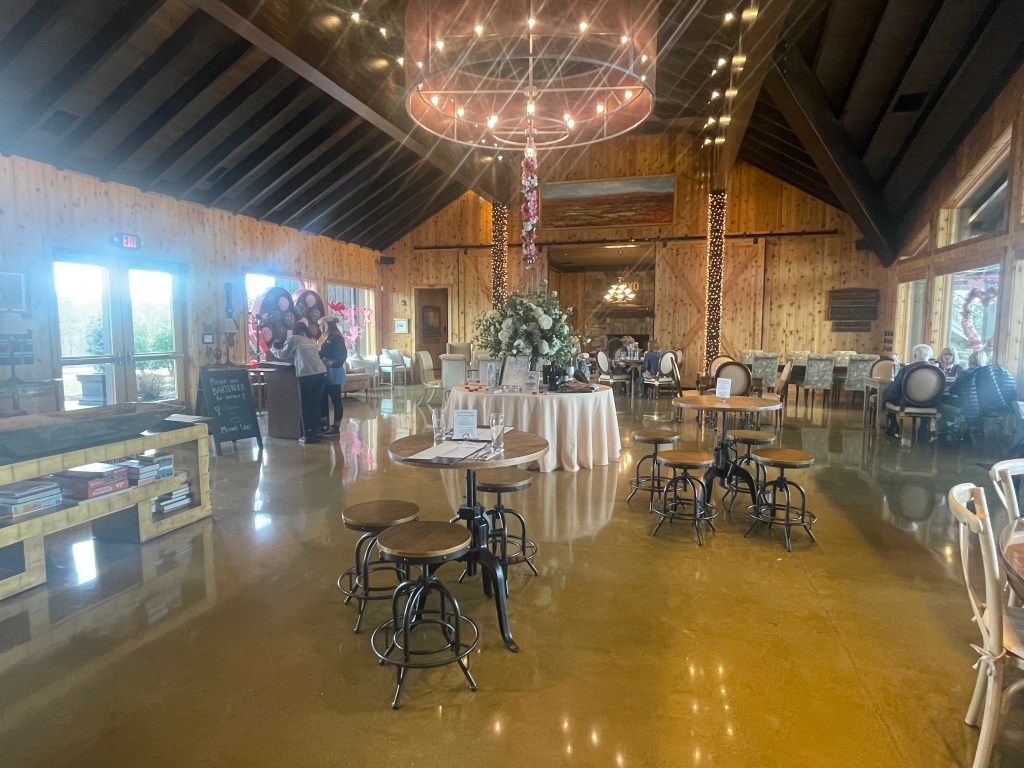
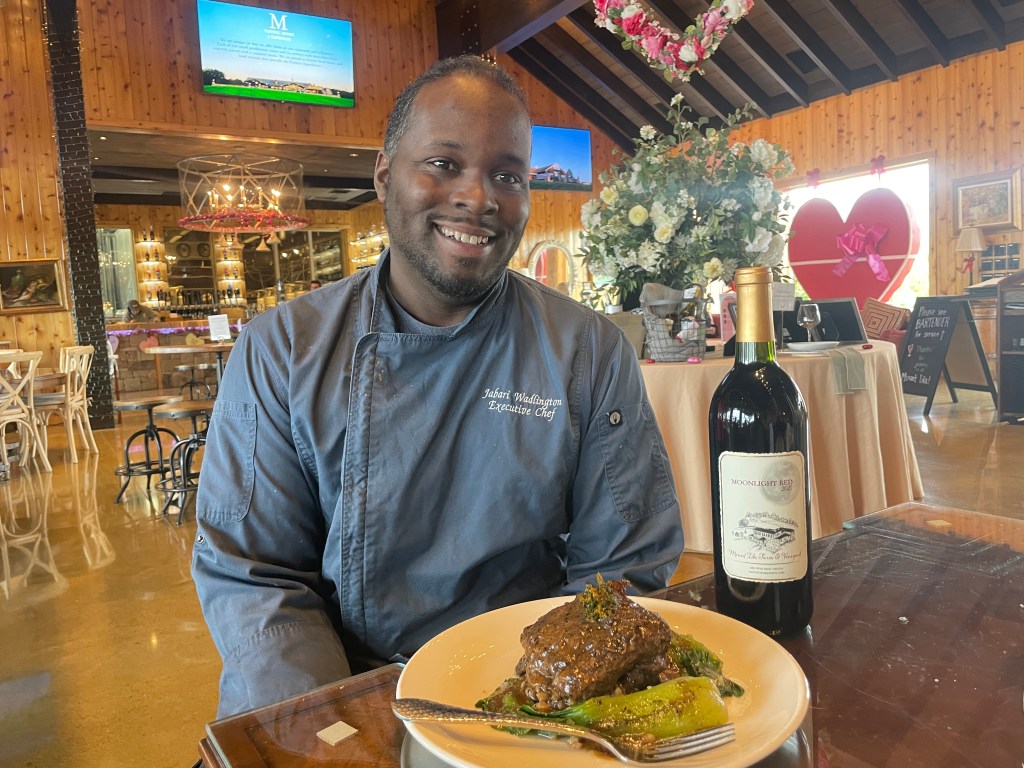
It’s tough to pick a single theme when discussing the Mount Ida Reserve Tasting Room & Taphouse, simply because there’s a lot to talk about. I visited to interview Executive Chef Jabari Wadlington, but chatting with him was just one part of my visit.
I easily could have spent more time talking about the wine. Mount Ida has 27 acres of mostly Bordeaux varietals, divided between three vineyards. While the winery is around 30 minutes south of Charlottesville, they are still part of the Monticello American Viticultural Area (AVA) that Wine Enthusiast called the 2023 “Wine Region of the Year”.
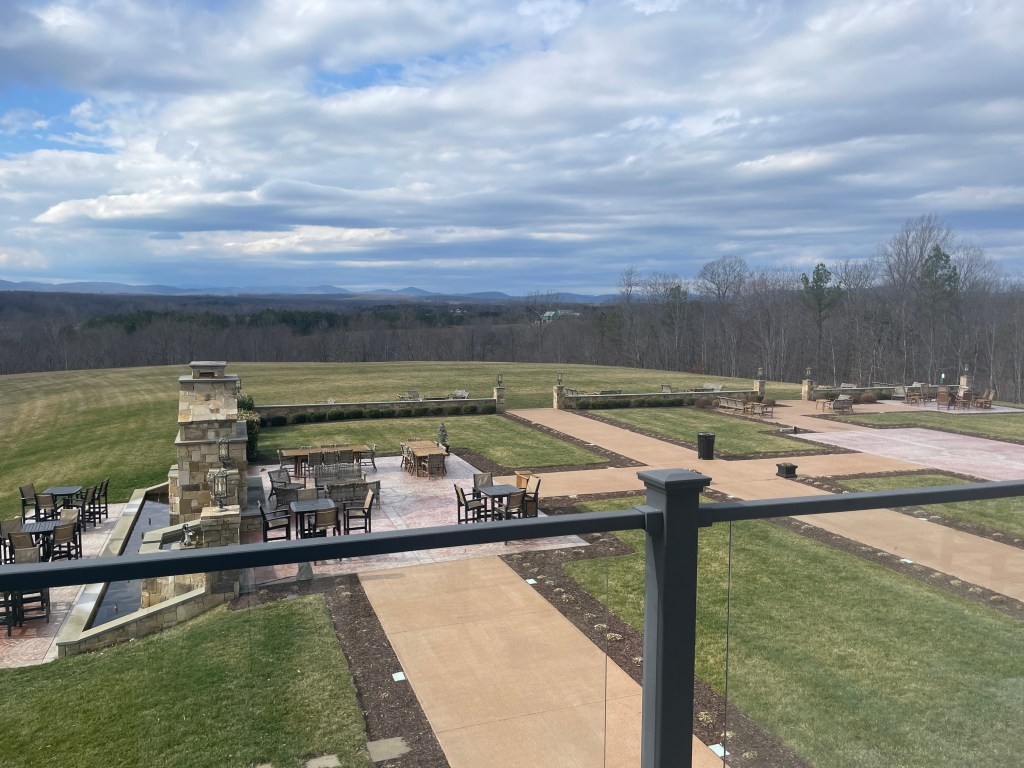
I could also talk about how stunning the property is. The business covers 3,500 acres divided between a number of smaller venues, including the wine tasting room/taproom, event centers, lots for private homes, and a number of home rentals (including a building that dates to the 1700s).
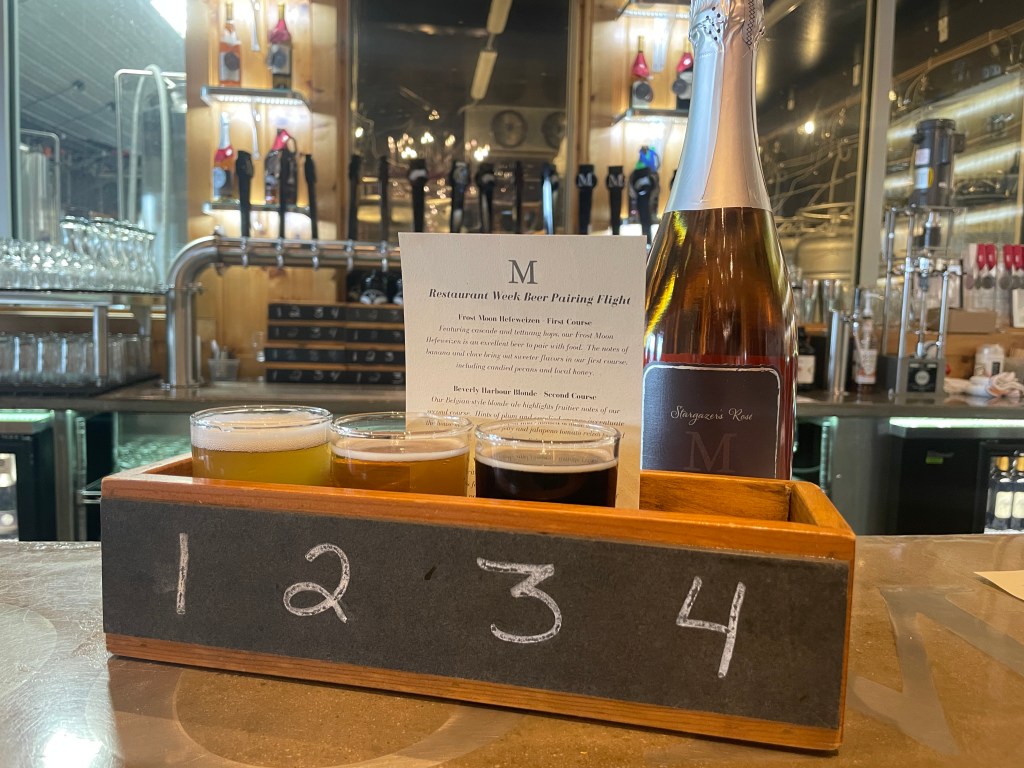
There’s also the brewery. Mount Ida is one of only a handful of Virginia wineries that has a fully integrated taproom, and is probably the only one of those with a full farm-to-table restaurant. On top of all of this, last year they started offering trail rides.
But for this trip, I was focused on the food. I’ve been on a mission to interview the Executive Chefs who work in Virginia wine country. Given how Mount Ida’s restaurant is an integral part of the overall experience, meeting Jabari was high on my list.
I was fortunate to schedule my visit at the end of Charlottesville’s Restaurant Week, which for the first time included Mount Ida as a participant. Jabari was especially proud of his Restaurant Week menu, which he used as an opportunity to test out dishes for the winery’s own 2024 menu.
Before we met up I also learned some background about the winery part of the operation. Frantz Ventre is their full time winemaker, although the production is done at Michael Shaps Wineworks. While Frantz is a native of France, he’s been part of the Virginia wine scene for about two decades, with a resume that includes Sweely Estate (before it became Early Mountain), Jefferson Vineyards, and Grace Estate.
Elevating “New Southern” Dishes
After a quick look around I met up with Jabari, who told me his story.
While Jabari was born in L.A., he moved to Virginia in 1996. As someone who grew up watching the Blue Angels at airshows and describes himself as ‘obsessed with planes’, it’s no surprise he originally planned on becoming an Air Force pilot. That led Jabari to study engineering at Tuskegee University and participating in their Air Force ROTC program.
While becoming a pilot is still on the bucket-list, Jabari eventually realized flying for the Air Force wasn’t in his future. He transferred to Johnson & Wales University to study the culinary arts, which led to an internship in New Orleans under Tom Wolfe.
From there, Jabari described a veritable roller-coaster of different experiences. For years he jumped around different east coast restaurants, ran a catering business, cooked for celebrities and executives in D.C., all the while learning the ins & outs of operating a kitchen. The birth of his son encouraged him to seek greater stability, which led him to Charlottesville.
“I’ve always felt the reason I chose the culinary arts is it’s the only art form that uses all of your senses. Food just has a lot of power in bringing people together, and that’s what I love the most.
My niche is probably ‘New Southern’. That’s not just your typical soul food – fried chicken, mac n cheese, collards, and those kinds of things. Its food that uses ingredients that goes to the root of what makes cuisine what it is now, while being versatile enough to reach a wide group of people.
As I got older I started opening more restaurants, including two in Charlottesville. I’ve always focused on community, farm-to-table settings, but more focused on the ‘community’ part than the fine dining aspect. Doing events at different farms also helped me build relationships.”
Finding Mount Ida And Appreciating Sustainability
Eventually Jabari interviewed for the Executive Chef position at Mount Ida – and was offered the job that day. “I didn’t take the position right away since I hadn’t seen the property. But when I came and saw the view I was like “Yes…I’ll take it!”.
While Jabari still uses his local contacts, the farm at Mount Ida has much to offer.
“We try to be as sustainable as we can. The property has 3,500 acres and around 150 cattle. We chop down trees for smoking our pork belly and get wild mushrooms from along the ridge. All the malt and barley we use for our brewery is used as feed for the cattle. It’s a magical place to work.
Having the cattle gives us a unique niche in the market. Our meat really stands out because we use the entire cow, so our burgers include ribeye and sirloin. Even the short ribs we have for restaurant week were from our cows. We can put a filet on the table and not charge $42-48 like other locations.”
Being a chef also gave him an eye for wine pairings, which are put to good use at the tasting room. Jabari’s four-course Restaurant Week menu recommended their chardonnay to go along with the rich options of his first course, the petit manseng to pair with the seafood and salad-heavy second course, the petit verdot to soften the fatty dishes of the third, and a port-style wine to compliment the dessert.
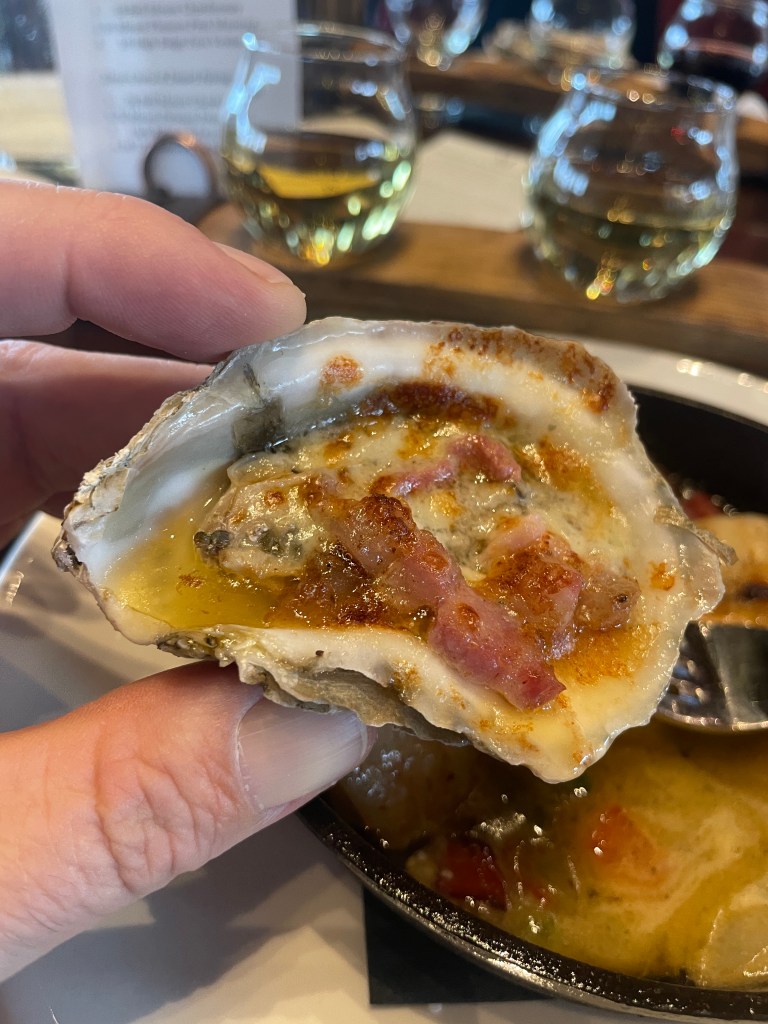
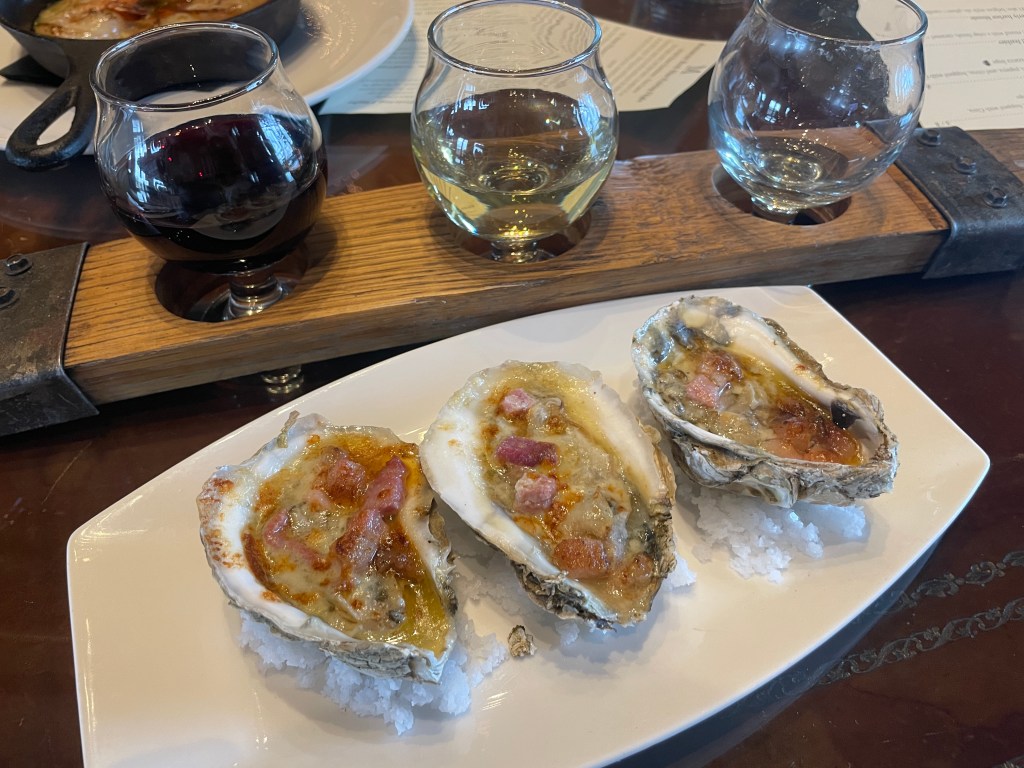
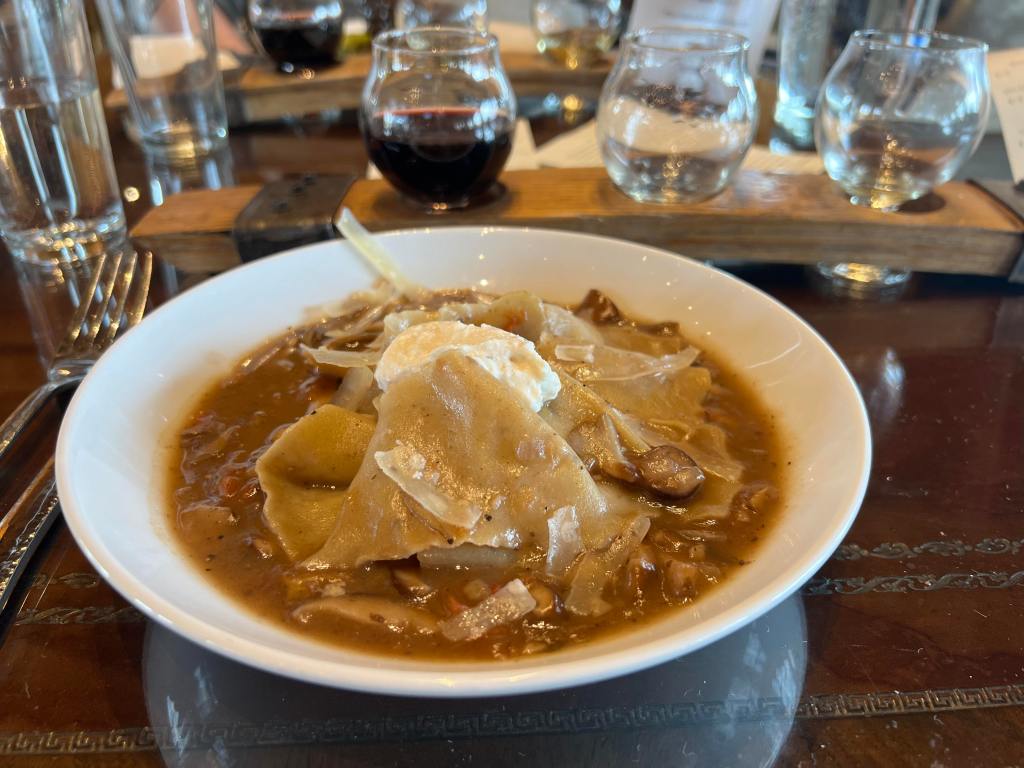
My dining companion & I tried his winter parfait & butternut squash soup for our first courses, the fire roasted oysters and jumbo shrimp for the second, and short ribs and mushroom tagliatelle for our mains.
“I use my dishes to offset where the wine is on your palate. I like using our cabernet franc and petit manseng, but I really think viognier stands out as a Virginia staple. I’m also a fan of our red blends, and pairing our port-styles with our desserts. Pairings are where I get to have fun.”
Jabari also praised Mount Ida’s beer. Last summer he took their stout and reduced it into a syrup, which was made into a ‘beer ice cream’. He also used Mount Ida’s rosé as a base for their sorbet.
Picking a favorite dish is a difficult job, especially given how he’s always mixing-up the menu. Yet a few staples, like their pizza, are always available. “I get bored with food, and always want to try something that other restaurants aren’t doing. But we have our own pizza ovens, so during the season we sell a lot of pizza!”.
Mount Ida is open seven-days a week. While you might not see Jabari in the dining room, fans of his cuisine can watch reruns on The Food Network and see him compete.
2023 is likely to go down as a banner year in the Virginia wine industry. Warm, dry weather provided ideal growing conditions for much of the state, resulting in what many local winemakers are calling some of the best fruit they’ve seen in a decade. It’s what romantics might call, ‘a good vintage’.
But what makes a good vintage? In a state as geographically diverse as Virginia, defining this may be harder than you think.
Virginia’s main wine growing regions usually have unique seasonal variations. There are years where central Virginia suffers from late-spring frost, while northern Virginia skates by without a hitch. Yet the following year, NOVA vineyards with grapes still on the vine may suffer from late season rain, weeks after Charlottesville wineries have mostly finished harvest. Meanwhile, the Shenandoah Valley asks, “What rain?”.
Different styles of wine also have different needs. Those who prefer classic, cool-weather expressions of Chardonnay may grumble over a hot season’s high alcohol levels, while neighboring winemakers who like bold reds are positively ecstatic.
Fortunately, the 2023 growing season is one of the few years that’s received almost universal praise across the state.
According to Jason Murray, owner & winemaker of Arterra Wines in Delaplane, “Simply put, overall 2023 was an outright ideal vintage for us. We had ideal spring rains for initial growth, and then it went very dry.
We had just the right amount of rain at just the right moments to keep the vines on a quality path, while just barely averting significant vine damage. 2023 achieved the same intensity and concentration as 2019, without the excessively high alcohol levels. It’s an impressive vintage, with what I would call ‘perfect’ fruit.”
Jason Murray, Arterra Wines
Rough Start To A Great Year
While the season turned out great, it didn’t start off easy. An abnormally warm winter meant vineyards were hitting ‘bud break’ ahead of schedule. This makes them susceptible to a late frost, which kills fragile shoots just as they are emerging from the bud. Several vineyards encountered frost snaps as late as May, inflicting losses to early ripening grapes such as Chardonnay.
Once summer hit, things moved quickly. Data from NOAA show the summer of 2023 ranks as the 15th hottest on record in the United States. As heat speeds a grape’s maturation process, it forced winegrowers to harvest their grapes at a record speed.
“2023 was a wild ride, with one of the most condensed seasons I’ve experienced,” shared AJ Greely, winemaker for Hark Vineyards. “We ran our wind machine to keep the cold air off our vines 12 times in the spring, and kept a serious eye on the temperature more than double that number.
AJ Greely, Hark Vineyards
When harvest came we picked and processed every other day, with a one week break to catch our breath. Then we picked and processed for another 10 days!”
While frost singed some vineyards, the lack of rain was ultimately a more pressing issue. Drought stress caused ripening to stall for some varieties, and also caused alcohol levels to spike while reducing cluster weight.
However, dry weather also has its advantages.
“2023 was an abnormally dry growing season in Virginia, although it also makes life in the winery easier,” explained Robert Muse of Muse Vineyards.
“Rain is the chief catalyst for mildew infections in the vineyard. Winemakers can use sulfite to combat them in the cellar, which eliminates bacteria that impair the quality of the wine. Unfortunately, these sulfite additions are inadvertently harmful to the yeast necessary for a thorough fermentation. To avoid these issues, clean fruit is essential.
A grower can ensure clean fruit with a meticulous spray program in wet years, or he/she can relax by the pool knowing a dry sunny ripening season is taking care of most disease issues in the vineyard. 2023 was such a year.”
Wineries Expecting Lower Quantities But Much Higher Quality
While the overall tonnage for the 2023 vintage might be lower than normal, the wines should make up for it in quality, said Toni Kilyk of Granite Heights Winery.
Toni Kilyk, Granite Heights Winery
“Our grapes are smaller than normal size to begin with, but this year they were even smaller. We had close to the same number of grape clusters but with very little juice inside, hence our harvest weights were much lower than normal. That said, less juice means a higher skin-to-juice ratio, so we’ll have more potent wine.”
Many winegrowers echoed her assessment, and were particularly optimistic about their red wines.
“I’m excited about tannat and cabernet franc this year,” wrote Doug Fabboili of Fabbioli Cellars. “You can count on these grapes to make great wine almost every year, but this year’s can be outstanding!”
Doug Fabbioli, Fabbioli Cellars
Virginia’s weather is normally hot and humid, and grapes that require dry weather often struggle. But dry climate varieties may be the 2023 vintage’s sleeper hits. A number of winegrowers expressed excitement how normally difficult-to-ripen varieties such as cabernet sauvignon, malbec, sangiovese, tempranillo, and petite sirah would turn out.
“I don’t ever want to jump the gun, but I’m very excited about the 2023 vintage wines,” Toni continued. “They are aging nicely, and I think we’ll see wines that easily compare with 2010/2017/2019 vintages in terms of quality.”




















 Wine Trails and Wanderlust