Virginia Tannat Tasteoff: Virginia vs South America

Days after I had a blind Virginia vs South America tannat tasting, Wine Enthusiast published an article on Virginia Tannat. Part of me was happy about the publicity. Another part said; “What took you so long to notice?”, as Virginia has made great Tannat for a while.

Tannat was born in the Madiran region of Southwest France. Yet it’s Uruguay that wears the crown as the world’s Tannat capital, growing more Tannat than even France. Dennis Horton of Horton Vineyards was the first to produce a Virginia Tannat, from his 1998 vintage.

As plantings go, Virginia’s 78 acres of Tannat is respectable but far below heavy hitters like Cabernet Franc (661 acres) or even Petit Manseng (200 acres). Tannat’s vulnerability to cold weather force vineyards to be selective in where they plant it, limiting its availability.

Vineyards that do have Tannat treat it like a premium grape, selling at one of the highest price points of any grape in Virginia. One small dash is a great way to beef up red blends with extra tannin and acid. According to Kendell Anderson, winemaker for Bull Run, “Tannat holds its acid but also has good brix. It also calms Petit Verdot without losing its body.”

While it’s increasingly seen in blends, Virginia produces many 100% (or close enough) Tannat wines. Virginia’s first Tannat wines were rustic tannin bombs (the word ‘tannin’ supposedly became bastardized into the name ‘Tannat’), but recent examples are more graceful. In many ways, Tannat is Virginia’s answer to Napa Cabernet, when wine drinkers want something big and bold.

Other than its lack of cold hardiness, Tannat is a great fit for Virginia’s climate. Its high level of acidity means it can hang longer on the vine without losing any punch. It also produces one of the highest tonnages of fruit per acre of any local vinifera. In a good growing site, Tannat can produce an average of 3.5 to as high of 5 tons an acre while still maintaining excellent levels of ripeness.

Lastly, Tannat doesn’t mind excessive water. Jason Murray of Arterra explained Tannat evacuates water from its grapes more quickly than other vinifera; an important consideration considering Virginia’s proclivity for late season storms.
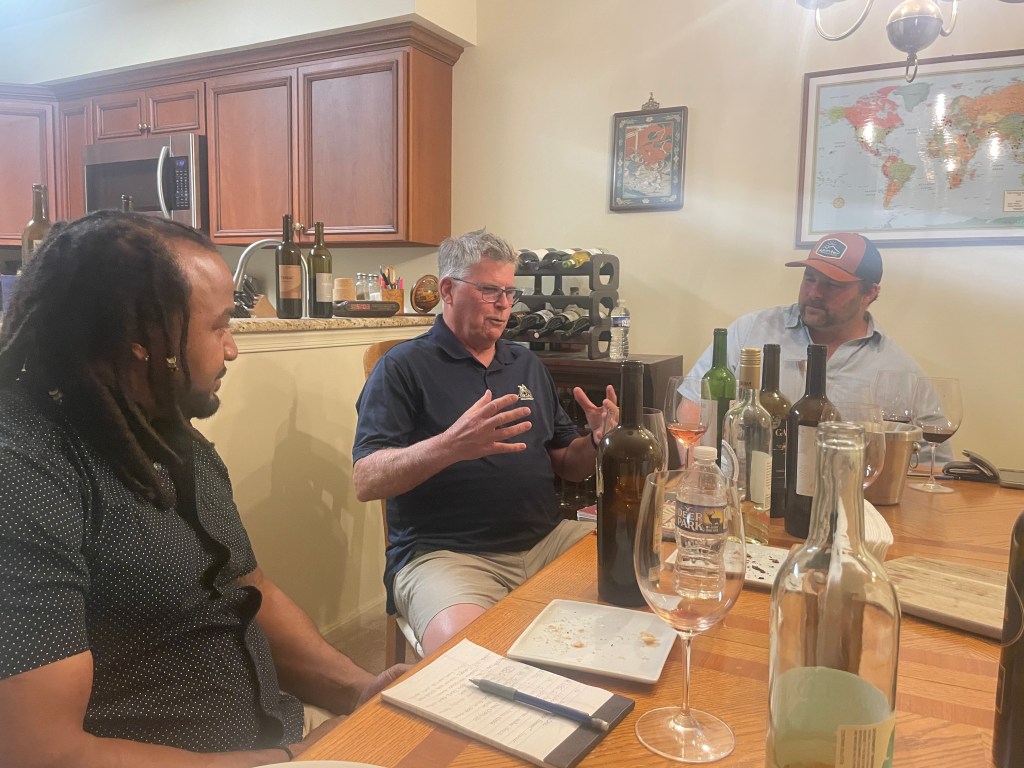
Tasting & Scoring Methodology

Every round my guests picked a favorite. I usually also wrote down the region it came from (if I remembered to ask). After we finished all 8 wines we did a vote to decide the top 2 of the day and revisited them in a ‘Finalist” round.

It was hard to find the specs on many of these wines. I suspect more than a few had a little something else blended in. For half the wines I couldn’t find anything that proved/denied these were 100% varietal wines.

The Contenders:

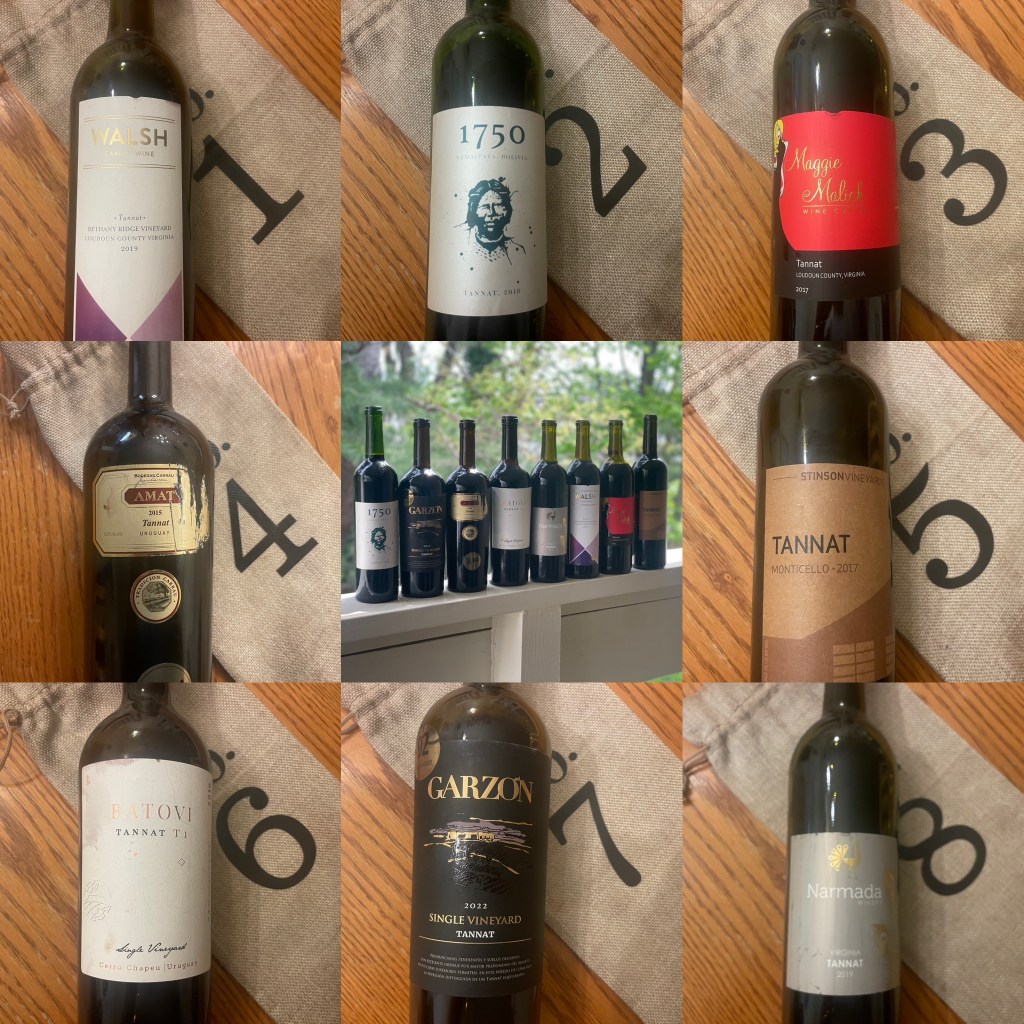
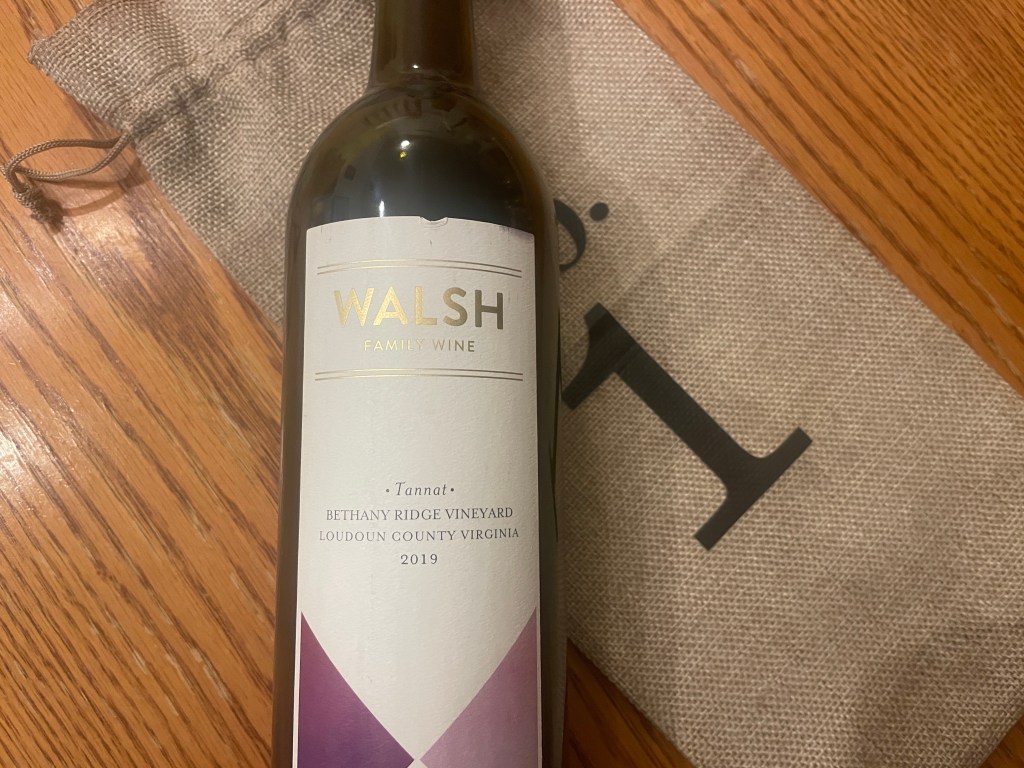
  1. Walsh Family Wine 2019 Tannat (Virginia) (90% Tannat/10% Cab Sauv)
  2. “1750” Uvairenda 2018 Tannat (Bolivia)
  3. Maggie Malick 2017 Tannat (Virginia) (95% Tannat/5% Merlot?)
  4. Amat 2015 Tannat (Uruguay)
  5. Stinson 2017 Tannat (Virginia) (100% Tannat)
  6. Batovi “T1” 2016 Tannat (Uruguay) (100% Tannat)
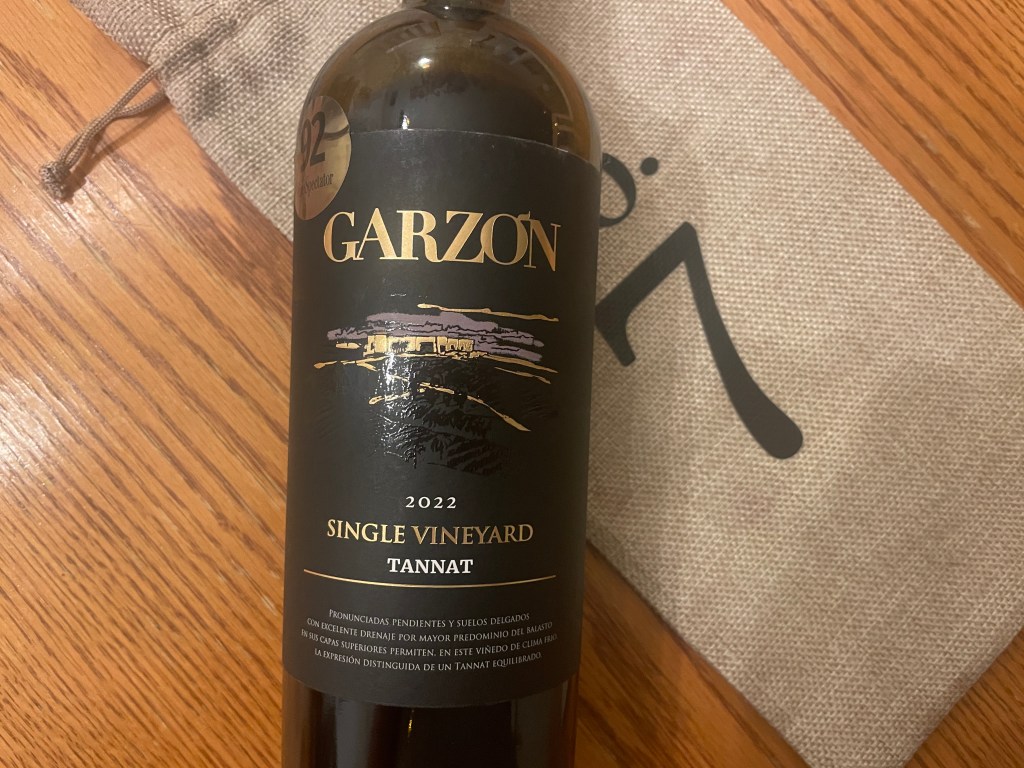
  7. Garzon 2022 Tannat (Uruguay)
  8. Narmada 2019 Tannat (Virginia)

Flight #1

  • Bottle #1: Walsh Family Wine 2019 Tannat (Virginia) (5 votes; round winner)
  • Bottle #2: 1750 Uvairenda 2018 Tannat (Bolivia) (2 votes)
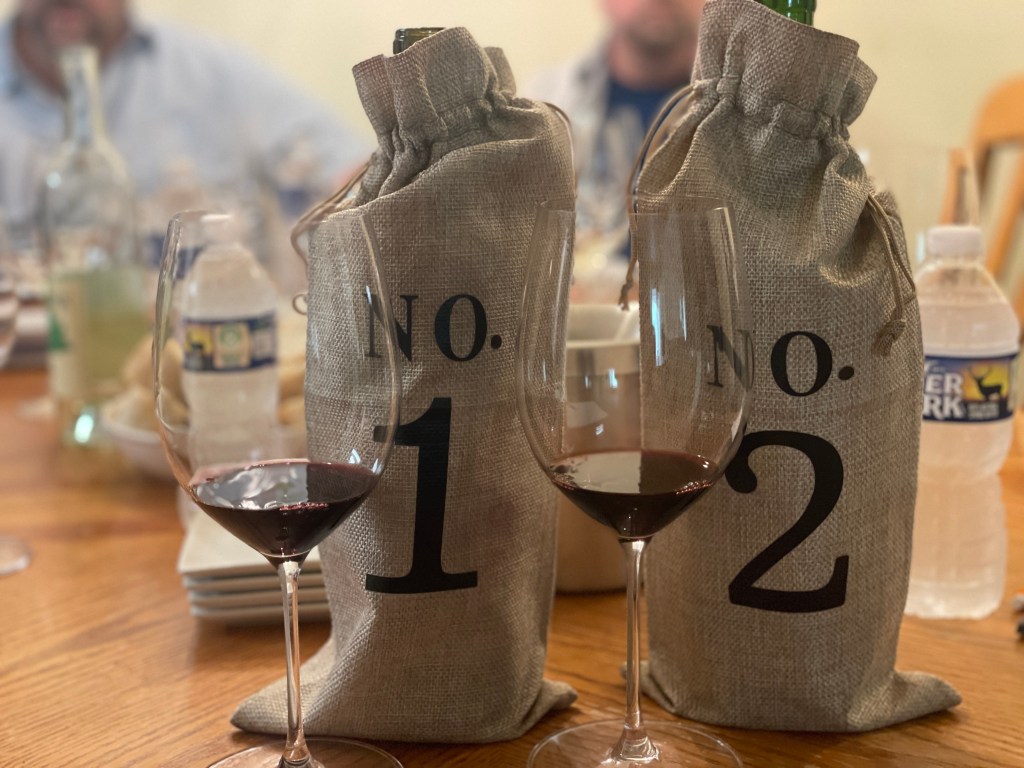
Bottle #1 / Walsh Family Wine 2019 Tannat (Virginia). On the nose a variety of notes were mentioned, including cassis, lilac, and/or cocoa. A soft mid-palate with notes of cedar box and smoke. A good balance of fruit and tannin.

Bottle #2 /1750 Uvairenda 2018 Tannat (Bolivia). Slightly more aromatic than the first wine. It started off with a chemical or spice nose, while the descriptor ‘cheesy’ was also mentioned. The spice was there on the palate but wasn’t as prominent as the nose suggested. It had an almost grape-y ‘ripasso’-like flavor to it. The fruit wasn’t very strong here. We guessed it probably had some age to it.

I didn’t take notes on which region people thought the wines came from, but it was pretty obvious that #1 was Virginia because it was ‘familiar’ while the mustiness of #2 implied Uruguay.
Votes:

  1. Dan: Voted for #1
  2. Frank: Voted for #1.
  3. Jeremy: Voted for #1
  4. Kendell: Voted for #2.
  5. Matt C: Voted for #1.
  6. Matt F: Voted for #2.
  7. Sedale: Voted for #1.

Flight #2

  • Bottle #3: Maggie Malick 2017 Tannat (Virginia) (3 Votes)
  • Bottle #4: Amat 2015 Tannat (Uruguay) (4 Votes; round winner)

Bottle #3 / Maggie Malick 2017 Tannat (Virginia). The oak was noticeable, with people saying it was either borderline too much or maybe the oakiness level was right, but it had too high a toast factor on the oak.

That said, after we got past that oak it had nice fruit and lots of acidity. Nutty and toasted oak/violets were mentioned. Some earth notes as well.

Bottle #4 / Amat 2015 Tannat (Uruguay). Bright acidity. Notes of plumb, wildflowers were mentioned. The guests who preferred this wine felt it had a balance of red fruit and leather. Tannins were well integrated. Some felt it was the better balanced of the two. It was also lighter and felt less alcohol-y than #3. Maybe it was a blend, but I can’t confirm that.

Votes:

  1. Dan: Voted for #3; felt it was Virginia.
  2. Frank: Voted for #4; felt it was South America.
  3. Jeremy: Voted for #3; felt it was Virginia.
  4. Kendell: Voted for #3, felt it was Virginia.
  5. Matt C: Voted #4, felt it was from South America.
  6. Matt F: Voted for #4; felt it was South America
  7. Sedale: Voted for #3; felt it was Virginia.

Flight #3

  • Bottle #5: Stinson 2017 Tannat (Virginia) (5 votes; round winner)
  • Bottle #6: Batovi “T1” 2016 Tannat (Uruguay) (2 votes)

This was universally judged to be our favorite round of the day. By coincidence, both went to the ‘finalist’ round. It wasn’t planned that way; I had no idea in advance these two would be ‘ringers’; my pairing just happened to have the top 2 wines in the same initial round.

While most wines of the day were almost always easily identifiable by their country of origin, this round through us for a loop because both had “South America” vibes. We mostly still guessed them correctly, but I wouldn’t judge those who thought the Virginia wine was from Uruguay.

Bottle #5 / Stinson 2017 Tannat (Virginia). “Damn it’s good!” was quickly mentioned. Red and dark fruit notes on the palate. Beautiful depth. More fruity than sweet but with lots of complexity. Tannins were well integrated. Tea leaf on the nose; even a hint of butter.

“I need this with rib eye” was my favorite descriptor. I later learned it was 15.1% alcohol (the highest of any wine in the event), but it was so well balanced we didn’t notice it.

Bottle #6 / Batovi “T1” 2016 Tannat (Uruguay): Lots of great descriptors. Red fruit and ‘nice’ tannin. Creamy, soft texture; even a candied component. Good acidity and mouthfeel. Smokey and complex. Sour cream/sour cherry on the nose.

Someone mentioned this was a ‘sit by the fire’ wine. I was surprised it was 15.1% ABV; it didn’t taste ‘hot’ at all.

Votes:

  1. Dan: Voted for #5; felt it was Virginia.
  2. Frank: Voted for #5; felt it was South America.
  3. Jeremy: Voted for #6.
  4. Kendell: Voted for #5; felt it was Virginia.
  5. Matt C: Voted for #5; felt it was Virginia.
  6. Matt F: Voted for #6; felt it was South America.
  7. Sedale: Voted for #5; felt it was Virginia.

Flight #4

  • Bottle #7: Garzon 2022 Tannat (Uruguay) (5 votes; round winner)
  • Bottle #8: Narmada 2019 Tannat (Virginia) (2 votes)

Bottle #7 / Garzon 2022 Tannat (Uruguay). This wine was tight; we were guessing it was a younger wine. Ruby-esque color made us guess it may have been higher in alcohol. Tea leaf nose; soft tannin; ‘shy’.

It needed time to open up, but when it did we had descriptors of smokiness with some intensity and alcohol notes. Soft on the palate but drinkable. Hint of cocoa. Raspberry nose/ dark chocolate palate.

Bottle #8 / Narmada 2019 Tannat (Virginia). This was smoother and more ‘neutral’ compared to #7. Notes of prunes, cocoa spice, and licorice were mentioned. Soft palate, velvety, quaffable.
Votes:

  1. Dan: Voted #7
  2. Frank: Voted #7
  3. Jeremy: Voted #8
  4. Kendell: Voted #7, thought it was Virginia
  5. Matt C: Voted #7; thought it was Virginia.
  6. Matt F: Voted #8; thought it was South America
  7. Sedale: Voted #7

Finalist Flight

  • Bottle #5: Stinson 2017 Tannat (Virginia) (5 Votes; Event Winner)
  • Bottle #6: Batovi “T1” 2016 Tannat (Uruguay) (2 Votes; Runner Up)

Wines #5 and #6 were voted to advance to the ‘finalist’ round. After a 2nd tasting I did a poll of our favorite wines, and #5/Stinson was the event winner. The vintage was so strong, winemaker Rachel Stinson Vrooman later told me, “It made itself.”

#6/Batovi was the runner up. There was a consensus that Walsh Family’s 2019 Tannat was the third favorite, although we also liked Amat and Maggie Malick.

The Stinson and Batovi wines opened up just enough to make our 2nd tasting just different enough to make some of us rethink our votes. Most kept theirs, but Dan and I switched teams (him to Uruguay, me to Virginia).

I don’t know if this is surprising or not, but the top 2 wines were 100% Tannat. I still suspected several had something else blended in (the Walsh Family Wine definitely did; I suspect Maggie did as well).

In summary, the Stinson was judged to be a “I want this to drink by myself” wine (preferably with steak), while the Batovi was more versatile. It was a very tough choice to pick between the two. Dan of MyNoVaWineBlog was VERY happy he brought the winner!

  1. Dan: Voted #6/Batovi
  2. Frank: Voted #5/Stinson
  3. Jeremy: Voted #5/Stinson
  4. Kendell: Voted #5/Stinson
  5. Matt C: Voted #6/Batovi
  6. Matt F: Voted #5/Stinson
  7. Sedale: Voted #5/Stinson

Lessons Learned:

Both Virginia and Uruguay (with an assist from a Bolivian wine) presented very well. 2 rounds went to Virginia, 2 for Uruguay, and the ‘top’ wine was Virginia.

In terms of a tasting profile, the Virginia wines tended to be heavier on oak than their South American counterparts. All of them had some cedar box on the nose and trended towards dark fruit on the palate.

We felt the South American wines didn’t consistently have the same tasting notes, although most had notes of dried fruits/raisins. We also felt they may have spent at least some time in steel.

Yes – Virginia makes amazing Tannats. Nice to see Wine Enthusiast noticed!

Tannat Night at Maggie Malick Wine Caves: 2021 Edition

In late July we conducted our second Tannat Night, hosted by Mark and Maggie Malick. It was a different crowd from last year but nevertheless included around a dozen experienced wine professionals to ‘talk Tannat’, including winemakers or other representatives from Barrel Oak Winery, Bluemont Vineyard, Delaplane Cellars, Fabbioli Cellars, Effingham Manor, and our host Maggie Malick Wine Caves.

This time we had a wider assortment of Virginia wine, especially in terms of vintage year. The outstanding 2017 vintage was especially well represented. We had several 2017s at our last event but often felt they were on the younger side. 17 months made a difference in smoothing these tannins out.

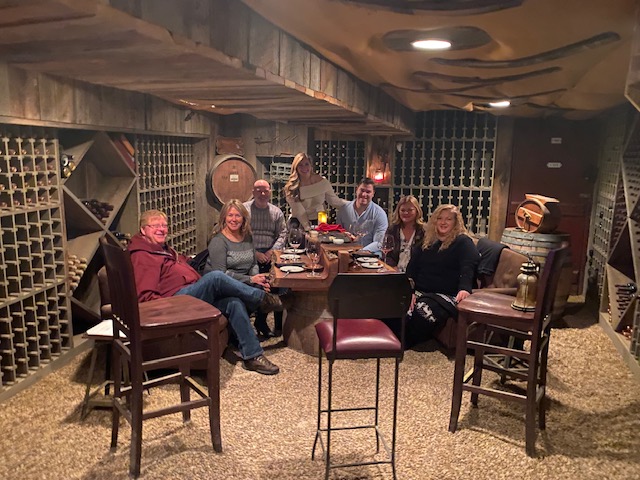
Our Tannat crew

For those unfamiliar with the variety, Tannat is a high tannin & acid grape originally from the Madiran region of France. While Madiran is its spiritual home Tannat is now better known as the national grape of Uruguay. Small plantings also exist in California, Argentina and Australia.

But Tannat is a good fit for Virginia’s terroir as our hotter summers makes us suitable for high acid wines, as the heat reduces their acidity to more manageable levels. While it currently constitutes just over 2% of Virginia’s vinifera plantings, over the past decade local growers have doubled their acreage from around 20 acres in 2009 to almost 50 in 2019. Its main drawback is its vines are susceptible to cold damage, an occasional problem given Virginia’s variable winters.

Mark pruning his Tannat vines, guarded by the flag of Uruguay

Tannat can definitely fill the ‘big red’ category for Virginia that Cabernet Sauvignon holds for California. It’s inky and big and will blow you away. Mark Malick calls it a ‘go big or go home’ wine. A number of Virginia wineries use it as a blending grape to give their reds color and structure. Many of these – especially in Charlottesville and Northern Virginia – also produce single-varietal bottles.

In deciding the lineup I did my best to compare a Virginia wine vs. another example in every round, although we eventually ran out of non-Virginia wines for 1-1 comparisons. I also started us off with several of our best wines, on the assumption that over time tasting would become…more difficult.

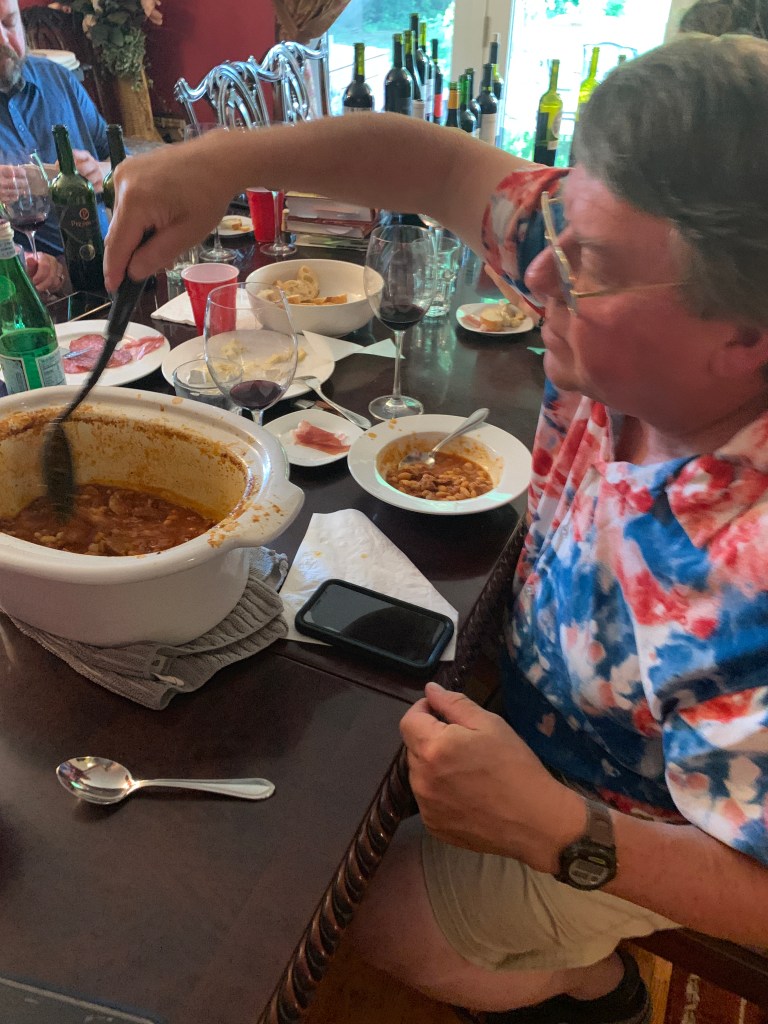
Having a loud, opinionated crowd made it a fun night – although sometimes we seemed to forget to talk about the wine right in front of us. To top it all off Mark made us cassoulet, which we enjoyed after the 4th round. All tasting descriptors listed here are what was I was able to glean from different participants, as well as my own notes.

Mark and his cassoulet

Round 1

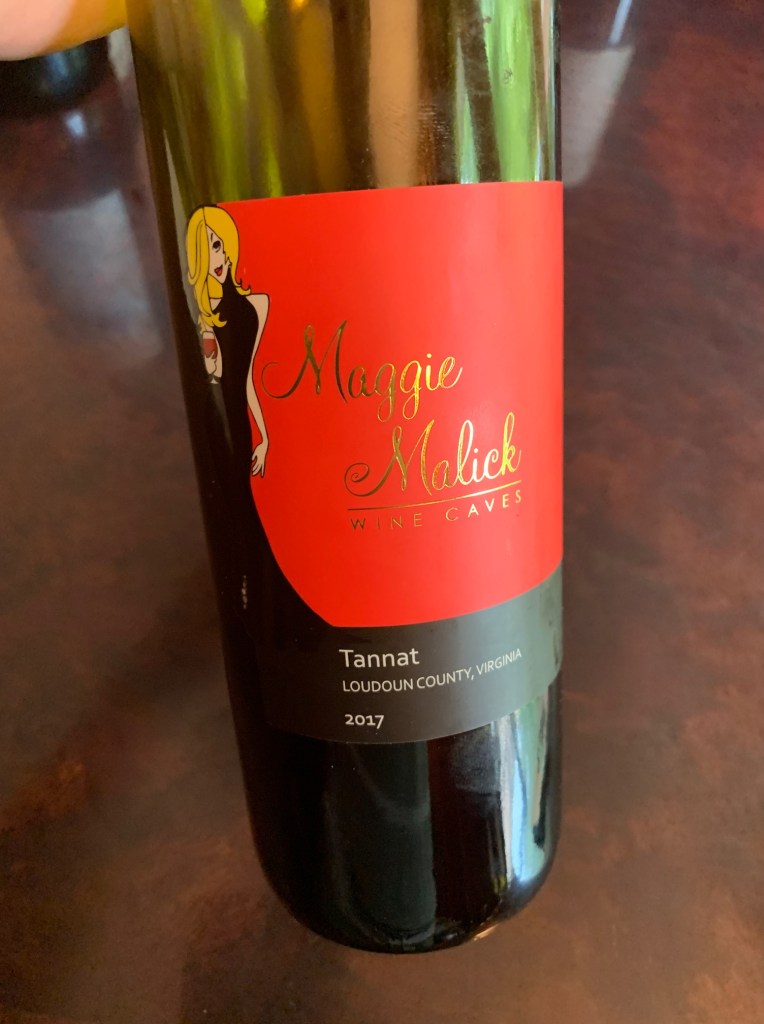
2017 Maggie Malick (Virginia): This wine won the 2021 San Francisco Chronicle Wine Competition (SFCWC) for best Tannat in class, beating three other double gold winners. “Rich” was our immediate byword. Its American oak was noticeable on the nose. This wine had lots of structure, with obvious cherry and raspberry notes and a lingering finish. We felt this was one of the best of the night (more than a few would say it was the best).

2017 Kerrville Hills (Texas): This also won double gold at the 2021 SFCWC, and was graciously gifted to us by Kerrville for this tasting event. The crowd immediately detected a lighter nose than what we were expecting. Participants voiced different perceptions of its tannin level, ranging from lighter to heavier tannin structure. It was fruit forward, although not as much as some of our following wines. We noted an interesting contrast in that it was darker in color but had a lighter mouthfeel. “Sharp” tannin structure. Everyone really enjoyed this bottle.

Round 2

2018 Effingham (Virginia): The night’s third double gold winner at the 2021 SFCWC competition (right below the Kerrville wine). These three double golds couldn’t be more different. The Effingham was a softer, less intense Tannat, representative of Virginia’s rainy 2018 season. 14 months in Virginia oak. Some detected a “warm-sweet” note to it. All around we enjoyed it.

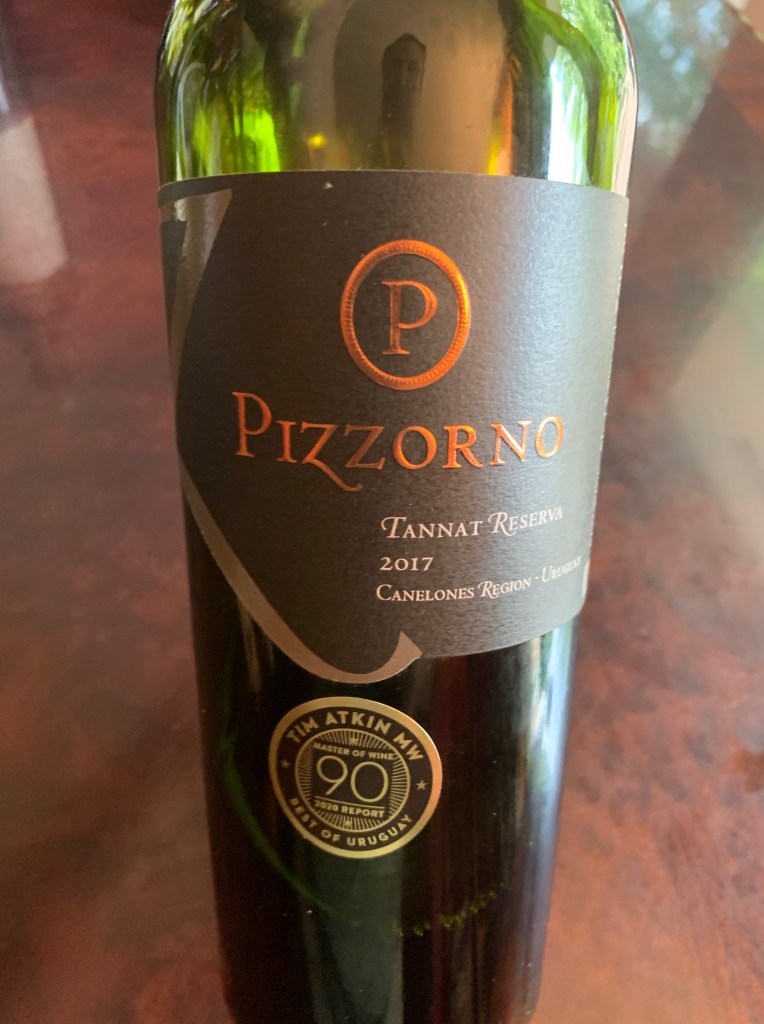
2017 Pizzorno (Uruguay): Our first Uruguay Tannat of the evening. “Funky” was the key adjective. This wine had some weight to it. Some participants detected a little brett (aka Brettanomyces yeast) but not the ‘bad’ kind of brett that winemakers guard against. All around, I think people didn’t love but it but we still generally liked it.

Round 3

2014 Maggie Malick (Virginia): Our 2nd best in class/double gold of the evening, this time from the 2017 San Francisco International Wine Competition. This wine spent 2-3 years in barrel. Coco on the finish. Subtle oak, grippier tannins. Another hit from Maggie.

2010 Barrel Oak (Virginia): One of our oldest vintages of the evening. This was a lower acid, higher alcohol wine that ‘tastes great…for an 11 year old wine’. Considering its vintage it still aged well; the fruit may have been on the decline but we felt it had some fruit notes left. Doug Fabbioli commented this wine disproves comments from those critics who claimed the 2010 vintage wouldn’t stand the test of time.

Round 4

2017 Effingham (Virginia): This wine left everyone impressed, and was a group favorite alongside the 2017 Maggie Tannat. Notes of coco, bramble fruit, raspberry and leather. Well balanced and spicy.

2016 Domaine Du Moulie (Madiran, France). This was a very different wine than what we’ve had so far. No wood characteristics, lots of fruit. Tasting notes included mint & eucalyptuses on the palate, perhaps some spice. But overall, the tannins were muted – a trait we felt was due to Madiran’s growing conditions.

Round 5

2016 Jake Busching (Virginia): Good acid and fruit. Nicely balanced & good finish. Some described ‘sweet fruit’ notes up front. The oak was well integrated. It was a little vegetal but this is one of the few times I don’t think of that descriptor as a negative.

2013 Michael David “Inkblot” (Lodi, California): At 14.8% alcohol it was ‘hot’. Coco characteristics, dusty tannin. Overly ripe fruit. Our only California wine of the evening. We were surprised we didn’t like it more…maybe we all have too much of a Virginia palate?

Round 6

2017 Delaplane Cellars (Virginia): Gold medal in the Virginia Governor’s Cup. Made in new Hungarian oak. It was lingering and accessible. It was well received although I didn’t get a clear profile of the wine.

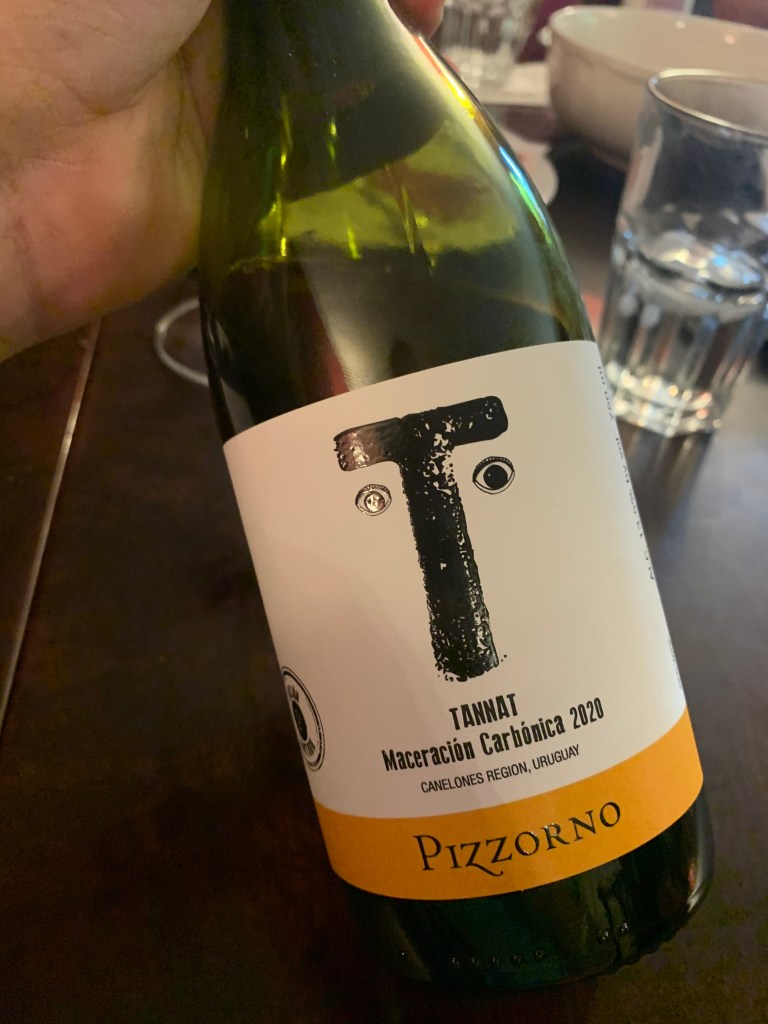
2020 Pizzorno (Uruguay): One of the more divisive wines of the night, as it was made using carbonic maceration. Bright fruit notes. Maggie noted it was meant to be served chilled, so what was in our glass may not have been its best representation. While few of us enjoyed it, we acknowledged that it shouldn’t be judged in the same way as our other wines as it was a different way of making Tannat.

Round 7

2009 Fabbioli Cellars (Virginia): Oldest vintage and richest nose of any bottle that evening. Fruit was on the decline but we could tell it was a good wine, the “Sofia Loren of wines” for that evening if you will. Herb and sweet liquorish on the nose.

2016 Garzon (Uruguay): Put it this way – it was good for $20. It was obviously not an ‘artisanal’ wine, but instead mass produced to satisfy a large audience. Doug had some funny analogies to describe his opinion of a mass produced yet satisfying wine.

Round 8

2017 Hiddencroft (Virginia): We felt this wine was fruit forward, with more prominent wood (at least compared to the others). It also seemed a younger wine, as the tannins seems ‘green’.

2017 Bluemont (Virginia): Made in neutral barrels. Maybe mild lavender on the nose. On the palate, comments varied from tobacco and chocolate nibs. Well balanced but young.

Round 9

2017 Walsh Family Wine (Virginia): Tasting notes were difficult by this point, which may not be fair to Walsh since I’ve had it before and always enjoyed it. Some detected heavier oak. It had intensity but not as much fruit as the others. “Dark” and “big’ were the key adjectives.

2019 Briedé Family Vineyards (Virginia): Sweet, bright, young. Those are the only tasting notes you get after you’ve tried 18 Tannats in an evening.

In summary – the two favorites were the 2017 Maggie and the 2017 Effingham, which shouldn’t be a surprise given what a strong year that was. After those two it seemed we enjoyed a broad grouping, including (in no particular order), the 2016 Texas Kerrville, 2014 Maggie, 2016 Jake Busching, 2017 Delaplane, and 2017 Bluemont.

Two of the best of the night!

What did I learn?

Most importantly, I think we demonstrated that Tannats from different states and countries had distinct stylistic differences. I’d go even further in saying the examples from Virginia were most diverse of the lineup, which shouldn’t be surprising given the different growing conditions in the state.

Some Virginia Tannats were more tannin & earth-driven, while others were richer & fruitier. By contrast, the examples from Uruguay and France were uniformly fruit forward. The major outlier was Texas, which was closer in style to Virginia than either Uruguay or France.

Sadly we only had one example (but an excellent one) from the Lone Star State. I believe Texas Tannats are worthy of more sampling…for the sake of science of course.   I fully acknowledge given how many of us have a “Virginia palate” we may be biased in choosing our favorites. That said, I do think the Virginia Tannats we enjoyed that evening were more complex and balanced than the Uruguay and French examples. As Virginia summers become even warmer, perhaps we’ll see even more of Tannat in the upcoming years.

Our Tannat lineup

Chateau O’Brien Winery & Vineyard

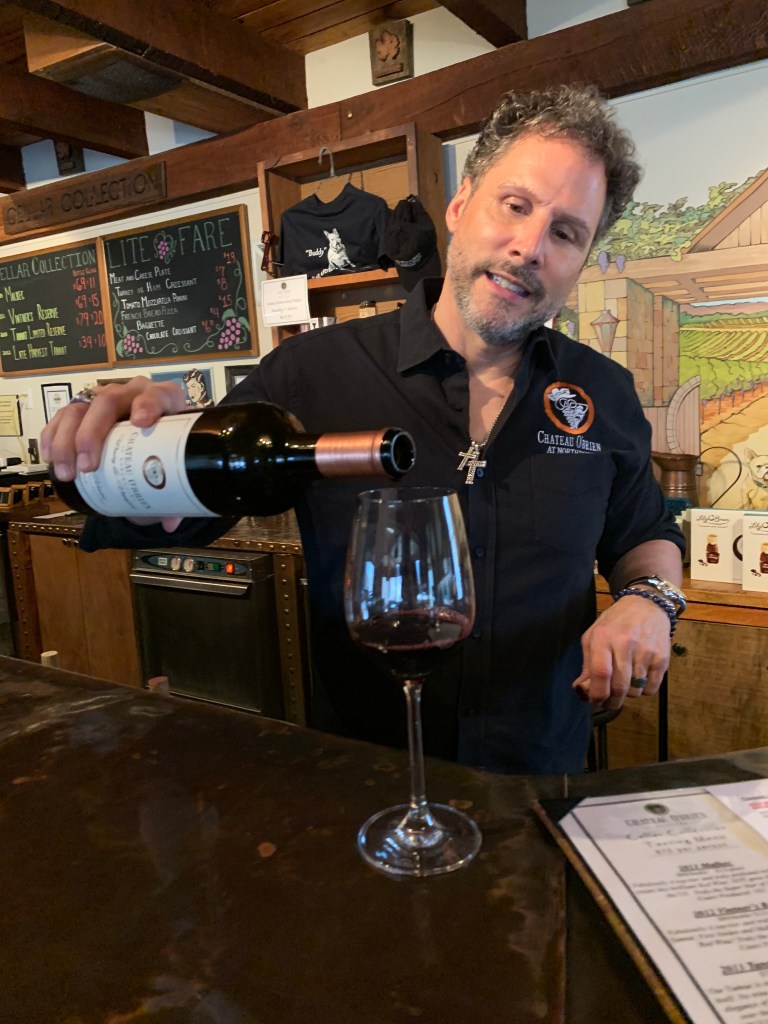
I don’t know what it is about wine tasting, but wine always seems to taste better when the owner is pouring it. Do the stories make it taste better? The setting? Or just the idea you’re getting some kind of special treatment? Well, all of the above was true when I did the cellar tasting at Chateau O’Brien.

Owner Howard O’Brien takes a very hands-on approach to his winery, from blending trials to bottling the wine. But one of his favorite parts of the job is doing cellar tastings, all of which he leads personally. Howard is also a big proponent of my all-time favorite grape in the world – Tannat.

I’d like to think Howard’s Tannat wines helped put this grape on the Virginia wine map. Of the 40-something acres planted in the state, 8 belong to Chateau O’Brien. Not coincidentally, his Tannat won Gold at Uruguay’s Concurso Internacional Tannat Al Mundo wine competition – the only American wine to do so. If you’re going to compete against other Tannat wines, the country whose national grape is Tannat is the place to win.

Located in a refurbished farmhouse with views of the hills of the Blue Ridge, the tasting room has exactly the rustic feel that I look for in a Virginia winery. Although they hold events (I’m especially partial to his St. Patty’s Day celebrations), parties aren’t the centerpiece here – O’Brien is one of the most wine-centric locations I know.

For starters, the wines on the tasting menu are aged longer than possibly any other place in the state. When most Virginia wineries are serving red wines that are 2-3 years old, O’Brien is serving wines that are 7-8 years old.  Their ‘average’ upstairs tasting is the equivalent to a special reserve tasting at most places. To top things off, they serve their wines in Riedel glasses – a touch I rarely see elsewhere in Virginia.

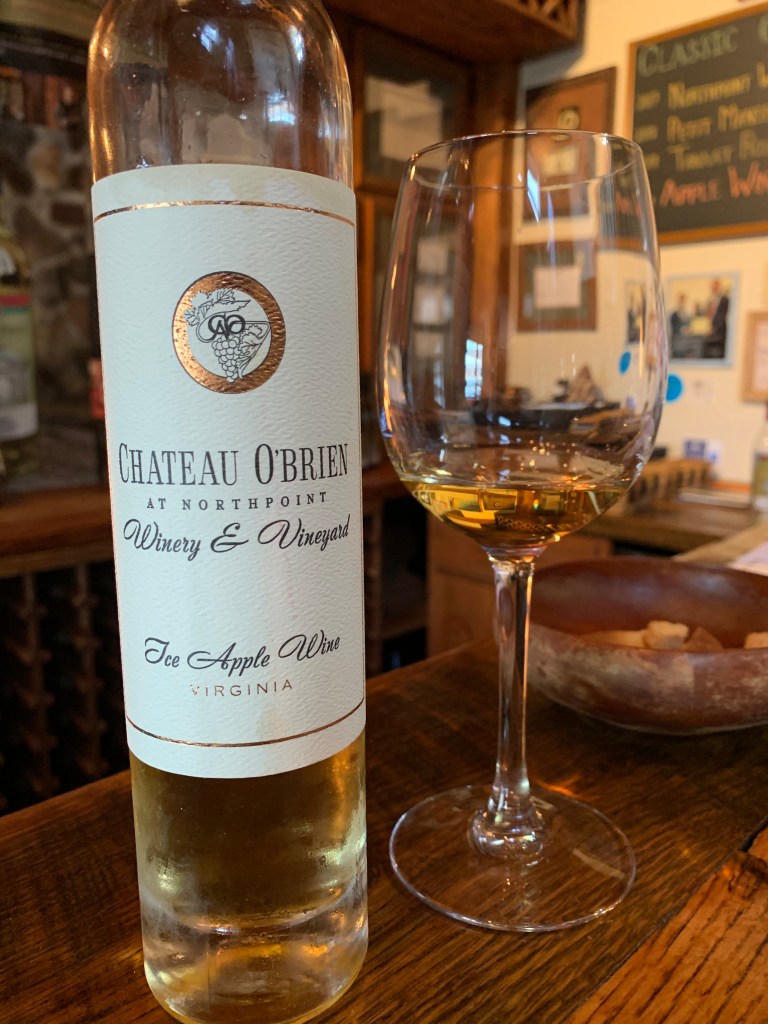
While most of my visits are spent tasting his selection of reds, this time I sampled Howard’s whites and roses. I really enjoyed the easy-drinking 2017 Northpoint White (Chardonnay) and Tannat Rosé, but my favorite this time around was April’s Apple Rosé – one of the most complex roses I’ve had in a while. Rounding out the white tasting was the Apple Ice Wine, an Apple/Blueberry, and a Petit Manseng.

Then off to the reds! But to make this visit special I wasn’t here for regular tasting; today was a visit to the cellar.

It’s not just the wines that make cellar tastings special. I love the intimacy – and the stories. Howard is a real character who’s owned a number of businesses before opening this winery in 2006. As he pours he tells you about the winery and the particular vintages you’re tasting.

You can tell he has an excellent growing location because the fruit profiles of his reds tend towards exceptional ripeness, even varietals like Malbec and Cabernet Sauvignon that aren’t great producers in Virginia. Cellar tastings include at least four wines, although occasionally he throws in a surprise.

2013 Malbec: Excellent! Fruity and complex at the same time. O’Brien is one of the few places in Virginia that consistently produces full-flavored Malbec.

Luigi’s Luscious Red (NV?): I didn’t get the varietals, but my suspicion is its Cab Franc heavy with lots of Bordeaux friends. Spice notes on the nose and palate.

2012 Vintner’s Reserve (Tannat/Petit Verdot/Malbec): Super smooth with a long finish. I mean, George Clooney smooth. It was that good.

2012 Tannat: I’d say ‘save the best for last’ although this was up there with the Vintner’s. Long, long finish, full bodied. You could sense the tannin, but the age allowed them to smooth out.

The Staff (Desert style, Norton/Apple wine blend): This was not part of the cellar tasting but I’ll mention it anyway, since I got it as a treat upstairs. Caveat: I’m not a big fan of Norton. But this was unlike any Norton-based wine I’ve had. It isn’t fortified but it’s exceptionally strong.