2025 was the year I began my deep dive into Oregon wine, specifically the Willamette Valley American Vinicultural Area (AVA). I knew Oregon is the 5th largest wine-producing state in the US, and this particular AVA is synonymous with pinot noir. Unfortunately, that was the extent of my knowledge.
I soon learned how terroir-specific Willamette wines can be. The larger Willamette Valley AVA alone has 11 smaller AVAs embedded within its borders, each with their own unique terroir (by comparison, Napa has 16 sub-AVAs, yet produces more than 10 x as much wine).
I also didn’t realize Oregon is an up-and-coming sparkling wine producer, with production more than doubling since 2022. To better promote this trend, in July 2025 Oregon producers banded together for the inaugural launch of “Method Oregon”, which featured over 50 sparkling wines made in the Méthode Traditionnelle.
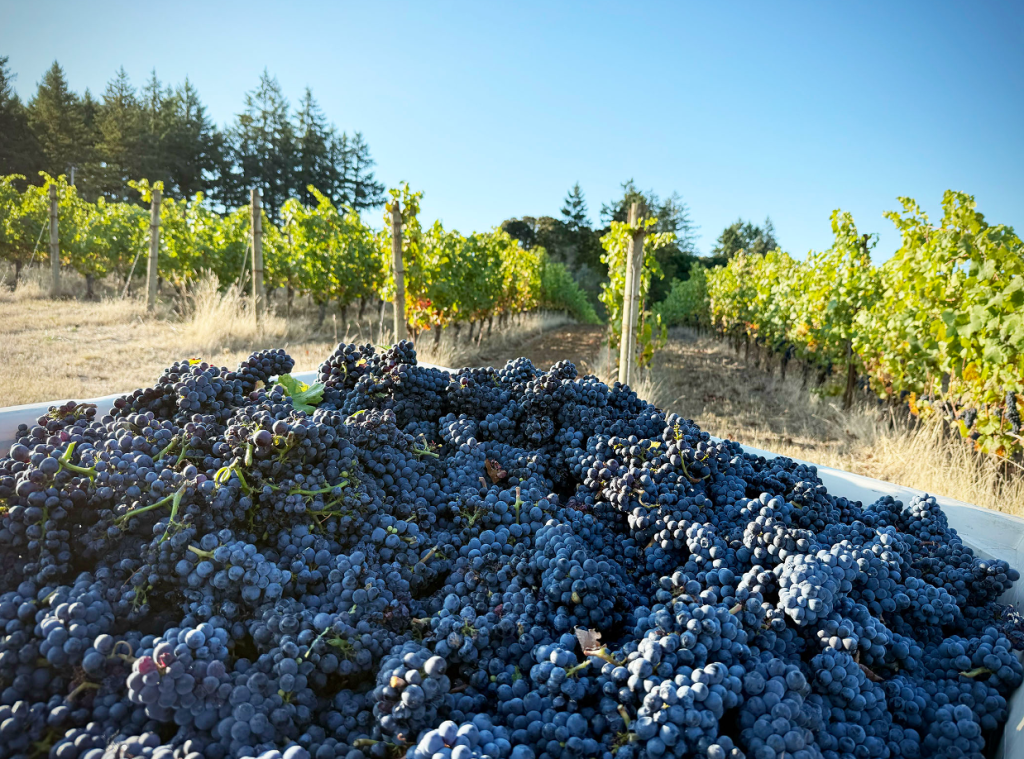
One winery that showcases both of these revelations is Trisaetum Winery, located about an hour SW of Portland. Trisaetum also makes sparkling wine under its Pashey Wine portfolio.
While the winery is in the Ribbon Ridge AVA, Trisaetum also has vineyards in the Dundee Hills and Yamhill-Carton AVAs. They make both vineyard-specific wines and ones that combine all three sites, with pinot, riesling, and chardonnay planted at each (plus some gamay at Ribbon Ridge, and pinot meunier at their Yamhill-Carton site).
Founder James Frey must get a lot of inspiration from his family, since he named both labels after family members. “Trisaetum” is a merger of the names of his two children, Tristen and Tatum. “Pashey” is named after his grandmother, a Romani woman who accepted exile from her community so she could marry James’ grandfather (her photo is tagged to the cork).
My friends and I enjoyed two wines from Trisaetum; their 2023 Willamette Valley Pinot Noir, and their 2021 Pashey Estate Cuvée sparkling.
2023 Willamette Valley Pinot
This bottle is one of Triseatum’s multi-AVA wine. We found it had a ripe-sweet nose with notes of cranberry or purple flower, perhaps accompanied by some black or red cherry, even candied plums.
I thought it had a light earthy palate with soft notes fruit, especially those candied plums again. Those fruit notes were backed by silky smooth tannins, a good mid palate, and some spice notes to accompany a long, persistent finish.
Wine critics note that Oregon pinot is reminiscent of Burgundy, but I think that’s both a compliment and a crutch. I think wines like this demonstrate Oregon doesn’t need the validation of being compared with Burgundy, no matter how high a praise that may be.
Winemaking details: 57% whole cluster press (for added tannin), aged 10 months in 17% new French oak, blended from fruit from all three estate vineyards.
Photo credit: Trisaetum Winery
2021 Pashey EstatesCuvée
This wine is red fruit driven, on the nose and palate. For me, raspberries were prominent on the initial ‘attack’, with a finish that was more mineral driven. My friends had additional notes of their own, with notes of chalk or allspice thrown in.
The winemaker was extremely restrained on the dosage. If you prefer very dry sparkling wines, this is a great choice (I later looked it up and was unsurprised it was only 3.0 grams per liter).
Winemaking details: 72% pinot noir, 14% chardonnay, 14% pinot meunier sourced from all three estate vineyards. It had 3.0 g/L, putting it in the Extra Brut range (translation: it’s pretty darn dry).
One downside of living in Virginia is small west coast producers don’t have a lot of local distribution, so your best bet is to purchase online.
Earlier this year I was gifted a half-case of the top-medaling wines from the 2024 Shenandoah Cup wine competition. I had planned on sampling them earlier, but life got in the way and it wasn’t until recently I had a tasting group come over to help me pop some corks.
If you follow my blog, you’d know that I believe the Shenandoah Valley is the best place for viticulture in Virginia. There are a lot of reasons for this, but the short answer comes down to a combination of the valley’s dry climate and limestone soils. These factors give Shenandoah vineyards great growing conditions, plus a bright acidity that’s hard to replicate elsewhere in the state.
Since 2019, the Shenandoah Wine Trail has held a competition to highlight wines made in the valley. The event winner is announced at a November gala, now held at The Yellow Barn at Shenandoah Caverns. The next event is November 14th; tickets are on sale now.
The 2024 Cup winner was Muse Vineyards’ “Erato” white blend. This aromatic white is something of a departure from the style of previous winners, but I think it was a very suitable pick as it highlights the region’s ability to create a diverse set of offerings.
Yes, you can find plenty of traditional Bordeaux-style reds, plus more Virginia-esque petit verdot and cabernet francs. But the Shenandoah Valley also offers excellent sparkling wines, next-generation hybrids, plus wines made from a growing number of varieties (pinot noir, refosco, grüner veltliner) that are hard to find in Virginia, if not the East Coast.
For my event, I had eight Shenandoah Valley wines that I shared with a group of friends. Six of these wines were in last year’s cup, plus I added a previous winner (Bluestone Vineyard’s Blue Ice) and a new pinot noir from Cave Ridge (which will likely be in this year’s Cup).
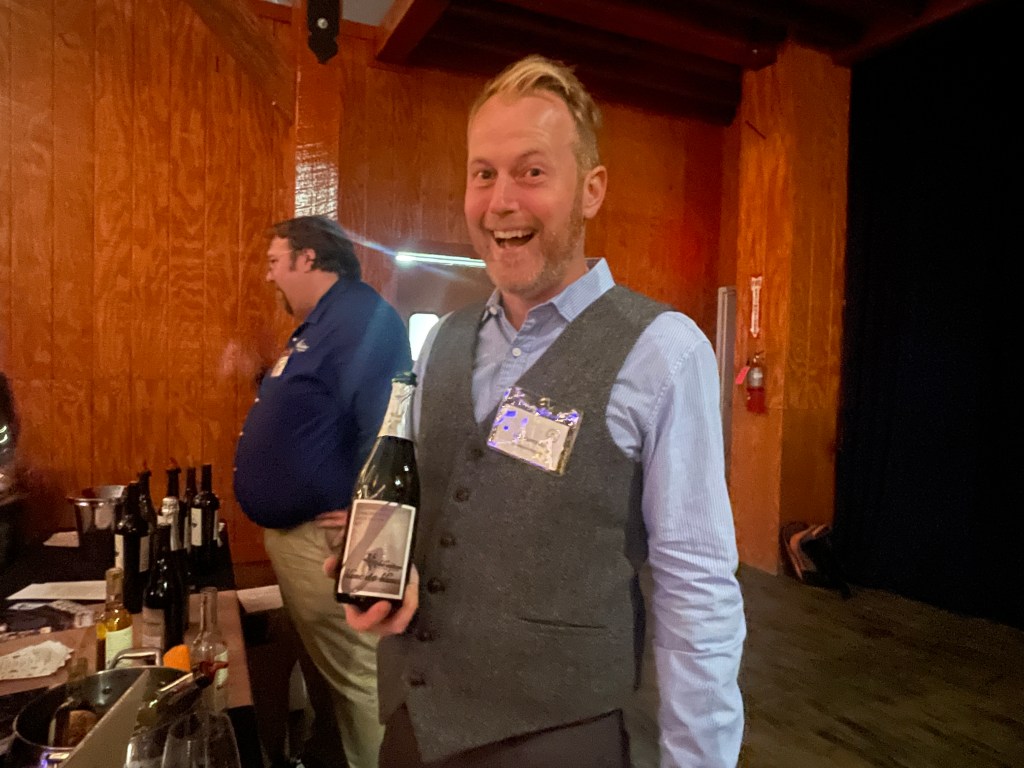
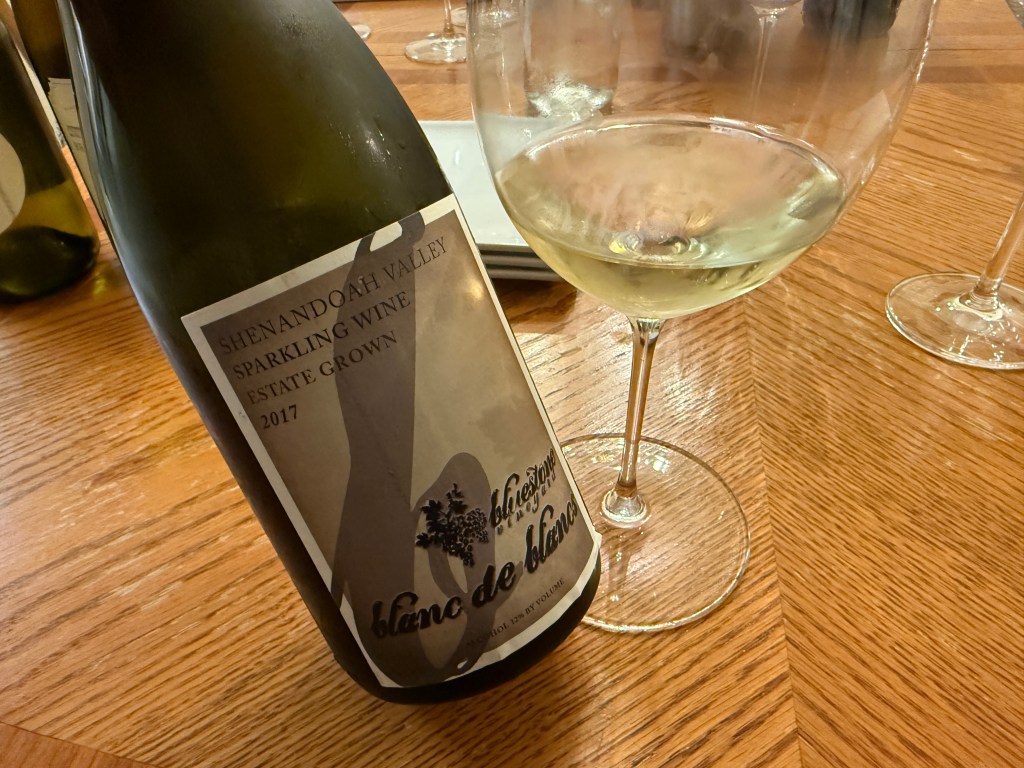
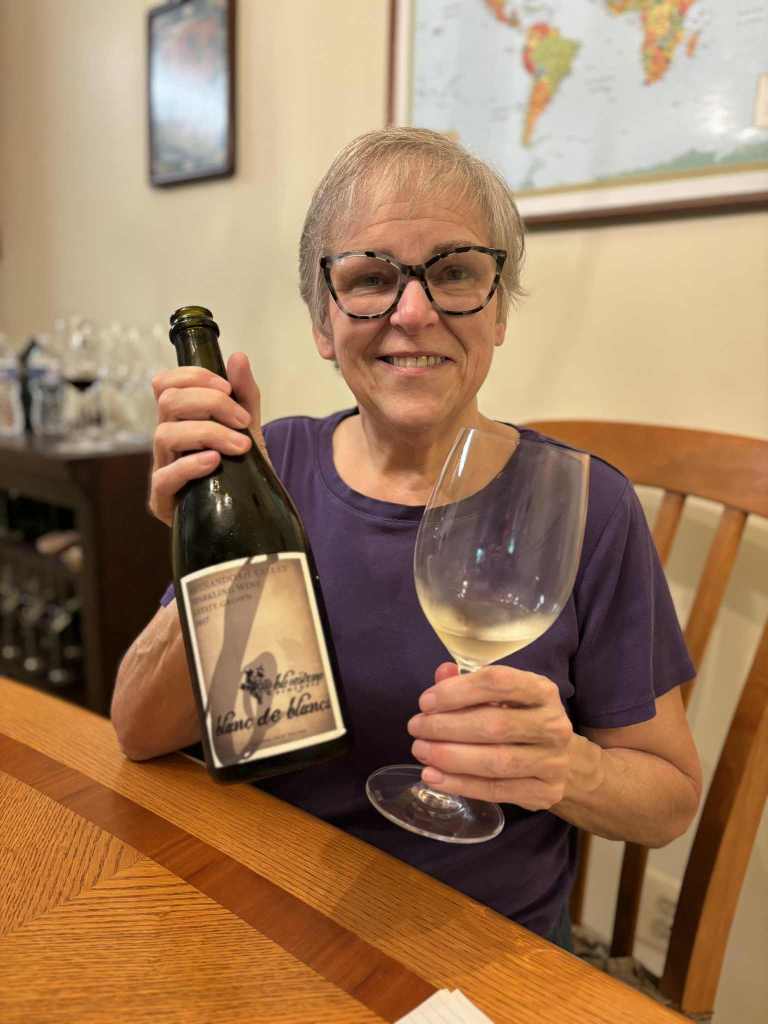
Bluestone Vineyards 2017 Blanc de Blancs. We kicked things off with a sparkling wine, made by Lee Hartman of Bluestone Vineyards.
On the nose we had notes of brioche, perhaps with notes of toast. Some noted notes of lemon cake or lemon icing, but they faded quickly. On the palate, we found notes of green apple, lemon, and Crème Brûlée.
Overall we felt this was a really outstanding sparkling. Rich palate, lingering finish, well balanced. Definitely a winner.
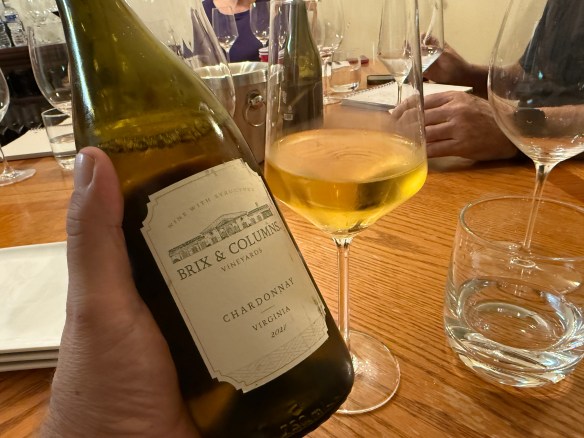
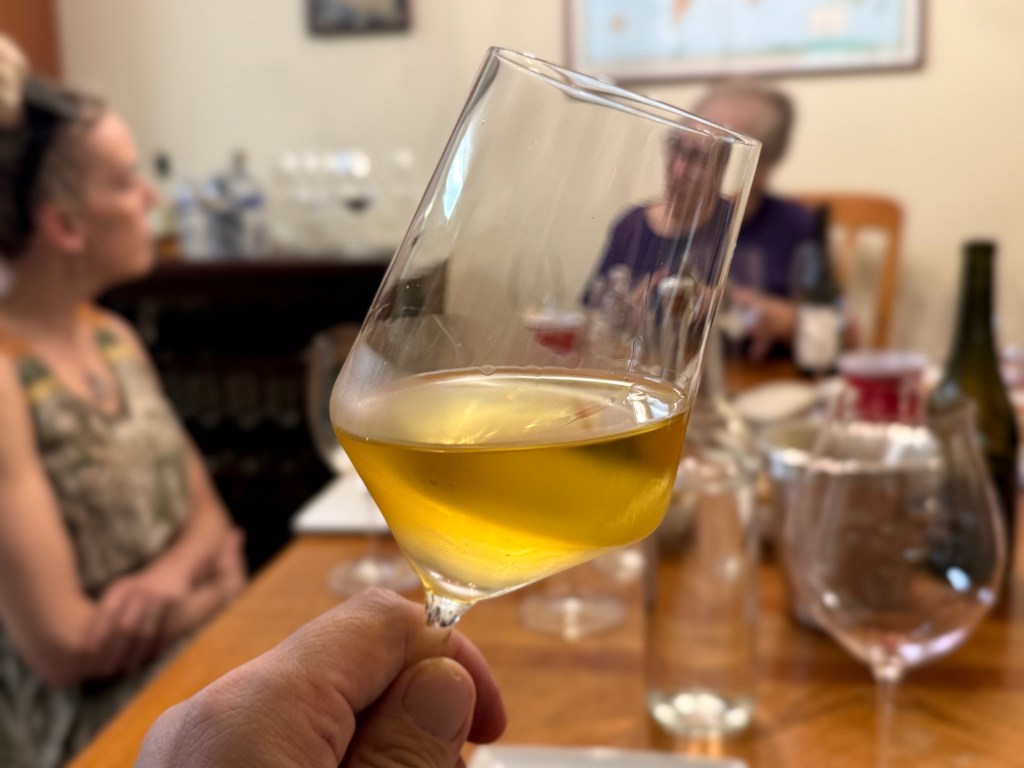
Brix & Columns 2021 Chardonnay. This chardonnay’s rich, almost orange color enthralled us even before we sampled it.
On the nose, my group found a plethora of differing notes ranging from caramel and toast, maybe some butterscotch or lemon peel. At least one of us found a little mustiness.
On the palate it had intense notes of lemon, maybe butterscotch. Butter rum finish. It felt ‘big’ but was actually only 12.4% alcohol.
I’m guessing that those who like oaky California-style Chardonnay lovers would love this wine, even if it actually isn’t buttery. If anything, it had a ‘hot toddy’ quality to it.
While that sounds like a lot of descriptors, this wine was very well balanced. It wasn’t necessarily the style of Chardonnay I would have asked for, but everyone at my table enjoyed it. And again – that color!
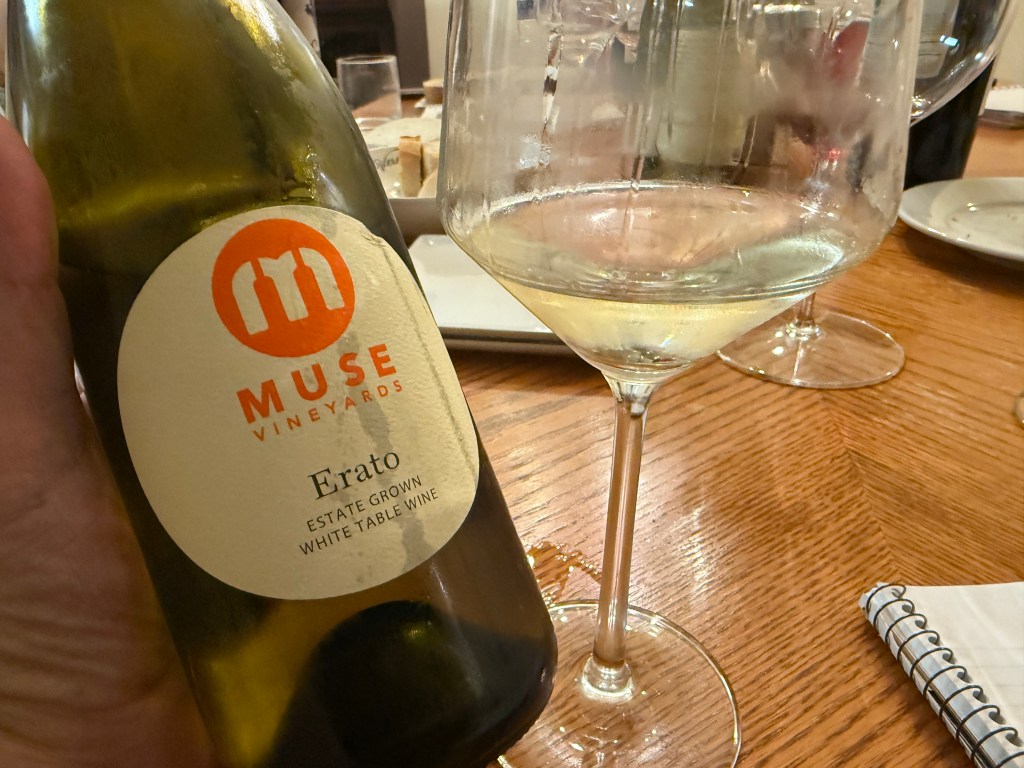
Muse Vineyards NV Erato. Winner of the 2024 Shenandoah Cup. At $21 it’s also a great value for your money.
This white blend of 82% vidal, 7% picpoul, 4% muscat, and dashes of albarino, marsanne, and roussanne is something of an outlier from my usual go-to styles of white wines. That said, it was so interesting I found myself sampling it over and over.
We all LOVED the nose on this wine; perfumy and complex. The 4% muscat went a long way.
My group was all over the place when describing the nose, ranging from jasmine flower, fresh lemon juice, grapefruit, or white peach.
On the palate it was bright, vibrant, presenting higher acid initially but then the white peach notes came out.
I don’t know whether to describe Erato as a porch wine, or a starter to a meal. But I can definitely say it was a really well-crafted wine, with a great mid palate.
Cave Ridge 2023 Pinot Noir. This wine wasn’t part of the 2024 Shenandoah Case, but since it fit with the “Shenandoah Wine” theme I decided to add it in anyway. Cave Ridge planted pinot 5 years ago and is now one of a handful of pinot growers in the state.
This pinot has gorgeous color. Red fruit, cedar and smoke on the nose. Very clean and varietally correct. The complexity makes you want to keep drinking.
This wine was all about the front palate, with good acidity and earthiness. Maybe more fruit on the nose than palate. Very impressive for Cave Ridge’s first pinot noir ever.
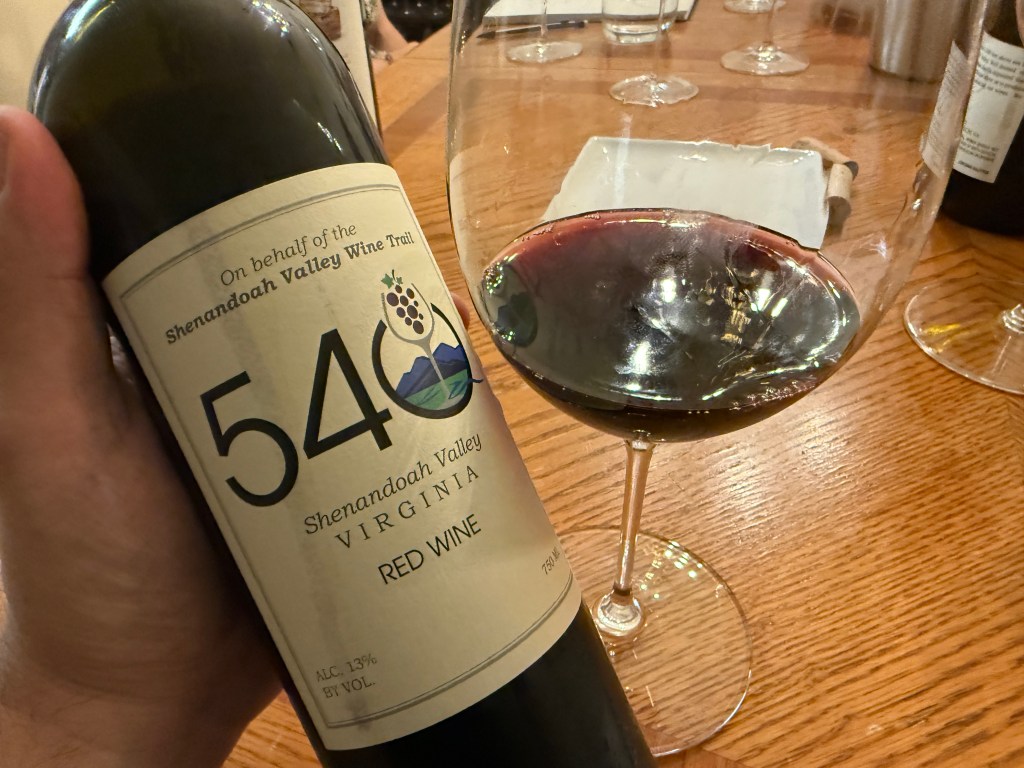
Shenandoah Valley Wine Trail “540”. Named after the local area code, this collaboration between Bluestone Vineyard, Wolf Gap Vineyard, and Kindred Pointe is blend of 2/3rds petit verdot and 1/3rd cab sauv. It’s also a non-vintage wine, using fruit from 2021 and 2022.
I felt it had a vegetal nose, perhaps some pyrazines, but it was by no means ‘green’. It was soft on the palate, with notes of mocha, coffee and smoke. We also found dark fruit notes, but that seemed in the background.
This wine didn’t have the markers of a PV, which I found surprising given its blend. It was easy-drinking enough you could bring this to an event and everyone could enjoy it.
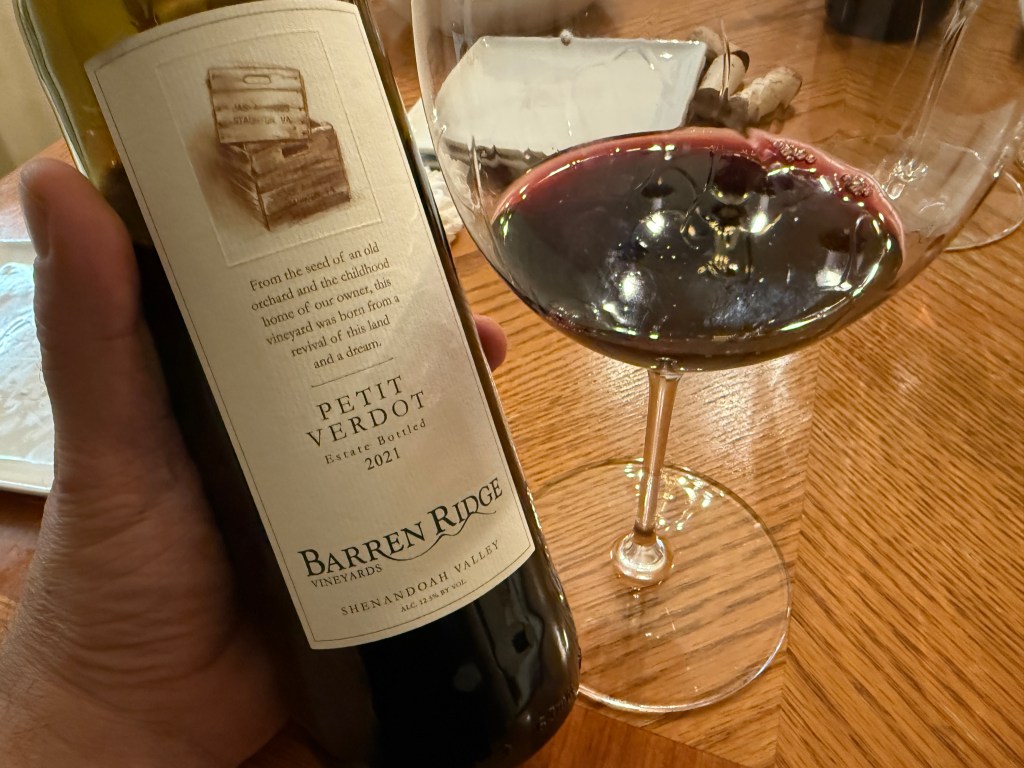
Barren Ridge 2021 Petit Verdot. I tasted and later wrote on Facebook, “This is one of the most PV PVs that has ever PVed. It’s seriously everything you want in a Virginia Petit Verdot.”
I stand by that assessment. On the nose it was a combination of violets, cedar, and black fruit – especially blueberries. There was no mistaking what variety was in this bottle.
The acidity was there, but it wasn’t as prominent as I’ve seen in other PVs. This particular wine was rather fruit forward with tart, ripe fruit, especially blackberry and plum.
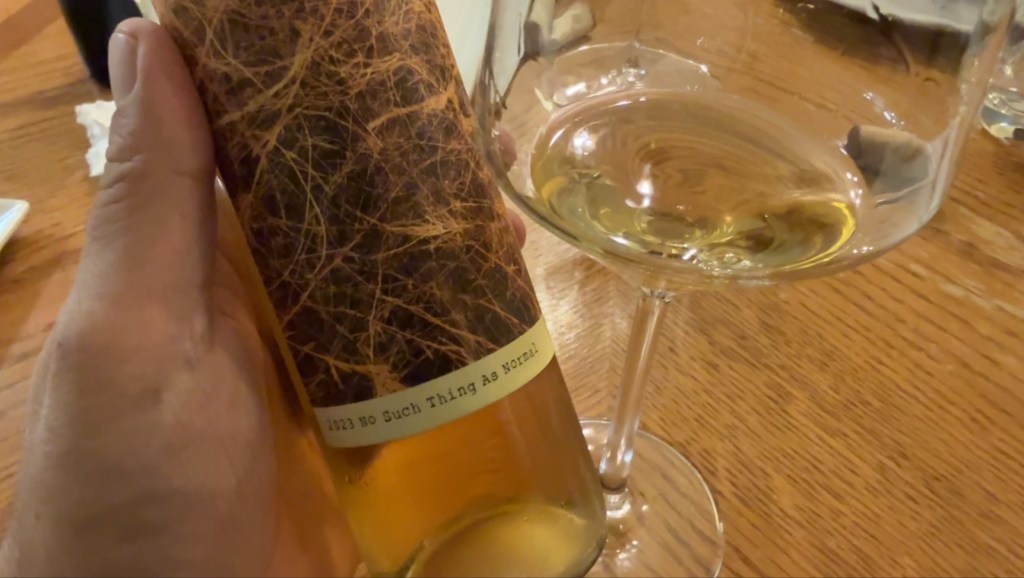
Bluestone Vineyard “No Such Things as Normal” appassimento-style dessert wine. This is part of winemaker Lee Hartman’s ‘Vinyard Designated Series’, made with traminette, petit manseng, and golden muscat.
From the description online, I get the idea this wine wasn’t necessarily planned out in advance. Typically Lee makes ice-style wines, but the year this was made no freezer was available so instead he dried the fruit in a tobacco barn. The result was a barrel-fermented wine with lower sugar and higher alcohol.
The “NSTAN” was very perfume-y, with notes of honey, lime, jasmine flowers, and maybe even a ‘7-Up’ spiff to it. Those notes largely continued on the palate, maybe heavier on the honey and some additional nuttiness. It was sweet, but it wasn’t cloying sweet.
Winemakers love making dessert wines, as such beverages are known for their complexity and ability to be paired with a variety of dishes. But all too often, fancy dessert wines are a hard sell for consumers. That’s a shame because we really enjoyed this one.
Bluestone Vineyard 2017 Blue Ice. This is the style of dessert wine Bluestone is known for, made with traminette. If “NSTAN” is their appassimento-style, this is Bluestone’s equivalent of a German Eiswein.
This wine came off as concentrated honey, with an intoxicating nose. Sweet, but not cloying sweet because the acidity is so high.
The 2025 Shenandoah Cup is only weeks away as I write this…I wonder what’s in the next case! I’m hoping it will include the Cave Ridge Pinot Noir, but we’ll see.
To summarize my findings; Pinot Noir struggles in the warm-weather sites that characterize much of Virginia. The reputation of locally grown Pinot was so bad that when wine-legend Jancis Robinson tasted an Ankida Ridge Pinot in 2011 that she exclaimed in the most back-handed compliment ever; “It tastes like Pinot!”.
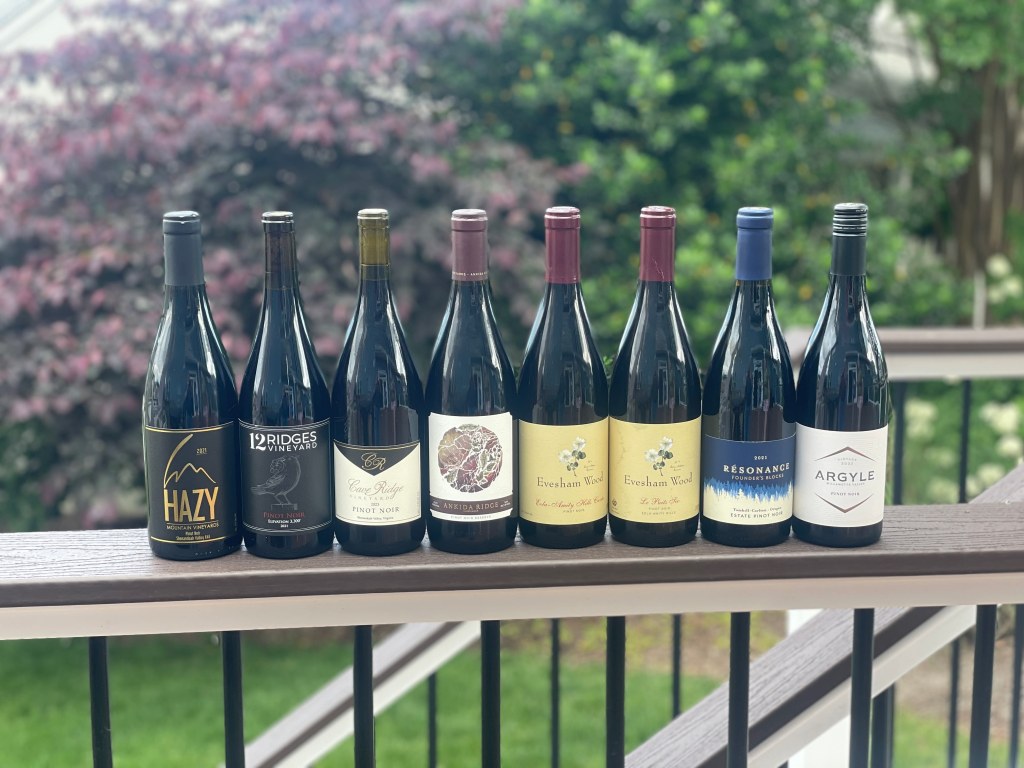
For my event I picked what I felt are the best 4 Pinot growers Virginia has to offer. These vineyards succeed in growing Pinot where previous ones had failed by planting at relatively high elevations: 12 Ridges (3,300 ft), Ankida Ridge (1,800 ft.), Cave Ridge (1,200 ft), and Hazy Mountain (1,600 ft). All are located in the Shenandoah Valley or the adjoining Blue Ridge Mountains, areas that have strong track records for growing cool weather varieties.
My group picked 4 Oregon Pinots to pair them against. I recently attended a wine dinner with Evesham Wood, so I had 2 wines from this quality producer. Other guests brought two more wines; a low-cost Pinot from Argyle, and a high-quality wine from Résonance.
I honestly had no idea how Virginia would fare here. Oregon has a great reputation for Pinot Noir, so I would have been happy if Virginia simply showed well against a heavy hitter in this category.
Tasting & Scoring Methodology
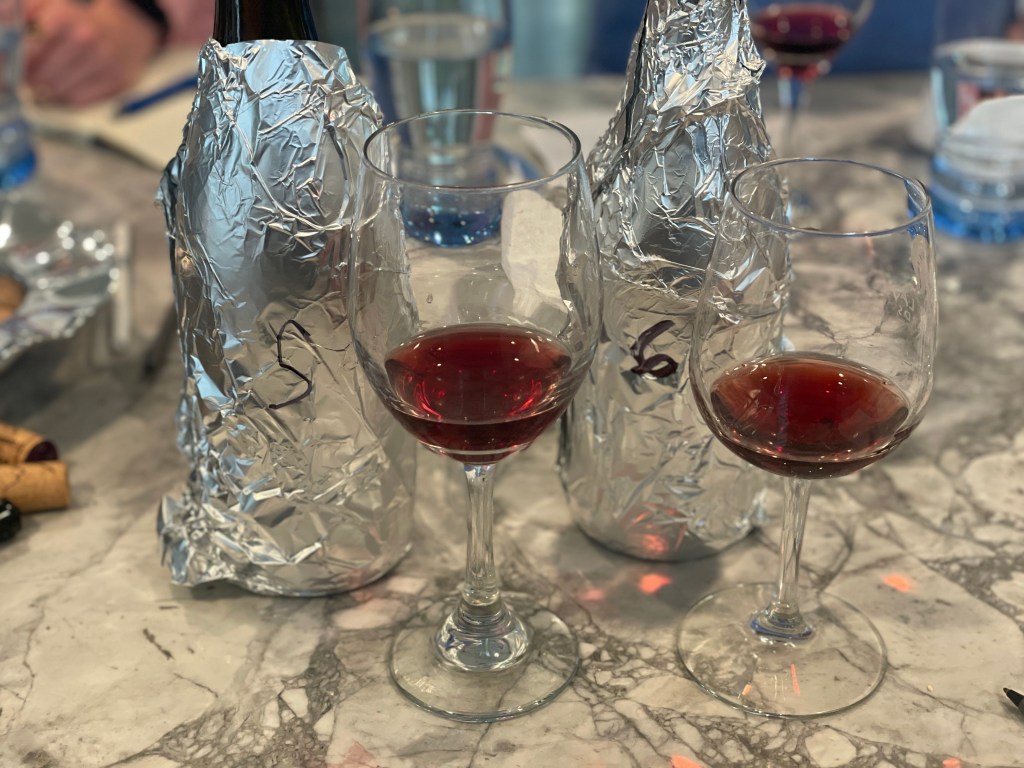
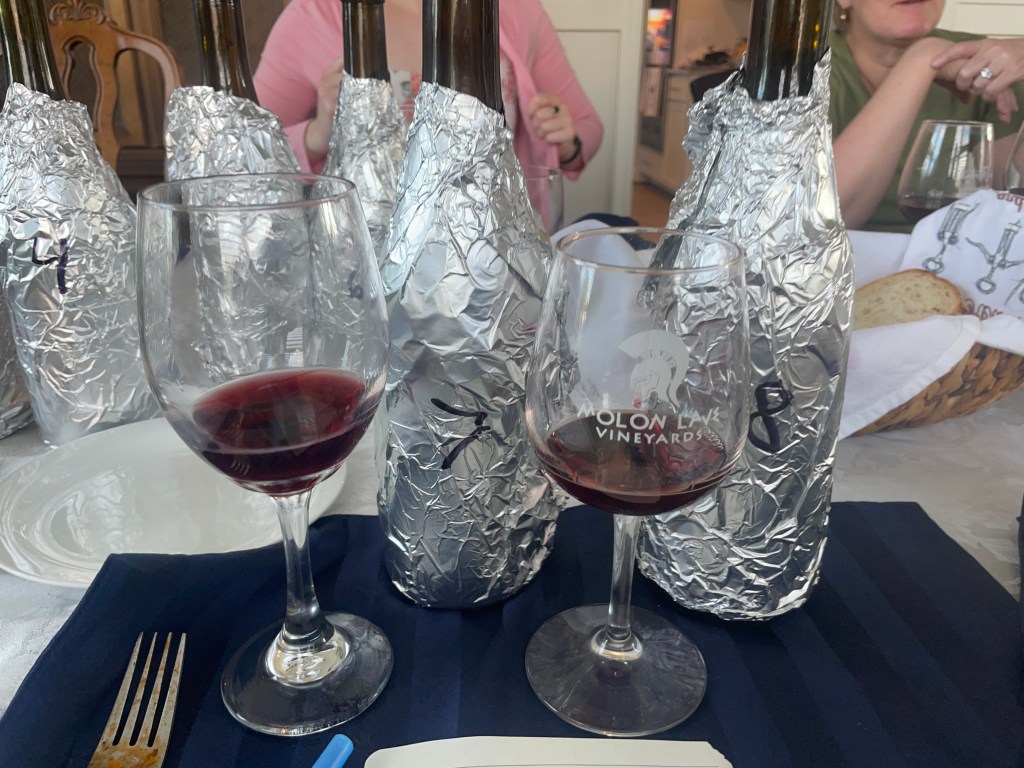
We did 4 rounds of 2 wines, consisting of a Virginia and Oregon Pinot Noir side-by-side, served blind. After we finished all 8 wines, we voted which were our Top 2 of the day. The Top 2 were set aside and revisited during a ‘Finalist” round.
The advantage of revisiting these wines is this gave the Top 2 more time to open up. The introduction of food changed our palates, adding another dimension to the event. After re-tasting them, we declared an overall winner.
The 4 flights were generally arranged lowest-to-highest in terms of price point.
Admittedly this was not our favorite round; not surprisingly as I started with the lower-priced wines and worked my way up.
This round ended with Oregon as the favorite by a wide margin. While this particular Oregon wine isn’t this producer’s top-tier wine, it did have all the rich fruit qualities you’d want from a mid-$30 Oregon Pinot Noir.
Bottle #1 / 2022 Evesham “Eola-Amity Hills Cuvée”. Overall we felt this wine showcased fresh fruit, with some earthiness. Most attendees felt this was the Oregon bottle, although not everyone felt confident enough to vote.
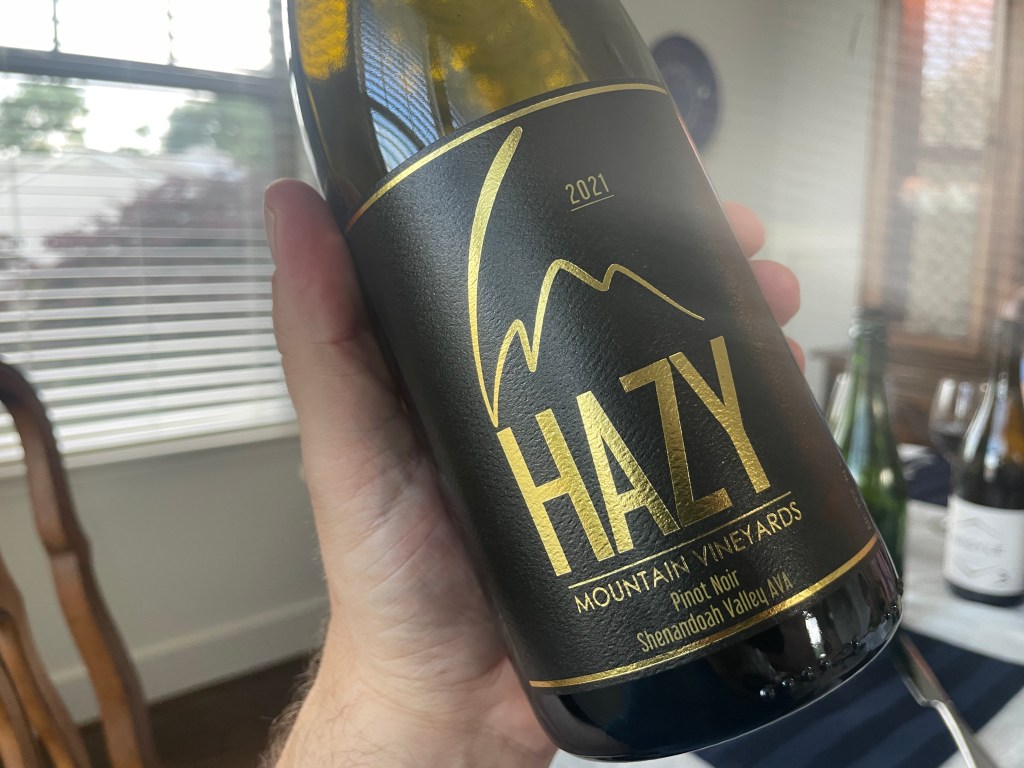
Bottle #2 / 2021 Hazy Mountain. This wine was more expressive on the nose; maybe with some notes of oak. On the palate several guests detected notes of earth and allspice.
Votes:
Annie: Voted #1
Chris: Voted #1
Larry: Voted #2, since he preferred the more earthy, ‘aged’ qualities of this wine.
Matt: Voted #1
Kathy: Voted #1. Noted #1 was fresher, while #2 had notes of forest floor but seemed too cooked.
Stacy: Voted #1
Patti: Voted #1. Enjoyed #1 for its richer body; could tell it was Oregon. Felt #2 was too tart.
In retrospect I should have paired #1 vs #4, since the #3/Argyle was arguably our least favorite wine of the day. But since Cave Ridge’s Pinot isn’t yet priced, I wasn’t sure which wine to pair against it.
That said, I think Cave Ridge was the surprise of the night. 8 out of 8 attendees felt this wine was from Oregon, which I’ll take as a compliment for this wine.
Bottle #3 / 2023 Argyle. We could tell this wine was mass produced. It had too much of an effervescent ‘cherry coke’ quality to it, or maybe candy notes.
Bottle #4 / 2023 Cave Ridge. Lots of compliments regarding the fruit notes in this wine. Others noted it had notes of almond or marzipan. Multiple people (including myself) really enjoyed the initial ‘attack’ on our first sip.
Now we’re talking! At 3,300’, 12 Ridges is the 2nd highest-elevation vineyard on the east coast. Evesham’s Le Puits Sec was also an excellent wine.
While we definitely liked the 12 Ridges, it just didn’t compare well to an excellent vineyard-specific Oregon wine.
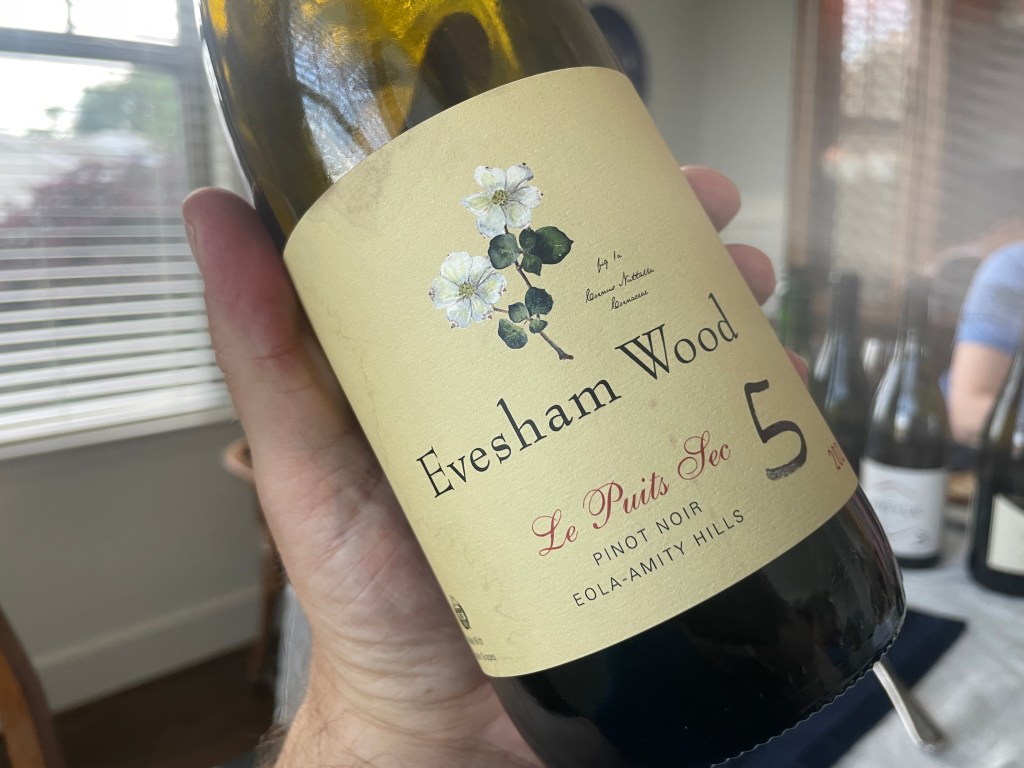
Bottle #5 / 2021 Evesham Woods Le Puits Sec. We generally identified this as the Oregon wine, although not universally. This was very well-enjoyed with lots of great descriptors, ranging from “Fresh and well-integrated”, “delicate”, and “balanced”. A few picked up on notes of baking spice, maybe dark cherry. Harissa was mentioned by one guest. I detected a lot of mushroom on the nose.
I felt this particular wine had, hands down, the best nose of any wine enjoyed that evening.
Bottle #6 / 2021 12 Ridges. This was definitely a higher-acid wine, which in retrospect makes sense since it was grown at 3,300 ft’.
Our tasting notes were all over the place. One guest mentioned notes of salted caramel; another said they got notes of sea salt. Yet another mentioned smoke or sour cherry. I didn’t get a lot on the nose, but I did feel it had nice complexity.
Votes:
Annie: Voted #5
Chris: Voted #5
Kathy: Voted #5
Larry: Voted #6 (still the outlier!)
Matt: Voted #5
Patti: Voted #5; her ‘happy place’ since she’s a big Oregon pinot fan
This was by far our favorite pairing of the night. Not everyone voted to identify the region, although most of the guesses were accurate. It was very much a competition between ‘grace (#7)’ vs ‘power (#8)’. We were evenly divided on which we preferred, so it was a tie.
The #7 was rounder and more balanced. #8 was a ‘big’, but in a good way. Someone said it was “ready to party”, if you will. Both had great complexity, and opinions differed on which was heavier.
Bottle #7 / 2021 Résonance Founders Block. Notes of sour cherries and mushrooms. It had a perceived sweetness; not from sugar levels but had a ‘fruit sweet’ quality to it.
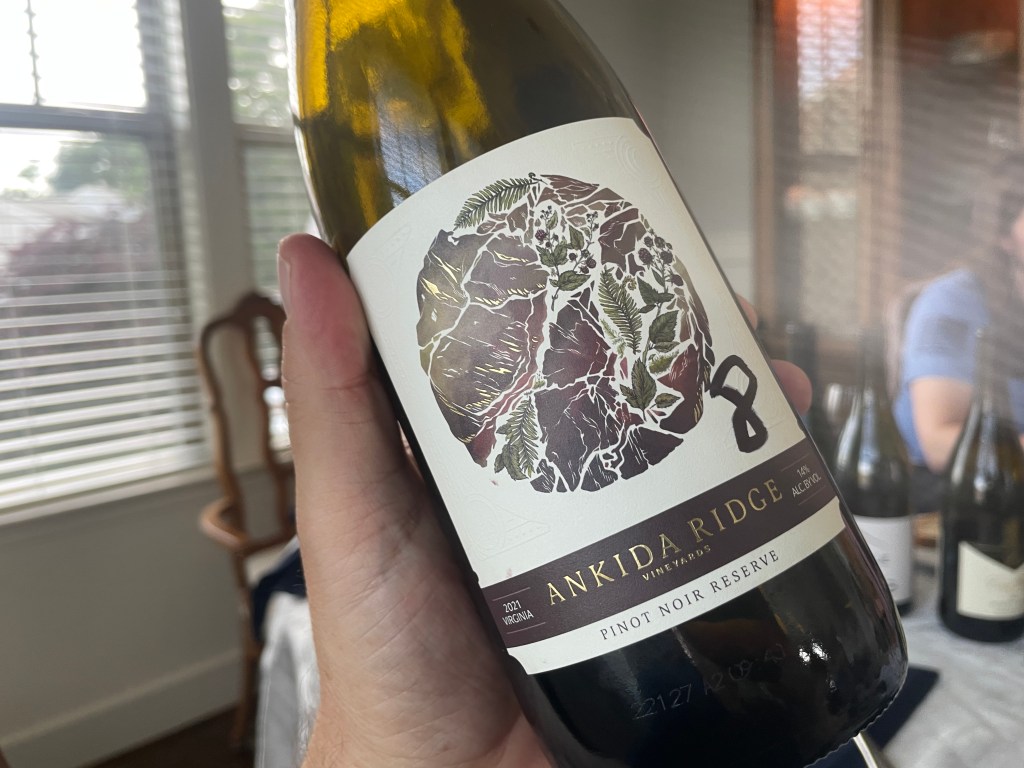
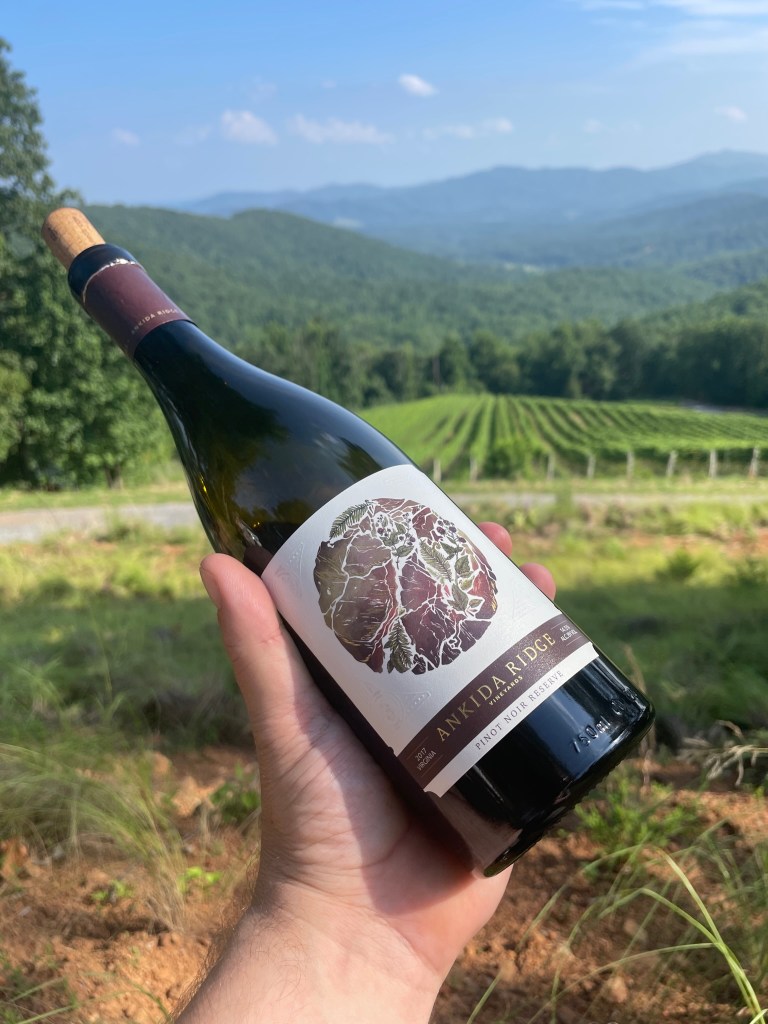
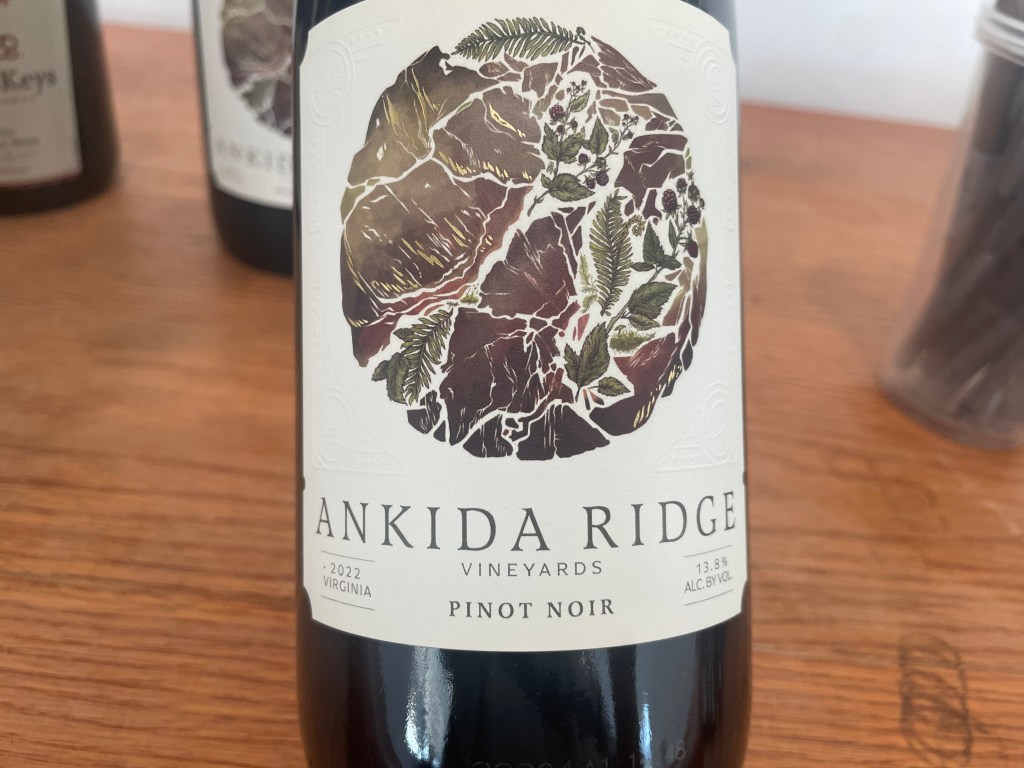
Bottle #8 / 2021 Ankida Ridge Pinot Noir Reserve. “Grabby” was my favorite descriptor. Several mentioned notes of sour cherry. The wine was lighter than I expected, although conversely it was still a ‘big’ win in terms of tannin. Kathy mentioned it was ‘layered, had complexity, and notes of forest floor’.
Of all the wines we tasted that evening, #8/Ankida was the most capable of standing up to heavier foods, especially a dish like steak. It was very drinkable now but could still use more time. I later learned the tannin came from the heavy use of stem inclusion.
Votes:
Annie: Voted #7
Chris: Voted #7
Kathy: Voted #8
Larry: Voted #8
Matt: Voted #8
Patti: Voted #7
Rob: Voted #7
Stacy: Voted #8
Finalist Flight
After the last round we did a poll to pick two wines from any flight to go into the finalist round. 7 votes went to wine #7/Résonance, 5 votes went to wine #8/Ankida, and 3 votes went to wine #5/Evesham Woods Le Puits Sec. #4/Cave Ridge was generally considered the #4 wine of the evening.
With the votes in, #7 and #8 went to the finalist round, and we enjoyed dinner drinking the remaining wines.
This food break worked to our favor as #7 and #8 opened up. The complexity of both improved, with the Ankida especially becoming more graceful. An Ox Eye Blanc de Noir accompanied our beef bourguignon.
We voted a second time…and for the second time in a row, it was again a tie. Ironically, 2 people from each ‘team’ switched sides.
Virginia represented very well; far better than I could have hoped for. It’s fair to say that the state has very few high-quality examples to pull from, but the top ones we used were well received.
I should note that most of the attendees didn’t have pre-conceived notions of what Pinot should taste like. Our self-described Oregon wine aficionado almost always went for the Oregon wine (the Cave Ridge being the exception), but overall the attendees simply wanted something tasty.
Winners round: Our “Top 2” wines were the Résonance and Ankida…and they tied again.
PS – the 2021 Ankida Reserve and 2023 Cave Ridge were both gifted to me for this event (thank you Christine and Randy!). While the Reserve is Ankida’s ‘top’ wine currently being sold, their 2022 Pinot is also getting headlines of its own.
For Virginia to tie Oregon as the evening’s ‘best’ wine is remarkable. Ankida Ridge should be very happy with that result.
I still say that the 2023 Cave Ridge Pinot Noir was the surprise of the evening. It was only recently bottled, so it has time to go. Yet it could easily have fared well against an Oregon wine in the mid-$30 price range.
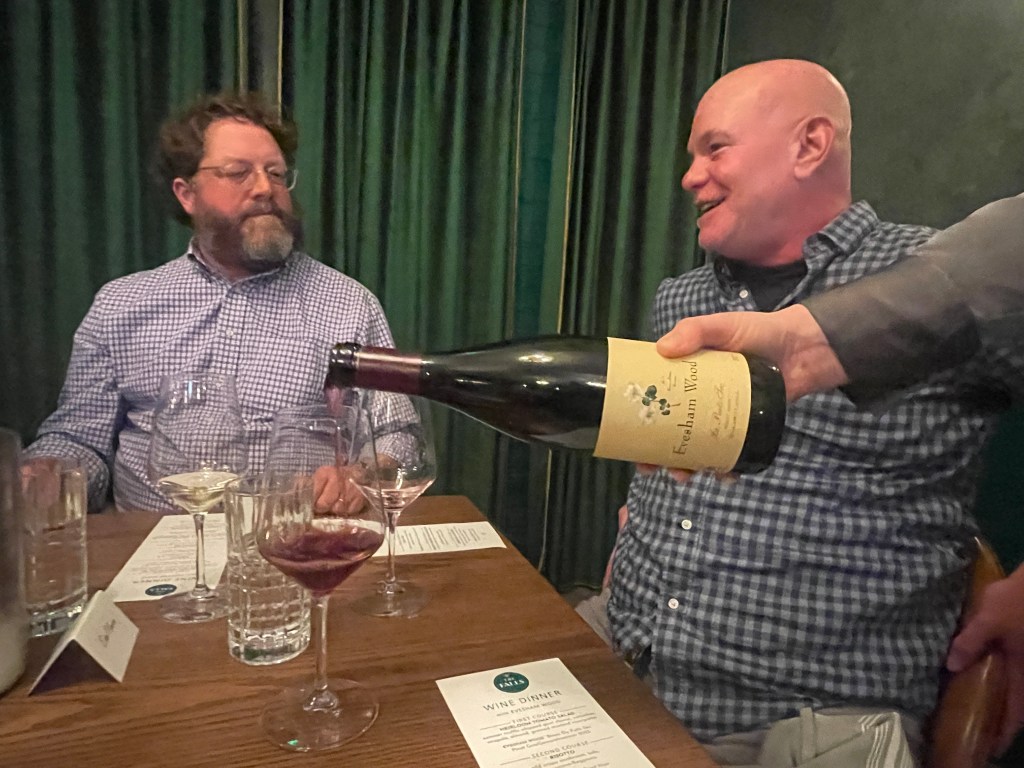
I recently had the opportunity to join owner/winemaker Erin Nuccio of Evesham Wood for a great dinner that showcased his wine, hosted by The Falls restaurant in Falls Church, Virginia. As a wine nerd it’s hard for me to pass a chance to try a new-to-me winery, especially when I get to chat with the winemaker.
Over a 5-course dinner we sampled 4 Pinot Noirs and a white blend. Just as importantly, I got to hear Erin tell the story of Evesham Wood.
The Vineyards & Winemaking
EW Le Puits Sec Vineyard
Evesham Wood is located in the Eola-Amity Hills AVA, one of 11 sub-appellations inside the larger Willamette Valley AVA. Evesham Wood and its sister operation, Haden Fig, are boutique wineries that focus mostly on Pinot Noir, including several single-vineyard expressions.
It turns out Erin is a local boy who got his start in the wine business at Arrowine, one of my favorite local wine stores. Inspired by the Oregon Pinot he was drinking, Erin made the jump from selling wine to making it, moving to the Willamette Valley in 2007 to pursue the dream.
Erin initially apprenticed under Russ Raney of Evesham Wood, one of Oregon’s oldest wineries. That experience allowed him to start his own wine brand, Haden Fig. Years later, he took over Evesham when Russ decided to move on.
Being unfamiliar with this area, I did a bit of research and discovered the AVA’s name is a brilliant (and accurate) bit of marketing. ‘Eola’ refers to a local town, whose name is derived from Aeolus, the Greek god of the winds.
These cool Pacific winds and the area’s volcanic soil define the area’s terroir. The former help grapes grown here to retain their acidity, while the later provide character to the wines.
Location aside, I found how Evesham Wood grows its wine to be as interesting as where this wine is grown.
Evesham is part of the handful of local wineries that hold an official organic wine certification, which they apply to their vineyard-specific wines. They are also a member of the ‘Deep Roots Coalition’, a grouping of local vintners who don’t irrigate their vines. This lack of irrigation promotes sustainability as well as allows their wine to be more expressive of the local terroir.
Erin explained how he initially didn’t feel strongly about the need to be certificated organic. But seeing how others were describing themselves as “basically organic” only to find they were spraying pesticides, he decided to take the extra step to become certified.
All that said, most of our conversation was about wine. Erin worked with The Falls to prepare a five-course dinner, with each dish paired with one of his wines.
The Wine
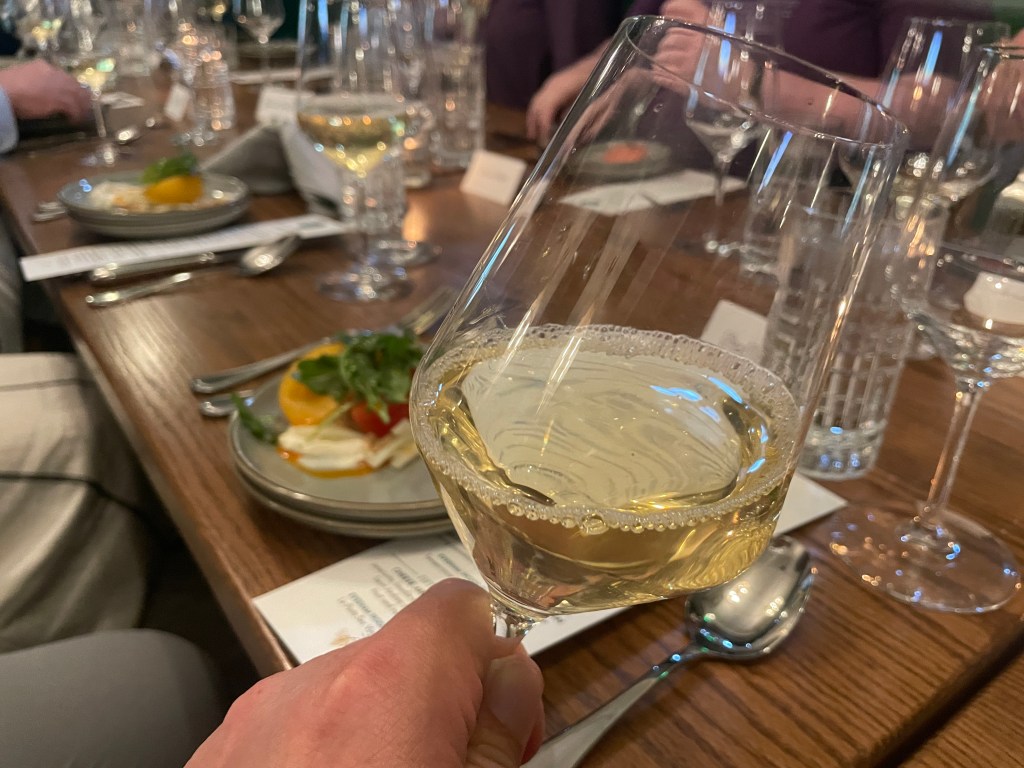
2023 Blanc Du Puits Sec. First up was Erin’s 2023 “Blanc Du Puits Sec” (Pinot Gris/Gewürztraminer blend), paired with heirloom tomato salad.
This wine is a field blend from Evesham Wood’s first estate vineyard, planted in 1986. Erin went for a fresh style, with a little bit of spice on the palate and nice texture. I also detected some flower notes on the nose.
The story behind this wine was just as fascinating. The vines are planted on their own rootstock and are considered ‘old vines’ by Oregon standards. While this means they are susceptible to phylloxera, the louse hasn’t hit this block just yet, so the damage it’s suffered has been minimal so far.
2023 Willamette Valley Pinot Noir. Next up was his Willamette Valley 2023, paired with a risotto made with wild mushroom, kale, and cheese.
This is Evesham’s ‘introduction red’. Fun and approachable, Erin said this wine is designed to “capture the spirit of the season”. 2023 must have been very favorable, since this was darn tasty. I found notes of bramble fruit, especially raspberry. That said, the longer I tasted it, the more earth I detected.
2022 “Eola-Amity Hills Cuvée” Pinot Noir. Our third wine was Evesham’s “Eola-Amity Hills Cuvée” paired with a coq au vin, a French dish made with pomme purée, carrots, bacon lardon, mushrooms and pearl onions.
This was the Reserve version of their Willamette Valley Pinot, aged six months in barrel with a dash of new oak. I found it to be complex and rich, with firmer tannin and more structure. It also had nice dark cherry notes with a more lingering finish. I later opened a second bottle with friends and we agreed this was everything we’d look for in an Oregon pinot.
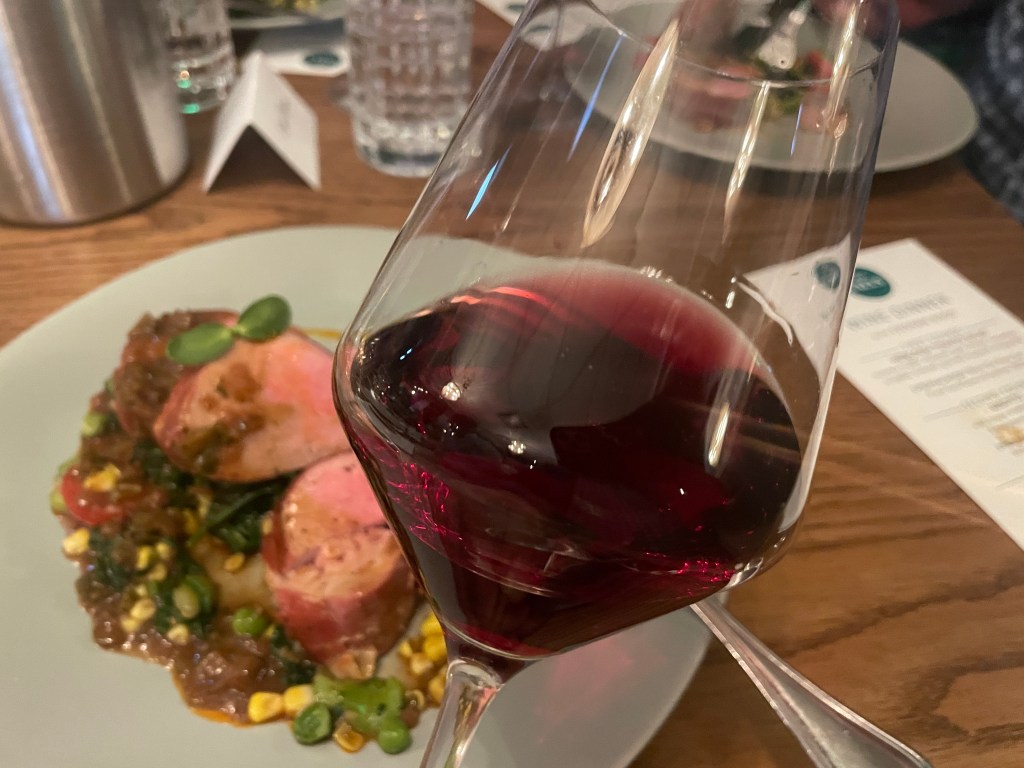
2022 Temperance Hill Pinot Noir. Our 3rd red was the first vineyard-designated wine of the evening, their Temperance Hill. This was paired with pancetta wrapped pork tenderloin.
This retro-style labelled wine was more restrained than the Eola Cuvée, with more earth notes on the nose. On the palate it started with earthiness but the notes transformed into dark fruit, especially blackberry. Erin mentioned it had some oak treatment, but I could barely notice.
This wine was grown at Temperance Hill, a 100-acre Pinot-heavy vineyard at 800’ ft elevation that produces fruit for a number of local wineries.
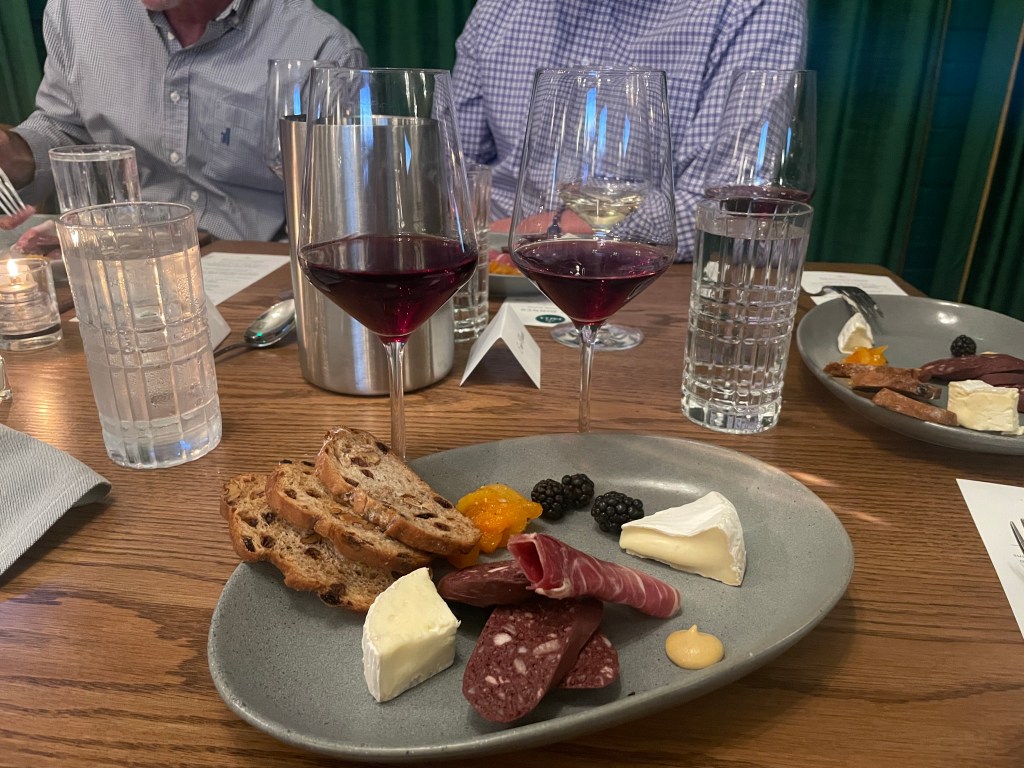
2021 Le Puits Sec Vineyard Pinot Noir. Saving the best for last, Erin brought out Evesham’s vineyard-designated Le Puits Sec (served with cheese and charcuterie).
This wine has structure and lift, yet what stood out the most were the wonderful earthy-mushroom notes on the nose that I wasn’t expecting.
More than anything else, this wine has ‘character’. You drink enough wine, you recognize varietals by their stereotypical tasting profiles. What I loved about the Le Puits Sec is I had to pause to think about it, as I couldn’t immediately identify everything I was encountering.
Fortunately, a second bottle enjoyed a week later yielded additional descriptors. That time I found notes of baking spice, maybe harissa. It was also fresh and well-integrated. But that nose – that alone could sell this wine.
The Le Puits Sec Pinot really demonstrates the importance of ‘place’. As it’s a lower-elevation site the fruit ripens earlier than Temperance, which is only a few miles away. Yet these are very different wines, despite similar soils and winemaking.
Evesham Wood & Haden Fig’s tasting room (located around 50 miles south of Portland) is open by appointment. Let me know what you think if you visit!
Few wines are as versatile as Pinot Noir. Its high acidity and ‘silky’ tannins makes it a go-to pairing for many dishes, while Pinot’s lighter body makes it easy to drink on its own. Pinot Noir is also popular for higher-end sparkling wines, which is why it accounts for 38% of the grapes grown in Champagne.
Yet Pinot Noir’s popularity is almost equally matched by its fragility. Pinot is nicknamed “the heartbreak grape” because of its vulnerability to spring frost, disease, and harsh weather. Its need for very specific growing conditions would give even Goldilocks fits.
Virginia’s warm, humid climate makes this task especially hard. Dennis Horton, a man famous for introducing multiple varieties to the Old Dominion, reportedly once said of Pinot, “I don’t think Jesus Christ could grow Pinot Noir in Virginia. You can do it, but it doesn’t taste like Pinot should.”
Pinot’s reputation as a finicky grape is why it only makes up 41 out of nearly 3,500 acres of Virginia grapevines. Difficulties pushing their grapes to full ripeness also means many winegrowers only use them for sparkling wine or rosé, adding to Pinot’s scarcity as a red wine.
Fortunately, the tide is turning. A growing number of wine growers, mostly in the Shenandoah Valley and Blue Ridge Mountains, have finally cracked the code on how to properly cultivate Pinot. A grape once confined to 2-3 consistent producers is slowly becoming more accessible.
New pinot vines at Cave Ridge VineyardCave Ridge Vineyard
The Evolution of Virginia’s Pinot Noir
It’s difficult to say which winery first planted Pinot, but several, including Barboursville and Swedenburg, tried in the 1990s and early 2000s. These viticultural pioneers didn’t yet realize how badly their low-lying sites would struggle, and eventually ripped out their vines. “Pinot is hard for Virginia. It doesn’t do very well here for still wine,” one grower admitted.
The key change from the wines that Dennis Horton tried is these newer vineyards usually select higher-elevation sites, often 1,600 feet and above. This elevation ensures a constant flow of cool air and moderate temperature swings, which protect Pinot’s tightly bunched clusters from damage and allow them to evenly ripen.
Ankida Ridge became Virginia’s most famous Pinot producer based on the strength of their high-elevation site; a 1,800’ mountaintop vineyard with a steep slope. Its inaugural 2010 vintage received such acclaim it became the first Mid-Atlantic wine to participate in the invite-only International Pinot Noir Celebration.
While Ankida may have paved the way in demonstrating Pinot Noir’s place in Virginia, others were close behind. Ox Eye Vineyards planted Pinot vines at their 1,780’ foot site in 2009, as did Hazy Mountain at its Swoope vineyard in 2016. 12 Ridges founded their 3,300’ foot site in 2016, which includes 3 acres of Pinot Noir. Fox Meadow and Stone Mountain, both with 1800’ vineyards, recently joined the Pinot club as well.
Elevation helps, but that’s not Pinot’s only requirement. John Kiers of Ox Eye Vineyards was encouraged to plant Pinot after seeing its success in the Finger Lakes, a region which shares a similar climate to the Shenandoah Valley. The valley’s limestone soil and limited rainfall provide additional advantages.
Randy Philips of Cave Ridge Vineyards likewise sees parallels between the Shenandoah Valley and upstate New York. “It was partly an experiment, partly a business plan,” Randy said during our chat. “We grow Riesling, which shares many of the growing conditions that Pinot requires. Pinot also has name recognition, which helps with sales.” Today, Cave Ridge and Ox Eye both have an acre of Pinot.
12 Ridges Vineyard
Where To Find Virginia Pinot
The roster of wineries which typically produce a full Pinot is far larger than most realize. Ankida Ridge and 12 Ridges are Virginia’s most famous producers, but they’ve since been joined by Above Ground, Cave Ridge, Hazy Mountain, JBR, and Ox Eye.
Other wineries, including CrossKeys, Rockbridge, and Trump, occasionally make a still Pinot during better vintages. Mediterranean Cellars uses Pinot in its rosé.
Pinot Noir has also been a boon for sparkling producers. CrossKeys Vineyards’ 2019 Estate Blanc de Noir took “Best of Show” at the 2022 Atlantic Seaboard Wine Association, while Trump Winery’s 2015 Blanc de Noir won the San Francisco Chronicle “Sparking Sweepstakes” award. Ankida, Ox Eye, and others also make Blanc de Noirs.
Must Try Virginia Pinot Noirs:
12 Ridges: Located along the Blue Ridge Parkway, 12 Ridges is the 2nd highest elevation winery on the east coast. Their wines are difficult to find, as the growing conditions which promote great acidity and minerality comes with the tradeoff of lower tonnage per acre. This shouldn’t deter local Pinot lovers from making a pilgrimage.
Ankida Ridge: They weren’t the first winery in Virginia to make Pinot, but they certainly put it on the map. During an 2025 industry tasting of Virginia Pinot Noirs, their 2022 vintage was the consensus favorite.
Cave Ridge Vineyards: Megan Philips was so convinced their 2023 vintage was ready to go she convinced her dad Randy to bottle their Pinot as a still wine instead of making it into a sparking. Clean, fruity, and with notes of cherry and red plumb, she was right.
Ox Eye Vineyards: Their 2022 vintage is charming and approachable, and 2023 promises to be even more so. At $27, this is also one of the best values local Pinot lovers will ever find. Owner/winemaker John Kiers doesn’t make a still Pinot every year, but his $35 Blanc de Noir is a great alternative.
I was recently the emcee for a Virginia Pinot Noir event that I nicknamed “Pinot Palooza”. A considerable portion of Virginia’s community of Pinot growers gathered to share one another’s wines and discuss their vineyards. It was probably the single most diverse tasting of Virginia Pinot Noir that has ever occurred.
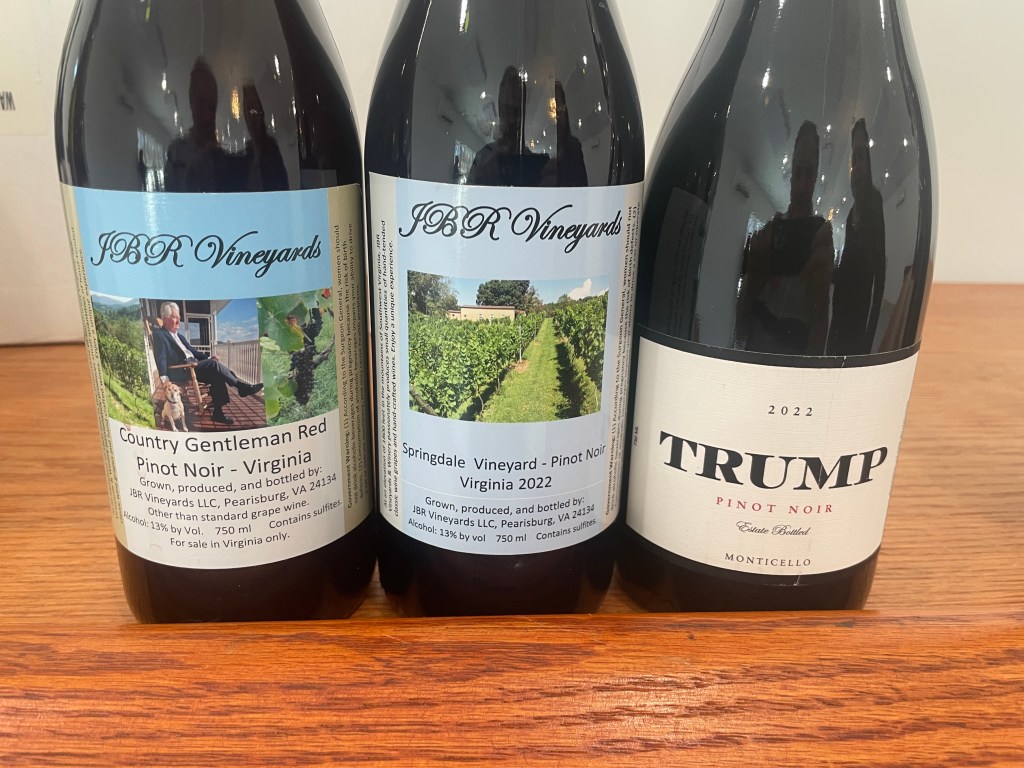
JBR Vineyard 2021 Country Gentleman Red (Pinot) (VA)
JBR Vineyards 2021 Springdale (Pinot) (VA)
Trump Vineyards 2022 Pinot Noir (VA)
Antiquum Farm Pinot (Oregon)
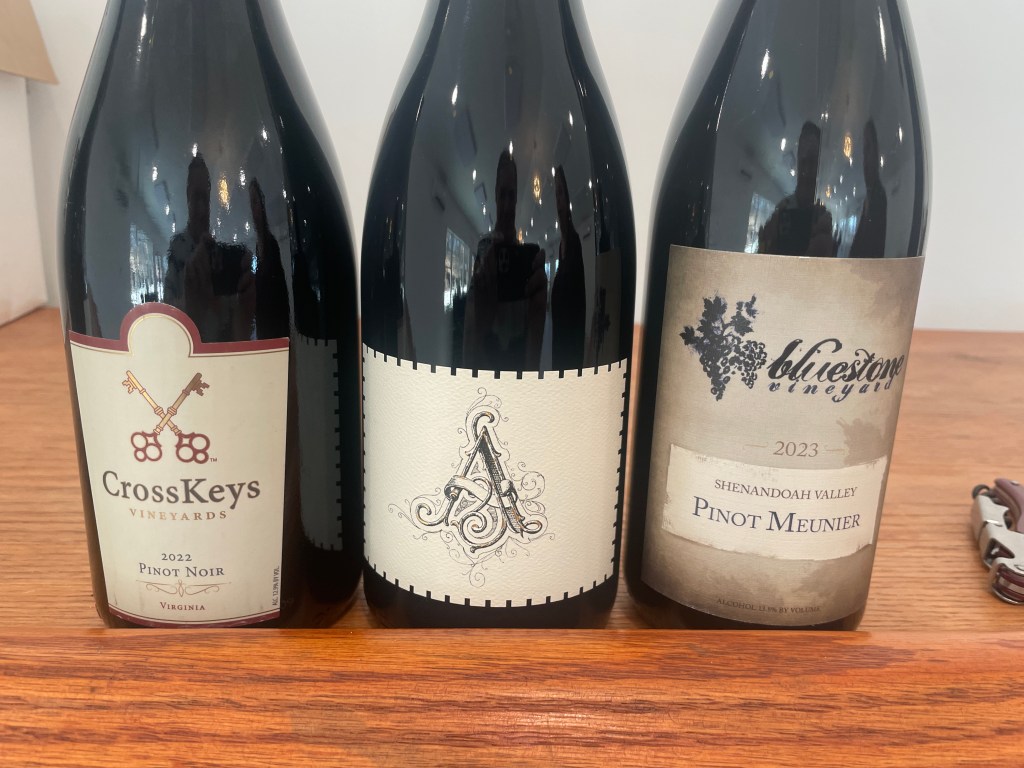
Bluestone 2023 Pinot Meunier (VA) (the only non-Pinot Noir of the day)
While this sounds like it would be a big gathering, in reality we only shared 11 Pinot Noirs from 8 separate Virginia wineries, in a state that possesses around 15 growers. Of these, only a handful typically make a full Pinot Noir every year (the remaining focus on sparkling or rosé).
It’s difficult to say which Virginia winery first planted Pinot Noir, although several including Barboursville and Swedenburg tried in the 1990s and early 2000s. These viticultural pioneers didn’t yet realize Virginia’s warm summers would cause these sites to struggle. Dennis Horton, a man famous for introducing multiple varieties to Virginia, reportedly once said: “I don’t think Jesus Christ could grow Pinot Noir in Virginia. You can do it, but it doesn’t taste like Pinot should.”
The data shows not many have tried. Side by side metrics from Virginia’s 2008 and 2023 Commercial Wine Grape reports demonstrate that Pinot remains a niche grape in the state.
In 2008, there were 28 acres of Pinot Noir (25 bearing, 3 non-bearing) out of a total of 2,500 acres of grape vines in Virginia (barely over 1% of the total)
In 2023, there were 41 acres of Pinot Noir (30 bearing, 11 non-bearing) out of 4,318 acres of vines in the state (just under 1%).
Yet these metrics only tell part of the story.
According to conversations with various winegrowers, it appears much of the Pinot that existed when the 2008 report was written has since been torn out, as these growers couldn’t bring their grapes to full ripeness. Most of the vines that were planted from 2008 onward were planted in the Shenandoah Valley and Blue Ridge Mountains.
The key change from the wines that Dennis Horton tried was these newer vineyards focused on higher-elevation sites, often 1,600 feet and above. Such elevation ensures a constant flow of cool air and moderate temperature swings, which protect Pinot’s tightly-bunched clusters from damage and allow them to evenly ripen.
Membership in this ‘high elevation club’ is very select. Ankida Ridge planted their first vines in 2008, while Ox Eye Vineyards planted in 2009 based on advice from Finger Lakes grower Hermann Wiemer. Hazy Mountain started growing Pinot at its Swoope vineyard in 2016, and 12 Ridges Vineyard founded their site in 2019. Around the state, even more wineries followed.
Our tasting included a broad mix of vineyards, planted anywhere between 850 to 3,300 feet elevation. We asked ourselves; did this elevation make a difference, and what other factors influenced the wine in our glass?
Virginia Pinot Noir Growers
*Note: The Shenandoah Valley has around half of all Pinot Noir grown in Virginia, with smaller plantings at various locations along the Blue Ridge Mountains. Trump Winery has the largest single planting of Pinot Noir in Virginia, but in most years, it’s exclusively used for sparkling wine.
The Tastings
We sampled 15 different Pinots in flights of 3. I ensured nearly every flight had a non-Virginia Pinot for comparison purposes. My apologies for having better notes on some wines that others; at times I couldn’t write fast enough.
Flight 1:
12 Ridges 2021: Lighter on nose and harmonious on the palate. Good complexity of aroma, tannins, and finish. One of the most ‘delicate’ wines of the day, and one of the favorites.
12 Ridges 2022: Bolder, more fragrant than the 2021 vintage.
Savigny-lès-Beaune “Vieilles Vignes” 2018: Fleshier, more concentrated than anything else I tried that day.
Flight 2:
Ankida Ridge 2022: Floral nose. Notes of earth, specifically wet dirt. The wine had some heft to it but was well balanced. It also had just the right amount of oak, tannin, and structure.
Cave Ridge 2023: Not yet released! Clean, flawless, fruity, but needs some bottle age. Notes of red plumb and cherries. Less earthy than the Ankida. Owner Randy Philips explained he was going to only make a sparkling wine, but his daughter Megan loved the 2023 so much they decided to make it as a still wine. This was the first time he’d made a regular Pinot, which makes it all the more impressive.
Cave Ridge 2024 (barrel sample): This was so young it was hard to judge, but we had fun sampling it. Some attendees actually thought the 2024 was better than the 2023, or would be in time.
Flight 3:
Hazy Mountain 2022: Lighter in color, fresh mouthfeel. It had some earthiness to it and nice tannin.
Ox Eye 2022: Very charming and approachable. At $27, this was one of the best values of the entire event. Owner/winemaker John Kiers doesn’t make a still Pinot every year, but his $35 Blanc de Noir is a great alternative.
DuMOL Pinot Noir (CA, Russian River Valley): One of the fullest wines of the day. The ripeness made it stand out as a California wine.
Flight 4:
JBR 2021 “Country Gentleman Red”: Light and fruity, lots of strawberry notes. Unfiltered? At $15, this was made for a crowd looking for something that’s easy drinking.
JBR 2021 “Springdale”: More intense than the “Country Gentleman”, and closer to the traditional Pinots we are accustomed to.
Trump Winery 2022: Good body and structure, but at the expense of the fruit. Trump only infrequently makes a Pinot Noir, but you can usually find these grapes as a Blanc de Noir.
Flight 5:
Antiquum Farm Pinot (Oregon): No notes, but good!
CrossKeys 2022: CrossKeys only infrequently makes a still wine, but their Blanc de Noir is excellent. Barnyard note to it, maybe a little brett.
Bluestone 2023 Pinot Meunier (from Verona Farm Vineyard): Our only non-Pinot of the day. One guest referred to this as a ‘starter red for white drinkers’, because it’s so easy drinking.
I should also mention the amazing food that Cave Ridge arranged for us, courtesy of Woodstock-based Flour & Water.
I polled the 9 guests who didn’t present a wine they made, and the top three Virginia wines were the 2022 Ankida Ridge, 2021 12 Ridges Vineyard, and the 2023 Cave Ridge (which narrowly beat the 2022 Ox Eye).
Ankida was the overall favorite by a fair margin, but the 2021 12 Ridges wine had many compliments as well. Notably, these two were specifically designed as ‘high elevation’ vineyards, with Pinot being some of the first grapes they planted.
Lessons learned
“High elevation Pinot is in its infancy. I am excited for its future,” wrote Christine Vrooman of Ankida Ridge. “The bar has been raised from 20 years ago,” said another guest after completing the tasting.
Here are a few of my take-aways from the day’s discussions:
1. Winemaking is more important than elevation to make good wine. Site selection is important to tease out Pinot’s best expressions, but good winemaking is still crucial to make a good wine. Likewise, a winemaker can make a good wine made with Pinot grapes, even if it doesn’t express the ‘typical’ Pinot characteristics consumers are accustomed to. We saw both sides of this coin at this event.
2. Elevation is important – but so are other factors. While much of the discussion focused on the importance of elevation as a key criterion to bring out Pinot’s best qualities, that’s just one part of the equation. Soil type, vine density, relative altitude, and good vine material are also important to get healthy fruit.
My observation of the day’s conversations is while Pinot does love elevation, it takes more than elevation to make a good Pinot vineyard.
3. Blanc de Noir is a great alternative. Many Pinot growers readily admit how difficult it is to achieve full ripeness. This means sparkling wine is usually the best use of their fruit. These wineries (including but not limited to Afton Mountain, CrossKeys, Rockbridge, and Trump) may only offer a Pinot Noir in better growing years.
I wrote in the opening sentence of my 2022 Finger Lakes blog that “The Finger Lakes is a region I can continually return to.” Well, 2 years later, I was back for my 3rd trip.
For this trip, I was the ‘tour guide’ to a group of 4 friends, none of whom had visited the area. The entire trip was 5 days, including a travel day of travel to get there, 3 full ‘winery days’, and departing the morning of the 5th day. We ended up visiting places on Days #1 and #5 as well.
To give my group their best bang-for-your-buck, I created an itinerary that mixed-in what I considered the Finger Lakes ‘greatest hits’ and added a few places that I hadn’t been to before. A total of 16 locations were visited.
Day 1: Keuka Lake
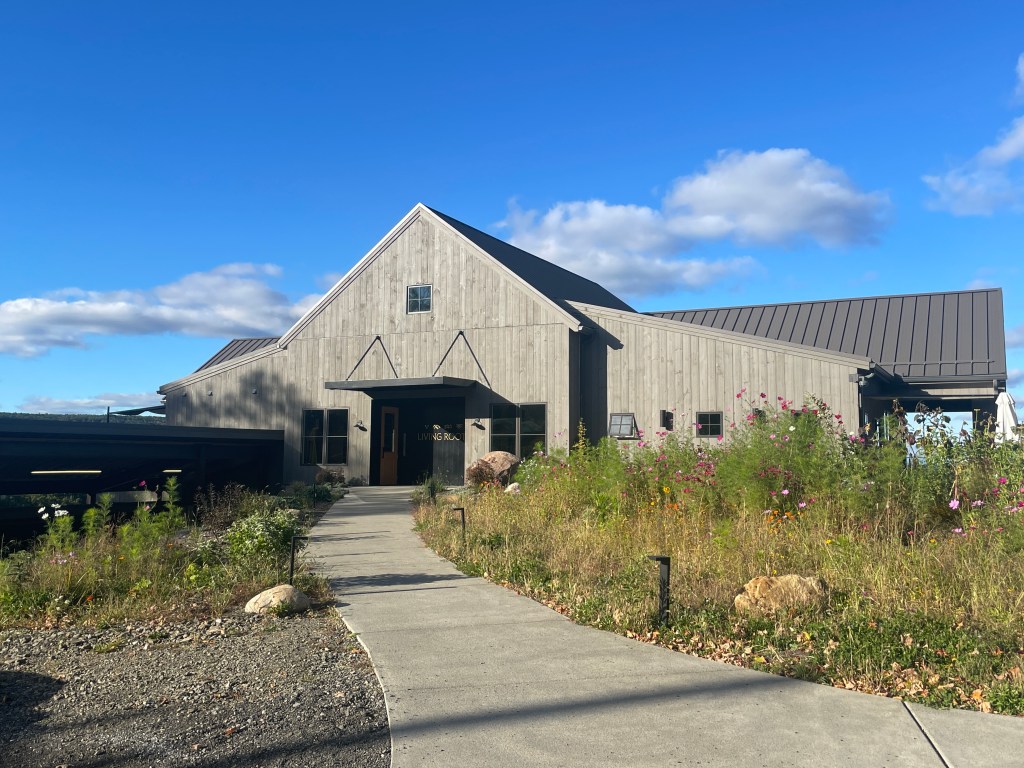
Living Roots Finger Lakes: Since this was our travel day, we only had time to visit Living Roots on our way to our Air B&B. This was someplace I’d wanted to visit, plus it didn’t close until 6 PM.
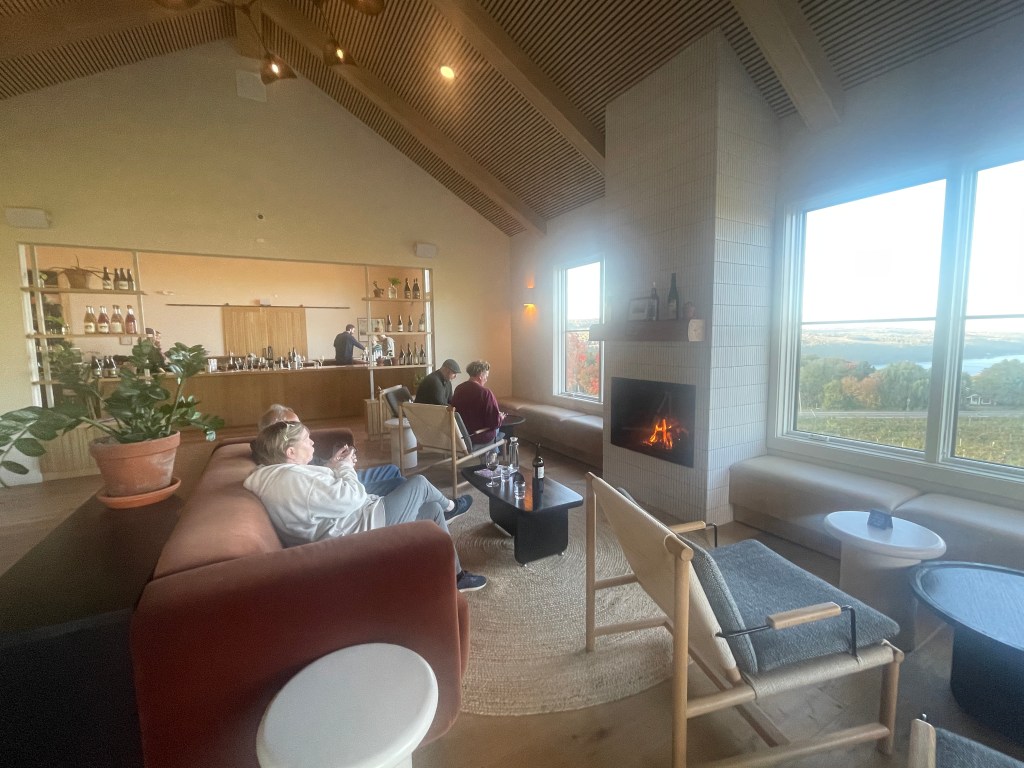
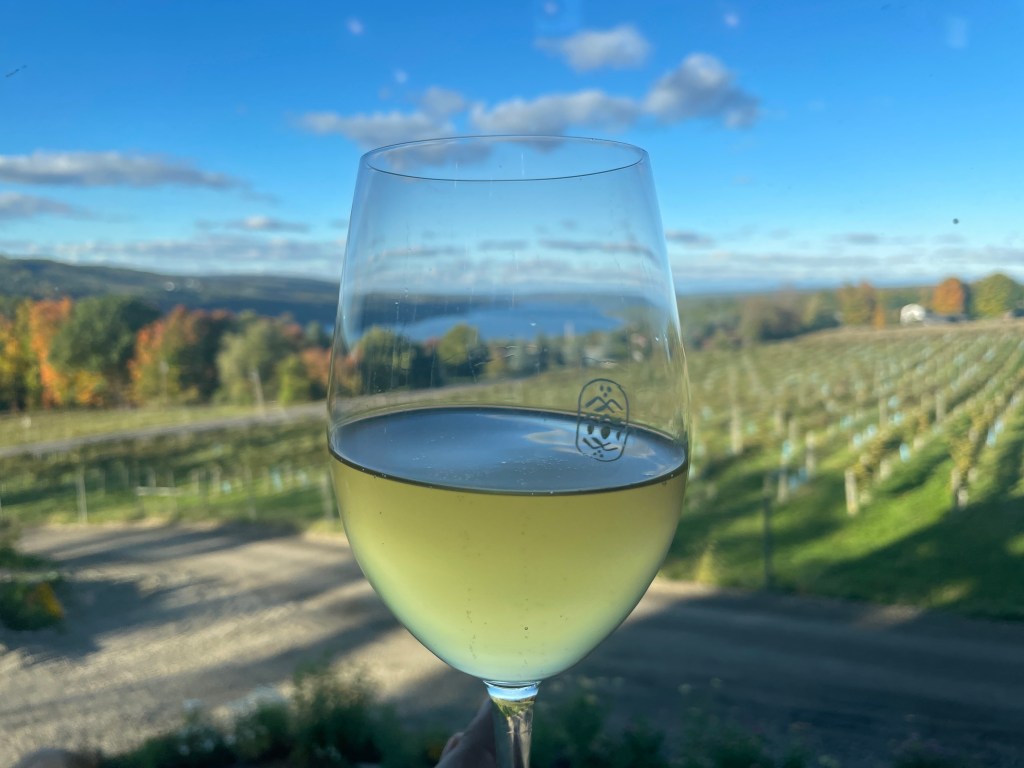
Living Roots easily had one of the prettiest tasting rooms of the trip, with a fantastic view of Keuka Lake. It also had more of modernistic aesthetic, as opposed to the rustic barns that most other wineries had.
They also had the greatest meet-cute story I heard on the entire trip. The owners had this parcel of land overlooking Keuka but no long-term plans on what to do with it. While their daughter was in Australia she met up with a local guy, fell in love, and they eventually got married.
The property turned out to be a great place for vines. They turned it into a winery, with their new son-in-law as their winemaker. They also import some wine from Australia, a nod to his heritage.
The wines were uniformly good, with my favorite was their pet-nat riesling. I sat back to enjoy gazing at the lake with a glass of it, plus got a bottle to go.
Day 2: South-West Seneca/Keuka
Stop #1: Herman J Wiemer
As one of the Finger Lake’s most famous wineries, Herman J shouldn’t require any explanation. It was one of my favorite wineries during my previous trip, and I wanted my group to likewise enjoy a visit.
Reservations are definitely recommended, but not necessarily required. Since we didn’t have reservations we sat in their open-aired barn with a space heater. It was OK for the early fall but not something I’d want on a cool day.
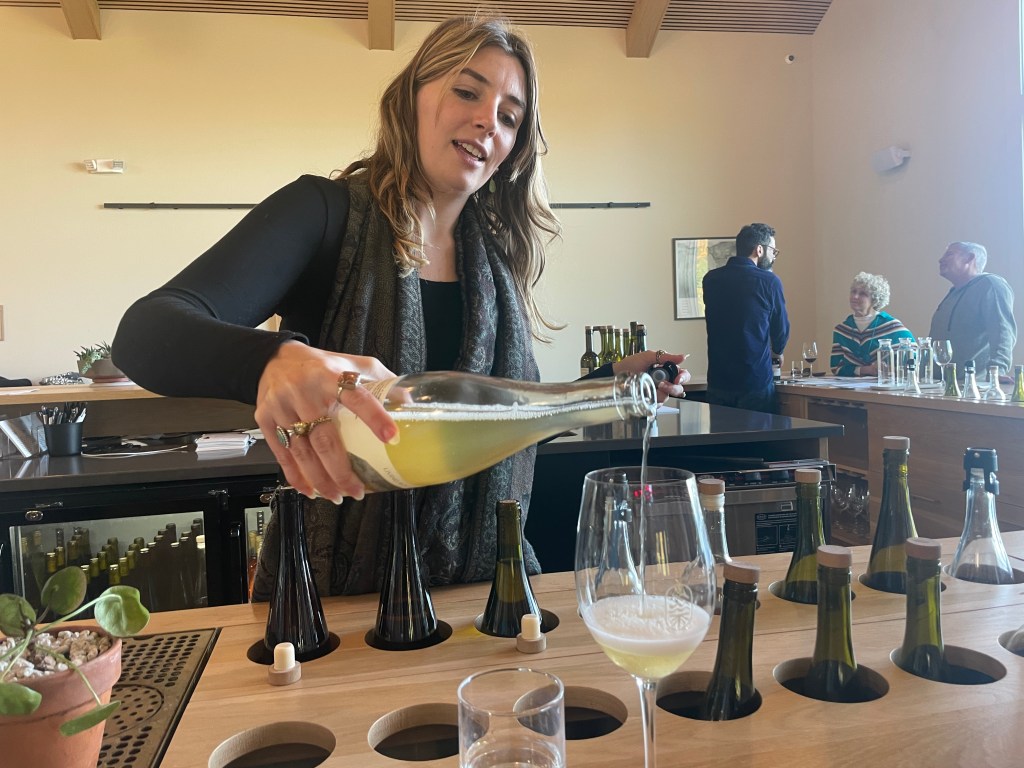
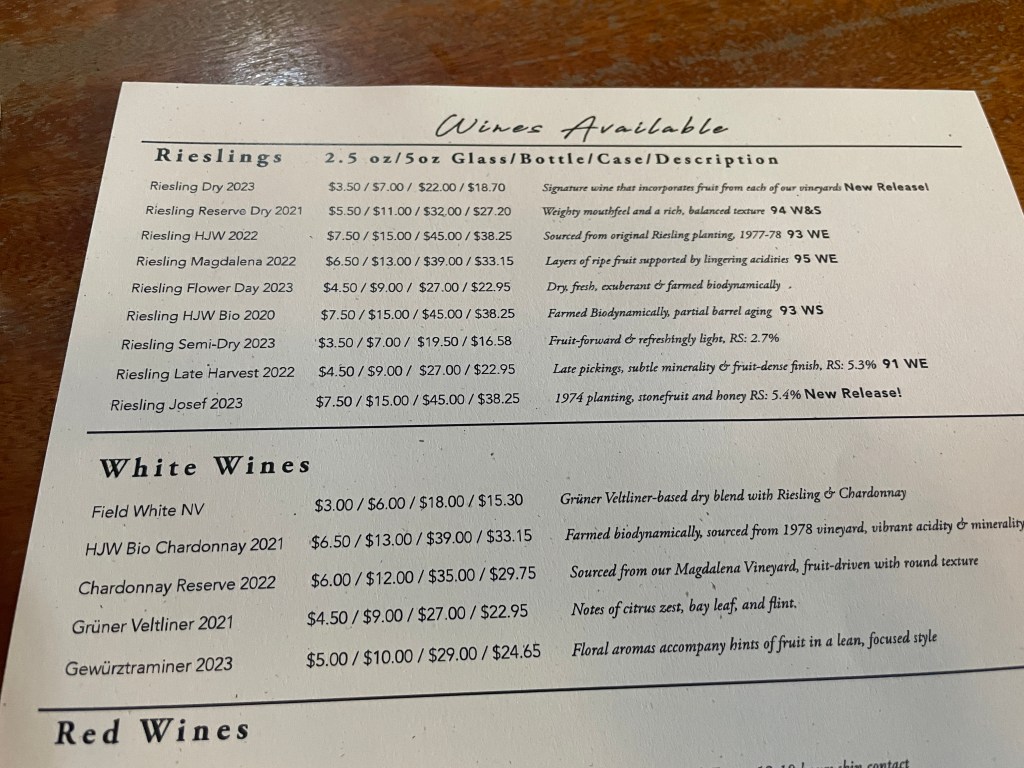
Herman J’s tastings are actually self-guided flights where you pick the wine and they are served in mini flight bottles. Since we had a large group this turned out to be a good deal, as we were able to pick out a bunch of wines and share them.
My favorites were the Magdalena Cabernet Franc and Magdalena Riesling. The former had all the traditional cab franc notes, with nice fruit and earthiness. The riesling was smooth, lemony, and had a great mouthfeel.
We also tried their Grüner, Reserve Riesling, Dry Riesling, Semi-Dry Riesling, and an Extra Brut sparkling.
Stop #2: Kemmeter Wines
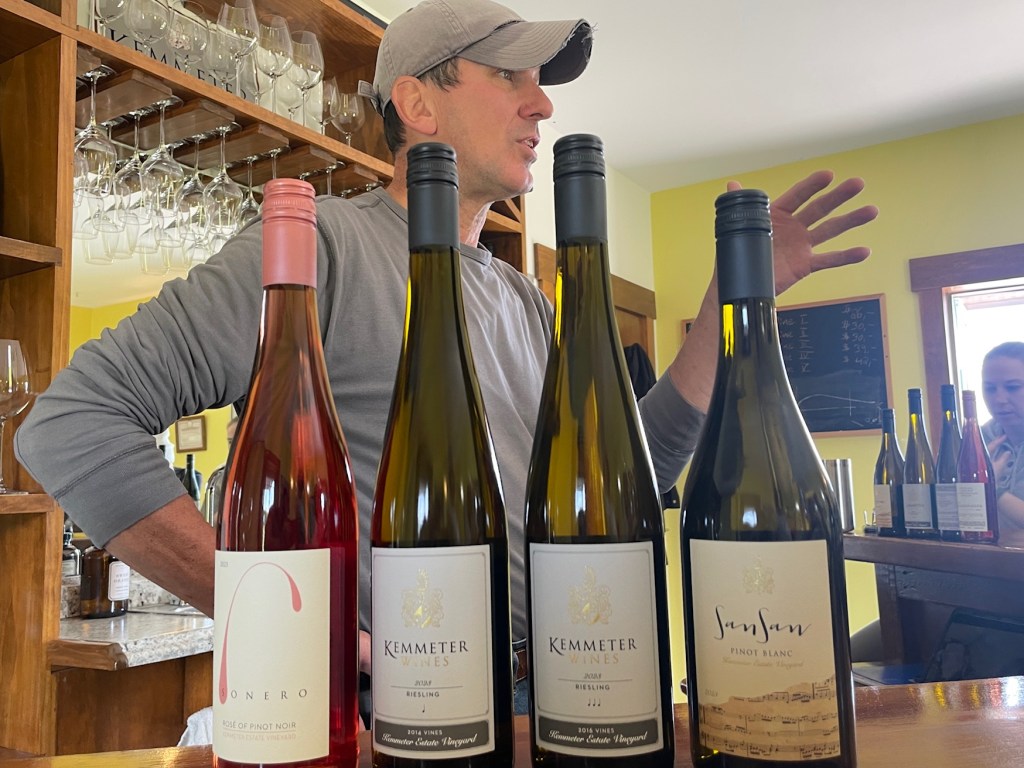
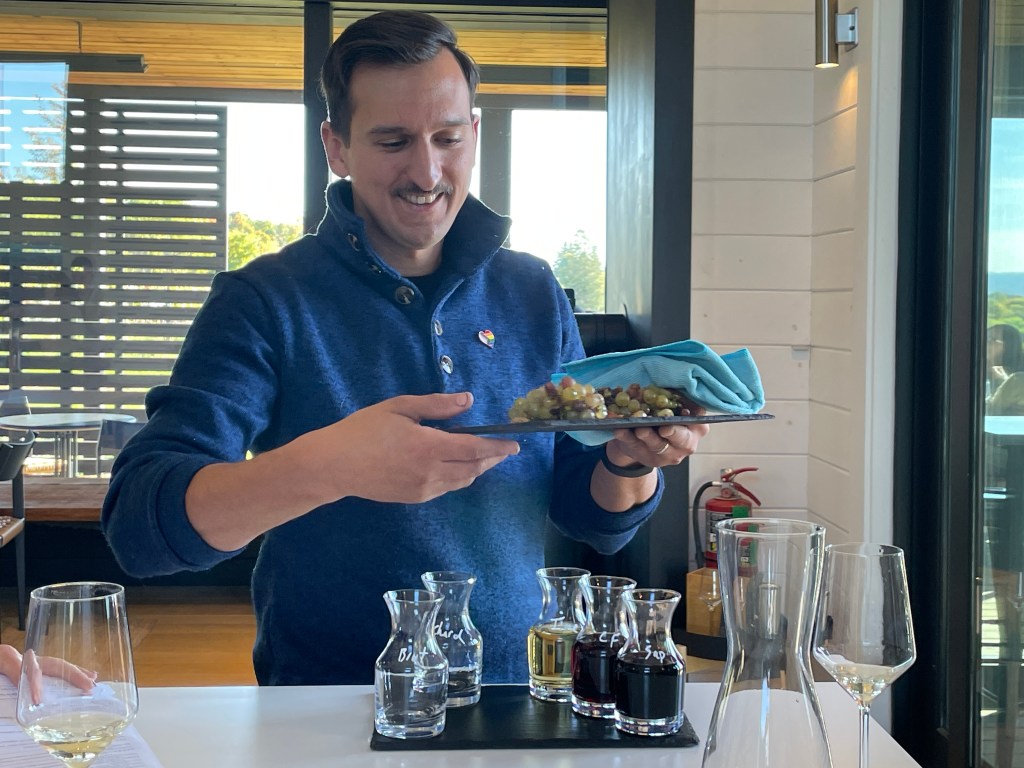
One of the few stops I absolutely insisted on. Owner/winemaker Johannes Rienhardt did a great lineup against a backdrop of classical German music. One of the top visits of the entire trip.
Visits to Kemmeter aren’t just about wine tastings; they are about education. Johannes even will avoid tasting notes during a tasting because he doesn’t want to bias your opinion what to expect. Johannes also told us he was planning to start using cork for his wines in the future, since they preserved his wine more effectively.
He also took us through an impromptu comparison of two rosés; one of which had been opened for 24 hours and another he just opened. The consensus was most people enjoyed the one that had been opened longer, because the oxidation brought out a different flavor profile.
We tasted 4 wines; a rosé (0.2% sugar but didn’t taste like it), his “2014 Vines” riesling (more on the savory side), his “2016 vines” (off dry, more fruit-forward), and a pinot blanc (amazing color, felt even drier than it was because of its thickness). The cab franc and blau will likely be non-vintage blends, so he can get the best fruit from each year.
Turns out he’s also planting zweigelt, cab franc, and blaufränkisch in the future, and he was long sold-out of his limited pinot noir. I left with a bottle of rosé and one of the rieslings.
Make sure to order the Sans dumplings in advance!
Stop #3: Weis Vineyards
Weis was another high-priority stop. The winery was really busy, but we waited on the balcony until we were able to get a spot in the tasting room. Reservations definitely recommended!
We tried six wines, but my favorite were the very full and lush “Special K” and their Terroir Riesling “Limestone”. I also liked their 2023 Perele sparkling, which for $22 was a great buy.
Stops 4 and 5: Keuka Lake Vineyard and Dr Frank
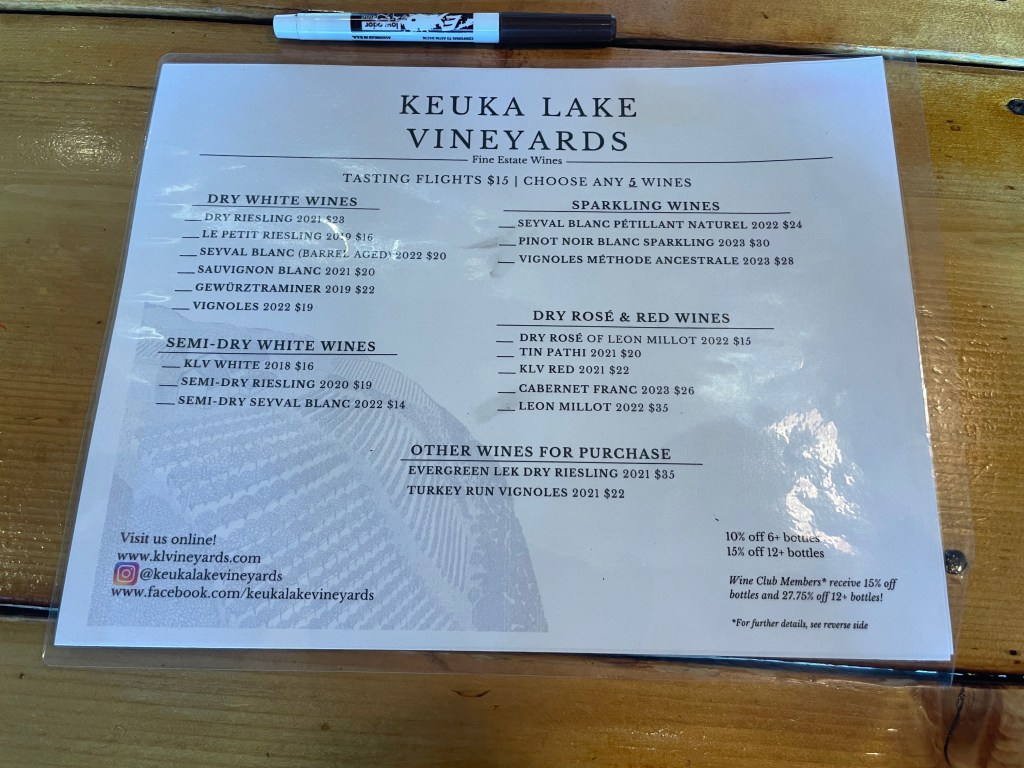
Not a lot of notes here. I insisted on a stop to Keuka Lake Vineyard because I really wanted their vignoles pet-nat and their 2021 Riesling. Extra Points for being dog friendly.
By the time we made it to Dr Frank, it was too late to do a tasting so we just got a glass.
Dinner: Glenora Wine Cellars/Veraisons
A little on the expensive side but it was our 2nd night in town, so we decided to treat ourselves.
The Aurora Borealis also showed up this evening!
Day 3/Saturday: Eastern Seneca and West Cayuga
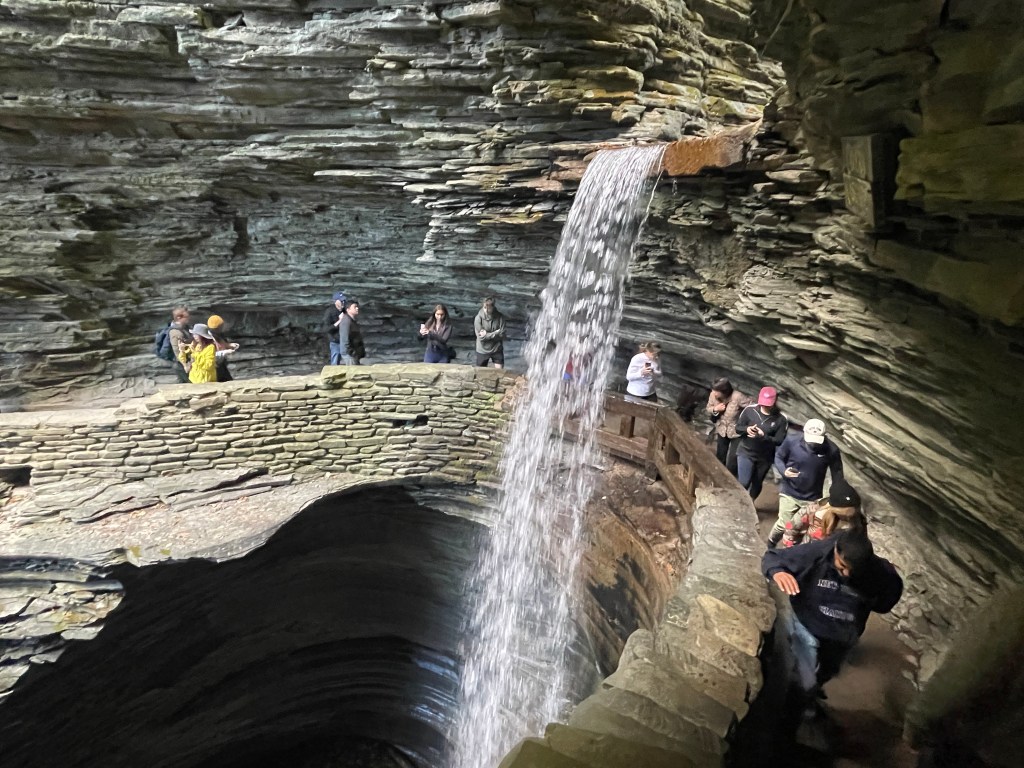
We started with a morning hike at Watkins Glen State Park, which is a must-visit for anyone. You can go as far as you want, or make it a short trip. An hour was good enough for us.
Stop #1: Boundary Breaks
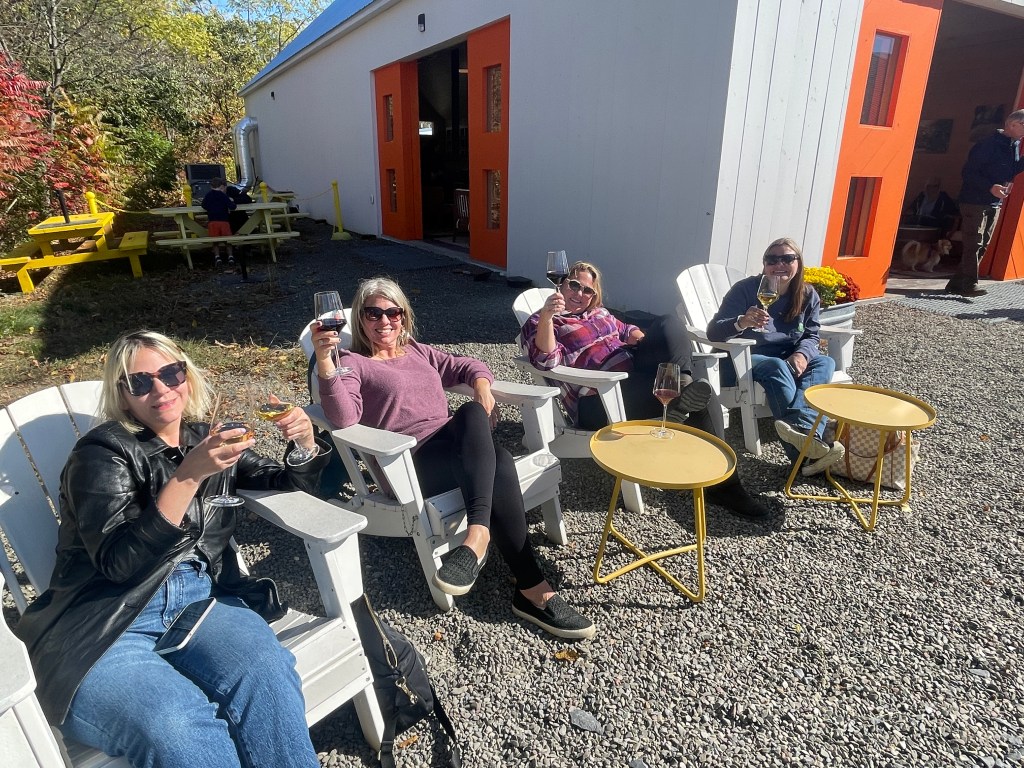
This was easily one of the prettiest visits of the trip, since it had a great view of the lake. It helped they had a food truck that served lobster rolls, which we dined on while drinking sparkling and lounging on Adirondack chairs with a view of the lake. 55 acres of vines planted.
No one wine spoke to me, but we enjoyed several. They had a Bordeaux blend that was on the softer side and a dry gewürztraminer that I liked.
But the highlight were their three sparklings, with the “356” dry sparkling riesling being my favorite.
Stop #2: Forge Cellars
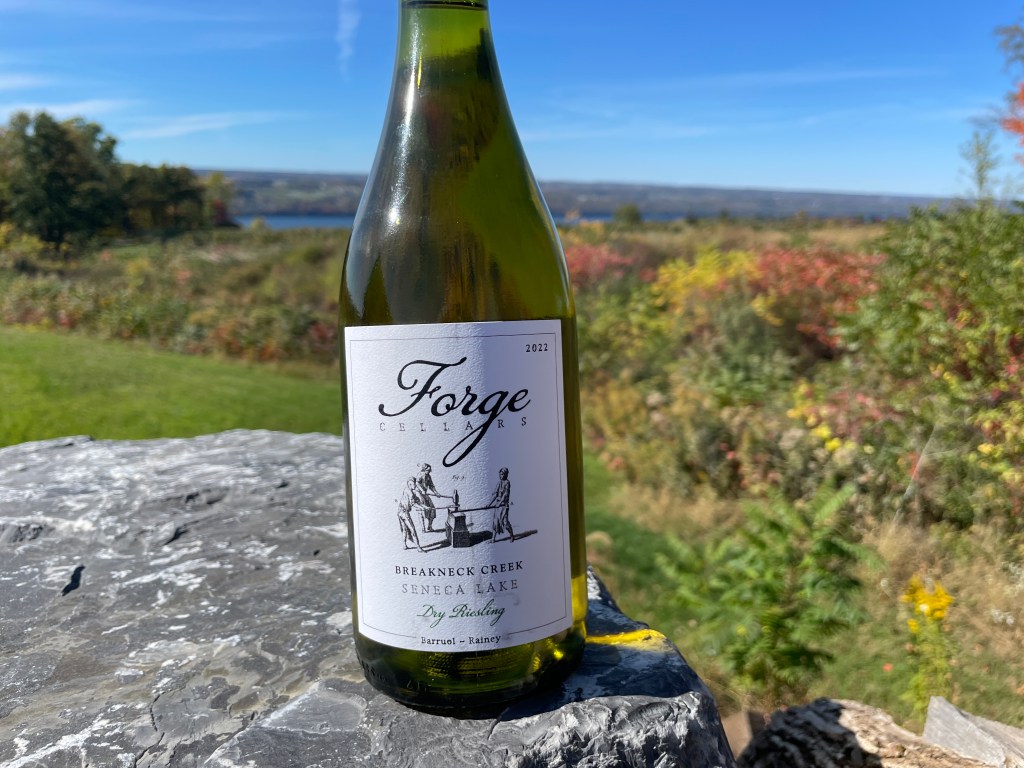
This was easily one of the top 3 visits of the trip, with a strong argument for the #1 spot for overall quality of wine. Definitely had the best reisling selection of the trip.
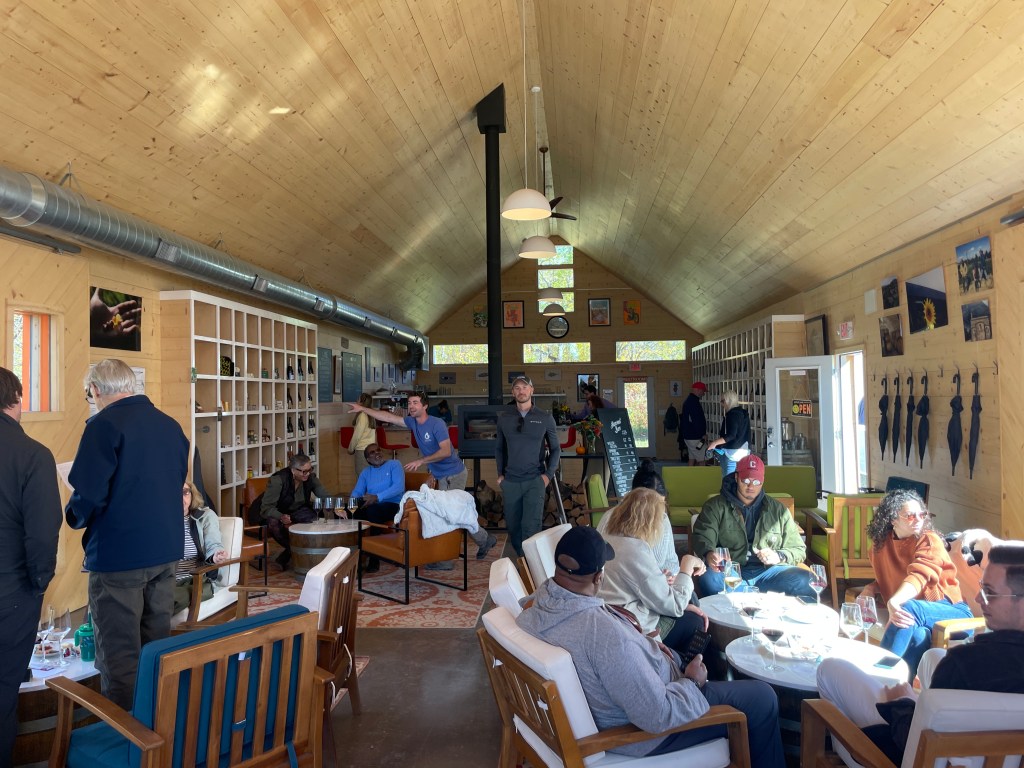
The main tasting room was being used for harvest, but we still were able to hang out at the ‘salon’. While it’s not on the lake, the views still impressed. Loved the laid-back vibe.
The assortment of vineyard-specific options here is impressive. There are too many to taste on your own, so bring friends to share! On top of that they also do a lot of club-only wines, a few of which I was fortunate to sample.
My favorites:
Willow Riesling: At first I thought it had some tropical notes, but those faded fast
Caywood Chardonnay: Herbal notes; just ok
Tango Oaks Riesling: Very fruit driven, citrusy. Bought a bottle
Breakneak Riesling: Salty and minerally; really good. I think this was a club bottle but snagged a taste. Bought a bottle.
Liedenfrost Pinot: On the young side, lots of red fruit
Tout Nu: A red wine brought in from the Rhône. Notes of graphite and earth, with a long finish.
Stop #3: Standing Stone Vineyards
We originally tried visiting here before Forge but it was so busy we had to get a later reservation. Fortunately our table was ready for us when we were done with Forge.
Julian was our server, and the dude was awesome. He gave us a great deal of education, including bringing out refractometer and some grapes in the later stages of noble rot. Julian also explained how Herman J now owns the winery, purchased in large part because their vineyard is on a warmer spot that is especially good for reds.
We kicked things off with sparkling, including a sparkling rosés and a Blanc de blanc made in the traditional-style. The later was excellent; with the lees giving it some weight.
For reds, we tried a cab franc and their saparavi. The later had great color; earthy but soft. The chardonnay was OK.
We also had a few dessert wines. Nice late harvest; like a lighter Sauternes. We also enjoyed a very rich port-style.
The favorite here was the Timeline Riesling. Very complex and weighty.
Stop #4: Silver ThreadWinery
A smaller winery that we tried since it was close by. 10 acres planted but they purchase more fruit. They make 3000 cases/year.
I liked the vibe a lot. They really lean into sustainability, and their owner/winemaker was our server.
My favorite was their Blanc de Blanc riesling, that I got a bottle of to enjoy that evening. I also thought their estate riesling was good.
Day 4/Sunday: NE Cayuga and NW Seneca
Stop #1 Hearts and Hands Wine Company
Another highlight of the trip, so much so I wrote a separate blog about them rather than make them one of many entries in this trip report. One of my Top 3 visits of the entire trip, top place for service, and had the best blanc to blanc out of 16 places visited.
The quick version is since they are on east side of Cayuga, Heart and Hand is less crowded. The downside is a visit needs to be planned out, since they are further away.
The name “Hearts and Hands” is a reference to a Claddagh ring, which is an Irish symbol of love. Co-owner Susan Higgins did our tasting, and was kind enough to open a little early since we were trying to make the most of our day.
What makes H&H’s growing location so great is their vineyard is on a limestone slab, which gives them somewhat different growing conditions. They make lots of sparkling, including a blanc de blanc which was one of the best wines of my trip.
That said, picking a favorite of ANYTHING was tough since everything was exceptional. My crew took maybe 2 cases worth of wine. I suspect this visit resulted in the single biggest haul of the trip.
Stop #2: Quarry Ridge Winery
Quarry Ridge wasn’t on our original itinerary, but since it was next to Heart & Hands we figured it was worth a shot.
It’s a shame that we visited when it was pouring rain, because the tasting room had a fantastic view of Cayuga Lake. On a nicer day, I’d have happily stayed longer on one of the Adirondack chairs and just enjoy the scenery. It helped that the tasting room was stunning as well.
Owner Gary Cuthbert saw my group come in and he came over to say ‘hi’ and tell us about his property. Turns out, the name was inspired by the limestone soil the vineyard is planted on, just like nearby H&H. Such soil is somewhat of a rarity in the Finger Lakes and is great for making high-quality fruit. They have 28 acres of vines are planted.
Several flights were available, but since we had a big group we were able to order all of them and share. All told, we shared samples of 9 wines.
I thought their dry Riesling was good, and the 2022 “11S” Pinot was nicely balanced and fruit-forward. But I thought the real standout was his cask Riesling, which was very dry yet ‘full’, with notes of mango.
Stop #3 Ravines Wine Cellars (Barracks Road)
This place was busy! We had to wait for a table to open up but eventually got one. Reservations are definitely recommended. Even so, those tables were pretty small for the number of people they are supposed to accommodate.
I thought their 17 Brut had a great brioche nose, and their ‘regular’ Riesling was really good. Kudos also to the Maximilian red blend and the very earthy Cab Franc.
The tastings and food were not cheap, but wine was good. Reservations definitely recommended.
Stop #4: Fox RunVineyards
Too tired for notes at this point!
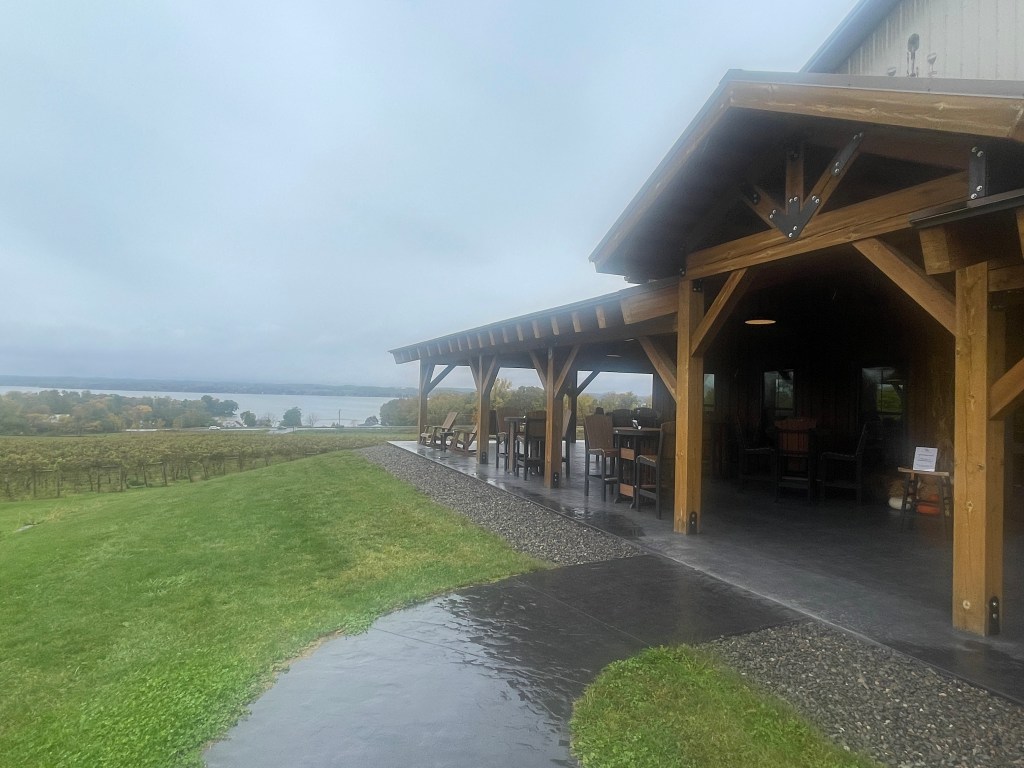
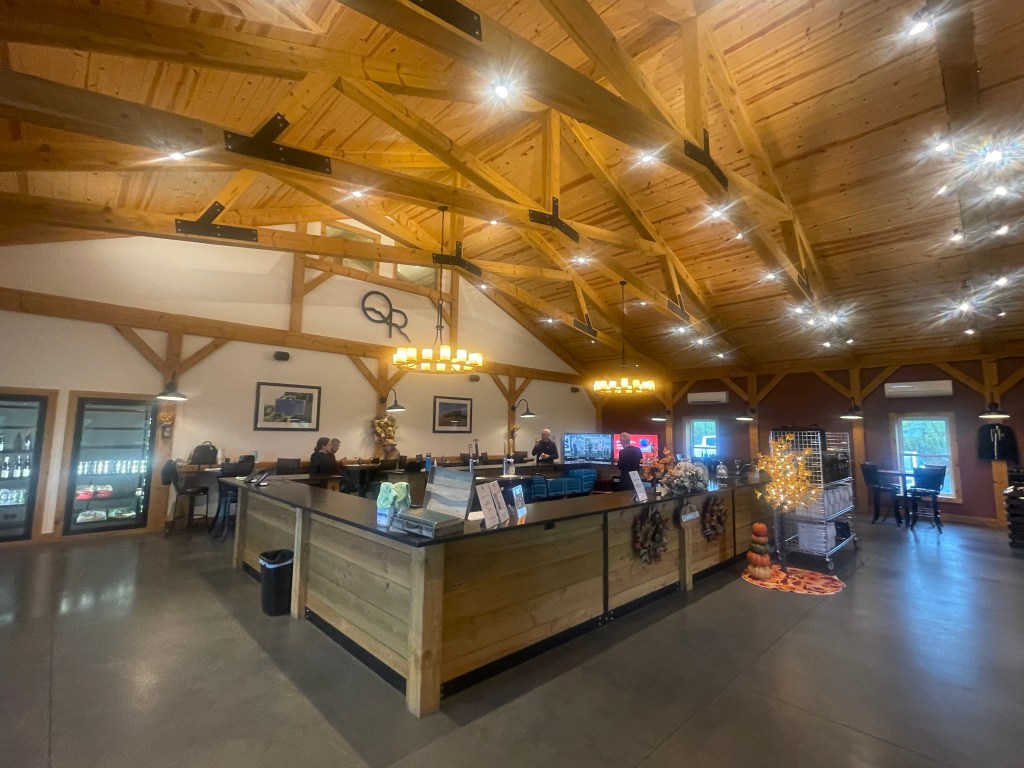
Day 5: Red Tail Ridge Winery
I had wanted to visit here earlier, but timing didn’t allow. Fortunately I was able to convince my driver to swing by on the way home. Red Tail does reservations, but this early it was unnecessary.
Kristin Evans did our tasting and gave us a lot of great info in a short time. I’d say Red Tail had the widest and best overall selection of sparkling of the entire trip, although the dry wines were both good and interesting. We also got to meet their winemaker, Nancy Irelan.
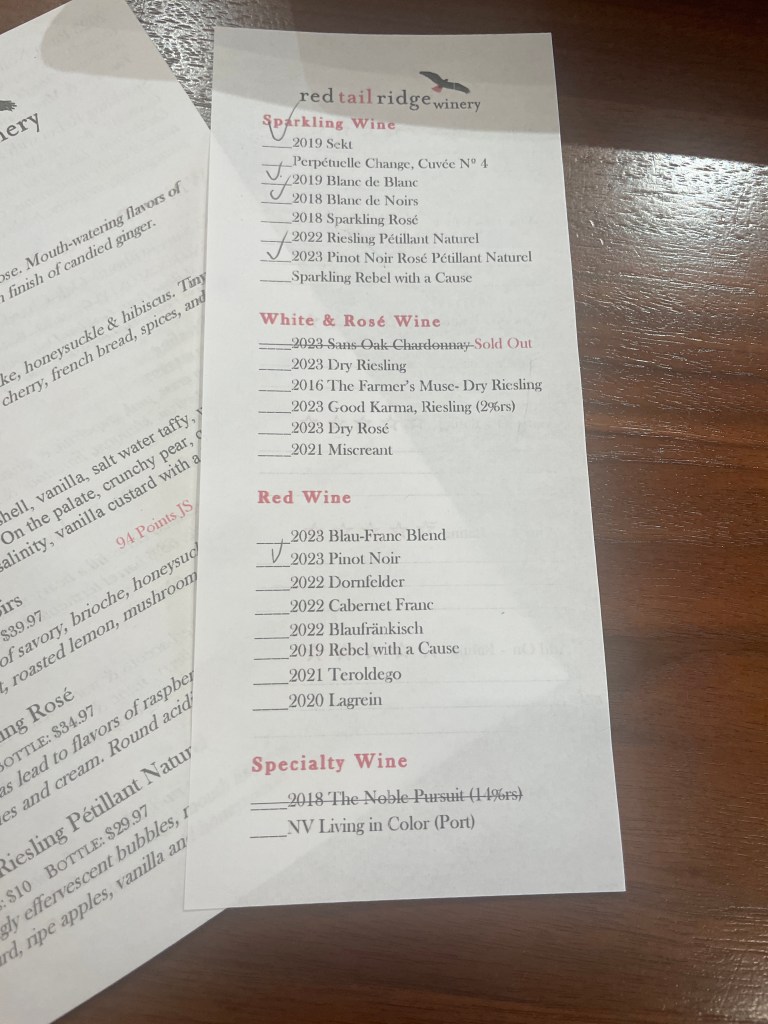
A number of flights were available, including one of ‘Innovative’ wines. I leaned into the sparkling options. Fortunately, with multiple members of my group available, we were able to get a wide selection and share.
Many in my group put this visit in their Top 3 of the 5-day/16 winery trip. Personally, I say they were tied for #3, maybe just below Forge and Heart & Hands, but tied with Kemmeter.
2019 Sekt (Traditional Method): Very nice, bright; orange notes
“Perpetual Change” NV Sparkling (Traditional Method): Interesting, but in a great way
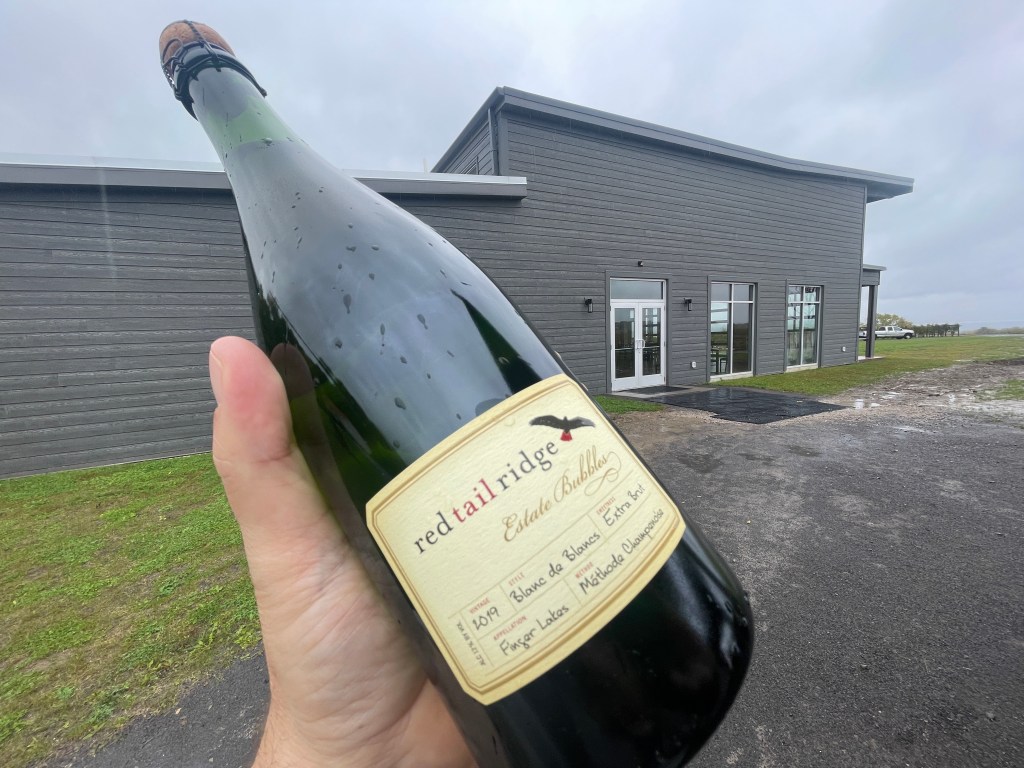
2019 Blanc de Blanc (Traditional Method): Bought a bottle home! Lots of brioche notes
2018 Blanc de Noir (Traditional Method): Tarter, also had lots of brioche.
2021 Miscreant. An interesting gewürztraminer blend/orange wine
2018 Sparkling Rosés’: Fruity and refreshing
Riesling Pet-Nat: Pineapple notes; not lee-sy at all.
Pinot Noir Pet-Nat: Juicy
2023 Pinot Noir: Young
2020 Langrine: Lots of depth and tannin
Next time I’ll have to try Once Finger wine bar, and revisit Heron Hill.
When planning my 2024 Finger Lakes trip, I made a list of old favorites and places that I’d heard good things about but never been. Heart & Hands was part of the later category. But it wasn’t until I heard rave reviews from a pair of friends who visited them months earlier that I decided they were a ‘must visit’.
Considering this turned out to be on of my Top 3 visits (along with Forge and Kemmeter) on a 5-day, 16-winery trip, I’d say I chose well.
Heart and Hands is located on the NE side of Cayuga, which added a good 30-minutes to our Day #4 trip itinerary. I know that seems far, but it’s worth the extra time. Not only did we avoid the crowds, it was some of the best wine of the trip.
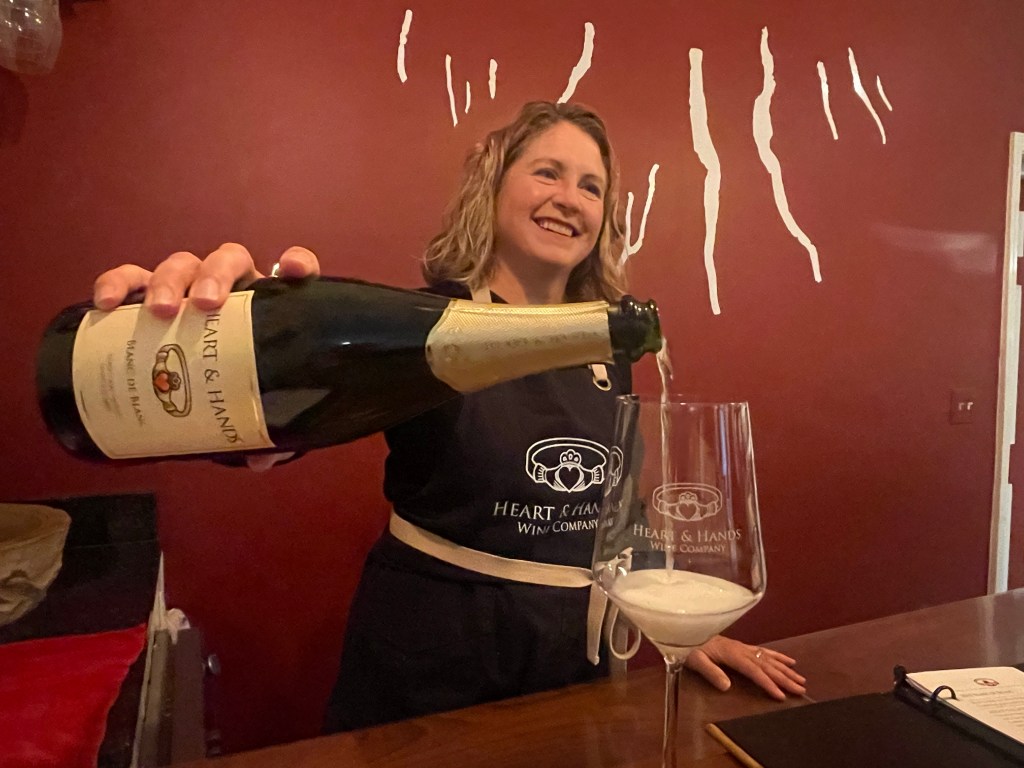
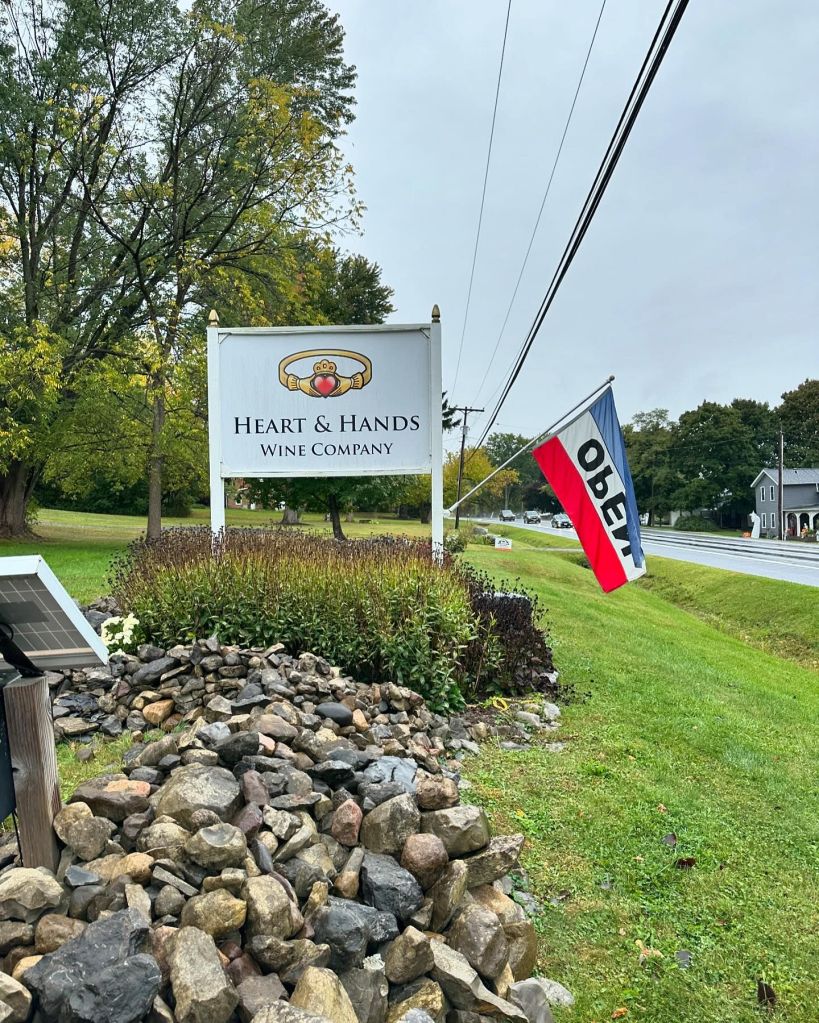
The name “Hearts and Hands” is a reference to a Claddagh ring, which is an Irish symbol of love. Co-owner Susan Higgins did our tasting and was kind enough to open a little early since we were trying to make the most of our day.
When I asked Susan what they have planted, she said “Lots of fun things! We are a nerdy winery.” They concentrate on pinot and riesling, but also have some aligoté, langrein, petit arvine, and a little chardonnay.
Most of their fruit is estate, although they do source some from nearby vineyards. Heart & Hand makes between 2,500-3,000 cases/year, mostly (and increasingly) based on their 11 acres of vines.
During most of my Finger Lakes visits, people talked a lot about the lake’s importance in reflecting heat on the shoreline vineyards. That’s true at Heart & Hands, but a lot of credit also goes to their limestone soil that’s rare to this area. Limestone drains well, and minimal water retention is important to keeping the vines healthy.
The tasting room is small, but that’s fine with me. Heart & Hands didn’t design the winery to entertain masses of visitors; it’s all about the wine.
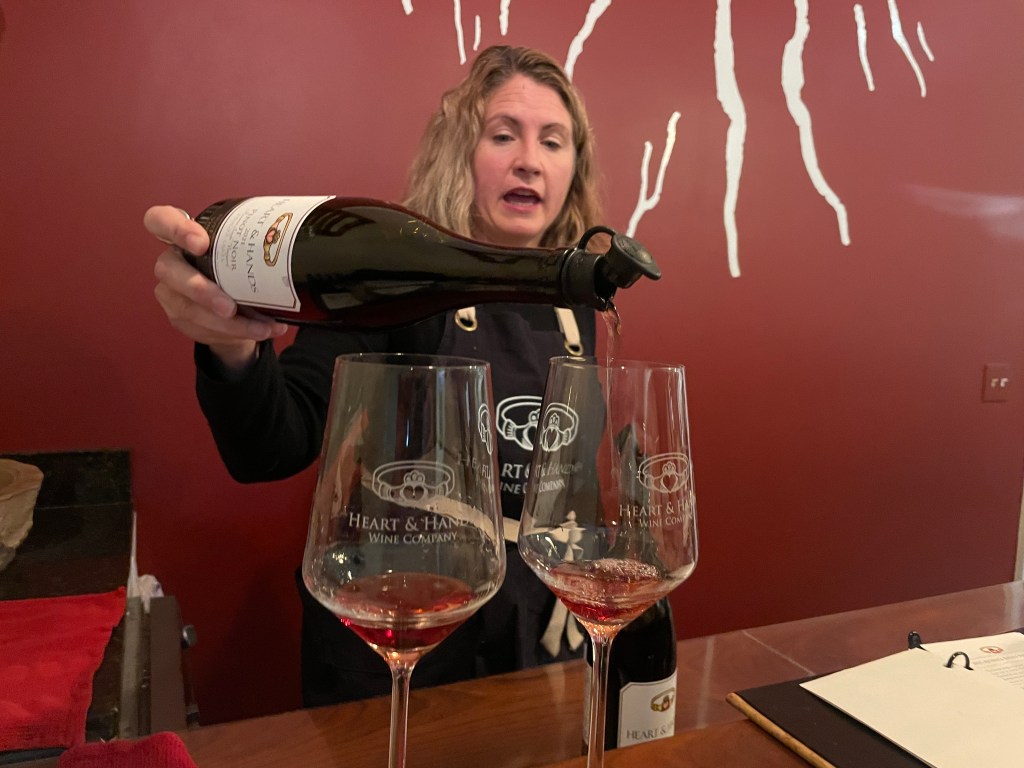
Susan walked us through multiple side-by-side comparison tastings, either from different years or different growing sites for the same grape. They make lots of sparkling, but plenty of dry wines as well.
My tasting notes:
2015 Blanc de blanc (traditional): Very nice; one of the best sparklings I had on the trip. Not tried was a blanc de noir.
Sparkling Riesling; also very nice; wonderful nose
2019 Auxerrois: This grape is a cross between pinot noir and gouais blanc. Interesting, but not a favorite.
2020 Chardonnay: French oak; somewhat lees-y.
Pinot comparison #1: 2021 H&H Pinot (estate and local fruit), vs their 2021 Nutt Road Vineyard Pinot. The ‘standard’ pint had lots of bright fruit, while the vineyard-specific one had fruit but was earthier. I took home a bottle of the ‘standard’.
Pinot comparison #2: 2021 Hedrick Pinot, which had 20% stem inclusion for extra tannin. It was a great balance between fruit and tannin. Paired against it was a 2021 Estate Pinot (forgot the specific name), which was heavier, had a longer finish, and more tannin. 100% stem inclusion on the later.
Riesling comparison: The 2022 was drier, with more petrol notes. The 2021 was more layered, with notes of tangerine.
This was certainly one of the best sparkling wineries I’ve visited in the Finger Lakes, alongside Red Tail Ridge. My tasting crew took almost 2 cases worth of wine between us in what was the greatest single-winery haul of our entire 5-day trip.
I confined myself to buying a blanc de blanc and pinot noir, but I’ll be back for more.

















































 Wine Trails and Wanderlust