Exploring Local Sake With Charlottesville’s North American Sake Brewery

Several years ago while visiting wineries around Charlottesville, I encountered a curious sight. In the city that is the epicenter of Virginia wine was…a sake brewery.

What? Sake??? In Virginia?

Yet thinking about it, my surprise was misplaced. Sake exports from Japan have more than doubled from 2012 to 2022, according to figures provided by the Japanese Sake & Shochu Makers Association. Not only is the US the world’s top sake importer, there’s a growing local sake industry as well.

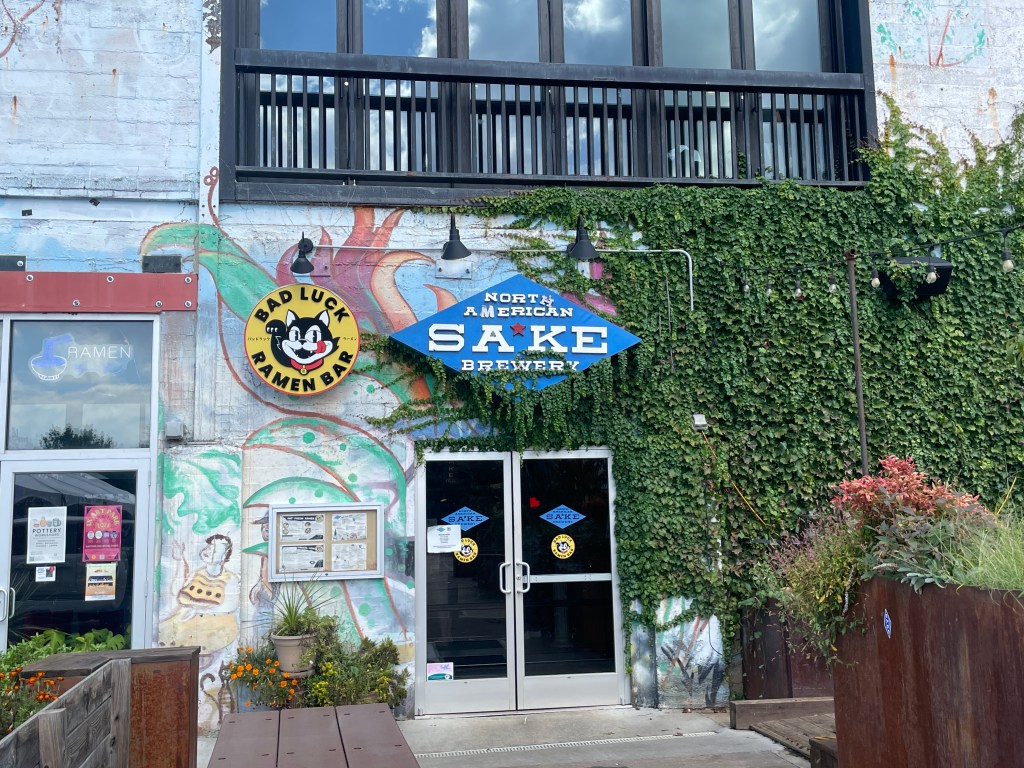
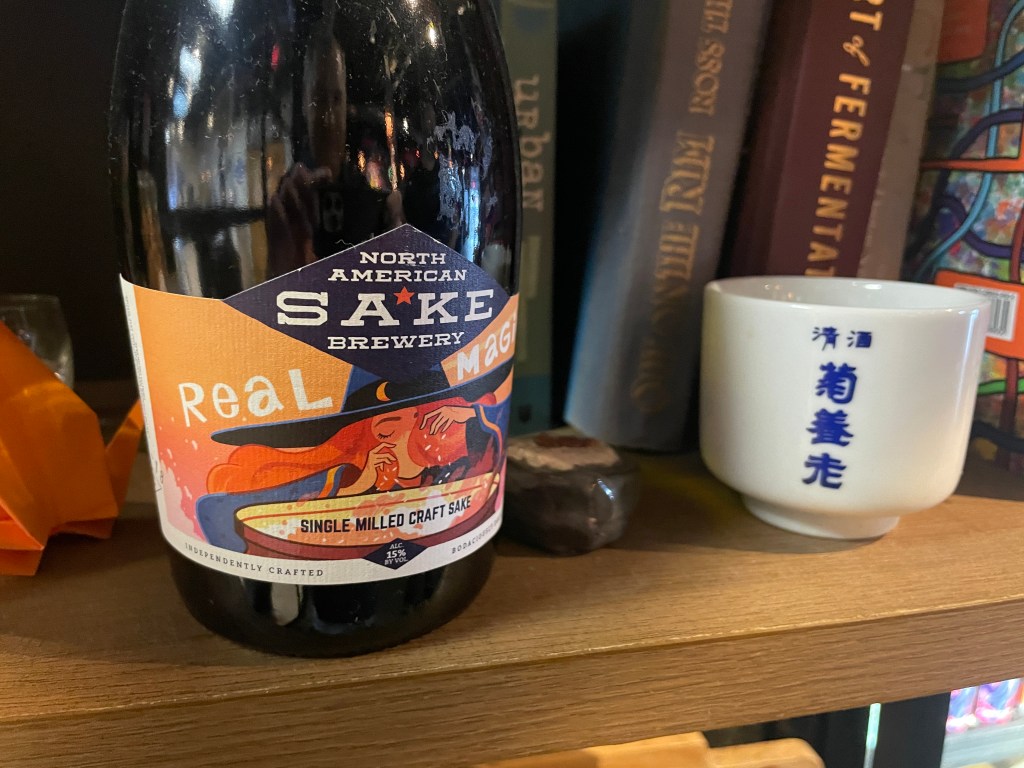
Charlottesville based North American Sake Brewery is one of only 20 or so sake breweries in the US, and the first (and only) in Virginia. Founder and head brewer Andrew Centofante gave me a lesson on sake brewing and a tour of his facility.

“Sake is such a fascinating and historic beverage. It’s a pretty niche market, but it’s one of the fastest growing beverages there is,” Andrew said during our interview. “As people explore Japanese cuisine, they are finding sake is a key part of it.

About 15 years ago, I went to an “izakaya” (casual drinking establishment) in Japan,” he continued. “The bartender walked me through different styles, regions, and profiles of sake, and it hit me that sake was similar to the craft beer movement. A few years later, I started making sake at home, and that led me to go back to Japan to work at a 200-year old brewery outside Osaka to learn the craft.

We’ve been open since 2018, making very traditionally handcrafted sake as well as some experimental styles.”

Defining Sake: Beer? Rice Wine? Or Something Unique?

The four basic ingredients for sake are rice, koji, water, and yeast. Of these, koji is likely the ingredient least-understood by American audiences.

Koji is a mold, cultured in hot, humid conditions to promote propagation. It’s an integral part of many of Japan’s most famous drinks and dishes, including sake, miso, and soy sauce.

Brewers apply the mold to rice, ensuring it’s thoroughly spread over every grain. When the brewing starts in the tank, the mold provides the enzymes to convert the rice starch into sugar. This sugar is then devoured by the yeast, which turns it into alcohol.

This process is called “multiple parallel fermentation,” and it’s what makes sake brewing unique.

While sake is usually referred to as ‘rice wine,’ that definition is a misnomer. Sake is its own category of alcoholic beverage, despite often being classified as either a wine or beer in the western world.

Andrew gets the question of, “Is sake a rice wine?” all the time. “Like wine, you can sip it, savor it, pair it with food. Sake is the same way. It has nuance of character, but the process is grain based, so it’s much closer to brewing than winemaking.

While they use similar processes, sake and beer come out at very different strengths. Since sake usually has around 15% alcohol and is sipped like wine, it’s often classified as rice wine.”

Balancing Creativity With Tradition

Unlike wine, which is ‘terroir’ driven, sake is more brewer-driven, according to Andrew.

“We talk a lot about the concept of intent in sake making. That’s what makes sake a difficult beverage to understand.”

The brewer’s treatment of their rice greatly influences the end product, a process called milling.

“Milling is where we remove fats and other proteins to get to the grain’s “shimpaku,” or starchy core, and it helps delimitate the style of sake you create,” Andrew explained while showing a handful of rice grains. “The more milled the rice is, the fruitier and more aromatic the end product is. The less it’s milled, the more earthy and savory notes you’ll get.

“Daiginjo” (50% milled) sake rice on the left, and sushi-grade rice on the right

The kind of rice you use is important, but think of it like a white canvas. It’s the brewing that helps bring out the nuanced flavor and aroma.

We get our rice from Arkansas. The farm we use has been making sake-specific rice for years. Sake rice is a short-grained style, usually with a great shimpaku that’s easy to mill and melts well in the tank.”

Japanese sake already comes in many different styles, based on the ingredients and production methods used. Local producers like North American Sake aren’t afraid to get even more creative to appeal to American consumers.

Andrew pondered my question regarding how far local sake diverges from what’s found in Japan before answering.

“It’s an interesting question. The sake industry in North America is so young, there aren’t defined styles of sake in terms of regionality. Being in the US, we have this huge opportunity to break out of traditional sake conventions.

We play on the edge of what sake is, and make everything from super-premium to fun, table sakes. There are people who are casual drinkers who just want something fun, or something gluten free.

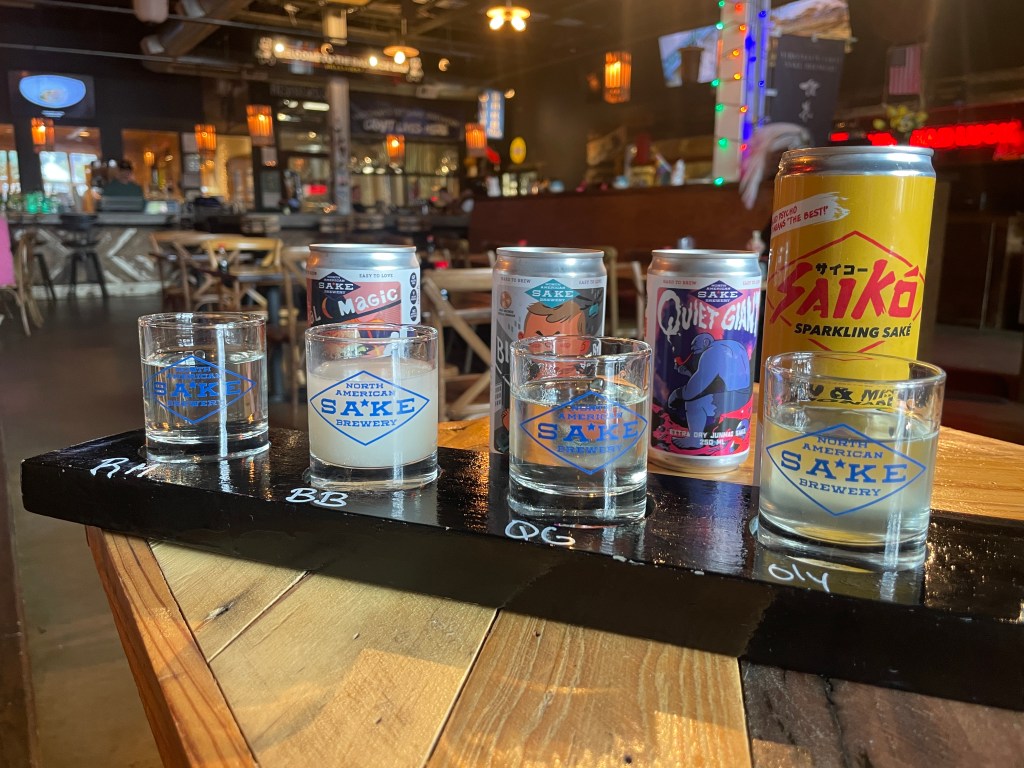
For this crowd we make fruited styles using regional fruits or herbs, we make sparkling sake, and we’ve done collaborations with different brewers to make hopped sake.

But we also have customers who are looking for great sake. Since we’re in the game of making sake, we have to be as good or better than any Japanese sake out there.”

Walsh Bar Takeover Blue Wall Cider and The Parallax Project

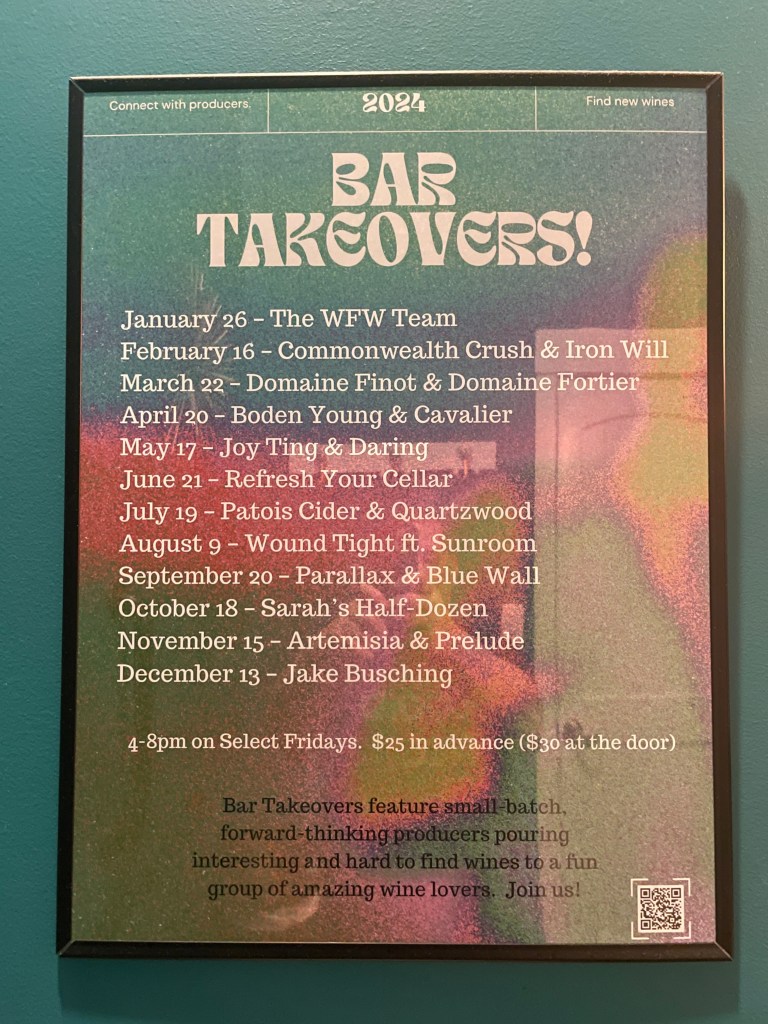
Last month (after a hard day of sorting grapes at Linden) I went over to Walsh for their latest Friday Bar Takeover. This event included a pair of new participants, The Parallax Project and Blue Wall Cider & Wine.

I’ve become accustomed to visiting old friends at these Bar Takeovers (looking at you, Jake Busching, Joy Ting, Daring Wine Co) but it’s exciting to try new, small brands. Some projects showcased here are actually produced at Walsh Family Wine, while others are what you might call ‘visiting friends’.

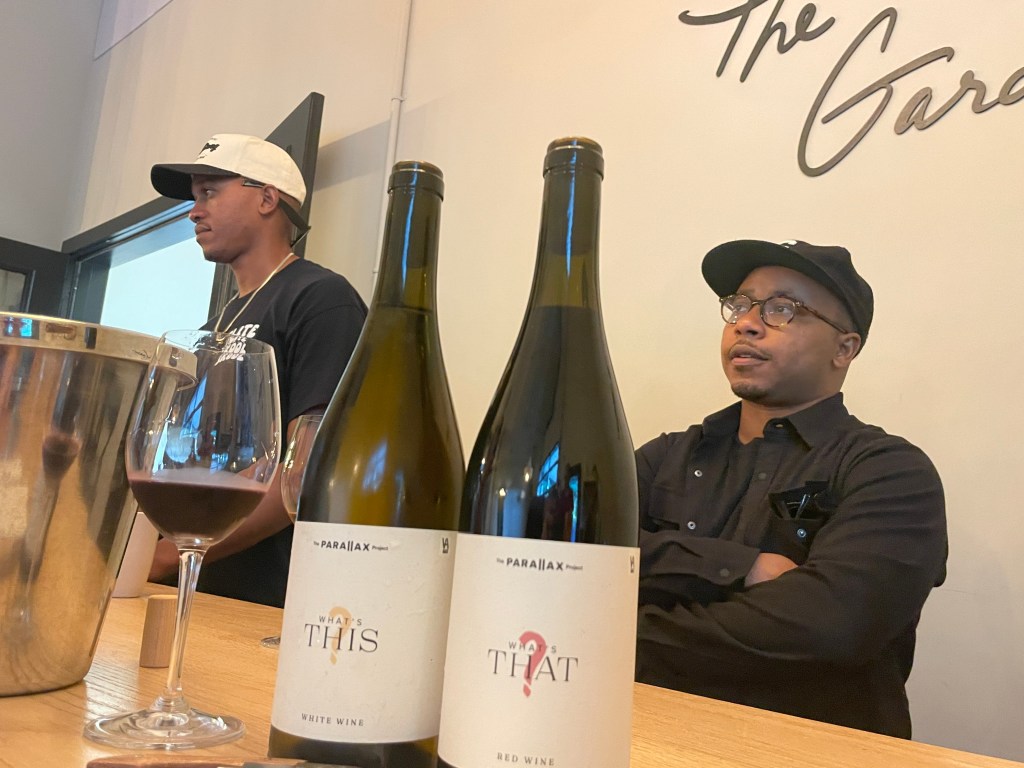
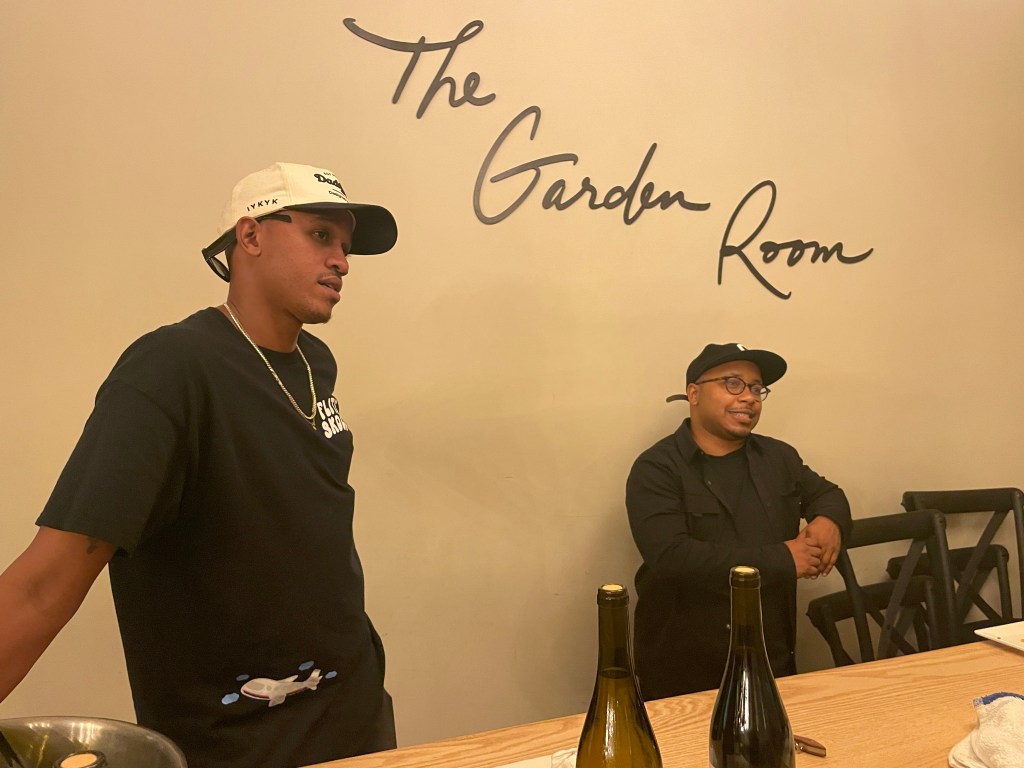
Parallax falls into the ‘visiting friends’ category. The brand is owned by entrepreneur and jack-of-all-trades Lance Lemon & “Virginia wine hype guy” Reggie Leonard, friends who decided to collaborate with Commonwealth Crush Co to create wines unique to them. These gents are also helping lead the charge for greater diversity in the Virginia wine scene.

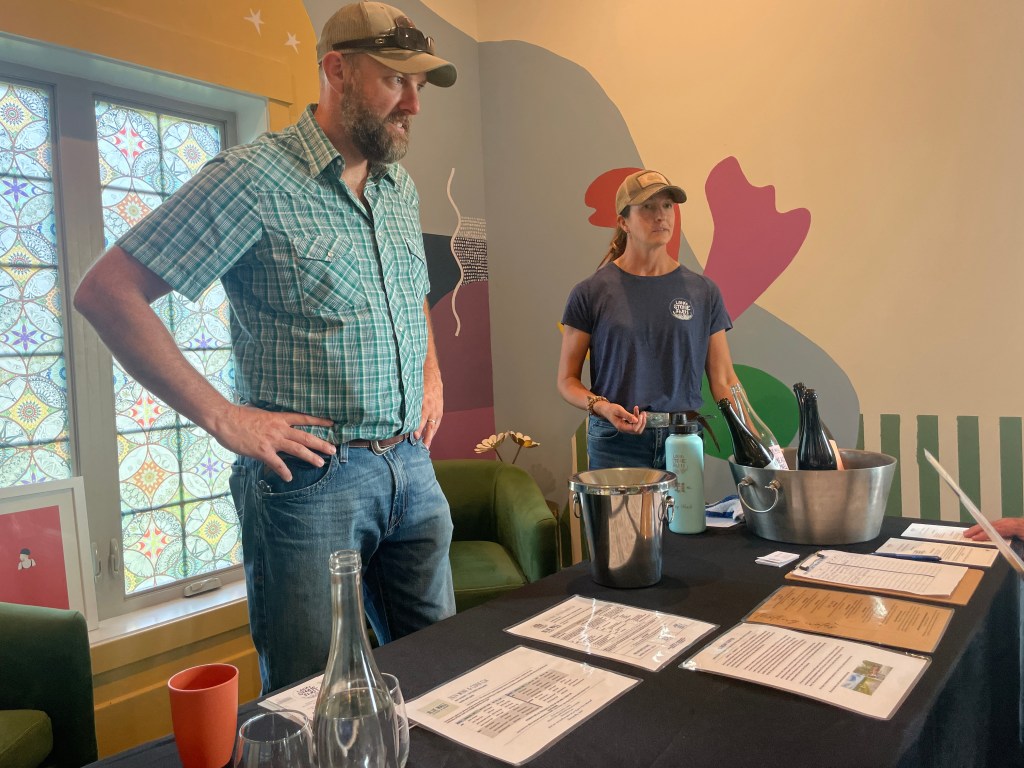
Blue Wall is owned by Justin and Casey Wisch, who also own nearby Long Stone Farm. Blue Wall is one of the many small projects that Nate Walsh and his winemaking team support. The Wisches source their apples from their estate orchard and grapes from Nate’s vineyards, all of which is made at Walsh Family and labeled under the Blue Wall brand name.

The Parallax Project

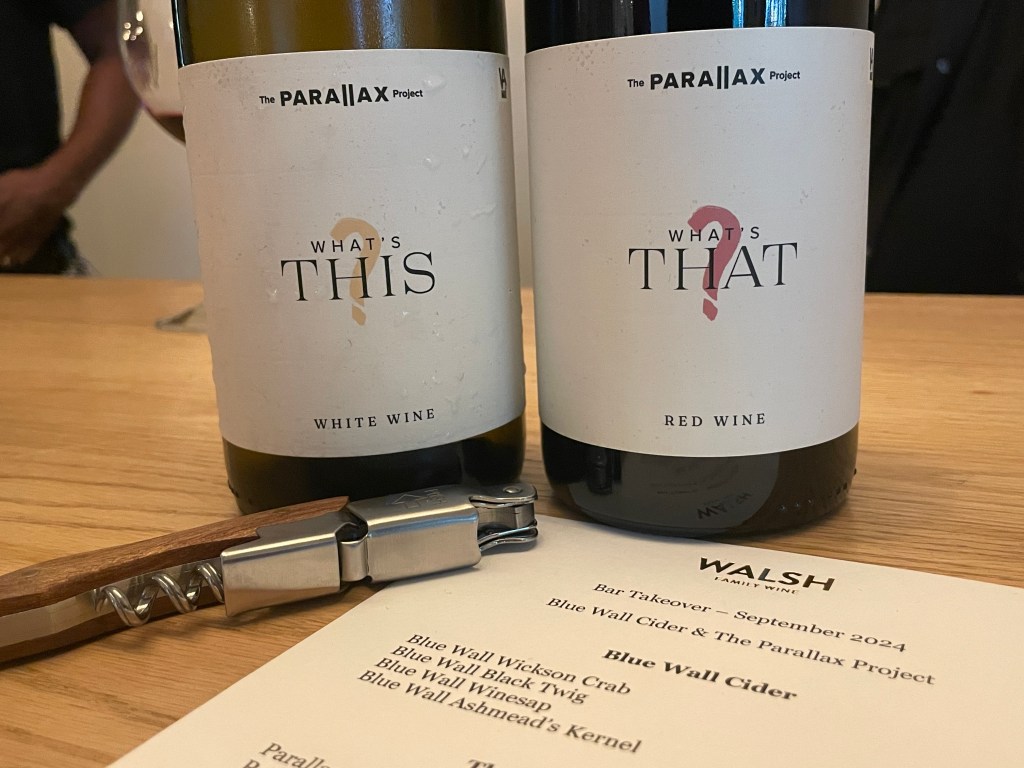
Kathy Wiedemann & I decided to start our visit with Parallax, who were hanging out in Walsh’s Garden Room. Reggie and Lance have so far produced two wines; “What’s This”, and “What’s That”.

The project’s name was inspired by what’s called “The Parallax Effect”, which is “a difference in the apparent position of an object when viewed along two different lines of sight”.

Lance and Reggie applied this principle to their wines. While one is a red wine and the other is a white, both were made using nearly the same grapes but in different blends and winemaking styles.

The 2023 “What’s This” is their white wine, a blend of 32% Vidal Blanc, 29% Chardonel, 29% Tannat (direct press), 6% Petit Manseng, 3% Traminette, 1% Albariño.

I’d never heard of a blend that even approaches this wine, and it was just as tasty as it was interesting; the kind of wine you need to keep sipping just to figure out what’s in your glass. Very floral with citrus notes (amongst others). I bought a bottle.

The 2023 “What’s That” is 83% Tannat, 8% Vidal Blanc, 7% Chardonel, 1% Petit Manseng, and 1% Traminette. While technically you could call this a ‘tannat’, it’s the farthest thing from one. Lower on the tannin, more fruit, and also highly aromatic.

The blending may seem odd – but they work. Both wines were designed to be enjoyed young and are very much in line with the off-beat style I’ve come to expect from their wine mentors, Ben and Tim Jordan of Commonwealth Crush.

Blue Wall Cider & Wine

In the main tasting room was Justin and Casey Wisch, who were pouring four of their ciders; Black Twig, Wickson Crab, Ashmead’s Kernel, and Virginia WineSap.

Blue Wall is actually just one component of Long Stone Farm, a sustainable farming operation that offers everything from CSA shares, a farm store for their meat and produce (which doubles as a wine/cider tasting room), even a monthly ‘Sunday Supper’.

The last is perhaps my favorite initiative of theirs, as it showcases everything that’s made at their farm but served by a local chef.

Blue Wall’s ciders are made in a ‘traditional’ style, which I nickname ‘wine cider’. No carbonation here; these ciders are meant to showcase the fruit they came from.

Wickson Crab was the ‘biggest’ of the four in terms of flavor, probably because it was barrel aged. It was my favorite of the more standard ciders.

Next up were Black Twig and Ashmead. Black Twig is off dry, while Ashmead is definitely the sweetest of the lineup. Had it been warmer the Ashmead would be a summer pounder outside (in fact it was when I attended their dinner).

But my favorite was Winesap, made as a sparkling pet-nat style cider. Very light and drinkable, and I suspect extremely food friendly. I got a bottle of this to go and will definitely open it with friends at dinner.

Special shout-out to Kathy’s husband, who brought the pizza that we ate outside.

Dining at Mount Ida For Charlottesville Restaurant Week

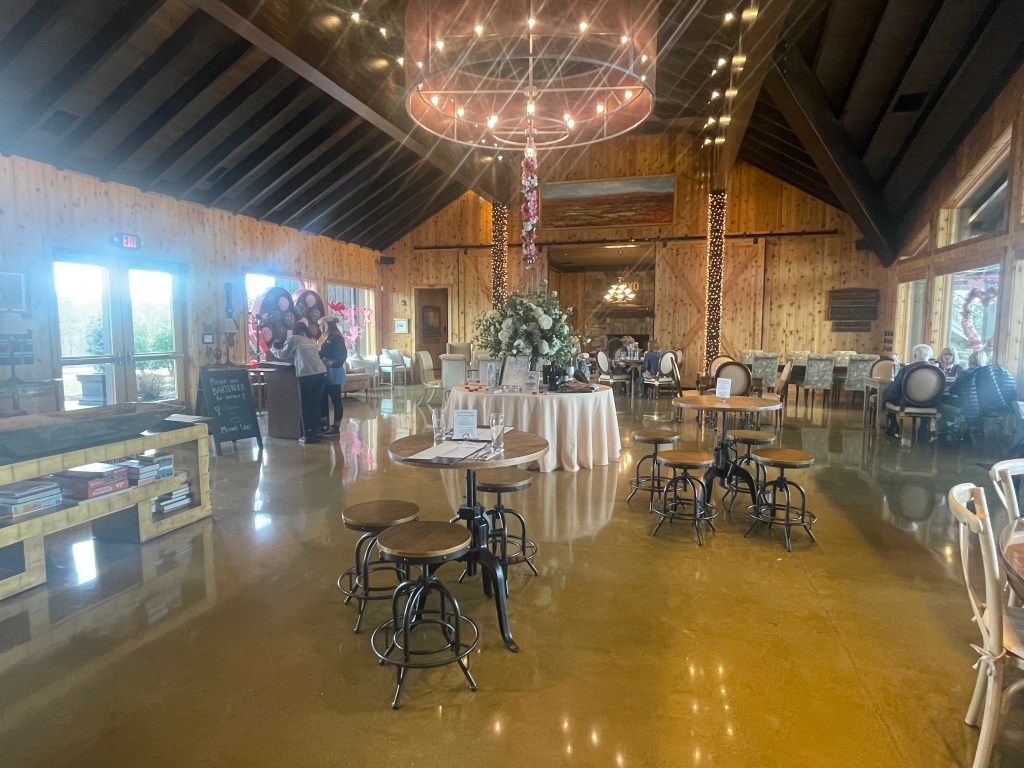
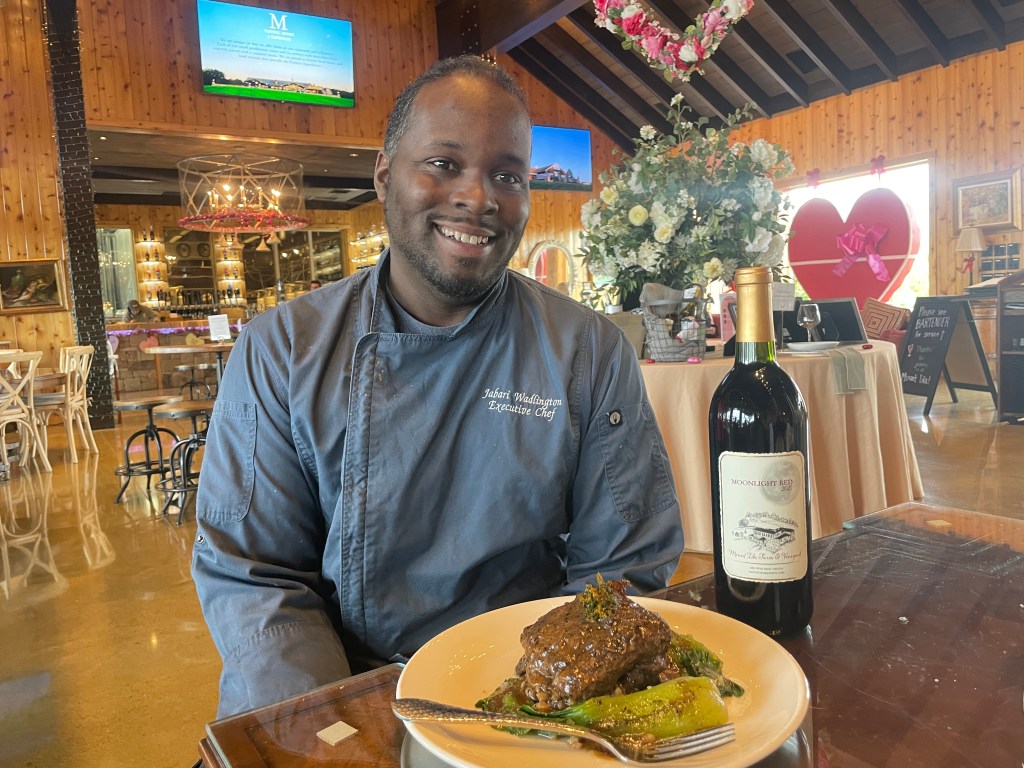
It’s tough to pick a single theme when discussing the Mount Ida Reserve Tasting Room & Taphouse, simply because there’s a lot to talk about. I visited to interview Executive Chef Jabari Wadlington, but chatting with him was just one part of my visit.

I easily could have spent more time talking about the wine. Mount Ida has 27 acres of mostly Bordeaux varietals, divided between three vineyards. While the winery is around 30 minutes south of Charlottesville, they are still part of the Monticello American Viticultural Area (AVA) that Wine Enthusiast called the 2023 “Wine Region of the Year”.

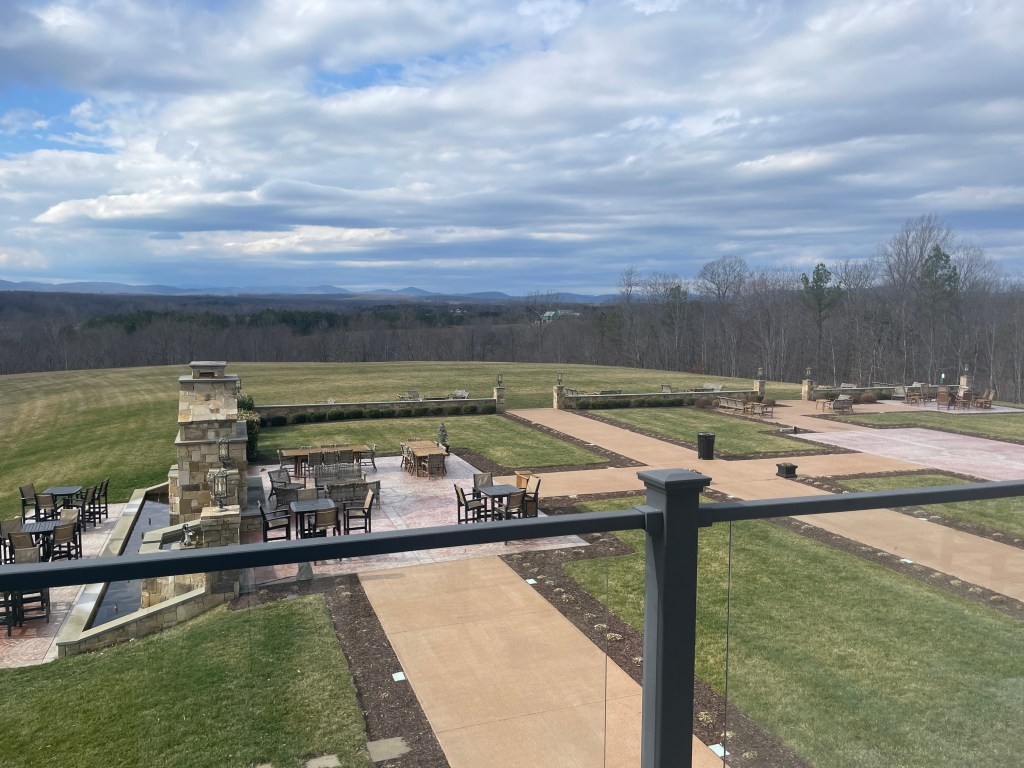
I could also talk about how stunning the property is. The business covers 3,500 acres divided between a number of smaller venues, including the wine tasting room/taproom, event centers, lots for private homes, and a number of home rentals (including a building that dates to the 1700s).

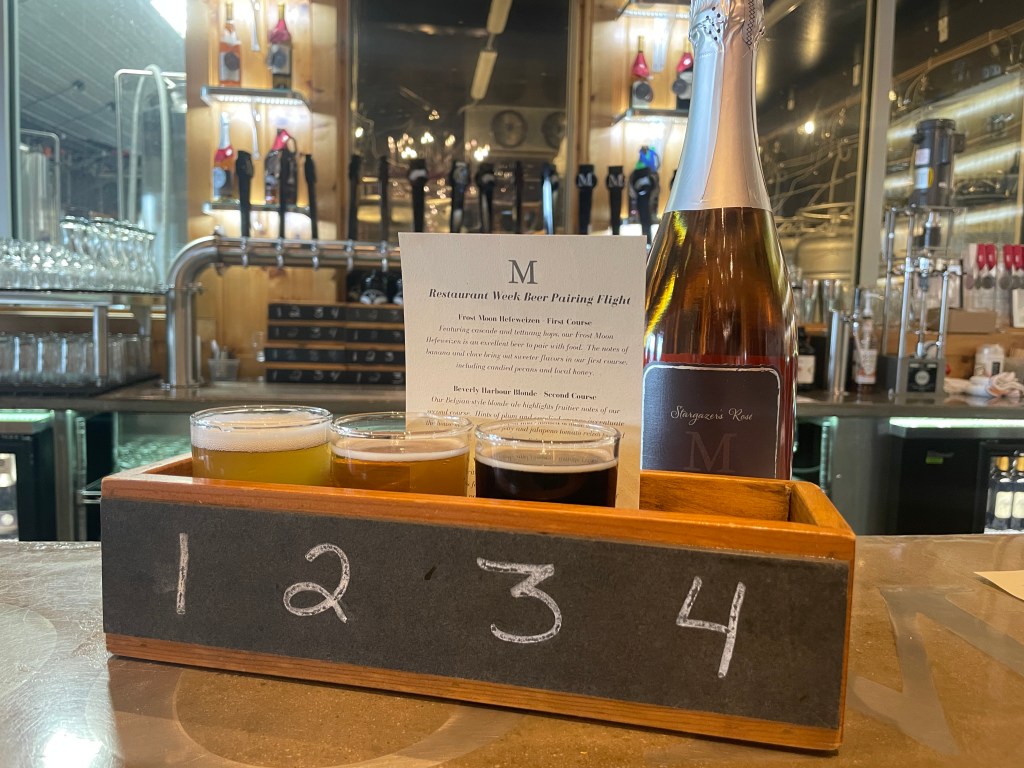
There’s also the brewery. Mount Ida is one of only a handful of Virginia wineries that has a fully integrated taproom, and is probably the only one of those with a full farm-to-table restaurant. On top of all of this, last year they started offering trail rides.

But for this trip, I was focused on the food. I’ve been on a mission to interview the Executive Chefs who work in Virginia wine country. Given how Mount Ida’s restaurant is an integral part of the overall experience, meeting Jabari was high on my list.

I was fortunate to schedule my visit at the end of Charlottesville’s Restaurant Week, which for the first time included Mount Ida as a participant. Jabari was especially proud of his Restaurant Week menu, which he used as an opportunity to test out dishes for the winery’s own 2024 menu.

Before we met up I also learned some background about the winery part of the operation. Frantz Ventre is their full time winemaker, although the production is done at Michael Shaps Wineworks. While Frantz is a native of France, he’s been part of the Virginia wine scene for about two decades, with a resume that includes Sweely Estate (before it became Early Mountain), Jefferson Vineyards, and Grace Estate.

Elevating “New Southern” Dishes

After a quick look around I met up with Jabari, who told me his story.

While Jabari was born in L.A., he moved to Virginia in 1996. As someone who grew up watching the Blue Angels at airshows and describes himself as ‘obsessed with planes’, it’s no surprise he originally planned on becoming an Air Force pilot. That led Jabari to study engineering at Tuskegee University and participating in their Air Force ROTC program.

While becoming a pilot is still on the bucket-list, Jabari eventually realized flying for the Air Force wasn’t in his future. He transferred to Johnson & Wales University to study the culinary arts, which led to an internship in New Orleans under Tom Wolfe.

From there, Jabari described a veritable roller-coaster of different experiences. For years he jumped around different east coast restaurants, ran a catering business, cooked for celebrities and executives in D.C., all the while learning the ins & outs of operating a kitchen. The birth of his son encouraged him to seek greater stability, which led him to Charlottesville.

“I’ve always felt the reason I chose the culinary arts is it’s the only art form that uses all of your senses. Food just has a lot of power in bringing people together, and that’s what I love the most.

My niche is probably ‘New Southern’. That’s not just your typical soul food – fried chicken, mac n cheese, collards, and those kinds of things. Its food that uses ingredients that goes to the root of what makes cuisine what it is now, while being versatile enough to reach a wide group of people.

As I got older I started opening more restaurants, including two in Charlottesville. I’ve always focused on community, farm-to-table settings, but more focused on the ‘community’ part than the fine dining aspect. Doing events at different farms also helped me build relationships.”

Finding Mount Ida And Appreciating Sustainability

Eventually Jabari interviewed for the Executive Chef position at Mount Ida – and was offered the job that day. “I didn’t take the position right away since I hadn’t seen the property. But when I came and saw the view I was like “Yes…I’ll take it!”.

While Jabari still uses his local contacts, the farm at Mount Ida has much to offer.

“We try to be as sustainable as we can. The property has 3,500 acres and around 150 cattle. We chop down trees for smoking our pork belly and get wild mushrooms from along the ridge. All the malt and barley we use for our brewery is used as feed for the cattle. It’s a magical place to work.

Having the cattle gives us a unique niche in the market. Our meat really stands out because we use the entire cow, so our burgers include ribeye and sirloin. Even the short ribs we have for restaurant week were from our cows. We can put a filet on the table and not charge $42-48 like other locations.”

Being a chef also gave him an eye for wine pairings, which are put to good use at the tasting room. Jabari’s four-course Restaurant Week menu recommended their chardonnay to go along with the rich options of his first course, the petit manseng to pair with the seafood and salad-heavy second course, the petit verdot to soften the fatty dishes of the third, and a port-style wine to compliment the dessert.

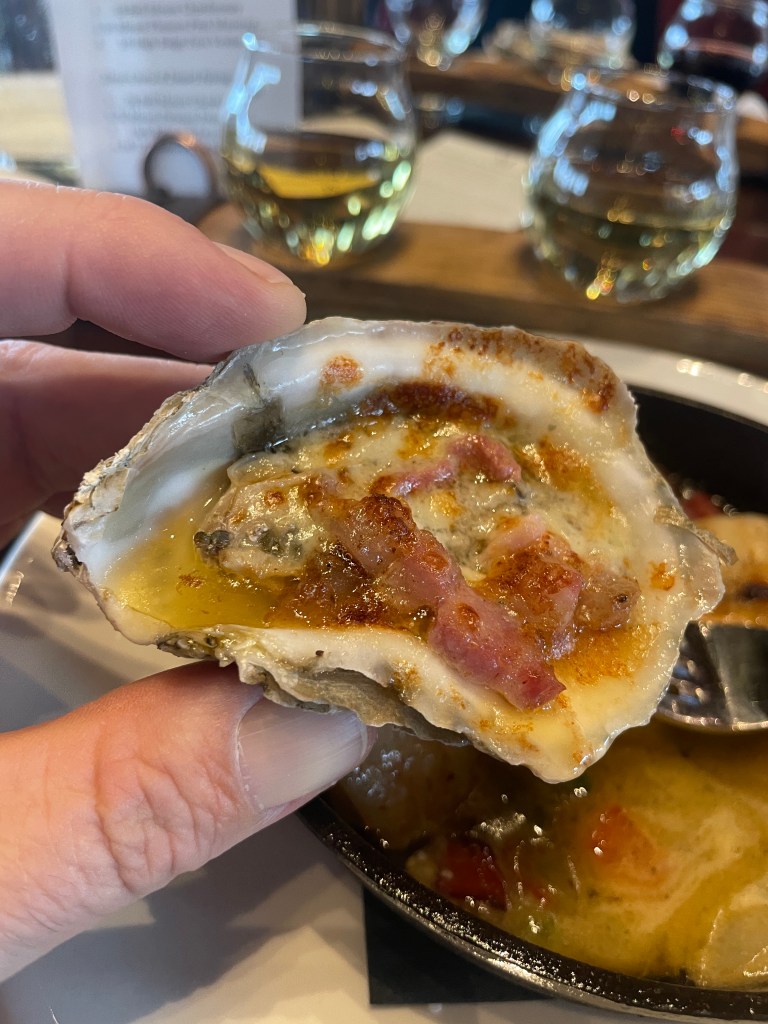
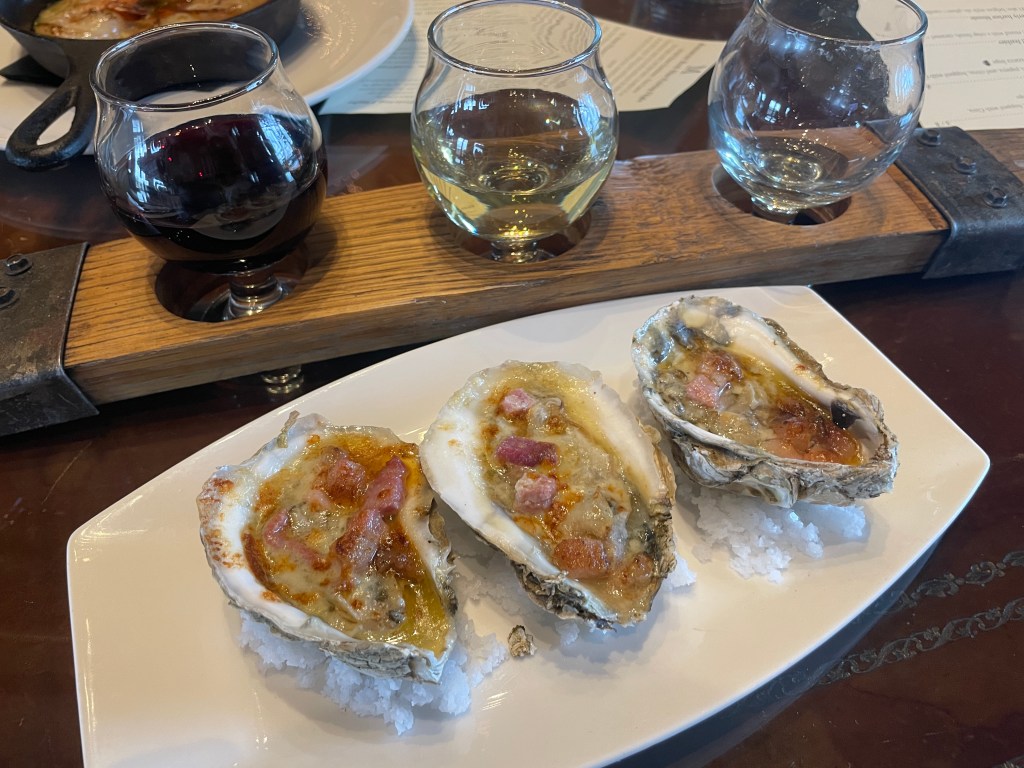
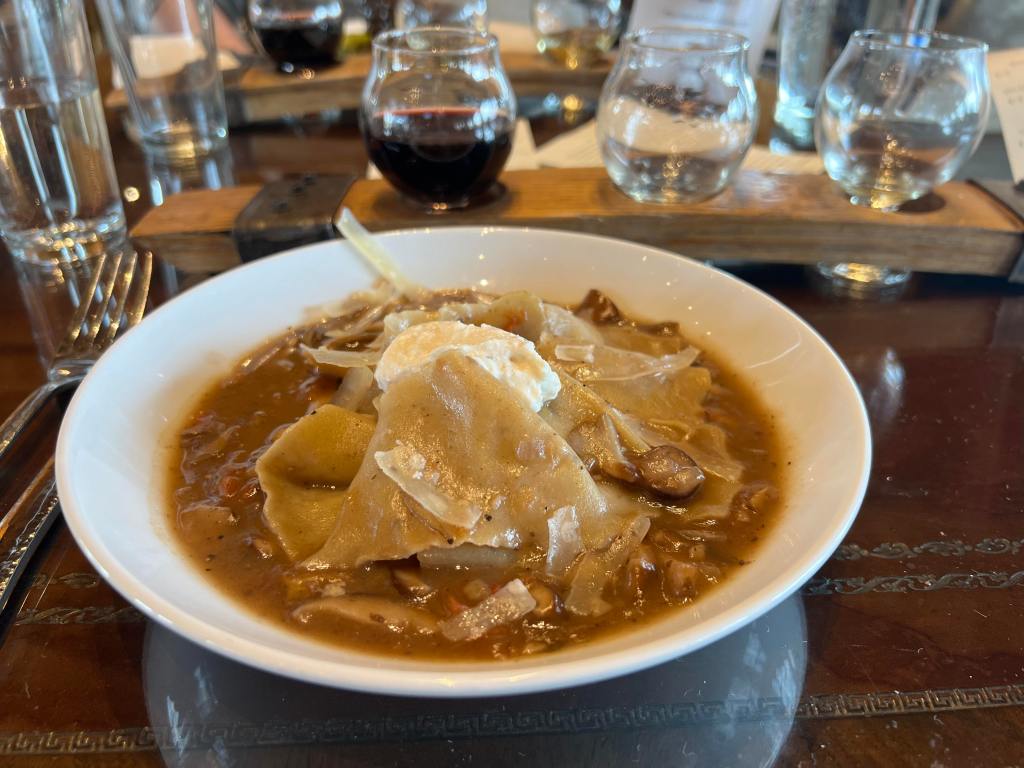
My dining companion & I tried his winter parfait & butternut squash soup for our first courses, the fire roasted oysters and jumbo shrimp for the second, and short ribs and mushroom tagliatelle for our mains.

“I use my dishes to offset where the wine is on your palate. I like using our cabernet franc and petit manseng, but I really think viognier stands out as a Virginia staple. I’m also a fan of our red blends, and pairing our port-styles with our desserts. Pairings are where I get to have fun.”

Jabari also praised Mount Ida’s beer. Last summer he took their stout and reduced it into a syrup, which was made into a ‘beer ice cream’. He also used Mount Ida’s rosé as a base for their sorbet.

Picking a favorite dish is a difficult job, especially given how he’s always mixing-up the menu. Yet a few staples, like their pizza, are always available. “I get bored with food, and always want to try something that other restaurants aren’t doing. But we have our own pizza ovens, so during the season we sell a lot of pizza!”.

Mount Ida is open seven-days a week. While you might not see Jabari in the dining room, fans of his cuisine can watch reruns on The Food Network and see him compete.