2024 Finger Lakes Trip

I wrote in the opening sentence of my 2022 Finger Lakes blog that “The Finger Lakes is a region I can continually return to.” Well, 2 years later, I was back for my 3rd trip.

For this trip, I was the ‘tour guide’ to a group of 4 friends, none of whom had visited the area. The entire trip was 5 days, including a travel day of travel to get there, 3 full ‘winery days’, and departing the morning of the 5th day. We ended up visiting places on Days #1 and #5 as well.

To give my group their best bang-for-your-buck, I created an itinerary that mixed-in what I considered the Finger Lakes ‘greatest hits’ and added a few places that I hadn’t been to before. A total of 16 locations were visited.

Day 1: Keuka Lake

Living Roots Finger Lakes: Since this was our travel day, we only had time to visit Living Roots on our way to our Air B&B. This was someplace I’d wanted to visit, plus it didn’t close until 6 PM.

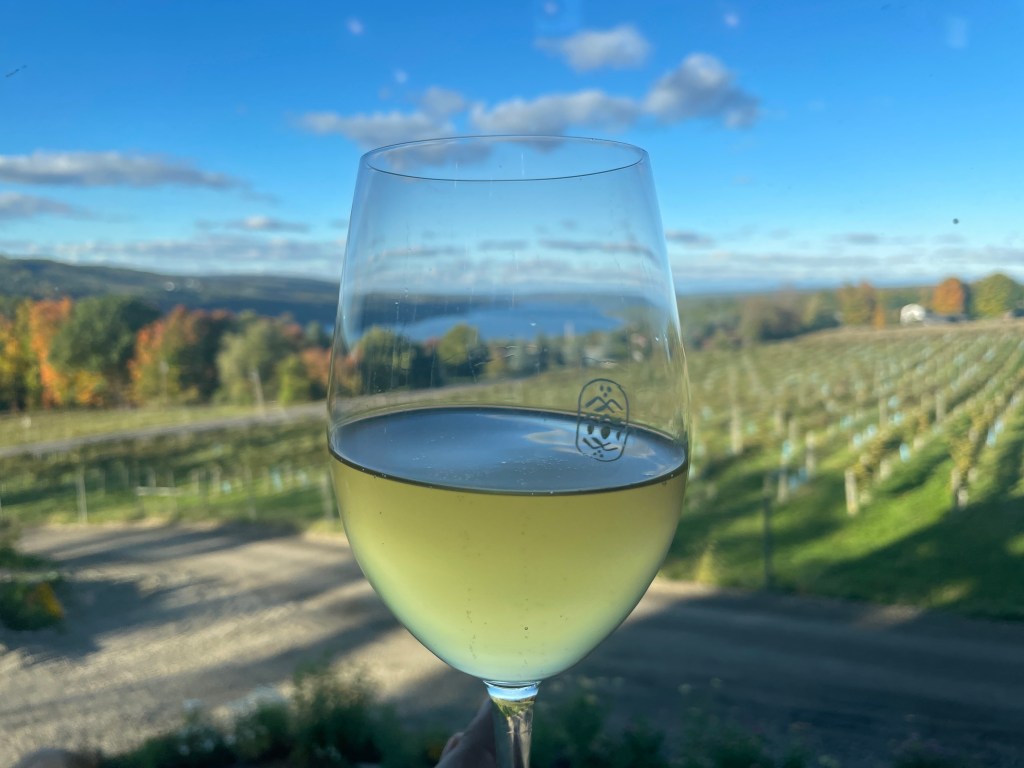
Living Roots easily had one of the prettiest tasting rooms of the trip, with a fantastic view of Keuka Lake. It also had more of modernistic aesthetic, as opposed to the rustic barns that most other wineries had.
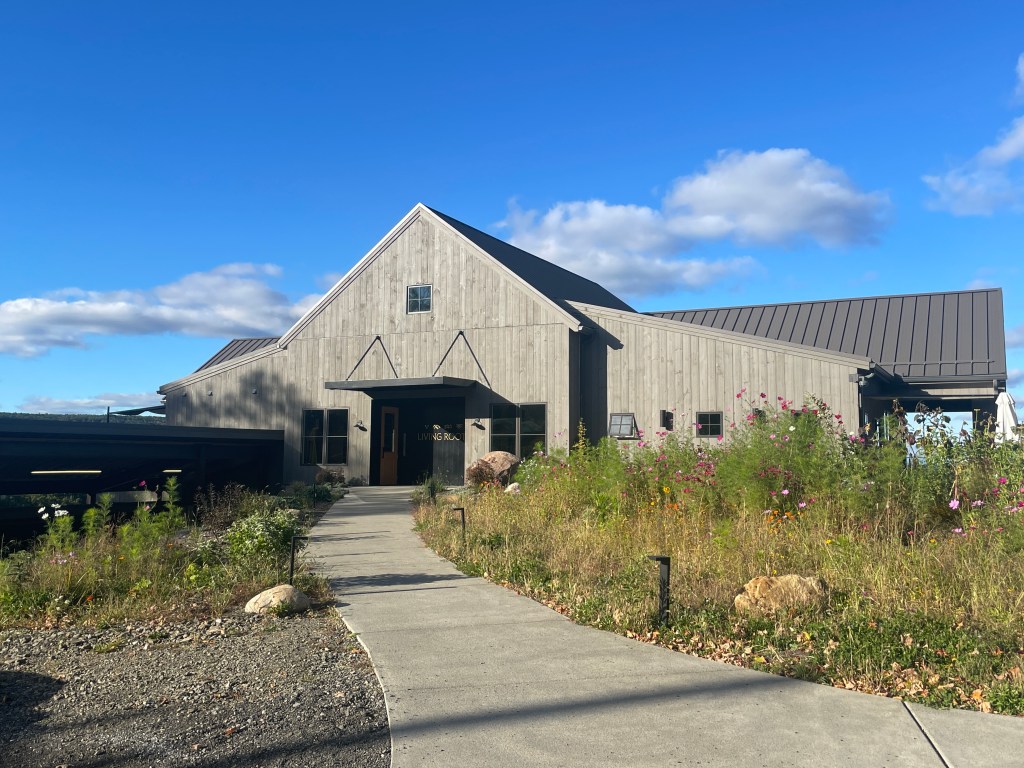
They also had the greatest meet-cute story I heard on the entire trip. The owners had this parcel of land overlooking Keuka but no long-term plans on what to do with it. While their daughter was in Australia she met up with a local guy, fell in love, and they eventually got married.

The property turned out to be a great place for vines. They turned it into a winery, with their new son-in-law as their winemaker. They also import some wine from Australia, a nod to his heritage.
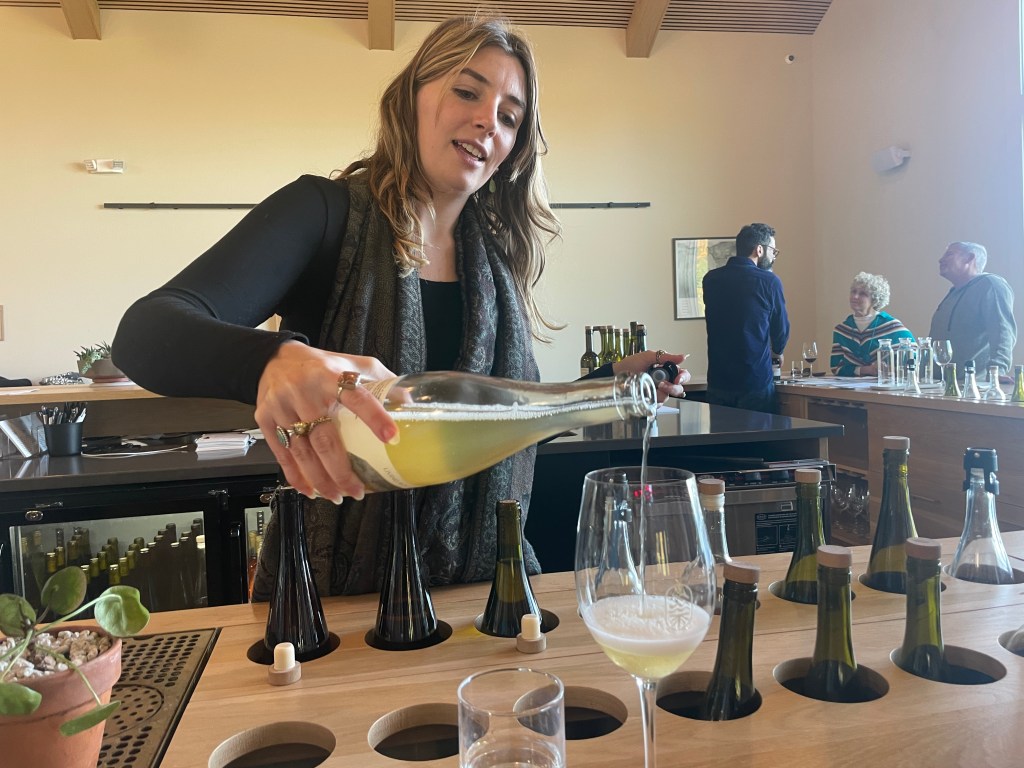
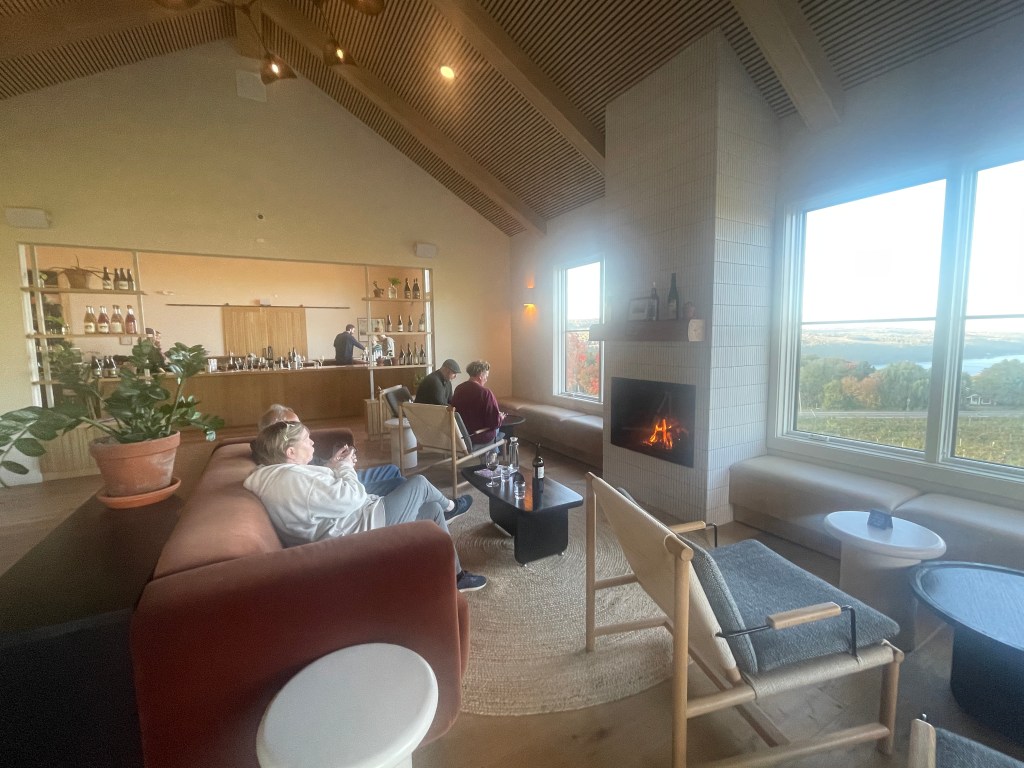
The wines were uniformly good, with my favorite was their pet-nat riesling. I sat back to enjoy gazing at the lake with a glass of it, plus got a bottle to go.

Day 2: South-West Seneca/Keuka

Stop #1: Herman J Wiemer

As one of the Finger Lake’s most famous wineries, Herman J shouldn’t require any explanation. It was one of my favorite wineries during my previous trip, and I wanted my group to likewise enjoy a visit.

Reservations are definitely recommended, but not necessarily required. Since we didn’t have reservations we sat in their open-aired barn with a space heater. It was OK for the early fall but not something I’d want on a cool day.

Herman J’s tastings are actually self-guided flights where you pick the wine and they are served in mini flight bottles. Since we had a large group this turned out to be a good deal, as we were able to pick out a bunch of wines and share them.

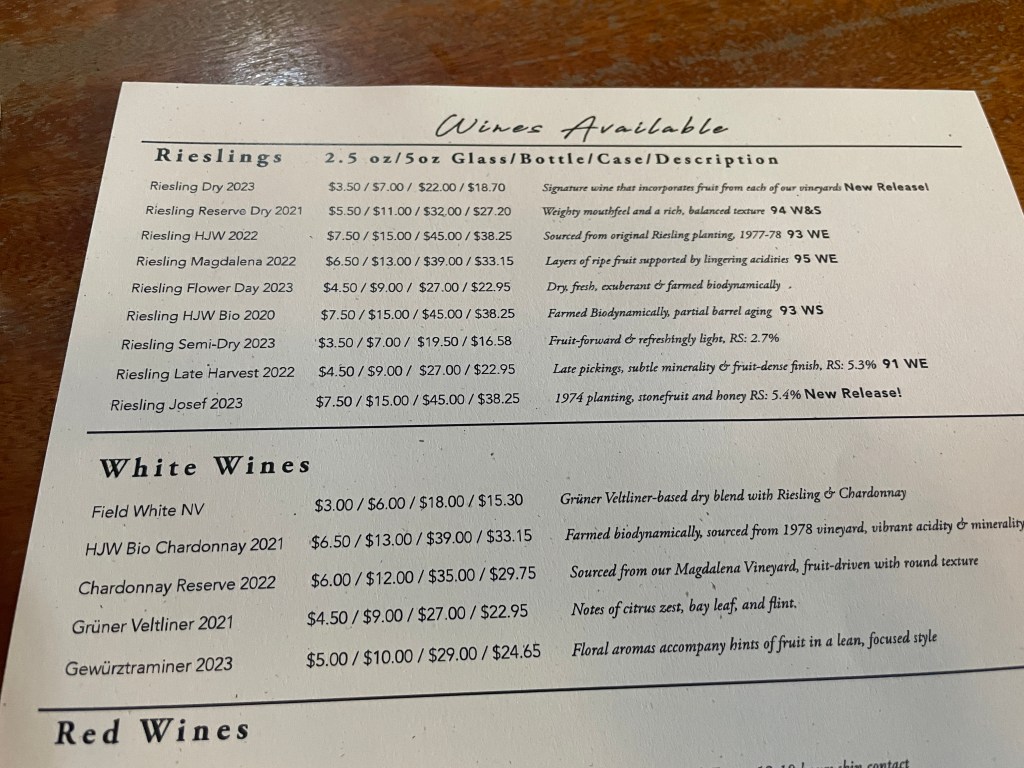
My favorites were the Magdalena Cabernet Franc and Magdalena Riesling. The former had all the traditional cab franc notes, with nice fruit and earthiness. The riesling was smooth, lemony, and had a great mouthfeel.

We also tried their Grüner, Reserve Riesling, Dry Riesling, Semi-Dry Riesling, and an Extra Brut sparkling.

Stop #2: Kemmeter Wines

One of the few stops I absolutely insisted on. Owner/winemaker Johannes Rienhardt did a great lineup against a backdrop of classical German music. One of the top visits of the entire trip.

Visits to Kemmeter aren’t just about wine tastings; they are about education. Johannes even will avoid tasting notes during a tasting because he doesn’t want to bias your opinion what to expect. Johannes also told us he was planning to start using cork for his wines in the future, since they preserved his wine more effectively.
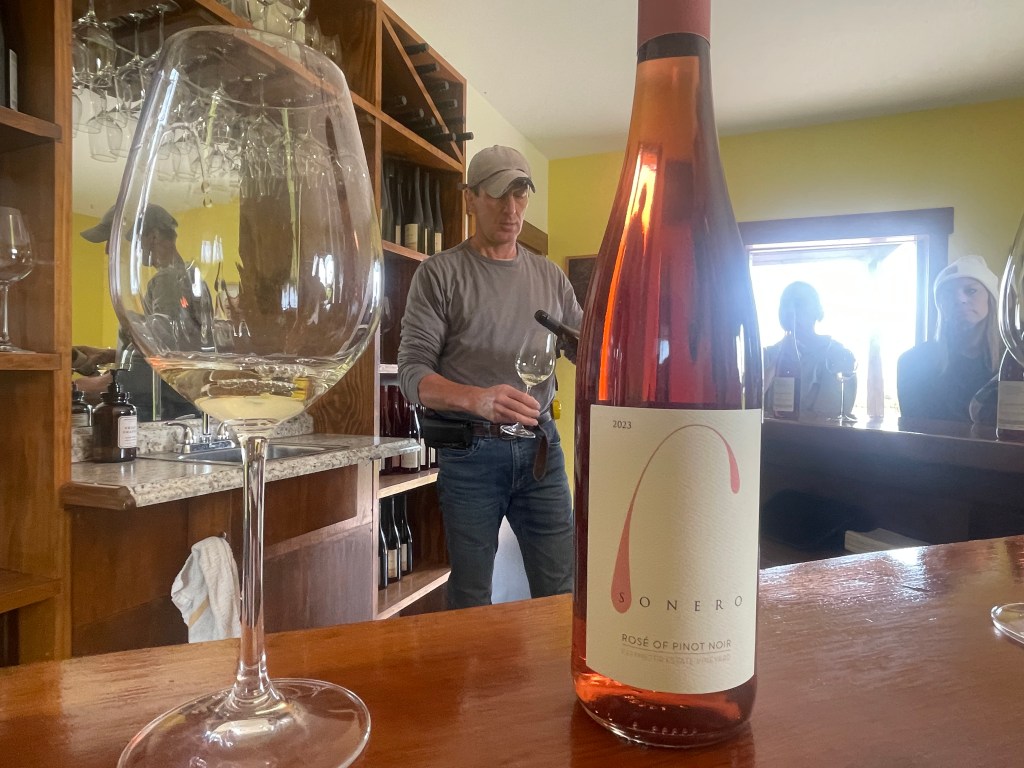
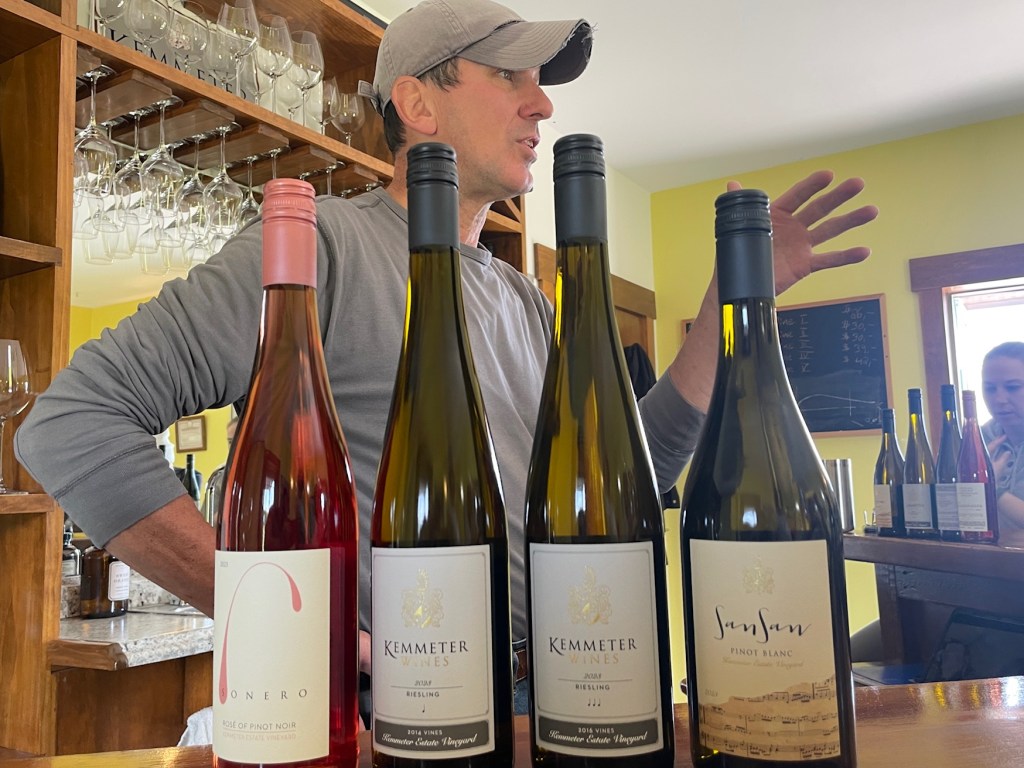
He also took us through an impromptu comparison of two rosés; one of which had been opened for 24 hours and another he just opened. The consensus was most people enjoyed the one that had been opened longer, because the oxidation brought out a different flavor profile.

We tasted 4 wines; a rosé (0.2% sugar but didn’t taste like it), his “2014 Vines” riesling (more on the savory side), his “2016 vines” (off dry, more fruit-forward), and a pinot blanc (amazing color, felt even drier than it was because of its thickness). The cab franc and blau will likely be non-vintage blends, so he can get the best fruit from each year.

Turns out he’s also planting zweigelt, cab franc, and blaufränkisch in the future, and he was long sold-out of his limited pinot noir. I left with a bottle of rosé and one of the rieslings.

Make sure to order the Sans dumplings in advance!

Stop #3: Weis Vineyards

Weis was another high-priority stop. The winery was really busy, but we waited on the balcony until we were able to get a spot in the tasting room. Reservations definitely recommended!

We tried six wines, but my favorite were the very full and lush “Special K” and their Terroir Riesling “Limestone”. I also liked their 2023 Perele sparkling, which for $22 was a great buy.

Stops 4 and 5: Keuka Lake Vineyard and Dr Frank

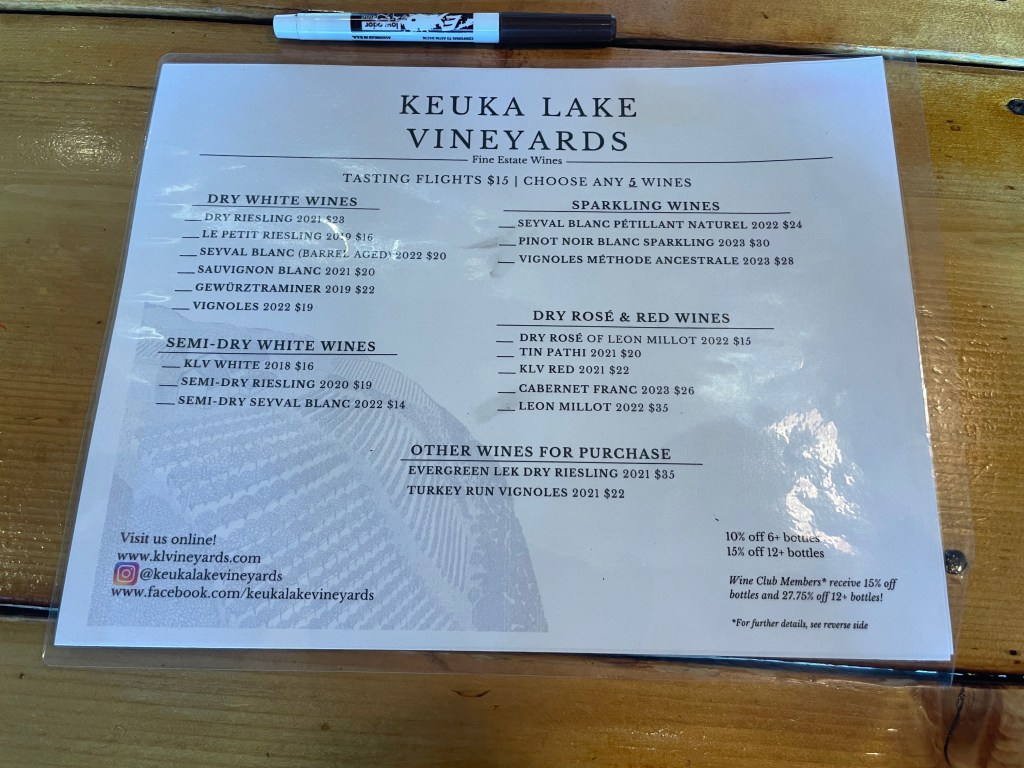
Not a lot of notes here. I insisted on a stop to Keuka Lake Vineyard because I really wanted their vignoles pet-nat and their 2021 Riesling. Extra Points for being dog friendly.

By the time we made it to Dr Frank, it was too late to do a tasting so we just got a glass.
Dinner: Glenora Wine Cellars/Veraisons

A little on the expensive side but it was our 2nd night in town, so we decided to treat ourselves.

The Aurora Borealis also showed up this evening!

Day 3/Saturday: Eastern Seneca and West Cayuga

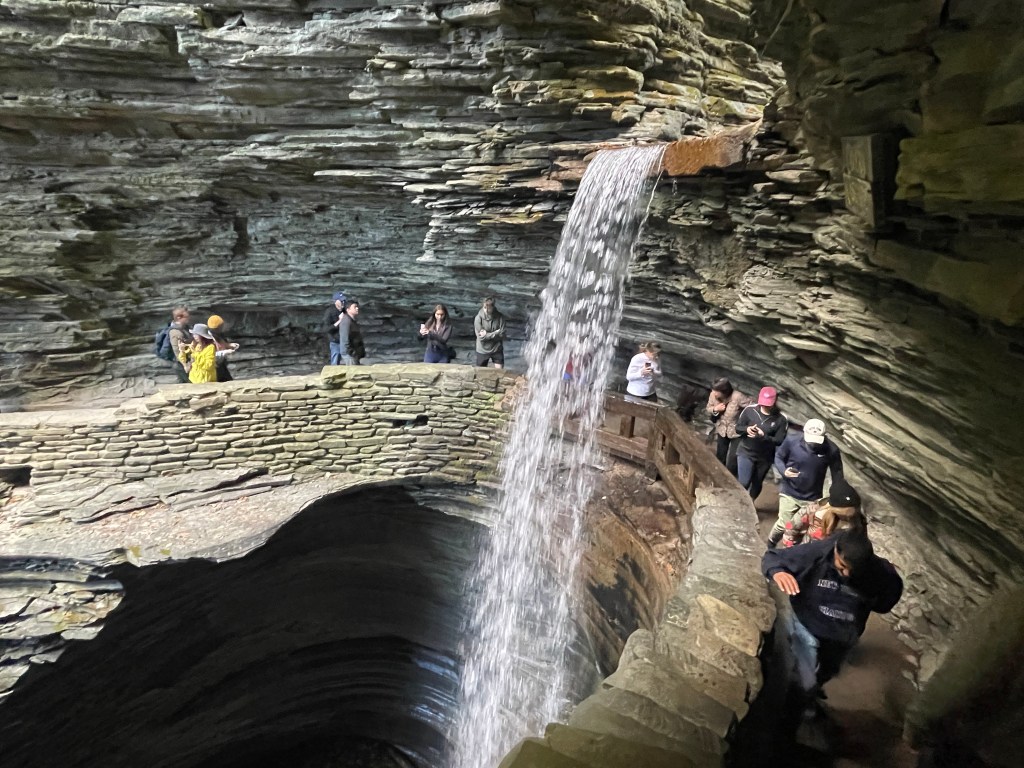
We started with a morning hike at Watkins Glen State Park, which is a must-visit for anyone. You can go as far as you want, or make it a short trip. An hour was good enough for us.

Stop #1: Boundary Breaks

This was easily one of the prettiest visits of the trip, since it had a great view of the lake. It helped they had a food truck that served lobster rolls, which we dined on while drinking sparkling and lounging on Adirondack chairs with a view of the lake. 55 acres of vines planted.

No one wine spoke to me, but we enjoyed several. They had a Bordeaux blend that was on the softer side and a dry gewürztraminer that I liked.

But the highlight were their three sparklings, with the “356” dry sparkling riesling being my favorite.

Stop #2: Forge Cellars

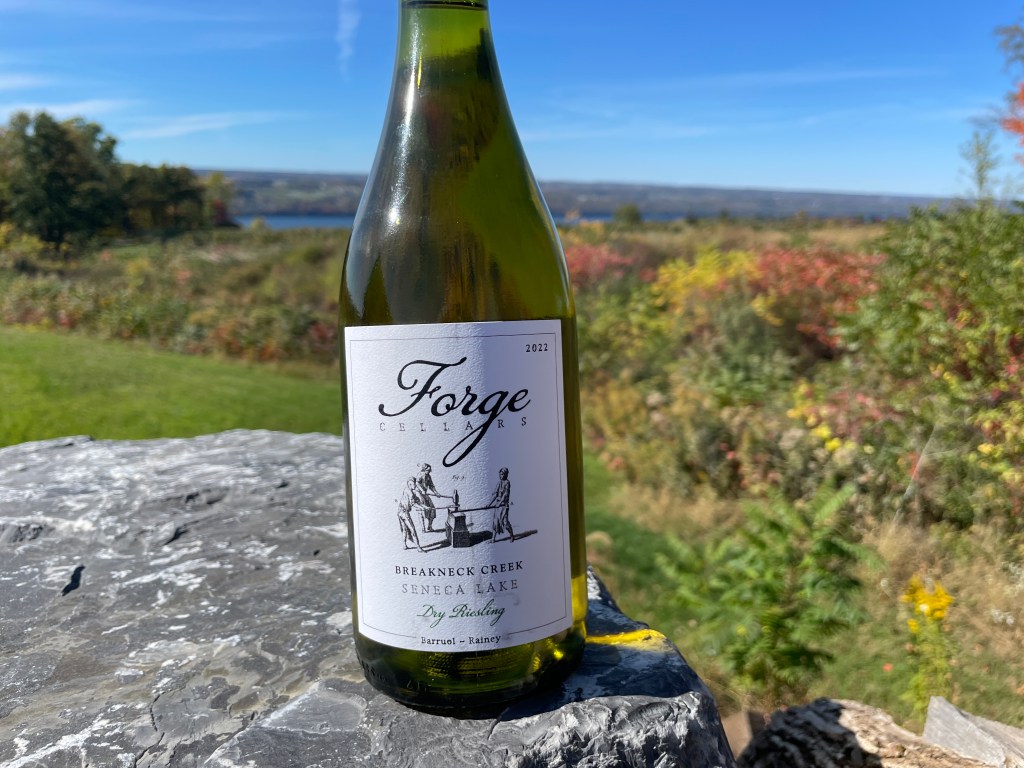
This was easily one of the top 3 visits of the trip, with a strong argument for the #1 spot for overall quality of wine. Definitely had the best reisling selection of the trip.

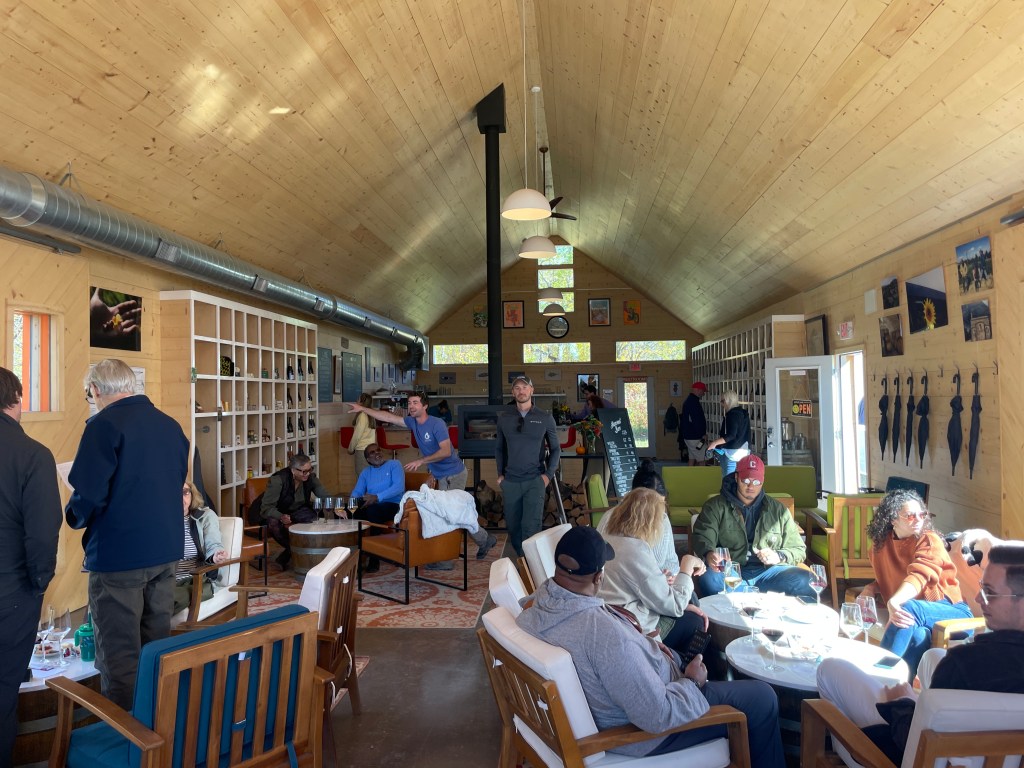
The main tasting room was being used for harvest, but we still were able to hang out at the ‘salon’. While it’s not on the lake, the views still impressed. Loved the laid-back vibe.

The assortment of vineyard-specific options here is impressive. There are too many to taste on your own, so bring friends to share! On top of that they also do a lot of club-only wines, a few of which I was fortunate to sample.

My favorites:

  1. Willow Riesling: At first I thought it had some tropical notes, but those faded fast
  2. Caywood Chardonnay: Herbal notes; just ok
  3. Tango Oaks Riesling: Very fruit driven, citrusy. Bought a bottle
  4. Breakneak Riesling: Salty and minerally; really good. I think this was a club bottle but snagged a taste. Bought a bottle.
  5. Liedenfrost Pinot: On the young side, lots of red fruit
  6. Tout Nu: A red wine brought in from the Rhône. Notes of graphite and earth, with a long finish.

Stop #3: Standing Stone Vineyards

We originally tried visiting here before Forge but it was so busy we had to get a later reservation. Fortunately our table was ready for us when we were done with Forge.

Julian was our server, and the dude was awesome. He gave us a great deal of education, including bringing out refractometer and some grapes in the later stages of noble rot. Julian also explained how Herman J now owns the winery, purchased in large part because their vineyard is on a warmer spot that is especially good for reds.

We kicked things off with sparkling, including a sparkling rosés and a Blanc de blanc made in the traditional-style. The later was excellent; with the lees giving it some weight.

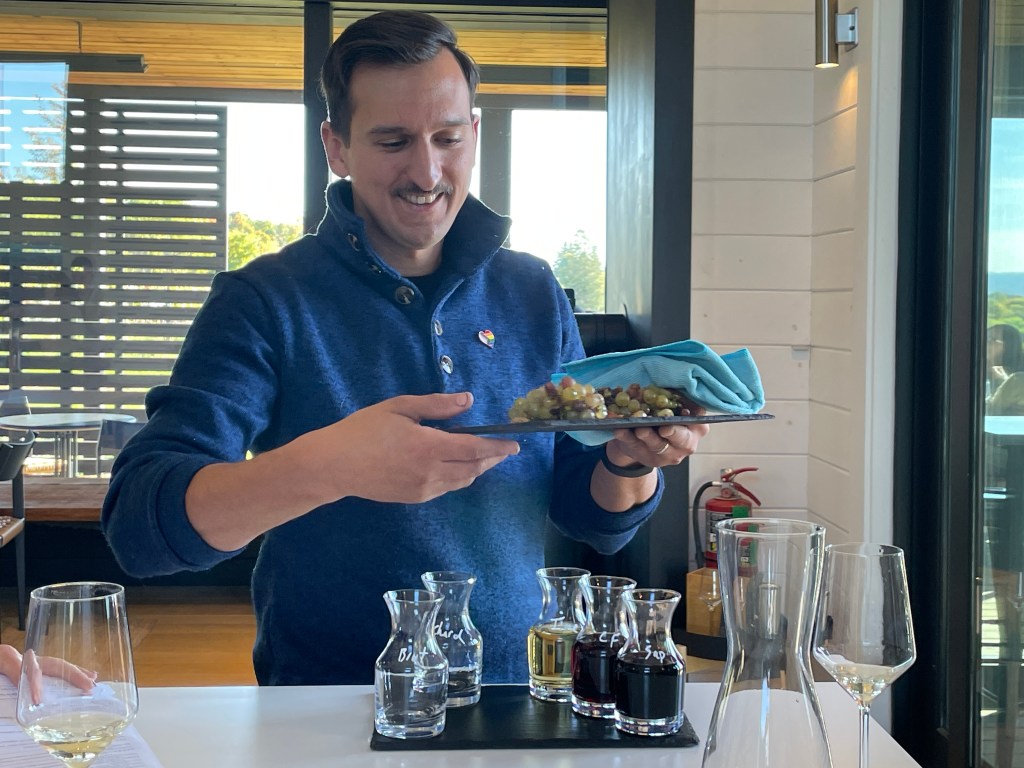
For reds, we tried a cab franc and their saparavi. The later had great color; earthy but soft. The chardonnay was OK.

We also had a few dessert wines. Nice late harvest; like a lighter Sauternes. We also enjoyed a very rich port-style.

The favorite here was the Timeline Riesling. Very complex and weighty.

Stop #4: Silver Thread Winery

A smaller winery that we tried since it was close by. 10 acres planted but they purchase more fruit. They make 3000 cases/year.

I liked the vibe a lot. They really lean into sustainability, and their owner/winemaker was our server.

My favorite was their Blanc de Blanc riesling, that I got a bottle of to enjoy that evening. I also thought their estate riesling was good.

Day 4/Sunday: NE Cayuga and NW Seneca

Stop #1 Hearts and Hands Wine Company

Another highlight of the trip, so much so I wrote a separate blog about them rather than make them one of many entries in this trip report. One of my Top 3 visits of the entire trip, top place for service, and had the best blanc to blanc out of 16 places visited.

The quick version is since they are on east side of Cayuga, Heart and Hand is less crowded. The downside is a visit needs to be planned out, since they are further away.

The name “Hearts and Hands” is a reference to a Claddagh ring, which is an Irish symbol of love. Co-owner Susan Higgins did our tasting, and was kind enough to open a little early since we were trying to make the most of our day.

What makes H&H’s growing location so great is their vineyard is on a limestone slab, which gives them somewhat different growing conditions. They make lots of sparkling, including a blanc de blanc which was one of the best wines of my trip.

That said, picking a favorite of ANYTHING was tough since everything was exceptional. My crew took maybe 2 cases worth of wine. I suspect this visit resulted in the single biggest haul of the trip.
Stop #2: Quarry Ridge Winery

Quarry Ridge wasn’t on our original itinerary, but since it was next to Heart & Hands we figured it was worth a shot.

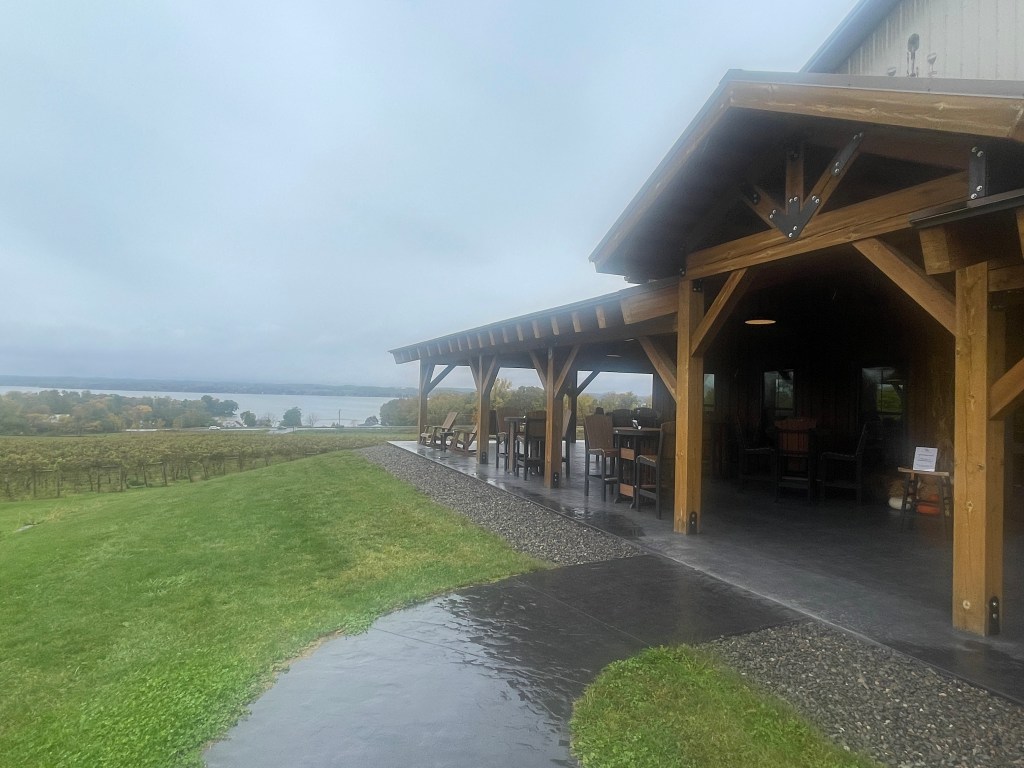
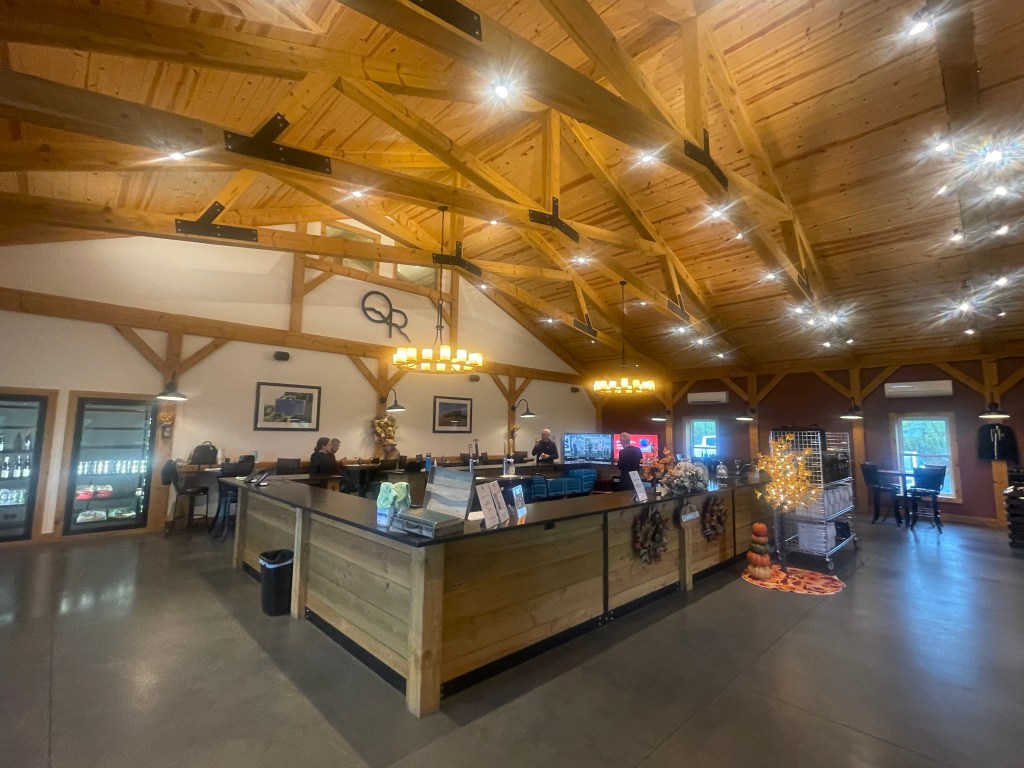
It’s a shame that we visited when it was pouring rain, because the tasting room had a fantastic view of Cayuga Lake. On a nicer day, I’d have happily stayed longer on one of the Adirondack chairs and just enjoy the scenery. It helped that the tasting room was stunning as well.

Owner Gary Cuthbert saw my group come in and he came over to say ‘hi’ and tell us about his property. Turns out, the name was inspired by the limestone soil the vineyard is planted on, just like nearby H&H. Such soil is somewhat of a rarity in the Finger Lakes and is great for making high-quality fruit. They have 28 acres of vines are planted.

Several flights were available, but since we had a big group we were able to order all of them and share. All told, we shared samples of 9 wines.

I thought their dry Riesling was good, and the 2022 “11S” Pinot was nicely balanced and fruit-forward. But I thought the real standout was his cask Riesling, which was very dry yet ‘full’, with notes of mango.

Stop #3 Ravines Wine Cellars (Barracks Road)

This place was busy! We had to wait for a table to open up but eventually got one. Reservations are definitely recommended. Even so, those tables were pretty small for the number of people they are supposed to accommodate.

I thought their 17 Brut had a great brioche nose, and their ‘regular’ Riesling was really good. Kudos also to the Maximilian red blend and the very earthy Cab Franc.

The tastings and food were not cheap, but wine was good. Reservations definitely recommended.

Stop #4: Fox Run Vineyards

Too tired for notes at this point!

Day 5: Red Tail Ridge Winery

I had wanted to visit here earlier, but timing didn’t allow. Fortunately I was able to convince my driver to swing by on the way home. Red Tail does reservations, but this early it was unnecessary.

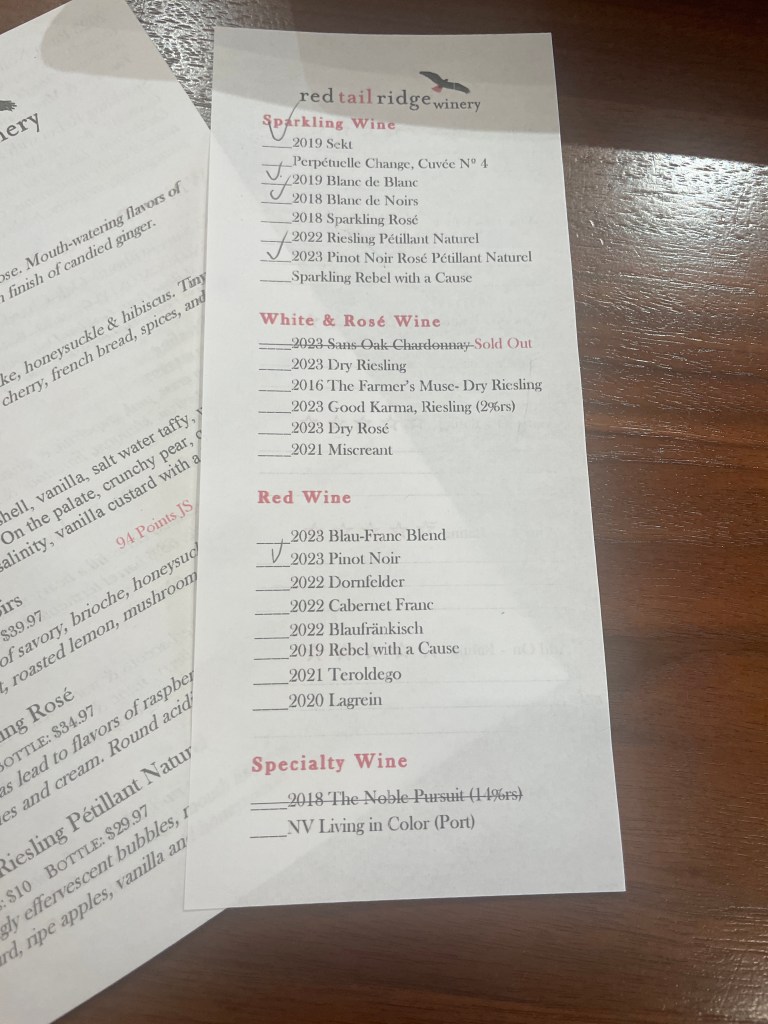
Kristin Evans did our tasting and gave us a lot of great info in a short time. I’d say Red Tail had the widest and best overall selection of sparkling of the entire trip, although the dry wines were both good and interesting. We also got to meet their winemaker, Nancy Irelan.

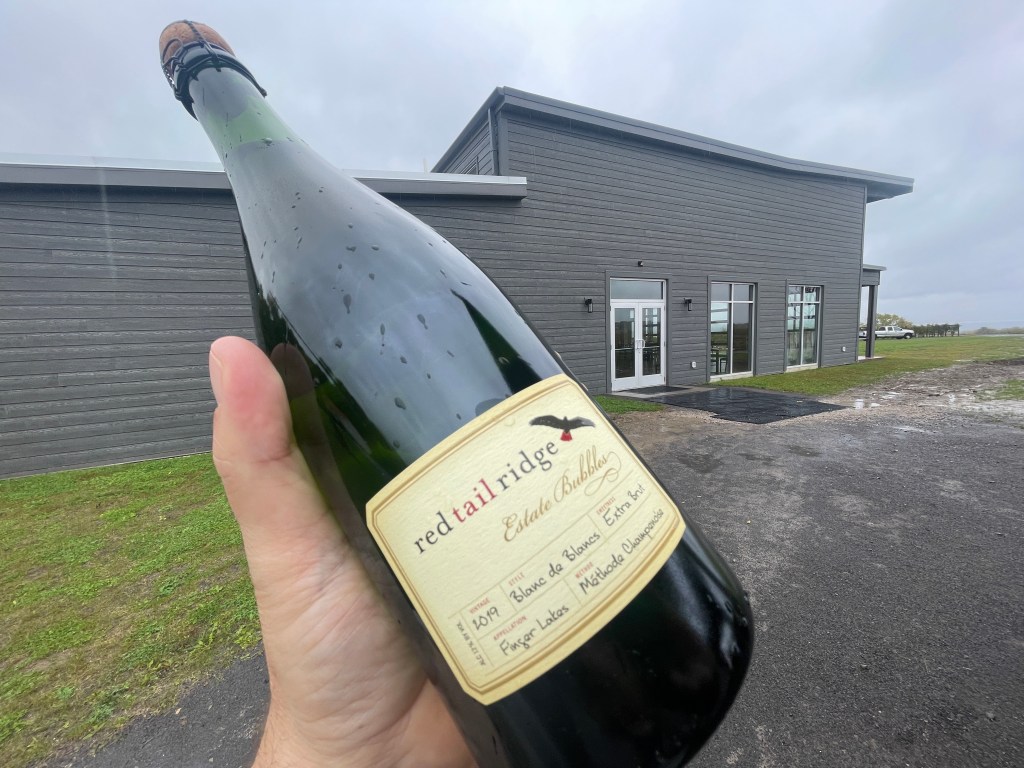
A number of flights were available, including one of ‘Innovative’ wines. I leaned into the sparkling options. Fortunately, with multiple members of my group available, we were able to get a wide selection and share.

Many in my group put this visit in their Top 3 of the 5-day/16 winery trip. Personally, I say they were tied for #3, maybe just below Forge and Heart & Hands, but tied with Kemmeter.

  1. 2019 Sekt (Traditional Method): Very nice, bright; orange notes
  2. “Perpetual Change” NV Sparkling (Traditional Method): Interesting, but in a great way
  3. 2019 Blanc de Blanc (Traditional Method): Bought a bottle home! Lots of brioche notes
  4. 2018 Blanc de Noir (Traditional Method): Tarter, also had lots of brioche.
  5. 2021 Miscreant. An interesting gewürztraminer blend/orange wine
  6. 2018 Sparkling Rosés’: Fruity and refreshing
  7. Riesling Pet-Nat: Pineapple notes; not lee-sy at all.
  8. Pinot Noir Pet-Nat: Juicy
  9. 2023 Pinot Noir: Young
  10. 2020 Langrine: Lots of depth and tannin

Next time I’ll have to try Once Finger wine bar, and revisit Heron Hill.

Linden Vineyards December Library Tastings

Linden recently hosted what might be my favorite event of the year – a pair of Friday-only library tastings. Being an overachiever, I went to both.

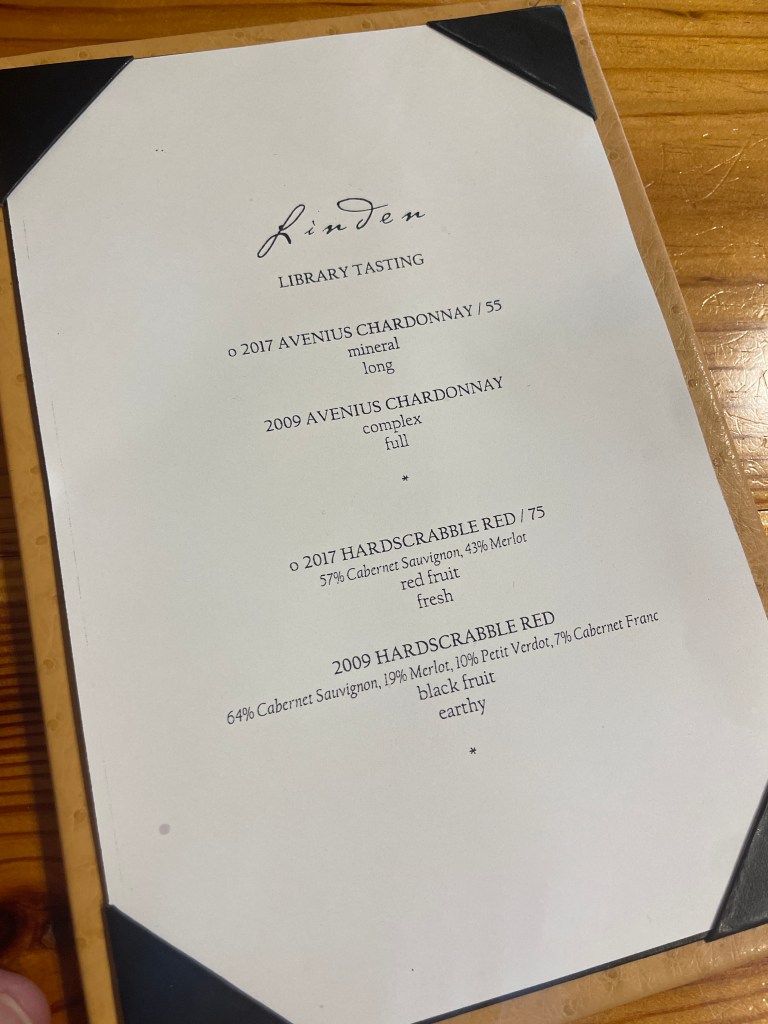
Jim Law produced his first vintage in 1987, so it’s fair to say that Linden has a considerable number of older bottles to choose from. He’s often spoken about the need to hold on to bottles for the future, be it comparative tastings or just for his own education. Even now, Jim’s older bottles often portend the direction his current releases are going.

Linden used to do Library tastings every December until COVID hit, so this is something of a return to norm. I was really impressed that Linden charged the same price for this library tasting that they do for their regular tastings. I attribute that to Jim being a ‘wine educator’ at heart, and he wants to make the study material available to everyone.

Both days included a pair of comparison flights of a 2009 and a 2017, which Jim selected because stylistically these are similar vintages. He also threw in a few extra bottles during both days.

Comparative flight #1: 2009 Avenius Chardonnay, 2017 Avenius Chardonnay, and ‘bonus’ 2007 Avenius Chardonnay

The first flight included a 2009 and 2017 Avenius Chardonnays. Both were especially warm and dry years; arguably 2 of the best in the past 15 years. The 2009 was considerably darker compared to the 2017.

I bought a number of bottles from the 2017 vintage, so I know it’s great. Yet compared to the 2009, the 2017 just paled in comparison. It really didn’t seem fair to put 2009 compared to anything else, since 14 years of age just gave it so many extra layers.

By comparison, the 2017 was still tight, even if it was excellent. If in 8 years it turns into the 2009, then I’d be very happy.

On top of these bottles, Jim brought over a sample of the 2007 Avenius Chardonnay to make this flight a trio.

The 2007 was considerably softer but still provided plenty to savor. My friends who joined me for my 1st visited debated which was better. Some preferred the 2007 for its complexity, while the 2009 ‘was more delicious’.

I ended up getting a glass of the 2009 Avenius to enjoy in the members room.

Comparative flight #2: 2009 Hardscrabble red and 2017 Hardscrabble red

To be fair, the 2017 Hardscrabble red is one of my all-time favorite Virginia wines ever. I’ve used it in blind tastings and wine professionals (including one born and raised in Bordeaux) insisted this was a Bordeaux wine. This bottle had maybe a tiny bit of brett in it, but only in a way that added to its complexity in a good way.

The 2009 was more leathery, no fruit but plenty of power. The rim was a little watery but it didn’t present as an ‘old’ wine.

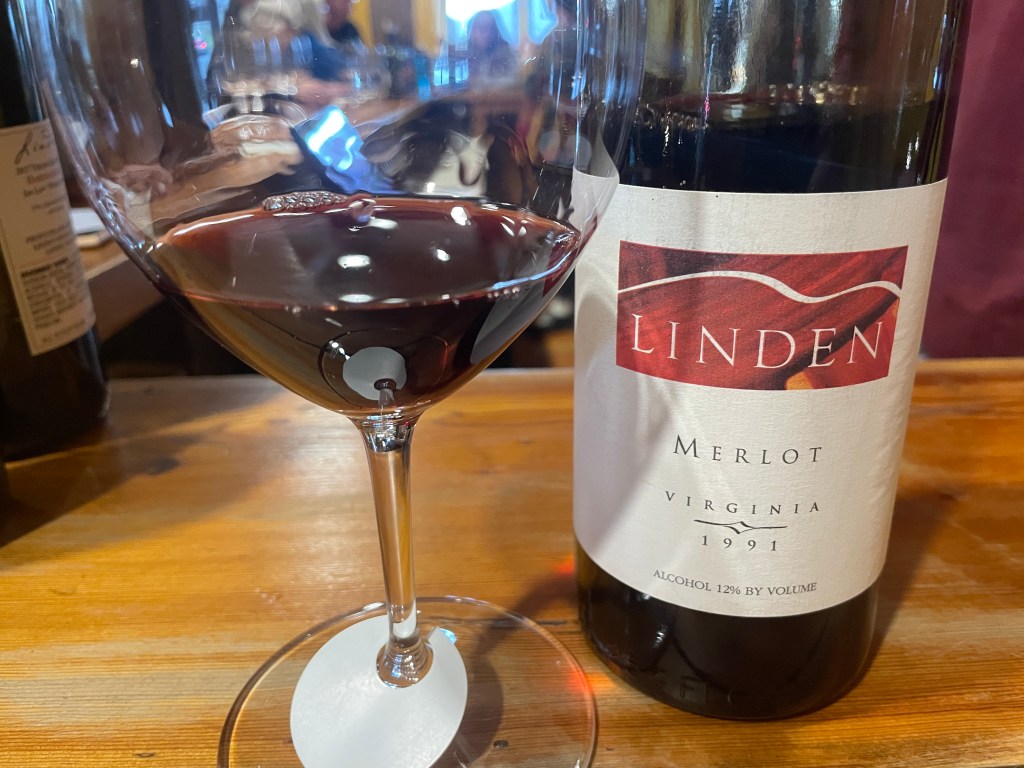
“Bonus flight” #1: 1991 Merlot and 2001 Reserve

Neither of these bottles were on the original tasting. But when Jim opens a ‘bonus’ tasting, you just sit back and enjoy.

While drinking the 1991 Merlot I learned a new wine descriptor; ‘sanguine’. It directly translates as ‘bloody’, and is a reference to not just the color but the iron notes it exudes.

To me, if a red wine could be minerally, this is it. It also had some history to it, since the red label came from a finger painting of Jim’s daughter Sam (who now works at Linden full time).

Jim explained the 2001 Reserve was an example of him chasing the current trends of the time. He designed it to be all power, no finesse. It also seemed to predate his focus on vineyard-specific wines. Shockingly, it still had some fruit notes to it.

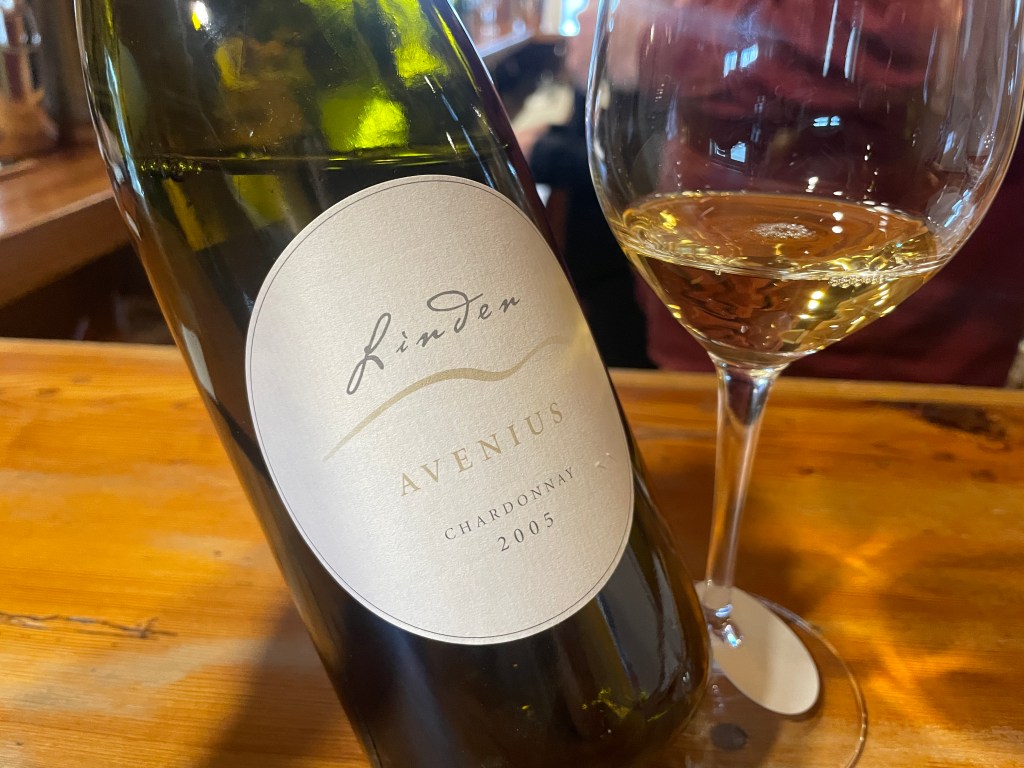
“Bonus flight” #2: 2005 Avenius Chardonnay, 2006 Avenius Chardonnay, and 1997 Reserve

During my 2nd visit I was able to get a new trio of wines; flight of 2005 and 2006 Avenius Chardonnays, and a 1997 Reserve.

The 2005 had very little fruit left; it was like biting into an old lemon that was becoming a husk. The 2006 was livelier. Of course, neither held a candle to the 2009 Avenius.

The 1997 Reserve was perhaps the best ‘old Virginia wine’ I’d ever had. There was still some fruit there, despite being 27 years old. Earthy but still drinkable.

Turns out Jim only made 2 ‘Reserves’; one in 1997 and one in 2001. Both were precursors to today’s Hardscrabble reds.

I enjoyed one last glass of the 2009 Chardonnay, then off to Walsh Family Wine.

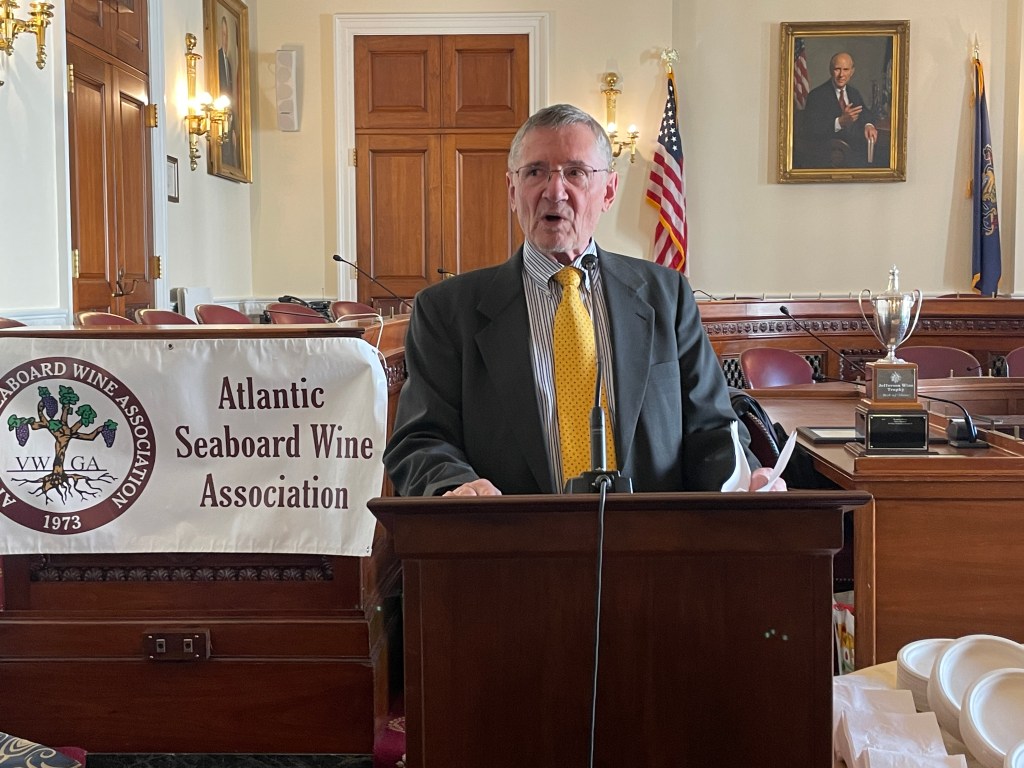
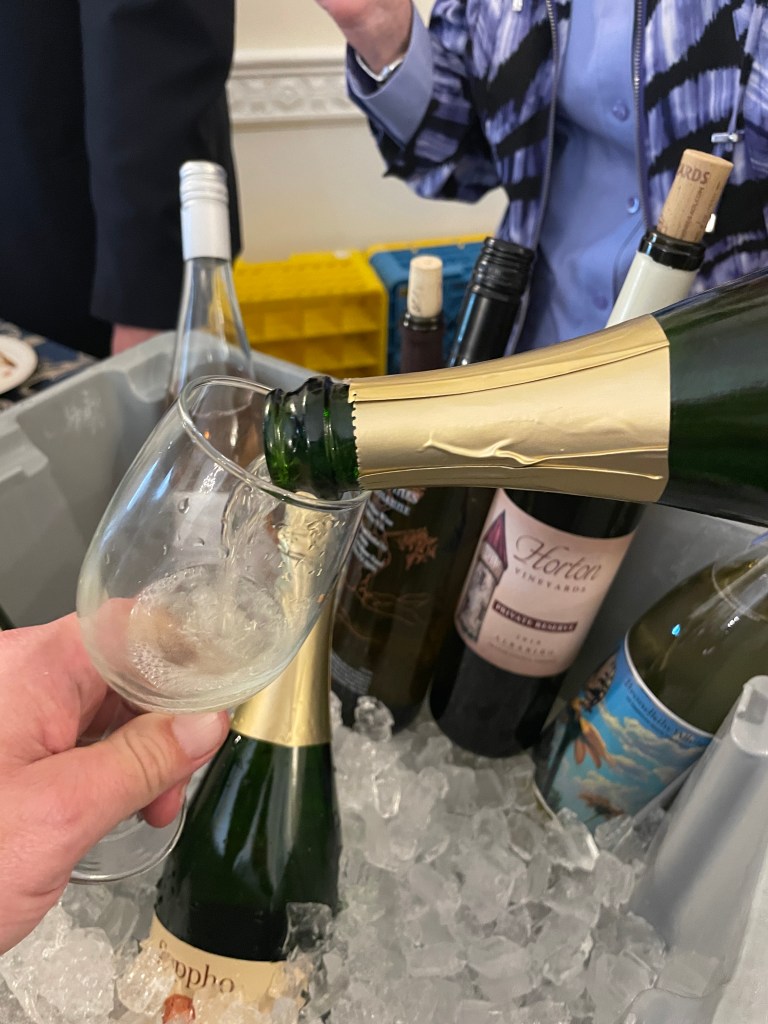
Sipping The Atlantic Seaboard Wine Association’s Top Wines With The Congressional Wine Caucus

It’s not often you get to sip local-ish wine at a semi-formal event at the US Capitol, but that’s exactly what I was able to do this past week.

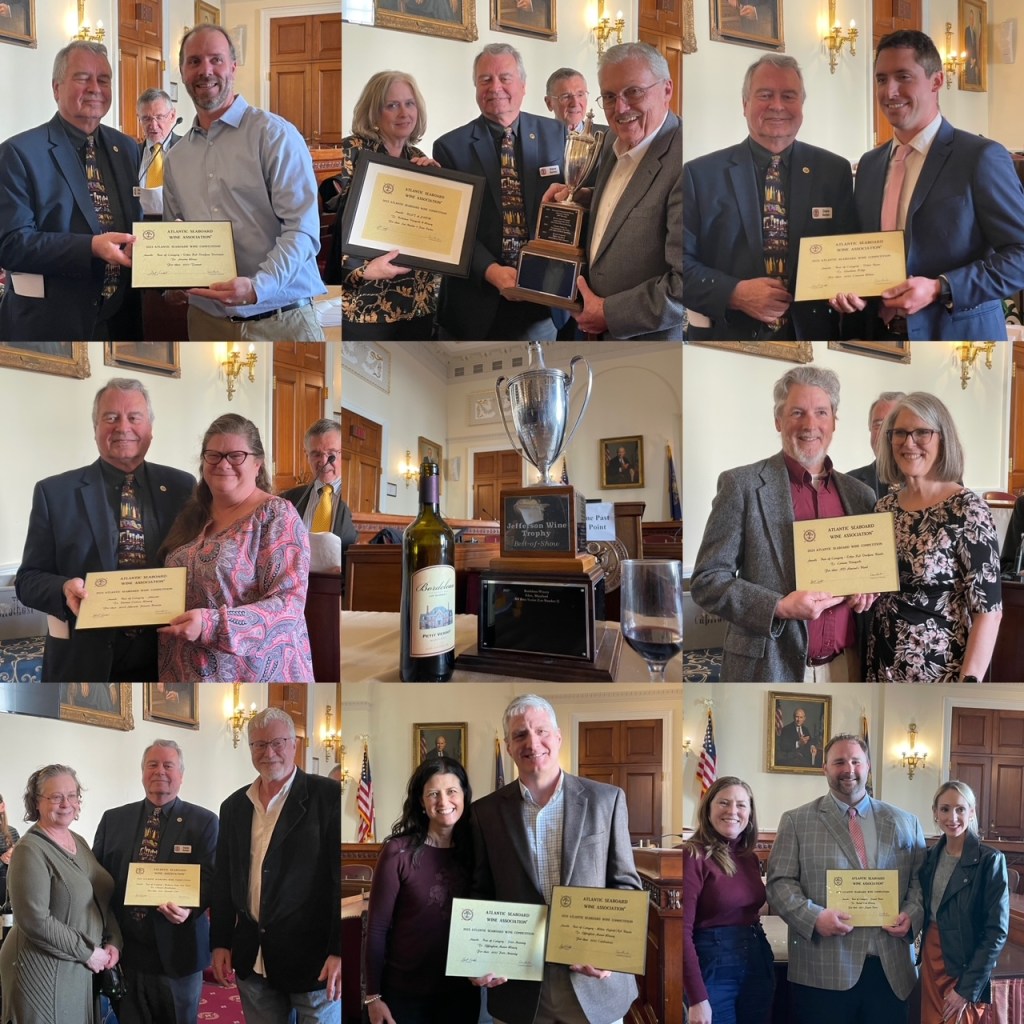
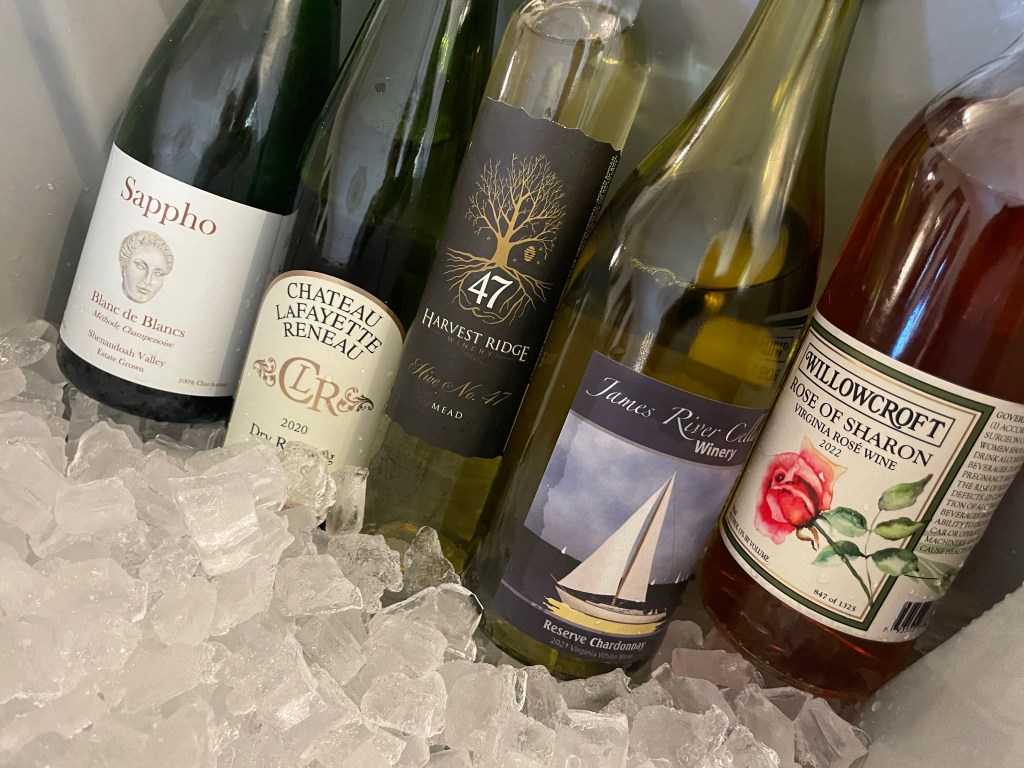
The event in question was the annual Jefferson Loving Cup Trophy award ceremony, sponsored by the Atlantic Seaboard Wine Association (ASWA) and hosted by the Congressional Wine Caucus. Guests were able to enjoy light bites and tastings of over 45 wines, including the ASWA’s 2023 Best of Show and Best of Category winners.

It would be easy to poke fun at Congress for taking time off for a wine event on the eve of a shutdown, but for this event I’ll give them a pass. After all, the wine industry contributes an estimated $276 billion to the U.S. economy annually and creates the equivalent of almost two million full-time jobs. That’s a lot of $$$, especially for enterprises that are often based in rural areas.

More importantly for me, these particular wines all hailed from the east coast; specifically the 14 states that touch the Atlantic, plus Pennsylvania, Vermont, and West Virginia. Altogether, this area produces around 45 million gallons of wine annually.

That sounds like a lot, but it’s still just over 6% of total US wine production. It’s also just a splash compared to the west coast’s 90% market dominance – and exactly why the ASWA’s role is important.

West coast brands hog up much of the wine world’s shelf and advertising space, so east coast regions need an organization to advocate for them. Bonus points for how the ASWA highlights grapes that would otherwise be overlooked (hello petit verdot and petit manseng).

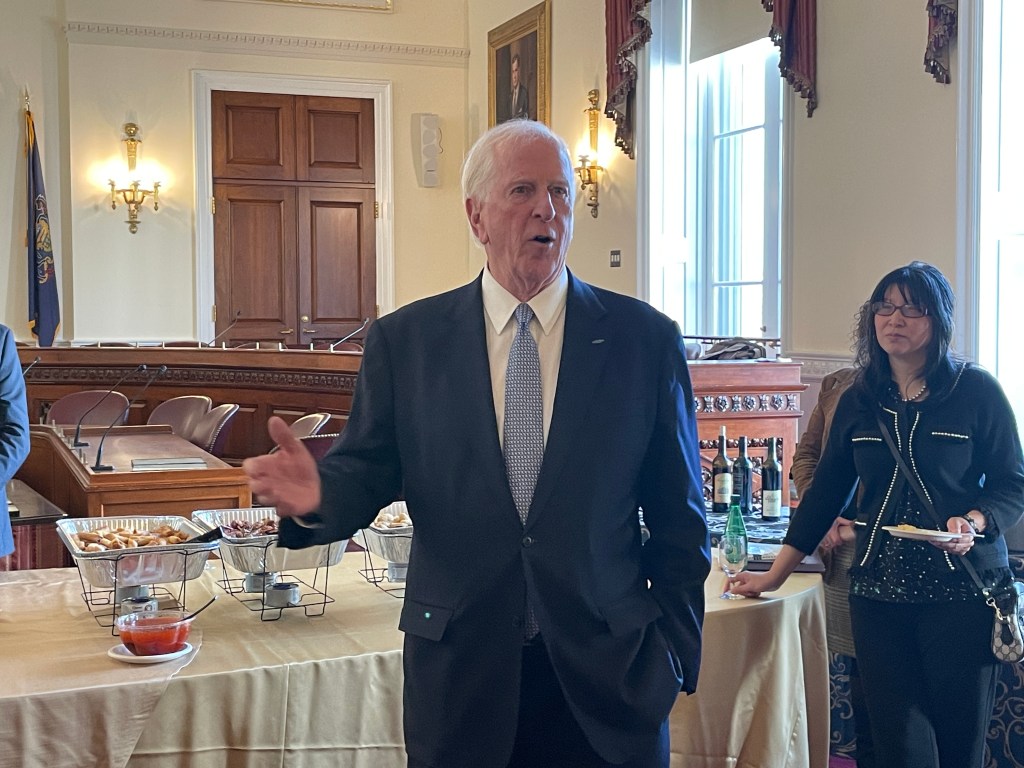
Mike Thompson (D-CA) stopped in for a few minutes and joked how the Congressional Wine Caucus was one of the largest such caucuses, in no small part because it’s far easier to negotiate over a glass of wine than from behind a desk. After a few remarks, we kicked off the “Best in Class” awards.

We were lucky to have a number of local growers in attendance. I didn’t catch everyone’s name, but I did get to see Jason Murray and Sandy Gray-Murray of Arterra Wines, Shannon Horton of Horton Vineyards, Mark Ward of Pearmund Cellars/Effingham/Vint Hill, Jeremy Ligon of Barrel Oak Winery, and Emily and Kenny White of Chateau Merrillanne, amongst others.

I know the Pearmund ‘family’ must have been exceptionally excited that three separate wines won Best in Class in their categories; their 2022 Petit Manseng and 2022 ‘Celebration’ from Effingham, and the “Misty” from Vint Hill.

Mark joked that one of his hardest jobs is to decide if he should make wine that he likes vs what the public likes. His palate preferred drier wines, but several of these would make those with a sweeter palate happy.

One winemaker that was new to me was Tom Shelton of Bordeleau Winery, located on Maryland’s Eastern Shore. Bordeleau won not just Best in Class for their “Lot Number 3” Non-Vintage Petit Verdot, but it went on to win the overall “Best in Show”.

This PV is a rare example of a non-vintage wine. Tom explained he recognizes that Maryland’s variable climates creates ‘peaks and valleys’, making it difficult to produce stylistically-similar wine year after year. To get around that, he makes all of his wines non-vintage, with the exception of a few whites.

This particular PV used fruit from 2016, 2017, and a bit from 2019. I was struck by its smoothness and complexity; it had just enough fruit to make it pleasant but it still had a tannic backbone. This was the 3rd petit verdot they’ve ever produced.

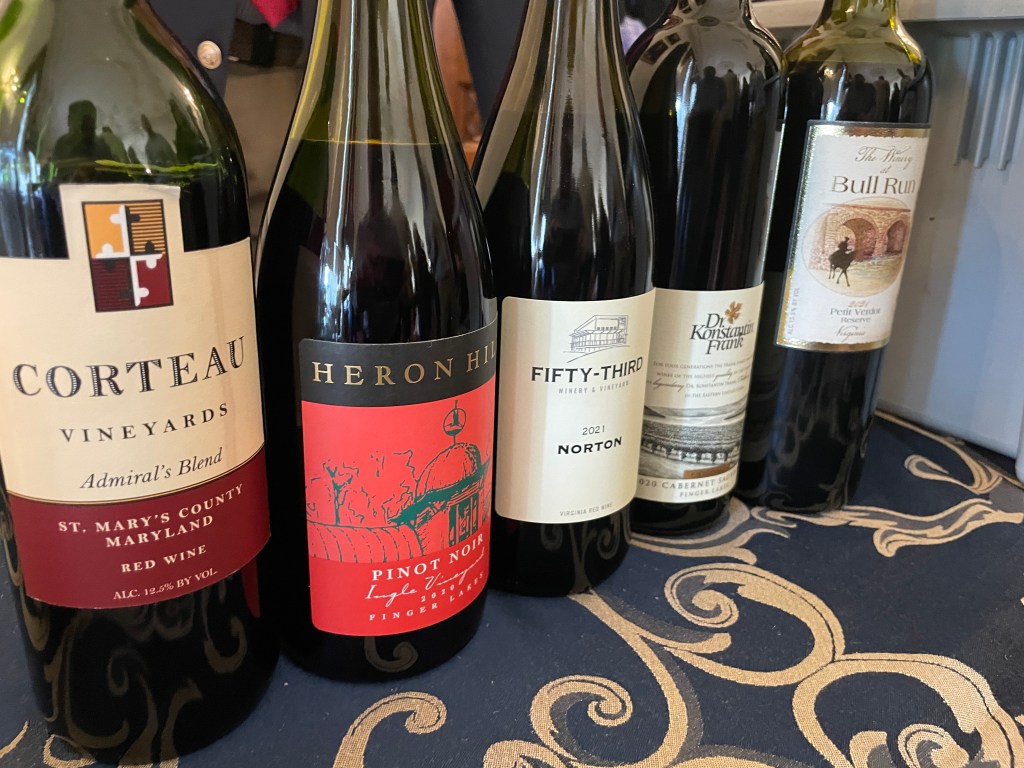
My other favorite wines were the 2021 Chardonnay from Fox Run, Herron Hill’s 2020 Pinot Noir (both in the Finger Lakes), Virginia’s Horton Vineyards’ 2019 Albariño, plus several sparklings (of course).

I also got to try Fifty-Third Winery’s 2021 Norton, which I had just written about. Norton is a love-it-or-hate-it grape but I was pleasantly surprised by its smoothness, so I can understand why it was awarded “Best Norton” at the separate Norton Cup event last year.

While Bordeleau Winery’s Petit Verdot was the star, plenty of other wines were recognized. The 2023 ASWA competition awarded 33 “Best of Class” wines from amongst 455 entries.

In addition to popular categories such as Best of Class Bordeaux-style wine, chardonnay, and sparkling, they also had winners for various categories of mead, sweet wine, fruit wine, cider, hybrids, and other vinifera wines.

Here is an abbreviated roster. To see ASWA’s entire medal list, check out the Atlantic Seaboard Wine Association’s press release, or visit https://aswawines.org.

Atlantic Seaboard Wine Association Best of Class Winners (abbreviated)

  1. Albariño 2019 Albariño Private Reserve by Horton Cellars Winery, VA
  2. Bordeaux-Style Red Blends 2021 Founded 1734 by Chateau MerrillAnne, VA
  3. Cabernet Franc 2021 Cabernet Franc Reserve by Fifty-Third Winery & Vineyards, VA
  4. Chardonnay 2020 Chardonnay by The Winery at Sunshine Ridge Farms, VA
  5. Merlot 2015 Reserve Merlot by Ospreys Dominion Vineyards, Ltd., NY
  6. Other Red Vinifera Varietals 2021 Tannat by Arterra Wines, VA
  7. Petit Manseng 2022 Petit Manseng by Effingham Manor Winery, VA
  8. Petit Verdot NV Petit Verdot by Bordeleau Winery, MD (Best in Show)
  9. Pinot Gris/Pinot Grigio 2022 Pinot Gris by Harvest Ridge Winery, DE
  10. Riesling 2021 Semi-Dry Riesling by Fox Run Vineyards, Inc., NY
  11. Sauvignon Blanc 2022 Landmark Sauvignon Blanc by Boordy Vineyards, MD
  12. Seyval Blanc 2021 Seyval Blanc, Barrel Oak Winery, VA
  13. Sparkling Vinifera Wines 2022 Sparkling Riesling (String of Pearls) by Idol Ridge Winery, NY
  14. Viognier 2022 Viognier by Ashton Creek Vineyard, VA

Virginia Chardonnay Blind Showdown (2023 Edition)

There are certain phrases used in the wine world that grate me, and “Anything but chardonnay” is one of the top contenders. Given chardonnay is one of the most planted varieties in the world – and 2nd most planted in Virginia – if you hate chardonnay, it can only be because you haven’t tried enough of them.

I say this because chardonnay is the chameleon of white wine. You can find austere, higher-acid chards from cool weather vintages, or full, ripe wines from warm-weather climates. It can be heavily manipulated with oak or made in steel. From Australia’s Adelaide Hills to Washington State’s Walla Walla, chardonnay is (literally) everywhere.

Burgundy is often thought of as the world’s premiere chardonnay producing region, but I’ve had a number of Virginia wines that could give good Burgundies a run for their money. The biggest problem I had for this event is narrowing down the list of contenders.

Ultimately my guests were able to bring a variety of chardonnays from around the state. The only rules I gave them is I couldn’t have any wines that were in my last chardonnay challenge, and I needed at least one Shenandoah Valley wine.

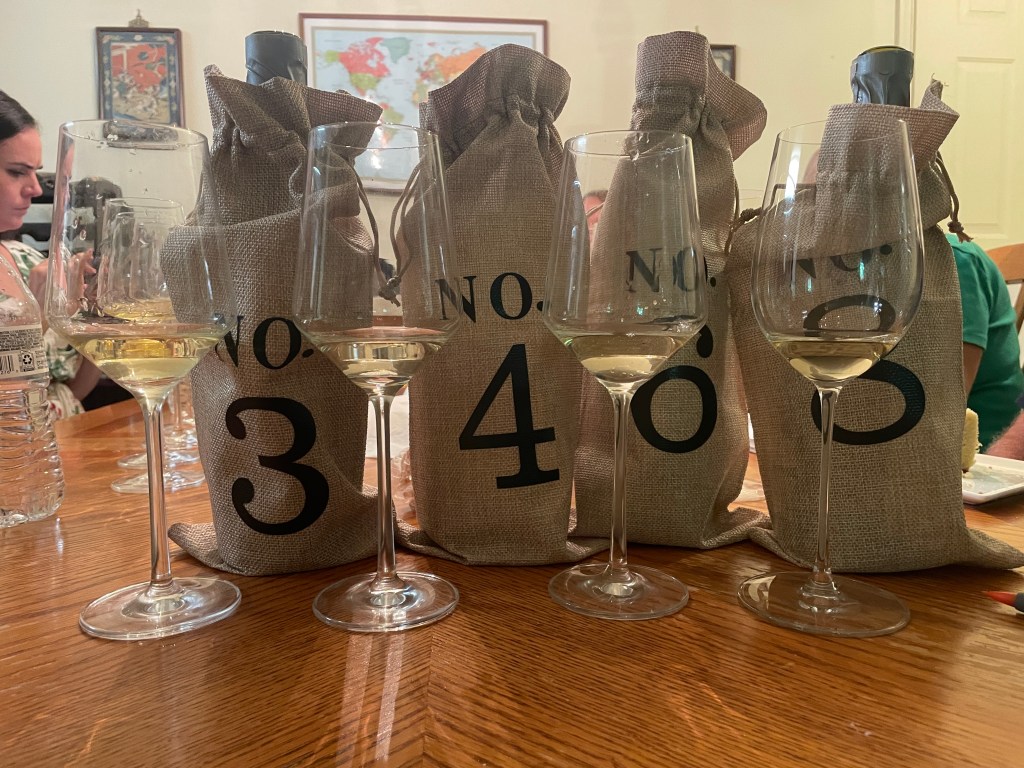
The goal was to do 2 flights of Virginia wines and a flight of Burgundy, all blind. We had a last-minute issue with getting our last French wine, so we substituted a Russian River Valley (California) chardonnay for it.

The top wines of every flight went to a finalist round. Since we loved the wines in the 2nd flight so much, I gave the runner up in that flight a wildcard advance to the final round.

As always, this event was the product of this day with this group. Many of these wines had the potential of being a winner.

The contenders:

  1. 2019 Brix and Columns (winery in the Shenandoah Valley, not sure where the fruit is from)
  2. 2019 Linden Boisseau (Front Royal)
  3. 2021 Vint Hill (Story Vineyard, Fauquier County)
  4. 2021 DuCard TANA (TANA Vineyard)
  5. 2022 12 Pearls of Wisdom (Effingham/Pearmund)
  6. 2021 Stone Tower (Leesburg)
  7. 2020 Famille Vincent (Burgundy)
  8. 2019 Patrick Javiller (Burgundy)
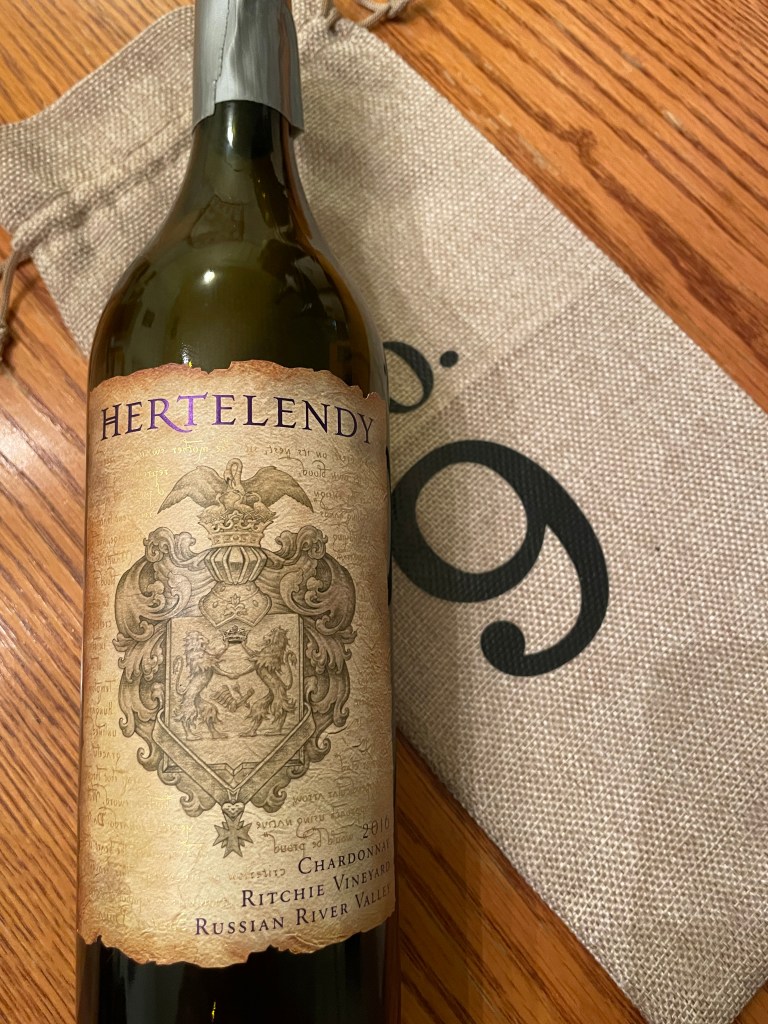
  9. 2016 Hertelendy (Russian River Valley, CA)

Flight #1

  • Wine 1: 2019 Brix and Columns
  • Wine 2: 2019 Linden Boisseau
  • Wine 3: 2021 Vint Hill (round winner)

Bottle #1: 2019 Brix and Columns: Light gold. Muted nose. Clean, crisp. Notes of hazelnut and lemon. Some people mentioned it was a little musty. The biggest problem some had was the finish just fell off at the end.

This wine was a bit divisive because it was very easy drinking, almost at the expense of complexity. I liked it a lot, but others found it wanting.

Bottle #2: 2021 Linden Boisseau: High acidity, floral nose. Notes of tart apple and lemon/lime. Someone noted it had an almost riesling quality to it. It was a wine that seemed to cry out for food, and the lack of a pairing dish probably brought it down a notch.

Bottle #3: 2021 Vint Hill: I found notes of slate; someone else said honeysuckle and lemon. Others noted notes of lemon and peach; almost a creamsicle quality to it. Several people noted it had lots of honey. Almost all of us mentioned its long finish and good complexity.

We were all over the place in terms of favorites. Everyone liked #2 but nobody put it as a favorite. I was torn between “easy drinking” vs “complexity” but went with the former. Most of the guests chose the latter category, so the Vint Hill wine won out.

  • Alex:  3/2/1
  • Frank: 3/1/2
  • Jen: 3/2/1
  • Kathy: 3/2/1
  • Matt: 1/3/2
  • Ryan: 1/3/2
  • Stephanie: 3/2/1

Flight #2

  • Bottle #4: 2021 DuCard TANA (wildcard advance)
  • Bottle #5: 2022 Effingham 12 Pearls of Wisdom
  • Bottle #6: 2021 Stone Tower (round winner)

Wine 4: 2021 DuCard TANA: Noticeably floral, with notes of marzipan, sweet almond, flowers. Solid acidity, with a bit of minerality. We guessed made in stainless. We were partially correct; I later learned it started in steel but also had 4 months in neutral oak and aged on lees.

Grown in the TANA vineyard around 6 miles from DuCard on a SW-facing slope. Made in “Mȃcon” style, as benefiting from having a French winemaker.

Wine 5: 2022 12 Pearls of Wisdom: Very perfume-y. Long, very grapy finish. Racy acidity. Notes of lemon, apricot, or peach. Overall delicious.

There was a LOT going on in this wine. We enjoyed it thoroughly but felt it was almost ‘too much’. We probably would have enjoyed it more on its own as opposed to a lineup of other chardonnays, as it wasn’t a very chardonnay-like wine.

Wine 6: 2021 Stone Tower: Notes of apricot, peach on the nose. Personally, I thought it was lighter than the other two, but others note it was on the fuller side.

More elegant and mineral driven than anything we’d had so far. We thought it had a little bit of oak. Smooth. Someone mentioned a ‘smoky minerality’ to it, with notes of grapefruit.

This was a tough round to choose a favorite! For the seven of us, it was easy the favorite round of the day.

The biggest problem I found was wine #5 was so different from the others it seemed out of place, to the point it was an almost unfair comparison.

Wines #4 and #6 were more evenly matched, to the point it was a near toss-up. But since we liked #4 so much, I gave it a wild card advance to the final round. Many felt #4 (DuCard) was more likely to please multiple people, while #6 (Stone Tower) was a ‘serious’ wine.

  • Alex: 6/5/4. Felt #6 was what he would open on his own.
  • Frank: 4/6/5
  • Jen: 6/4/5
  • Kathy: 6/4/5
  • Matt: 4/5/6
  • Ryan: 4/6/5
  • Stephanie: 6/4/5. Liked the complexity of #6. #4 was more likely to please a crowd.

Flight #3

  • Wine 7: 2020 Famille Vincent
  • Wine 8: 2019 Patrick Javiller (round winner)
  • Wine 9: 2016 Hertelendy

Wine 7: 2020 Famille Vincent: Muted nose. Some oak. Crisp, notes of mandarin orange or clementine.

Wine 8: 2019 Patrick Javiller: I found notes of crisp green apple, some butter. Others mentioned lemon blossom on the nose and palate.

Wine 9: 2016 Hertelendy: “Funky and smoky” were the key adjectives. This wine was CLOUDY. Not sure what was going on here. On the nose, notes of drawn butter or maybe butterscotch. Nutty on the palate; maybe hazelnut, maybe a bit of lees or oak.

The cloudiness of the last wine was divisive for many of us, so it was really a contest between #7 and #8.

  • Alex: 9/8/7
  • Frank: 7/8/9
  • Jen: 8/7/9
  • Kathy: 8/7/9
  • Matt: 8/7/9
  • Ryan: 7/8/9
  • Stephanie: 7/8/9

Finalist Round:

  • Wine 3: 2021 Vint Hill (3rd favorite)
  • Wine 4: 2021 DuCard TANA (favorite of the day)
  • Wine 6: 2021 Stone Tower (runner up)
  • Wine 8: 2019 Patrick Javiller (4th favorite)

No major wine notes this time. We went almost straight to the judging.

I thought wine #3 (Vint Hill) improved a lot, although #6 had my favorite nose of the lineup. #8 was a bit spicy.

In a surprise twist, wild card wine #4 (DuCard) beat wine #6 (Stone Tower) even though in an earlier round Stone Tower was favored (by a narrow margin). Both were easily the top wines of the day, but 2021 DuCard Vineyard “TANA” was the overall favorite in the end.

  • Alex: 6/4/3/8
  • Frank: 4/6/3/8
  • Jen: 6/4/3/8
  • Kathy: 6/3/4/8
  • Matt: 4/3/6/8
  • Ryan: 4/3/8/6
  • Stephanie: 4/6/3/8

If there’s a lesson learned here, it was that chardonnay comes in all flavor profiles. Not one of these were butter-bombs (despite having a California chardonnay). The best Virginia ones definitely showcased elegance and would have done any Burgundy winemaker proud.

I also think food and time caused us to shift votes. Wine #3 had a noticeable improvement, becoming the runner up to several guests. The addition of food (we had an amazing cheese board and dessert) also may have accentuated #4.

This was the first time a ‘wild card’ wine won one of my events, which I also attribute to how it was the kind of wine that everyone can enjoy. Put in a large group, the DuCard TANA came out as the favorite. But huge kudos to the Stone Tower wine, which many of my guests would drink by themselves.