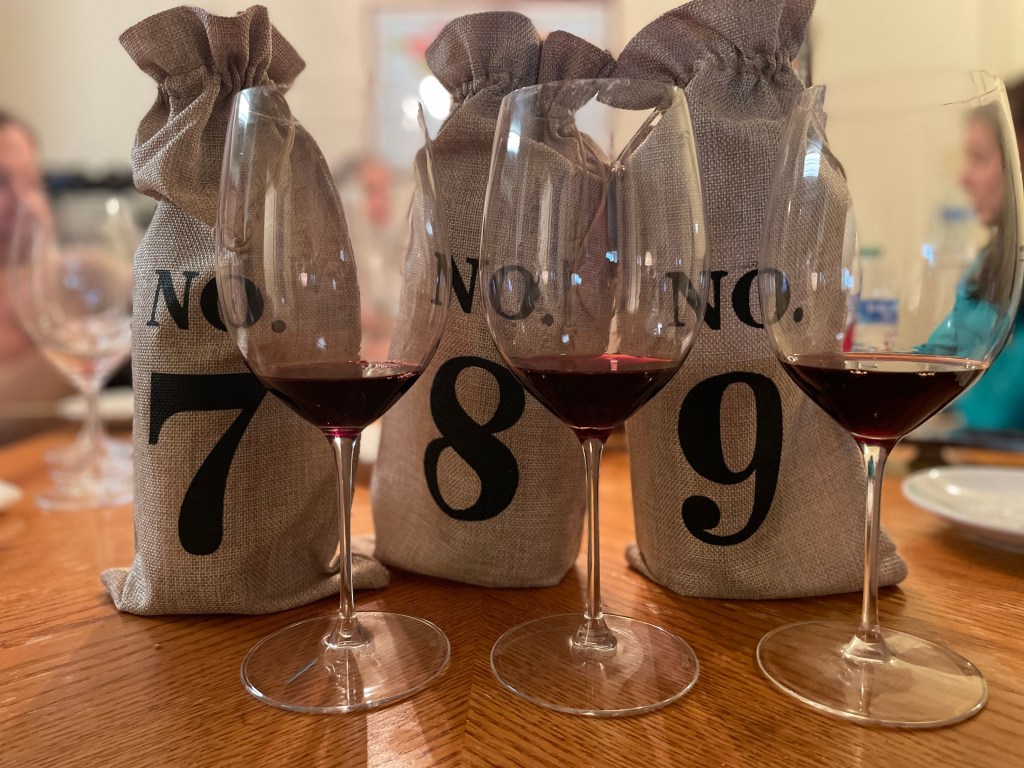
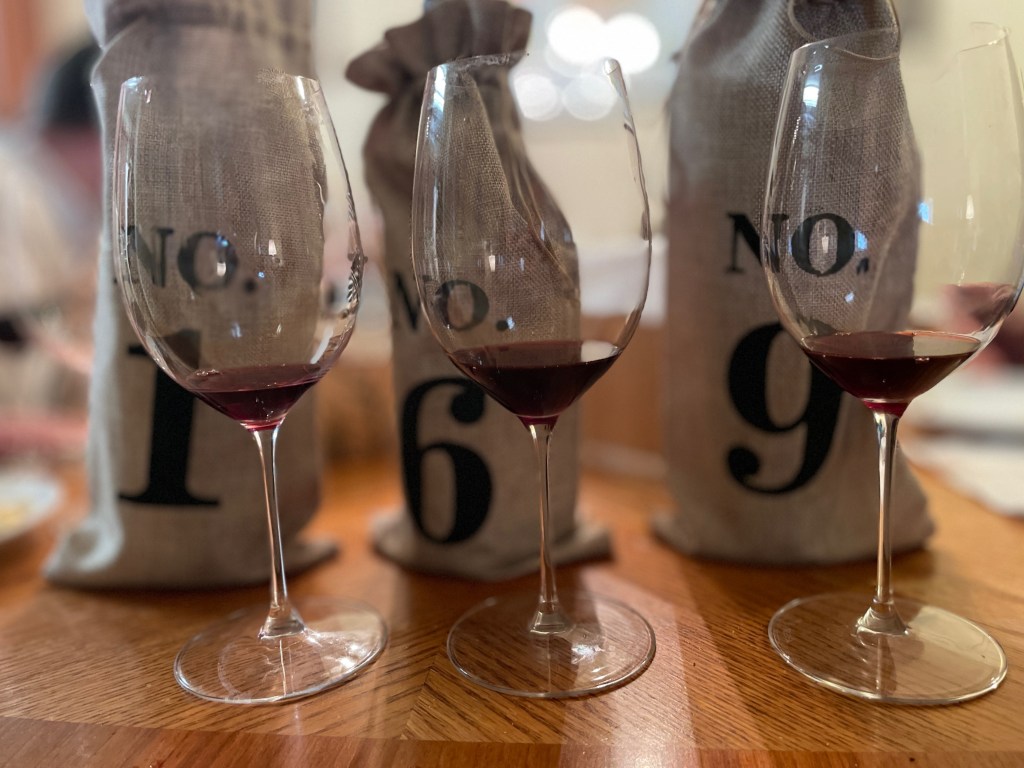
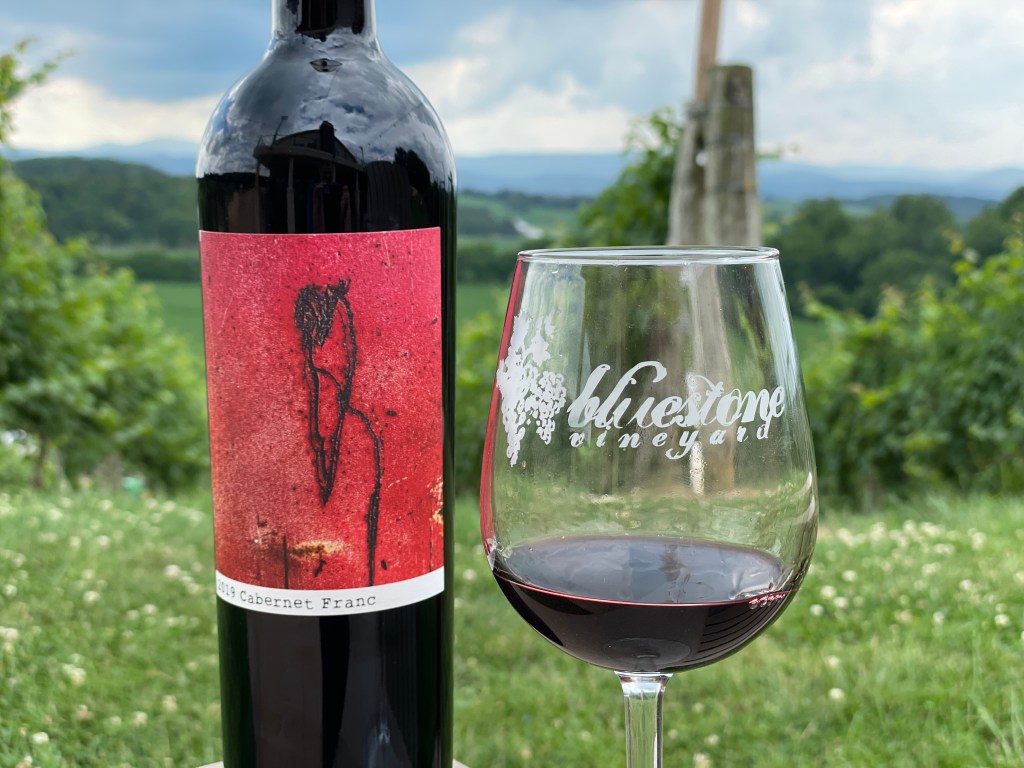
Virginia Pinot Noir Showdown: VA vs Oregon Blind Tasting

I’ve been on something of a Virginia Pinot kick of late. I recently emceed an industry roundtable on Virginia Pinot Noir, which later inspired an article discussing the evolution of Virginia Pinot.

To summarize my findings; Pinot Noir struggles in the warm-weather sites that characterize much of Virginia. The reputation of locally grown Pinot was so bad that when wine-legend Jancis Robinson tasted an Ankida Ridge Pinot in 2011 that she exclaimed in the most back-handed compliment ever; “It tastes like Pinot!”.

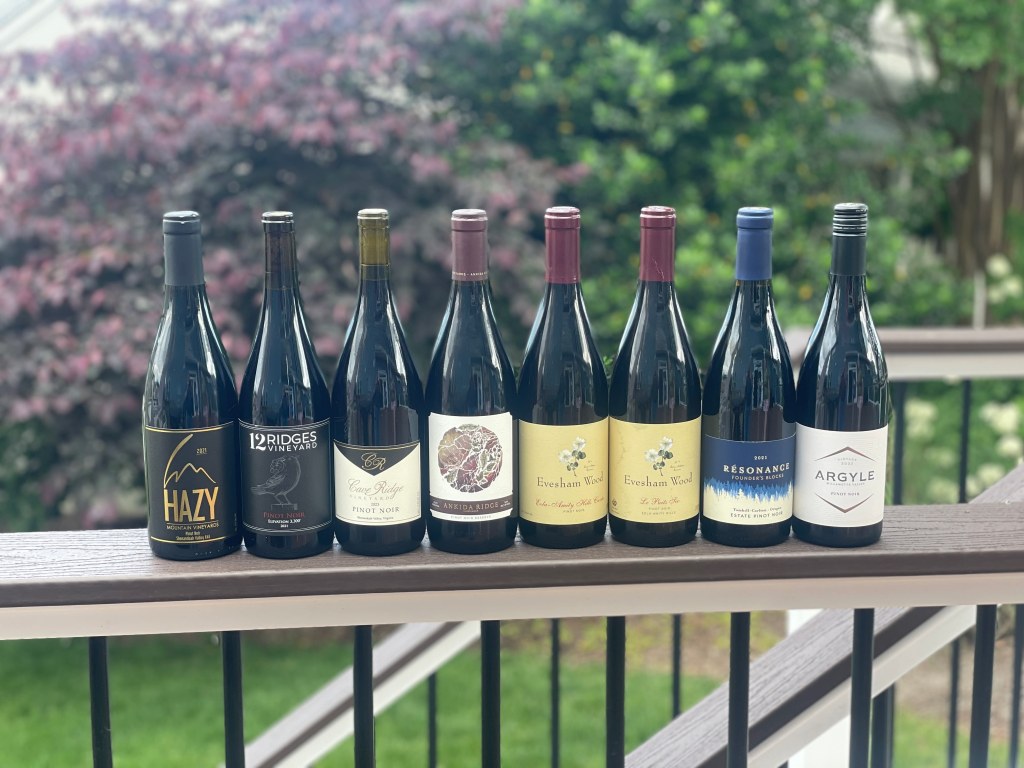
For my event I picked what I felt are the best 4 Pinot growers Virginia has to offer. These vineyards succeed in growing Pinot where previous ones had failed by planting at relatively high elevations: 12 Ridges (3,300 ft), Ankida Ridge (1,800 ft.), Cave Ridge (1,200 ft), and Hazy Mountain (1,600 ft). All are located in the Shenandoah Valley or the adjoining Blue Ridge Mountains, areas that have strong track records for growing cool weather varieties.

My group picked 4 Oregon Pinots to pair them against. I recently attended a wine dinner with Evesham Wood, so I had 2 wines from this quality producer. Other guests brought two more wines; a low-cost Pinot from Argyle, and a high-quality wine from Résonance.

I honestly had no idea how Virginia would fare here. Oregon has a great reputation for Pinot Noir, so I would have been happy if Virginia simply showed well against a heavy hitter in this category.
Tasting & Scoring Methodology

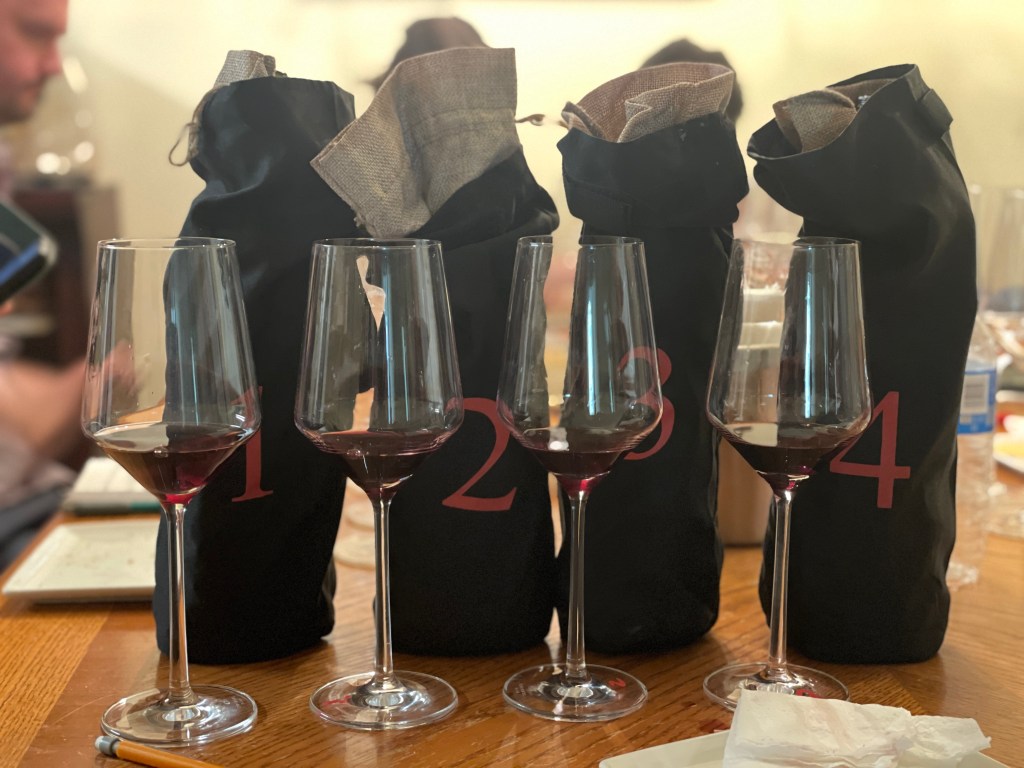
We did 4 rounds of 2 wines, consisting of a Virginia and Oregon Pinot Noir side-by-side, served blind. After we finished all 8 wines, we voted which were our Top 2 of the day. The Top 2 were set aside and revisited during a ‘Finalist” round.

The advantage of revisiting these wines is this gave the Top 2 more time to open up. The introduction of food changed our palates, adding another dimension to the event. After re-tasting them, we declared an overall winner.

The 4 flights were generally arranged lowest-to-highest in terms of price point.

The Contenders:

  1. 2022 Evesham “Eola-Amity Hills Cuvée” (Oregon; $34)
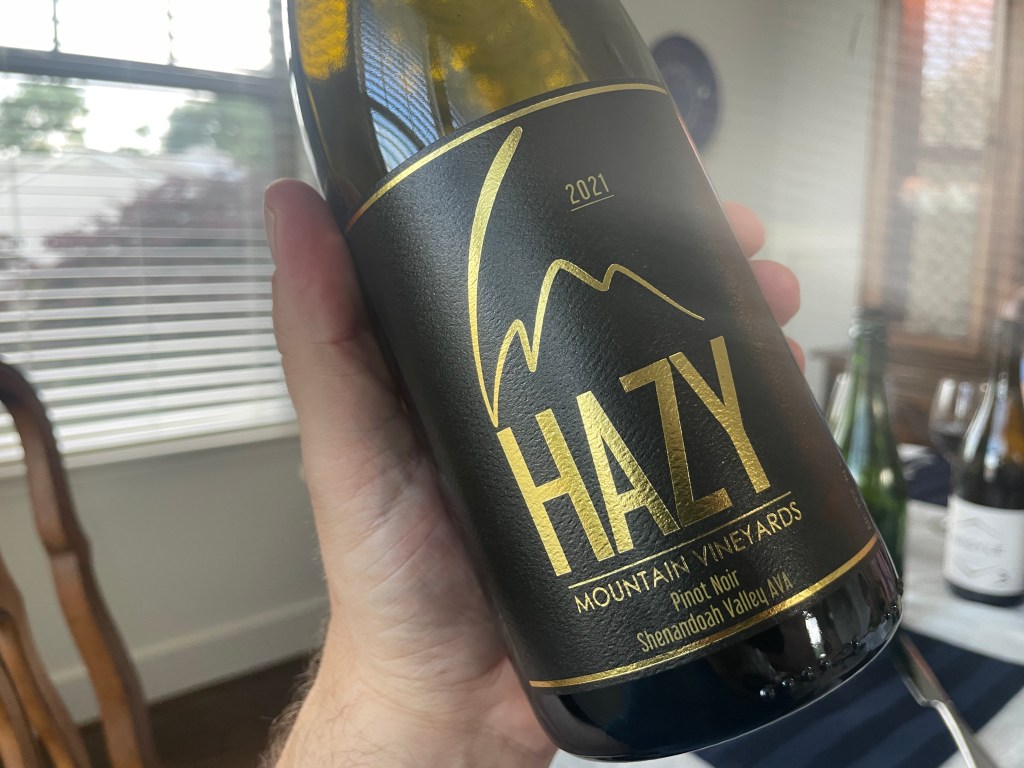
  2. 2021 Hazy Mountain (Virginia; $38)
  3. 2023 Argyle (Oregon; $28)
  4. 2023 Cave Ridge (Virginia; pricing TBD)
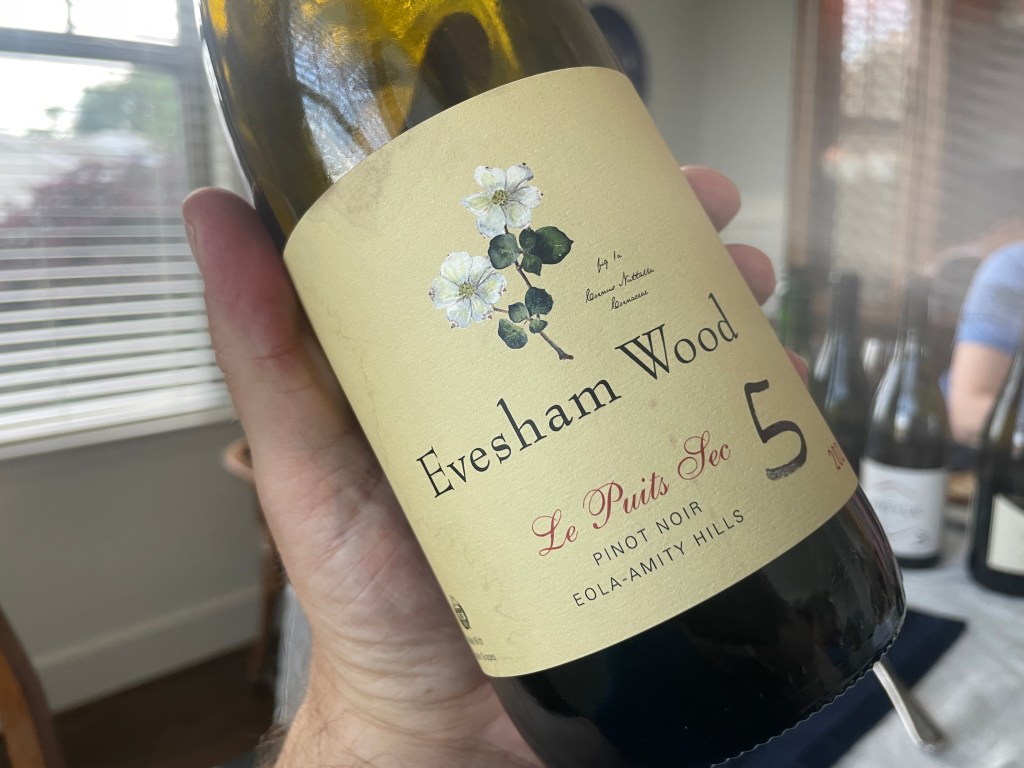
  5. 2021 Evesham Wood Le Puits Sec (Oregon; $55)
  6. 2021 12 Ridges (Virginia; $60? Currently not for sale)
  7. 2021 Résonance Founders Blocks (Oregon; ~$75)
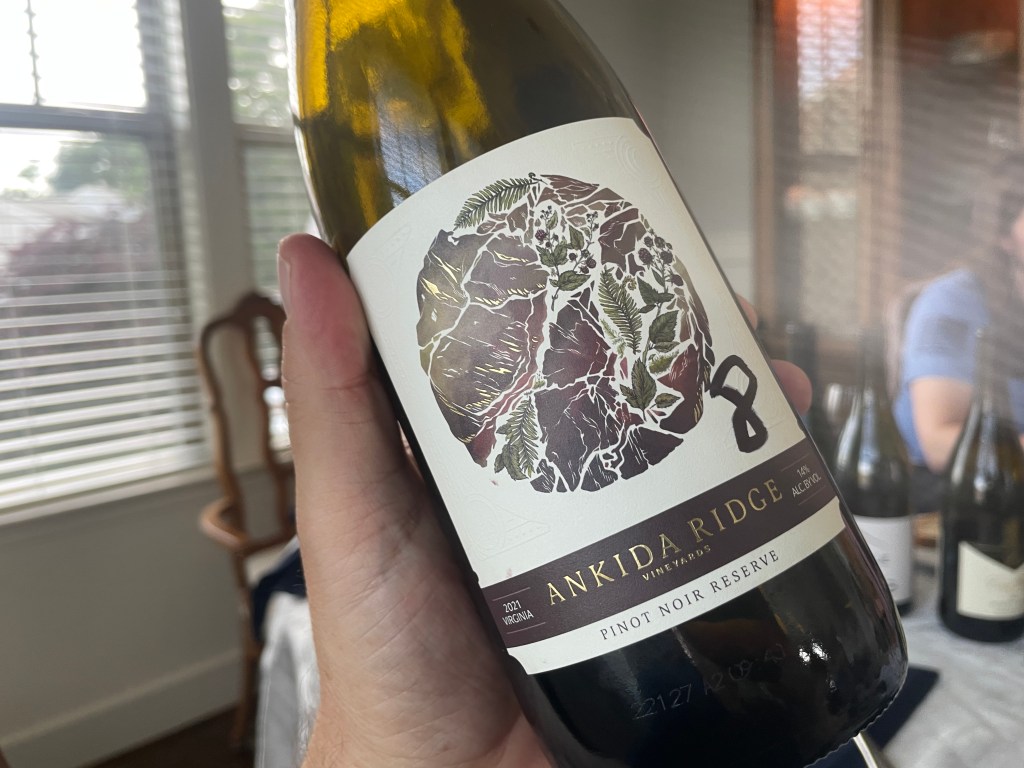
  8. 2021 Ankida Ridge Reserve (Virginia; $95)

Flight #1

  • Bottle #1: 2022 Evesham “Eola-Amity Hills Cuvée” (Oregon; 7 votes; round winner)
  • Bottle #2: 2021 Hazy Mountain (Virginia; 1 vote).

Admittedly this was not our favorite round; not surprisingly as I started with the lower-priced wines and worked my way up.

This round ended with Oregon as the favorite by a wide margin. While this particular Oregon wine isn’t this producer’s top-tier wine, it did have all the rich fruit qualities you’d want from a mid-$30 Oregon Pinot Noir.

Bottle #1 / 2022 Evesham “Eola-Amity Hills Cuvée”. Overall we felt this wine showcased fresh fruit, with some earthiness. Most attendees felt this was the Oregon bottle, although not everyone felt confident enough to vote.

Bottle #2 / 2021 Hazy Mountain. This wine was more expressive on the nose; maybe with some notes of oak. On the palate several guests detected notes of earth and allspice.

Votes:

  • Annie: Voted #1
  • Chris: Voted #1
  • Larry: Voted #2, since he preferred the more earthy, ‘aged’ qualities of this wine.
  • Matt: Voted #1
  • Kathy: Voted #1. Noted #1 was fresher, while #2 had notes of forest floor but seemed too cooked.
  • Stacy: Voted #1
  • Patti: Voted #1. Enjoyed #1 for its richer body; could tell it was Oregon. Felt #2 was too tart.
  • Rob: Voted #1. Likewise felt #2 was too tart. 

Flight #2

  • Bottle #3: 2023 Argyle (Oregon; 1 Vote)
  • Bottle #4: 2023 Cave Ridge Vineyards (Virginia; 7 Votes; round winner)

In retrospect I should have paired #1 vs #4, since the #3/Argyle was arguably our least favorite wine of the day. But since Cave Ridge’s Pinot isn’t yet priced, I wasn’t sure which wine to pair against it.

That said, I think Cave Ridge was the surprise of the night. 8 out of 8 attendees felt this wine was from Oregon, which I’ll take as a compliment for this wine.

Bottle #3 / 2023 Argyle. We could tell this wine was mass produced. It had too much of an effervescent ‘cherry coke’ quality to it, or maybe candy notes.

Bottle #4 / 2023 Cave Ridge. Lots of compliments regarding the fruit notes in this wine. Others noted it had notes of almond or marzipan. Multiple people (including myself) really enjoyed the initial ‘attack’ on our first sip.

Votes:

  • Matt: Voted #4
  • Annie: Voted #4
  • Chris: Voted #4
  • Larry: Voted #3.
  • Kathy: Voted #4
  • Stacy: Voted #4
  • Patti: Voted #4
  • Rob: Voted #4

Flight #3

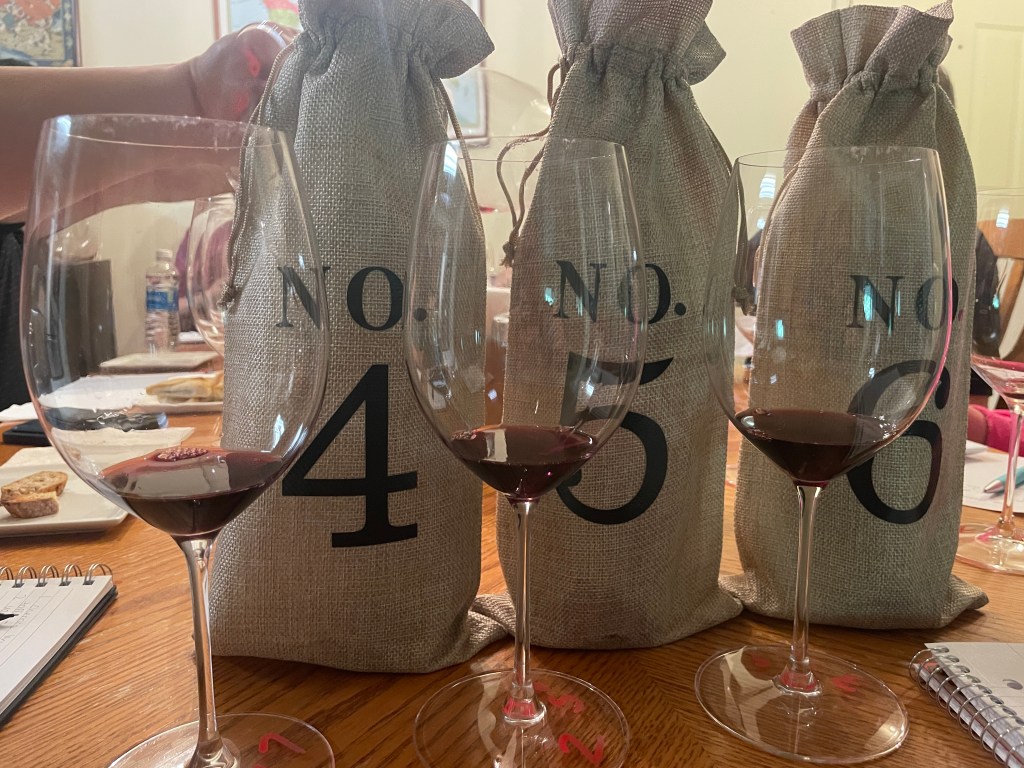
  • Bottle #5: 2021 Evesham Woods Le Puits Sec (Oregon; 7 votes; round winner)
  • Bottle #6: 2021 12 Ridges Vineyard (Virginia; 1 vote)
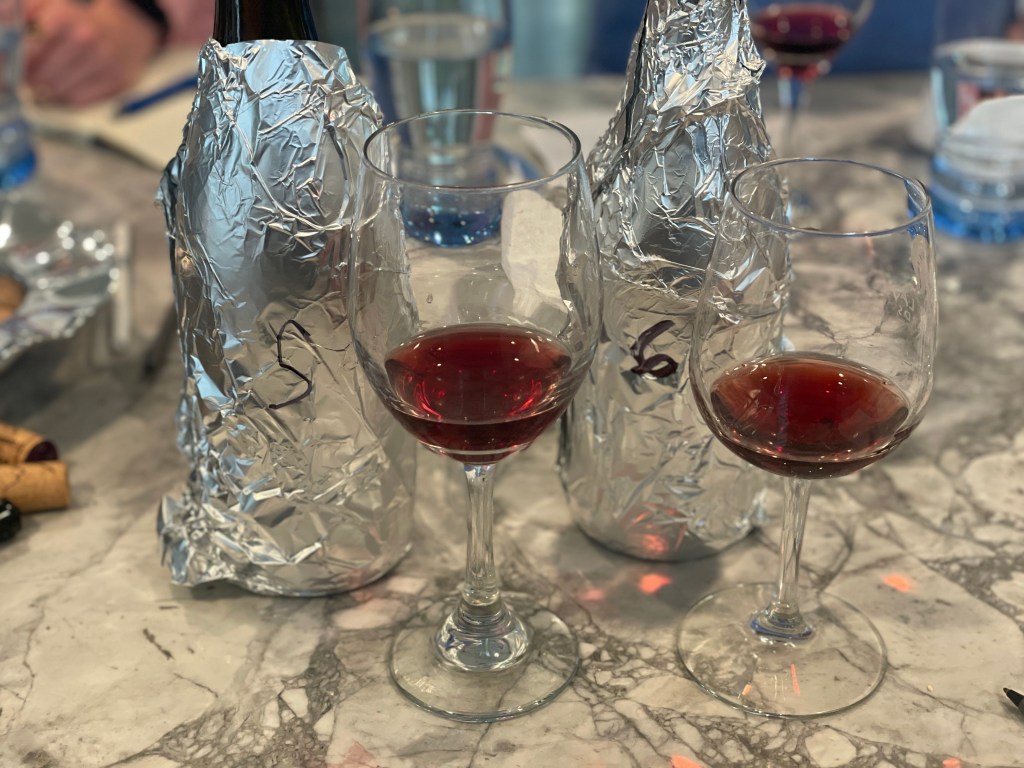
Now we’re talking! At 3,300’, 12 Ridges is the 2nd highest-elevation vineyard on the east coast. Evesham’s Le Puits Sec was also an excellent wine.

While we definitely liked the 12 Ridges, it just didn’t compare well to an excellent vineyard-specific Oregon wine.

Bottle #5 / 2021 Evesham Woods Le Puits Sec. We generally identified this as the Oregon wine, although not universally. This was very well-enjoyed with lots of great descriptors, ranging from “Fresh and well-integrated”, “delicate”, and “balanced”. A few picked up on notes of baking spice, maybe dark cherry. Harissa was mentioned by one guest. I detected a lot of mushroom on the nose.

I felt this particular wine had, hands down, the best nose of any wine enjoyed that evening.

Bottle #6 / 2021 12 Ridges. This was definitely a higher-acid wine, which in retrospect makes sense since it was grown at 3,300 ft’.

Our tasting notes were all over the place. One guest mentioned notes of salted caramel; another said they got notes of sea salt. Yet another mentioned smoke or sour cherry. I didn’t get a lot on the nose, but I did feel it had nice complexity.
Votes:

  • Annie: Voted #5
  • Chris: Voted #5
  • Kathy: Voted #5
  • Larry: Voted #6 (still the outlier!)
  • Matt: Voted #5
  • Patti: Voted #5; her ‘happy place’ since she’s a big Oregon pinot fan
  • Rob: Voted #5
  • Stacy: Voted #5

Flight #4

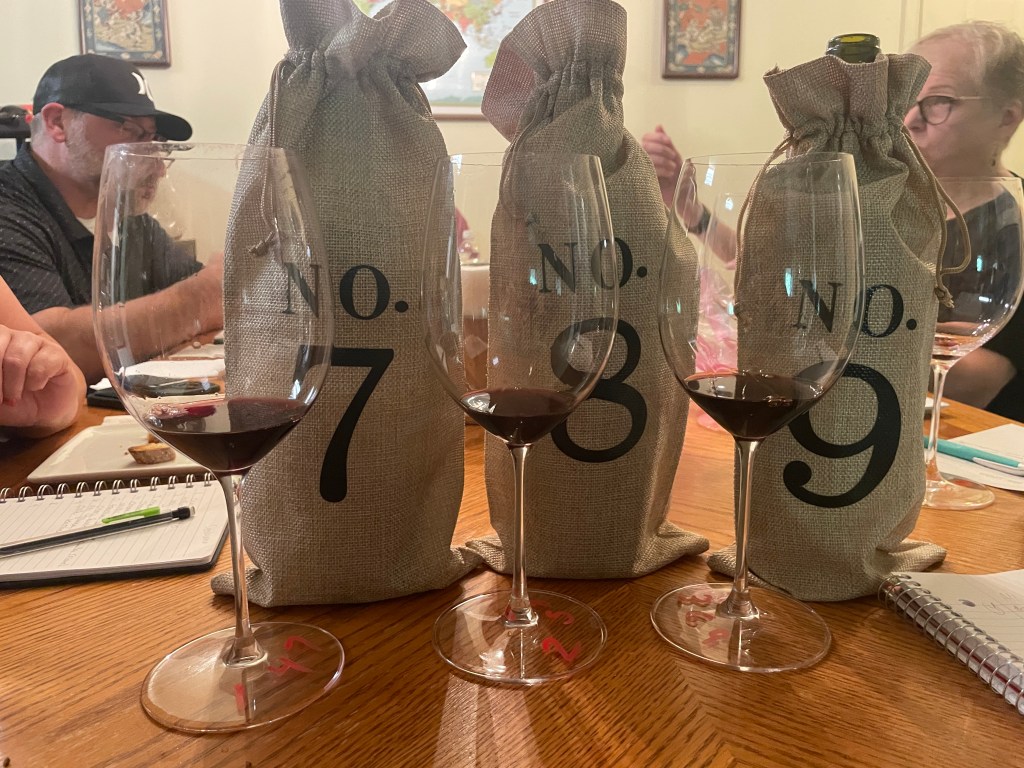
  • Bottle #7: 2021 Résonance Founders Blocks (4 votes; tied)
  • Bottle #8: 2021 Ankida Ridge Pinot Noir Reserve (4 votes; tied)

This was by far our favorite pairing of the night. Not everyone voted to identify the region, although most of the guesses were accurate. It was very much a competition between ‘grace (#7)’ vs ‘power (#8)’. We were evenly divided on which we preferred, so it was a tie.

The #7 was rounder and more balanced. #8 was a ‘big’, but in a good way. Someone said it was “ready to party”, if you will. Both had great complexity, and opinions differed on which was heavier.

Bottle #7 / 2021 Résonance Founders Block. Notes of sour cherries and mushrooms. It had a perceived sweetness; not from sugar levels but had a ‘fruit sweet’ quality to it.

Bottle #8 / 2021 Ankida Ridge Pinot Noir Reserve. “Grabby” was my favorite descriptor. Several mentioned notes of sour cherry. The wine was lighter than I expected, although conversely it was still a ‘big’ win in terms of tannin. Kathy mentioned it was ‘layered, had complexity, and notes of forest floor’.

Of all the wines we tasted that evening, #8/Ankida was the most capable of standing up to heavier foods, especially a dish like steak. It was very drinkable now but could still use more time. I later learned the tannin came from the heavy use of stem inclusion.

Votes:

  • Annie: Voted #7
  • Chris: Voted #7
  • Kathy: Voted #8
  • Larry: Voted #8
  • Matt: Voted #8
  • Patti: Voted #7
  • Rob: Voted #7
  • Stacy: Voted #8

Finalist Flight

After the last round we did a poll to pick two wines from any flight to go into the finalist round. 7 votes went to wine #7/Résonance, 5 votes went to wine #8/Ankida, and 3 votes went to wine #5/Evesham Woods Le Puits Sec. #4/Cave Ridge was generally considered the #4 wine of the evening.

With the votes in, #7 and #8 went to the finalist round, and we enjoyed dinner drinking the remaining wines.

This food break worked to our favor as #7 and #8 opened up. The complexity of both improved, with the Ankida especially becoming more graceful. An Ox Eye Blanc de Noir accompanied our beef bourguignon.

We voted a second time…and for the second time in a row, it was again a tie. Ironically, 2 people from each ‘team’ switched sides.

  • Bottle #7: 2021 Résonance Founders Blocks (4 votes; tied)
  • Bottle #8: 2021 Ankida Ridge Pinot Noir Reserve (4 votes; tied)

Lessons Learned:

Virginia represented very well; far better than I could have hoped for. It’s fair to say that the state has very few high-quality examples to pull from, but the top ones we used were well received.

I should note that most of the attendees didn’t have pre-conceived notions of what Pinot should taste like. Our self-described Oregon wine aficionado almost always went for the Oregon wine (the Cave Ridge being the exception), but overall the attendees simply wanted something tasty.

  1. Round #1: 2022 Eola-Amity Hills Cuvée (Oregon)
  2. Round #2: 2023 Cave Ridge (Virginia)
  3. Round #3: 2021 Evesham Wood Le Puits Sec (Oregon)
  4. Round #4: Tie; 2021 Résonance Founders Blocks and 2021 Ankida Pinot Noir Reserve
  5. Winners round: Our “Top 2” wines were the Résonance and Ankida…and they tied again.

PS – the 2021 Ankida Reserve and 2023 Cave Ridge were both gifted to me for this event (thank you Christine and Randy!). While the Reserve is Ankida’s ‘top’ wine currently being sold, their 2022 Pinot is also getting headlines of its own.

For Virginia to tie Oregon as the evening’s ‘best’ wine is remarkable. Ankida Ridge should be very happy with that result.

I still say that the 2023 Cave Ridge Pinot Noir was the surprise of the evening. It was only recently bottled, so it has time to go. Yet it could easily have fared well against an Oregon wine in the mid-$30 price range.

Virginia Tannat Tasteoff: Virginia vs South America

Days after I had a blind Virginia vs South America tannat tasting, Wine Enthusiast published an article on Virginia Tannat. Part of me was happy about the publicity. Another part said; “What took you so long to notice?”, as Virginia has made great Tannat for a while.

Tannat was born in the Madiran region of Southwest France. Yet it’s Uruguay that wears the crown as the world’s Tannat capital, growing more Tannat than even France. Dennis Horton of Horton Vineyards was the first to produce a Virginia Tannat, from his 1998 vintage.

As plantings go, Virginia’s 78 acres of Tannat is respectable but far below heavy hitters like Cabernet Franc (661 acres) or even Petit Manseng (200 acres). Tannat’s vulnerability to cold weather force vineyards to be selective in where they plant it, limiting its availability.

Vineyards that do have Tannat treat it like a premium grape, selling at one of the highest price points of any grape in Virginia. One small dash is a great way to beef up red blends with extra tannin and acid. According to Kendell Anderson, winemaker for Bull Run, “Tannat holds its acid but also has good brix. It also calms Petit Verdot without losing its body.”

While it’s increasingly seen in blends, Virginia produces many 100% (or close enough) Tannat wines. Virginia’s first Tannat wines were rustic tannin bombs (the word ‘tannin’ supposedly became bastardized into the name ‘Tannat’), but recent examples are more graceful. In many ways, Tannat is Virginia’s answer to Napa Cabernet, when wine drinkers want something big and bold.

Other than its lack of cold hardiness, Tannat is a great fit for Virginia’s climate. Its high level of acidity means it can hang longer on the vine without losing any punch. It also produces one of the highest tonnages of fruit per acre of any local vinifera. In a good growing site, Tannat can produce an average of 3.5 to as high of 5 tons an acre while still maintaining excellent levels of ripeness.

Lastly, Tannat doesn’t mind excessive water. Jason Murray of Arterra explained Tannat evacuates water from its grapes more quickly than other vinifera; an important consideration considering Virginia’s proclivity for late season storms.

Tasting & Scoring Methodology

Every round my guests picked a favorite. I usually also wrote down the region it came from (if I remembered to ask). After we finished all 8 wines we did a vote to decide the top 2 of the day and revisited them in a ‘Finalist” round.

It was hard to find the specs on many of these wines. I suspect more than a few had a little something else blended in. For half the wines I couldn’t find anything that proved/denied these were 100% varietal wines.

The Contenders:

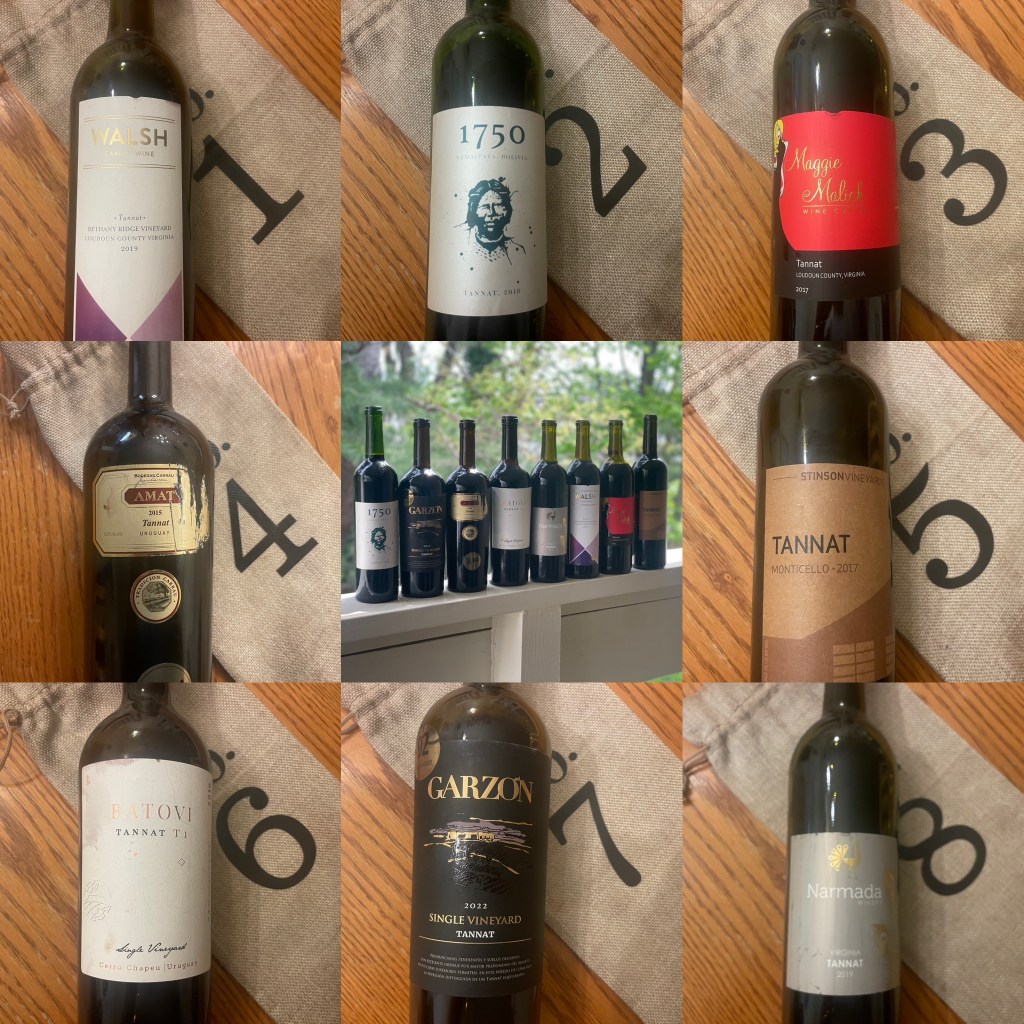
  1. Walsh Family Wine 2019 Tannat (Virginia) (90% Tannat/10% Cab Sauv)
  2. “1750” Uvairenda 2018 Tannat (Bolivia)
  3. Maggie Malick 2017 Tannat (Virginia) (95% Tannat/5% Merlot?)
  4. Amat 2015 Tannat (Uruguay)
  5. Stinson 2017 Tannat (Virginia) (100% Tannat)
  6. Batovi “T1” 2016 Tannat (Uruguay) (100% Tannat)
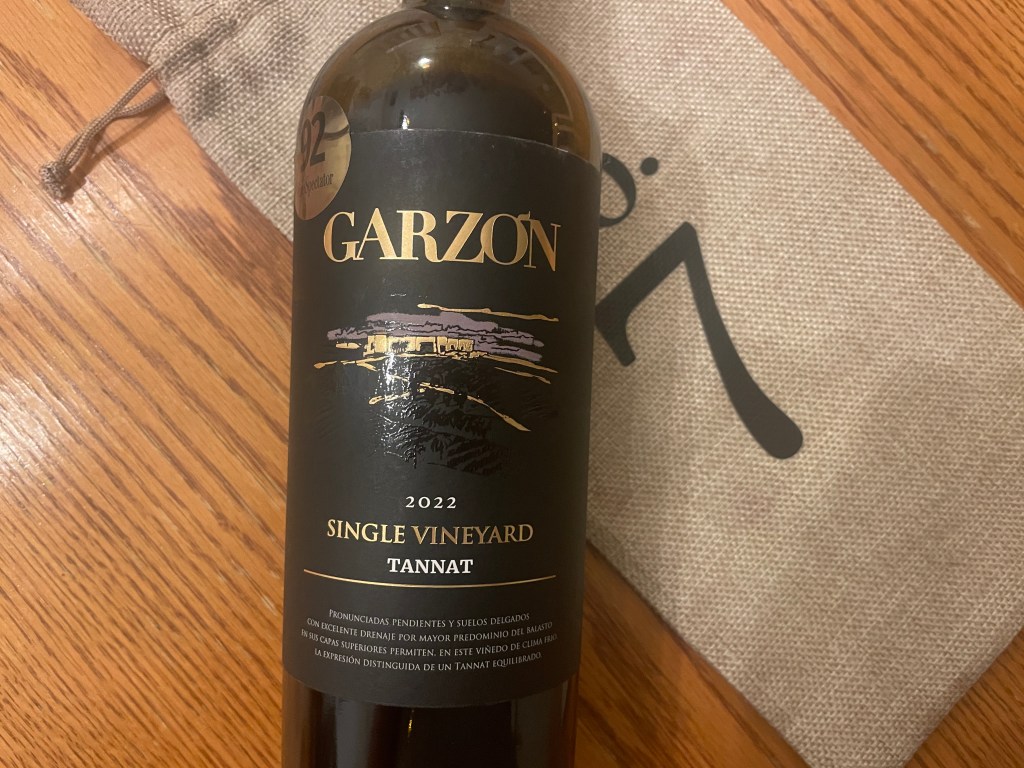
  7. Garzon 2022 Tannat (Uruguay)
  8. Narmada 2019 Tannat (Virginia)

Flight #1

  • Bottle #1: Walsh Family Wine 2019 Tannat (Virginia) (5 votes; round winner)
  • Bottle #2: 1750 Uvairenda 2018 Tannat (Bolivia) (2 votes)

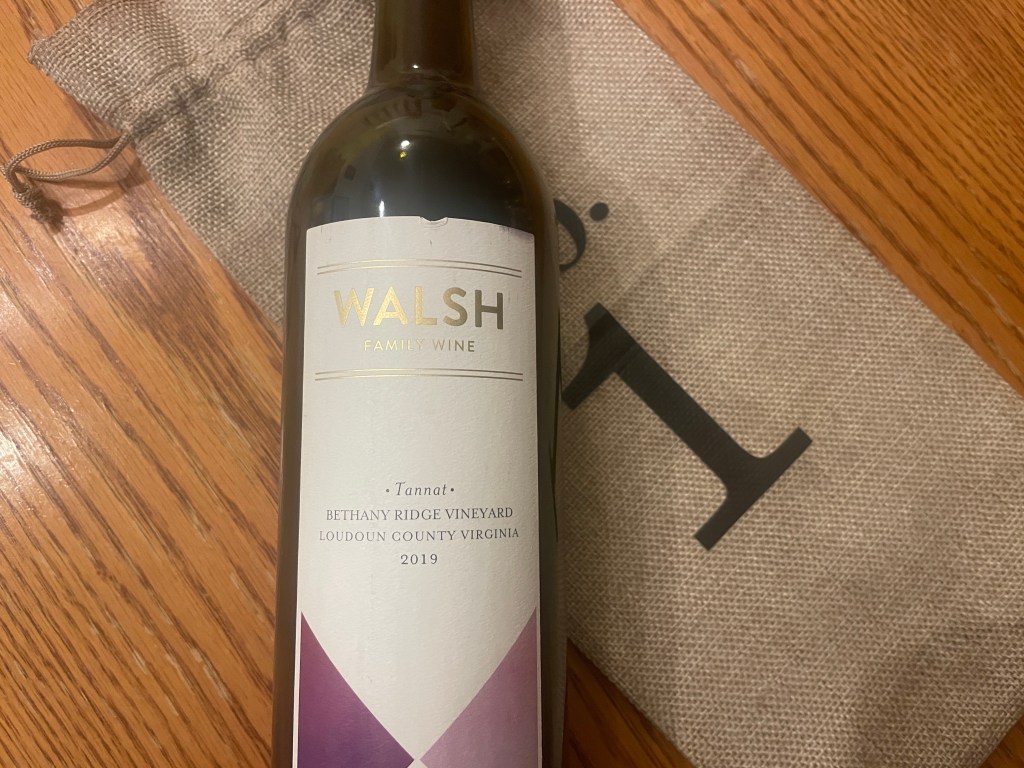
Bottle #1 / Walsh Family Wine 2019 Tannat (Virginia). On the nose a variety of notes were mentioned, including cassis, lilac, and/or cocoa. A soft mid-palate with notes of cedar box and smoke. A good balance of fruit and tannin.

Bottle #2 /1750 Uvairenda 2018 Tannat (Bolivia). Slightly more aromatic than the first wine. It started off with a chemical or spice nose, while the descriptor ‘cheesy’ was also mentioned. The spice was there on the palate but wasn’t as prominent as the nose suggested. It had an almost grape-y ‘ripasso’-like flavor to it. The fruit wasn’t very strong here. We guessed it probably had some age to it.

I didn’t take notes on which region people thought the wines came from, but it was pretty obvious that #1 was Virginia because it was ‘familiar’ while the mustiness of #2 implied Uruguay.

Votes:

  1. Dan: Voted for #1
  2. Frank: Voted for #1.
  3. Jeremy: Voted for #1
  4. Kendell: Voted for #2.
  5. Matt C: Voted for #1.
  6. Matt F: Voted for #2.
  7. Sedale: Voted for #1.

Flight #2

  • Bottle #3: Maggie Malick 2017 Tannat (Virginia) (3 Votes)
  • Bottle #4: Amat 2015 Tannat (Uruguay) (4 Votes; round winner)

Bottle #3 / Maggie Malick 2017 Tannat (Virginia). The oak was noticeable, with people saying it was either borderline too much or maybe the oakiness level was right, but it had too high a toast factor on the oak.

That said, after we got past that oak it had nice fruit and lots of acidity. Nutty and toasted oak/violets were mentioned. Some earth notes as well.

Bottle #4 / Amat 2015 Tannat (Uruguay). Bright acidity. Notes of plumb, wildflowers were mentioned. The guests who preferred this wine felt it had a balance of red fruit and leather. Tannins were well integrated. Some felt it was the better balanced of the two. It was also lighter and felt less alcohol-y than #3. Maybe it was a blend, but I can’t confirm that.

Votes:

  1. Dan: Voted for #3; felt it was Virginia.
  2. Frank: Voted for #4; felt it was South America.
  3. Jeremy: Voted for #3; felt it was Virginia.
  4. Kendell: Voted for #3, felt it was Virginia.
  5. Matt C: Voted #4, felt it was from South America.
  6. Matt F: Voted for #4; felt it was South America
  7. Sedale: Voted for #3; felt it was Virginia.

Flight #3

  • Bottle #5: Stinson 2017 Tannat (Virginia) (5 votes; round winner)
  • Bottle #6: Batovi “T1” 2016 Tannat (Uruguay) (2 votes)

This was universally judged to be our favorite round of the day. By coincidence, both went to the ‘finalist’ round. It wasn’t planned that way; I had no idea in advance these two would be ‘ringers’; my pairing just happened to have the top 2 wines in the same initial round.

While most wines of the day were almost always easily identifiable by their country of origin, this round through us for a loop because both had “South America” vibes. We mostly still guessed them correctly, but I wouldn’t judge those who thought the Virginia wine was from Uruguay.

Bottle #5 / Stinson 2017 Tannat (Virginia). “Damn it’s good!” was quickly mentioned. Red and dark fruit notes on the palate. Beautiful depth. More fruity than sweet but with lots of complexity. Tannins were well integrated. Tea leaf on the nose; even a hint of butter.

“I need this with rib eye” was my favorite descriptor. I later learned it was 15.1% alcohol (the highest of any wine in the event), but it was so well balanced we didn’t notice it.

Bottle #6 / Batovi “T1” 2016 Tannat (Uruguay): Lots of great descriptors. Red fruit and ‘nice’ tannin. Creamy, soft texture; even a candied component. Good acidity and mouthfeel. Smokey and complex. Sour cream/sour cherry on the nose.

Someone mentioned this was a ‘sit by the fire’ wine. I was surprised it was 15.1% ABV; it didn’t taste ‘hot’ at all.

Votes:

  1. Dan: Voted for #5; felt it was Virginia.
  2. Frank: Voted for #5; felt it was South America.
  3. Jeremy: Voted for #6.
  4. Kendell: Voted for #5; felt it was Virginia.
  5. Matt C: Voted for #5; felt it was Virginia.
  6. Matt F: Voted for #6; felt it was South America.
  7. Sedale: Voted for #5; felt it was Virginia.

Flight #4

  • Bottle #7: Garzon 2022 Tannat (Uruguay) (5 votes; round winner)
  • Bottle #8: Narmada 2019 Tannat (Virginia) (2 votes)

Bottle #7 / Garzon 2022 Tannat (Uruguay). This wine was tight; we were guessing it was a younger wine. Ruby-esque color made us guess it may have been higher in alcohol. Tea leaf nose; soft tannin; ‘shy’.

It needed time to open up, but when it did we had descriptors of smokiness with some intensity and alcohol notes. Soft on the palate but drinkable. Hint of cocoa. Raspberry nose/ dark chocolate palate.

Bottle #8 / Narmada 2019 Tannat (Virginia). This was smoother and more ‘neutral’ compared to #7. Notes of prunes, cocoa spice, and licorice were mentioned. Soft palate, velvety, quaffable.

Votes:

  1. Dan: Voted #7
  2. Frank: Voted #7
  3. Jeremy: Voted #8
  4. Kendell: Voted #7, thought it was Virginia
  5. Matt C: Voted #7; thought it was Virginia.
  6. Matt F: Voted #8; thought it was South America
  7. Sedale: Voted #7

Finalist Flight

  • Bottle #5: Stinson 2017 Tannat (Virginia) (5 Votes; Event Winner)
  • Bottle #6: Batovi “T1” 2016 Tannat (Uruguay) (2 Votes; Runner Up)

Wines #5 and #6 were voted to advance to the ‘finalist’ round. After a 2nd tasting I did a poll of our favorite wines, and #5/Stinson was the event winner. The vintage was so strong, winemaker Rachel Stinson Vrooman later told me, “It made itself.”

#6/Batovi was the runner up. There was a consensus that Walsh Family’s 2019 Tannat was the third favorite, although we also liked Amat and Maggie Malick.

The Stinson and Batovi wines opened up just enough to make our 2nd tasting just different enough to make some of us rethink our votes. Most kept theirs, but Dan and I switched teams (him to Uruguay, me to Virginia).

I don’t know if this is surprising or not, but the top 2 wines were 100% Tannat. I still suspected several had something else blended in (the Walsh Family Wine definitely did; I suspect Maggie did as well).

In summary, the Stinson was judged to be a “I want this to drink by myself” wine (preferably with steak), while the Batovi was more versatile. It was a very tough choice to pick between the two. Dan of MyNoVaWineBlog was VERY happy he brought the winner!

  1. Dan: Voted #6/Batovi
  2. Frank: Voted #5/Stinson
  3. Jeremy: Voted #5/Stinson
  4. Kendell: Voted #5/Stinson
  5. Matt C: Voted #6/Batovi
  6. Matt F: Voted #5/Stinson
  7. Sedale: Voted #5/Stinson

Lessons Learned:

Both Virginia and Uruguay (with an assist from a Bolivian wine) presented very well. 2 rounds went to Virginia, 2 for Uruguay, and the ‘top’ wine was Virginia.

In terms of a tasting profile, the Virginia wines tended to be heavier on oak than their South American counterparts. All of them had some cedar box on the nose and trended towards dark fruit on the palate.

We felt the South American wines didn’t consistently have the same tasting notes, although most had notes of dried fruits/raisins. We also felt they may have spent at least some time in steel.

Yes – Virginia makes amazing Tannats. Nice to see Wine Enthusiast noticed!

France vs Virginia Part Deux (2024)

If you’re reading this, you probably know all about the “Judgement of Paris”. It’s a huge inspiration to my own wine comparisons, although mine tend to include a broader selection of varieties than the original event (and Virginia wine is always in the mix).

I often hear that both in style and geography, Virginia wine is a half-way point between California and France. But having tried a great deal of both, I’d only somewhat agree with that statement.

My observation is stylistically speaking, Virginia wine trends more towards France than it does California. That said, truly successful Virginia winemakers focus on being ‘Virginia’ rather than try to emulate one region or the other.

I’d already done one “Judgement of Virginia” comparison, but after a few years it was time to apply the lessons-learned from the first time and try again.

Tasting & Scoring Methodology

A group of friends & I blind tasted 5 comparison flights. All the flights were bagged blind. It wasn’t planned that way, but many of the same wineries I selected for my 2022 event were again represented.

The goal was to pick a ‘favorite’ every round, as opposed to rating them and determining which one we thought was the ‘best’. In many cases, ‘best’ was entirely subjective.

This particular event included an abundance of industry professionals. Of the six of us, two had side-gigs at wine stores, two were working on their WSET Diplomas (and one was a wine judge), and one was born in Bordeaux and had experience working at both California and Virginia wineries.

While all were familiar with Virginia wine, I didn’t need to worry about having a bias in favor of either France or Virginia. At least one (gasp!) may have even expressed doubts what Virginia could bring to the table, so I was on a bit of a mission to show the best of what Virginia had to offer.

Because of that, it’s fair to say that my Virginia wines represented a good cross-section of the ‘elite’ of the local industry. But that didn’t mean we slouched on our French pairings; I did my best to compare a wine from each area that was roughly equal in terms of blends and price points.

I specifically told my attendees to not share their guess on which wine came from which region until the end of the event. It was about the best wine of each round, not ‘guess the Virginia bottle’. All the bottles were unveiled at the end.

The contenders:

  1. Charles Heidsieck blanc de blancs (France) ($95 Wine Searcher)
  2. 2016 Trump “Brut Reserve” (Virginia) ($95 for the 2017 vintage)
  3. 2022 Chateau Picque-Caillou Blanc (France) ($43 Wine.com)
  4. 2023 Walsh “Bethany Ridge” (Virginia) (~$34)
  5. 2015 Linden “Hardscrabble” (Chardonnay) (Virginia) (~$42 for current 2021 vintage)
  6. 2015 Louis Jadot Beaune (France) ($55 Wine Searcher)
  7. 2016 Chateau Tour des Termes (France) ($35 Wine Searcher)
  8. 2019 Fifty-Third Winery “Romulus” (Virginia) (~$35-$40 when released)
  9. 2018 Chateau de la Brede Rouge (France) ($62 Wine Searcher)
  10. 2017 Linden “Hardscrabble” (red) (Virginia) (~$75 – $85 library wine)

Flight #1: Sparkling

  • Bottle #1: Charles Heidsieck blanc de blancs (France; I believe it was bottled in 2017)
  • Bottle #2: 2016 Trump “Brut Reserve” (Virginia) (Round winner; 6 votes as favorite; all incorrectly guessed Champagne)

Of course, we start with sparkling.

This was arguably the biggest surprises of the day. All of us voted for Bottle #2 (Trump) as our favorite. During a last-minute pre-unveiling tally to guess its area of origin, all of us guessed it was Champagne. Nope; this was Albemarle County’s very own Trump Winery.

This is where I wish I took a video of the reactions. We were SURE this was Champagne; nobody even floated the idea it was Virginia (even those who’ve had it). The tasting notes also seemed to back that assessment up, with #2/Trump seeming a bit more ‘aged’ and having finer bubbles.

But I shouldn’t be surprised. This was the 2nd time a 2016 Trump Brut Reserve won one of my blind tastings (the other being an 100% sparkling event). Additionally, a 2017 Trump Blanc de Blanc won the previous Judgement of Virginia against a Taittinger champagne.

I’ve said in the past that “Trump sparkling can go toe-to-toe with anything”. But now, I need to edit that statement. It would likely take a +$100 Champagne to surpass a Trump Winery Brut Reserve.

Bottle #1 / Charles Heidsieck blanc de blancs (France). More brioche on the nose than #2. “Bigger” on the palate. Creamy and fresh. One of us mentioned it was more reminiscent of “American” butter while #2 (Trump) was reminiscent of French butter, and several backed that assessment up. It had thicker bubbles with more citrus notes.

Bottle #2 / 2016 Trump “Brut Reserve” (Virginia). The brioche was there on the nose but I personally thought there was a mineral note to it. Lemony, creamy and fresh. More ‘aged’ notes, including nuttiness. More ‘European butter’ notes, which (I’m told) is fattier and more delicious than its American counterpart.

  • Kathy: Voted #2 (Trump). Guessed Champagne (it was Virginia). Thought #1 had more aggressive bubbles, maybe more reductive. #2 was more oxidative and citrusy.
  • Lieven: Voted #2 (Trump). Guessed Champagne (it was Virginia). Lots of similarities between the two, although thought #1 was ‘narrower’. Thought #2 had probably a few more grams of sugar than #1, although both were Brut. He also came up with the idea that #1 (Champagne’s Heidsieck) was more ‘American’ butter while #2 was ‘European’ butter
  • Marine: Voted #2 (Trump). Guessed Champagne (it was Virginia). Concurred with Lieven’s comment about “American butter” vs “European butter”.
  • Matt C: Voted #2 (Trump). Guessed Champagne (it was Virginia). Thought #2 had more dosage. #1 was more kumquat notes while #2 was more mandarin orange.
  • Matt F: Voted #2 (Trump). Guessed Champagne (it was Virginia). No tasting notes (too busy writing).
  • Robrette: Voted #2 (Trump). Guessed Champagne (it was Virginia). Thought #1 was more acidic while #2 was ‘rounder’. Also liked the texture of #2.

Flight #2: Sauvignon Blanc

  • Bottle #3: 2022 Chateau Picque-Caillou Blanc (Bordeaux Blanc, a rare 100% SB)
  • Bottle #4: 2023 Walsh Family Bethany Ridge (Round winner; 6 votes for favorite; 3 guessed were Virginia)

This round was surprising because the Bordeaux Blanc came off as “New World”, while the Walsh was much more Sancerre-like.

At first I was upset I didn’t ask for a more ‘classic’ expression of French Sauv Blanc, but in retrospect I’m happy how it came out. It just goes to show you that not only can Virginia wine present as “Old World”, there are times when “Old World” wine comes off as “New World”.

The Bordeaux Blanc was so overpowering floral that I could have guessed it was a Torrontés in a blind tasting. A very off-brand Sauv Blanc, especially for France. But still very quaffable.

Bottle #3 / 2022 Chateau Picque-Caillou Blanc. The nose was aggressive, nearly overpowering. It was so off-brand it threw us for a loop, and I suspect those who weren’t familiar with Walsh Family assumed this had to be the “New World” wine.

Grassy, almost New Zealand-style perfume-y nose. Lighter in color, and maybe a dab of oak. Lots of texture. Notes of citrus, jasmine, tarragon, and gooseberry were mentioned.

Bottle #4 / 2023 Walsh Family Bethany Ridge. “Shy” was the key descriptor, which I assume was due to it being recently bottled. The nose took a while to make an appearance but was lovely when it finally arrived.

Notes of dry grass (as opposed to freshly cut grass). Delicate and elegant. Citrus and lingering stone fruit notes. I completely understand why people thought this was France; maybe my next pairing will be Sancerre instead of a Bordeaux Blanc.

  • Kathy: Voted for #4 and guessed #4 was Virginia. Thought #3 had nice acidity and was perfume-y. #4 had notes of quince, mineral, and dried herbs.
  • Lieven: Voted for #4 and guessed #4 was France. #3 had notes of stone fruit, papaya, tarragon, and was floral and bright. #4 had a sharper nose.
  • Marine: Voted for #4 and guessed #4 was Virginia. #3 was ‘flamboyant’. Notes of cat pee, passion fruit, and was smooth. #4 was more subtle, notes of fresh herbs and had a lovely finish.
  • Matt C: Voted for #4 and guessed #4 was France. Thought #3 had notes of honeysuckle and grapefruit.
  • Matt F: Voted for #4 and guessed #4 was Virginia (mostly because I know and love Walsh’s SB) but never could have guessed #3 was French.
  • Robrette: Voted for #4 and guessed #4 was France. Thought #3 was grassy, fleshy, notes of dragon fruit. #4 was lmon-lime, grape fruit, hint of herbs.

Flight #3: Chardonnay

  • Bottle #5: 2015  Linden “Hardscrabble” (Chardonnay) (Virginia) (3 votes, tie; all guessed it was Virginia)
  • Bottle #6: 2015 Louis Jadot Beaune (France) (3 votes, tie)

This round was special because I LOVE aged Chardonnay. The 2015 Linden is one of owner/winegrower Jim Law’s favorite (and highest rated) Chardonnay vintages ever, and bottles of Hardscrabble Chardonnay are basically his ‘flagship wine’. I’m not familiar with the Louis Jadot but dang, that one aged beautifully as well.

I didn’t take great notes on why we all thought #5 was Virginia, but we all must have found something about it that stood out since we were all accurate.

Bottle #5 / 2015 Linden “Hardscrabble” (white) (Virginia). It had a ‘hot note’ of higher alcohol. Lemon notes, nutty nose. This seemed more ‘fruit’ driven.

Bottle #6 / 2016 Chateau Tour des Termes (France). “Big”, nutty qualities as well. Lots of complexity on the nose. Complex palate. This seemed a tad bit more ‘winemaker’ driven, at least on the nose.

  • Kathy: Voted for #5 and thought #5 was Virginia. Thought #5 was fresher, more fruit vs #6 showcased ‘the winemaker’, and #5 had a note of salinity.
  • Lieven: Voted for #6 and thought #5 was Virginia. Thought #5 was more bruised fruit, lemony but also cooked, with notes of marmalade. #6 was more lemon drop, with a sour note. Both had notes of baking spice.
  • Marine: Voted for #6 and thought #5 was Virginia. #5 was more pronounced bruised apple, lighter and more acidic than #6. #6 was shy, smooth, balanced and toasty.
  • Matt C: Voted for #5 and thought #5 was Virginia. #6 was ripe pair, fresh butter on the nose. Saw a hot note to it. #6 had a reductive nose, notes of melted butter, cooked apple, and baking spice
  • Matt F: Voted for #6, and thought #5 was Virginia.
  • Robrette: Voted for #5 and thought #5 was Virginia. Thought #5 as rounder and had more mouth feel. #6 was sharper.

Flight #4: Red Flight #1

  • Bottle #7: 2016 Chateau Tour des Termes (France) (Round winner, 6 votes)
  • Bottle #8: 2019 Fifty-Third Winery “Romulus” (Virginia; all guessed it was Virginia)

This round was our mid-price ranged red comparison. The differences between them were more pounced than the other rounds (at least in my opinion). It was relatively easy to guess the Virginia wine since it was brighter and more fruit-driven than the Bordeaux.

This was a fight between ‘easy drinking vs serious & complex’. They were slightly further apart in vintage than I would have preferred – but you take what you can get.

Bottle #7 / 2016 Chateau Tour des Termes (France). I wrote most of the notes below for this round.

Bottle #8 / 2019 Fifty-Third Winery “Romulus” (Virginia).

  • Kathy: Voted for #7 and thought #8 was Virginia. Thought #7 had black plumb, notes of peppercorn, was rustic, and had more complexity. #8 was more black cherry vanilla (like the ice cream), notes of cherry cola.
  • Lieven: Voted for #7 and thought #7 was Virginia. Thought #7 was red and black fruit, notes of cassis and char, with a savory note. #8 was more blue and black fruit, note of violet, and had a lighter palate.
  • Marine: Voted for #7 and thought #8 was Virginia. #7 had notes of fresh herbs, black cherry, rustic, more ‘serious’. #8 was fresher, more crushed berry, and liked the brightness.
  • Matt C: Voted for #7 and thought #8 was Virginia. Thought #7 had a “Virginia nose”, notes of cassis, maybe a little new oak. #8 was softer, leaned into the fresh fruit, was softer and had a lingering berry note.
  • Matt F: Voted for #7 and thought #8 was Virginia. I thought #8 had a sour note on the palate, and wasn’t as well integrated when compared to #7.
  • Robrette: Voted for #7 and thought #7 was Virginia. #7 was more complex while #8 was brighter and was less complex, with cola notes.
  • Flight #5: Red Flight #2
  • Bottle #9: 2018 Chateau de la Brede Rouge  (France) (3 votes; tie)
  • Bottle #10: 2017 Linden “Hardscrabble” (red) (Virginia) (3 votes; tie, 2 out of 6 guessed it was Virginia)

While Jim Law’s flagship wine is his Hardscrabble white (Chardonnay), he makes some damn good reds. His wines are always well balanced, and that was evident here.

But the Brede Rouge wasn’t a slouch either, everyone loved it just as much. Votes were tied between them.

Surprisingly (or not, depending on how high your estimation of Linden is), 4 out of 6 of us thought the Virginia wine was Bordeaux (even my guest from Bordeaux thought so). I’ll take that as a huge vote of confidence for Linden Vineyards.

It wasn’t until the next day that I got the ‘musty’ notes that are indicative of Bordeaux on the nose, although both bottles were well aerated before this event.

Bottle #9 / 2018 Chateau de la Brede Rouge (France). It was late so most of my tasting notes are below. Several thought they detected an ‘olive oil’ note to #9, which threw people off.

Bottle #10 / 2017 Linden “Hardscrabble” (red) (Virginia). Guests generally identified this as smooth, balanced, and fruit-driven.

  • Kathy: Voted for #9, thought #10 was Virginia. Thought #9 was brine-y and had a note of olive oil which was unusual for Bordeaux. #10 was fresher, more raspberry and herbs and fewer barnyard notes.
  • Lieven: Voted for #10, thought #9 was Virginia. Thought #9 was more red cherry, plumb, pomegranate, and potting soil. #10 was more red cherry, plumb, earth and forest floor. Thought this wine was more about the mid-palate.
  • Marine: Voted for #10, thought #9 was Virginia. Thought #9 had notes of cinnamon, pepper, nutmeg, prune-y and tobacco. I think she mentioned notes of nutmeg and spice. #10 had notes of black current, cherry, and ‘juicy’
  • Matt C: Voted for #9, thought #9 was Virginia. #9 was black cherry, liquorish, brine, notes of baked fruit and had a cooked quality to it. #10 was black current, cigar box, red and black fruit and cedar.
  • Matt F: Voted for #10, thought #10 was Virginia.
  • Robrette: Voted for #9, thought #9 was Virginia. Thought #9 was more red fruit, black cherry, but balanced and smooth. #10 was more red fruit, and lighter, smoother, softer.

Lessons Learned:

Normally I talk about how similar a well-made Virginia wine can be to a classic expression of the same variety from France. What surprised me was how French wine can, on occasion, showcase “New World” notes.

The Chardonnay and the 1st red flight were easy; 100% of guests correctly identified each country of origin. The Sauvignon Blanc flight was harder to guess, with only 4 out of 6 guessing correctly. Even more difficult was the 2nd flight (with Linden) where only 2 out of 6 guessed correctly.

The sparkling round was the real stumper. Was it conceit to assume Virginia couldn’t match a $80-$100 bottle from Champagne? Maybe! I stand by my assessment that Trump Winery’s sparklings hit above their price point.

I also loved how wrong people were about the Linden Hardscrabble red vs Bordeaux flight, which stumped most of us.

So was it that Virginia wines are expressive of “Old World”? Or a few of these French wines were New World-ish? A bit of both, at least in this case.

In the end of our 5 comparisons, Virginia won 2 rounds, Bordeaux 1 round, and we had 2 ties.

The Petit Verdot Championship Round

This event was three years in the making. Petit Verdot has long been one of my favorite grape varieties, so serving PV in a blind tasting was a no brainer.

But this particular tasting wasn’t any typical event, since it only included the top wines of my three previous Petit Verdot tastings; one only using wine from the 2017 vintage, a second that compared Virginia PVs to other regions, and a third that only tasted the 2019 vintage.

Each of these blind tastings produced three top contenders. I did my best to collect those specific vintages, or at least the closest I could find. Thanks to the generosity of several wineries who opened up their wine libraries, I was able to collect 7 of the 9 of these top-scoring wines.

There were two exceptions. I wasn’t able to get a 2017 Cave Ridge Petit Verdot. But since I had a 2019 Cave Ridge PV, I figured that’s close enough.

Neither was I wasn’t able to get a bottle of a 2018 True Heritage Petit Verdot (used in my second event). But I did get the next best thing; a 2020 Petit Verdot from Southwest Mountains Vineyards, which is actually from the same vineyard (Castalia Farm) and winemaker (Emily Pelton).

Tasting & Scoring Methodology

A group of friends & I blind tasted 9 wines in 3 flights. All the flights were bagged blind.

We didn’t have a sophisticated scoring system. The goal was to pick a ‘favorite’ in every flight, as opposed to rating them and determining which one we thought was the ‘best’.

The favorite of every flight went to a ‘finalist’ round. I took the extra step of hiding the ‘finalists’ with a second bag, so any biases of an earlier tasting hopefully didn’t carry over to the final round.

After finishing the final round, we unveiled all the wines and crowned the overall favorite of the day.

This group was composed of Virginia wine aficionados, so all were very familiar with Petit Verdot.

The contenders:

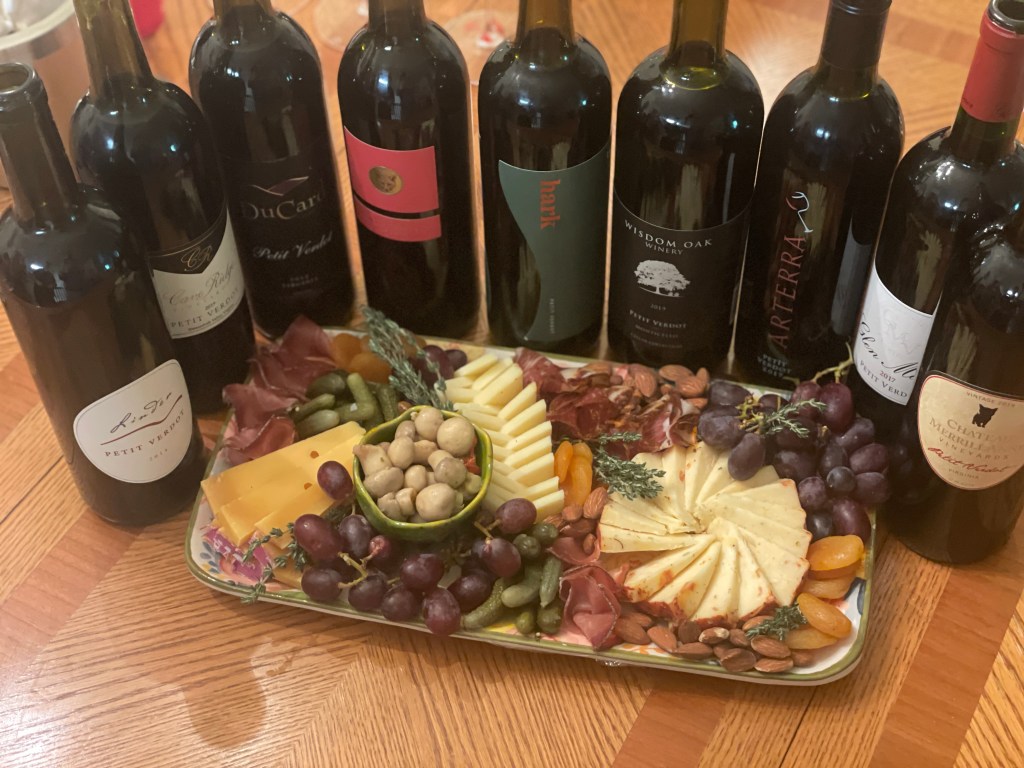
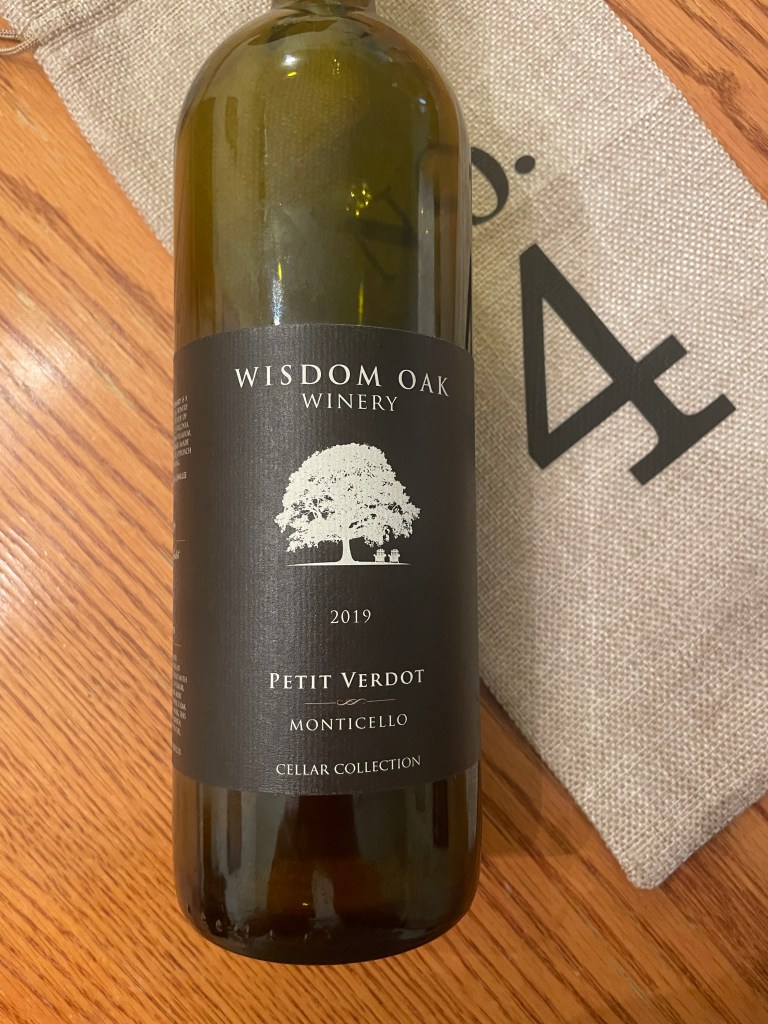
  1. 2019 Wisdom Oak Winery
  2. 2017 Glen Manor Vineyards
  3. 2017 Arterra Wines
  4. 2017 Hark Vineyards
  5. 2020 Southwest Mountains Vineyards
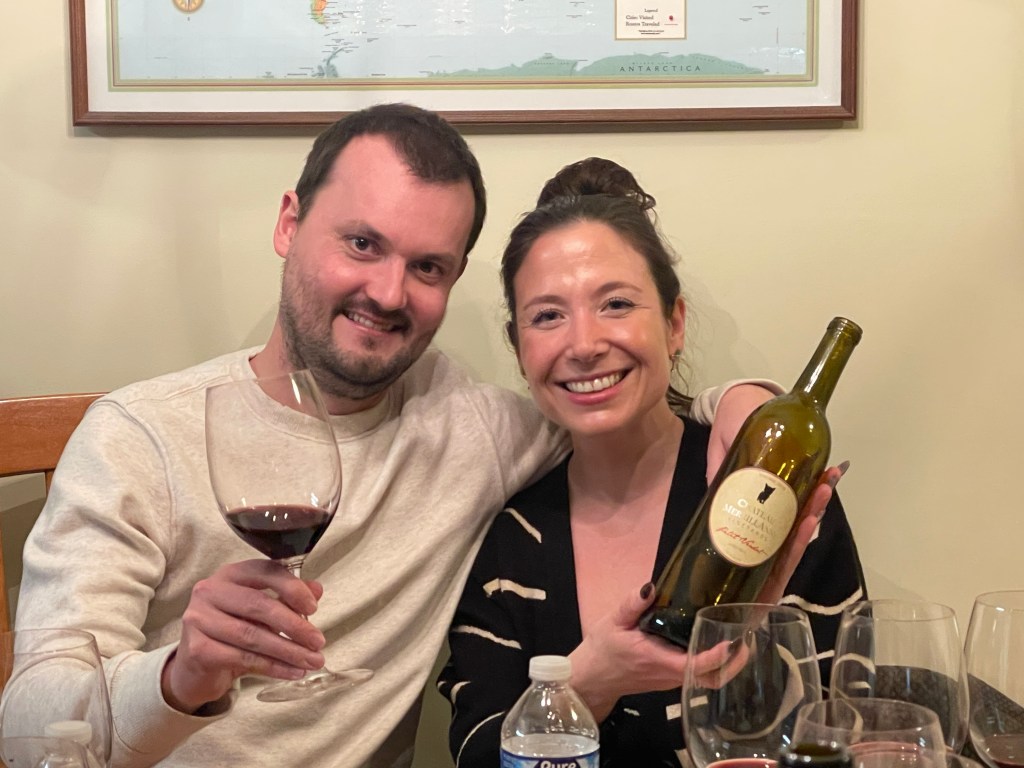
  6. 2019 Chateau MerrillAnne
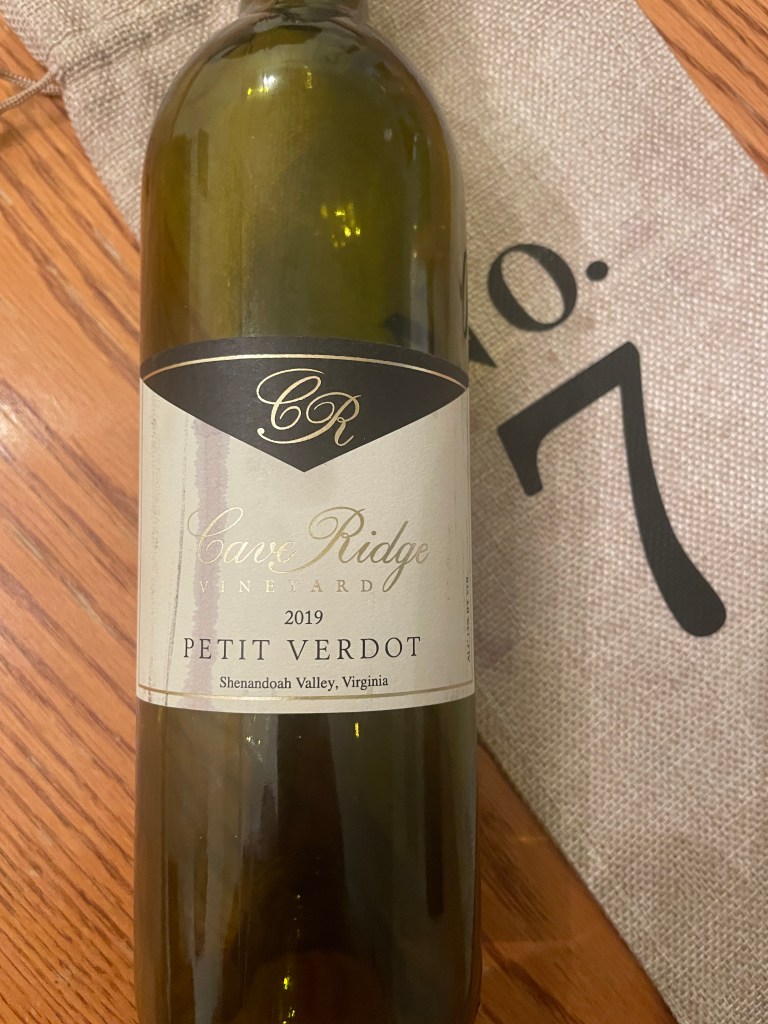
  7. 2019 Cave Ridge Vineyard
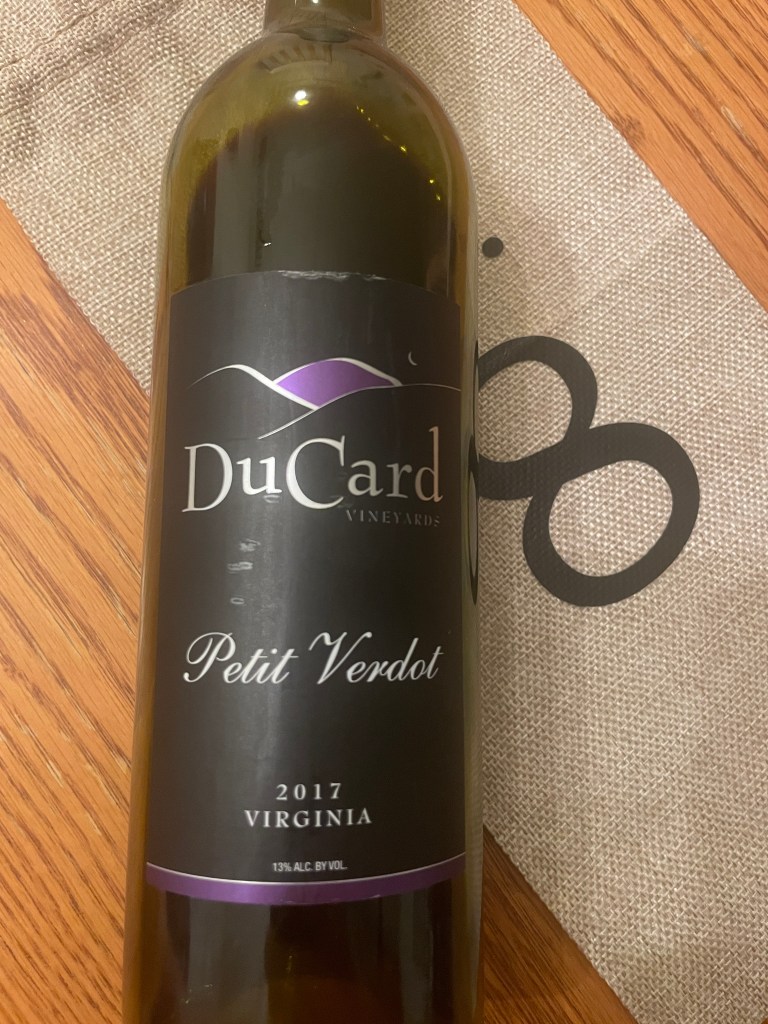
  8. 2017 DuCard Vineyards
  9. 2014 Linden Vineyards

We also kicked things off with a pet-nat Petit Verdot from Early Mountain Vineyard.

Flight #1:

  • Bottle #1: 2019 Wisdom Oak (round winner)
  • Bottle #2: 2017 Glen Manor
  • Bottle #3: 2017 Arterra Wines

Bottle #1 / 2019 Wisdom Oak. This was the fruitiest wine of the flight (and turned out, of the event). Very nice aroma which reminded us of “sweet cherries and brandy”; at least one person mentioned they found some coconut as well. Notes of stewed strawberry, plumb, and maybe some vanilla on the palate, followed by some barrel notes.

Bottle #2 / 2017 Glen Manor. Soft, aromatic nose, with notes of barnyard and black cherry. Someone mentioned ‘forest floor’ as well. Black plumb or more general ‘dark fruit’ on the palate. A few detected a ‘hot note’ of higher alcohol (which turned out to be true; at 14.7% it was the highest-alcohol wine of the day).

Bottle #3 / 2017 Arterra Wines. Rustic nose. Tart cherry on the palate. Notes of leather. Someone mentioned ‘meaty’ notes, which I would agree with. It was pretty easy to tell this was a natural ferment, since everything just seemed ‘different’. In retrospect I probably should have opened it up much earlier, since wines from Arterra need extra time to open up.

Votes: When it came time to pick a favorite, this was probably the first time I’ve had 100% of my attendees vote the exact same way, for the exact reasons. All seven of us gravitated towards Wine #1/Wisdom Oak very quickly.

That said, I wish I had more time with this round. #2/Glen Manor was just hitting its stride as I took votes, and some guests seemed conflicted if they should stick with their original vote or change it.

Arterra likewise need time to open up, since their wine isn’t designed to be ‘showy’. I had a glass the next day and it definitely smoothed out.

  • Alex: 1/2/3. Thought #1 had the best nose and best balance
  • Allison: 1/2/3.
  • Dave: 1/2/3. Liked #1 from start to finish.
  • Kathy: 1/2/3.
  • Matt: 1/2/3.
  • Stephanie: 1/2/3.
  • Vicki: 1/2/3. Liked the fruit-forward nature of the wine.

Flight #2:

  • Bottle #4: 2017 Hark Vineyards
  • Bottle #5: 2020 Southwest Mountains Vineyards (round winner)
  • Bottle #6: 2019 Chateau MerrillAnne

This was probably the most difficult round to pick a favorite as we really, really enjoyed them all. All of these wines were also very aromatic, which was unusual for Petit Verdot.

Bottle #4 / 2017 Hark Vineyards. I was immediately taken by the very plush, almost ‘juicy’ aroma. Others mentioned the nose had notes of purple flower, graphite, forest floor, or grassy. Very dark in color.

The palate had dark fruit and rougher & aggressive tannins. Someone mentioned they found a ‘metallic’ note, but didn’t mean to use that as a negative.

Bottle #5 / 2020 Southwest Mountains Vineyards. Long, juicy finish. Bright, lightly colored, “sweet” nose; it almost reminded me of a Nebbiolo. The palate was on the lighter side, with a sweet barrel note to it.

I later learned this had 20% Merlot, so the softness made a lot of sense.

Bottle #6 / 2019 Chateau MerrillAnne. Soft aromatics; maybe notes of caramel? Not a lot of fruit on the palate; someone mentioned they felt the barrel was overpowering it. My favorite descriptor was ‘cherry cordial”, which several agreed with.

Votes: We gravitated towards SWM Vineyards, but really liked all of these wines. I suspect the softness of the SWM was a huge attraction.

  • Alex: 5/6/4.
  • Allison: 5/6/4.
  • Dave: 5/6/4.
  • Kathy: 5/4/6. Voted #5 for the ‘juicy-fruit’ quality of it, but also liked the cherry/tannin combo of #4.
  • Matt: 5/4/6.
  • Stephanie: 5/6/4. Toss-up between 4 & 6, but liked #5 all the way through, from nose to finish.
  • Vicki: 5/6/4. Voted for #5 because of the cherry/vanilla qualities. Thought #4 was too acidic.

Flight #3:

  • Bottle #7: 2019 Cave Ridge Vineyard
  • Bottle #8: 2017 DuCard Vineyards
  • Bottle #9: 2014 Linden Vineyards

This was our tannic, heavier-alcohol, ‘food wine’ round. We started to heavily snack during this round and anything with fattiness greatly improved nearly all of these wines.

It really came down to a narrow finish between #8 and #9.

Bottle #7 / 2019 Cave Ridge Vineyard. Lots of different notes on this one. I found blueberry on the nose (and palate), while others said it was more toasty, maybe toffee.

Descriptors on the palate varied greatly. Some mentioned raspberry/cherry, others mentioned dark chocolate; even bitter chocolate (I suspect those were the tannins talking to me).

Bottle #8 / 2017 DuCard Vineyards: Caramel nose. Palate descriptors ranged from dark chocolate to caramel to sweet fruit. The fruit was most prominent on the finish.

Bottle #9 / 2014 Linden Vineyards: Stewed red berries and tart on the palate, with a sweet cherry finish. The nose wasn’t well received; the higher alcohol was a turn-off (it was actually slightly less alcoholic than other bottles but didn’t wear that alcohol as well).

Many mentioned they wished the nose was as good as the palate, although the nose seemed to lighten up the longer the tasting went on. That helped greatly, which swayed some votes from #8 towards #9. This was actually 88% PV, with 8% Cab Sauv and 4% Carmenere’.

Votes:

  • Alex: 8/7/9. The nose of #8 was well integrated, while #7 and #9 had more alcohol.
  • Allison: 8/7/9
  • Dave: 9/8/7. Thought #9 had a little more complexity than the others.
  • Kathy: 9/8/7
  • Matt: 9/8/7. Thought #9 opened up enough to put it ahead.
  • Stephanie: 9/8/7. Also liked #9 more as it opened up.
  • Vicki: 8/7/9. Also agreed with Alex; thought #8 was well integrated.

Finalist Round:

  • Bottle #1: 2019 Wisdom Oak Winery (Event Winner)
  • Bottle #5: 2020 Southwest Mountains Vineyards
  • Bottle #9: 2014 Linden Vineyards (Runner Up)

I didn’t take extensive tasting notes this round. Neither did I bother re-bagging them. These wines were so memorable, a new bag wouldn’t have done anything.

All of us were really struck by the fruitiness of wine #1 (Wisdom Oak). That fruitiness really stood out, especially compared to some of these tannic heavy-hitters.

We loved it so much that when I did the vote tally, 6 out of 7 participants decreed the 2019 Wisdom Oak Petit Verdot was the best wine of the event. It was just really well balanced, with a strong fruit quality that really put it over the top.

I contacted owner/winemaker Jason Lavallee for details on this wine (PS – except for some library bottles, it’s sold out) and he explained his opinion where those fruit notes came from.

According to Jason, the particular barrels he used were actually designed for white wine, specifically for those whites to showcase more fruit qualities. Surprisingly this only got a Silver at the Monticello Cup; maybe it just wasn’t ready yet? Well, it’s ready now!

Votes:

  • Alex: 1/5/9
  • Allison: 1/5/9
  • Dave: 1/5/9
  • Kathy: 1/9/5
  • Matt: 9/5/1
  • Stephanie: 1/9/5
  • Vicki: 1/5/9

Lessons Learned:

This was a tough one to judge. I don’t really have any ‘lessons learned’, but do have a few observations. I just wish I knew how to best enact them.

First, many of these wines presented very differently than other bottles of the SAME VINTAGE did even a few months back. I can’t explain why they tasted so differently.

Second, nearly all these bottles could have greatly benefited from decanting. I thought about that in advance and opened them up around noon (we started tasting around 3 PM), even sampling them to ensure more air entered the bottle (you know…quality control…). But that limited amount of air wasn’t nearly enough. I think we would have enjoyed them much more if I had given them a full decanting.

Third, I understand what people say about “Petit Verdot overload”. By that third round my mouth was drying out. I also suspect that it wasn’t a coincidence that the 2 of the 3 top bottles had 12-20% of another grape blended in to smooth the tannic nature of PV down.

I’m undecided if serving food with these wines would have helped. Granted, that would have been unfair since a wine should be judged on its own, not on the quality of the pairing. But this entire event really did cry out for more food. Something to keep in mind in the future.

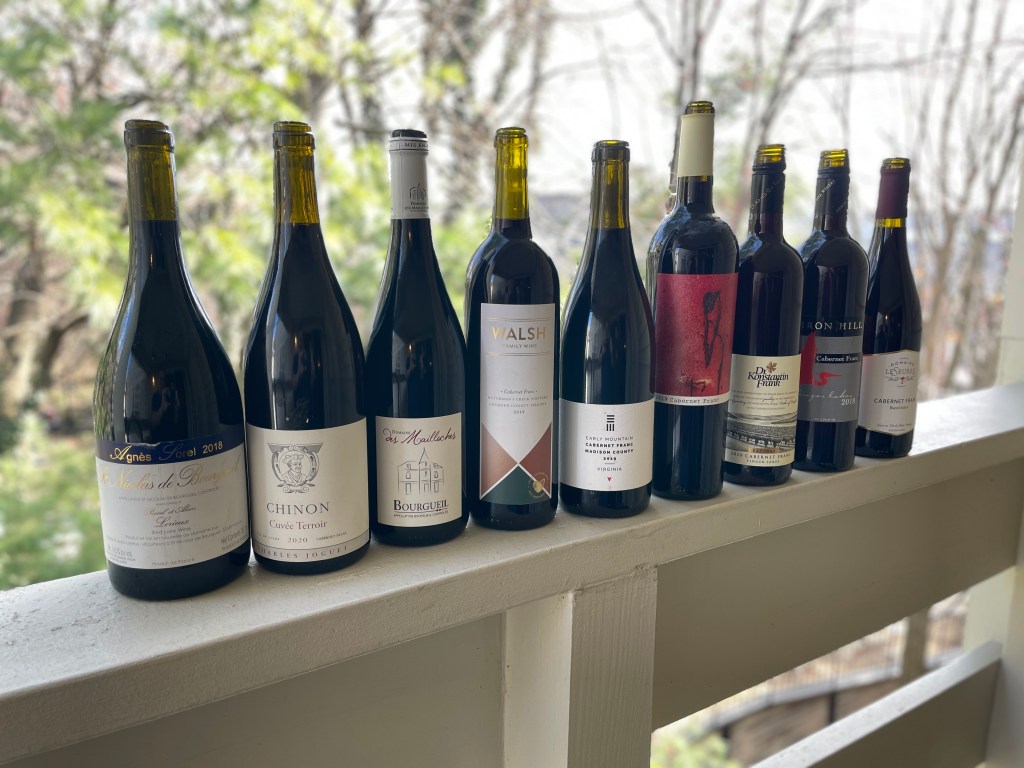
2024 Virginia-only Cabernet Franc Showdown

You might say that Cabernet Franc is a grape that ‘gets around’.

First off, it’s the most planted wine grape in Virginia. Just over 700 acres of Cabernet Franc is grown in the state – much more than runner-up Chardonnay and leaps and bounds more acreage than #3 Petit Verdot.

Second, Cabernet Franc is one of the parents Cabernet Sauvignon. Back in the 17h century, Cabernet Franc and Sauvignon Blanc got feisty in a French vineyard and produced an offspring which took parts of both parents’ names. So even if you aren’t in love with Cabernet Franc, thank it for being a great parent.

Cabernet Franc possesses a lot of great qualities yet shows them in moderation, including good but not high tannin and acidity, medium body and alcohol, and a floral aroma. This makes it a versatile wine able to be paired with a variety of food options or enjoyed on its own.

It’s also a hardy grape in the vineyard, able to ripen in cooler weather, offers good disease resistance, and doesn’t need a long growing season. Virginia winemakers (and wine growers) constantly sing its praise.

I did a “Virginia Cabernet Francs vs The World” comparison last year with wines from Virginia, France, and the Finger Lakes, but this time around we did a round of 100% Virginia wines. Most were of the 2021 vintage but we had some variation in vintage year.

Tasting & Scoring Methodology

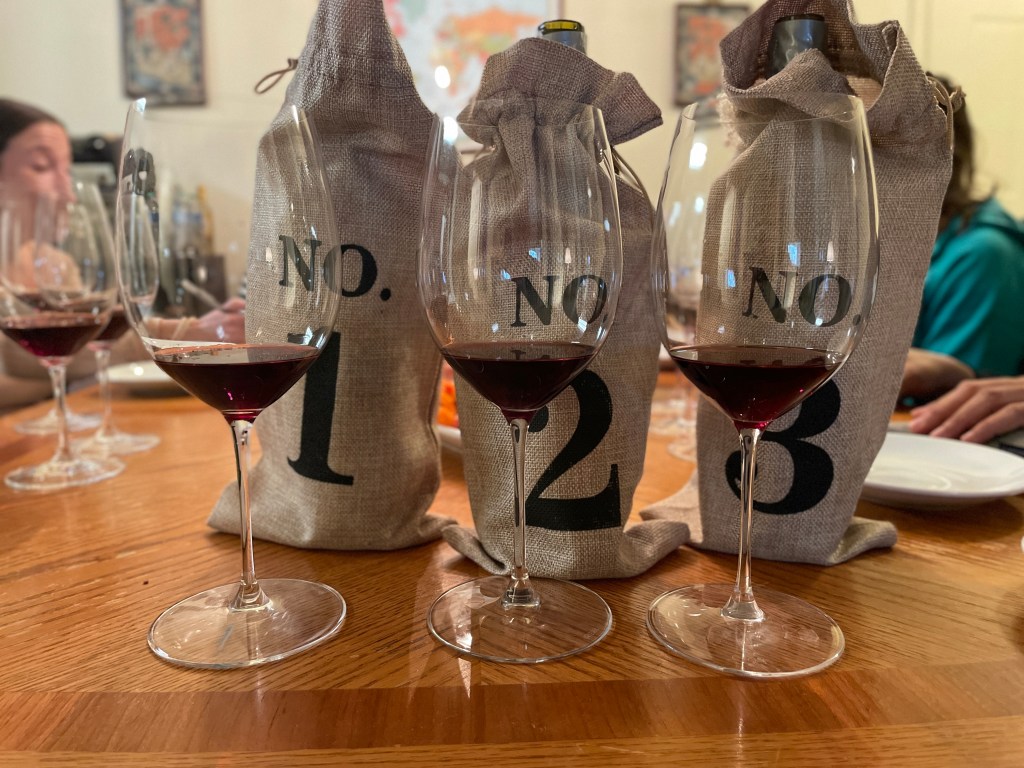
A group of friends & I blind tasted 9 wines in 3 flights. All the flights were bagged blind.

We didn’t have a sophisticated scoring system. The goal was to pick a ‘favorite’ in every flight, as opposed to rating them and determining which one we thought was the ‘best’.

The favorite of every flight went to a ‘finalist’ round. I took the extra step of hiding the ‘finalists’ with a second bag, so any biases of an earlier tasting hopefully didn’t carry over to the final round.

After finishing the final round, we unveiled all the wines and crowned the overall favorite of the day.

This group was composed of friends who are definitely Virginia wine aficionados, so all were very familiar with Cabernet Franc. Only one had industry experience, but the others were more than familiar with blind wine tastings.

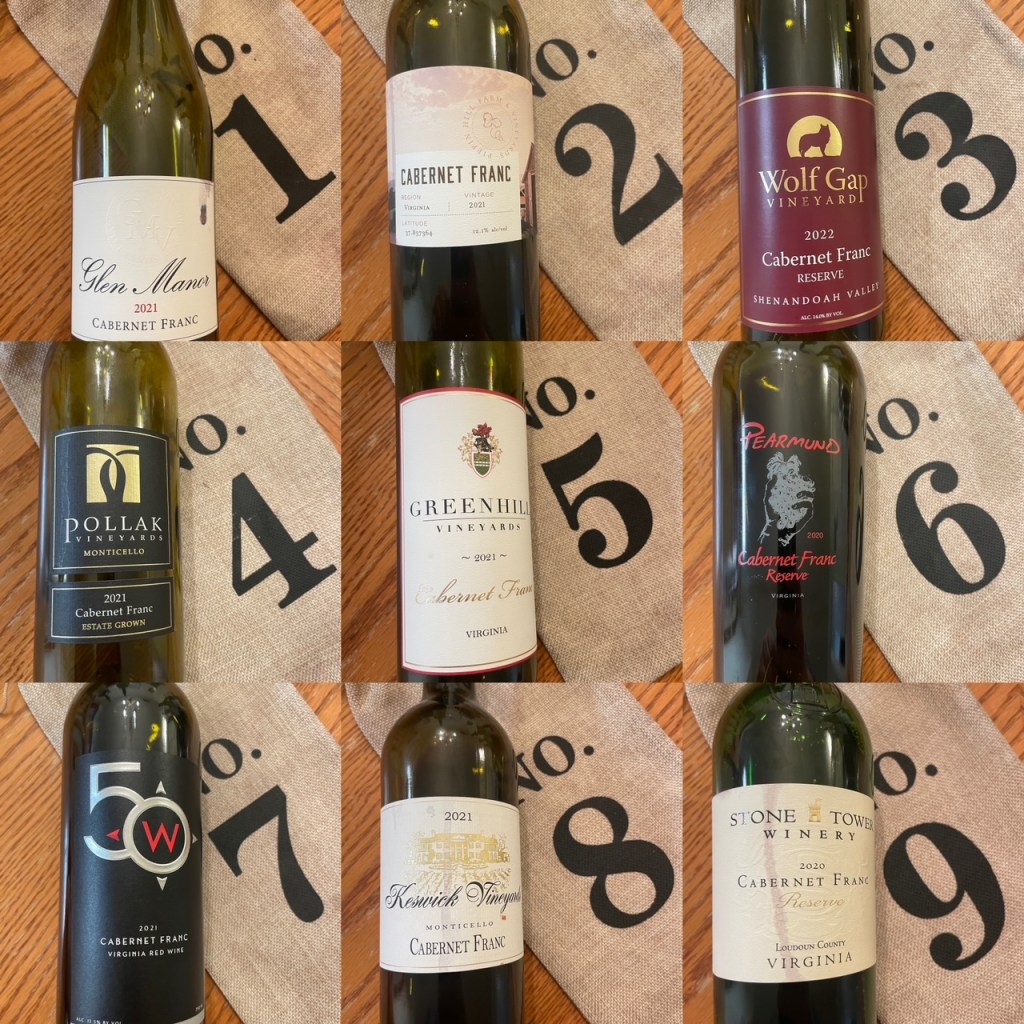
The contenders:

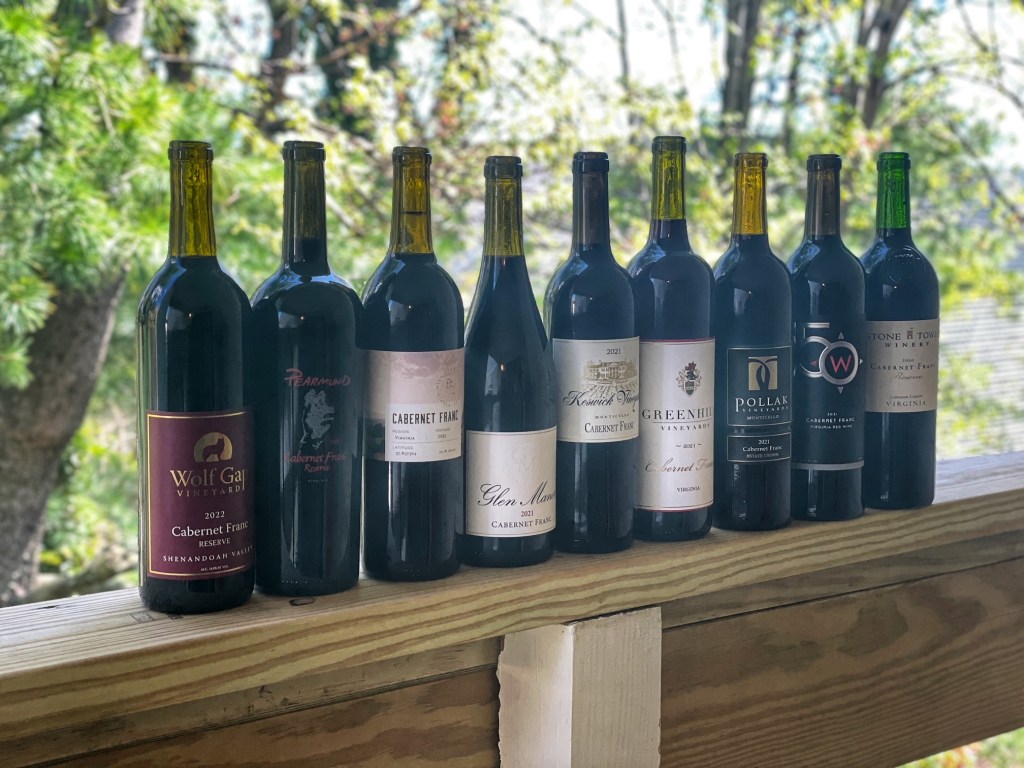
  1. 2021 Glen Manor
  2. 2021 Pippin Hill
  3. 2022 Wolf Gap
  4. 2021 Pollak
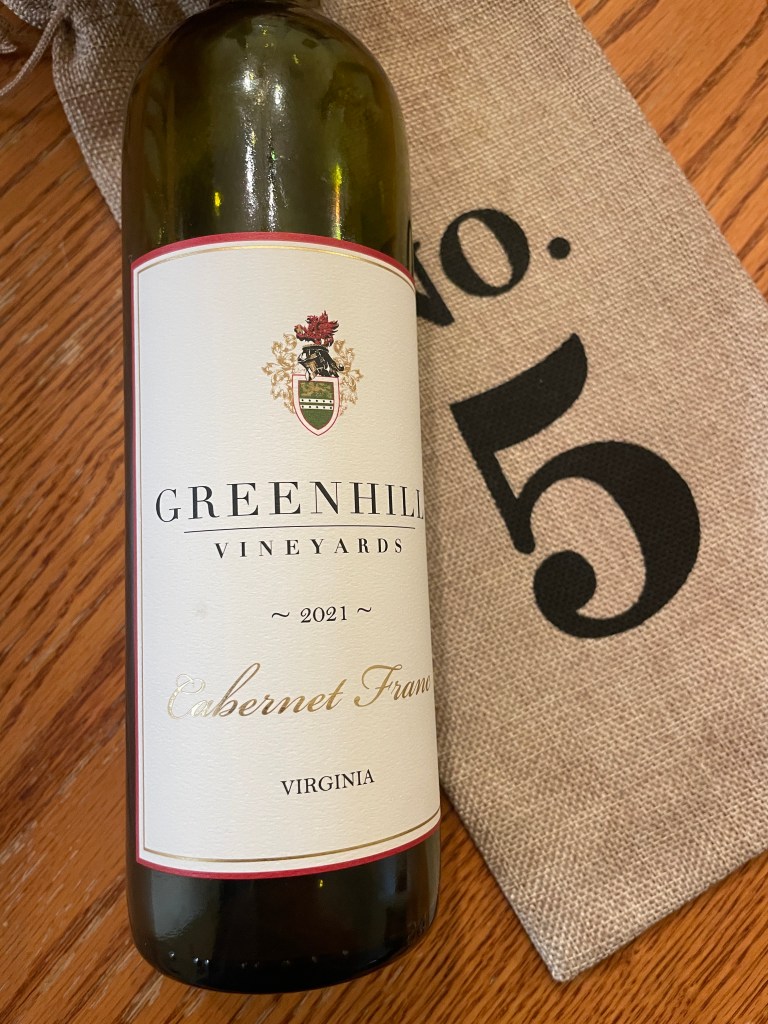
  5. 2021 Greenhill
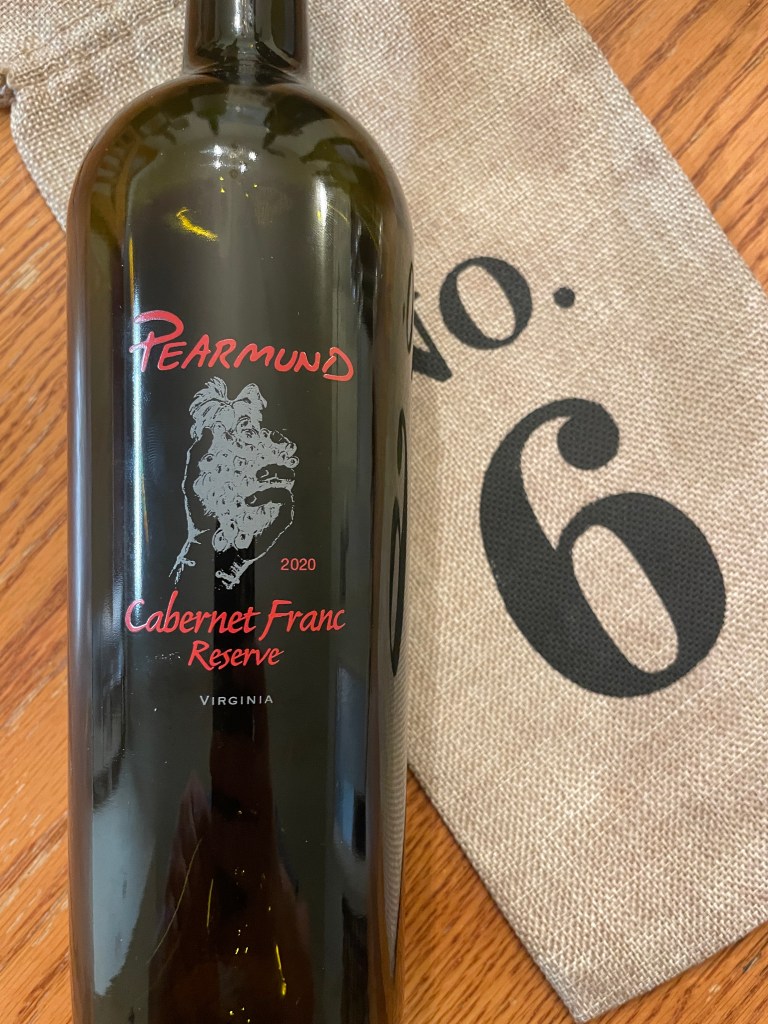
  6. 2020 Pearmund
  7. 2021 50 West
  8. 2021 Keswick
  9. 2020 Stone Tower

Flight #1

  • Bottle #1: 2021 Glen Manor (round winner)
  • Bottle #2: 2021 Pippin Hill
  • Bottle #3: 2022 Wolf Gap

We were immediately struck by how different all of these wines were. #1 leaned into elegance while #2 was fare more traditional. #3 was probably too young for this lineup.

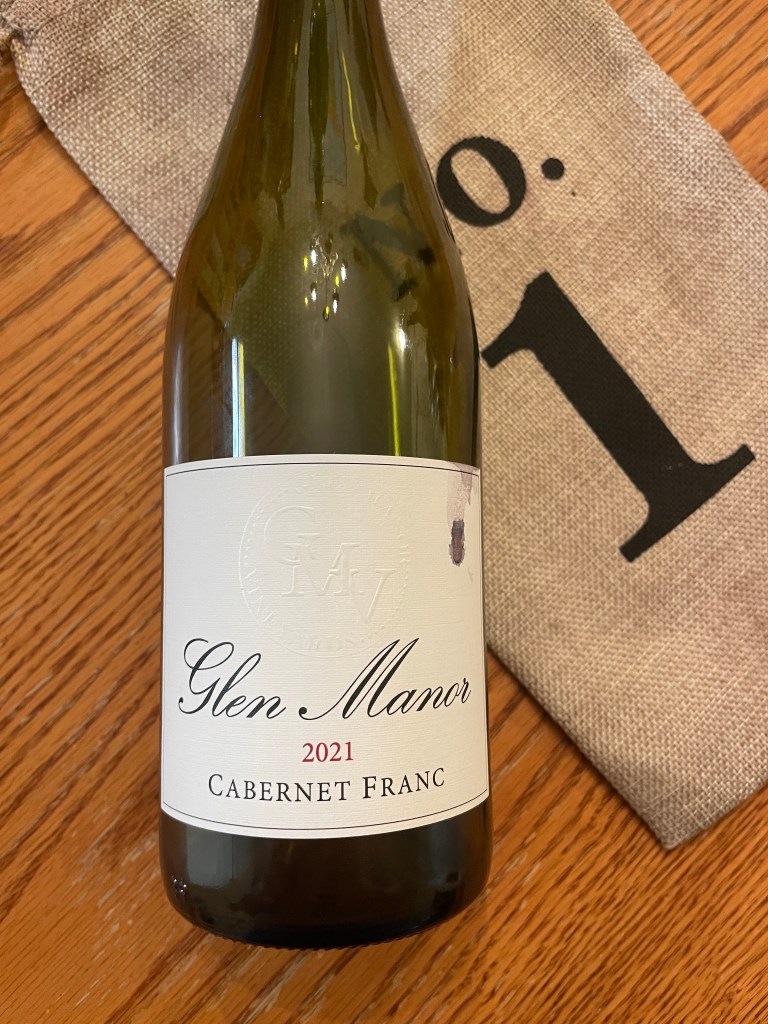
Bottle #1 / 2021 Glen Manor. Earthy nose, but also light and clean. Guests mentioned notes of spice and coco on the palate. It was velvety and tannic; firm tannins were mentioned. Astringent but in a good way.

Bottle #2 / 2021 Pippin Hill. Green pepper on the palate, white pepper on the nose. There initially was a mustiness to it but that went away as the wine opened up. Someone mentioned notes of tart cherry, and the term ‘mocha’ got some traction. Several used descriptors of balanced and smooth. Velvety; maybe a little oaky. One person mentioned too peppery

Bottle #3 / 2022 Wolf Gap. This was our ‘easy drinking wine’. Smooth, but the nose and palate weren’t aligned. Some mentioned notes red pepper and maybe vanilla on the finish. Others mentioned white pepper, or even evergreen and pine on the nose. Soft tannins.

Votes:

  • Ann 1/3/2. Liked the astringency and body of #1, but thought #3 was easy drinking
  • Ashley 2/1/3. Liked the complexity and spice of #2, but also enjoyed the balance of #1
  • Brandon: 1/2/3
  • Frank: Tie between #1 and #2, with #3 a more distant third. 
  • Emily: 2/1/3
  • Isabel: 1/2/3. Thought #1 was spicy but bold, with some nice black pepper
  • Martha: 2/1/3
  • Matt: 1/2/3. I thought #1 was an easy favorite here, for its overall elegance.

Flight #2

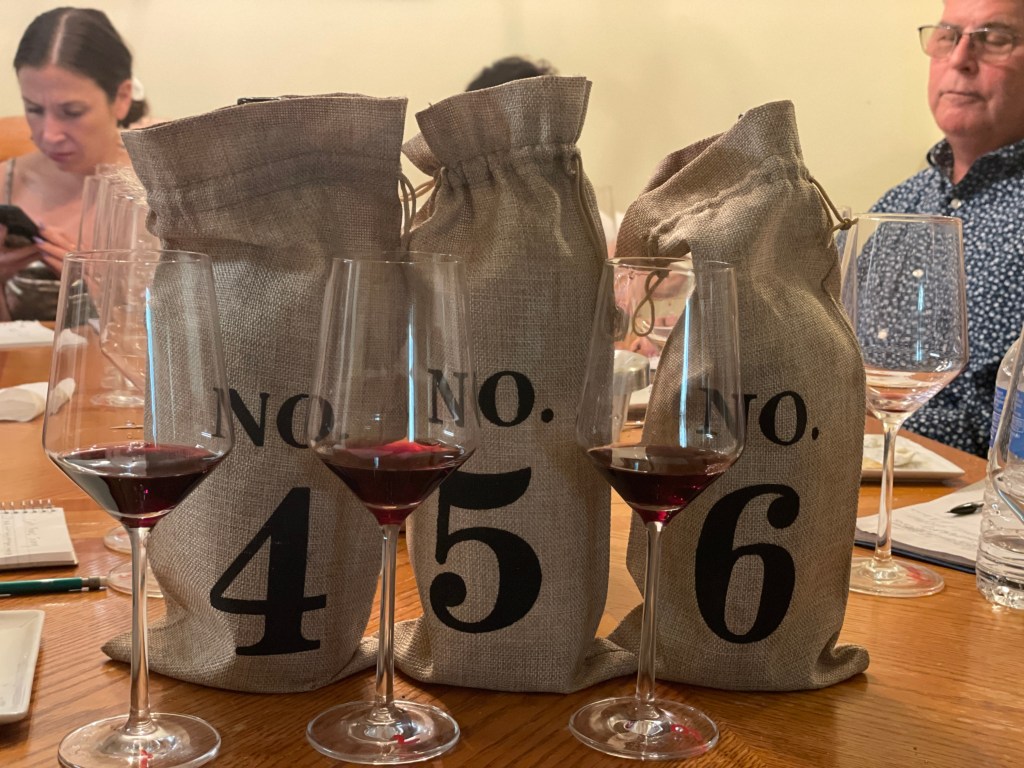
  • Bottle #4: 2021 Pollak (wild card advance to next round)
  • Bottle #5: 2021 Greenhill (round winner)
  • Bottle #6: 2020 Pearmund

This round was the complete opposite of the previous one. If the 1st round wines were strangers, this round was like seeing triplets, or at least close brothers. This round reminded me more of the Loire than Virginia.

This was also our favorite round of the day (outside of the winners round). While #6 / Pearmund lagged behind in votes, many felt it was easily was the equal to the best of the previous or subsequent flights.

Bottle #4 / 2021 Pollak. Nice complexity; good fruit qualities. Notes such as vanilla, liquorish, or barnyard were bandied out. Others mentioned notes of coco and elderberry on the palate. Acidic and dry.

Bottle #5 / 2021 Greenhill. Complex and rich were the key descriptors. Very light in color but complex on the palate. If Wine #4 (Pollak) was fruit forward, this leaned into the dark fruit. This also had a more ‘traditional’ coco nose as Cab Francs go. Notes of sweet cherry or ripe red cherry were mentioned.

Bottle #6 / 2020 Pearmund. Light color. More vegetal nose, but definitely not in a bad way. Tart cherry was mentioned. Notes of cranberry and dry fruit, plus some tartness.

Votes:

  • Ann: 5/4/6. Seemed torn between #4 and #5, as both were complex, lively, and balanced
  • Ashley: 5/4/6. Liked the dark fruit of #5
  • Brandon: 5/4/6.Thought “#5 had everything”, but especially liked its complexity
  • Frank: 5/4/6. Thought #4 was complex and balanced
  • Emily: 5/6/4. “Liked everything going on” for #5, but appreciated the fruit on #6
  • Isabel: 5/4/6. Focused on the ripe cherry notes of #5; also mentioned its smoothness
  • Martha: 5/4/6. Liked the nose on #5
  • Matt: 4/5/6

Flight #3

  • Bottle #7: 2021 50 West
  • Bottle #8: 2021 Keswick (round winner)
  • Bottle #9: 2020 Stone Tower

If the previous round were near-triplets, these were brothers. It was also our big & bold group.

Bottle #7 / 2021 50 West. This wine had higher levels of sugar and alcohol than we expected, yet was also on the lighter and peppery side. Sesame nose, notes of tart cherry were mentioned. Mildest nose of the flight. Dark fruit on the palate… maybe plumb? Someone mentioned it was ‘vibrant’.

Bottle #8 / 2021 Keswick. Someone mentioned a ‘beeswax nose’. Regardless, that nose was divisive, with some loving it but others not so much.

But after it opened up, people’s opinions changed. We found it to be fruit forward, with rich raspberry notes. Smooth and lush was also mentioned. Of all the wines we tried, this one needed the most time to reach its full potential. I suspect several people changed their votes once it did.

Bottle #9 / 2020 Stone Tower. Probably the most tannic wine of the entire day. One person mentioned a barnyard-y nose, while another said it had a liquorish, earthy nose. Musky, hints of vanilla. This was a classic, more fruit-forward Virginia Cab Franc. My favorite descriptor is this was a “big stud” of a wine.

Votes:

  • Ann: 8/7/9. Thought #8 was bold and has musty nose, but that softened out. Vibrant.
  • Ashley: 9/7/8. Though #9 had a liquorish nose
  • Brandon: 8/7/9. Thought #8 was barnyard-y but that mellowed out. It was also the earthiest of the bunch (I wonder if he was referring to #9 and I got this wrong?)
  • Emily: 9/8/7. Thought #9 had a nice warming sensation; cozy and toasty. Also was fruit forward with a peppery aroma.
  • Frank: 8/7/9 complex. #8 had a bell pepper note, and was lush and easy drinking
  • Isabel: #8 and #9 were tied, then #7. Felt #8 had earthy and berry notes, while #9 had a tobacco character
  • Martha: 8/9/7. Liked the nose and finish of #8, felt it was well balanced
  • Matt: 8/7/9. The nose really stood out on #8

Finalist Round

  • Bottle #1 / 2021 Greenhill (Bottle #4 in the 2nd flight) Event Winner
  • Bottle #2 / 2021 Glen Manor (Bottle #1 in the 1st flight) Runner Up
  • Bottle #3 / 2021 Keswick (Bottle #8 in the 3rd flight)
  • Bottle #4 / 2021 Pollak (Bottle #5 in the 2nd flight) Third Place

Normally I only pick a single favorite of every flight, but in this case Flight #2 was so universally loved, I picked a ‘wildcard’ to advance to the winning round (turned out to be our 2021 Pollak).

I re-bagged the wines so help prevent any biases from our previous rounds influence this round (although mostly we still guessed which was which). No surprise at who made finalist round; all of these were elegant, complex wines from exceptional producers.

I didn’t take many notes on this time. But after some deliberation we went with the 2021 Greenhill Vineyard Cabernet Franc as the favorite of the day. It was a great example how Cabernet Franc can be light on the palate yet be rich and complex.

I thought the runner-up 2021 Glen Manor Cabernet Franc leaned into that elegance even more, even if it didn’t have the same layer of richness. While GMV was my personal favorite of the day, but I wouldn’t argue with either bottle.

Votes:

  • Ann: 2/4/3/1. Went with Glen Manor because of its balance and spice note
  • Ashley: 2/1/4/3. Thought the Glen Manor had body but was also clean and complex
  • Brandon: 1/4/3/2
  • Emily: 1/4/3/2. Loved Greenhill because it was cozy and balanced
  • Frank: 1/2/4/3. Thought Greenhill had the lightest style
  • Isabel: 1/2/4/3
  • Martha: 1/2/4/3. Loved the nose and palate of the Greenhill; soft
  • Matt: 2/4/3/1. I gravitated towards Glen Manor because of its richness

Lessons Learned:

First off, all of these wines had ‘Virginia’ written all over them. That’s because Cab Franc is very terroir-influenced, plus it’s so widely grown that different winemakers have different signatures. You can have 9 wines and have 9 very different flavor profiles, yet all of them are recognizably ‘Virginia’ in style.

That said, very broadly this group tended to be divided between more traditional ‘Virginia style’ wines that leaned into the earthiness and pepper notes, and a set of lighter, more refined ‘Loire’ style wines. In this case, the Loire-style wines won the day.

I think the 2020 Stone Tower and 2021 Glen Manor were great examples of this spectrum. The former was a ‘big tannic brute’. The later was more of a ballerina. The 2021 Greenhill and 2021 Pollak were likewise examples of these more refined style. I’ve seen a trend which focuses on the former, but I’m hopeful we’ll keep seeing the later.

One last (late) edit. I also think this event also showcased why certain wineries have the exceptional reputation that they enjoy.

Virginia makes outstanding Cabernet Francs, so it’s hard to go wrong in this category. This particular lineup had a bunch of stars. Even so, going into this event certain names – namely Glen Manor, Keswick, and Pollak – kept being mentioned as likely winners.

It was no surprise that each of those made it into the final round. Despite that, the ‘brown bag’ really helps strip away biases.

Yet it the winner didn’t surprise me at all. Greenhill Vineyards’ Ben Comstock has been making a lot of great wine, racking up a bunch of Double Golds or “Best in Class” at various events. Having the best Cabernet Franc at this event was no surprise at all.

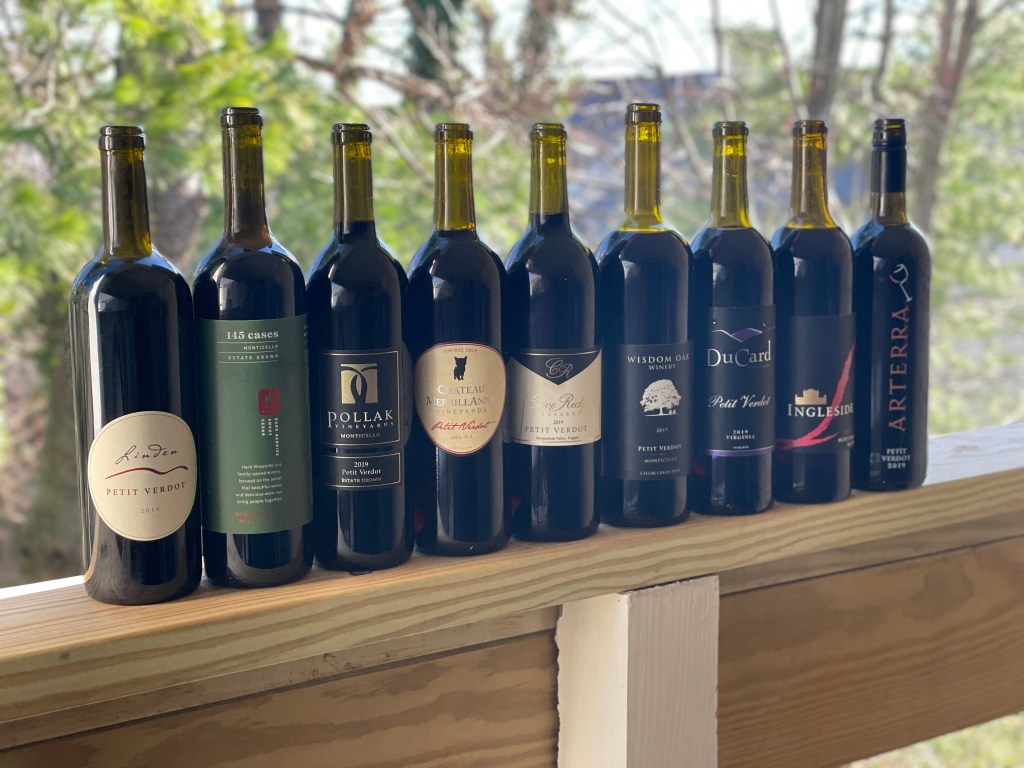
Virginia Petit Verdot Blind Tasting Showdown: The 2019 Vintage

This event was something of a ‘first’. I’ve made steady progress in writing comparative tastings for most of Virginia’s major varietals, and only occasionally felt the need to revisit a grape. Yet this didn’t stop me from doing my 3rd comparison of Petit Verdot; the most I’ve ever done with a single variety.

For those not familiar with Petit Verdot, the ‘little green’ (the English translation of ‘petit verdot’) is one of Virginia’s signature grapes. A high-acid variety, PV can retain that acidity despite Virginia’s hot summers. It’s also fairly weather resistant, making it popular for vineyard managers.

PV also provides color and tannin to blends. In many ways PV has become a blending replacement for Cab Sauv, which is a difficult grape for Virginia to grow. That the two most recent Virginia Governor’s Cup winning wines were PV-heavy isn’t a coincidence.

These traits have allowed PV to become the 3rd most planted grape in the state, widely used both as a stand-alone varietal and a blending partner. PV’s main drawback is its berries are small, so there’s not a lot of tonnage (as one would expect from a grape with the name ‘petit’ in it).

My first PV comparison only used PVs from Virginia’s 2017 vintage. The second was a multi-vintage (and multi-state) PV comparison. Arterra’s 2017 and DuCard’s 2017 PVs won each of their respective events, so I decided to move on to a 2019-vintage comparison.

Most wineries would agree that 2019 was a good to excellent vintage, particularly for reds. It was a hot summer so alcohol levels were slightly on the higher side, but it also delivered on ripeness.

Just as importantly, doing a horizontal tasting of 2019 vintage wines meant the only differences came from the vineyard and winemaker, which evened the playing field.

I can’t confirm that every bottle was 100% PV but I strongly suspect they were.

Tasting & Scoring Methodology

A group of friends & I blind tasted 9 wines in 3 flights. All the flights were bagged; even I didn’t know which-was-which, as I bagged them randomly.

We didn’t have a fancy scoring system. The goal was to pick a ‘favorite’ every round, as opposed to rating them and determining the one we thought was the ‘best’.

I will say this was one of the most even playing fields I’ve ever had. We had bottles from 9 exceptional wineries from an exceptional vintage. EVERY one of these wines were good-to-excellent.

Moreover, by the end of the night there was a lot of people who insisted their favorite wine of the night didn’t make it to the ‘finalist’ round. Although my selection process forced us to choose a ‘favorite’ every round, that’s not to say the final ones were “everybody’s” favorite. More than a few excellent bottles simply got out-voted by our group of 7.

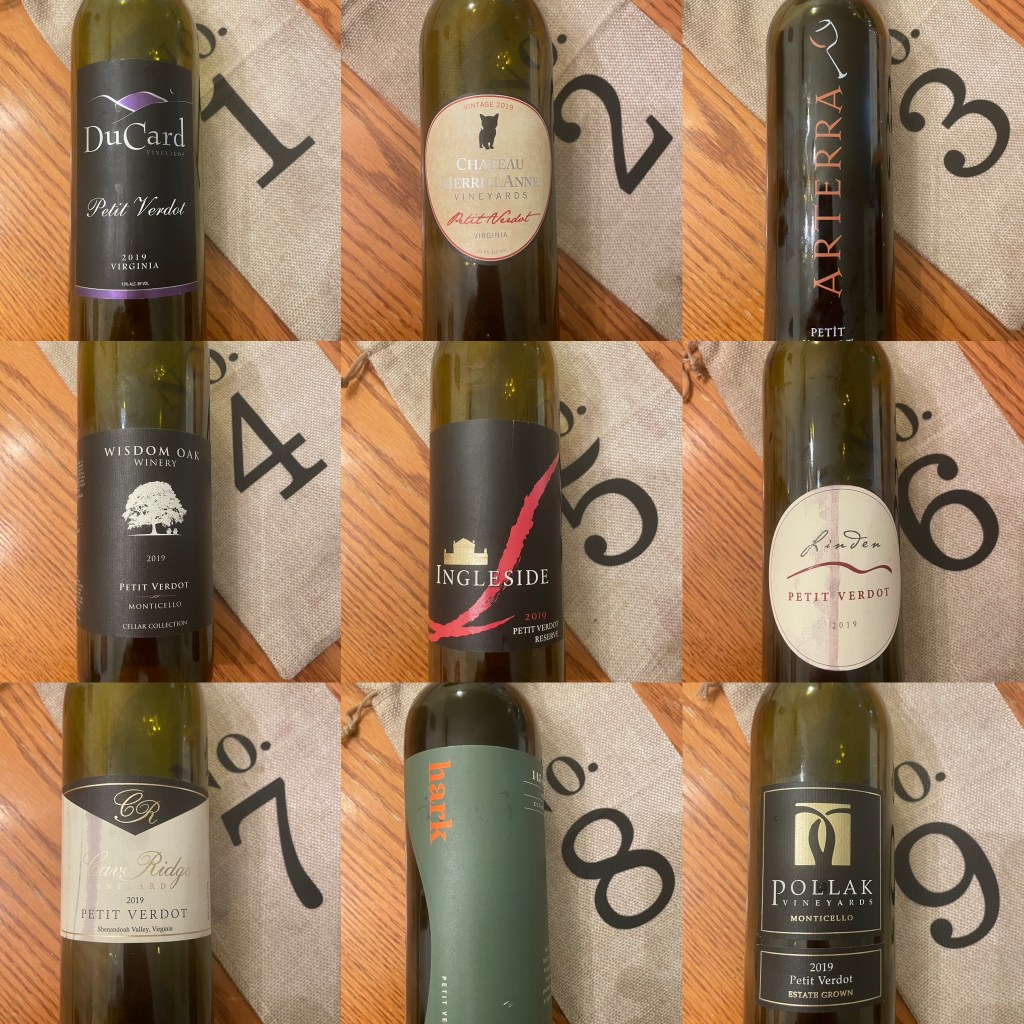
The Contenders:

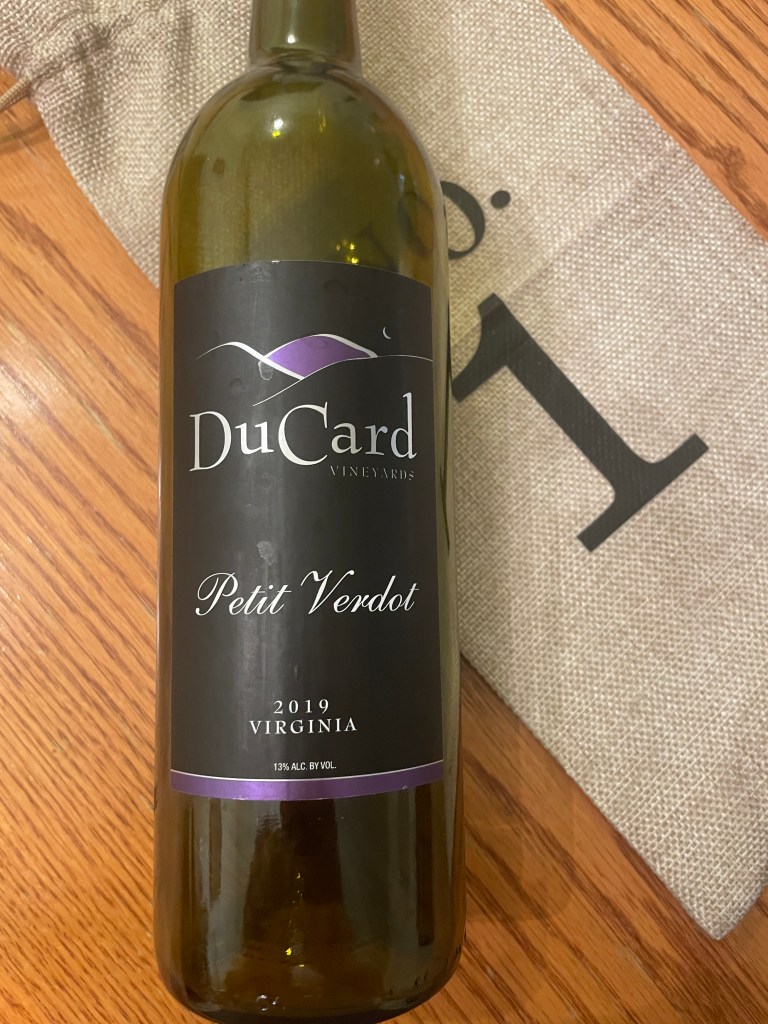
  1. DuCard Vineyards 2019 Petit Verdot (100%)
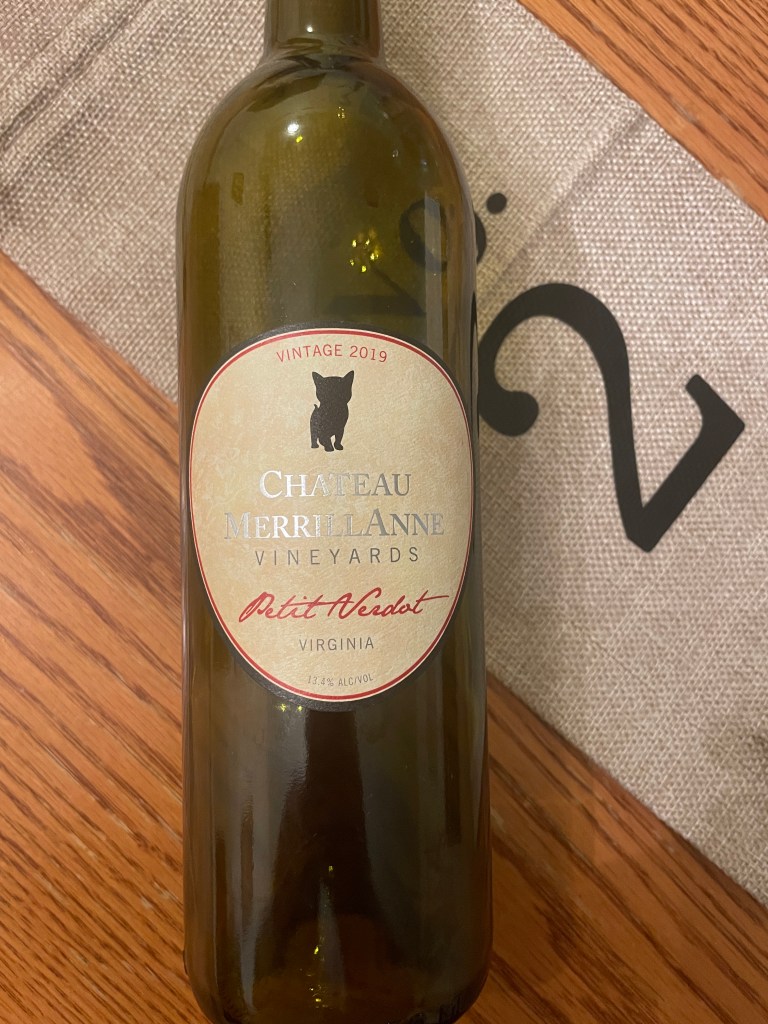
  2. Chateau MerrillAnne 2019 Petit Verdot (100%)
  3. Arterra Wine 2019 Petit Verdot (100%)
  4. Wisdom Oak Winery 2019 Petit Verdot (100%)
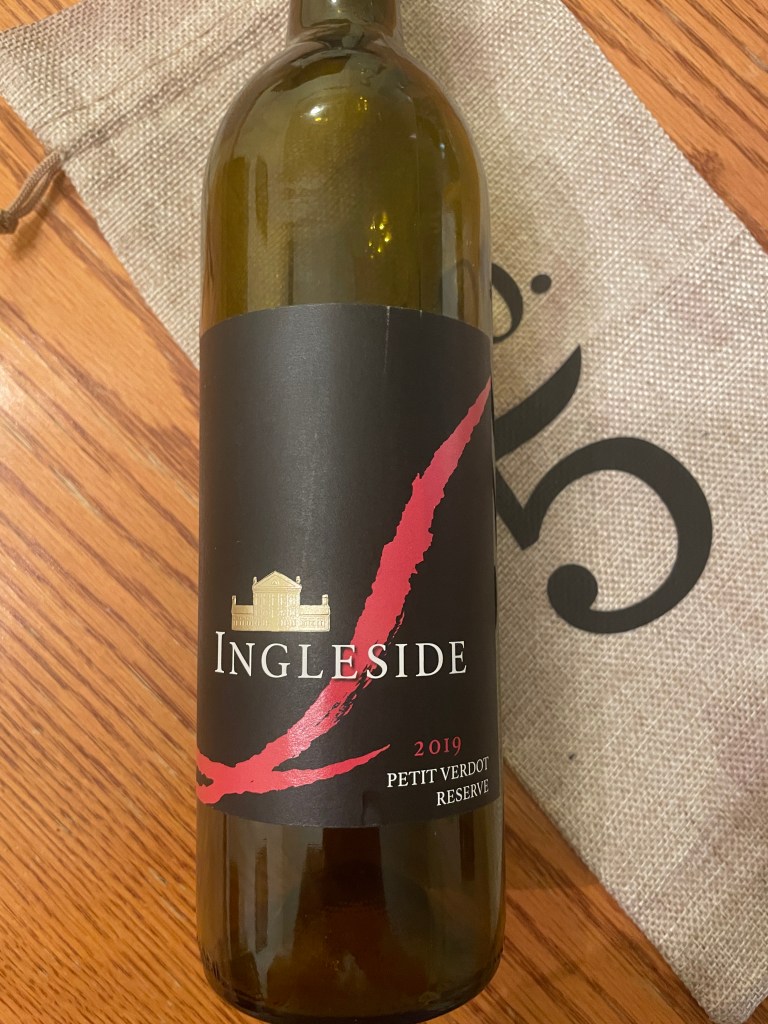
  5. Ingleside Vineyards 2019 Petit Verdot
  6. Linden Vineyards 2019 Petit Verdot (100%)
  7. Cave Ridge Vineyard 2019 Petit Verdot (100%)
  8. Hark Vineyards 2019 Petit Verdot (100%)
  9. Pollack Vineyards 2019 Petit Verdot

Round 1 / Flight #1:

  • Bottle #1: DuCard Vineyards
  • Bottle #2: Chateau MerrillAnne (Round winner)
  • Bottle #3: Arterra Wine

This arguably was my favorite round, and it demonstrated how hard it was for us to pick a ‘favorite’. I’m convinced #1/DuCard could easily have been the best of the day, but the randomness of these tastings put it against the wine that went on to win the event. Even so, I was tempted to give #1 a “Wild Card” advance.

In terms of coloration #2 was the lightest and #3 was the darkest. #1 and #2 opened up nicely as the round went on. None of them were overly expressive on the nose; the nose opened up a little but PV isn’t an overly aromatic variety.

We spent a lot of time on wine descriptors during this round, just go get people comfortable speaking their mind.

Bottle #1 DuCard Vineyards: Lots of tasting notes, if only because the group was opinionated, and this bottle was speaking to us.

On the nose I got lots of violet. On the palate the most popular descriptors were dark fruit (especially cherry or strawberry), pepper, spice notes, plus grippy tannin. Someone mentioned notes of cedar.

It was a very drinkable and balanced wine. #1 opened up nicely about halfway through and the fruit became more pronounced, which made it REALLY hard for me to not pick it as my round favorite.

Bottle #2 Chateau MerrillAnne: On the nose people mentioned notes of tobacco, blackberry or black fruit in general. On the palate, red fruit.

I also heard someone say it had a “Dr. Pepper” note to it. Another said there was some heat on the nose, plus maybe notes of mocha. Overall, it was a balanced, complex wine.

Bottle #3 Arterra Wine: We didn’t realize it at the time, but at 16.5% this was the highest alcohol wine of the day. That percentage gave #1 the perception of sweetness, despite zero RS. This would have rocked with a spicy dish though.

The color was especially dark. Of the trio, we felt it had the least amount of oak treatment. The group mentioned notes of black cherry, chocolate, or blueberry, plus tartness on the back end. My favorite descriptor was it was smokey, or even had a ‘old library’ note.

This soon became a contest between #1 and #2 for round favorite, and most voters only narrowly went with #2. The general consensus (but with two exceptions) is while people liked #3, the high alcohol made it a ‘one glass’ wine, while #1 and #2 were wines you could more easily enjoy.

Votes:

  • Alex: 2/1/3. Mentioned the #1 (DuCard) reminded him of a Russian River Valley pinot.
  • Ashley: 2/1/3.
  • Brandon: 2/1/3. Felt #2 (Chateau MerrillAnne) was the most complex.
  • Emily: 3/1/2. Felt #3 (Arterra) was ‘cozy’ and stood out, and especially liked the aroma.
  • Frank: 2/1/3. Felt #2 was the most complex, reminded him of a cigar box.
  • Isabel: 3/2/1
  • Matt: 2/1/3. Was torn between the complexity of #2 or fruit-forward notes of #1, which once it opened up was very lovely.

Round 1 / Flight #2:

  • Bottle #4: Wisdom Oak Winery (Round winner)
  • Bottle #5: Ingleside Vineyards
  • Bottle #6: Linden Vineyards

What I liked about this round is how different these bottles were from the previous one. It was a real demonstration of the diversity of Petit Verdot. Even the coloration was different.

#4 and #5 quickly became the favorites. Once it opened up we liked #6 more, but it was in a tough group.

This round also showed me how difficult it would be to do a ‘wild card’ advancement, because guests kept talking about how much they loved #5 (we had the same issue with #9). I couldn’t advance “all” the great runner-ups, so I went with what we had.

Bottle #4 Wisdom Oak Winery: Most fruit-forward and acidic of the group. I found notes of tobacco and earthy, backed by some bright red fruit.

Other notes included “jammy chocolate” (one of my favorite descriptors of the day), black fruit and cherry (with hints of raspberry), hint of spice on the palate. “Smokey cedar”, with grippy tannin.

Bottle #5 Ingleside Vineyards: Lots of notes here!

I thought the earthy nose really stood out. Bright; notes of red fruit, although it tended to have more tertiary flavors. Someone mentioned dark chocolate, chewy, ‘plush’. Another said notes of bell pepper, cardamom, even cinnamon stick.

Bottle #6 Linden Vineyards: Violet or tobacco on the nose. Notes of dark chocolate, mushroom, forest floor. Another said they found a plum note.

It was also soft and the least acidic of the group (perhaps because it was made in steel, not oak).

Votes:

  • Alex: 5/4/6. Liked the tobacco and tannin profile of #5 (Ingleside)
  • Ashley: 5/4/6. Liked the long finish of #5, beautiful complexity on the nose and palate. Noted the nose and palate didn’t line up but that was a good thing.
  • Brandon: 4/5/6. Liked the fruitiness an tartness
  • Emily: 4/5/6. Thought #5 was ‘sultry’ but chose #4 (Wisdom Oak) for the fruit profile.
  • Frank: 4/5/6. Liked the layers of flavors on #4.
  • Isabel: 4/5/6
  • Matt: 4/5/6; liked the fruit on this one.

Round 1 / Flight #3:

  • Bottle #7: Cave Ridge Vineyards (Round winner)
  • Bottle #8: Hark Vineyards
  • Bottle #9: Pollack Vineyards

This was our ‘classic’ round, at least on the nose. As our palates got tired we had fewer notes, but that doesn’t mean we enjoyed the wines less.

Bottle #7 Cave Ridge Vineyards: We felt it was one of the higher alcohol wines of the grouping (unfortunately I couldn’t find the alcohol level on the bottle).

The nose was savory. Not an especially fruit-forward wine (except maybe cooked fruit); it was more about the body. Someone mentioned it has a ‘meaty’ note on the nose. Descriptors of musty and savory kept being thrown out. Another said it had a chili note.

Bottle #8 Hark Vineyards: For several participants, “vegetal’ was the key descriptor on the palate. Maybe notes of asparagus? Someone mentioned they found a pine tree/evergreen note. The vegetal characteristics diminished the next day, when I finished it up.

Another participant found notes of blueberry on the nose, maybe licorice.

Bottle #9 Pollack Vineyards: Alcohol on the nose but an overall complex wine. Notes of red cherry or dark chocolate were mentioned. Smooth; balanced.

Votes:

  • Alex: 9/7/8. Thought #9 (Pollack) was smooth and drinkable
  • Ashley: 7/9/8. 7 (Cave Ridge) and 9 were almost tied, but thought #7 had more body
  • Brandon: 7/9/8. Thought it was balanced and liked the funky notes to it.
  • Emily: 7/9/8. Thought #7 was ‘very Virginia’
  • Frank: 9/8/7. Favored the red fruit and thought it was less oaky.
  • Isabel: 9/7/8. Thought #7 was very drinkable and had more body.
  • Matt: 7/9/8. Was really torn between #7 and #9.

Finalist Round:

  • Bottle #2: Chateau MerrillAnne (Event Winner)
  • Bottle #4: Wisdom Oak Winery (Runner Up)
  • Bottle #7: Cave Ridge

We took a food break after the first 3 rounds before moving to the ‘finalist’. I didn’t do a round-robin of tasting notes. People spent some time with this trio then went to judging.

As we had so many great wines that could have advanced, I took the extra step of asking people what their favorite wine of the entire event was. That was enlightening; it showed how many of people’s personal favorites didn’t make it to the last round.

In the end Chateau MerrillAnne’s 2019 Petit Verdot was the favorite of the day. I reached out to them and learned this bottle was 100% PV, saw 16 months in oak, 33% of which was new French oak w/ medium+ char. Made by Michael Shaps using fruit from Honah Lee vineyard.

Perhaps best of all – the winner is still for sale at the winery (at least as of January 2024)

I also insisted they save me a bottle for when I visit next (hopefully soon).

  • Ashley: 2/4/7. Liked the heat and complexity of #2 (MerrillAnne) but still thought #5 (Ingleside) was her favorite of the day.
  • Alex: 2/4/7. Thought #2 was the most complex and had the greatest depth of flavor. But ‘favorite’ of the day was #2 or #5.
  • Brandon: 2/4/7. Thought #2 was ‘sexy’, and thought it was his overall favorite of the day.
  • Emily: 7/4/2. Thought #1 (DuCard) and #7 (Cave Ridge) were great.
  • Frank: 2/4/7. Thought #2 had complexity and layers of flavor, but still thought #9 was the best of the day.
  • Isabel: 4/2/7. Still thought the ‘slutty’ #9 (Pollack; and yes, that was the term) was her favorite. But thought #4 (Wisdom Oak) had character.
  • Matt: 2/7/4. I still think my favorites were an almost even toss-up between #1 and #2. I hogged the DuCard towards the end of the night, when we were socializing.

Lessons Learned

I kept emphasizing that I don’t pretend that my events identify the ‘best’ wine; only the consensus favorite of a large group. On another day or with a different group, I’m certain the results would have been different.

That statement is always true but seemed especially true this time. I think my format of 3 flights of 3 followed by a ‘finalist’ round is fair but it also leaves out some excellent bottles, as not all rounds showcase equally good wines (they are bagged blind, after all). I sometimes try to even that out by advancing the ‘favorite runner up’ as a ‘wild card’…but #1, #5, and #9 were so liked, ANY of them could have been a wild card.

If there’s a ‘lesson learned’, it was that Petit Vedot has range. We had 9 wines and all of them were different. While #3/#6/#8 didn’t get as much attention as the others, that’s not to say we didn’t enjoy them as well.

Virginia’s Shenandoah Valley Sparkling Wine Blind Tasting Showdown

As I’d recently written an article on Shenandoah sparkling wines, I felt it only proper I do some in-depth ‘research’ on the topic.

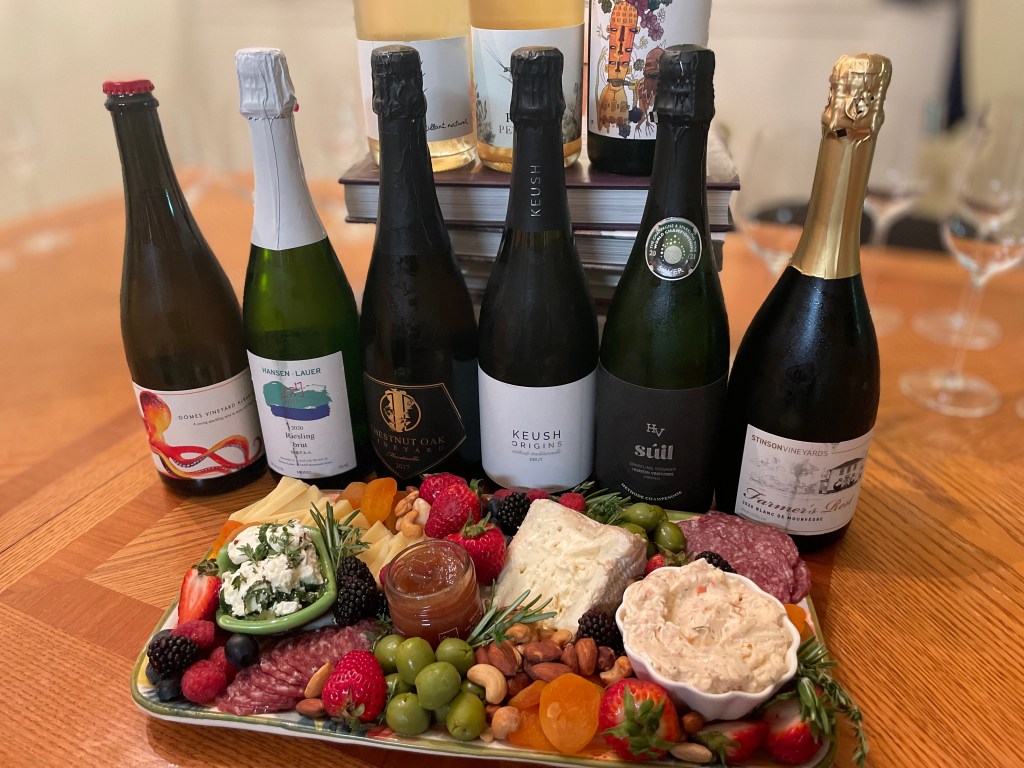
Many Virginia wineries offer a sparkling wine, but no other Virginia wine region has embraced bubbly with the same vigor as the Shenandoah Valley. Around half of the valley’s wineries make a sparkling wine, many using the same méthode champenoise (aka the traditional method) process found in Champagne.

Sparkling wine pairs well with the region’s terroir. Shenandoah Valley vineyards are often located at relatively higher altitudes, which allows for greater diurnal temperature shifts. This allows grapes to maintain their acidity, one of the key components of sparkling wine.

Shenandoah Valley vineyards also benefit from what Linden winemaker Jim Law would call a strong ‘water to vine relationship’. Virginia vineyards often struggle with excess moisture, which not only lower wine quality but spark disease pressure. But grapes grown in the Shenandoah benefit from well-drained limestone soils, as well as lower overall rainfall (thanks to surrounding mountains which block incoming rainclouds).

Tasting & Scoring Methodology

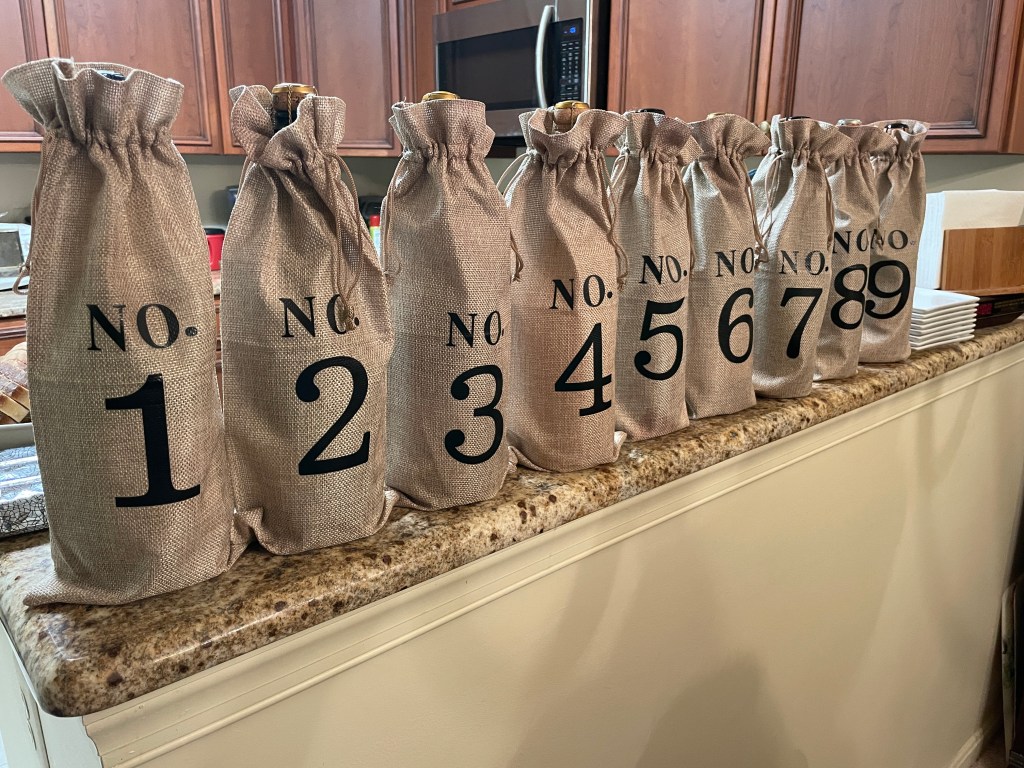
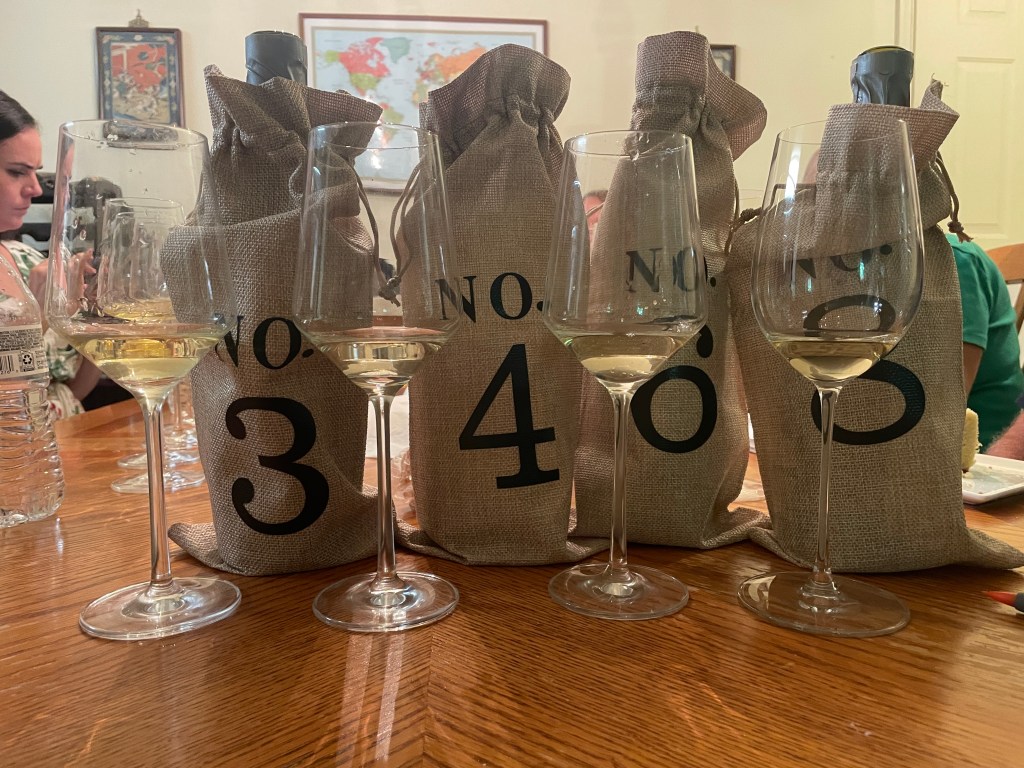
A group of friends & I blind tasted 9 wines in 3 flights. All the flights were bagged blind.

We didn’t have a fancy scoring system. The goal was to pick a ‘favorite’ every round, as opposed to rating them and determining the one we thought was the ‘best’. Often the best indicator of a favorite was simply seeing which bottles people selected first for refills.

The favorite of every round went to a second ‘finalist’ round with the top 3 wines. After finishing the finalists, we unveiled all the wines and crowned the overall favorite of the day.

While all my events include wine lovers, this particular one was something of the “A Team” of my wine-tasting friends. All had extensive industry experience, or at a minimum a very experience palate.

That said, only a few had a deep familiarity with Virginia wine, and even fewer were familiar with the Shenandoah Valley in particular. That made for an exciting tasting since I specifically wanted to see how Virginia wine would fare in an audience who might not otherwise have tried these bottles.

This time I changed up my usual format by pre-selecting all the wines myself (almost half were gifted by their respective winery for this event; thank you Briedé Family Vineyards, Rockbridge Vineyard, Muse Vineyards, Jump Mountain Winery, and Cave Ridge Vineyard) instead of asking by guests to bring something.

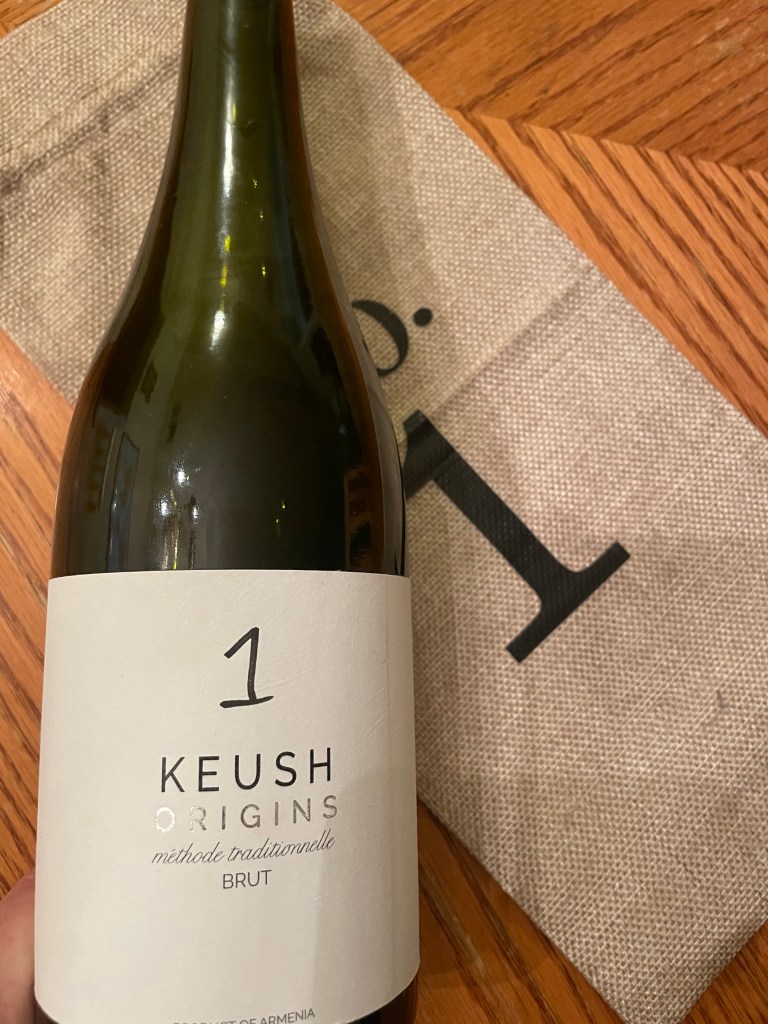
My guests only knew an overview of the theme of the day. Except for our starter wine from Cave Ridge, everything we tried was made in the traditional method.

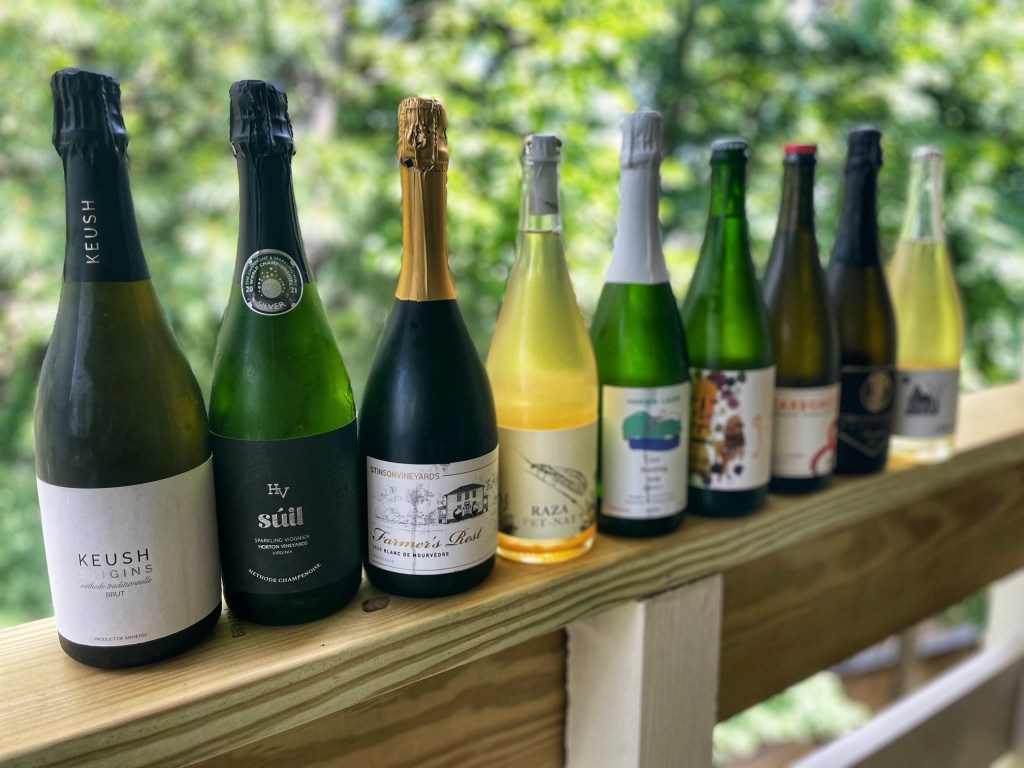
The Contenders:

  1. Barren Ridge 2019 Blanc de Blanc (Chardonnay) ($35-40?)
  2. Ox Eye NV Blanc de Blanc (Chardonnay) ($35)
  3. Bluestone 2017 Blanc de blanc (Chardonnay) ($34.50)
  4. Rockbridge 2020 Blanc de Noirs (Pinot Noir) ($35)
  5. Briedé 2020 Sparkling Winchester (Cayuga) ($57).
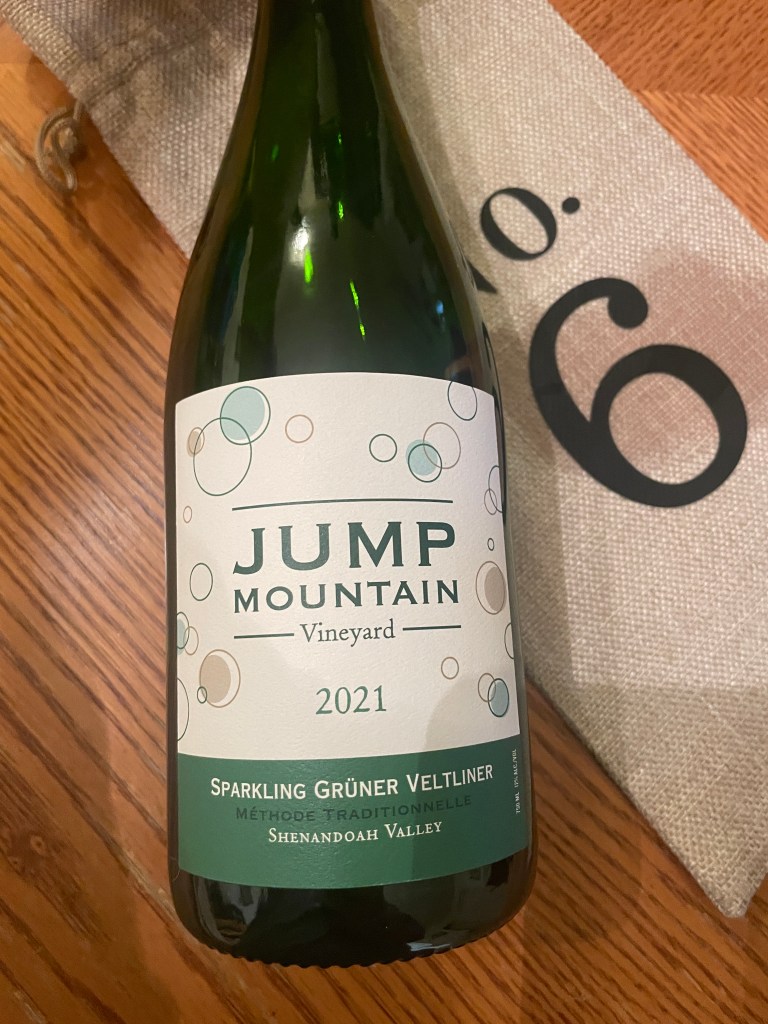
  6. Jump Mountain 2021 Grüner Veltliner ($30)
  7. Muse NV Blanc de Blanc (Chardonnay) ($35?)
  8. CrossKeys 2019 Blanc de Noirs (Pinot Noir) ($38)
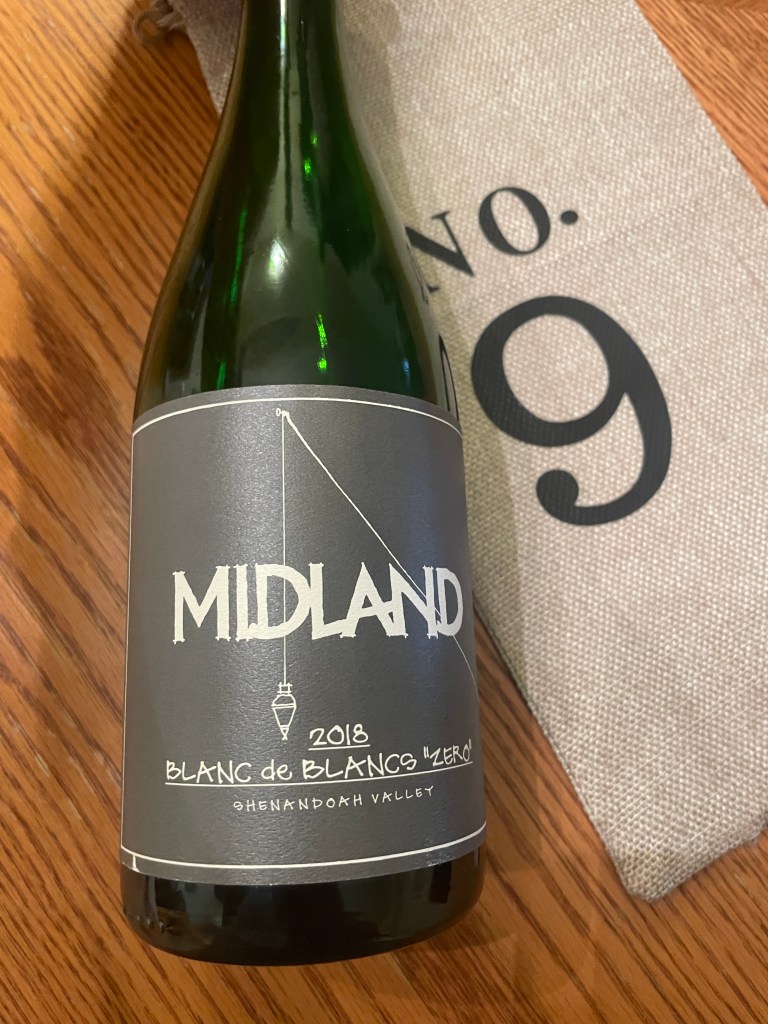
  9. Midland Wine 2018 “Zero” Blanc de Blanc (Chardonnay) ($45)

We also kicked things off with a Cave Ridge NV Sparkling Riesling, made in the Charmat method. Very bright & tart! Lots of apple notes.

Round 1 / Flight #1:

  • Bottle #1: Barren Ridge 2019 Blanc de Blanc
  • Bottle #2: Ox Eye NV Blanc de Blanc
  • Bottle #3: Bluestone 2017 Blanc de blanc (Round winner)

By coincidence, we had three Blanc de Blancs back-to-back. As I had a newer group I kept the tasting dialogue going on for longer than I normally do, so my notes in this round are more extensive than later ones.

In terms of style and especially color, all three were fairly closely matched.

This round became a duel between smoothness (#2/Ox Eye) and complexity (#3/Bluestone). Eventually, Bluestone’s complexity won. That said, the first one from Barren Ridge was also well enjoyed, so being most people’s 3rd pick wasn’t an indication people didn’t like it.

Bottle #1: Barren Ridge 2019 Blanc de Blanc: Our tasting notes were largely centered on citrus notes, especially lemon and green apple. Someone mentioned it had some Malo, which made sense as another taster commented they got some slight butter notes.

There was disagreement about how much minerality it had, with some not being able to detect it and others saying it was there. An overall pleasant wine.

Bottle #2: Ox Eye NV Blanc de Blanc: Someone noted this may have been the most champagne-like of the lineup. Some weight and toastiness; notes of lemon, green apple, and orange peel were mentioned. One person mentioned grapefruit pith, another said it was “grippy”, even a little tannic. It may have had a little RS.

Notes on acidity were all over the place with some saying it was round and others saying it was acidic. My favorite descriptor was it tasted like an ‘abstract painting’.

Bottle #3: Bluestone 2017 Blanc de Blanc: Lots of fruit on the nose and palate. Someone mentioned it had a jolly rancher quality to it but not sweet, perhaps even bretty. Another participant said they found an herby-spice note. The general consensus was this was the most complex of this lineup.

We didn’t know it at the time, but this was the oldest vintage of the entire event. You could tell the difference in the complexity.

Votes:

  • Alex: 3/2/1: Thought #3 was the most complex, while #2 was the smoothest.
  • Chrisa: 2/3/1: Liked the complexity of #3 but gravitated towards #2.
  • Kathy 2/3/1: Thought all of them were clean. Thought #2 was well balanced but #3 was complex.
  • Lieven: 3/2/1. Thought #3 had the most depth; found notes of butter toast, peaches, and white blossom. Thought #1 was subdued but also found citrus notes.
  • Matt: 2/3/1:
  • Richard: 3/1/2: Liked the fruit and brioche notes of #1 but liked the brightness and acidity of #2.
  • Sharneen: 2/1/3. Gravitated towards #2 as it was the most champagne-like and felt it was easy sipping.

Round 1 / Flight #2:

  • Bottle #4: Rockbridge 2020 Blanc de Noirs (Round winner)
  • Bottle #5: Briedé 2020 Sparkling Winchester (Cayuga)
  • Bottle #6: Jump Mountain 2021 Grüner Veltliner

This round was our most diverse lineup of the day, as we had a Pinot Noir, Cayuga, and Grüner Veltliner side-by-side.

People kept coming back to the color of the Rockbridge Blanc de Noirs, which was possibly the prettiest wine of the day. I contacted winemaker Shep Rouse and learned it was all from the initial press.

As you might expect from a diverse lineup, our tasting notes were all over the place. It didn’t help that I overly-chilled these wines, so they took extra-long for our bottles to warm up (note to self; don’t leave your sparkling in the fridge too long).

Bottle #4: Rockbridge 2020 Blanc de Noirs: Too many different notes to capture! We were very curious what it was as it had one of the prettiest colors of the day. For the most part, the nose followed the palate.

Nose reminded someone of daffodil; a few mentioned it had a lovely toastiness with some orange peel. Others got some caramel and honey butter. Maybe there was a little RS here. One person mentioned ‘dissected red apple’.

Bottle #5: Briedé 2020 Sparkling Winchester (Cayuga): Lot of notes here as well, although leaning more towards herbal notes than fruit ones. Being served overly cold didn’t do it any favors. One of the highest acid wines of the day.

“Chicken bullion” nose. Thin; maybe some herbs including thyme and ginger. Notes of yellow flower and chamomile. “Ripping acidity”. Maybe notes of Myer lemon.

Bottle #6: Jump Mountain 2021 Grüner Veltliner: “Intriguing” was often used. More approachable on the palate than the nose. I felt it needed food and time to open up.

Various descriptors included a brioche nose; notes of vanilla, almond, and lime were also mentioned. A few felt it had a Riesling-like petrol nose (which was close; Riesling and Grüner are related). Another person said it had an apple juice quality to it (but in a good way).

Votes:

  • Alex: 4/5/6. Felt #4 was ‘artisanal’
  • Chrisa: Thought #4 was delicious and complex but preferred it on its own, not with food.
  • Kathy: 4/5/6 but it was a close call.
  • Lieven: 4/6/5. Thought #5 was too herbal for him.
  • Matt: 5/6/4. Liked the acidity on #5
  • Richard: 5/4/6
  • Sharneen: 4/5/6. Loved the color of #4, although #5 opened up over time

Round 1 / Flight #3:

  • Bottle #7: Muse NV Blanc de Blanc
  • Bottle #8: CrossKeys 2019 Blanc de Noirs (Round winner)
  • Bottle #9: Midland Wine 2018 “Zero” Blanc de Blanc

This round took us back to Chardonnay, with the CrossKeys Blanc de Noirs added in.

Loved the nose of #9/Midland, but people’s favorites were all over the place. This being the last round my notes were getting shorter and shorter.

Bottle #7: Muse NV Blanc de Blanc: Had an herbal nose, maybe with some mushroom and minerality. Little reductive. Musty barnyard quality to it (PS – this isn’t a negative; that’s an official tasting note!).

Bottle #8: CrossKeys 2019 Blanc de Noirs: Notes of candied apple, more RS. Palate different from the nose. Little reductive but people didn’t treat that as a negative. Nice minerality and salinity. High acid, apple tart nose. Others said they found “orchard fruit” notes.

Bottle #9: Midland Wine 2018: There were many compliments about its nose. Good complexity, although the nose and palate were different. Good ‘muse’. Notes of fennel, apple, pear. Some bitterness.

Votes:

  • Alex: 9/8/7. Found some creaminess on #9.
  • Chrisa: 8/9/7
  • Kathy: 8/9/7. #8 was simple but enjoyable.
  • Lieven: 7/8/9
  • Matt: 8/7/9. 8 had the best palate but 9 had the best nose.
  • Richard: 8/9/7
  • Sharneen: 8/9/7. 8 improved as it opened up and liked the salinity.

Finalist Round:

  • Bottle #3: Bluestone 2017 Blanc de blanc (Runner Up)
  • Bottle #4: Rockbridge 2020 Blanc de Noirs
  • Bottle #8: CrossKeys 2019 Blanc de Noirs (Finalist)

No new tasting notes here, as we had plenty of notes from earlier. Now that the wines had time to warm up, we were able to enjoy them more.

#3/Bluestone and #8/CrossKeys were generally the favorites, although “where did this color come from?” on #4/Rockbridge seemed to elicit the most discussion as it was the most ‘intriguing’ for several participants, not just for the color but overall tasting profile.

The top two were generally ‘classic’ in profile and was almost a toss-up, and we went with CrossKeys’ 2019 Blanc de Noir as the day’s favorite.

  • Alex: 3/4/8. Liked the creaminess of #3.
  • Chrisa: 8/4/3. #8 was round, liked the candied apple notes, acidity and balance.
  • Kathy: 8/ 3 & 4 tied.
  • Lieven: 3/4/ 8. #3 was more classic, #4 was intriguing.
  • Matt: 8/3/4. Thought #8 was the most complex.
  • Richard: 8/3/4. Chose #8 but was tempted to go with #4 because thought #4 was the most interesting and artisanal.
  • Sharneen: 8/4/3. #8 was better as it opened up.

Lessons Learned

I wouldn’t say there were a lot in terms of ‘lessons learned here’. The entire point was to taste wines from the Shenandoah Valley side-by-side as opposed to comparing it to a different wine region, as well as giving exposure to these wines to some local industry folks.

But if there was a ‘surprise’ of the day, it was the Rockbridge Blanc de Noirs. I asked several people what wine ‘most surprised them’, this was often the most mentioned bottle. That color just stood out, plus the tasting notes kept people talking.

The overall favorites of the day were either CrossKeys 2019 Blanc de Noirs or the Bluestone 2017 Blanc de Blanc; not surprisingly these were the #1 and #2 choices in our tiered tasting.

The Bluestone was 100% Chardonnay, 4 years en triage (the stage where a still wine slowly converts into a sparkling one), made in all stainless. Lee explained how the first time he made his sparkling he had assistance from Veritas for the disgorging, but now he does everything by hand.

That the CrossKeys Blanc de Noirs was the favorite is hardly surprising, as this was selected by Atlantic Seaboard Competition as their 2022 Best in Show. This wine was fermented and aged for 8 months in barrel with continuous lees stirring then fined, filtered, and bottled, then aged in bottles for another 16 months to develop mature.

This is also one of the relatively few vineyards that grow Pinot Noir (2.5 acres) in the state, which makes it extra special for a Virginia wine lovers.

Virginia Chardonnay Blind Showdown (2023 Edition)

There are certain phrases used in the wine world that grate me, and “Anything but chardonnay” is one of the top contenders. Given chardonnay is one of the most planted varieties in the world – and 2nd most planted in Virginia – if you hate chardonnay, it can only be because you haven’t tried enough of them.

I say this because chardonnay is the chameleon of white wine. You can find austere, higher-acid chards from cool weather vintages, or full, ripe wines from warm-weather climates. It can be heavily manipulated with oak or made in steel. From Australia’s Adelaide Hills to Washington State’s Walla Walla, chardonnay is (literally) everywhere.

Burgundy is often thought of as the world’s premiere chardonnay producing region, but I’ve had a number of Virginia wines that could give good Burgundies a run for their money. The biggest problem I had for this event is narrowing down the list of contenders.

Ultimately my guests were able to bring a variety of chardonnays from around the state. The only rules I gave them is I couldn’t have any wines that were in my last chardonnay challenge, and I needed at least one Shenandoah Valley wine.

The goal was to do 2 flights of Virginia wines and a flight of Burgundy, all blind. We had a last-minute issue with getting our last French wine, so we substituted a Russian River Valley (California) chardonnay for it.

The top wines of every flight went to a finalist round. Since we loved the wines in the 2nd flight so much, I gave the runner up in that flight a wildcard advance to the final round.

As always, this event was the product of this day with this group. Many of these wines had the potential of being a winner.

The contenders:

  1. 2019 Brix and Columns (winery in the Shenandoah Valley, not sure where the fruit is from)
  2. 2019 Linden Boisseau (Front Royal)
  3. 2021 Vint Hill (Story Vineyard, Fauquier County)
  4. 2021 DuCard TANA (TANA Vineyard)
  5. 2022 12 Pearls of Wisdom (Effingham/Pearmund)
  6. 2021 Stone Tower (Leesburg)
  7. 2020 Famille Vincent (Burgundy)
  8. 2019 Patrick Javiller (Burgundy)
  9. 2016 Hertelendy (Russian River Valley, CA)

Flight #1

  • Wine 1: 2019 Brix and Columns
  • Wine 2: 2019 Linden Boisseau
  • Wine 3: 2021 Vint Hill (round winner)

Bottle #1: 2019 Brix and Columns: Light gold. Muted nose. Clean, crisp. Notes of hazelnut and lemon. Some people mentioned it was a little musty. The biggest problem some had was the finish just fell off at the end.

This wine was a bit divisive because it was very easy drinking, almost at the expense of complexity. I liked it a lot, but others found it wanting.

Bottle #2: 2021 Linden Boisseau: High acidity, floral nose. Notes of tart apple and lemon/lime. Someone noted it had an almost riesling quality to it. It was a wine that seemed to cry out for food, and the lack of a pairing dish probably brought it down a notch.

Bottle #3: 2021 Vint Hill: I found notes of slate; someone else said honeysuckle and lemon. Others noted notes of lemon and peach; almost a creamsicle quality to it. Several people noted it had lots of honey. Almost all of us mentioned its long finish and good complexity.

We were all over the place in terms of favorites. Everyone liked #2 but nobody put it as a favorite. I was torn between “easy drinking” vs “complexity” but went with the former. Most of the guests chose the latter category, so the Vint Hill wine won out.

  • Alex:  3/2/1
  • Frank: 3/1/2
  • Jen: 3/2/1
  • Kathy: 3/2/1
  • Matt: 1/3/2
  • Ryan: 1/3/2
  • Stephanie: 3/2/1

Flight #2

  • Bottle #4: 2021 DuCard TANA (wildcard advance)
  • Bottle #5: 2022 Effingham 12 Pearls of Wisdom
  • Bottle #6: 2021 Stone Tower (round winner)

Wine 4: 2021 DuCard TANA: Noticeably floral, with notes of marzipan, sweet almond, flowers. Solid acidity, with a bit of minerality. We guessed made in stainless. We were partially correct; I later learned it started in steel but also had 4 months in neutral oak and aged on lees.

Grown in the TANA vineyard around 6 miles from DuCard on a SW-facing slope. Made in “Mȃcon” style, as benefiting from having a French winemaker.

Wine 5: 2022 12 Pearls of Wisdom: Very perfume-y. Long, very grapy finish. Racy acidity. Notes of lemon, apricot, or peach. Overall delicious.

There was a LOT going on in this wine. We enjoyed it thoroughly but felt it was almost ‘too much’. We probably would have enjoyed it more on its own as opposed to a lineup of other chardonnays, as it wasn’t a very chardonnay-like wine.

Wine 6: 2021 Stone Tower: Notes of apricot, peach on the nose. Personally, I thought it was lighter than the other two, but others note it was on the fuller side.

More elegant and mineral driven than anything we’d had so far. We thought it had a little bit of oak. Smooth. Someone mentioned a ‘smoky minerality’ to it, with notes of grapefruit.

This was a tough round to choose a favorite! For the seven of us, it was easy the favorite round of the day.

The biggest problem I found was wine #5 was so different from the others it seemed out of place, to the point it was an almost unfair comparison.

Wines #4 and #6 were more evenly matched, to the point it was a near toss-up. But since we liked #4 so much, I gave it a wild card advance to the final round. Many felt #4 (DuCard) was more likely to please multiple people, while #6 (Stone Tower) was a ‘serious’ wine.

  • Alex: 6/5/4. Felt #6 was what he would open on his own.
  • Frank: 4/6/5
  • Jen: 6/4/5
  • Kathy: 6/4/5
  • Matt: 4/5/6
  • Ryan: 4/6/5
  • Stephanie: 6/4/5. Liked the complexity of #6. #4 was more likely to please a crowd.

Flight #3

  • Wine 7: 2020 Famille Vincent
  • Wine 8: 2019 Patrick Javiller (round winner)
  • Wine 9: 2016 Hertelendy

Wine 7: 2020 Famille Vincent: Muted nose. Some oak. Crisp, notes of mandarin orange or clementine.

Wine 8: 2019 Patrick Javiller: I found notes of crisp green apple, some butter. Others mentioned lemon blossom on the nose and palate.

Wine 9: 2016 Hertelendy: “Funky and smoky” were the key adjectives. This wine was CLOUDY. Not sure what was going on here. On the nose, notes of drawn butter or maybe butterscotch. Nutty on the palate; maybe hazelnut, maybe a bit of lees or oak.

The cloudiness of the last wine was divisive for many of us, so it was really a contest between #7 and #8.

  • Alex: 9/8/7
  • Frank: 7/8/9
  • Jen: 8/7/9
  • Kathy: 8/7/9
  • Matt: 8/7/9
  • Ryan: 7/8/9
  • Stephanie: 7/8/9

Finalist Round:

  • Wine 3: 2021 Vint Hill (3rd favorite)
  • Wine 4: 2021 DuCard TANA (favorite of the day)
  • Wine 6: 2021 Stone Tower (runner up)
  • Wine 8: 2019 Patrick Javiller (4th favorite)

No major wine notes this time. We went almost straight to the judging.

I thought wine #3 (Vint Hill) improved a lot, although #6 had my favorite nose of the lineup. #8 was a bit spicy.

In a surprise twist, wild card wine #4 (DuCard) beat wine #6 (Stone Tower) even though in an earlier round Stone Tower was favored (by a narrow margin). Both were easily the top wines of the day, but 2021 DuCard Vineyard “TANA” was the overall favorite in the end.

  • Alex: 6/4/3/8
  • Frank: 4/6/3/8
  • Jen: 6/4/3/8
  • Kathy: 6/3/4/8
  • Matt: 4/3/6/8
  • Ryan: 4/3/8/6
  • Stephanie: 4/6/3/8

If there’s a lesson learned here, it was that chardonnay comes in all flavor profiles. Not one of these were butter-bombs (despite having a California chardonnay). The best Virginia ones definitely showcased elegance and would have done any Burgundy winemaker proud.

I also think food and time caused us to shift votes. Wine #3 had a noticeable improvement, becoming the runner up to several guests. The addition of food (we had an amazing cheese board and dessert) also may have accentuated #4.

This was the first time a ‘wild card’ wine won one of my events, which I also attribute to how it was the kind of wine that everyone can enjoy. Put in a large group, the DuCard TANA came out as the favorite. But huge kudos to the Stone Tower wine, which many of my guests would drink by themselves.

The Diversity of Sparkling Wine Blind Tasting

All of my blind tastings have a theme. France vs Virginia. Virginia Tannats vs The World. Cabernet Franc Comparison; ect ect. But it’s almost always a ‘like vs like’ event, even if the regions involved are different.

This time I mixed things up. It was still ‘like with like’ because all were sparkling wines of some sort. Yet it was a departure from my normal blind tastings as these sparklings were about as different as I could possibly make them.

Of our 9 wines, 6 of the wines were traditional-method and 3 were pet-nats. More importantly, all 9 were made with different grapes. We had everything from Albariño to Voskehat.

The Contenders:

  1. Keush Origins, 60% Voskehat / 40% Khatouni, Armenia (traditional method)
  2. Gomes Vineyard, Albariño, California (traditional method)
  3. Horton Vineyards Suil, Viognier, Virginia (traditional method)
  4. Chestnut Oak Vineyard, Sparkling Petit Verdot, Virginia (traditional method)
  5. Stinson Vineyard’s “Farmer’s Rest”, Mourvèdre, Virginia (traditional method)
  6. Hansen-Lauer, Riesling, Germany (Sekt, traditional method)
  7. Early Mountain Vineyard, Malvasia Bianca, Virginia (Pet-Nat)
  8. Guide Wine Chardonel and Peaches, Virginia (Pet-Nat)
  9. Raza, Trajadura, Portugal (Pet-Nat)

What we didn’t have were Chardonnay or Pinot Noir. That was intentional; I wanted to do ‘non-traditional’ wines, and the ones we brought fit the bill.

Obviously, I had help. I had hoped Rich Sullivan of Guide Wines would join us but he couldn’t make it. On the other hand, I had The Sparkle-ist Champagne Club, TheVAWineGirl, Cheers and Chews, and Kyle and Chris Zimmerman of QuaffwithKyle. They were happy to heed the call to help me compare these wines.

I put the pet-nats in the same flight but otherwise all the wines were randomized. We had two flights of traditional method sparklings and a pet-nat flight at the end.

As always – this event was the product of this day, with this group. We could have repeated it the next day and come up with different results. After the 3rd round, we paused for some charcuterie, sushi, and oysters.

We all voted favorite/next favorite/last favorite. 1st choice got 3 points, 2nd choice got 2 points, 3rd choice got 1 point.

Round 1 / Flight 1

  • Bottle #1: Keush Origins, 60/40 blend of Voskehat and Khatouni (Winner)
  • Bottle #2: Gomes Vineyard, Albariño (tied for runner up)
  • Bottle #3: Horton Vineyards, Viognier (tied for runner up)

Excellent start to the event. Each of the three sparklings had something unique about them. Many of us gravitated to the Armenian Keush from the get-go, so this round was more of a contest for the #2 spot between the Virginia Horton Viognier and the California Albariño.

We couldn’t get over how different these three were. It wasn’t just the tasting profile but the finish and acidity.

We picked the Keush as the favorite mostly because it was the most complex of the trio and reminded us of a blanc de blanc in terms of the complexity and brioche notes.

Bottle #1: Keush Origins. The nose presented notes of brioche, which I think caused us to automatically gravitate towards it since it was familiar to sparkling lovers. I found grapefruit on the palate; others said green apple. As it opened up it also had notes of peach.

It may also have been the oldest of the trio (and the day) which contributed to its complexity. I felt it was also ‘big’, which was mostly a compliment but I could see that as being a distraction as well.

Fun fact – this wine came from one of the highest elevation vineyards (5740 feet) in the northern hemisphere!

Bottle #2: Gomes Vineyard. I thought it had a lemon nose, although I heard everything from grapefruit to orange zest. Definitely grapefruit on the palate, maybe citrus as well.

We were in LOVE with the nose of this one. But at the same time, the finish left us disappointed. There was just nothing on the back end. The bubbles also didn’t last very long, comparatively speaking.

I do have to point something out; when I paired this with oysters (which didn’t happen till much later in the day), this was arguably my favorite wine of the event. Those flavors just absolutely popped out with the right seafood.

Bottle #3: Horton Vineyards. Faint citrus nose. Very lemon-y and maybe some minerality.

This was our crowd-pleaser wine. While the Keush I thought was ‘too much’ for some and the Gomes had nothing on the back-end, I felt this was the easiest to drink through-and-through.

Rankings:

  • Christina: 1/2/3
  • Kyle: 1/3/2
  • Lieven: 1/3/2. Loved the brioche and complexity. Loved the nose of #2 but it dropped off.
  • Lindsay: 1/2/3. Thought #1 was complex and was ‘never bored’ with it. #2 was very bright.
  • Matt: 1/2/3
  • Stephanie: 1/3/2

Round 1 / Flight 2

  • Bottle #4: Chestnut Oak, Petit Verdot (runner up)
  • Bottle #5: Stinston Vineyard, Mourvèdre (winner)
  • Bottle #6: Hansen-Lauer, Riesling (3rd place)

This was a really tough round to pick a favorite. If wines of the first round were different, this was REALLY different. What made it especially difficult is many of us had never tried these wines before, so we didn’t know what to expect.

There wasn’t any chart to rate ‘best’ here; it all came down to personal preference. Stinson came out as the favorite by a tiny hair, but a one-vote change could have resulted in a 3-way tie.

Bottle #4: Chestnut Oak Vineyard. We immediately noticed an orange tint to the color. On the palate there was a lot going on, which made it difficult to identify. Aromatic and flavorful.

Someone said the wine was ‘confused’ as to what it wanted to be, but ironically that wasn’t meant as a bad thing. It was just not what we’d expected from a sparkling.

Bottle #5: Stinson Vineyard. I found grapefruit on the nose and palate. Maybe a little yeasty? Others said they detected notes of white peach and lemon. Balanced. Some brioche notes.

I had lots of opinions on its complexity. Some felt it was well balanced but others felt there was just a lot going on, almost too much.

Bottle #6: Hansen-Lauer. One of the most acidic wines of the day. Mineral-y; someone mentioned it reminded him of a Greek wine. Some brioche notes came out eventually.

Not a lot going on for the nose, but overall a pleasant wine.

Rankings:

  • Christina: 5/4/6. Liked all of them, but for different reasons.
  • Kyle: 5/6/4
  • Lieven: 6/5/4/. Loved the acidity of #6, even if it wasn’t as complex. Thought #5 was good all-around, with depth and complexity.
  • Lindsay: 4/6/5. Felt food impacted the choices here.
  • Matt: 4/6/5. Tough choice. Could have gone for any of these. But since #4 was ‘big’ and different, that put it over the top for me.
  • Stephanie: 5/6/4

Round 1 / Flight 3

  • Bottle #7: Early Mountain, Malvasia Bianca (runner up)
  • Bottle #8: Guide Wine, Chardonel and peaches (last place)
  • Bottle #9: Raza, Trajadura (winner)

This was our pet-nat round. If I had thought about it more carefully I would have done this round first…but it’s a blind tastings, so where’s the fun in that?

Granted, pet-nats are sparkling wines. But make no mistake – there’s a world of difference between a pet-nat and a traditional method sparkling. I wondered exactly how different this round would be from the earlier one, but there was no mistaking the difference.

Pet-nats are fun, easy drinking wines for when you just want bubbles. So putting them at the end of a round of ‘serious’ traditional method sparklings did them tasting notes a disservice. After we took a food break we revisited some of them and enjoyed them more just for what they were.

Bottle #7: Early Mountain Vineyard. Pale gold color. “Pithy” was mentioned. I thought it had a peach cider quality to it.

Bottle #8: Guide Wine. Bold gold color. I swore the nose reminded me of walking into an apple orchard. I thought I detected some faint hops.

Bottle #9: Raza. The cloudiest of the trio. Little bit of peach but more stone fruit. Had some grassy-ness to it initially. The bubbles also lasted the longest.

We seemed to gravitate towards it because it was the most like a méthode traditional sparkling.

  • Christina: 9/7/8
  • Kyle: 9/7/8
  • Lieven: 9/7/8
  • Lindsay: 7/9/8
  • Matt: 9/7/8
  • Stephanie: 9/7/8

Round 2 / Final

  • Bottle #1: Keush Origins, Voskehat and Khatouni blend (winner)
  • Bottle #5: Stinston Vineyard, Mourvèdre (runner up)
  • Bottle #9: Raza, Trajadura (3rd place)

We took a food break after the 3rd round. The wines that didn’t go to the finalist round were finished off with a mix of sushi, oysters, stuffed clams, and charcuterie.

Our palates were getting fatigued at this point so no real tasting notes.

In the end, Wine #1/Keush was the winner of the day. We were enthralled with its complexity and brioche notes. It seems there’s just something about brioche that screams ‘sparkling wine’, so whenever we detected it, that became our favorite.

Wine #5/Stinson Mourvèdre was the runner-up. I asked winemaker Rachel Stinson Vrooman about it, and she explained that the decision to make it was completely based on necessity.

It’s from the 2020 vintage, which was the year they got heavily frosted. Mourvèdre survived since it’s a late-budding varietal so it was the only block they didn’t lose.

Even so, Rachel struggled on what to use it in. She loved the flavors, and the low ripeness made it a good candidate as a sparkling. It was such a hit they’ve been making it ever since.

  • Christina: 1/5/9. Loved the brioche notes of #1
  • Kyle: 1/5/9. Thought #1 was the most complex.
  • Lieven: 1/5/9. Liked the acidity and complexity of #1
  • Lindsay: 5/1/9
  • Matt: 5/1/9
  • Stephanie: 1/5/9

Lessons learned:

It’s tough to write up a ‘lessons learned’ in an event that by default was always meant to be experimental. Most of these wines were brand new to us. I had no expectations what to expect, so there wasn’t really any benchmark meant to be reached.

But breaking it down, I’d say this event demonstrated two things.

First, there *really is* a huge diversity in sparklings. If you’ve never tried an Armenian wine, try it! Mourvèdre; seriously, who would have thought? Sparkling Petit Verdot? Get out of town!!!

Second, for as diverse a lineup we had, our palates seemed to gravitate towards the familiar. Wines that were stylistically similar to traditional method sparklings – especially ‘familiar’ blanc de blanc or blanc de noir nearly always won out over ‘non-traditional’. If it had brioche, it went to the top of the list of favorites.

These factors worked against the pet-nat round. In retrospect I really should have done pet-nats totally separately, but was curious how they stood up in a comparison. Sadly they didn’t – but it’s not their fault.

On their own I think we would have enjoyed them more, but coming off a round that included some excellent traditional method wines we seemed more down on them than they deserved.

Virginia Cabernet Francs vs The World

If you ask Virginia winemakers their favorite grape to work with, I bet the most popular opinion would be Cabernet Franc. At 645 acres, it’s by far the most planted grape in the state.

The role of Cab Franc in Virginia is very different than the role it plays in Bordeaux, where it’s usually a supporting player in red blends. Just under 10% of Bordeaux’s red grapes are Cabernet Franc, and only rarely does it dominate a wine.

Yet in Virginia, Cabernet Franc is often the main star. It’s not just Virginia winegrowers that love it; all along the East Coast Cab Franc is found as a single varietal wine, and large plantings are found around the world.

Cabernet Franc’s popularity along the East Coast comes down to two main factors: dependability and versatility.

In the vineyard Cabernet Franc is relatively weather hardy and possesses looser clusters, allowing them to also perform well in humid conditions. The grape can also be harvested sooner than many other red varieties, an important consideration in places with a shorter growing season.

Cab Franc is also especially expressive of terroir. A bottle produced from a warmer region will showcase brighter fruit-flavors, while cooler climate ones retain good acidity. Picked young it tends to exhibit strong bell pepper qualities (often seen as a fault), but certain vegetal characteristics are often present regardless.

This grape also has range in the cellar. Cab Franc can be made into everything from light, easy drinking wines to bolder reds, as well as take the lead in many local red blends.

I gathered a group of friends to do a comparative tasting of wines from three regions; the New York Finger Lakes, France’s Loire Valley, and Virginia. Each of these regional flights was sampled at random; we didn’t know what region we were tasting at any particular time. The favorites of each round went to a second ‘finalist’ round.

The main purpose of this event was to do a side-by-side comparison for our own wine education. While we picked some favorites, I don’t pretend the results proves anything; we could easily have selected a different ‘favorite’ on a different day or with different food pairings.

That said, I’m not the least surprised at the ‘winner’ of the event.

New York (all made near Keuka Lake, Finger Lakes Wine Region)

If “Riesling” is the first grape that comes to mind when thinking of the Finger Lakes – you’re right! But you might not realize Cabernet Franc is not only the most-planted red grape, it’s the 3rd most popular variety overall in this area.

By coincidence, all of these particular bottles came from Keuka Lake wineries, although that’s not necessarily where 100% of the fruit came from.

1. 2019 Dr. Konstantin Frank Winery: “Dr Frank” is the granddaddy of Finger Lakes wine, and one of the most famous on the east coast. 100% Cab Franc, 18 months aging in French Oak (20% new).

2. 2018 Domaine LeSeurre Winery Barrel Select. I’m not familiar with this one, other than its tasting room is right next to Weis and they have a French winemaker. 100% CF from several Finger Lakes vineyards, 22 months in French Oak.

3. 2018 Heron Hill Winery: Herron Hill has one of the larger tasting rooms on Keuka Lake. Jordan Harris is the current winemaker but came after this one was made. 16 months French Oak.

France (all from Touraine, Loire Valley)

While Cabernet Franc is planted along both banks of the Bordeaux, most singe-varietal bottles of Cab Franc are found in the Touraine appellation of the Loire Valley, specifically its sub-appellations of Bourgueil, Chinon and St-Nicolas-de-Bourgueil.

Loire wines are made in a variety of styles and has been described as one of French wine’s ‘best value’ wine regions. I’m not familiar with any of these producers so few details are listed, although I did recently learn most of the Cab Francs from here are made in stainless steel.

4. 2020 Charles Joguet (Chinon). 100% Cabernet Franc, made in stainless steel.

5. 2020 Cuvee des Mailloches, Domaine des Mailloches (Bourgueil): 100% Cabernet Franc, made in stainless steel.

6. 2018 Agnes Sorel (St. Nicolas de Bourgueil). 100% Cabernet Franc. Fun fact – ‘Sorel’ was one the official mistress of King Charles VII.

Virginia (Central VA, Loudoun County, and Shenandoah Valley)

Not sure what more I can add to Virginia Cab Francs than I haven’t already mentioned. I will say these particular wineries are some of my favorite producers of any varietal in the state, and all came from the especially good 2019 vintage.

7. 2019 Madison County Early Mountain: EMV produces several Cabernet Francs; I believe Madison County is their largest planting of Cab Franc. I believe this had a dash of Petit Manseng.

8. 2019 Dutchman’s Creek Vineyard Walsh Family Wine: 80% Cab Franc, 20% Petit Verdot. Made 100% in oak.

9. 2019 Bluestone Vineyards: Part of winemaker Lee Hartman’s ‘Vineyard Site Series’. 100% Cab Franc made with free run juice and whole-clustered pressed from a combination of Cabernet Franc and Petit Manseng skins. Aged 2 years in French oak, 40% of which was new.

This was also our only Shenandoah Valley wine. The Shenandoah Valley has a strong claim as Virginia’s premium wine growing region, as it has higher elevation (which helps its fruit retain acidity), limestone soils, and the lowest rainfall in the state.

Round 1 / Flight 1

  • Bottle #1: 2019 Dr. Konstantin Frank Winery; 19 points (Round Winner)
  • Bottle #2: 2018 Domaine LeSeurre Winery; 14 points
  • Bottle #3: 2018 Heron Hill Winery; 9 points

As the flights were selected randomly, my group had no idea we were sampling the Finger Lakes wines. Our initial guess was this was actually the French flight; only at the end did we learn otherwise.

When we voted, our #1 pick received 3 points, #2 pick received 2 points, and last pick got 1 point.

First off, we noticed the character of the wines changed quickly in the glass. We didn’t aerate these bottles especially long but I was truly shocked by how many stages these wines went through.

On the nose I was really taken by the ‘funkiness’ we had on the nose for most of them (to different degrees). It was a quality I usually associate with French wines, which is why I was confused. Fortunately, that funky nose usually dissipated.

Perhaps more surprisingly was how the fruit characteristics on the palate also changed. If we spent an hour with a single glass, it would have changed several times. Whatever fruitiness we found at the start of the tasting tended to be quickly gone.

Bottle #1: 2019 Dr. Konstantin Frank Winery: This was probably the most varietally-correct (to our palates) Cab Franc of the flight, which garnered it a lot of votes. The nose was initially herbal but very pleasant. Softer fruit cherry notes.

Bottle #2: 2018 Domaine LeSeurre Winery. This seemed to have a bit of Brett on it, although not to the point it was faulted. The strong ‘barnyard’ quality got better but never completely left it. Earthy palate.

The nose was a killer here; few of us really enjoyed the nose although several enjoyed the flavor; we just wished the nose was as good as the palate.

Bottle #3: 2018 Heron Hill Winery. Lots of fruit on the palate; someone mentioned it had a ‘jolly rancher’ quality. Beautiful ruby color. But the fruit notes on the palate quickly dissipated and the wine became more herbaceous.

Someone noted that of this trio, this was the wine that most needed a food pairing the most.

In assessing the flight I noticed my guests were divided between two camps; the ‘approachable/balanced’ camp, and the ‘Old World’ earthy/funky camp.

There is no right or wrong answer here. People gravitate towards certain styles, and it so happened the first camp outnumbered the second camp in this group. But I did notice this trend continued over the event.

  • Participant #1: Voted # 1 / #3 / #2. The nose was a real turn-off for #2. Thought #1 was ‘classy’
  • Participant #2: Voted #1 / #2 / #3. Thought #1 was easy drinking & balanced.
  • Participant #3: Voted #1 / #3 / #2. Thought #1 was a ‘classic Cab Franc’. Loved the color of #3 but thought it was bland by comparison.
  • Participant #4: Voted #1 / #2 / #3. Went for the balance and overall approachability #1
  • Participant #5: Voted #2 / #1 / #3. Loved the flavors of #2; lots of cherry and earthy. She kept insisting #2 was the best wine of the night based on her ‘Old World’ preferences (which made the reveal quite surprising).
  • Participant #6: Voted #1 / #2 / #3. Thought #1 was well balanced; didn’t like the nose of #2 but liked the flavor.
  • Participant #7: Voted #2 / #1 / #3. Enjoyed the funky/earthy qualities of this wine and long finish. Thought #1 was approachable. Also thought #2 was the best wine of the night.

Round 1 / Flight 2

  • Bottle #4: 2020 Charles Joguet; 8 points
  • Bottle #5: 2020 Bourgueil Cuvee des Mailloches, Domaine des Mailloches; 14 points
  • Bottle #6: 2018 Agnes Sorel St. Nicolas de Bourgueil; 20 points (Round Winner)

This round continued the trend of our wines changing a lot in the glass. #6/Agnes Sorel especially benefited from this change.

Bottle #4: 2020 Charles Joguet (Chinon). Had a ‘grape jelly’ quality on the palate, with a hint of sweetness. Some mentioned a ‘Concord’ type nose. Peppery, cherry notes with a medium finish. Notes of eucalyptus were also mentioned.

Bottle #5: 2020 Cuvee des Mailloches, Domaine des Mailloches (Bourgueil). Lightest color of the flight (and maybe the event). Dark cherry notes and maybe plum on the palate, notes of plum on the nose.

Bottle #6: 2018 Agnes Sorel (St. Nicolas de Bourgueil). Musty/funky nose. Lots of mushroom on the palate. This changed a lot in the glass, all for the better. It was ‘funky’, but it was a ‘good funk’.

Wine #6/Agnes Sorel wasn’t popular initially but over 20 minutes almost the entire table came around to not just enjoying it but declaring it the favorite of the round.

  • Participant #1: #6 / #4 / #5
  • Participant #2: #6 / #5 / #4. Enjoyed #6 in all of its phases.
  • Participant #3: #6 / #5 / #4. Thought #6 was her favorite by far; opened up beautifully.
  • Participant #4: Voted #5 / #6 / #4
  • Participant #5: Voted #6 / #5 / #4. “Appalled’ by this at first but it blossomed over time.
  • Participant #6: #6 / #5 / #4. Liked the funkiness of #6 but didn’t think it was overpowering.
  • Participant #7: #6 / #5 / #4. Was a fan of the #6’s earthy funky notes and color. Thought #5 was herbaceous. Thought #4 needed food while #6 was good immediately.

Round 1 / Flight 3

  • Bottle #7: 2019 Madison County Early Mountain; 8 points
  • Bottle #8: 2019 Dutchman’s Creek Vineyard Walsh Family; 16 points
  • Bottle #9: 2019 Bluestone Vineyards; 18 points (Round Winner)

This round was obviously Virginia; all the wines were more tannic than anything we’d had so far. I was also surprised how none of them especially changed in the glass, at least anywhere close to the changes we saw earlier.

This was (perhaps not surprisingly) our favorite round, and soon became a close contest between #8 (Walsh) and #9 (Bluestone).

Bottle #7: 2019 Madison County Early Mountain. Notes of dates & prunes on the nose and palate. We felt this was made in a lighter style.

Bottle #8: 2019 Dutchman’s Creek Vineyard Walsh Family Wine. Coco powder on the nose; dark fruit on the palate.

Bottle #9: 2019 Bluestone Vineyards. The nose was initially funky but that blew off fast. Notes of sour plum and/or sour cherry on the palate. Had ‘bite’.

This wine was the most ‘different’ of anything we’d had in the entire event. I suspect this caused us to gravitate towards it, although not all of us necessarily selected it as our top choice solely because of its uniqueness.

  • Participant #1: Voted #9 / #8 / #7. Liked all of them, but thought #9 was the most unique.
  • Participant #2: Voted #8 / #7 / #9. Thought #8 had the best nose; thought #9 was too overpowering.
  • Participant #3: Voted #9 / #8 / #7. Liked #9 because it was like a ‘slap in the face’ (but a good way!). But #8 was lovely.
  • Participant #4: Voted #8 / #9 / #7. Gravitated towards the fruit qualities of #8 but appreciated how different #9 was.
  • Participant #5: Voted #9 / #8 / #7. Thought #9 started fresh, with strawberry notes at first then oak. Detected some dried fruit in #8.
  • Participant #6: Voted #9 / #8 / #7.
  • Participant #7: Voted #9 / #8 / #7. Thought #9 was ‘the most interesting.’

Round 2: Finalists

  • Bottle #1: 2019 Dr. Konstantin Frank Winery; 17 points
  • Bottle #6: 2018 Agnes Sorel St. Nicolas de Bourgueil; 8 points
  • Bottle #9: 2019 Bluestone Vineyards; 17 points (Event Winner based on most 1st place votes as favorite)

The top-scoring wines from the Finger Lakes, Chinon, and Virginia flights were now before us. Many of the previous descriptors still applied, so I didn’t take additional detailed notes.

My tasting group were divided between two camps; those who wanted a wine that was ‘easy drinking & balanced’, and those who wanted something which was ‘interesting.’

Bluestone/#9 absolutely stood out and had done so over the entire evening. Its complexity and uniqueness earned it a lot of love.

Dr. Frank/#1 was the choice of those who might want something easier drinking, especially on its own. I suspect that if we had the two wines with a full dinner, we would have gone with #9.

Although in terms of points it was a tie, I selected the 2019 Bluestone as the overall winner because it had the most 1st place votes.

Bottle #1: 2019 Dr. Konstantin Frank Winery. Good balance of fruit and earthiness.

Bottle #6: 2018 Agnes Sorel St. Nicolas de Bourgueil. Still too much funk but it had improved.

Bottle #9: 2019 Bluestone Vineyards. By this time, #9 was becoming funkier to me but that wasn’t true for all of the guests.

  • Participant #1: Voted #9 / #1 / #6
  • Participant #2: Voted #1 / #6 / #9
  • Participant #3: Voted #9 / #1 / #6
  • Participant #4: Voted #9 / #1 / #6
  • Participant #5: Voted #1 / #9 / #6 (but cast a protest vote for #2)
  • Participant #6: Voted #1 / #9 / #6
  • Participant #7: Voted #9 / #1 / #6 (but cast a protest vote for #2)

Lessons Learned

This event brought together many lessons-learned from other events. I think the biggest one is when choosing a favorite, my attendees tend to divide into two camps; the “Typicity” camp, or the “It Stands Out” camp.

‘Typicity’ is a wine term used to describe “the degree to which a wine reflects its varietal origins and thus demonstrates the signature characteristics of the grape from which it was produced.”

Don’t get me wrong; many qualities went into the final determination of a favorite. But in a crowded field of good wines, the wine that is perceived as tasting ‘the way this variety is supposed to taste’ tends to be their favorite.

The “It Stands Out” camp tends to vote for wines that are ‘interesting’. For them, wines that are too ‘typical’ are boring (and lower scoring). But a wine that is a different (in a good way) gets their attention.

Fred Reno of the Fine Wine Confidential podcast explained it like this. “I think the industry challenge … is to make interesting wine. And if you make interesting wine over a period of time, you might have a shot at great wine.”

Lindsey Fern, Wine Director at the Inn at Little Washington, mentioned something similar. In a podcast with “The Vine Guy” Lindey explained how she sampled a wine that was ‘too perfect’. “Tannin levels perfect, acid level was perfect, the fruit is nice, it had a nice nose”, but “it had no soul”. I bet this Bluestone would be the kind of wine that would ‘speak to her’.

I’d also go so far as to say that wine drinkers who are avowed ‘Old World’ wine lovers tended to vote for the ‘typicity’ camp, although not always.

It’s not a coincidence that the two finalist of this event; the 2019 Dr Frank and the 2019 Bluestone, were the extreme examples of these two styles of wine.

The Dr. Frank wine was described from the get-go as “What a Cab Franc is supposed to taste like.” If you were a member of Team Typicity, this was your favorite.

Meanwhile, the Bluestone wine was easily the “most different” wine of the night. I’m not saying it was ‘the best’; that term is too subjective in a lineup of excellent wines. But it was very well-made wine that was memorable. If you were a member of Team “It Stands Out”, this was your wine.

This night, camp “It Stands Out” won.