Wine and Country Life
Reply

Virginia is said to have around 300 wineries. Actually I count 253…but if you include cideries and meaderies, we’re at 288. There are also several upcoming wineries that have licenses. So…pretty close to 300!
But as of October 14, 2020, I’ve visited ALL OF THEM. That’s right; I’ve visited EVERY ONE of the 253 WINERIES IN VIRGINIA that are open to the public. In addition to those, I’ve also visited 25 cideries and 8 meaderies. If we include wineries that are now closed or rebranded…I’ve visited 281 wineries.
Follow this link for the current Virginia wine roster
I only count wineries that have tasting rooms which are open to the public. Unfortunately this leaves out several wineries that I love – such as October One Vineyard – but I’m not certain how to include them since they lack a designated tasting room. Neither do I count private wine labels by individual winemakers such as Ben Jordan’s Lightwell Survey, or temporary soft openings in tents such as Chapelle Charlemagne.
Like a crazed OCD gamer who must perform every quest, pick up every piece of loot, search every room, and interact with every character…I need to visit…ALL OF THEM.
Some commonly asked questions:
1) My favorite winery is a toss up; either Linden Vineyards or Arterra Wines. A lot depends on who I visited most recently.
2) My first Virginia winery was Casanel Vineyards and Winery, sometime in I think mid-2013. I credit Katie and Nelson for setting me on the right path from there.
3) My favorite grapes are Tannat, Petit Verdot, and Sauvignon Blanc.
4) I’m a member of Linden, Arterra, and Hiddencroft. I tend to do case-clubs, not full on wine clubs (where they usually pick your wines).
Ironically, I’ve also found myself struggling to define what constitutes a ‘visit’. If a winery is renamed, does visiting that same space constitute a ‘new’ visit? What about producers that lack tasting rooms; how does one ‘cross them off’ in a quest to visit every winery? What about wineries that are seasonal or special-event focused; do those get placed in the same visitation bucket list as the rest?
To narrow the question down of “How many wineries are in the state”, I use the following definition:
For the purpose of defining what constitutes a ‘visit’, a ‘visit’ must include the following criteria; 1) The location visited must produce a fermented beverage described as wine, cider, or mead, 2) it must have a physical tasting location under their control (no farmers markets), 3) it must have defined visiting hours or be available via appointment to the general public, and 4) it must use Virginia ingredients (grapes, apples, honey, or whatever other ingredients the beverage is primarily composed of).
I still track visits to wineries that lack a tasting room or non-Virginia fruit separately. But to qualify for this challenge, I’m using the above criteria.
I’m also tracking cideries and meaderies as sub-categories, as well as wineries that I’ve visited that have since closed.
I’m very happy how this article came out! I first learned of the importance of the Shenandoah American Viticultural Area (AVA) while taking classes at the Capitol Wine School. If there’s a place custom-made to grow wine in Virginia, this is it.
See my blog at the Old Town Crier.
https://oldtowncrier.com/2020/08/01/exploring-shenandoah-valley-wine/?fbclid=IwAR1bbRj23VlMqSNABb4u4jTwddshq1kL1YClG96TSUZpEuWiPlX4MK8x7yE
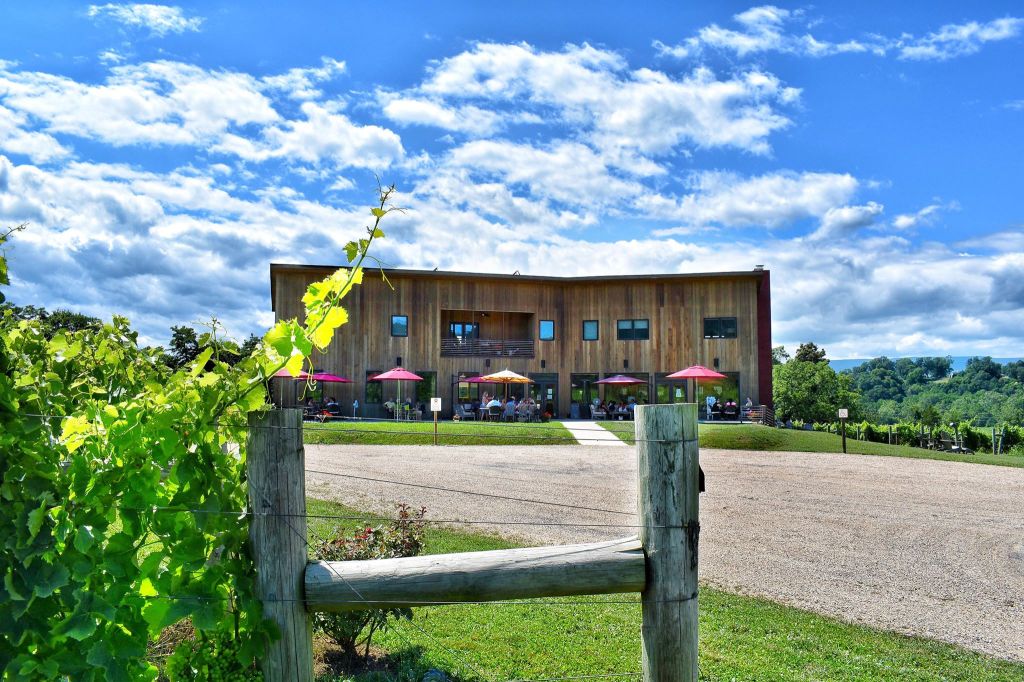

This was one of the first wine article ideas that I came up with, although it took several months to come to fruition.
Click on the link below to see the article.
Pairing Wine and History – Old Town Crier
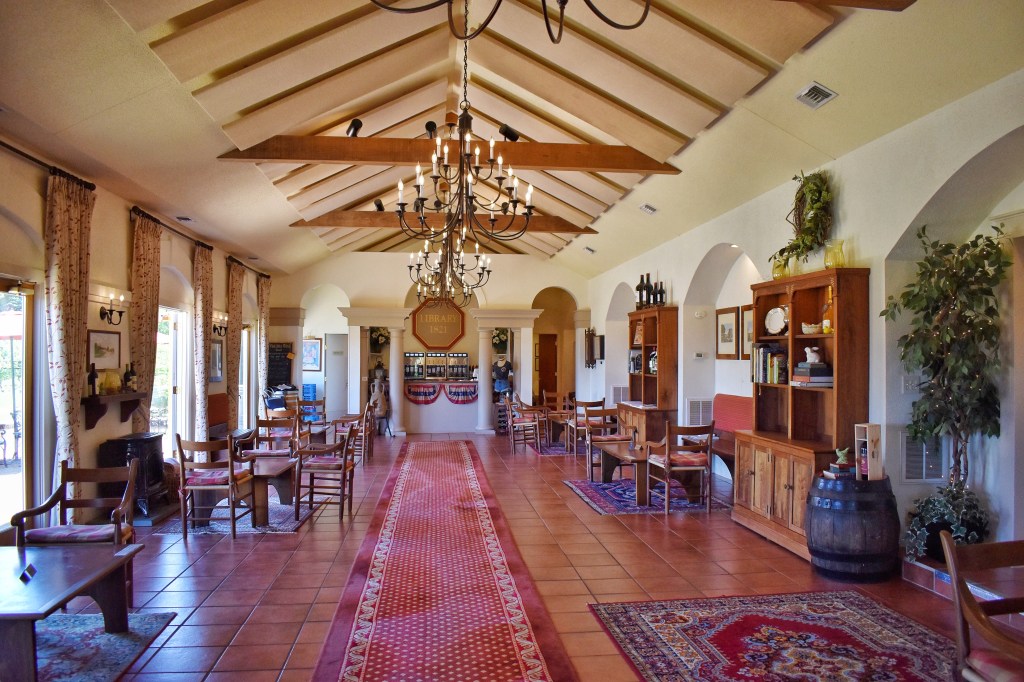

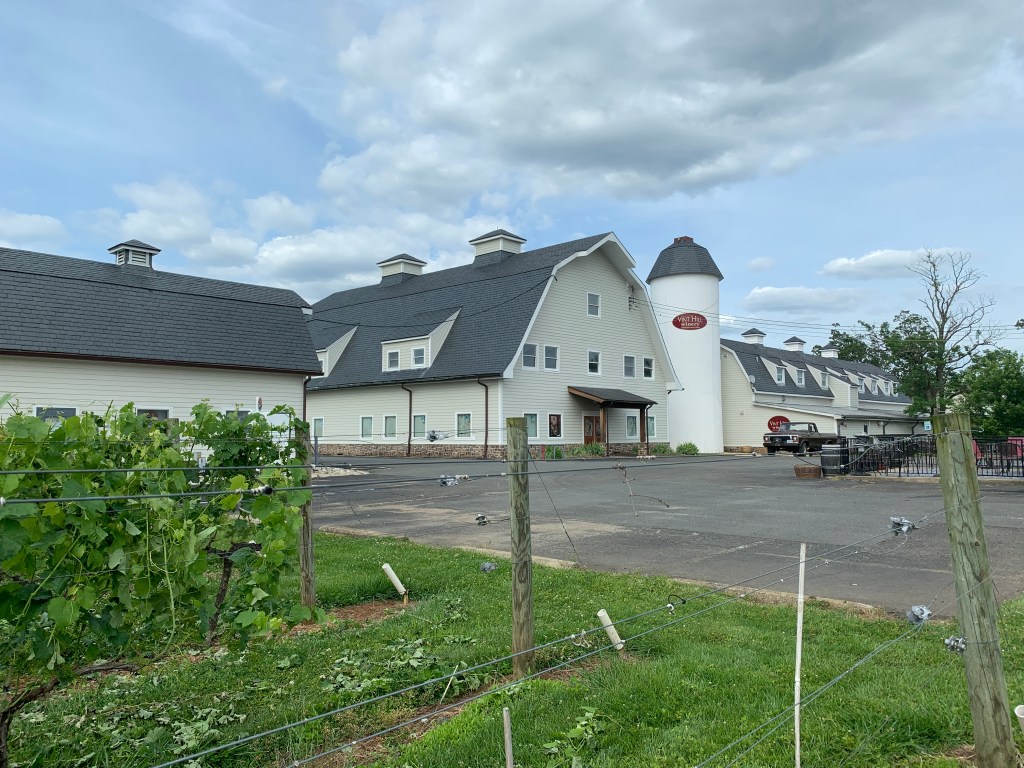
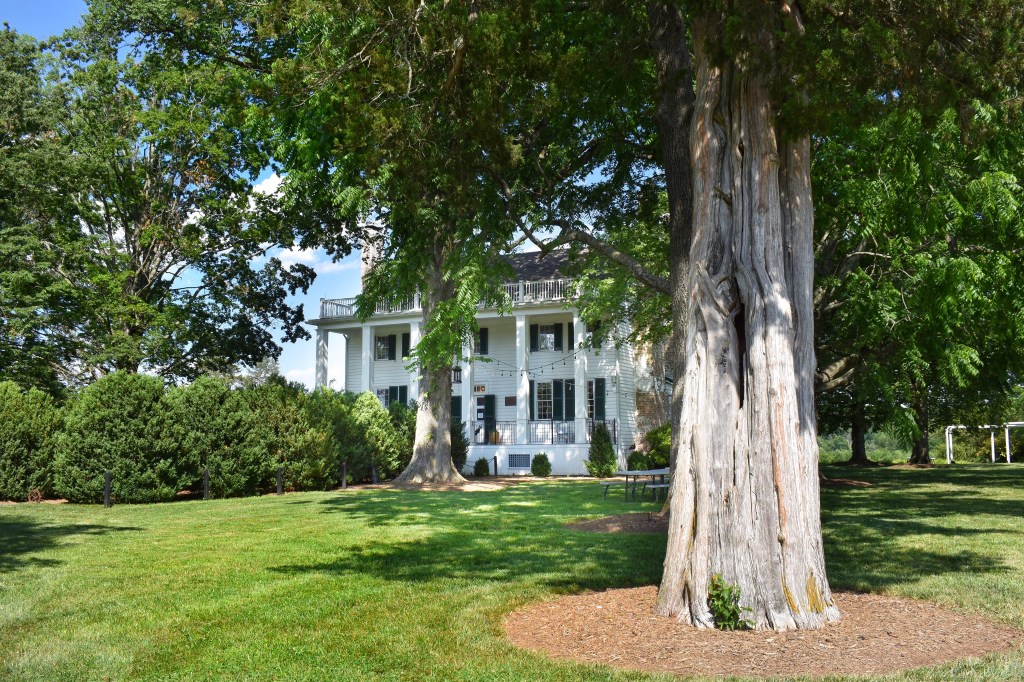
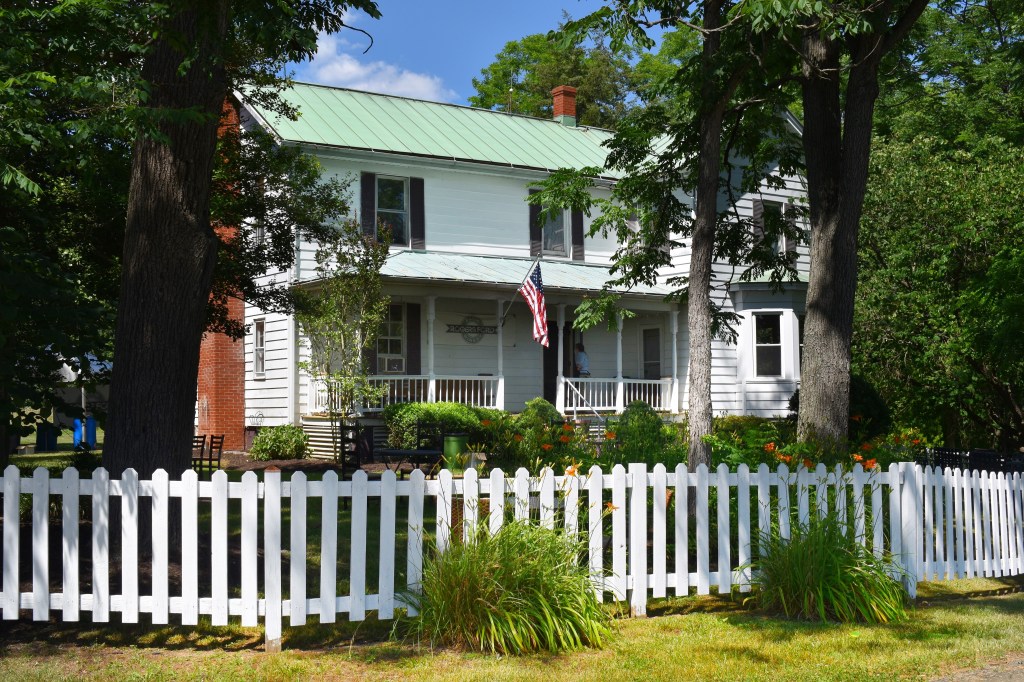

Three Creeks Winery demonstrated that no matter how much I (think I) know, one can always be surprised. One day I checked my favorite wine app only to see a new red dot on the map; I scratched my head asking…what is this?!?
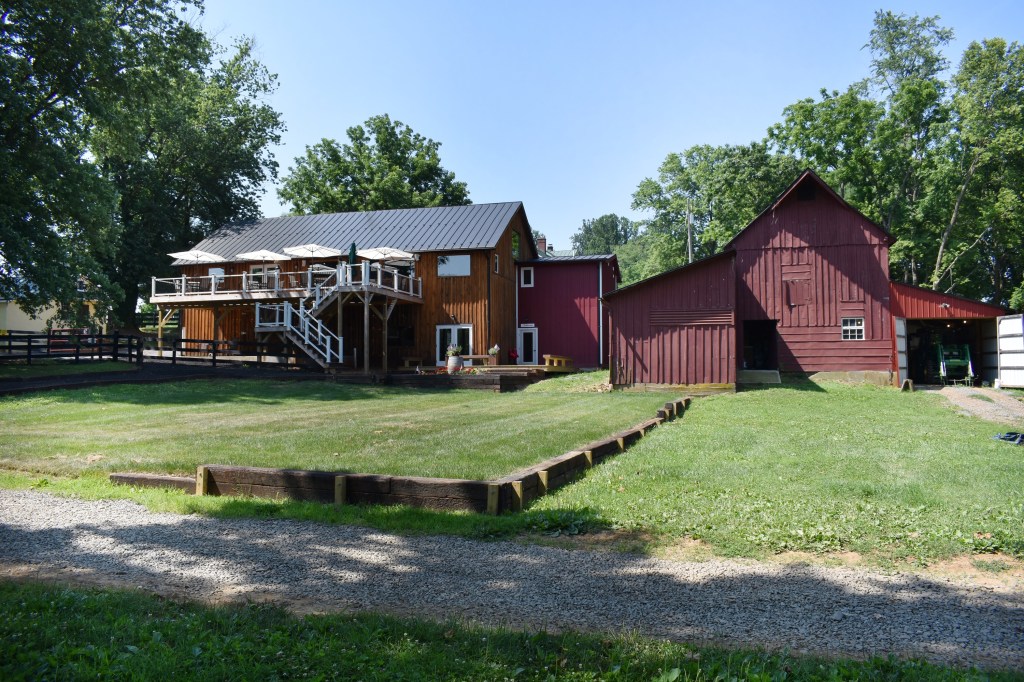
Turns out Three Creeks has been operating under the radar for a few years, only opening in late-June 2020. Owners P-J and John Lawrence loved wine so much they were already making their own as part of Vint Hill’s do-it-yourself program, mentored by Ashton Lough (now winemaker at Bull Run). I think they took the mantra ‘go big or go home’ a little too seriously, because they concluded that if making wine by the barrel was good, owing a winery would be even better.
With that in mind, they searched around the state until they found a 30-odd acre old farm just outside Leesburg, purchasing it in 2017. Not only is this a great area for grape vines, it’s surrounded by high quality neighbors (Casanel, Stone Tower, Zephaniah and others are less than 10 minutes away). With Ashton as the full time winemaker, they’re on a roll.
John gave me the full tour, including a ride to the vineyard. Two things stood out; the early 20th century barn, and the fact that three creeks converge here. John and P-J refurbished the ‘bank barn’ (so named because it’s set into the side of a hillside) to become their tasting room, while the creeks provided the name.
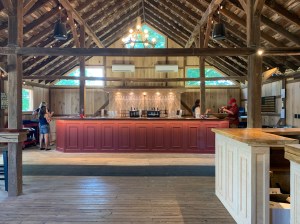

I loved the rustic charm of the tasting room, especially how they retained the original wooden floors. But the sitting area near one of the creeks seemed an equally great place to hang out (because of the water, no children are allowed on the property).
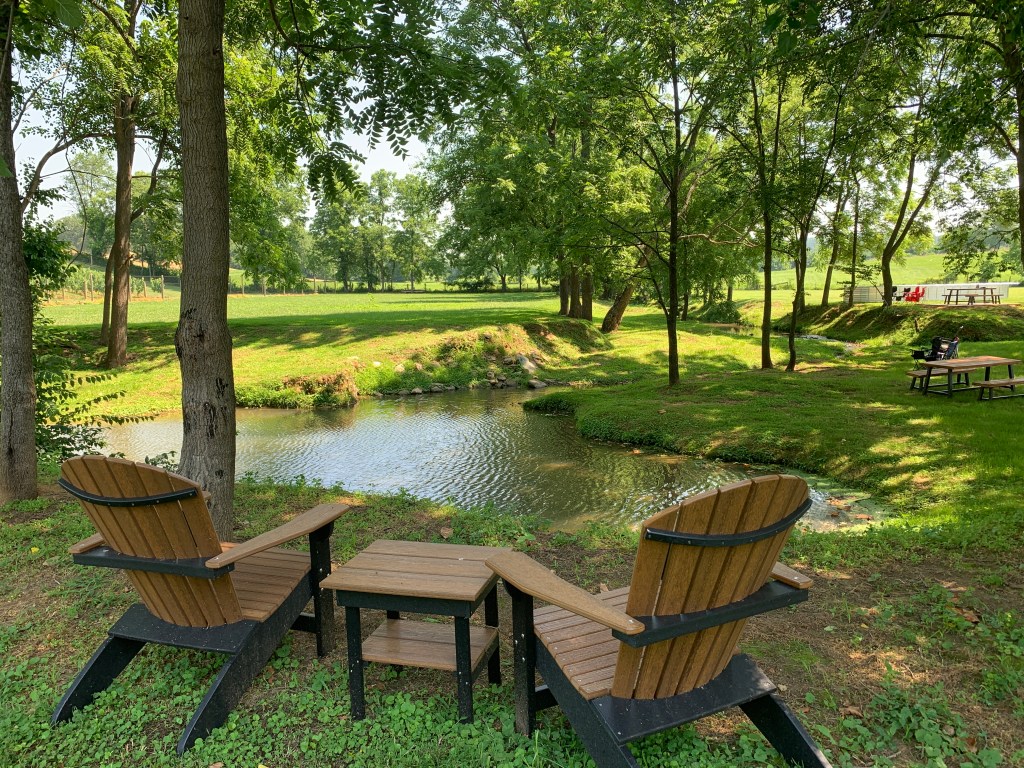
Right now they have 8 acres planted, with 2 more on the way. Nothing is producing yet, so for the time being Three Creeks is sourcing all their fruit from elsewhere. Hopefully by next year they’ll be able to produce their first batch of estate wine.
John explained to me the Rhône is his source of inspiration for wine, with Pinot being his all-time favorite varietal. In fact, Three Creeks offers both a GSM-blend (sourced from Oregon) and Pinot Noir to go along with their Virginia offerings.
First up were the whites from the 2018 vintage – which no doubt was the most challenging year of Virginia wine in recent memory. Despite that, Ashton did a great job. I especially liked the Chardonnay, which was accented but not overpowered by the French oak. The Viognier had some honeysuckle on the nose but it wasn’t ‘in your face’ like I sometimes find. This was a great start since if Ashton can do well with 2018 fruit, then he can make great wine with anything.
Next were the 2019 wines. The Rosé had the traditional salmon color you see in Provence-style wines. Although I’m usually not a fan of Vidal wines I really enjoyed theirs, which was crisp and had great apple notes. But my favorite of the day was their Petit Manseng, which I got a bottle of to take home. LOTS of citrus on the palate to the point you might think it had some sweetness, but it was totally dry.
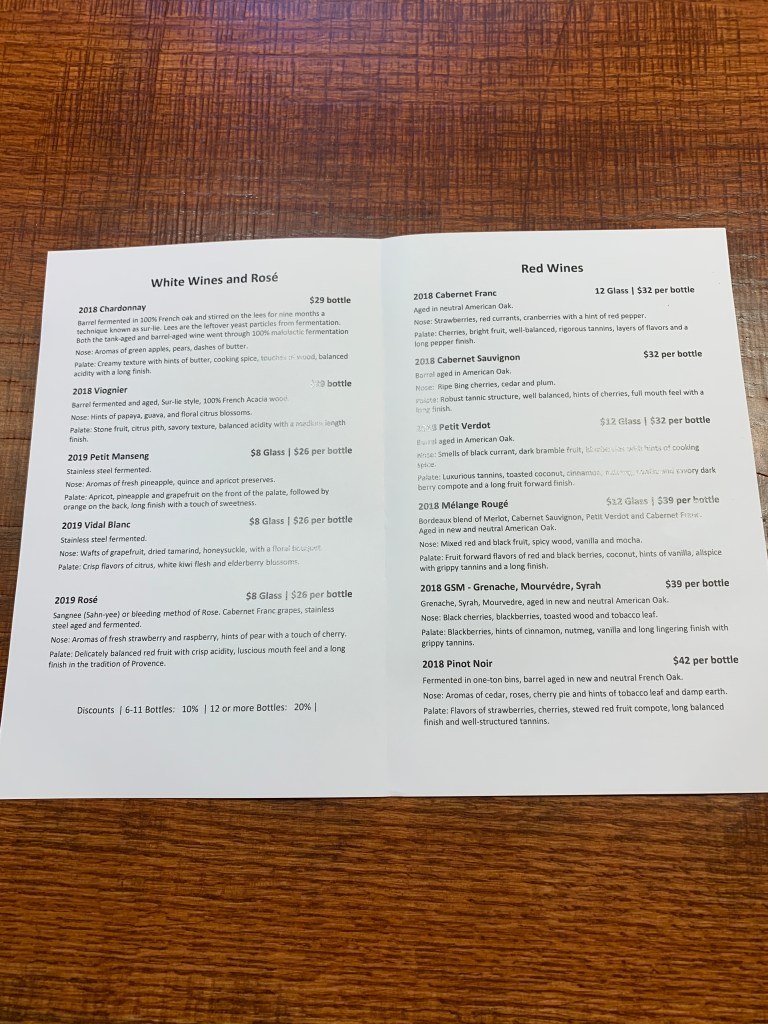
Lastly came the reds. My favorite red was the 2018 Petit Verdot, which was soft, had bramble fruit notes and spread out on the palate nicely. I also liked the Cabernet Franc, Cabernet Sauvignon and their Mélange red blend.
I can’t imagine a tougher year to start a business, but Three Creeks is off to an awesome start.

For the past several years multi-functional wineries have been all the range. Virginia changed its ABC laws in 2015, allowing wineries to serve beer as well as wine. As of the end of 2020, there are now 18 winery/breweries in the state, the majority of them opening since 2018.
Here’s the link to the Old Town Crier article
How To Find Great Beer in Virginia’s Winery Scene – Old Town Crier


My May 2019 article on Virginia rosé wine. See the link below for the full article.
Special Rosés for Mother’s Day – Old Town Crier



Here is the roster of my annual “Virginia Wine In Review” blog posts. All posts represent my personal views.
My April 2020 article on eco-friendly Virginia wineries. Special thanks to 53rd Winery, Loving Cup, and DuCard.
Eco-Friendly Virginia Wineries To Visit On Earth Day – Old Town Crier


SummerWind has an adorable little tasting room right outside Norfolk. As you drive up you’d think it’s someone’s home – which at one point, it was! They are also one of the newest wineries in the state, opening their doors in 2018.

The Norfolk area is a challenging place to grow wine. But owner Kim Pugh explained the key to success was using a strict regimen of canopy management to deal with the humidity. Except for their Chardonel all their 11 acres of vines are vinifera – which tells me they’ve been working extra hard in their vineyard.
Kim’s daughter Meagan took me through a tasting while Kim knocked out some paperwork. Meagan explained Michael Shaps is their winemaker, but the ladies are in close consultation with him to ensure their wines are crafted according to the styles they prefer.
With Shaps on their side, you know the wines are well crafted. They make 1500 cases/year, mostly drier styles. A few are ‘fun’ porch sipping wines but others have some really good aging potential.
For the white wines, we started with the Petit Manseng and the Chardonnay/Viognier; the former was citrusy, while the later was tangy with notes of white peach and apricot. Next were a pair of Cabernet Sauvignon-based roses, including a sparkling which I particularly liked.


For reds, I was surprised how light the 2017 Cabernet Franc was in both color and taste, without losing its pepperiness. Next up was the 2017 Merlot that had notes of black cherry. The semi-sweet “Pagan” blend (Merlot/Chambourcin/Cabernet Franc/Cabernet Sauvignon, named after a local river) was a good porch-sipping wine – and their biggest seller.
But my favorites were their Merlot-heavy “Tormentor” Bordeaux blend, and their Petit Verdot. The Tormentor (again named after a local river) had a nice smoothness to it, balanced by acidity and earth notes. The Petit Verdot was still my #1 pick though.

 Wine Trails and Wanderlust