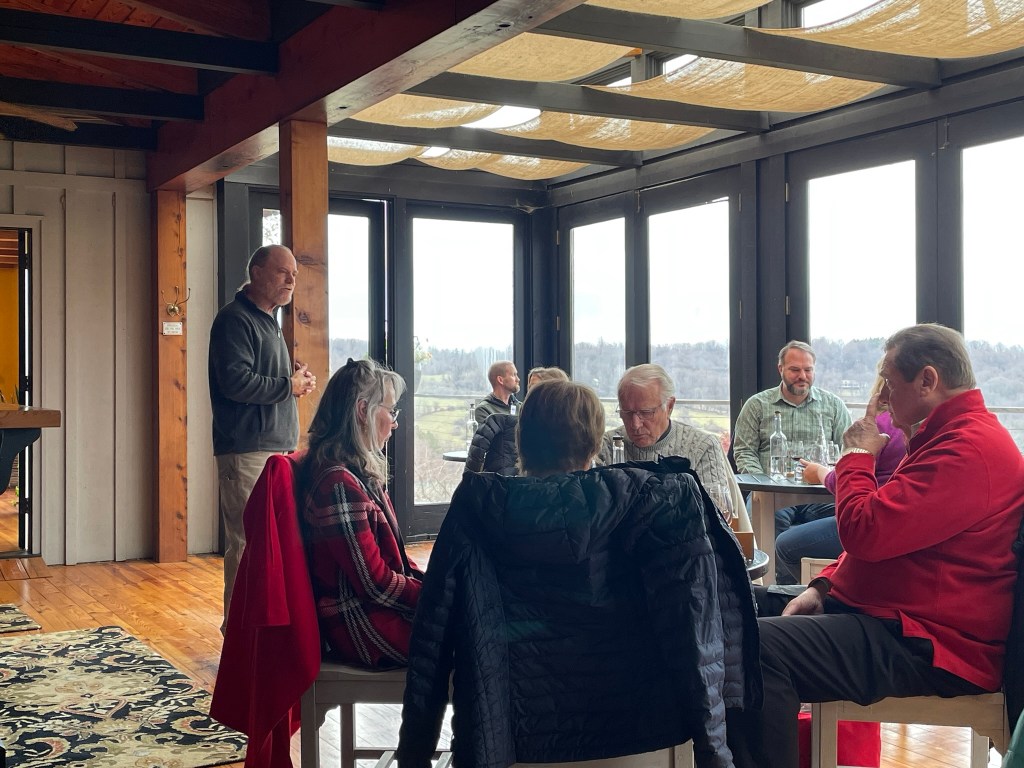
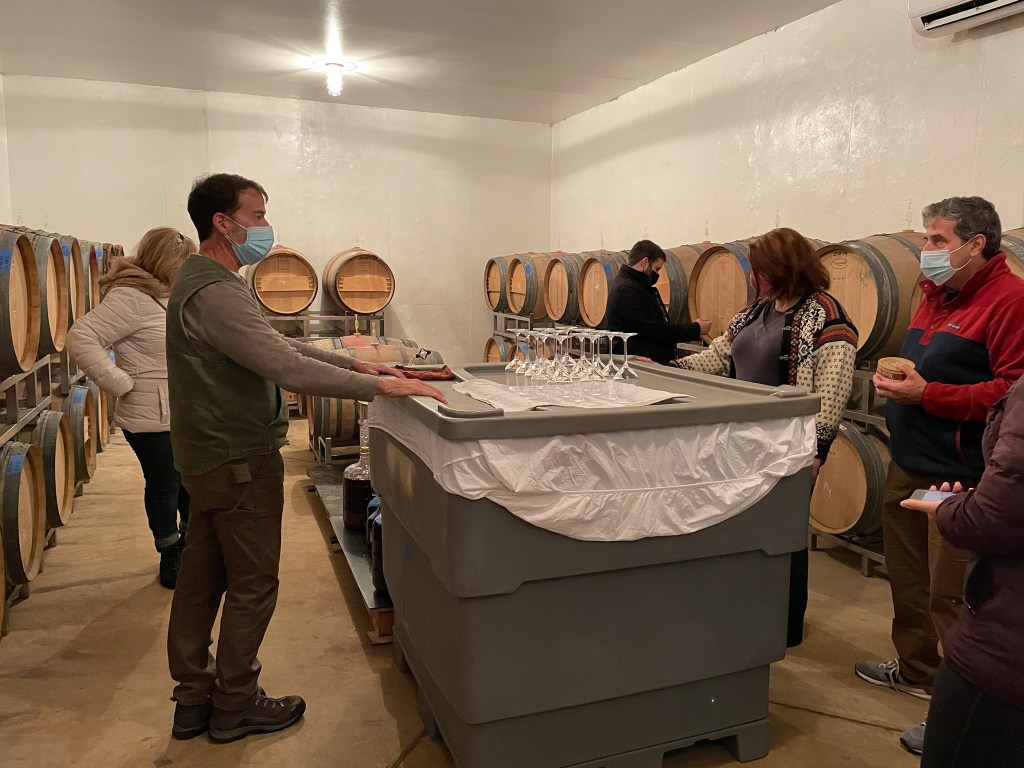
For years Linden Vineyards hosted special library wine tastings in November and December, where they dug deep into the cellar and brought out wines that dated back as far back as the late 1980s. COVID forced them to change things up, so instead they had a series of special “Fireside Chat” events. These included a tasting & discussion with owner/vintner Jim Law who poured an assortment of library wines, plus a few barrel samples and ‘mentor wines’ wines that served as inspirations to his own winemaking.
If Jim hadn’t become a winemaker I could see him as a teacher. He seems to enjoy the opportunity to impart his knowledge of wine and winegrowing to his guests. I suspect he keeps the price-point of his library wine lower than it could be so a larger number of people can enjoy them.
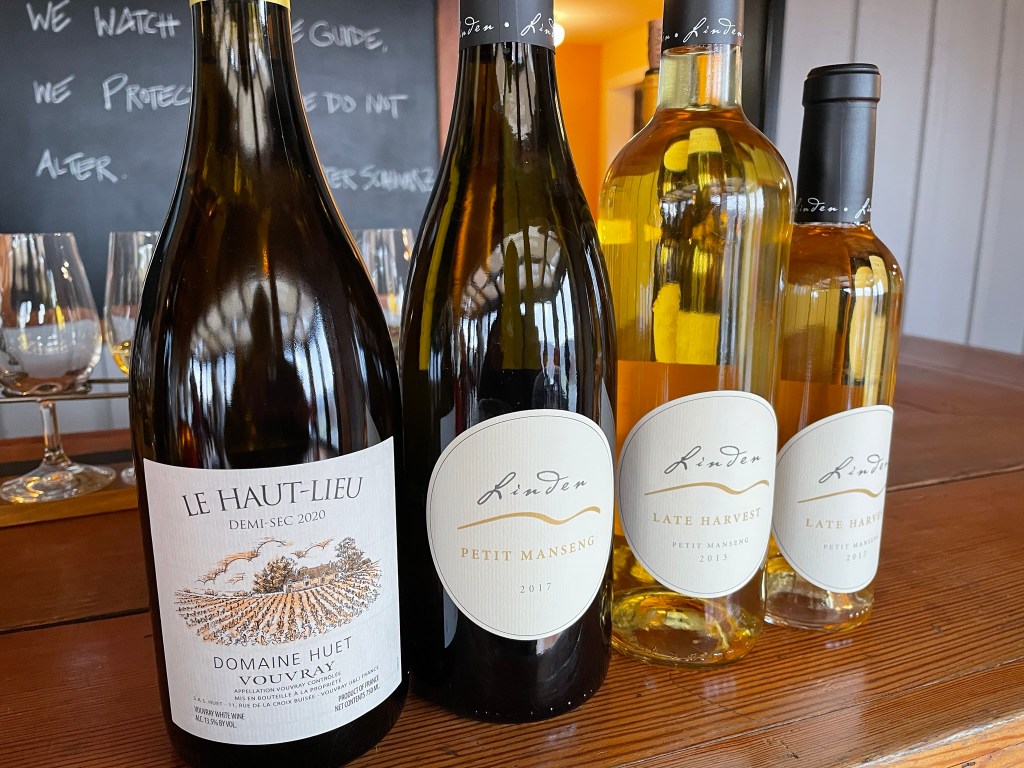
We did three flights of wines, each with four samples. Three were from Linden, plus a ‘mentor wine’. Jim explained that if you want to make great wine, you need to sample great wines from elsewhere. To nobody’s surprise he chose a Meursault (Chardonnay) and a Vouvray Demi-Sec, but his Bordeaux pick was enlightening.
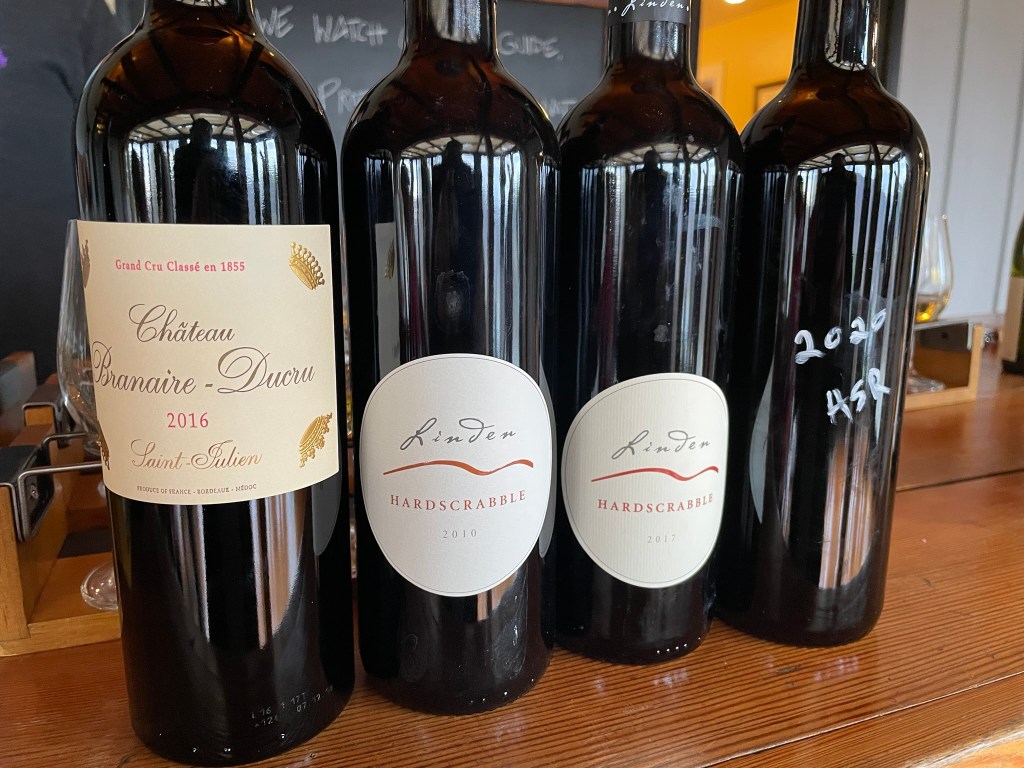
Most Bordeauxs I’ve tried to be heavily dominated by Merlot or Cabernet (70-90%), despite their fame as blends. While Cabernet Franc, Petit Verdot, or Malbec may be there, they tend to be a tiny fraction of the whole. But his choice of a 2016 Branaire-Ducru (from St. Julien) was only 64% Cabernet Sauvignon, 27% Merlot and dashes of Petit Verdot and Cabernet Franc. This blend more closely emulates Jim’s winemaking, as his newer vintages rarely see a single grape exceed 60% of the whole.
As we started our first flight Jim took questions, ranging from how he got into winemaking (a dinner with his parents), to the 2021 vintage (looks like it will be good, despite late rain), to the future of Linden (hopes his daughter and son-in-law will take over eventually).
My favorite discussion involved his test vineyard. Climate change is very real, and he fully recognizes the vagrancy of Virginia’s weather won’t allow him to continue farming like he’s done in the past. While many wine drinkers tend to overly focus on Bordeaux grapes, he’s willing to embrace any grape that makes good wine.
He didn’t give a full roster of the grapes planted there but he did mention he has a row of Fiano he’s very happy with. In the future he’d love to try some of the new crosses and hybrids coming out of Europe, including Marselan (a cross between Grenache and Cabernet Sauvignon).
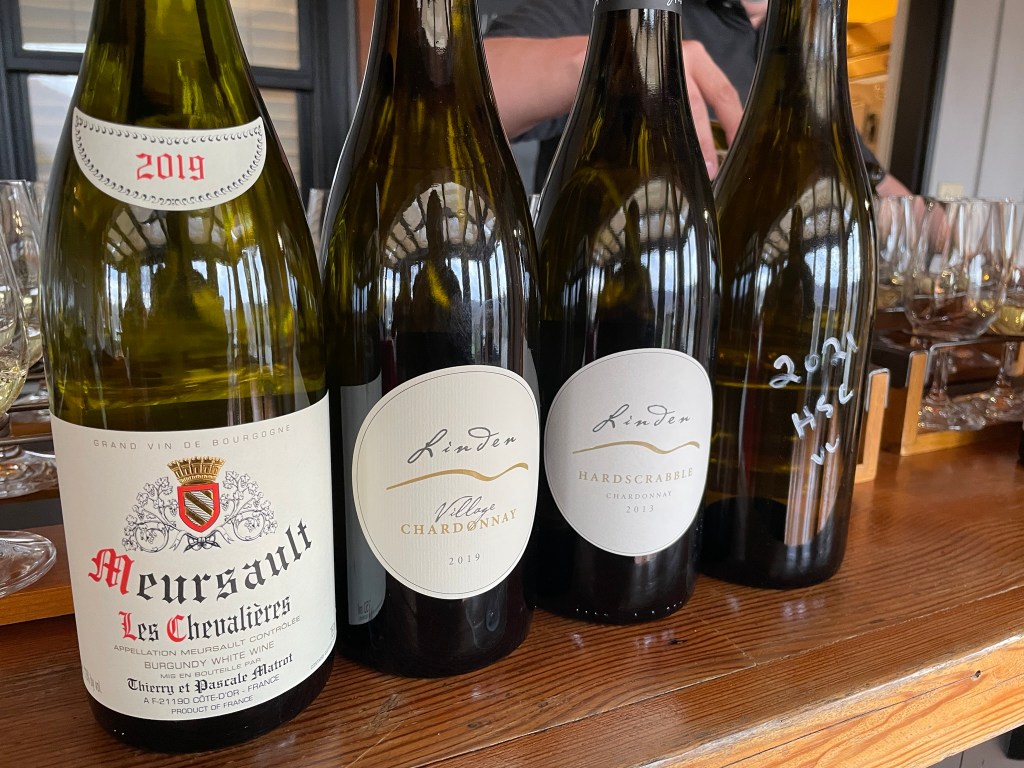
As for the Linden whites, we had the Meursault, followed by a 2019 Village, 2013 Hardscrabble, and a barrel sample of the 2021 Hardscrabble. Stylistically the Meursault was different but I could see why Jim chose it.
The 2019 Village was still new and wasn’t yet integrated. Jim said it probably won’t be ready till next year. The 2021 barrel sample was almost like tasting raw cider.
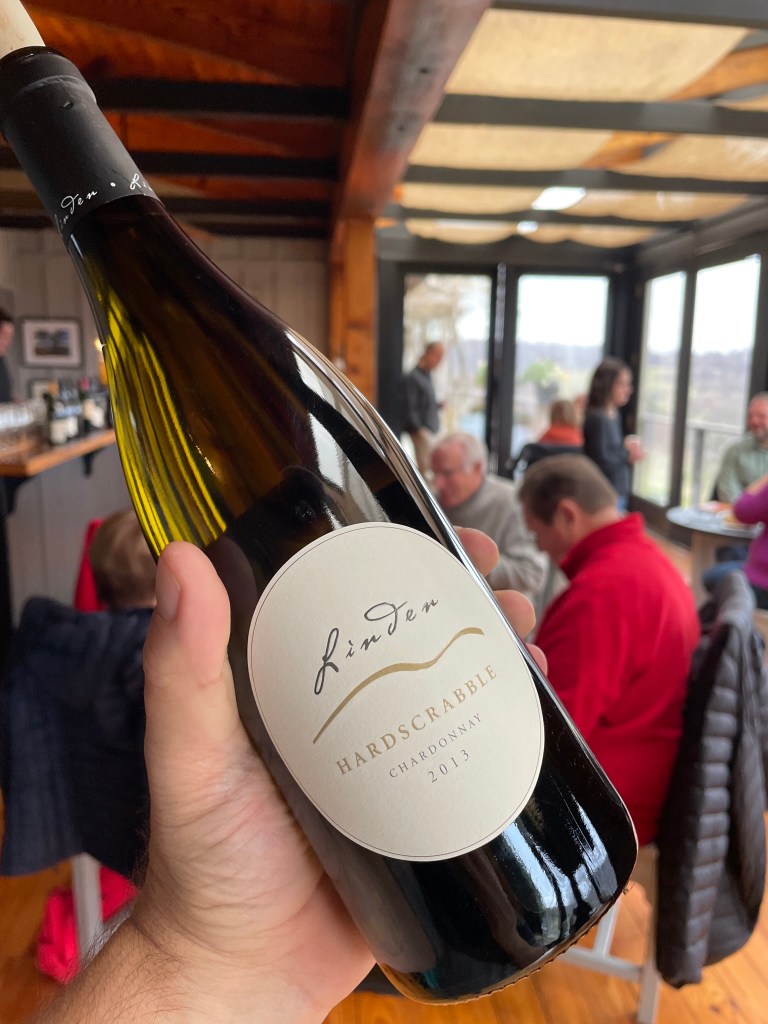
My favorite by far was the 2013 Hardscrabble. This Chardonnay had great depth and color. I’m learning I’m really enjoying older Chardonnays, and this was definitely age-worthy.
For the reds we had Hardscrabbles from 2010, 2017, and 2020, plus the Bordeaux. 2017 was an outstanding year and it’s markedly improved from last year when I tried it. 2020 was of course young but interesting. 2010 was really enjoyable; it had more secondary characteristics but there was still fruit there. I was tempted to buy one at only $75 but showed restraint.
We finished with the dessert wines. If you like the Late Harvest get them – it seems like it’s getting harder and harder to make them.
There are many good wineries in Virginia. There are a few great ones. But if Virginia had a “Premier Grand Cru” or “First Growth” category, that’s where you’d find Glen Manor.
Owner/winemaker Jeff White didn’t plan on becoming a winemaker, or even growing grapes. His vineyard is actually his family farm which goes back 4 generations. But a summer working with viticulturist Tony Wolf gave him an appreciation of Virginia wine, and that lead to an internship with Jim Law. The rest is history.
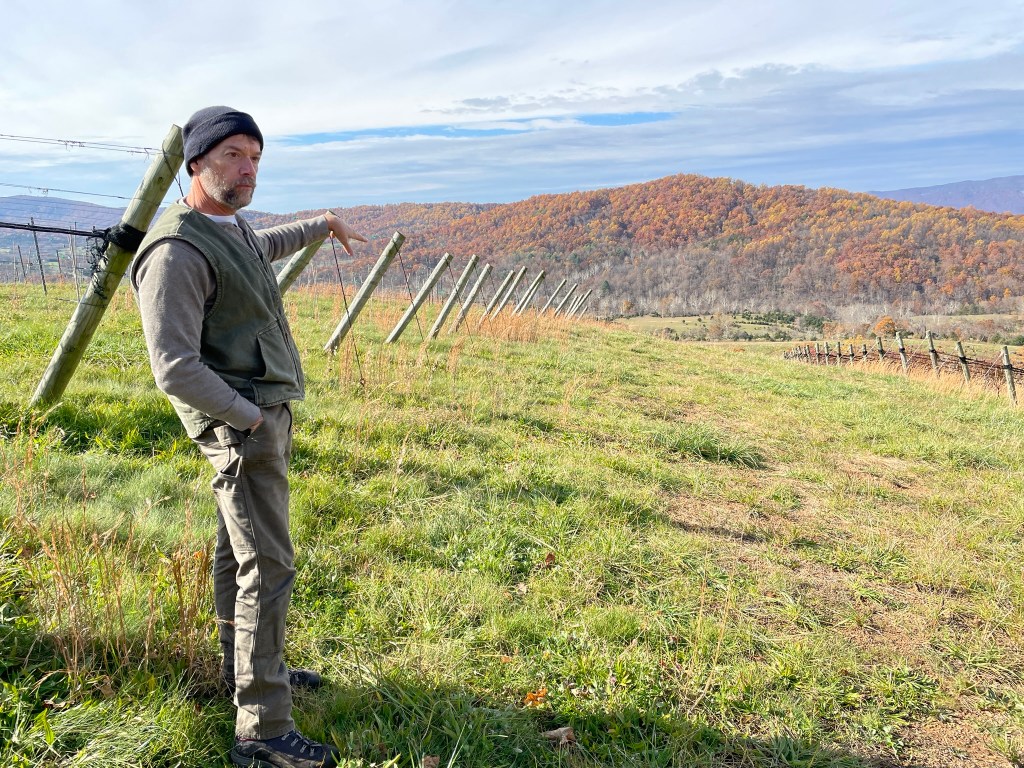
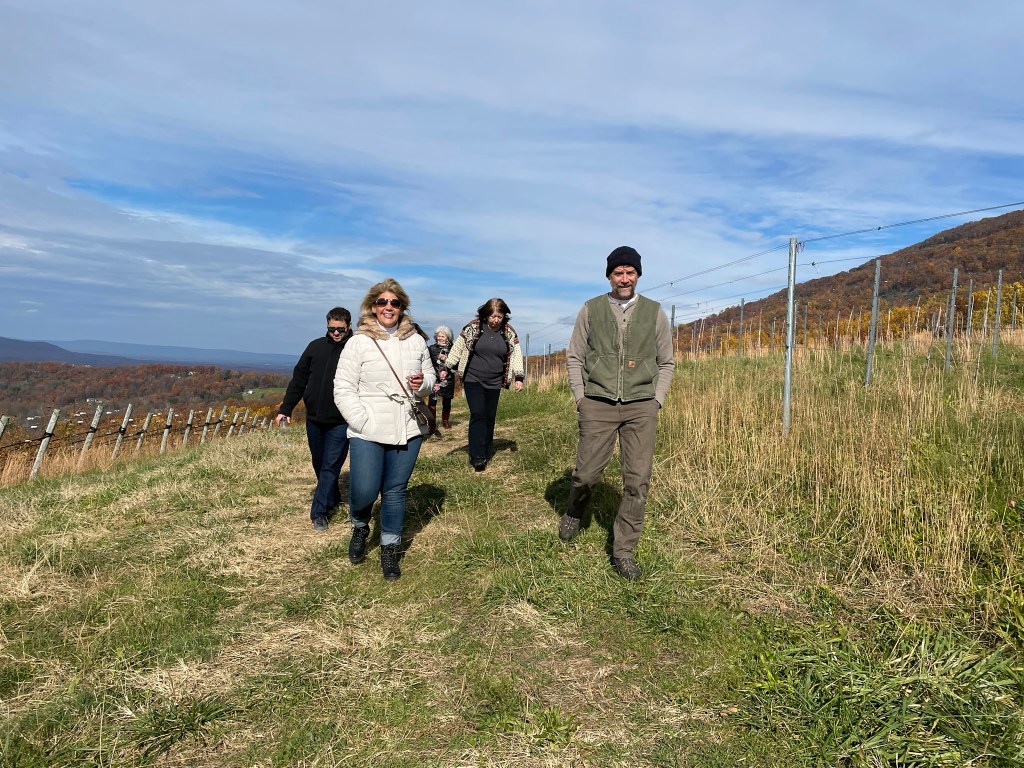
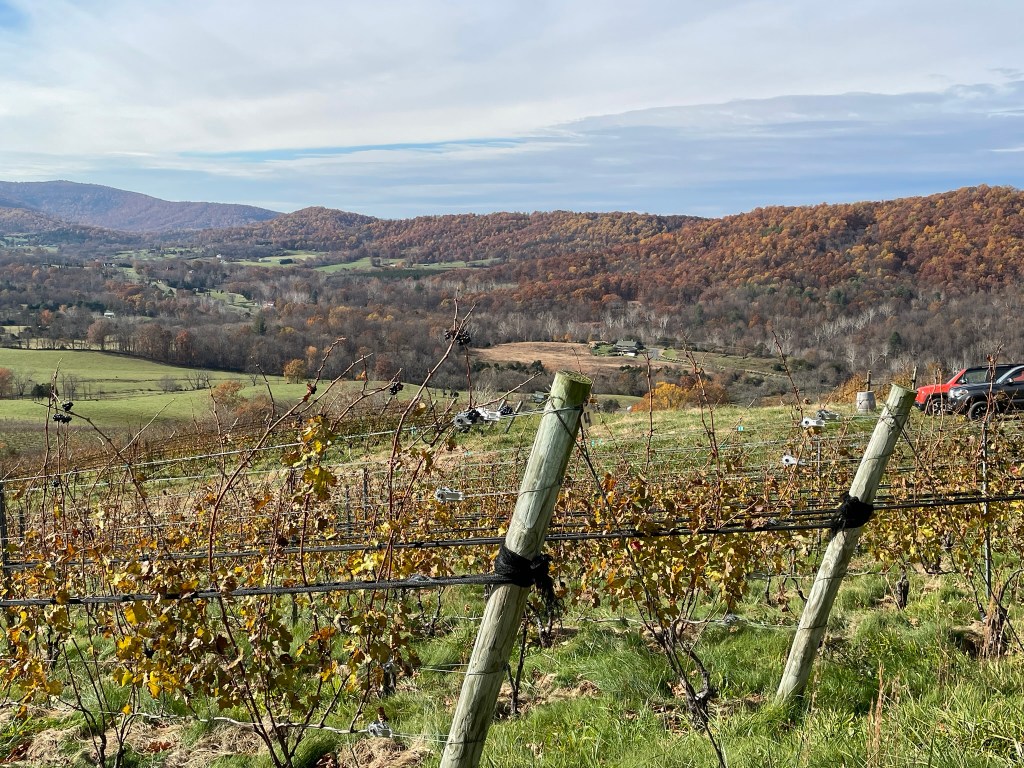
Glen Manor has one of the prettiest vineyard views anywhere in Virginia. Its 17 acres of vines tops out at 1400 feet, right below the northern entrance of Shenandoah Park’s Skyline Drive. I’d always wanted to visit the vineyard and this November finally had my chance when a friend invited me on a members-only tour.
The vineyard is so steep that Jeff’s insurance won’t permit him to allow visitors there, so I had to rent a 4 x 4 vehicle to traverse the slope and sign a waiver as a condition of doing the tour. Well trust me – the view was worth it.
While doing our wine tasting Jeff talked at length about the vineyard and his family history, even pointing to a tree that he once climbed as a kid. Since he’s nearly always in the vineyard or cellar (often working at night) visitors including myself rarely have the chance to meet him one-on-one. But that’s ok – his wife Kelly is an amazing hostess, although I admit I miss the focaccia bread she’d leave on the counter, pre-COVID.
On the topic of legacy, Jeff mentioned how his niece Ashleigh White had recently gotten into the winemaking (and winegrowing) business. She’s still young and has the travel bug, so her path in life isn’t set. But one can hope there will be a 5th generation on the farm.
The vineyard’s westward orientation makes it a ‘hot’ site, which guides his farming practices. Jeff picks his fruit at night using headlamps, along with a vineyard team/family unit that emigrated here from Mexico. The story of how Jeff assisted the Morales family emigrate to the US and José’s own life story is amazing, but that’s probably a discussion for another time.
Jeff explained “I would say this was a pretty typical vintage in very untypical climatic times”. The reds seem to be pointed towards finesse rather than power, while the whites and future rosé show a lot of promise. Of course, that’s all in the future and blending trials haven’t started. At this point the whites seemed more like raw apple cider than wine.
My companion and I sat outside for a special library flight which focused on their Hodder Hill (Cabernet-dominant red blend), St. Ruth (usually Merlot-dominant), and Petit Manseng.
One of the Petit Mansengs was a tad too sweet for me, but their Petit Mansengs have otherwise been consistently stellar.
Don’t ask me to pick a favorite red; that question is too hard, and I didn’t take detailed notes regardless. Glen Manor’s reds have a very distinctive earthiness to them that I love. I made sure to get their 2017 St. Ruth.
After that it was time to return home. Hopefully in another year I’ll be a member and do this tour again.
Thank you to the Shenandoah Wine Trail for the invite to this event! It was great to see so many faces I hadn’t seen in a long time.
It’s hardly a secret that the Shenandoah Valley is my favorite wine trail in Virginia. Heck, it’s one of my favorite places in Virginia, even without the wine.
If you want to improve your palate, the only way to do so is to sample more wine. To help me in this quest I invited a group of friends over so we could blind taste sparkling wines from around the world.
I’m a believer in the adage “the brown bag doesn’t lie”. It’s easy to go into a tasting with pre-conceived notions, so to make things fair we bagged all the wines – even going so far to tape the necks of the bottles up. Fortunately, we had a good spread to choose from.
Paul Launois NV Composition #3 Grand Cru (Champagne, France)
Trump Winery 2014 Blanc de Blanc (Monticello, Virginia)
Mirabella Satèn (Franciacorta DOCG, Italy)
Thibaut-Janisson NV Extra Brut (Virginia)
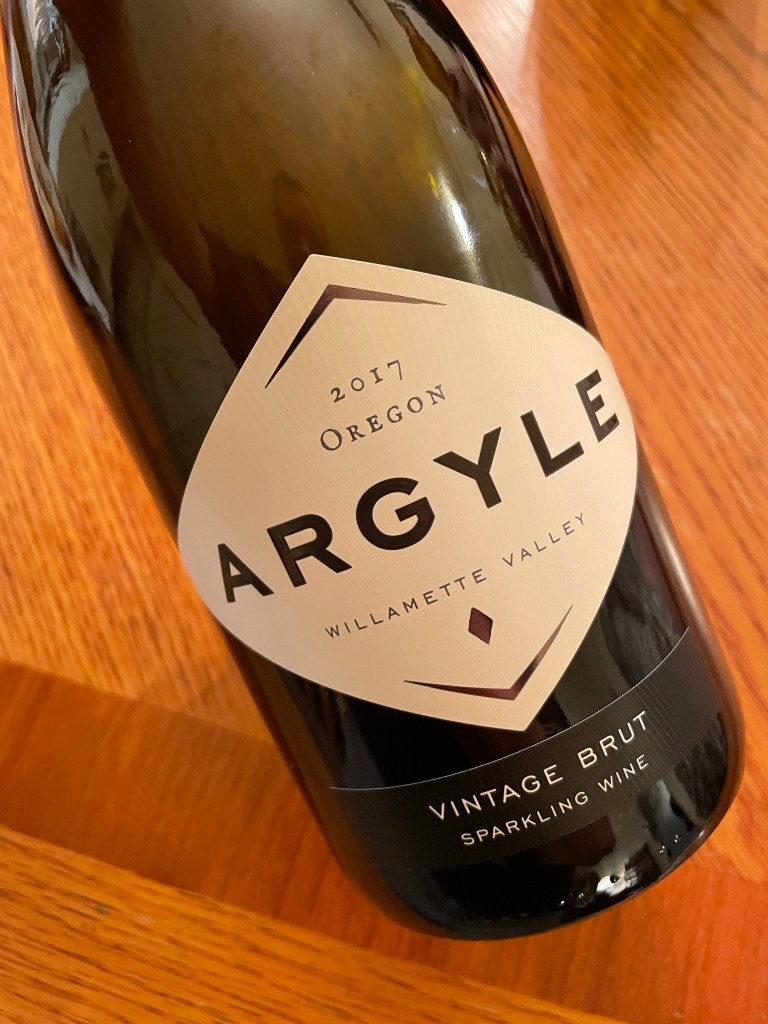
Argyle 2017 Sparking Brute (Willamette Valley, Oregon)
The strong Virginia representation was no coincidence. Not only am I a fan of drinking local, Virginia is making outstanding sparkling wines.
Patricia Kluge of Kluge Estate (now Trump Winery) started the trend for high-end Virginia sparklings by inviting French winemaker Claude Thibaut to Virginia as a consultant, leading to the release of their first Blanc de Chardonnay in 2007. Today, Claude is half of the Thibaut-Janisson partnership which is one of the best-known sparkling wines in the state.
I was thrilled to have a Thibault-Janisson in the lineup, but the other Virginia contenders were also very strong. Trump Winery is a two-time winner of the San Fransisco Wine Chronicle’s “Sparkling Sweepstakes”, perhaps North America’s most prestigious wine competition. When I saw their 2019-winner 2014 Blanc de Blanc I was fast to grab it.
I discovered Afton Mountain’s sparkling this year at a Virginia wine media event that featured multiple sparklings and it was my favorite of the day. Obviously, I was excited when someone offered to bring it this evening.
The other sparklings I wasn’t as familiar with, but having bottles from Italy, France, and Oregon made this blind tasting especially interesting. Extra props to the guest who offered to bring a Grand Cru champagne.
We didn’t do the reveal until the winner was announced.
Round 1 / Bracket 1:
Wine #1 / Afton Mountain (1 votes)
Wine #2 / Paul Launois (5 votes)
The Afton was very bright and approachable. We sensed tart green apple notes. “Bright, effervescent” were mentioned.
The Paul Launois had a dough-y note to it. There was also more weight, and it had a longer finished. Very well balanced as well.
Don’t get me wrong – we enjoyed both. We thought the Afton was a very good crowd-pleaser, but the Grand Cru champagne won out.
Winner: Paul Launois
Round 1 / Bracket 2:
Wine #3 / Trump Blanc de Blanc (3 votes)
Wine #4 / Mirabella Satèn (3 votes)
The Trump Blanc de Blanc is something of a ‘cerebral’ sparkling. It was initially a bit musty but that blew off. It had a bready note on the palate, and some noticed a spice note at the end. We felt it needed a lot of swirling to get the best out of it.
The Mirabella was exceptionally bright – almost too much so. Green apple, lemon-lime, and honeysuckle notes were mentioned. High acid up front but not on the end. At least one person mentioned an almost milky note, with some brioche.
We were evenly divided on this round. At first nobody seemed to love either, although #3 improved as it opened up. Since it was tied and I was the host, my vote was the tiebreaker and we went with Trump Winery.
Winner: Trump Winery
Round 1 / Bracket 3:
Wine #5 / Thibaut-Janisson (6 votes)
Wine #6 / Argyle (0 votes)
There was a lot going on for the Thibault-Janisson, all of it great. It was easy drinking but complex. Well balanced. It had a brioche note in exactly the right proportion. Someone mentioned notes of spice cake or star anise. “Tastes like Christmas” was also mentioned. On top of all that, it had a wonderful golden color.
The Argyle was also very popular, and we commented on how unfair it seemed for this wine to be eliminated early. It was bright and easy drinking; perhaps an especially good wine for those starting to drink bubbles. Everything seemed well proportioned.
This was by far our most popular round, and we immediately viewed the Thibault-Janisson as the likely winner. That said, the Argyle was maybe our 2nd favorite of the evening. I gave the Argyle a wild card advance into the next round.
Winner: Thibault-Jannison (but the Argyle also advanced to the next bracket)
Round 2 / Bracket 1:
Wine #3 / Trump Winery
Wine #5 / Thibault-Janisson
We felt the Trump wine noticeably improved since we last tried it. One other guest and I started to go back and forth on a favorite; another guest refused to pick a favorite because she loved them both. But the Thibault-Janisson was just so good we gave it the win here.
Winner: Thibault-Janisson
Round 2 / Bracket 2:
Wine #2 / Paul Launois
Wine #6 / Argyle 2017 Sparkling Brute
No notes here; the winner was the Argyle by a large margin.
Winner: Argyle
Round 3: Winner’s Round
Wine #5 / Thibaut-Janisson
Wine #6 / Argyle
We basically predicted these two wines to be the final contenders as soon as we tasted them earlier in the evening. No new tasting notes here; we happily finished both bottles.
It may have been an informal competition, but all of the guests were definitely winners.
Favorite bottle of the night: Thibault-Janisson Extra Brut
This was far from my first visit to Philip Carter Winery (PCW) or even my first blog here. But I happened to run into owner Philip Carter Strother at PCW’s sister winery of Valley View Farm and he insisted I make a new trip, so an update was in order.
A discussion of wine isn’t supposed to be preceded with a history lesson, but in the case of PCW I can’t help myself. It helps that Philip loves to discuss his family history. And you can’t blame him – you would too if you were able to trace your family’s lineage to America’s first winemaker.
While Thomas Jefferson is America’s most famous wine connoisseur, the truth is he failed when it came to growing wine. Few realize that almost 20 years earlier the Carter family succeeded where even Jefferson failed.
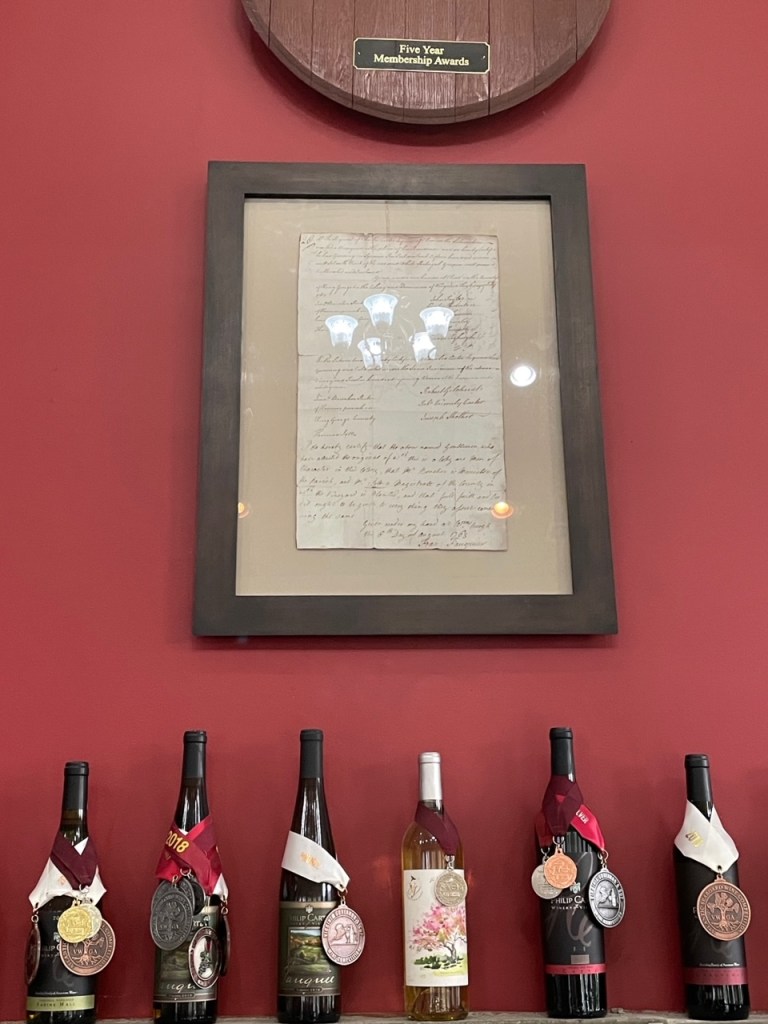
The Carters were among the Virginia colony’s most influential landowners. In 1762 Charles Carter sent a dozen bottles of wine made from vines at his plantation of Cleve (located in today’s King George County) to London’s Royal Society of Arts. Impressed with what they sampled, the Society awarded him a gold medal for his “spirited attempt towards the accomplishment of their views, respecting wine in America.”
Replica of the certification validating the Carter family was growing a vineyard w/both vinifera and American vines, dated Aug 6, 1763
But getting back to PCW, a few things had changed over the past several years. For one, Valley View’s vineyard is now in full production, which gives PCW access to high-quality fruit. Another change was their new winemaker, Tony McDonnell. Lastly, PCW’s tasting room went through a major upgrade. Philip brought me up to speed on all these.
Valley View is owned by PCW but operates as a separate winery (although all winemaking is done at PCW). It’s only 10 miles north but the site is much better situated for wine growing, with higher elevation and excellent soil. 5 acres of vinifera vines are planted there, with more on the way.
The importance of a really good vineyard site can hardly be overstated, especially given the extreme weather variations that’s becoming apparent in Virginia. Smart vintners are adjusting by either replanting with hardier grape varietals or finding better vineyard locations. Philip is doing both. PCW’s estate “Ten Vines” vineyard will likely see more hybrids in the future, while Valley View is poised to become their prime source of vinifera.
Philip also talked extensively about his new winemaker, Tony McDonnell. Tony previously worked at a large commercial winery in Pennsylvania but was looking for something more artisanal. Philip wisely offered him a job here. While only the newest wines in PCW’s lineup had his touch, everything he had a hand in I was impressed with.
Lastly, PCW has gone all-in on upgrading their indoor and outdoor spaces. We chatted at a new upstairs club area. Their outdoor space was recently completed. While COVID is almost certainly the main rationale behind this new patio, it’s an upgrade that I’d welcome in any case.
I had the full lineup of PCW wines, with a cider thrown into the mix. Occasionally Valley View Farm and PCW may share a wine, but for the most part they are kept separate.
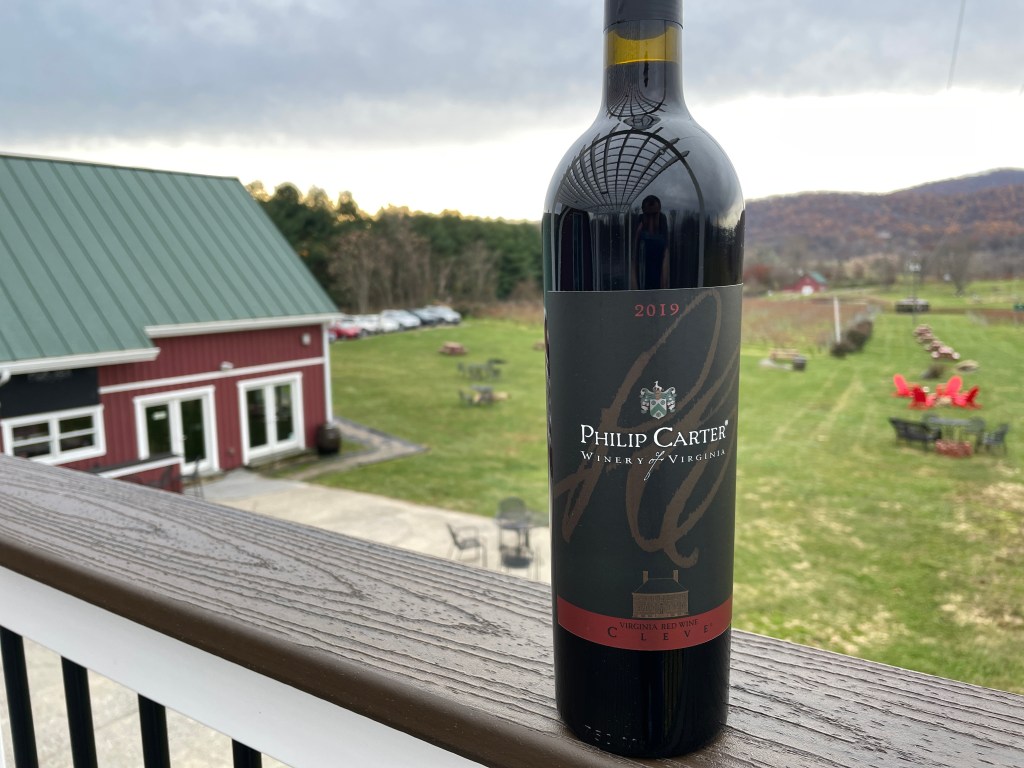
If I had to pick a favorite it would have been the 2019 Cleve, which was young but outstanding. The Viognier and cider were worthy runners up, and the Chambourcin/Norton blend was shockingly good – and I say that as someone who rarely loves either grape.
For whites and lighter wines:
2020 Chardonnay: Fermented half in steel & half in oak, this would appeal to those who love both styles.
2020 Viognier: Floral, honeysuckle nose with a nice smoothness to it. I’ve been on a Viognier kick lately and thought this was exceptional, so I brought a bottle to go.
Noble Pome: A dry cider infused with honey. While Valley View is their main cider location, occasionally you can find ciders here as well. I often find modern ciders too overwhelming but this was much more wine-like in style.
2020 Roswell Rosé: Chambourcin, smelled like strawberries. Fruit notes but dry.
For reds & dessert wines.
2020 Cabernet Franc: Little bit of spice with some fruit notes.
10 Vines Cabernet Sauvignon: “10 Vines” is a label used by PCW for more experimental wines, namely from out of state. This was a California Cab Sauvignon which I certainly enjoyed, even if it was a stark difference to what I’m used to elsewhere in the state.
10 Vines Merlot: Ripe is the key adjective here. I’m used to California Cabs so a Merlot was a nice change of pace and I really enjoyed it.
2019 Cleve: 50/50 Petit Verdot and Tannat. Not as young as I would have thought; well integrated oak, nice balanced overall.
2020 Chambourcin/Norton blend: Norton dominates the notes but it doesn’t have the ‘foxy’ characteristic I’m used to. Fermented in steel then neutral oak.
Sweet Danielle: Late harvest Petit Manseng.
2015 vintage “1762”: Port-style with Chambourcin.
I’m really looking forward to seeing Tony’s upcoming wines (and ciders – he makes those too). Have you been to PCW lately? What do you think of the changes?
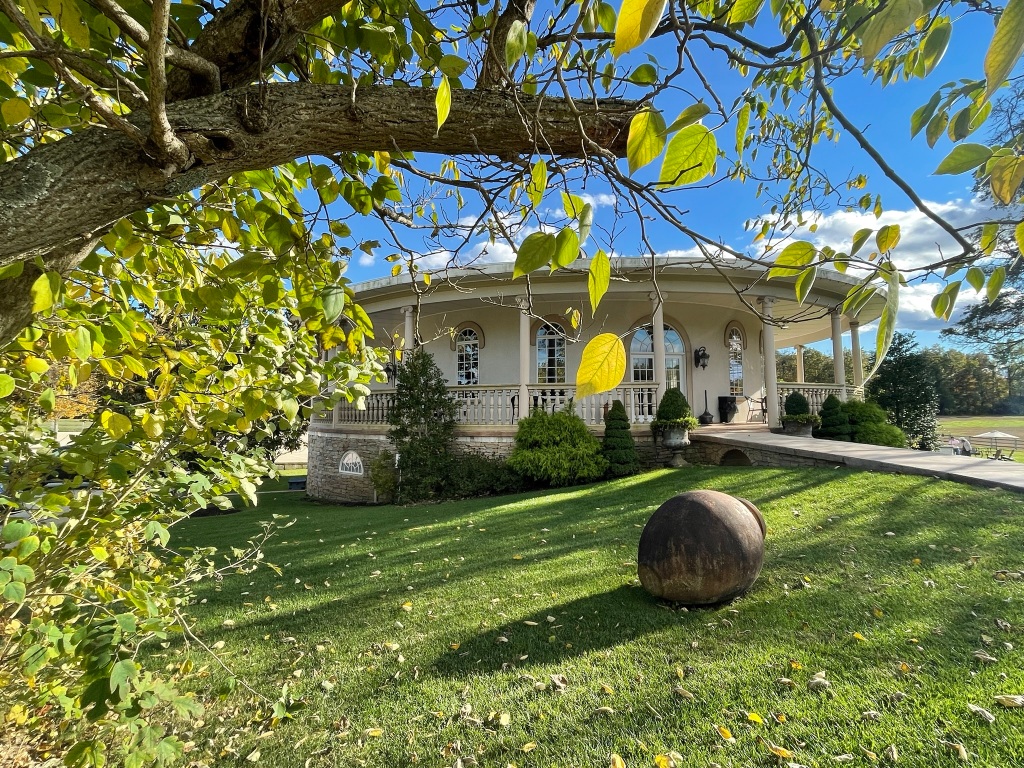
Most of my wine blogs are easy to write, mostly because the format is the same. I visit, try some wine, and write about what I liked (or more rarely, what I didn’t). In that respect my visit to Morais vineyards was a success. It helped I also got to caught up with a friend I hadn’t seen since pre-COVID.
But what makes this visit different is any discussion of Morais would be incomplete without talking about owner José Morais and Portugal’s distinct style of winemaking, because these things are intertwined. So let’s start at the beginning.
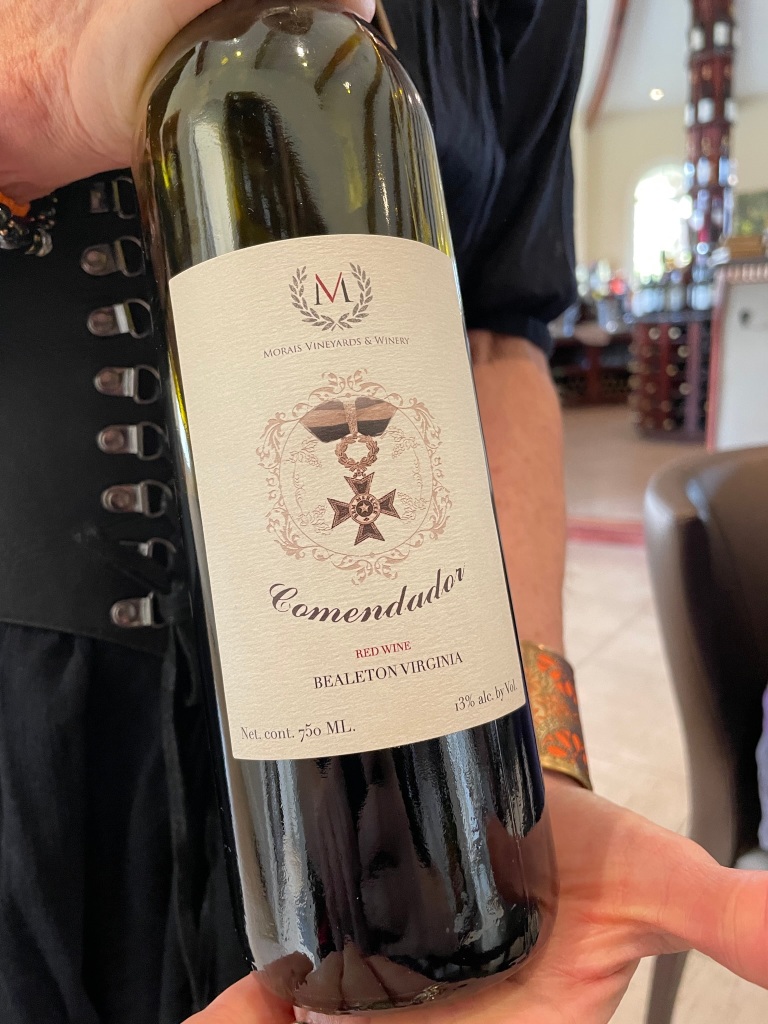
José is the definition of a self-made man. Born in Portugal, he came to the U.S. at the age of 17 and made his fortune in the construction industry. For years he acted as a liaison between Portugal’s American consulates and the Portuguese government. This led their President to award him the title of “Comendador” – an honor only bestowed upon those who perform great acts of service.
Little did I realize Manassas has an active Portuguese community, complete with its own Community Center. For José, everything seems to circle back to this community and his Portuguese roots, and his winery is no different.
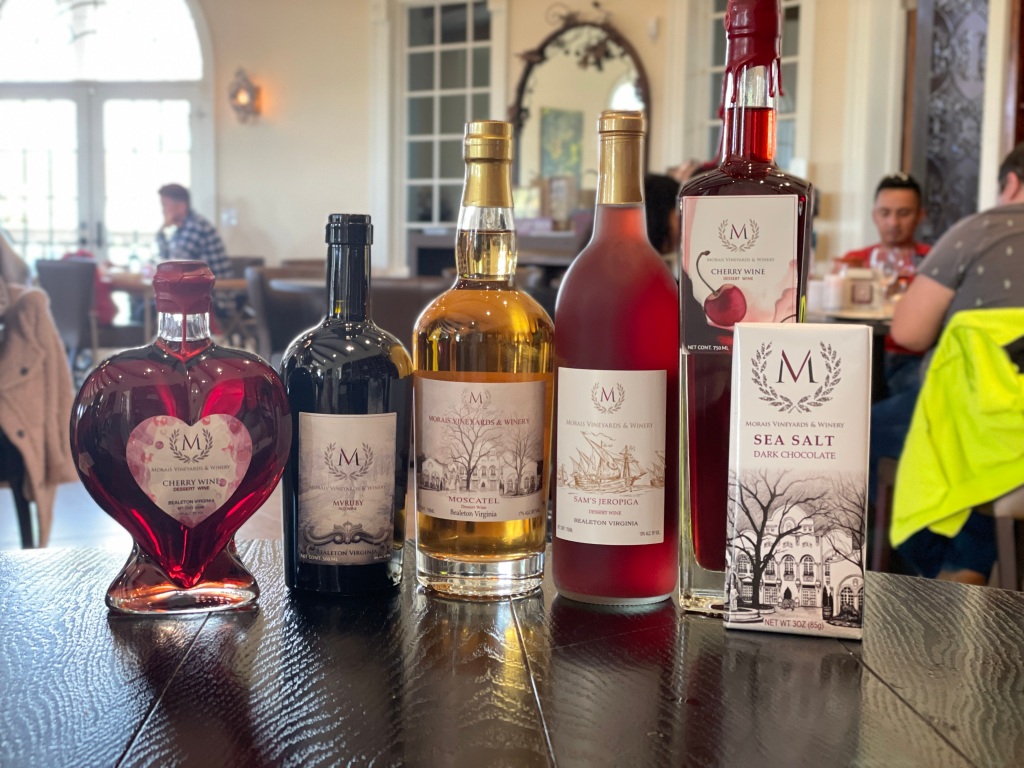
Morais is inspired by the wines and winemaking styles of Portugal (although with a Virginia twang). Portugal makes a refreshing style of wine called Vinho Verde; Morais has its Battlefield White. Portugal is famous for fortified Port wines; Morais has its own Port-style.Even their winemaker, Vitor Guimarãis, is from Portugal.
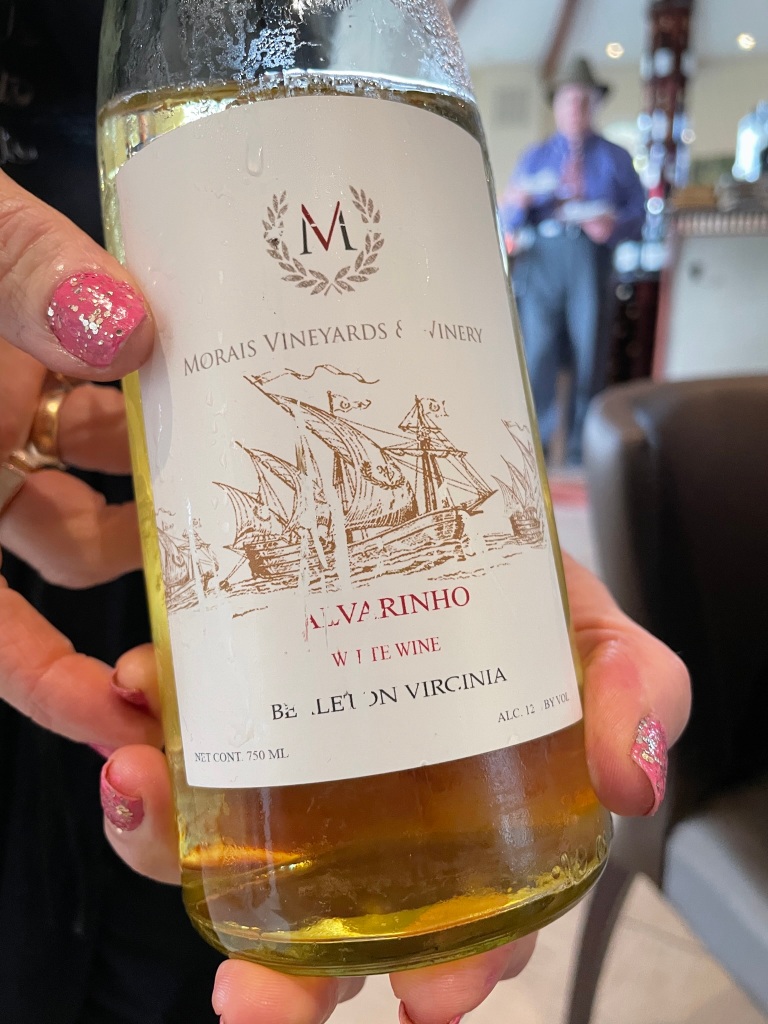
They likewise use several grapes found in Portugal, including Touriga Nacional, Verdelho, and Alvarinho (call it Albariño and you’ll likely be corrected). While Morais has almost 7 acres of vines they also use fruit from outside Virginia, oftentimes blending it with what they source locally. I’m admittedly skeptical of the use of non-VA fruit at a Virginia winery, but it made sense here since many Portuguese grapes aren’t cold hardy enough for Virginia’s climate.
GM Alexandria Chambers and I caught up on life while enjoying a few flights. Until then I never realize exactly how many wines Morais makes; the must have brought out several club wines because I definitely felt like a VIP during this visit.
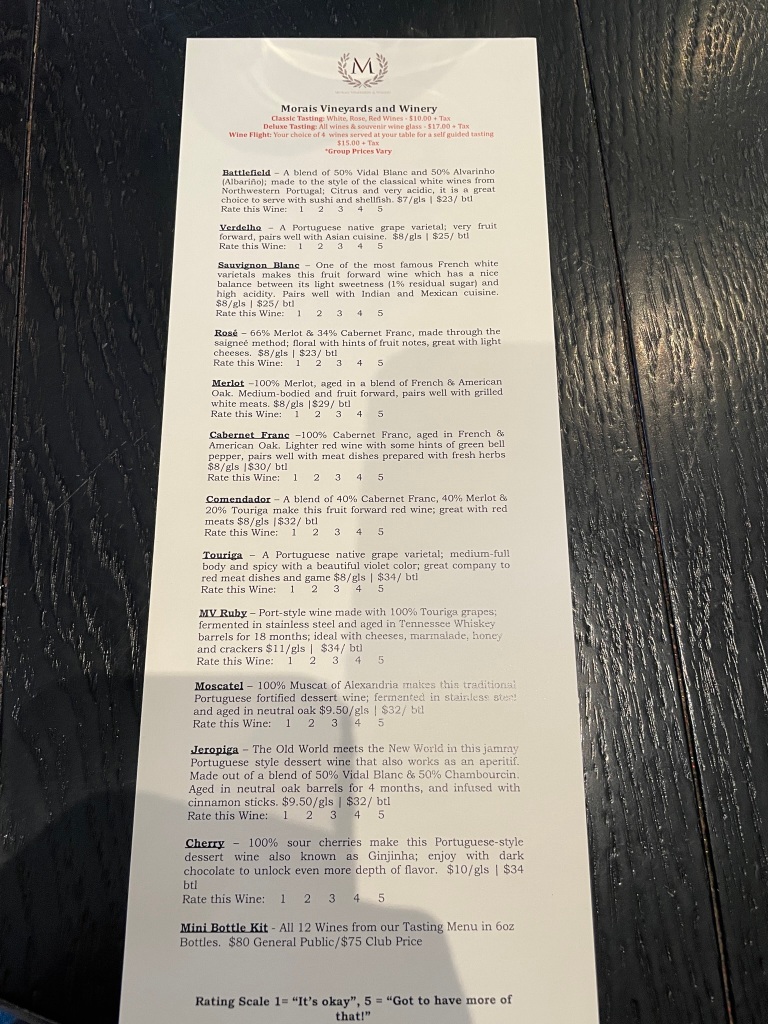
For whites we started with Battlefield, a light, bright 50/50 blend of Alvarinho and Vidal with a touch of carbonation. It wasn’t a sparkling but it did give it a bit of zest that I liked.
From there we went to the Verdelho, a grape native to Portugal and famous for use in Madeira. It had lime and grassy notes on the nose but apple on the palate. I enjoyed it and don’t think I’ve ever had one before to compare it with.
I would have been disappointed not to try their Alvarinho, and they didn’t let me down. It was made in stainless steel tanks, with lemon notes on the palate. We finished the whites with a Chardonnay that you could tell benefited from the restrained use of oak, and a dark, dry Cab Franc/Cab Sauv rosé made in the Portuguese style.
Moving to the reds, when I saw the “2018” vintage on their Merlot I privately despaired but was soon impressed. 2018 was a wet, difficult year for Virginia, so good reds were an exception and this was one of those exceptions. It was fruity but not overly so.
Next up was another pair of 2018s; the Comendador (red blend) and Cabernet Franc. The first is a Cabernet Franc/Merlot/Touriga blend that had a hint of vanilla, while the later had a spice note.
The last of the regular line up was a 2018 Touriga that was a real standout, and one of the favorites of the day. Medium to full bodied, earthy, and big tannins.
I thought the tasting was finished – but then they brought out the big guns. Have I mentioned how wonderful Alex is?
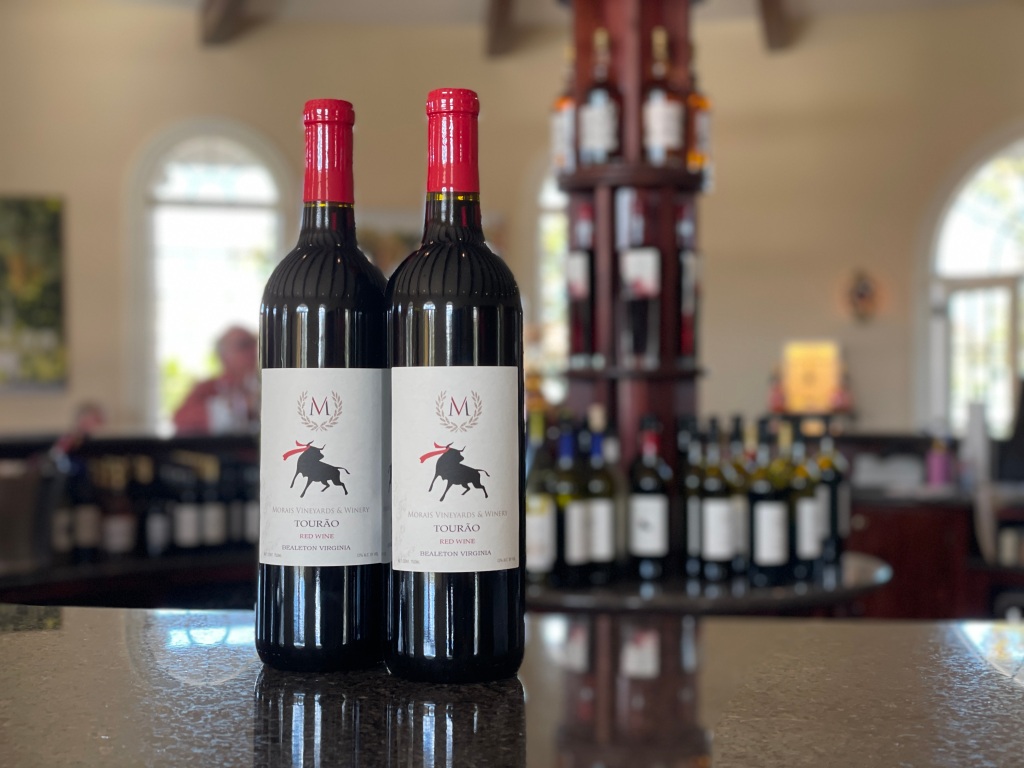
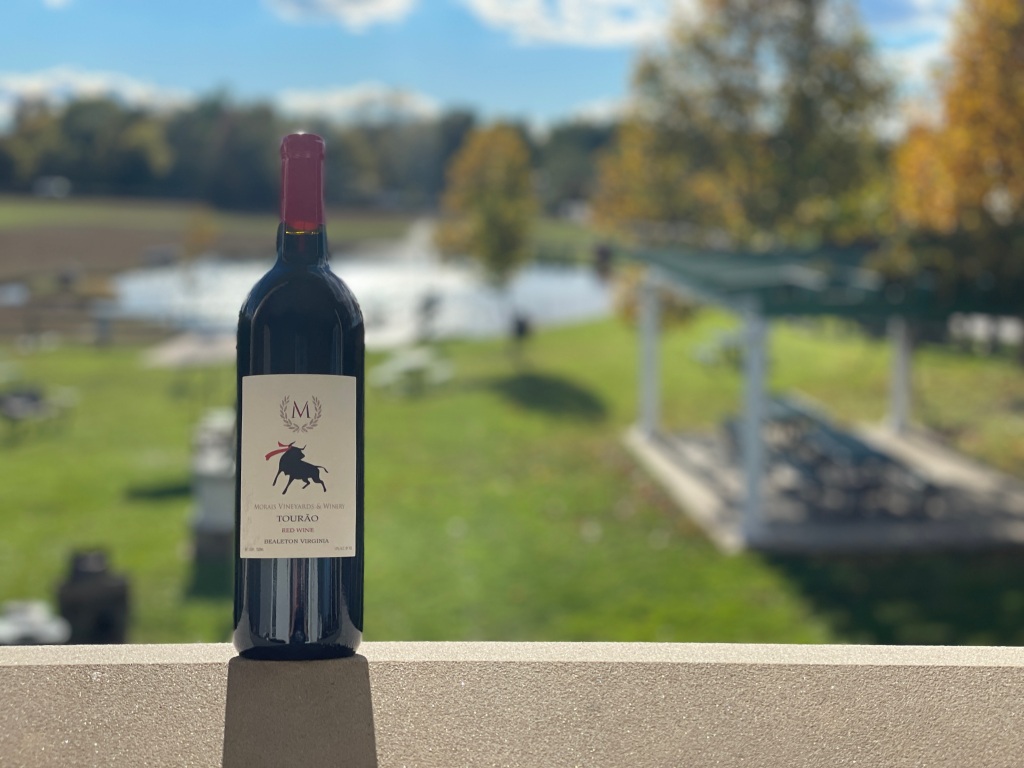
Part II started with the Touriga/Syrah “Manassas City” blend which was young but still drinking nicely. We went to try three more red blends; a cellared 2017 Comendador, the 2019 Souzão, and a 2019 Tourão.
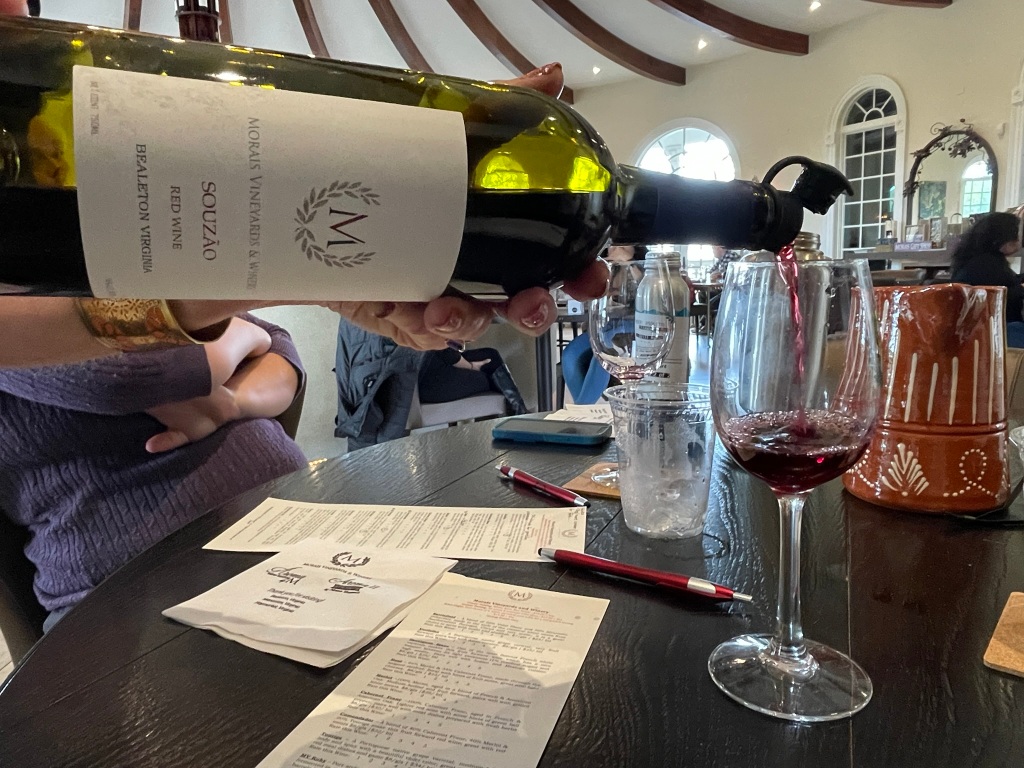
I liked Comendador but loved the last two. Both use grapes native to Portugal, so there likely isn’t anything close to them in Virginia (the fruit was mostly west coast). The Souzão was a little spicy while the Tourão had an amazing nose and great complexity, blending Virginia and non-Virginia fruit. As overflowing as my wine cabinet is, I had to take the Souzão home.
But wait – there’s more!
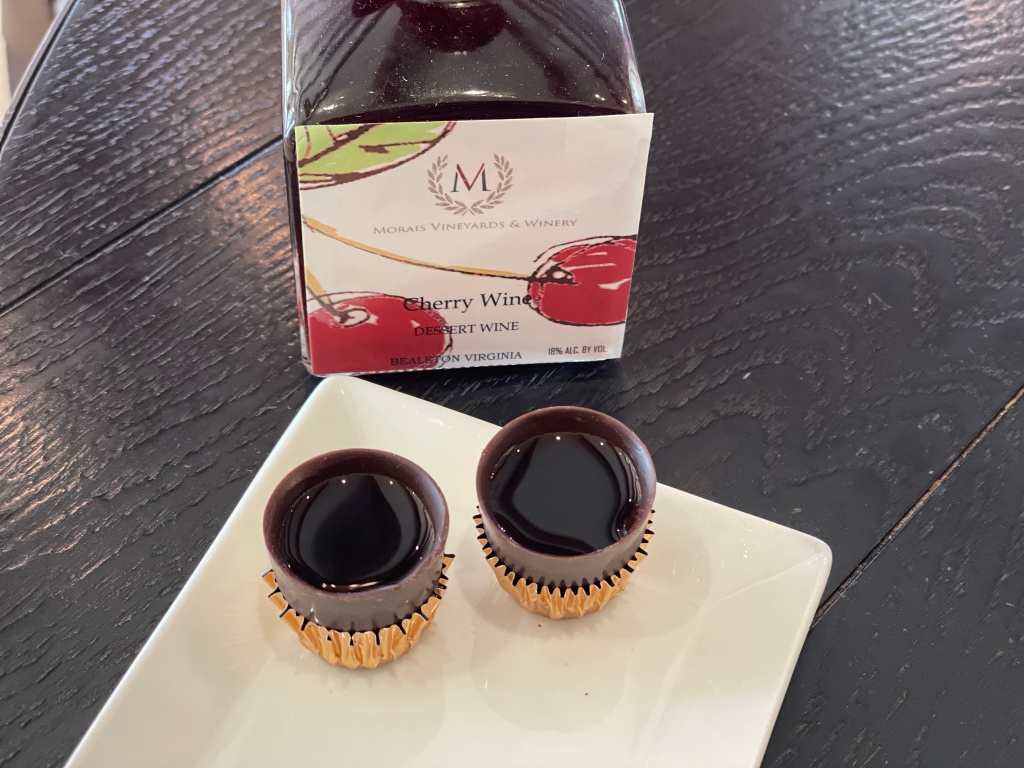
Finishing the lineup was a series of dessert wines, including their ruby port-style (Touriga & brandy), Jeropiga (Vidal & Chambourcin), Moscatel, and (my favorite) a cherry wine. I’m a sucker for a great presentation and the cherry wine has one of the best methods of delivery – they pour it into a tiny chocolate cup and you devour it whole.
For as many wines as I tried, there was actually more in the works I never got to sample.Vitor is collaborating with John Davenport of Three Crosses Distilling Company and both have products using the other’s barrels. John is aging his rye whisky in barrels used to make port-styles wines. Vitor is aging his 2021 Ruby port-style in Three Crosses’ rye barrels.
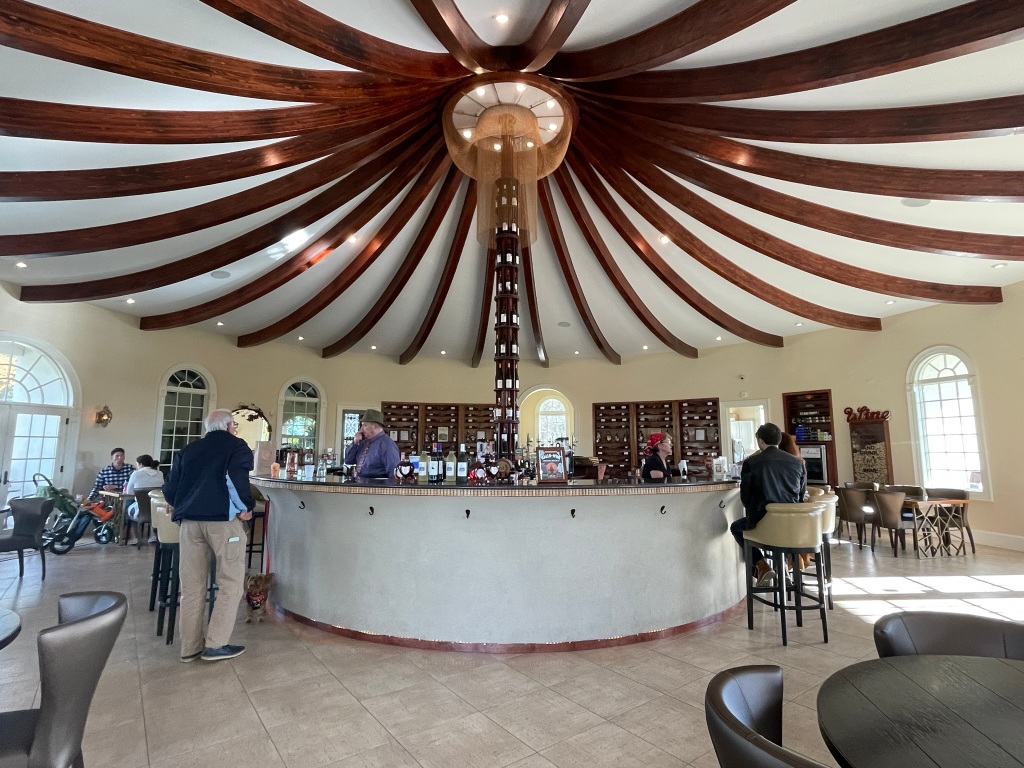
It was a great visit, which I finished sitting on the patio looking at their park.
17 wineries, 3 cideries, and 1 mead tasting room opened or were rebranded in 2021, a metric on par with the past several years. While Loudoun County, the southern Shenandoah/Staunton, and greater Charlottesville areas saw the greatest growth, Virginia had winery openings in nearly every corner of the state.
8 wineries formally closed. Considering some of these closures were actually rebrandings as new owners came in, the Virginia wine scene grew by a larger margin than it shrunk in 2021.
2021’s Honorable Mentions:
Sweet Vines Farm’s Seidah Armstrong became Virginia’s first Black, female winemaker. She and her husband are also the owners, making Sweet Vines one of the very few Black-owned wineries in the state. In an industry with limited diversity in winery ownership and winemaker positions & skews heavily male, this is welcome news.
Hazy Mountain Vineyard now likely has the largest indoor tasting area in the state, complete with a restaurant and brewery. With nearly 100 acres of vines (including a 60-acre vineyard in the Shenandoah) they are starting off strong. I love how a Charlottesville winery is taking advantage of land in the Shenandoah Valley; it’s a great place to grow wine and I’m hopeful more wineries will set up satellite vineyards there.
Merrie Mill Farm & Vineyard is perhaps Virginia’s the best decorated winery. If you haven’t visited at least check out the photos – it could easy double as an art gallery. While they aren’t yet serving estate wine, I expect great things given Emily Pelton of Veritas is their winemaker and they share the same granite soil as nearby Keswick Vineyards, which is known for their Cabernet Sauvignon.
2021’s Major Trends and Events
1. New wineries getting bigger & bigger. Hazy is actually part of a trend that new Virginia wineries have a bigger physical footprint (acreage of the property, larger vineyards, bigger tasting rooms) than ever before. While not every location can start with a grand tasting building, it’s apparent this newest generation of wineries are entering the industry with a higher level of investment capital and winemaking know-how than most of their predecessors had even a decade ago.
While part of me will miss the tiny mom & pop vibe that Virginia wineries are known for, overall this is a welcome trend. Larger wineries are able to benefit from economy of scale, which hopefully will allow the Virginia wine industry to grow. New wineries are also becoming smarter about their starting locations, choosing vineyard sites based on terroir as opposed to accessibility to the public. The main downside is a few have encountered local communities which are opposed to large-scale wineries in their proverbial backyard.
2. Guided tastings a thing of the past? The combination of COVID and staffing shortages have made stand-up, in-person tastings a rarity – and this trend likely won’t be reversed. Some patrons embrace this change, while others miss the days when you can stand at a tasting bar and chat ad-nauseum with an owner or winemaker.
This trend isn’t true across all locations, and some wineries may relax this rule on a day-by-day basis depending on how busy they are. But overall, winery patrons should expect take-away flights to be the norm.
3. Virginia Peninsula American Viticultural Area (AVA), which stretches from Hampton Roads to outside Richmond, is Virginia’s newest AVA (#9, if you count the Appalachian High Country AVA). It currently includes 5 wineries.
The utility of AVAs is a polarizing issue. Some look at them as a great method of promoting regional wine. Others see at them as a marketing ploy that only has a limited overlap with terroir. Wineries located in Virginia’s other AVAs have a hit-or-miss track record for promoting the AVA they are situated in, so hopefully these locations will use this opportunity to educate their patrons on what makes their terroir unique.
Tasting rooms that opened in 2021:
Above Ground Winery (Shenandoah)
Chiswell Farm & Winery (Afton)
Ciders from Mars (Shenandoah)
Ecco Adesso Vineyards (Shenandoah)
Endhardt Vineyards (Loudoun)
Fables & Feathers Winery (Goodview)
Firefly Cellars (Loudoun; rebranded from Hunter’s Run)
Hardware Hills Vineyard and Winery (Scottsville; rebranded from Thistle Gate)
Hazy Mountain Vineyards and Brewery (Afton)
Lightwell Survey (Wayneboro) (Note – this is just for the tasting room, which now has fairly regular hours)
Merrie Mill Farm & Vineyard (Keswick)
Old Farm Winery at Hartland (Loudoun)
Old Town Cidery (Winchester)
Southern Revere Cellar
Stoney Brook Vineyard (Roanoke)
Sweet Vines Farm (Unionville)
The Winery At Sunshine Ridge Farm (Prince William County)
Troddenvale at Oakley Farm (Hot Springs) (Tasting room only; cider has been sold for several years in stores)
Williams Gap Vineyard (Loudoun)
Wind Vineyard at Laurel Grove (Tappahannock)
Windchaser Meadery (Hampton Roads)
Burnbrae Vineyards, Caihailian Vineyard, and Teaghlaigh Vineyard/Son of a Bear Ciders are also opened for sales, although they don’t yet have tasting rooms.
Wineries that closed in 2021:
Bodie Vineyards
Hammerstone Cellars
Hinston Ford Cider & Mead
Hunter’s Run (rebranded as Firefly Cellars)
Rural Retreat (closing by the end of 2021)
Tarara Winery (effectively closed in 2020 but formally closed in 2021; event space still open)
My newest article – and first contribution for Wine and Country Life – has now been published!
Over a dozen wineries opened in 2021. I couldn’t list them all, so I focused on my favorites including Ecco Adesso, Firefly Cellars, Hazy Mountain Vineyard, Merrie Mill Farm, Sunshine Ridge Farm, and Williams Gap Vineyard.
Virginia will soon celebrate Cider Week, which runs from November 12-21. This event is an opportunity to heed Benjamin Franklin’s advice that, “It is indeed bad to eat apples. It is better to make them all into cider.”
Cider makers must have listened because sales of Virginia hard cider have skyrocketed in the last decade. Virginia now has over 30 cideries, most of which opened in the past 4 years alone. According to the Virginia Wine Board Marketing Office, in fiscal year 2020, approximately 55% of all hard cider sold in Virginia was Virginia-made.
Critics have taken notice. The Virginia Governor’s Cup wine competition now uses dedicated cider judges for its cider entries, with Lost Boy Cidery’s “Comeback Kid” taking the win in 2021. Fellow cider professionals have also heard the buzz because CiderCon®, the world’s largest professional cider conference, is coming to Richmond in February 2022.
More Complex Than Most People Realize
For both business and stylistic reasons, some cideries model themselves after wineries with a focus on beverages that reflect conditions in the orchard, while others draw more inspiration from breweries by experimenting with new flavors. It gets even more complicated if you add in perrys (cider made from pears) and specialty ciders, including those made with hops, spices, or other fruit.
Heritage ciders are usually made from apples traditionally associated with cider making, including Kingston Black (bittersharp), Roxbury Russet (American heirloom), and Wickson (crab). These beverages are usually drier, emphasize the flavor profile of the varietal it’s made from, and served in wine bottles.
Modern ciders are primarily made from apples you find in the grocery store including McIntosh, Golden Delicious, or Gala. They also offer a dizzying array of flavors not usually associated with cider, such as pumpkin, cherry, even habanero. The need for carbonation means they are usually served on tap or in cans.
Coyote Hole Cidery
Both styles are found in Virginia but few are as passionate about Heritage ciders as Diane Flynt of Foggy Ridge Cider, one of the pioneers of the Virginia cider movement. Foggy Ridge was the state’s first cidery, which Diane modeled after an estate vineyard with an eye towards ‘orchard focused cider’.
While Foggy Ridge Cider’s last call was several years ago she still grows apples and advocates for Virginia cider, especially those that reflect the orchards they come from. In explaining her hopes for the future of the industry, Diane said, “We need locations that are willing to invest the time to make great cider. What (Foggy Ridge) did is focus on what the site gives you for flavor, not any additives.”
That said, the line between Modern and Heritage cider is sometimes fuzzy. Many cider makers treat their Modern ciders as artisanal beverages, while the term ‘Heritage cider’ may seem something of an oxymoron since they are made using very modern techniques.
Don Whitaker of Castle Hill Cider makes both styles, explaining, “Our Heritage line pays tribute to the apple, while our craft line is more fun and accessible. But it doesn’t matter which line it is, we still want to showcase the apple.”
“But some of our friends (in the cider industry) want to take cider making as far as they can go with new flavors. It’s all up to the imagination and the market.”
Castle Hill Cidery
Explaining Cider’s Newfound Popularity
According to several cidery owners, direct sales are roughly split between men and women and skews towards a younger demographic. When asked why cider sales have seen such growth, Philip Carter Strother of Valley View Farm had a straightforward explanation.
“The truth is hard cider is delicious, but it’s been overshadowed by beer. Hundreds of years ago cider was just as popular as beer. But a lot of effort has been made to make cider approachable to a larger audience, and a larger audience drinks beer.”
Valley View Farm
Emulating the marketing and distribution of craft beer has allowed cider sales to soar. Last year 63% of Virginia cider was sold via distribution and the remainder in direct sales. While this ratio favors modern ciders that are packaged and sold like beer, growing recognition has helped heritage cider sales as well.
This popularity has pushed a number of Virginia wineries to get in on the action. Wineries recognize cider fills a niche for lighter, fresher beverages, and their ability to step up is eased by how much of the equipment and licensing is the same. Several make their cider in-house, while others use an outside partner.
Cider’s status as a lower-alcohol, gluten-free beverage is another selling point. While no alcoholic beverage can ever truly be called ‘healthy’, cider compares relatively well to beer. In his description of Comeback Kid, Tristan Wright of Lost Boy Cider explained how the cider’s name was in part a tribute to his own health comeback when he discovered his allergies to gluten and soy.
Even though hard cider is unlikely to ever be considered a health drink, it has one additional advantage over other options. “Nobody has sentimental feelings about barley. But everyone has a connection to apples” enthused Will Hodges of Troddenvale Cider. “People just have a pull to it; it’s a very American beverage.”
Troddenvale Cider
Ciders You Should Try
Cideries can be found in every corner of Virginia, ranging from urban tasting rooms in Alexandria and Richmond, rural businesses in the Blue Ridge Mountains, to wineries and breweries serving cider alongside their own beverages.
Don’t wait for CiderCon; start sampling Virginia’s cider today.
Blue Bee Aragon: Blue Bee is Richmond’s first urban cidery, located in an old stable and carriage house. Aragon is their best seller; an off-dry blend of modern and heirloom apple varieties that provide a light, crisp mouthfeel.
Castle Hill Cider’s Celestial: Located south of Charlottesville, Castle Hill’s Celestial has strong fruit aromas, bright acidity, and a clean taste. While you can drink this anywhere, their tasting room is stunning – and beverages always taste better when sampled in the place they were made.
Coyote Hole Ciderwork’s Apparition: Coyote Hole kicks off Halloween with a cider that brings all the cozy flavors of fall in one drink. The perfect balance of cider and pumpkin, Apparition has all the comforting notes of traditional pumpkin pie with a hint of spices.
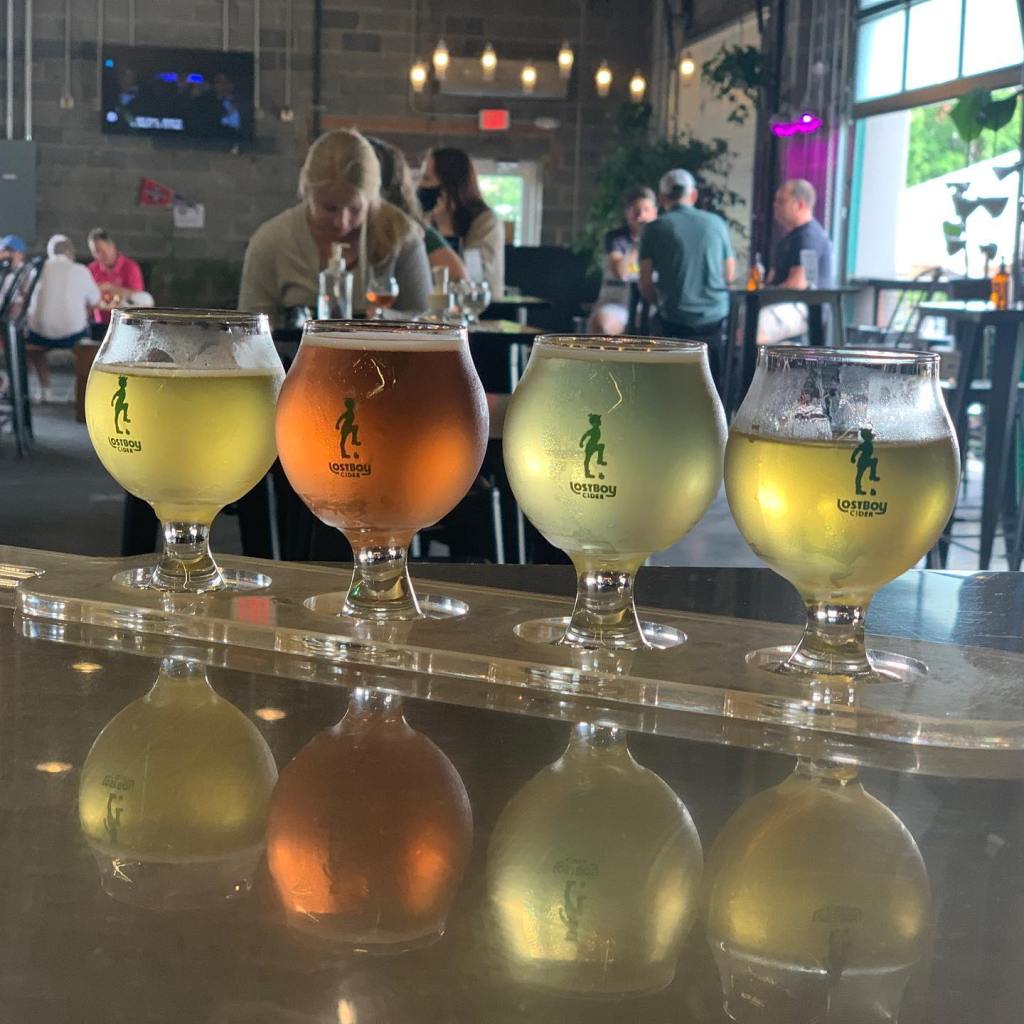
Lost Boy Cider’s Comeback Kid: The first beverage to win the cider award at the Virginia’s Governor’s Cup, Comeback Kid is Lost Boy’s bestselling cider for good reason. Made with Shenandoah apples, it’s light, dry and unfiltered. While heritage ciders boast about their complexity and tastiness, this cider could give them a run for their money.
Troddenvale at Oakley Farm’s House Cider: One of the most ‘wine-like’ ciders on the list, this heritage-style cider is made with a blend of eight apples. Its use of lees during fermentation provides a fuller mouthfeel and greater complexity. It’s then bottled like a sparkling via the “traditional method” until disgorged before release.
Valley View Farm’s Noble Pome: Noble Pome benefits from aging on the lees, which gives it a texture and body somewhere between a white wine and a beer, and contributes yeasty flavors and toasted notes. Bone dry and crisp, it tastes strongly of the Stayman apples used to make it. An excellent accompaniment to food, particularly with barbeque and pork dishes.
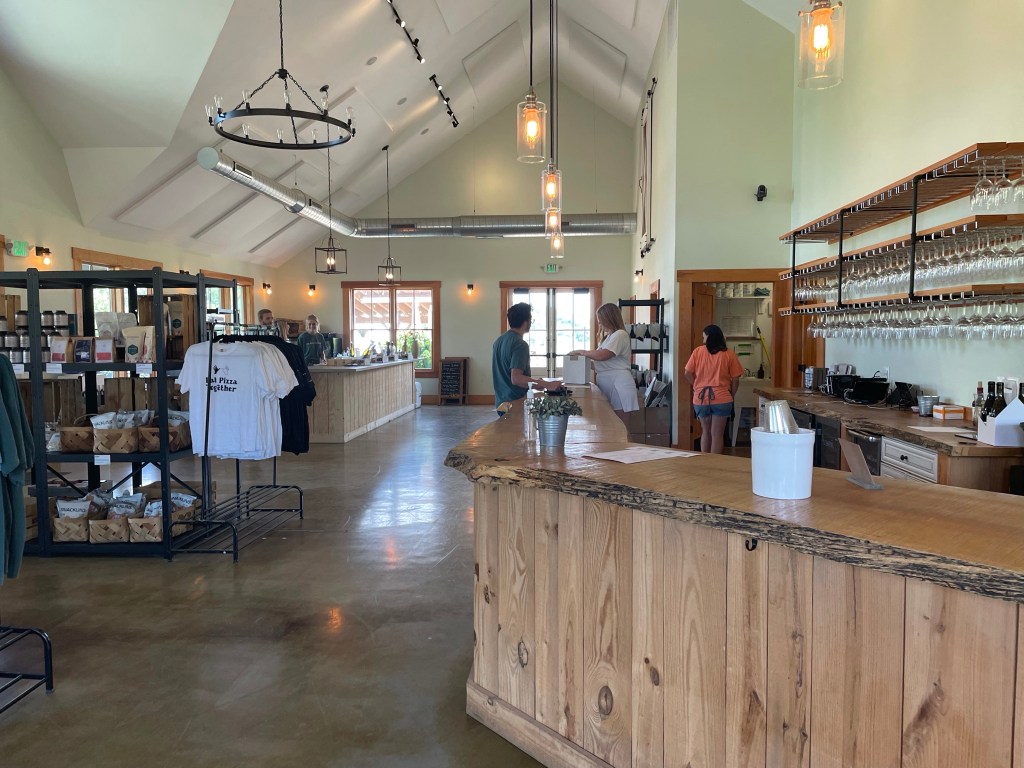
I visited Old Westminster Winery back to back with Black Ankle Vineyards. Both were on my list of ‘must visit’ Maryland wineries, although for different reasons. While Black Ankle makes wine in a more traditional style Old Westminster leans heavy into experimentation; specifically the production of ‘natural wine’.
Natural wine isn’t well defined but most agree it’s a style of winemaking that utilizes natural yeast fermentation, limited to no sulfites, and doesn’t use filtering for clarification (or some combination of these and other methods). It’s an ancient style that’s come back into vogue due to its emphasis on sustainable agriculture (and perceived health benefits, although those are more debatable). While some wineries have a pétillant natural (pet-nat) sparkling or claim their focus on ‘minimal intervention’ Old Westminster takes its ‘natural’ approach to a whole new level.
Personally I find natural wine a love-it-or-hate-it style. Don’t get me wrong, there is plenty of natural wine out there that’s quite yummy and I would totally recommend visiting Old Westminster to try for yourself. But they can taste ‘funky’ for lack of a better term (although not in a bad way), and the wine itself can look cloudy due to its lack of filtering. Cloudy wine isn’t in any way faulted, but its best to keep an open mind for any visit.
Right now they have 10 acres planted – mostly Muscat. On top of this they have a vineyard at Burnt Hill Farm (also called the Burnt Hill Project) which promises more estate fruit. Otherwise they source fruit from Maryland.
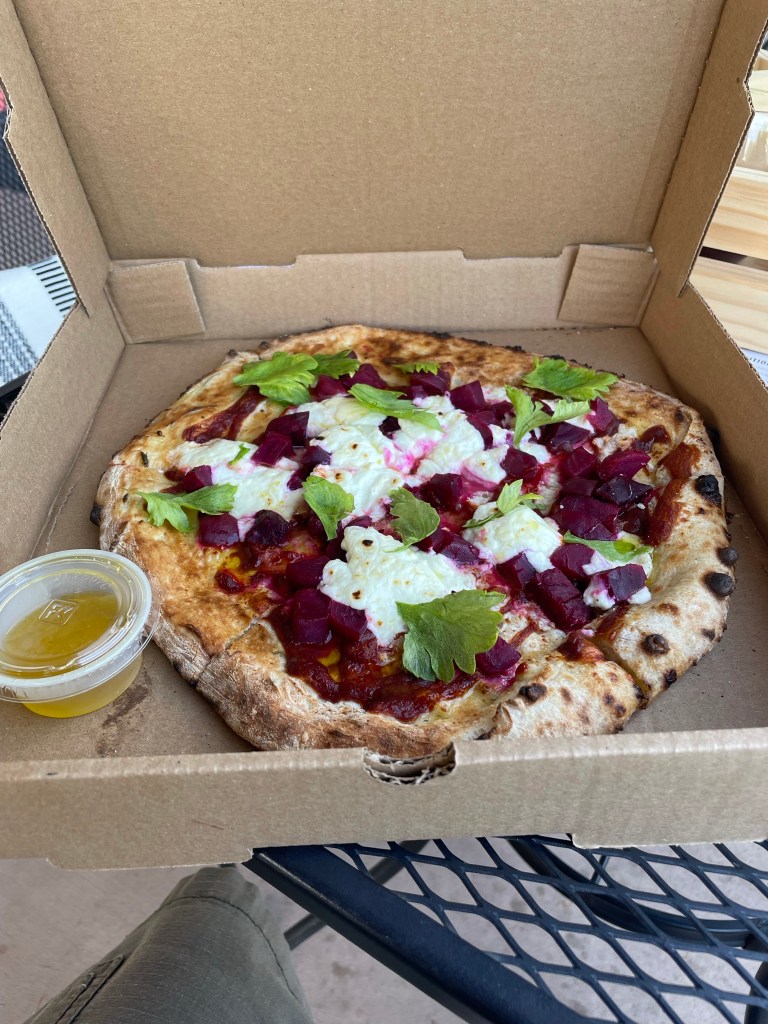
Another cool thing is they have a number of food options available, including several styles of pizza. Some are traditional margarita-style pies, others are (like the wine) on the experimental side. I chose a personal pizza topped off with beats (of all things) but really enjoyed it. They also have Sunday brunch.
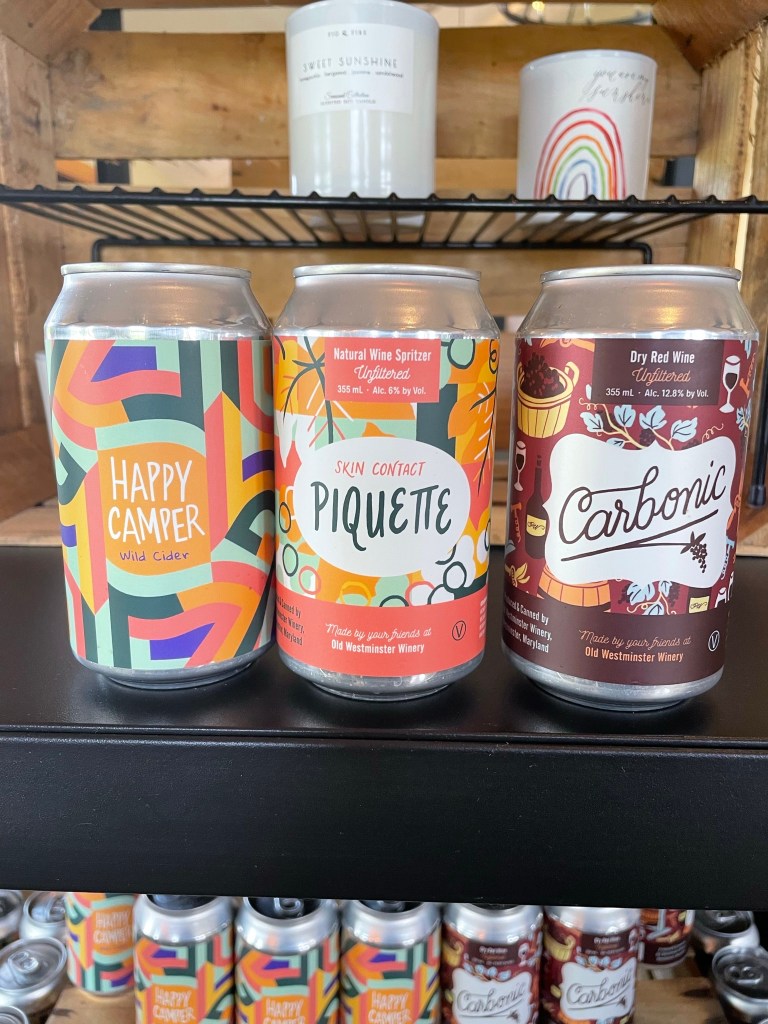
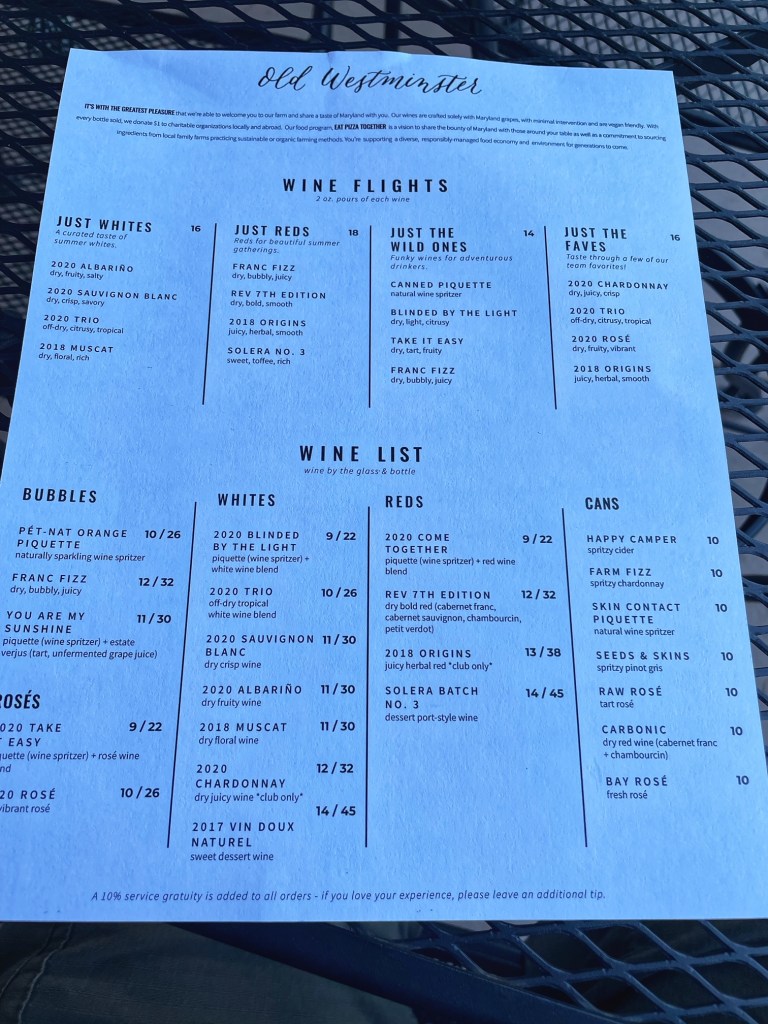
As for the wine – a number flight options are available, both for reds, whites, and sparklings. Not wanting to miss anything I did a good cross-section. My server was also kind enough to swap out a few items for others I was more keen on sampling. They also have canned wine (didn’t I mention they were experimental?). Extra points for having tasting notes with QR codes you could scan to get a quick video of the winemaker chatting about the wine.
2020 Albariño: Saline, peach notes on palate. Pineapple and peach on the nose,
2020 Sauvignon Blanc: About as opposite a New Zealand SB as you can get. Neither high acid or perfume-y. I detected some melon notes.
2020 Trio: Chardonnay heavy white blend
2019 Muscat: Apricot all the way. Apparently there is some residual sugar but I couldn’t detect it. No filtering so it has an interesting cloudiness (which is totally healthy)
Frank Fizz: Interesting; 100% Cab Franc pet-nat sparkling. A ‘rustic’ sparking.
Rev 7th Edition: Cedar/Oak. “Molassas” is on the sheet but I can’t confirm it since I don’t know what it tastes like!
Solera Batch 3: A port-style wine. Spicy, with Christmas-y notes. Not sure if I loved it but it was very interesting.
I can’t remember which it was, but one of the wines I tasted has ‘tastes like beet juice” in my notes!


















 Wine Trails and Wanderlust