My latest article on Linden Vineyards is now published – and it’s the cover story of the print version of Wine & Country Life!
Sometimes I feel like my social media can be nicknamed the ‘Jim Law Fanboy Club’ because Linden wines are featured so often. As a wine writer I try to cover multiple areas, and too much fanboying on one winery makes it tougher to cover everything else.
That said, it’s tough to overstate Jim’s influence on Virginia wine. He’s idolized by his fellow winemakers and his Hardscrabble Journal blog has a wealth of information on the growing season, pruning techniques, and ‘mentor wines’.
In our interview we covered everything from how he found the Virginia wine scene to his thoughts on hybrid grapes (not precluding more but hasn’t planted anything beyond Vidal), Linden’s test vineyard (fingers crossed we may see Fiano in the future), the ‘vine-soil relationship’ (drainage is essential so you need to plant on the right soil), and why he prefers ‘wine grower’ not ‘wine maker’.
Fortunately, there’s plenty here for non-wine geeks. Not many people know how his father’s chance sampling of a Chablis wine was the starting point for his love of wine, and how he strongly considered going to Oregon but instead chose a Shenandoah winery named Tri-Mountain because he loved the idea of exploring what was (and to an extent still is) virgin terroir.
It never ceases to amaze me how people are willing to pursue a dream in the wine industry. But Kavelle and Ken Bajaj of Barrel Oak Winery, Amanda and Whiticar Darvill of Fox Meadow Winery, and Chris and Katie Key of Sunset Hills Vineyard all took the plunge in 2022.
While no two stories of ‘why I bought a winery’ are the same, they often rhyme. For the Darvills and Keys, their first dates were at wine tastings. For the Kavelle Bajaj, it was her farm roots. For all of them, it’s a love of wine.
I’m really looking forward to how these new owners elevate Virginia wine.
11 new wineries (plus 2 tasting rooms from existing wineries) opened in 2022, a number on par with annual growth in the Virginia wine industry. An additional 5 wine brands opened for direct sales or can be found at a partner location (notably Walsh Family Wine, which hosts ‘Bar Takeovers’ for small brands that lack a tasting room).
7 wineries (Castle Gruen, Dry Creek, Five Oaks Vineyard, Hunt’s Vineyard, Kilaurwen Winery, Thatch and Whitebarrel) closed, will close, or rebranded in 2022.
2022 also saw a number of major wineries being sold, with new owners at Barrel Oak, Capstone, Sunset Hills/50 West, and Fox Meadow. These come in the wake of the sale of Three Fox Vineyards and 8 Chains North, which changed hands in 2020 and 2021, respectively.
2022’s Major Trends and Events
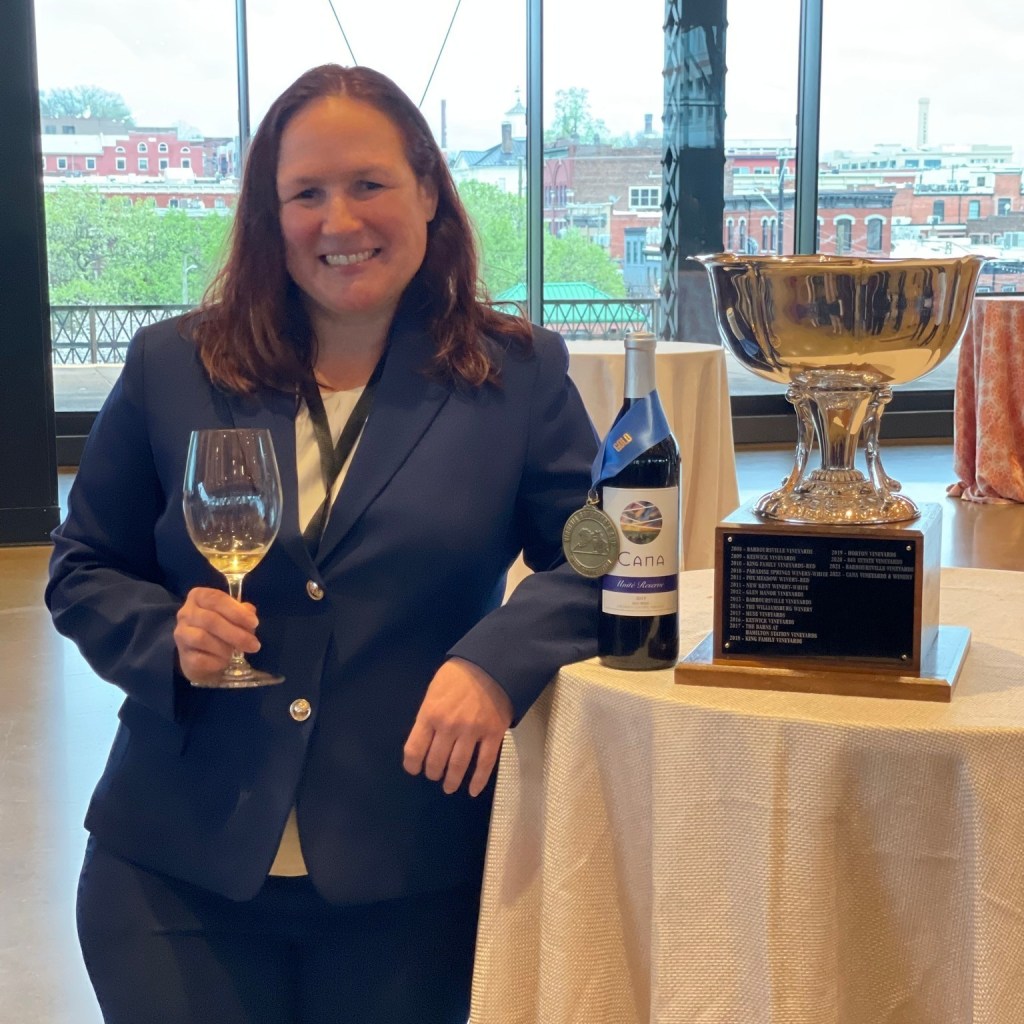
1. Growing representation in local winemaking: Melanie Natoli of Cana Vineyards made history in 2022 by becoming the state’s 2nd female Virginia Governors Cup winner (and its 1st under the Cup’s post-2011 rigorous judging system). Maggie Malick and Rachel Stinson Vrooman also had wines selected for the 2022 Governor’s Case.
These women are part of a cohort of female head winemakers and assistant winemakers who are gaining major name-recognition. All told, around 15% of all head winemakers in Virginia are female.
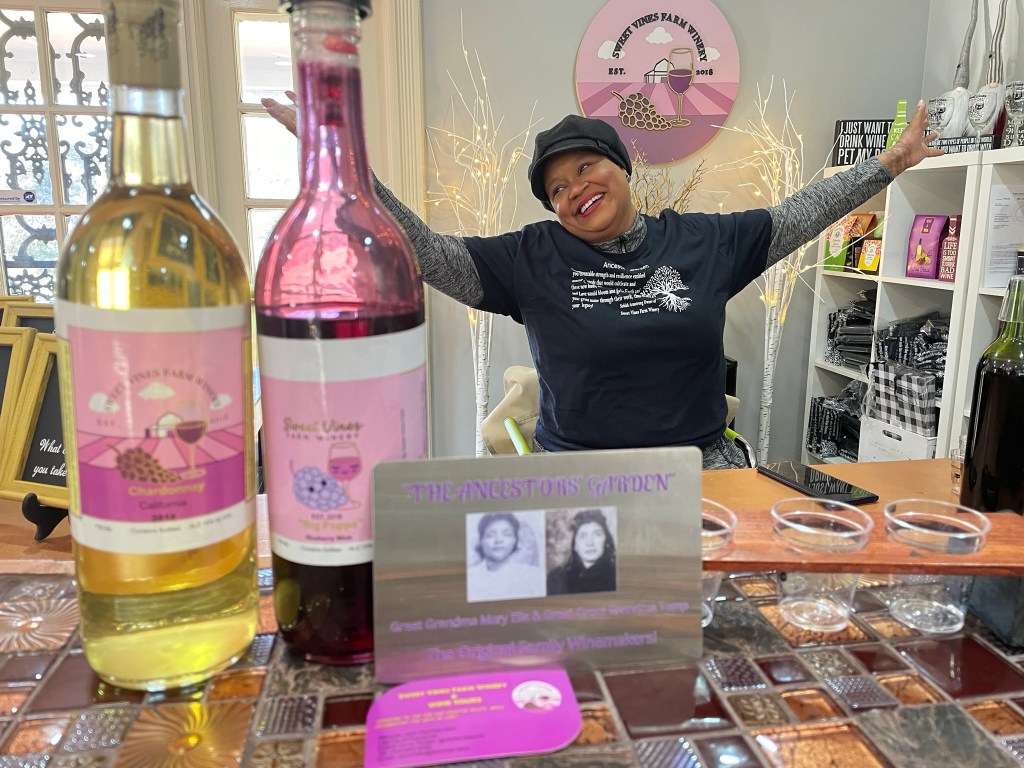
Representation by Black–owned wine brands also grew this year. Fifty Leven and Shockoe Wine joined the small but growing group of local Black-owned wine brands, which also includes Delaplane Cellars, Preston Ridge, Sweet Vines Farm, and Vintner’s Cellar of Yorktown.
2. Climate change: Jim Law called 2022 ‘climate change on steroids’. While climate change is hardly a new topic, this year included a number of high-intensity weather events which punctuated the extent of this trend. At worst, the type of dramatic weather fluctuations seen this year portent what Virginia’s ‘new normal’ may become.
For much of Virginia, 2022 see-sawed between hot, sunny days and short but intense summer storms, bookended by frost warnings in April and a hurricane in late September. Winegrowers looking at the rainy weather forecast in July had good reason to be concerned.
Fortunately, mid-summer’s capricious weather gave way to far more favorable conditions in August to September, turning what could have been a tough vintage into a very favorable one for large parts of the state.
Some years – such as 2017 and 2019 – are fondly looked back as strong vintages, while others like 2011 and 2018 are ones most winemakers would prefer to not dwell on.
But the answer regarding the 2022 growing season might be summarized as ‘it depends’, all depending on a vineyard’s specific microclimate.
3. Labor Shortages: Many wineries had significant challenges in staffing. This had a number of impacts, both in the tasting room and the vineyard.
Those hopeful for a return to pre-COVID bar-side tastings were likely disappointed. While health concerns and consumer demand for take-away flights played a part in this decision, this pivot away from bar-side tasting is largely a product of limited staffing, which precludes many wineries from servicing a full bar of customers as they did in the past.
These shortages also impacted vineyard operations. Frequent rain resulted in a high-vigor growing season, so pruning was especially time-consuming. When hurricane Ian arrived, some vineyards struggled to bring in their fruit with the labor at their disposal.
Those with full time labor were able to endure these challenges more easily. Those who did not encountered delays in vineyard work or harvesting.
4. The Common Wealth Crush Company and “garagiste” winemaking: This November Ben and Tim Jordan announced their new custom winemaking facility, capable of producing up to 30,000 cases/year. This business is especially designed for smaller winemakers who lack their own facilities.
“Contract winemaking” already exists in Virginia, but that term is usually associated with business such as Michael Shaps Wineworks who do the entire winemaking process for their customer.
CWCC differs in that it allows winemakers to make their own wine. As Tim Jordan explained, “People do it at their employer’s wineries and sometimes they can get their friends to let them do it. But what almost always happens is that you grow out of it, or the winery facility grows its production and kicks you out. There’s not really a dedicated facility that allows a winemaker to start a brand, do the project, make the wine they want, the way they want, and be confident they’ll be able to stay there.”
This business model comes at a good time as the number of ‘small batch’ wines has dramatically increased over the past several years. Winemakers including Jake Bushing, Mattieu Finot, and Ben Jordan have long championed “garagiste” style wines, but they’ve been joined by Jocelyn Kuzelka and Megan Hereford of Daring Wine Company, Tim Jordan’s Star Party, Kent Arendt’s Boden Young, Rich Sullivan’s Guide Wine, and others.
CWCC also plan of having a tasting room at their Waynesboro facility to serve these brands, allowing customer to sample wines from Midland, Lightwell, and Star Party.
5. Small Batch Wines more popular than ever: “Garagiste” winemakers are a large part of this group, but this trend goes beyond independent operators.
I use “small batch wines” as a catch-all term to cover a large group of different wine ventures, including everything from collaborations between different wineries, independent brands that lack a permanent home, to off-brand labels at established wineries.
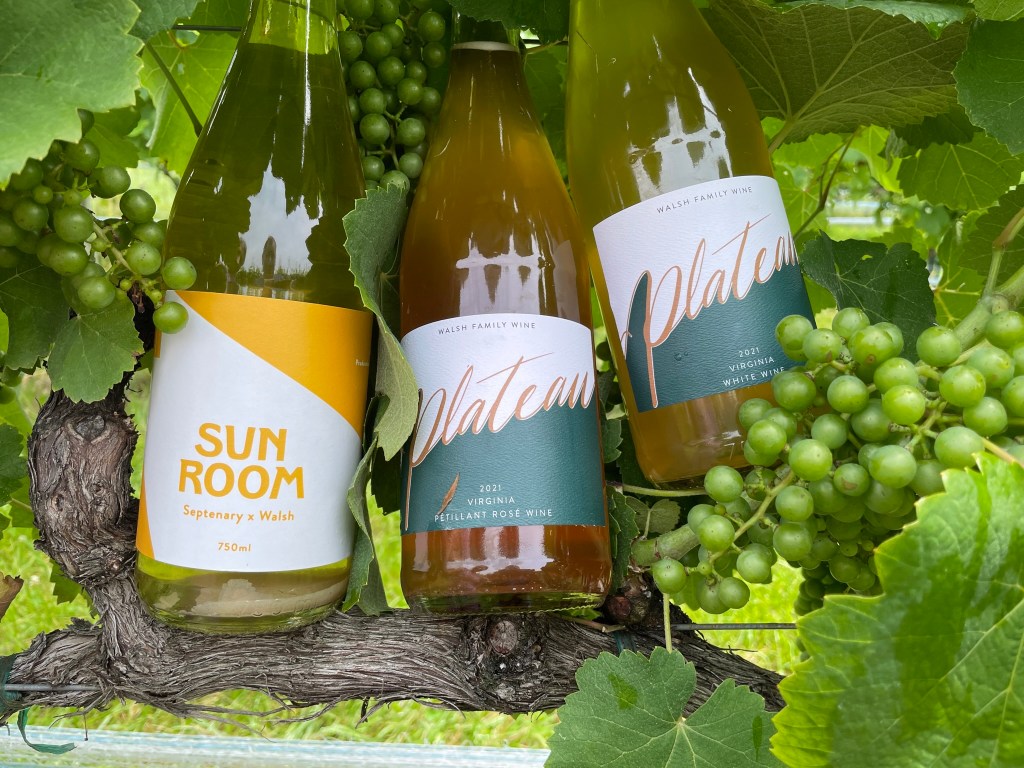
One recent example is the ‘Sun Room’ collaboration between Corry Craighill of Septenary Vineyards and Nate Walsh, where each winemaker took a batch of Malvasia Bianca grapes but made a wine in their own style, yet sold as a 2-pack. Another is the Odd Bird series by Lee Hartman of Bluestone Vineyards.
The common denominator between these ventures is they tend to focus on the creative aspect of winemaking, often featuring unusual blends, uncommonly used winemaking styles, and/or unique branding.
Expect more of these type of off-brand ventures in the future, as winemakers look for ways to flex their creative muscles.
6. Vermouth gaining traction: Rosemont and Flying Fox have made vermouth for several years, but the field of local vermouth-makers expanded this year with the addition of botanical wines from Artemisia Farm, Walsh Family Wine, and Joy Ting.
While this beverage is usually thought of as a drink mixer for bartenders, local vermouth sales have largely been to customers who use it as a sipping drink. Many of these producers also focus on local ingredients, sometimes expanding beyond wormwood as a bittering agent.
Wineries, Brands & Tasting rooms that opened in 2022:
Artemisia Farm & Vineyard (no tasting room, but found at NOVA farmers markets)
Bluemont Station Farm Winery (Bluemont)
Boden Young (no tasting room, but found at Walsh Family Wine)
Burnbrae Vineyards (Lynchburg)
Caihailian Vineyard (south of Afton)
Chapelle Charlemagne Vineyards (new tasting room in Flint Hill)
Daring Wine Company (no tasting room)
Droumavalla Farm (north of Leesburg)
Everleigh Vineyards (Mineral)
Kalero Vineyards (Hillsborough)
Lake Front Winery (Buffalo Junction)
Mount Fair Farm (Crozet)
Nookesville Winery (no tasting room)
October One Vineyard (new tasting room open in Leesburg)
Star Party (no tasting room)
The Barn at 678 (Barboursville)
Wind Vineyard at Laurel Grove (Tappahannock)
Woodbrook Farm Vineyard (Orange)
Upcoming Wineries expected to open in 2023
Blevins Family Vineyard (Scottsburg)
Crimson Lane Vineyards (Linden)
Domaine Fortier Vineyard (Loudoun)
Fallen Tree Vineyard (Crozet)
Haunted Winery Vineyard (Amelia)
Seven Lady Vineyards at Dover Hall (west of Richmond)
Silverdog Vineyards (Linden)
Southwest Mountain Vineyards (Keswick)
Wineries that closed or closing in 2022:
Castle Gruen
Dry Creek
Hunt’s Vineyard
Thatch Vineyard (rebranded as part of Michael Shaps)
Sparkling wine is one of the fasted-growing segments in the beverage industry, and Virginia is no different.
10 years ago only a handful of wineries offered bubbly. But the growing popularity of relatively easy-to-make pét-nats and availability of businesses (such as the Virginia Sparkling Company) that produce Méthode Champenoise sparkling for smaller customers has given wineries of all sizes the ability to sell sparkling in-house.
Most of Virginia’s sparklings are blends or Blanc de Blancs; only a minority are Blanc de Noirs (red grapes made into sparkling wine). To the best of my knowledge only Trump Winery, Ankida Ridge, and CrossKeys produce a pinot noir-based Blanc de Noir, although others use cabernet franc, norton, and even a tannat (from Horton).
I’d previously did an entire lineup of Blanc de Blancs, so this time we compared Blanc de Noirs with wines from CrossKeys, Keswick, and Trump.
I admit I had some trepidation over a France vs Virginia comparison of Blanc de Noirs. Nearly all of France’s Blanc de Noirs come from Champagne; no matter how much I may love Virginia wine, this is a tough act to beat.
But this was done in the name of science, so I figured we’d give it a go anyway.
The contestants:
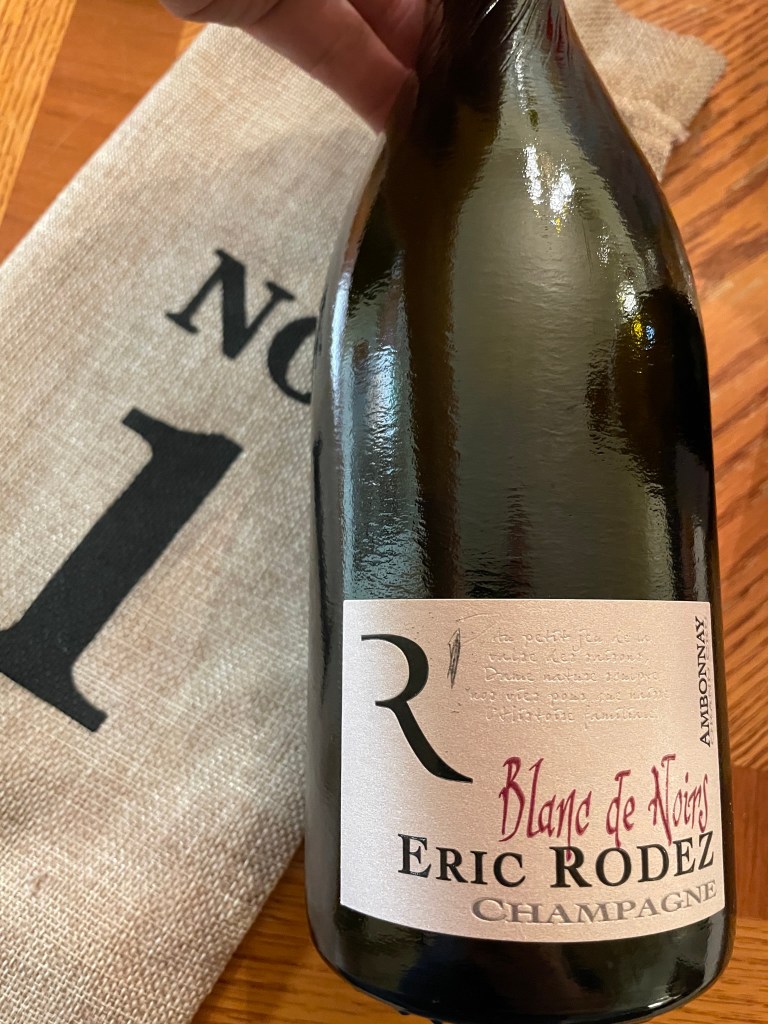
Eric Rodez Blanc de Noirs Grand Cru (Ambonnay, Champagne; $63 on wine searcher)
2019 Crosskeys Blanc de Noir (Shenandoah Valley; ~$40 when it was in stock)
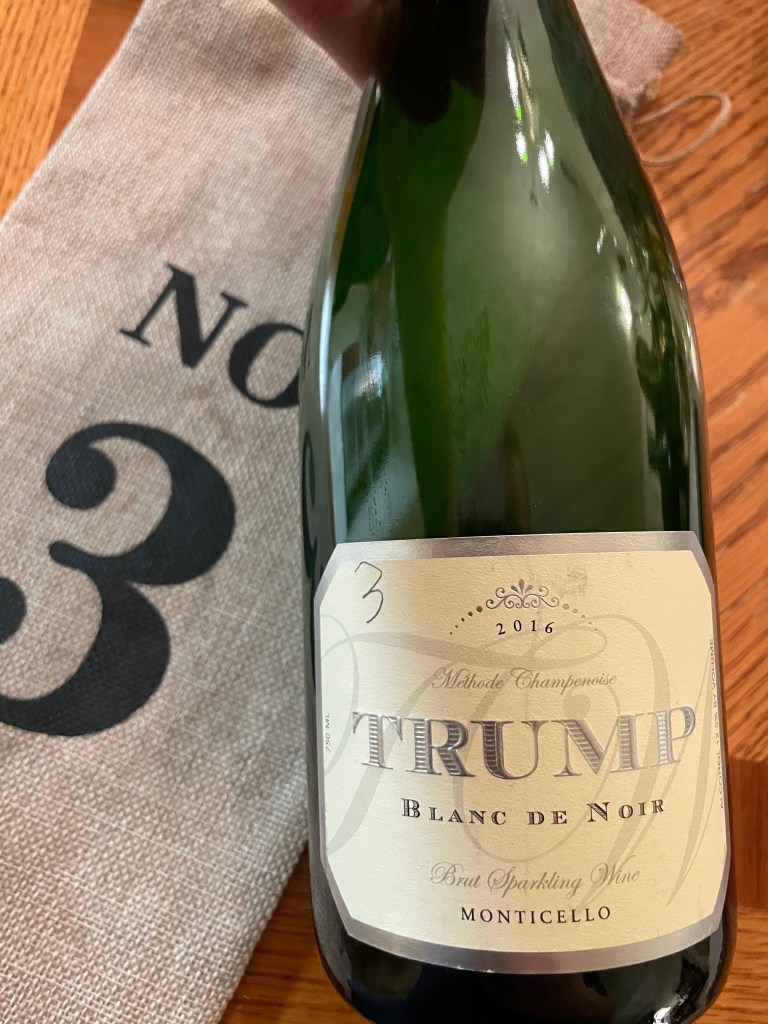
2016 Trump Blanc de Noir (Charlottesville; $55 at the winery)
Mailly Grand Cru Blanc de Noir (Champagne; $60 at Total Wine)
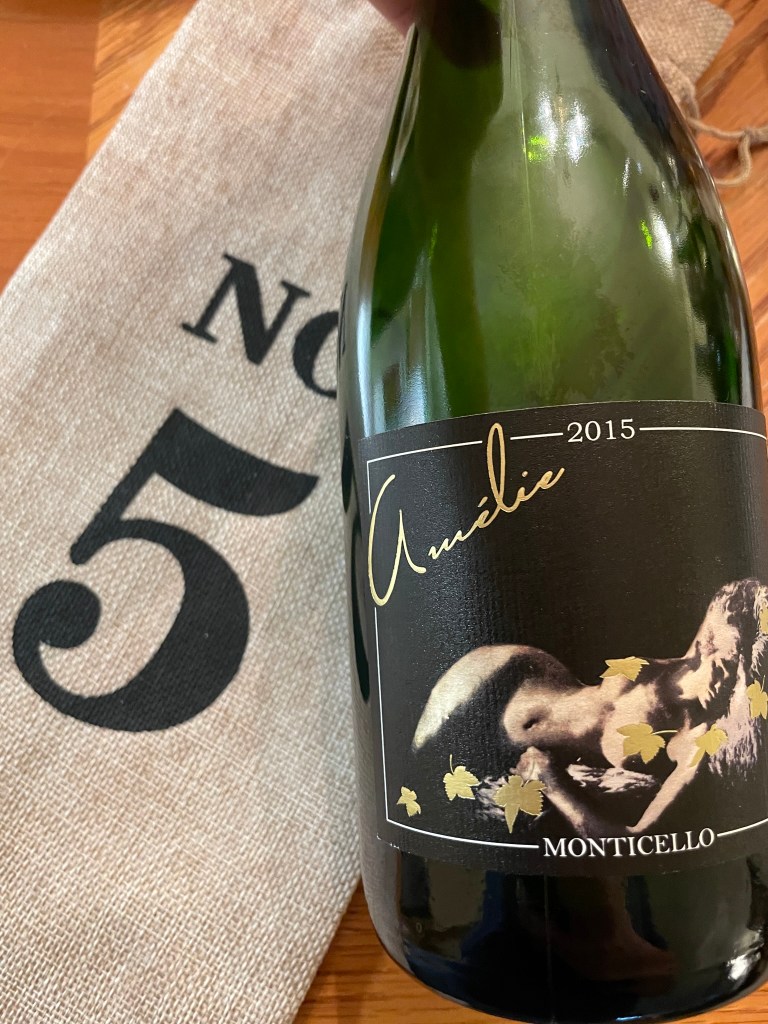
Keswick Vineyards Amélie (Charlottesville; $39 at the winery)
Albert Lebrun Blanc de Noirs Extra Brut (Marne Valley, Champagne; $38 on wine searcher)
We randomly paired the Virginia and French wines and bagged them in pairs. Bottles that won their flight advanced to the next round.
As always; this event was the product of THIS night with THIS group. On another day, we may have had different favorites.
Round 1 / Flight #1:
Wine 1: Eric Rodez Blanc De Noirs Grand Cru: 5 votes (winner)
Wine 2: 2019 CrossKeys Blanc de Noir: 1 vote
Eric Rodez comes from Ambonnay, one of 17 villages in Champagne authorized to label their sparkling as ‘Grand Cru’. I don’t know much more about them, other than any wine from champagne automatically has a serious rep to uphold.
CrossKeys is located in the ‘upper’ (southern) Shenandoah Valley. It’s made with pinot, which is grown specifically for sparkling production. This particular wine won “Best in Show” at the 2022 Atlantic Seaboard Wine competition.
PS – if you haven’t tried Shenandoah sparklings you should; the region’s cool climate makes it a good place for higher-acid wines, so sparkling are a good match.
Comparing the color and aromas of the two, the Grand Cru had more of a yellow hue with a funkier nose, while the CrossKeys was lighter with some light brioche.
On the palate the Eric Rodez had more complexity and we found it to be especially well balanced. The CrossKeys was easier drinking; lots of lemon notes. Someone mentioned a tad of vanilla, although it wasn’t from any barrel aging.
Votes:
Alex: #1; liked the depth
Lieven: #1; well balanced and overall drinkability
Lindsay: #2; felt it was easier drinking
Matt: #1, based on the greater complexity
Sarah: #1 enjoyed the brioche notes and the yeastiness
Stephanie: #1; noted the flavor carried through from the beginning to the end
Round 1 / Flight #2:
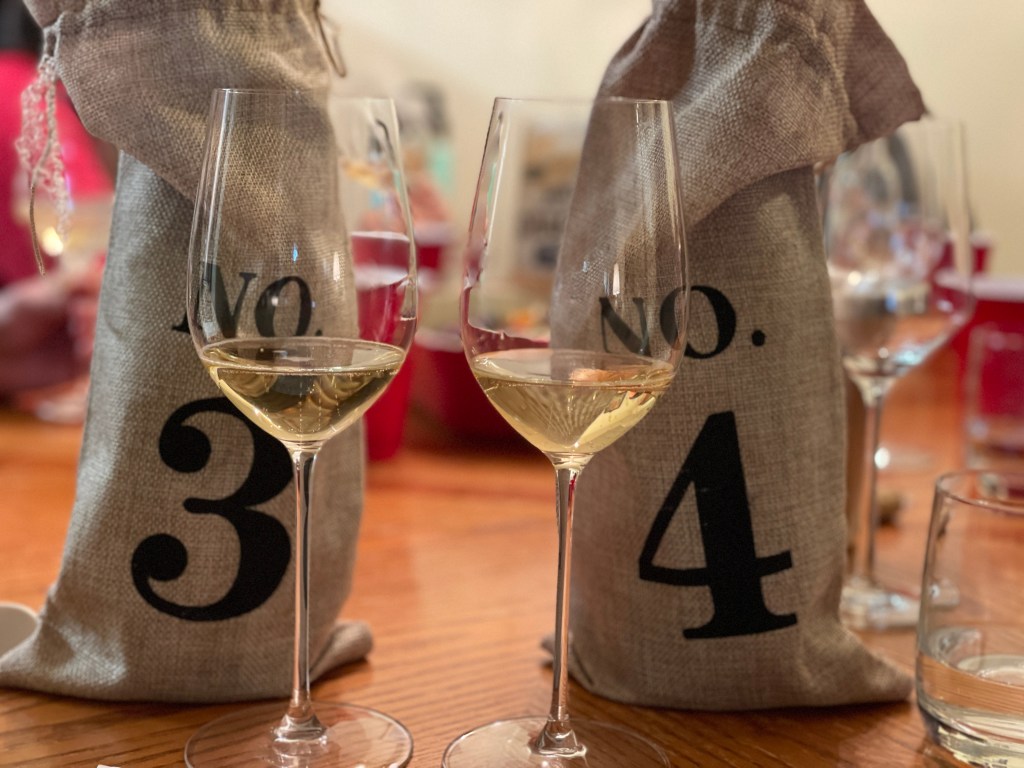
Wine #3: 2016 Trump Blanc de Noir: 5 votes (winner)
Wine #4: Mailly Grand Cru Blanc de Noir: 1 vote
Trump Winery’s sparkling shouldn’t need any introduction, as it makes some of the most famous sparklings in the state. You might even argue that its predecessor Patricia Kluge paved the way for local sparkling production in Virginia as she brought in Claude Thibaut (now one of the state’s premiere sparkling producers) as her winemaker.
The Mailley is another of Champagne’s Grand Cru villages. I couldn’t say much about it but hey…champagne!
The coloration of both were extremely close, but the noses were different. The Trump wine had yellow apple on the nose and was a little bready. It also took time to open up, although it never displayed any strong fruit notes.
The Mailly was smoky, and oddly enough seemed to get even smokier as it opened up. It was the drier of the two, although that’s not to say the Trump didn’t seem dry. It initially had a very displeasing cardboard note to it but that dissipated after about 10 minutes. It also had some tartness on the back end.
We felt the bubbles on both dissipated faster than we would have liked.
Votes:
Alex: #3; felt it was more drinkable
Lindsay: #4; once the funk came off, thought it was more complex
Lieven: #3; based on the balance and drinkability.
Matt: #3; I had a tough time choosing between the two and I probably couldn’t give you an exact reason why, but I just liked #3 better
Sarah: #3; also felt it was more drinkable
Stephanie: #3
Round 1 / Flight #3:
Keswick Vineyards Amélie: 3 votes (tie)
Albert Lebrun Blanc de Noirs Extra Brut: 3 votes (tie)
Keswick’s sparkling is made with cabernet franc, which is arguably the most versatile red grape in Virginia (as well as its most planted). It’s also available for purchase now (and I think it would make a great Thanksgiving wine).
The Albert Lebrun was different from the other two champagnes in that it was made of pinot meunier, which is usually used in Champagne as a blending grape. While it wasn’t planned, I liked that a cabernet franc and a pinot meunier were paired against one another, as neither style of sparkling is easy to find.
Sadly I didn’t capture as many notes on this round as I wished. I can say that while they both had strong starts, both changed in the glass in even more enjoyable ways as we enjoyed them. The Keswick had a vanilla nose and a palate that changed from vanilla to maybe orange notes. Some also detected a sense of petrol.
The funniest tasting note was someone mentioned that ‘it tasted like a donut’ in that the front and end palates were very enjoyable, but there wasn’t so much in the middle. Those who follow Keswick’s winemaker might laugh at this, since ‘donut’ is one of his favorite tasting phrases.
No notes for the Albert Lebrun, which is sad because this was one of the favorite wines of the night.
I took the votes and…it was a tie! I thought about using my place as host to cast a tie-breaker, but truth was I loved both equally. So I gave Keswick a wildcard and both went to the final round.
Votes:
Alex: #6; thought it was approachable, although he noted the shorter finish
Lieven: #5. Thought #6 was a little rough, while #5 was better balanced.
Lindsay: #5; no particular reason other than she just gravitated towards it. Thought #6 had lots of interesting things going on, though.
Matt: Split vote; ½ point for each; loved both
Sarah: #6. Thought the way #5 presented was ‘circular’ while also weightier, with lots of yellow apple and vanilla. #6 had more brioche-y notes.
Stephanie: Split vote; ½ point for each
Round 2 / Finalist Round
Normally we would have the single ‘best in flight’ wines go to the finalist round, but we enjoyed the third flight so much that we added both to the finalist round.
We tasted them side-by-side and rated them most-to-least favorite.
Alex: Keswick (4 points), Albert Lebrun (3 points), Trump (2 points), Eric Rodez (1 point)
Lieven: Eric Rodez (4 points), Trump (3 points), Keswick (2 points), Albert Lebrun (1 point)
Lindsay: Keswick (4 points), Albert Lebrun (3 points), Eric Rodez (2 points), Trump (1 point)
Matt: Eric Rodez (4 points), Albert Lebrun (3 points), Keswick (2 points), Trump (1 point)
Sarah: Albert Lebrun (4 points), Eric Rodez (3 points), Trump (2 points), Keswick (1 point)
Stephanie: Albert Lebrun (4 points), Eric Rodez (3 points), Keswick (2 points), Trump (1 point)
Wine #1: Eric Rodez: (17 points)
Wine #3: Trump Blanc de Noir (10 points)
Wine #5: Keswick Vineyards Amélie (15 points)
Wine #6: Albert Lebrun Blanc de Noirs Extra Brut (18 points; finalist)
So a caveat; we liked ALL of these wines (admittedly I personally wasn’t a fan of #4, but that’s a personal preference). One thing I did find interesting is the favorite ones tended to be some of the less-costly ones. None of them were especially fruity, which is something that often separates Blanc de Noirs from Blanc de Blancs.
In retrospect I might have opened them sooner so these wines had time to open up (I felt the CrossKeys definitely improved the following day). Sadly, my tasting events have a time limit.
So were we surprised that Champagne won? Not at all. That said, it wasn’t a blowout either.
The price point of these Virginia wines were on the whole comparable to these mid-priced Champagnes, and 2 made it to the final round. Two of my group selected the Keswick sparkling as the overall favorite of the night.
As far as I’m concerned, that Virginia was able to hang tough with a comparison to Champagne is a win in itself.
A few months ago, I did a blind “Judgement of Virginia” tasting, modeled off the famous Judgment of Paris where California triumphed over France. 7 French wines were compared to 7 similar Virginia wines, all made between 2017 and 2021.
I knew our Virginia wines would do well, but to my surprise all 7 Virginia bottles beat their French counterparts. Granted I picked high-quality Virginia wineries, but even I was shocked at the blowout.
After examining the contest I realized something; Virginia went into this comparison with an advantage since its wines can be enjoyed young, while wines from Bordeaux require time to age. So, I came up with a new idea – to compare older Virginia Bordeaux-style vintages against similar French wines in order to keep the matchup even.
I invited a panel of experts (OK – they were wino friends of mine…who happened to have a great deal of industry experience and/or above average palates) and we sampled 3 Virginia Bordeaux-style wines vs 3 actual Bordeaux wines, all made between 2012-2015. Everything was done blind.
While I call this a “Bordeaux blend comparison”, that term isn’t entirely fair despite the Virginia wines using 100% Bordeaux grapes.
Cabernet Franc and Petit Verdot often play prominent roles in Virginia, but very secondary ones in France. Also, Bordeaux wines tend to favor either Cabernet Sauvignon or Merlot (often around 75% Merlot for right bank Bordeaux, but far more variable blends for left bank Bordeaux), while Virginia red blends tend to be more evenly distributed between multiple grapes. This means while the grapes may be the same, the composition of the blends could be very different.
The tasting was simple; compare two wines side by side and we’d select a favorite. While several attendees were wine judges, I elected to keep things simple and have everyone simply pick a single favorite of every flight. In the case of a tie, the host (me) decided between the two.
I bagged everything in pairs, so nobody (including myself) knew which pairs we were trying. All we knew is one wine was Virginia, and the other was Bordeaux. The specific pairings were selected in advance, based on the wine’s age and blend.
The wines:
France:
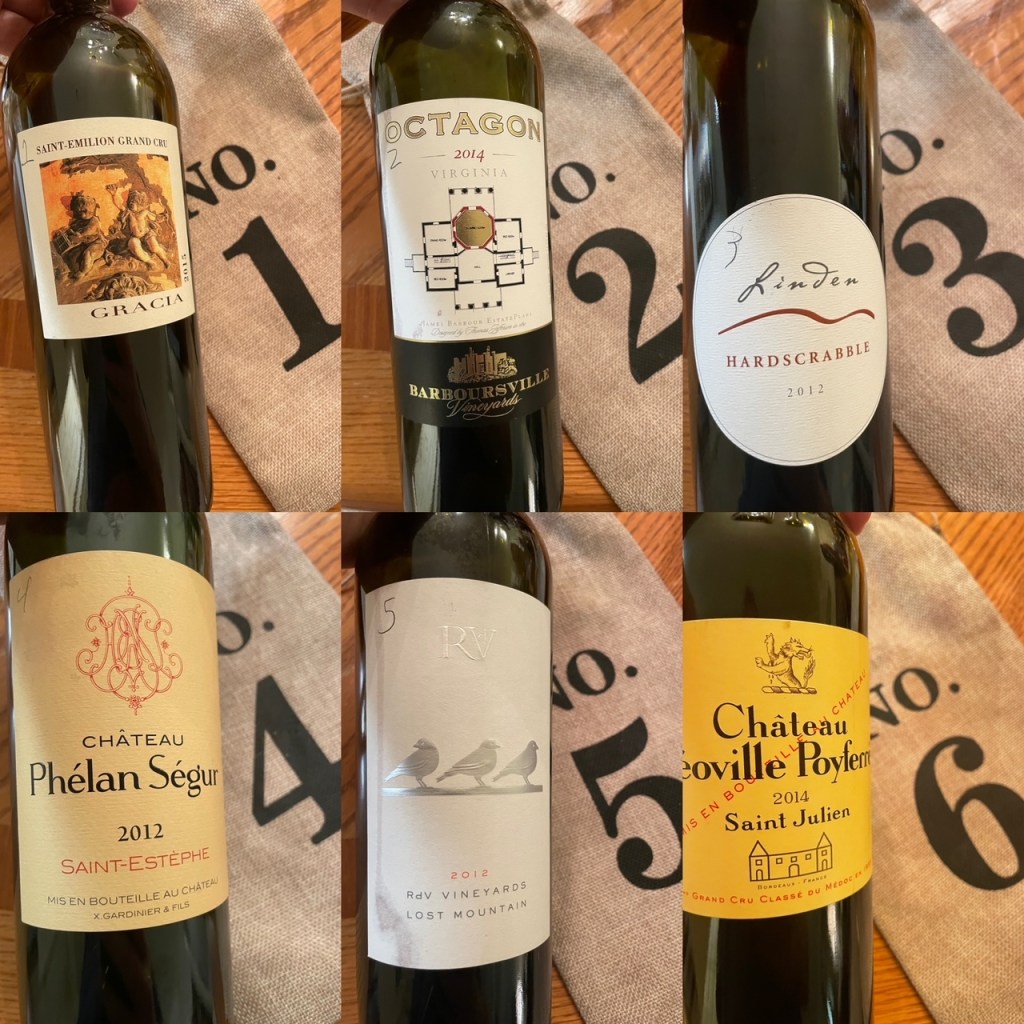
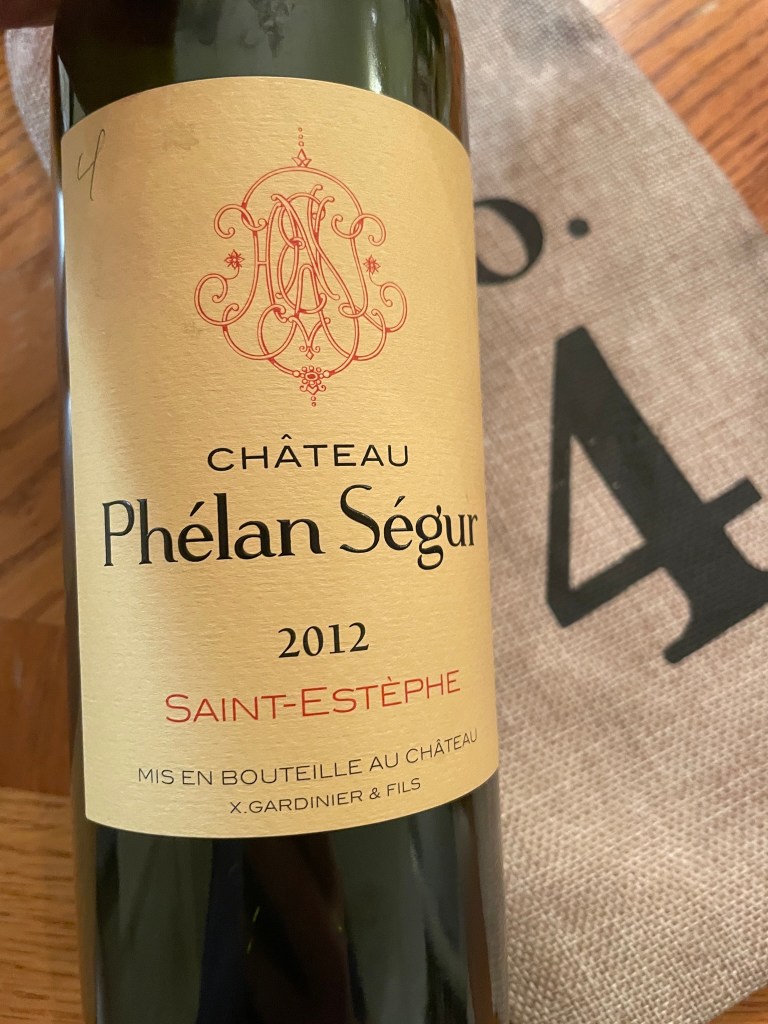
2012 Château Phélan Ségur: 50% Cabernet Sauvignon/ 50% Merlot (Left Bank, Saint-Estèphe) (wine searcher retail $62, with significant regional variation)
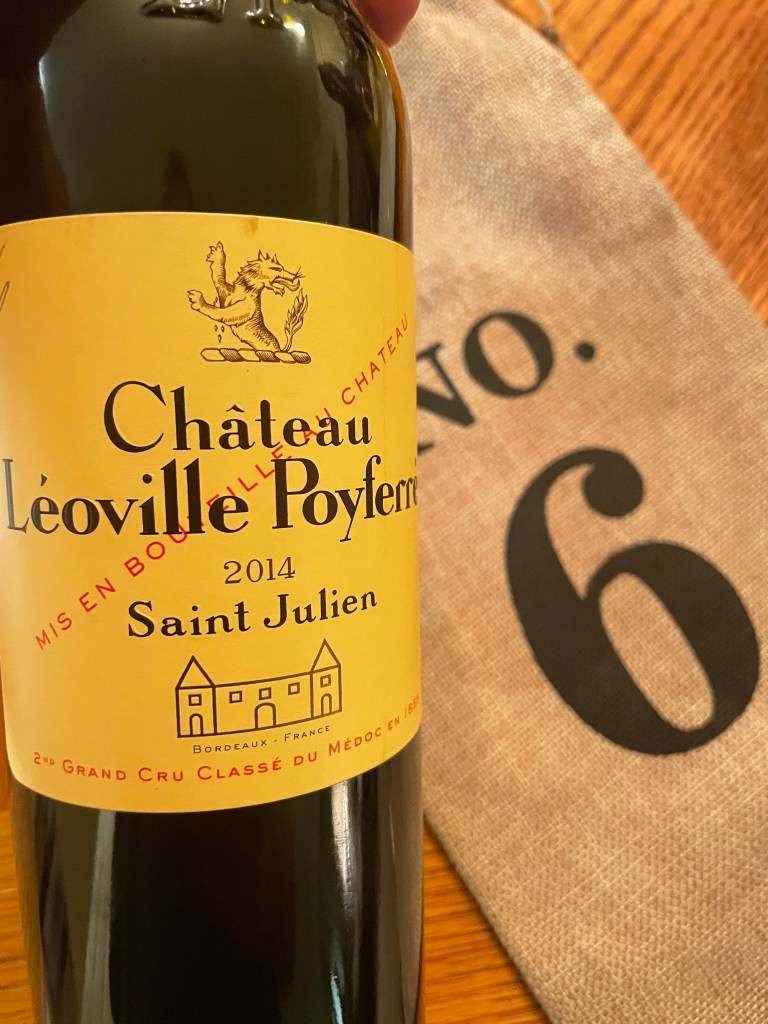
2014 Château Léoville-Poyferré: 60% Cabernet Sauvignon / 35% Merlot / 3% Cabernet Franc (Left bank Second Growth, Saint-Julien) (wine searcher retail $118, locally priced at $80)
2015 Château Gracia: 70% Merlot / 25% Cabernet Franc / 5% Cabernet Sauvignon (Right bank Grand Cru, Saint-Émilion) (wine searcher retail $111)
Virginia:
2012 Linden Hardscrabble: 56% Cabernet Sauvignon / 34% Merlot/ 9% Cabernet Franc / 1% Petit Verdot (selling at $75 in the winery)
2012 RdV Lost Mountain: 46% Cabernet Sauvignon / 40% Cabernet Franc / 14% Merlot (impossible to price due to scarcity; originally around $120 but recent vintages price at $220)
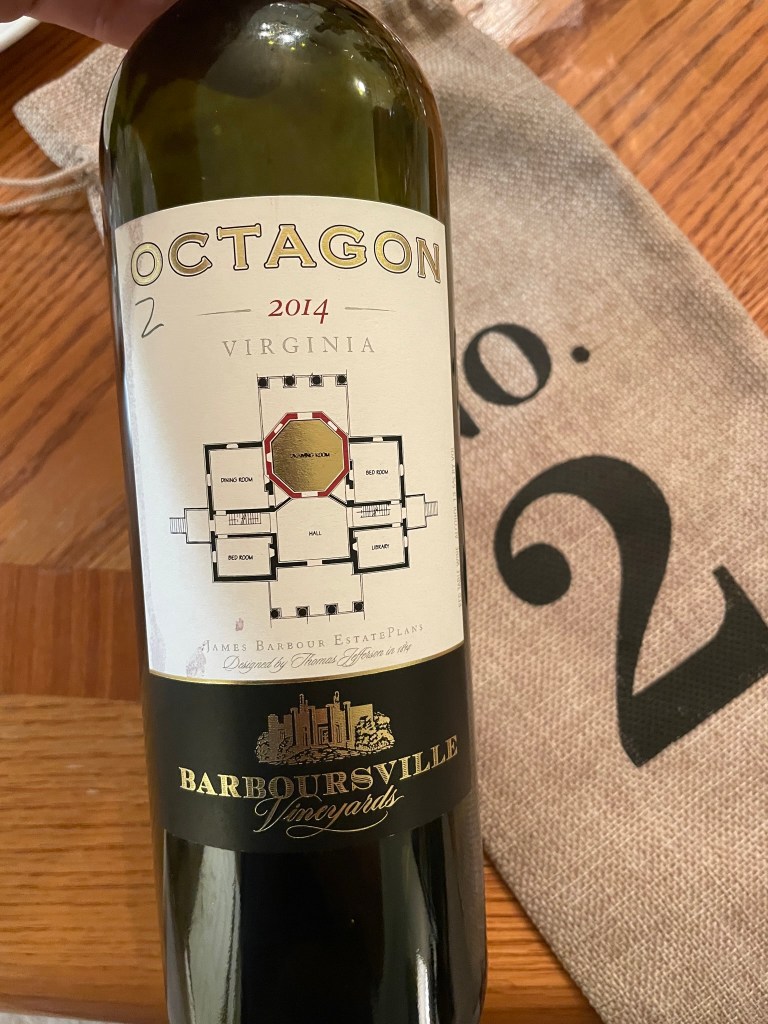
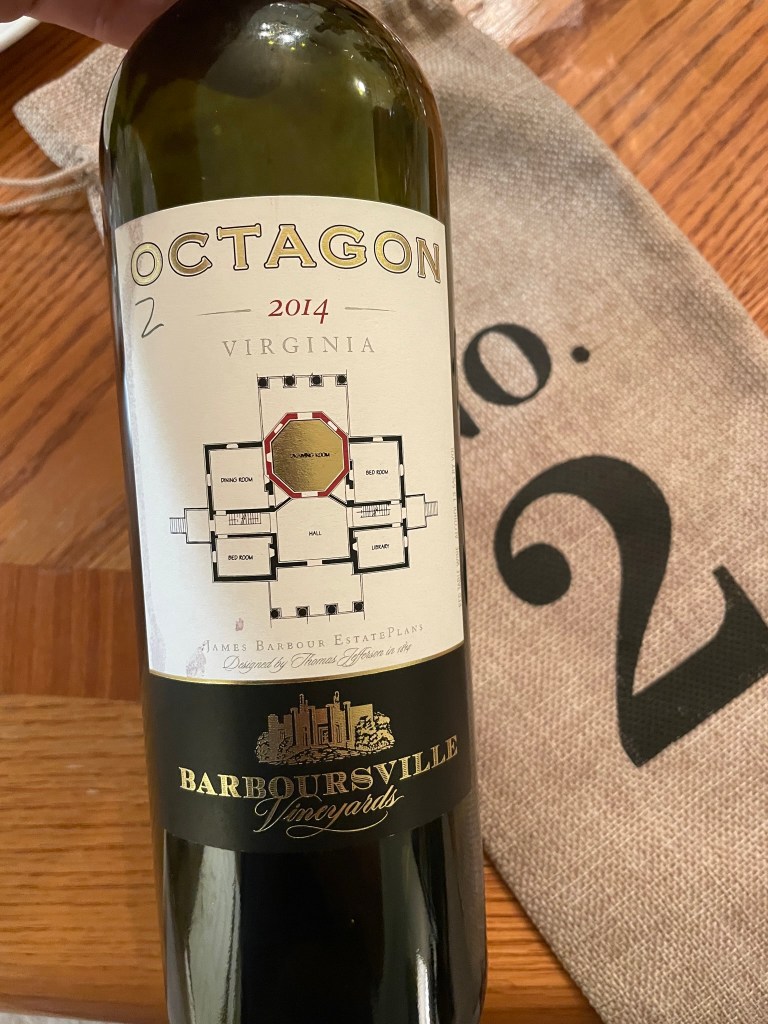
2014 Barboursville Octagon: 56% Merlot/ 23% Petit Verdot / 15% Cabernet Franc / 6% Cabernet Sauvignon (impossible to price to do scarcity; originally around $50 at the winery several years ago but likely retailing over $100 now).
Each of these came from well-regarded producers on both sides of the Atlantic. Even the experienced group tasting with me sometimes had difficulty identifying which was Bordeaux and which was Virginia. Of the 6 of us tasting 6 wines, I think we were accurate under 70% of the time.
As always, a caveat: this competition was the result of this day, with this group of people. It by no means indicates the wines that were selected as round favorites were superior to the other, or the wines that didn’t win their round weren’t loved. For this particular event, I’m convinced that at least 5 of the 6 wines we tried could have been selected as the ‘winner’ with a different food pairing; they were that good.
Pairing #1:
Wine #1 (2015 Château Gracia): 70% Merlot / 25% Cabernet Franc / 5% Cabernet Sauvignon (Saint-Émilion): 3 Votes
This round was evenly matched. I asked Dave McIntyre to pick a favorite and he didn’t want to give an answer; both of these were so equally well loved.
That feeling was shared amongst the group. To nobody’s surprise we were tied 3/3 (note to self – I need to have an odd number of tasters in the future). Not only that, but I think half of us (including me) got the Virginia wine wrong.
Ultimately I picked #2 to go to the next round, although it could have gone either way.
Alex: #2. Thought #1 was Bordeaux, also mentioned it was approachable. Notes of black current, red cherry, and tobacco backed by a long finish. Yet #2 was even more approachable with lots of red fruit, cola and a nice brightness to it.
Dave: #2. Loved both; didn’t want to pick between the two. #1 had a more ‘candied’ fruitiness he thought was associated with Virginia, but had less oak integration and was less harmonious because it didn’t have a lot of tannin. #2 loved it, and made a note about the color.
Matt: #1. #1 had some primary fruit on the nose but it was fading. #2 had some funk; earthy nose.
Katie: #2. She thought #1 was Virginia; liked the wine although she didn’t think the tannins were well integrated.
Kathy: #1. #1 had grippy tannins and more prominent fruit. #2 she found the fruit harder to find, and maybe a little reductive.
Vanessa: #1. Good maturity; tannins were chalky. Lots of fullness on the finish. #2 was brighter, velvety tannins, good acidity.
This was another even round. I favored #4 but not by a huge degree. Again, I was wrong on which was Virginia vs France since I thought I felt a lot more Cab Franc on #4, but was proven wrong (it had none).
With another 3/3 vote I was the tie-breaker here since I favored #4, so it went to the next round. Coincidentally it was my favorite of the night.
Alex: #3: Notes of smoke, tobacco, black cherry, vanilla, blackberry, and strawberries, with a long finish.
Dave: #4. Thought #3 was dense, dark fruit note, needed more time to develop. #4 had notes of clove, and maybe a cigar box note to it. Of the two, this was the one that was presenting better ‘now’.
Matt: #4. I found #3 to be lighter on the nose; some fruit but with an earthy palate. #4 had more pepper but very smooth tannins. I admittedly thought this was Virginia.
Katie: #3. Though #3 was elegant, and ‘couldn’t stop going back to it’. Also very floral. #4 had a herbatiousness to it, and thought it needed food.
Kathy: #3. Very “pretty” wine. Stewed strawberries but not overly jammy. #4 was had a meaty and spicy note.
Vanessa: #4. Thought #3 was lighter, good fruit quality, and less extraction. Overall it was ‘elegant’. #4 had more extraction and richness. She thought it had a brett note which gave it more complexity.
Pairing #3
Wine #5 (2012 RdV Lost Mountain): 46% Cab Sauv / 40% Cab Franc / 14% Merlot (5 Votes, round winner)
Wine #6 (2014 Château Léoville-Poyferré): 60% Cab Sauv / 35% Merlot / 3% Cab Franc (Saint-Julien) (1 Vote)
This round had a clear winner. #6 came off as too tannic; my mouth was positively dry after tasting it. But #5 was enjoyed all-around.
Alex: Split his votes between the two. #5 was more approachable, with lots of black pepper baking spice, cloves, and plumb on the palate. #6 had notes of dark chocolate, cherry and red fruit, but had a harsh nose.
Dave: #5. Dave said #5 had a pretty nose, was floral, and tasted notes of black currant and soft tannin. #6 had an off-putting nose and a very tannic finish.
Matt: #5. I found #5 to have some fruit on the nose but not the palate. Of the two, this was definitely the more drinkable right now. #6 was more of a food wine. Tannic finish, very dark and brooding overall.
Katie: #5.
Kathy: #5 had notes of blackberry, plumb, maybe menthol. Wished the finish lasted longer. #6 had an interesting notes, burnt toffee character to it on the palate.
Vanessa: #5. Thought #5 was well put together, while #6 was disjointed.
Finalist Round:
Wine #2 (2014 Barboursville Octagon): 56% Merlot/ 23% Petit Verdot / 15% Cabernet Franc / 6% Cabernet Sauvignon
Wine #5 (2012 RdV Lost Mountain): 46% Cabernet Sauvignon / 40% Cabernet Franc / 14% Merlot
From most favorite to least favorite, the results were:
Alex: Wines 2/5/4
Dave: Wines 4/5/2
Matt: Wines 4/2/5
Katie: Wines 5/4/2
Kathy: Wines 5/4/2
Vanessa: Wines 4/2/5
The lowest vote earned 1 point. The runner-up had 2 points, and the favorite wine got 3 points.
2014 Octagon from Barboursville had 7 points
2012 Lost Mountain from RdV had 11 points:
2012 Château Phélan Ségur had 12 points (Finalist)
Results:
I’d say there were a few take-aways.
The biggest is I felt this event demonstrated Virginia has the ability to go toe-to-toe with Bordeaux. Of 3 pairings, Virginia tied its Bordeaux counterpart twice and once easily surpassed it. 2 Virginia wines made it to the FInalist round, and the 2012 RdV Lost Mountain was also the 2nd favorite wine of the evening.
I was pleased to see how incredibly close these parings were at multiple levels. Every wine deserved high scores, and I truly believe that on another day, most of them could have been picked as our finalist. Even identifying the Bordeaux of the mix was sometimes difficult.
Second would be that while price and quality often go hand-in-hand, that’s not 100% true. The favorite of the day was the least expensive wine of all (still not cheap at $60-ish, but still). Not surprisingly RdV came in second, but the ‘brown bag’ method definitely evens the playing field.
Lastly, if there’s a downside to this event is while this tasting showed to me Virginia’s potential, the reality is it’s nearly impossible for our average wine lover to enjoy this kind of comparison. Virginia wines are often sold young, and limited inventory means most ‘older’ vintages are almost impossible to find. Even long-time Virginia wine collectors might only have a few special bottles from the 2012 vintage (or earlier).
Also keep in mind that the Virginia wines I selected represent the ‘elite’ of what the state has to offer. Few Virginia wines can age for 10 years like these did, or are made with the exquisite craftmanship we found.
Next up – a comparison of mid-priced Virginia red blends, a Cabernet Franc day, another sparkling round, and Petit Manseng.
The Loudoun Wine Awards hosted its 2022 event at the Lansdowne Resort and Spa on Friday, October 14th. Melanie Natoli of Cana Vineyards took home the Winemaker of the Year award, while the 2021 Albariño made by Scott Spelbring of Bluemont Vineyards won the Chairman’s Grand Award.
But the evening’s real winner was the Virginia wine industry as a whole. In a business that can be tough and competitive, Virginia wine stands out for its teamwork.
This sense of community was evident throughout the event. While guests enjoyed a 3-course dinner and extensive tasting of Loudoun County wines, they seemed just as eager to rub-shoulders and take selfies with owners, winemakers, and fellow Virginia wine lovers.
Multiple winners including Melanie and 2022 Winegrower of the Year Michael Newland made a point to recognize their coworkers and mentors, with both thanking Doug Fabbioli of Fabbioli Cellars for giving them their start in the industry.
Doug Fabbioli, with Melanie Natoli and Maggie Malick
“I am a Loudoun made winemaker and I’m proud of that,” said Melanie during her acceptance speech. “I spoke from the heart to my tribe. I put on a dress because it was a special night, but I wore slippers on my tired harvest feet because I’m home with my people.” Earlier this year Melanie also won Virginia’s 2022 Governor’s Cup, becoming the 1st female winemaker to win the award in the past 20 years.
“This event really showed how communal and convivial Virginia wine is,” said Neal Wavra, owner of Field & Main Restaurant and the event’s Competition Director. “Not only did the awardees thank their teams and mentors, but the people who were thanked were in the room.”
Nate Walsh of Walsh Family WineLineup of Zephaniah Farm Winery wines
Virginia Wine Increasingly Thinking Outside The Box
Bill Hatch, President of the Loudoun Wineries Association and owner/winemaker of Zephaniah Farm Vineyard, called Loudoun County “D.C.’s wine country”, based on the presence of over 40 tasting rooms just over an hour from the city.
Loudoun wineries entered 139 wines into the competition. 15 Gold medals were awarded to 8 Chains North, 868 Estate Vineyards, Bluemont Vineyard, Cana Vineyards & Winery of Middleburg, Carriage House Wineworks, Doukenie Winery, Maggie Malick Wine Caves, Three Creeks Winery and Williams Gap Vineyard. 112 wines also won Silver.
Loudoun County is nearly tied with Charlottesville in terms of acres of vines planted. While it’s long been associated with grapes traditionally grown in Bordeaux and Burgundy (Merlot, Cabernet Sauvignon, Chardonnay, and others), relative newcomers Petit Manseng and Albariño are also finding a home in the area.
The rising quality of Virginia wine is largely due to two factors. On one hand, vineyards are increasingly dialing-in on grape varieties and clones that do well locally. On the other, there is a growing level of expertise in the Virginia winemaking community.
To Dominique Landragin, owner and founder of D.C.’s Cork & Fork and one of the wine judges, the evolution he’s seen in Virginia wine from 1993 when he left Prince Michel Vineyard & Winery to today is easily apparent.
“When I look back on the Gold medals earned by Virginia wines, they used to be 100% single varietal. But this time I see a lot of blends, especially Merlot and Petit Verdot. I thought there was an amazing improvement.
I was especially impressed by the Albariños. It takes the humidity very well. Petit Manseng also. I’ve seen a few promising Syrahs as well. The Cabernet Francs here don’t have the vegetal character we find in the Loire; it’s very exciting.
The industry is really coming together, the mom & pop wineries and the professionals. In the beginning there were no professionals. But now, Michael Shaps makes some great wine!”
Neal was also impressed by the growing variety of wines in the region. “A few years ago Albariño wasn’t even a category. Last year was the first time it was its own category, and this year it was the winner.”
Scott Spelbring of Bluemont Vineyard, who took home the trophy for his 2021 Albariño, also had high praise for this grape.
“Albariño is a prolific grower but not a great yielder. We usually get 2-3 tones an acre. It’s one of the first we pick, usually in early September. We’ve grown it since before I started in 2016, and I’ve made it every year.
It has great acidity, but we’re not afraid to experiment. This wine is mostly cold fermented in stainless steel, but we also add in 2 barrels that are fermented using native yeast.
I think a lot of consumers are aware of Albariño but it’s not well known on the east coast. But we’re starting to step outside the box of Merlot and Cabernet Franc.
Petit Manseng is a grape where sweet or dry, you never know what you’ll get. But Albariño is such a great wine out of the box, because we know what to expect.”
2021 Albariño from Bluemont Vineyard
Loudoun Wine Awards Competition Results
GRAND AWARDS
Chairman’s Grand Award | 2021 Albariño from Bluemont Vineyards
Winemaker of the Year | Melanie Natoli, Winemaker, Cana Vineyards
Winegrower of the Year | Mike Newland, Vineyard Manager, Walsh Family Wine
Wine Ambassador of the Year | Nancy Deliso, Owner, 868 Vineyard
President’s Award | Aimee Henkel, Owner, Lost Creek Winery & Echelon Wine Bar
BEST OF CLASS
Best Albariño: 2021 Albariño, Bluemont Vineyard
Best Bordeaux Blend: 2019 Furnace Mountain Red, 8 Chains North
Best Chardonnay: 2020 Chardonnay, Cana Vineyards
Best Cabernet Franc: 2021 Cabernet Franc, Williams Gap Vineyard
Best Hybrid Red: 2018 Three Captains Red, Zephaniah Farm Vineyard
Best Hybrid White: 2020 Mandolin White, Doukenie Winery
Best Merlot: 2019 Russ Mountain Merlot, Walsh Family Wine
Best Petit Manseng: 2020 Petit Manseng, Williams Gap Vineyard
Best Petit Verdot: 2020 Petit Verdot, Carriage House Wineworks
Best Red Vinifera: 2020 Cabernet Sauvignon, October One Vineyard
Best Rosé: 2021 Rosé of Cabernet Franc, Sunset Hills Vineyard
Best Sauvignon Blanc: 2021 Sauvignon Blanc, 868 Vineyard
Best Viognier: 2020 Viognier, 868 Vineyards
This article can also be found on the Old Town Crier website.
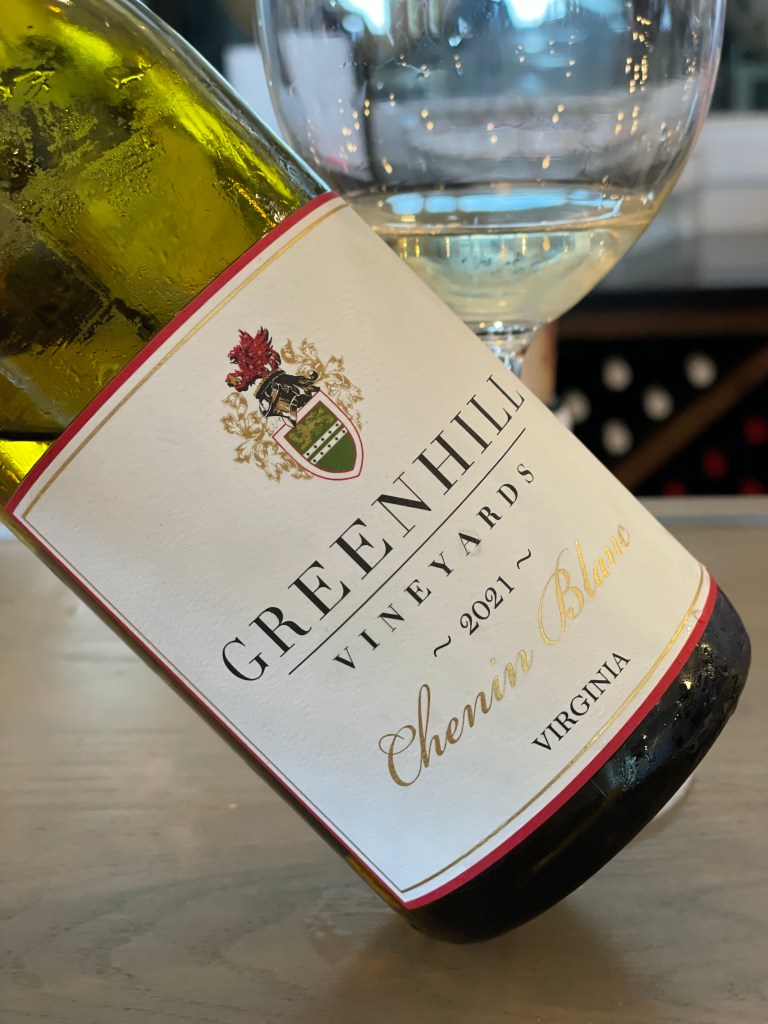
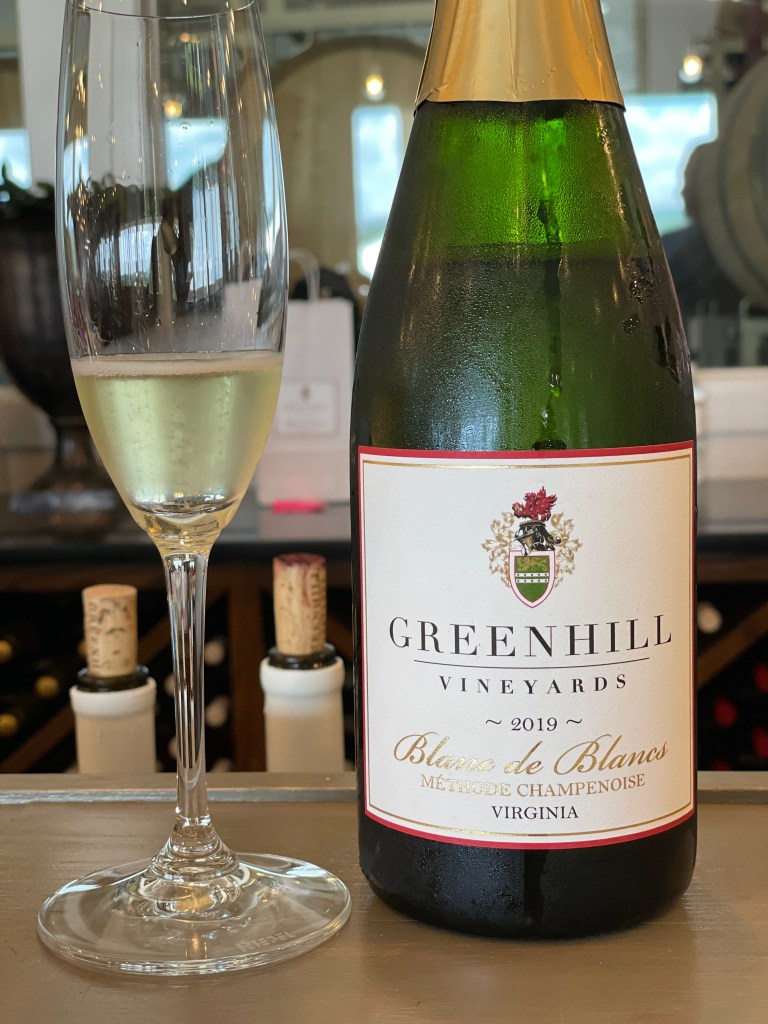
There’s a lot of wine history in Virginia. That said, Greenhill’s history is truly exceptional.
Prior to David Greenhill purchasing the property in 2013, this historic farm was known as Swedenburg Estate Vineyard. Founded in 1988, Swedenburg was one of Virginia’s first wineries. Not only did these Virginia wine pioneers demonstrate vinifera could find a home in the state, they created the blueprint for today’s ‘agro-tourism’ model used today.
But owner Juanita Swedenburg didn’t stop there. Finding that post-Prohibition laws prohibited her from selling her wine to out of state patrons, she took her case all the way to the Supreme Court. In 2005 the Supreme Court issued a 5-4 decision allowing Greenhill – and thus all ‘farm’ wineries around the country – sell to these consumers as well.
Greenhill continues to raise the bar. They’ve been competing at a high-level in major US wine competitions, including a 2022 Best in Class win in the San Fransisco Chronical Wine Competition for their 2019 Philosophy (Petit Verdot-heavy red blend), and a 2021 Best in Class win for their 2019 Petit Manseng.
It’s hard to write anything about Barboursville that hasn’t been said before. This winery is the source of nearly endless articles regarding its wine, history, and the team that runs it. But since the story is so great, how can you skip over it?
When Barboursville opened in 1976 it was the 6th winery to open in Virginia since the end of prohibition. Piemonte-born Luca Paschina has been its winemaker and general manager since 1990, and winegrower Fernando Franco has been (justifiably) credited as one of the best viticulturists in the US. At 180 acres of vines, it also is one of the largest producers in Virginia.
Nearly every year the Virginia Governor’s Cup competition choses at least one of Barboursville’s bottles as one of the top 12 wines the state. It was also the first and arguably the most famous grower of nebbiolo in Virginia, and its Octagon red blend (and increasingly its Vermentino Reserve and Fiano) win rave reviews in major wine magazines. These are only a few of the many reasons why Barboursville is sometimes referred to as Virginia’s answer to France’s “First Growth” estates.
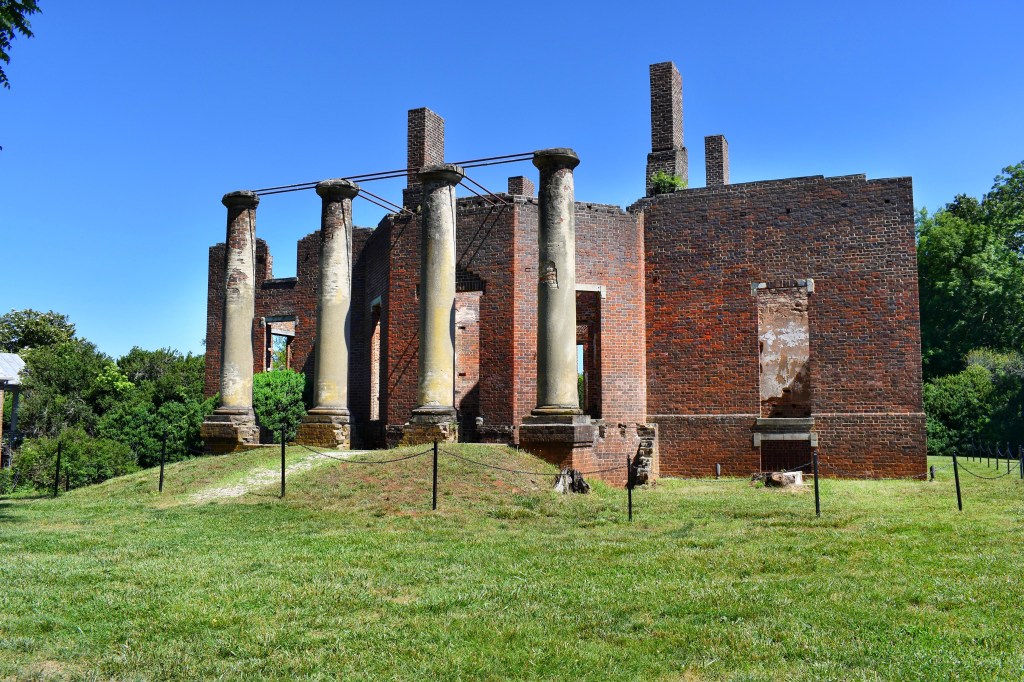
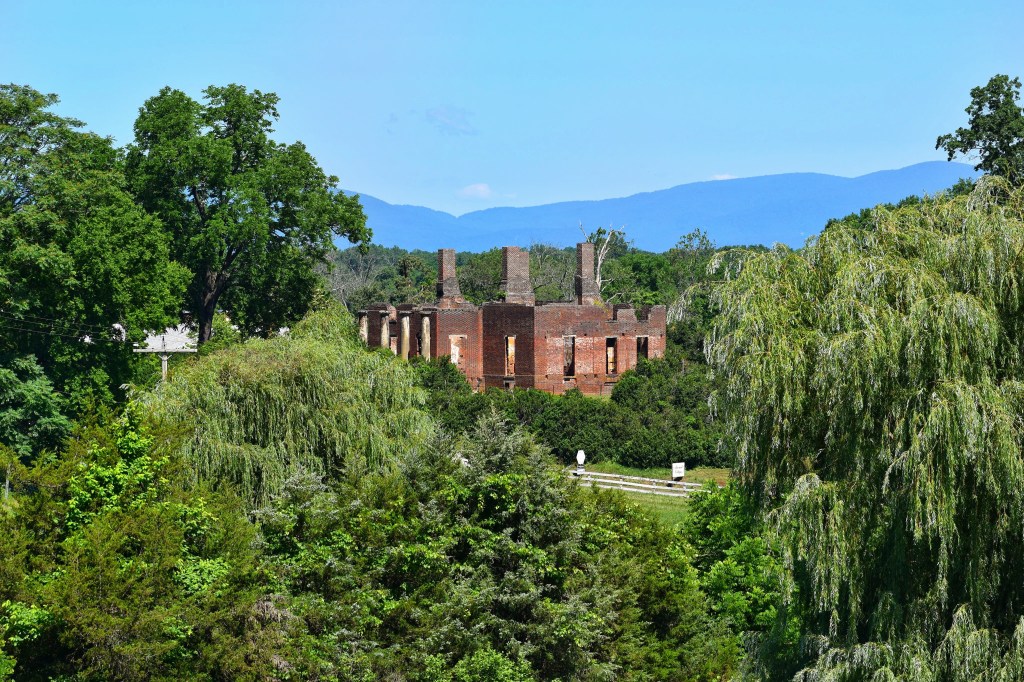
Thomas Jefferson’s legacy is strong here, and it’s not just the wine. The property includes the ruins of a manor Jefferson designed for his friend James Barbour. Its distinctive eight-sided design was inspired by a 16th century Italian architect named Andrea Palladio, whose book I quattro libri dell’architettura (The Four Books of Architecture) Jefferson referred to as his ‘bible’. Jefferson used Palladio’s octagon motif in many of his buildings, including Monticello and “The Rotunda” at the University of Virginia.
When Barboursville winemaker Luca Paschina was researching the history of the estate, he came upon the story of how Jefferson believed the octagon shape was a symbol of “perfection and balance”. This description was exactly what Luca strives for, which led his flagship wine to be named “Octagon”.
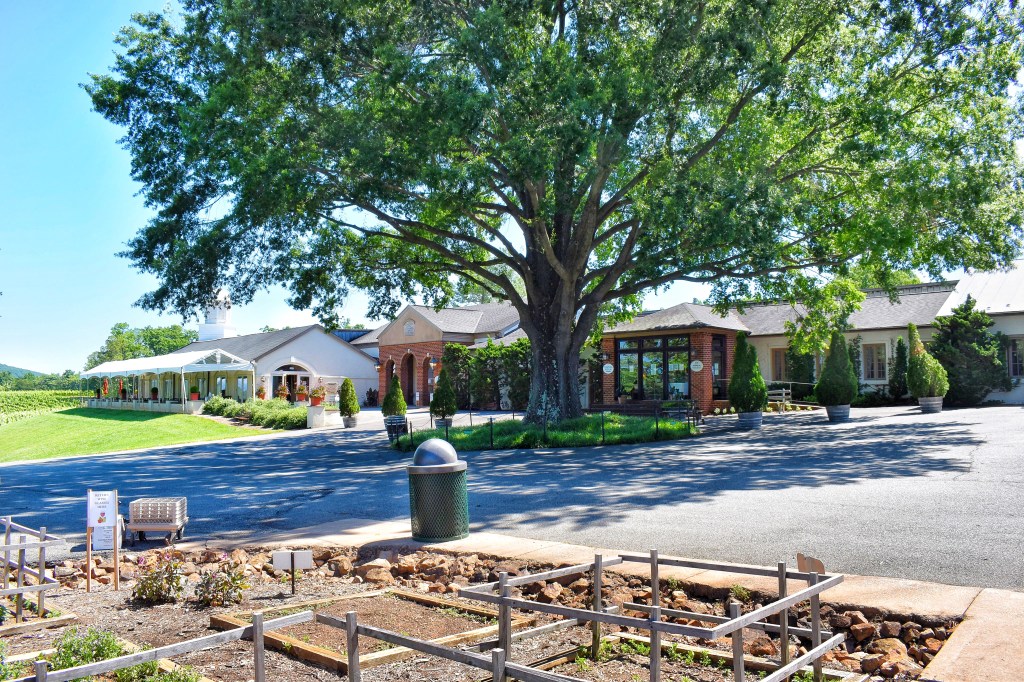
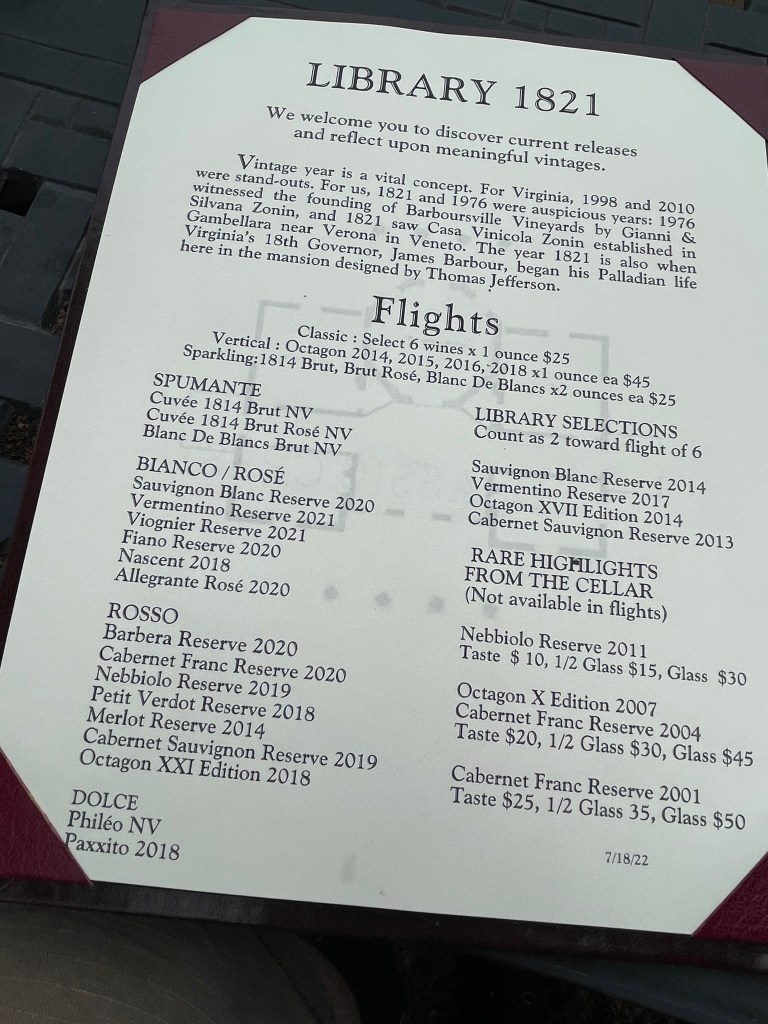
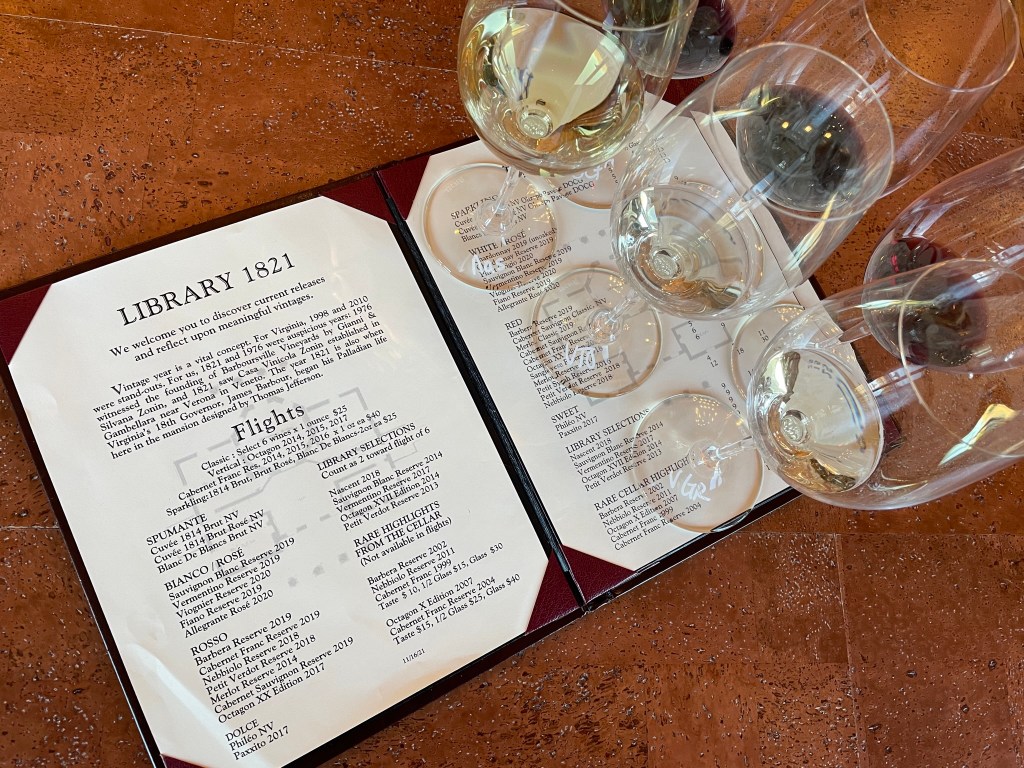
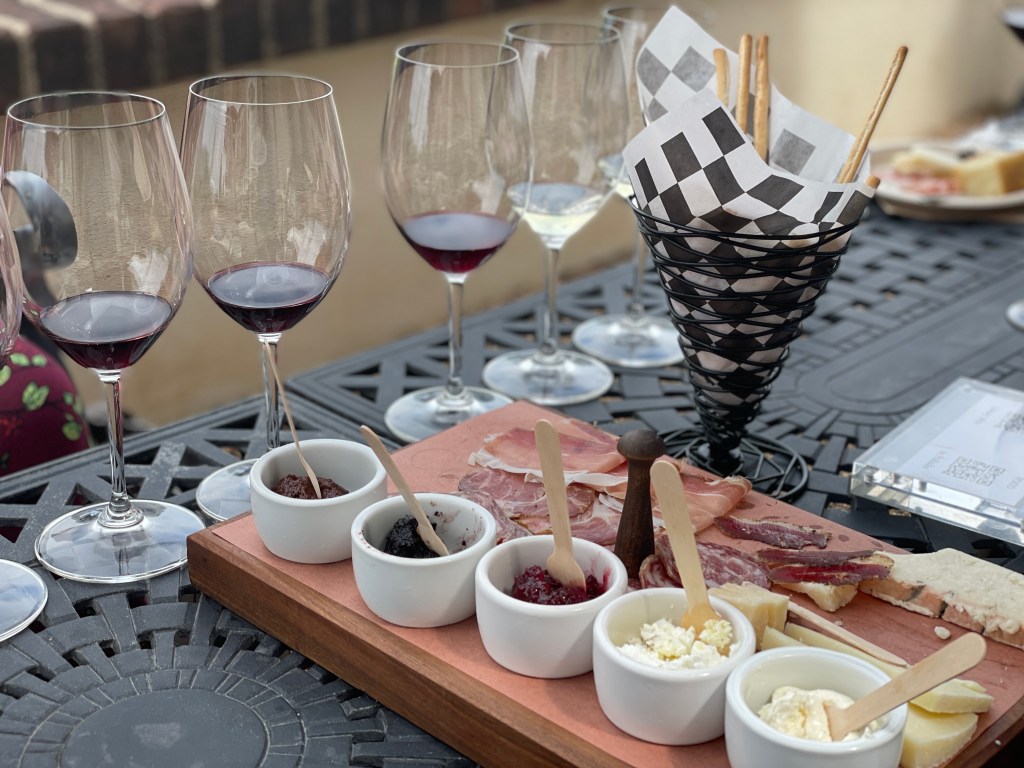
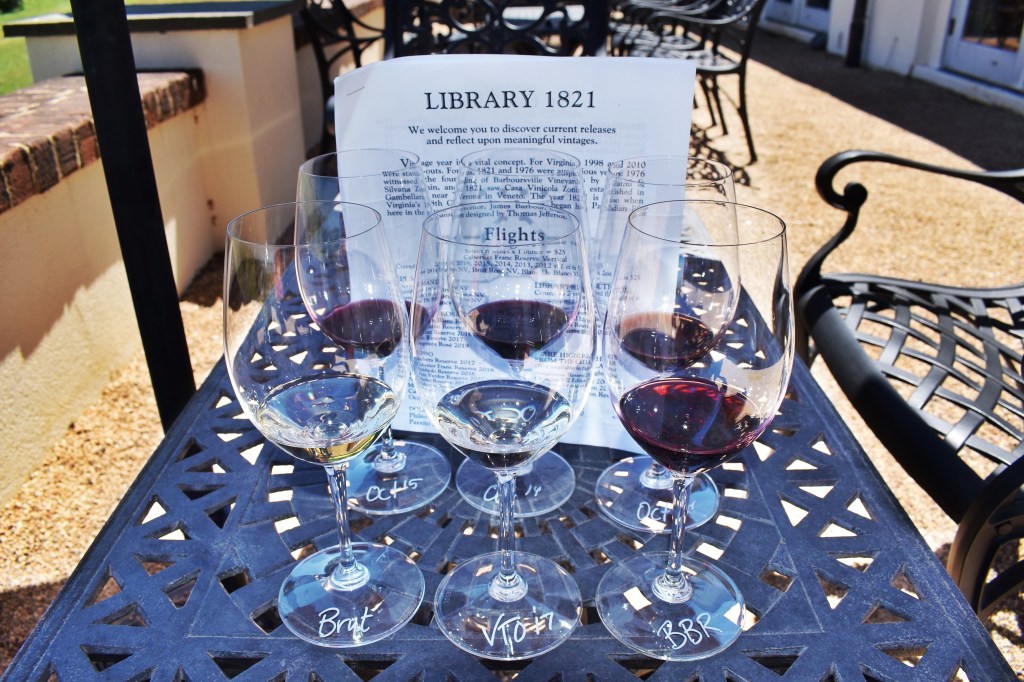
I’ve visited here more times than I can count and dinned at the Palladio restaurant several times. While they have a ‘regular’ tasting room, when I visit it’s almost always to visit is the Library 1821, which showcases its deep library of older vintages.
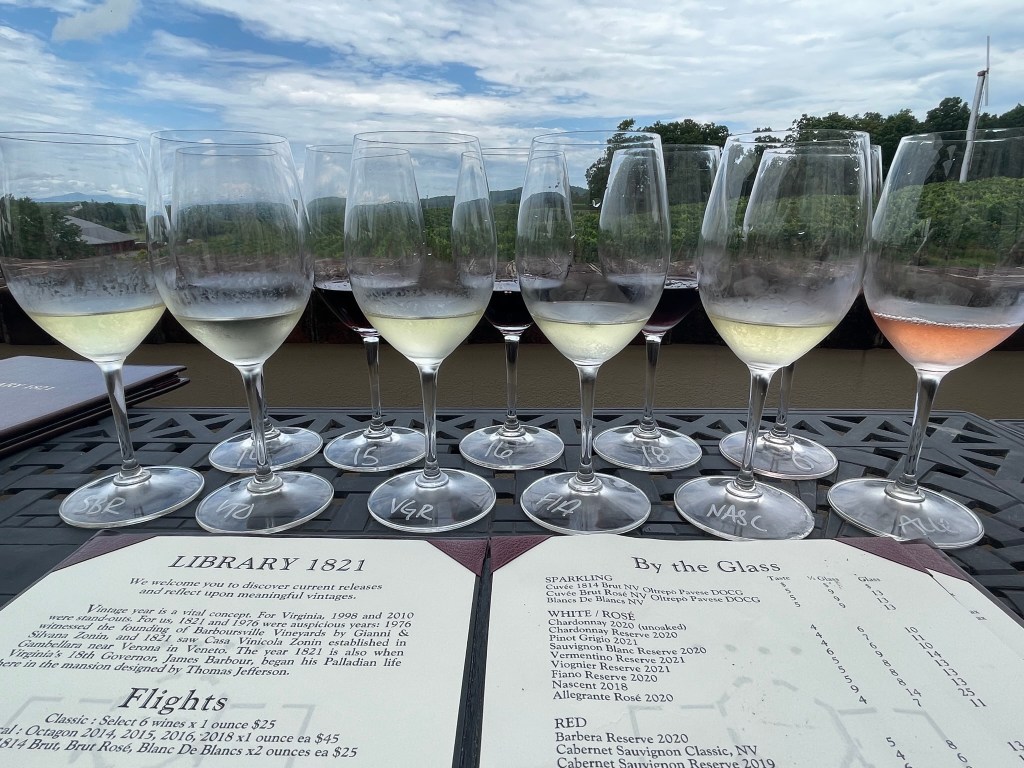
The way the Library tasting works is you select 6 wines, although some older vintages ‘costs’ 2 picks. The lineup changes periodically, although older vintages of Octagon are always on the menu, some of them well over a decade old.
For my last few visits I lucked out since we scored patio seating. Even better, Keri was my server and she always kept checking in on us. After a brief analysis-paralysis, several flights were ordered, as well as food from the kitchen.
Often I do two flights because I never want to miss anything, but go with a group so you can order more. And funny story – turns out that I had some unpublished notes from November 2021, so I’ll include those notes with my August 2022 visit.
2014 Octagon was, in a word, outstanding. I later learned this was the Governor’s Cup winner in 2020. Spice notes but not earthy. Dark fruit but nothing in particular I could pick out.
The 2017 Octagon was the runner-up; many of the same qualities but more on the fruit and less on the tertiary flavors. But special mention goes to the 2018 Octagon; it was a softer, fruitier wine that came out well despite a difficult vintage.
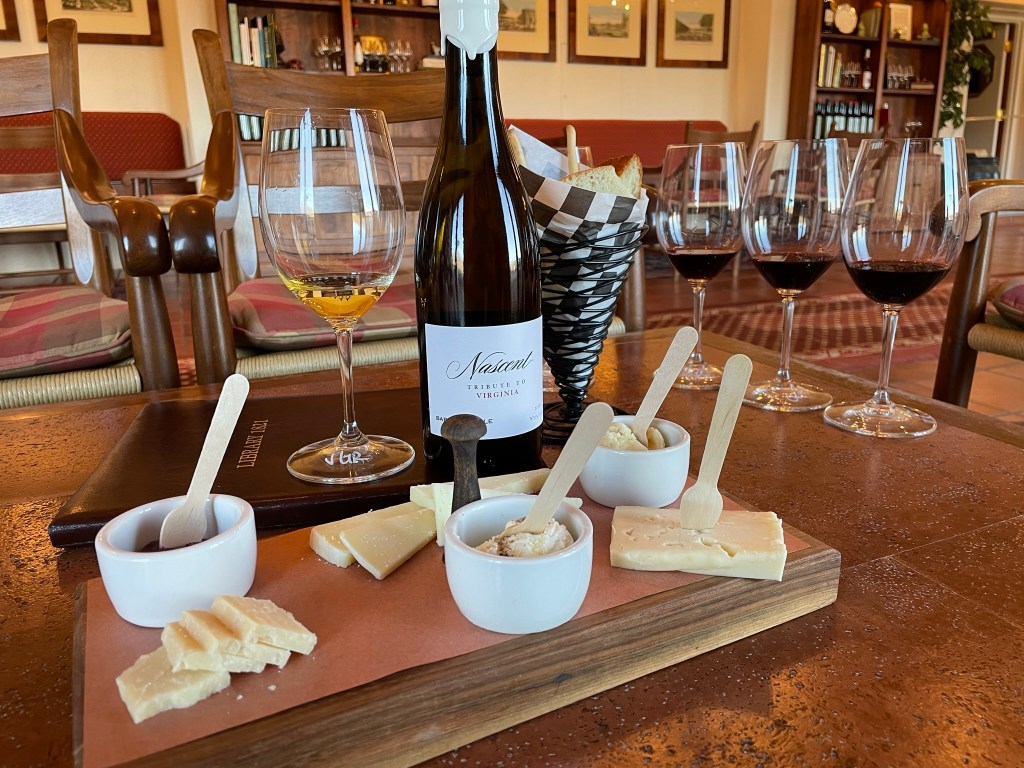
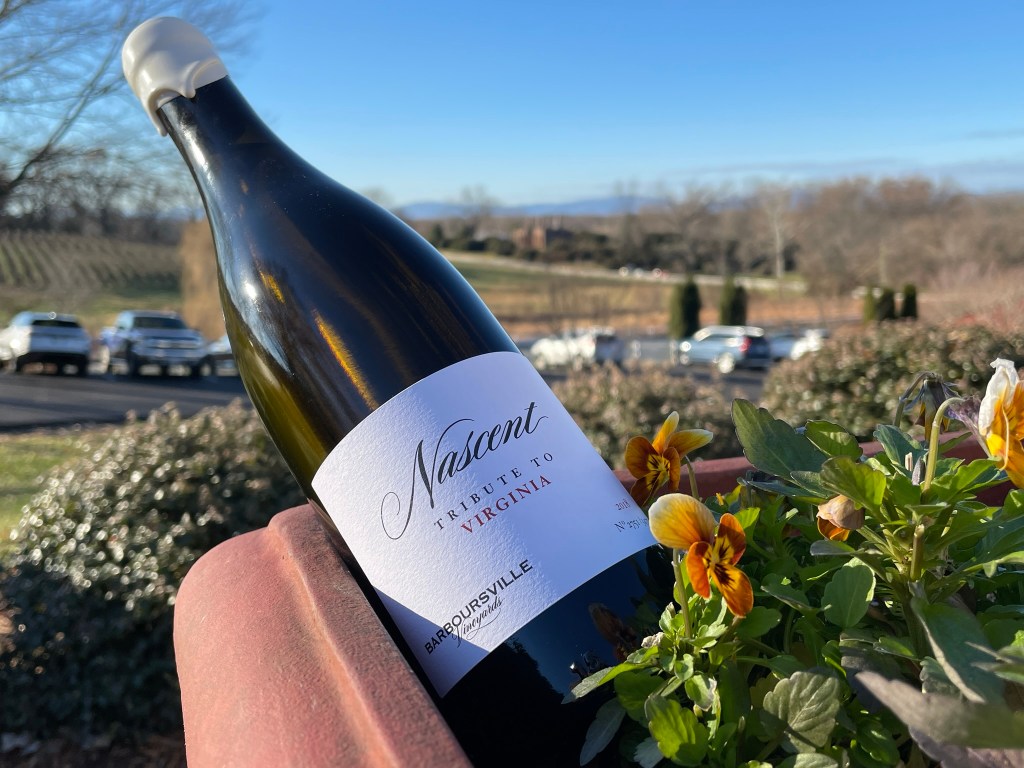
While Octagon is arguably the highlight, the entire lineup is full of stars. I was able to retry their Nascent white blend (Viognier, but with smaller dashes of Fiano and Vermentino) which might be their new flagship white. It has lots of depth but was smooth at the same time.
But on the last few visits I thought their Barbera and Cabernet Franc were also special. Both were from the 2020 vintage. Their Vermentino is also a consistent award-winner.
Tasting notes:
December 2021:
Brute NV: Notes of peach.
2019 Fiano: Lemon nose, little perfume. Another almost thick, full bodied white
2015 Viognier Reserve: Very tropical
2013 Vermentino: Heavier on the tongue
2017 Vermentino: This is a full-bodied white that explodes at the beginning of your palate. Lots of tropical notes
2017 Barbera Reserve: Notes of bramble fruit, cherry and spice.
2004 Octagon: As you’d expect on an older vintage, low on fruit but high on tertiary notes including mushroom, especially on the nose.
2014 Octagon: Good depth
2015 Octagon: Spicy
2017 Octagon: No notes other than *really liked it*
2010 Merlot: More fruit than I would have given it credit for.
2006 Sangiovese: Sour cherry; starting to brown due to its age.
2018 Nebbiolo: Very light, strawberry notes
2013 Petit Verdot: Smooth!
2017 Petit Verdot: Dark cherry, earthy nose, but palate is brighter with some assertive tannin
August 2022
2020 Fiano: Almost like a Sauv Blanc!
2021 Viognier Reserve: Not overly floral; no honeysuckle bomb here
2021 Vermentino: Bright lemon notes.
2021 Sauvignon Blanc: Lots of melon notes, but a far cry from a NZ-style SB
2007 Octagon: End of its life but lots of tertiary flavors
2014 Octagon: Mushroom on both the nose and the palate.
2015 Octagon: More fruit forward but not to the extent of the 2018
2016 Octagon: Earthy; lots of texture
2018 Octagon: Soft, fruity; easy to drink. High marks for a wine from a difficult vintage.
2013 Cabernet Sauvignon: I needed a moment alone with this wine. It was hitting that inflection point when the fruit is there but the tertiary notes are appearing 2018 Cab Franc: Super aromatic, fruity
1995 Cabernet Sauvignon: Carmelized; light colored and smooth, with a tad bit of fruit left.
2019 Cabernet Sauvignon Reserve: So young by comparison
2018 Petit Verdot. Not in your face tannin or acid. The wet 2018 vintage may have helped since it made it more approachable
2020 Barbera: Really good! Didn’t have a lot but bright red notes
2019 Nebbiolo: Sour – which is exactly what you’d expect from this variety. Still young
2020 Cabernet Franc: Medium bodied; not spicy not earthy not tobacco but a nice blend of all of that
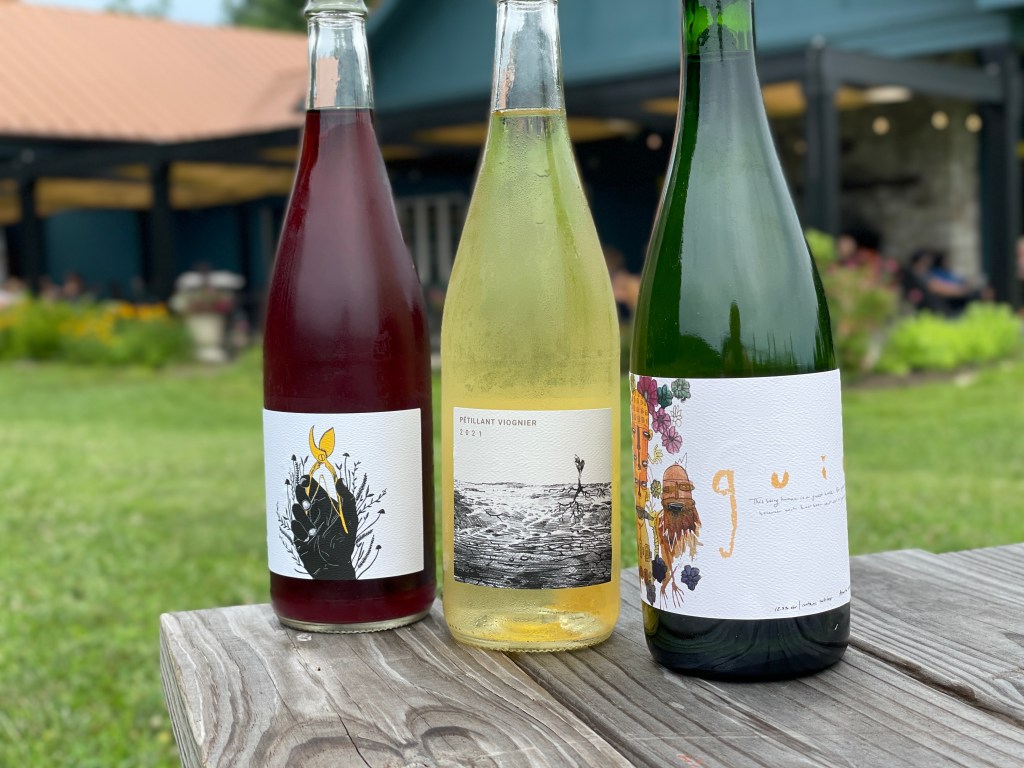
My article on Virginia’s Pét-nats for Wine and Country Life published the other week. Sampling wine as part of **research** is fun, but even better was interviewing some of my favorite winemakers, especially Maya Hood White of Early Mountain Vineyards, and Sarah and Nate Walsh of Walsh Family Wine.
I have to agree with Nate; Maya is ‘Queen of Pét-nats”. Not sure if she was the first in Virginia to make one, but if not she comes close.
Pét-nats aren’t just delicious; “they are a labor of love”. To quote Maya, “We would release in January and it’s like a snapshot of the vineyard. There’s something unique about it in that you are getting a totally unadulterated version of the wine. It’s kind of the first taste of the vintage.”
But if Maya is Queen of the Pét-nats, then Walsh Family is “The House That Pét-nat Built”. OK that’s not entirely true; they were rocking still wine before they made their first sparkling.
But given you can buy six (!!!) different Pét-nats (from Walsh, plus bottles from their associates of Boden Young, Guide Wine, and Quartzwood Farm) that ***should*** be their name. My shot of all of Nate’s bottles laying in the vines was too good for me not to use.
Click on the link at the bottom to read the full article.
Forge Cellars was hands-down one of my best Finger Lakes experiences. I wasn’t able to visit in 2019 so I marked it down as a ‘must visit’ for my next trip.
While you can enjoy tastings at every winery in the Finger Lakes, none offered the level of wine education that Forge provided. The irony is their guided flight cost the same $20 as a self-guided salon flight, so there’s no reason not to do it.
This is one of the area’s more famous wineries, although it’s not one of the larger ones. Forge has 40 acres of vines and produces of 10,000 cases/year.
Their most famous wine is their “Classique” riesling, but there’s much more to them. All told, they make around 13 different rieslings (most if not all vineyard-specific), plus a pair of pinots and a single-vineyard cabernet franc.
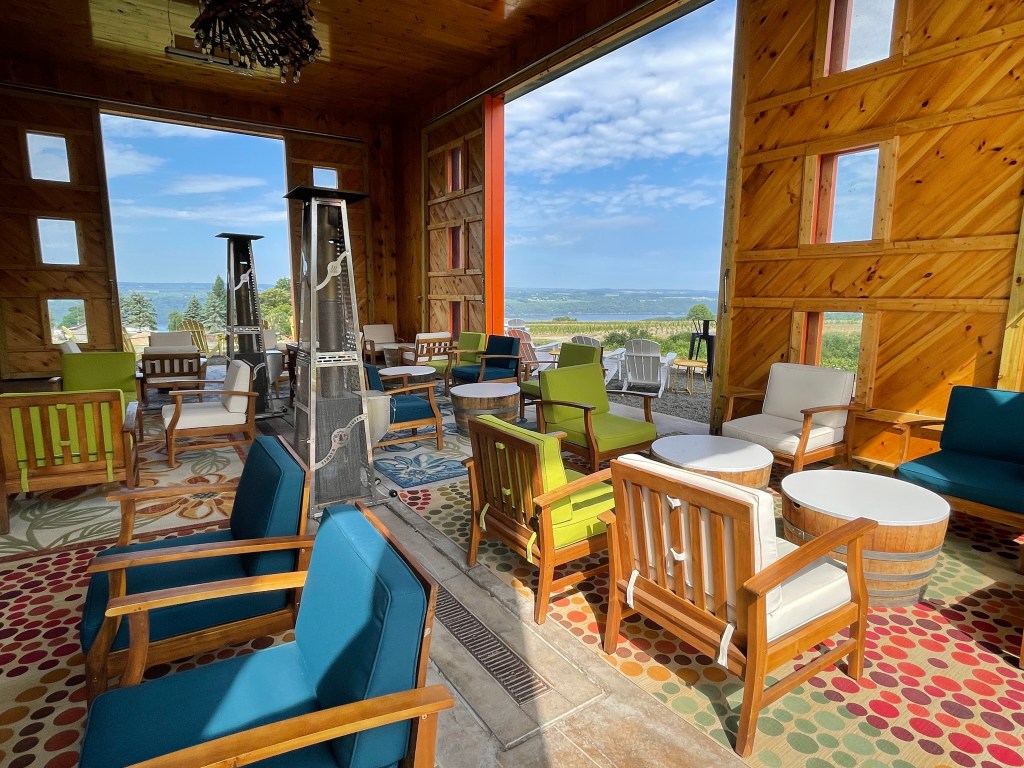
Forge’s guided flights are only done on Friday & Saturday mornings. But fear not, around a year ago they expanded their patio so drop-ins can visit at any time. Visitors can soak up the view while enjoying a self-guided flight, plus they have great cheese boards (and that jamón!).
Patio for self-guided flights
My guide was Alec, a former Somm who decided to leave the city life for something quieter. He explained the terroir of their vineyards and Forge’s overall winemaking philosophy.
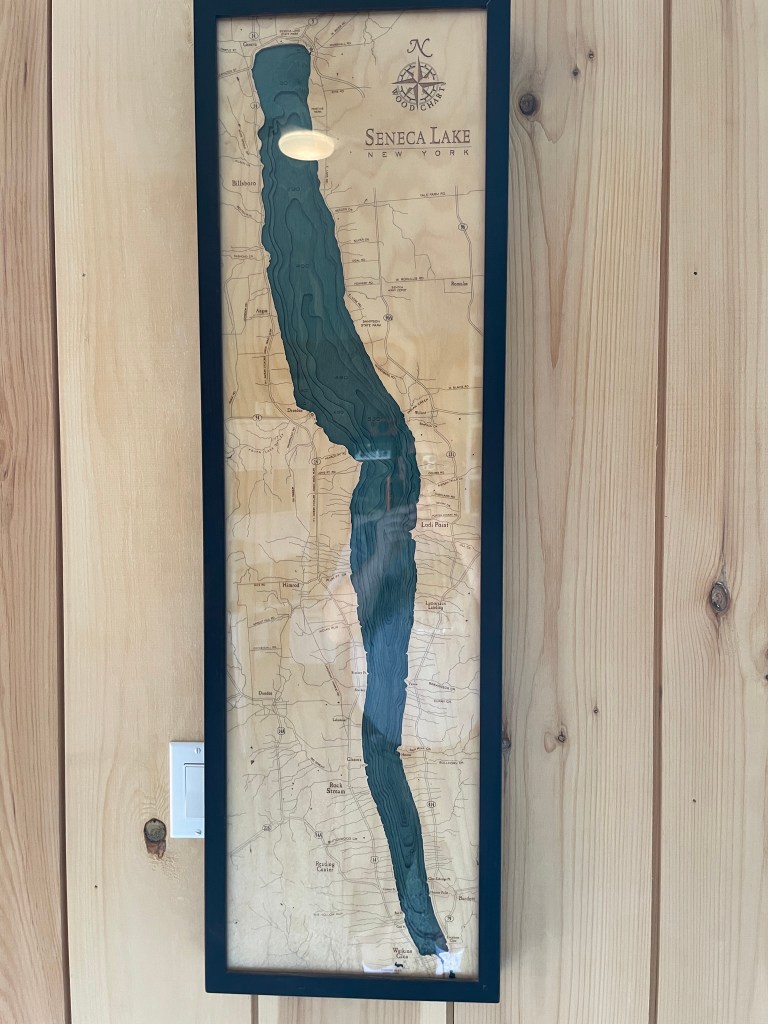
The story of how Seneca offsets the local weather is well known. A few tasting room associates may tell you how deep it is (just over 600 feet at its deepest) and how it hasn’t freezed in living memory.
But Alec was the first to explain how ancient glaciers deposited multiple types of soil in this area, giving winemakers a multitude of options on where to plant their vines. He especially focused on Devonian shale, the ‘mother rock’ of the area which causes the vines to struggle, resulting in better fruit.
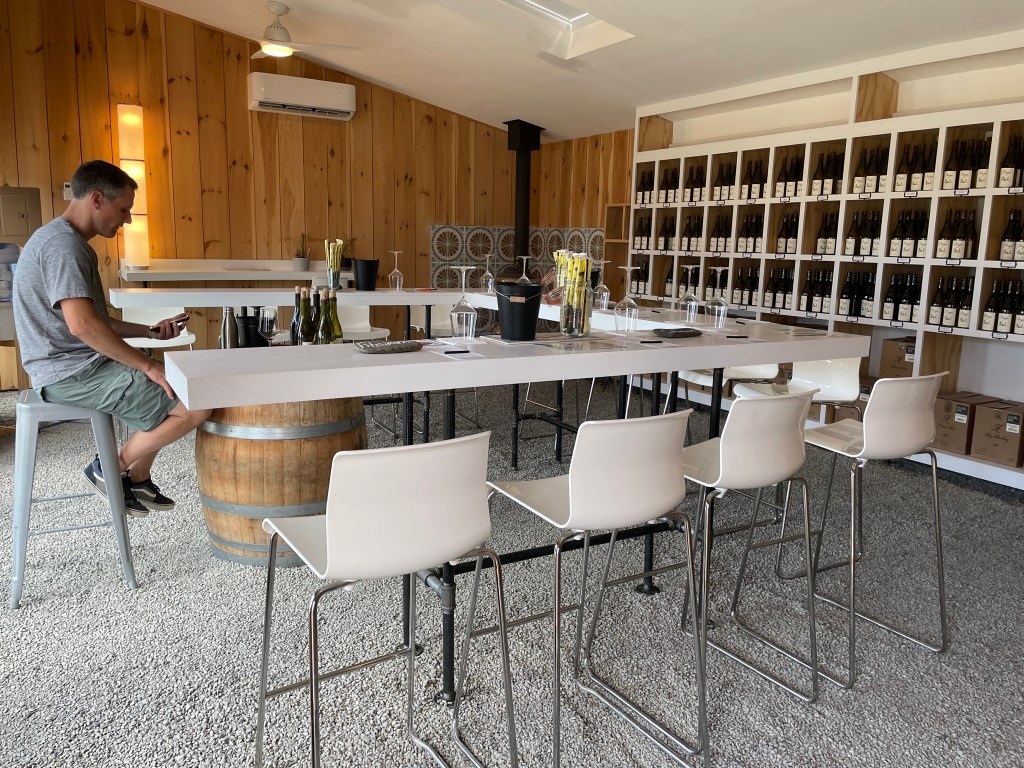
Appointment-only tasting roomNice touch!
Forge has multiple vineyards which take advantage of this diversity of soil types, allowing them to create vineyard-specific wines which showcase their own terroir-driven personalities. I’d never seen one winery with so many rieslings of the same vintage, yet all of them so unique.
He also explained how they use native yeast fermentation and use only neutral barrels, most of them from France or Hungary. They even have a French winemaker, Louis Barruol.
We did a flight of five wines, plus I did an additional five wines on my own on the patio.
2020 Freese (riesling): Soft nose, with notes of white pepper and apricot. A ‘classic’ expression of this grape. I liked it so much I picked up two bottles.
2020 Breakneck Creek (riesling): Named for the vineyard’ steep slope, this was a ‘bigger’ riesling. Heavier, more intense. Notes of quince.
2020 Navone (riesling): This was even more different than the first two. I couldn’t explain why, but this time I got an herbal-spice note. Also notes of tangerine.
2019 Classique (riesling): Their “standard” riesling, although their “standard” is high-quality. Lighter, more grapefruit notes. The lightness was also due to the vintage.
2020 Leidenfrost (riesling): Lots of texture, heavier.
2020 Tango Oaks (riesling): Ripe, with lemon notes. I bought a bottle.
2020 Peach Orchard (riesling): Bright and herbal
2020 Railroad (riesling): Tropical notes
2020 Leidenfrost (pinot noir): Deep color, which did not remind me of pinot noir at all. It was also exceptionally tannic, with an ash finish. I liked it but definitely very different.
























 Wine Trails and Wanderlust