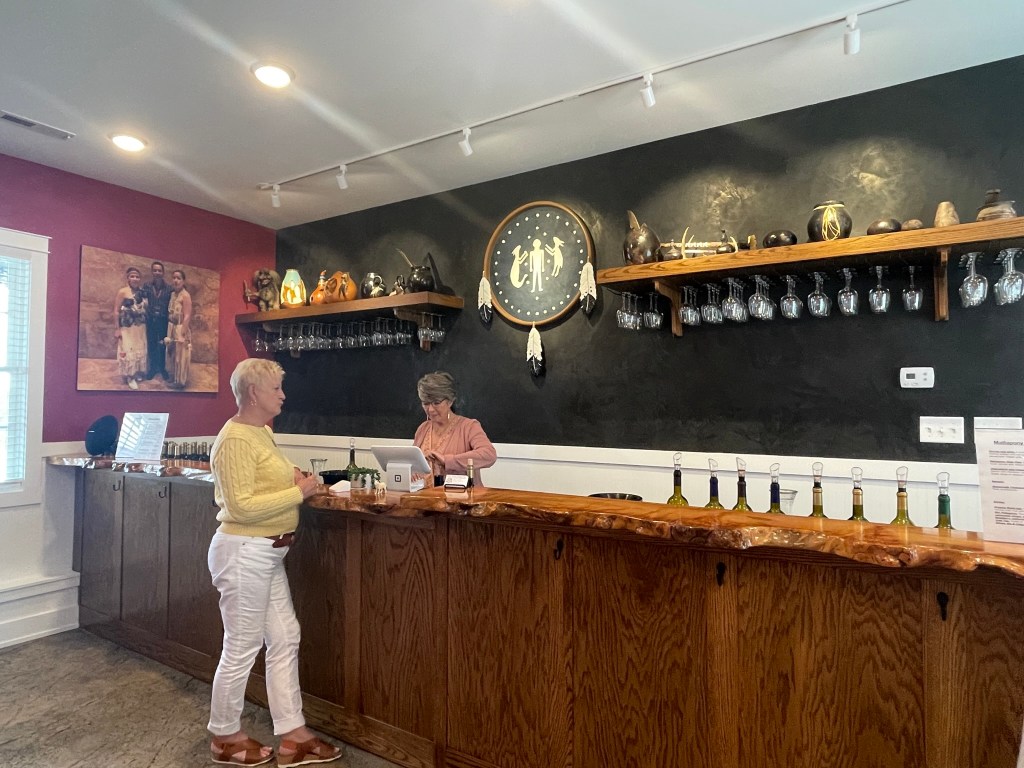
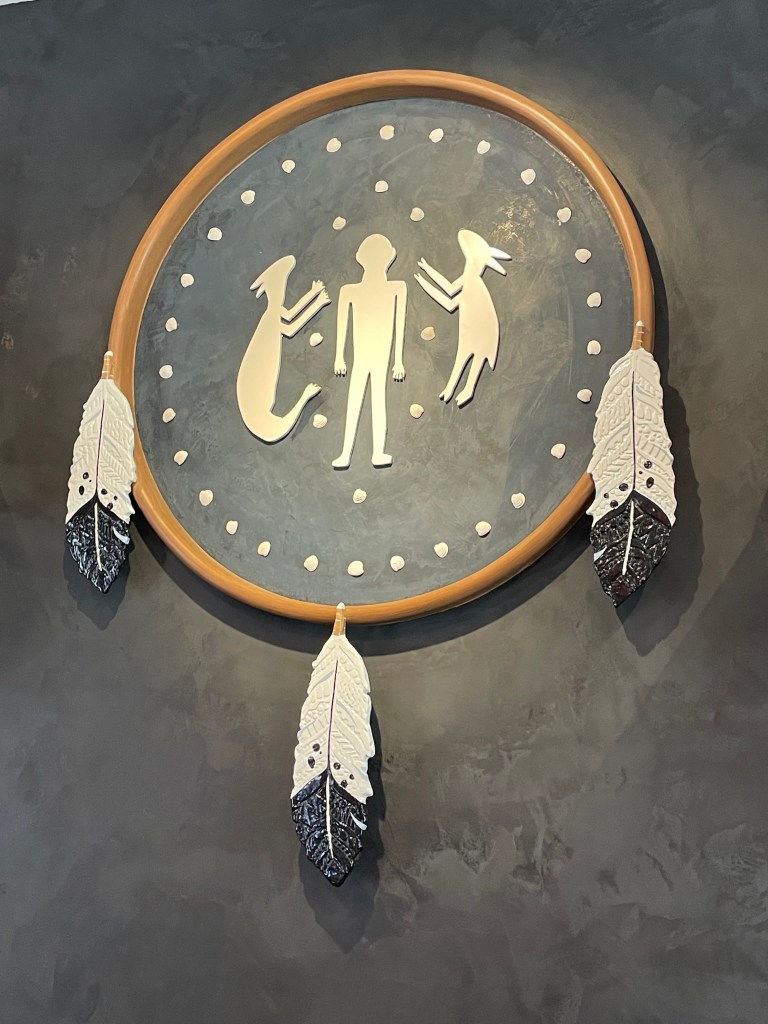
Mattapony Reserve is one of Virginia’s newest wineries, opening in late 2022 on the Mattaponi Indian Reservation on the banks of the Mattaponi River east of Richmond. This wasn’t on my original itinerary, but I had some free time so I scooted over to try it out.
Since there isn’t a vineyard, the tasting building isn’t obvious at a glance. The winery is located at the end of a long circular road (maybe I could have taken a right instead of a left and sped up my journey, but I didn’t know). I passed a number of family homes, a church, and the Mini Ha-Ha Educational Trading Post (I never thought I’d see a sign like that, but there it was!). But the GPS was right on, and as soon as a saw a big parking I figured that was the place.
The entire experience has a very mom-and-pop vibe to it. It helped that Ginger and Lonnie Custalow, the owners/winemakers were behind the counter. Ginger poured while telling me their backstory.
They were home winemakers for a while, finally making their first commercial vintage in 2020. They named the winery ‘Mattapony’, which is an older spelling of the local tribe. There’s a separate Mattaponi winery as well, although the two couldn’t be more different.
All of Mattapony’s fruit is from Virginia, and the wine is made via ‘natural winemaking’. This is a bit of an open-ended term, since there is no technical definition of ‘natural wine’. But generally speaking it means limited intervention, low chemical spraying, and (in their case) no added sulfites.
While there isn’t a lot of indoor seating it has something I think is even better; a covered patio next to the river. I was told that if you watch long enough you might even see some bald eagles swooping down. No eagles were seen when I was there, but the view was well worth the visit.
Nine wines were available during my visit; a pair of Nortons, a pair of Petit Verdots, a Pinot Grigio rose’, a 2021 Chardonel, a 2020 Chardonnay, DeChaunac, and a red blend called “Two Rivers”.
I got to try them all, with my favorites being the rose’, Chardonnay, and DeChaunac (if only because I see it so rarely). The prevalence of hybrids is very common in natural winemaking.
The Chardonnay was definitely my favorite. It was almost an orange wine; very dark hue to it. Notes of pineapple and coconut abound.
The Pinot Grigio rose’ was nicely done; lots of peach notes. I almost got a glass, but opted for the Chardonnay instead.
That DeChaunac was damn interesting. It’s a French-American hybrid that was one of the first created in the wake of phylloxera. I found it was very acidic and tart. I later found they got the fruit from Rockbridge.
If you like smoky reds; this is your place. The 2021 Norton and 2020 PV were both was lighter than I expected. Did it have something with the winemaking style? I forgot to ask.
It may be further out than many wineries, but there’s something to be said about kicking back on the porch and hoping to see eagles fly-by.
If there was a prize for great neighborhoods to open a winery, Capstone Vineyards would be in the finalist round. With Crimson Lane Vineyards literally next door and Linden Vineyards down the road, the town of Linden has become a wine tourism mecca.
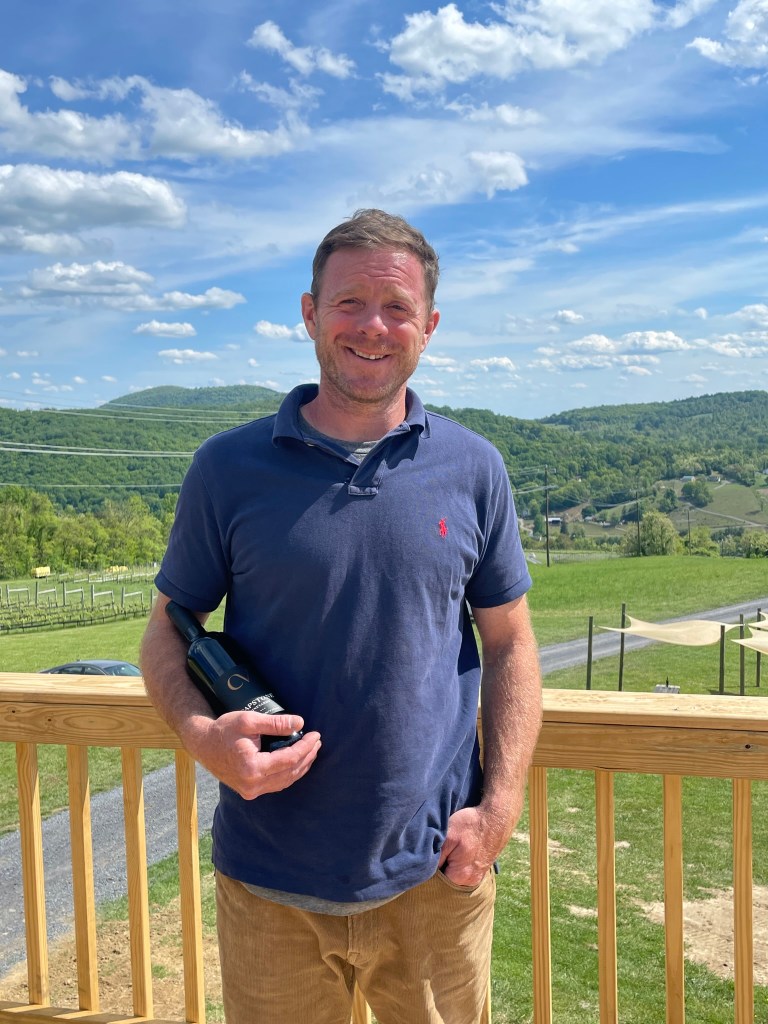
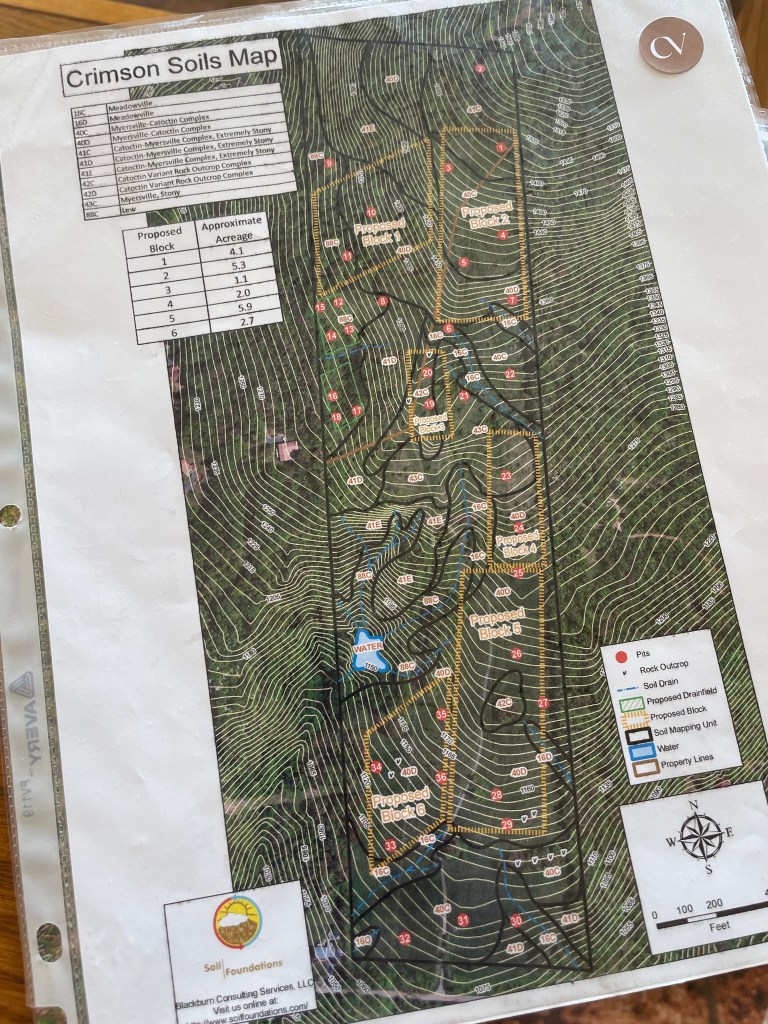
These wineries all recognized something crucial; these hills have great soil. Capstone’s new owner Theo Smith put it this way; “With dirt like this, making wine is easy. All I have to do is not screw it up.”
Capstone opened in February 2019, although founders Dave Adams and Andrea Baer preferred to stay under-the-radar. That was by design; they only made a small batch of wine from their 2015 and 2016 vintages (produced by Jim Law at Linden Vineyards, no less) and sold all subsequent harvests to Early Mountain Vineyards (EMV). Dave and Adrea only accepted visitors by appointment, slowly selling their remaining stock but not making more.
EMV used Capstone’s fruit to produce a series of vineyard-specific bottles. This is high praise; EMV knew this was a quality vineyard, and these ‘Capstone’ wines were usually gone after their wine club took its share.
Eventually Dave and Andrea decided to move on. EMV was interested in purchasing the vineyard, but the owners decided to go with Theo as they liked the idea of helping a young vintner get his start. Capstone changed hands in December 2022.
The first thing that visitors experience is a long, steep driveway to the small tasting room which overlooks the vineyard. The vines are south facing, which maximizes sun exposure. The steep slope tops out 1500 feet, so it has excellent drainage. Right now, they have 12 acres of mostly Bordeaux varietals planted (with room to expand), plus some rows of Roussanne, Chenin and Muscat Ottonel.
The tasting room is tiny, but some improvements have been made. One of Theo’s first moves was to install a new deck and put some tables outside. Now it’s a lot easier to take in the fantastic view, which includes a look at Avenius vineyard just a few hills over. Theo expects to eventually build a new tasting room further up the hill, but a wine production facility takes priority.
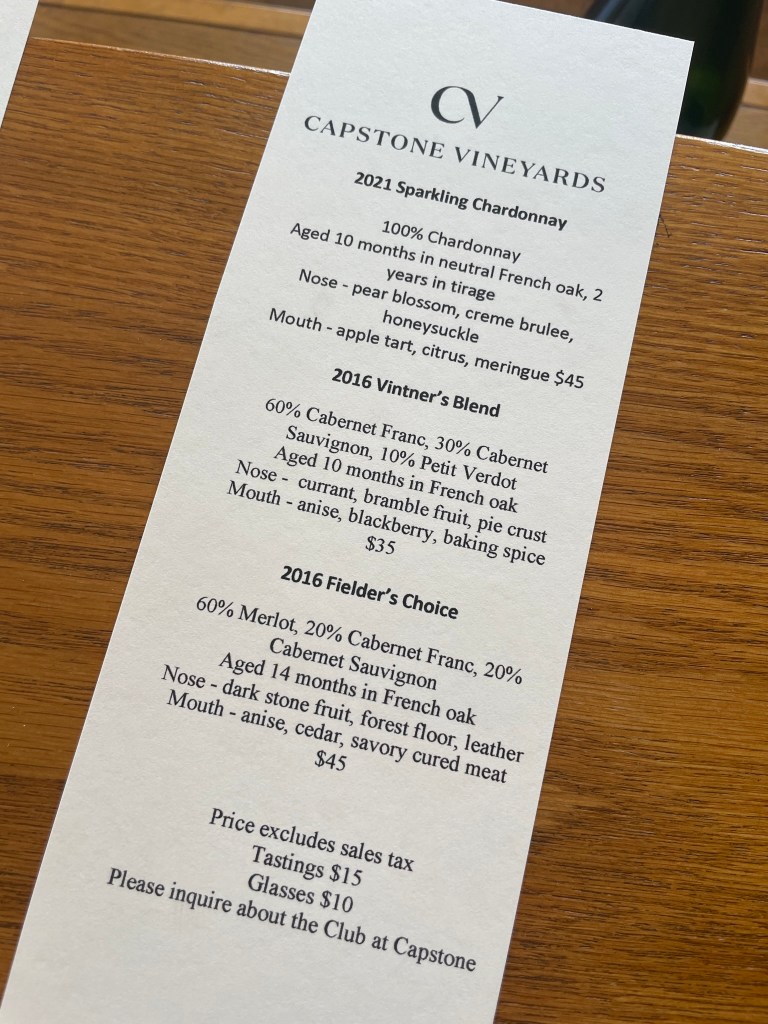
Theo greeted me and poured a glass of sparkling before running off to take care of another customer. Eventually things settled down enough to take me through a tasting, where I was able to pepper him with questions. Turns out that he’s from Nova Scotia and originally had a job in the cancer research field. But Theo wasn’t so keen on office life and eventually made his way into winemaking.
Local winelovers may recognize his name; until very recently Theo was the winemaker at nearby Rappahannock Cellars for over a decade. Theo described his time there as a fantastic learning experience, overseeing its transition from a 6,000 case/year facility to one making over 30,000 cases/year (plus adding a sparkling program).
But being a winemaker is one thing; becoming an owner seemed the natural evolution. So when Capstone became available, he jumped at the opportunity.
Right now Capstone only serves 4 wines; two of the original 2016-vintage red blends (one Cabernet Franc-heavy, the other Merlot-heavy), a sparkling he made from Monticello fruit, and a still-unlabeled Chenin-Chardonnay blend.
Of the lineup my favorite was the Chenin blend, which had a delicious creaminess to it. The runner up would be either the 2016 Fielder’s Choice or sparkling.
As 2023 will be his first vintage using Capstone fruit, it will likely take a while for Theo to make his own estate wine. But the Chenin blend was promising, and I’m hopeful Capstone will have some great whites coming out in another year.
Theo seemed especially psyched about his future sparklings. Rappahannock had a great sparkling program and he learned directly from Claude Thibault. With a background like that, things seemed really promising.
Right now Theo is running the entire tasting room by himself, so things were a little hectic. But he knows he has a great location, so he’ll get more help as the word gets out.
* This is an update to my January 2020 blog on the same location, but with the previous owners.
Over the past year I’d slowed my roll when it came to visiting new places. Between trying to reduce my (overly abundant) wine inventory and revisiting old favorites, exploring took a back seat.
Fortunately, 2023 kicked off with a bunch of new wineries opening in easy driving distance, plus others opened in 2022 that I hadn’t spent much time at. Despite having a rainy Friday, I took the opportunity to get out and try two of them; Good Spirit Farm and the new October One Tasting Room in Leesburg.
First off was Good Spirit Farm, named after the English transition of the owner’s name – Gutermuth.
Located in the town of Round Hill (not far from Bluemont and Purcellville), the winery looks like the bottom point of a triangle-shaped mini wine trail consisting of Otium and Bluemont Vineyards, with Bogadi Winery and Monk’s BBQ thrown into the mix for good measure. Any wine trail that puts me within 10 minutes of good BBQ earns bonus points, so a visit was an easy sell.
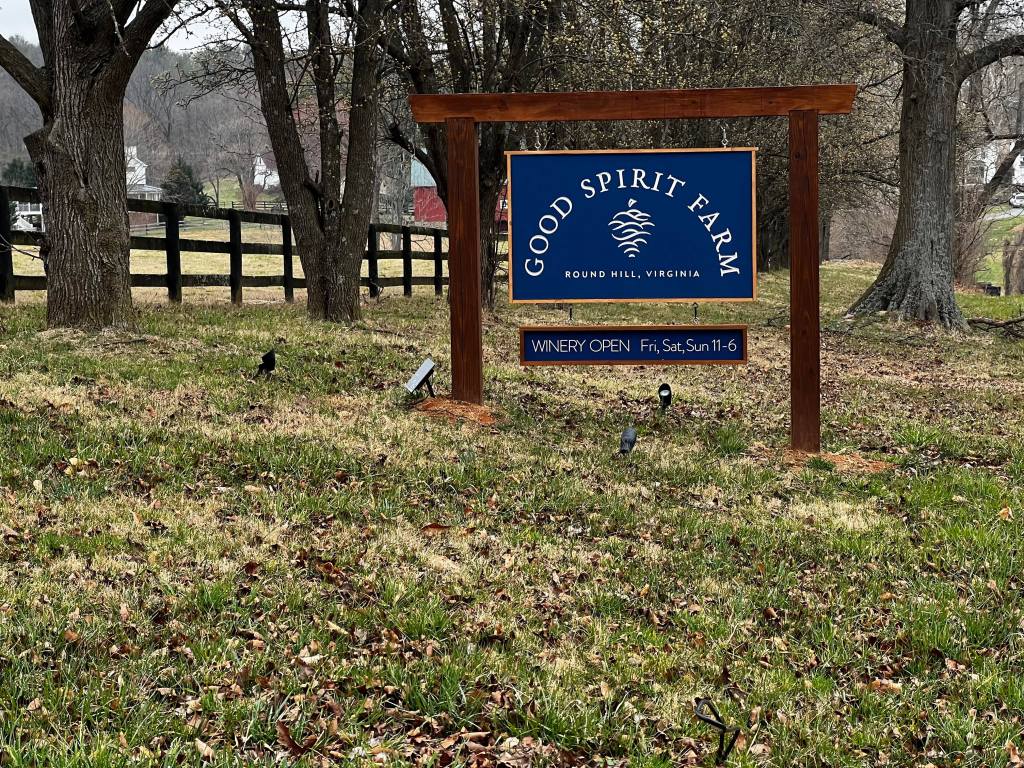
This region feels like a blend of modern residential areas and old-time Virginia farm country. If you take Snickersville Pike you’ll pass a mixture of old farm manor homes and cow pastures, with the occasional small home, general store, and Airbnb thrown in for good measure. Eventually the sign for Good Spirit Farm popped up and there I was.
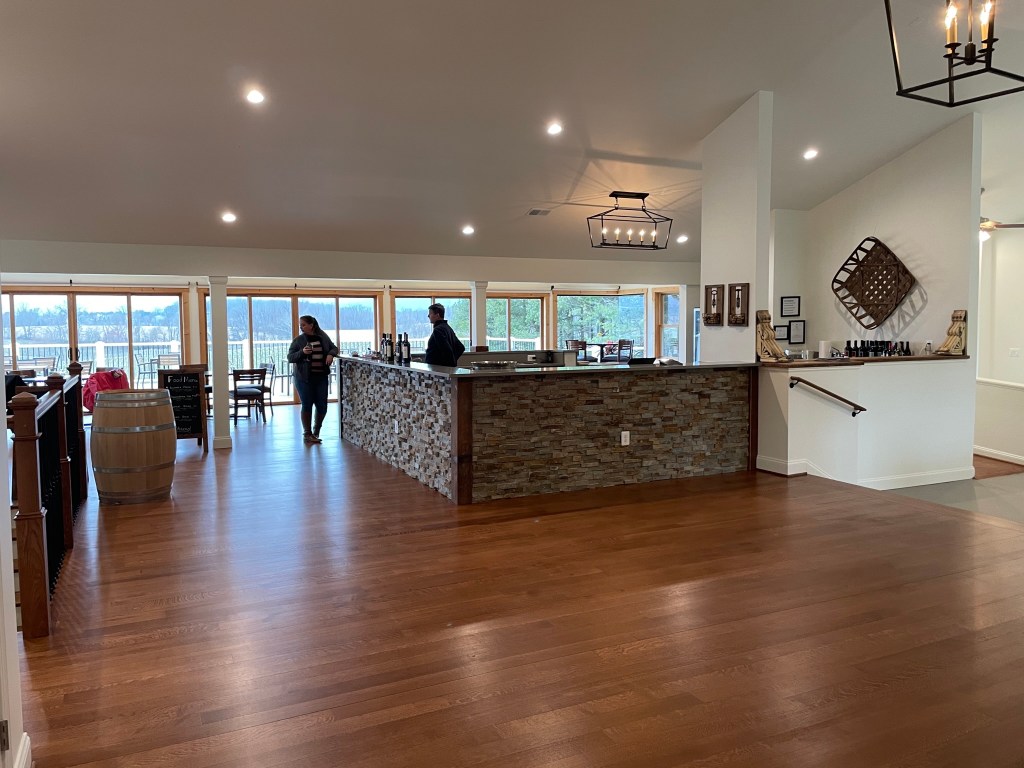
It’s a shame the day was so overcast because my photos don’t do the place justice. The farm was (until a few years ago) a private home sitting on 42 acres. The owners repurposed main building into a tasting room and the hills in their backyard became the vineyard. White dotted posts marking baby vines dot the backyard. There’s an Airbnb coming as well.
Co-owner Mike Gutermuth was behind the bar when I came in; his wife Luanne soon joined us. Their ‘how I started a winery’ story rhymes with what you hear from many owners; both started off by visiting Virginia wineries and telling themselves ‘We can do this too’. As they got closer to retirement, those discussions became more serious until they took the plunge.
Of course, owning a winery is likely a busier line of work than their last gigs. Mike even explained “I don’t think I ever worked so hard!”.
The Gutermuths looked at several wineries currently on the market but ultimately decided to start from scratch and found this location in 2020. Most of the 7.5-acre vineyard was planted in 2021, so it will be a while before they have their own estate wine. The vineyard has many of the usual suspects from Bordeaux, but also includes some Albariño and Pinot Blanc.
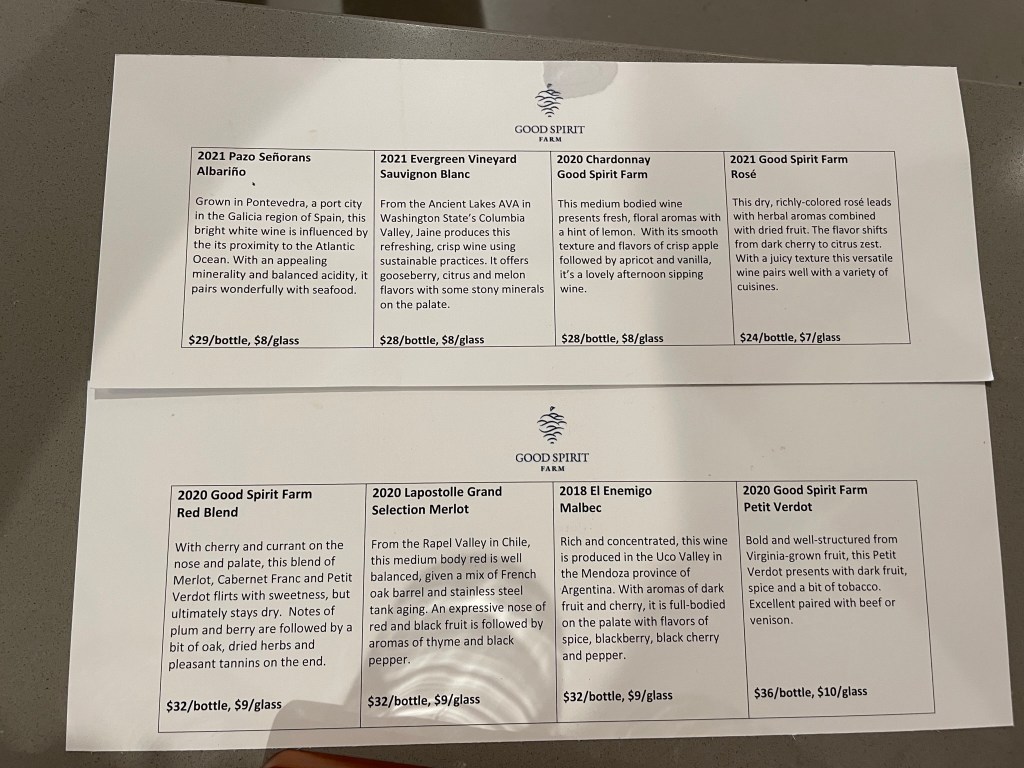
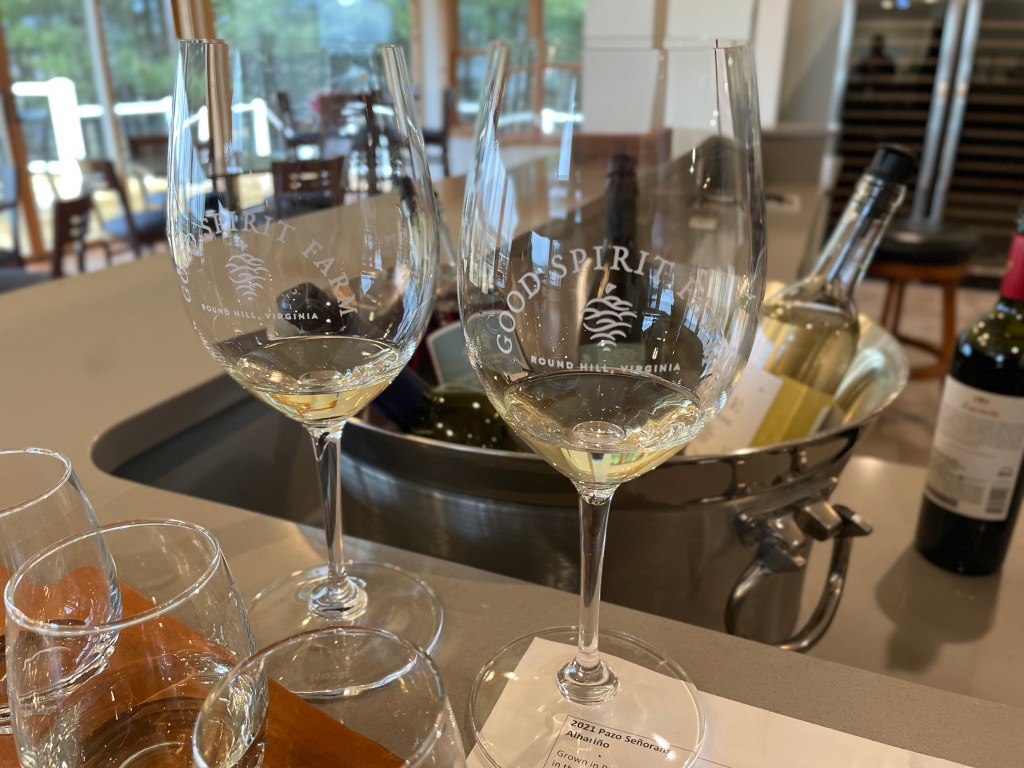
Since Good Spirit Farm is just getting started they’re serving a combination of wines from both Virginia and around the world. All of them emulate styles the Gutermuths plan on producing from their (still baby) vineyard. Red and white flights are available. They also advertised some light bites including burrata and charcuterie plates.
Of the Virginia wines available, my favorite was the 2020 Petit Verdot, which was made at Veritas. The other Virginia bottles include a red blend, rosé and Chardonnay. Not surprisingly, I also liked their Galician Albariño.
I was really happy to hear Nate Walsh will make their wine in the future; his custom crush business has been killing it. I had a glass of the PV while enjoying the view outside; I loved the expansive set of windows with a view of the vineyard. Then, off to my next stop – October One.
October One Tasting Room
The namesake October One Vineyard (O1V) is located in Bluemont, but the business of selling wine for years was conducted at both the Leesburg and Cascades Farmers Markets. In good weather and bad, Bob and Loree Rupy grew their business at these venues until they were ready to take the next step of moving into a brick-and-mortar location.
For a small business their wine got a lot of recognition early on. Their 2018 Viognier won the Loudoun Wine Award’s Grand Chairman Award in 2019, and their 2020 Viognier won the prize again in 2021. Nate Walsh is also their winemaker.
That ‘next step’ occurred in August 2022 when they opened a tasting room in Leesburg near the corner of Loudoun and King Street (they still keep up with the markets, though). Their new location is conveniently located right across the street from a parking garage, plus its walking distance of several great restaurants.
O1V doesn’t just sell O1V wine. If anything, it’s probably the most Virginia-centric wine store in Virginia right now. You can find a rotating selection of other Virginia producers from around the state including NOVA, Charlottesville, and the Shenandoah Valley.
They offer both glasses and comparative flights, consisting of an O1V wine and friends. The tasting room even had a Chardonnay from Ankida Ridge, a glass of which I enjoyed while waiting for the event to set up.
Most of their production focused on Bordeaux grapes, but they also have estate Viognier and Albariño. While the former has been killing it at the local wine awards, the latter is probably my favorite. So when they announced a special Albariño and oyster event, it was an easy sell for me.
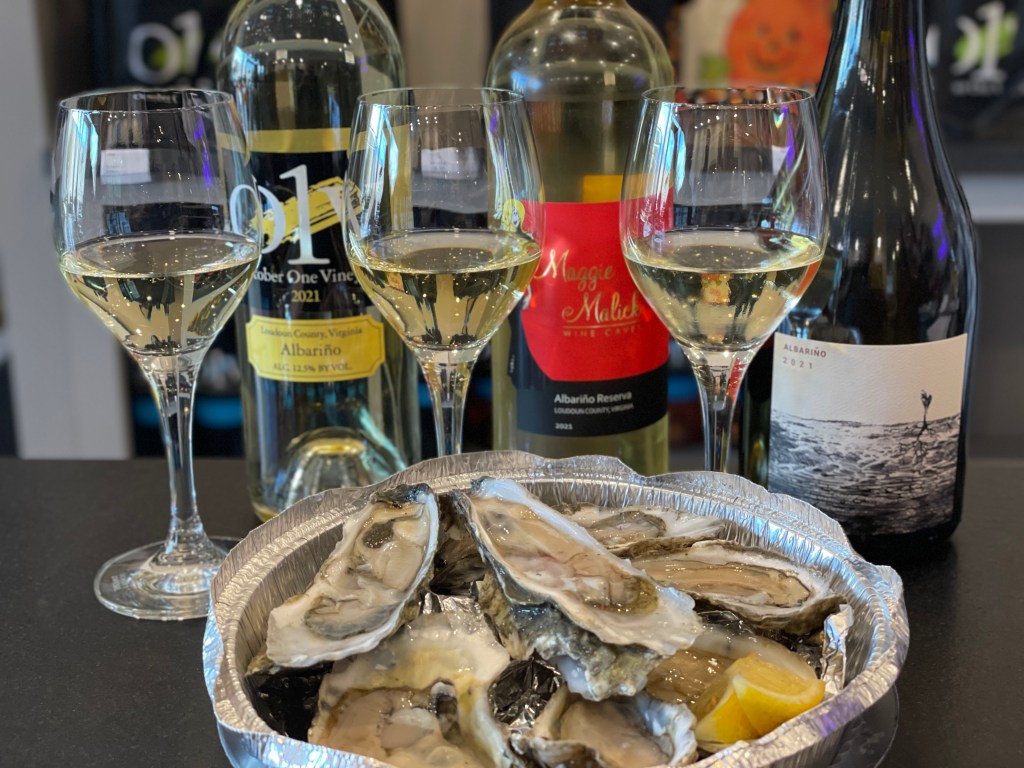
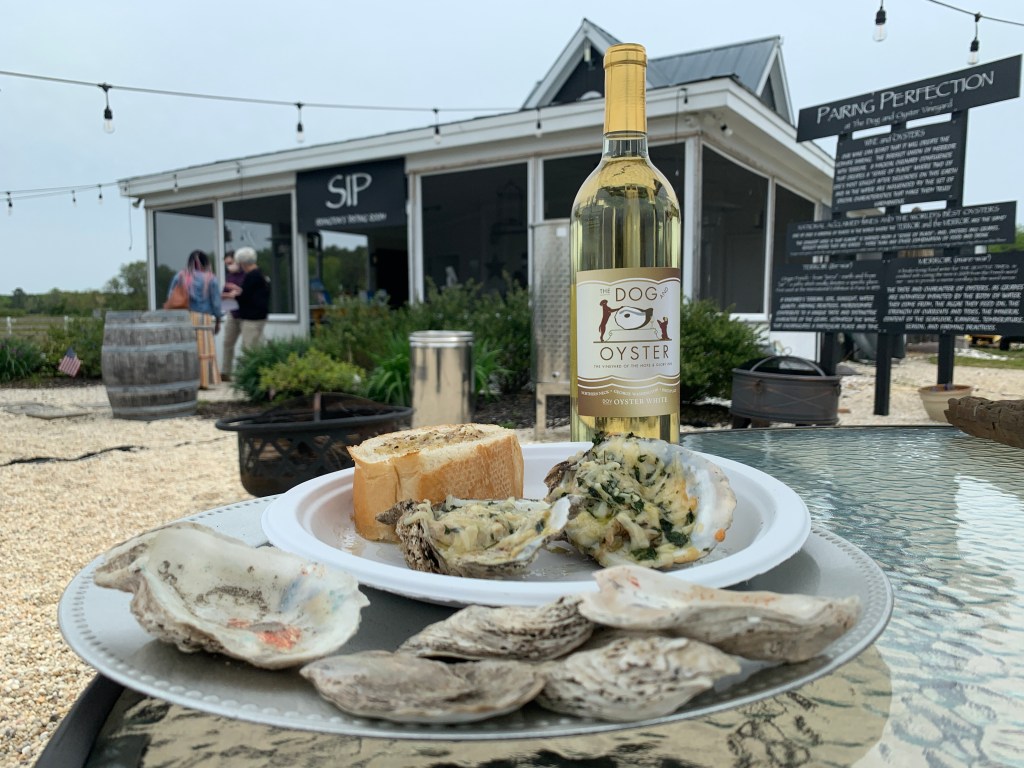
Oysters and Albariño are a famously great pairing. This grape has a natural saline and minerality quality to it that pairs well with seafood. Bob explained they got the idea from a neighbor at one of his farmer’s markets, and they’d frequently join forces because who could resist either when served side-by side?
This time the event included a trio of Virginia Albariños; their own, plus Cana and Chrysalis. Their event from a few months ago included Maggie Malcik and Boden Young as their ‘guest’ wines. The oysters themselves came from a spot off the Eastern Shore.
Of the three options, my favorite was the house 2021 O1V. But I have to say, the tiny sample I had of the 2022 Albariño was my favorite of the day; it was just very fresh and full bodied.
Anybody else visit these places? Let me know what you thought!
I sometimes joke how I wish some places were closer to me, but the remoteness of the Northern Neck is actually one of its appeals.
It’s also the trifecta of what I look for on a road trip; good wine, history, and a fun local cuisine (in this case, seafood). It’s not just colonial history either; it’s the history of Virginia wine.
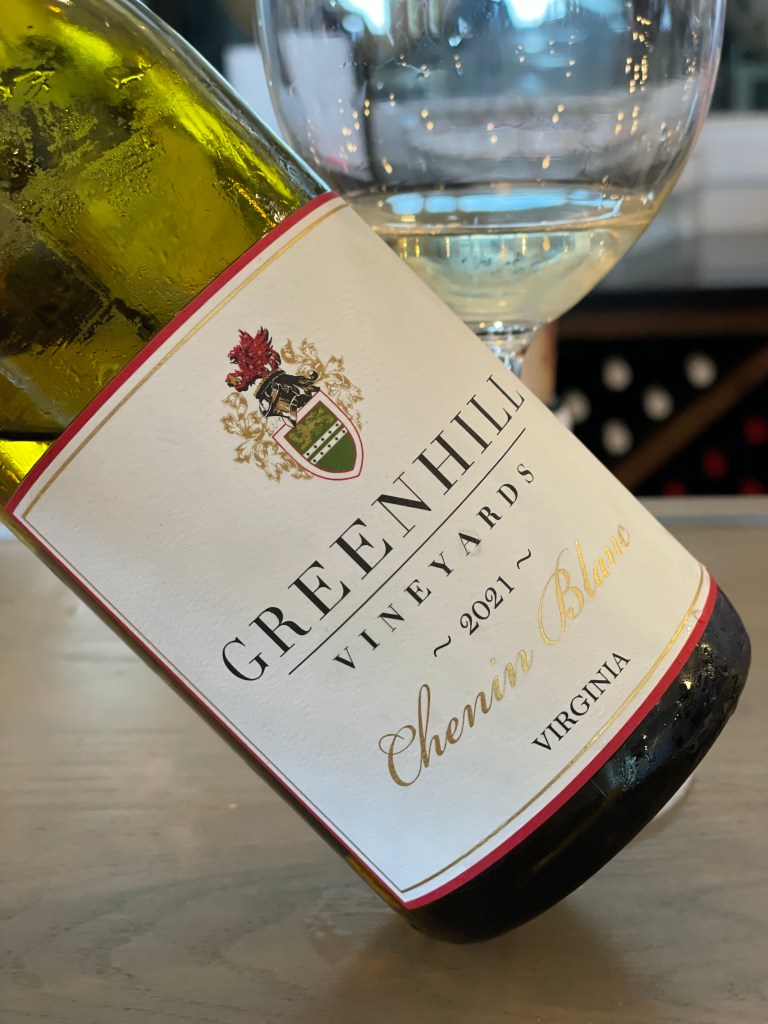
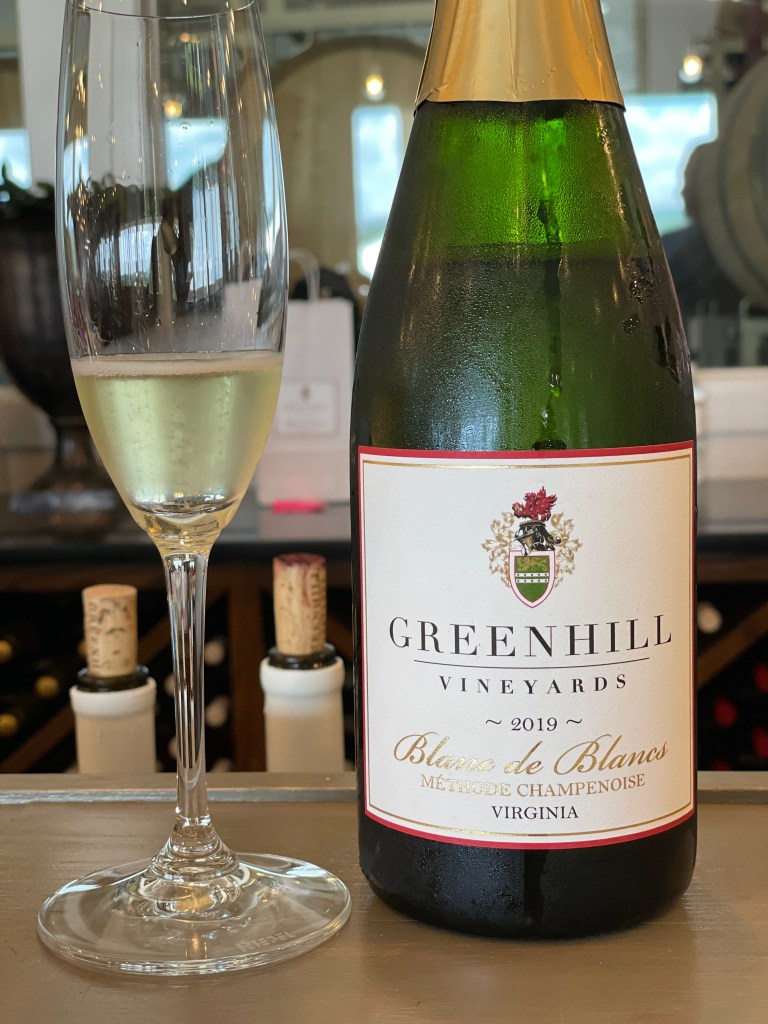
There’s a lot of wine history in Virginia. That said, Greenhill’s history is truly exceptional.
Prior to David Greenhill purchasing the property in 2013, this historic farm was known as Swedenburg Estate Vineyard. Founded in 1988, Swedenburg was one of Virginia’s first wineries. Not only did these Virginia wine pioneers demonstrate vinifera could find a home in the state, they created the blueprint for today’s ‘agro-tourism’ model used today.
But owner Juanita Swedenburg didn’t stop there. Finding that post-Prohibition laws prohibited her from selling her wine to out of state patrons, she took her case all the way to the Supreme Court. In 2005 the Supreme Court issued a 5-4 decision allowing Greenhill – and thus all ‘farm’ wineries around the country – sell to these consumers as well.
Greenhill continues to raise the bar. They’ve been competing at a high-level in major US wine competitions, including a 2022 Best in Class win in the San Fransisco Chronical Wine Competition for their 2019 Philosophy (Petit Verdot-heavy red blend), and a 2021 Best in Class win for their 2019 Petit Manseng.
It’s hard to write anything about Barboursville that hasn’t been said before. This winery is the source of nearly endless articles regarding its wine, history, and the team that runs it. But since the story is so great, how can you skip over it?
When Barboursville opened in 1976 it was the 6th winery to open in Virginia since the end of prohibition. Piemonte-born Luca Paschina has been its winemaker and general manager since 1990, and winegrower Fernando Franco has been (justifiably) credited as one of the best viticulturists in the US. At 180 acres of vines, it also is one of the largest producers in Virginia.
Nearly every year the Virginia Governor’s Cup competition choses at least one of Barboursville’s bottles as one of the top 12 wines the state. It was also the first and arguably the most famous grower of nebbiolo in Virginia, and its Octagon red blend (and increasingly its Vermentino Reserve and Fiano) win rave reviews in major wine magazines. These are only a few of the many reasons why Barboursville is sometimes referred to as Virginia’s answer to France’s “First Growth” estates.
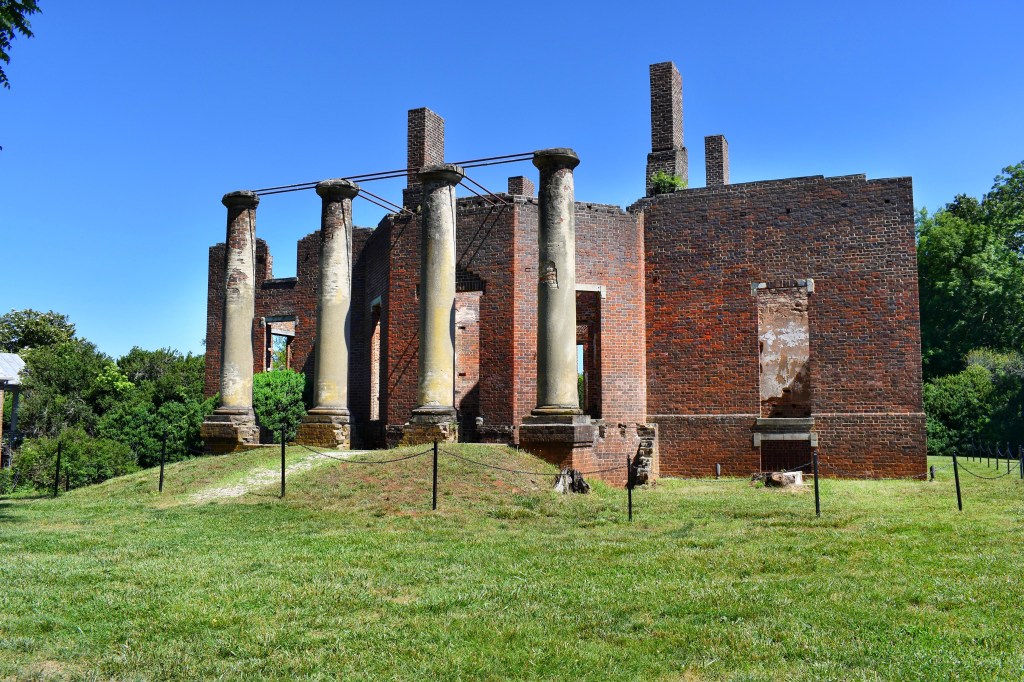
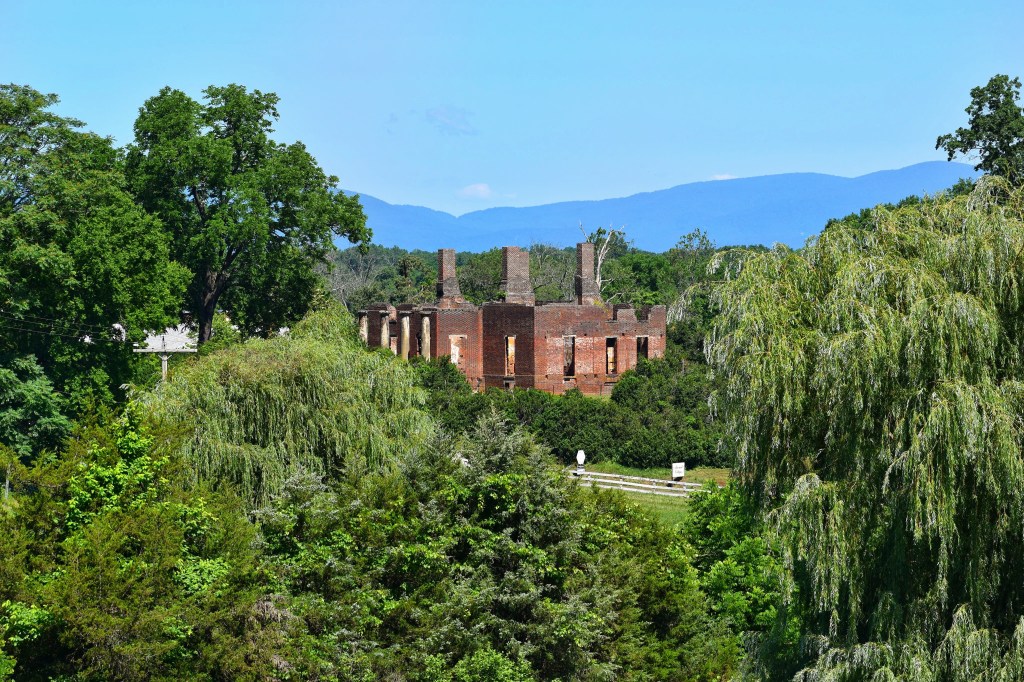
Thomas Jefferson’s legacy is strong here, and it’s not just the wine. The property includes the ruins of a manor Jefferson designed for his friend James Barbour. Its distinctive eight-sided design was inspired by a 16th century Italian architect named Andrea Palladio, whose book I quattro libri dell’architettura (The Four Books of Architecture) Jefferson referred to as his ‘bible’. Jefferson used Palladio’s octagon motif in many of his buildings, including Monticello and “The Rotunda” at the University of Virginia.
When Barboursville winemaker Luca Paschina was researching the history of the estate, he came upon the story of how Jefferson believed the octagon shape was a symbol of “perfection and balance”. This description was exactly what Luca strives for, which led his flagship wine to be named “Octagon”.
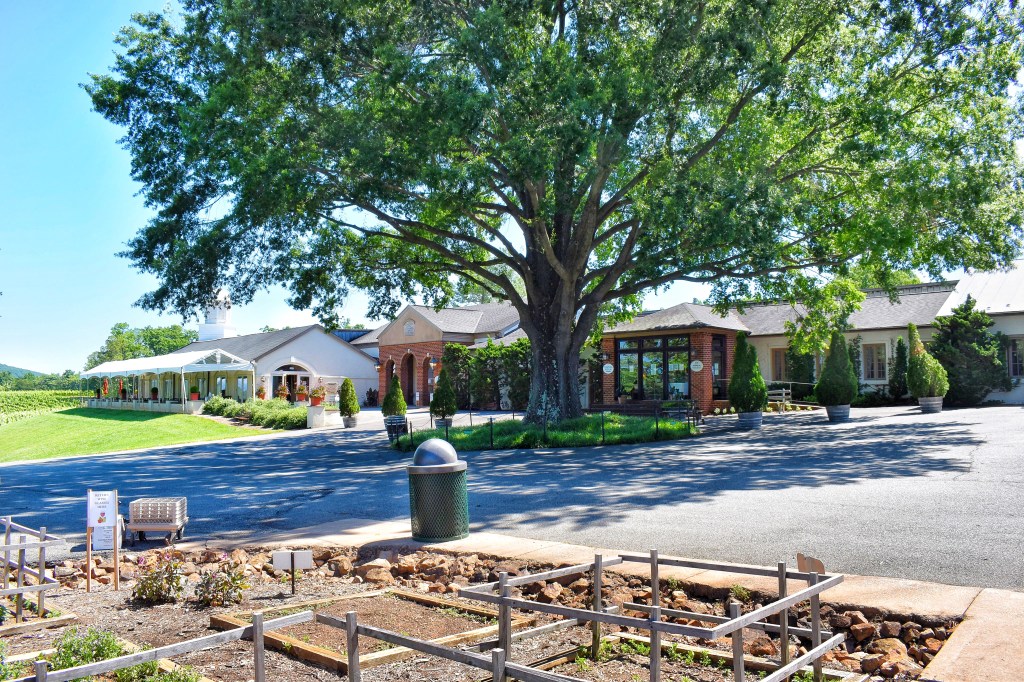
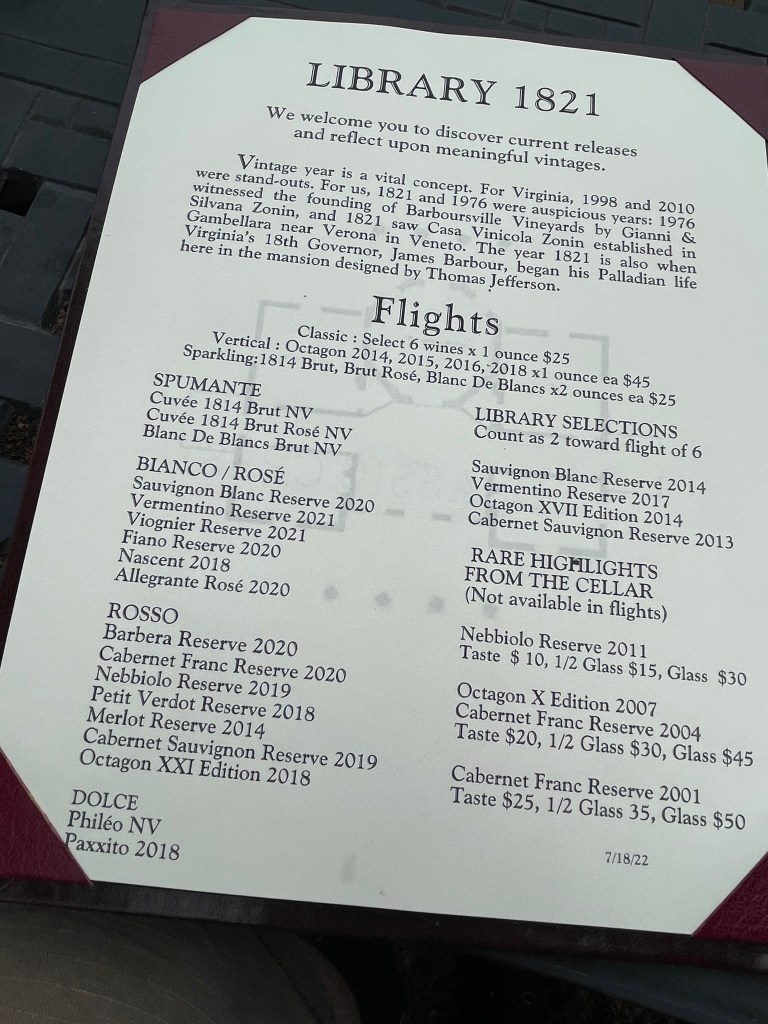
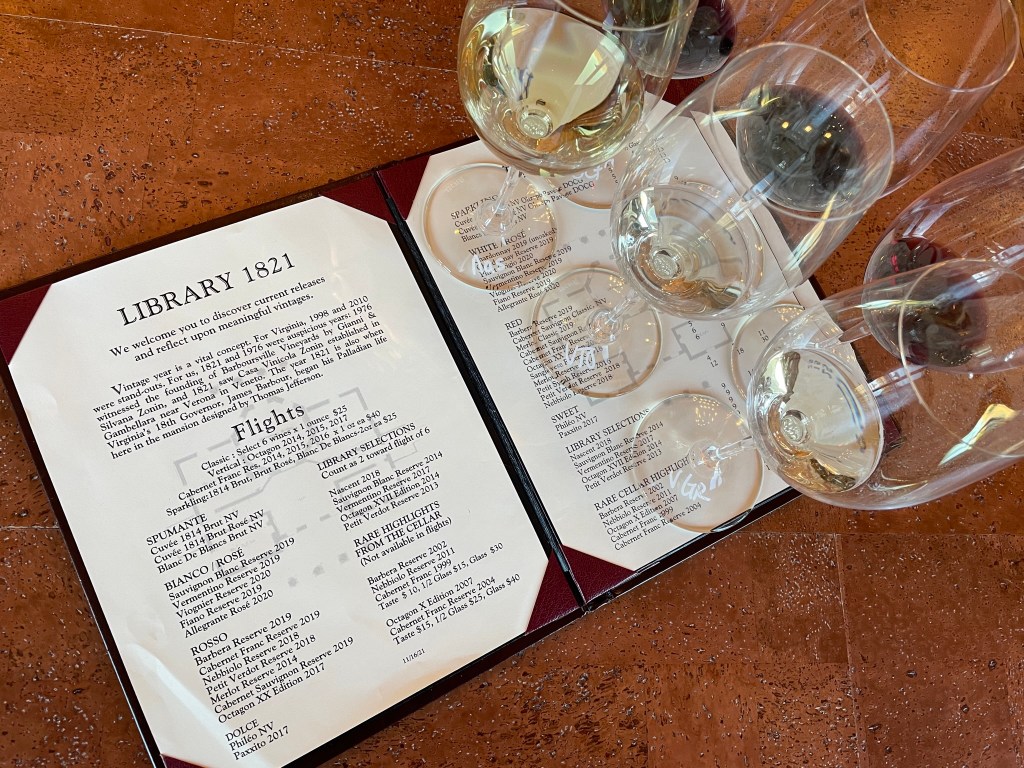
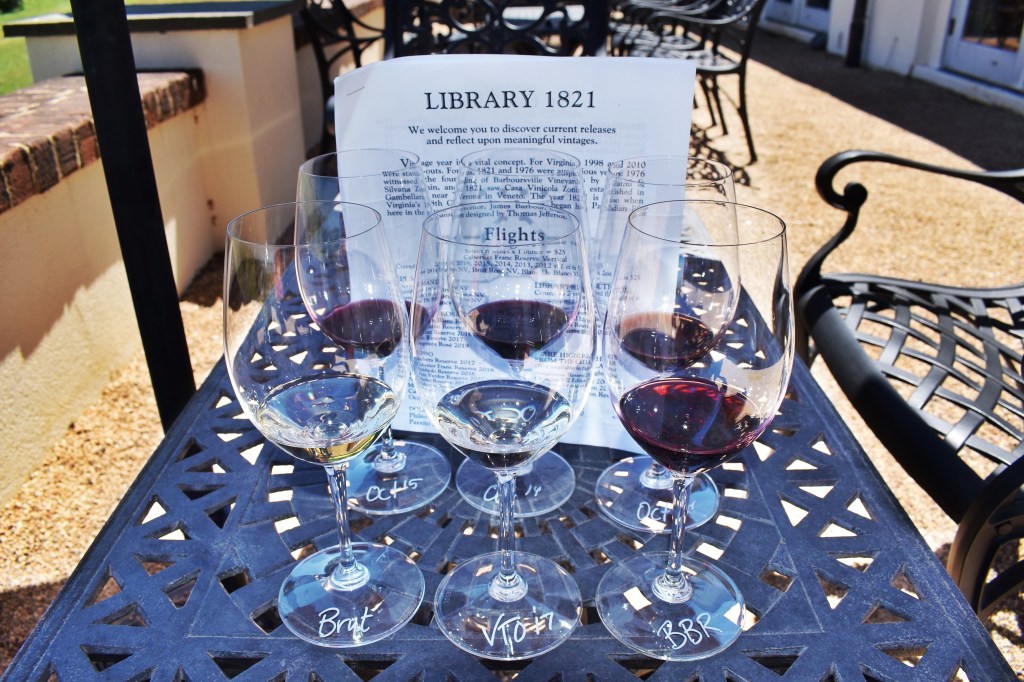
I’ve visited here more times than I can count and dinned at the Palladio restaurant several times. While they have a ‘regular’ tasting room, when I visit it’s almost always to visit is the Library 1821, which showcases its deep library of older vintages.
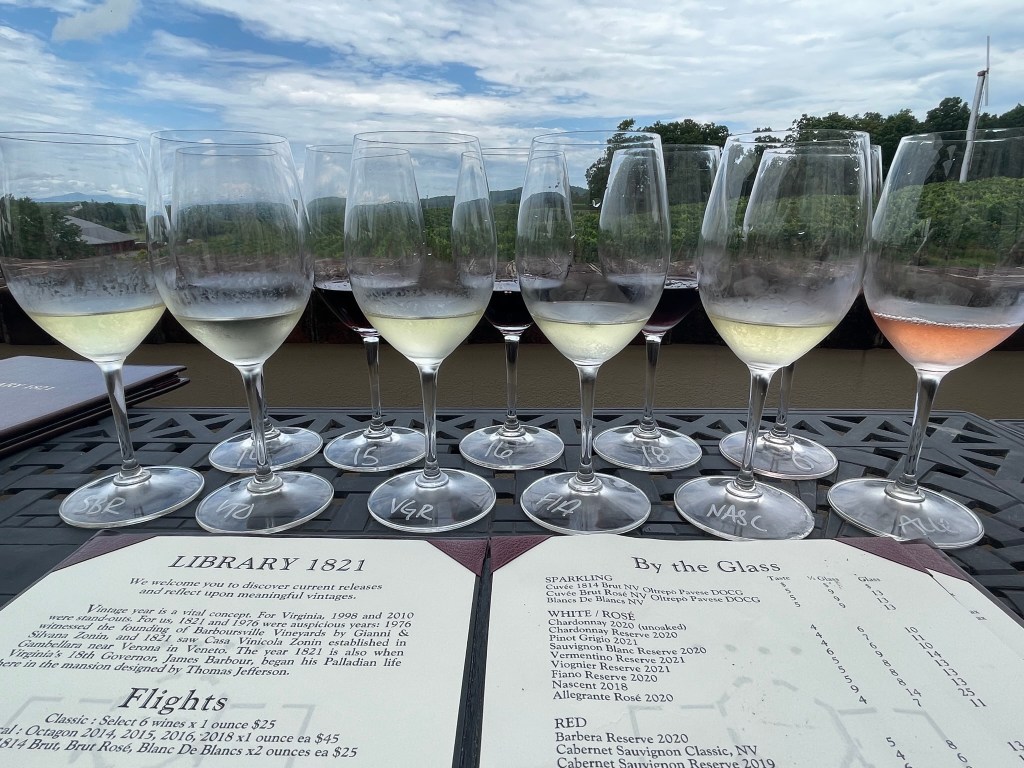
The way the Library tasting works is you select 6 wines, although some older vintages ‘costs’ 2 picks. The lineup changes periodically, although older vintages of Octagon are always on the menu, some of them well over a decade old.
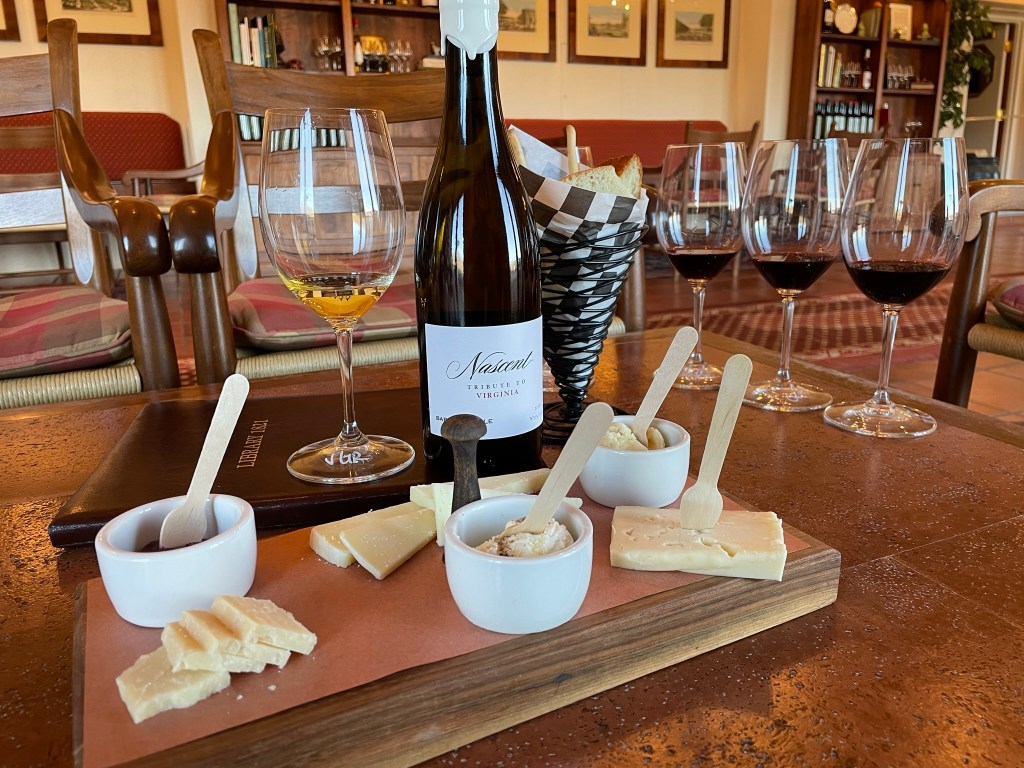
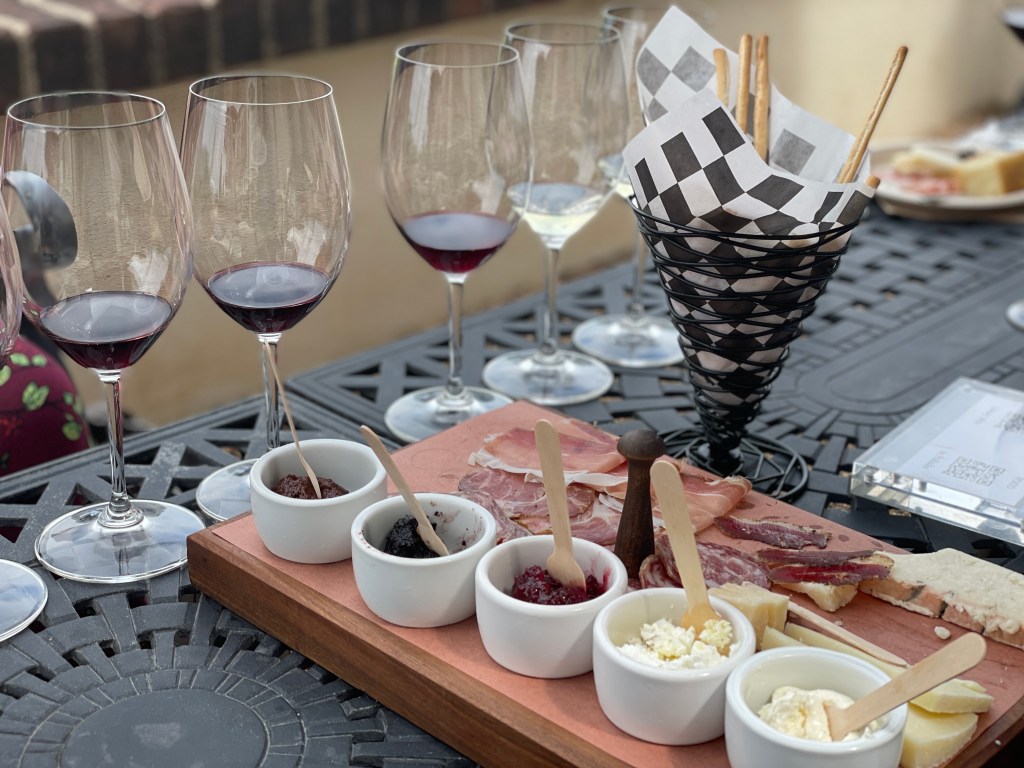
For my last few visits I lucked out since we scored patio seating. Even better, Keri was my server and she always kept checking in on us. After a brief analysis-paralysis, several flights were ordered, as well as food from the kitchen.
Often I do two flights because I never want to miss anything, but go with a group so you can order more. And funny story – turns out that I had some unpublished notes from November 2021, so I’ll include those notes with my August 2022 visit.
2014 Octagon was, in a word, outstanding. I later learned this was the Governor’s Cup winner in 2020. Spice notes but not earthy. Dark fruit but nothing in particular I could pick out.
The 2017 Octagon was the runner-up; many of the same qualities but more on the fruit and less on the tertiary flavors. But special mention goes to the 2018 Octagon; it was a softer, fruitier wine that came out well despite a difficult vintage.
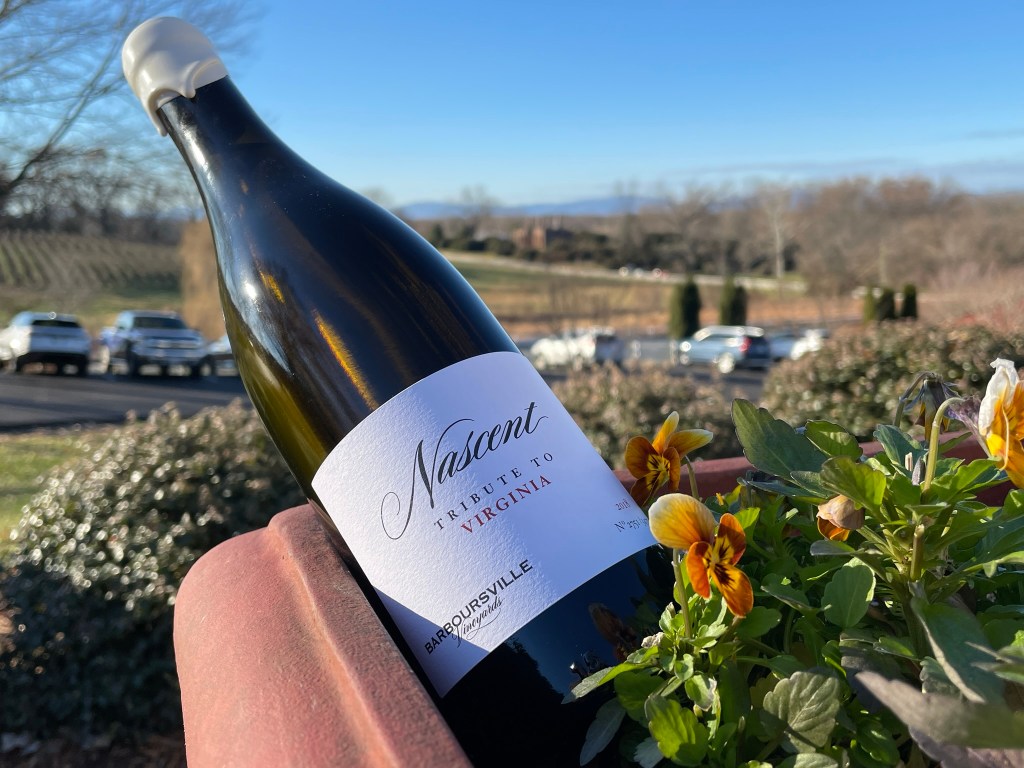
While Octagon is arguably the highlight, the entire lineup is full of stars. I was able to retry their Nascent white blend (Viognier, but with smaller dashes of Fiano and Vermentino) which might be their new flagship white. It has lots of depth but was smooth at the same time.
But on the last few visits I thought their Barbera and Cabernet Franc were also special. Both were from the 2020 vintage. Their Vermentino is also a consistent award-winner.
Tasting notes:
December 2021:
Brute NV: Notes of peach.
2019 Fiano: Lemon nose, little perfume. Another almost thick, full bodied white
2015 Viognier Reserve: Very tropical
2013 Vermentino: Heavier on the tongue
2017 Vermentino: This is a full-bodied white that explodes at the beginning of your palate. Lots of tropical notes
2017 Barbera Reserve: Notes of bramble fruit, cherry and spice.
2004 Octagon: As you’d expect on an older vintage, low on fruit but high on tertiary notes including mushroom, especially on the nose.
2014 Octagon: Good depth
2015 Octagon: Spicy
2017 Octagon: No notes other than *really liked it*
2010 Merlot: More fruit than I would have given it credit for.
2006 Sangiovese: Sour cherry; starting to brown due to its age.
2018 Nebbiolo: Very light, strawberry notes
2013 Petit Verdot: Smooth!
2017 Petit Verdot: Dark cherry, earthy nose, but palate is brighter with some assertive tannin
August 2022
2020 Fiano: Almost like a Sauv Blanc!
2021 Viognier Reserve: Not overly floral; no honeysuckle bomb here
2021 Vermentino: Bright lemon notes.
2021 Sauvignon Blanc: Lots of melon notes, but a far cry from a NZ-style SB
2007 Octagon: End of its life but lots of tertiary flavors
2014 Octagon: Mushroom on both the nose and the palate.
2015 Octagon: More fruit forward but not to the extent of the 2018
2016 Octagon: Earthy; lots of texture
2018 Octagon: Soft, fruity; easy to drink. High marks for a wine from a difficult vintage.
2013 Cabernet Sauvignon: I needed a moment alone with this wine. It was hitting that inflection point when the fruit is there but the tertiary notes are appearing 2018 Cab Franc: Super aromatic, fruity
1995 Cabernet Sauvignon: Carmelized; light colored and smooth, with a tad bit of fruit left.
2019 Cabernet Sauvignon Reserve: So young by comparison
2018 Petit Verdot. Not in your face tannin or acid. The wet 2018 vintage may have helped since it made it more approachable
2020 Barbera: Really good! Didn’t have a lot but bright red notes
2019 Nebbiolo: Sour – which is exactly what you’d expect from this variety. Still young
2020 Cabernet Franc: Medium bodied; not spicy not earthy not tobacco but a nice blend of all of that
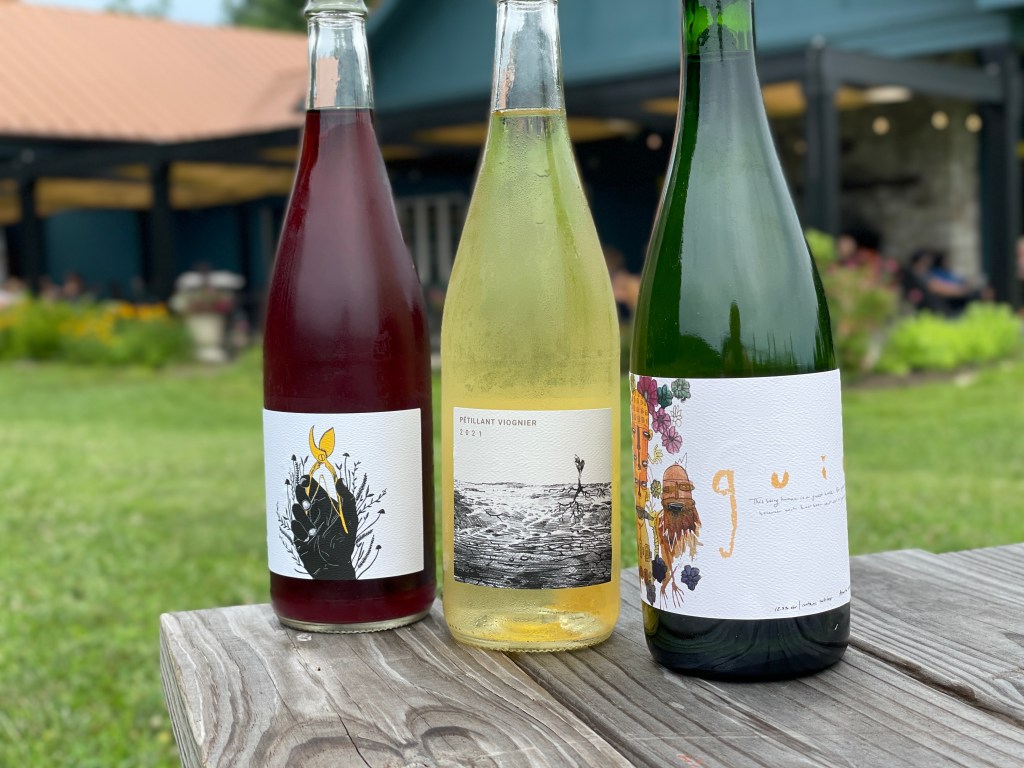
My article on Virginia’s Pét-nats for Wine and Country Life published the other week. Sampling wine as part of **research** is fun, but even better was interviewing some of my favorite winemakers, especially Maya Hood White of Early Mountain Vineyards, and Sarah and Nate Walsh of Walsh Family Wine.
I have to agree with Nate; Maya is ‘Queen of Pét-nats”. Not sure if she was the first in Virginia to make one, but if not she comes close.
Pét-nats aren’t just delicious; “they are a labor of love”. To quote Maya, “We would release in January and it’s like a snapshot of the vineyard. There’s something unique about it in that you are getting a totally unadulterated version of the wine. It’s kind of the first taste of the vintage.”
But if Maya is Queen of the Pét-nats, then Walsh Family is “The House That Pét-nat Built”. OK that’s not entirely true; they were rocking still wine before they made their first sparkling.
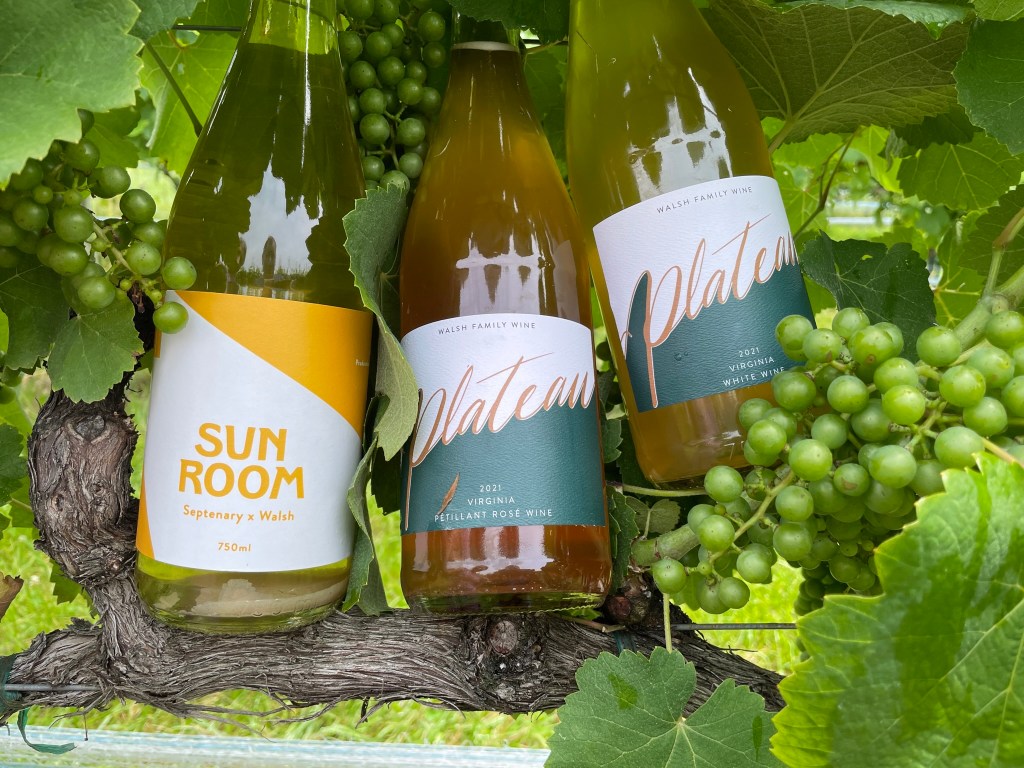
But given you can buy six (!!!) different Pét-nats (from Walsh, plus bottles from their associates of Boden Young, Guide Wine, and Quartzwood Farm) that ***should*** be their name. My shot of all of Nate’s bottles laying in the vines was too good for me not to use.
Click on the link at the bottom to read the full article.
Forge Cellars was hands-down one of my best Finger Lakes experiences. I wasn’t able to visit in 2019 so I marked it down as a ‘must visit’ for my next trip.
While you can enjoy tastings at every winery in the Finger Lakes, none offered the level of wine education that Forge provided. The irony is their guided flight cost the same $20 as a self-guided salon flight, so there’s no reason not to do it.
This is one of the area’s more famous wineries, although it’s not one of the larger ones. Forge has 40 acres of vines and produces of 10,000 cases/year.
Their most famous wine is their “Classique” riesling, but there’s much more to them. All told, they make around 13 different rieslings (most if not all vineyard-specific), plus a pair of pinots and a single-vineyard cabernet franc.
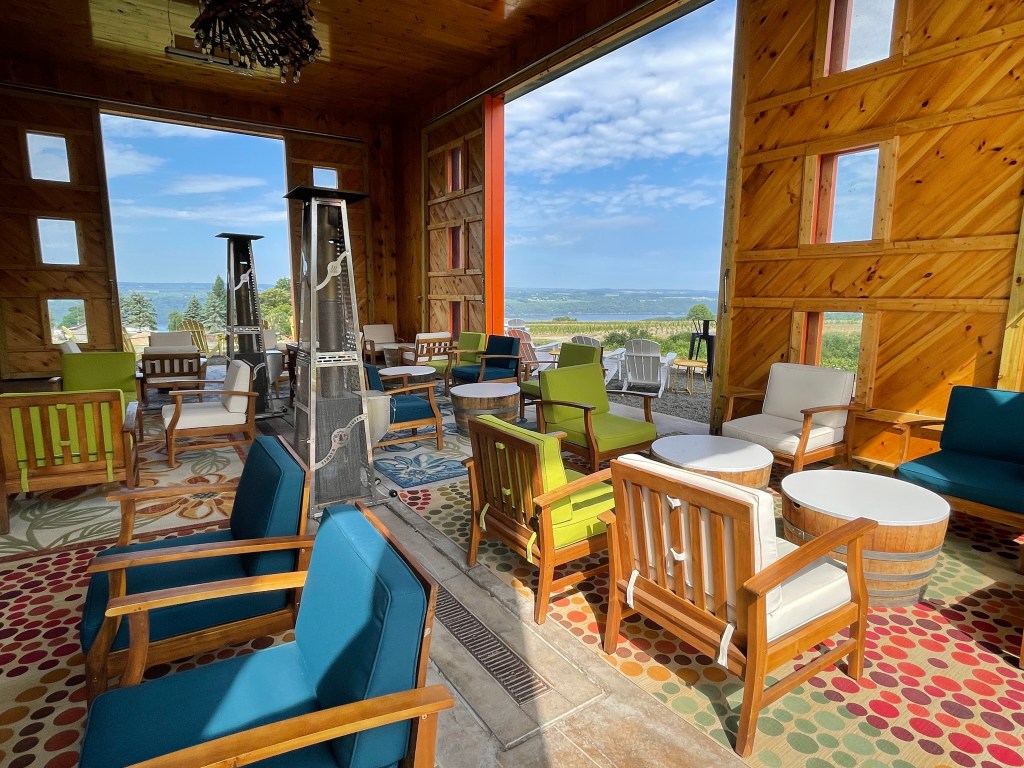
Forge’s guided flights are only done on Friday & Saturday mornings. But fear not, around a year ago they expanded their patio so drop-ins can visit at any time. Visitors can soak up the view while enjoying a self-guided flight, plus they have great cheese boards (and that jamón!).
Patio for self-guided flights
My guide was Alec, a former Somm who decided to leave the city life for something quieter. He explained the terroir of their vineyards and Forge’s overall winemaking philosophy.
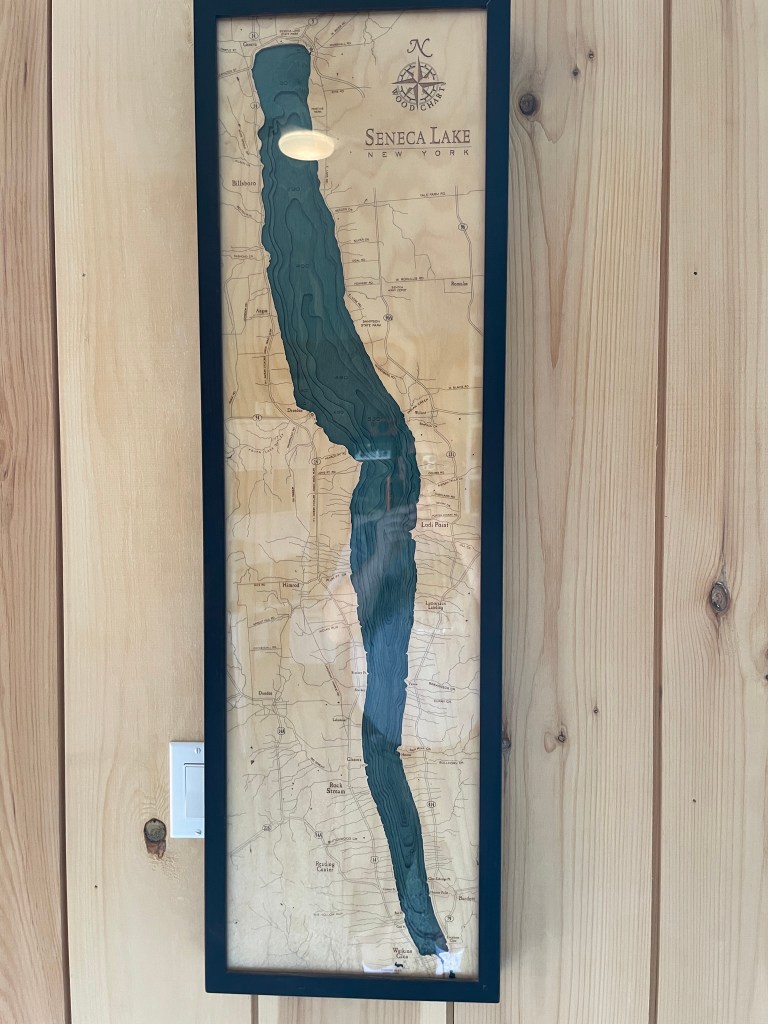
The story of how Seneca offsets the local weather is well known. A few tasting room associates may tell you how deep it is (just over 600 feet at its deepest) and how it hasn’t freezed in living memory.
But Alec was the first to explain how ancient glaciers deposited multiple types of soil in this area, giving winemakers a multitude of options on where to plant their vines. He especially focused on Devonian shale, the ‘mother rock’ of the area which causes the vines to struggle, resulting in better fruit.
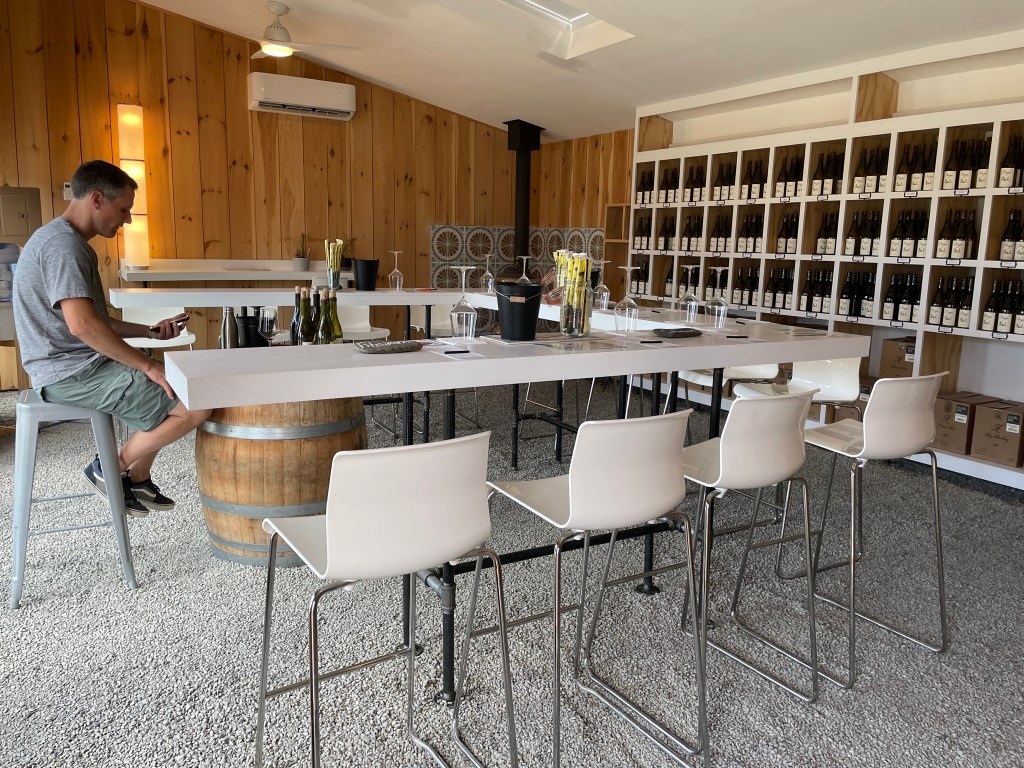
Appointment-only tasting roomNice touch!
Forge has multiple vineyards which take advantage of this diversity of soil types, allowing them to create vineyard-specific wines which showcase their own terroir-driven personalities. I’d never seen one winery with so many rieslings of the same vintage, yet all of them so unique.
He also explained how they use native yeast fermentation and use only neutral barrels, most of them from France or Hungary. They even have a French winemaker, Louis Barruol.
We did a flight of five wines, plus I did an additional five wines on my own on the patio.
2020 Freese (riesling): Soft nose, with notes of white pepper and apricot. A ‘classic’ expression of this grape. I liked it so much I picked up two bottles.
2020 Breakneck Creek (riesling): Named for the vineyard’ steep slope, this was a ‘bigger’ riesling. Heavier, more intense. Notes of quince.
2020 Navone (riesling): This was even more different than the first two. I couldn’t explain why, but this time I got an herbal-spice note. Also notes of tangerine.
2019 Classique (riesling): Their “standard” riesling, although their “standard” is high-quality. Lighter, more grapefruit notes. The lightness was also due to the vintage.
2020 Leidenfrost (riesling): Lots of texture, heavier.
2020 Tango Oaks (riesling): Ripe, with lemon notes. I bought a bottle.
2020 Peach Orchard (riesling): Bright and herbal
2020 Railroad (riesling): Tropical notes
2020 Leidenfrost (pinot noir): Deep color, which did not remind me of pinot noir at all. It was also exceptionally tannic, with an ash finish. I liked it but definitely very different.
I visited 21 wineries during my 2022 Finger Lakes trip. While many of these venues truly stood out, I felt it easier to simply wrap most of them into a single trip report than blog about all of them separately.
But I’m making an exception for Kemmeter.
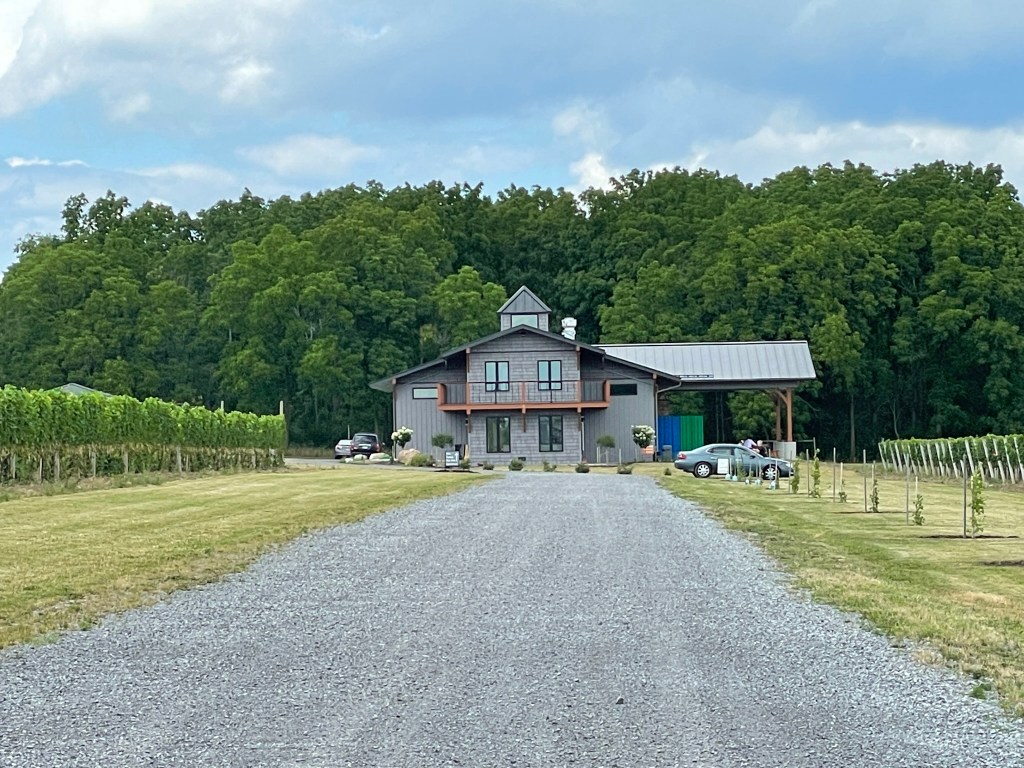
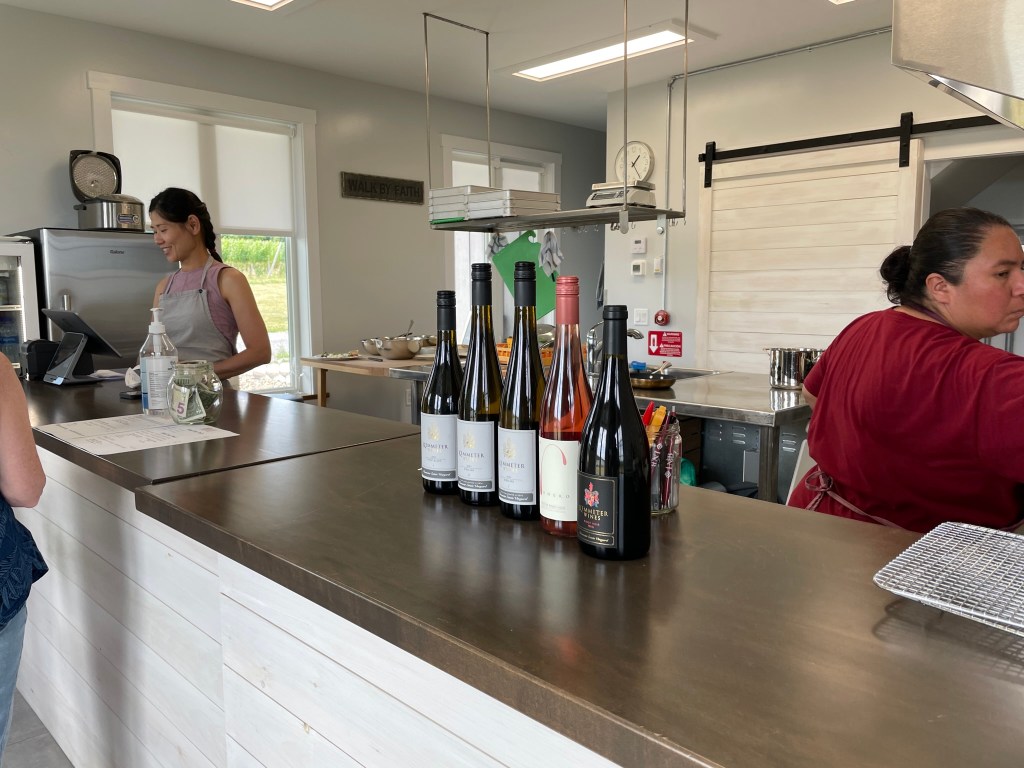
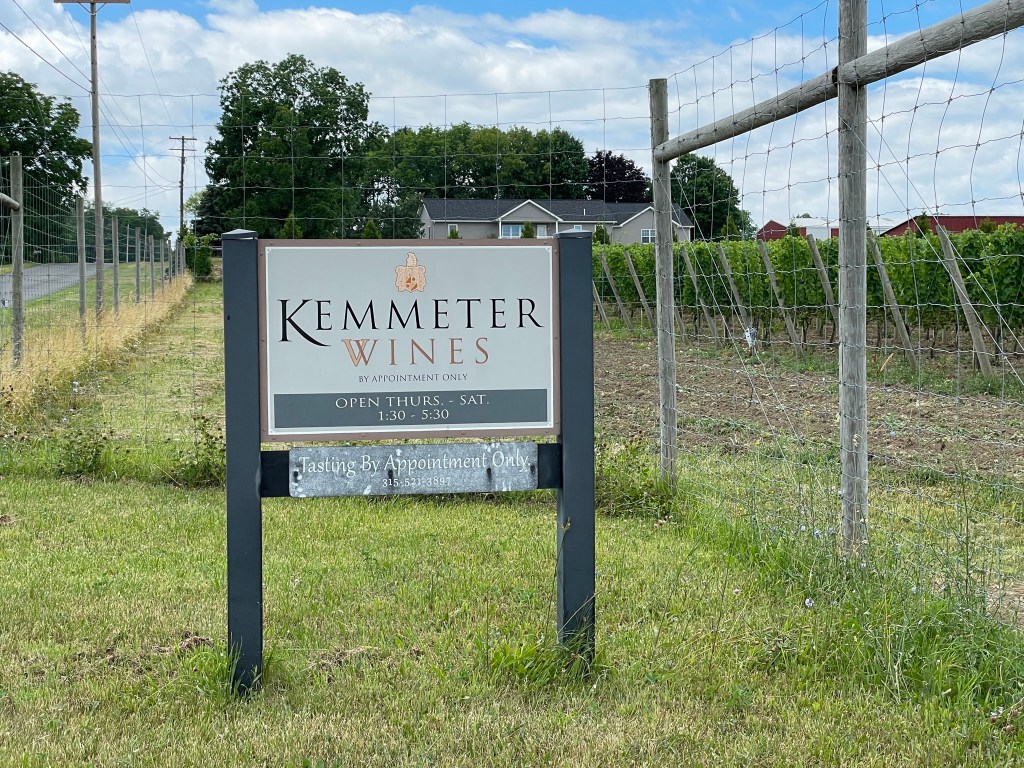
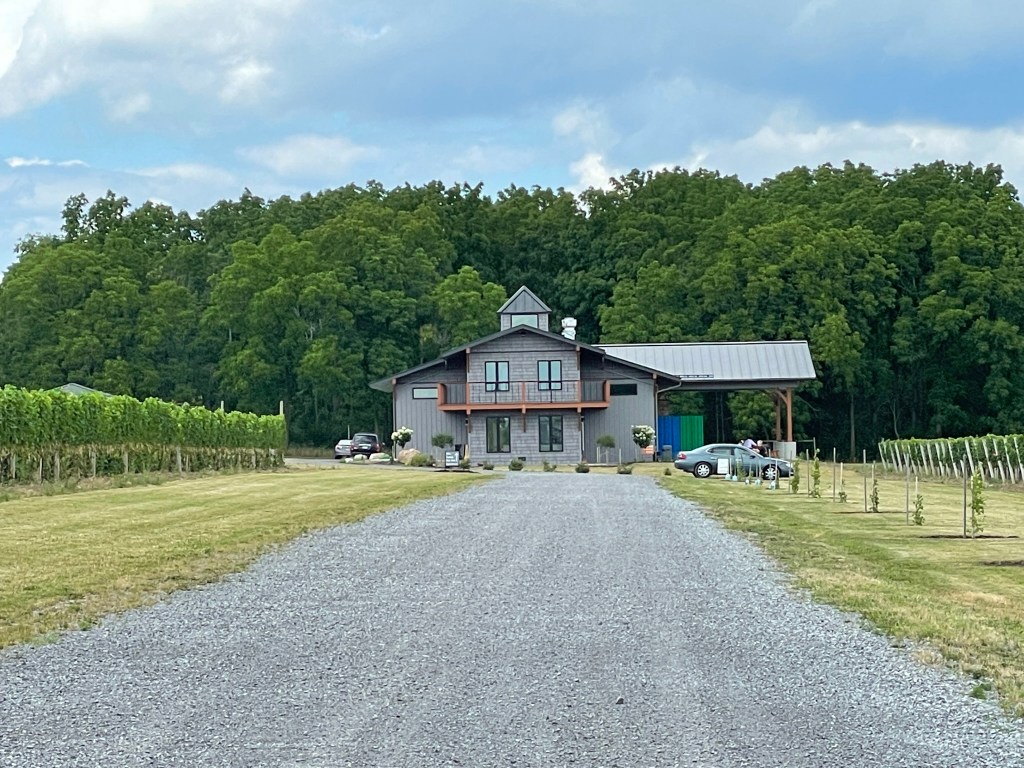
In an area where huge tasting rooms were the norm, where many wineries have food options and great views, it might seem odd that my favorite was 8-person maximum tasting room that is only open Thurs-Sat, 11:30 PM-5:30 PM (they may open for additional appointments by request; hours vary according to the season).
Yet it was hands-down my favorite winery of the entire trip, which is even more conspicuous for a place that deliberately operates so under the radar they lack even a basic social media presence.
That’s because great visits aren’t just about great wine – although many were found here. This was the only location where I actually met the winemaker, who guided us through a tasting coupled with a great deal of wine education.
Having the winemaker personally conduct the tasting wasn’t Kemmeter’s only unique feature. This was one of the smallest wineries of my entire trip; all of Kemmeter’s fruit comes from 6-acres of estate vines. “Stay small and do the best you can” explained owner/winemaker/vineyard manager Johannes Rienhardt, which seems to summarize his operating philosophy.
8 person tasting roomProduction room and kitchen
This ‘stay small’ mentality is a direct reflection of his schedule. Johannes spends 80% of his time in the vineyard and 15% in winemaking, leaving only 5% for the tasting room. This is why the tasting room is open only 3 afternoons a week and only small groups.
Johannes talked about his background as he poured, starting with how he was supposed to run the family business back in Germany but after some disagreements he ultimately took his own path. He found a job with Dr. Frank, returned to Germany for a bit, then decided to come back to the US.
We sampled 5 wines:
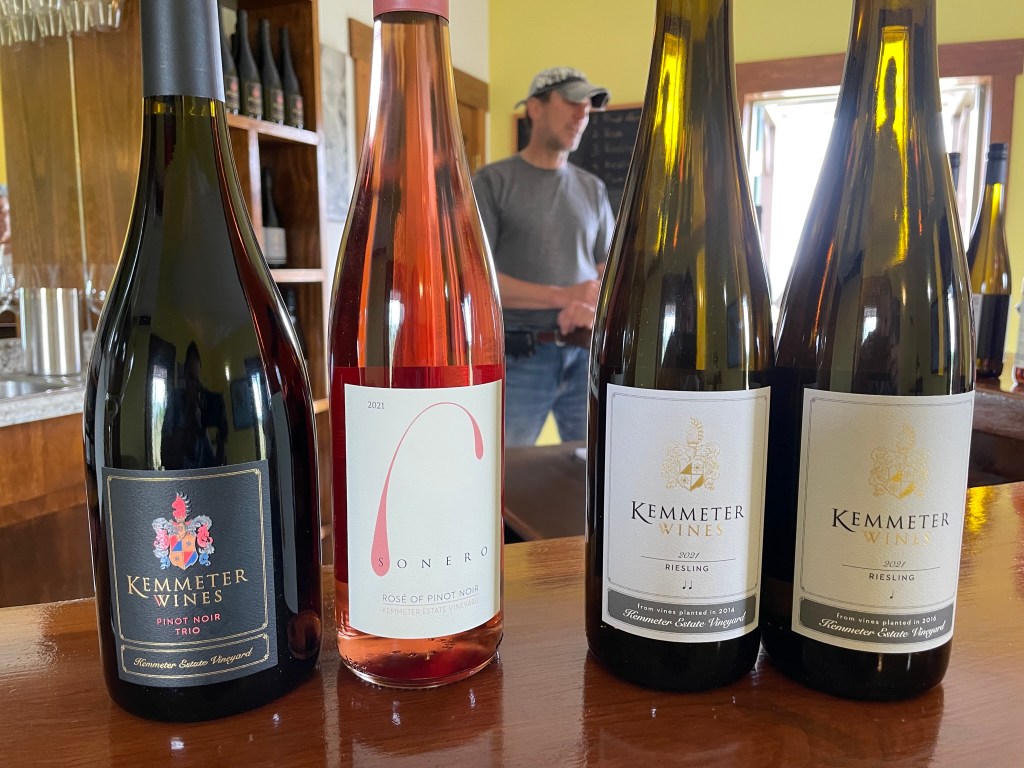
NV “Trio” Pinot. This wine had some aromatics, plus was soft and fruit-driven. Johannes explained the decision to make a non-vintage wine based on how every year has its unique strengths and weaknesses, so he decided to blend different years to make the best wine he could. Really liked this!
Rosé (100% Pinot Noir). Another winner (and bought a bottle that was consumed that night). This has a strong argument for best pinot-based wine of my trip.
2021 Riesling from the “2014 Vineyard”: Lemon on the palate and a wonderful nose. Very aromatic and perhaps the single best wine of my entire trip. It was a dry wine (only 1.5 sugar) but it struck me as off-dry. Johannes attributed this to the density of the wine, which changed the flavor profile from tart/green to lush, giving the illusion of sweetness. The 2014 Vineyard also has more organic matter, lesser silt in the loam and more clay influence.
2021 Riesling from the “2016 Vineyard”: Lemon on the palate, only 0.7 RS. I really enjoyed it, not quite as much as the 2016 Vineyard but still it was excellent. It tasted very dry, something the winemaker attributed to the soil being shallower and having more silt influence. This warms up the soil, promoting ripeness.
2021 Pinot Blanc: Clean, fresh, peach notes.
Johannes also had us play ‘guess the off-dry riesling’ and I guessed wrong. Turns out the two are grown on different types of soil and one location produces riper fruit, which gives the dry wine the illusion of sweetness. He definitely fooled me but it was a great learning experience.
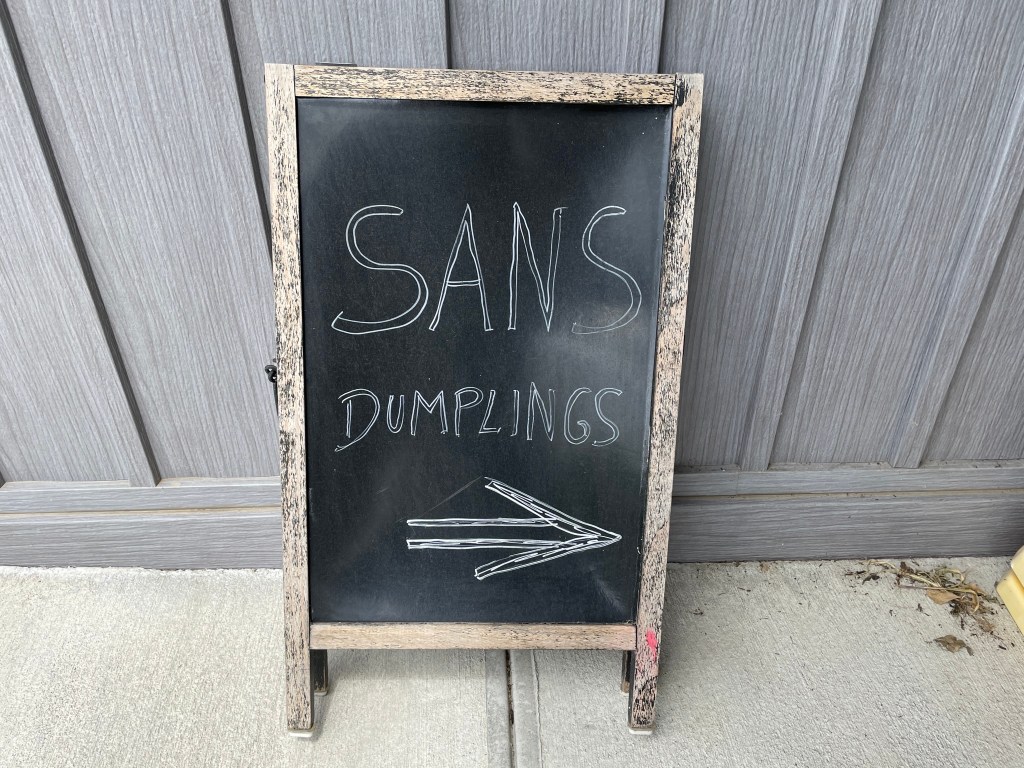
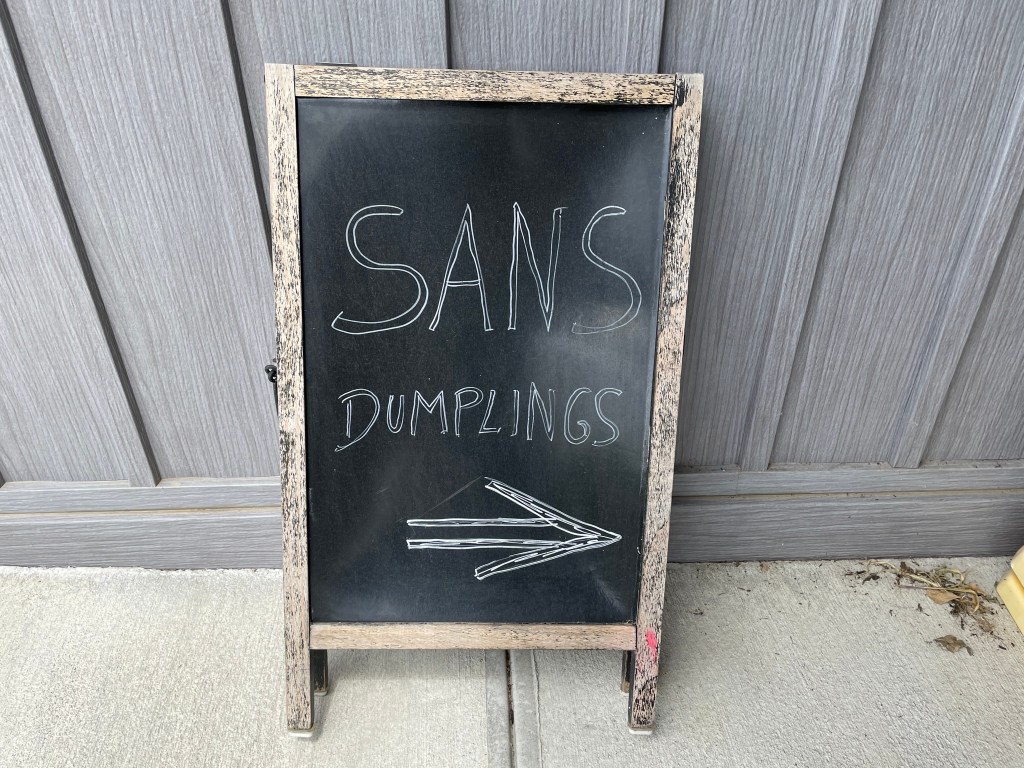
I would be remiss if I didn’t mention the dumplings. His wife is the chef; it’s best to order first and pick them up after the tasting. You can eat at the winery, but no drinking outside the tasting room (no license for that!).
With almost 150 wineries in the region, the Finger Lakes American Viticultural Area (FLX AVA) is a wine region that I can continually return to. I did my first trip in 2019, and that only scratched the surface.
It’s almost certainly the best-known AVA on the east coast. Ancient glaciers widened existing river valleys, creating deep crevices that would eventually become the 11 lakes we know today.
These glaciers also left behind a diverse assortment of rock and soil. Old rocky soil is especially good for grape vines, as not only is it porous (vines don’t like wet roots) it forces grapes to struggle (struggling vines devote most of their energy into producing good fruit). These deposits of limestone, shale, gravel, and silt play a major role in the area’s ‘terroir’.
Western shore of Keuka Lake
While soil is important, the lakes play an even more central role. These bodies of water act as temperature sponges, absorbing heat during the day and radiating it back to the shoreline at night. Without these lakes alleviating upstate New York’s cold weather, viticulture here would be far more difficult.
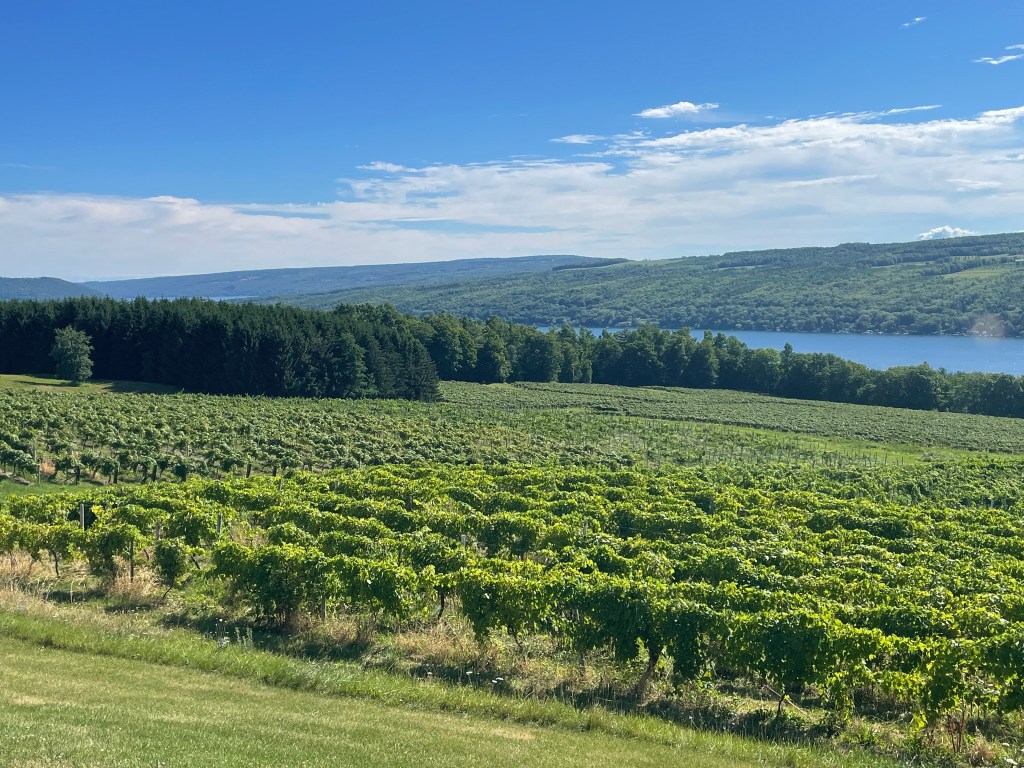
This combination of moderated weather and favorable soil creates excellent conditions for cool-climate grapes. The best vineyards are along the edge of these lakes, especially their deepest portions. Not coincidentally, this terroir is similar to that of the Mosel, Germany’s most famous riesling-producing wine region.
My 2019 trip was done with limited knowledge of where to go. This time I planned my trip more carefully, focused on select clusters of wineries around Seneca, Cayuga, and Keuka. Most of these tastings were drop-ins, but my parents & I also visited a number of reservation-only venues. We stayed at a long-stay residence in Watkins Glen, on the southern edge of Lake Seneca.
While our trip was centered around wine, I was happy to discover an assortment of non-alcoholic options were available. Many involved activities on lakes themselves, including kayaking and cruising. But my favorite non-winery excursions were hikes in local state parks, especially those that possessed waterfalls.
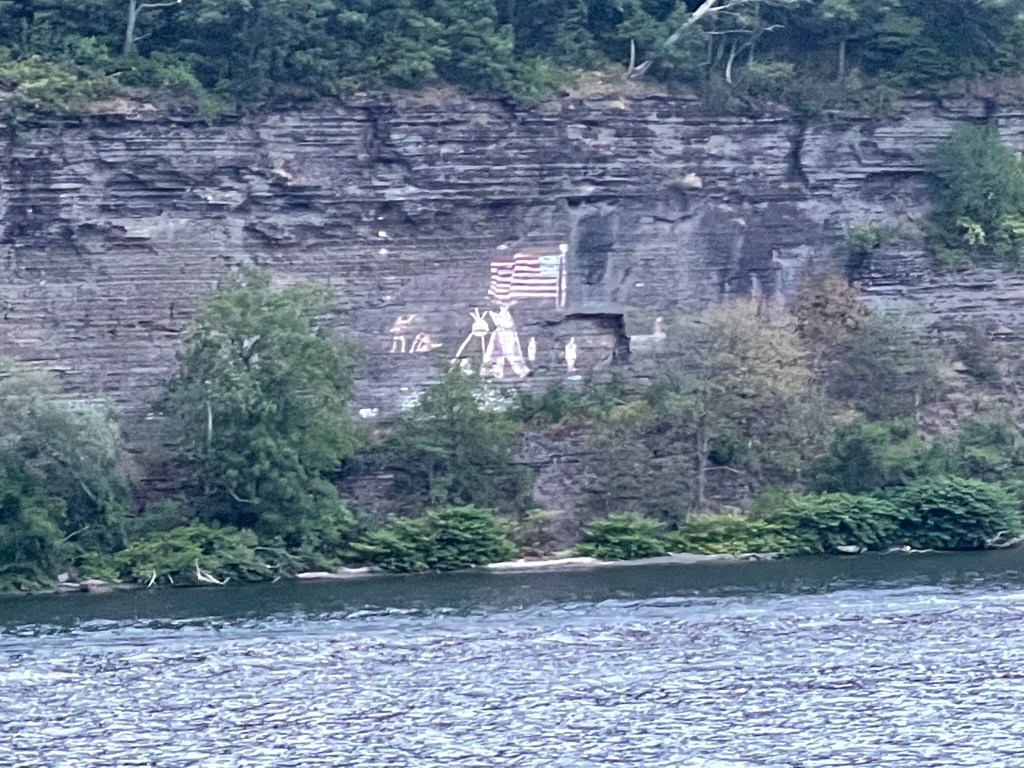
Taughannock Falls State ParkWatkins Glen State ParkWatkins Glen State ParkWatkins Glen State Park“The Painted Rocks” on Seneca Lake
Over 5 days I visited 21 wineries. It sounds like a lot, but the tastings are often so slim that you can visit multiple locations and not get a serious buzz (and thank goodness for dump buckets). Nearly all the locations I visited had moved to a model of providing self-guided flights (often but not always pre-selected), but a few larger wineries took reservations for guided flights.
My greatest take-away was that riesling has far more range than I anticipated. The most enjoyable visits were locations that had wines from the same vintage but grown at different vineyards, each with their own terroir-driven personality.
It’s difficult to rank-order 21 wineries – especially since some days blended together despite my best attempts at note taking – so instead I sorted them in groups. Not coincidentally, my ranking system can be seen in how much wine I purchased (or not at all, in many cases) during a visit.
Except for the top 3 venues, wineries in the same tier are ranked about the same and listed in alphabetical order.
Being in a lower tier didn’t mean I didn’t like them. To the contrary, I can honestly say I didn’t visit any ‘bad’ wineries during my trip (I should note I also planned very carefully; no party-centric locations this time).
To be fair about my biases for what qualified as a higher-tier, I was specifically looking for riesling and sparkling wine, so red-focused wineries didn’t get rated as well as they probably should have been. My favorites tended to be smaller wineries where I had more personalized service; good wine was a bonus. Lower-rated locations often were at the end of the day, so no fault of their own I couldn’t enjoy their wine as much.
The Top Tier (#1-3) of my wine-visits are definitely listed in rank order. The downside to these particular wineries was all were in out-of-the-way locations or had limited visiting hours (and Kemmeter was reservation only). But they made up for that with not just outstanding wine but guided tastings which provided a significant educational component.
1. Kemmeter Wines (NW Seneca): This 6-acre vineyard was an amazing find. The tasting room is tiny and only open 3 afternoons a week (and closed Sundays). But I bought more wine here than at any other winery.
They are only open by appointment and have a maximum capacity of 6 guests. Yes – the tasting room is that tiny!
I enjoyed my visit so much I decided to write a separate blog so I don’t miss any details. Because of that I’ll keep this entry short.
Owner/winemaker/vineyard manager Johannes Rienhardt lead a tasting that consisted of 5 wines; a pair of rieslings (dry and off dry), a pinot, a pinot blanc, and a pinot rosé. I bought several of the dry rieslings and the rosé (which didn’t last the evening). The dry riesling was the best of the entire trip.
Johannes also had us play ‘guess the off-dry riesling’ and I guessed wrong. Turns out both were dry, although the one from the 2014 Vineyard could have fooled me. The two are grown on different types of soil and one location produces riper fruit. The density of the wine gives the illusion of sweetness. He fooled me but it was a great learning experience.
You can also order dumplings from his wife at their store outside; order first and pick them up later. Warning – they don’t have a public bathroom!
2. Forge Cellars (East Seneca): One of the smaller locations of my trip, with 40 acres of vines and a production of 10,000 cases/year. I loved the vineyard-specific rieslings (8 at this one place alone!), the view, and overall ambiance.
I highly recommend getting an appointment for a guided flight, which is as much about wine education as it is a wine tasting. But fear not, those who randomly drop-in can still enjoy a self-guided flight while sitting on the patio. They also had great cheese boards, plus excellent jamón.
Their “Classique” riesling is their best-known wine (and was definitely good) but it wasn’t my personal favorite of this visit. But I did leave with 2020 Freese (riesling) and 2020 Tango Oaks (riesling), both of which were among the best wines of my entire trip (right after Kemmeter).
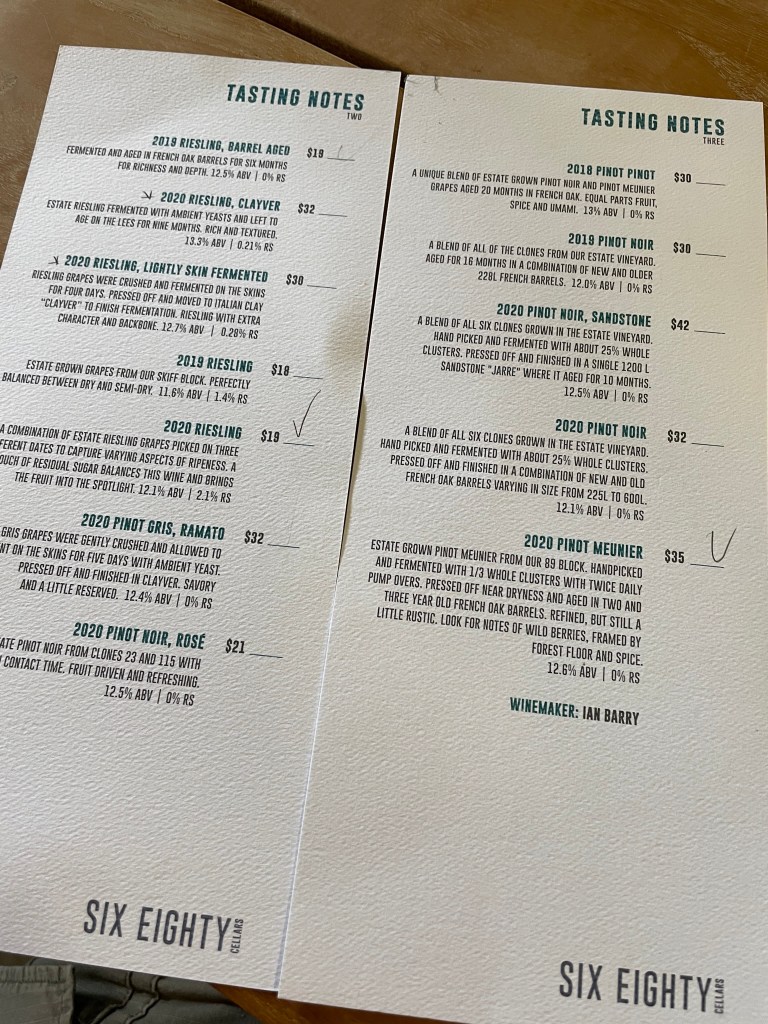
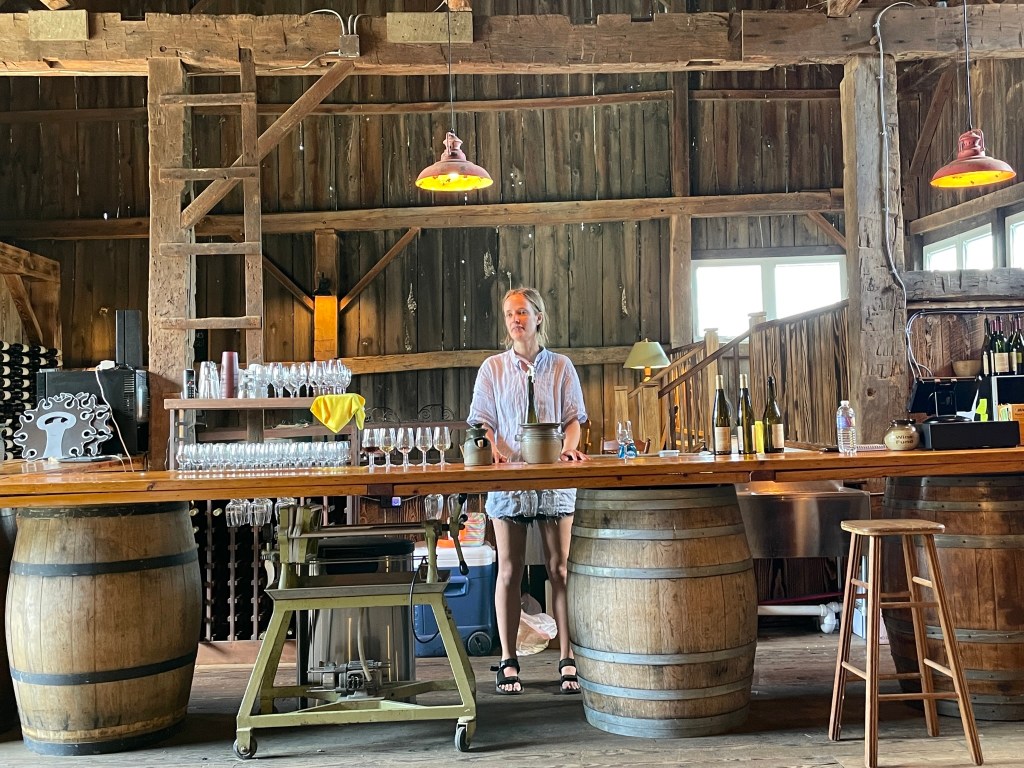
3. Six Eighty Cellars (West Cayuga): A very small (and brand new) producer with only 20 acres under vine. The wines were accompanied by light bites.
One thing that made them unique is their special focus on winemaking using a variety of fermentation vessels. They had your standard oak barrels and steel tanks, but they also had amphoras made of sandstone, clay, concrete, and terra cotta.
The small size of the winery meant we had very personalized service. Highlights included a mineral-driven 2020 Grüner Veltliner (made in a concrete tulip), an outstanding 2019 Riesling, and the flora, soft, and fruity 2020 Pinot Noir (made in a sandstone vessel). I left with some riesling.
My second tier (#4-7) wineries are ranked about equally. Every winery in this group had a solid lineup with several standout wines, and usually had other attributes (like food or service) that made it an overall excellent tasting experience. All are definitely must-try locations. All are in alphabetical order, not ranked in preference.
4. Hermann J Wiemer Vineyard (SW Seneca): One of the larger wineries in the area, with 131 acres under vine between HJW and their other property, Standing Stone Vineyards. HJW has their own estate vineyards plus they manage other people’s vineyard. They make around 35,000 cases/year between HJW and Standing Stone.
HWJ’s tasting experience is different from their neighbors in that they don’t have set flights. Every pour was separately charged, so you can get as many or as few as you want. My group didn’t have a tasting room associate with us, but it wasn’t overly busy so we still had lots of attention.
They had an excellent selection across the board, but my favorites were the 2020 Magdalena Cab Franc and an especially outstanding 2009 Cab Franc they brought out just for me. I wanted to like their biodynamic riesling, but just couldn’t get into it.
5. Heron Hill Winery (SW Keuka): This was one of the larger and lovelier venues of my trip. Heron Hill makes 30,000 cases/year, plus have 40 acres under vine between 2 vineyards. They also source fruit from elsewhere.
I admit I’m biased in describing this visit because it gave me a chance to catch up with a friend, winemaker Jordan Harris, who I knew from his time in Virginia. Jordan gave my family and I a very extensive tasting, including several not on the menu.
But my assessment of his 2020 Cabernet Franc and 2020 blaufränkisch needs no special boosting; both were excellent and I left with three bottles of the cabernet franc to show off to my Virginia friends (edit: one was enjoyed with dinner and another went home with mom for her birthday). Also shout-outs to the 2020 Pinot Noir (very fruit forward nose and easy drinking), his rosé, and the 2020 Chosen Spot red-blend.
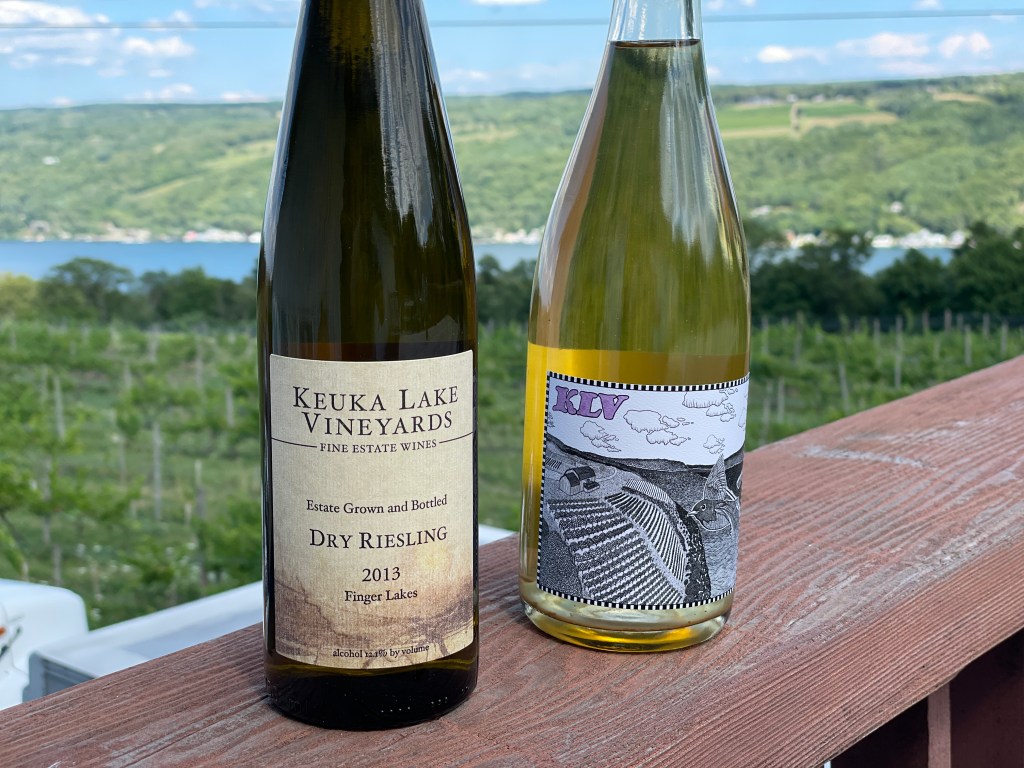
6. Keuka Lake Vineyards (SW Keuka): One of the most underrated wineries in the area. So good that I made an exception and allowed myself a visit despite having been here in 2019.
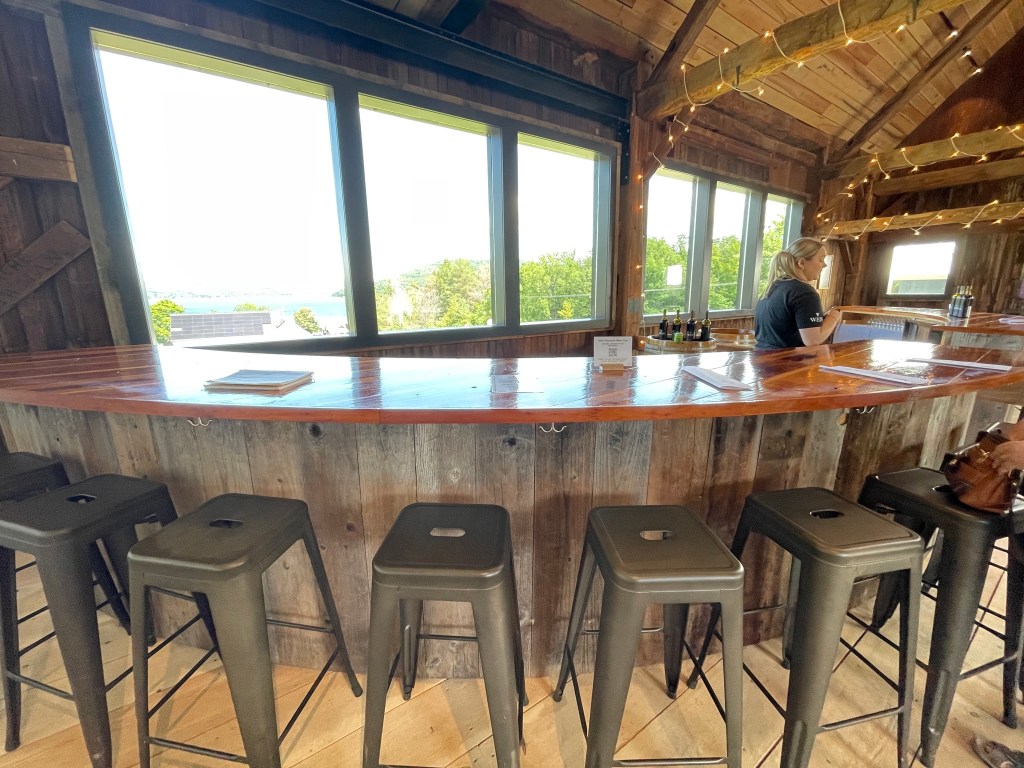
Small to mid-sized by FLX standards, they have 40 acres under vine and make 2-3,000 cases/year. Three tasting flights were available, now served in an old barn. I went with the “Terroir Red” and “a mix of the “Terroir White”.
I LOVED their natural yeast vignoles pét-nat, which was the first wine I opened when I returned home. Their 2017 ‘Rows” dry riesling (complex, mineral driven, maybe lime notes), 2013 dry riesling (peach notes and honey, made with wild yeast), 2018 KLV Red (a table red with hybrids foch, vincent, and de chaunac, very good!), and 2019 cabernet franc were also excellent (some pepper, slightly fuller bodied than I often see.)
They also grow leon millet and make an orange wine. This is one of the few places where I genuinely enjoyed their wines made with hybrid grapes, which are rarely a favorite.
7. Weis Vineyards (East Keuka): Another rare repeat visit for me. It also helped that Dave McIntyre (wine writer for the Washington Post) was aghast at even the possibility I skip it. So back to Weis I went. Reservations recommended.
Weis has 40 acres of vines (mostly hybrids) but most of this estate fruit is sold locally. No word on the number of cases/year they make, but all of it uses locally sourced fruit.
My favorites included their 2021 Dry Riesling (nice and crisp), 2021 Wizner Select K (K for Kabinnet, more mineral-y and a tad sweet), and 2019 Merlot (great balance!). Also good were the 2020 Schulhouse red (an easy drinking blend of mostly Chancellor, plus 10% Cab Sauv, named in honor of the school house the tasting room now occupies), and dry rosé (nice balance).
I felt this tasting experience was more upscale than most other FLX locations. As for flights, out of 15 or so wines you can pick 5 but can order more. I liked this method since it was sort of a ‘build your own adventure’ style. We had a tasting room associate guide us through our wines.
The third tier (#8-13) had above average wines in all of them, and oftentimes they had great food, service, and/or an amazing view. All in this group are equally good and listed in alphabetical order, rather than ranked in any order.
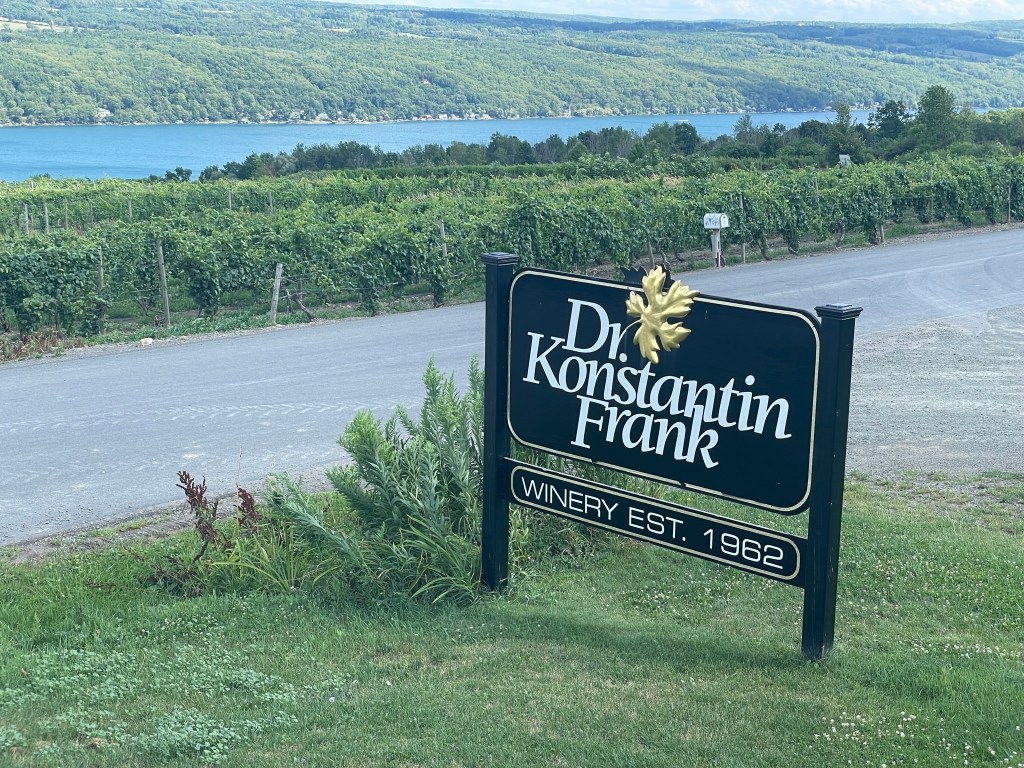
8. Dr. Konstantin Frank Winery (SE Keuka): The granddaddy of Finger Lakes wineries. Guided tastings are by appointment only (and go fast, apparently), but you can also randomly visit and stay in their courtyard to enjoy a self-guided flight.
I go more into detail on their background (and the Finger Lakes in general) in my 2019 trip report so won’t repeat too much here. But suffice to say that any trip to the Finger Lakes is incomplete without a pilgrimage here.
“Dr. Frank” is one of the largest Finger Lakes wineries, making over 75,000 cases/year. While Dr. Frank has 60 acres under vine at their main estate plus 20 more acres at Seneca, most of their fruit is purchased locally.
This place has a large tasting menu, with all of their bottles being solid in quality and well-priced. I wasn’t personally moved to buy any particular bottle but I did especially enjoy their toasty Celeb (Sparkling Riesling) with brioche notes and their 2021 Dry Riesling.
Small dishes are also available.
Tasting patioLoved all the small bites!
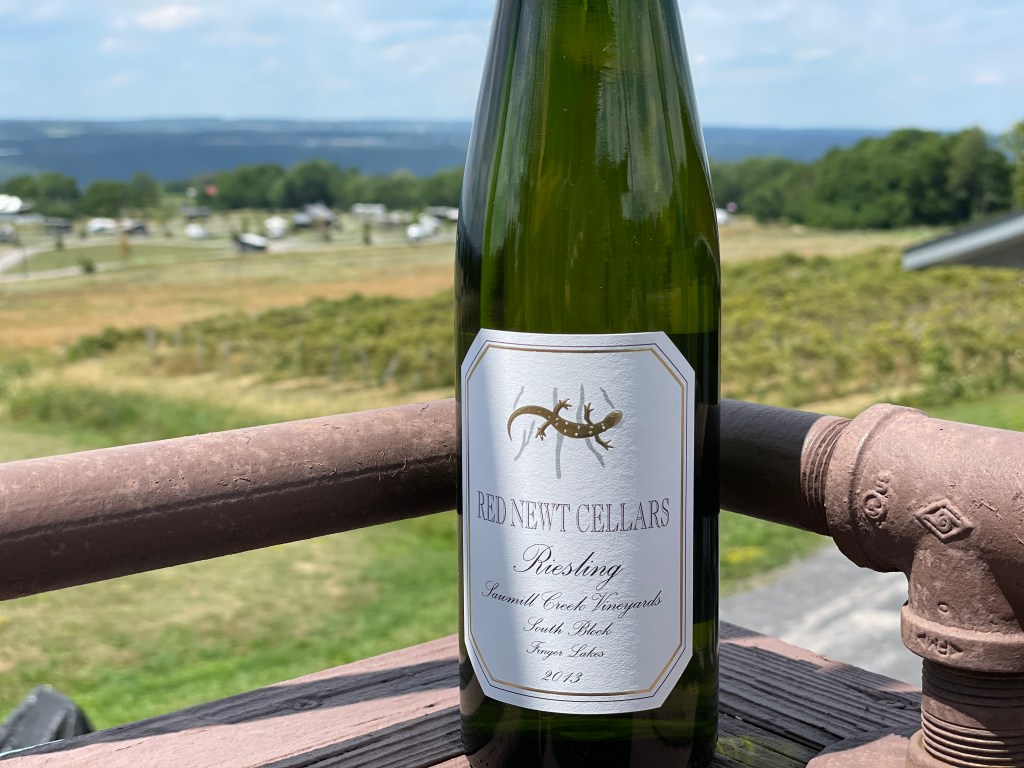
9. Red Newt Cellars (SW Seneca): Mid-to-large sized winery. 20 acres under vine but another 100 leased. They make 24,000 cases/year, 1/3rd of which was devoted to their most popular wine, the off-dry ‘Circle’.
They were recommended to me because of their extensive collection of older rieslings. Multiple flight options were available, but I went with the Dry and Riesling flights. I think this is going to need a return visit since there was a lot left off the menu I never tried.
I really enjoyed their especially well balanced 2013 Dry Reserve (no saline notes, oddly enough) and the 2013 Bullhorn Creek, which was unusually for its spice and herbal notes. I noted how the Circle had a ton of action up front.
10. Red Tail Ridge Winery (West Seneca): A mid-sized location with 35 acres of vines planted. This includes several varietals you don’t often see including teroldego and lagrein, red grapes normally found in northern Italy. No notes on their production but was told its mostly estate.
I did the sparkling flight plus sampled a few others. Red Tail seemed to have one of the largest sparkling programs I encountered on the trip, and their pét-nats were especially good. The NV “Rebel With A Cause” (50% Terodego/25% Langein/25% Dornfelder) was probably my favorite, with the terodego red the runner-up.
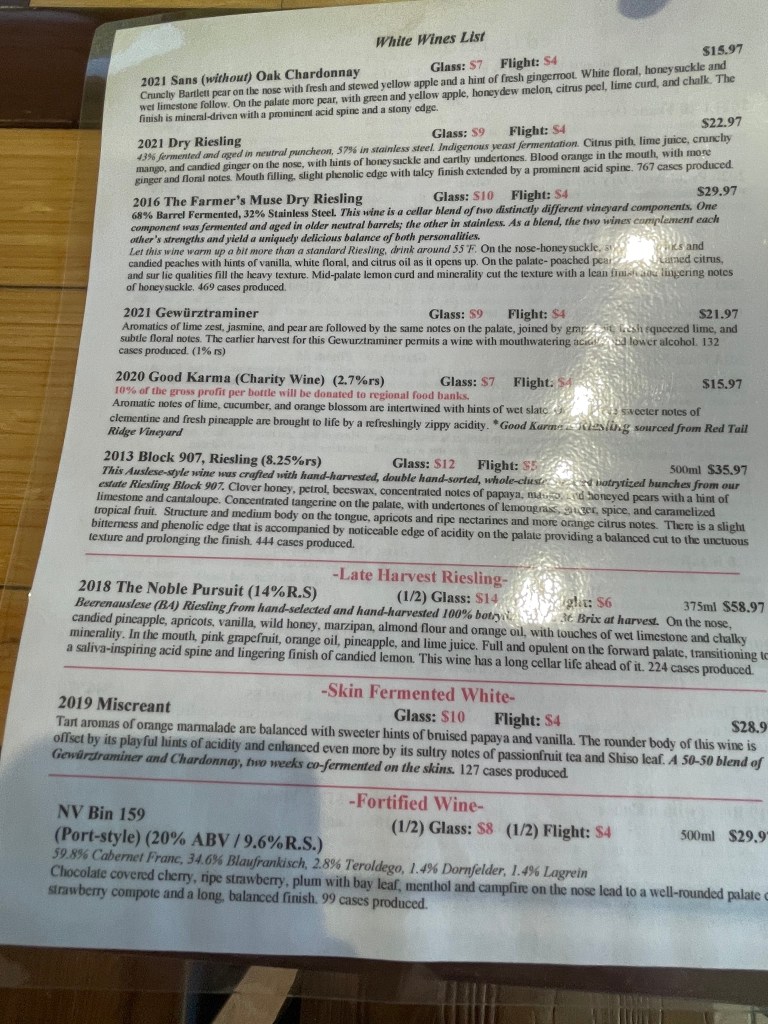
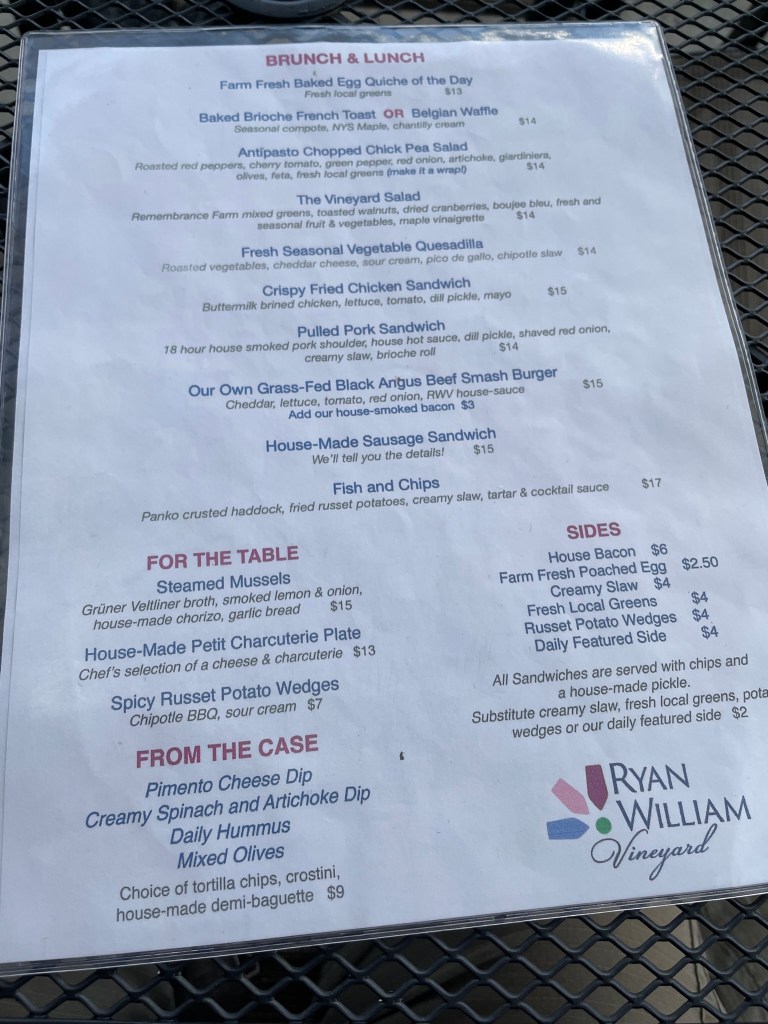
11. Ryan Williams Vineyard (SE Seneca): This was one of the larger wineries in the area. I didn’t get the number of cases they produce but was told they have 120 acres of vines. They also have a BEAUTIFUL tasting room with a great view of Seneca.
One standout element of my visit is they also have a full-service kitchen. Had I known I would have been brunching here all the time, although their lunch menu looked equally appetizing.
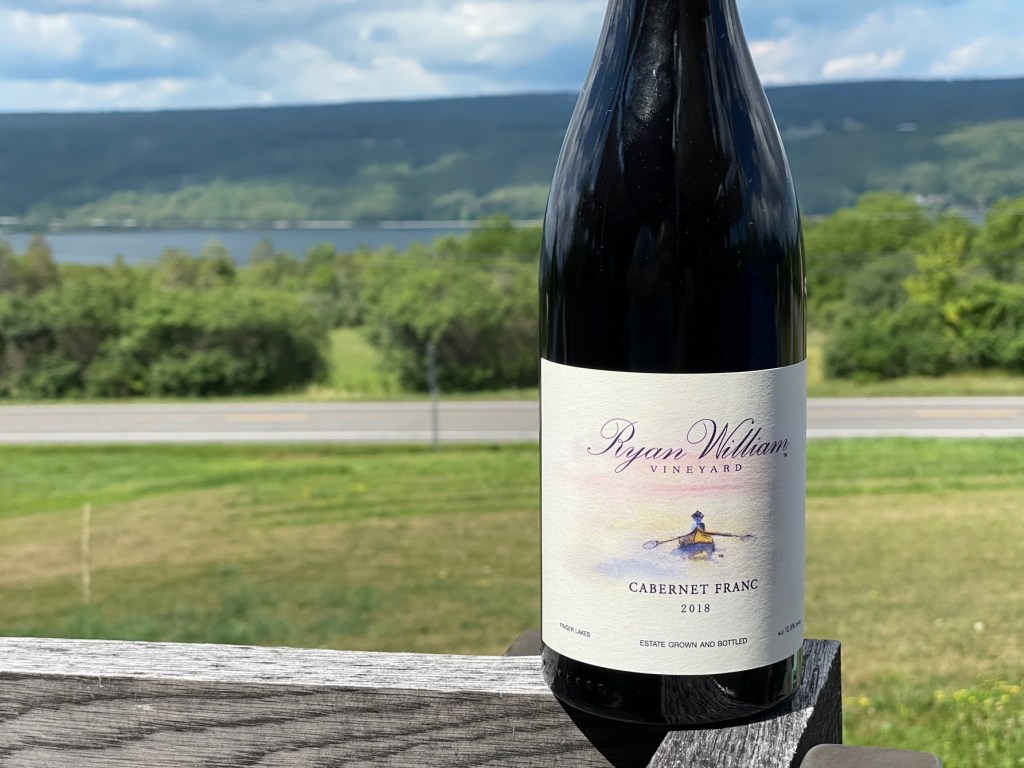
I tried the white and red flights, with my favorites being the very textured 2018 Chardonnay and soft 2017 Cabernet Franc. They also had a pretty good sauvignon blanc that was clean, fresh, and quaffable.
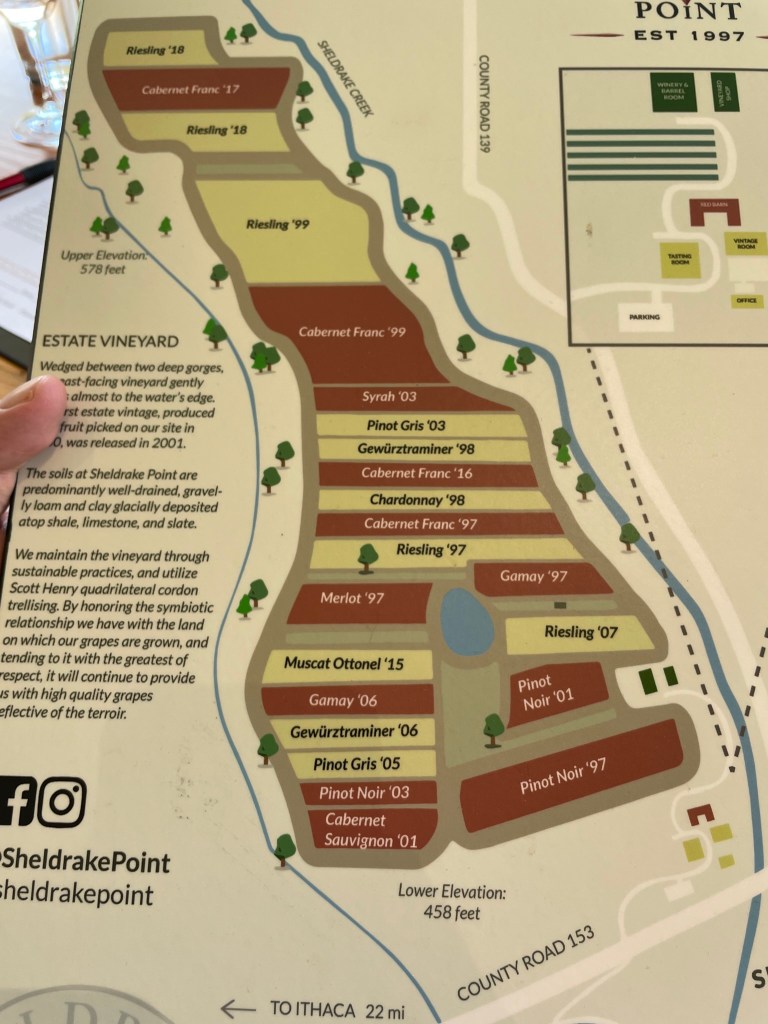
12. Sheldrake Point Winery (West Cayuga): An unexpected gem! Wineries along Cayuga are further away from the main tourist trail so they tend to be smaller, but this location stood out as a very classy venue with a lot of great wine and tasty light bites. The view and service were great.
Their wine is 100% estate, with 66 acres under vine. Ironically, they only make 7 or 8,000 cases/year (most of their fruit is sold).
My family and I shared three flights; ‘All about Aromatics’, ‘Cool Climate Reds’, and ‘Library Reds’. Favorites included the 2017 “BLK3” Pinot and 2013 Pinot, the latter of which was more tannic than I expected.
Mom said their 2012 Gamay (with 17% Syrah) was very much a ‘eat stake and put me to sleep wine’. I though the “Acid Head” riesling had an interesting sauv blanc quality to it, while the 2019 Reserve was very tropical, with notes of passion fruit.
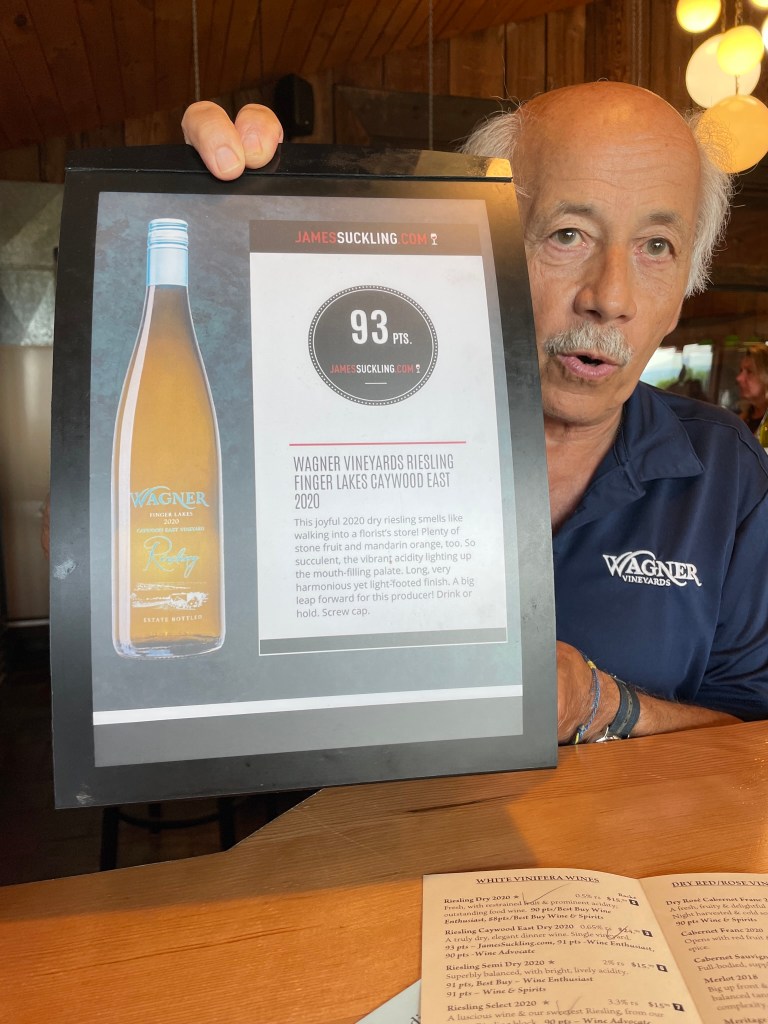
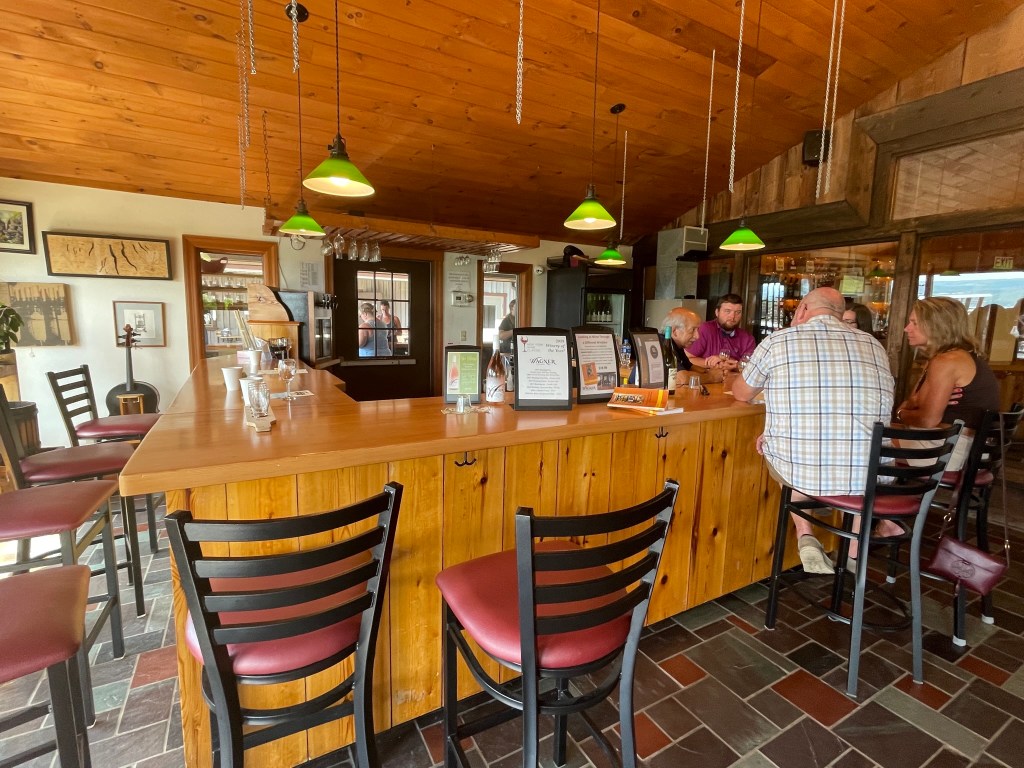
13. Wagner Vineyards (SE Seneca). Part of me wanted to be turned off by their large scale, commercial-winery vibe, but they won me over with great wine and service (and beer! and food!).
Wagner produces 60,000 cases/year and have 240 acres under vine, which makes them the largest grape distributor in the area. They have a very nice (and busy) tasting room as well.
I thought their 2017 Riesling was really good; minerally, light, and easy drinking. Apparently, Wine Enthusiast magazine thought so as well, since it chose this as one of their Top 100 affordable wines. The 2020 Riesling Caywood East Dry was my second favorite.
My fourth tier (#14-18) selections all provided pretty good wines. Some might have a standout I really enjoyed.
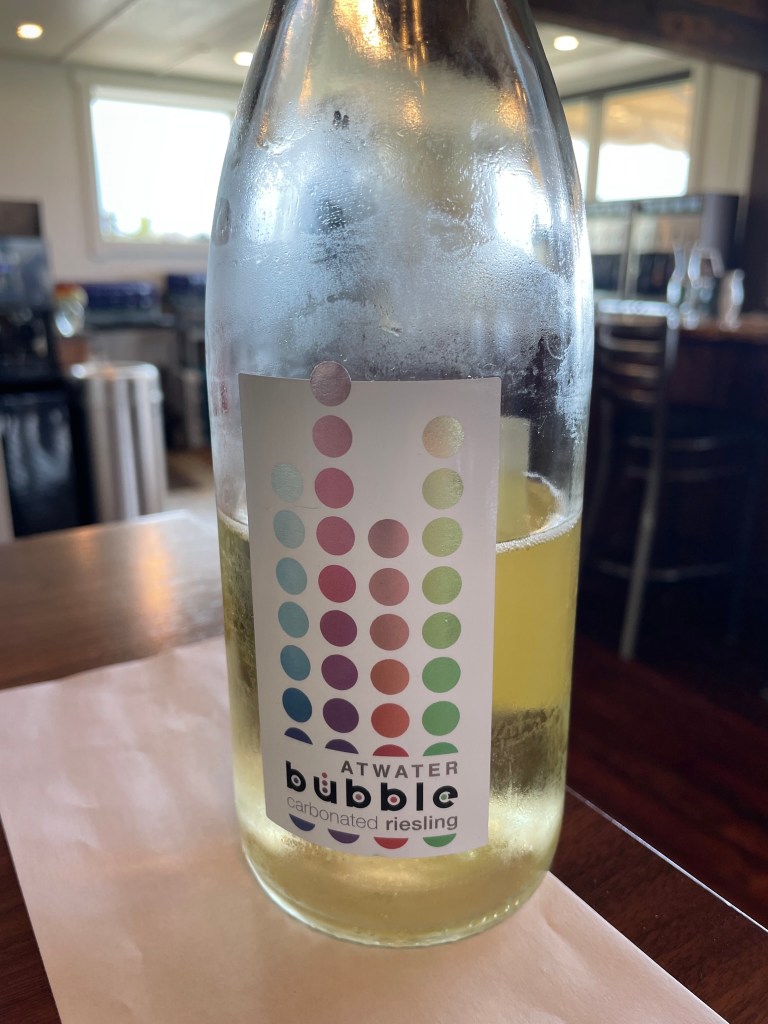
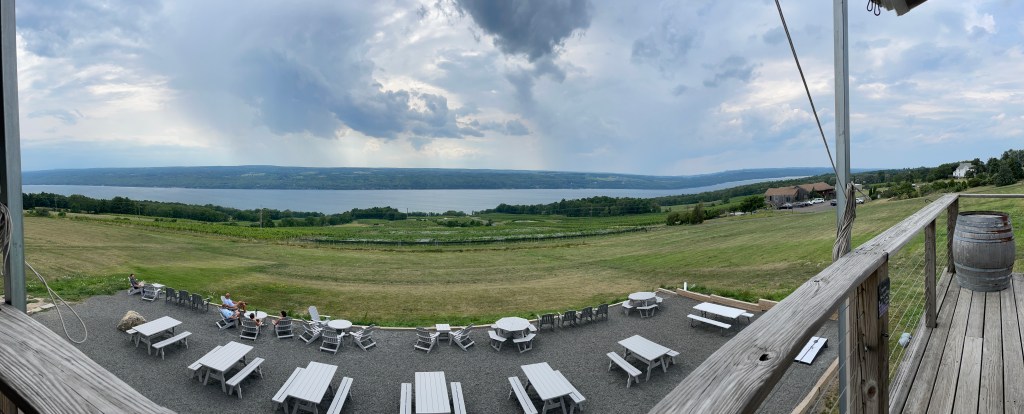
14. Atwater Vineyards (SE Seneca): While probably mid-sized by FLX standards, their 50-acre vineyard charges ahead with an exceptionally diverse vineyard consisting of 19 varieties. Among the hard-to-find vines planted are syrah and a bunch of hybrid grapes including reval (a hybrid of chardonnay).
This place should get an award for one of the nicest views of the trip. It’s not that far away from Watkins Glen, so I’d have totally hung out more here on a slow day.
No particular wine sang, but I did like their apple-note 2021 “Bubbles” sparkling riesling and 2020 Pinot Noir, which was made unfiltered and with minimal-intervention. I bought a bottle of the pinot just because it subverted my expectations of what a pinot should be like.
15. Fox Run Vineyards (West Seneca): This was a mid-sized location with 52 acres under vine and a production of 20,000 cases/year. They also had one of the best kitchens in the area, which by itself makes it a must-stop. The family and I enjoyed a great selection of sandwiches, salads, and personal pizzas.
The wine lineup didn’t disappoint either. My favorite was their Reserve Riesling (and I bought a bottle) but I also thought their “Silvan” Riesling was pretty good. Not sampled here, but back home I’ve also had a really nice meritage blend (not on the menu here, unfortunately).
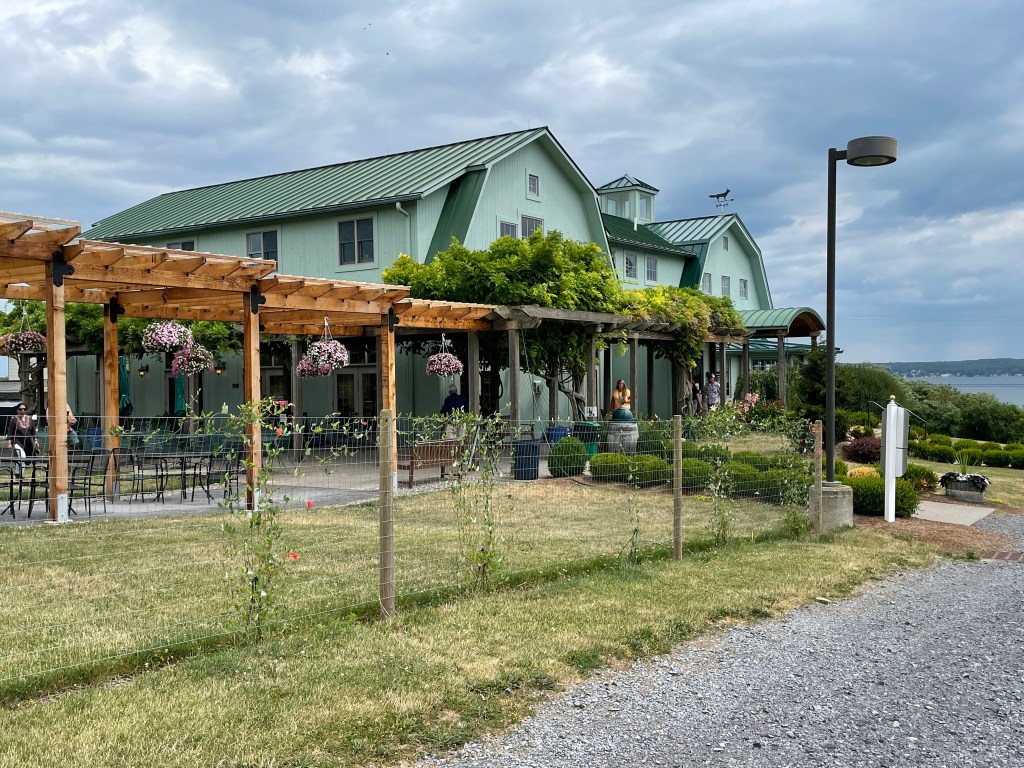
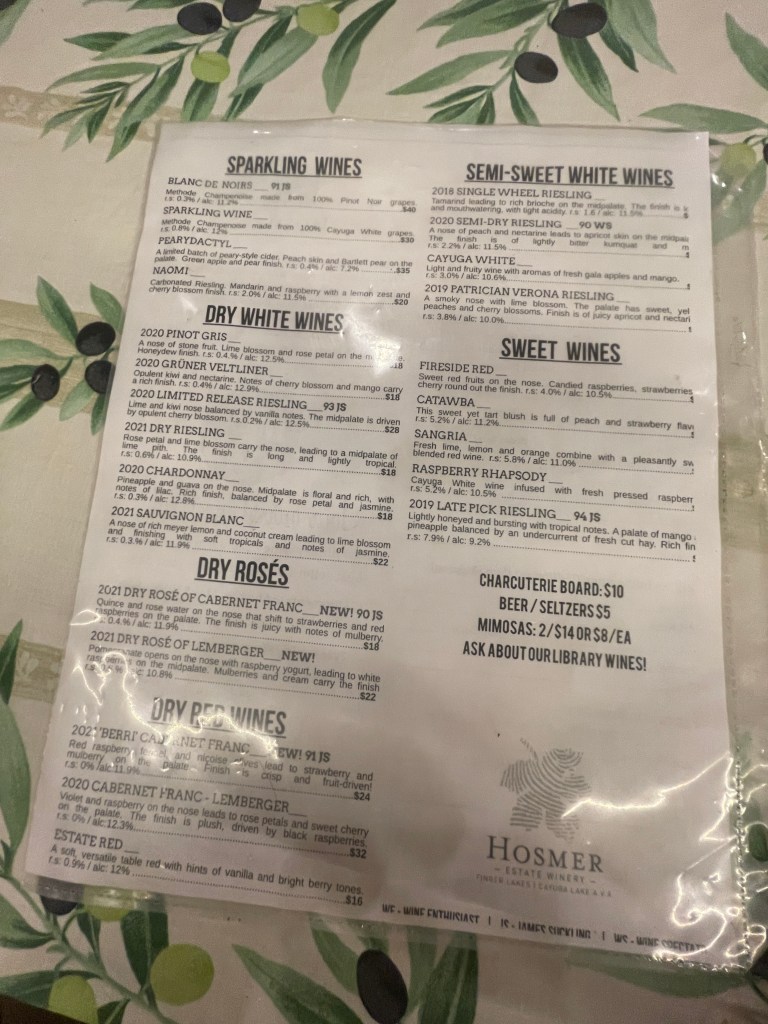
16. Hosmer Winery (West Cayuga): A mid-sized location, making 10,000 cases/year using 72 acres of grapes.
Hosmer is especially known for their dry reds plus their sauvignon blanc. They also have a petit verdot and lemberger (aka blaufränkisch), both of which were hard to find in this area. My favorite wine was a blend of cabernet franc and lemberger.
17. Ravines Wine Cellar (NW Seneca): This was one of my first visits of my trip and helped set the tone of the rest of the visit. Ravines is on the larger side at 30,000 cases/year from 4 vineyards, plus 130 acres under vine.
Several flight options were available, but my favorites were their dry sparkling riesling (which had a tad botrytis which made it interesting), plus their 2020 Cabernet Franc.
18. Shalestone Vineyards (East Seneca): I feel weird listing Shalestone so low because it’s definitely a nice place, and wine lovers who are red-focused would love it. It’s last in this group simply because of alphabetical order, and in a lower tier not because the wines aren’t well made but rather I wasn’t focused on reds.
When I asked why the focus was on reds, my server explained, “We only make wine we really want to drink”. They were also one of the smaller producers in the area, with only 6 acres under vine and a production of 1,200-1,500 cases/year.
That said their 2019 cabernet franc was one of the best in the Finger Lakes; aromatic with soft pepper notes. They also have a syrah and saperavi.
If you want to try some Finger Lakes reds – visit here first.
Last tier (#19-21) didn’t have any particular wines that tickled my fancy. In some cases, this was simply because they were unlucky enough to be the place I visited at the end of the day when my palate was tired.
19. Anthony Road Wine Company (West Seneca): They make 12,000 cases/year and have 100 acres under vine. I don’t have great notes on the visit, but I did notice the Devonian White blend (chard/riesling/pinot gris) and off-dry vignoles.
20. Magnus Ridge Winery (SW Seneca): Another winery on the larger end of the scale. It was unique in that they had cheese/food pairings with their wine flights. The most interesting combination was a traminette paired with wasabi.
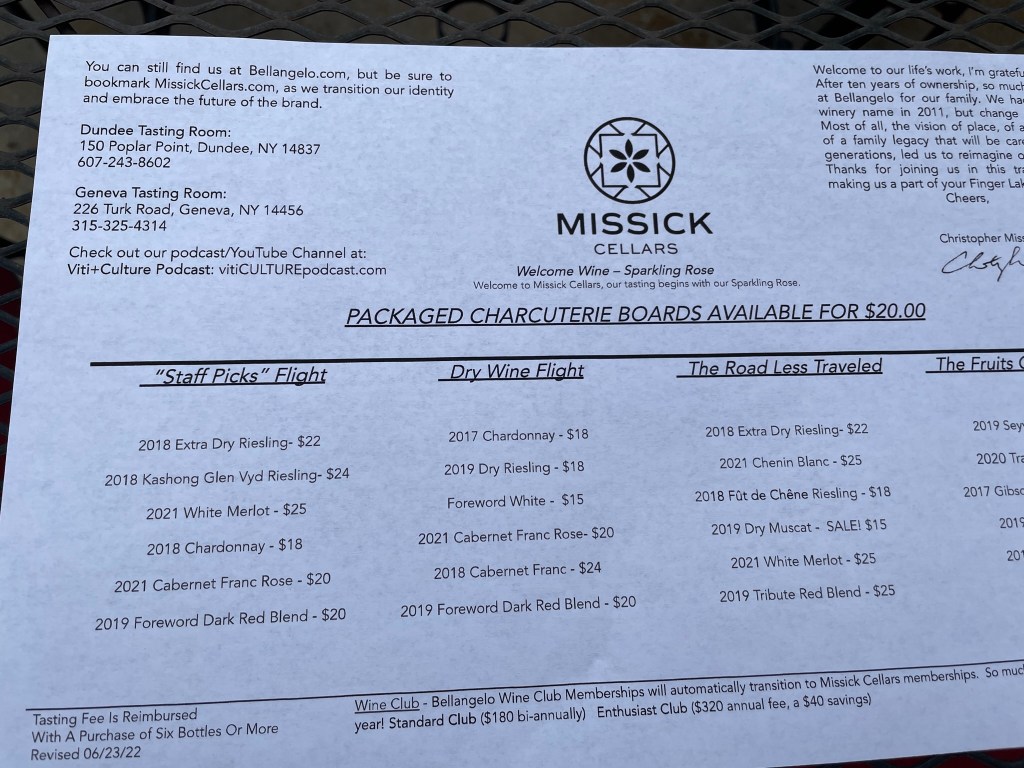
21. Missick Wine Cellars (West Seneca): Formerly known as Bellangelo, they rebranded a few years back when the new owner decided he wanted this place to be his legacy. They came highly recommended by Dave McIntyre of the Washington Post, so I had to try it. Missick makes 5,000 cases/year; not sure on the number of acres under vine.
Of the 4 flight options available I went with the “Staff Pick”, with chenin (!) as an add-on. At this point my wallet was in conservation mode, but I did think the ‘Foreword’ red blend made with 5 hybrids (foch, baco noir, marquette, dechaunac, chambourcin) was interesting enough to buy a bottle. It turned out to be my only purchase of a wine made with hybrids the entire trip.





























































 Wine Trails and Wanderlust