The 2020 Tannat / Petit Verdot Challenge

Tannat and Petit Verdot are my two favorite red grapes. So when you put these high tannin, high acid grapes together, it’s like magic for me.

I first discovered this blend at Maggie Malick, although I’d likely unknowingly sampled it before. I once asked winemaker Jake Busching what is it about the blending of these two grapes that makes it so good, and he explained that there’s something about how both have different but complimentary tannins. Don’t ask me the science behind it – all I know is I love it!

The idea for a Tannat/Petit Verdot party came to me while tasting the Maggie Malick Fortissimo and the Paradise Springs PVT side-by-side. They had near identical blends, but were very different wines. Since I wanted to do something special for my birthday, I went on a hunt for as many similar blends as I could find.

It turns out Tannat / PV blends more popular than I realized! All competitors primarily used Tannat and Petit Verdot, but some wines added in a little extra (like Syrah for the Arterra Crooked Run, Merlot of the Fortissimo, or Fer Servadou for the Hillsborough Ruby).

I ultimately collected 8 wines and invited some friends over for a blind tasting. The five of us tasted two at a time, using a bracket system with the semi-finalists moving on to the next round until there was a winner.

Here are the wines of the night:

2013 Chateau O’Brien Vintner’s Reserve (50/50 Tannat Petit Verdot)

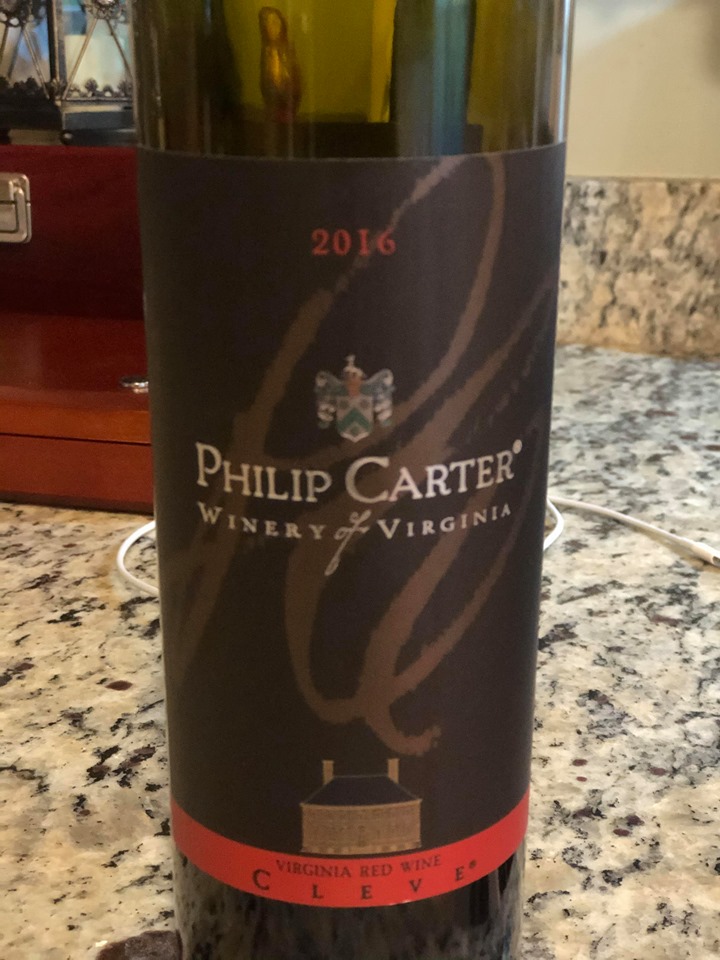
2016 Philip Carter Cleve (50/50 Tannat Petit Verdot)

2015 Maggie Malick Fortisimo (45/45/10 Tannat. Petit Verdot, Merlot)

2016 Chrysalis Papillon (55/45 Tannat Petit Verdot)

2016 Jake Busching F8 (50/50 Tannat Petit Verdot)

2017 Arterra Crooked Run (50/37.5/12.5) Tannat, PV, Petit Syrah)

2015 Paradise Spring PVT (50/50 Tannat Petit Verdot)

2016 Hillsborough Ruby (50% Tannat / 30% Fer Servadou / 20% Petit Verdot)

Round 1 / Bracket 1

Wine #1: 2016 Hillsborough Ruby (50% Tannat / 30% Fer Servadou / 20% Petit Verdot)

Wine #2 2016 Philip Carter Cleve (50/50 Tannat Petit Verdot) (5 votes)

This was an easy one. The Ruby had nice aromatics, but had a sour note to it that made it very different from the other of the night.

The Cleve on the other hand was popular all around. We detected notes of cherry, maybe some raspberry. Not a lot on the nose, though (not uncommon in Tannat)

Winner: Wine #2 – Philip Carter’s Cleve

Round 1 / Bracket 2
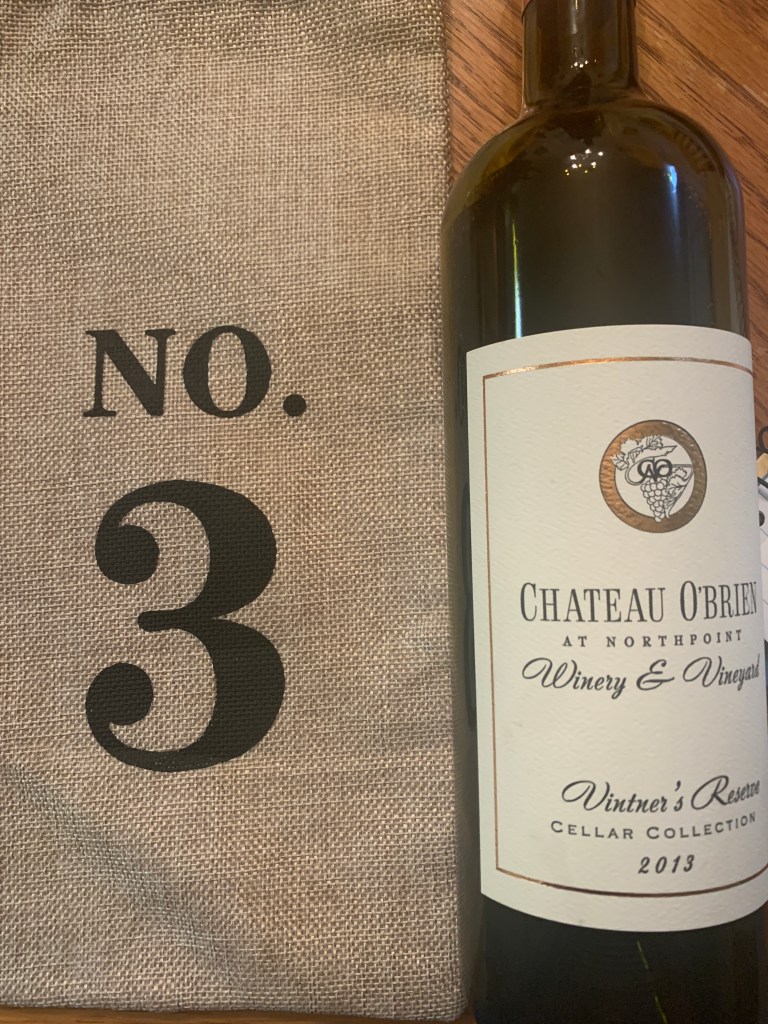
Wine #3 2013 Chateau O’Brien Vintner’s Reserve (50/50 Tannat Petit Verdot) (2 votes)

Wine #4 2017 Arterra Crooked Run (50/37.5/12.5) Tannat, PV, Petit Syrah) (3 votes)

This was a tough match, probably the closest of the night. What made it tough is we all really, really liked both of them.

The O’Brien was super smooth; probably the smoothest of the lineup (which was probably due to its age). There were red fruit characteristics there, although I had a hard time identifying any particular one (keep in mind we were also getting tipsy).

The Arterra wine had an earthy nose, but the fruit profile was more pronounced (likely due to the youthfulness). It also had an interesting profile that at the time we couldn’t identify (later identified as the wild yeast fermentation).

Winner: Wine #4 – Arterra’s 2017 Crooked Run

Round 1 / Bracket 3

Wine #5: 2016 Chrysalis Papillon (55/45 Tannat Petit Verdot) (0 votes)

Wine #6: 2015 Paradise Spring PVT (50/50 Tannat Petit Verdot) (4 votes, one abstain)

This was another lopsided matchup. We could tell the Wine #5 was more Tannat heavy based on the higher tannin levels. It was also lighter in color, and had less body. The #5 also had an interesting thin rim which I haven’t seen on any other similar blend. Someone mentioned it had some mineral characteristics, which was likewise unusual.

The PVT had lots of dark fruit and tobacco. We liked it, but maybe not as much as some other blends.

Winner: Wine #6 – Paradise Spring’s PVT

Round 1 / Bracket 4
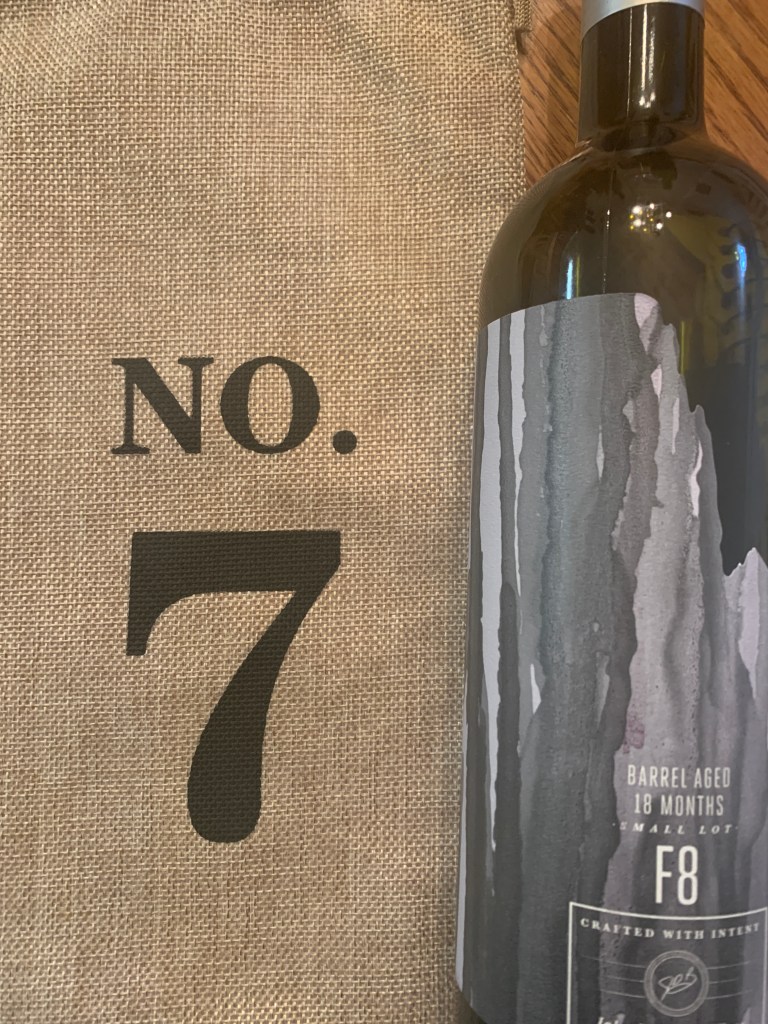
Wine #7: 2016 Jake Busching F8 (50/50 Tannat Petit Verdot) (3 votes, one abstain)

Wine #8: 2015 Maggie Malick Fortisimo (45/45/10 Tannat. Petit Verdot, Merlot) (1 vote)

This was another great matchup, since we loved both of them. The judges were definitely well past tipsy at this point, so tasting specific flavor profiles was getting more and more…difficult.

Wine #7 (Jake Busching F8) was smooth and had a great complexity to it. Mustiness on the nose and palate.

Wine #8 (Maggie Malick) was probably the closest to a Uruguayan Tannat of the bunch. Musty nose. We all liked it but…tasting was getting to be…difficult.

Winner: Wine #7 – Jake Busching’s F8

Round 2 / Bracket 1

We stopped for food to sop up all that alcohol. I’m not going to pretend I took notes beyond the winners from this point on.

Wine #2 (Philip Carter’s Cleve) vs Wine #4 (Arterra’s Crooked Run)

Winner: Wine #4 / Arterra’s Crooked Run

Round 2 / Bracket 2

Wine #6 (Paradise Springs’s PVT) vs Wine #7 (Jake Busching F8)

Winner: Wine #7 Jake Busching F8

Round 3 and Final:

Wine #4 (Arterra) vs Wine #7 (Jake Busching F8). For 3rd place we put wines #3 (O’Brien) and #8 (Maggie) against one another for 3rd place.

I was well on my way towards legal drunkenness at this point; some of us were past that.

We LOVED both of these wines. Love loved loved both of them.

But the complexity of wine #4 won out. We did the unveiling, and the winner of the 2020 Fitzsimmons household Tannat/Petit Verdot competition was the 2017 Crooked Run from Arterra Wines. For 3rd place, we anointed Maggie Malick’s 2015 Fortissimo.

Grayhaven Winery

“Is everyone happy?” asked winemaker Deon Abrams, as he came out to check on the growing crowd. If there was a theme of the day, this was it.

Grayhaven is one of the more accessible wineries in the state, located roughly mid-way between Charlottesville and Richmond. Not nearly enough people from NOVA head this way, which is a shame because not only is it a great place on its own, it shares a wine trail with 53rd Winery (another favorite) just north of here.

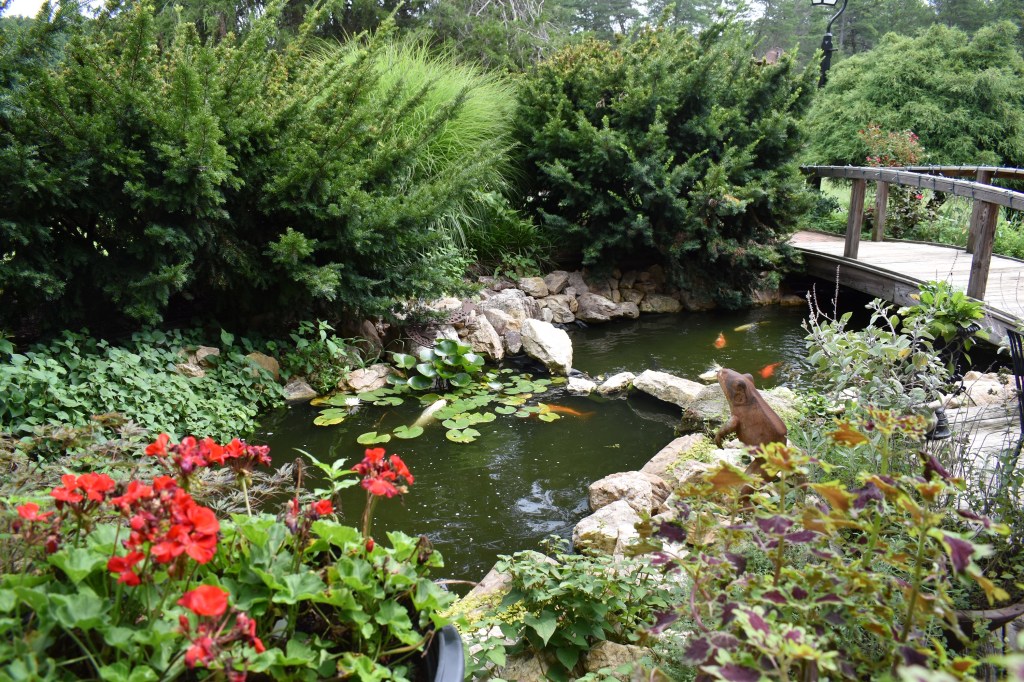
The first thing you notice is the VIEW! Grayhaven looks something out of a Tolkien novel. Walking towards the tasting room you cross a tiny bridge over a koi pond, then approach a pair of doors that would be at home guarding a castle. There’s even a classic merry go round around the corner. With views like this, it’s understandable why Grayhaven has been used as a filming location for music videos and even a movie – including one with the awesome title of Attack of the Vegan Zombies (because why eat flesh when you can feast on wine grapes?).

Grayhaven is also one of the older wineries in the state, planting its vineyard in 1978 and opening the winery in 1994. Small to mid-sized by Virginia standards (translation: still very boutique), it has 9 acres of vines including Touriga Nacional, Pinotage, Frontenac, and a few other grapes you don’t often see in Virginia.

The vineyard-geek in me shouted for joy I heard about the sheer variety of vines. Pinotage is South Africa’s signature grape – a cross between Pinot Noir and Cinsault that provides a full bodied, low acid red wine. Touriga is the national grape of Portugal, used as the basis for Port. If you’re itching for a Virginia made wine made with these varietals, this is the place to find them.

Another thing that distinguishes Grayhaven is its South African theme – no doubt because it’s Deon’s birthplace. The Pinotage was definitely a nod to that heritage, but they also sell a variety of South African wines to supplement what the vineyard produces, and host an annual South African festival (well…with the exception of 2020).

What I tried:

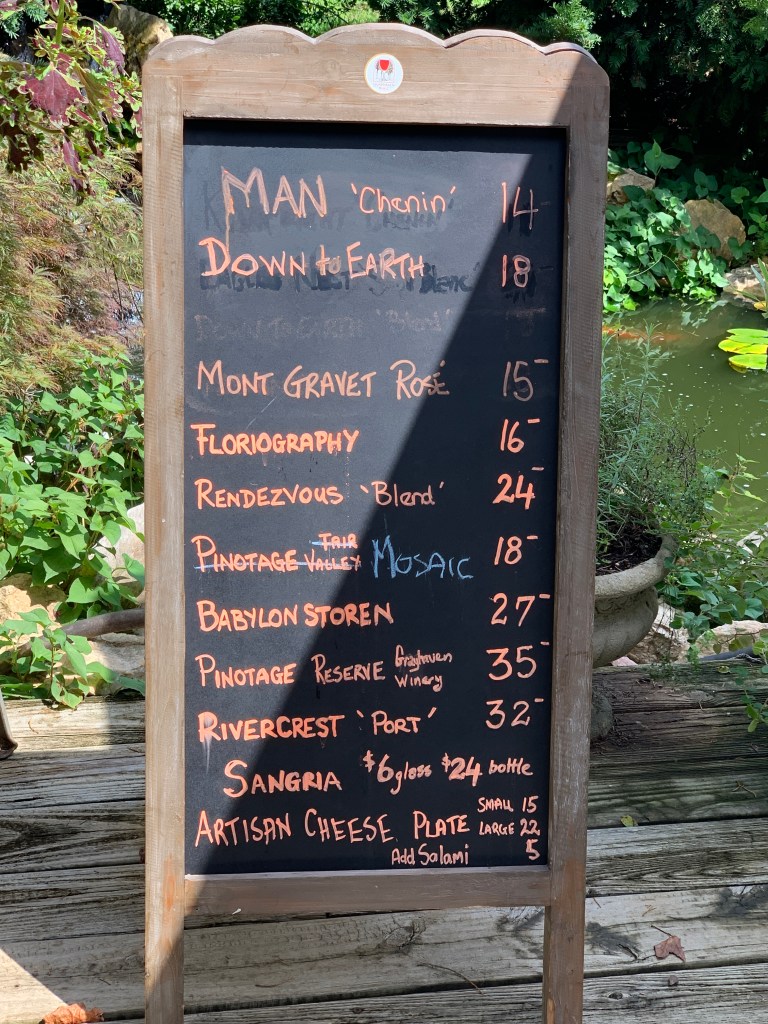
‘M A N’ Chenin Blanc: A South African Chenin that was a great value-for-your-money wine. High acid, crisp and light.

‘Villiera’ (Semillon/Sauvignon Blanc blend): Bright and very lemon up front.

‘Blooming White’ (Gewürztraminer, Riesling and Cheinin): Floral, almost spicy notes. Perfect for hot weather.

‘Rendezvous’ (Pinot, Chambourcin and Sauvignon Blanc): This vintage was super light; I detected strawberry notes.

Pinotage: Dion seemed especially happy with this one; fruity, with spice notes on the finish.

Indaba ‘Mosaic’ (South African blend with all 5 Bordeaux grapes): More fruit than I expected. Long finish.

Rivercrest: Touriga/Pinotage blend. Smooth! So good I had to buy a bottle.

I would be remiss in not including a shot of their amazing cheese plate.  The goat cheese with South African chutney was off the charts, but also loved the Tuscan Fontina and Wisconsin Bellavitano. If the South African heritage festival isn’t enough they ALSO host several cheese events every year.

Eastwood Farm and Winery

Eastwood Farm is one of Charlottesville’s newest wineries, opening this past May. I’ve been on their mailing list for a long time and was intrigued by their unique pitch; they have a hiking trail that you can book, in addition to enjoying their wine! It’s a cool idea at any time, but in the midst of a pandemic the idea of a private outdoor walk seems especially appealing.

They serve their own wine (made by Brad Hanson at Prince Michel) but don’t have their own vineyard. But no matter; they make fruit wine out of pears, apples, blackberries, blueberries and sour cherries grown on the property, so they can still boast of having ‘estate’ wine on the menu.

For the time being the ‘tasting room’ is actually an outdoor tent at the top of the hill. Although their main tasting room likely won’t open until October 2020, this location gives them sweeping views of the surrounding area, access to the hiking trail, and lots of outdoor space for social distancing.

My server gave me the lowdown about how family matriarch Athena Eastwood wanted a venture that all their family members could participate in, and after brainstorming the idea they decided on a winery. Dog and kid friendly, ‘family friendly’ is the theme of this location as well.

The tasting menu is on the smaller side, likely due to them being fairly new. My favorite was the Tall Tails fruit wine, which was a blend of apple and pear – that pear shown through even though it had a natural apple sweetness to it. But they were also happy with their Viognier that had hints of honey and a Chardonnay that had a fair bit of (I suspect) new American oak. I was told to expect a Blueberry rosé in the future, which sounds like a good reason to return.

Eventually I sat down and enjoyed a wine slushy while taking in the view.

Finishing My VA Wine Journey

Virginia is said to have around 300 wineries. Actually I count 253…but if you include cideries and meaderies, we’re at 288. There are also several upcoming wineries that have licenses. So…pretty close to 300!

But as of October 14, 2020, I’ve visited ALL OF THEM. That’s right; I’ve visited EVERY ONE of the 253 WINERIES IN VIRGINIA that are open to the public. In addition to those, I’ve also visited 25 cideries and 8 meaderies. If we include wineries that are now closed or rebranded…I’ve visited 281 wineries.

Follow this link for the current Virginia wine roster

I only count wineries that have tasting rooms which are open to the public. Unfortunately this leaves out several wineries that I love – such as October One Vineyard – but I’m not certain how to include them since they lack a designated tasting room. Neither do I count private wine labels by individual winemakers such as Ben Jordan’s Lightwell Survey, or temporary soft openings in tents such as Chapelle Charlemagne.

Like a crazed OCD gamer who must perform every quest, pick up every piece of loot, search every room, and interact with every character…I need to visit…ALL OF THEM.

Some commonly asked questions:

1) My favorite winery is a toss up; either Linden Vineyards or Arterra Wines. A lot depends on who I visited most recently.

2) My first Virginia winery was Casanel Vineyards and Winery, sometime in I think mid-2013. I credit Katie and Nelson for setting me on the right path from there.

3) My favorite grapes are Tannat, Petit Verdot, and Sauvignon Blanc.

4) I’m a member of Linden, Arterra, and Hiddencroft. I tend to do case-clubs, not full on wine clubs (where they usually pick your wines).

Ironically, I’ve also found myself struggling to define what constitutes a ‘visit’. If a winery is renamed, does visiting that same space constitute a ‘new’ visit? What about producers that lack tasting rooms; how does one ‘cross them off’ in a quest to visit every winery? What about wineries that are seasonal or special-event focused; do those get placed in the same visitation bucket list as the rest?

To narrow the question down of “How many wineries are in the state”, I use the following definition:

For the purpose of defining what constitutes a ‘visit’, a ‘visit’ must include the following criteria; 1) The location visited must produce a fermented beverage described as wine, cider, or mead, 2) it must have a physical tasting location under their control (no farmers markets), 3) it must have defined visiting hours or be available via appointment to the general public, and 4) it must use Virginia ingredients (grapes, apples, honey, or whatever other ingredients the beverage is primarily composed of).

I still track visits to wineries that lack a tasting room or non-Virginia fruit separately. But to qualify for this challenge, I’m using the above criteria.

I’m also tracking cideries and meaderies as sub-categories, as well as wineries that I’ve visited that have since closed.

Exploring Shenandoah Wine

I’m very happy how this article came out! I first learned of the importance of the Shenandoah American Viticultural Area (AVA) while taking classes at the Capitol Wine School. If there’s a place custom-made to grow wine in Virginia, this is it.

See my blog at the Old Town Crier.

https://oldtowncrier.com/2020/08/01/exploring-shenandoah-valley-wine/?fbclid=IwAR1bbRj23VlMqSNABb4u4jTwddshq1kL1YClG96TSUZpEuWiPlX4MK8x7yE

Three Creeks Winery

Three Creeks Winery demonstrated that no matter how much I (think I) know, one can always be surprised. One day I checked my favorite wine app only to see a new red dot on the map; I scratched my head asking…what is this?!?

Turns out Three Creeks has been operating under the radar for a few years, only opening in late-June 2020. Owners P-J and John Lawrence loved wine so much they were already making their own as part of Vint Hill’s do-it-yourself program, mentored by Ashton Lough (now winemaker at Bull Run). I think they took the mantra ‘go big or go home’ a little too seriously, because they concluded that if making wine by the barrel was good, owing a winery would be even better.

With that in mind, they searched around the state until they found a 30-odd acre old farm just outside Leesburg, purchasing it in 2017. Not only is this a great area for grape vines, it’s surrounded by high quality neighbors (Casanel, Stone Tower, Zephaniah and others are less than 10 minutes away). With Ashton as the full time winemaker, they’re on a roll.

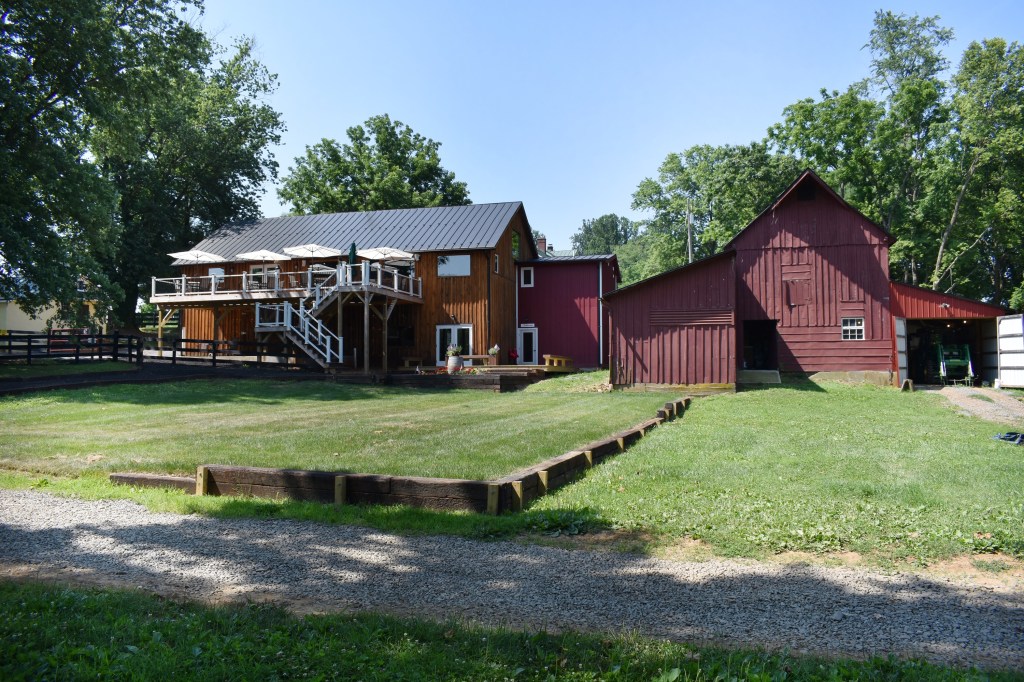
John gave me the full tour, including a ride to the vineyard. Two things stood out; the early 20th century barn, and the fact that three creeks converge here. John and P-J refurbished the ‘bank barn’ (so named because it’s set into the side of a hillside) to become their tasting room, while the creeks provided the name.

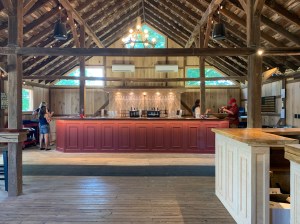
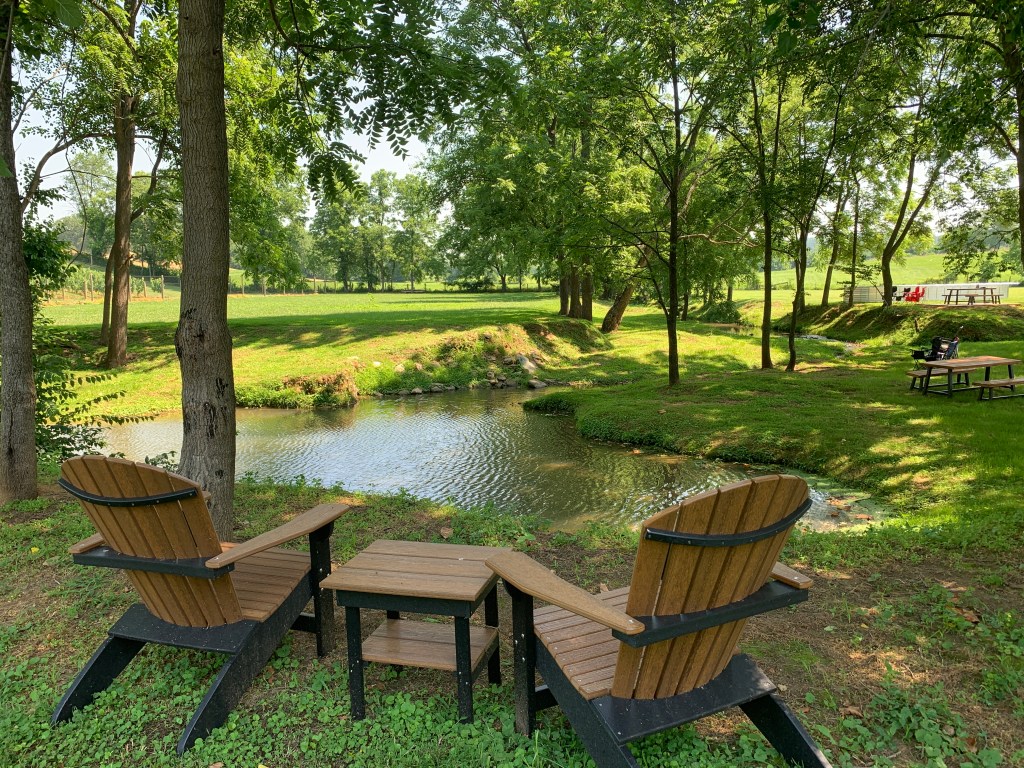
I loved the rustic charm of the tasting room, especially how they retained the original wooden floors. But the sitting area near one of the creeks seemed an equally great place to hang out (because of the water, no children are allowed on the property).

Right now they have 8 acres planted, with 2 more on the way. Nothing is producing yet, so for the time being Three Creeks is sourcing all their fruit from elsewhere. Hopefully by next year they’ll be able to produce their first batch of estate wine.

John explained to me the Rhône is his source of inspiration for wine, with Pinot being his all-time favorite varietal. In fact, Three Creeks offers both a GSM-blend (sourced from Oregon) and Pinot Noir to go along with their Virginia offerings.

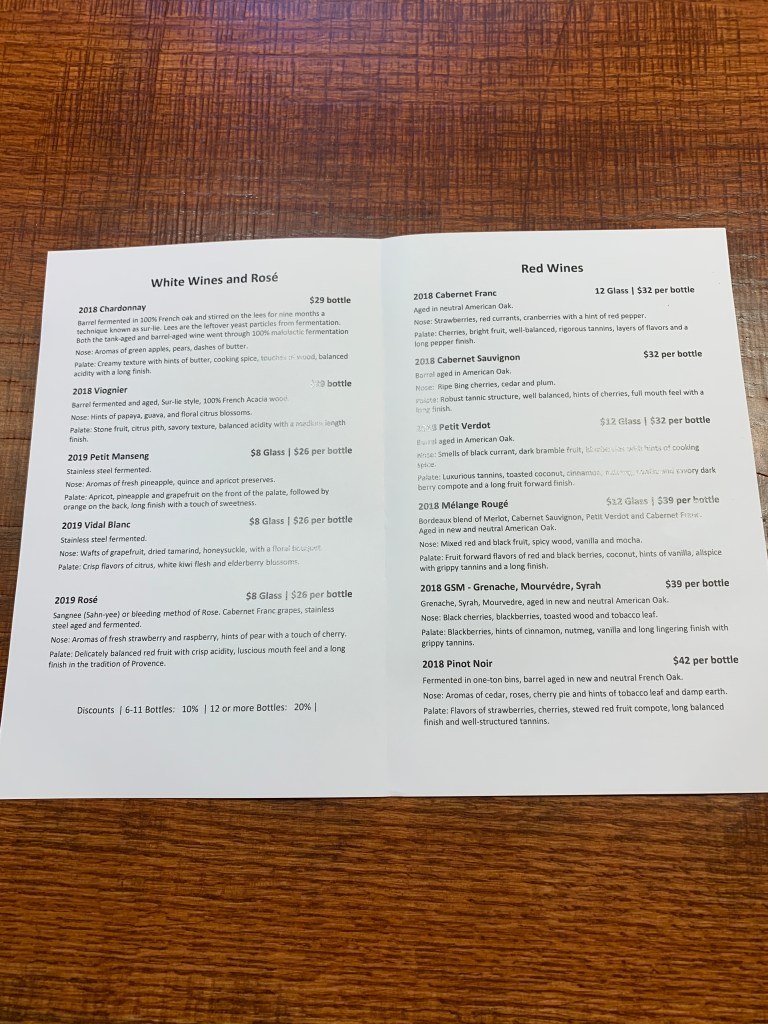
First up were the whites from the 2018 vintage – which no doubt was the most challenging year of Virginia wine in recent memory. Despite that, Ashton did a great job. I especially liked the Chardonnay, which was accented but not overpowered by the French oak. The Viognier had some honeysuckle on the nose but it wasn’t ‘in your face’ like I sometimes find. This was a great start since if Ashton can do well with 2018 fruit, then he can make great wine with anything.

Next were the 2019 wines. The Rosé had the traditional salmon color you see in Provence-style wines. Although I’m usually not a fan of Vidal wines I really enjoyed theirs, which was crisp and had great apple notes. But my favorite of the day was their Petit Manseng, which I got a bottle of to take home. LOTS of citrus on the palate to the point you might think it had some sweetness, but it was totally dry.

Lastly came the reds. My favorite red was the 2018 Petit Verdot, which was soft, had bramble fruit notes and spread out on the palate nicely. I also liked the Cabernet Franc, Cabernet Sauvignon and their Mélange red blend.

I can’t imagine a tougher year to start a business, but Three Creeks is off to an awesome start.

How To Find Great Beer in Virginia’s Winery Scene

For the past several years multi-functional wineries have been all the range. Virginia changed its ABC laws in 2015, allowing wineries to serve beer as well as wine. As of the end of 2020, there are now 18 winery/breweries in the state, the majority of them opening since 2018.

Here’s the link to the Old Town Crier article

How To Find Great Beer in Virginia’s Winery Scene – Old Town Crier