
“Virginia is for (wine) lovers” may not be the official motto for the Virginia wine industry, but it easily could be. The Commonwealth has consistently outshined more famous wine regions, despite making a fraction of the wine they do. Wine writer Mike Dunne, who judged at the 2025 San Francisco Chronicle Wine Competition (SFCWC), said this of Virginia’s entries: “Each year, some wine region of North America seems to gain recognition for a disproportionate share of high awards… in 2025, it was Virginia.”
One of the hallmarks of Virginia wine is its diversity of styles and grape varieties. Cabernet franc and chardonnay are the state’s most widely planted grapes, but Virginia offers everything from albariño to zweigelt.
Two factors shape this diversity: the state’s varied terroir, and a willingness to experiment.
Virginia grows wine everywhere from high-elevation sites in the Blue Ridge Mountains to sandy soils along the Eastern Shore. While the state is arguably a geographic and stylistic middle ground between California and France, winegrowers point out Virginia’s unique growing conditions makes copying either of these areas impractical.
This has led the Virginia wine industry to combine tradition with experimentation. Many winemakers prefer more classic styles that emulate those of the “Old World,” such as Bordeaux or Chablis. Others endorse a more creative approach, sometimes blending grapes normally associated with very different regions of the world.
My personal “Top 10” list reflect this veritable hodgepodge of styles. Several are classic expressions of their variety, while others are uniquely ‘Virginia’ in nature. I’m especially interested in wines with great backstories, or varieties not usually associated with Virginia.
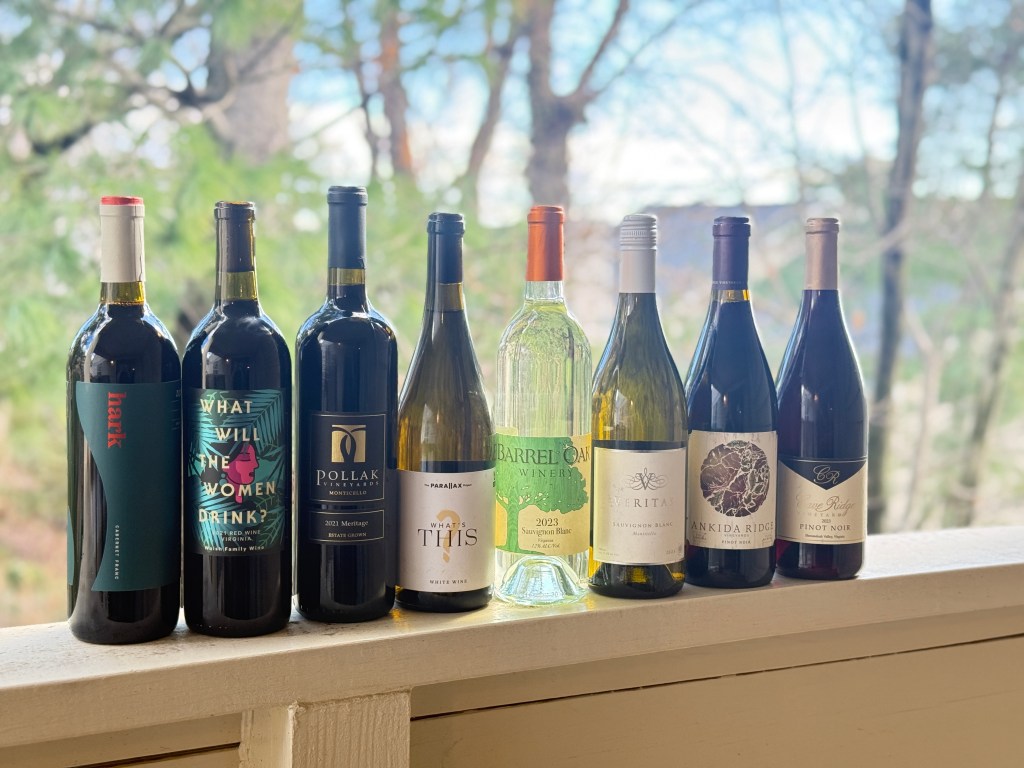
1. Ankida Ridge 2022 Pinot Noir ($65): Many vineyards have tried growing pinot noir in Virginia, but Ankida is the first to prove it can be done well. Key to Ankida’s success is its 1,800’ elevation site along the Blue Ridge Mountains, which guarantees moderate temperature swings and low disease pressure.
This wine had a floral nose, with notes of earth, specifically wet dirt. The wine itself had heft but was still well balanced, with just the right amount of oak, tannin, and structure. It also presented tart fruit notes on the palate.
2. Cave Ridge Vineyard 2023 Pinot Noir ($45): Compared to the Ankida Ridge, this example of a Virginia pinot was somewhat softer and more fruit-forward. It had a great initial ‘attack,’ with notes of red plum and cherry, and a dash of almond or marzipan. This wine is even more impressive given its Cave Ridge’s first vintage (and 2024 promises to be even better).

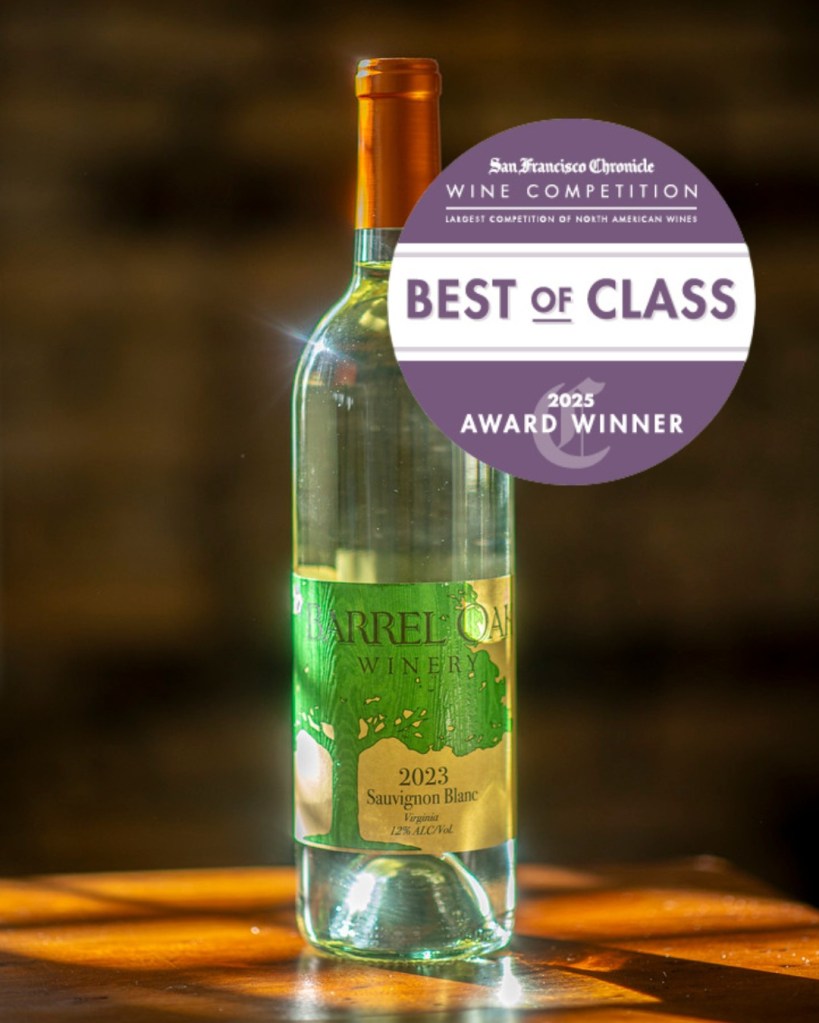
3. Barrel Oak Winery 2023 Sauvignon Blanc ($35): Sauvignon blanc is found all over Virginia yet rarely gets the recognition it deserves. That changed in 2025, when the SFCWC awarded Virginia sauvignon blancs two of ‘Best in Class’ awards, and a 3rd Virginia sauv blanc earned Double Gold. Veritas won in the $30-$34.99 category, while Barrel Oak took the prize for the $35 – and over category.
BOW’s expression wasn’t initially overly aromatic, but it packed a punch on the palate! It was well balanced, full of ripeness, and unleashed a crescendo of tropical flavors including citrus and lemon on the palate.
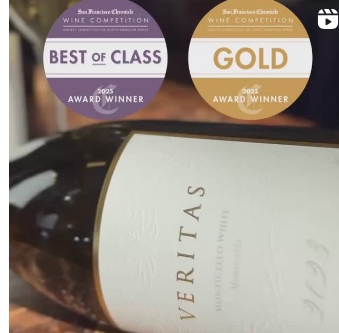
4. Veritas Vineyards 2023 Sauvignon Blanc ($26): Comparing this wine with Barrel Oak is a study in contrasts. While the Barrel Oak wine is a riper West Coast style, the Veritas is a more Sancerre-style wine. It showcases a complex array of green apple, grapefruit, lime, and some honey on the palate, and almost begs for a seafood pairing.
5. Barren Ridge Vineyards 2021 Petit Verdot ($36): Petit verdot is valued by winemakers for its overall hardiness in the vineyard, and the body and color it adds to wines in the cellar. This bottle from Barren Ridge was smooth and fruit-forward, with notes of cedar, violet, and especially blueberry. It’s as if the winemaker took every stereotype of what petit verdot should be, but amped them up.
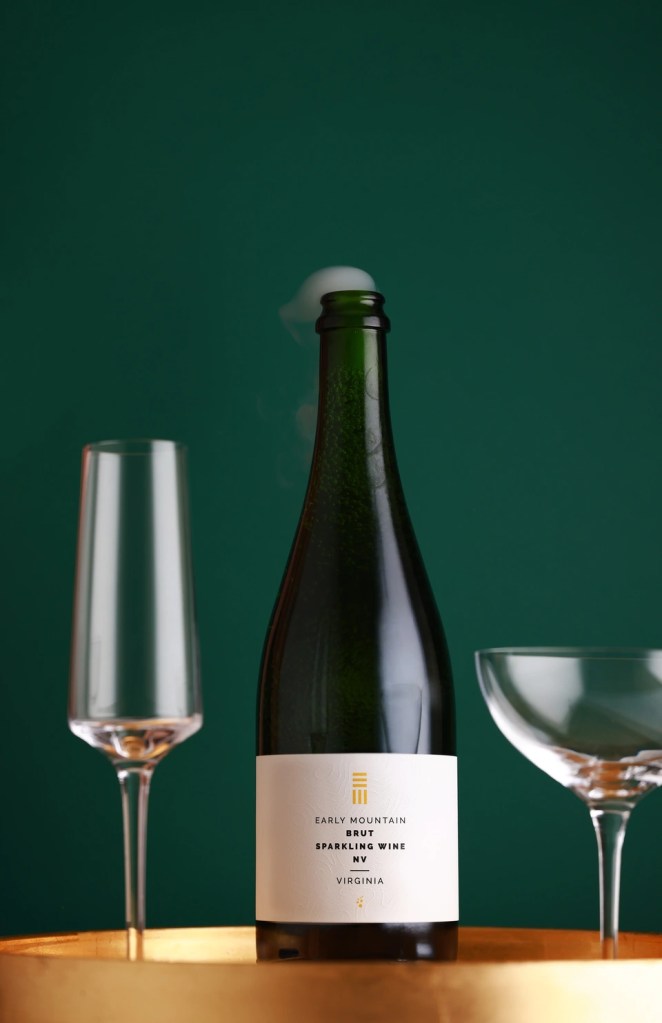
6. Early Mountain Vineyards NV Brut Sparkling ($60): My favorite Virginia sparkling of 2025 is Early Mountain Vineyards’ Brut Sparkling, a blend of 60% chardonnay and 40% pinot gris. Zingy and playful, this wine was full of lemon-citrus notes, with good minerality and a nice finish. I compared this local bubbly with several champagnes, and it was still our overall favorite.
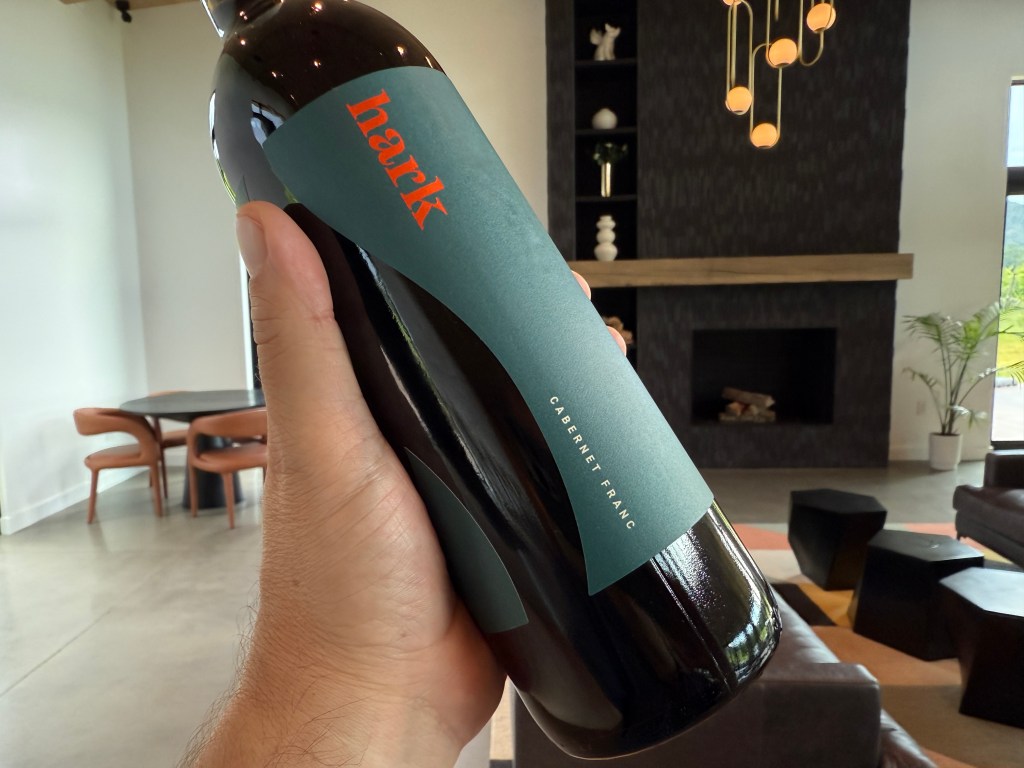
7. Hark Vineyards 2023 Cabernet Franc ($34): The 2023 growing year offered many amazing cabernet francs. So when I say this may be my favorite one of all, that’s high praise. This wine is very approachable already but will cellar for years. I detected aromas of red berries and violets, with red and black cherry and ripe plumb on the palate.
8. Pollak Vineyards 2021 Meritage ($50): How good is this wine? I shared it with a group of DC sommeliers at a blind tasting and half thought it was the event’s Bordeaux wine. A Double Gold winner at the SFCWC, it’s composed of 46% Merlot, 41% Cabernet Franc, and 13% Petit Verdot. Pollak’s red blends are possibly the best-valued Bordeaux-style wines in Virginia.

9. The Parallax Project 2024 “What’s This?” ($30): The Parallax Project is a micro-label that demonstrates what happens when winemakers think ‘outside the box’. This white blend is made from a mix of red and white vinifera and hybrid grapes; 44% vidal blanc, 22% petit manseng, 19% chardonel, and 15% tannat.
‘What’s This?’ has lots of texture, which makes it feel ‘big’ for a white. I found it had bright acidity and a lemon merengue nose. Its counterpart blend, “What’s That?,” uses the same component grapes but made as a red wine.

10. Walsh Family Wine 2021 “What Will The Women Drink?”: If wine competitions gave awards for witty comebacks, “WWTWD” would win hands down. Co-owner Sarah Walsh crafted this big-bodied red wine after a male customer patronizingly implied that females would prefer sweeter beverages. Since then, she’s marketed WWTWD to women and gives a part of its proceeds to women-focused charities.
The 2021 WWTWD is a blend of 45% petit verdot, 40% tannat, and 15% cabernet sauvignon. It’s surprisingly smooth for a tannic blend, with notes of bramble fruit and purple flower on the nose, and black fruit on the palate.


 Wine Trails and Wanderlust