Virginia Sauvignon Blanc Showdown (2025)

Virginia wine seems to excel in certain varieties. Petit Verdot, Petit Manseng, and Cabernet Franc often come to mind. Tannat and Albariño are up-and-comers, from what I’ve seen.

But if you had told me Virginia was a hotspot for its Sauvignon Blancs, I’d have been…skeptical. The 99 acres currently in the state (according to 2023 figures) is a fairly large planting, but it seems to trail other whites in terms of awards. Only over the last few years have Virginia Sauv Blancs really surged in recognition.

That’s fairly surprising, as I’ve had a number of excellent examples. Linden and Walsh Family often come to mind, but I’ve found others that are also lovely. Unfortunately for me, the Sauv Blancs I most gravitate towards tend to be high-acid, mineral-driven Sancerre styles, which are tough to find in Virginia.

So when the 2025 San Francisco Chronical (SFC) Wine Competition gave two “Best in Class” awards (out of 5 Sauv blanc price categories and 198 bottles) to Virginia Sauv Blancs, and a 3rd Virginia wine was runner-up for one of these “Best in Class” awards, I was equally surprised and thrilled.

The competition judges seemed equally surprised. SFC wine judge Mike Dunne said of Virginia’s entries; “Each year, some wine region of North America sems to gain recognition for a disproportionate share of high awards at the San Francisco Chronical Wine competition. In 2024, it was Virginia”.

Tasting & Scoring Methodology

Every round my guests picked a favorite. After we finished all 8 wines, we voted to decide the Top 2 of the day. By coincidence we had a tie in picking which to go into the Top 2, so Top 2 became Top 3. We took a food break, then revisited the Top 3 finalist a second time

Caveat; there are a few other excellent examples that could have been used here. But being in NOVA my selection tends to be NOVA-heavy. Moreover; I don’t pretend what we chose were the “best”. I’d say that these were the “best” this day, but on another day or vintage, we may have selected differently.

The Contenders:

  1. The Winery at LaGrange 2021 Sauvignon Blanc (Washington State fruit)
  2. Glen Manor Vineyards 2023 Sauvignon Blanc
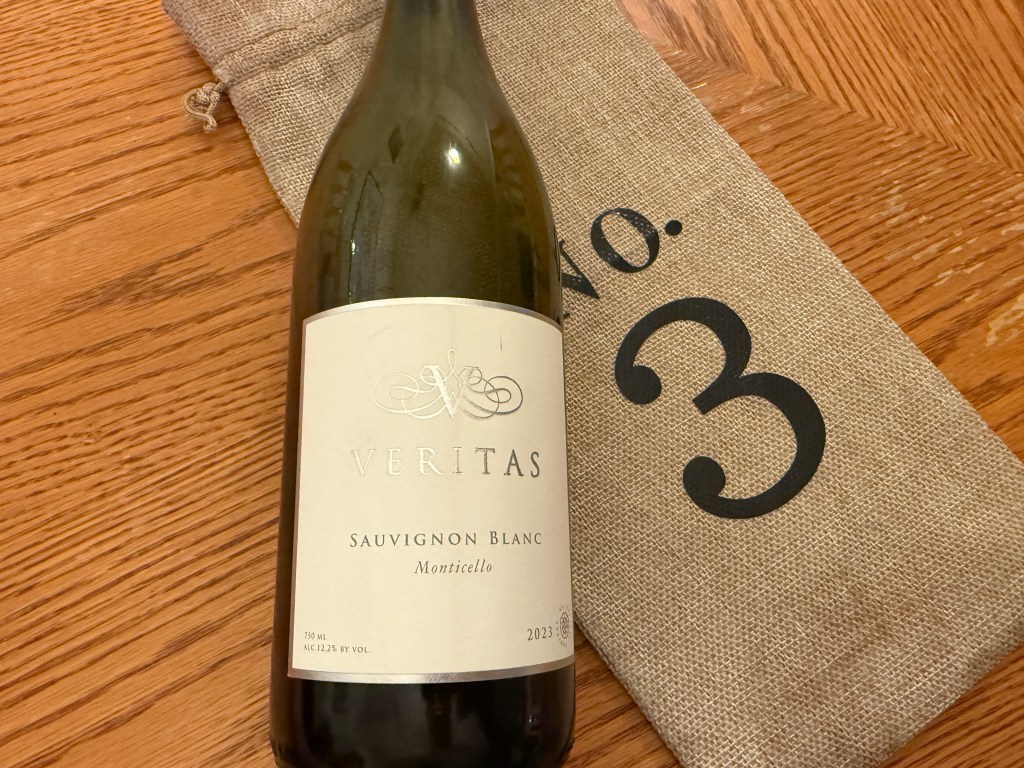
  3. Veritas Winery 2023 Sauvignon Blanc (2025 SFCWC Best in Class/$30-$34.99)
  4. Linden Vineyards 2021 Hardscrabble Sauvignon Blanc
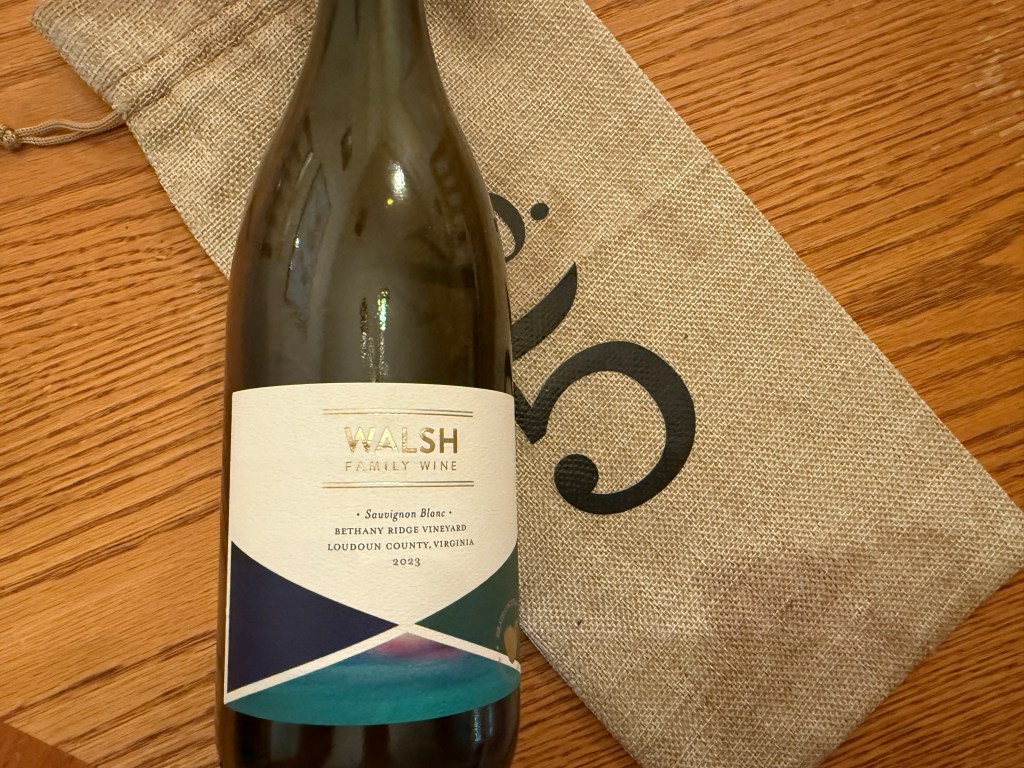
  5. Walsh Family Wine 2023 Bethany Ridge Sauvignon Blanc
  6. Capstone Vineyards 2023 Sauvignon Blanc
  7. Barrel Oak Winery 2023 Sauvignon Blanc (2025 SFCWC Best in Class/$34 and up)
  8. Endhardt Vineyards 2023 Sauvignon Blanc (2025 SFCWC Double Gold/$30-$34.99)

Flight #1

  • Bottle #1: LaGrange 2021 Sauvignon Blanc (Washington State) (7 votes, round winner)
  • Bottle #2: Glen Manor 2023 Sauvignon Blanc

While the original plan was to do all Virginia wine, we didn’t realize that the LaGrange’s fruit was sourced from Washington State. Oh well; it was made in Virginia, at least.

Looking back we were surprised that #2 was a Glen Manor wine; we thought we’d have enjoyed it more since they have a great reputation overall, but this one wasn’t a favorite.

Bottle #1 / LaGrange 2021 Sauvignon Blanc. This was our “patio wine”. Round; good finish and balanced. Somewhat golden in appearance. Someone mentioned green apple on the palate, plus notes of lime.

Bottle #2 / Glen Manor Vineyards 2023 Sauvignon Blanc. Aromatic and pale. Multiple people commented how fruit-forward this wine was. One said it was like ‘pop rocks on your tongue’. Cameron mentioned the citric acid was too high for his preference; maybe they let the fruit hang too long?

Votes:

  1. Matt: Voted #1
  2. Sarah: Voted #1
  3. Laura: Voted #1
  4. Isabel: Voted #1
  5. Emily: Voted #1
  6. Cameron: Voted #1
  7. Ashley: Voted #1

Flight #2

  • Bottle #3: Veritas Winery 2023 Sauvignon Blanc (3 votes)
  • Bottle #4: Linden Vineyards 2021 Hardscrabble Sauvignon Blanc (4 votes; round winner)
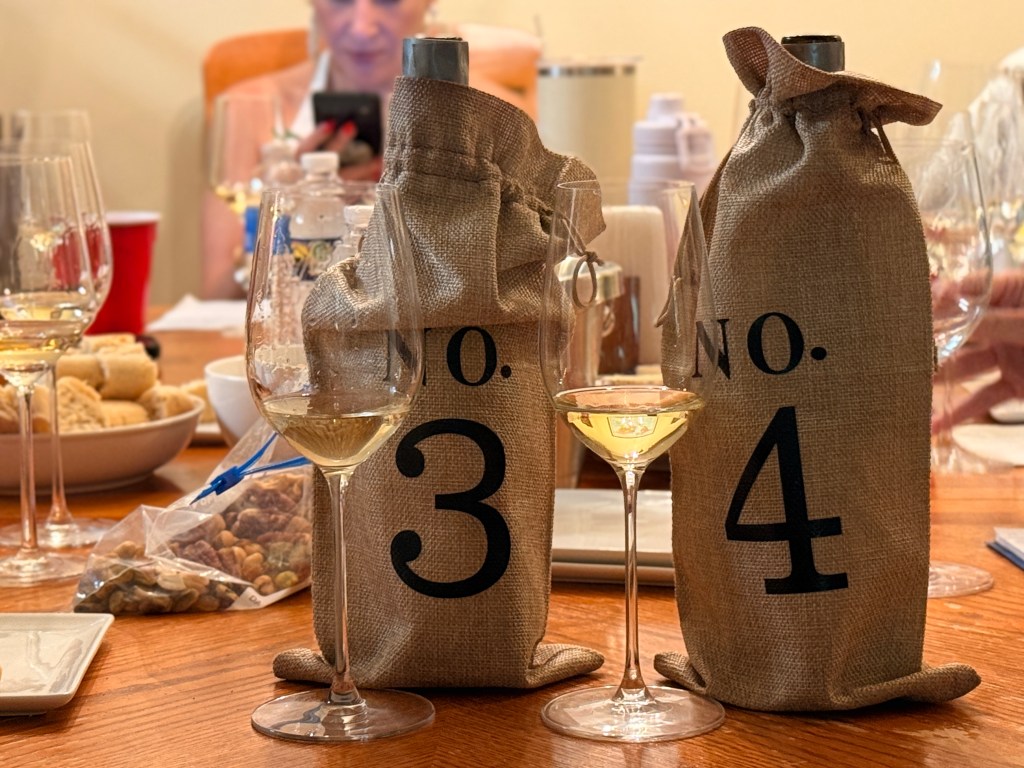
This was the favorite round for several attendees. Stylistically speaking, this was a “patio wine” (#3) vs a “dinner wine” (#4) comparison, and attendees tended to vote according to that preference.

I had more tasting notes than I could easily write down; the mark of a good round.

Bottle #3 / Veritas Winery 2023 Sauvignon Blanc. Lighter in acid, but the acid was definitely there. Comments including grapefruit, green apple, honey, and lime notes, but none were overwhelming present. I felt it had honey and grapefruit qualities.

It had great complexity, which opened up as the chill came off. It was very bright once it warmed up.

Bottle #4 / Linden Vineyards 2021 Hardscrabble Sauvignon Blanc. This was the fullest wine of the day, with more ‘aged’ and/or barrel notes (but definitely not newer oak). A few mentioned it had a caramel finish. Others mentioned candied lemon, stone fruit, hay, and herbs on the nose.
Votes:

  1. Matt: Voted #4
  2. Sarah: Voted #4, although #3 was ‘like a rave on the palate’
  3. Laura: Voted #4
  4. Isabel: Voted #3
  5. Emily: Voted #3
  6. Cameron: Voted #3
  7. Ashley: Voted #4

Flight #3

  • Bottle #5: Walsh Family Wine 2023 Bethany Ridge Sauvignon Blanc (4 votes; round winner)
  • Bottle #6: Capstone Vineyards 2023 Sauvignon Blanc (3 votes)

Bottle #5 / Walsh Family Wine 2023 Bethany Ridge Sauvignon Blanc. Peppery! Notes of honeysuckle and lemongrass on the nose and palate. Tart, citrusy and grassy on the palate. The tartness threw some people off. Smooth texture.

Bottle #6 / Capstone Vineyards 2023 Sauvignon Blanc. Pineapple and mango were mentioned. Had weight. Long lingering finish. We speculated these tropical notes indicated this was the Washington State wine we accidentally included in the lineup (nope; 100% grown in Virginia).
Votes:

  1. Matt: Voted #6
  2. Sarah: Voted #5
  3. Laura: Voted #5
  4. Isabel: Voted #6
  5. Emily: Voted #5
  6. Cameron: Voted #5
  7. Ashley: Voted #6

Flight #4

  • Bottle #7: Barrel Oak Winery 2023 Sauvignon Blanc (4 Votes; Winner)
  • Bottle #8: Endhardt Vineyards 2023 Sauvignon Blanc (3 Votes)
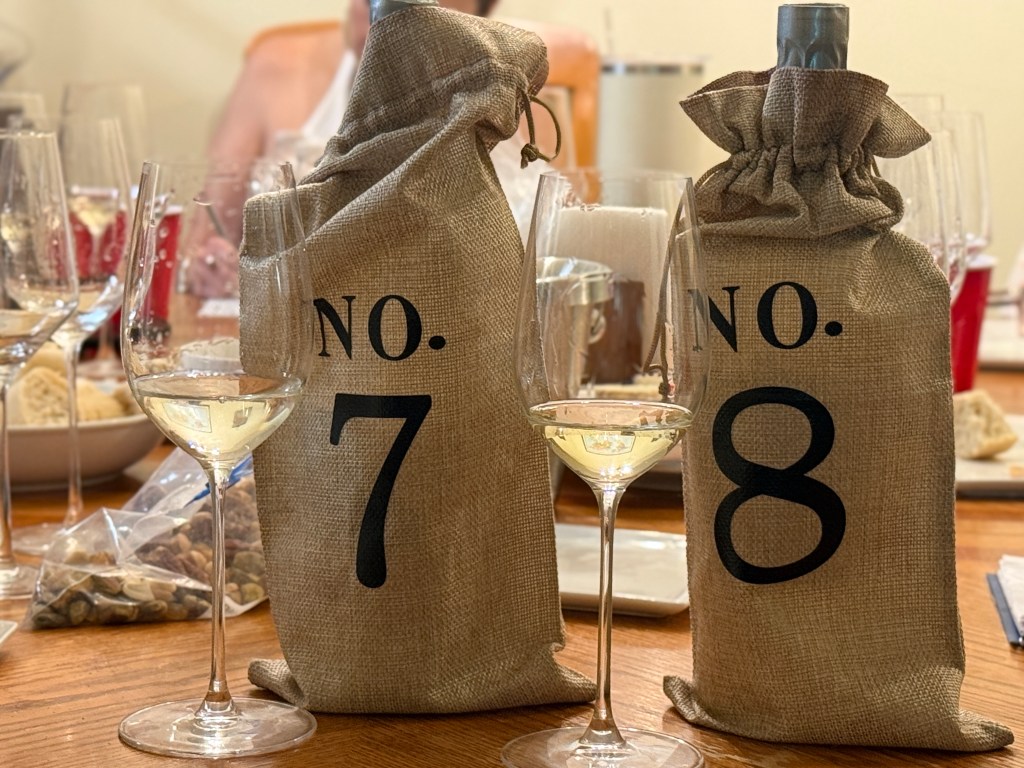
If Round #2 was the group favorite, this round was a close runner up. It also contained a SFC Best in Class ($35 and up), and a Double Gold (which was runner up for the Best in Class) winner.

Bottle #7 / Barrel Oak Winery 2023 Sauvignon Blanc. The color was very light and the nose wasn’t overly aromatic, but this wine packed a punch! Well balanced; notes of citrus and lemon were especially mentioned. I could have written more notes, but I was too busy just enjoying it.

Bottle #8 / Endhardt Vineyards 2023 Sauvignon Blanc. Had a ‘new tennis ball’ aroma to it. Bigger in body and more fruit forward than what we’d seen in the lineup so far (right below #4). Someone mentioned a note of vanilla cream at the end. Apricot on the nose and white peach on the nose and palate. Also well balanced.

Votes:

  1. Matt: Voted #8
  2. Sarah: Voted #7
  3. Laura: Voted #7; liked its smoothness
  4. Isabel: Voted #7
  5. Emily: Voted #8
  6. Cameron: Voted #7; said it had a ‘crescendo’ of different fruits
  7. Ashley: Voted #8

Finalist Flight

  • Bottle #3: Veritas Winery 2023 Sauvignon Blanc
  • Bottle #4: Linden Vineyards 2021 Hardscrabble Sauvignon Blanc
  • Bottle #7: Barrel Oak Winery 2023 Sauvignon Blanc

We tried to narrow it down to a “Top 2”, but we loved several so much I decided to add a 3rd glass to the finalist round. We ended up with #3/ #4/ #7 going into the finals.

#8 was also well loved, narrowing missing the finalist round (I tried, but got outvoted). #6 received a handful of votes as well.

We tasted the finalist and I awarded 3 ‘points’ for people’s 1st place choice, 2 points for 2nd place, and 1 point for 3rd place choice.

The final tally was 15 points for Barrel Oak, 14 points for Veritas, and 13 points for Linden. The 2023 Barrel Oak Winery Sauvignon Blanc was the overall favorite of the day.

  1. Matt: Voted #7 / #4 / #3
  2. Sarah: Voted #4 / #7 / #3. Felt #4 was the most complex; liked the ‘barnyard’ and hay qualities.
  3. Laura: Voted #7 / #3 / #4. Felt #7 was refreshing and smooth, but enjoyed the balance and dryness of #3.
  4. Isabel: Voted #3 / #7 / #4. #3 had developed a sweetness she liked
  5. Emily: Voted #3 / #4 / #7. Agreed that #3 was landing sweeter, while #7 was more consistent.
  6. Cameron: Voted #7 / #3 / #4. Really liked the complexity of #7.
  7. Ashley: Voted #4 / #3 / #7. Really liked the soft, caramel finish of #4.
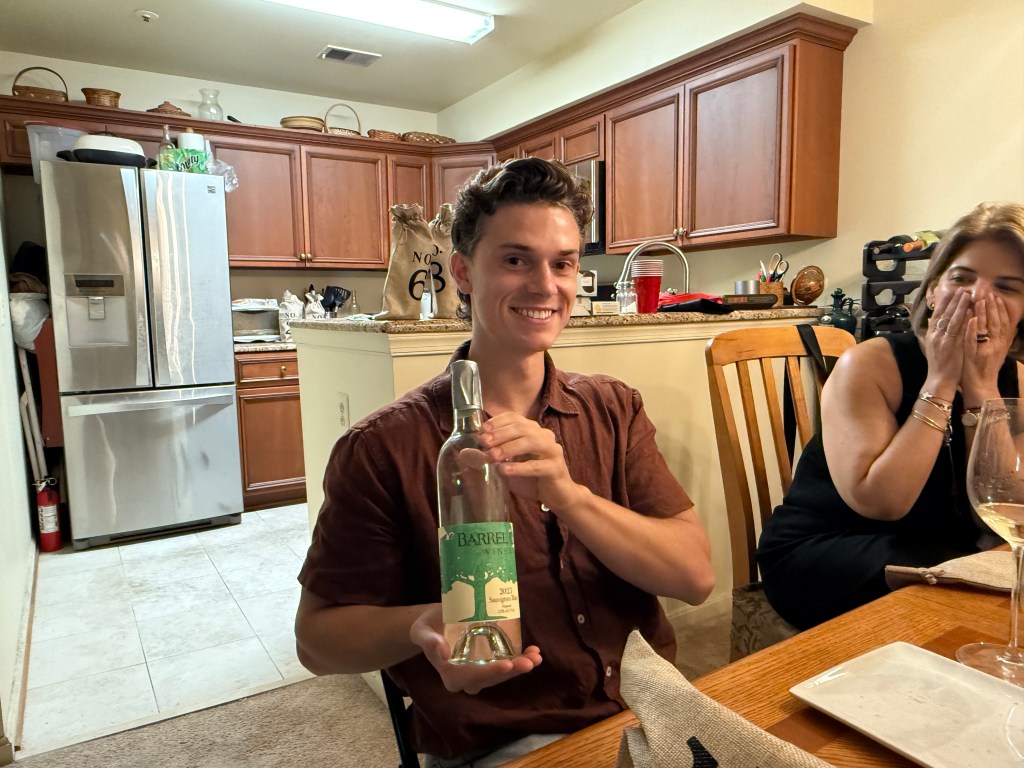
I asked Barrel Oak winemaker Jeremy Ligon about his 2023 Sauv Blanc, and he shared these tech notes:

“In 2023 we partnered with a local vineyard in Paeonian Springs Virginia to bring in their beautiful Sauvignon Blanc. We harvested 7.57 tons on 8/31/2023. This Sauvignon Blanc is grown at over 700 feet in elevation with rolling hills with ideal airflow and soil conditions. We produce a Sauvignon Blanc that showcases Virginia Terrior, which is closer to a New Zealand style Sav Blanc than California, but still with its very own uniqueness. This Sauvignon Blanc is fermented and aged in 100% stainless steel, we forego malolactic fermentation to retain malic acid creating a bright and crisp wine.”

SFC described the Barrel Oak wine as “ripe and round” and “fleshy and saturating”, while the Veritas was “lithe, dry, citric, and astonishingly persistent”.

Lessons Learned:

A few observations:

The first is the Virginia Sauv Blancs were tried were very reflective of the specific site they came from. This resulted in an assortment of stylistic differences, with some presenting as West Coast-ish, a few as Bordeaux Blanc-ish, and others not fitting any particular regional profile (although none we had today were New Zealand or Sancerre-ish).

That’s not to say Virginia *must* fit into any stereotype. Virginia wine must represent Virginia; not try to copy someone else. Yet the variation was so dizzying that I couldn’t guess these wines were from the same state.

My second observation was how people seemed to separate these wines into ‘dinner’ and ‘patio’ styles, the former being ‘bigger’ and the later easier drinking. My group’s voting tended to fall along these preferences.

My last observation is I was very impressed with the judging of the San Francisco Chronicle. Wine judging in general can be very hit-or-miss, as I’ve seen the same wines get Bronze in one competition but get Double Gold (!) in another, or ‘shiners’ with the same wine but different labels get different scores.

But this time, 3 of the 4 top wines we tried today (except Linden, which doesn’t do competitions) were all Double Gold winners from the 2025 SFC wine competition. Except for Linden, none of the other wines were even close.
Virginia Pinot Noir Showdown: VA vs Oregon Blind Tasting

I’ve been on something of a Virginia Pinot kick of late. I recently emceed an industry roundtable on Virginia Pinot Noir, which later inspired an article discussing the evolution of Virginia Pinot.

To summarize my findings; Pinot Noir struggles in the warm-weather sites that characterize much of Virginia. The reputation of locally grown Pinot was so bad that when wine-legend Jancis Robinson tasted an Ankida Ridge Pinot in 2011 that she exclaimed in the most back-handed compliment ever; “It tastes like Pinot!”.

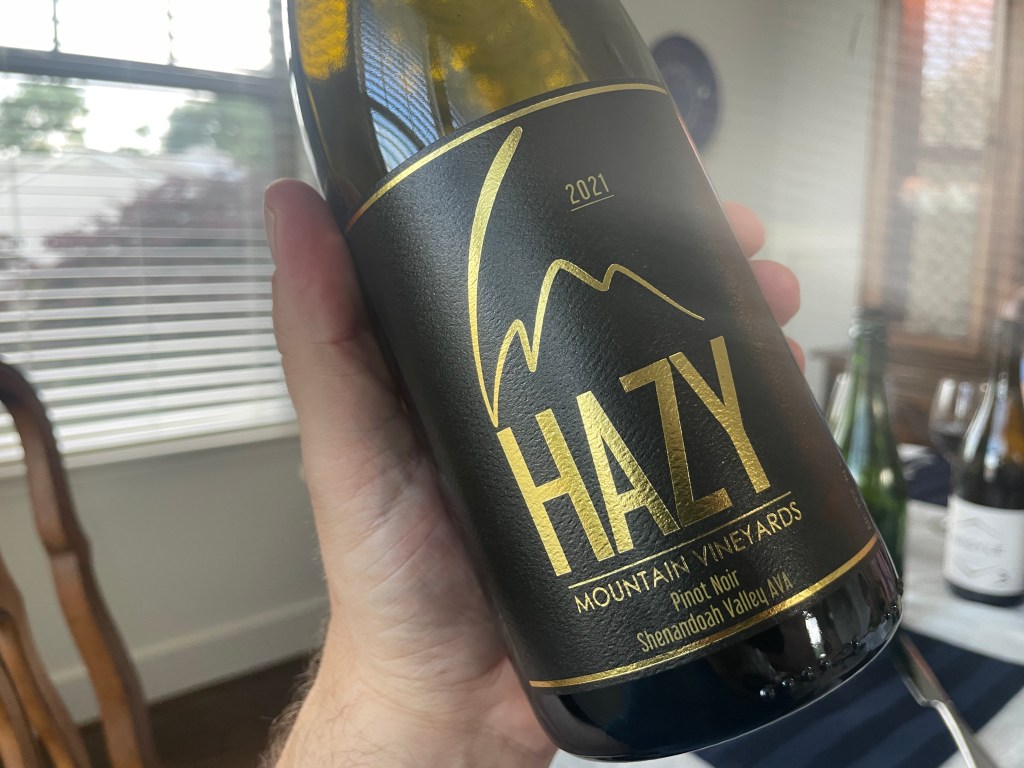
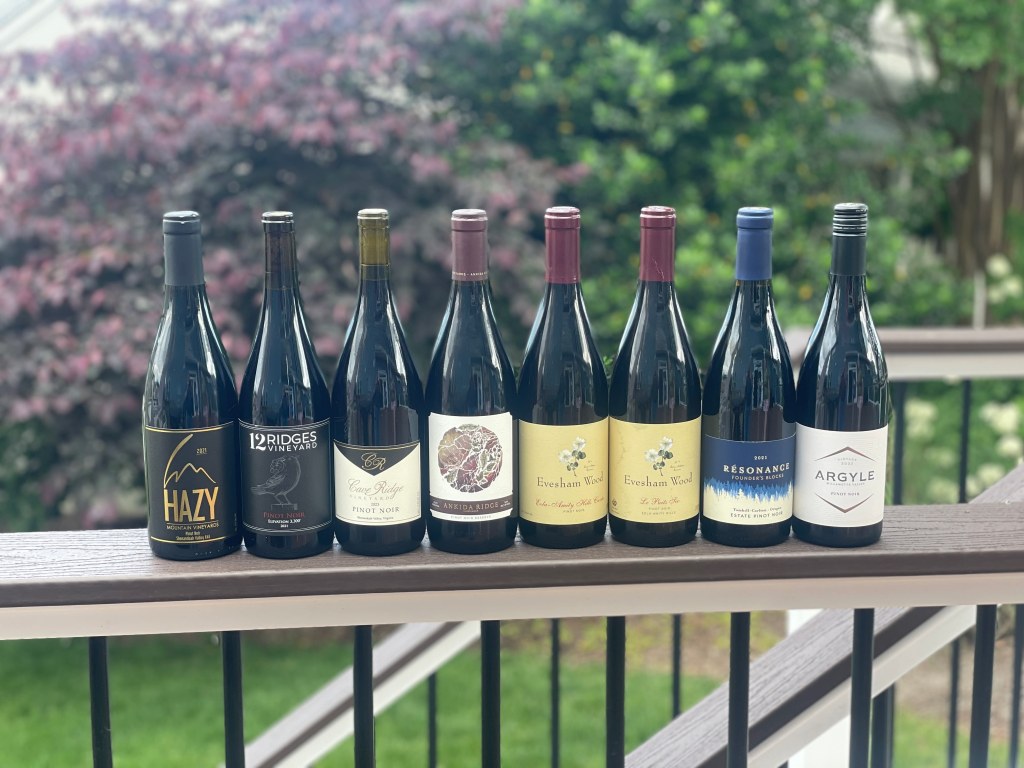
For my event I picked what I felt are the best 4 Pinot growers Virginia has to offer. These vineyards succeed in growing Pinot where previous ones had failed by planting at relatively high elevations: 12 Ridges (3,300 ft), Ankida Ridge (1,800 ft.), Cave Ridge (1,200 ft), and Hazy Mountain (1,600 ft). All are located in the Shenandoah Valley or the adjoining Blue Ridge Mountains, areas that have strong track records for growing cool weather varieties.

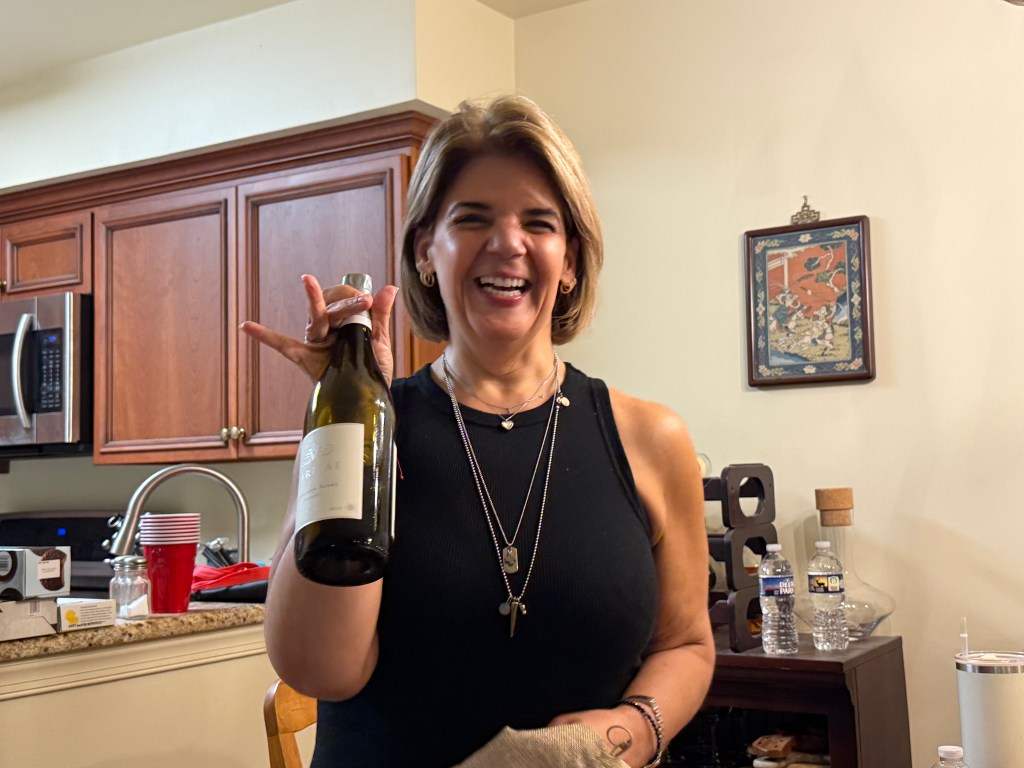
My group picked 4 Oregon Pinots to pair them against. I recently attended a wine dinner with Evesham Wood, so I had 2 wines from this quality producer. Other guests brought two more wines; a low-cost Pinot from Argyle, and a high-quality wine from Résonance.

I honestly had no idea how Virginia would fare here. Oregon has a great reputation for Pinot Noir, so I would have been happy if Virginia simply showed well against a heavy hitter in this category.

Tasting & Scoring Methodology

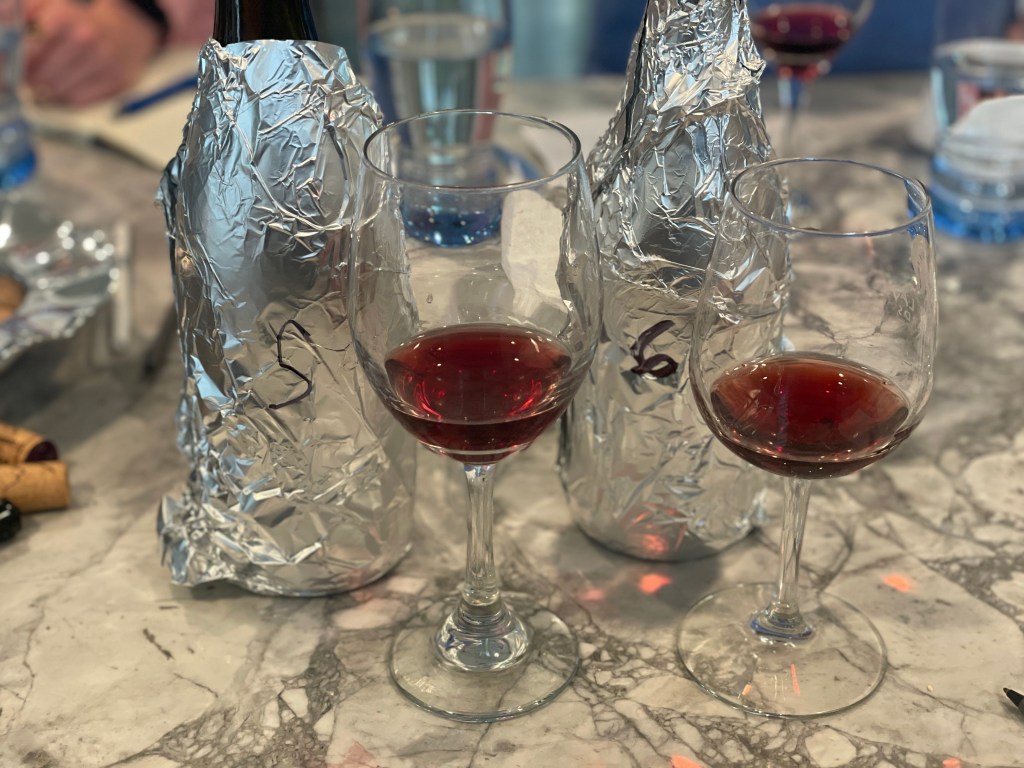
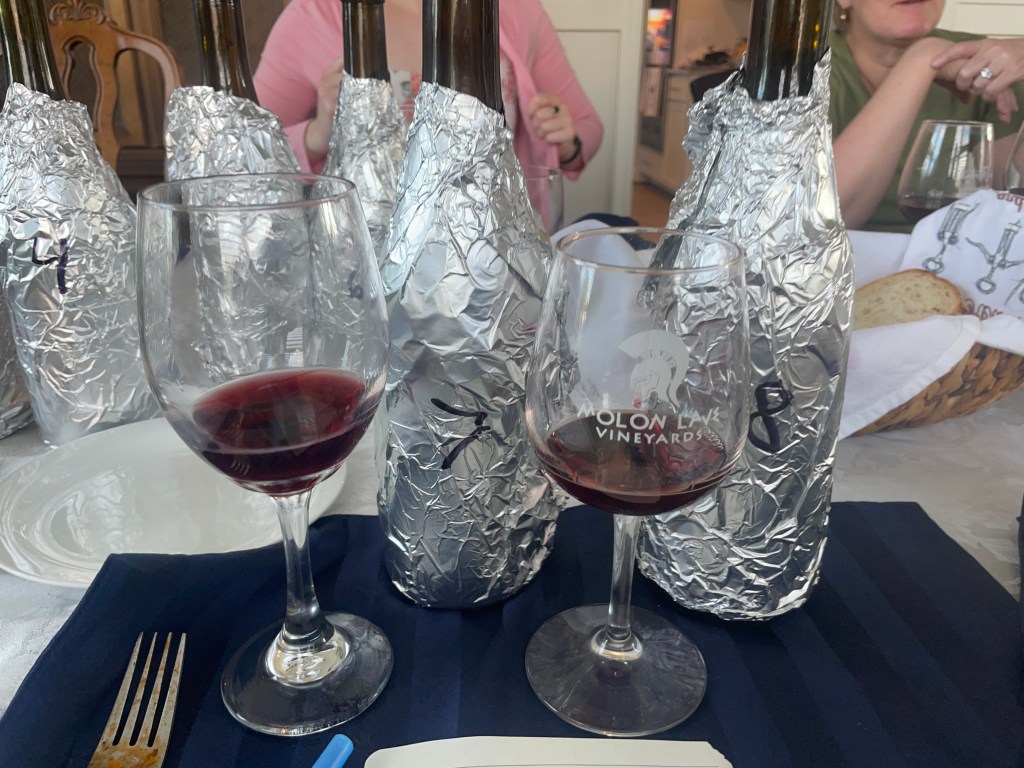
We did 4 rounds of 2 wines, consisting of a Virginia and Oregon Pinot Noir side-by-side, served blind. After we finished all 8 wines, we voted which were our Top 2 of the day. The Top 2 were set aside and revisited during a ‘Finalist” round.

The advantage of revisiting these wines is this gave the Top 2 more time to open up. The introduction of food changed our palates, adding another dimension to the event. After re-tasting them, we declared an overall winner.

The 4 flights were generally arranged lowest-to-highest in terms of price point.

The Contenders:

  1. 2022 Evesham “Eola-Amity Hills Cuvée” (Oregon; $34)
  2. 2021 Hazy Mountain (Virginia; $38)
  3. 2023 Argyle (Oregon; $28)
  4. 2023 Cave Ridge (Virginia; pricing TBD)
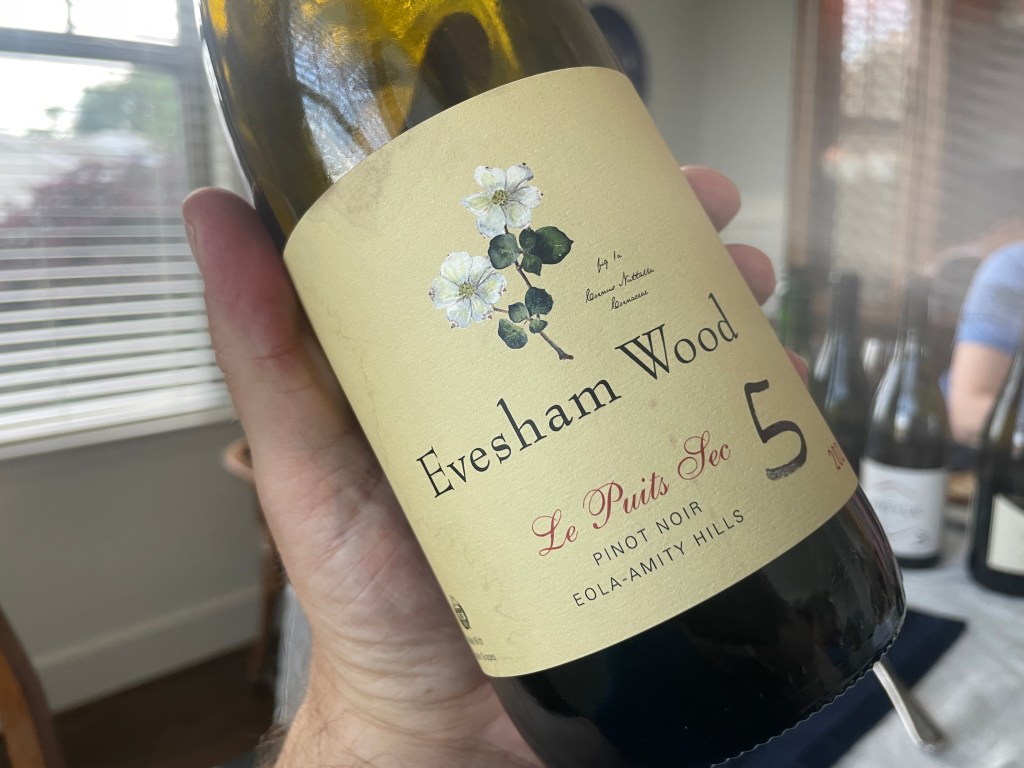
  5. 2021 Evesham Wood Le Puits Sec (Oregon; $55)
  6. 2021 12 Ridges (Virginia; $60? Currently not for sale)
  7. 2021 Résonance Founders Blocks (Oregon; ~$75)
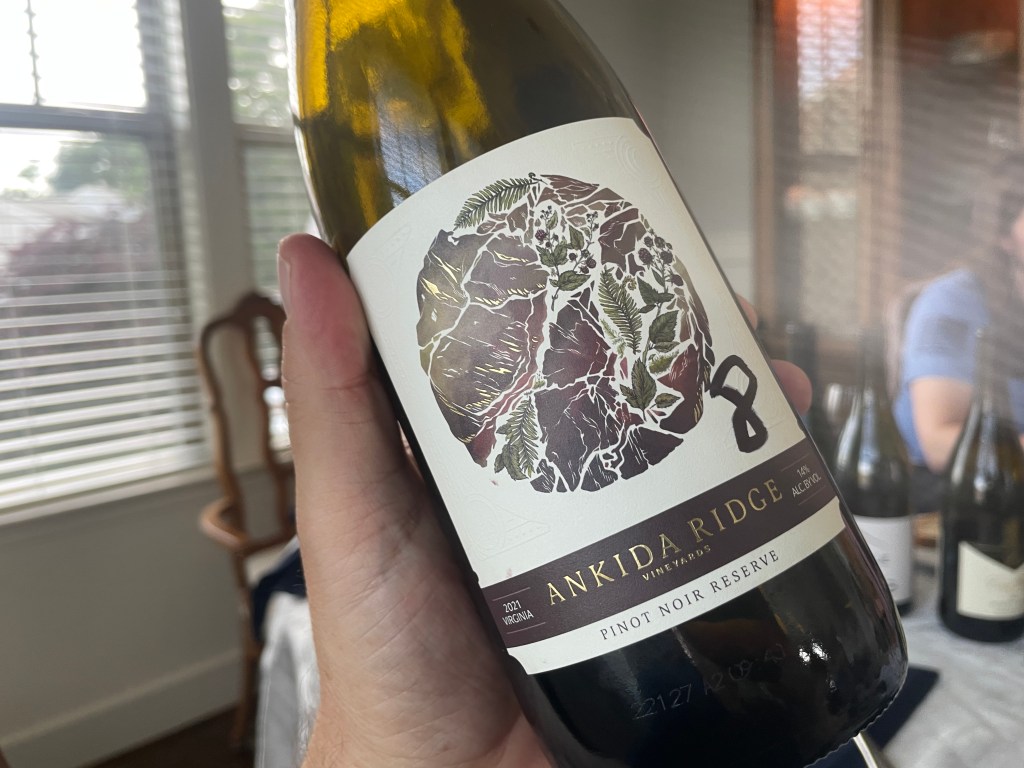
  8. 2021 Ankida Ridge Reserve (Virginia; $95)

Flight #1

  • Bottle #1: 2022 Evesham “Eola-Amity Hills Cuvée” (Oregon; 7 votes; round winner)
  • Bottle #2: 2021 Hazy Mountain (Virginia; 1 vote).

Admittedly this was not our favorite round; not surprisingly as I started with the lower-priced wines and worked my way up.

This round ended with Oregon as the favorite by a wide margin. While this particular Oregon wine isn’t this producer’s top-tier wine, it did have all the rich fruit qualities you’d want from a mid-$30 Oregon Pinot Noir.

Bottle #1 / 2022 Evesham “Eola-Amity Hills Cuvée”. Overall we felt this wine showcased fresh fruit, with some earthiness. Most attendees felt this was the Oregon bottle, although not everyone felt confident enough to vote.

Bottle #2 / 2021 Hazy Mountain. This wine was more expressive on the nose; maybe with some notes of oak. On the palate several guests detected notes of earth and allspice.

Votes:

  • Annie: Voted #1
  • Chris: Voted #1
  • Larry: Voted #2, since he preferred the more earthy, ‘aged’ qualities of this wine.
  • Matt: Voted #1
  • Kathy: Voted #1. Noted #1 was fresher, while #2 had notes of forest floor but seemed too cooked.
  • Stacy: Voted #1
  • Patti: Voted #1. Enjoyed #1 for its richer body; could tell it was Oregon. Felt #2 was too tart.
  • Rob: Voted #1. Likewise felt #2 was too tart. 

Flight #2

  • Bottle #3: 2023 Argyle (Oregon; 1 Vote)
  • Bottle #4: 2023 Cave Ridge Vineyards (Virginia; 7 Votes; round winner)

In retrospect I should have paired #1 vs #4, since the #3/Argyle was arguably our least favorite wine of the day. But since Cave Ridge’s Pinot isn’t yet priced, I wasn’t sure which wine to pair against it.

That said, I think Cave Ridge was the surprise of the night. 8 out of 8 attendees felt this wine was from Oregon, which I’ll take as a compliment for this wine.

Bottle #3 / 2023 Argyle. We could tell this wine was mass produced. It had too much of an effervescent ‘cherry coke’ quality to it, or maybe candy notes.

Bottle #4 / 2023 Cave Ridge. Lots of compliments regarding the fruit notes in this wine. Others noted it had notes of almond or marzipan. Multiple people (including myself) really enjoyed the initial ‘attack’ on our first sip.

Votes:

  • Matt: Voted #4
  • Annie: Voted #4
  • Chris: Voted #4
  • Larry: Voted #3.
  • Kathy: Voted #4
  • Stacy: Voted #4
  • Patti: Voted #4
  • Rob: Voted #4

Flight #3

  • Bottle #5: 2021 Evesham Woods Le Puits Sec (Oregon; 7 votes; round winner)
  • Bottle #6: 2021 12 Ridges Vineyard (Virginia; 1 vote)

Now we’re talking! At 3,300’, 12 Ridges is the 2nd highest-elevation vineyard on the east coast. Evesham’s Le Puits Sec was also an excellent wine.

While we definitely liked the 12 Ridges, it just didn’t compare well to an excellent vineyard-specific Oregon wine.

Bottle #5 / 2021 Evesham Woods Le Puits Sec. We generally identified this as the Oregon wine, although not universally. This was very well-enjoyed with lots of great descriptors, ranging from “Fresh and well-integrated”, “delicate”, and “balanced”. A few picked up on notes of baking spice, maybe dark cherry. Harissa was mentioned by one guest. I detected a lot of mushroom on the nose.

I felt this particular wine had, hands down, the best nose of any wine enjoyed that evening.

Bottle #6 / 2021 12 Ridges. This was definitely a higher-acid wine, which in retrospect makes sense since it was grown at 3,300 ft’.

Our tasting notes were all over the place. One guest mentioned notes of salted caramel; another said they got notes of sea salt. Yet another mentioned smoke or sour cherry. I didn’t get a lot on the nose, but I did feel it had nice complexity.

Votes:

  • Annie: Voted #5
  • Chris: Voted #5
  • Kathy: Voted #5
  • Larry: Voted #6 (still the outlier!)
  • Matt: Voted #5
  • Patti: Voted #5; her ‘happy place’ since she’s a big Oregon pinot fan
  • Rob: Voted #5
  • Stacy: Voted #5

Flight #4

  • Bottle #7: 2021 Résonance Founders Blocks (4 votes; tied)
  • Bottle #8: 2021 Ankida Ridge Pinot Noir Reserve (4 votes; tied)

This was by far our favorite pairing of the night. Not everyone voted to identify the region, although most of the guesses were accurate. It was very much a competition between ‘grace (#7)’ vs ‘power (#8)’. We were evenly divided on which we preferred, so it was a tie.

The #7 was rounder and more balanced. #8 was a ‘big’, but in a good way. Someone said it was “ready to party”, if you will. Both had great complexity, and opinions differed on which was heavier.

Bottle #7 / 2021 Résonance Founders Block. Notes of sour cherries and mushrooms. It had a perceived sweetness; not from sugar levels but had a ‘fruit sweet’ quality to it.

Bottle #8 / 2021 Ankida Ridge Pinot Noir Reserve. “Grabby” was my favorite descriptor. Several mentioned notes of sour cherry. The wine was lighter than I expected, although conversely it was still a ‘big’ win in terms of tannin. Kathy mentioned it was ‘layered, had complexity, and notes of forest floor’.

Of all the wines we tasted that evening, #8/Ankida was the most capable of standing up to heavier foods, especially a dish like steak. It was very drinkable now but could still use more time. I later learned the tannin came from the heavy use of stem inclusion.

Votes:

  • Annie: Voted #7
  • Chris: Voted #7
  • Kathy: Voted #8
  • Larry: Voted #8
  • Matt: Voted #8
  • Patti: Voted #7
  • Rob: Voted #7
  • Stacy: Voted #8

Finalist Flight

After the last round we did a poll to pick two wines from any flight to go into the finalist round. 7 votes went to wine #7/Résonance, 5 votes went to wine #8/Ankida, and 3 votes went to wine #5/Evesham Woods Le Puits Sec. #4/Cave Ridge was generally considered the #4 wine of the evening.

With the votes in, #7 and #8 went to the finalist round, and we enjoyed dinner drinking the remaining wines.

This food break worked to our favor as #7 and #8 opened up. The complexity of both improved, with the Ankida especially becoming more graceful. An Ox Eye Blanc de Noir accompanied our beef bourguignon.

We voted a second time…and for the second time in a row, it was again a tie. Ironically, 2 people from each ‘team’ switched sides.

  • Bottle #7: 2021 Résonance Founders Blocks (4 votes; tied)
  • Bottle #8: 2021 Ankida Ridge Pinot Noir Reserve (4 votes; tied)

Lessons Learned:

Virginia represented very well; far better than I could have hoped for. It’s fair to say that the state has very few high-quality examples to pull from, but the top ones we used were well received.

I should note that most of the attendees didn’t have pre-conceived notions of what Pinot should taste like. Our self-described Oregon wine aficionado almost always went for the Oregon wine (the Cave Ridge being the exception), but overall the attendees simply wanted something tasty.

  1. Round #1: 2022 Eola-Amity Hills Cuvée (Oregon)
  2. Round #2: 2023 Cave Ridge (Virginia)
  3. Round #3: 2021 Evesham Wood Le Puits Sec (Oregon)
  4. Round #4: Tie; 2021 Résonance Founders Blocks and 2021 Ankida Pinot Noir Reserve
  5. Winners round: Our “Top 2” wines were the Résonance and Ankida…and they tied again.

PS – the 2021 Ankida Reserve and 2023 Cave Ridge were both gifted to me for this event (thank you Christine and Randy!). While the Reserve is Ankida’s ‘top’ wine currently being sold, their 2022 Pinot is also getting headlines of its own.

For Virginia to tie Oregon as the evening’s ‘best’ wine is remarkable. Ankida Ridge should be very happy with that result.

I still say that the 2023 Cave Ridge Pinot Noir was the surprise of the evening. It was only recently bottled, so it has time to go. Yet it could easily have fared well against an Oregon wine in the mid-$30 price range.

The Monticello Wine Trail “Women in Wine” Dinner at The Doyle Hotel

This June, the Monticello Wine Trail went into celebration mode. Its Wine Week kicked off with a pair of Friday night wine dinners, then segued to a Saturday gala that announced Afton Mountain Vineyard’s 2024 Albariño as winner of the 34th Monticello Wine Competition. This year also featured a number of special events, including a sparkling wine brunch, rosé picnic, and elevated wine tastings.

A key part of Wine Week’s popularity is it allows enthusiasts to mingle with their favorite Monticello winemakers. Recent media coverage of the “the birthplace of American wine” has given these vintners extra reason to celebrate.

Wine Enthusiast has proven to be a huge cheerleader for Virginia wine, crowning Charlottesville and the Monticello AVA as its “Wine Region of the Year” in 2023. More recently it pronounced “Its Ingénue Era Over, Virginia Wine Takes Center Stage”.

Not to be outdone, in late May the New York Times published “Virginia Wine Grows Up”, featuring several Charlottesville winemakers. Decanter, VinePair, Vogue, The Wall Street Journal, and other major outlets have likewise recently spotlighted Virginia wine.

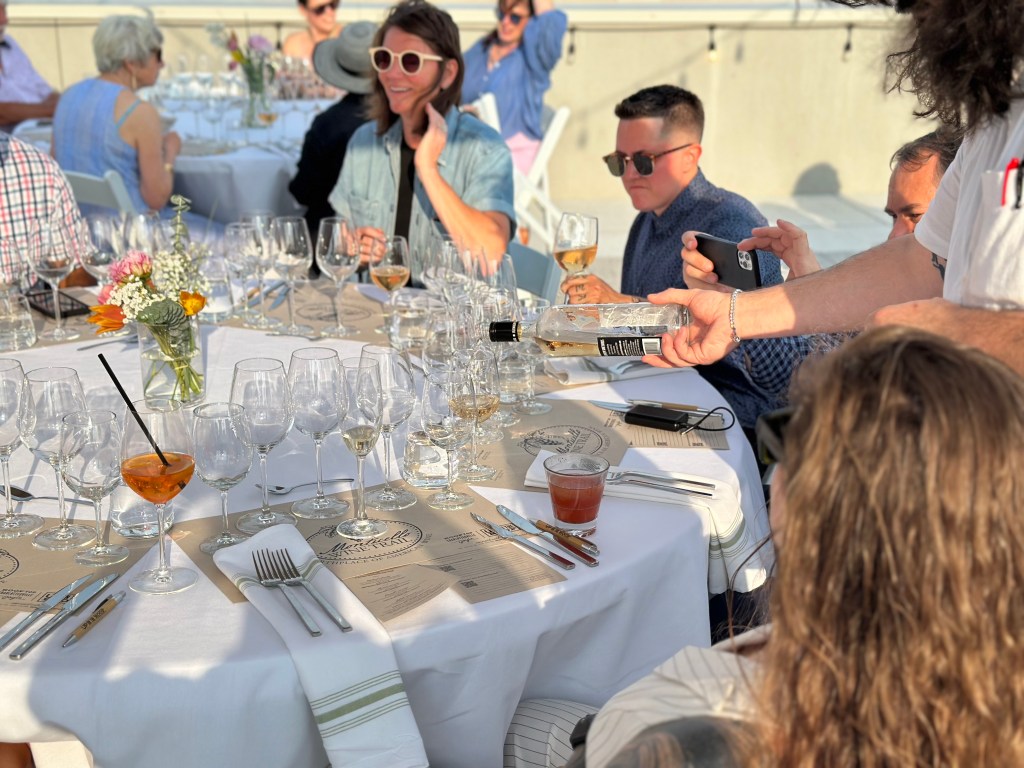
With this backdrop, it would be an understatement saying the mood at the Monticello winemaker dinner on the rooftop of Charlottsville’s Doyle hotel was festive. The theme of the evening; “Women in Wine”, was also a topic near to the audience’s heart.

Dining at The Doyle Hotel

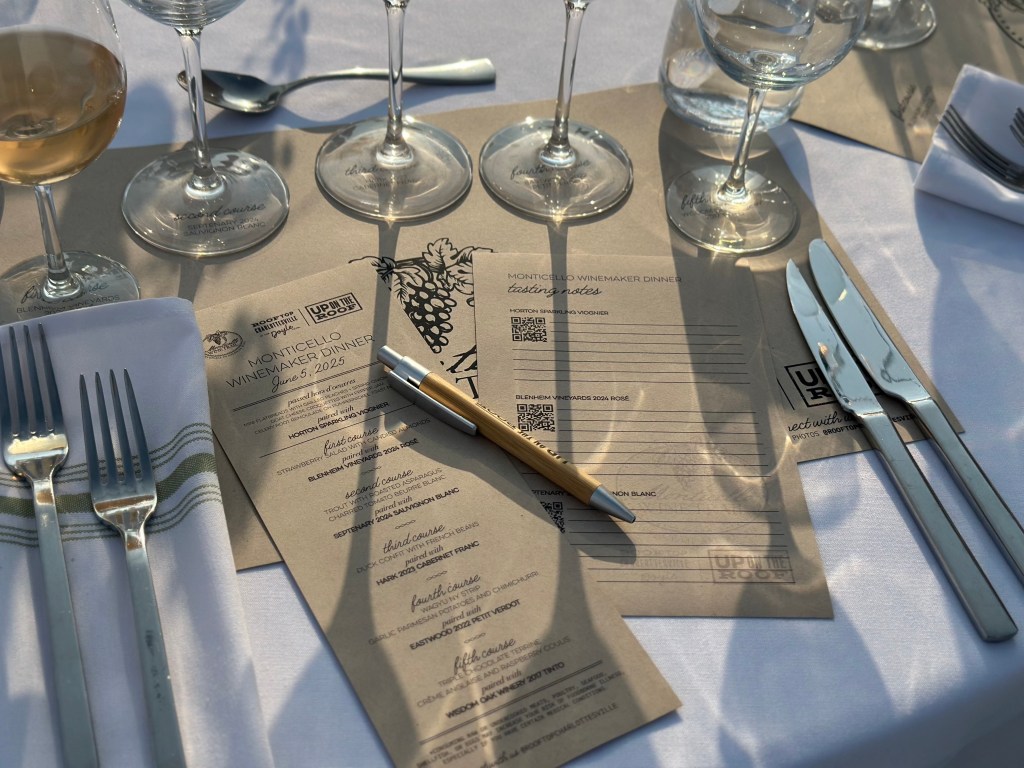
Our 5-course dinner included wine pairings from six wineries, nearly all of them represented by their female owner or winemaker. These vintners mingled with the crowd and shared their stories as their wine was poured.

First up was Shannon Horton, pouring Horton Vineyards’ Sparkling Viognier, paired with our hors d’oeuvres.

Shannon explained how the idea behind this Méthode Champenoise crafted wine is an example of how quickly her father, Horton Vineyards founder Dennis Horton, could improvise.
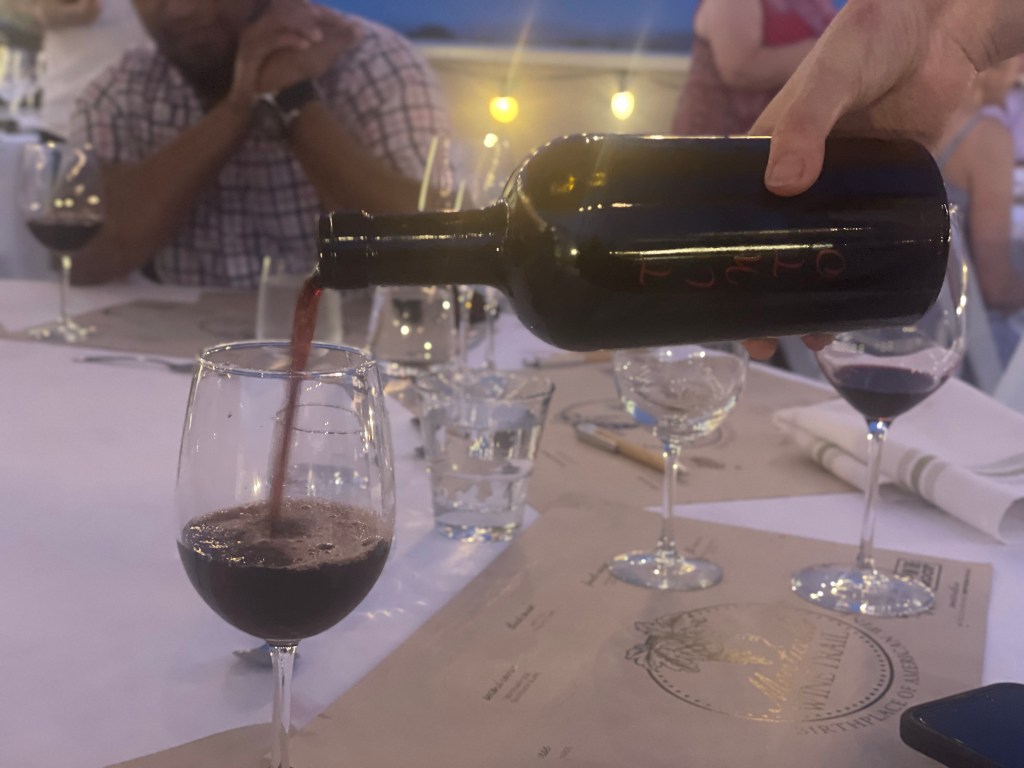
Years ago, Dennis had an overly bountiful crop of viognier that needed to be thinned before harvest. Rather than waste fruit, he realized these still underripe grapes could potentially be used for sparkling wine. The chemistry was spot-on, and they’ve been making a sparkling Viognier ever since.
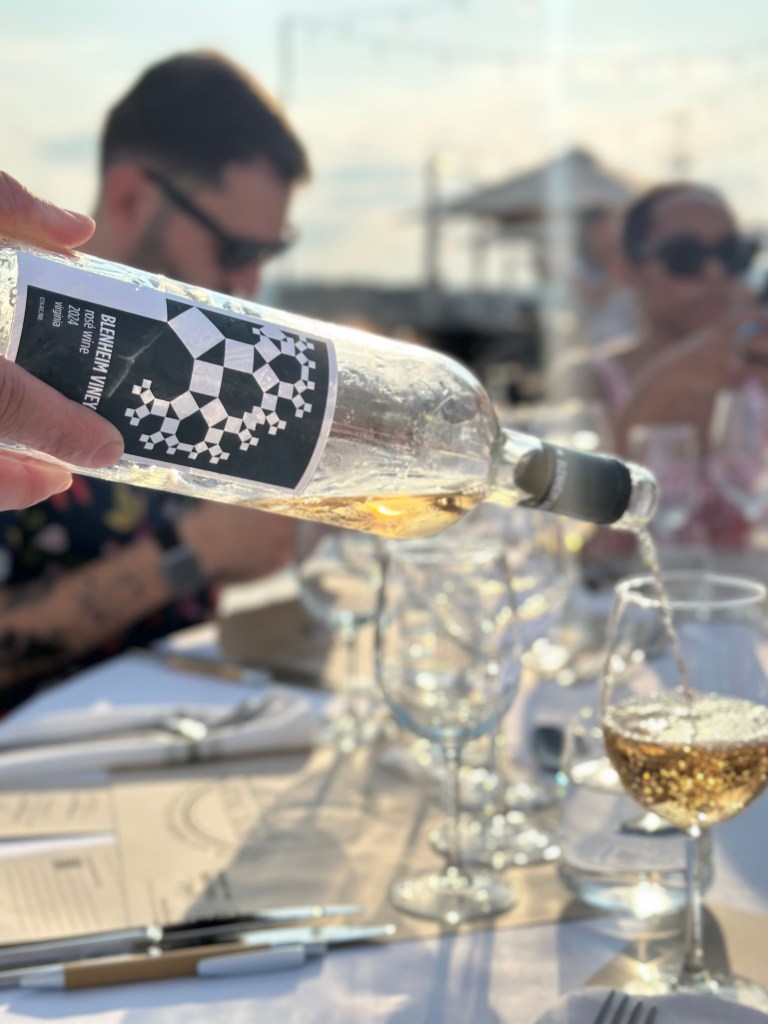
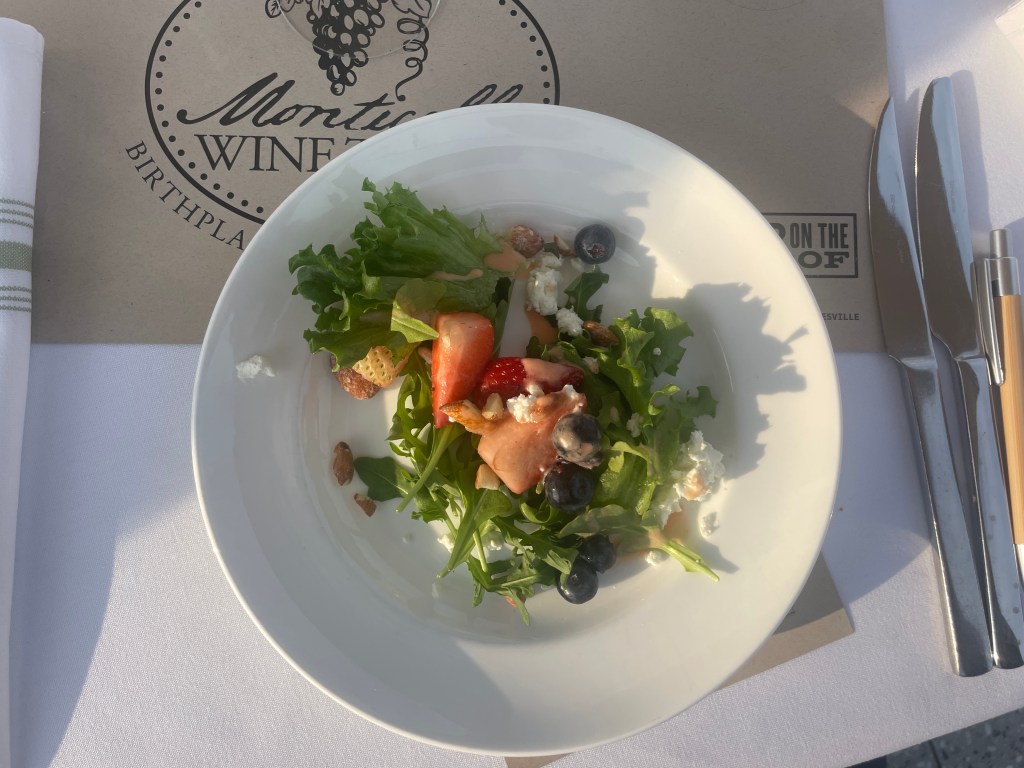
We then moved to the dining area where Kirsty Harmon of Blenheim Vineyards poured a 2024 rosé paired with our first course; a strawberry salad with candied almonds.

Kirsty is a big fan of rosés blended from multiple varieties, with this vintage using a combination of Merlot, Cabernet Franc, Cabernet Sauvignon, and Malbec (but no Pinot Noir or Syrah this time).

Corry Craighill’s 2024 Sauvignon Blanc from Septenary Winery was our next pairing, served with trout and a charred tomato beurre blanc.

Corry joined my table for a while and explained how owners Todd and Sarah Zimmerman love New Zealand-style Sauvignon Blanc, so she made this wine in a style that’s reminiscent of that region.

While her red wines have yet to hit the tasting room, Corry is the winemaker behind Septenary’s most recent white wine releases. Corry also owns Wound Tight, her personal label where she gets to be more experimental.

Once the starting dishes were finished, the red wine pairings with our main courses were served.

AJ Greely of Hark Vineyards poured our first red; a 2023 Cabernet Franc served with duck confit.

2023 was an exceptional year for Virginia wine, and AJ explained this was Hark’s biggest Cabernet Franc crop to date. I loved how AJ didn’t try to make it into a ‘big’ red and instead let the grape’s varietal characteristics shine through.

AJ hung out at my table for a bit and invited us to visit Hark’s brand new tasting room, which was opening that weekend.

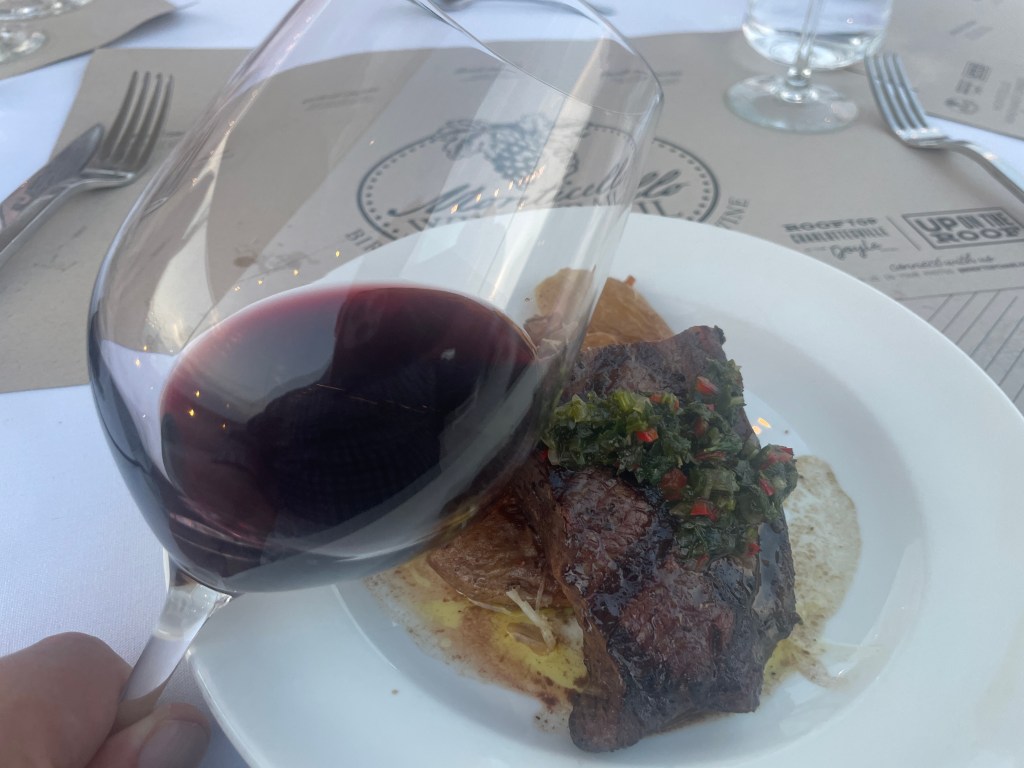
Next to last was Eastwood Farm winemaker Jake Busching sharing his 2022 Petit Verdot, served with wagyu NY strip and potatoes. Owner Athena Eastwood couldn’t attend, so Jake represented in her stead.

Petit Verdot is often thought of as a ‘steak wine’, with tannin and acid that can stand up to heavy foods. While those characteristics often means PVs need time to age, Jake crafted this wine to be fruit forward and easy drinking, enjoyable even without a food pairing.

Jake also told us about Athena’s newest venture, the Virginia Wine Collective. The Collective recently opened in downtown Charlottsville and features a number of micro wine brands that are difficult to find elsewhere.

Owner Laura Lavalle finished the evening with Wisdom Oak Winery’s 2017 Tinto, paired with a triple chocolate terrine.

Laura explained Tinto is Wisdom Oak’s interpretation of a port style wine, using a blend of Cabernet Sauvignon and brandy, aged in Kentucky Bourbon barrels.

Recognizing Monticello’s “Women in Wine”

The selection of female hosts to lead this event wasn’t coincidental. The “Women in Wine” theme continues to receive considerable attention in the world of Virginia wine.

In August of last year, local wine promoter Nancy Bauer launched the Virginia Women in Wine (VWW) professional organization. VWW has since partnered with the Monticello Wine Trail and other organizations to host additional events, ranging from winemaker dinners, communications roundtables, and the unveiling of the VWW’s “Closing the Gender Gap” white paper.

A breakdown of the demographics of the Virginia wine industry demonstrates the need for these initiatives. Only 18% of Virginia wineries employ a female Head Winemaker, yet females compose roughly 2/3rds of local winery staff.

The opening of Eastwood’s Wine Collective promises to open additional (cellar) doors for entrepreneurs by reducing startup costs that might bar them from the wine industry.

The Collective’s unique design includes individually rentable winemaking spaces, a shared production area, and a joint tasting room, all under the same roof. This allows participants to control their own winemaking process, while sharing equipment and retail space that would normally be outside the financial reach of a small operation.

This setup is especially important for female and BIPOC entrepreneurs, who often lack the networking opportunities and financial backing open to the majority of the industry. Members of the Collective also have the option to utilize Jake as a consultant to tutor them in winemaking.

Wine enthusiasts that missed Monticello Wine Week will soon have additional opportunities to engage the winemaking community. The Doyle will soon host Oeno Camp, an immersive experience that cultivates and supports BIPOC wine entrepreneurs.

Dining With Erin Nuccio of Evesham Wood

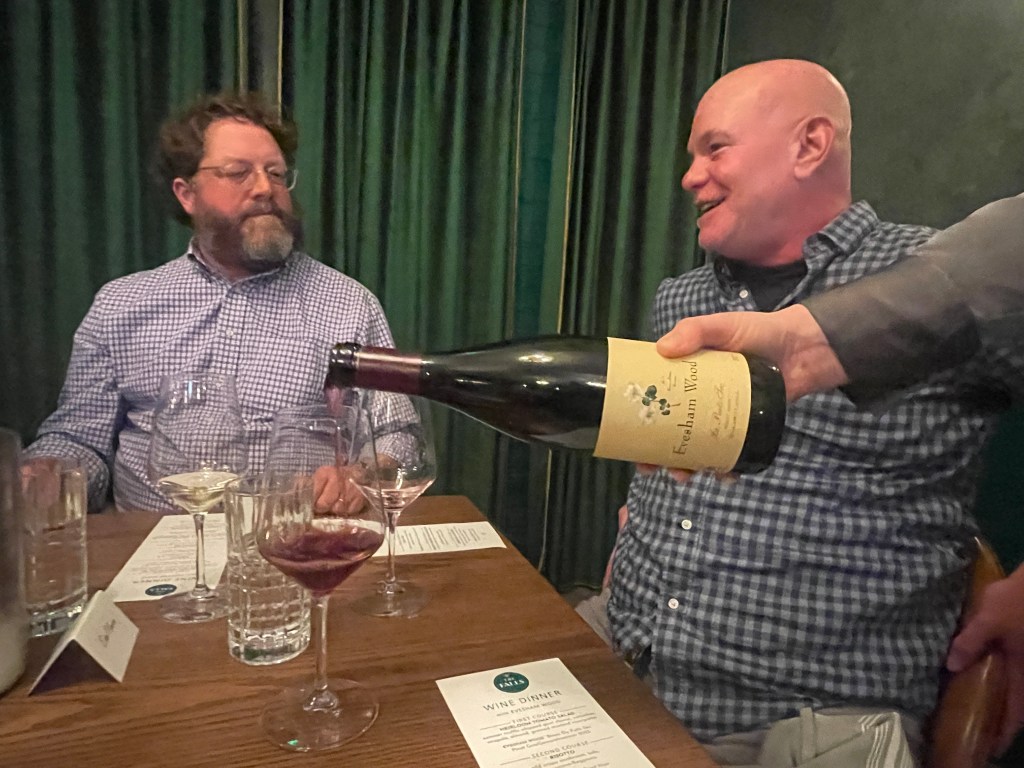
I recently had the opportunity to join owner/winemaker Erin Nuccio of Evesham Wood for a great dinner that showcased his wine, hosted by The Falls restaurant in Falls Church, Virginia. As a wine nerd it’s hard for me to pass a chance to try a new-to-me winery, especially when I get to chat with the winemaker.

Over a 5-course dinner we sampled 4 Pinot Noirs and a white blend. Just as importantly, I got to hear Erin tell the story of Evesham Wood.

The Vineyards & Winemaking

EW Le Puits Sec Vineyard

Evesham Wood is located in the Eola-Amity Hills AVA, one of 11 sub-appellations inside the larger Willamette Valley AVA. Evesham Wood and its sister operation, Haden Fig, are boutique wineries that focus mostly on Pinot Noir, including several single-vineyard expressions.

It turns out Erin is a local boy who got his start in the wine business at Arrowine, one of my favorite local wine stores. Inspired by the Oregon Pinot he was drinking, Erin made the jump from selling wine to making it, moving to the Willamette Valley in 2007 to pursue the dream.

Erin initially apprenticed under Russ Raney of Evesham Wood, one of Oregon’s oldest wineries. That experience allowed him to start his own wine brand, Haden Fig. Years later, he took over Evesham when Russ decided to move on.

Being unfamiliar with this area, I did a bit of research and discovered the AVA’s name is a brilliant (and accurate) bit of marketing. ‘Eola’ refers to a local town, whose name is derived from Aeolus, the Greek god of the winds.

These cool Pacific winds and the area’s volcanic soil define the area’s terroir. The former help grapes grown here to retain their acidity, while the later provide character to the wines.

Location aside, I found how Evesham Wood grows its wine to be as interesting as where this wine is grown.

Evesham is part of the handful of local wineries that hold an official organic wine certification, which they apply to their vineyard-specific wines. They are also a member of the ‘Deep Roots Coalition’, a grouping of local vintners who don’t irrigate their vines. This lack of irrigation promotes sustainability as well as allows their wine to be more expressive of the local terroir.

Erin explained how he initially didn’t feel strongly about the need to be certificated organic. But seeing how others were describing themselves as “basically organic” only to find they were spraying pesticides, he decided to take the extra step to become certified.

All that said, most of our conversation was about wine. Erin worked with The Falls to prepare a five-course dinner, with each dish paired with one of his wines.

The Wine

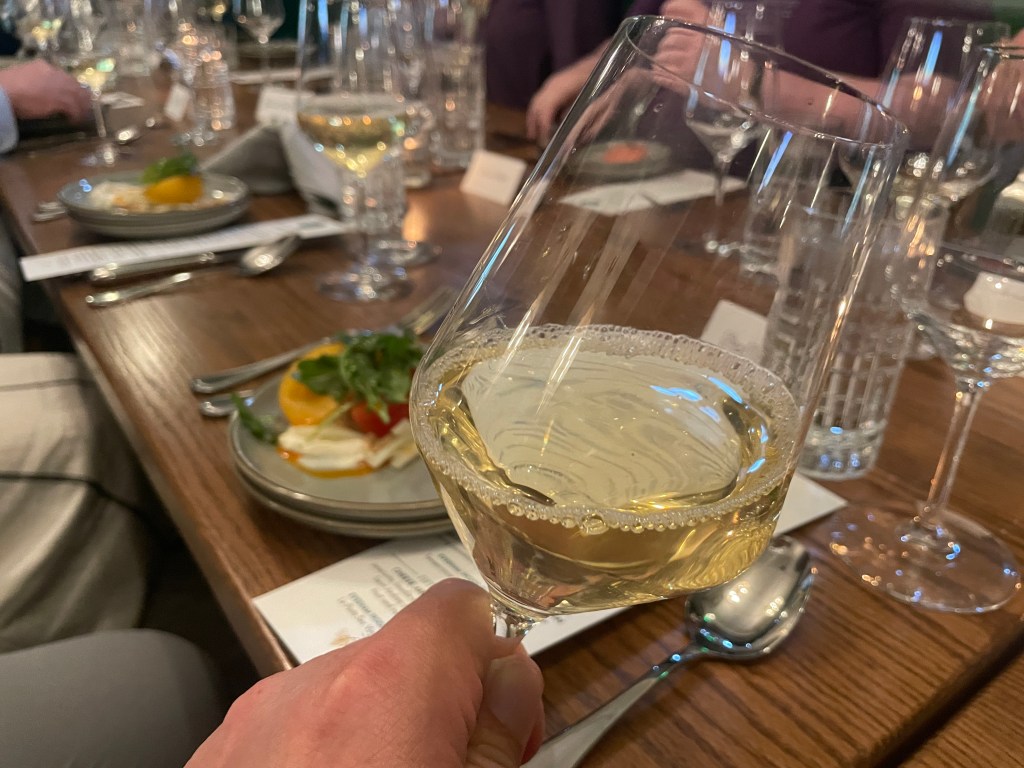
2023 Blanc Du Puits Sec. First up was Erin’s 2023 “Blanc Du Puits Sec” (Pinot Gris/Gewürztraminer blend), paired with heirloom tomato salad.

This wine is a field blend from Evesham Wood’s first estate vineyard, planted in 1986. Erin went for a fresh style, with a little bit of spice on the palate and nice texture. I also detected some flower notes on the nose.  

The story behind this wine was just as fascinating. The vines are planted on their own rootstock and are considered ‘old vines’ by Oregon standards. While this means they are susceptible to phylloxera, the louse hasn’t hit this block just yet, so the damage it’s suffered has been minimal so far.

2023 Willamette Valley Pinot Noir. Next up was his Willamette Valley 2023, paired with a risotto made with wild mushroom, kale, and cheese.

This is Evesham’s ‘introduction red’. Fun and approachable, Erin said this wine is designed to “capture the spirit of the season”. 2023 must have been very favorable, since this was darn tasty. I found notes of bramble fruit, especially raspberry. That said, the longer I tasted it, the more earth I detected.

2022 “Eola-Amity Hills Cuvée” Pinot Noir. Our third wine was Evesham’s “Eola-Amity Hills Cuvée” paired with a coq au vin, a French dish made with pomme purée, carrots, bacon lardon, mushrooms and pearl onions.

This was the Reserve version of their Willamette Valley Pinot, aged six months in barrel with a dash of new oak. I found it to be complex and rich, with firmer tannin and more structure. It also had nice dark cherry notes with a more lingering finish. I later opened a second bottle with friends and we agreed this was everything we’d look for in an Oregon pinot.

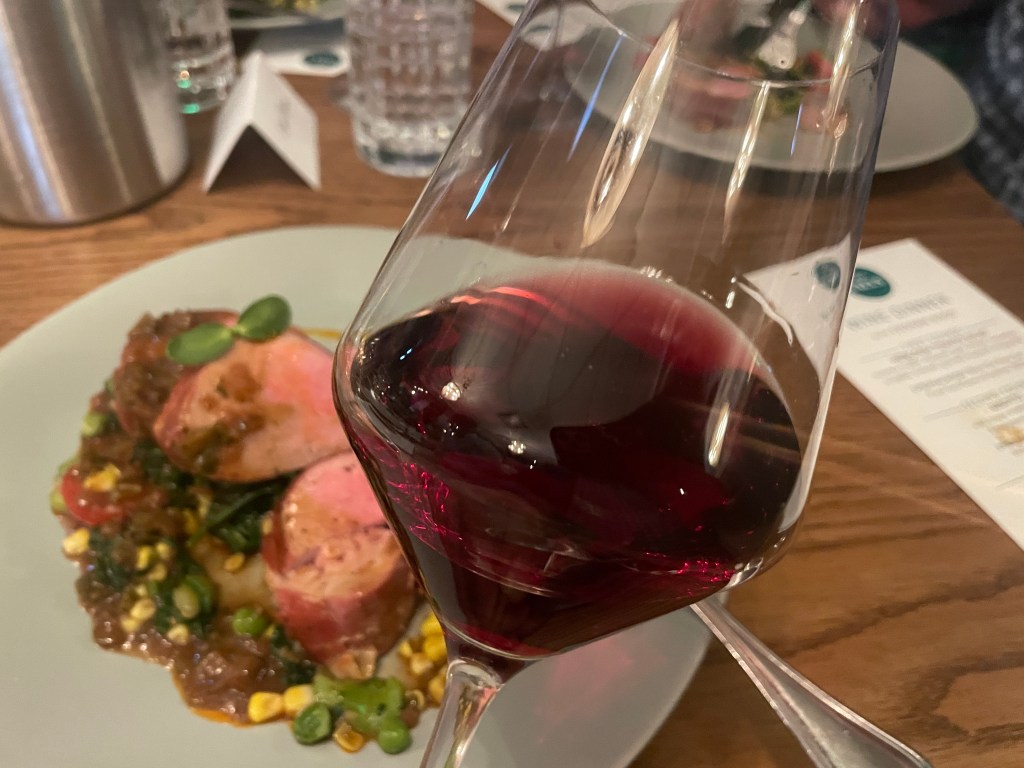
2022 Temperance Hill Pinot Noir. Our 3rd red was the first vineyard-designated wine of the evening, their Temperance Hill. This was paired with pancetta wrapped pork tenderloin.

This retro-style labelled wine was more restrained than the Eola Cuvée, with more earth notes on the nose. On the palate it started with earthiness but the notes transformed into dark fruit, especially blackberry. Erin mentioned it had some oak treatment, but I could barely notice.

This wine was grown at Temperance Hill, a 100-acre Pinot-heavy vineyard at 800’ ft elevation that produces fruit for a number of local wineries.

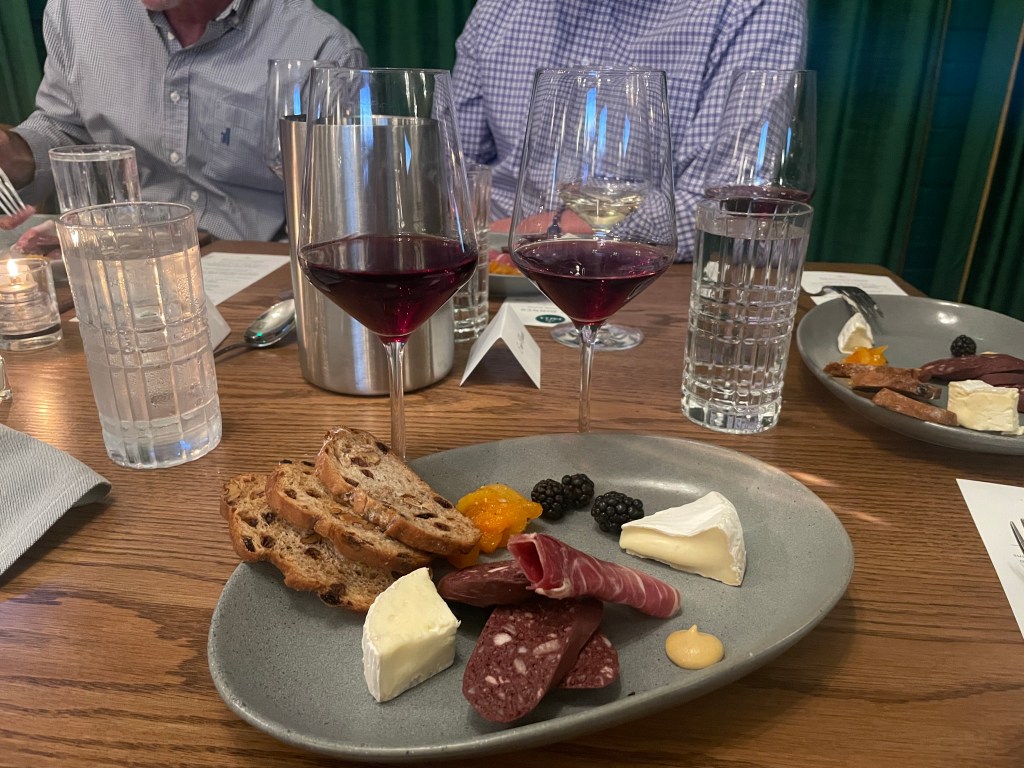
2021 Le Puits Sec Vineyard Pinot Noir. Saving the best for last, Erin brought out Evesham’s vineyard-designated Le Puits Sec (served with cheese and charcuterie).

This wine has structure and lift, yet what stood out the most were the wonderful earthy-mushroom notes on the nose that I wasn’t expecting.

More than anything else, this wine has ‘character’. You drink enough wine, you recognize varietals by their stereotypical tasting profiles. What I loved about the Le Puits Sec is I had to pause to think about it, as I couldn’t immediately identify everything I was encountering.

Fortunately, a second bottle enjoyed a week later yielded additional descriptors. That time I found notes of baking spice, maybe harissa. It was also fresh and well-integrated. But that nose – that alone could sell this wine.

The Le Puits Sec Pinot really demonstrates the importance of ‘place’. As it’s a lower-elevation site the fruit ripens earlier than Temperance, which is only a few miles away. Yet these are very different wines, despite similar soils and winemaking.

Evesham Wood & Haden Fig’s tasting room (located around 50 miles south of Portland) is open by appointment. Let me know what you think if you visit!