Pinot Noir: Virginia’s Most Underrated Grape

Few wines are as versatile as Pinot Noir. Its high acidity and ‘silky’ tannins makes it a go-to pairing for many dishes, while Pinot’s lighter body makes it easy to drink on its own. Pinot Noir is also popular for higher-end sparkling wines, which is why it accounts for 38% of the grapes grown in Champagne.

Yet Pinot Noir’s popularity is almost equally matched by its fragility. Pinot is nicknamed “the heartbreak grape” because of its vulnerability to spring frost, disease, and harsh weather. Its need for very specific growing conditions would give even Goldilocks fits.

Virginia’s warm, humid climate makes this task especially hard. Dennis Horton, a man famous for introducing multiple varieties to the Old Dominion, reportedly once said of Pinot, “I don’t think Jesus Christ could grow Pinot Noir in Virginia. You can do it, but it doesn’t taste like Pinot should.”

Pinot’s reputation as a finicky grape is why it only makes up 41 out of nearly 3,500 acres of Virginia grapevines. Difficulties pushing their grapes to full ripeness also means many winegrowers only use them for sparkling wine or rosé, adding to Pinot’s scarcity as a red wine.

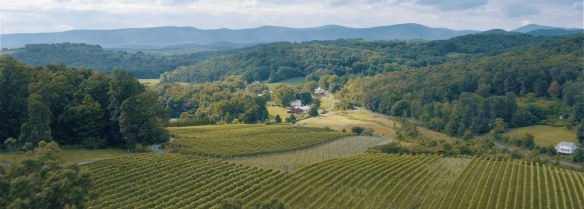
Fortunately, the tide is turning. A growing number of wine growers, mostly in the Shenandoah Valley and Blue Ridge Mountains, have finally cracked the code on how to properly cultivate Pinot. A grape once confined to 2-3 consistent producers is slowly becoming more accessible.

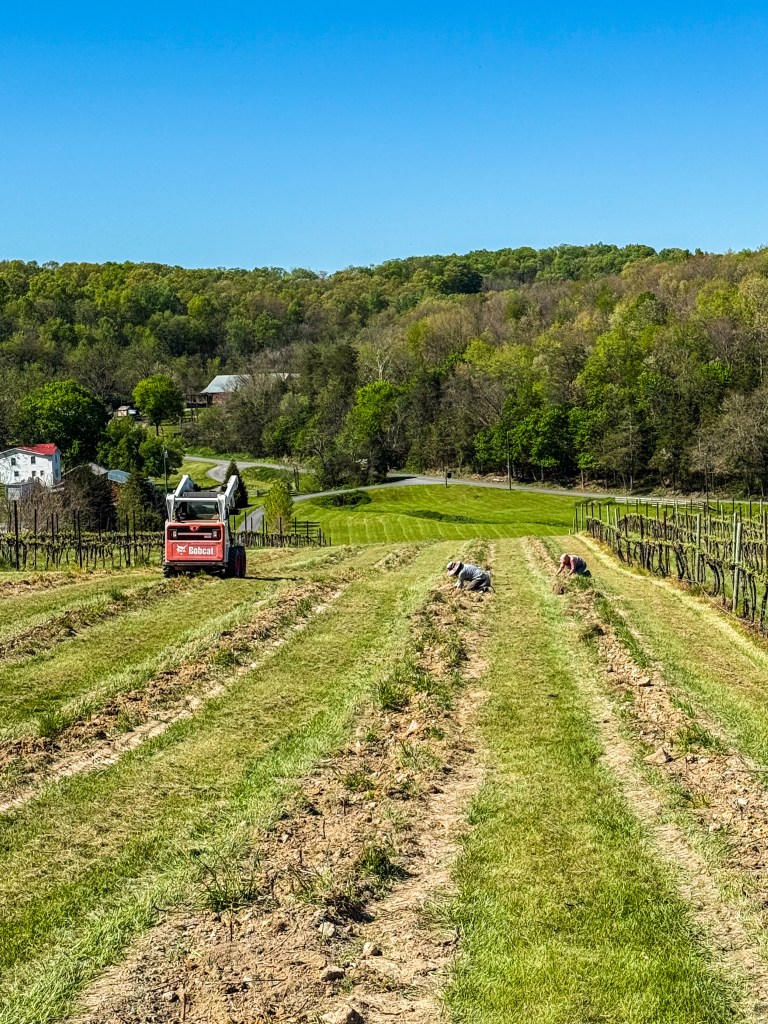
Cave Ridge Vineyard

The Evolution of Virginia’s Pinot Noir

It’s difficult to say which winery first planted Pinot, but several, including Barboursville and Swedenburg, tried in the 1990s and early 2000s. These viticultural pioneers didn’t yet realize how badly their low-lying sites would struggle, and eventually ripped out their vines. “Pinot is hard for Virginia. It doesn’t do very well here for still wine,” one grower admitted.

The key change from the wines that Dennis Horton tried is these newer vineyards usually select higher-elevation sites, often 1,600 feet and above. This elevation ensures a constant flow of cool air and moderate temperature swings, which protect Pinot’s tightly bunched clusters from damage and allow them to evenly ripen.

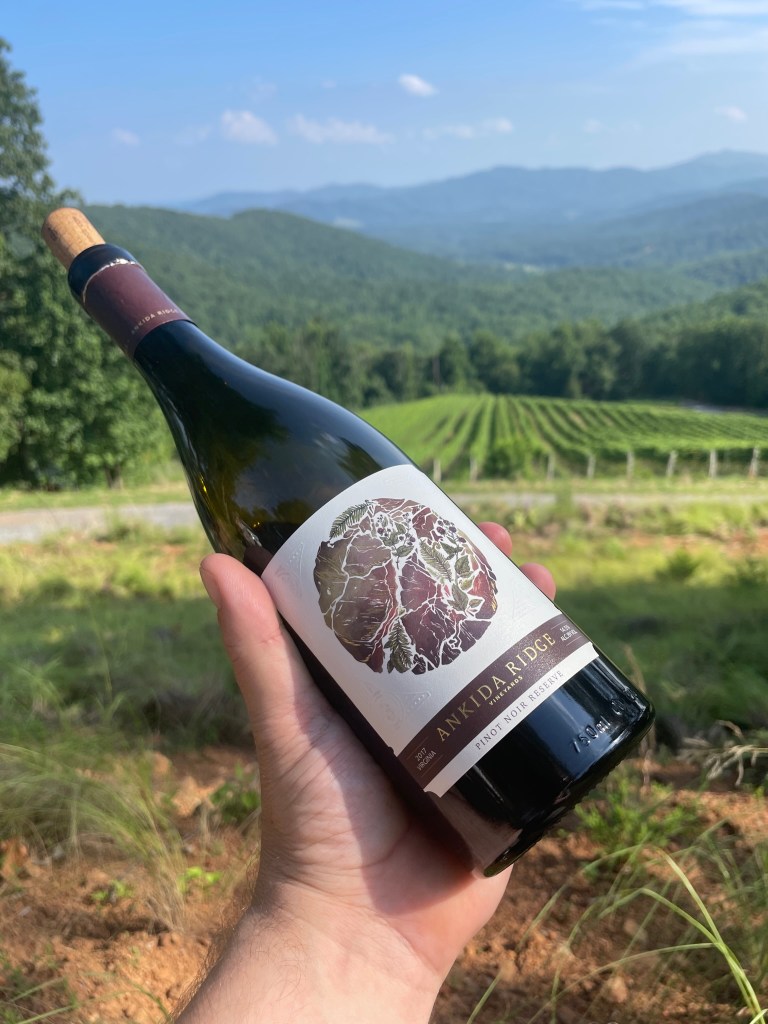
Ankida Ridge became Virginia’s most famous Pinot producer based on the strength of their high-elevation site; a 1,800’ mountaintop vineyard with a steep slope. Its inaugural 2010 vintage received such acclaim it became the first Mid-Atlantic wine to participate in the invite-only International Pinot Noir Celebration.

While Ankida may have paved the way in demonstrating Pinot Noir’s place in Virginia, others were close behind. Ox Eye Vineyards planted Pinot vines at their 1,780’ foot site in 2009, as did Hazy Mountain at its Swoope vineyard in 2016. 12 Ridges founded their 3,300’ foot site in 2016, which includes 3 acres of Pinot Noir. Fox Meadow and Stone Mountain, both with 1800’ vineyards, recently joined the Pinot club as well.

Elevation helps, but that’s not Pinot’s only requirement. John Kiers of Ox Eye Vineyards was encouraged to plant Pinot after seeing its success in the Finger Lakes, a region which shares a similar climate to the Shenandoah Valley. The valley’s limestone soil and limited rainfall provide additional advantages.

Randy Philips of Cave Ridge Vineyards likewise sees parallels between the Shenandoah Valley and upstate New York. “It was partly an experiment, partly a business plan,” Randy said during our chat. “We grow Riesling, which shares many of the growing conditions that Pinot requires. Pinot also has name recognition, which helps with sales.” Today, Cave Ridge and Ox Eye both have an acre of Pinot.
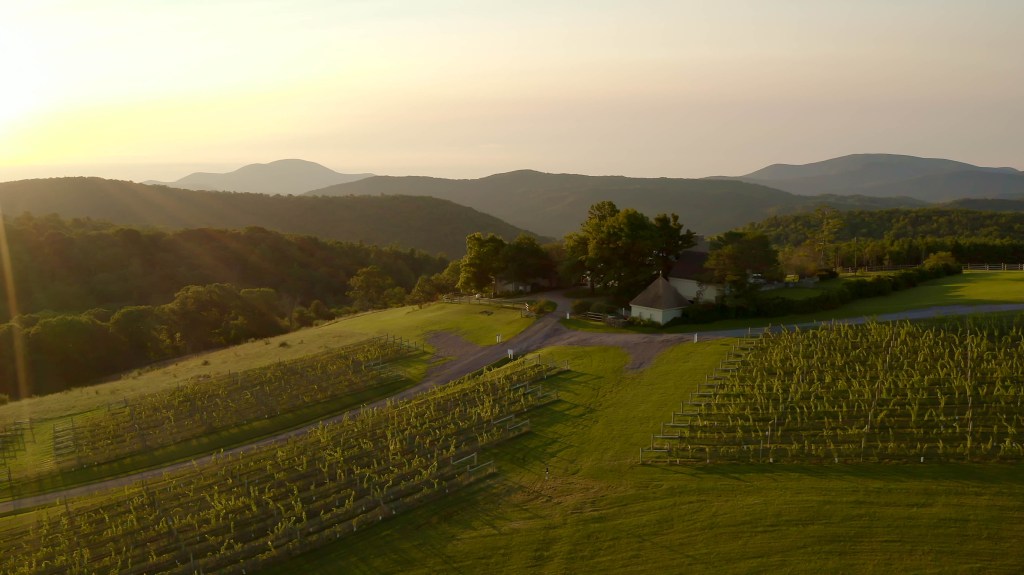
12 Ridges Vineyard

Where To Find Virginia Pinot

The roster of wineries which typically produce a full Pinot is far larger than most realize. Ankida Ridge and 12 Ridges are Virginia’s most famous producers, but they’ve since been joined by Above Ground, Cave Ridge, Hazy Mountain, JBR, and Ox Eye.

Other wineries, including CrossKeys, Rockbridge, and Trump, occasionally make a still Pinot during better vintages. Mediterranean Cellars uses Pinot in its rosé.

Pinot Noir has also been a boon for sparkling producers. CrossKeys Vineyards’ 2019 Estate Blanc de Noir took “Best of Show” at the 2022 Atlantic Seaboard Wine Association, while Trump Winery’s 2015 Blanc de Noir won the San Francisco Chronicle “Sparking Sweepstakes” award. Ankida, Ox Eye, and others also make Blanc de Noirs.

Must Try Virginia Pinot Noirs:

  • 12 Ridges: Located along the Blue Ridge Parkway, 12 Ridges is the 2nd highest elevation winery on the east coast. Their wines are difficult to find, as the growing conditions which promote great acidity and minerality comes with the tradeoff of lower tonnage per acre. This shouldn’t deter local Pinot lovers from making a pilgrimage.
  • Ankida Ridge: They weren’t the first winery in Virginia to make Pinot, but they certainly put it on the map. During an 2025 industry tasting of Virginia Pinot Noirs, their 2022 vintage was the consensus favorite.
  • Cave Ridge Vineyards: Megan Philips was so convinced their 2023 vintage was ready to go she convinced her dad Randy to bottle their Pinot as a still wine instead of making it into a sparking. Clean, fruity, and with notes of cherry and red plumb, she was right.
  • Ox Eye Vineyards: Their 2022 vintage is charming and approachable, and 2023 promises to be even more so. At $27, this is also one of the best values local Pinot lovers will ever find. Owner/winemaker John Kiers doesn’t make a still Pinot every year, but his $35 Blanc de Noir is a great alternative.
Virginia Tannat Tasteoff: Virginia vs South America

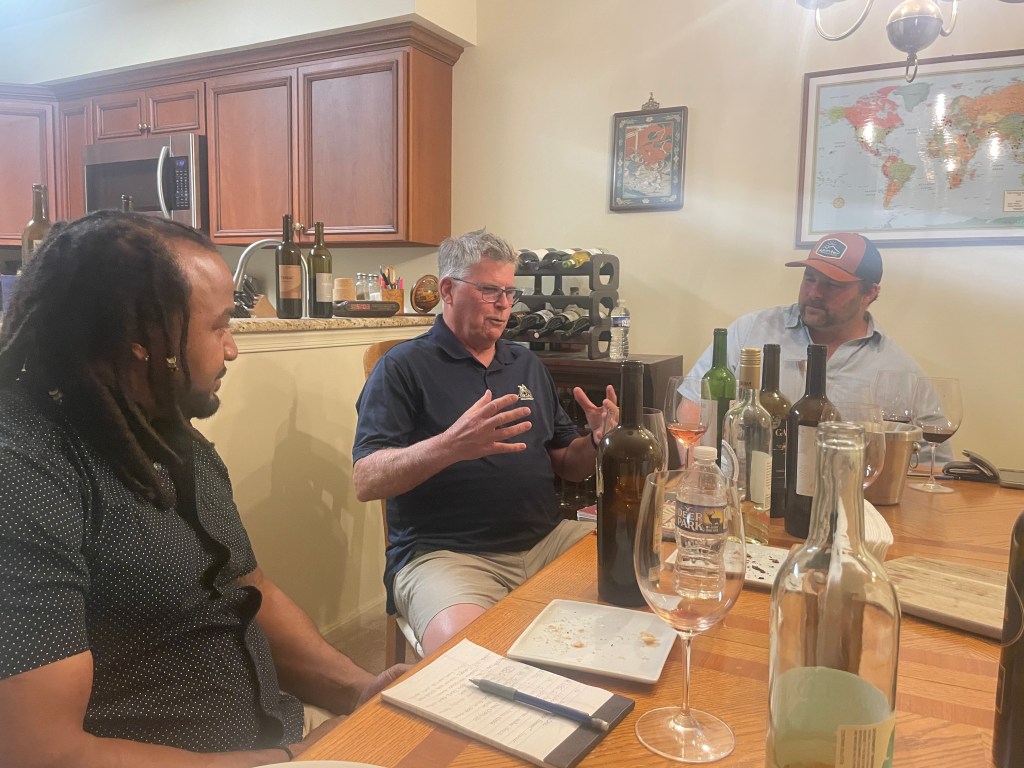
Days after I had a blind Virginia vs South America tannat tasting, Wine Enthusiast published an article on Virginia Tannat. Part of me was happy about the publicity. Another part said; “What took you so long to notice?”, as Virginia has made great Tannat for a while.

Tannat was born in the Madiran region of Southwest France. Yet it’s Uruguay that wears the crown as the world’s Tannat capital, growing more Tannat than even France. Dennis Horton of Horton Vineyards was the first to produce a Virginia Tannat, from his 1998 vintage.

As plantings go, Virginia’s 78 acres of Tannat is respectable but far below heavy hitters like Cabernet Franc (661 acres) or even Petit Manseng (200 acres). Tannat’s vulnerability to cold weather force vineyards to be selective in where they plant it, limiting its availability.

Vineyards that do have Tannat treat it like a premium grape, selling at one of the highest price points of any grape in Virginia. One small dash is a great way to beef up red blends with extra tannin and acid. According to Kendell Anderson, winemaker for Bull Run, “Tannat holds its acid but also has good brix. It also calms Petit Verdot without losing its body.”

While it’s increasingly seen in blends, Virginia produces many 100% (or close enough) Tannat wines. Virginia’s first Tannat wines were rustic tannin bombs (the word ‘tannin’ supposedly became bastardized into the name ‘Tannat’), but recent examples are more graceful. In many ways, Tannat is Virginia’s answer to Napa Cabernet, when wine drinkers want something big and bold.

Other than its lack of cold hardiness, Tannat is a great fit for Virginia’s climate. Its high level of acidity means it can hang longer on the vine without losing any punch. It also produces one of the highest tonnages of fruit per acre of any local vinifera. In a good growing site, Tannat can produce an average of 3.5 to as high of 5 tons an acre while still maintaining excellent levels of ripeness.

Lastly, Tannat doesn’t mind excessive water. Jason Murray of Arterra explained Tannat evacuates water from its grapes more quickly than other vinifera; an important consideration considering Virginia’s proclivity for late season storms.

Tasting & Scoring Methodology

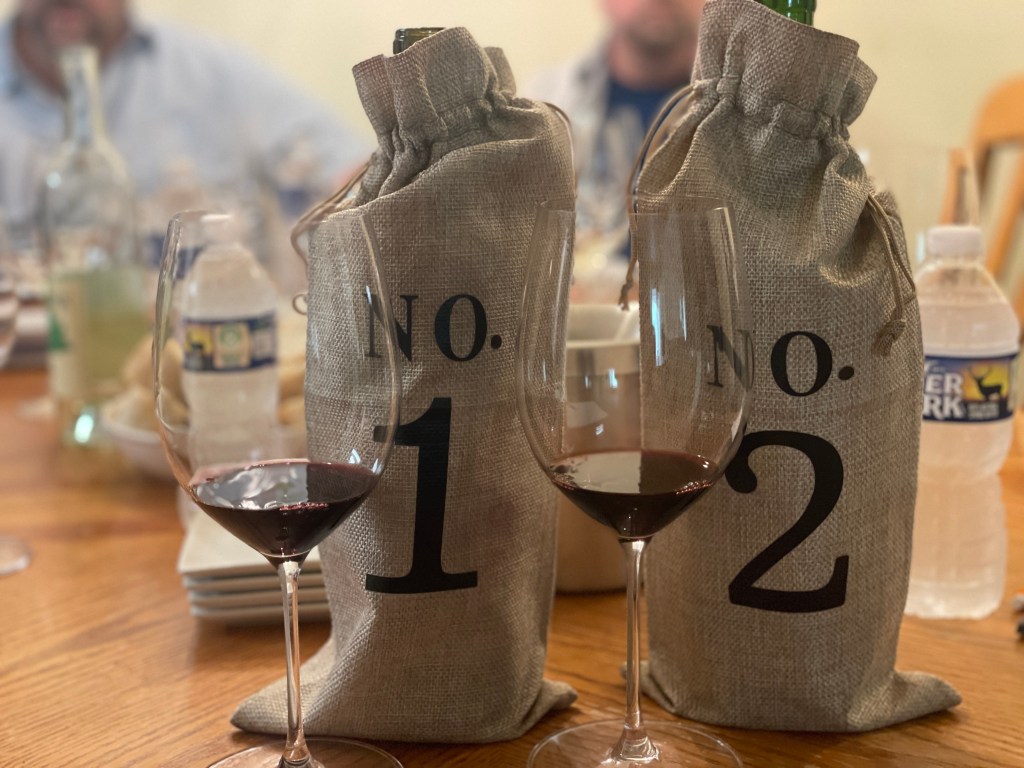
Every round my guests picked a favorite. I usually also wrote down the region it came from (if I remembered to ask). After we finished all 8 wines we did a vote to decide the top 2 of the day and revisited them in a ‘Finalist” round.

It was hard to find the specs on many of these wines. I suspect more than a few had a little something else blended in. For half the wines I couldn’t find anything that proved/denied these were 100% varietal wines.

The Contenders:

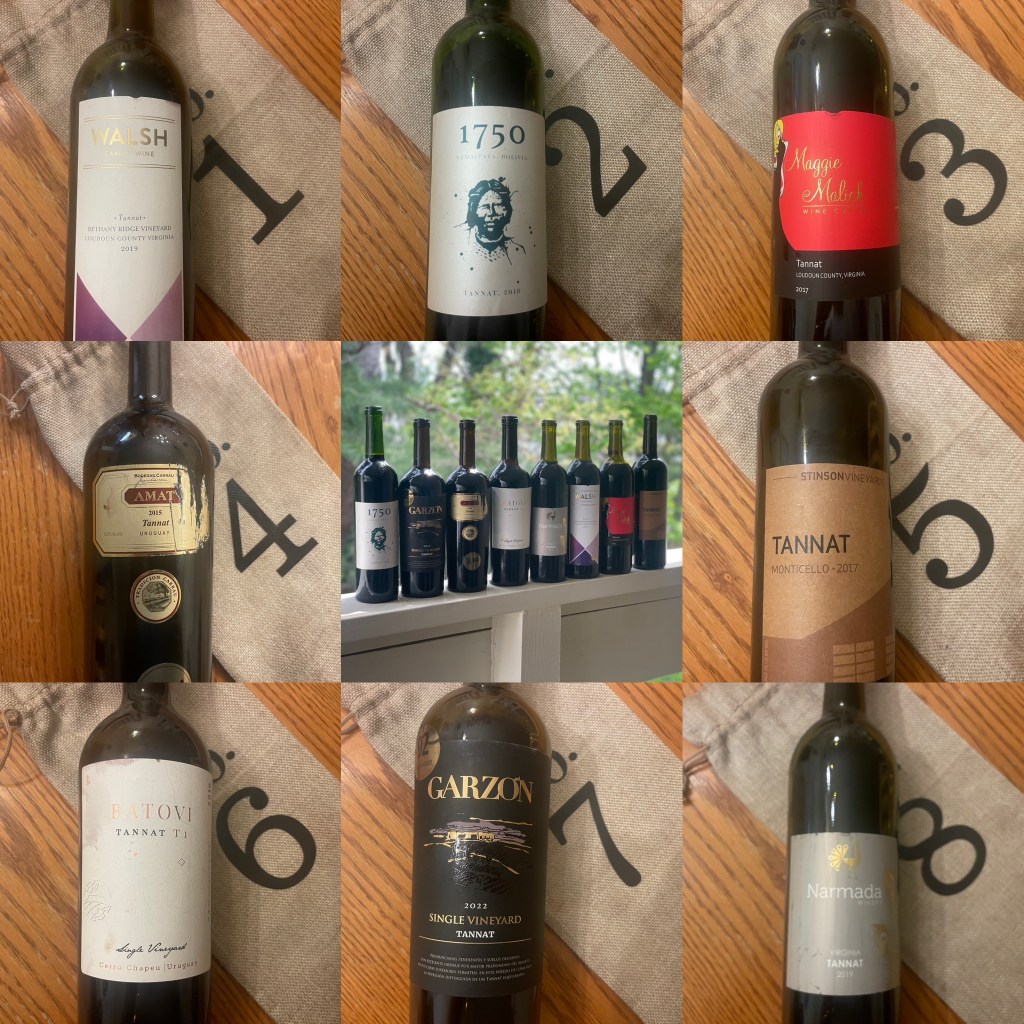
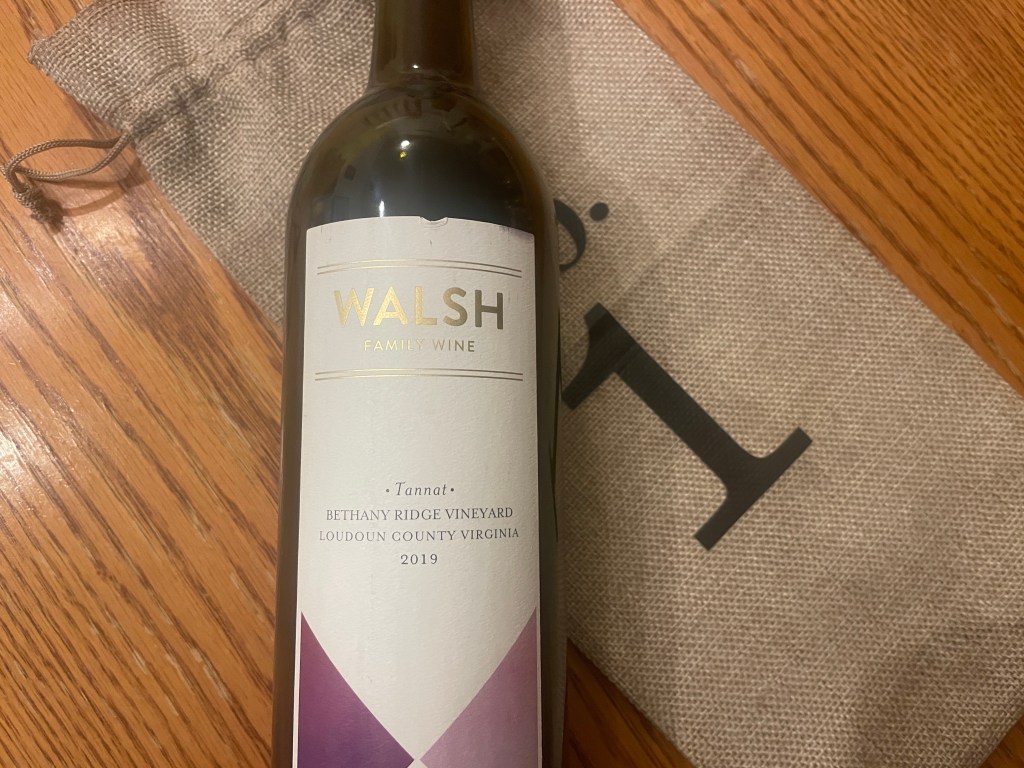
  1. Walsh Family Wine 2019 Tannat (Virginia) (90% Tannat/10% Cab Sauv)
  2. “1750” Uvairenda 2018 Tannat (Bolivia)
  3. Maggie Malick 2017 Tannat (Virginia) (95% Tannat/5% Merlot?)
  4. Amat 2015 Tannat (Uruguay)
  5. Stinson 2017 Tannat (Virginia) (100% Tannat)
  6. Batovi “T1” 2016 Tannat (Uruguay) (100% Tannat)
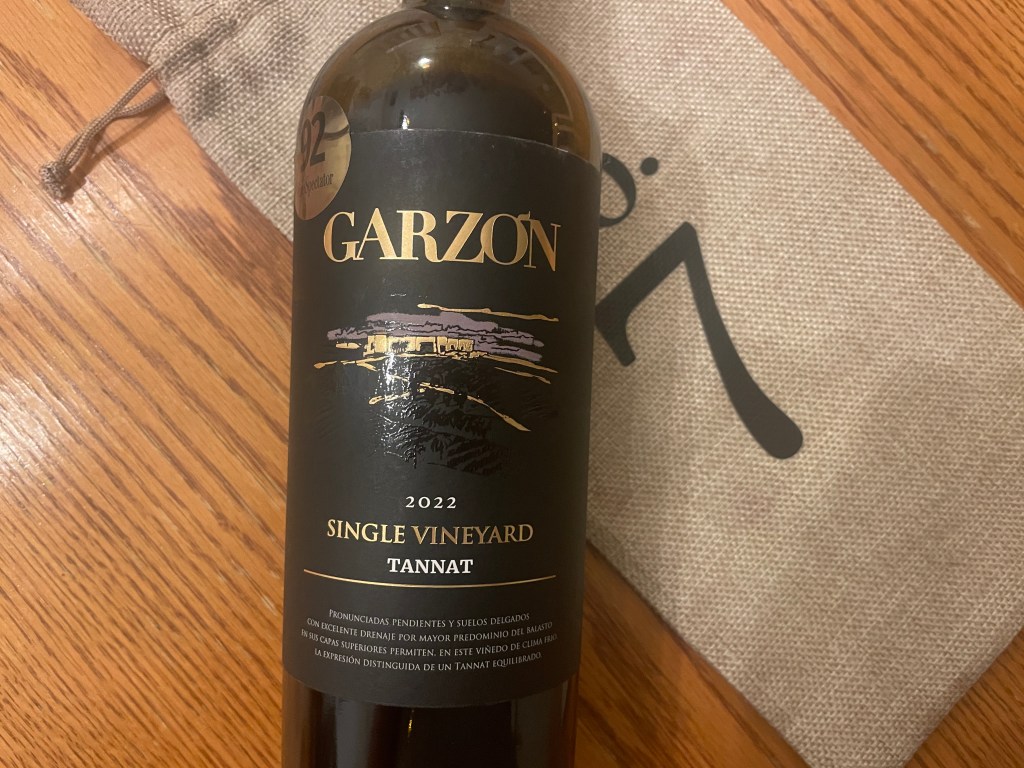
  7. Garzon 2022 Tannat (Uruguay)
  8. Narmada 2019 Tannat (Virginia)

Flight #1

  • Bottle #1: Walsh Family Wine 2019 Tannat (Virginia) (5 votes; round winner)
  • Bottle #2: 1750 Uvairenda 2018 Tannat (Bolivia) (2 votes)

Bottle #1 / Walsh Family Wine 2019 Tannat (Virginia). On the nose a variety of notes were mentioned, including cassis, lilac, and/or cocoa. A soft mid-palate with notes of cedar box and smoke. A good balance of fruit and tannin.

Bottle #2 /1750 Uvairenda 2018 Tannat (Bolivia). Slightly more aromatic than the first wine. It started off with a chemical or spice nose, while the descriptor ‘cheesy’ was also mentioned. The spice was there on the palate but wasn’t as prominent as the nose suggested. It had an almost grape-y ‘ripasso’-like flavor to it. The fruit wasn’t very strong here. We guessed it probably had some age to it.

I didn’t take notes on which region people thought the wines came from, but it was pretty obvious that #1 was Virginia because it was ‘familiar’ while the mustiness of #2 implied Uruguay.

Votes:

  1. Dan: Voted for #1
  2. Frank: Voted for #1.
  3. Jeremy: Voted for #1
  4. Kendell: Voted for #2.
  5. Matt C: Voted for #1.
  6. Matt F: Voted for #2.
  7. Sedale: Voted for #1.

Flight #2

  • Bottle #3: Maggie Malick 2017 Tannat (Virginia) (3 Votes)
  • Bottle #4: Amat 2015 Tannat (Uruguay) (4 Votes; round winner)

Bottle #3 / Maggie Malick 2017 Tannat (Virginia). The oak was noticeable, with people saying it was either borderline too much or maybe the oakiness level was right, but it had too high a toast factor on the oak.

That said, after we got past that oak it had nice fruit and lots of acidity. Nutty and toasted oak/violets were mentioned. Some earth notes as well.

Bottle #4 / Amat 2015 Tannat (Uruguay). Bright acidity. Notes of plumb, wildflowers were mentioned. The guests who preferred this wine felt it had a balance of red fruit and leather. Tannins were well integrated. Some felt it was the better balanced of the two. It was also lighter and felt less alcohol-y than #3. Maybe it was a blend, but I can’t confirm that.

Votes:

  1. Dan: Voted for #3; felt it was Virginia.
  2. Frank: Voted for #4; felt it was South America.
  3. Jeremy: Voted for #3; felt it was Virginia.
  4. Kendell: Voted for #3, felt it was Virginia.
  5. Matt C: Voted #4, felt it was from South America.
  6. Matt F: Voted for #4; felt it was South America
  7. Sedale: Voted for #3; felt it was Virginia.

Flight #3

  • Bottle #5: Stinson 2017 Tannat (Virginia) (5 votes; round winner)
  • Bottle #6: Batovi “T1” 2016 Tannat (Uruguay) (2 votes)

This was universally judged to be our favorite round of the day. By coincidence, both went to the ‘finalist’ round. It wasn’t planned that way; I had no idea in advance these two would be ‘ringers’; my pairing just happened to have the top 2 wines in the same initial round.

While most wines of the day were almost always easily identifiable by their country of origin, this round through us for a loop because both had “South America” vibes. We mostly still guessed them correctly, but I wouldn’t judge those who thought the Virginia wine was from Uruguay.

Bottle #5 / Stinson 2017 Tannat (Virginia). “Damn it’s good!” was quickly mentioned. Red and dark fruit notes on the palate. Beautiful depth. More fruity than sweet but with lots of complexity. Tannins were well integrated. Tea leaf on the nose; even a hint of butter.

“I need this with rib eye” was my favorite descriptor. I later learned it was 15.1% alcohol (the highest of any wine in the event), but it was so well balanced we didn’t notice it.

Bottle #6 / Batovi “T1” 2016 Tannat (Uruguay): Lots of great descriptors. Red fruit and ‘nice’ tannin. Creamy, soft texture; even a candied component. Good acidity and mouthfeel. Smokey and complex. Sour cream/sour cherry on the nose.

Someone mentioned this was a ‘sit by the fire’ wine. I was surprised it was 15.1% ABV; it didn’t taste ‘hot’ at all.

Votes:

  1. Dan: Voted for #5; felt it was Virginia.
  2. Frank: Voted for #5; felt it was South America.
  3. Jeremy: Voted for #6.
  4. Kendell: Voted for #5; felt it was Virginia.
  5. Matt C: Voted for #5; felt it was Virginia.
  6. Matt F: Voted for #6; felt it was South America.
  7. Sedale: Voted for #5; felt it was Virginia.

Flight #4

  • Bottle #7: Garzon 2022 Tannat (Uruguay) (5 votes; round winner)
  • Bottle #8: Narmada 2019 Tannat (Virginia) (2 votes)

Bottle #7 / Garzon 2022 Tannat (Uruguay). This wine was tight; we were guessing it was a younger wine. Ruby-esque color made us guess it may have been higher in alcohol. Tea leaf nose; soft tannin; ‘shy’.

It needed time to open up, but when it did we had descriptors of smokiness with some intensity and alcohol notes. Soft on the palate but drinkable. Hint of cocoa. Raspberry nose/ dark chocolate palate.

Bottle #8 / Narmada 2019 Tannat (Virginia). This was smoother and more ‘neutral’ compared to #7. Notes of prunes, cocoa spice, and licorice were mentioned. Soft palate, velvety, quaffable.

Votes:

  1. Dan: Voted #7
  2. Frank: Voted #7
  3. Jeremy: Voted #8
  4. Kendell: Voted #7, thought it was Virginia
  5. Matt C: Voted #7; thought it was Virginia.
  6. Matt F: Voted #8; thought it was South America
  7. Sedale: Voted #7

Finalist Flight

  • Bottle #5: Stinson 2017 Tannat (Virginia) (5 Votes; Event Winner)
  • Bottle #6: Batovi “T1” 2016 Tannat (Uruguay) (2 Votes; Runner Up)

Wines #5 and #6 were voted to advance to the ‘finalist’ round. After a 2nd tasting I did a poll of our favorite wines, and #5/Stinson was the event winner. The vintage was so strong, winemaker Rachel Stinson Vrooman later told me, “It made itself.”

#6/Batovi was the runner up. There was a consensus that Walsh Family’s 2019 Tannat was the third favorite, although we also liked Amat and Maggie Malick.

The Stinson and Batovi wines opened up just enough to make our 2nd tasting just different enough to make some of us rethink our votes. Most kept theirs, but Dan and I switched teams (him to Uruguay, me to Virginia).

I don’t know if this is surprising or not, but the top 2 wines were 100% Tannat. I still suspected several had something else blended in (the Walsh Family Wine definitely did; I suspect Maggie did as well).

In summary, the Stinson was judged to be a “I want this to drink by myself” wine (preferably with steak), while the Batovi was more versatile. It was a very tough choice to pick between the two. Dan of MyNoVaWineBlog was VERY happy he brought the winner!

  1. Dan: Voted #6/Batovi
  2. Frank: Voted #5/Stinson
  3. Jeremy: Voted #5/Stinson
  4. Kendell: Voted #5/Stinson
  5. Matt C: Voted #6/Batovi
  6. Matt F: Voted #5/Stinson
  7. Sedale: Voted #5/Stinson

Lessons Learned:

Both Virginia and Uruguay (with an assist from a Bolivian wine) presented very well. 2 rounds went to Virginia, 2 for Uruguay, and the ‘top’ wine was Virginia.

In terms of a tasting profile, the Virginia wines tended to be heavier on oak than their South American counterparts. All of them had some cedar box on the nose and trended towards dark fruit on the palate.

We felt the South American wines didn’t consistently have the same tasting notes, although most had notes of dried fruits/raisins. We also felt they may have spent at least some time in steel.

Yes – Virginia makes amazing Tannats. Nice to see Wine Enthusiast noticed!