Barboursville Vineyards Wins 2025 Virginia Governor’s Cup

On March 13th, Governor Glenn Younkin announced Barboursville Vineyards’ 2023 Vermentino as the winner of the 2025 Virginia Governor’s Cup. Ever the advocate for his home state, Barboursville winemaker Luca Paschina told the audience, “When you go to your favorite restaurant, you must demand they carry Virginia wine!”

Barboursville is one of Virginia’s oldest and most prestigious wineries, and Luca has been its Estate Director and winemaker since 1990. He is also the record holder for most Governor’s Cup wins, taking the trophy home three times since the event was revamped in 2011.

Vermentino is a variety that’s rarely found outside Italy, mostly planted in the maritime regions of Liguria and Sardinia. While not as recognizable as Barboursville’s other Italian grapes, Luca’s team has been successfully growing vermentino since 2009.

“It’s the favorite of a lot of people who visit, even if they don’t know what it is,” Luca said of the event’s top wine. “The acidity isn’t very high, but it has great minerality and phenolics. It does well in Virginia because it likes heat, but it doesn’t mind Virginia’s rainy periods either. I’ve made 14 vintages so far, and it’s always been very consistent, even in a wet year like 2018.”

The underappreciated nature of this variety means it’s a great value for your money, selling for $23 a bottle at the winery. A zesty, light-bodied white, Barboursville’s 2023 Vermentino hits a sweet spot between pinot grigio and sauvignon blanc, with notes of Asian pear, white flowers, and an underlying salinity.

Barboursville’s Vermentino has long been a contender for the Cup, having entered the Governor’s Case (composed of the event’s top 12 wines) seven times but missing the top prize until now. Their 2017 Octagon red blend also made it into the Case.

Ten other wineries entered the Case, representing a cross-section of the local wine industry.

DuCard Vineyards and The Winery at La Grange became first-time entrants into the Case. Valley Road winemaker Corry Craighill also took her place on the Cup finalist stage for the first time.

The remaining Case members were veterans of previous competitions. Michael Shaps Wineworks now boasts 15 Case wines, with King Family not far behind. 50 West, Paradise Springs, Potomac Point, Trump Winery, and Veritas also added notches to their tallies.

This year’s Governor’s Case also set a record for its high number of white wines. The event guidelines require the Case to include a minimum of four non-red wines. This year’s Case included six whites and a sparkling.
The strong showing by white wines and lighter-bodied reds is likely a tribute to the quality of the 2023 vintage, often regarded as one of the best in recent Virginia history. Not only do 2023 vintage wines make up over half the Case, they’ve also brought home many “Best in Class” awards in national-level competitions that California typically dominates.

Daring Wine & Cider Company’s Crab Apple blend was awarded Cider of the Year. A new “Best in Show” category was also unveiled, recognizing the best examples of major varieties or styles that didn’t make it into the Case.

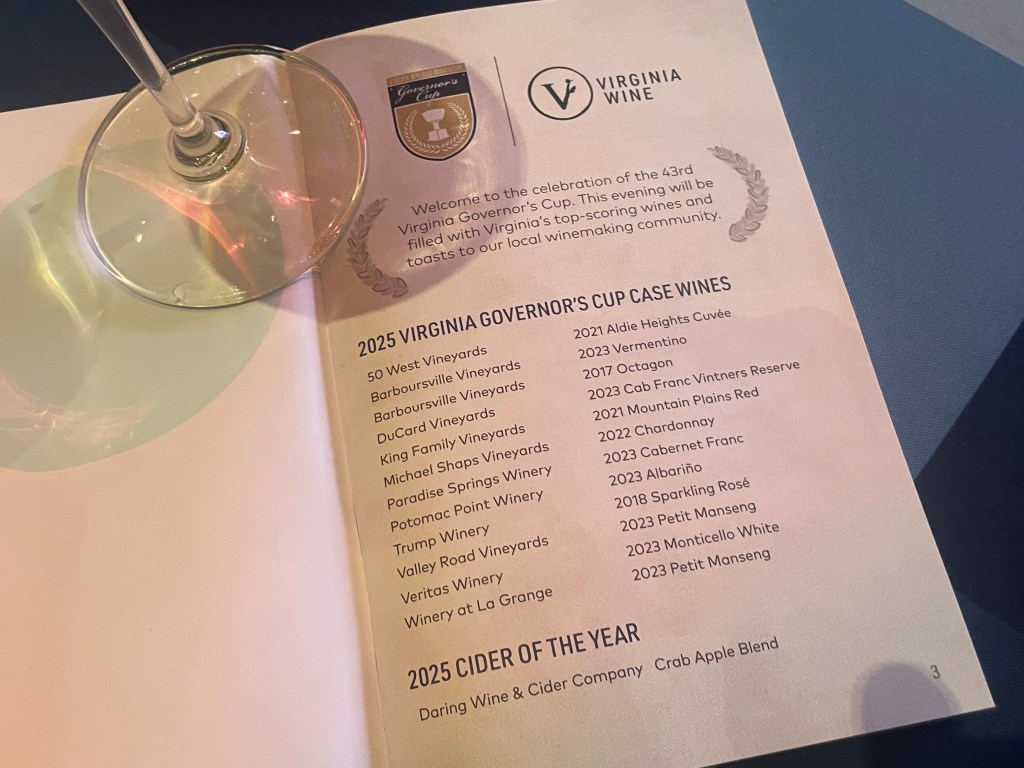
The 2025 Virginia’s Governor’s Case

  1. Barboursville Vineyards, 2023 Vermentino (Cup Winner)
  2. 50 West Vineyards, 2021 Aldie Heights Cuvée
  3. Barboursville Vineyards, 2017 Octagon
  4. DuCard Vineyards, 2023 Cabernet Franc Vintners Reserve
  5. King Family Vineyards, 2021 Mountain Plains Red
  6. Michael Shaps Wineworks, 2023 Chardonnay
  7. Paradise Springs Winery, 2023 Cabernet Franc, Brown Bear Vineyards
  8. Potomac Point Winery, 2023 Albariño
  9. Trump Winery, 2018 Sparkling Rosé
  10. Valley Road Vineyards, 2023 Petit Manseng
  11. Veritas Winery, 2023 Monticello White
  12. Winery at La Grange, 2023 Petit Manseng

Behind The Scenes Changes Help Even The Playing Field

A total of 622 medals were awarded in 2025, including 155 golds. While popular varieties and styles such as red blends, cabernet franc, and petit verdot dominated the medal count, several hybrid wines such as an organically-made cayuga from Loving Cup Vineyard also earned gold.

While the public’s attention is focused on the medal winners, the event was elevated by less-obvious changes in the submission and judging process.

For the first time, wineries were limited to a maximum of six entries. This increased the quality of the field by forcing wineries to be more selective in what they submitted.

This change wasn’t popular in all quarters. One owner confided he worried this limitation would undermine the event by encouraging wineries to only send wines with proven track records, rather than take risks with lesser-known varieties. Fewer entries also meant wineries could miss potential marketing opportunities.

The format under which wines are judged was also revamped. Director of Judging Frank Morgan wrote an extensive article outlining changes he instituted when he took over the role two years ago. The most notable change was having more judges in the preliminary round, mitigating the risk that palate fatigue would impact scoring.

As the stature of the event grows, Frank has correspondingly expanded its network of judges. “This year, we had four judges who hold the Master of Wine designation (the most ever), one Master Sommelier, and renowned wine writers. I now have a list of over 100 wine professionals from around the U.S. who have contacted me to express interest in serving as a judge,” Frank explained.

The final medal count demonstrates this combination of fewer entries and additional judges meant more nuanced wines showed better. In 2024, the event had 752 entries, 138 of which earned gold (18.4%). In 2025, the competition had 626 entries, 155 of which earned gold (24.8%).

Additional changes may be in the pipeline. The current Governor’s Cup format is somewhat inaccessible for micro-producers, or winemakers who make experimental styles that don’t show well with traditional judges. Frank hopes to eventually showcase these wines as well.

Meet the Winemakers: Barrel Oak and Vint Hill

This January, Barrel Oak and Vint Hill wineries won big in two of North America’s largest wine competitions, the San Francisco Chronicle Wine Competition (SFCWC) and San Francisco International Wine Competition (SFIWC).

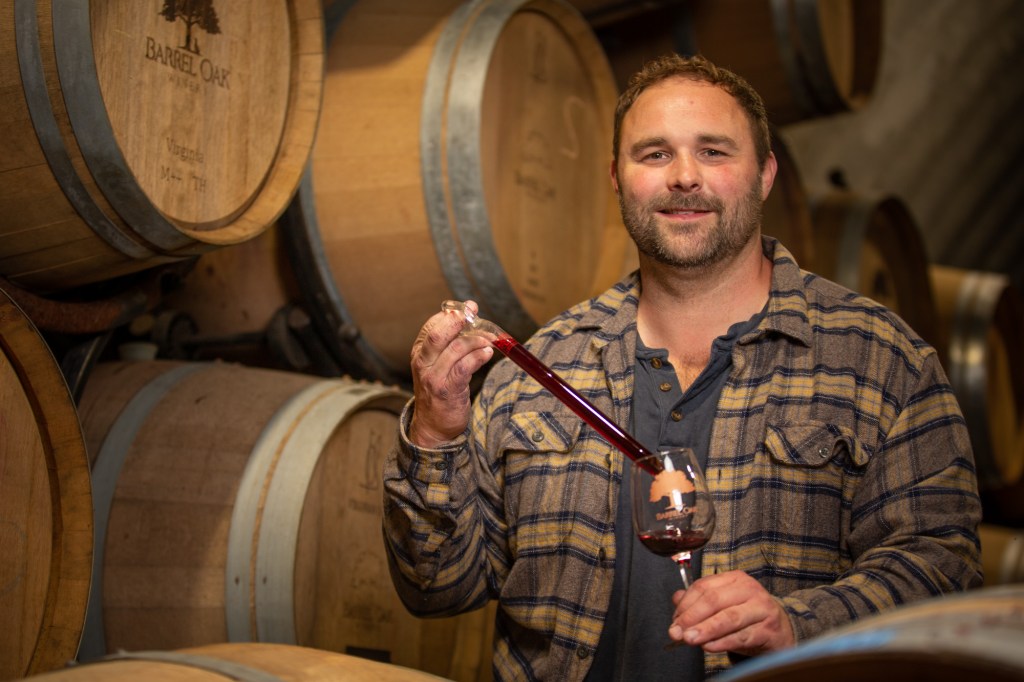
Barrel Oak winemaker Jeremy Ligon took home a Best in Class for his 2023 Sauvignon Blanc and a Double Gold for a rosé at the SFCWC. Vint Hill’s Mark Ward earned a total of 5 Double Golds, including the “Best White Wine in Show” at the SFIWC for his 2023 “Madison” Petit Manseng.

These were just a few of the 182 medals won by Virginia wineries at these events. Many Best in Class and Double Golds were won by Virginia in categories where California wine traditionally dominates.

This is especially impressive given the boutique nature of the Virginia wine industry. California produces 81% of American wine, according to recent industry statistics. By comparison, Virginia only produces 0.3% of this total.

This over-performance hasn’t gone unnoticed by the international wine community. SFCWC wine judge Mike Dunne wrote on the event website, “Each year, some wine region of North America seems to gain recognition for a disproportionate share of high awards at the San Francisco Chronicle Wine Competition. In 2025, it was Virginia…”

While not all wineries enter major competitions, they nevertheless provide an important metric on how Virginia wine fares on the international stage.

Pearmund Cellars owner Chris Pearmund has long advocated Virginia wineries showcase their work in settings beyond state-level competitions. “National competitions bring Virginia to the national stage,’ he wrote on Facebook. “The wine industry needs consistent, top-quality producers to participate in national competitions to sustain and grow our industry.”

While Barrel Oak and Vint Hill have been part of the Virginia wine industry for decades, their winemakers tend to stay out of the limelight. Jeremy and Mark have been making wine for over a decade, and this recent acclaim will only raise their profile.

I caught up with both winemakers to talk more about their career paths, as well as the importance major awards have on highlighting Virginia wine as a whole.

Jeremy Ligon, Barrel Oak Winery

Jeremy grew up in southern Virginia on a winery owned by his parents, but some of his best career advice came from none other than Bruce Zoecklein. Wine geeks may recognize that name, as Bruce was the Professor of Enology at Virginia Tech.

On Bruce’s advice, Jeremy applied to the wine program at Fresno State. After graduating, he found his way back to Virginia, bouncing around several wineries before accepting the winemaker job at Barrel Oak in 2021.

A year after his arrival, Barrel Oak was purchased by Kavelle and Ken Bajaj, IT entrepreneurs with a love of wine. The Bajajs not only brought with them a wealth of managerial experience, they were willing to invest in Barrel Oak’s success.

Those investments have translated into visible upgrades to the tasting room and kitchen, but what really excites Jeremy is the new equipment in the cellar.

“We brought in new red wine tanks which help us with the processing, plus new pumps and a new sorting table. The table has already paid for itself in the first harvest; it’s just smoother and more efficient.

Ken keeps insisting we make the best wine possible, so I suggested we invest in some new barrels. When I asked him how many we should get, Ken said, ‘Let’s get 10 of them!’”

Part of elevating their tasting experience is to make the wine list more manageable. Jeremy started at Barrel Oak making 32 different wines, but is aiming to streamline his roster to around 15. Fortunately, this hasn’t prevented Ken from exploring new options, such as adding a sparkling wine program.

Another part of raising the bar is to get feedback from world-class judges, like those at the SFCWC and SFIWC. Such exposure helps Barrel Oak push for greater distribution.

“I think it’s important to get out there and get that feedback,” Jeremy exclaimed. “Those judges are serious! We want to be judged by our peers.”

Mark Ward, Winemaker for Vint Hill, Effingham Manor, and Pearmund Cellars

Mark started his winemaking career the way many of his Virginia peers did – by first working in a field completely unrelated to viticulture.

His first job was in IT consulting where he was often on the road. After 25 years of this, Mark was open to a career change, he explained during a chat at Vint Hill.

“I got to thinking; I grew up on a farm. I was interested in wine. How can I combine all of these things that I’m interested in?

So I went back to school in Washington State for their Enology and then Viticulture programs. That led to my first internship in Oregon in 2013.”

Mark’s family encouraged him to consider Virginia, and his school put him in touch with Chris Pearmund, the managing partner of Vint Hill, Effingham Manor, and Pearmund Cellars. These wineries form a trifecta, sharing the same staff and winemaking facilities.

By 2015, Mark was the Assistant Winemaker for this trio, and rose to the Head Winemaker position in 2020. Since then, Mark (and his team, he’s quick to note) has racked up a series of awards.

Mark explained deciding what wines to submit to major competitions is often complicated, but these events play an important role in elevating Virginia’s profile.

“If you look at the national competitions in San Francisco, we’re always sending the kind of wine Virginia is known for. For a more regional competition like the Atlantic Seaboard, we’ll send a broader sample.

I think the rest of the world is starting to understand what Virginia wine drinkers have always known; there are talented growers and winemakers in the state.

Not only are we getting awards for things we’ve traditionally done well – cabernet franc, petit manseng, petit verdot – places like Barrel Oak and Veritas are doing great things with sauvignon blanc. Outsiders don’t always think Virginia can compete across the board, but when they see a wine like our Effingham ‘Kings Ransom’ Bordeaux blend get 97 Points/Double Gold, they start to appreciate we can win against the best in the world.”

Virginia Pinot-Palooza

I was recently the emcee for a Virginia Pinot Noir event that I nicknamed “Pinot Palooza”. A considerable portion of Virginia’s community of Pinot growers gathered to share one another’s wines and discuss their vineyards. It was probably the single most diverse tasting of Virginia Pinot Noir that has ever occurred.

Wines we sampled

  1. 12 Ridges 2021 Pinot Noir (VA)
  2. 12 Ridges 2022 Pinot Noir (VA)
  3. Savigny-lès-Beaune “Vieilles Vignes” 2018 (Burgundy)
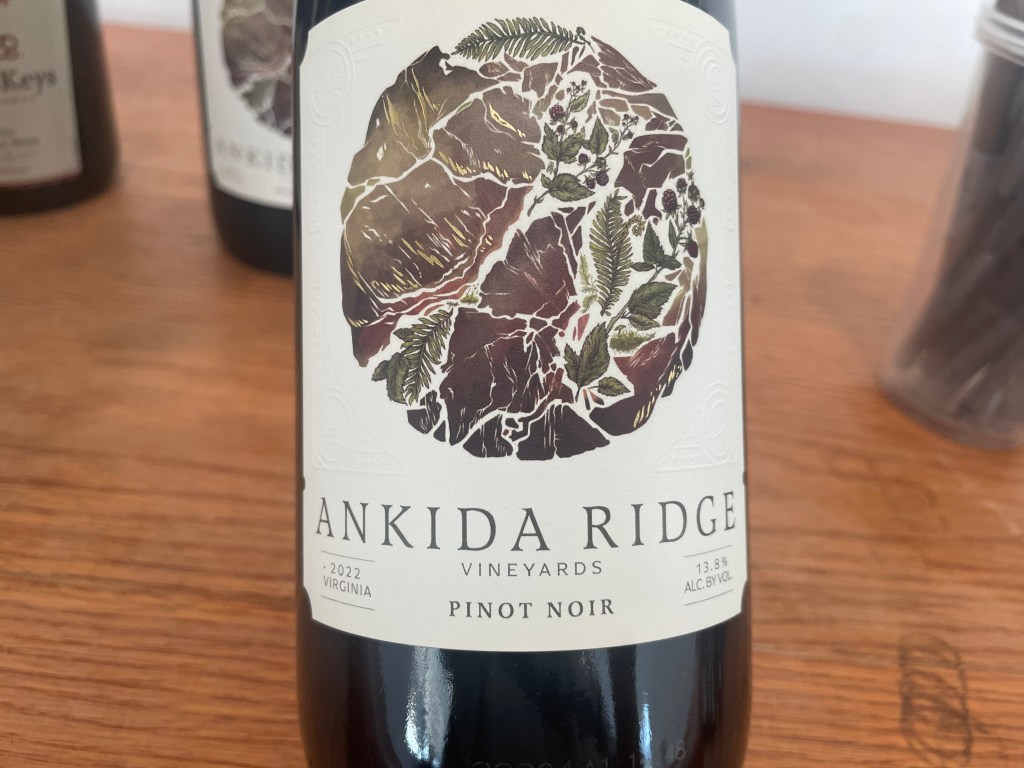
  4. Ankida Ridge 2022 Pinot Noir (VA)
  5. Cave Ridge 2023 Pinot Noir (not released) (VA)
  6. Cave Ridge 2024 Pinot Noir (barrel sample) (VA)
  7. Ox Eye 2022 Pinot Noir (VA)
  8. Hazy Mountain 2022 Pinot Noir (VA)
  9. DuMOL Pinot Noir (CA, Russian River Valley)
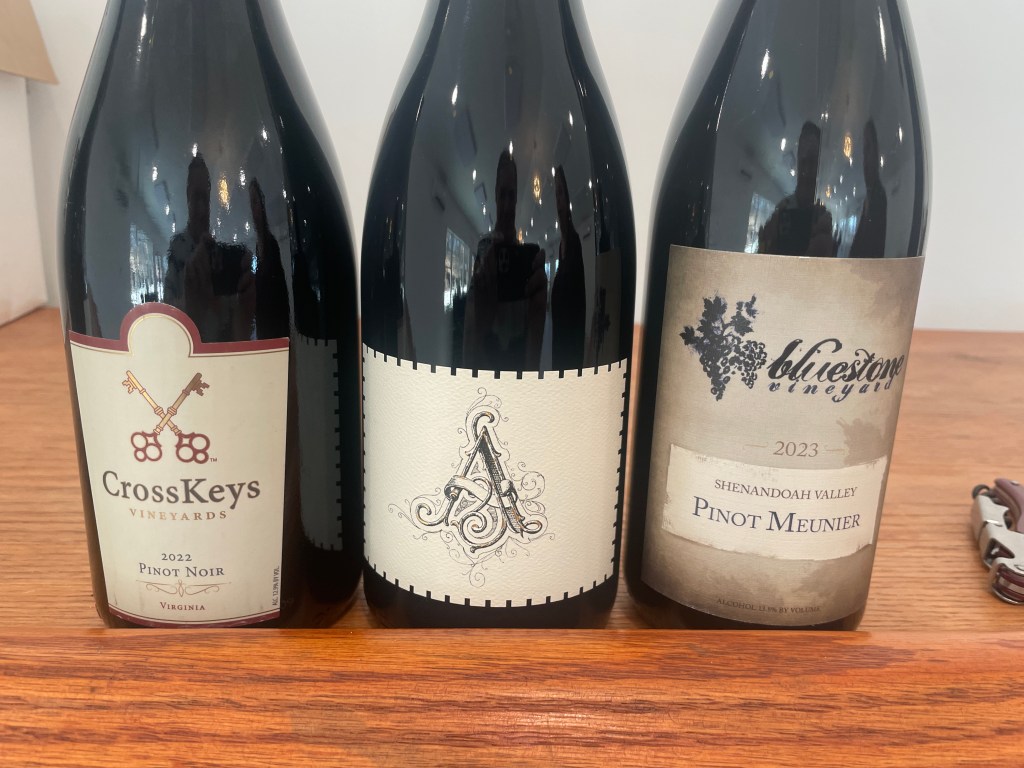
  10. Cross Keys 2022 Pinot Noir (VA)
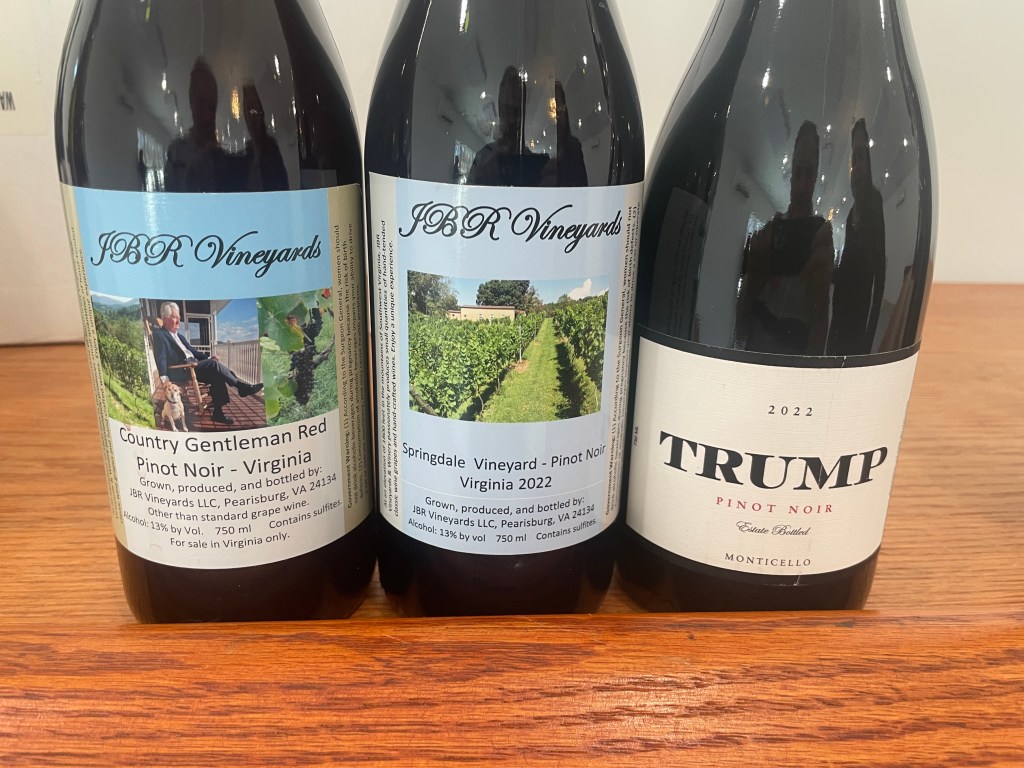
  11. JBR Vineyard 2021 Country Gentleman Red (Pinot) (VA)
  12. JBR Vineyards 2021 Springdale (Pinot) (VA)
  13. Trump Vineyards 2022 Pinot Noir (VA)
  14. Antiquum Farm Pinot (Oregon)
  15. Bluestone 2023 Pinot Meunier (VA) (the only non-Pinot Noir of the day)

While this sounds like it would be a big gathering, in reality we only shared 11 Pinot Noirs from 8 separate Virginia wineries, in a state that possesses around 15 growers. Of these, only a handful typically make a full Pinot Noir every year (the remaining focus on sparkling or rosé).

It’s difficult to say which Virginia winery first planted Pinot Noir, although several including Barboursville and Swedenburg tried in the 1990s and early 2000s. These viticultural pioneers didn’t yet realize Virginia’s warm summers would cause these sites to struggle. Dennis Horton, a man famous for introducing multiple varieties to Virginia, reportedly once said: “I don’t think Jesus Christ could grow Pinot Noir in Virginia. You can do it, but it doesn’t taste like Pinot should.”

The data shows not many have tried. Side by side metrics from Virginia’s 2008 and 2023 Commercial Wine Grape reports demonstrate that Pinot remains a niche grape in the state.

  • In 2008, there were 28 acres of Pinot Noir (25 bearing, 3 non-bearing) out of a total of 2,500 acres of grape vines in Virginia (barely over 1% of the total)
  • In 2023, there were 41 acres of Pinot Noir (30 bearing, 11 non-bearing) out of 4,318 acres of vines in the state (just under 1%).

Yet these metrics only tell part of the story.

According to conversations with various winegrowers, it appears much of the Pinot that existed when the 2008 report was written has since been torn out, as these growers couldn’t bring their grapes to full ripeness. Most of the vines that were planted from 2008 onward were planted in the Shenandoah Valley and Blue Ridge Mountains.

The key change from the wines that Dennis Horton tried was these newer vineyards focused on higher-elevation sites, often 1,600 feet and above. Such elevation ensures a constant flow of cool air and moderate temperature swings, which protect Pinot’s tightly-bunched clusters from damage and allow them to evenly ripen.

Membership in this ‘high elevation club’ is very select. Ankida Ridge planted their first vines in 2008, while Ox Eye Vineyards planted in 2009 based on advice from Finger Lakes grower Hermann Wiemer. Hazy Mountain started growing Pinot at its Swoope vineyard in 2016, and 12 Ridges Vineyard founded their site in 2019. Around the state, even more wineries followed.

Our tasting included a broad mix of vineyards, planted anywhere between 850 to 3,300 feet elevation. We asked ourselves; did this elevation make a difference, and what other factors influenced the wine in our glass?

Virginia Pinot Noir Growers

*Note: The Shenandoah Valley has around half of all Pinot Noir grown in Virginia, with smaller plantings at various locations along the Blue Ridge Mountains. Trump Winery has the largest single planting of Pinot Noir in Virginia, but in most years, it’s exclusively used for sparkling wine.

The Tastings

We sampled 15 different Pinots in flights of 3. I ensured nearly every flight had a non-Virginia Pinot for comparison purposes. My apologies for having better notes on some wines that others; at times I couldn’t write fast enough.

Flight 1:

  • 12 Ridges 2021: Lighter on nose and harmonious on the palate. Good complexity of aroma, tannins, and finish. One of the most ‘delicate’ wines of the day, and one of the favorites.
  • 12 Ridges 2022: Bolder, more fragrant than the 2021 vintage.
  • Savigny-lès-Beaune “Vieilles Vignes” 2018: Fleshier, more concentrated than anything else I tried that day.

Flight 2:

  • Ankida Ridge 2022: Floral nose. Notes of earth, specifically wet dirt. The wine had some heft to it but was well balanced. It also had just the right amount of oak, tannin, and structure.
  • Cave Ridge 2023: Not yet released! Clean, flawless, fruity, but needs some bottle age. Notes of red plumb and cherries. Less earthy than the Ankida. Owner Randy Philips explained he was going to only make a sparkling wine, but his daughter Megan loved the 2023 so much they decided to make it as a still wine. This was the first time he’d made a regular Pinot, which makes it all the more impressive.
  • Cave Ridge 2024 (barrel sample): This was so young it was hard to judge, but we had fun sampling it. Some attendees actually thought the 2024 was better than the 2023, or would be in time.

Flight 3:

  • Hazy Mountain 2022: Lighter in color, fresh mouthfeel. It had some earthiness to it and nice tannin.
  • Ox Eye 2022: Very charming and approachable. At $27, this was one of the best values of the entire event. Owner/winemaker John Kiers doesn’t make a still Pinot every year, but his $35 Blanc de Noir is a great alternative.
  • DuMOL Pinot Noir (CA, Russian River Valley): One of the fullest wines of the day. The ripeness made it stand out as a California wine.

Flight 4:

  • JBR 2021 “Country Gentleman Red”: Light and fruity, lots of strawberry notes. Unfiltered? At $15, this was made for a crowd looking for something that’s easy drinking.
  • JBR 2021 “Springdale”: More intense than the “Country Gentleman”, and closer to the traditional Pinots we are accustomed to.
  • Trump Winery 2022: Good body and structure, but at the expense of the fruit. Trump only infrequently makes a Pinot Noir, but you can usually find these grapes as a Blanc de Noir.

Flight 5:

  • Antiquum Farm Pinot (Oregon): No notes, but good!
  • CrossKeys 2022: CrossKeys only infrequently makes a still wine, but their Blanc de Noir is excellent. Barnyard note to it, maybe a little brett.
  • Bluestone 2023 Pinot Meunier (from Verona Farm Vineyard): Our only non-Pinot of the day. One guest referred to this as a ‘starter red for white drinkers’, because it’s so easy drinking.

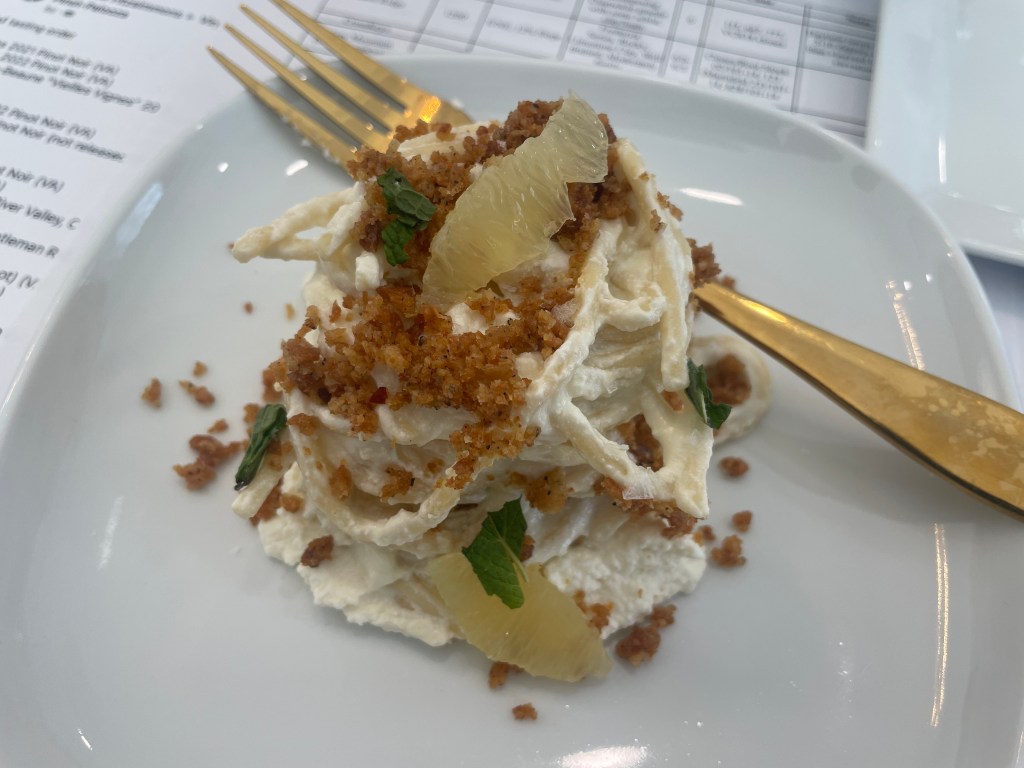
I should also mention the amazing food that Cave Ridge arranged for us, courtesy of Woodstock-based Flour & Water.

I polled the 9 guests who didn’t present a wine they made, and the top three Virginia wines were the 2022 Ankida Ridge, 2021 12 Ridges Vineyard, and the 2023 Cave Ridge (which narrowly beat the 2022 Ox Eye).

Ankida was the overall favorite by a fair margin, but the 2021 12 Ridges wine had many compliments as well. Notably, these two were specifically designed as ‘high elevation’ vineyards, with Pinot being some of the first grapes they planted.

Lessons learned

“High elevation Pinot is in its infancy. I am excited for its future,” wrote Christine Vrooman of Ankida Ridge. “The bar has been raised from 20 years ago,” said another guest after completing the tasting.

Here are a few of my take-aways from the day’s discussions:

1. Winemaking is more important than elevation to make good wine. Site selection is important to tease out Pinot’s best expressions, but good winemaking is still crucial to make a good wine. Likewise, a winemaker can make a good wine made with Pinot grapes, even if it doesn’t express the ‘typical’ Pinot characteristics consumers are accustomed to. We saw both sides of this coin at this event.

2. Elevation is important – but so are other factors. While much of the discussion focused on the importance of elevation as a key criterion to bring out Pinot’s best qualities, that’s just one part of the equation. Soil type, vine density, relative altitude, and good vine material are also important to get healthy fruit.

My observation of the day’s conversations is while Pinot does love elevation, it takes more than elevation to make a good Pinot vineyard.

3. Blanc de Noir is a great alternative. Many Pinot growers readily admit how difficult it is to achieve full ripeness. This means sparkling wine is usually the best use of their fruit. These wineries (including but not limited to Afton Mountain, CrossKeys, Rockbridge, and Trump) may only offer a Pinot Noir in better growing years.