
Comic book films have popularized the idea of “shared universes,” where heroes from multiple worlds join together. It’s great movie fodder, but it wasn’t until Reggie Leonard described the breadth of the wine club/wine community/access & opportunity program he co-founded that I realized why this initiative refers to itself under a similar moniker.
I say this because the “Oenoverse” (Ee-Nuh-Verse) is all of those things and more.
Reggie’s passion for wine began in 2015 when he took a job at the University of Virginia’s School of Data Science. An urge to meet people and try something new led to the discovery of free tastings at Market Street Wine in downtown Charlottesville. Little did he realize these tastings would introduce him to an entirely new community.

“I’m an ambivert; an introvert but in an extroverted way,” Reggie said over the phone. “I knew that community is important to me, and I wanted to make sure that I found a community that allowed me to be extroverted.
At first I didn’t understand any of the terminology used at these wine tastings. But over time, I surprised myself by starting to remember different names, recognizing different tasting profiles.
I connected to wine more than I realized, and through that realization I eventually discovered a Black Wine Lovers Facebook group.”
Learning the terminology of wine is difficult enough. But Reggie was encountering another barrier; the world of wine isn’t easily accessible to people of color.
The lexicon of wine relies on Eurocentric descriptors and food pairings that the BIPOC community doesn’t always relate to. On top of that, the lack of other Black faces made the experience more daunting.
“When I experienced wine, it didn’t mirror the rest of my life, since the traditional wine experience wasn’t built with me in mind,” he explained. Reggie didn’t realize it at that time, but this realization must have triggered an idea. If there wasn’t a community for those outside their comfort zone to learn about wine, he’d help build one.
Building a Community
In late 2020 Market Street Wine approached Reggie about hosting virtual events. One of the participants was Blenheim Vineyards Sales/Marketing Director Tracey Love. The two eventually connected in-person, leading to a collaboration with Blenheim.
Tracey encouraged Reggie to host an event to talk about his wine journey. That led to further discussions how they could replicate this theme of ‘community’, all along the backdrop of wine.

The “Oenoverse” was born.
According to its website, Blenheim’s Oenoverse Club is “dedicated to expanding opportunity and perspective through Virginia wine for people who have never joined a wine club or are seasoned professionals.” While outreach to members of historically underrepresented communities is a key part of its mission, the club is open to everyone. Members are also encouraged to share their wine tasting experience during their events.
Yet the Oenoverse doesn’t exist by itself; it’s part of an ecosystem of similarly-minded organizations. Among them are Charlottesville’s Ethos Wine & Tea and RichWine, an online wine club based in Richmond. Both businesses focus on low-intervention, sustainable wines.
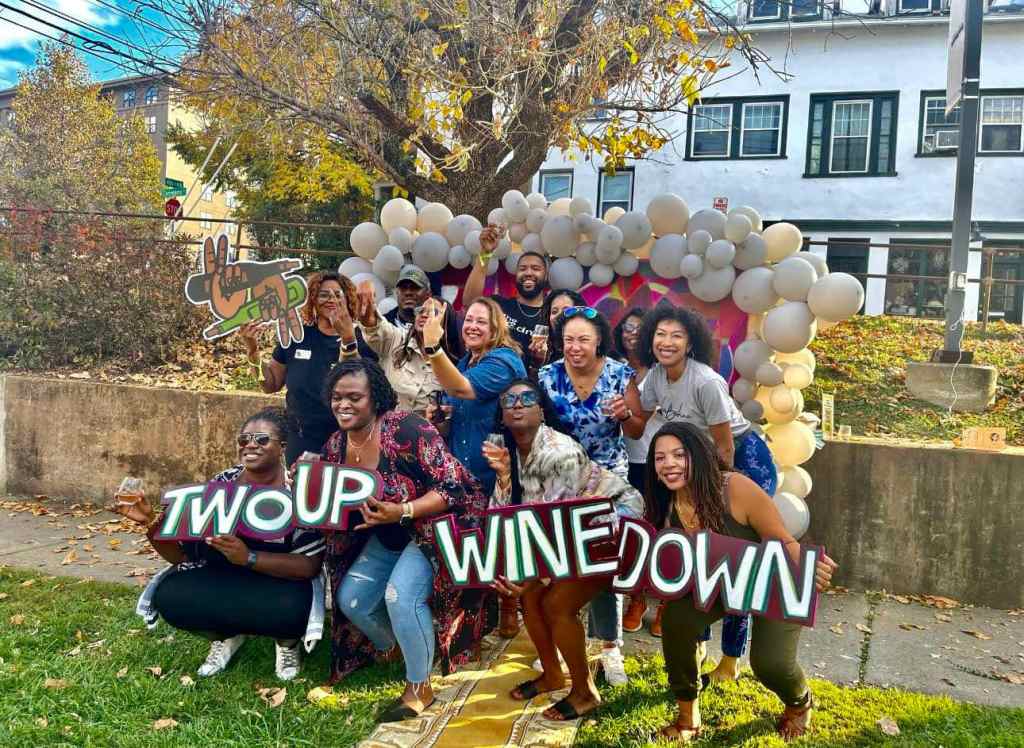
Probably their most active partner is The Veraison Project, which co-hosts the Two Up Wine Down music festival and Oeno Camp. The former takes place every November at the Jefferson School African American Heritage Center, while the latter is a three-day Virginia wine immersion program for historically underrepresented consumers and industry professionals.

Showcasing Non-Traditional Grapes and Styles
The Oenoverse’s advocacy for the underrepresented goes beyond outreach to communities of color; it showcases other parts of the wine industry that are often overlooked.
“What else can wine look like?” Reggie asked rhetorically. “Historically, we’ve only paid attention to vinifera wine. But who doesn’t like more options?”
Reggie and Lance Lemon, owner of RichWine, were deeply inspired by Jahdè Marley’s “Anything But Vinifera” wine movement. Jahdè’s desire to spotlight hybrid and non-traditional grapes encouraged the two to found their latest initiative; The Parallax Project.
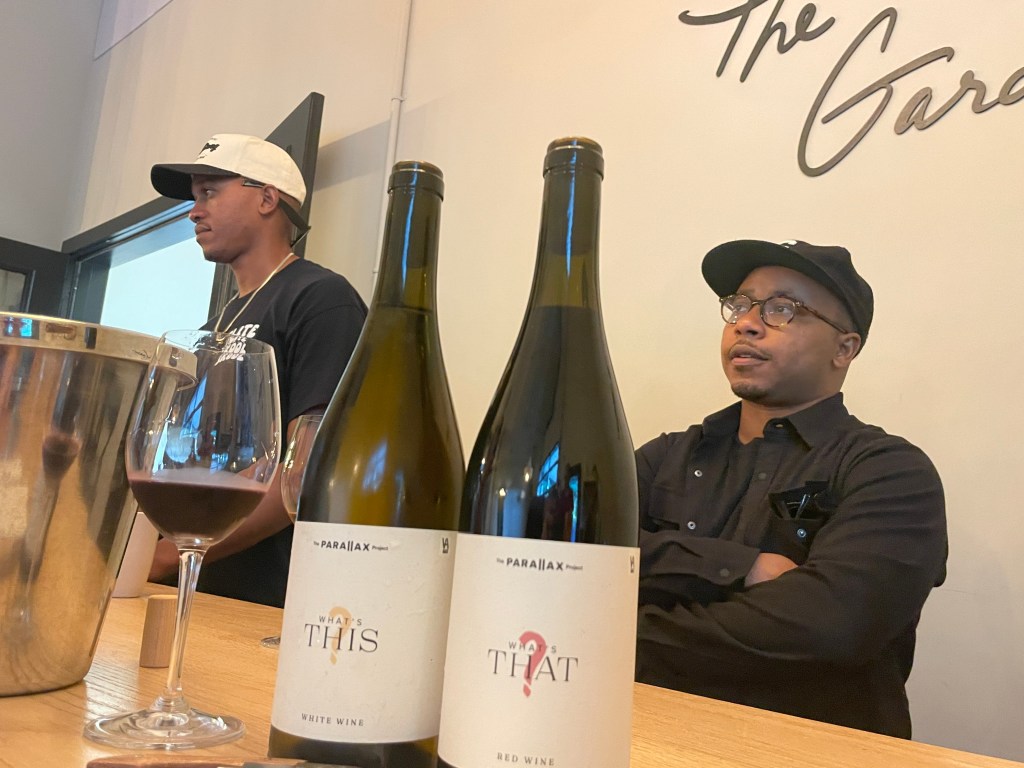
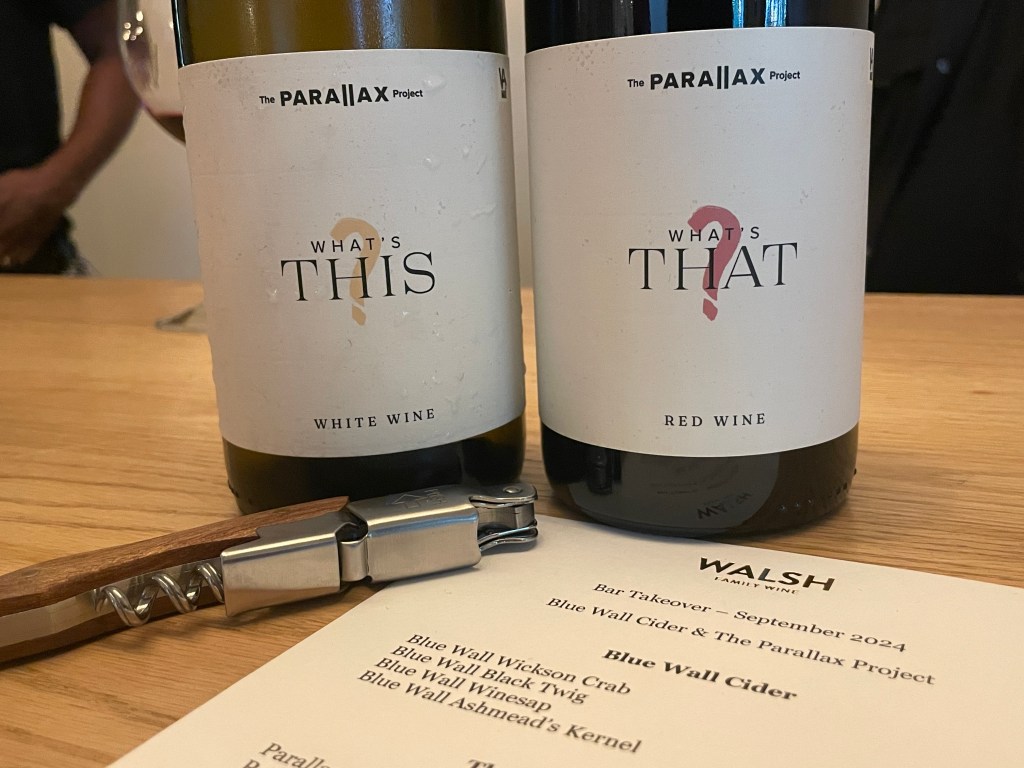
Several years ago, winemakers Ben and Tim Jordan of Commonwealth Crush reached out to Reggie and Lance to explore ideas for a partnership of their own. At the end of that conversation, the quartet came up with the idea of making a small-batch of wine, produced at Commonwealth but under Reggie and Lance’s direction.
The project’s name was inspired by what’s called “The Parallax Effect,” which is “a difference in the apparent position of an object when viewed along two different lines of sight.”
Lance and Reggie applied this principle to their two wines, both made with a mix of vinifera and hybrid grapes. While one is a red and the other is a white, both were made using nearly the same grapes but blended in different proportions and made using different winemaking styles.
Reggie summarized his myriad of projects with this; “We are building a space for something that has not been built for. That’s not just for people of color but other aspects of wine, like hybrids and lower-alcohol wine.
If we do that, we can bring in customers that weren’t part of the market before.”



 Wine Trails and Wanderlust