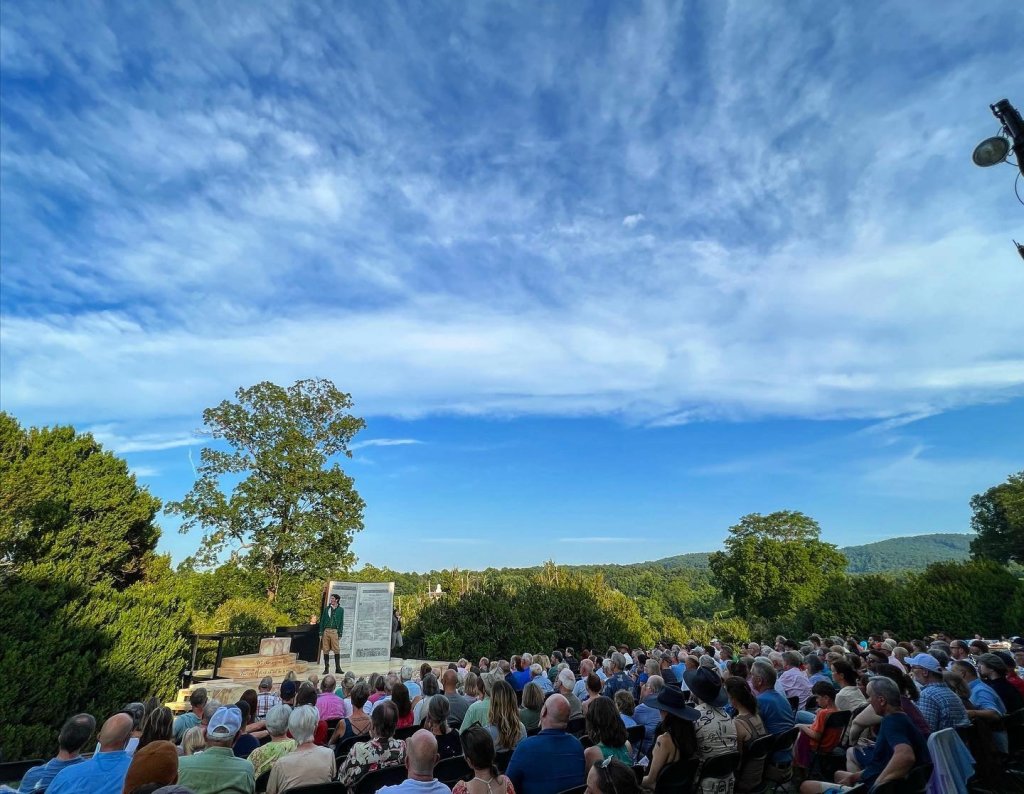
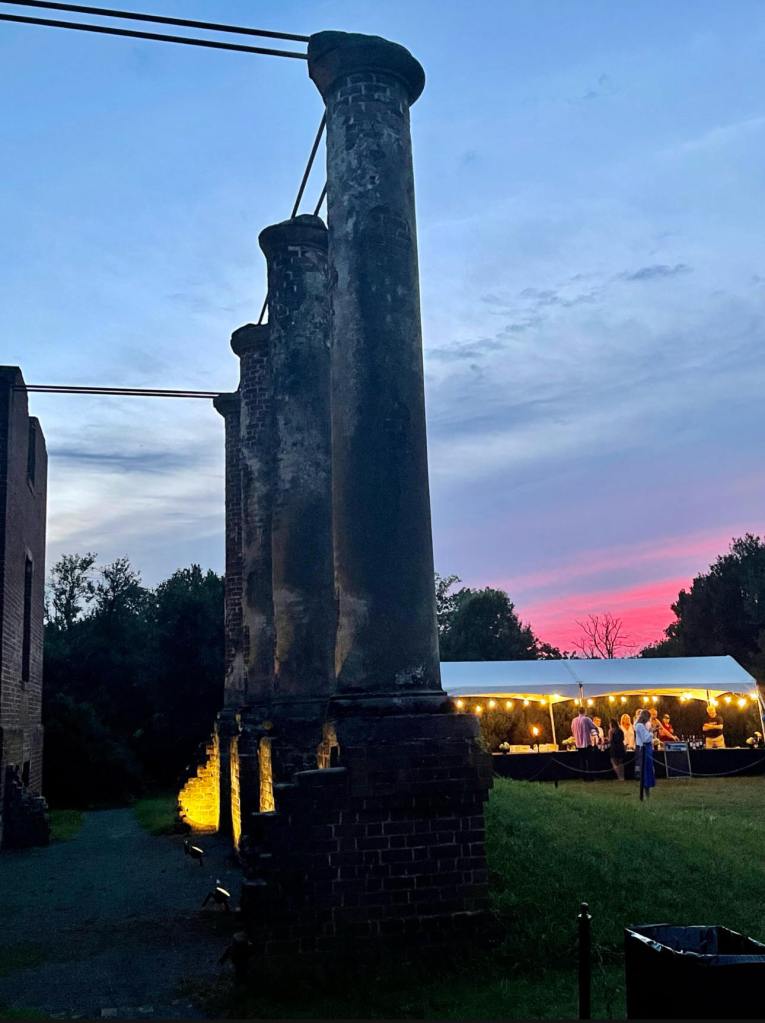
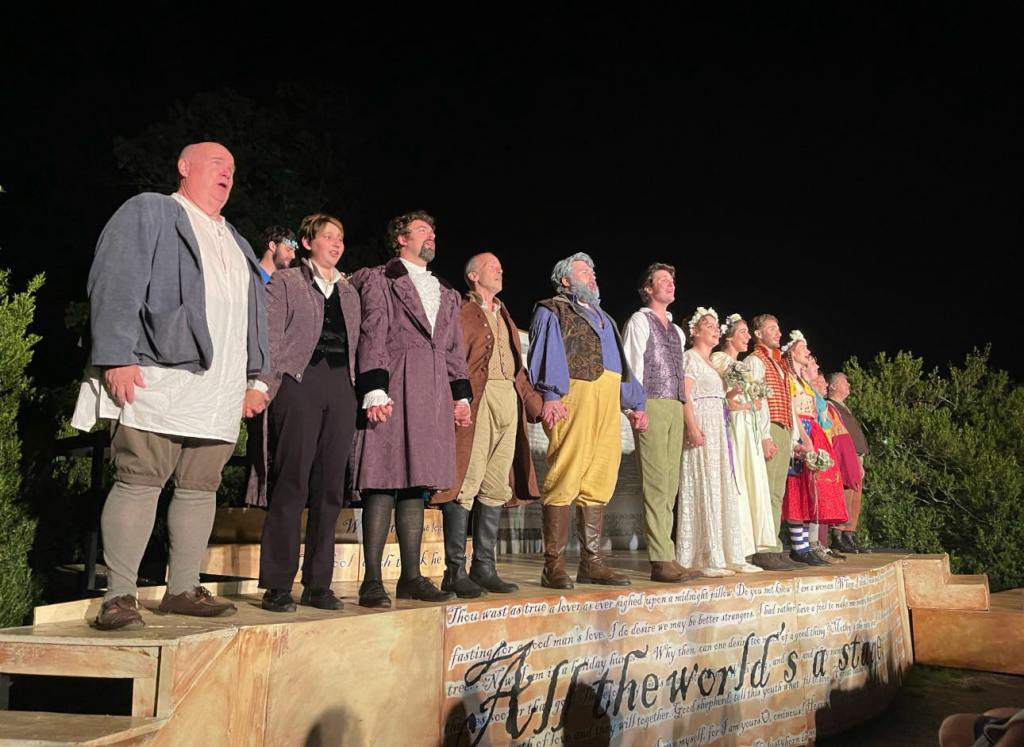
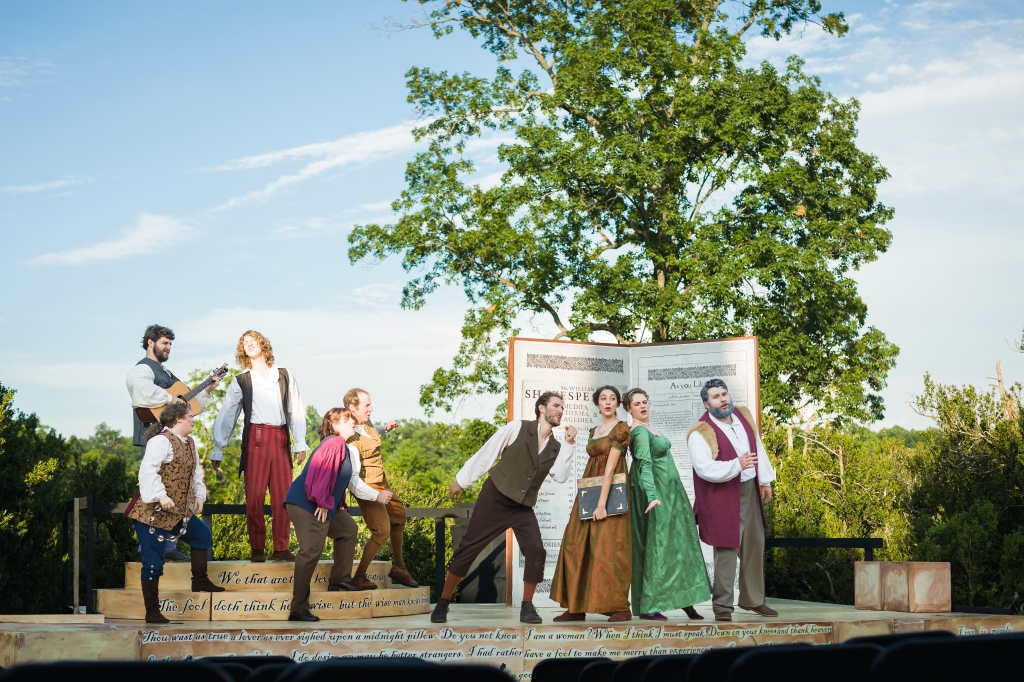
“Shakespeare at the Ruins” returns to Barboursville Vineyards this July with a month-long showing of “The Comedy of Errors”. The play will be held at the ruins of the home of James Barbour, located a short walk from Barboursville’s tasting room.
One of William Shakespeare’s earliest works, The Comedy of Errors tells the story of two sets of identical twins who were accidentally separated at birth but later reunited. The name of the play has since entered the English lexicon to describe “an event or series of events made ridiculous by the number of errors that were made throughout”.
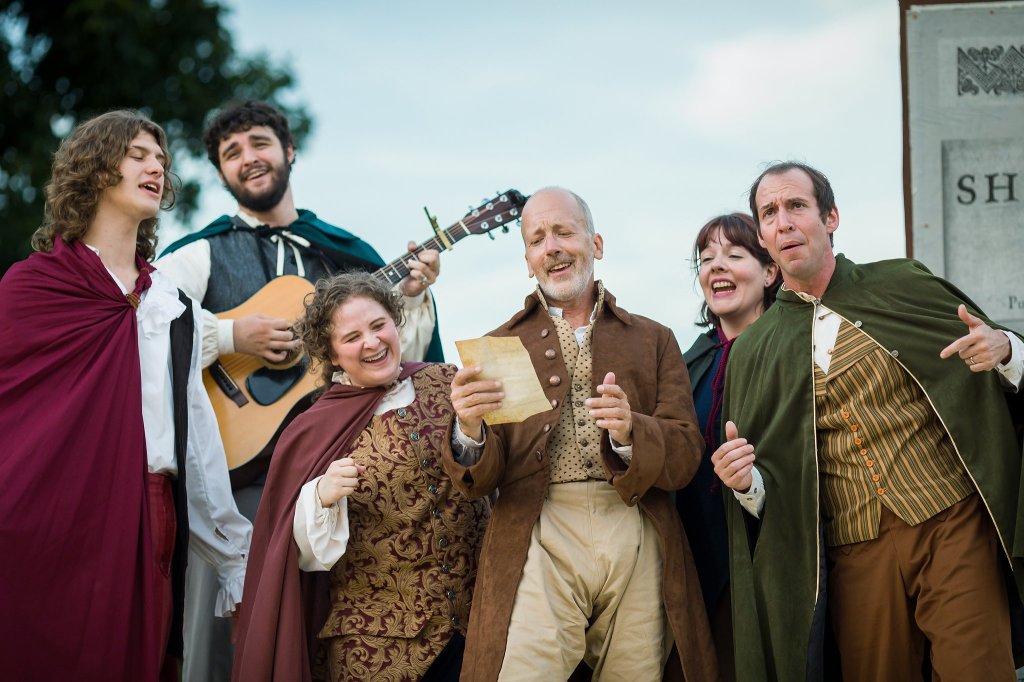
The theater behind this show is Four County Players, Central Virginia’s longest continuously operating community theater company. Founded in 1973, Four Counry Players has performed everything from contemporary musical satires to Dickens classics.
Four County Players came up with the idea of staging Shakespeare plays outdoors in 1990. Seeing the ruins’ potential as a unique backdrop, they approached Barboursville Vineyards to pitch the idea of a partnership. Barboursville accepted, and the troupe staged A Midsummer Night’s Dream at the winery later that year.
The Barboursville Ruins
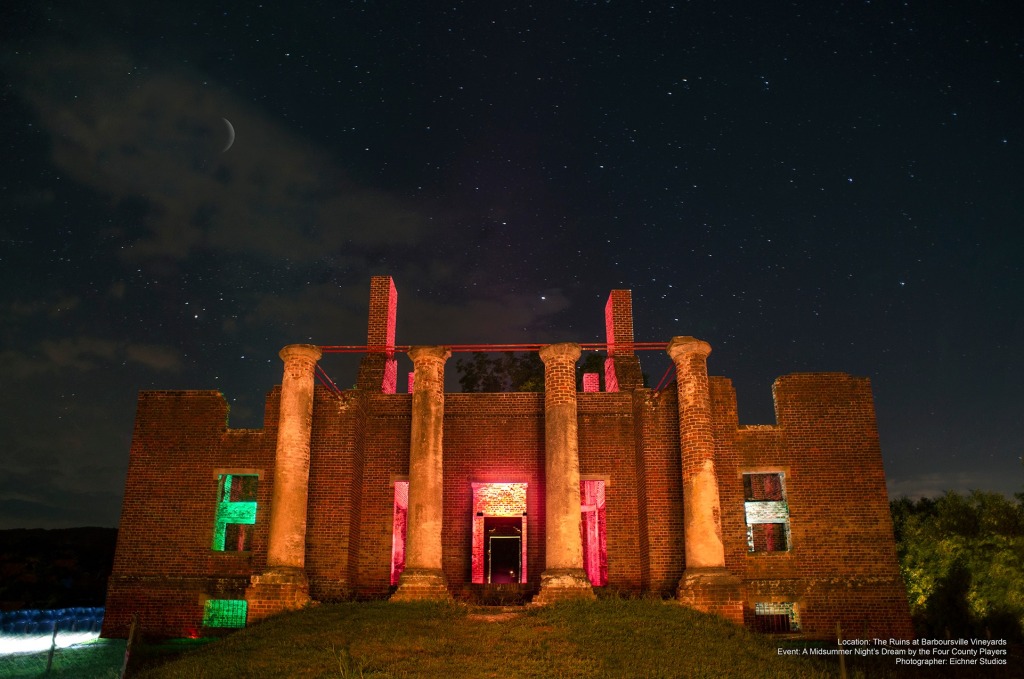
The Barbour mansion is perhaps the perfect venue for outdoor events. Located in the heart of the breathtaking Barboursville Vineyards, the stately ruins with its nearby vineyards and high boxwood shrubs hosts everything from opera to weddings.
The mansion’s history adds to its allure. James Barbour served in a number of major offices, including Governor of Virginia, Secretary of War, and Minister to the United Kingdom. His red brick Flemish-bond home was constructed between 1814 and 1822, designed by his neighbor and good friend Thomas Jefferson.
The building’s distinctive eight-sided design was inspired by 16th century Italian architect Andrea Palladio, whose book I quattro libri dell’architettura (The Four Books of Architecture) Jefferson referred to as his ‘bible’. Jefferson used Palladio’s octagon motif in many of his buildings, including his home at Monticello and “The Rotunda” at the University of Virginia.
When Barboursville winemaker Luca Paschina was researching the history of the estate, he came upon the story of how Jefferson believed the octagon shape was a symbol of “perfection and balance”. This description was exactly what Luca strives for, which led his flagship wine to be named “Octagon”.
Photo credit: Eichner Studios
For decades the mansion was one of the largest in the region, even having its own racetrack. The building was destroyed by fire on Christmas Day, 1884.
Shakespeare Returns to Barboursville
Four County Players ended its 16-year run in 2006 due to the need to renovate the deteriorating ruins. Fittingly, the final production was All’s Well That Ends Well, directed by Clinton Johnston. Not wanting the tradition of Shakespeare to die, the annual production was moved back to its theater building in 2007.
Looking for a place to host outdoor events during the summer of 2019, Four County’s Production Manager, Gary Warwick White, investigated the possibility of reviving Shakespeare at the Ruins. Gary approached former volunteers who had instrumental roles in the previous iteration and received their support. When asked if they were interested in resuming their collaboration, the winery excitedly agreed.
Later that year, Four County returned to the ruins with a showing of A Midsummer Night’s Dream directed by Lydia Underwood Horan. COVID-19 forced a brief halt, but the summer tradition returned in 2022 with a showing of As You Like It directed by John Holdren.
Troupe member Edward Warwick explained in an email how he is excited to showcase Shakespeare’s more humorous side.
“I wasn’t around during the original run of Shakespeare at the Ruins, so having the opportunity to be a part of the return to the Ruins has been so special.
The Comedy of Errors is one of Shakespeare’s funniest works, and I think audiences are really in for a treat and a wild ride!
It is such a unique experience; a wonderful show, a spectacular setting, Virginia wine, fireflies, a symphony of crickets, spectacular sunset…you have to pause and take it all in. It’s a wow moment.”
Ticketing and Showtimes
The Comedy of Errors runs from July 12th – 27th at the historic Barboursville ruins. Shows will be held Thursdays, Fridays, and Saturdays. Tickets can be purchased at https://fourcp.org for $25.
Gates open at 6 PM. Shows start at 7:30 PM.
Guests use a separate entrance on Mansion Road that is only open for this event, not the one used for the vineyard/tasting room. The venue holds 400 seats.
The Palladio Restaurant at Barboursville Vineyards will have picnic baskets for sale, and Barboursville wine will be offered by the glass and bottle. The venue will also host both a savory and sweet food truck at each performance.
If you’re reading this, you probably know all about the “Judgement of Paris”. It’s a huge inspiration to my own wine comparisons, although mine tend to include a broader selection of varieties than the original event (and Virginia wine is always in the mix).
I often hear that both in style and geography, Virginia wine is a half-way point between California and France. But having tried a great deal of both, I’d only somewhat agree with that statement.
My observation is stylistically speaking, Virginia wine trends more towards France than it does California. That said, truly successful Virginia winemakers focus on being ‘Virginia’ rather than try to emulate one region or the other.
I’d already done one “Judgement of Virginia” comparison, but after a few years it was time to apply the lessons-learned from the first time and try again.
Tasting & Scoring Methodology
A group of friends & I blind tasted 5 comparison flights. All the flights were bagged blind. It wasn’t planned that way, but many of the same wineries I selected for my 2022 event were again represented.
The goal was to pick a ‘favorite’ every round, as opposed to rating them and determining which one we thought was the ‘best’. In many cases, ‘best’ was entirely subjective.
This particular event included an abundance of industry professionals. Of the six of us, two had side-gigs at wine stores, two were working on their WSET Diplomas (and one was a wine judge), and one was born in Bordeaux and had experience working at both California and Virginia wineries.
While all were familiar with Virginia wine, I didn’t need to worry about having a bias in favor of either France or Virginia. At least one (gasp!) may have even expressed doubts what Virginia could bring to the table, so I was on a bit of a mission to show the best of what Virginia had to offer.
Because of that, it’s fair to say that my Virginia wines represented a good cross-section of the ‘elite’ of the local industry. But that didn’t mean we slouched on our French pairings; I did my best to compare a wine from each area that was roughly equal in terms of blends and price points.
I specifically told my attendees to not share their guess on which wine came from which region until the end of the event. It was about the best wine of each round, not ‘guess the Virginia bottle’. All the bottles were unveiled at the end.
The contenders:
Charles Heidsieck blanc de blancs (France) ($95 Wine Searcher)
2016 Trump “Brut Reserve” (Virginia) ($95 for the 2017 vintage)
Bottle #1: Charles Heidsieck blanc de blancs (France; I believe it was bottled in 2017)
Bottle #2: 2016 Trump “Brut Reserve” (Virginia) (Round winner; 6 votes as favorite; all incorrectly guessed Champagne)
Of course, we start with sparkling.
This was arguably the biggest surprises of the day. All of us voted for Bottle #2 (Trump) as our favorite. During a last-minute pre-unveiling tally to guess its area of origin, all of us guessed it was Champagne. Nope; this was Albemarle County’s very own Trump Winery.
This is where I wish I took a video of the reactions. We were SURE this was Champagne; nobody even floated the idea it was Virginia (even those who’ve had it). The tasting notes also seemed to back that assessment up, with #2/Trump seeming a bit more ‘aged’ and having finer bubbles.
I’ve said in the past that “Trump sparkling can go toe-to-toe with anything”. But now, I need to edit that statement. It would likely take a +$100 Champagne to surpass a Trump Winery Brut Reserve.
Bottle #1 / Charles Heidsieck blanc de blancs (France). More brioche on the nose than #2. “Bigger” on the palate. Creamy and fresh. One of us mentioned it was more reminiscent of “American” butter while #2 (Trump) was reminiscent of French butter, and several backed that assessment up. It had thicker bubbles with more citrus notes.
Bottle #2 / 2016 Trump “Brut Reserve” (Virginia). The brioche was there on the nose but I personally thought there was a mineral note to it. Lemony, creamy and fresh. More ‘aged’ notes, including nuttiness. More ‘European butter’ notes, which (I’m told) is fattier and more delicious than its American counterpart.
Kathy: Voted #2 (Trump). Guessed Champagne (it was Virginia). Thought #1 had more aggressive bubbles, maybe more reductive. #2 was more oxidative and citrusy.
Lieven: Voted #2 (Trump). Guessed Champagne (it was Virginia). Lots of similarities between the two, although thought #1 was ‘narrower’. Thought #2 had probably a few more grams of sugar than #1, although both were Brut. He also came up with the idea that #1 (Champagne’s Heidsieck) was more ‘American’ butter while #2 was ‘European’ butter
Marine: Voted #2 (Trump). Guessed Champagne (it was Virginia). Concurred with Lieven’s comment about “American butter” vs “European butter”.
Matt C: Voted #2 (Trump). Guessed Champagne (it was Virginia). Thought #2 had more dosage. #1 was more kumquat notes while #2 was more mandarin orange.
Matt F: Voted #2 (Trump). Guessed Champagne (it was Virginia). No tasting notes (too busy writing).
Robrette: Voted #2 (Trump). Guessed Champagne (it was Virginia). Thought #1 was more acidic while #2 was ‘rounder’. Also liked the texture of #2.
Bottle #4: 2023 Walsh Family Bethany Ridge (Round winner; 6 votes for favorite; 3 guessed were Virginia)
This round was surprising because the Bordeaux Blanc came off as “New World”, while the Walsh was much more Sancerre-like.
At first I was upset I didn’t ask for a more ‘classic’ expression of French Sauv Blanc, but in retrospect I’m happy how it came out. It just goes to show you that not only can Virginia wine present as “Old World”, there are times when “Old World” wine comes off as “New World”.
The Bordeaux Blanc was so overpowering floral that I could have guessed it was a Torrontés in a blind tasting. A very off-brand Sauv Blanc, especially for France. But still very quaffable.
Bottle #3 / 2022 Chateau Picque-Caillou Blanc. The nose was aggressive, nearly overpowering. It was so off-brand it threw us for a loop, and I suspect those who weren’t familiar with Walsh Family assumed this had to be the “New World” wine.
Grassy, almost New Zealand-style perfume-y nose. Lighter in color, and maybe a dab of oak. Lots of texture. Notes of citrus, jasmine, tarragon, and gooseberry were mentioned.
Bottle #4 / 2023 Walsh Family Bethany Ridge. “Shy” was the key descriptor, which I assume was due to it being recently bottled. The nose took a while to make an appearance but was lovely when it finally arrived.
Notes of dry grass (as opposed to freshly cut grass). Delicate and elegant. Citrus and lingering stone fruit notes. I completely understand why people thought this was France; maybe my next pairing will be Sancerre instead of a Bordeaux Blanc.
Kathy: Voted for #4 and guessed #4 was Virginia. Thought #3 had nice acidity and was perfume-y. #4 had notes of quince, mineral, and dried herbs.
Lieven: Voted for #4 and guessed #4 was France. #3 had notes of stone fruit, papaya, tarragon, and was floral and bright. #4 had a sharper nose.
Marine: Voted for #4 and guessed #4 was Virginia. #3 was ‘flamboyant’. Notes of cat pee, passion fruit, and was smooth. #4 was more subtle, notes of fresh herbs and had a lovely finish.
Matt C: Voted for #4 and guessed #4 was France. Thought #3 had notes of honeysuckle and grapefruit.
Matt F: Voted for #4 and guessed #4 was Virginia (mostly because I know and love Walsh’s SB) but never could have guessed #3 was French.
Robrette: Voted for #4 and guessed #4 was France. Thought #3 was grassy, fleshy, notes of dragon fruit. #4 was lmon-lime, grape fruit, hint of herbs.
Flight #3: Chardonnay
Bottle #5: 2015 Linden “Hardscrabble” (Chardonnay) (Virginia) (3 votes, tie; all guessed it was Virginia)
Bottle #6: 2015 Louis Jadot Beaune (France) (3 votes, tie)
This round was special because I LOVE aged Chardonnay. The 2015 Linden is one of owner/winegrower Jim Law’s favorite (and highest rated) Chardonnay vintages ever, and bottles of Hardscrabble Chardonnay are basically his ‘flagship wine’. I’m not familiar with the Louis Jadot but dang, that one aged beautifully as well.
I didn’t take great notes on why we all thought #5 was Virginia, but we all must have found something about it that stood out since we were all accurate.
Bottle #5 / 2015 Linden “Hardscrabble” (white) (Virginia). It had a ‘hot note’ of higher alcohol. Lemon notes, nutty nose. This seemed more ‘fruit’ driven.
Bottle #6 / 2016 Chateau Tour des Termes (France). “Big”, nutty qualities as well. Lots of complexity on the nose. Complex palate. This seemed a tad bit more ‘winemaker’ driven, at least on the nose.
Kathy: Voted for #5 and thought #5 was Virginia. Thought #5 was fresher, more fruit vs #6 showcased ‘the winemaker’, and #5 had a note of salinity.
Lieven: Voted for #6 and thought #5 was Virginia. Thought #5 was more bruised fruit, lemony but also cooked, with notes of marmalade. #6 was more lemon drop, with a sour note. Both had notes of baking spice.
Marine: Voted for #6 and thought #5 was Virginia. #5 was more pronounced bruised apple, lighter and more acidic than #6. #6 was shy, smooth, balanced and toasty.
Matt C: Voted for #5 and thought #5 was Virginia. #6 was ripe pair, fresh butter on the nose. Saw a hot note to it. #6 had a reductive nose, notes of melted butter, cooked apple, and baking spice
Matt F: Voted for #6, and thought #5 was Virginia.
Robrette: Voted for #5 and thought #5 was Virginia. Thought #5 as rounder and had more mouth feel. #6 was sharper.
Flight #4: Red Flight #1
Bottle #7: 2016 Chateau Tour des Termes (France) (Round winner, 6 votes)
Bottle #8: 2019 Fifty-Third Winery “Romulus” (Virginia; all guessed it was Virginia)
This round was our mid-price ranged red comparison. The differences between them were more pounced than the other rounds (at least in my opinion). It was relatively easy to guess the Virginia wine since it was brighter and more fruit-driven than the Bordeaux.
This was a fight between ‘easy drinking vs serious & complex’. They were slightly further apart in vintage than I would have preferred – but you take what you can get.
Bottle #7 / 2016 Chateau Tour des Termes (France). I wrote most of the notes below for this round.
Kathy: Voted for #7 and thought #8 was Virginia. Thought #7 had black plumb, notes of peppercorn, was rustic, and had more complexity. #8 was more black cherry vanilla (like the ice cream), notes of cherry cola.
Lieven: Voted for #7 and thought #7 was Virginia. Thought #7 was red and black fruit, notes of cassis and char, with a savory note. #8 was more blue and black fruit, note of violet, and had a lighter palate.
Marine: Voted for #7 and thought #8 was Virginia. #7 had notes of fresh herbs, black cherry, rustic, more ‘serious’. #8 was fresher, more crushed berry, and liked the brightness.
Matt C: Voted for #7 and thought #8 was Virginia. Thought #7 had a “Virginia nose”, notes of cassis, maybe a little new oak. #8 was softer, leaned into the fresh fruit, was softer and had a lingering berry note.
Matt F: Voted for #7 and thought #8 was Virginia. I thought #8 had a sour note on the palate, and wasn’t as well integrated when compared to #7.
Robrette: Voted for #7 and thought #7 was Virginia. #7 was more complex while #8 was brighter and was less complex, with cola notes.
Flight #5: Red Flight #2
Bottle #9: 2018 Chateau de la Brede Rouge (France) (3 votes; tie)
Bottle #10: 2017 Linden “Hardscrabble” (red) (Virginia) (3 votes; tie, 2 out of 6 guessed it was Virginia)
While Jim Law’s flagship wine is his Hardscrabble white (Chardonnay), he makes some damn good reds. His wines are always well balanced, and that was evident here.
But the Brede Rouge wasn’t a slouch either, everyone loved it just as much. Votes were tied between them.
Surprisingly (or not, depending on how high your estimation of Linden is), 4 out of 6 of us thought the Virginia wine was Bordeaux (even my guest from Bordeaux thought so). I’ll take that as a huge vote of confidence for Linden Vineyards.
It wasn’t until the next day that I got the ‘musty’ notes that are indicative of Bordeaux on the nose, although both bottles were well aerated before this event.
Bottle #9 / 2018 Chateau de la Brede Rouge (France). It was late so most of my tasting notes are below. Several thought they detected an ‘olive oil’ note to #9, which threw people off.
Bottle #10 / 2017 Linden “Hardscrabble” (red) (Virginia). Guests generally identified this as smooth, balanced, and fruit-driven.
Kathy: Voted for #9, thought #10 was Virginia. Thought #9 was brine-y and had a note of olive oil which was unusual for Bordeaux. #10 was fresher, more raspberry and herbs and fewer barnyard notes.
Lieven: Voted for #10, thought #9 was Virginia. Thought #9 was more red cherry, plumb, pomegranate, and potting soil. #10 was more red cherry, plumb, earth and forest floor. Thought this wine was more about the mid-palate.
Marine: Voted for #10, thought #9 was Virginia. Thought #9 had notes of cinnamon, pepper, nutmeg, prune-y and tobacco. I think she mentioned notes of nutmeg and spice. #10 had notes of black current, cherry, and ‘juicy’
Matt C: Voted for #9, thought #9 was Virginia. #9 was black cherry, liquorish, brine, notes of baked fruit and had a cooked quality to it. #10 was black current, cigar box, red and black fruit and cedar.
Matt F: Voted for #10, thought #10 was Virginia.
Robrette: Voted for #9, thought #9 was Virginia. Thought #9 was more red fruit, black cherry, but balanced and smooth. #10 was more red fruit, and lighter, smoother, softer.
Lessons Learned:
Normally I talk about how similar a well-made Virginia wine can be to a classic expression of the same variety from France. What surprised me was how French wine can, on occasion, showcase “New World” notes.
The Chardonnay and the 1st red flight were easy; 100% of guests correctly identified each country of origin. The Sauvignon Blanc flight was harder to guess, with only 4 out of 6 guessing correctly. Even more difficult was the 2nd flight (with Linden) where only 2 out of 6 guessed correctly.
The sparkling round was the real stumper. Was it conceit to assume Virginia couldn’t match a $80-$100 bottle from Champagne? Maybe! I stand by my assessment that Trump Winery’s sparklings hit above their price point.
I also loved how wrong people were about the Linden Hardscrabble red vs Bordeaux flight, which stumped most of us.
So was it that Virginia wines are expressive of “Old World”? Or a few of these French wines were New World-ish? A bit of both, at least in this case.
In the end of our 5 comparisons, Virginia won 2 rounds, Bordeaux 1 round, and we had 2 ties.



 Wine Trails and Wanderlust