The Homeplace Vineyard

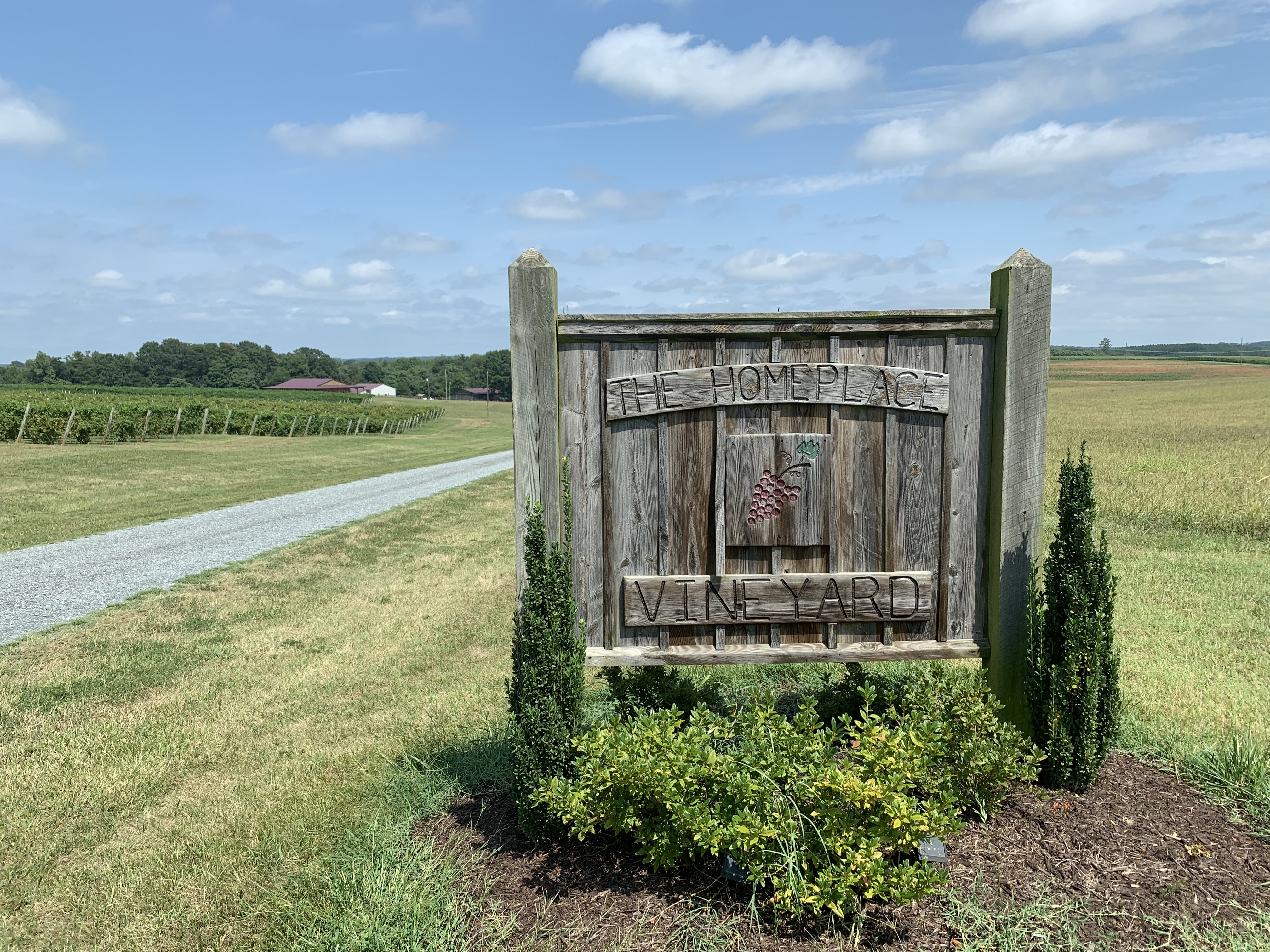
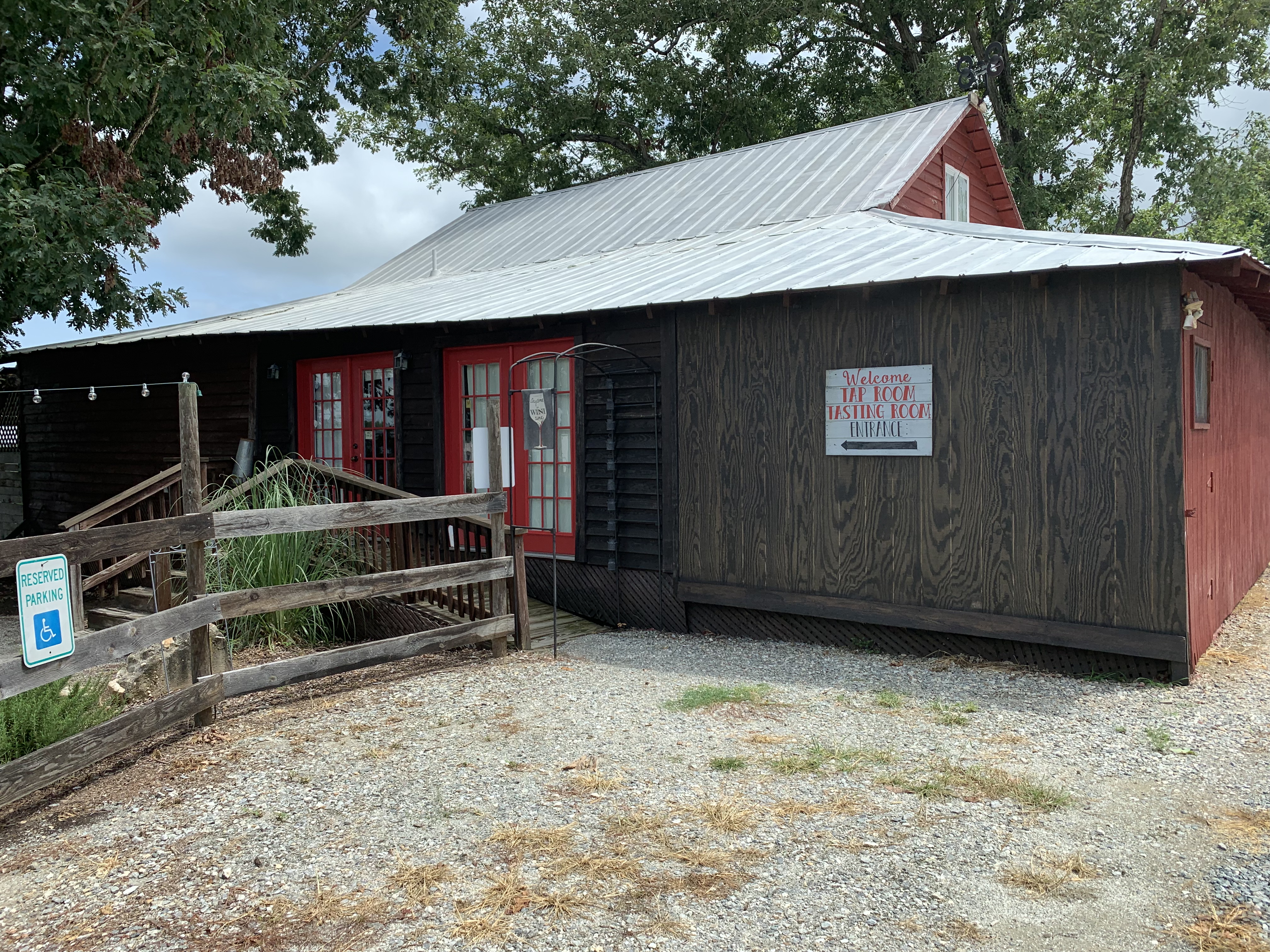
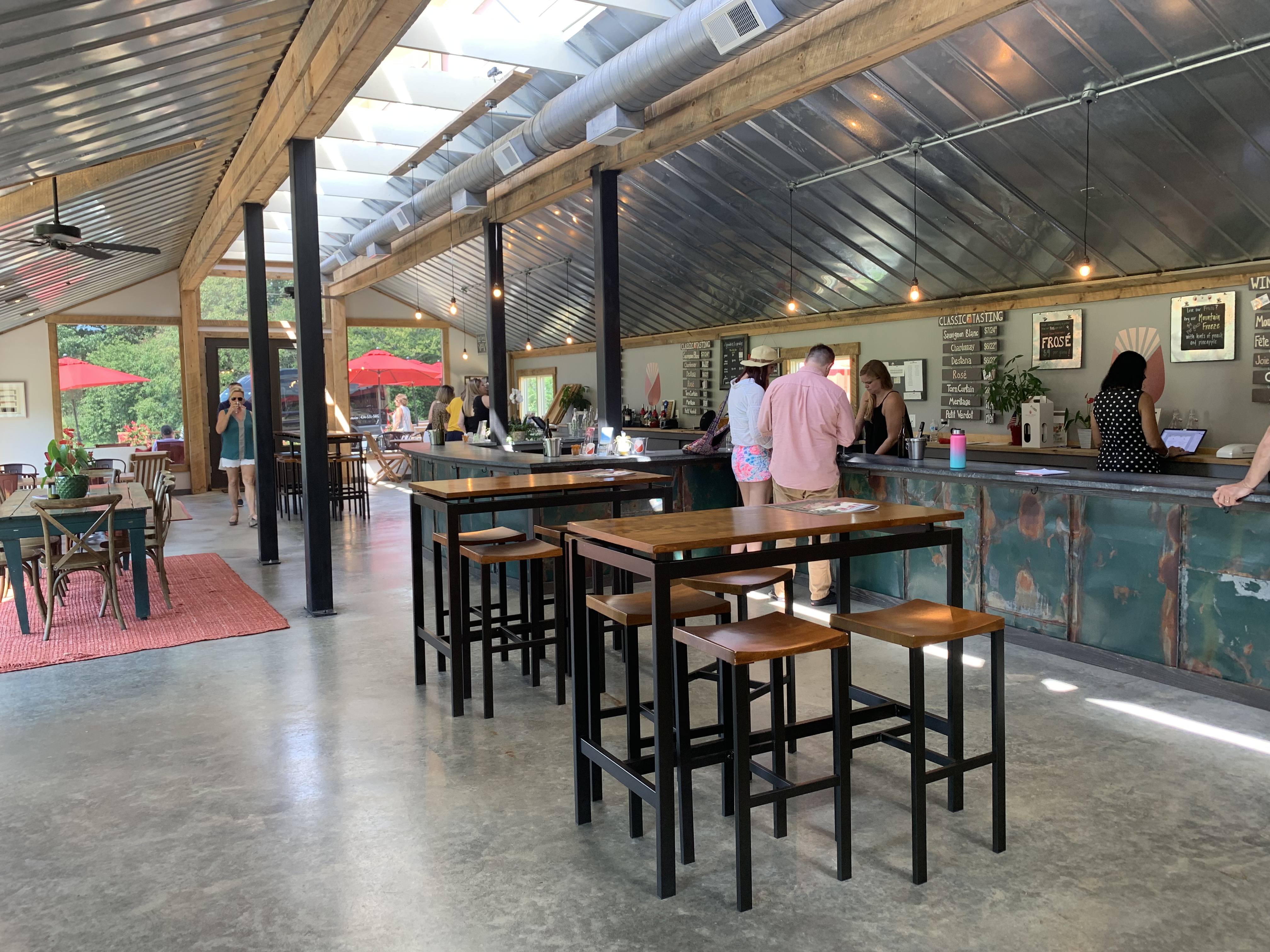
The Homeplace Vineyard is a small family business / local hangout / winery all wrapped up in a log cabin. The vines were planted in 2005 so they’ve likely been selling wine for a bit. While I bet they do brisk business at festivals, they also have a large event space that seems like a good place for a party. Even after only visiting for a short while, you could tell the place had a laid back, home-away-from-home vibe.
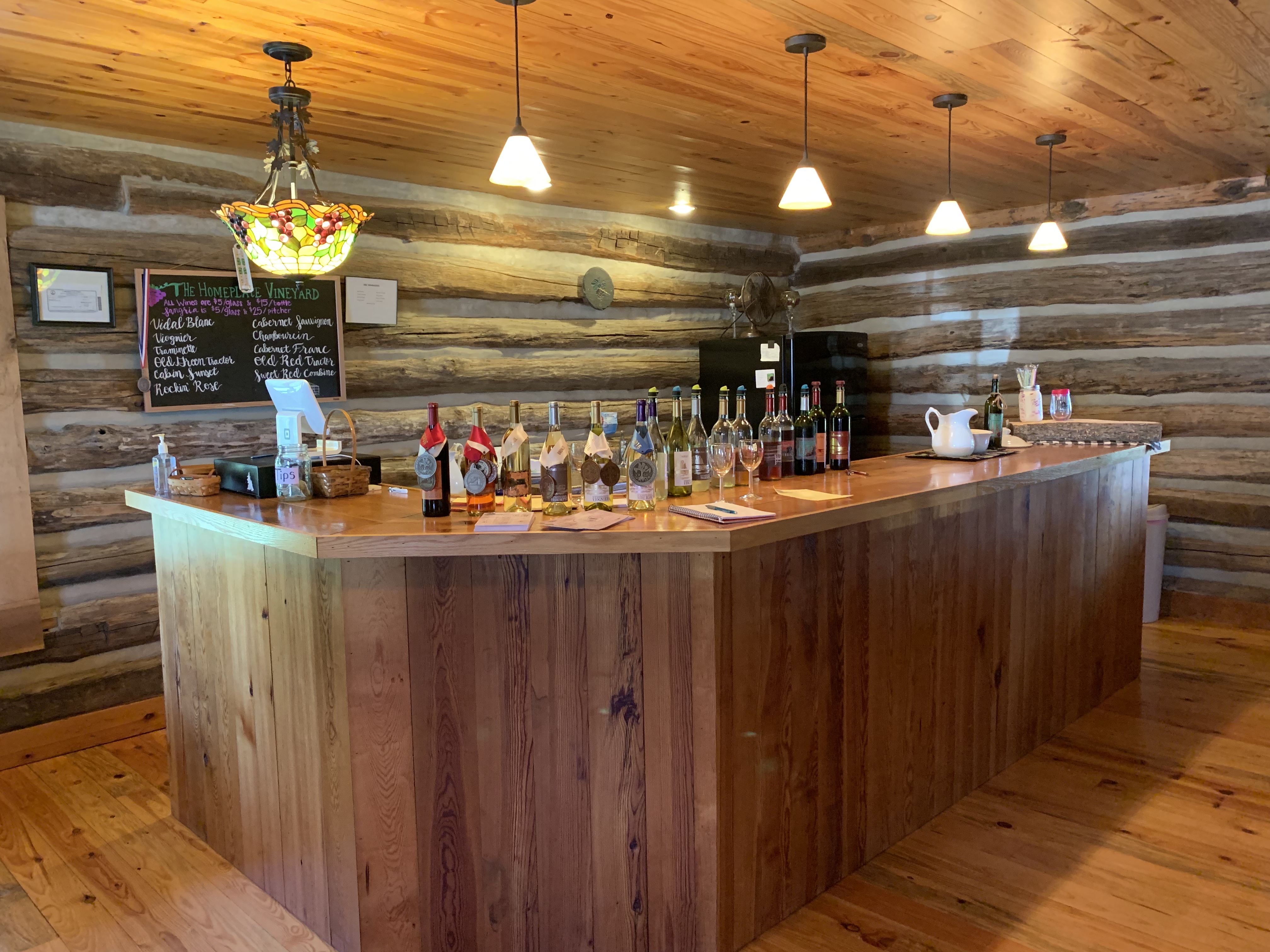
The name is a callback to how the tasting room is on the original location of family’s homestead. Built from the logs of an old tobacco barn, it now looks like a camping cabin. That actually sounds like fun; who wouldn’t want to spend overnight in log cabin on a winery!

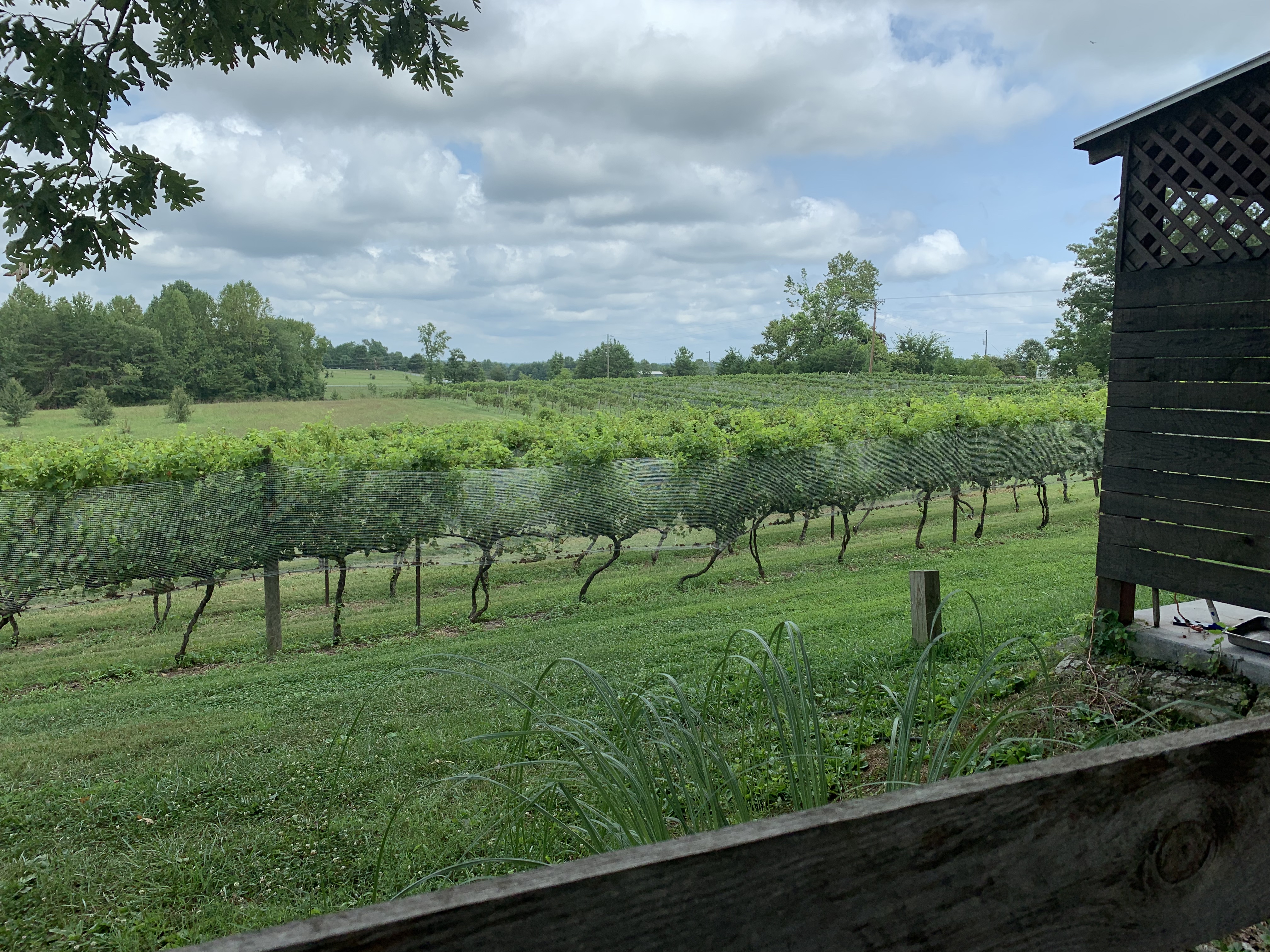
The land around us was once produced tobacco, although that industry has long faded away. In need of a way to keep the land productive, the family set up a vineyard instead (another common theme for the area’s wineries).

Penny was my server, and she adeptly talked me through their wine selection. Most of their 9.5 acres of vines are hybrids, although they have some Cabernet Sauvignon as well. This continued a trend in this area of focusing on varietals that are both weather resistant and don’t need expensive chemical spraying. It’s a smart move for smaller operations, especially if their target crowd leans more towards sweet wine.

The wines tended towards sweet, which is a preference in this area. What I tried:

Vidal: Semi sweet, light and easy drinking.

Viognier: Light, but unusual as it lacked the overpowering honeysuckle I find on the nose.

Traminette: Sweet but almost overpowering nose to it, as is common with this grape.

Old Green Tractor (white blend): Traminette heavy, but also with some Viognier.

Strawberry wine: Made from local fruit; great nose and very yummy.

Rockn’ Rose: Tart!

Old Red Tractor: Chambourcin and Cabernet Sauvignon; the biggest bodied red of the bunch.

Chambourcin: Fruity and light.

Cabernet Sauvignon: Light but with some spice.

Sans Soucy Vineyard

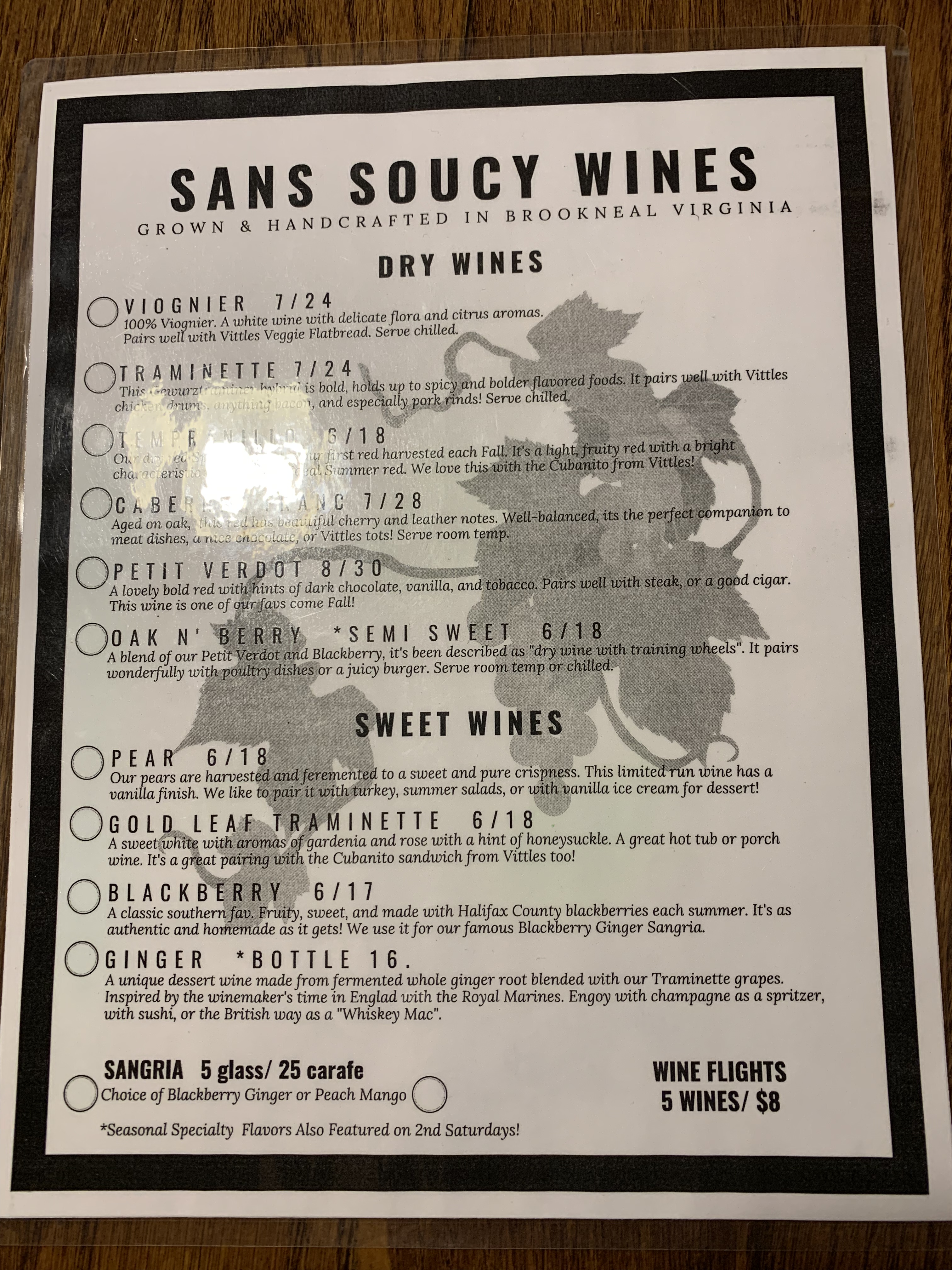
Sans Soucy (pronounced “San Soo-see”) means “without worry” in French. It’s a somewhat tongue-in-cheek proclamation since farming is a profession full of worry. But owner/winemaker Paul Anctil seemed worry free during my visit – likely in part because the weather had been fairly good recently, so 2019 had the makings of a good harvest.

This is one of the larger and older operations in the area. Vines were first planted in 2000, while the winery opened in 2008. Their 7 acres of vines are enough to supply around 2000 estate cases/year. While that seems small-to-medium for most places, in this area is was positively huge!

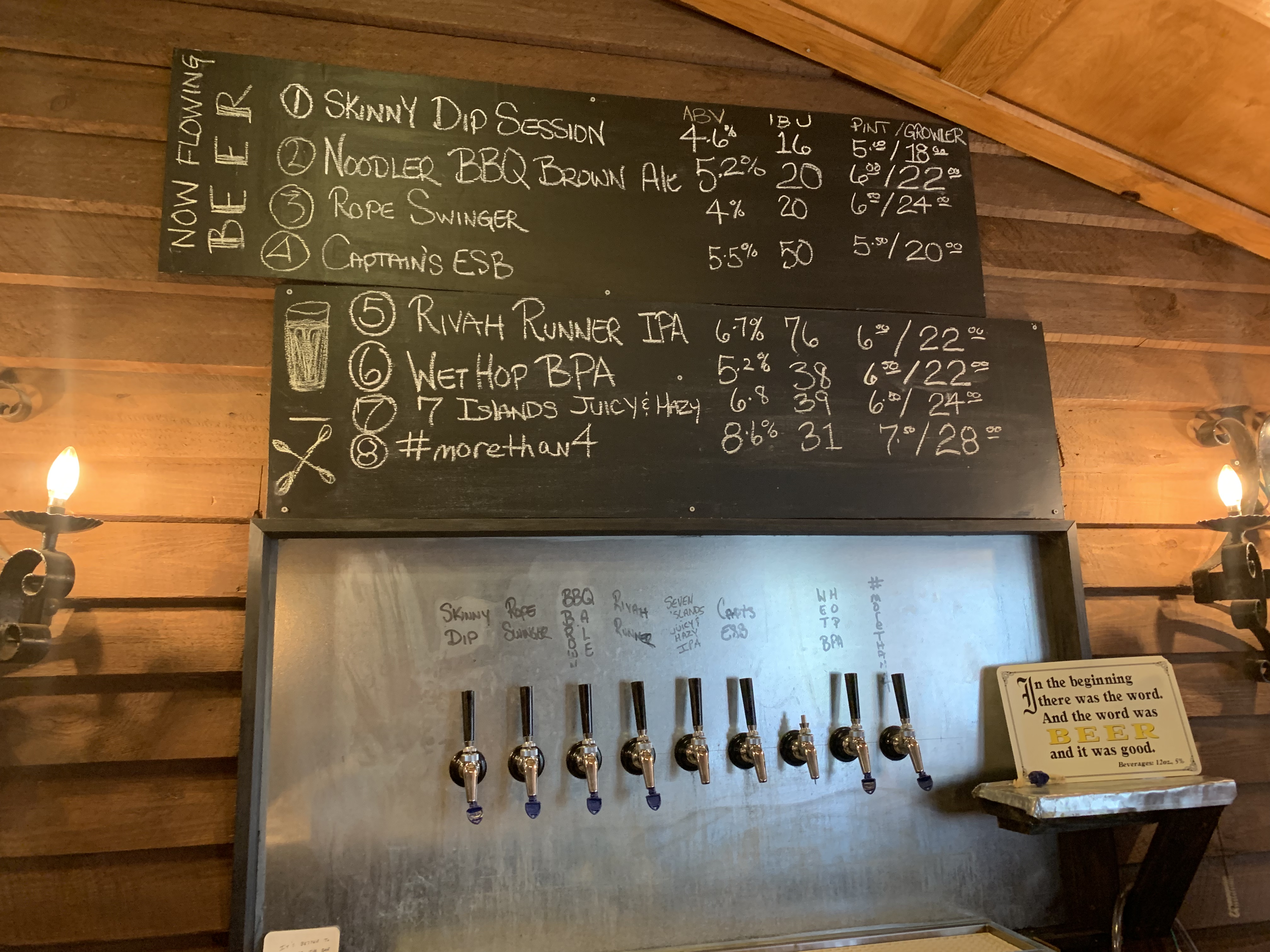
Sans Soucy is also one of a handful of locations that has both a winery and brewery on the premise. A growing trend in Virginia, Paul explained it allows him to capture a larger portion of the local crowd. He and his son share brewing duties, although his son focuses on the beer while Paul takes care of the wine making.

Paul was kind enough to give me a quick education about Virginia’s ABC laws. While it was becoming more flexible regarding beer, there still seemed to be some silly regulations – including how (depending on your license) you can take wine anywhere on the property but the beer has to stay in a much more confined space. Still, this was an encouraging trend so hopefully we’ll see Virginia relax these rules further.

The tasting room reminds me of drinking in a man cave – especially if that man cave had a keg and extensive wine rack. A picture of John Wayne and the USMC emblem were on the wall. OK I admit – I liked this guy’s style!

Sadly I didn’t get a chance to linger here; this was stop #2 of 4 (and it ended up being 5) for the day, so off I went to my next destination.

What I tried:

Viognier:  Heavy; honey-ish on the palate.

Traminette: Very spicy!

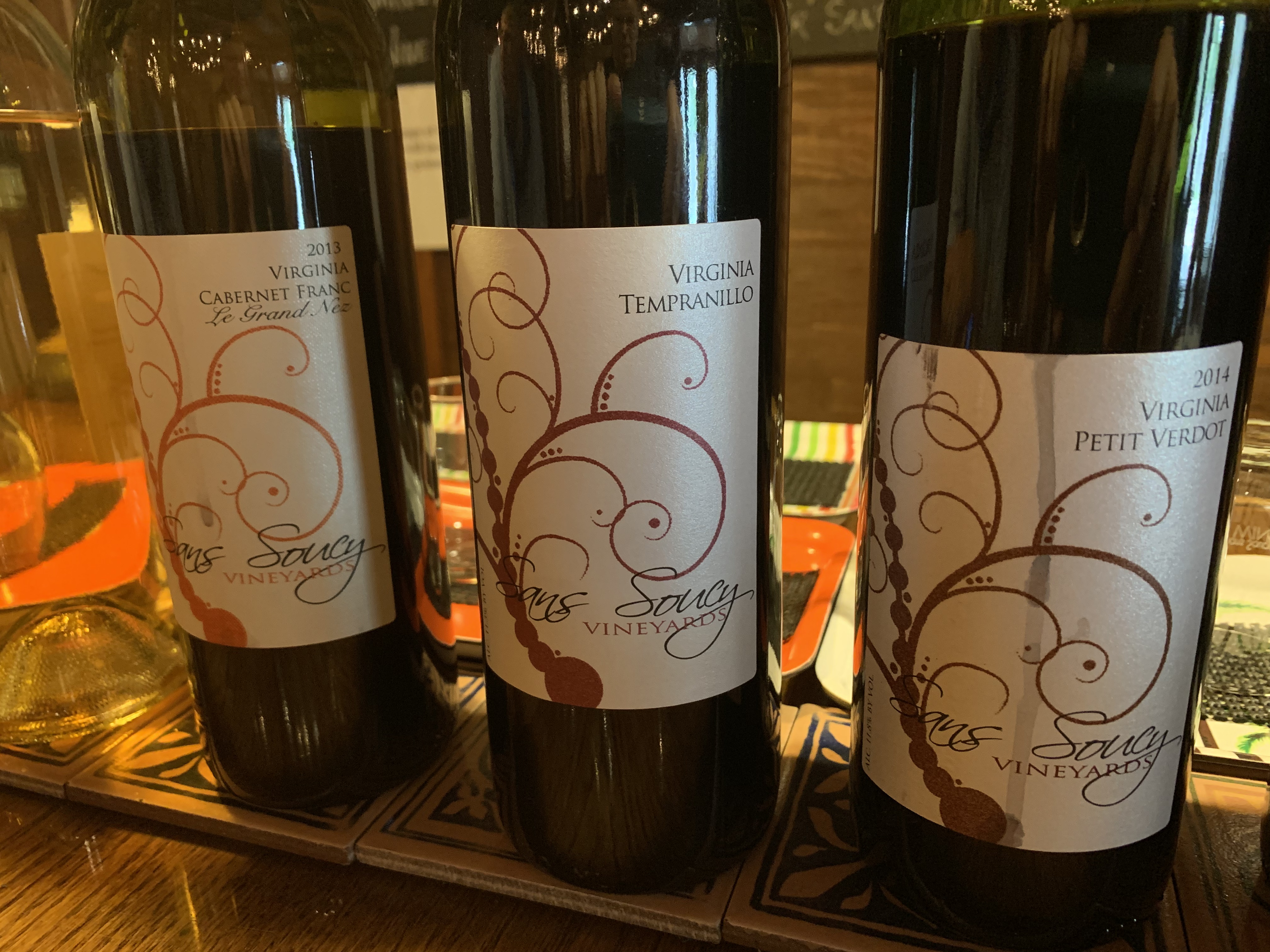
2013 Cabernet Franc: Baking spice notes; very good.

2013 Tempranillo: A very finicky grower, Sans Soucy is one of the very few places to have it – and sadly, they are likely to tear it out because of it’s difficult to grow in this terroir. Also had spice notes, although different from the Cab Franc.

Oak N’ Berry: This is what I call a ‘fun wine’. Blend of Petit Verdot and blackberries. I bet you didn’t see that one coming! Paul called it a ‘red on training wheels’. Tannin structure of a red but with sweetness.

2014 Petit Verdot: Medium body, long finish, soft.

Blackberry wine: Easy drinking.

Bright Meadows Farm

Winery #1 of my 3 day trip! Not coincidentally, this was one of my longest visits – entirely due to the hospitality of the owners, Boyd and Shirley Archer.

Bright Meadows Farm looks humble from the outside, but the Archers were very generous with their time. They explained to their farm’s history, including how they opened in 2005 as ‘retirement’ gig after Boyd left the FAA as an air traffic controller. Boyd’s mom taught him wine making (using Muscatine grapes no less), so I suppose the wine itch never left him.

“American wines from American Vines” is their motto. The farm has 10 acres of vines, plus patches of blueberries and blackberries. They grow hybrid (Norton, Vidal, Chambourcin, and formerly Steuben) and American (Catawba, Cayuga, Concord and Niagara) grapes, plus a small test plot of Petit Verdot. Bright Meadows also sells fruit – especially the Norton – to other Virginia wineries, so you may well have tasted their grapes even if you didn’t know the source.

This winery isn’t exactly close to…anything…so you’re more likely to find them at festivals than as a visitor. Fortunately, Sans Soucy and Hunting Creek Vineyard are nearby, so this is one of the few places in the Southern Virginia AVA that could be called a winery cluster. As I drove by, I passed a horse-pulled buggy – no doubt owned by some of the local Amish. Hopefully, the rest of the locals are wine drinkers!

Shirley took me on a tour of the vineyard, explaining how while they aren’t certified organic (too much paperwork!) they try to be as organic as possible. Fortunately all their grapes are hardy varietals, so that allows them to minimalize chemical intervention.

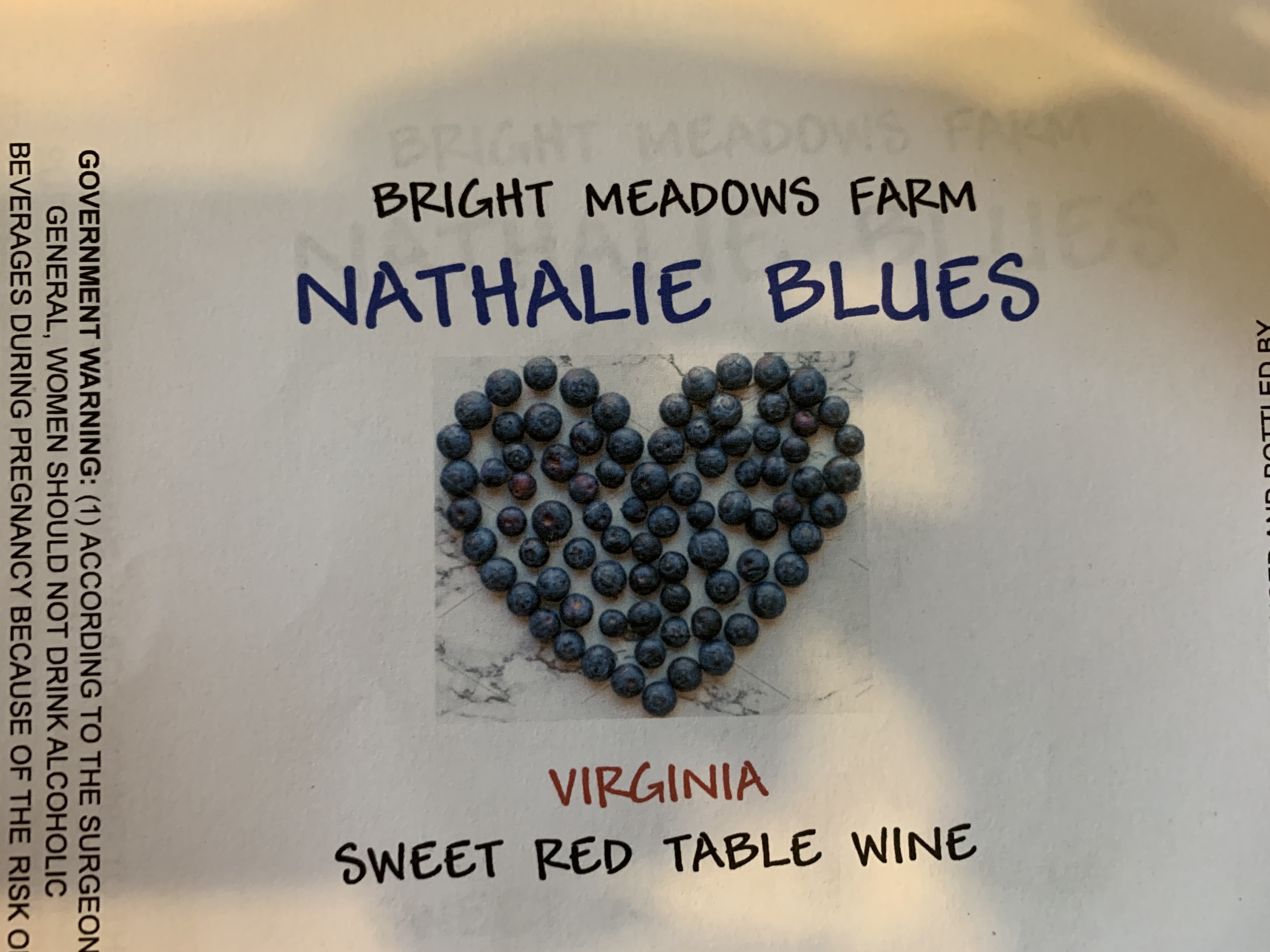
While 10 acres of vines & over 1200 cases/year is a lot (all made in steel), they seemed especially excited by their fruit wines. Their blackberry has been a huge hit, and they were awaiting ABC approval of the label for their blueberry wine. This was a trend I noticed all over this AVA; nearly all the smaller wineries made fruit wine, which thrived in their terroir and was welcomed by their local customer base. I suspect it’s also easier to manage than a vineyard, so it was a good practice all around.

The tasting room is on the small side. They have some tables in back, but this isn’t exactly a party place. But as an old barn renovated into a wine room, it had a charm of its own – sorta like drinking in someone’s living room. Boyd even sat down with me outside as I enjoyed my lunch with a glass of the Sunrise.

What I tried:

Sunrise Surrender: Steuben blend.

Bright Meadows White: Sweet, made with Niagara.

Apple Wine: Made with Macintosh apples; I liked this one a lot.

Bright Leaf White: Semi-sweet Vidal; had a thickness to this that was heavy on the tongue.

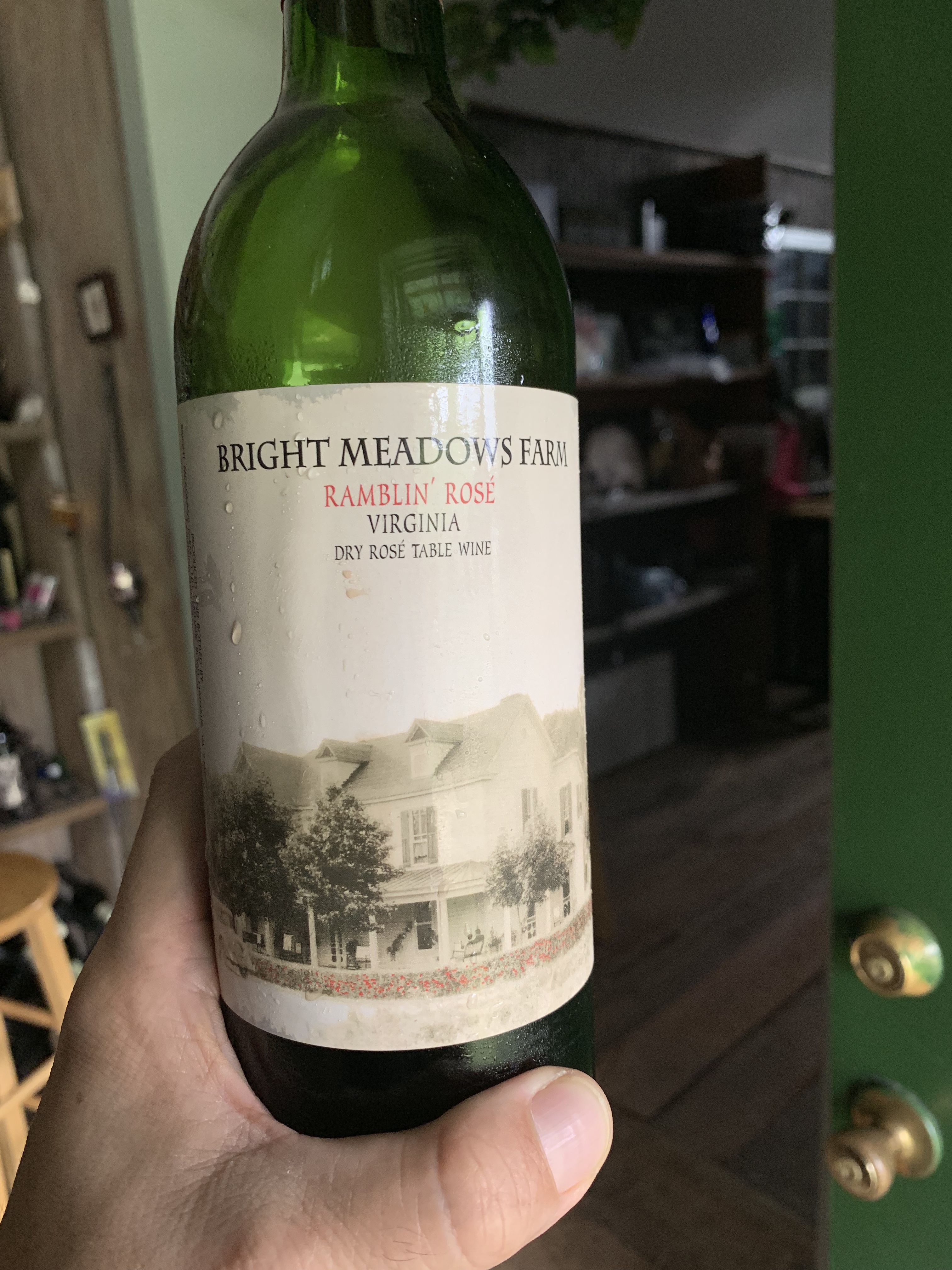
Rambling Rose: White Norton, made possible by pressing but not crushing the grape. I found this took away the ‘foxy’ taste of the Norton, so this may appeal to those who don’t usually enjoy this grape (including me).

Concord: Light, semi-sweet and easy drinking.

Blackberry: Tart, light and very yummy. I get it why so many locals like the fruit wines from here.

BAG (Blackberries Apples Grapes): Fruit wine made with a blend of Concord.

Dan River: Semi-sweet Chambourcin.

Halifax red: Tart, dry…maybe raspberries on the palate?

Burley Red: Full bodied Chambourcin.

Rebellion Red: Norton, which had spent 5 years in the barrel.

Southern Virginia Wine Field Trip

Sometimes I forget how big Virginia is. Having lived outside D.C. for over a decade, I’m long accustomed to having a few dozen excellent wineries within an hour’s distance. An hour further, Charlottesville or the Shenandoah Valley beckons. But given my quest to visit every single winery in Virginia, sometimes you gotta hit the road for days at a time. This is one such trip.

A note about the author…

The Southern Virginia AVA has about a dozen wineries, many placed on old tobacco farms. On the face of it, that sounds pretty good. That is…until you realize these locations are usually an hour’s drive away from each other. This lack of wine clusters makes it challenging for all but the truly insane Virginia wine purists to make a dedicated wine-focused trip to this area.

That said, there’s a lot of good wine to be had down here, with everything from sweet Muscadine to hybrids to traditional Bordeaux-style blends, served in tasting rooms that range from someone’s home to outright mansions. Yes – go ahead and scoff at sweet wine or native American vines (I admit – I do). But as the old adage goes, the customer is never wrong – and they definitely have customers.

Three Sisters at Shiney Rock

I asked around why this AVA seems to have such a focus on sweet wines and found it has more to do with good business sense than with issues with the terroir. See, a disproportionate number of these “southern” wineries are tiny, mom-and-pop farms who decided to put their land to more productive use and realized (shocker!) that alcohol is a big seller. Lacking the money or experience to grow European Vitus vinifera, they turned to varietals or styles that are easy to produce – namely hybrids, vines native to North America (aka Vitis labrusca), or fruit wines.

The area’s demographics also favor of this approach. Southern Virginia is both thinly populated and lack many well-known tourist attractions. As locals are often the main audience, these wineries must cater to local tastes – which translates to sweet and/or fruity. Not surprisingly, a few also have breweries on site.

Beer tasting at Sans Soucy

But vinifera lovers – don’t despair! Despite the area’s rep for sweet wines, I found several excellent wineries that catered to my own palate. As with everywhere else, vinifera can thrive when care is put into good site selection and maintenance, and having a growing season that’s 2-3 weeks earlier than the rest of the state brings its own advantages. I dare you to drink anything from Rosemont and other vinifera-focused vineyards and walk away thinking this area can’t produce world-class wine.

One thing you won’t find are many fancy tasting buildings. Everywhere has a small-town vibe to it, with most places opting for more modest setups in transplanted or refurbished barns, side-buildings adjacent to their homes, or (for Tomahawk Mill) a flour mill. Maybe these aren’t the places you’d have a big event, but the scenery is just as pretty as you’ll find elsewhere in the state. As an added bonus, in nearly every case the wine maker (usually also the owner) was pouring my wine at the tasting bar, which is become rarer and rarer everywhere else.

Despite the miles on my car, I’m very happy I made this trip. I got to see a side of Virginia that few transplanted yankees get to see, and walked away with a fresh realization that you don’t need a fancy tasting room to have a good time.

While wine was the focus of this trip, I admit I had some side-excursions – including a visit to the American Armed Forces Tank Museum at Danville. Who would have thought tanks and wine paired so well together? Special thanks also to The Chandler House Home Bed and Breakfast.

GIVE ME YOUR WINE – NOW.

Where I visited:

  • 2 Witches Winery & Brewery: 4 acres of mostly hybrids, also some Cabernet Sauvignon.
  • Altillo Vineyards: 5 acres of vinifera.
  • American Way Country Wines: 15 acres of fruit and vegetables.
  • Bright Meadows: 10 acres of hybrid & American grapes, plus blueberries & blackberries.
  • Hunting Creek Vineyard: 5 acres of mostly vinifera with some hybrids.
  • Rosemont Vineyard: 27 acres of mostly vinifera with some hybrids.
  • Sans Soucy (not on map but close to Bright Meadows): 7 acres of vinifera & some hybrids, plus fruit wines and beer.
  • The Homeplace Winery: 9.5 acres of hybrids and some vinifera, also some fruit wine.
  • Tomahawk Mill: 4 acres of mostly vinifera.
  • Three Sisters at Shiney Rock: 2 acres of American vines, plus fruit wines.
  • Virginia Tasting Cellar: Tasting room right outside this AVA but primarily selling southern VA wine.

Not visited on this trip: Hamlet and Preston Ridge.

Photo credit: Virginia Wine Marketing Office

Grace Estate Winery

Even if you’ve never visited Grace Estate Winery, you’ve probably enjoyed their product – the grapes that is. At 50 acres of vines (and 1,500 cases/year) they sell a considerable amount of fruit locally, using only a portion for themselves. In fact, the majestic house on the hill surrounded by acres and acres of vines is the very first thing you notice as you drive by.

The vineyard has many of your standard Bordeaux grapes (including Malbec!) plus a few other varietals you don’t see as often, including Sauvignon Blanc, Tannat, even an experimental row of Chenin Blanc. The only hybrid they grow is Vidal Blanc, which tells me these people are definitely not taking any ‘easy outs’ in their vineyard.

The Grace family is all about history; not only are many of their wines named after different historical family members, their family tree is on display as you walk in. Today the owners split their time between Switzerland and Charlottesville, in addition to traveling everywhere else. A home in Switzerland plus a 450-acre Virginia mansion surrounded by vineyards? I’d call that ‘living the dream’.

General Manager Peter Dimmick was nice enough to grand me an interview despite being an exceptionally busy summer day. While he was proud of his wines, he seemed just as excited to talk about the vineyard. That’s always a good sign! He explained how over the past few years Grace had carefully replanting parts of the vineyard to maximize its potential, although they still retained some of its oldest vines (going back to 1995, way before the tasting room opened).

While the tasting room near the road is nothing to sneeze at, I still miss the one they had in the mansion. The views from there were amazing.

The tasting menu was expansive, but Peter let me sample a good cross-section of what was available. The only one that I wish I could have tried (but was unavailable) was their Malbec, which they have a considerable planting of.

2017 Sauvignon Blanc: Some citrus notes, made in neutral oak.

2016 Chardonnay: Toasty nose made in French Oak Burgundy-style. Excellent! My favorite style of Chardonnay.

Le Gras (Malbec Rosé): This was unusual; I almost NEVER see Malbec in Rosés. Very fruity, with low acid and strong strawberry notes.

2016 Cabernet Franc: Pepper and leather notes

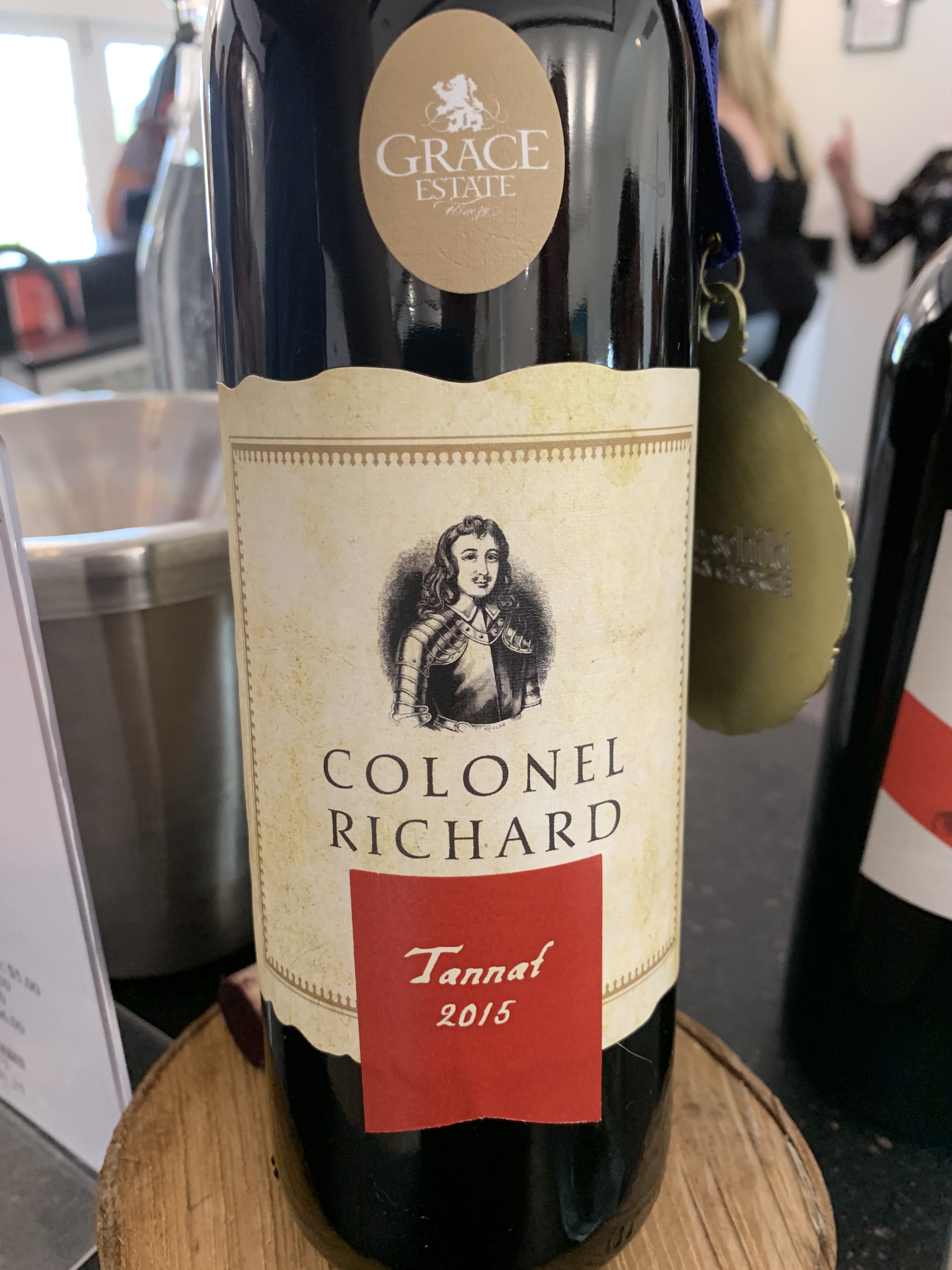
2015 Tannat: My favorite! Elegant, not overly bold, great balance. I’d put this against any Tannat in the state.

Ice wine (made with Vidal): This was a treat! Made in a true ice wine style, as a few years back they took a risk and let the fruit hang on the vine just long enough to get frosty. Great acid and a refreshing change of pace.

Not tried was their vineyard tour, which sadly I didn’t have time for. Maybe during my inevitable follow on visit?

Valley Road Vineyards

Valley Road’s motto should be ‘Go big or go home’. I first visited when they opened at the end of 2016, right after they converted the old plant nursery into a tasting room. Not a year later, one of their wines was included in the Virginia Governor’s Cup. If that’s an indication of their future, sign me up!

Owners Barbara and Stan Joynes didn’t start off with plans to open a winery, but their ideas kept morphing until that’s what occurred. “How hard could it be?” Stan mused as I questioned him, as he recounted the days when they first debated building a vineyard (and ONLY a vineyard). When this location became available, the Joyners snapped it up – mostly because the granite slope behind the nursery was an excellent site. Well…if you already have a vineyard, a winery seems a lot less farfetched. And so a winery was born.

Of course they had help – in fact, the best kind of help you could hope for in such a venture. Their friends the King family gave them access to their excellent production facility, just down the road. But least as important was the assistance of Matthieu Finot, who hands down is one of the best wine makers in Virginia. Mix together a great vineyard & wine maker, and a dream came to fruition (pun intended).

I started my visit with a tour of the vineyard – which is nearly tied with wine drinking as my favorite part of any winery visit. Their vineyard manager took me to their 3.75 acres of vines, right behind the winery (they have another 6 acres in Lovingston). This location has a lot of great ingredients; it sits right outside Rockfish Gap, giving their vineyard great airflow. It has a really steep slope, so excellent drainage and elevation. The granite underneath the clay forces the vines to struggle. The view tops it all off.

Vineyard touring is thirsty work, so back to the tasting room we went. All the wines were products of Matthieu except the sparklings (from Mike Shaps). They make around 2000 cases/year.

2018 Sauvignon Blanc: Stan’s favorite; citrus notes but not overwhelmingly so.

2017 Chardonnay: Light, hint of oak.

2016 Destana (Nearly split into 1/3 of Pinot Gris, Viognier and Petit Manseng each): An off dry (I think) wine that had a nice nose and natural sweetness.

2018 Viognier: More body than I’m used to, plus honey notes.

2016 Petit Verdot: Soft by PV standards.

Sparking Viognier: Not overly sweet but I swear, you could taste the bubbles! Lots of strawberry notes, plus some body.

Sparkling Rose: What you might call a ‘kitchen sink style’, since it’s made with all the grapes that were left over. Some body to it.

2017 Cabernet Franc: Baking spice notes, as opposed to the pepper that I’m used to. Medium bodied.

2017 Torn Curtain (93% Chambourcin with 7% PV): Strong cherry notes; the PV was an excellent edition since I’m not always a Chambourcin fan but I liked this one a lot.

2014 Merlot: Amazing!!! One of my favorite Merlots in all Virginia. I was very surprised this one didn’t make it into the Governor’s Case. Perfect amount of body.

2015 Meritage: Pepper and leather notes

2014 Meritage: Lighter, more black cherry.

Not tasted today was their 2014 Petit Verdot. How good is it? If getting into the Governor’s Cup wasn’t enough, a good friend who’s a PV fanatic said this was the best PV she’s ever had. Now THAT’S a compliment!

Revalation Vineyard

I visited Revalation on their opening weekend in early 2018 and loved it so much I knew I wanted to revisit. The wine of course was excellent – made in a very French style (no doubt thanks to wine maker Matthieu Finot, of King Family fame). But the highlight was chatting up owners Francoise and Julian as they poured.

Francoise was working the tasting room when I visited this time. Originally from Belgium, she came to the U.S. working as a professor before she and Julian decided to open a winery. When I asked about her background (I pried from her that she studied in Berkley and Stanford, taught in Georgetown, and has a PhD in Statistical Science) she very modestly described herself as a bartender. If so, she’s the most modest and over-educated bartender I’d ever met!

BEST EDUCATED BARTENDER EVER!!!

She and her hubby were inspired by the story of surgeon/medical innovator-turned-wine maker Tom Fogarty to open a winery. If you’re unaware, Fogarty is a really big deal in medicine; he invented the tools we use today to treat blood clots. But if that wasn’t enough, he retired to open a very prestigious California winery. With an idol like that, you can understand how a statistician/dentist pair decided to open a winery with no background in farming.

Revalation’s wines are 100% estate; they have over 12 acres under vine, mostly down the road. The tasting room is a wooden cabin that was taken from the grounds of an old plantation. It’s tiny but cozy – you won’t have space for a party but you can definitely sit down with a few friends with a bottle. Since they are on the foothills of the Shenandoah, the view of course is amazing.

I found the wines to have a special emphasis on blends; likely a reflection of the owner’s background in Europe and that their wine maker is a Frenchman. Even the white wines tended to have a little ‘extra’ to spice them up.

What I tried:

2017 Petit Manseng: Light for a Petit Manseng; no sugary notes. Nice but not heavy.

2017 Sauvignon Blanc: Light and fruitier than I remember most Sauv Blancs.

2015 Melange de Rouges (Rose): Cab Franc heavy; strawberry/rhubarb notes.

2016 Quatre Blanc (70% Petit Manseng, plus Sauv Blanc, Pinot Gris and Viognier): High acidity; definitely liked it.

2017 Melange a Quatre (Merlot, Cabernet Franc, Cabernet Sauvignon, and 1% Tannat): Very fruity! Could easily be chilled.

2017 Village (77% Cab Sauv, 16% Tannat, 7% Cab Franc): Very nice blend that worked well together; bold-ish but not overly bold.

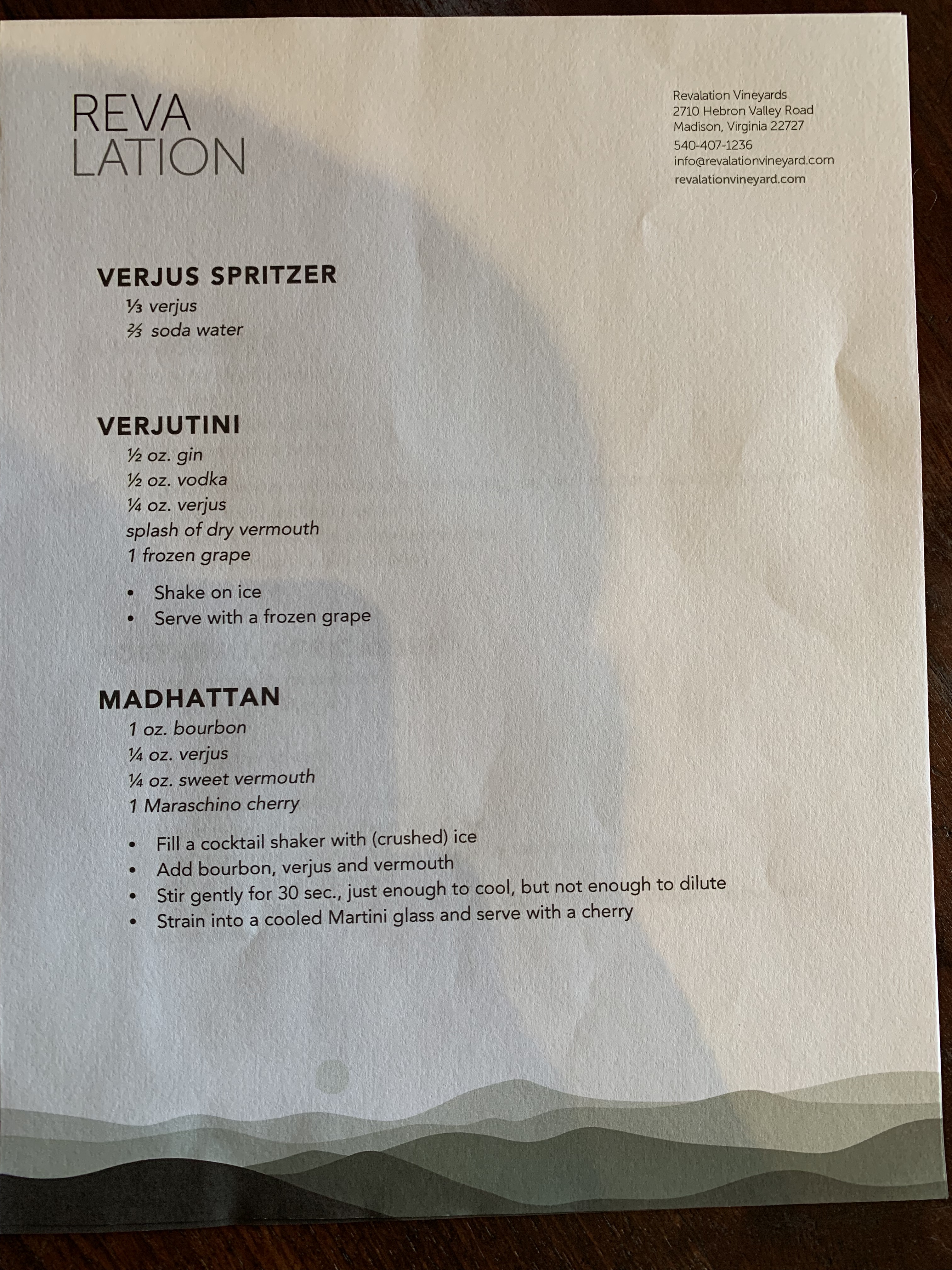
“Verjus”, or “Green Juice”: Not tried but worth a note. Verjus a high acid juice made from unripe grapes; a French creation, of course. Francoise had several suggestions on how to make into a spritzer but can be used as a dressing.

A special shout out goes to their 2015 Villages; one of my favorite Virginia 100% Cabernet Sauvignons! Come winter I’m definitely revisiting for their Tannat.

Thanks again to Revalation for my visit; I’d love to know what everyone else thinks.

DuCard Vineyards

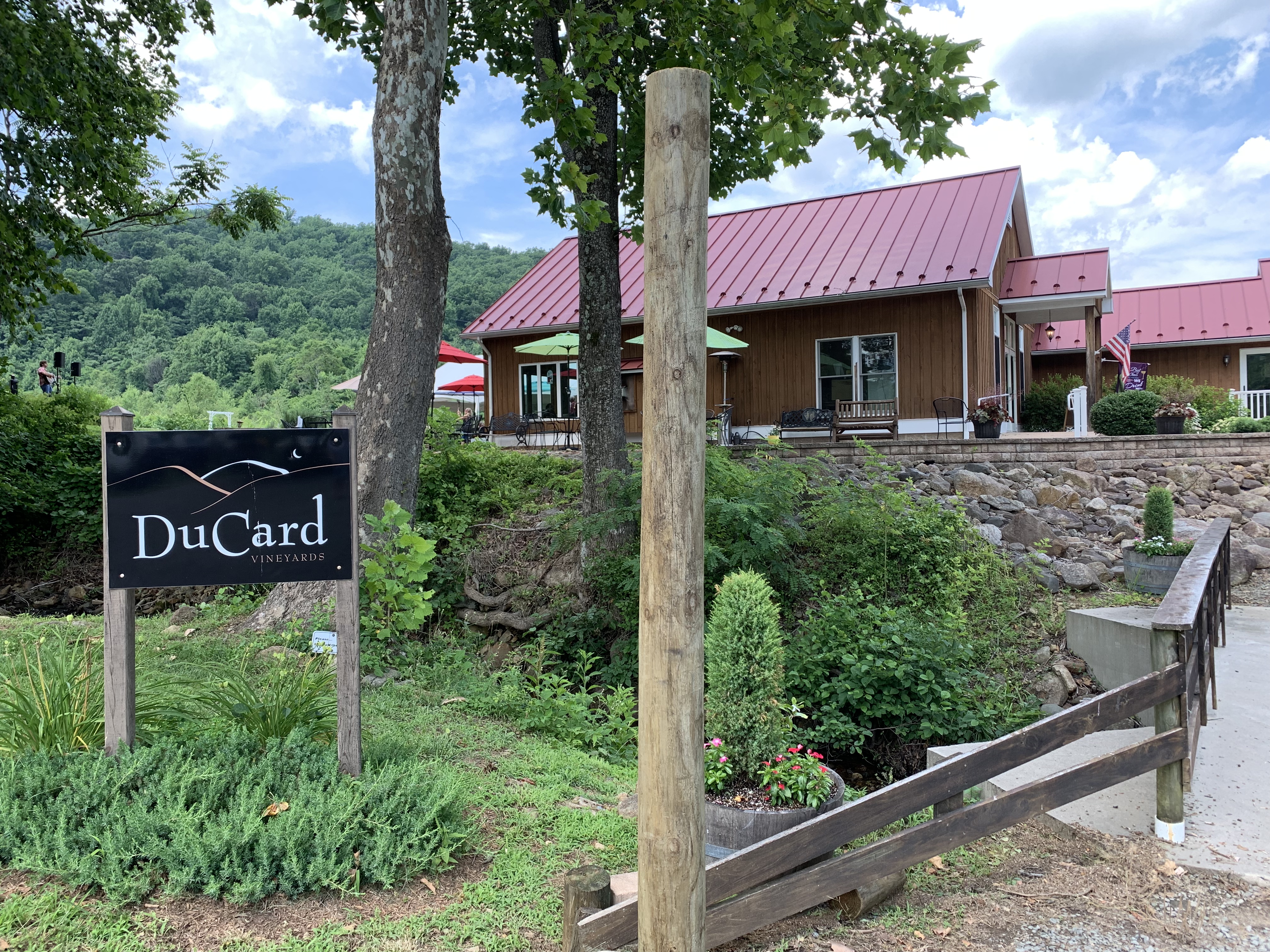
I often wonder if a winery’s convenience is inversely proportional to the quality of its wine. It makes sense – if it was super easy to visit, then wineries would have little incentive to provide a high quality product. The fact that DuCard inspires loyalty despite being off the beaten trail tells me they must have great wine.

DuCard is in a natural bowl-shaped valley, not far from Old Rag Mountain & Shenandoah National Park. In fact, lots of patrons are hikers unwinding after a long excursion. Given its location, visiting here is one of the prettiest drives you’ll take to any Virginia winery.

Currently they manage 3 vineyards totaling 17 acres. In fact, except for their Traminette all of their 2000 cases/year are made with estate fruit. But what makes their vineyards extra-special is it isn’t just a vineyard – it’s a classroom!

Students from Piedmont Virginia Community College ‘adopt’ a row of vines as part of their viticulture certification program. As I was visiting a class lead by their winemaker Julien had just finished an event and were relaxing on the patio. Where were these classes when I was in college? I didn’t know enology was even a thing! Oh…the path not taken…

DuCard is also very “green”, and I’m not talking about the scenery. The entire place is solar powered, to the point they sell back electricity. Heck, even the cutlery is bio-degradable. That’s admirable, but what really captured my heart was how they donate to local charities, including one of my favorite historical locations – James Madison’s Montpelier.

Neither owner Scott Elliff or tasting room manager Marty Mitchell were available the day I visit – which is a shame since they’ve greeting me nearly every other time I visited. Fortunately Cora was more than up to the task of going over their wines with me.

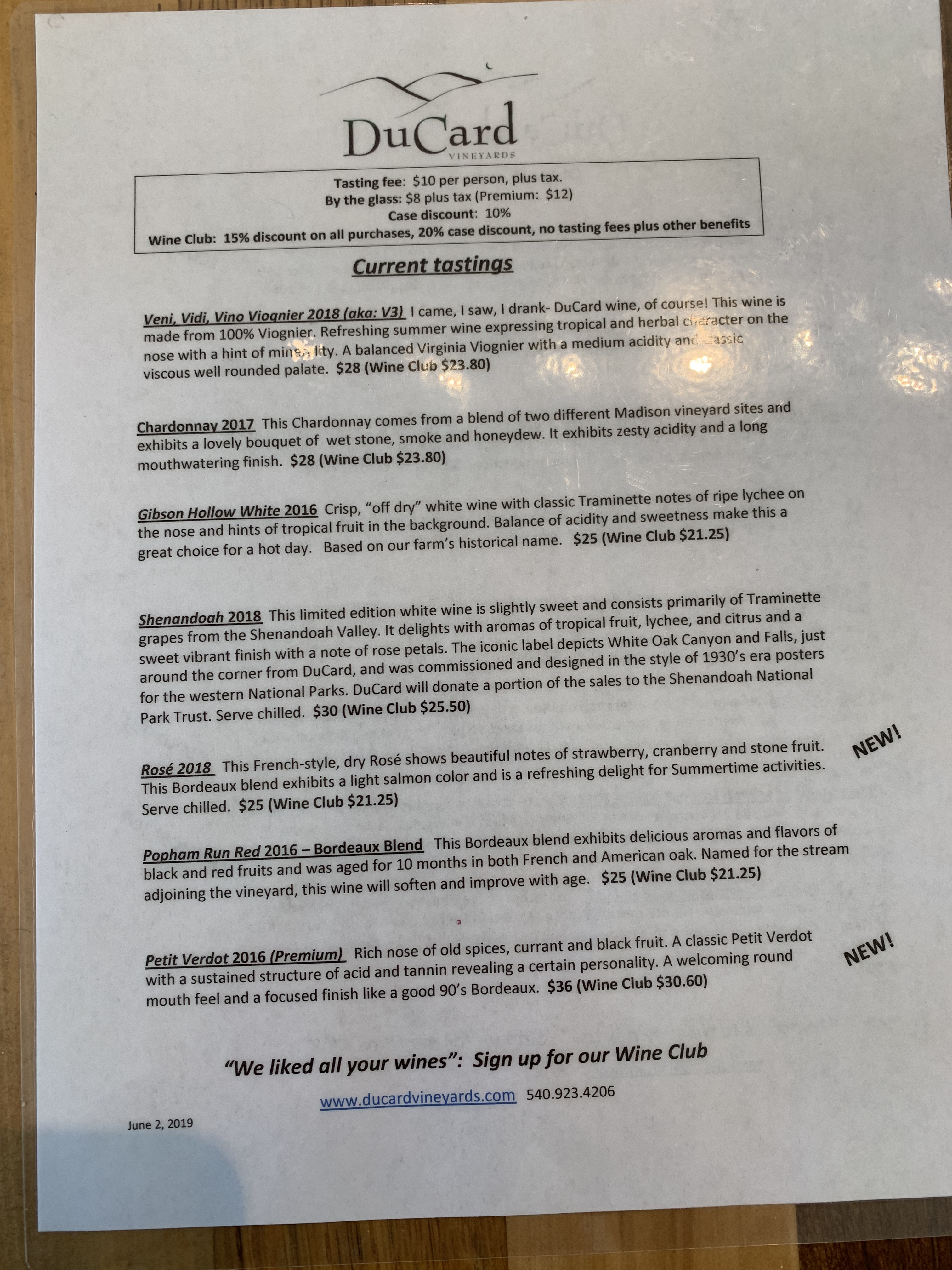
2018 Vendi Viognier: Light notes of honeysuckle and a really nice finish

2016 Gibson Hollow: Off dry Traminette; easy drinking, without the bite that I sometimes see on this grape

2018 Shenandoah: Another Traminette made in an off dry style. Kudos to DuCard for donating part of the sales of this wine to the Shenandoah National Trust.

2018 Rose (40% Petit Verdot/60% Cabernet Franc): Dry and had great color, enough to remind you of Provence (which shouldn’t surprise you given who their wine maker is).

2016 Popam Run Red (Bordeaux blend that was high on the Cab Sauv): Medium bodied, red fruit notes, spreads out nicely over the palate.

2016 Petit Verdot: Dark fruit, soft for a PV (but of course still liked it)

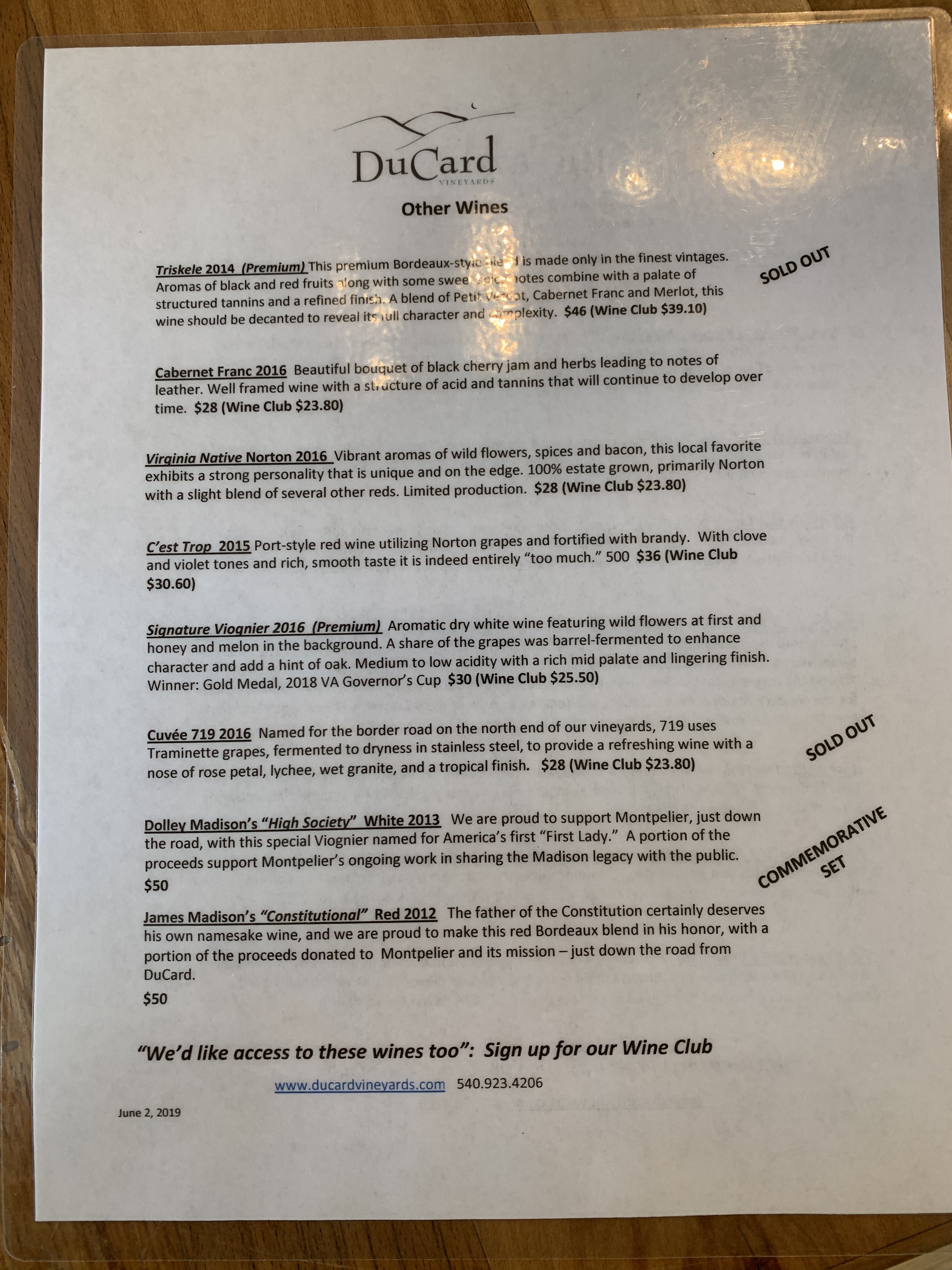
2016 Cabernet Franc: Not spicy or leathery, light on the nose.

2016 Norton: Nice nose, some spice. Blended with a little Cab Franc I think to take away the ‘foxiness’ characteristic. Actually one of my favorite Nortons around.
2014 Triskelle (Bordeaux blend): Good fruit flavors, bold-ish

2015 C’est Trop: Very nice!!! One of my favorite ports in all Virginia. And somehow even better with chocolate