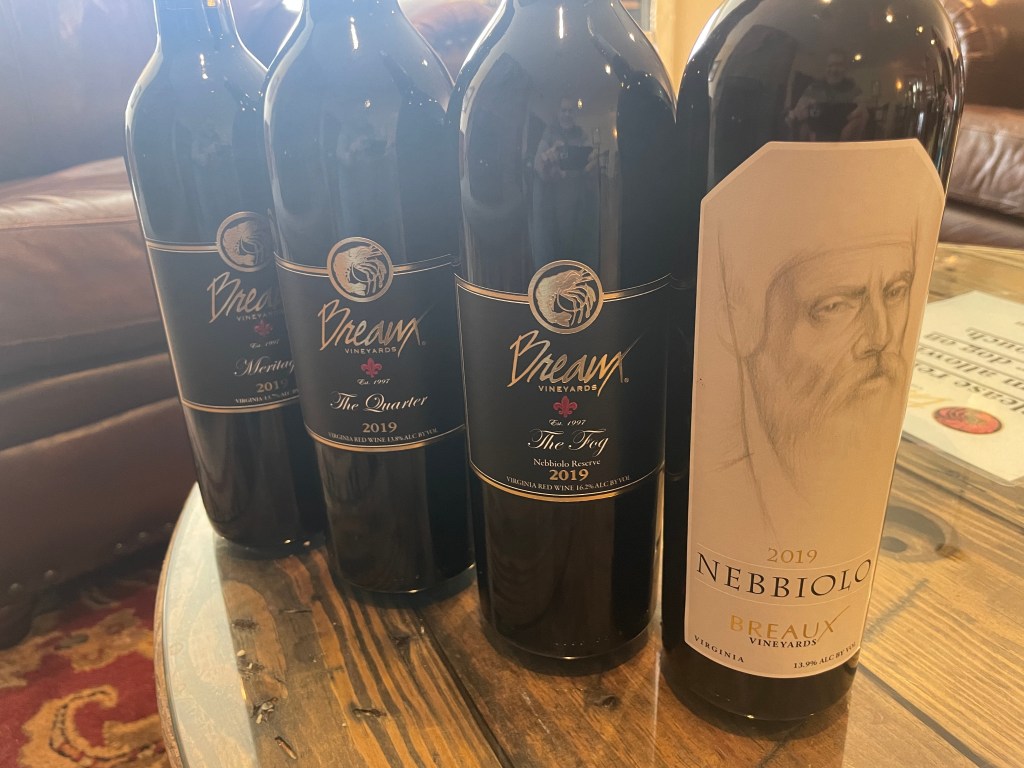
Italy vs Virginia Nebbiolo Showdown

“Out of all the grapes, you must grow Nebbiolo. It’s beautiful, it’s the wine of kings”.

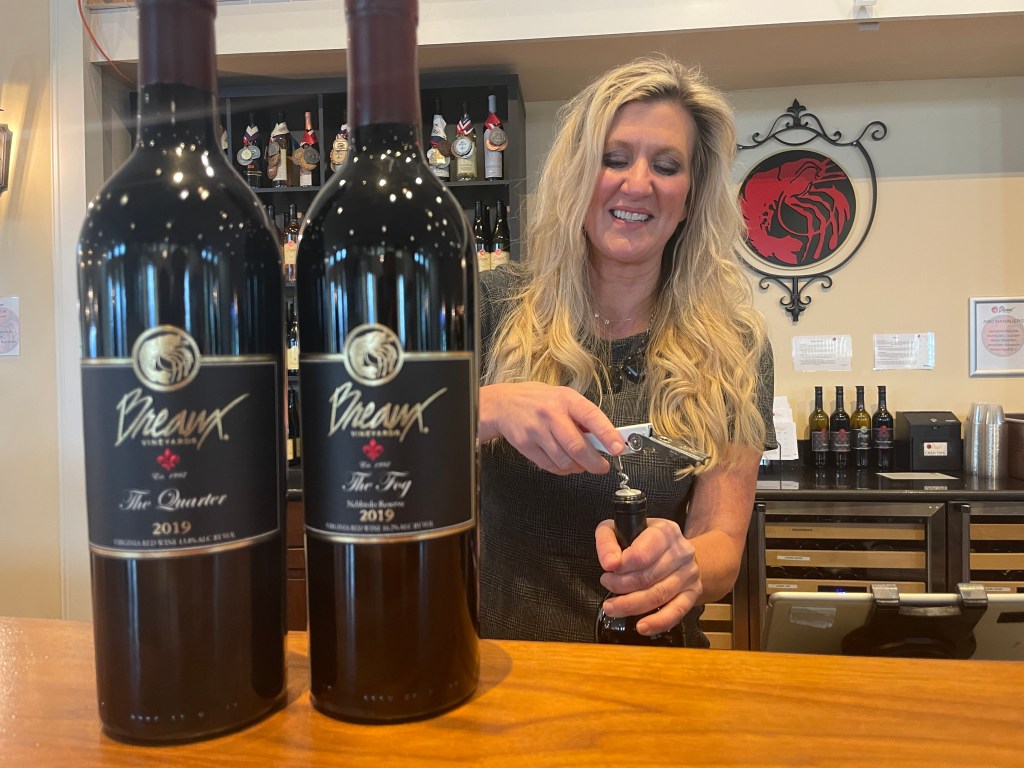
These words were spoken by an Italian winemaker (who’s identity is still unknown) to Paul Breaux during his 1996 research trip to Alba, Italy. This gentleman overheard Paul order a glass of wine with dinner and walked over to his table to insist he try Nebbiolo.

A long conversation ensued. Paul was so impressed by the wine and the man’s passion for it, he decided on the spot Breaux Vineyards needed this grape. It was a huge leap of faith for a variety that was then untested in Virginia.

This chance encounter had a profound impact on Breaux Vineyards. Jen Breaux went on to explain, “Nebbiolo has given us a name in Virginia wine. I truly believe that”.

I recount this story because not only does Nebbiolo evoke such passion, only winegrowers truly in love with this grape would be willing to deal with such a finicky, difficult to grow variety.

While the Italian Piedmont has the near-goldilocks conditions to produce the world’s finest Nebbiolos, it’s a far riskier proposition here in Virginia. Early budding, late ripening, and with inconsistent yields even when things go well, Nebbiolo flies in the face of any logical growing strategy. That’s likely why Virginia has only 39 acres of Nebbiolo planted, divided between about a dozen wineries.

I wrote an article on Nebbiolo a few years ago and asked winemakers – why take the risk?

Bill Gadino of Gadino Cellars gave one of my favorite answers. When deciding what red grape to plant, he approached Luca Paschina of Barboursville for advice. Luca told him, “If you’re going to pick one, go for the gold and grow Nebbiolo.”

Tasting & Scoring Methodology

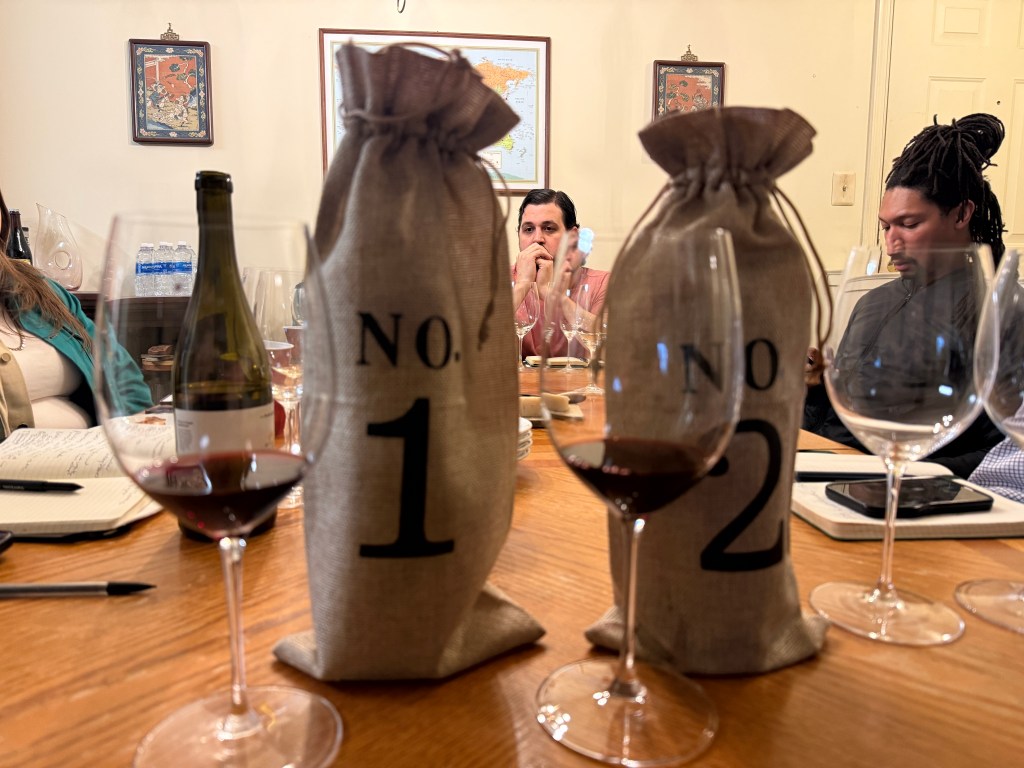
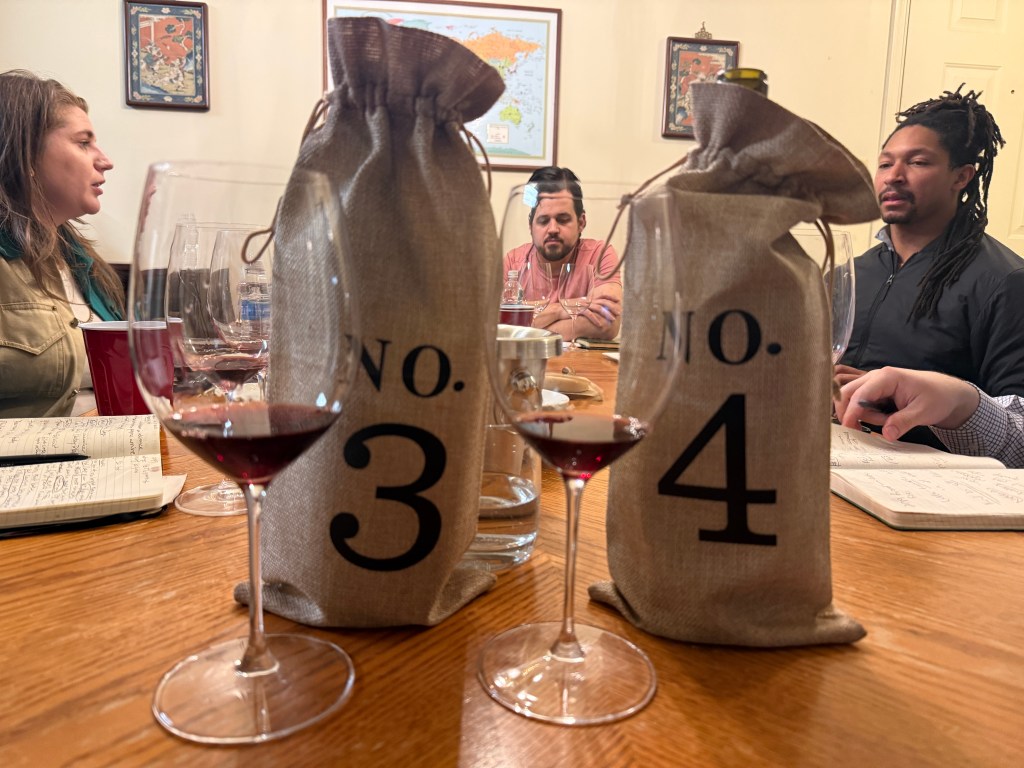
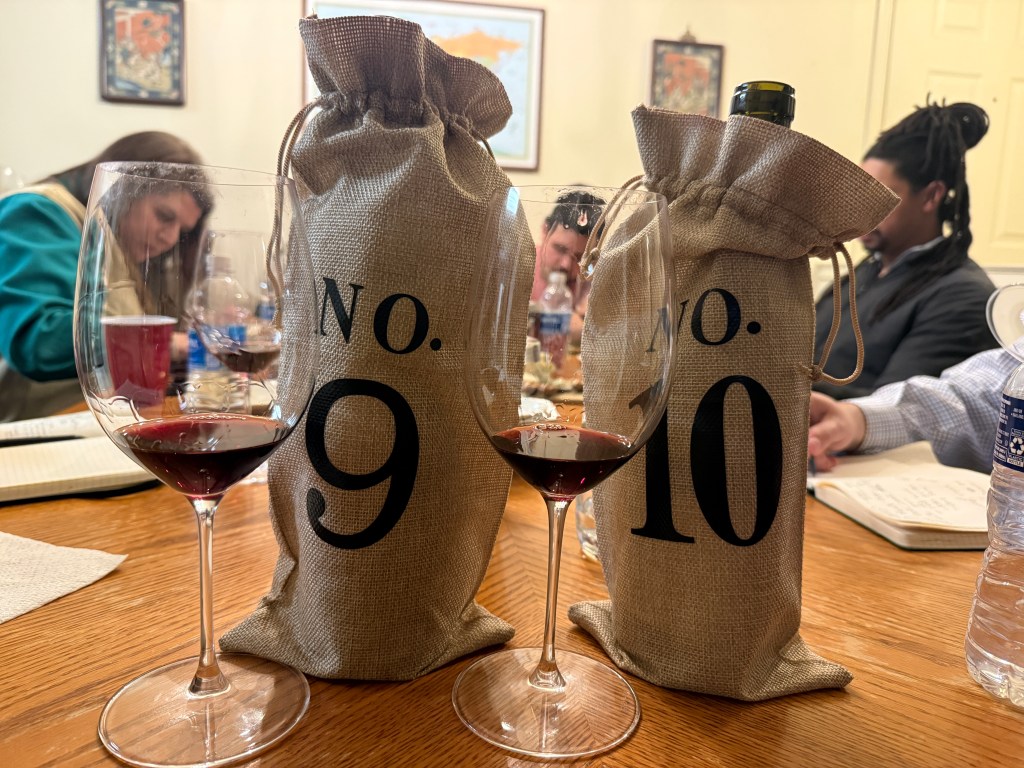
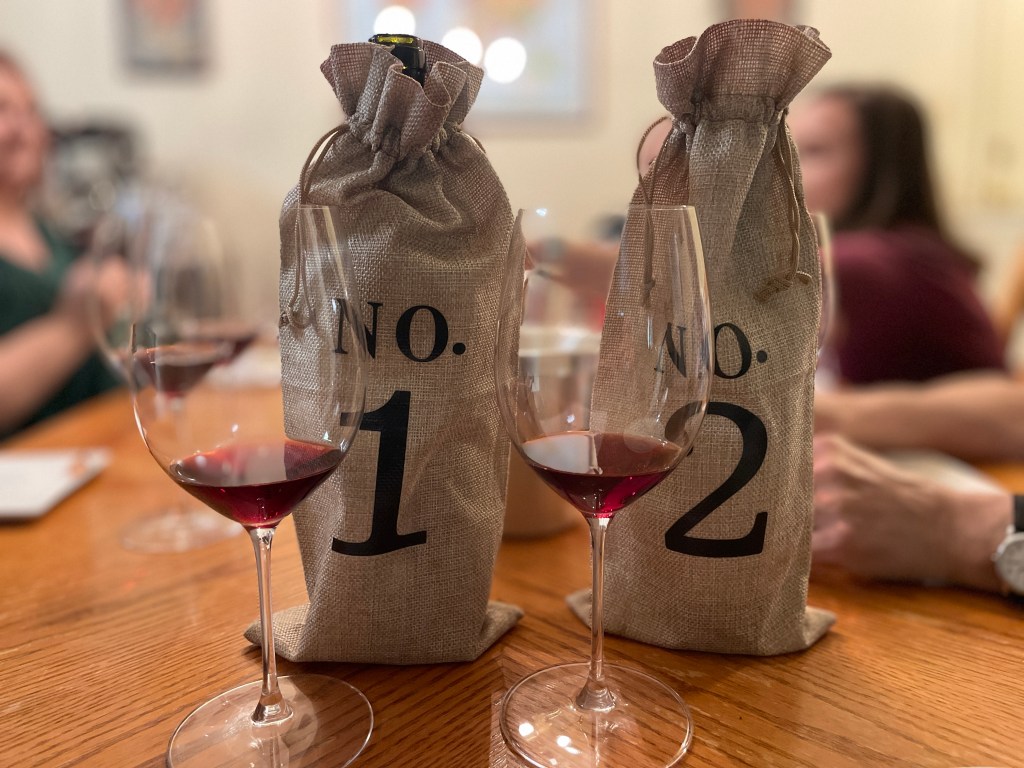
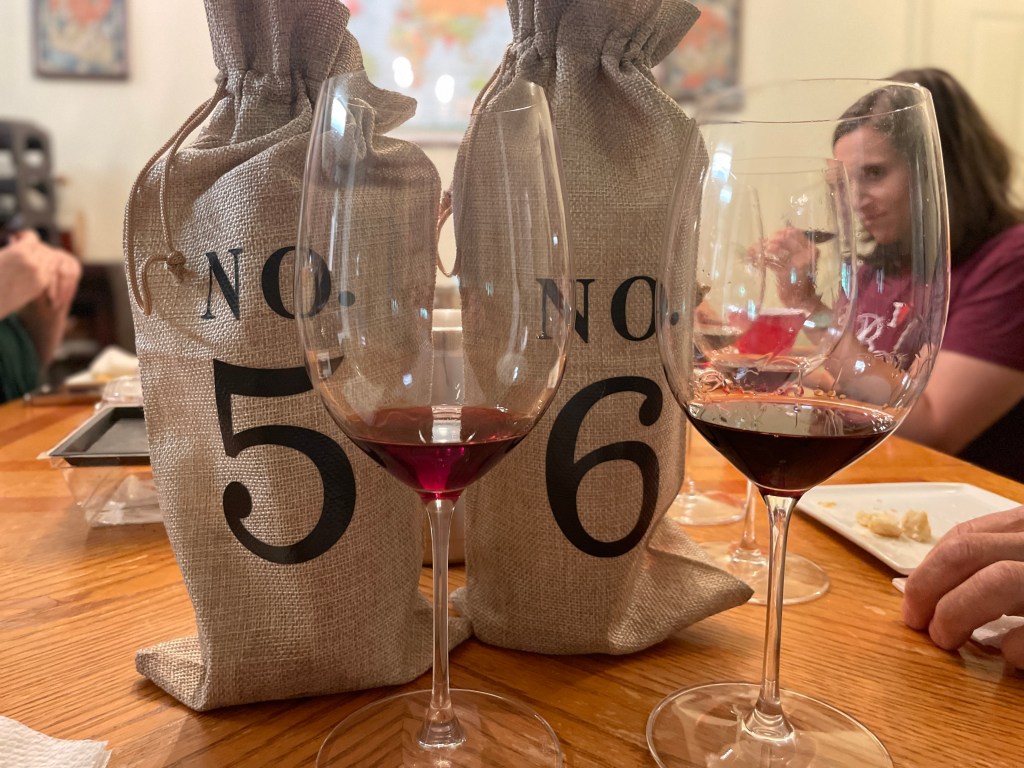
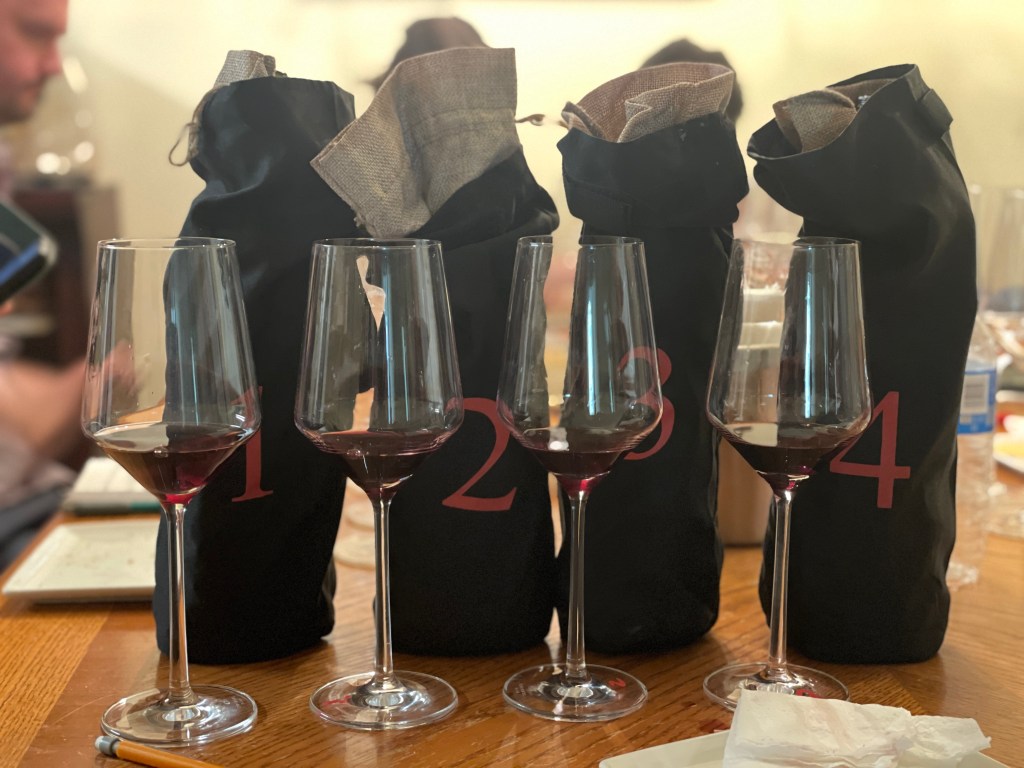
A group of friends & I blind tasted 8 wines in 4 comparison flights, youngest to oldest. All the flights were bagged blind.

3 of the 4 East Coast wines came from Virginia, and 1 was from Pennsylvania. The Italian wines included 1 Barbaresco and 3 Barolos, widely considered the best expressions of this grape. Except for a 2015 vs a 2017, all pairings were matched by vintage year.

The goal was to pick a ‘favorite’ in every flight, as opposed to rating them according to a sophisticated scoring system. After the 4 flights, we selected 3 bottles to go into a ‘finalist’ round. Our resident chef also prepared a meal that went with the wine.

It’s important to point out that ‘favorite’ was a very subjective term. It wasn’t a requirement we choose the most ‘varietally correct’ wine as a ‘favorite’. That said, my guests often used ‘varietally correct’ as part of their own criteria. To satisfy my curiosity, I also asked which wine they thought was from Italy.

The lack of Virginia producers greatly limited our options, especially when it came to finding older vintages. By contrast, you can pick up great Italian Nebbiolos anywhere.

No doubt this biased the outcome in favor of Italy. But hey – if you want to play in the big leagues, you come with the team you have!

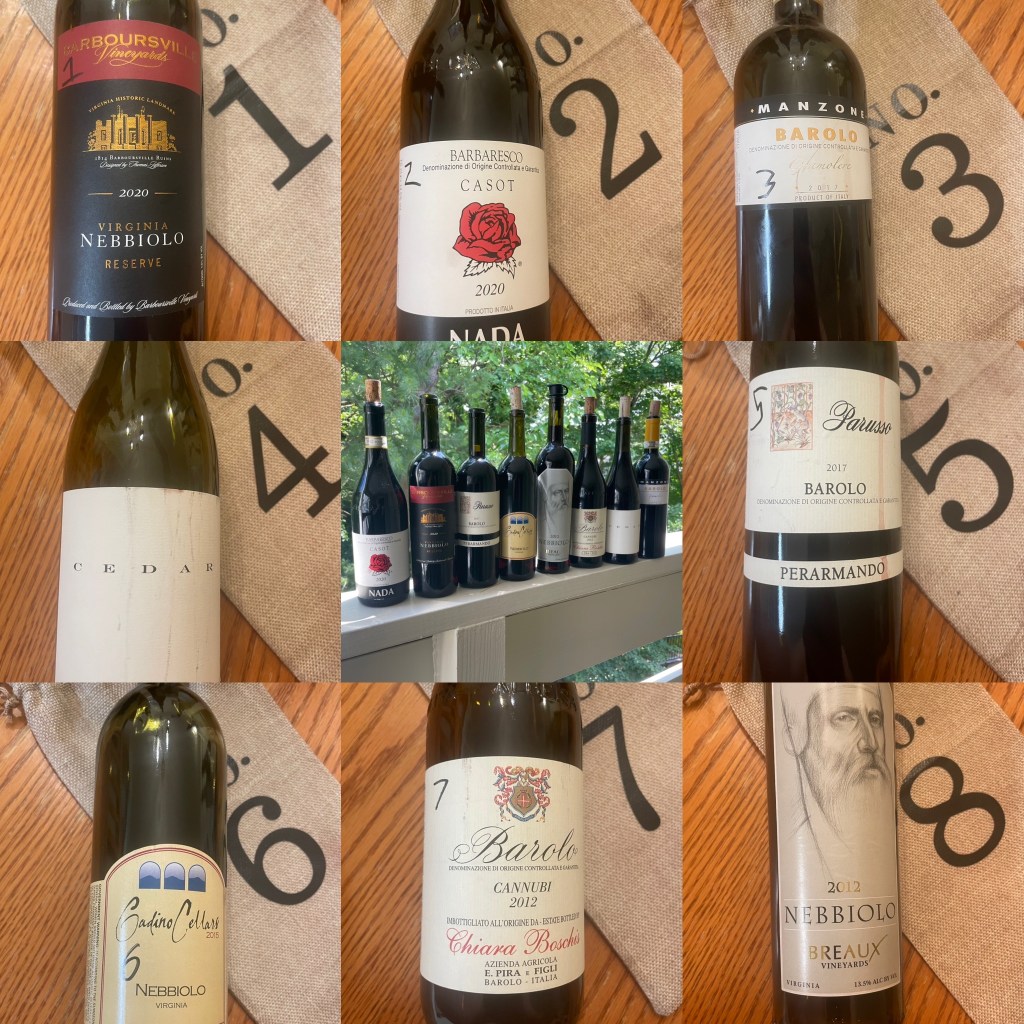
The contenders:

  1. 2020 Barboursville ($40 on website) vs 2020 Nada Giuseppe Barbaresco Casot ($49 Wine.com)
  2. 2017 Va La Vineyards ‘Cedar’ (~$50 for the current vintage?) vs 2017 Manzone Barolo Gramolere ($59 – $69.99 Wine.com)
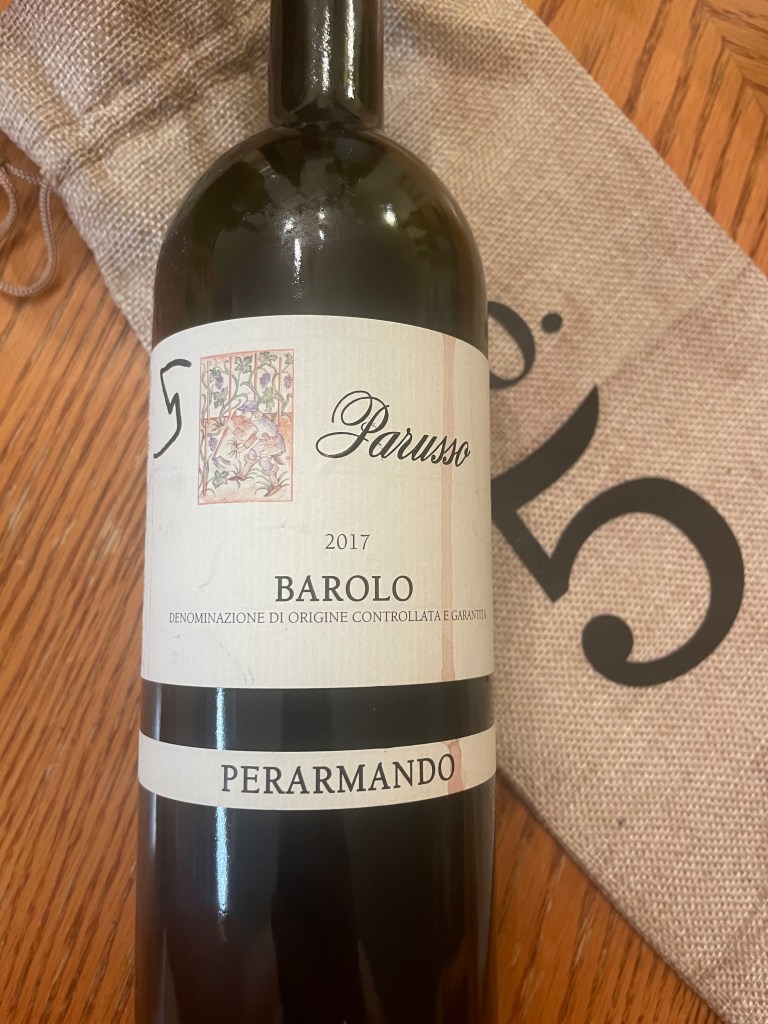
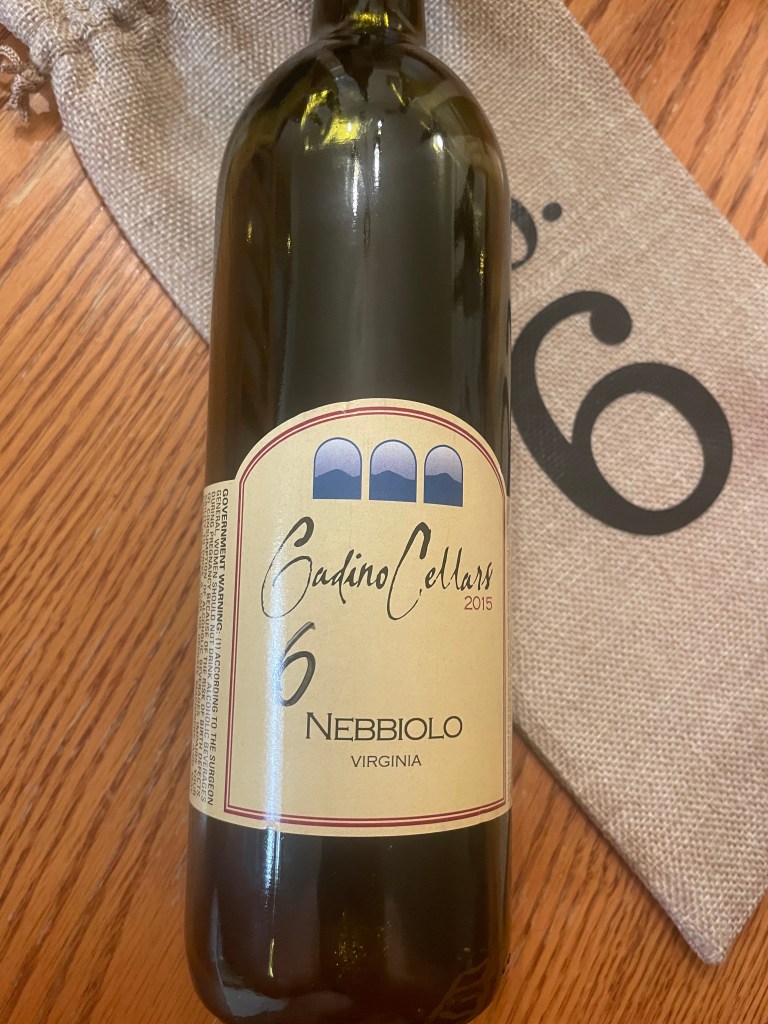
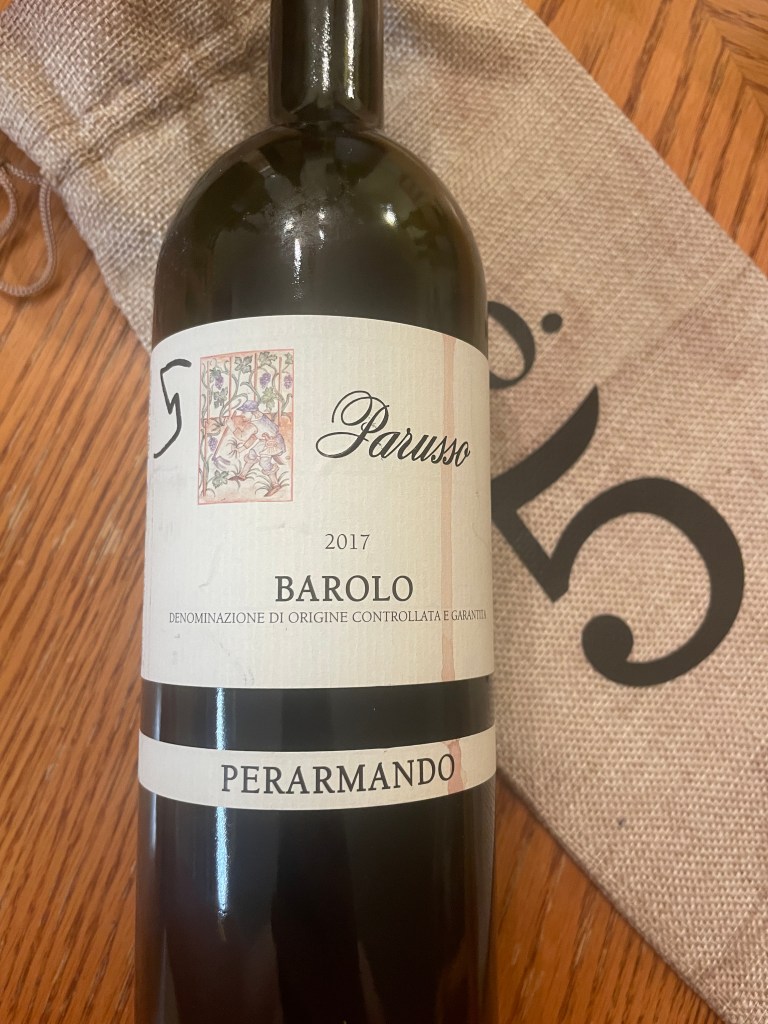
  3. 2015 Gadino Cellars ($51 on website) vs 2017 Parusso Barolo Perarmando ($65 Wine.com)
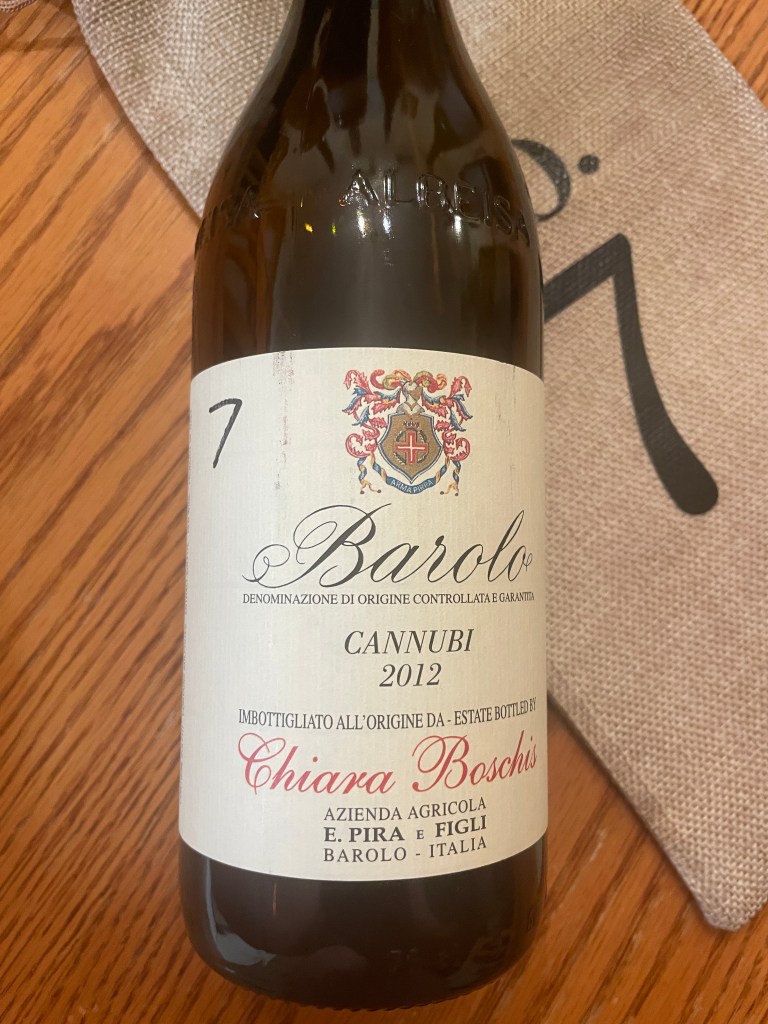
  4. 2012 Breaux ($80 on website) vs 2012 E. Pira Chiara Boschis “Cannubi” Barolo ($99.99 on Wine.Com, $84 at a nearby wine store)

Flight #1:

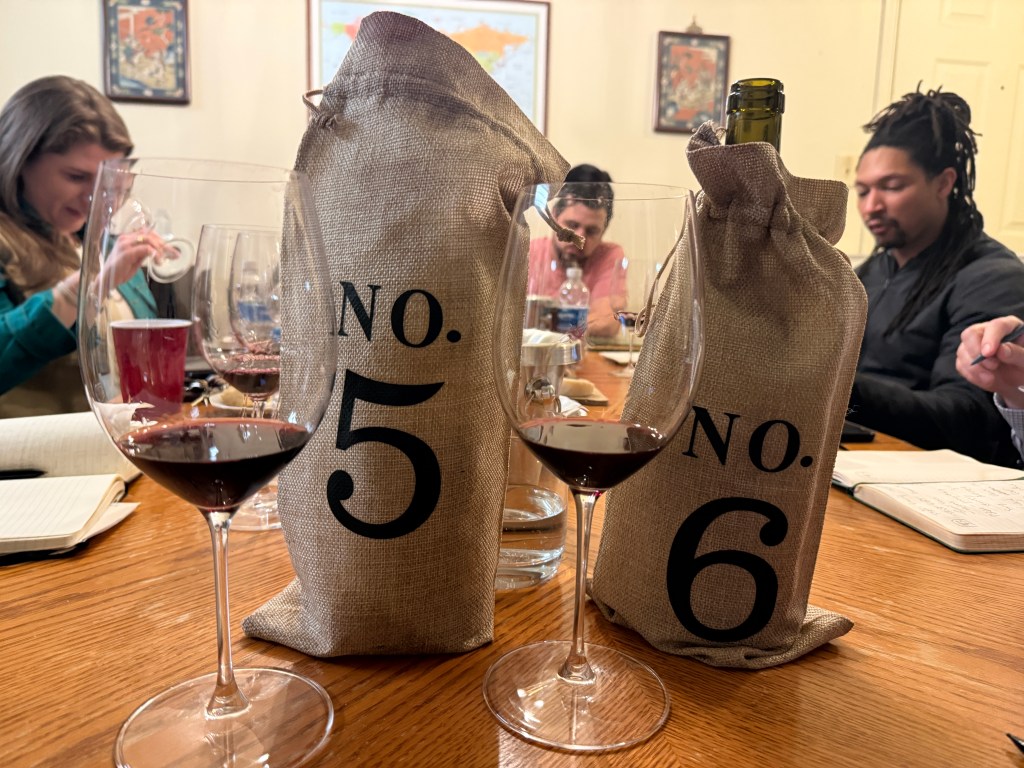
  • Bottle #1: 2020 Barboursville Nebbiolo (4 votes, round winner)
  • Bottle #2: 2020 Nada Giuseppe Barbaresco Casot (3 votes)

This was the closest matchup of the day in terms of votes. We needed to let these wines open up before we could fairly judge them, and the tasters wine went back-and-forth in selecting which was their ‘favorite’.

Eventually, 5 of 7 guests settled on #1 being Virginia, as those subtle pyrazine notes were suggestive of the East Coast. They weren’t prominent by any means, but ‘green’ notes of any type were so uncharacteristic of Nebbiolo that just a hint was enough to identify its origins. This trend continued over the course of the event.

Bottle #1 / 2020 Barboursville Nebbiolo (Virginia). Light but noticeable nose. Lots of pepper notes, with an undertone of pyrazines. Rustic. Complex, with earthy/leathery notes. Dried herbs also came up. Ruby colored.

Bottle #2 / 2020 Nada Giuseppe Casot (Barbaresco). VERY light, almost unnoticeable nose unless you swirled it a lot. Notes of anise was mentioned. “Smooth” tobacco came up. Garnet color.

  • Alex: Favorite was #1/2020 Barboursville and thought #1 was East Coast (correct). Loved the nose of #1 and thought it was ‘drink now’ while #2 needed more time.
  • Kathy: Favorite was #2/2020 Nada, and thought #1 was East Coast (correct)
  • Lindsay: Favorite was #2/2020 Nada, and didn’t guess country of origin.
  • Matt: Favorite was #1/2020 Barboursville and thought #1 was Italy (inaccurate). I thought #1 had an Old World quality to it while #2 was smoother & easy to drink, hence I thought #1 was Italy while #2 was Virginia.
  • Ryan: Favorite was #2/2020 Nada, and thought #1 was East Coast (correct)
  • Sarah: Favorite was #2/2020 Nada and thought #1 was East Coast (correct). Thought #2 had ‘deeper’ fruit.
  • Vincent: Favorite was #1/2020 Barboursville and thought #1 was East Coast (correct). Thought #1 was more complex.

Flight #2:

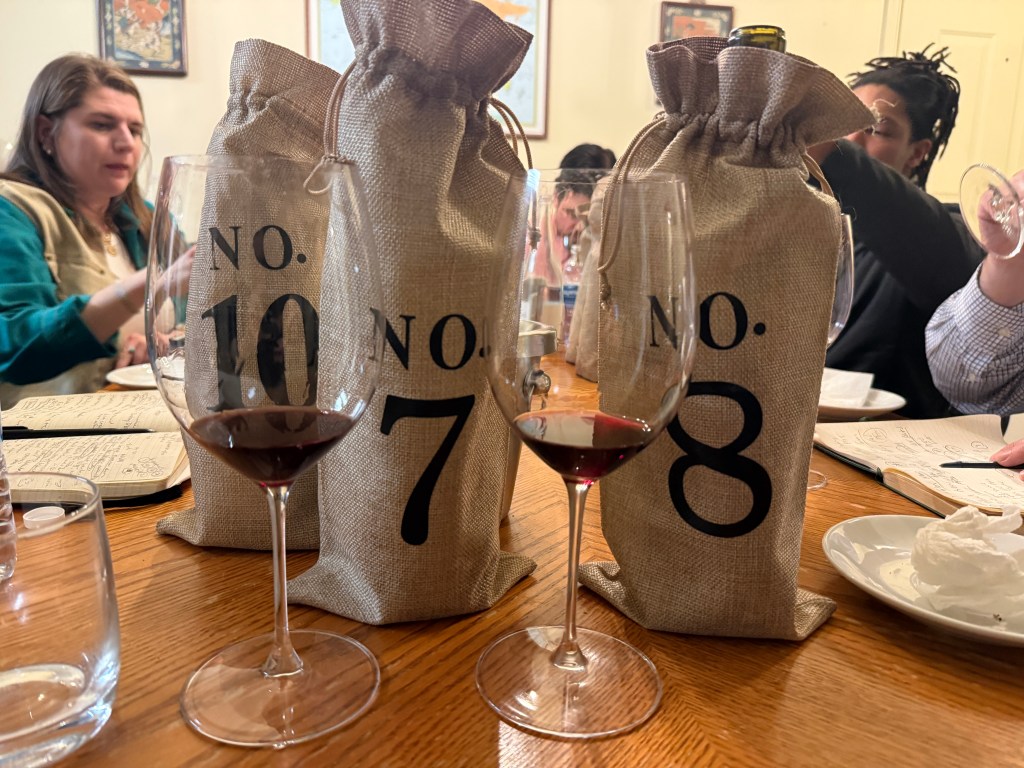
  • Bottle #3: 2017 Manzone Gramolere (Barolo) (5 votes, round winner)
  • Bottle #4: 2017 Va La Vineyards ‘Cedar’ (Pennsylvania) (2 votes)

Wine #4/Va La was noticeably different than anything else we had that day. Hard to put my finger on it…maybe it was the filtering (or lack of it)? It was a bigger & bolder wine than we were expecting. Wine #3/Manzone was one of the most ‘varietally correct’ wines of the day.

Bottle #3 / 2017 Manzone Barolo Gramolere. Very balanced and ‘classic’. Notes of dried roses and tar were mentioned, but they weren’t overwhelming. Very tannic. Ruby color.

Bottle #4 / 2017 Va La Vineyards ‘Cedar’. Oh boy, this wine was complex! Punch you in the face ‘big’. Acidic and ‘weird’ but in a good way. Garnet color.

#4 had the oddest descriptor I’ve heard in a long time; “caramel/chocolate/olive oil”.

  • Alex: Favorite was #3/2017 Manzone and thought #4 was East Coast (correct). Thought #3 was varietally correct while #4 was ‘interesting’.
  • Kathy: Favorite was #3/2017 Manzone and thought #4 was East Coast (correct)
  • Lindsay: Favorite was #3/2017 Manzone and didn’t guess the region. Went with #3 because of its balance.
  • Matt: Favorite was #4/2017 Va La and thought #4 was East Coast (correct). I thought #4 wasn’t varietally-correct but I didn’t care. I was completely fascinated by this wine so picked it as my ‘favorite’, even if arguably #3 was ‘better’.
  • Ryan: Favorite was #3/2017 Manzone and thought #3 was East Coast (inaccurate)
  • Sarah: Favorite was #3/2017 Manzone and thought #4 was East Coast (correct)
  • Vincent: Favorite was #4/2017 Va La and thought #4 was East Coast (correct). Thought the results were very close but leaned towards #4 because he thought it was denser and had more going on.

Flight #3:

  • Bottle #5: 2017 Parusso Perarmando (Barolo) (7 votes, round winner)
  • Bottle #6: 2015 Gadino Cellars Nebbiolo (Virginia)

This round was more of a blowout because #6 veered pretty dramatically away from varietal-correctness, to the point we thought it was almost a California Cab.

I was surprised when I unveiled the bottle and found it to be our 2015 Gadino. I’ve had this bottle before and didn’t remember it diverging from ‘traditional’ Nebbiolo characteristics, so I can’t quite explain it. Maybe the comparison showcased qualities we otherwise would have overlooked? Or was it something in my storage?

Bottle #5 / 2017 Parusso Barolo Perarmando. Light nose, looooong finish. Ripe fruit, with notes of liquorish. Spearmint gum or cedar on the nose, or maybe herbal notes (depending who you asked). Balanced.

Bottle #6 / 2015 Gadino Cellars. A little caramelly, with a tar nose. But we also found notes of toasted vanilla and blackberry. This was the least varietally correct wine of the day.

Votes:

  • Alex: Favorite #5/Parusso, thought #6 was East Coast (correct).
  • Kathy: Favorite #5/Parusso, thought #6 was East Coast (correct)
  • Lindsay: Favorite #5/Parusso, thought #6 was East Coast (correct)
  • Matt: Favorite #5/Parusso, thought #6 was East Coast (correct)
  • Ryan: Favorite #5/Parusso, thought #6 was East Coast (correct)
  • Sarah: Favorite #5/Parusso, thought #6 was East Coast (correct)
  • Vincent: Favorite #5/Parusso, thought #6 was East Coast (correct)

Flight #4:

  • Bottle #7: 2012 E. Pira Chiara Boschis “Cannubi” (Barolo) (5 votes, round winner)
  • Bottle #8: 2012 Breaux Vineyards Nebbiolo (Virginia) (2 votes)

This was the highlight of our 1 vs 1 comparisons. Our biggest challenge is Wine #7 had a ‘hot’ note caused some initial worry that maybe it was cooked during storage. Fortunately, after a short time that quality blew off and became much more enjoyable.

Bottle #7/ 2012 E. Pira Chiara Boschis “Cannubi” Barolo. Notes of cherry, blackberry, and menthol were mentioned, but stewed fruit, tar, dry cherry, and star anise came up even more. Not a lot of fruit on the palate but there was a tremendous depth of flavor. One person mentioned a note of bell pepper.

FYI – 97 points from James Suckling; 95 points Vinous.

Bottle #8 / 2012 Breaux Nebbiolo. “Light and well balanced” were the key descriptors, but there were a lot of other descriptors to go along with this. It was almost the complete opposite of #7.

Green pepper on the nose (and one person mentioned green pepper on the palate), with maybe a barnyard quality. At least one person said it was jammy on the palate with tighter tannins. Sweet tobacco on the palate was also mentioned. Char notes.

If this is what Virginia Nebbiolo can taste like after 12 years…sign me up! Very impressive.

Votes:

  • Alex: Favorite was #7/E. Pira Chiara, thought #8 was East Coast (correct). Went with the depth of flavor with #7.
  • Kathy: Favorite was #7/E. Pira Chiara, thought #8 was East Coast (correct). Thought this was the closest flight of the day.
  • Lindsay: Favorite was #8/Breaux, thought #8 was East Coast (correct)
  • Matt: Favorite was #7/E. Pira Chiara, didn’t guess the geographic region
  • Ryan: Favorite was #7/E. Pira Chiara, thought #7 was East Coast (inaccurate). Liked the nose of #7 but palate of #8.
  • Sarah: Favorite was #7/E. Pira Chiara, thought #8 was East Coast (correct). Detected some pyrazines on #8 but overall a good wine.
  • Vincent: Favorite was #8/Breaux thought #8 was East Coast (correct)

Finalist Round:

  • Bottle #3: 2017 Barolo Gramolere (Event Winner)
  • Bottle #5: 2017 Parusso Barolo Perarmando
  • Bottle #7: 2012 E. Piara Chiara Boschis (Runner Up)

We voted and collectively came up with our 3 ‘finalists’, based on the previous round winners. That said, it was a shame we didn’t include wine #8/Breaux Vineyards as one of the finalists, because it deserved to be there.

I didn’t take extensive tasting notes this round. In the end, #3/Barolo Gramolere was by far the consensus favorite of the day. It was nearly a toss-up between the next two for runner-up, but the #7/2012 Chiara came 2nd by a small margin.

Votes:

  • Alex: 5/3/7
  • Kathy: 5/3/7. #5 was ‘talking to me’
  • Lindsay: 3/7/5. #3 was balanced and classic
  • Matt: 3/7/5. Loved the nose and the rusticity of #3’s palate
  • Ryan: 3/7/5
  • Sarah: 7/3/5. Thought there was a lot going on with #7, and it was still getting better over time, while #3 had already peaked
  • Vincent: (absent)

Lessons Learned:

First off, I want to say that I’m really proud how Team Virginia (with an assist from Pennsylvania’s Va La Vineyards) showed here. While none made it to the final round (although we agreed the 2012 Breaux should have), the East Coast contenders brought their A-game.

But as good as they were, these East Coast wines went up against exceptional producers from one of the most highly regarded wine regions in the entire world. This tasting was the equivalent of a World Cup soccer match between Team America and Team Italy. While the US has some great players…come on…it’s ITALY we’re dealing with.

That said, the results were far closer than I could have expected. We uniformly enjoyed the East Coast wines, especially the ones from Barboursville and Breaux.

Two main lessons learned:

Point #1: Age matters – and the East Coast Nebbiolos showed they could do that. There were many compliments about how that 2012 Breaux was able to last 12 years. Having had older Barboursville vintages I could say the same for them as well.

Point #2: East Coast Nebbiolos (at least in this round) were rarely ‘varietally correct’. Out of the 7 of us, we almost always guessed the correct region for each of the 4 rounds. I’m convinced while the East Coast wines were consistently good, being ‘different’ lost them some points.

What made the East Coast wines easily-identifiable were the light pyrazine and overall earthy notes, which were suggestive of their non-Italian origin.

2024 Virginia-only Cabernet Franc Showdown

You might say that Cabernet Franc is a grape that ‘gets around’.

First off, it’s the most planted wine grape in Virginia. Just over 700 acres of Cabernet Franc is grown in the state – much more than runner-up Chardonnay and leaps and bounds more acreage than #3 Petit Verdot.

Second, Cabernet Franc is one of the parents Cabernet Sauvignon. Back in the 17h century, Cabernet Franc and Sauvignon Blanc got feisty in a French vineyard and produced an offspring which took parts of both parents’ names. So even if you aren’t in love with Cabernet Franc, thank it for being a great parent.

Cabernet Franc possesses a lot of great qualities yet shows them in moderation, including good but not high tannin and acidity, medium body and alcohol, and a floral aroma. This makes it a versatile wine able to be paired with a variety of food options or enjoyed on its own.

It’s also a hardy grape in the vineyard, able to ripen in cooler weather, offers good disease resistance, and doesn’t need a long growing season. Virginia winemakers (and wine growers) constantly sing its praise.

I did a “Virginia Cabernet Francs vs The World” comparison last year with wines from Virginia, France, and the Finger Lakes, but this time around we did a round of 100% Virginia wines. Most were of the 2021 vintage but we had some variation in vintage year.

Tasting & Scoring Methodology

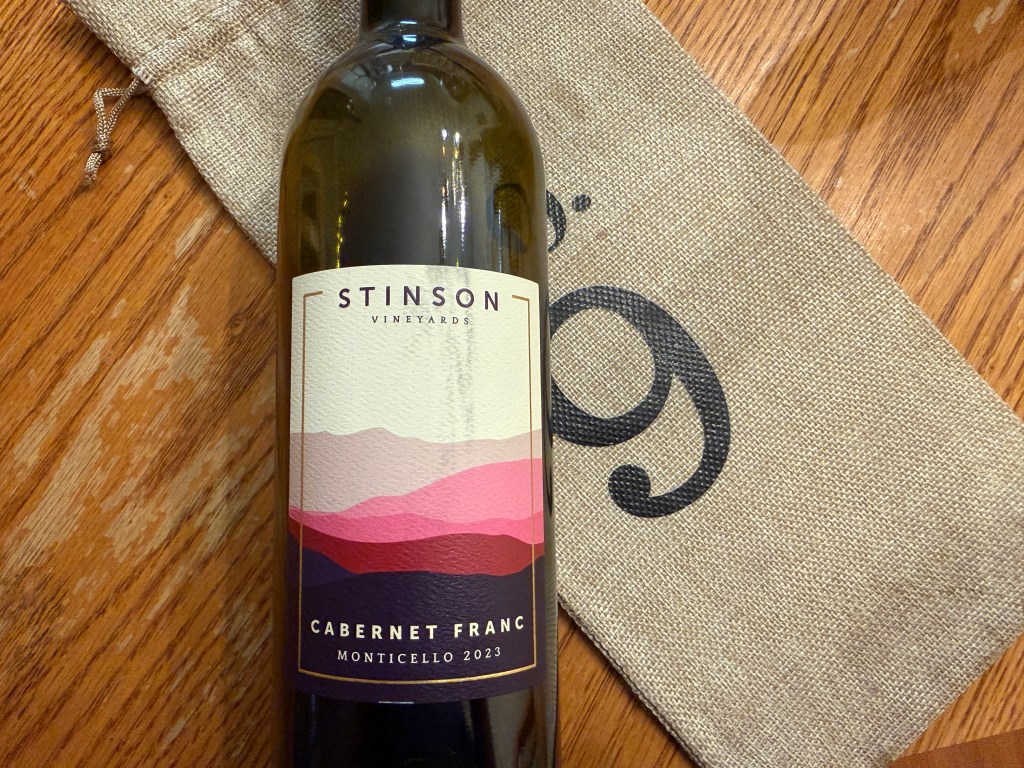
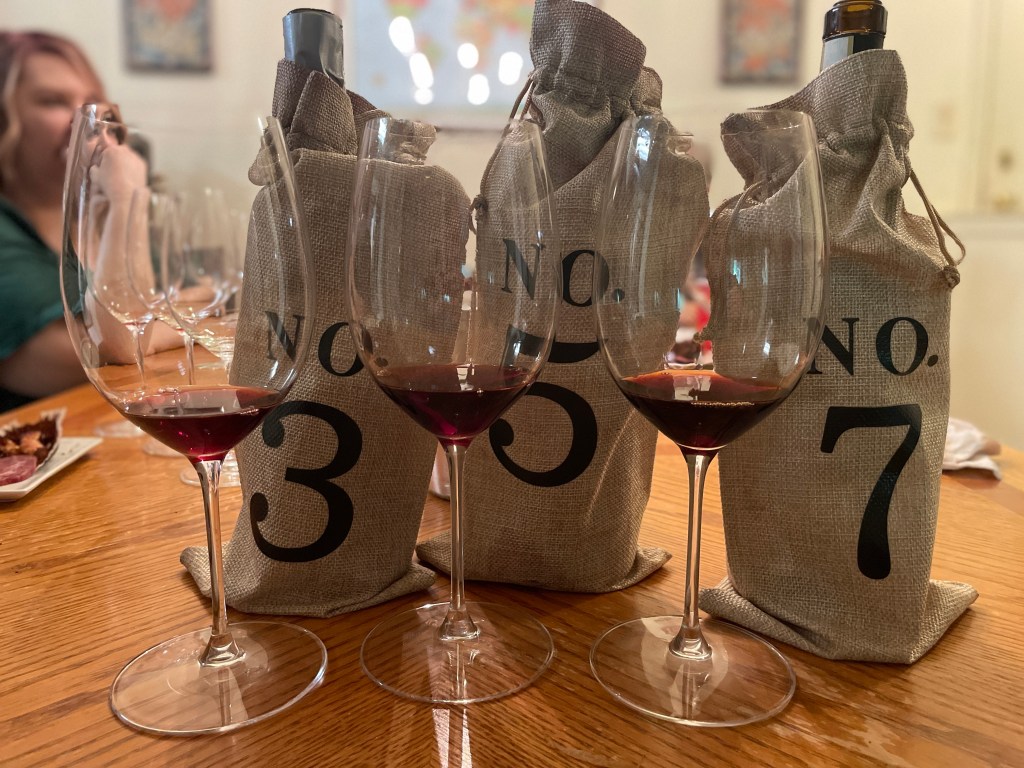
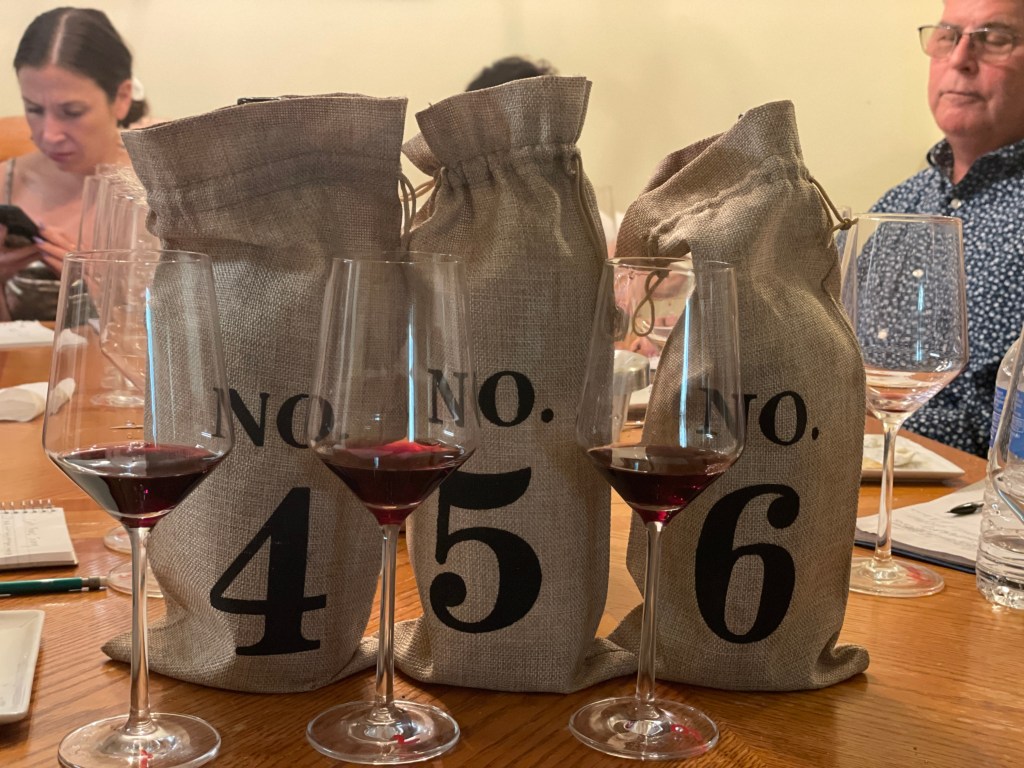
A group of friends & I blind tasted 9 wines in 3 flights. All the flights were bagged blind.

We didn’t have a sophisticated scoring system. The goal was to pick a ‘favorite’ in every flight, as opposed to rating them and determining which one we thought was the ‘best’.

The favorite of every flight went to a ‘finalist’ round. I took the extra step of hiding the ‘finalists’ with a second bag, so any biases of an earlier tasting hopefully didn’t carry over to the final round.

After finishing the final round, we unveiled all the wines and crowned the overall favorite of the day.

This group was composed of friends who are definitely Virginia wine aficionados, so all were very familiar with Cabernet Franc. Only one had industry experience, but the others were more than familiar with blind wine tastings.

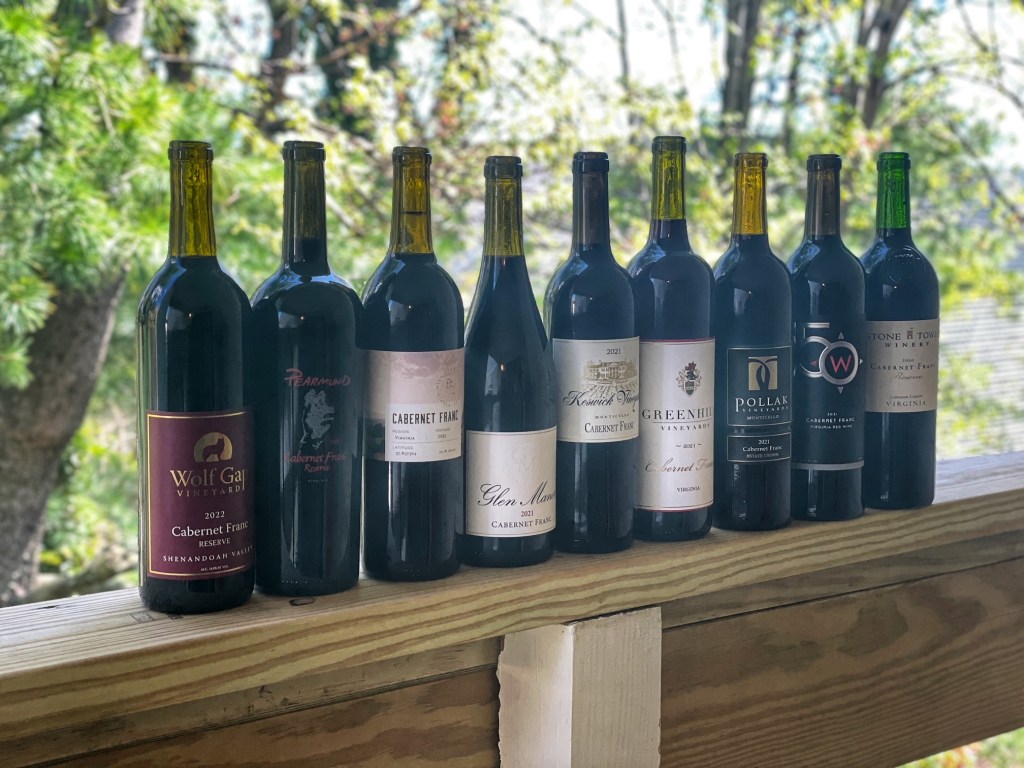
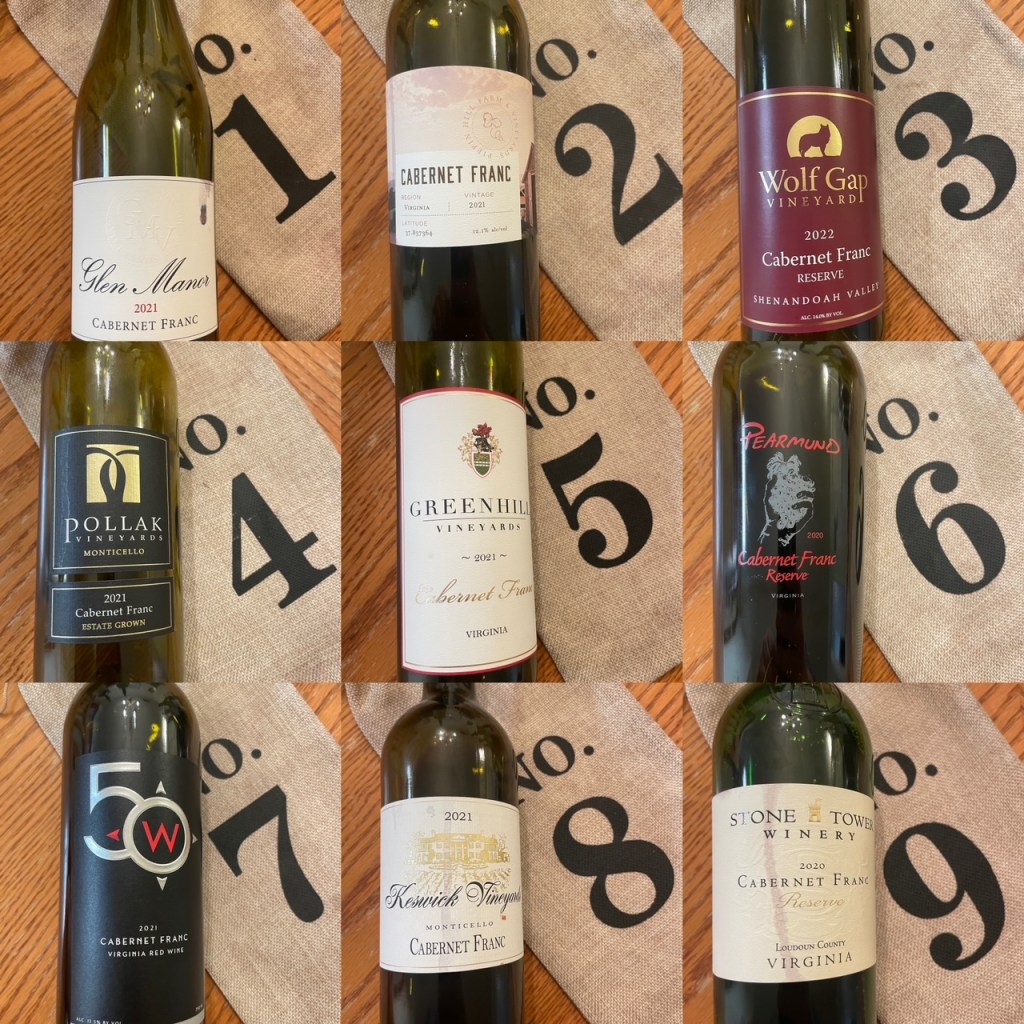
The contenders:

  1. 2021 Glen Manor
  2. 2021 Pippin Hill
  3. 2022 Wolf Gap
  4. 2021 Pollak
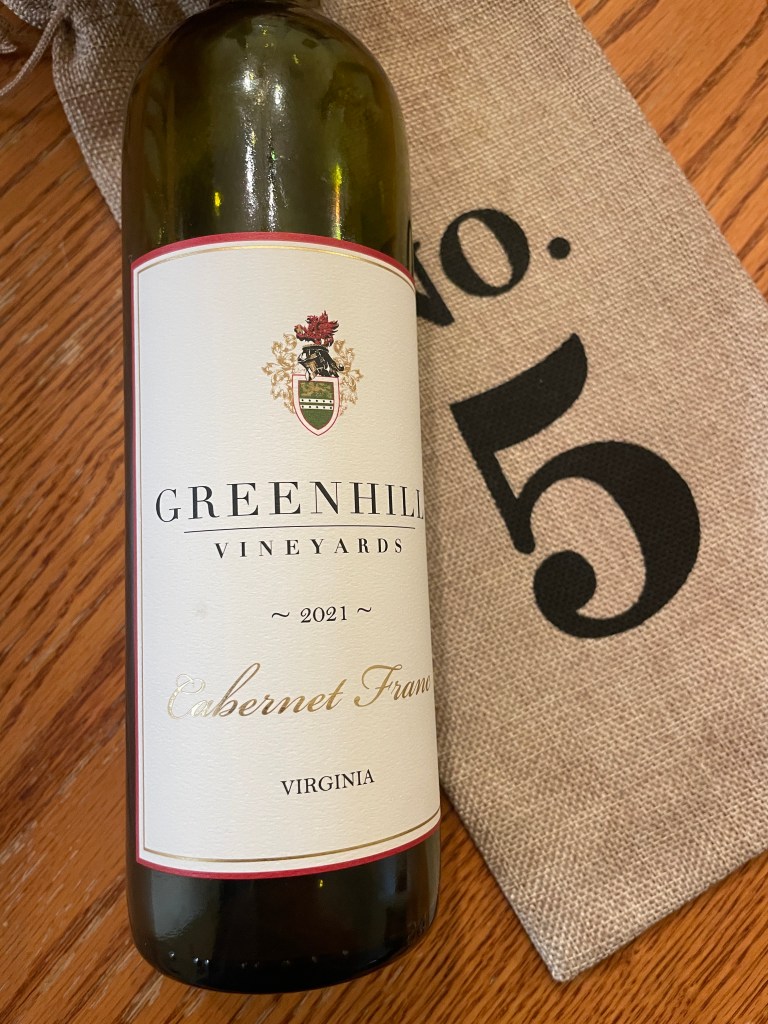
  5. 2021 Greenhill
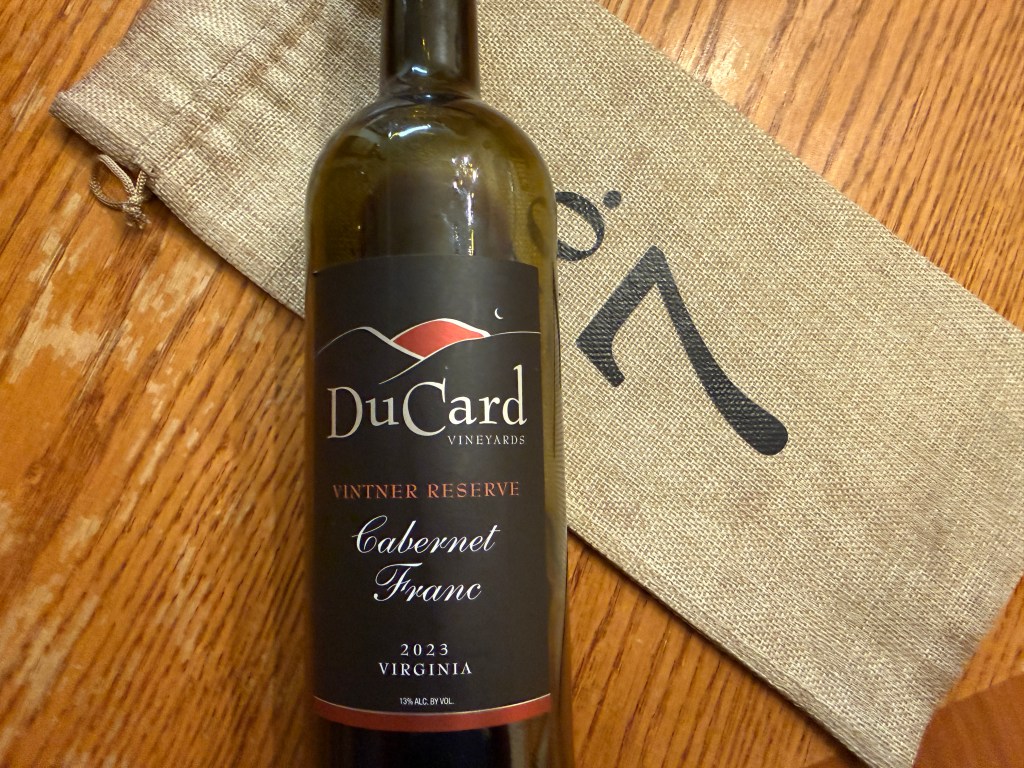
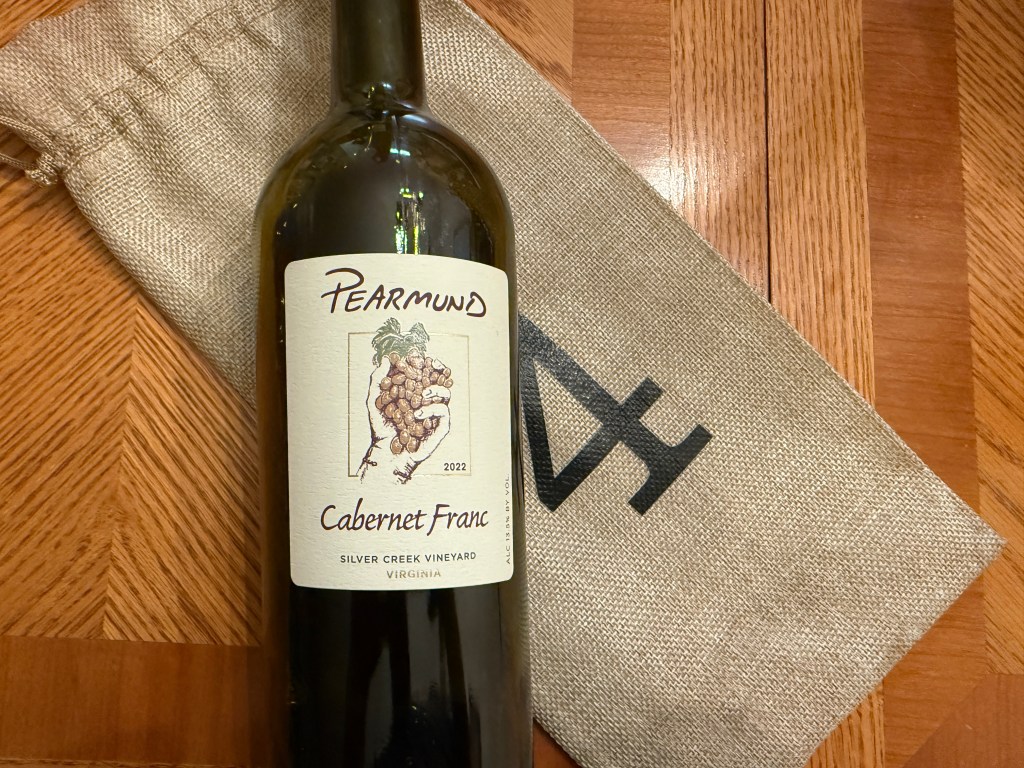
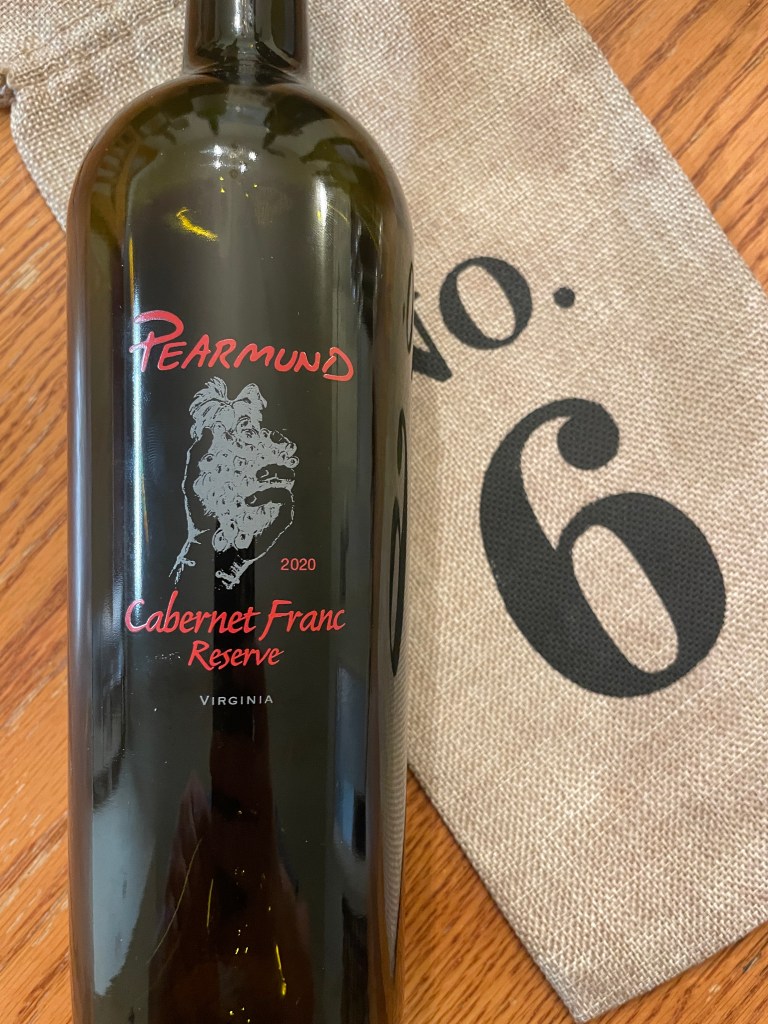
  6. 2020 Pearmund
  7. 2021 50 West
  8. 2021 Keswick
  9. 2020 Stone Tower

Flight #1

  • Bottle #1: 2021 Glen Manor (round winner)
  • Bottle #2: 2021 Pippin Hill
  • Bottle #3: 2022 Wolf Gap

We were immediately struck by how different all of these wines were. #1 leaned into elegance while #2 was fare more traditional. #3 was probably too young for this lineup.

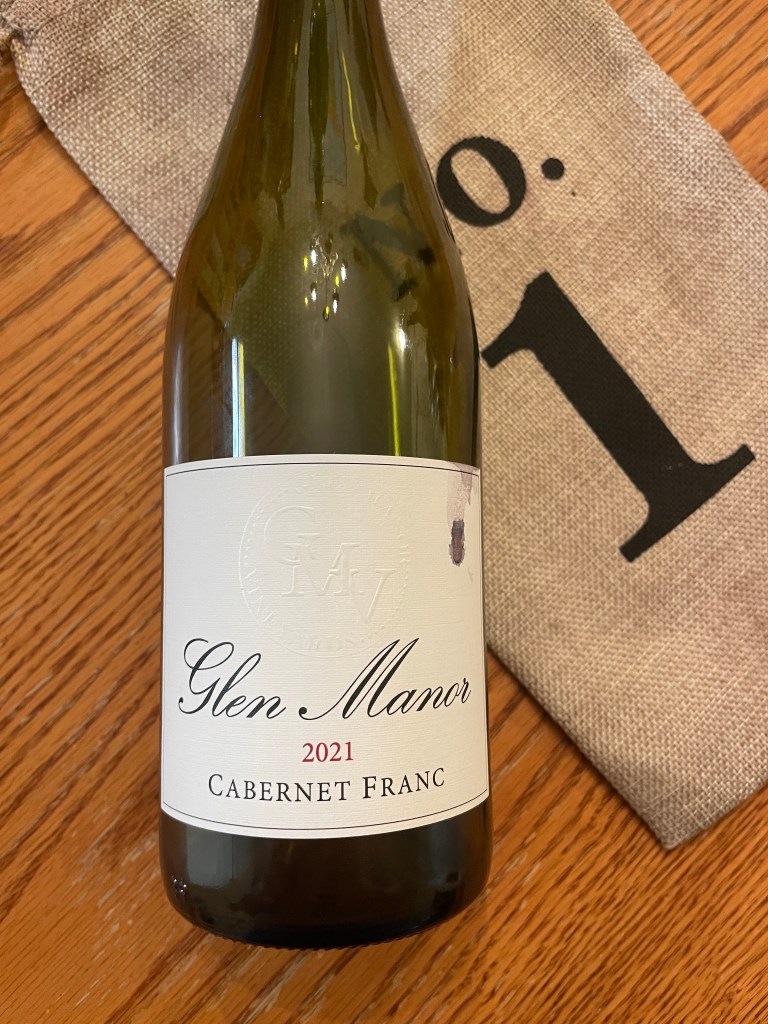
Bottle #1 / 2021 Glen Manor. Earthy nose, but also light and clean. Guests mentioned notes of spice and coco on the palate. It was velvety and tannic; firm tannins were mentioned. Astringent but in a good way.

Bottle #2 / 2021 Pippin Hill. Green pepper on the palate, white pepper on the nose. There initially was a mustiness to it but that went away as the wine opened up. Someone mentioned notes of tart cherry, and the term ‘mocha’ got some traction. Several used descriptors of balanced and smooth. Velvety; maybe a little oaky. One person mentioned too peppery

Bottle #3 / 2022 Wolf Gap. This was our ‘easy drinking wine’. Smooth, but the nose and palate weren’t aligned. Some mentioned notes red pepper and maybe vanilla on the finish. Others mentioned white pepper, or even evergreen and pine on the nose. Soft tannins.

Votes:

  • Ann 1/3/2. Liked the astringency and body of #1, but thought #3 was easy drinking
  • Ashley 2/1/3. Liked the complexity and spice of #2, but also enjoyed the balance of #1
  • Brandon: 1/2/3
  • Frank: Tie between #1 and #2, with #3 a more distant third. 
  • Emily: 2/1/3
  • Isabel: 1/2/3. Thought #1 was spicy but bold, with some nice black pepper
  • Martha: 2/1/3
  • Matt: 1/2/3. I thought #1 was an easy favorite here, for its overall elegance.

Flight #2

  • Bottle #4: 2021 Pollak (wild card advance to next round)
  • Bottle #5: 2021 Greenhill (round winner)
  • Bottle #6: 2020 Pearmund

This round was the complete opposite of the previous one. If the 1st round wines were strangers, this round was like seeing triplets, or at least close brothers. This round reminded me more of the Loire than Virginia.

This was also our favorite round of the day (outside of the winners round). While #6 / Pearmund lagged behind in votes, many felt it was easily was the equal to the best of the previous or subsequent flights.

Bottle #4 / 2021 Pollak. Nice complexity; good fruit qualities. Notes such as vanilla, liquorish, or barnyard were bandied out. Others mentioned notes of coco and elderberry on the palate. Acidic and dry.

Bottle #5 / 2021 Greenhill. Complex and rich were the key descriptors. Very light in color but complex on the palate. If Wine #4 (Pollak) was fruit forward, this leaned into the dark fruit. This also had a more ‘traditional’ coco nose as Cab Francs go. Notes of sweet cherry or ripe red cherry were mentioned.

Bottle #6 / 2020 Pearmund. Light color. More vegetal nose, but definitely not in a bad way. Tart cherry was mentioned. Notes of cranberry and dry fruit, plus some tartness.

Votes:

  • Ann: 5/4/6. Seemed torn between #4 and #5, as both were complex, lively, and balanced
  • Ashley: 5/4/6. Liked the dark fruit of #5
  • Brandon: 5/4/6.Thought “#5 had everything”, but especially liked its complexity
  • Frank: 5/4/6. Thought #4 was complex and balanced
  • Emily: 5/6/4. “Liked everything going on” for #5, but appreciated the fruit on #6
  • Isabel: 5/4/6. Focused on the ripe cherry notes of #5; also mentioned its smoothness
  • Martha: 5/4/6. Liked the nose on #5
  • Matt: 4/5/6

Flight #3

  • Bottle #7: 2021 50 West
  • Bottle #8: 2021 Keswick (round winner)
  • Bottle #9: 2020 Stone Tower

If the previous round were near-triplets, these were brothers. It was also our big & bold group.

Bottle #7 / 2021 50 West. This wine had higher levels of sugar and alcohol than we expected, yet was also on the lighter and peppery side. Sesame nose, notes of tart cherry were mentioned. Mildest nose of the flight. Dark fruit on the palate… maybe plumb? Someone mentioned it was ‘vibrant’.

Bottle #8 / 2021 Keswick. Someone mentioned a ‘beeswax nose’. Regardless, that nose was divisive, with some loving it but others not so much.

But after it opened up, people’s opinions changed. We found it to be fruit forward, with rich raspberry notes. Smooth and lush was also mentioned. Of all the wines we tried, this one needed the most time to reach its full potential. I suspect several people changed their votes once it did.

Bottle #9 / 2020 Stone Tower. Probably the most tannic wine of the entire day. One person mentioned a barnyard-y nose, while another said it had a liquorish, earthy nose. Musky, hints of vanilla. This was a classic, more fruit-forward Virginia Cab Franc. My favorite descriptor is this was a “big stud” of a wine.

Votes:

  • Ann: 8/7/9. Thought #8 was bold and has musty nose, but that softened out. Vibrant.
  • Ashley: 9/7/8. Though #9 had a liquorish nose
  • Brandon: 8/7/9. Thought #8 was barnyard-y but that mellowed out. It was also the earthiest of the bunch (I wonder if he was referring to #9 and I got this wrong?)
  • Emily: 9/8/7. Thought #9 had a nice warming sensation; cozy and toasty. Also was fruit forward with a peppery aroma.
  • Frank: 8/7/9 complex. #8 had a bell pepper note, and was lush and easy drinking
  • Isabel: #8 and #9 were tied, then #7. Felt #8 had earthy and berry notes, while #9 had a tobacco character
  • Martha: 8/9/7. Liked the nose and finish of #8, felt it was well balanced
  • Matt: 8/7/9. The nose really stood out on #8

Finalist Round

  • Bottle #1 / 2021 Greenhill (Bottle #4 in the 2nd flight) Event Winner
  • Bottle #2 / 2021 Glen Manor (Bottle #1 in the 1st flight) Runner Up
  • Bottle #3 / 2021 Keswick (Bottle #8 in the 3rd flight)
  • Bottle #4 / 2021 Pollak (Bottle #5 in the 2nd flight) Third Place

Normally I only pick a single favorite of every flight, but in this case Flight #2 was so universally loved, I picked a ‘wildcard’ to advance to the winning round (turned out to be our 2021 Pollak).

I re-bagged the wines so help prevent any biases from our previous rounds influence this round (although mostly we still guessed which was which). No surprise at who made finalist round; all of these were elegant, complex wines from exceptional producers.

I didn’t take many notes on this time. But after some deliberation we went with the 2021 Greenhill Vineyard Cabernet Franc as the favorite of the day. It was a great example how Cabernet Franc can be light on the palate yet be rich and complex.

I thought the runner-up 2021 Glen Manor Cabernet Franc leaned into that elegance even more, even if it didn’t have the same layer of richness. While GMV was my personal favorite of the day, but I wouldn’t argue with either bottle.

Votes:

  • Ann: 2/4/3/1. Went with Glen Manor because of its balance and spice note
  • Ashley: 2/1/4/3. Thought the Glen Manor had body but was also clean and complex
  • Brandon: 1/4/3/2
  • Emily: 1/4/3/2. Loved Greenhill because it was cozy and balanced
  • Frank: 1/2/4/3. Thought Greenhill had the lightest style
  • Isabel: 1/2/4/3
  • Martha: 1/2/4/3. Loved the nose and palate of the Greenhill; soft
  • Matt: 2/4/3/1. I gravitated towards Glen Manor because of its richness

Lessons Learned:

First off, all of these wines had ‘Virginia’ written all over them. That’s because Cab Franc is very terroir-influenced, plus it’s so widely grown that different winemakers have different signatures. You can have 9 wines and have 9 very different flavor profiles, yet all of them are recognizably ‘Virginia’ in style.

That said, very broadly this group tended to be divided between more traditional ‘Virginia style’ wines that leaned into the earthiness and pepper notes, and a set of lighter, more refined ‘Loire’ style wines. In this case, the Loire-style wines won the day.

I think the 2020 Stone Tower and 2021 Glen Manor were great examples of this spectrum. The former was a ‘big tannic brute’. The later was more of a ballerina. The 2021 Greenhill and 2021 Pollak were likewise examples of these more refined style. I’ve seen a trend which focuses on the former, but I’m hopeful we’ll keep seeing the later.

One last (late) edit. I also think this event also showcased why certain wineries have the exceptional reputation that they enjoy.

Virginia makes outstanding Cabernet Francs, so it’s hard to go wrong in this category. This particular lineup had a bunch of stars. Even so, going into this event certain names – namely Glen Manor, Keswick, and Pollak – kept being mentioned as likely winners.

It was no surprise that each of those made it into the final round. Despite that, the ‘brown bag’ really helps strip away biases.

Yet it the winner didn’t surprise me at all. Greenhill Vineyards’ Ben Comstock has been making a lot of great wine, racking up a bunch of Double Golds or “Best in Class” at various events. Having the best Cabernet Franc at this event was no surprise at all.

Sipping The Atlantic Seaboard Wine Association’s Top Wines With The Congressional Wine Caucus

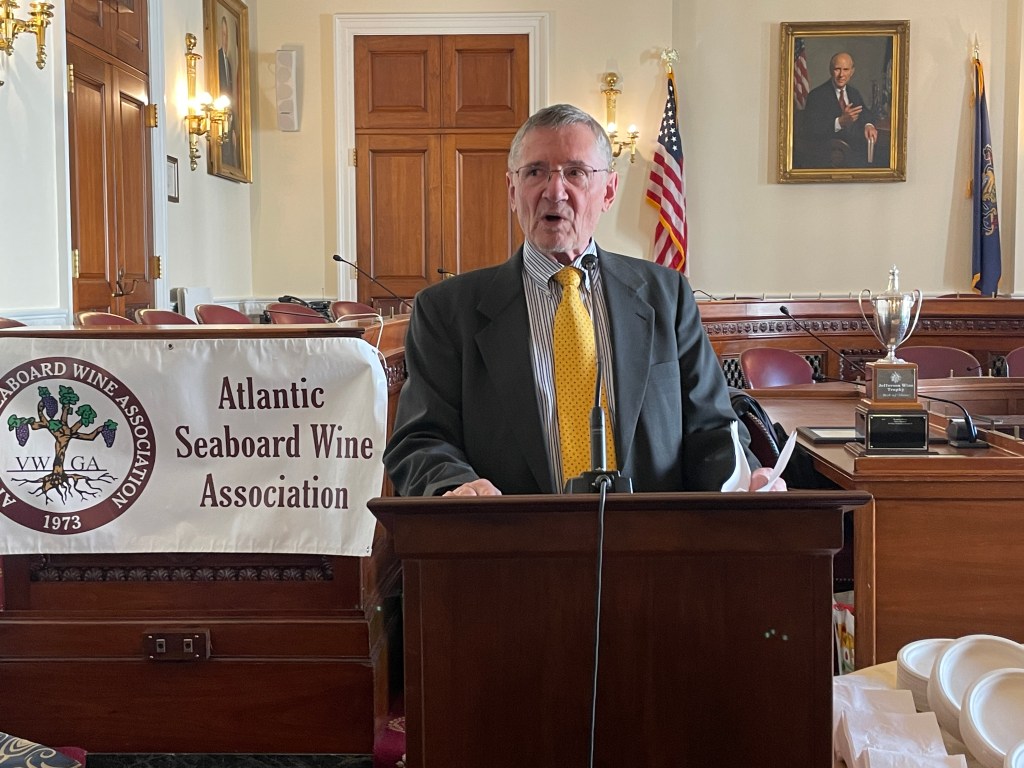
It’s not often you get to sip local-ish wine at a semi-formal event at the US Capitol, but that’s exactly what I was able to do this past week.

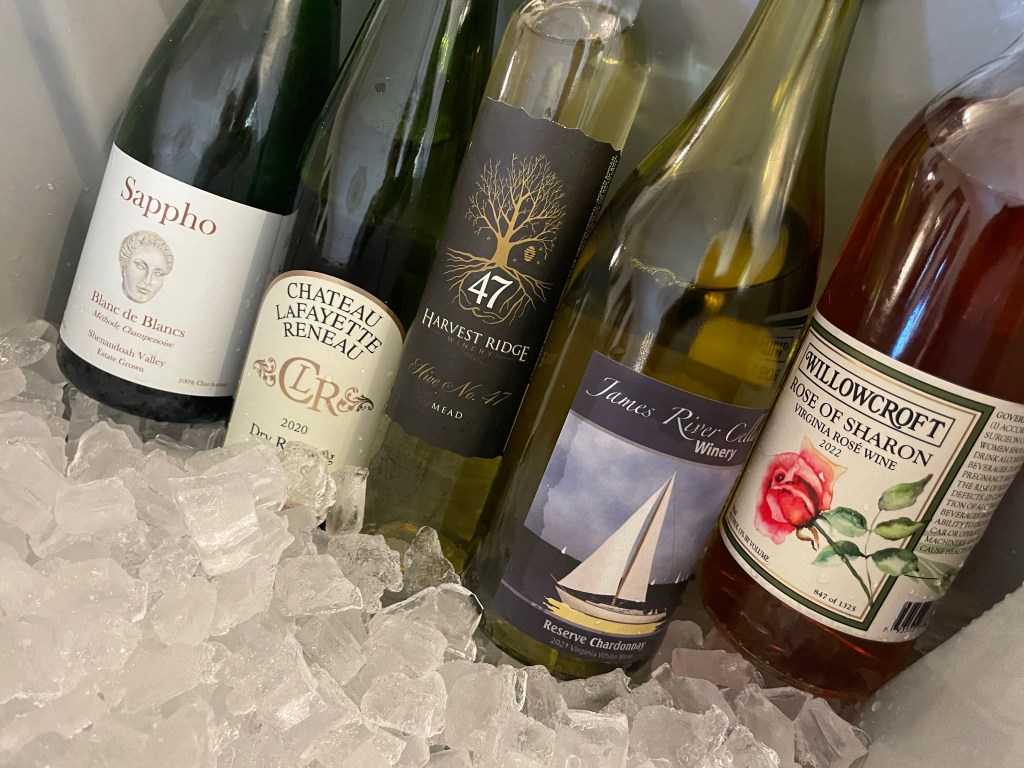
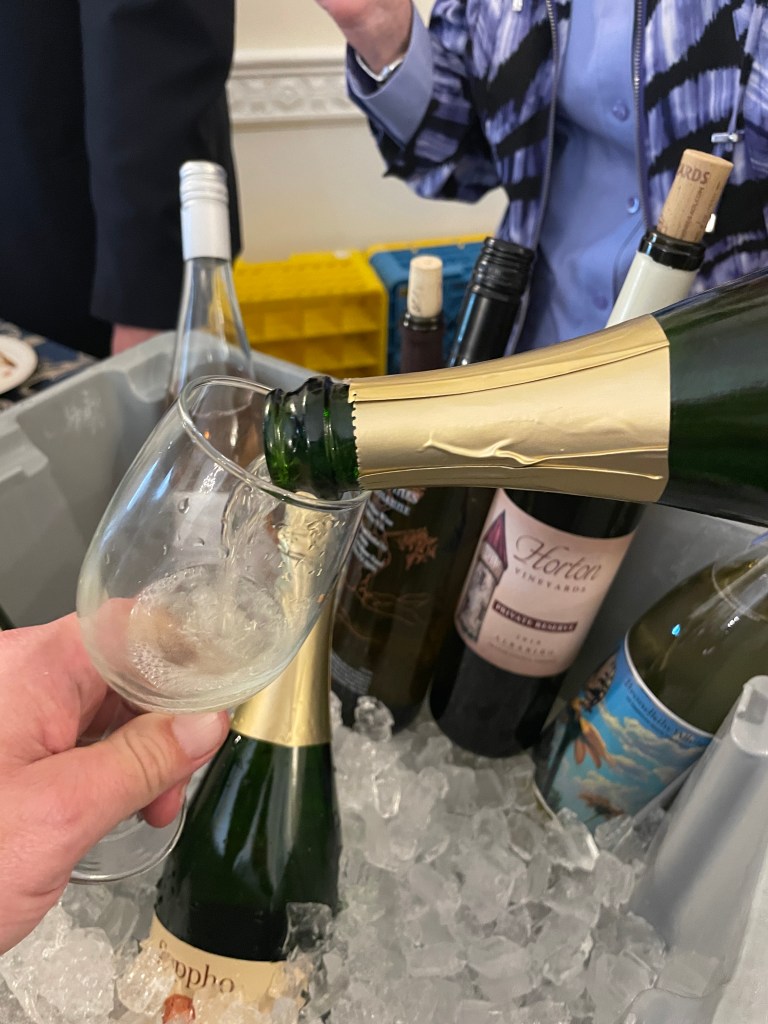
The event in question was the annual Jefferson Loving Cup Trophy award ceremony, sponsored by the Atlantic Seaboard Wine Association (ASWA) and hosted by the Congressional Wine Caucus. Guests were able to enjoy light bites and tastings of over 45 wines, including the ASWA’s 2023 Best of Show and Best of Category winners.

It would be easy to poke fun at Congress for taking time off for a wine event on the eve of a shutdown, but for this event I’ll give them a pass. After all, the wine industry contributes an estimated $276 billion to the U.S. economy annually and creates the equivalent of almost two million full-time jobs. That’s a lot of $$$, especially for enterprises that are often based in rural areas.

More importantly for me, these particular wines all hailed from the east coast; specifically the 14 states that touch the Atlantic, plus Pennsylvania, Vermont, and West Virginia. Altogether, this area produces around 45 million gallons of wine annually.

That sounds like a lot, but it’s still just over 6% of total US wine production. It’s also just a splash compared to the west coast’s 90% market dominance – and exactly why the ASWA’s role is important.

West coast brands hog up much of the wine world’s shelf and advertising space, so east coast regions need an organization to advocate for them. Bonus points for how the ASWA highlights grapes that would otherwise be overlooked (hello petit verdot and petit manseng).

Mike Thompson (D-CA) stopped in for a few minutes and joked how the Congressional Wine Caucus was one of the largest such caucuses, in no small part because it’s far easier to negotiate over a glass of wine than from behind a desk. After a few remarks, we kicked off the “Best in Class” awards.

We were lucky to have a number of local growers in attendance. I didn’t catch everyone’s name, but I did get to see Jason Murray and Sandy Gray-Murray of Arterra Wines, Shannon Horton of Horton Vineyards, Mark Ward of Pearmund Cellars/Effingham/Vint Hill, Jeremy Ligon of Barrel Oak Winery, and Emily and Kenny White of Chateau Merrillanne, amongst others.

I know the Pearmund ‘family’ must have been exceptionally excited that three separate wines won Best in Class in their categories; their 2022 Petit Manseng and 2022 ‘Celebration’ from Effingham, and the “Misty” from Vint Hill.

Mark joked that one of his hardest jobs is to decide if he should make wine that he likes vs what the public likes. His palate preferred drier wines, but several of these would make those with a sweeter palate happy.

One winemaker that was new to me was Tom Shelton of Bordeleau Winery, located on Maryland’s Eastern Shore. Bordeleau won not just Best in Class for their “Lot Number 3” Non-Vintage Petit Verdot, but it went on to win the overall “Best in Show”.

This PV is a rare example of a non-vintage wine. Tom explained he recognizes that Maryland’s variable climates creates ‘peaks and valleys’, making it difficult to produce stylistically-similar wine year after year. To get around that, he makes all of his wines non-vintage, with the exception of a few whites.

This particular PV used fruit from 2016, 2017, and a bit from 2019. I was struck by its smoothness and complexity; it had just enough fruit to make it pleasant but it still had a tannic backbone. This was the 3rd petit verdot they’ve ever produced.

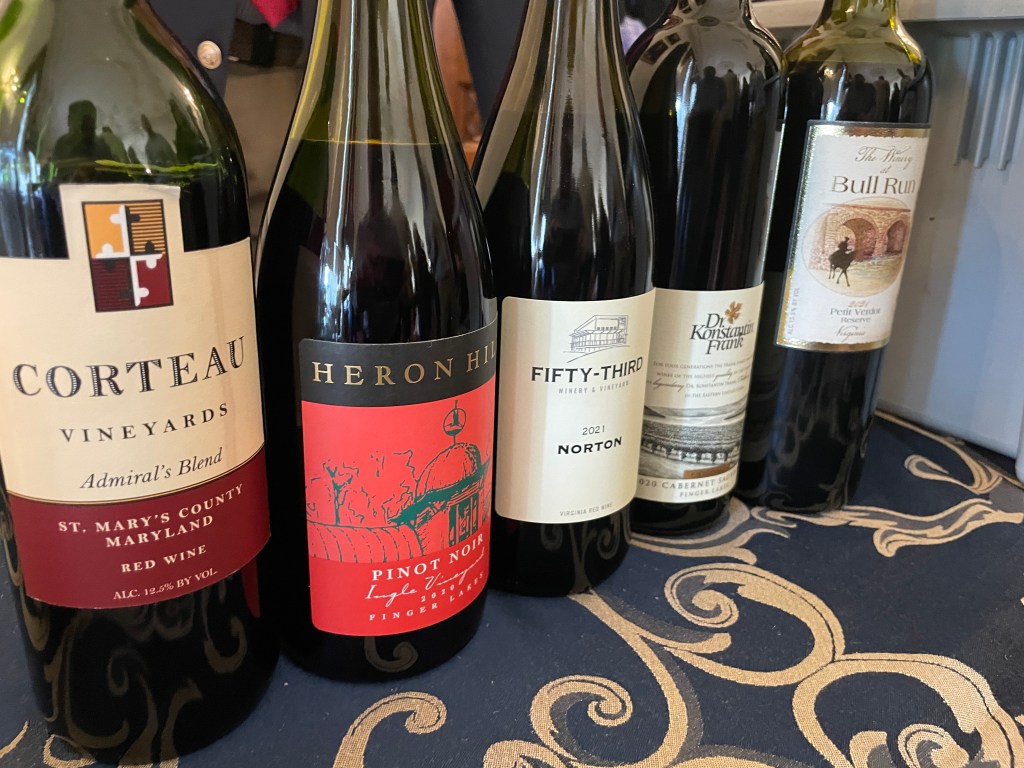
My other favorite wines were the 2021 Chardonnay from Fox Run, Herron Hill’s 2020 Pinot Noir (both in the Finger Lakes), Virginia’s Horton Vineyards’ 2019 Albariño, plus several sparklings (of course).

I also got to try Fifty-Third Winery’s 2021 Norton, which I had just written about. Norton is a love-it-or-hate-it grape but I was pleasantly surprised by its smoothness, so I can understand why it was awarded “Best Norton” at the separate Norton Cup event last year.

While Bordeleau Winery’s Petit Verdot was the star, plenty of other wines were recognized. The 2023 ASWA competition awarded 33 “Best of Class” wines from amongst 455 entries.

In addition to popular categories such as Best of Class Bordeaux-style wine, chardonnay, and sparkling, they also had winners for various categories of mead, sweet wine, fruit wine, cider, hybrids, and other vinifera wines.

Here is an abbreviated roster. To see ASWA’s entire medal list, check out the Atlantic Seaboard Wine Association’s press release, or visit https://aswawines.org.

Atlantic Seaboard Wine Association Best of Class Winners (abbreviated)

  1. Albariño 2019 Albariño Private Reserve by Horton Cellars Winery, VA
  2. Bordeaux-Style Red Blends 2021 Founded 1734 by Chateau MerrillAnne, VA
  3. Cabernet Franc 2021 Cabernet Franc Reserve by Fifty-Third Winery & Vineyards, VA
  4. Chardonnay 2020 Chardonnay by The Winery at Sunshine Ridge Farms, VA
  5. Merlot 2015 Reserve Merlot by Ospreys Dominion Vineyards, Ltd., NY
  6. Other Red Vinifera Varietals 2021 Tannat by Arterra Wines, VA
  7. Petit Manseng 2022 Petit Manseng by Effingham Manor Winery, VA
  8. Petit Verdot NV Petit Verdot by Bordeleau Winery, MD (Best in Show)
  9. Pinot Gris/Pinot Grigio 2022 Pinot Gris by Harvest Ridge Winery, DE
  10. Riesling 2021 Semi-Dry Riesling by Fox Run Vineyards, Inc., NY
  11. Sauvignon Blanc 2022 Landmark Sauvignon Blanc by Boordy Vineyards, MD
  12. Seyval Blanc 2021 Seyval Blanc, Barrel Oak Winery, VA
  13. Sparkling Vinifera Wines 2022 Sparkling Riesling (String of Pearls) by Idol Ridge Winery, NY
  14. Viognier 2022 Viognier by Ashton Creek Vineyard, VA

Virginia Winemakers Excited Over the 2023 Vintage

2023 is likely to go down as a banner year in the Virginia wine industry. Warm, dry weather provided ideal growing conditions for much of the state, resulting in what many local winemakers are calling some of the best fruit they’ve seen in a decade. It’s what romantics might call, ‘a good vintage’.

But what makes a good vintage? In a state as geographically diverse as Virginia, defining this may be harder than you think.

Virginia’s main wine growing regions usually have unique seasonal variations. There are years where central Virginia suffers from late-spring frost, while northern Virginia skates by without a hitch. Yet the following year, NOVA vineyards with grapes still on the vine may suffer from late season rain, weeks after Charlottesville wineries have mostly finished harvest. Meanwhile, the Shenandoah Valley asks, “What rain?”.

Different styles of wine also have different needs. Those who prefer classic, cool-weather expressions of Chardonnay may grumble over a hot season’s high alcohol levels, while neighboring winemakers who like bold reds are positively ecstatic.

Fortunately, the 2023 growing season is one of the few years that’s received almost universal praise across the state.

According to Jason Murray, owner & winemaker of Arterra Wines in Delaplane, “Simply put, overall 2023 was an outright ideal vintage for us. We had ideal spring rains for initial growth, and then it went very dry. 

We had just the right amount of rain at just the right moments to keep the vines on a quality path, while just barely averting significant vine damage. 2023 achieved the same intensity and concentration as 2019, without the excessively high alcohol levels. It’s an impressive vintage, with what I would call ‘perfect’ fruit.”

Jason Murray, Arterra Wines

Rough Start To A Great Year

While the season turned out great, it didn’t start off easy. An abnormally warm winter meant vineyards were hitting ‘bud break’ ahead of schedule. This makes them susceptible to a late frost, which kills fragile shoots just as they are emerging from the bud. Several vineyards encountered frost snaps as late as May, inflicting losses to early ripening grapes such as Chardonnay.

Once summer hit, things moved quickly. Data from NOAA show the summer of 2023 ranks as the 15th hottest on record in the United States. As heat speeds a grape’s maturation process, it forced winegrowers to harvest their grapes at a record speed.

“2023 was a wild ride, with one of the most condensed seasons I’ve experienced,” shared AJ Greely, winemaker for Hark Vineyards. “We ran our wind machine to keep the cold air off our vines 12 times in the spring, and kept a serious eye on the temperature more than double that number. 

AJ Greely, Hark Vineyards

When harvest came we picked and processed every other day, with a one week break to catch our breath. Then we picked and processed for another 10 days!”

While frost singed some vineyards, the lack of rain was ultimately a more pressing issue. Drought stress caused ripening to stall for some varieties, and also caused alcohol levels to spike while reducing cluster weight.

However, dry weather also has its advantages.

“2023 was an abnormally dry growing season in Virginia, although it also makes life in the winery easier,” explained Robert Muse of Muse Vineyards.

“Rain is the chief catalyst for mildew infections in the vineyard. Winemakers can use sulfite to combat them in the cellar, which eliminates bacteria that impair the quality of the wine. Unfortunately, these sulfite additions are inadvertently harmful to the yeast necessary for a thorough fermentation. To avoid these issues, clean fruit is essential.

A grower can ensure clean fruit with a meticulous spray program in wet years, or he/she can relax by the pool knowing a dry sunny ripening season is taking care of most disease issues in the vineyard. 2023 was such a year.”

Wineries Expecting Lower Quantities But Much Higher Quality

While the overall tonnage for the 2023 vintage might be lower than normal, the wines should make up for it in quality, said Toni Kilyk of Granite Heights Winery.

Toni Kilyk, Granite Heights Winery

“Our grapes are smaller than normal size to begin with, but this year they were even smaller. We had close to the same number of grape clusters but with very little juice inside, hence our harvest weights were much lower than normal. That said, less juice means a higher skin-to-juice ratio, so we’ll have more potent wine.”

Many winegrowers echoed her assessment, and were particularly optimistic about their red wines.

“I’m excited about tannat and cabernet franc this year,” wrote Doug Fabboili of Fabbioli Cellars. “You can count on these grapes to make great wine almost every year, but this year’s can be outstanding!”

Doug Fabbioli, Fabbioli Cellars

Virginia’s weather is normally hot and humid, and grapes that require dry weather often struggle. But dry climate varieties may be the 2023 vintage’s sleeper hits. A number of winegrowers expressed excitement how normally difficult-to-ripen varieties such as cabernet sauvignon, malbec, sangiovese, tempranillo, and petite sirah would turn out.

“I don’t ever want to jump the gun, but I’m very excited about the 2023 vintage wines,” Toni continued. “They are aging nicely, and I think we’ll see wines that easily compare with 2010/2017/2019 vintages in terms of quality.”