
I was recently the emcee for a Virginia Pinot Noir event that I nicknamed “Pinot Palooza”. A considerable portion of Virginia’s community of Pinot growers gathered to share one another’s wines and discuss their vineyards. It was probably the single most diverse tasting of Virginia Pinot Noir that has ever occurred.
Wines we sampled
- 12 Ridges 2021 Pinot Noir (VA)
- 12 Ridges 2022 Pinot Noir (VA)
- Savigny-lès-Beaune “Vieilles Vignes” 2018 (Burgundy)
- Ankida Ridge 2022 Pinot Noir (VA)
- Cave Ridge 2023 Pinot Noir (not released) (VA)
- Cave Ridge 2024 Pinot Noir (barrel sample) (VA)
- Ox Eye 2022 Pinot Noir (VA)
- Hazy Mountain 2022 Pinot Noir (VA)
- DuMOL Pinot Noir (CA, Russian River Valley)
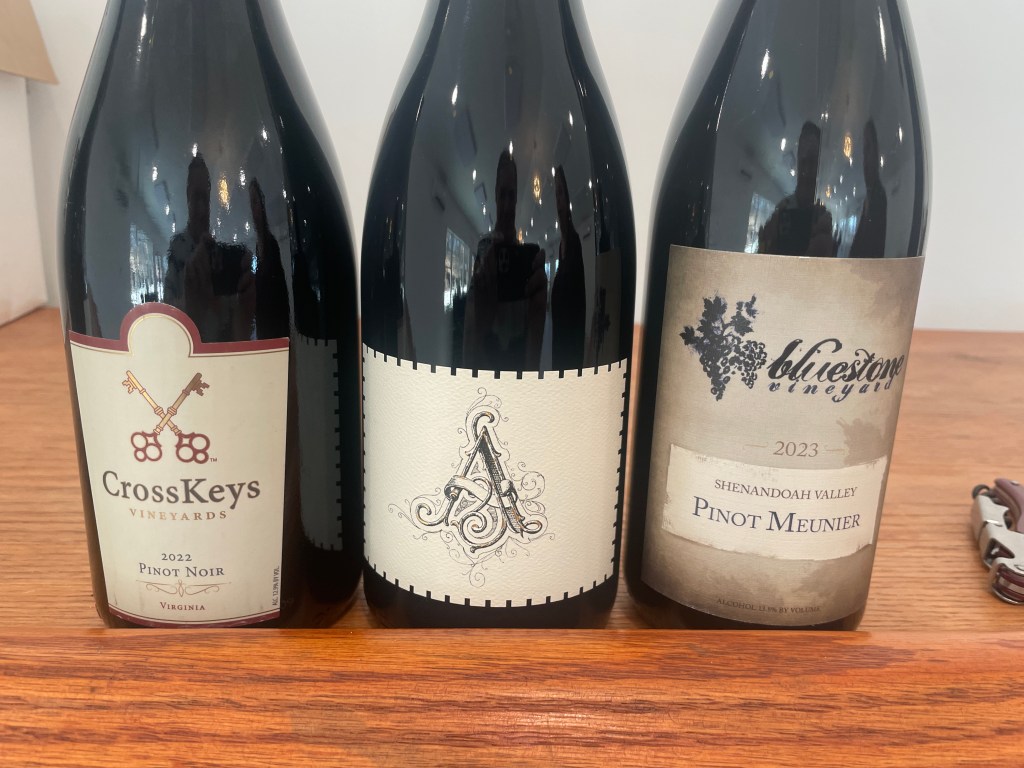
- Cross Keys 2022 Pinot Noir (VA)
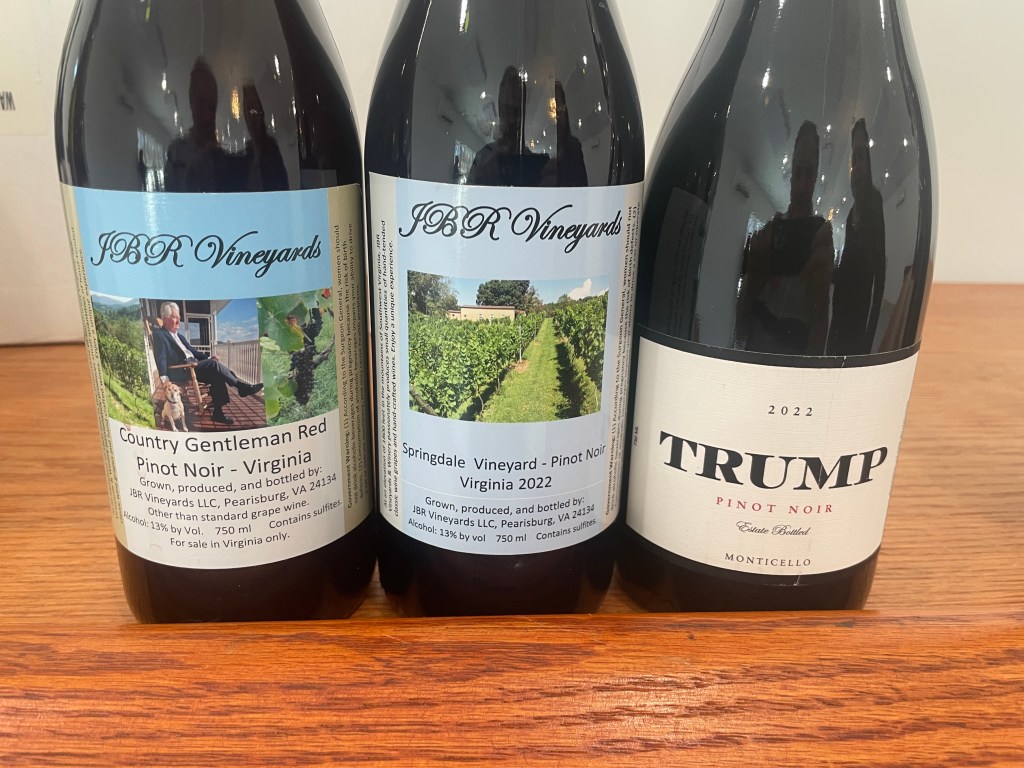
- JBR Vineyard 2021 Country Gentleman Red (Pinot) (VA)
- JBR Vineyards 2021 Springdale (Pinot) (VA)
- Trump Vineyards 2022 Pinot Noir (VA)
- Antiquum Farm Pinot (Oregon)
- Bluestone 2023 Pinot Meunier (VA) (the only non-Pinot Noir of the day)

While this sounds like it would be a big gathering, in reality we only shared 11 Pinot Noirs from 8 separate Virginia wineries, in a state that possesses around 15 growers. Of these, only a handful typically make a full Pinot Noir every year (the remaining focus on sparkling or rosé).
It’s difficult to say which Virginia winery first planted Pinot Noir, although several including Barboursville and Swedenburg tried in the 1990s and early 2000s. These viticultural pioneers didn’t yet realize Virginia’s warm summers would cause these sites to struggle. Dennis Horton, a man famous for introducing multiple varieties to Virginia, reportedly once said: “I don’t think Jesus Christ could grow Pinot Noir in Virginia. You can do it, but it doesn’t taste like Pinot should.”
The data shows not many have tried. Side by side metrics from Virginia’s 2008 and 2023 Commercial Wine Grape reports demonstrate that Pinot remains a niche grape in the state.
- In 2008, there were 28 acres of Pinot Noir (25 bearing, 3 non-bearing) out of a total of 2,500 acres of grape vines in Virginia (barely over 1% of the total)
- In 2023, there were 41 acres of Pinot Noir (30 bearing, 11 non-bearing) out of 4,318 acres of vines in the state (just under 1%).
Yet these metrics only tell part of the story.
According to conversations with various winegrowers, it appears much of the Pinot that existed when the 2008 report was written has since been torn out, as these growers couldn’t bring their grapes to full ripeness. Most of the vines that were planted from 2008 onward were planted in the Shenandoah Valley and Blue Ridge Mountains.
The key change from the wines that Dennis Horton tried was these newer vineyards focused on higher-elevation sites, often 1,600 feet and above. Such elevation ensures a constant flow of cool air and moderate temperature swings, which protect Pinot’s tightly-bunched clusters from damage and allow them to evenly ripen.
Membership in this ‘high elevation club’ is very select. Ankida Ridge planted their first vines in 2008, while Ox Eye Vineyards planted in 2009 based on advice from Finger Lakes grower Hermann Wiemer. Hazy Mountain started growing Pinot at its Swoope vineyard in 2016, and 12 Ridges Vineyard founded their site in 2019. Around the state, even more wineries followed.
Our tasting included a broad mix of vineyards, planted anywhere between 850 to 3,300 feet elevation. We asked ourselves; did this elevation make a difference, and what other factors influenced the wine in our glass?


Virginia Pinot Noir Growers

*Note: The Shenandoah Valley has around half of all Pinot Noir grown in Virginia, with smaller plantings at various locations along the Blue Ridge Mountains. Trump Winery has the largest single planting of Pinot Noir in Virginia, but in most years, it’s exclusively used for sparkling wine.


The Tastings
We sampled 15 different Pinots in flights of 3. I ensured nearly every flight had a non-Virginia Pinot for comparison purposes. My apologies for having better notes on some wines that others; at times I couldn’t write fast enough.
Flight 1:
- 12 Ridges 2021: Lighter on nose and harmonious on the palate. Good complexity of aroma, tannins, and finish. One of the most ‘delicate’ wines of the day, and one of the favorites.
- 12 Ridges 2022: Bolder, more fragrant than the 2021 vintage.
- Savigny-lès-Beaune “Vieilles Vignes” 2018: Fleshier, more concentrated than anything else I tried that day.

Flight 2:
- Ankida Ridge 2022: Floral nose. Notes of earth, specifically wet dirt. The wine had some heft to it but was well balanced. It also had just the right amount of oak, tannin, and structure.
- Cave Ridge 2023: Not yet released! Clean, flawless, fruity, but needs some bottle age. Notes of red plumb and cherries. Less earthy than the Ankida. Owner Randy Philips explained he was going to only make a sparkling wine, but his daughter Megan loved the 2023 so much they decided to make it as a still wine. This was the first time he’d made a regular Pinot, which makes it all the more impressive.
- Cave Ridge 2024 (barrel sample): This was so young it was hard to judge, but we had fun sampling it. Some attendees actually thought the 2024 was better than the 2023, or would be in time.

Flight 3:
- Hazy Mountain 2022: Lighter in color, fresh mouthfeel. It had some earthiness to it and nice tannin.
- Ox Eye 2022: Very charming and approachable. At $27, this was one of the best values of the entire event. Owner/winemaker John Kiers doesn’t make a still Pinot every year, but his $35 Blanc de Noir is a great alternative.
- DuMOL Pinot Noir (CA, Russian River Valley): One of the fullest wines of the day. The ripeness made it stand out as a California wine.

Flight 4:
- JBR 2021 “Country Gentleman Red”: Light and fruity, lots of strawberry notes. Unfiltered? At $15, this was made for a crowd looking for something that’s easy drinking.
- JBR 2021 “Springdale”: More intense than the “Country Gentleman”, and closer to the traditional Pinots we are accustomed to.
- Trump Winery 2022: Good body and structure, but at the expense of the fruit. Trump only infrequently makes a Pinot Noir, but you can usually find these grapes as a Blanc de Noir.
Flight 5:
- Antiquum Farm Pinot (Oregon): No notes, but good!
- CrossKeys 2022: CrossKeys only infrequently makes a still wine, but their Blanc de Noir is excellent. Barnyard note to it, maybe a little brett.
- Bluestone 2023 Pinot Meunier (from Verona Farm Vineyard): Our only non-Pinot of the day. One guest referred to this as a ‘starter red for white drinkers’, because it’s so easy drinking.
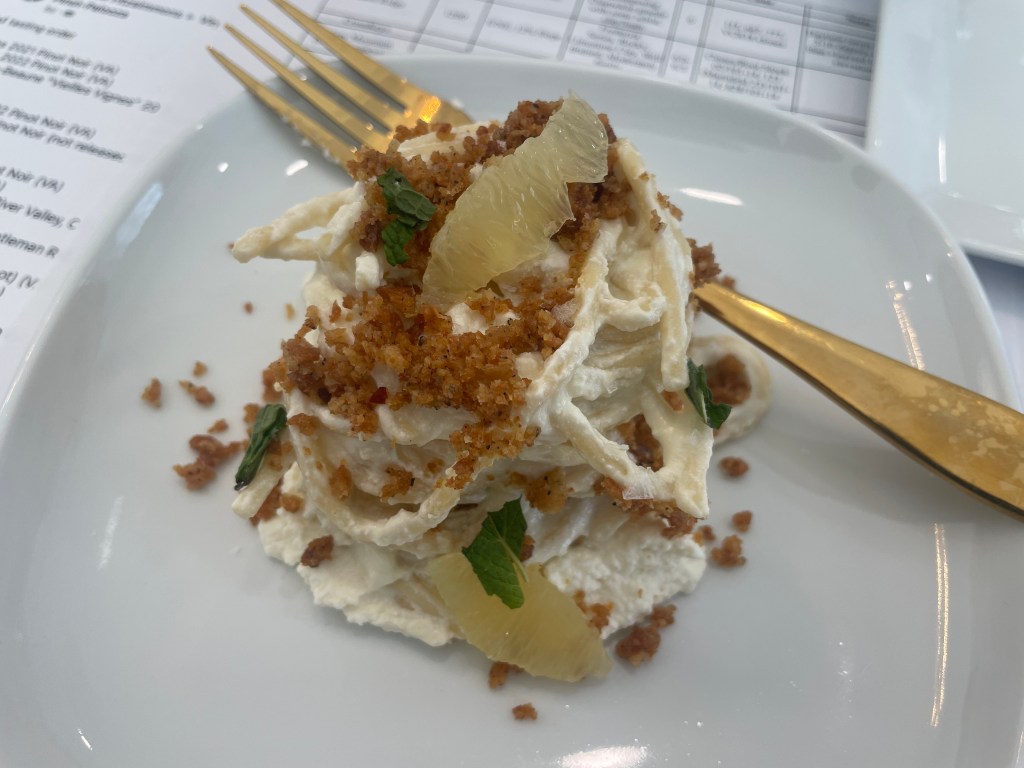
I should also mention the amazing food that Cave Ridge arranged for us, courtesy of Woodstock-based Flour & Water.

I polled the 9 guests who didn’t present a wine they made, and the top three Virginia wines were the 2022 Ankida Ridge, 2021 12 Ridges Vineyard, and the 2023 Cave Ridge (which narrowly beat the 2022 Ox Eye).
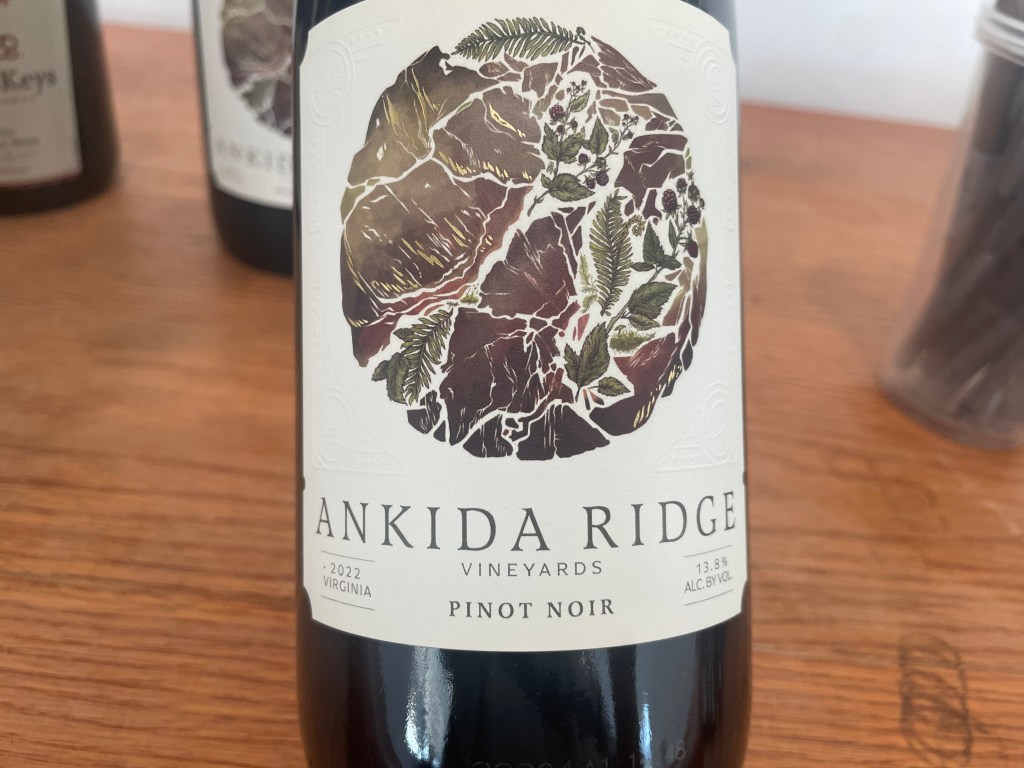


Ankida was the overall favorite by a fair margin, but the 2021 12 Ridges wine had many compliments as well. Notably, these two were specifically designed as ‘high elevation’ vineyards, with Pinot being some of the first grapes they planted.
Lessons learned
“High elevation Pinot is in its infancy. I am excited for its future,” wrote Christine Vrooman of Ankida Ridge. “The bar has been raised from 20 years ago,” said another guest after completing the tasting.
Here are a few of my take-aways from the day’s discussions:
1. Winemaking is more important than elevation to make good wine. Site selection is important to tease out Pinot’s best expressions, but good winemaking is still crucial to make a good wine. Likewise, a winemaker can make a good wine made with Pinot grapes, even if it doesn’t express the ‘typical’ Pinot characteristics consumers are accustomed to. We saw both sides of this coin at this event.
2. Elevation is important – but so are other factors. While much of the discussion focused on the importance of elevation as a key criterion to bring out Pinot’s best qualities, that’s just one part of the equation. Soil type, vine density, relative altitude, and good vine material are also important to get healthy fruit.
My observation of the day’s conversations is while Pinot does love elevation, it takes more than elevation to make a good Pinot vineyard.
3. Blanc de Noir is a great alternative. Many Pinot growers readily admit how difficult it is to achieve full ripeness. This means sparkling wine is usually the best use of their fruit. These wineries (including but not limited to Afton Mountain, CrossKeys, Rockbridge, and Trump) may only offer a Pinot Noir in better growing years.
 Wine Trails and Wanderlust