
Last week I visited Mount Alto for the first time in 4 years. The vineyard doesn’t take drop ins, but will open select Saturdays by appointment.
I was lucky to be joined by a group of experts in Virginia wine, including Kathy Wiedemann, Kenny Bumbaco, and winemaker AJ Greely.
Oh yeah…my friend Dan of My NoVa Wine Blog was there too! I convinced him to join us, even though he’s been there on more than a few occasions.
Owners David Achkio and Robert Burgholzer put out the welcome mat for us, pouring four wines and three barrel samples, ranging from 2018 to 2024. They also gave us a tour of the vineyard.
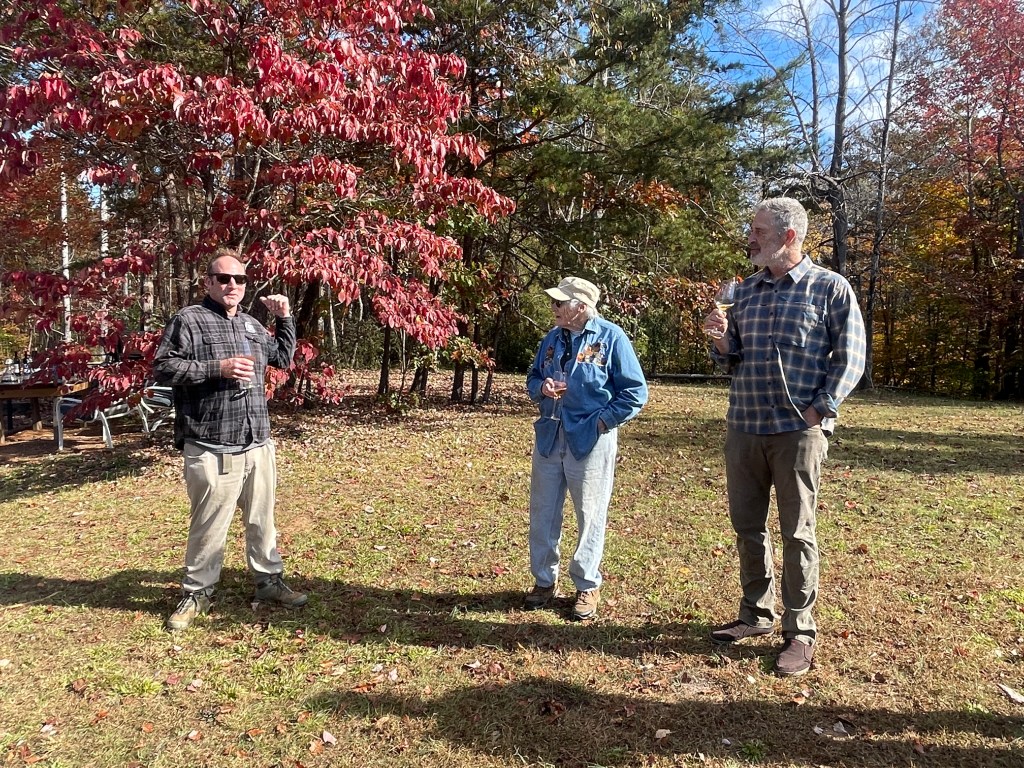
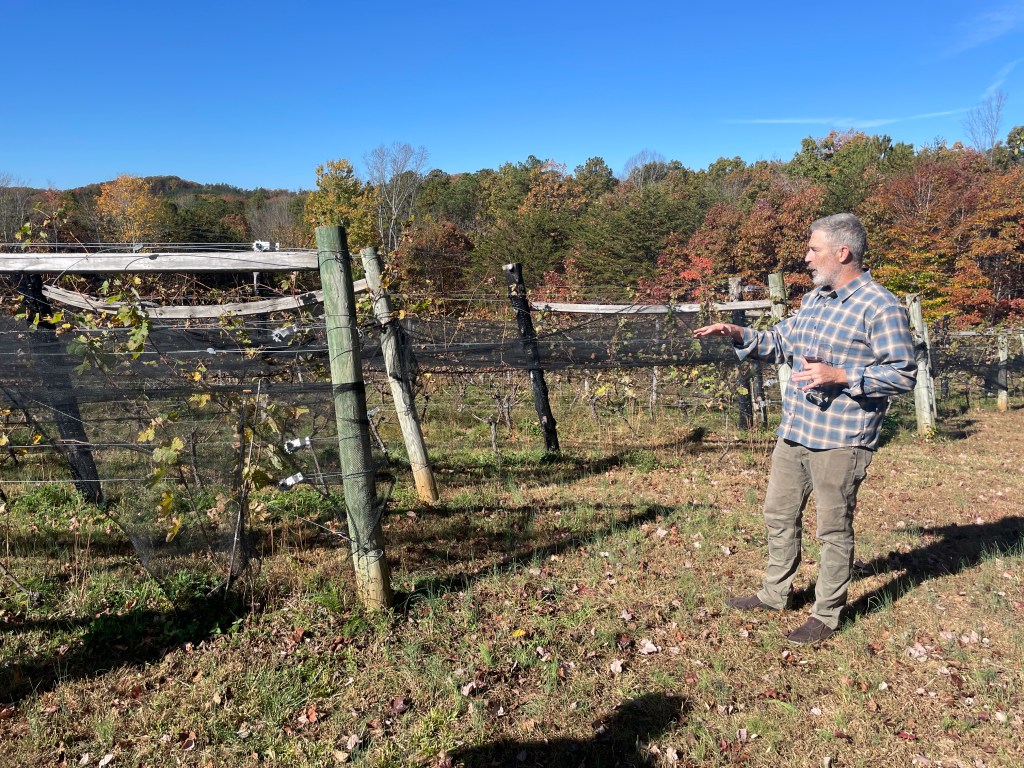

It’s understandable if the name “Mount Alto” isn’t recognizable. The vineyard is 45 minutes south of Charlottesville, and only produces 50-70 cases/year from 2 acres of vines (some additional petit verdot is sourced from nearby O’Brien Vineyard). Since there’s no tasting room, we feasted and drank at a table outdoors.
This limited production means their wine can only be purchased at the vineyard, or at a few wine shops in Richmond. This is a shame because Dave and Robert are making great wine.
Rob attributes the inspiration to build a winery from a visit to Linden Vineyards; not coincidentally, one of the state’s best locations for high-quality, terroir-driven wine. In 2005, he and Dave started taking classes with Jim Law.
One lesson they took to heart was Jim’s advice that ‘the best vineyards in Virginia are still under trees’. Rob started looking for a site that was both suitable for viticulture and no more than 90 minutes from Richmond or Charlottesville. This eventually led him to a property in Esmont, located on the southern end of the Monticello AVA.
While Rob knew he had a good site, a visit from Jim provided an additional confidence booster. Jim was visiting the area and offered to take a look at the newly-purchased property. It must have been a surprise that Jim recommended they only plant cabernet sauvignon, a grape that is normally difficult to grow in Virginia due to needing very rocky soil. Mount Alto had the ‘goldilocks’ conditions cab needed to thrive.

“Manteo-Nason” Soil and the Vine-Soil Relationship
The soil that Jim was so impressed with is a well-draining type known as “Manteo-Nason”. Well-drained soils are a crucial element to another of Jim’s lessons; the relationship of water to wine quality.
Vines planted in poorly draining soils are constantly at risk to over-saturation, as rainfall only needs to go a few feet down to reach their root system. Water saturation undermine a grape’s chemistry and ripening potential, leading to lower-quality wine.
By contrast, rocky soils force these roots to go deep to seek the water they crave, putting distance between them and any rainwater that manages to penetrate this rocky ground. Well-draining soil is especially important in Virginia, where vineyards typically suffer from the state’s excessive precipitation.
Robert also explained that Mount Alto doesn’t use herbicides. He feels this creates greater competition between the vineyard and other plant life, giving the vines another incentive to go deeper for additional nutrition. This deep root system also makes the vines more drought-resistant, something that must have come in handy in a dry year like 2024.
Mount Alto has 1.7 acres of cabernet sauvignon and .25 acres of petit verdot. Cabernet sauvignon is normally a curious choice in Virginia, but it makes sense here.
Many local winegrowers have a love-hate relationship with cabernet because while commercially popular, few vineyards possess the conditions to grow it well. It’s a tribute to Mount Alto’s Maneto-Nason soil that when Jim visited the site, he recommended they only plant this vine.
Tasting Five Vintages of Mount Alto Wine
Jim Law isn’t the only great vigneron who’s advised Mount Alto. Matthieu Finot was initially their winemaker and still consults with them. Today, David and Robert are now taking the lead.

While I love a good vineyard tour, tasting their 4 wines and 3 barrel samples was the highlight of the visit. Having tasted all of them, I can say these are high-structure wines that will last.

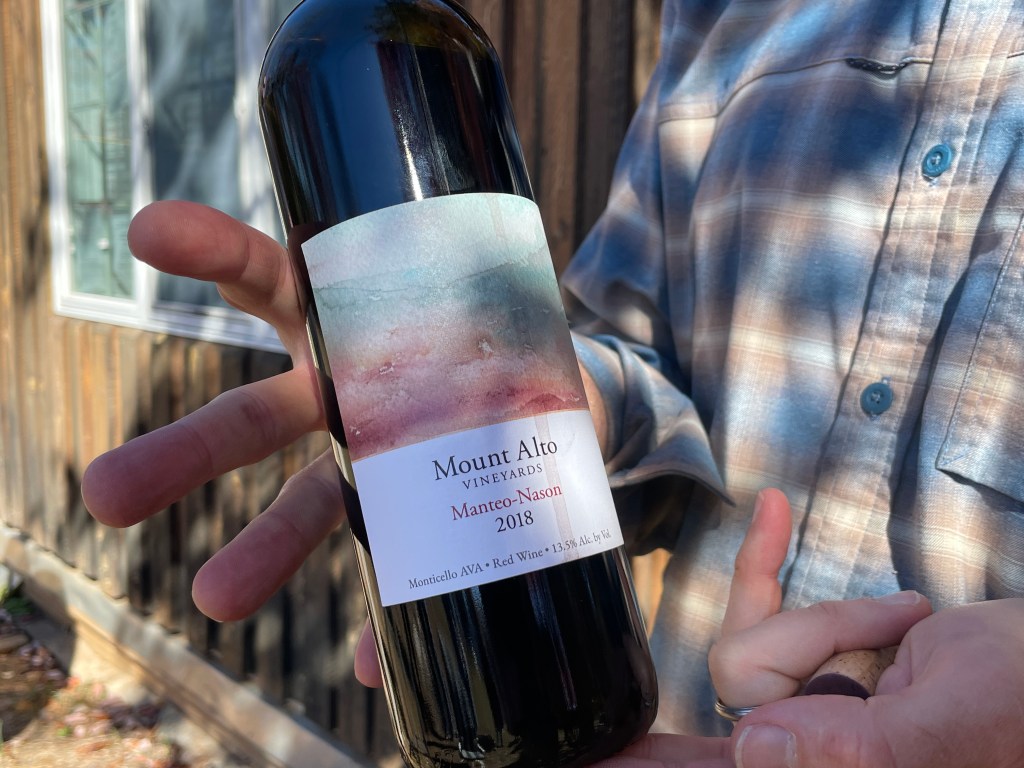
- 2018 Manteo-Nason (91% cabernet sauvignon, 9% petit verdot): Mount Alto’s first vintage, and the product of an incredibly wet season. It was good in 2020 but it’s since become smoother, even acquiring some tertiary notes. Probably peaking so drink now.
- 2019 Manteo-Nason (55% petit verdot and 45% cabernet sauvignon): Made primarily with Mount Alto grapes and some PV from O’Brien. Great balance of fruit and tannin. My favorite wine of the day! Bought a bottle.
- 2021 Manteo-Nason (60% cabernet sauvignon, 40% petit verdot): No tasting notes but a good buy at $35.
- 2021 Tributary (60% petit verdot, 40% cabernet sauvignon): Made with a combination of O’Brien Vineyard PV and PV & cab sauv from Mount Alto. Lovely, but the tannins really dried out my mouth. Give this wine a little more time.
- We also barrel samples from their 2023 cab sauv, 2024 cab sauv, and a 2024 merlot (made with fruit purchased from Grace Estate). Great structure on both of the cabs, and I especially loved the floral notes on the 2023. Merlot was good too, which is no surprise because 2023 reds are going to be awesome all round.

Many thanks for the cider aperitif that kicked things off, and for Kathy’s ‘Princess’ cake.
 Wine Trails and Wanderlust