Walsh Bar Takeover Blue Wall Cider and The Parallax Project

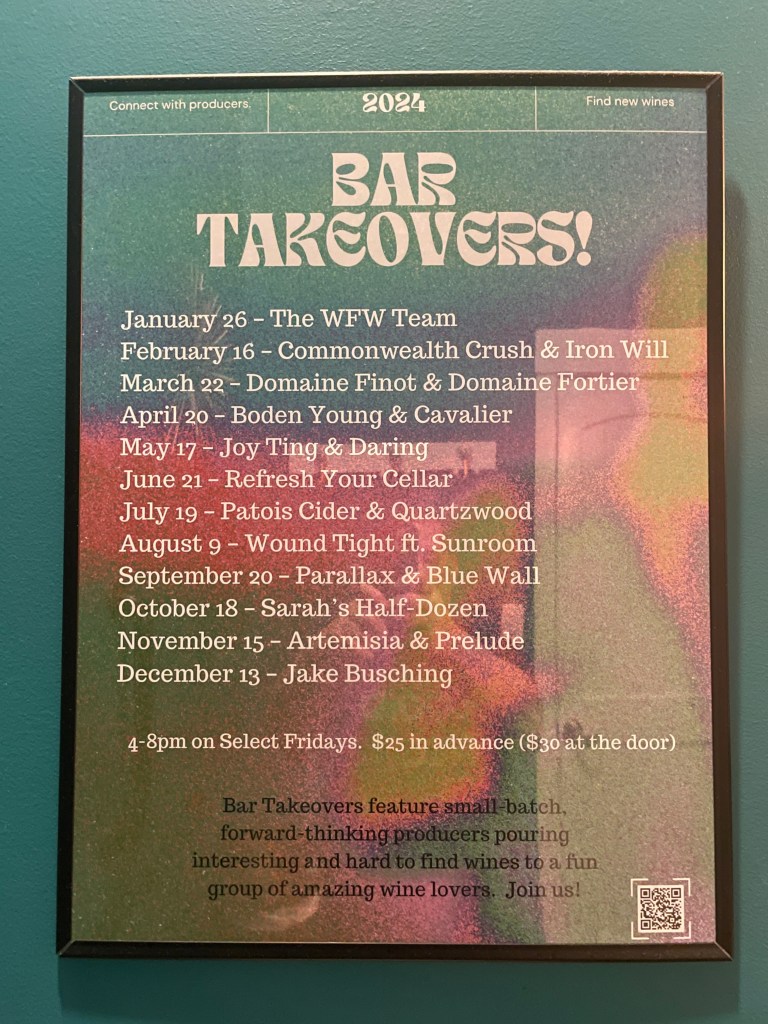
Last month (after a hard day of sorting grapes at Linden) I went over to Walsh for their latest Friday Bar Takeover. This event included a pair of new participants, The Parallax Project and Blue Wall Cider & Wine.

I’ve become accustomed to visiting old friends at these Bar Takeovers (looking at you, Jake Busching, Joy Ting, Daring Wine Co) but it’s exciting to try new, small brands. Some projects showcased here are actually produced at Walsh Family Wine, while others are what you might call ‘visiting friends’.

Parallax falls into the ‘visiting friends’ category. The brand is owned by entrepreneur and jack-of-all-trades Lance Lemon & “Virginia wine hype guy” Reggie Leonard, friends who decided to collaborate with Commonwealth Crush Co to create wines unique to them. These gents are also helping lead the charge for greater diversity in the Virginia wine scene.

Blue Wall is owned by Justin and Casey Wisch, who also own nearby Long Stone Farm. Blue Wall is one of the many small projects that Nate Walsh and his winemaking team support. The Wisches source their apples from their estate orchard and grapes from Nate’s vineyards, all of which is made at Walsh Family and labeled under the Blue Wall brand name.
The Parallax Project

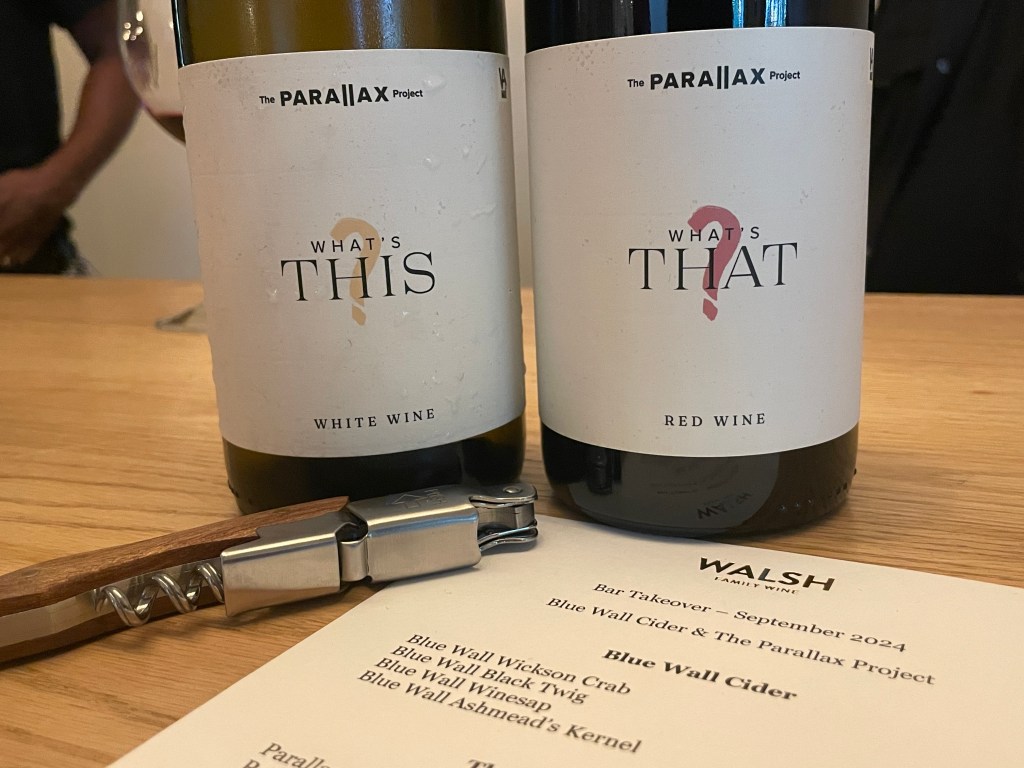
Kathy Wiedemann & I decided to start our visit with Parallax, who were hanging out in Walsh’s Garden Room. Reggie and Lance have so far produced two wines; “What’s This”, and “What’s That”.

The project’s name was inspired by what’s called “The Parallax Effect”, which is “a difference in the apparent position of an object when viewed along two different lines of sight”.

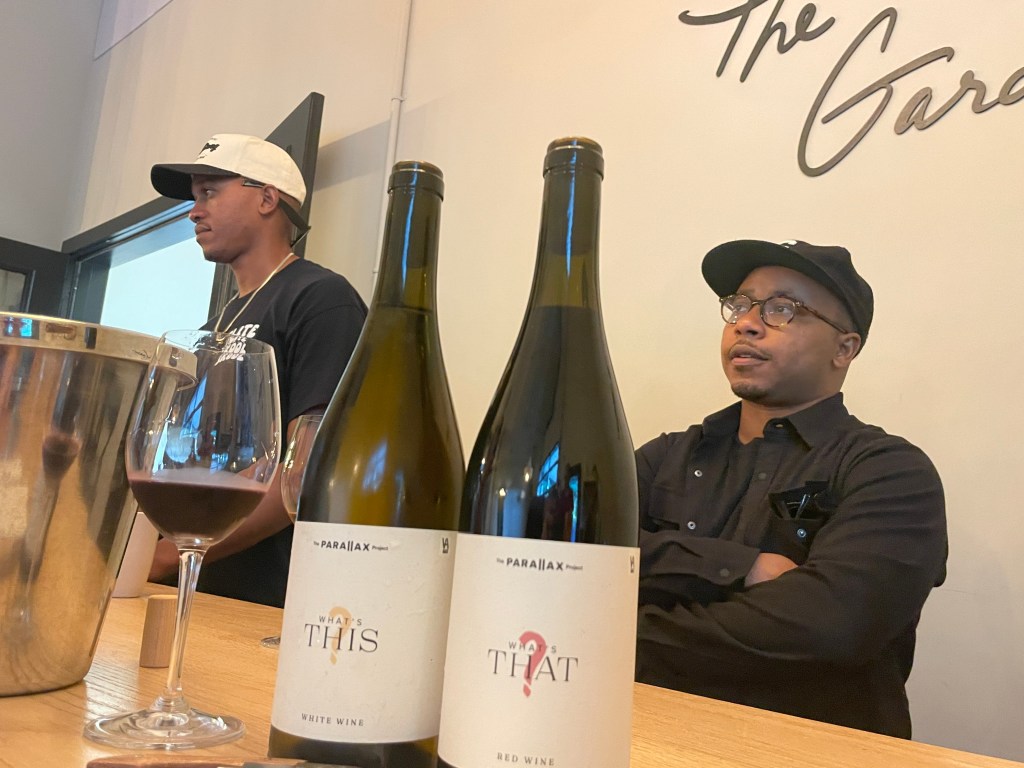
Lance and Reggie applied this principle to their wines. While one is a red wine and the other is a white, both were made using nearly the same grapes but in different blends and winemaking styles.

The 2023 “What’s This” is their white wine, a blend of 32% Vidal Blanc, 29% Chardonel, 29% Tannat (direct press), 6% Petit Manseng, 3% Traminette, 1% Albariño.

I’d never heard of a blend that even approaches this wine, and it was just as tasty as it was interesting; the kind of wine you need to keep sipping just to figure out what’s in your glass. Very floral with citrus notes (amongst others). I bought a bottle.

The 2023 “What’s That” is 83% Tannat, 8% Vidal Blanc, 7% Chardonel, 1% Petit Manseng, and 1% Traminette. While technically you could call this a ‘tannat’, it’s the farthest thing from one. Lower on the tannin, more fruit, and also highly aromatic.
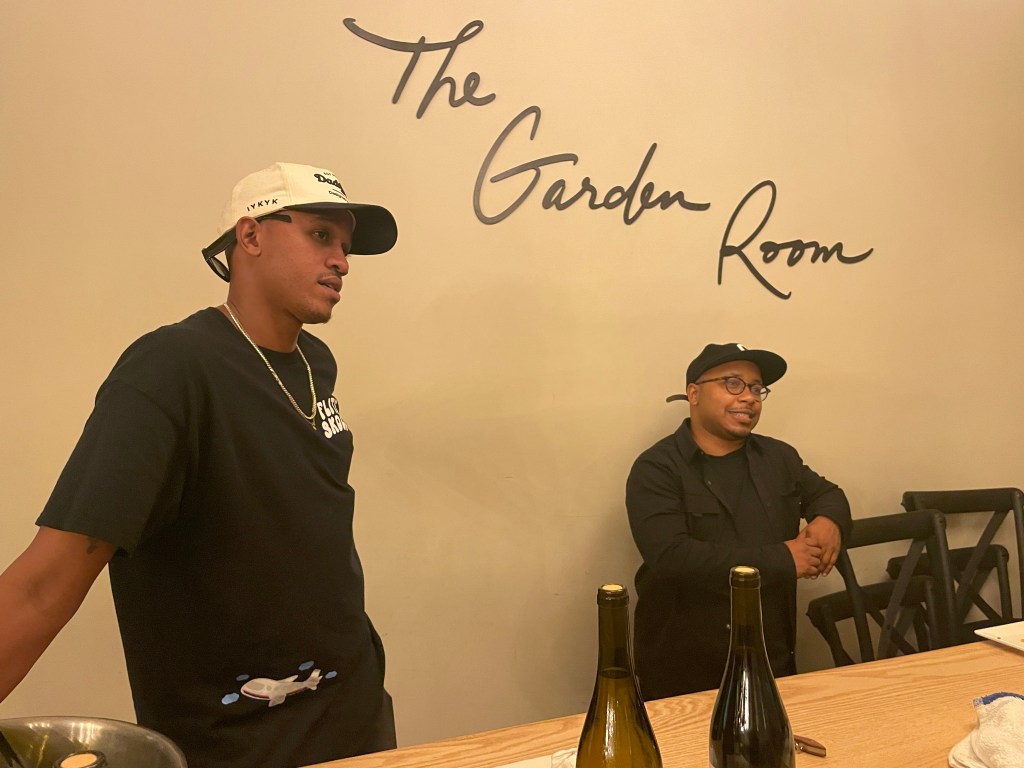
The blending may seem odd – but they work. Both wines were designed to be enjoyed young and are very much in line with the off-beat style I’ve come to expect from their wine mentors, Ben and Tim Jordan of Commonwealth Crush.

Blue Wall Cider & Wine

In the main tasting room was Justin and Casey Wisch, who were pouring four of their ciders; Black Twig, Wickson Crab, Ashmead’s Kernel, and Virginia WineSap.
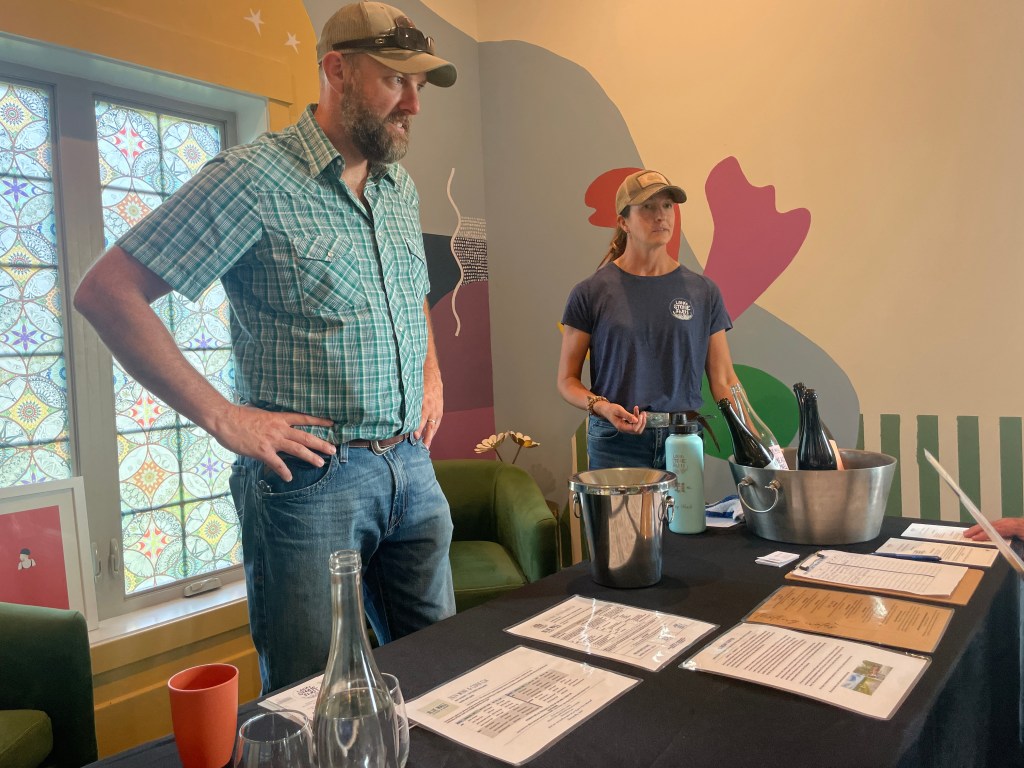
Blue Wall is actually just one component of Long Stone Farm, a sustainable farming operation that offers everything from CSA shares, a farm store for their meat and produce (which doubles as a wine/cider tasting room), even a monthly ‘Sunday Supper’.

The last is perhaps my favorite initiative of theirs, as it showcases everything that’s made at their farm but served by a local chef.

Blue Wall’s ciders are made in a ‘traditional’ style, which I nickname ‘wine cider’. No carbonation here; these ciders are meant to showcase the fruit they came from.

Wickson Crab was the ‘biggest’ of the four in terms of flavor, probably because it was barrel aged. It was my favorite of the more standard ciders.

Next up were Black Twig and Ashmead. Black Twig is off dry, while Ashmead is definitely the sweetest of the lineup. Had it been warmer the Ashmead would be a summer pounder outside (in fact it was when I attended their dinner).

But my favorite was Winesap, made as a sparkling pet-nat style cider. Very light and drinkable, and I suspect extremely food friendly. I got a bottle of this to go and will definitely open it with friends at dinner.

Special shout-out to Kathy’s husband, who brought the pizza that we ate outside.
Walsh Family Bar Takeover With Domaine Finot and Domaine Fortier

How many Walsh Family Wine Bar Takeovers have I been to? 25? 30? More? I’ve lost track.

Let’s just say that between all the creative ‘side-project’ wines crafted from well-known Virginia winemakers, wines from new businesses that don’t have tasting rooms, collaborations between Nate Walsh and one of his friends, and ‘friends of Walsh Family’ visiting to share their wine…Walsh Family Wine has showcased a lot of guest brands.

This latest Takeover was likewise a hit, since it featured an old favorite and what I expect to be a new one.

Bar Takeovers can get really busy, so I arrived early to chat up Stephen Fortier and Jennifer Volk-Fortier before things got hectic. I waved to Matthieu Finot as I parked, gave a hug to Kathy Wiedemann, and got a glass of Walsh Sauv Blanc while I chatted up the tasting crew.

Matthieu’s Domaine Finot VA set up shop near the main tasting area while Domaine Fortier was in the ‘Garden Room’. Matthieu joked he couldn’t start serving until 4 PM because he’s always late (fashionably late; he’s French after all) so wouldn’t pour until the stroke of 4. Eventually he relented and we got started.

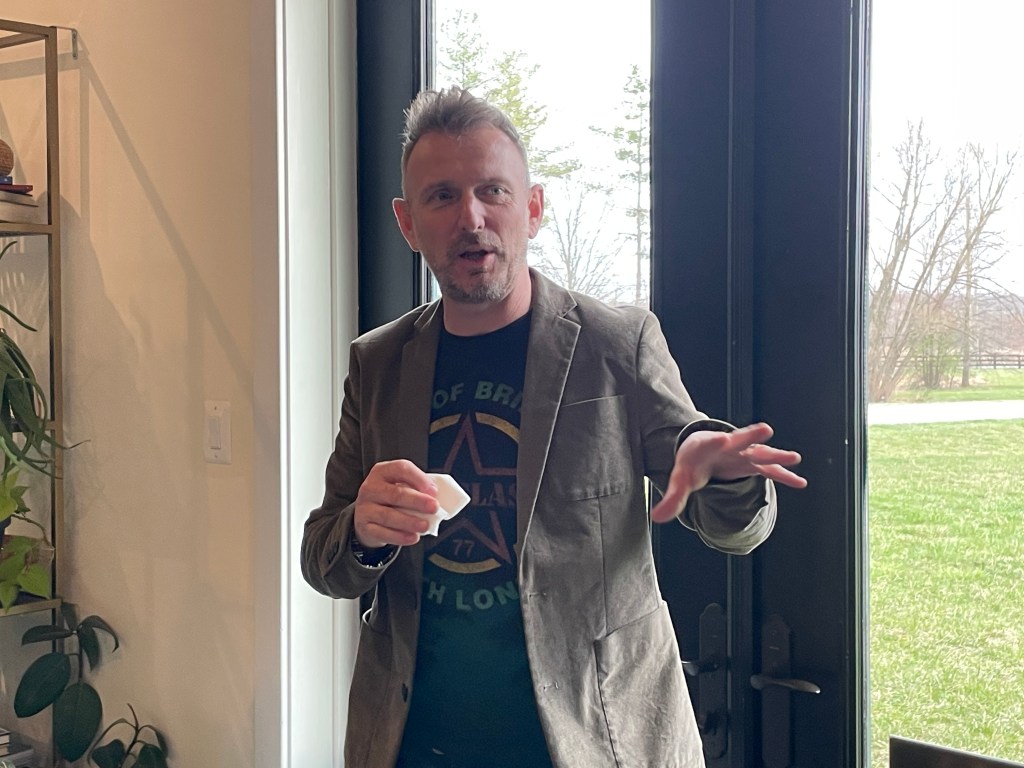
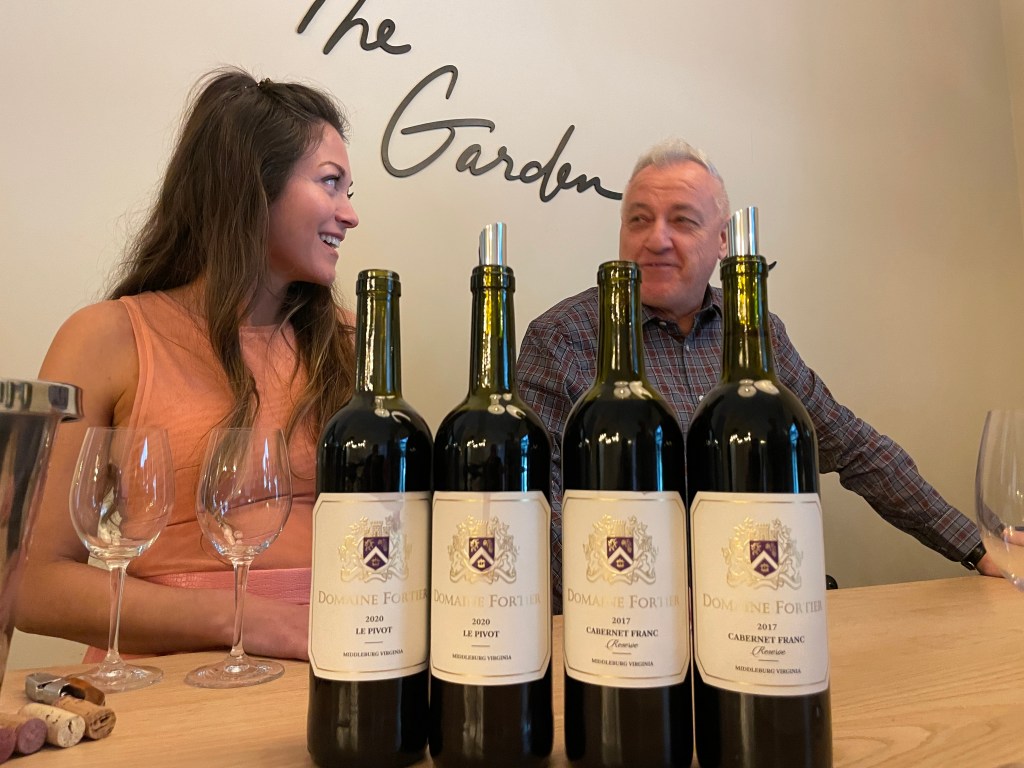
Matthieu Finot (left), Stephen Fortier (center), Jennifer Volk-Fortier (right)

Domaine Finot

The name Matthieu Finot should be very familiar, given he won the most recent Governor’s Cup for his 2019 Meritage with King Family Vineyards. Less known is his personal label, Domaine Finot.

It’s unfair to say that King Family doesn’t allow Matthieu creative license in his winemaking (check out their ‘Small Batch’ series). But here’s the thing with many established wineries; they have a ‘brand’ to protect, so prefer most of their wines stay ‘on brand’. This has resulted in a number of established winemakers establishing ‘side-gigs’ where they can flex their creative muscles.

Domaine Finot is where Matthieu has free reign to do what he wants, and his focus is to create ‘natural wine’ using 5 acres of fruit from Turk Mountain, located in the Afton region of Charlottesville.

Matthieu explained his wines are as ‘minimal intervention’ as you can get while still using vinifera, which (sadly) require at least some spraying in Virginia. Or, as he explained, ‘natural wine…basically.’

Natural wine isn’t legally defined in the United States, hence there’s some ambiguity regarding what the term actually means. For Matthieu, his approach is to use natural yeast and no sulfur, usually making his wines unfiltered, and occasionally using whole-cluster fermentation. His Malbec is made using carbonic maceration.

That also means these wines get to be what they want to be. While Matthieu would have preferred his most recent vintages come out with lower levels of alcohol, he shrugged and said, “Well, that’s minimal intervention”.

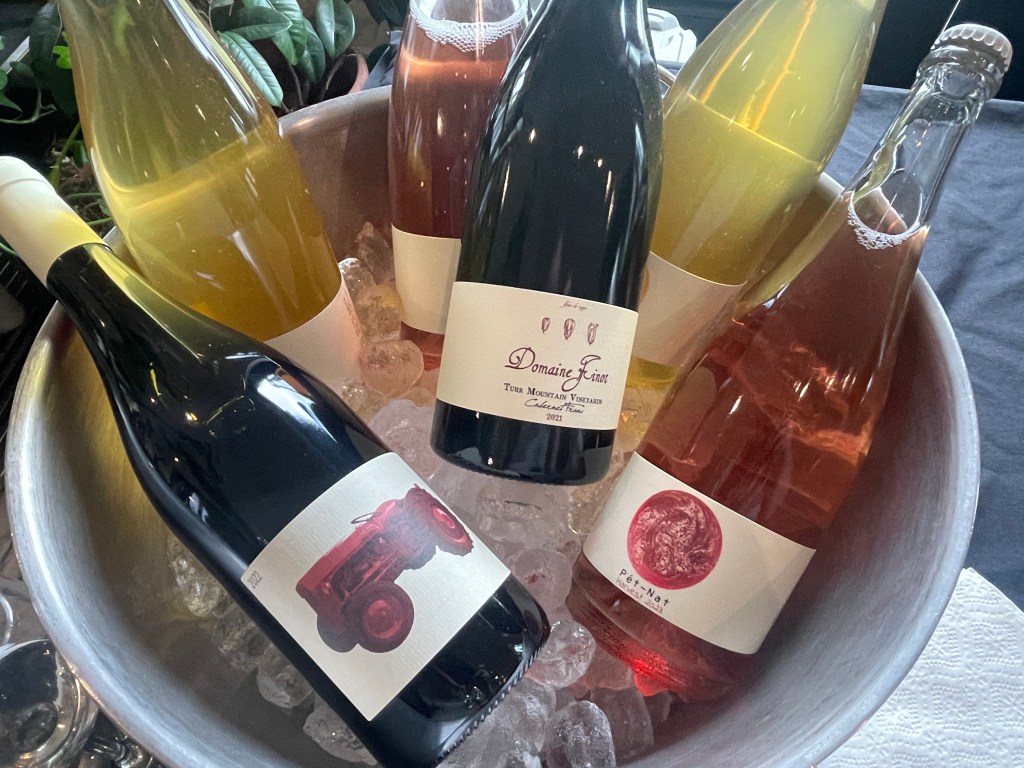
Matthieu served 4 wines; a Petit Verdot Pét-Nat, a 2022 Sauvignon Blanc, a 2021 Cabernet Franc, and his brother’s 2022 “Tracteur Rouge” red blend, made from Domaine Finot (Virginia)’s ‘brother’ label, Domaine Finot (France).

  • The Pét-Nat was arguably my favorite of the lineup. I didn’t ‘want’ a bottle, I ‘needed’ a bottle. No tasting notes; I just enjoyed sampling it on the spot (and came back for a 2nd taste).
  • 2022 Sauv Blanc: Made as an ‘orange wine’ (wine made from a white grape but made in the cellar using the same process given to red grapes). Cloudy. It had a pithy-tart/grapefruit note to it; almost like an IPA. Super expressive and interesting.
  • The 2021 Cabernet Franc was the runner up favorite. “Big” as Cab Francs go, made with whole cluster fermentation.
  • Tracteur Rouge: Grown in a parcel in the Alps by his brother Thomas; owner of Domaine Finot (France). Like its Virginia counterpart, Thomas farms with a high degree of sustainability. I remember liking this wine, but tasting notes are hard to write when holding your glass out in a crowd.

Domaine Fortier

The other guest winery was Domaine Fortier, owned by Jennifer and Stephen Fortier. Based in Lovettsville, the Fortiers had become so engrossed by the Virginia wine scene they decided to ‘pursue the dream’ of becoming vintners, on top of their successful careers and raising a family.

To help make the dream come true they turned to Nate Walsh, who is producing their wines at Walsh Family Wine and tutoring Stephen in winemaking. Nate was a natural choice, since he’s local and specializes in small-batch winemaking like this.

While the Fortiers bought grapes during their first few years of operation, in the future their wine will be made using fruit from 10 acres on their own property (a mixture of Cab Franc, Merlot, Petit Verdot, Tannat, Petit Manseng, Chardonnay, and Norton).

I got the feeling the Fortiers are one of those couples that need to constantly stay busy. Stephen is a defense contractor while Jennifer is a patent attorney with an engineering background. Like many who catch the ‘wine bug’ they didn’t have any background in viticulture, but neither did they let that stop them.

According to Stephen, originally they were aiming for 5 acres of vines but decided ‘go big or go home’, picking a 34-acre property in Lovettsville. Vines were planted in 2020, and they are aiming for about 3,000 cases/year. Eventually Domaine Fortier will have a tasting room, but for now they will serve their wine at pop-ups events.

Jennifer explained they are focusing on providing a more ‘elevated experience’ with their wines. One problem Virginia wine has is its wine is often sold young, as vintages sell out quickly. To avoid this, the Fortiers took a methodical approach to building up the brand, opening only when they could sell wines that had some age.

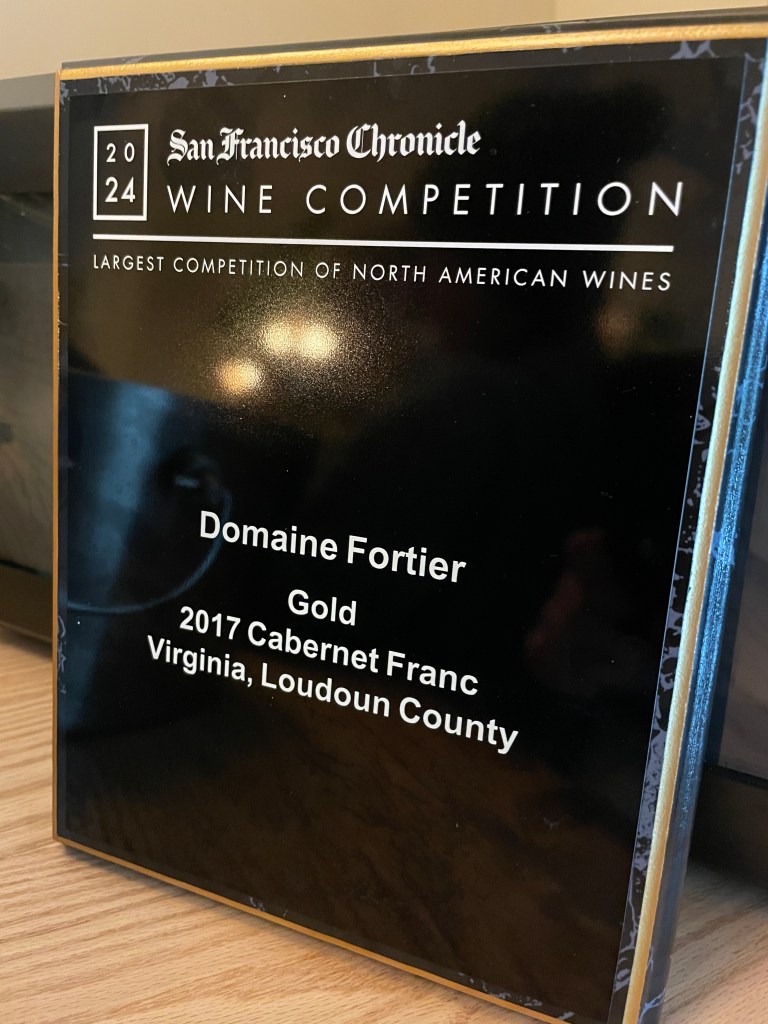
Their strategy was working out before they even ‘opened’, because their 2017 Cabernet Franc earned Gold as the prestigious San Francisco Chronical wine competition.

Originally we kicked off with five wines, but we convinced them to sneak in a bottle of white Merlot to the lineup. While everything was well made, I’d say the whites were the real stars.

  • 2023 Albariño: Or “sunshine in a bottle” as Jennifer called it. This grape does great in Virginia. Expressive; not quite as much saline as a Spanish wine but one of the better Albariño I’ve had lately – and I drink a lot of Albariño.
  • 2020 Petit Manseng: The knockout wine of the day. Fruit forward with tropical notes. Made in a dry style, it was so rich it could fake you out into thinking it was sweet. This was the first bottle my group opened at our table near the fireplace.
  • 2020 Chardonnay: Lightly oaked
  • 2020 Le Pivot: Sorry, no notes on this one!
  • 2017 Cabernet Franc: 85% CF/15% Tannat, made using barrels from the old Northgate Winery (which is now Walsh Family Wine). Gold at the SF Chronical.