Virginia Winemakers Excited Over the 2023 Vintage

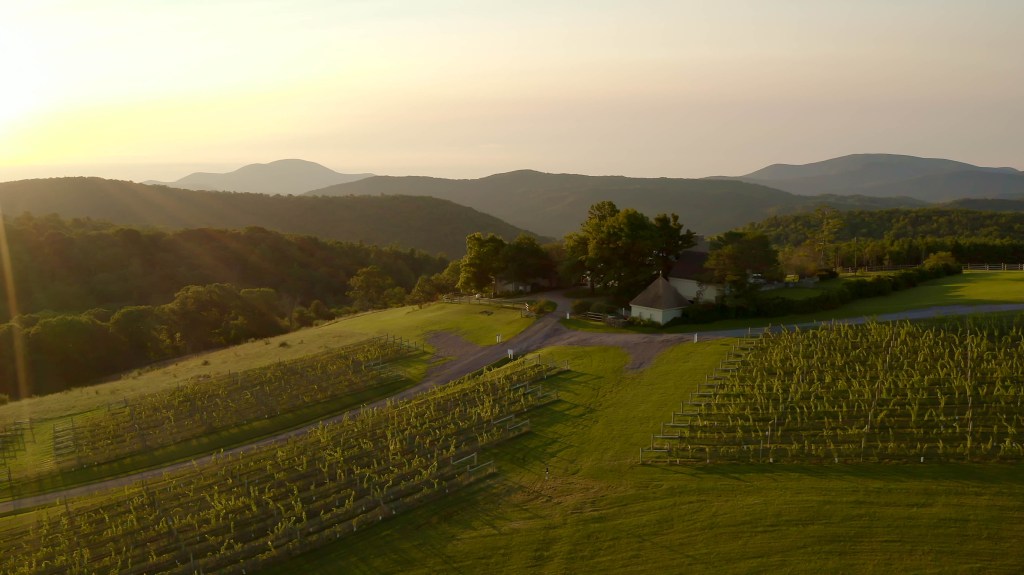
2023 is likely to go down as a banner year in the Virginia wine industry. Warm, dry weather provided ideal growing conditions for much of the state, resulting in what many local winemakers are calling some of the best fruit they’ve seen in a decade. It’s what romantics might call, ‘a good vintage’.

But what makes a good vintage? In a state as geographically diverse as Virginia, defining this may be harder than you think.

Virginia’s main wine growing regions usually have unique seasonal variations. There are years where central Virginia suffers from late-spring frost, while northern Virginia skates by without a hitch. Yet the following year, NOVA vineyards with grapes still on the vine may suffer from late season rain, weeks after Charlottesville wineries have mostly finished harvest. Meanwhile, the Shenandoah Valley asks, “What rain?”.

Different styles of wine also have different needs. Those who prefer classic, cool-weather expressions of Chardonnay may grumble over a hot season’s high alcohol levels, while neighboring winemakers who like bold reds are positively ecstatic.

Fortunately, the 2023 growing season is one of the few years that’s received almost universal praise across the state.

According to Jason Murray, owner & winemaker of Arterra Wines in Delaplane, “Simply put, overall 2023 was an outright ideal vintage for us. We had ideal spring rains for initial growth, and then it went very dry. 

We had just the right amount of rain at just the right moments to keep the vines on a quality path, while just barely averting significant vine damage. 2023 achieved the same intensity and concentration as 2019, without the excessively high alcohol levels. It’s an impressive vintage, with what I would call ‘perfect’ fruit.”

Jason Murray, Arterra Wines

Rough Start To A Great Year

While the season turned out great, it didn’t start off easy. An abnormally warm winter meant vineyards were hitting ‘bud break’ ahead of schedule. This makes them susceptible to a late frost, which kills fragile shoots just as they are emerging from the bud. Several vineyards encountered frost snaps as late as May, inflicting losses to early ripening grapes such as Chardonnay.

Once summer hit, things moved quickly. Data from NOAA show the summer of 2023 ranks as the 15th hottest on record in the United States. As heat speeds a grape’s maturation process, it forced winegrowers to harvest their grapes at a record speed.

“2023 was a wild ride, with one of the most condensed seasons I’ve experienced,” shared AJ Greely, winemaker for Hark Vineyards. “We ran our wind machine to keep the cold air off our vines 12 times in the spring, and kept a serious eye on the temperature more than double that number. 

AJ Greely, Hark Vineyards

When harvest came we picked and processed every other day, with a one week break to catch our breath. Then we picked and processed for another 10 days!”

While frost singed some vineyards, the lack of rain was ultimately a more pressing issue. Drought stress caused ripening to stall for some varieties, and also caused alcohol levels to spike while reducing cluster weight.

However, dry weather also has its advantages.

“2023 was an abnormally dry growing season in Virginia, although it also makes life in the winery easier,” explained Robert Muse of Muse Vineyards.

“Rain is the chief catalyst for mildew infections in the vineyard. Winemakers can use sulfite to combat them in the cellar, which eliminates bacteria that impair the quality of the wine. Unfortunately, these sulfite additions are inadvertently harmful to the yeast necessary for a thorough fermentation. To avoid these issues, clean fruit is essential.

A grower can ensure clean fruit with a meticulous spray program in wet years, or he/she can relax by the pool knowing a dry sunny ripening season is taking care of most disease issues in the vineyard. 2023 was such a year.”

Wineries Expecting Lower Quantities But Much Higher Quality

While the overall tonnage for the 2023 vintage might be lower than normal, the wines should make up for it in quality, said Toni Kilyk of Granite Heights Winery.

Toni Kilyk, Granite Heights Winery

“Our grapes are smaller than normal size to begin with, but this year they were even smaller. We had close to the same number of grape clusters but with very little juice inside, hence our harvest weights were much lower than normal. That said, less juice means a higher skin-to-juice ratio, so we’ll have more potent wine.”

Many winegrowers echoed her assessment, and were particularly optimistic about their red wines.

“I’m excited about tannat and cabernet franc this year,” wrote Doug Fabboili of Fabbioli Cellars. “You can count on these grapes to make great wine almost every year, but this year’s can be outstanding!”

Doug Fabbioli, Fabbioli Cellars

Virginia’s weather is normally hot and humid, and grapes that require dry weather often struggle. But dry climate varieties may be the 2023 vintage’s sleeper hits. A number of winegrowers expressed excitement how normally difficult-to-ripen varieties such as cabernet sauvignon, malbec, sangiovese, tempranillo, and petite sirah would turn out.

“I don’t ever want to jump the gun, but I’m very excited about the 2023 vintage wines,” Toni continued. “They are aging nicely, and I think we’ll see wines that easily compare with 2010/2017/2019 vintages in terms of quality.”

Alexandria Welcomes Negus Winery, America’s First Ethiopian Honey Wine Tasting Room

When Negus Winery opened its doors, it wasn’t just the start of Alexandria’s newest winery. It was owner/winemaker Gize Negussie’s way to introduce Tej, or Ethiopian honey wine, to the world.

Honey wine is a cultural staple in Ethiopia, with a history going back to the Queen of Sheba. While it’s an alcoholic beverage related to mead, don’t expect to taste something you’d find at a renaissance festival.

“Think of Tej as a cousin of mead”, Gize explained. “To make an Ethiopian honey wine, you need the right kind of honey and yeast.

The fermentation process is also different. Mead gets a lot of its flavors from fruits and spices, but we don’t add anything to our honey wine, not even sulfites. If you ask members of the Ethiopian community if Tej and mead are the same, they’d disagree.”

While Ethiopia has tasting houses dedicated to this beverage, Gize is proud to say Negus Winery is the first such establishment in the U.S. But the road to opening his own tasting room was a winding one.

Originally from Ethiopia, Gize arrived in San Francisco in 2011. His time in California exposed him to the wine industry.

“I grew up in a business-oriented family. I started a tour & travel company which explored California wine country, and that allowed me to make connections in the wine business. Winemakers encouraged me to introduce Tej to the United States, since it’s completely different.”

Gize first opened a brewery in D.C., which included a honey wine on the menu. Unfortunately, the pandemic hit and the business didn’t survive.

Speaking with his family, Gize came up with an idea that was both new yet familiar; opening a honey wine establishment in the D.C. area, with beverages using his family’s recipe.

“When we celebrate in Ethiopia, honey wine is a must-have on the table. It used to be reserved for royalty but now every family makes it. My recipe came from my mother, but we modernized the production process.

I knew if I opened a tasting room here, people will fall in love with it. While there are other honey wine producers in the United States, none of them have their own tasting room. So far we’re the only one.”

Negus produces three kinds of honey wine; semi-dry, semi-sweet, and non-alcoholic. In keeping with tradition these are served in a “berele”, a colorful Ethiopian flask-like vessel.

While these are Negus’s flagship beverages, guests have additional options.

“I don’t want to close the door to people who want to try something else”, Gize explained while pouring another serving of honey wine. “We wanted to support local, so we also serve several grape wines made in Loudoun County. Hopefully next year I’ll be making wine on premise.”

Negus Winery is located at 5509 Vine St Suite A, Alexandria. Extra parking is available behind the building.

Visitors are welcome to bring their own food or enjoy snacks purchased on premise. A food truck will be available in the spring.

Virginia Petit Verdot Blind Tasting Showdown: The 2019 Vintage

This event was something of a ‘first’. I’ve made steady progress in writing comparative tastings for most of Virginia’s major varietals, and only occasionally felt the need to revisit a grape. Yet this didn’t stop me from doing my 3rd comparison of Petit Verdot; the most I’ve ever done with a single variety.

For those not familiar with Petit Verdot, the ‘little green’ (the English translation of ‘petit verdot’) is one of Virginia’s signature grapes. A high-acid variety, PV can retain that acidity despite Virginia’s hot summers. It’s also fairly weather resistant, making it popular for vineyard managers.

PV also provides color and tannin to blends. In many ways PV has become a blending replacement for Cab Sauv, which is a difficult grape for Virginia to grow. That the two most recent Virginia Governor’s Cup winning wines were PV-heavy isn’t a coincidence.

These traits have allowed PV to become the 3rd most planted grape in the state, widely used both as a stand-alone varietal and a blending partner. PV’s main drawback is its berries are small, so there’s not a lot of tonnage (as one would expect from a grape with the name ‘petit’ in it).

My first PV comparison only used PVs from Virginia’s 2017 vintage. The second was a multi-vintage (and multi-state) PV comparison. Arterra’s 2017 and DuCard’s 2017 PVs won each of their respective events, so I decided to move on to a 2019-vintage comparison.

Most wineries would agree that 2019 was a good to excellent vintage, particularly for reds. It was a hot summer so alcohol levels were slightly on the higher side, but it also delivered on ripeness.

Just as importantly, doing a horizontal tasting of 2019 vintage wines meant the only differences came from the vineyard and winemaker, which evened the playing field.

I can’t confirm that every bottle was 100% PV but I strongly suspect they were.

Tasting & Scoring Methodology

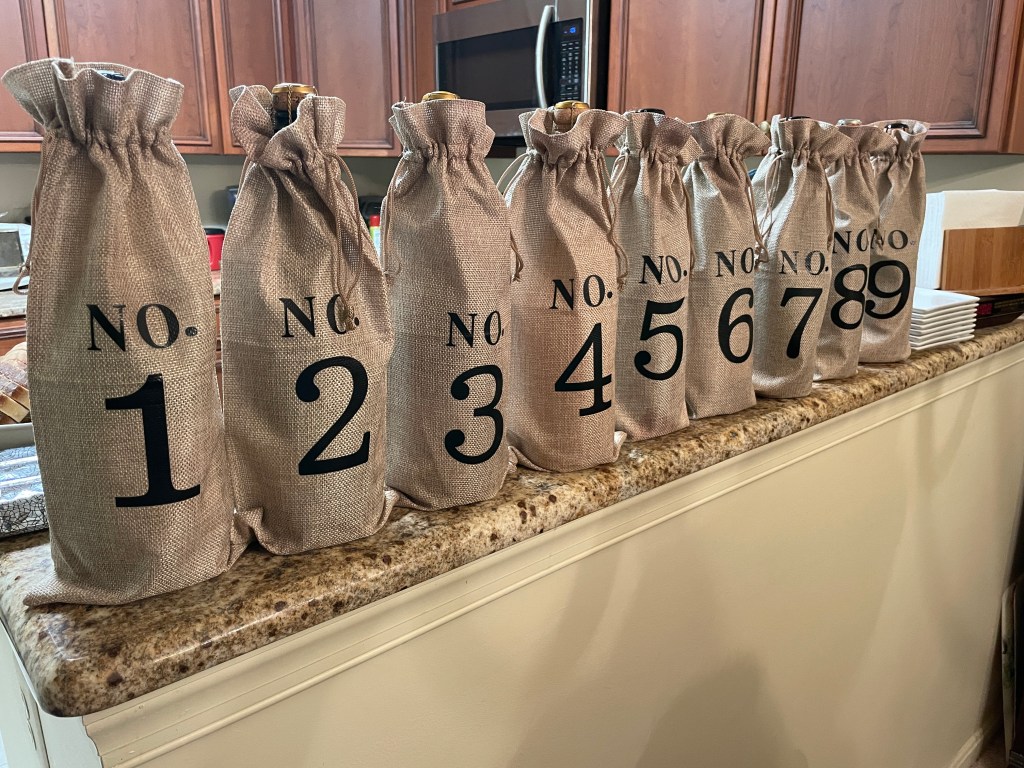
A group of friends & I blind tasted 9 wines in 3 flights. All the flights were bagged; even I didn’t know which-was-which, as I bagged them randomly.

We didn’t have a fancy scoring system. The goal was to pick a ‘favorite’ every round, as opposed to rating them and determining the one we thought was the ‘best’.

I will say this was one of the most even playing fields I’ve ever had. We had bottles from 9 exceptional wineries from an exceptional vintage. EVERY one of these wines were good-to-excellent.

Moreover, by the end of the night there was a lot of people who insisted their favorite wine of the night didn’t make it to the ‘finalist’ round. Although my selection process forced us to choose a ‘favorite’ every round, that’s not to say the final ones were “everybody’s” favorite. More than a few excellent bottles simply got out-voted by our group of 7.

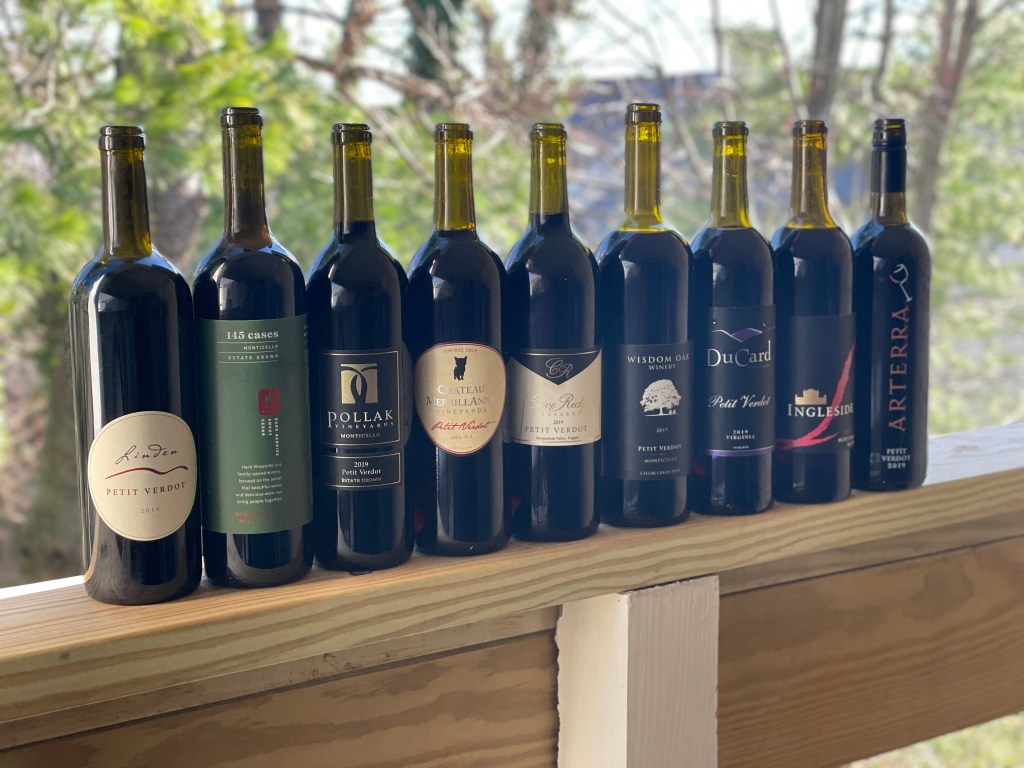
The Contenders:

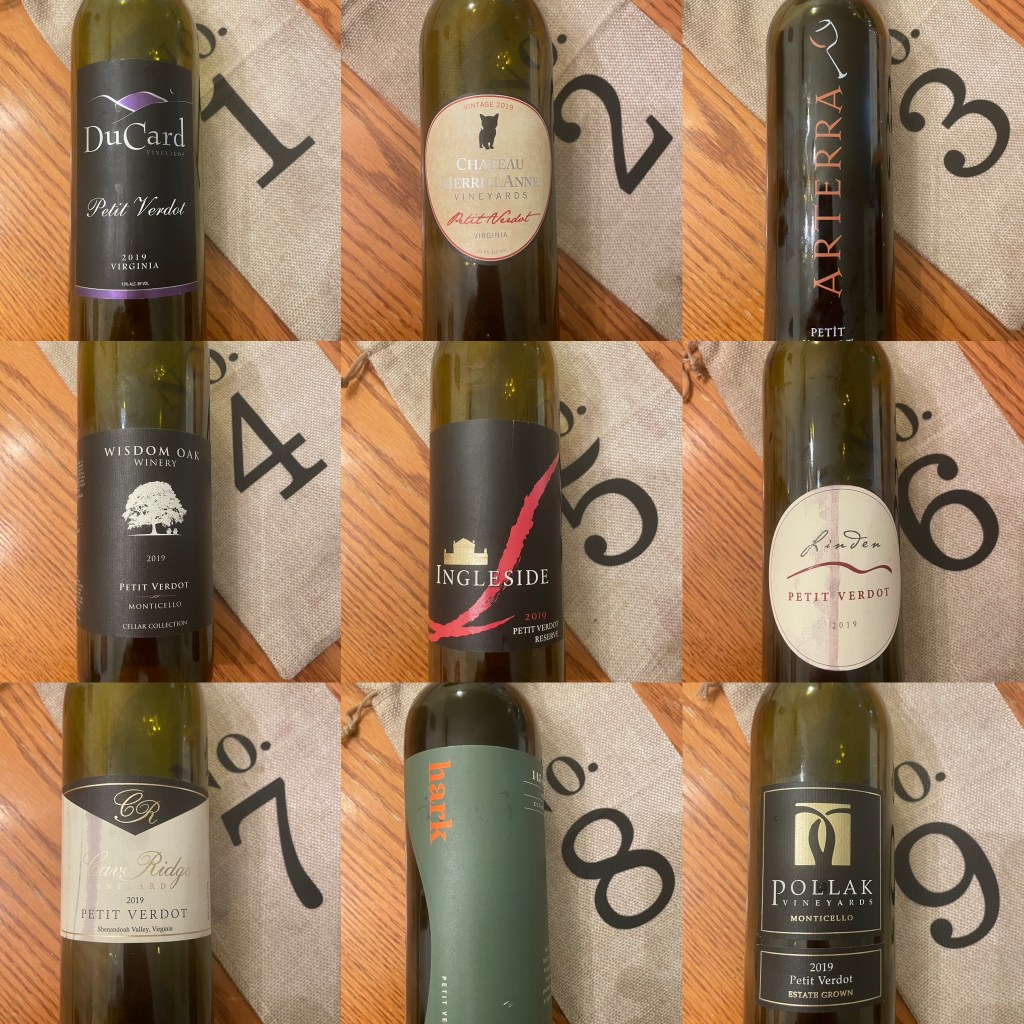
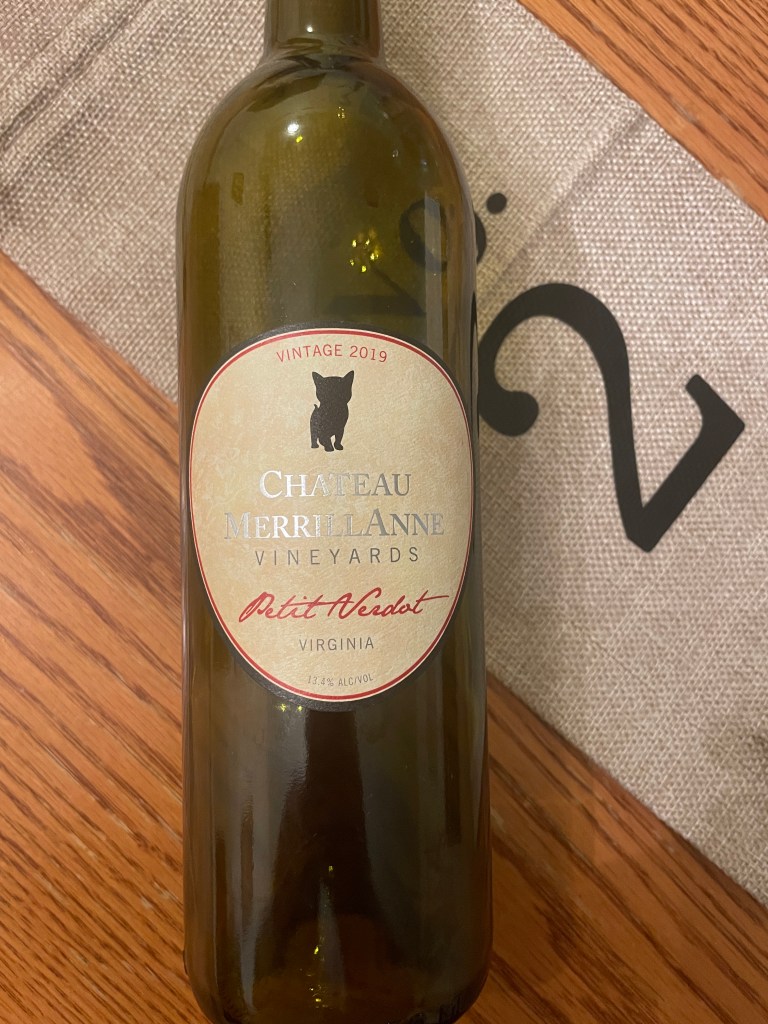
  1. DuCard Vineyards 2019 Petit Verdot (100%)
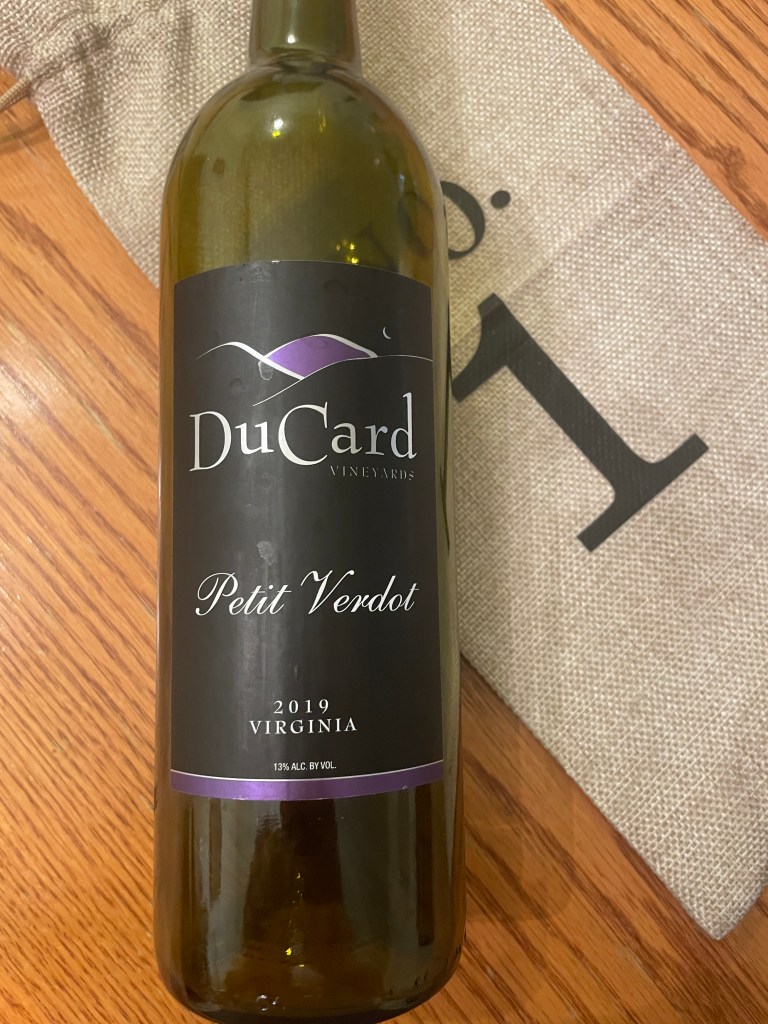
  2. Chateau MerrillAnne 2019 Petit Verdot (100%)
  3. Arterra Wine 2019 Petit Verdot (100%)
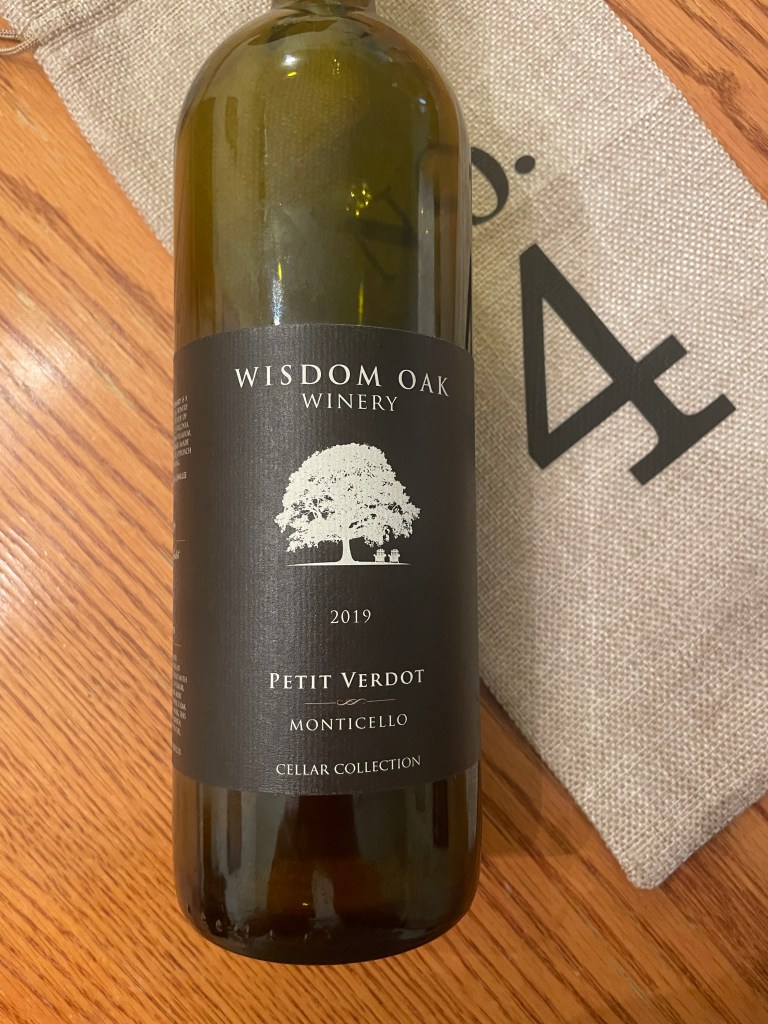
  4. Wisdom Oak Winery 2019 Petit Verdot (100%)
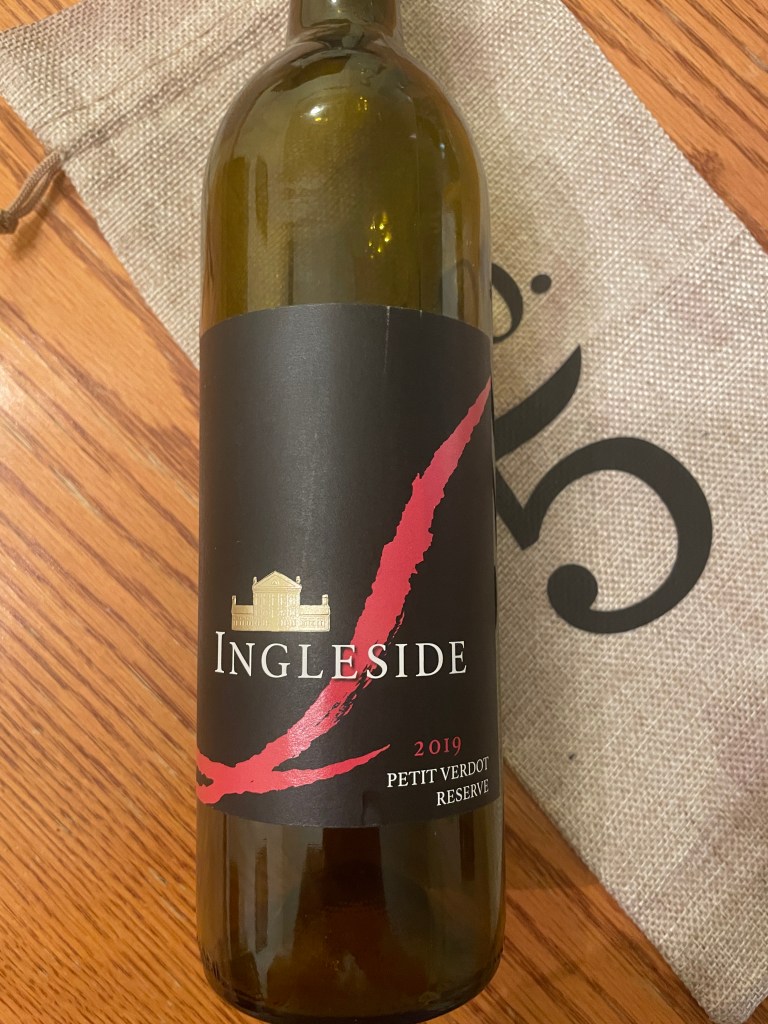
  5. Ingleside Vineyards 2019 Petit Verdot
  6. Linden Vineyards 2019 Petit Verdot (100%)
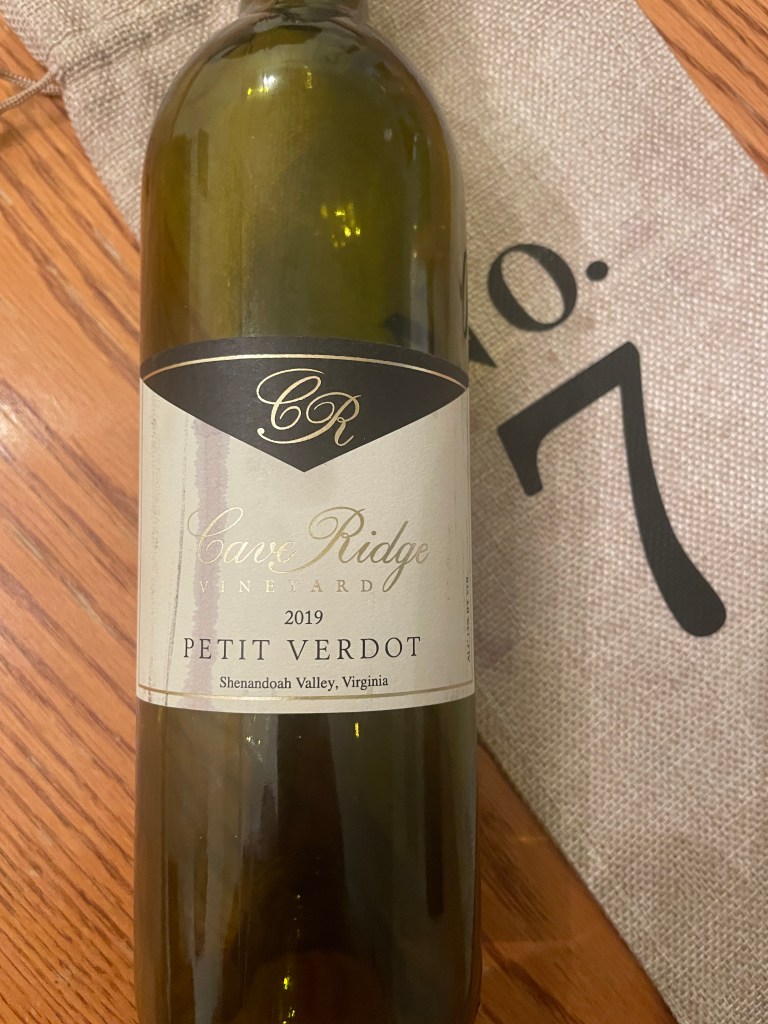
  7. Cave Ridge Vineyard 2019 Petit Verdot (100%)
  8. Hark Vineyards 2019 Petit Verdot (100%)
  9. Pollack Vineyards 2019 Petit Verdot

Round 1 / Flight #1:

  • Bottle #1: DuCard Vineyards
  • Bottle #2: Chateau MerrillAnne (Round winner)
  • Bottle #3: Arterra Wine

This arguably was my favorite round, and it demonstrated how hard it was for us to pick a ‘favorite’. I’m convinced #1/DuCard could easily have been the best of the day, but the randomness of these tastings put it against the wine that went on to win the event. Even so, I was tempted to give #1 a “Wild Card” advance.

In terms of coloration #2 was the lightest and #3 was the darkest. #1 and #2 opened up nicely as the round went on. None of them were overly expressive on the nose; the nose opened up a little but PV isn’t an overly aromatic variety.

We spent a lot of time on wine descriptors during this round, just go get people comfortable speaking their mind.

Bottle #1 DuCard Vineyards: Lots of tasting notes, if only because the group was opinionated, and this bottle was speaking to us.

On the nose I got lots of violet. On the palate the most popular descriptors were dark fruit (especially cherry or strawberry), pepper, spice notes, plus grippy tannin. Someone mentioned notes of cedar.

It was a very drinkable and balanced wine. #1 opened up nicely about halfway through and the fruit became more pronounced, which made it REALLY hard for me to not pick it as my round favorite.

Bottle #2 Chateau MerrillAnne: On the nose people mentioned notes of tobacco, blackberry or black fruit in general. On the palate, red fruit.

I also heard someone say it had a “Dr. Pepper” note to it. Another said there was some heat on the nose, plus maybe notes of mocha. Overall, it was a balanced, complex wine.

Bottle #3 Arterra Wine: We didn’t realize it at the time, but at 16.5% this was the highest alcohol wine of the day. That percentage gave #1 the perception of sweetness, despite zero RS. This would have rocked with a spicy dish though.

The color was especially dark. Of the trio, we felt it had the least amount of oak treatment. The group mentioned notes of black cherry, chocolate, or blueberry, plus tartness on the back end. My favorite descriptor was it was smokey, or even had a ‘old library’ note.

This soon became a contest between #1 and #2 for round favorite, and most voters only narrowly went with #2. The general consensus (but with two exceptions) is while people liked #3, the high alcohol made it a ‘one glass’ wine, while #1 and #2 were wines you could more easily enjoy.

Votes:

  • Alex: 2/1/3. Mentioned the #1 (DuCard) reminded him of a Russian River Valley pinot.
  • Ashley: 2/1/3.
  • Brandon: 2/1/3. Felt #2 (Chateau MerrillAnne) was the most complex.
  • Emily: 3/1/2. Felt #3 (Arterra) was ‘cozy’ and stood out, and especially liked the aroma.
  • Frank: 2/1/3. Felt #2 was the most complex, reminded him of a cigar box.
  • Isabel: 3/2/1
  • Matt: 2/1/3. Was torn between the complexity of #2 or fruit-forward notes of #1, which once it opened up was very lovely.

Round 1 / Flight #2:

  • Bottle #4: Wisdom Oak Winery (Round winner)
  • Bottle #5: Ingleside Vineyards
  • Bottle #6: Linden Vineyards

What I liked about this round is how different these bottles were from the previous one. It was a real demonstration of the diversity of Petit Verdot. Even the coloration was different.

#4 and #5 quickly became the favorites. Once it opened up we liked #6 more, but it was in a tough group.

This round also showed me how difficult it would be to do a ‘wild card’ advancement, because guests kept talking about how much they loved #5 (we had the same issue with #9). I couldn’t advance “all” the great runner-ups, so I went with what we had.

Bottle #4 Wisdom Oak Winery: Most fruit-forward and acidic of the group. I found notes of tobacco and earthy, backed by some bright red fruit.

Other notes included “jammy chocolate” (one of my favorite descriptors of the day), black fruit and cherry (with hints of raspberry), hint of spice on the palate. “Smokey cedar”, with grippy tannin.

Bottle #5 Ingleside Vineyards: Lots of notes here!

I thought the earthy nose really stood out. Bright; notes of red fruit, although it tended to have more tertiary flavors. Someone mentioned dark chocolate, chewy, ‘plush’. Another said notes of bell pepper, cardamom, even cinnamon stick.

Bottle #6 Linden Vineyards: Violet or tobacco on the nose. Notes of dark chocolate, mushroom, forest floor. Another said they found a plum note.

It was also soft and the least acidic of the group (perhaps because it was made in steel, not oak).

Votes:

  • Alex: 5/4/6. Liked the tobacco and tannin profile of #5 (Ingleside)
  • Ashley: 5/4/6. Liked the long finish of #5, beautiful complexity on the nose and palate. Noted the nose and palate didn’t line up but that was a good thing.
  • Brandon: 4/5/6. Liked the fruitiness an tartness
  • Emily: 4/5/6. Thought #5 was ‘sultry’ but chose #4 (Wisdom Oak) for the fruit profile.
  • Frank: 4/5/6. Liked the layers of flavors on #4.
  • Isabel: 4/5/6
  • Matt: 4/5/6; liked the fruit on this one.

Round 1 / Flight #3:

  • Bottle #7: Cave Ridge Vineyards (Round winner)
  • Bottle #8: Hark Vineyards
  • Bottle #9: Pollack Vineyards

This was our ‘classic’ round, at least on the nose. As our palates got tired we had fewer notes, but that doesn’t mean we enjoyed the wines less.

Bottle #7 Cave Ridge Vineyards: We felt it was one of the higher alcohol wines of the grouping (unfortunately I couldn’t find the alcohol level on the bottle).

The nose was savory. Not an especially fruit-forward wine (except maybe cooked fruit); it was more about the body. Someone mentioned it has a ‘meaty’ note on the nose. Descriptors of musty and savory kept being thrown out. Another said it had a chili note.

Bottle #8 Hark Vineyards: For several participants, “vegetal’ was the key descriptor on the palate. Maybe notes of asparagus? Someone mentioned they found a pine tree/evergreen note. The vegetal characteristics diminished the next day, when I finished it up.

Another participant found notes of blueberry on the nose, maybe licorice.

Bottle #9 Pollack Vineyards: Alcohol on the nose but an overall complex wine. Notes of red cherry or dark chocolate were mentioned. Smooth; balanced.

Votes:

  • Alex: 9/7/8. Thought #9 (Pollack) was smooth and drinkable
  • Ashley: 7/9/8. 7 (Cave Ridge) and 9 were almost tied, but thought #7 had more body
  • Brandon: 7/9/8. Thought it was balanced and liked the funky notes to it.
  • Emily: 7/9/8. Thought #7 was ‘very Virginia’
  • Frank: 9/8/7. Favored the red fruit and thought it was less oaky.
  • Isabel: 9/7/8. Thought #7 was very drinkable and had more body.
  • Matt: 7/9/8. Was really torn between #7 and #9.

Finalist Round:

  • Bottle #2: Chateau MerrillAnne (Event Winner)
  • Bottle #4: Wisdom Oak Winery (Runner Up)
  • Bottle #7: Cave Ridge

We took a food break after the first 3 rounds before moving to the ‘finalist’. I didn’t do a round-robin of tasting notes. People spent some time with this trio then went to judging.

As we had so many great wines that could have advanced, I took the extra step of asking people what their favorite wine of the entire event was. That was enlightening; it showed how many of people’s personal favorites didn’t make it to the last round.

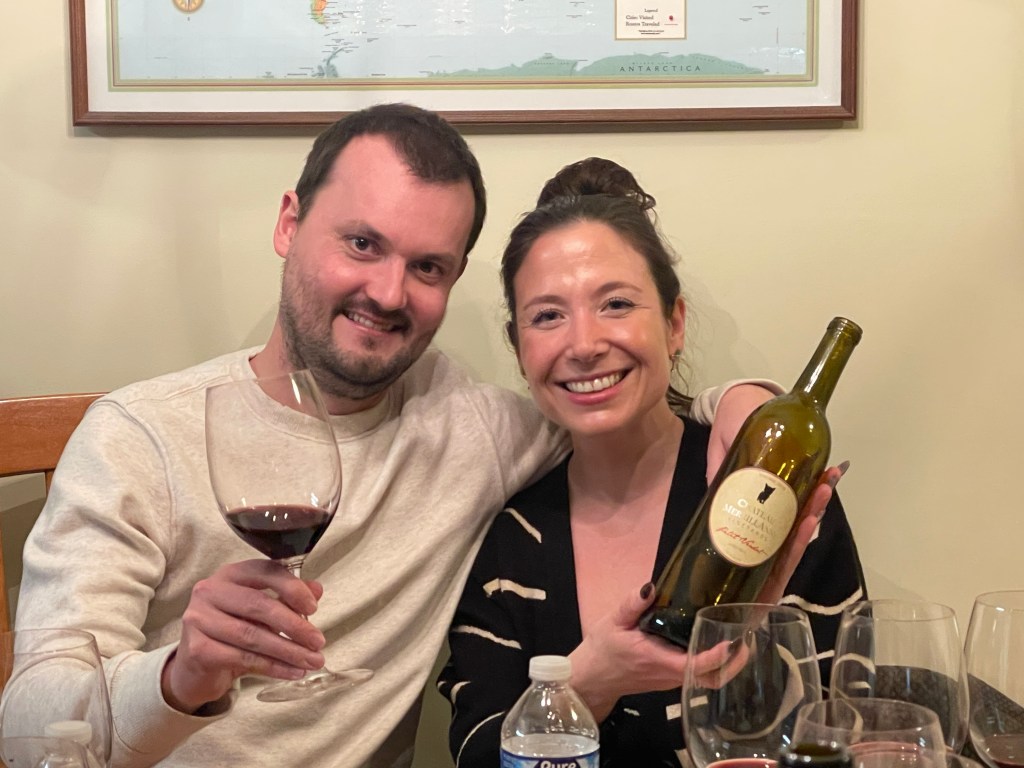
In the end Chateau MerrillAnne’s 2019 Petit Verdot was the favorite of the day. I reached out to them and learned this bottle was 100% PV, saw 16 months in oak, 33% of which was new French oak w/ medium+ char. Made by Michael Shaps using fruit from Honah Lee vineyard.

Perhaps best of all – the winner is still for sale at the winery (at least as of January 2024)

I also insisted they save me a bottle for when I visit next (hopefully soon).

  • Ashley: 2/4/7. Liked the heat and complexity of #2 (MerrillAnne) but still thought #5 (Ingleside) was her favorite of the day.
  • Alex: 2/4/7. Thought #2 was the most complex and had the greatest depth of flavor. But ‘favorite’ of the day was #2 or #5.
  • Brandon: 2/4/7. Thought #2 was ‘sexy’, and thought it was his overall favorite of the day.
  • Emily: 7/4/2. Thought #1 (DuCard) and #7 (Cave Ridge) were great.
  • Frank: 2/4/7. Thought #2 had complexity and layers of flavor, but still thought #9 was the best of the day.
  • Isabel: 4/2/7. Still thought the ‘slutty’ #9 (Pollack; and yes, that was the term) was her favorite. But thought #4 (Wisdom Oak) had character.
  • Matt: 2/7/4. I still think my favorites were an almost even toss-up between #1 and #2. I hogged the DuCard towards the end of the night, when we were socializing.

Lessons Learned

I kept emphasizing that I don’t pretend that my events identify the ‘best’ wine; only the consensus favorite of a large group. On another day or with a different group, I’m certain the results would have been different.

That statement is always true but seemed especially true this time. I think my format of 3 flights of 3 followed by a ‘finalist’ round is fair but it also leaves out some excellent bottles, as not all rounds showcase equally good wines (they are bagged blind, after all). I sometimes try to even that out by advancing the ‘favorite runner up’ as a ‘wild card’…but #1, #5, and #9 were so liked, ANY of them could have been a wild card.

If there’s a ‘lesson learned’, it was that Petit Vedot has range. We had 9 wines and all of them were different. While #3/#6/#8 didn’t get as much attention as the others, that’s not to say we didn’t enjoy them as well.

Virginia’s Shenandoah Valley Sparkling Wine Blind Tasting Showdown

As I’d recently written an article on Shenandoah sparkling wines, I felt it only proper I do some in-depth ‘research’ on the topic.

Many Virginia wineries offer a sparkling wine, but no other Virginia wine region has embraced bubbly with the same vigor as the Shenandoah Valley. Around half of the valley’s wineries make a sparkling wine, many using the same méthode champenoise (aka the traditional method) process found in Champagne.

Sparkling wine pairs well with the region’s terroir. Shenandoah Valley vineyards are often located at relatively higher altitudes, which allows for greater diurnal temperature shifts. This allows grapes to maintain their acidity, one of the key components of sparkling wine.

Shenandoah Valley vineyards also benefit from what Linden winemaker Jim Law would call a strong ‘water to vine relationship’. Virginia vineyards often struggle with excess moisture, which not only lower wine quality but spark disease pressure. But grapes grown in the Shenandoah benefit from well-drained limestone soils, as well as lower overall rainfall (thanks to surrounding mountains which block incoming rainclouds).

Tasting & Scoring Methodology

A group of friends & I blind tasted 9 wines in 3 flights. All the flights were bagged blind.

We didn’t have a fancy scoring system. The goal was to pick a ‘favorite’ every round, as opposed to rating them and determining the one we thought was the ‘best’. Often the best indicator of a favorite was simply seeing which bottles people selected first for refills.

The favorite of every round went to a second ‘finalist’ round with the top 3 wines. After finishing the finalists, we unveiled all the wines and crowned the overall favorite of the day.

While all my events include wine lovers, this particular one was something of the “A Team” of my wine-tasting friends. All had extensive industry experience, or at a minimum a very experience palate.

That said, only a few had a deep familiarity with Virginia wine, and even fewer were familiar with the Shenandoah Valley in particular. That made for an exciting tasting since I specifically wanted to see how Virginia wine would fare in an audience who might not otherwise have tried these bottles.

This time I changed up my usual format by pre-selecting all the wines myself (almost half were gifted by their respective winery for this event; thank you Briedé Family Vineyards, Rockbridge Vineyard, Muse Vineyards, Jump Mountain Winery, and Cave Ridge Vineyard) instead of asking by guests to bring something.

My guests only knew an overview of the theme of the day. Except for our starter wine from Cave Ridge, everything we tried was made in the traditional method.

The Contenders:

  1. Barren Ridge 2019 Blanc de Blanc (Chardonnay) ($35-40?)
  2. Ox Eye NV Blanc de Blanc (Chardonnay) ($35)
  3. Bluestone 2017 Blanc de blanc (Chardonnay) ($34.50)
  4. Rockbridge 2020 Blanc de Noirs (Pinot Noir) ($35)
  5. Briedé 2020 Sparkling Winchester (Cayuga) ($57).
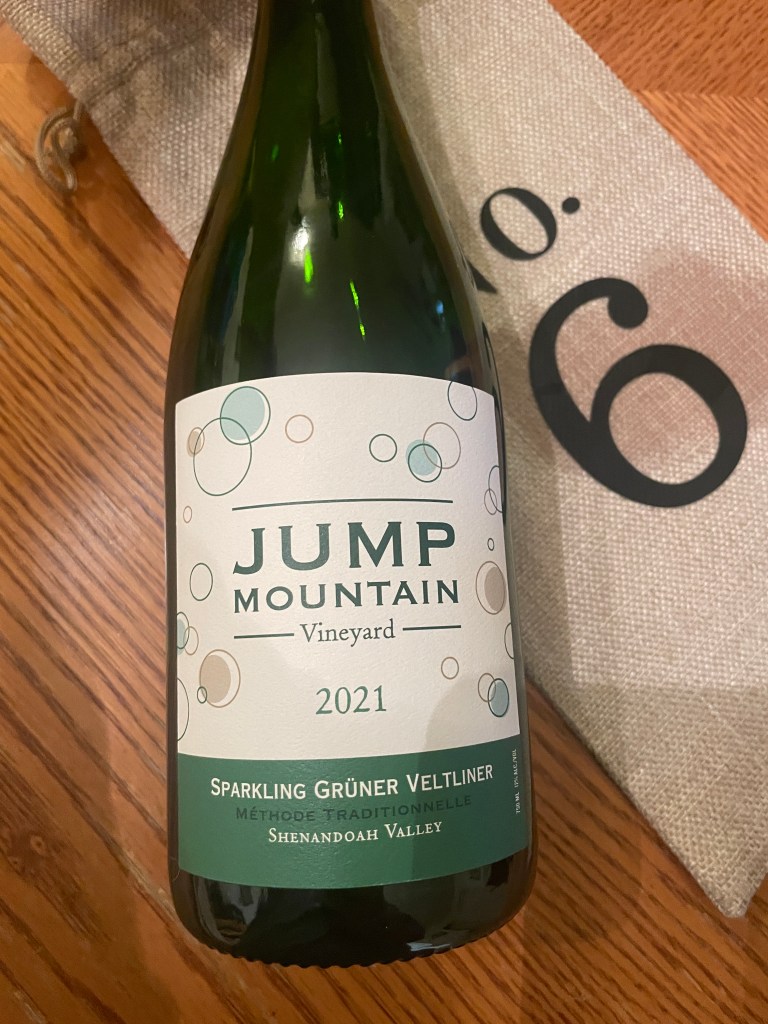
  6. Jump Mountain 2021 Grüner Veltliner ($30)
  7. Muse NV Blanc de Blanc (Chardonnay) ($35?)
  8. CrossKeys 2019 Blanc de Noirs (Pinot Noir) ($38)
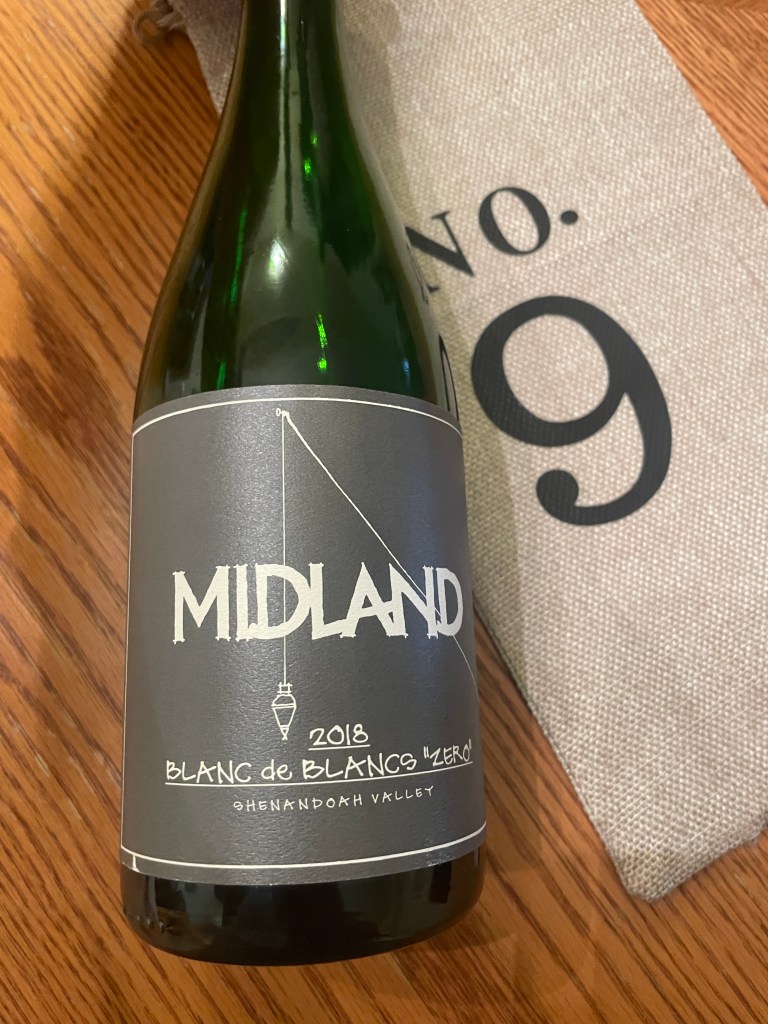
  9. Midland Wine 2018 “Zero” Blanc de Blanc (Chardonnay) ($45)

We also kicked things off with a Cave Ridge NV Sparkling Riesling, made in the Charmat method. Very bright & tart! Lots of apple notes.

Round 1 / Flight #1:

  • Bottle #1: Barren Ridge 2019 Blanc de Blanc
  • Bottle #2: Ox Eye NV Blanc de Blanc
  • Bottle #3: Bluestone 2017 Blanc de blanc (Round winner)

By coincidence, we had three Blanc de Blancs back-to-back. As I had a newer group I kept the tasting dialogue going on for longer than I normally do, so my notes in this round are more extensive than later ones.

In terms of style and especially color, all three were fairly closely matched.

This round became a duel between smoothness (#2/Ox Eye) and complexity (#3/Bluestone). Eventually, Bluestone’s complexity won. That said, the first one from Barren Ridge was also well enjoyed, so being most people’s 3rd pick wasn’t an indication people didn’t like it.

Bottle #1: Barren Ridge 2019 Blanc de Blanc: Our tasting notes were largely centered on citrus notes, especially lemon and green apple. Someone mentioned it had some Malo, which made sense as another taster commented they got some slight butter notes.

There was disagreement about how much minerality it had, with some not being able to detect it and others saying it was there. An overall pleasant wine.

Bottle #2: Ox Eye NV Blanc de Blanc: Someone noted this may have been the most champagne-like of the lineup. Some weight and toastiness; notes of lemon, green apple, and orange peel were mentioned. One person mentioned grapefruit pith, another said it was “grippy”, even a little tannic. It may have had a little RS.

Notes on acidity were all over the place with some saying it was round and others saying it was acidic. My favorite descriptor was it tasted like an ‘abstract painting’.

Bottle #3: Bluestone 2017 Blanc de Blanc: Lots of fruit on the nose and palate. Someone mentioned it had a jolly rancher quality to it but not sweet, perhaps even bretty. Another participant said they found an herby-spice note. The general consensus was this was the most complex of this lineup.

We didn’t know it at the time, but this was the oldest vintage of the entire event. You could tell the difference in the complexity.

Votes:

  • Alex: 3/2/1: Thought #3 was the most complex, while #2 was the smoothest.
  • Chrisa: 2/3/1: Liked the complexity of #3 but gravitated towards #2.
  • Kathy 2/3/1: Thought all of them were clean. Thought #2 was well balanced but #3 was complex.
  • Lieven: 3/2/1. Thought #3 had the most depth; found notes of butter toast, peaches, and white blossom. Thought #1 was subdued but also found citrus notes.
  • Matt: 2/3/1:
  • Richard: 3/1/2: Liked the fruit and brioche notes of #1 but liked the brightness and acidity of #2.
  • Sharneen: 2/1/3. Gravitated towards #2 as it was the most champagne-like and felt it was easy sipping.

Round 1 / Flight #2:

  • Bottle #4: Rockbridge 2020 Blanc de Noirs (Round winner)
  • Bottle #5: Briedé 2020 Sparkling Winchester (Cayuga)
  • Bottle #6: Jump Mountain 2021 Grüner Veltliner

This round was our most diverse lineup of the day, as we had a Pinot Noir, Cayuga, and Grüner Veltliner side-by-side.

People kept coming back to the color of the Rockbridge Blanc de Noirs, which was possibly the prettiest wine of the day. I contacted winemaker Shep Rouse and learned it was all from the initial press.

As you might expect from a diverse lineup, our tasting notes were all over the place. It didn’t help that I overly-chilled these wines, so they took extra-long for our bottles to warm up (note to self; don’t leave your sparkling in the fridge too long).

Bottle #4: Rockbridge 2020 Blanc de Noirs: Too many different notes to capture! We were very curious what it was as it had one of the prettiest colors of the day. For the most part, the nose followed the palate.

Nose reminded someone of daffodil; a few mentioned it had a lovely toastiness with some orange peel. Others got some caramel and honey butter. Maybe there was a little RS here. One person mentioned ‘dissected red apple’.

Bottle #5: Briedé 2020 Sparkling Winchester (Cayuga): Lot of notes here as well, although leaning more towards herbal notes than fruit ones. Being served overly cold didn’t do it any favors. One of the highest acid wines of the day.

“Chicken bullion” nose. Thin; maybe some herbs including thyme and ginger. Notes of yellow flower and chamomile. “Ripping acidity”. Maybe notes of Myer lemon.

Bottle #6: Jump Mountain 2021 Grüner Veltliner: “Intriguing” was often used. More approachable on the palate than the nose. I felt it needed food and time to open up.

Various descriptors included a brioche nose; notes of vanilla, almond, and lime were also mentioned. A few felt it had a Riesling-like petrol nose (which was close; Riesling and Grüner are related). Another person said it had an apple juice quality to it (but in a good way).

Votes:

  • Alex: 4/5/6. Felt #4 was ‘artisanal’
  • Chrisa: Thought #4 was delicious and complex but preferred it on its own, not with food.
  • Kathy: 4/5/6 but it was a close call.
  • Lieven: 4/6/5. Thought #5 was too herbal for him.
  • Matt: 5/6/4. Liked the acidity on #5
  • Richard: 5/4/6
  • Sharneen: 4/5/6. Loved the color of #4, although #5 opened up over time

Round 1 / Flight #3:

  • Bottle #7: Muse NV Blanc de Blanc
  • Bottle #8: CrossKeys 2019 Blanc de Noirs (Round winner)
  • Bottle #9: Midland Wine 2018 “Zero” Blanc de Blanc

This round took us back to Chardonnay, with the CrossKeys Blanc de Noirs added in.

Loved the nose of #9/Midland, but people’s favorites were all over the place. This being the last round my notes were getting shorter and shorter.

Bottle #7: Muse NV Blanc de Blanc: Had an herbal nose, maybe with some mushroom and minerality. Little reductive. Musty barnyard quality to it (PS – this isn’t a negative; that’s an official tasting note!).

Bottle #8: CrossKeys 2019 Blanc de Noirs: Notes of candied apple, more RS. Palate different from the nose. Little reductive but people didn’t treat that as a negative. Nice minerality and salinity. High acid, apple tart nose. Others said they found “orchard fruit” notes.

Bottle #9: Midland Wine 2018: There were many compliments about its nose. Good complexity, although the nose and palate were different. Good ‘muse’. Notes of fennel, apple, pear. Some bitterness.

Votes:

  • Alex: 9/8/7. Found some creaminess on #9.
  • Chrisa: 8/9/7
  • Kathy: 8/9/7. #8 was simple but enjoyable.
  • Lieven: 7/8/9
  • Matt: 8/7/9. 8 had the best palate but 9 had the best nose.
  • Richard: 8/9/7
  • Sharneen: 8/9/7. 8 improved as it opened up and liked the salinity.

Finalist Round:

  • Bottle #3: Bluestone 2017 Blanc de blanc (Runner Up)
  • Bottle #4: Rockbridge 2020 Blanc de Noirs
  • Bottle #8: CrossKeys 2019 Blanc de Noirs (Finalist)

No new tasting notes here, as we had plenty of notes from earlier. Now that the wines had time to warm up, we were able to enjoy them more.

#3/Bluestone and #8/CrossKeys were generally the favorites, although “where did this color come from?” on #4/Rockbridge seemed to elicit the most discussion as it was the most ‘intriguing’ for several participants, not just for the color but overall tasting profile.

The top two were generally ‘classic’ in profile and was almost a toss-up, and we went with CrossKeys’ 2019 Blanc de Noir as the day’s favorite.

  • Alex: 3/4/8. Liked the creaminess of #3.
  • Chrisa: 8/4/3. #8 was round, liked the candied apple notes, acidity and balance.
  • Kathy: 8/ 3 & 4 tied.
  • Lieven: 3/4/ 8. #3 was more classic, #4 was intriguing.
  • Matt: 8/3/4. Thought #8 was the most complex.
  • Richard: 8/3/4. Chose #8 but was tempted to go with #4 because thought #4 was the most interesting and artisanal.
  • Sharneen: 8/4/3. #8 was better as it opened up.

Lessons Learned

I wouldn’t say there were a lot in terms of ‘lessons learned here’. The entire point was to taste wines from the Shenandoah Valley side-by-side as opposed to comparing it to a different wine region, as well as giving exposure to these wines to some local industry folks.

But if there was a ‘surprise’ of the day, it was the Rockbridge Blanc de Noirs. I asked several people what wine ‘most surprised them’, this was often the most mentioned bottle. That color just stood out, plus the tasting notes kept people talking.

The overall favorites of the day were either CrossKeys 2019 Blanc de Noirs or the Bluestone 2017 Blanc de Blanc; not surprisingly these were the #1 and #2 choices in our tiered tasting.

The Bluestone was 100% Chardonnay, 4 years en triage (the stage where a still wine slowly converts into a sparkling one), made in all stainless. Lee explained how the first time he made his sparkling he had assistance from Veritas for the disgorging, but now he does everything by hand.

That the CrossKeys Blanc de Noirs was the favorite is hardly surprising, as this was selected by Atlantic Seaboard Competition as their 2022 Best in Show. This wine was fermented and aged for 8 months in barrel with continuous lees stirring then fined, filtered, and bottled, then aged in bottles for another 16 months to develop mature.

This is also one of the relatively few vineyards that grow Pinot Noir (2.5 acres) in the state, which makes it extra special for a Virginia wine lovers.

The 2023 Virginia Wine Year In Review

My latest ‘Virginia wine in review’. To see my other ‘Years in Review’, check out my 2020, 2021, and 2022 articles as well.

I did my best to identify the major trends and most interesting stories from the last year. Honorable mentions go to the expansion of breweries in wine country, reporting on the spotted lanternfly, and greater diversification in the industry. In addition to now having several Black head winemakers and owners, I also did the math to verify around 17% of head winemakers in the state are female.

As 2023 closes, Virginia currently has 276 wine tasting rooms, 33 cideries, and 13 meaderies, plus 25 wine brands, cideries & meaderies that lack tasting rooms. Here is a link to my winery roster:

This article is entirely my personal opinion and doesn’t reflect the Virginia wine marketing board or any other entity or person.

2023’s Major Trends and Events

1. Openings and Closings: 12 new wineries and 2 meaderies joined the industry this year, and 4 left the business.

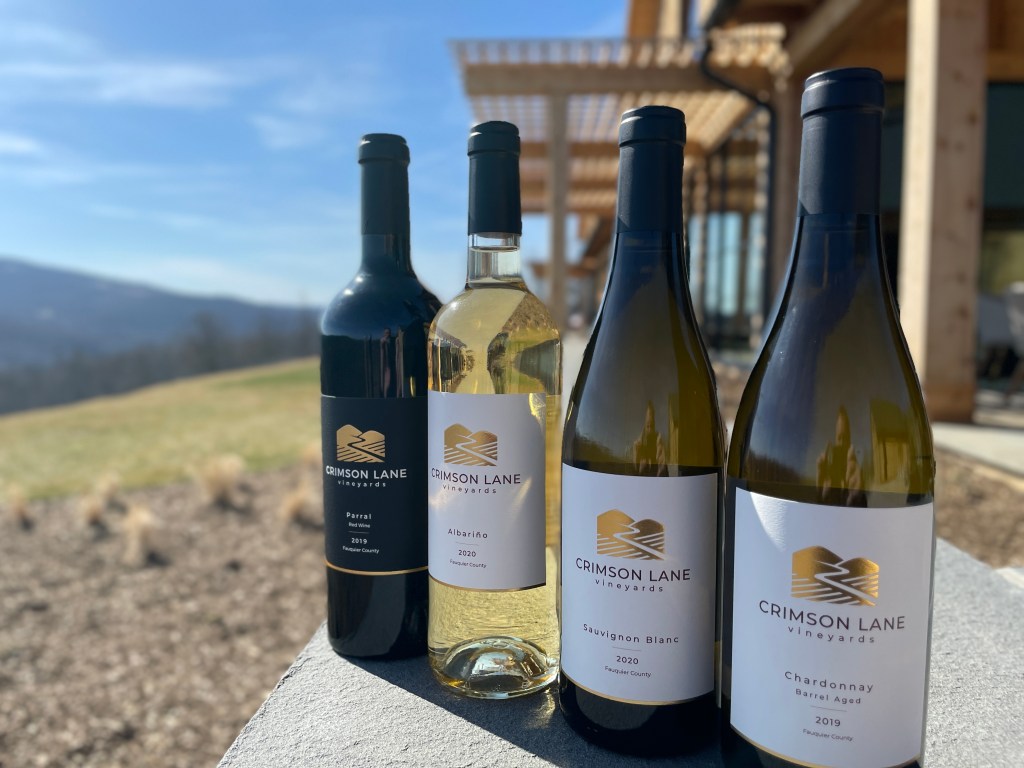
While Crimson Lane, Commonwealth Crush and Southwest Mountain Vineyard probably made the biggest splash, also joining us are Dobbins Hollow Winery & Cidery (Pilot), Good Spirit Farm (Round Hill), Haunted Hills Winery (Jetersville), Mattapony Reserve (West Point), Rassawek Vineyards (Columbia), River Dog Winery (Richmond), Seven Lady Vineyards at Dover Hall (greater Richmond), The Vines at Oakdale (outside Richmond), and the return of Oakencroft Farm & Winery (Charlottesville).

Cincinnatus Vineyards also opened for sales but not as a tasting room.

Two new meaderies also joinedf the fun; Funktastic Meads (Midlothian) and Negus Winery (Alexandria).

Three locations closed; Merriweather Vineyards, Maggie Malick Wine Caves, and the Capitol Hive Meadery. Aspen Dale also announced it will close its tasting room, although it remained open for pop-ups to sell its inventory.

2. 2023 Vintage. Put simply, this vintage looks outstanding. A few owners have gone so far to say, “Perhaps our best ever”.

Sure, we’ve heard this story before. Every year there’s a fair bit of booster-ism, not to mention it’s tough to make an overarching pronouncement on a state as geographically diverse as Virginia.

Even so, it’s hard to ignore the almost-universally positive feedback. The least enthusiastic description of the quality of this year’s fruit was “very good”, while many long-time growers say it’s rivaled only by the superb 2009 or 2012 vintages, which likewise featured warm, dry summers.

If there’s one negative about this year’s vintage is it’s not quite as bountiful is it could have been. The Shenandoah Valley and Central Virginia suffered spring frost damage which reduced yields. Many vineyards also suffered drought stress, causing the vines to shut down. You know it was a dry year when vineyards that normally complain about too much rain wished for a few more inches of it.

3. Softening economy & changing consumer tastes: From 2018 to 2022, the Virginia wine industry saw 16-21 new wine, mead, or cider tasting rooms open per year.

That market growth slowed in 2023, which saw 14 such openings.

It’s tough to say if this slowdown is due to market saturation or the economy; probably a mix of both. But if Carlo DeVito’s predictions of a market correction in the craft brewery industry are on target, then wineries may be up for its own correction, or at least a prolonged slow-down in new openings.

Add to this how Millennials and Generation Z are abandoning wine in favor of mixed drinks, seltzers, or abstaining all-together, it’s a tough near-term forecast for the local wine industry.

4. Grape glut: It’s with no small degree of irony that praise for this year’s vintage is also coupled with an understanding that Virginia is growing more grapes than it can sell (at a profit, that is).

Virginia has long seen volatility in grape supply and demand, as anyone who saw crop losses to 2018’s rain and 2020’s frost can attest to. But more recently, several good harvests in a row have given many vineyards too much of a good thing.

Vineyards that rely on selling fruit will feel the worst of this pinch, especially smaller producers that sell 100% of their harvest. Yet the impact will be felt across the spectrum, especially when coupled with falling demand.

5. Wine Incubators: Over the past year or so Virginia has recently seen the opening of two ‘incubators’; Commonwealth Crush and Eastwood Farm.

This term probably requires a bit of explaining. The start-up costs to winemaking are high and serve as a bar for new entrants. These incubators provide the equipment, make it easier for new winemakers to get started. Given how some of my favorite winemakers don’t even have a tasting room (looking at you, Joy Ting and Jake Busching) I hope such incubators will give micro-producers a chance to join in, sparking greater creativity and diversity in the industry.

6. Wine bars/Urban tasting rooms: The Virginia wine experience is very much tied to visiting scenic locations in the countryside. But in 2023 a trio of VA wineries, namely Bluestone’s ‘Rootstock’ wine bar in Harrisonburg, Rogers Ford Winery’s ‘Curio’ in Fredericksburg, and October One’s Leesburg-based tasting room, bucked this trend.

The first two provide a mix of Virginia and non-Virginia wine. October One serves as that business’s only tasting room, plus offers wine from several other Virginia wineries. Until this year, only Morais’s “Aroma” and Lost Creek’s ‘Echelon” urban wine bars/tasting rooms offered Virginia flights.

I’m hopeful this concept gets traction. Virginia wine is somewhat limited to those who are adventurous enough to drive a good hour or so to visit wine country. These locations make it easier for your average consumer to drink local wine without traveling far to find it.

7. VA Wine in the News: This was a good year for raising Virginia wine’s national profile. Wine Enthusiast magazine designated Charlottesville as its 2023 Wine Region of the Year. If that’s not enough, they also listed Keswick Vineyards’ 2021 Chardonnay and Barbourville’s 2019 Octagon as amongst their Top 100 wines.

Press like this not only raises the profile of these individual wineries, but the Virginia wine scene as a whole. I’m hopeful this will show that Virginia isn’t an ‘emerging’ region; in terms of quality, it’s well-established.

One not-so-great news item was how the Thomas Jefferson Foundation (which runs historic Monticello and neighboring Jefferson Vineyards) dismissed “Virginia’s Wine Godfather” Gabrielle Rausse this past October, claiming ‘his position was eliminated’.

8. Winemaker musical chairs: Every year you see winemakers come and go, although this year this seems especially prevalent.

  • Rappahannock Cellars’ Theo Smith purchased Capstone Vineyards and is now making wine there. That allowed…
  • CrossKeys Vineyards winemaker Steve Monson to move to Rappahannock, which in turn allowed…
  • DelFosse‘s Andrew Bilenkij to take Steve’s head winemaker job at CrossKeys. Which allowed an opening for…
  • Keswick Vineyards winemaker Stephen Barnard to move to DelFosse (now Mountain and Vine).

Got that? Because I had to review this 3 times to make sure I got it right!

Virginia Wineries Experimenting With Low and Non-Alcoholic Options

If you’re thinking of starting the New Year alcohol-free, you’re far from alone. Wired Magazine reported that one in five adults claimed to have participated in 2022’s Dry January, up 13% from the previous year

The concept behind Dry January goes back to World War II, when Finland initiated a no-alcohol campaign to conserve resources during its conflict with the Soviet Union. But it wasn’t until 2013 this slogan became an international phenomenon, when Alcohol Change UK promoted it as a means for people to live an alcohol-free lifestyle (if only for a month).

There are good reasons to cut back on alcohol, whether it be resetting one’s body, saving money, or breaking an alcohol dependency. Many participate in Dry January just to prove to themselves it can be done.

Yet those who don’t want a full-fledged alcoholic beverage need not avoid socializing. Several local wineries are leaning-in to this movement by producing seltzers, mocktails, and no or low-alcoholic wines for those who wish to mingle but do so in a healthier way.

Younger Drinkers “Wine-Curious” But Looking At Their Options

Wine sales have steadily declined for the past several years, and the industry is struggling for an answer. Low or no-alcohol wines may be a method for wineries to stay relevant as consumer tastes change.

You might say it all starts with demographics. According to the 2023 Silicon Valley Bank “State of the Wine Industry” report, there is a huge gap between older and younger drinkers regarding how wine is viewed.

Older consumers come from an era where wine, as part of the ‘Mediterranean diet’, was advertised as a way to increase longevity. Boomers are also at the height of their buying power, which leads them to buy more expensive wine.

While ‘premium’ wine sellers appreciate this uptick in sales, they know it can’t last. Boomers are poised to age-out of the market, leaving it to younger consumers to take up the slack.

However, the more health conscious Millennial and Generation Z age cohorts aren’t as interested in wine, especially for entry level (under $15) bottles. When they do imbibe, they’re likely to do so in greater moderation. A significant portion are abstaining from alcohol entirely.

Not only are they drinking less, younger drinkers are skipping wine in favor of spirits and cocktails. Wine’s share of the beverage market is already decreasing. If enough potential drinkers skip these entry-level ‘gateway’ bottles, who knows what will become of the wine industry?

Wines With Little Or No Alcohol? What’s The Point?!?

As Virginia’s wine industry is relatively young, its winemakers have focused on innovation rather than tradition to guide their path forward. This has led several local wineries, including Hark Vineyards, to take advantage of growing consumer interest in low or no-ABV options. Hark winemaker AJ Greely shared her own observation on this trend.

“Post-COVID I think people realized they needed to cut back. That’s when we saw greater interest in low/no-alcohol wines.

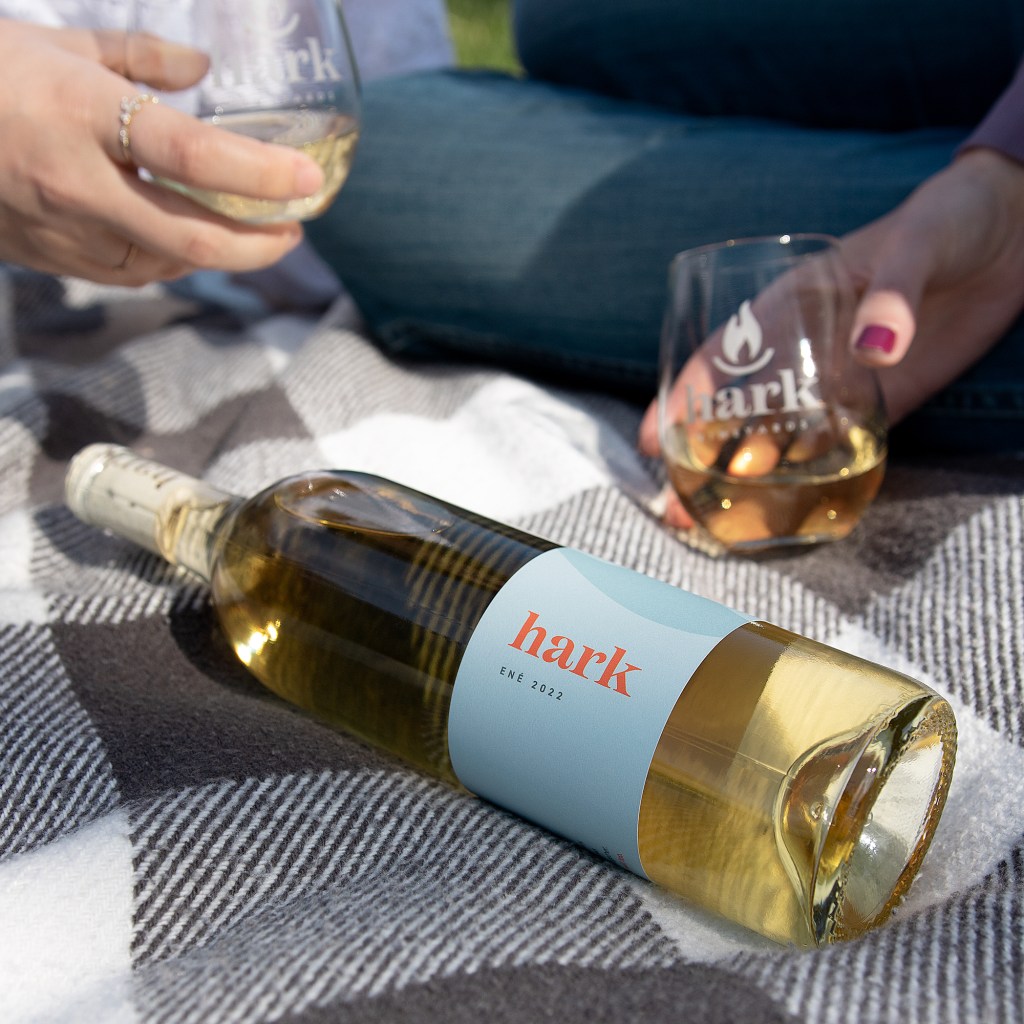
Regardless of the reason, Hark decided to craft a non-alcoholic wine that appeals to those folks. It allows us to offer a glass that looks like wine, tastes like wine, but contains no alcohol. We’re proud to be the first, and thus far only, non-alcoholic wine in the state.

There are a couple of options to remove alcohol; vacuum distillation, centrifugal, and reverse osmosis. In Virginia, the only one available to us is reverse osmosis.

Our “Ené” is a neutral oak barrel fermented vidal blanc that went all the way through fermentation (but no ML) then aged in neutral oak for 6 months. At that point the tech worked with us for 2 days, using a membrane in the machine to remove the alcohol.”

This trend isn’t limited to wine, as mocktails are also finding their way to local wineries. Owner Stephanie Pence of Brix and Columns Vineyards started serving a pair of mocktails this past May and soon found they were a hit.

“Customers love them! They are great for guests that are under 21, designated drivers, those with health issues and just non-alcohol drinking visitors. 

We serve two mocktails. One is a Strawberry-Guava Mojito, made with Simple Mixology strawberry guava cocktail juice and Fever Tree sparkling grapefruit garnished with mint. The other is a Moscow Mule made with lime simple syrup and Fever Tree Ginger beer. Those under 21 can drink with the grown-ups and not feel left out.”

For those who aren’t quite ready to completely give-up alcohol, winemaker Scott Spelbring of Bluemont Vineyard has an option for you.

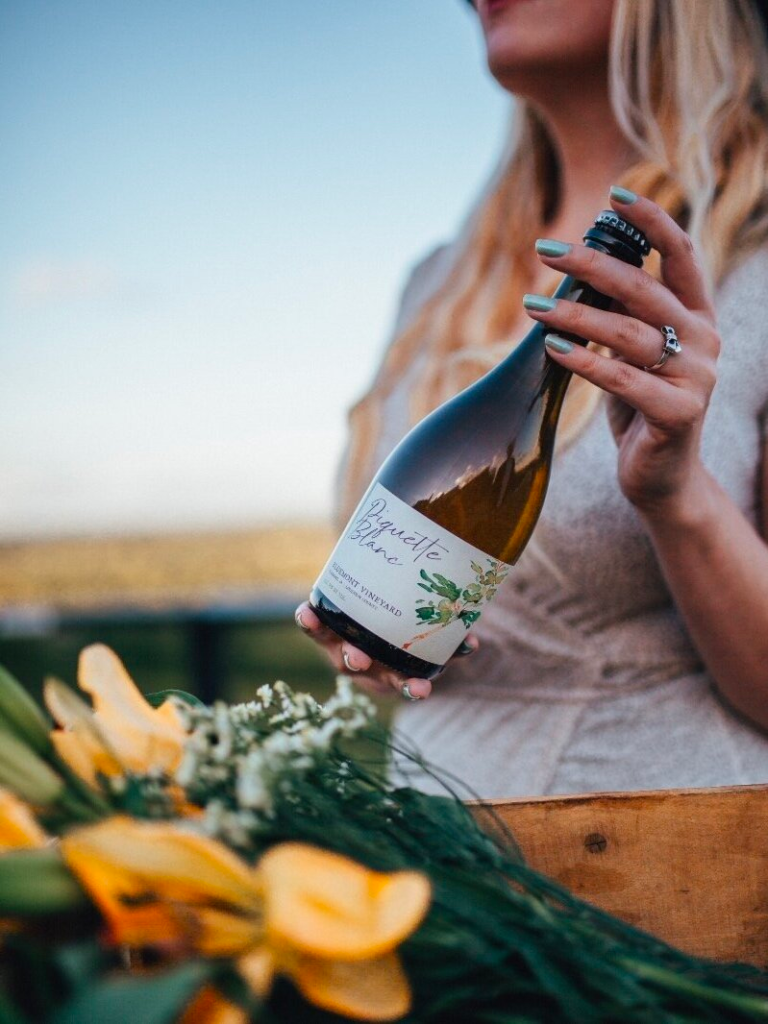
“Piquette is an easy drinking, lower alcohol wine fermented using grape skins or pomace that has already been pressed. In the case of our Piquette Blanc we added water to our whole cluster pressed Albariño pomace, fermented the remaining sugars and bottled them with just a splash of Albariño and Viognier wine for additional flavor.

It’s unfiltered with a touch of sweetness and a light effervescence to round out the finished wine, making it a fun springtime sipper. I get tropical notes; banana, lychee, and pear with a slight creamy or custard finish. A year of aging this natural-style wine has made the sweetness taper off into an off-dry white wine with a touch of fruit on the finish. Fun, simple and non-serious.”

So far only a handful of Virginia wineries have experimented with low or no-alcoholic wine. As the market changes, more of these beverages will (hopefully) become available. For additional options, try Revalation Vineyards’s “Verjus”, or Castle Glen Winery’s mocktails.

Jump Mountain Vineyard and the 2023 Shenandoah Wine Cup

I often tell people it’s a good bet that wineries located off the beaten trail will have high-caliber wine, as that’s the only way such locations can stay in business. Jump Mountain Vineyard proves that adage is true. It’s fair to say this extends to the Shenandoah Valley as a whole, although even by their high standards Jump is a hidden gem.

So when I learned that Jump Mountain won the 2023 Shenandoah Cup Wine Competition with its 2019 “Borderlands” tannat-heavy red blend, I wasn’t the least bit surprised.

But I’m jumping ahead in my story, so I’ll start at the beginning.

The farm that is now Jump Mountain was purchased by Mary Hughes and David Vermillion in 2006 for the purpose of growing grapes. When asked what gave her the crazy idea of starting a vineyard, Mary began the story with by explaining, “It’s a cautionary tale…”.

Of course, she was half joking; but only half. Both Mary and David harbored a secret desire to plant a vineyard, and when they fessed up to one another, making the dream come true was the next logical step.

It helped that Virginia was pushing potential buyers to plant vineyards for the then-new-ish Virginia wine scene, which in the mid-2010s was suffering from a lack of good fruit. That Dave was already friends with Gabrielle Rausse, a treasure-trove of Virginia wine knowledge, must have helped as well.

Their decision to plant in the Shenandoah Valley was driven by a combination cheaper land and the valley’s excellent growing conditions. In fact, those conditions were even better than they realized.

When Jump was deciding what vines to plant, ‘experts’ at the time recommended they focus on hybrid grapes, on the assumption their location was too cold for vinifera to survive. Jump proved them wrong. The mountain namesake for their farm can be seen not far in the distance.

With a 1,300 foot slope that leads down to a creek (excellent for leading cold air away from the vines), Jump’s vineyard now consists of 3 acres of vinifera. Around half is Cabernet Sauvignon, with another acre of Grüner Veltliner, a quarter acre of Tannat, and quarter acre of ‘everything else’ (Italian grapes Refosco, Lagrein and Sagrantino, primarily from the mountainous north).

Matthieu Finot is their consultant, but the owners are the winemakers. At 700 cases/year in a good year, Jump’s production is very tiny. Fortunately, their wine is also sold in some stores in Charlottesville.

I visited Jump years ago and loved the wines, but their location in Rockbridge Baths (about 40 minutes southwest of Staunton) makes them one of the more remote vineyards in Virginia. Fortunately, they were open on a Friday for some visitors, and they let me crash the party for a tasting and interview.

I was able to try their entire line-up, including their new sparkling. The price points were great as well, ranging from $17 for the excellent Grüner, low to mid $20s for the reds, with the highest being $30 for their traditional method sparkling.

I was particularly surprised to see a Virginia Cab Sauv at $23. This grape often struggles in Virginia, but it seems to like Jump’s location. Anywhere else it would be a good bit more $$ but even within the low-priced Shenandoah Valley it was still a steal.

  • 2018 Grüner: Cold hardy, lots of citrus fruit, ‘adult lemonade’
  • 2020 Grüner: Much ‘fuller’ than the 2018. Made in neutral oak and with more lees. I preferred this one over the 2018 (not that I’d turn the 2018 down)
  • Sparkling Grüner: Made in the Traditional method; apple-citrus notes
  • Syrah Rosé: Made with fruit from a nearby vineyard. Syrah is hard to get ripe in Virginia so Jump uses it to make a rosé instead
  • 2021 Livia: 60% Refosco, 20% Cab Franc, 15% Lagrein, and 5% Sagrantino: Named after Caesar’s 2nd wife, who extolled on the virtues of wine drinking as a method of longevity. Interesting combo of pepper & fruit, plus low tannins
  • 2019 Cabernet Sauvignon: Tannins were there but softer as Cabs go
  • 2020 Borderland: Tannat & Cab Sav heavy red blend; big and bold mouthfeel. The name ‘Borderlands’ is a reference how Tannat’s home is the Pyrenees Mountains. The 2019 vintage won the Shenandoah Cup.

Not tried on this trip, but the winner of the 2023 Shenandoah Wine Cup was the 2019 Borderlands, a blend of 50% Tannat, 25% Cab Sauv, and 25% Cab Franc. The 3rd place was the 2021 Livia.

The Sparkling Wines of the Shenandoah Valley

Many Virginia wineries offer a sparkling wine, but no other local wine region has embraced bubbly with the same vigor as the Shenandoah Valley. Around half of the valley’s wineries make a sparkling wine, with options ranging from “pét-nats” for casual drinking to more sophisticated bottles made using the méthode champenoise, the same process used in Champagne.

Not only is the Shenandoah Valley especially suitable for the production of sparkling wine, sparkling is one of the fastest-growing segments of the wine market. Between 2019 and 2022, the number of Americans enjoying sparkling wine has risen by 30%.

This growth is largely driven by changing views of when bubbly should be consumed. Sparkling is moving away from its traditional role as a ‘special event’ wine to something wine lovers should casually enjoy.

The Influence of “Terroir”

While the words “champagne” and “sparkling wine” are often used interchangeably, for over a century France has worked hard to ensure the term ‘champagne’ is legally protected. Only sparkling wine grown and made in the region of Champagne is allowed to carry that label.

France is understandably protective of this term, as Champagne’s unique terroir creates the conditions which makes its wine the pinnacle of what sparkling wine should be.

This has much to do with location, location, location! Champagne is one of Europe’s northernmost wine regions. Vineyards located at Champagne’s latitude usually struggle to get their fruit to full ripeness. Yet here this proves to be an advantage, as the high acidity present in unripe grapes is perfect for sparkling wine.

Champagne is also famous for its chalky-limestone soil, which provides good drainage. Vines with limited access to water struggle, forcing them to focus their limited energy on creating high-quality fruit.

Its soil grants another advantage. Chalk both reflects heat during the day and stores it during the night, allowing vines to stay within a temperature range that is conducive to ripen its fruit evenly.

It so happens the Shenandoah Valley emulates many of the qualities that make Champagne a premium location for sparkling wine.

Shenandoah Valley wines are likewise famous for their acidity. While Champagne’s grapes maintain their acidity due to its northern latitude, wines made in the Shenandoah Valley maintain their acid profile by virtue of the cooler temperatures found at higher elevation vineyards.

The valley’s soil also emulates Champagne’s porous limestone, as both areas were ancient sea beds. While it doesn’t have the chalk Champagne is famous for, the Shenandoah Valley’s higher elevation allows for greater diurnal temperature shifts. This means the valley has both warm days and cool nights, allowing its fruit to ripen without losing their acidity.

Perhaps the Shenandoah Valley’s greatest advantage is its lack of rainfall. The Allegheny Mountains to the west and Blue Ridge to the east create a ‘rain shadow’ over the valley between them. Most local vineyards only receive around 35-37 inches of rain a year, while northern Virginia and Charlottesville receive 42-47 inches.

Shenandoah Wineries Growing Their Sparkling Brands

Lee Hartman of Bluestone Vineyard insists the Shenandoah Valley is a great place to make wine of any type, but he’s especially proud of his sparkling program.

“We have a really good spot for sparkling. Our hill tops out at 1,400 feet, so there’s cooler air, super well drained soil, and lots of limestone. If we get 3 inches of rain, much of it washes away.

We partnered with Veritas Winery for the first two years we made sparkling, but now we’ve brought it all under our roof and doing it by hand.

During disgorging, it’s very satisfying hearing this loud cannon of wine spit out an ice cube of yeast. Given all the work you’re not really saving money, but my team and I are giant nerds, and we like having our hands in the process.

At the end of the process you get to list “Grown and Bottled” on the back of the label. It’s time consuming, but there’s something really fun in saying we did all of this.”

Sparklings that hail from the Shenandoah Valley also boast an impressive amount of diversity, both in how they’re made and the fruit being used.

Most bubbly currently made in the valley is produced using the méthode champenoise (aka traditional method), which is both the hardest and most prestigious way to make sparkling. This process requires two separate fermentations; an initial one to fashion the base wine, and a second inside the bottle to create the bubbles sparkling is famous for.

A handful of wineries also make wine using the ‘Charmat’ method, a more cost-effective process which follows the basic principles of the méthode champenoise but does the second fermentation in a steel tank and at a larger scale. A few even use the original minimal-intervention “méthode ancestrale” way, more commonly known as “pét-nats”.

Robert Muse explained his rationale why Muse Vineyards selected the most expensive method, writing back, “I prefer the traditional method as it produces a deep, rounder taste and mouthfeel. The word ‘biscuity’ is used to describe some champagne-like wines. I’ve never experienced this pleasant attribute in other sparklings.”

Two of the most popular grapes for Champagne, chardonnay and pinot noir, are likewise the grapes most widely used for sparkling in the Shenandoah Valley.

Rockbridge Vineyard & Brewery partnered with Veritas to make their new Blanc de Noir, while the 2019 Blanc de Noir from CrossKeys Vineyard took “Best of Show” at the 2022 Atlantic Seaboard Wine Association competition. Barren Ridge, Bluestone, Cave Ridge, Midland, Muse, and Ox Eye Vineyard all make Blanc de Blancs.

As the Shenandoah Valley is home to over 630 acres of vines, an abundance of other grapes are also available.

Those looking for something different should try the cayuga sparkling from Briedé Family Farm, the riesling from Cave Ridge, or the grüner veltliner coming soon from Jump Mountain Vineyard.

A number of other wineries including Brix & Columns and Wolf Gap also make Charmat-style sparklings using chambourcin or cabernet franc. Regardless of your choice of bubby, don’t wait to drink it on New Year’s Eve. Sparkling can be enjoyed at any time!

Reaching for the Sky: Virginia’s High Altitude Vineyards

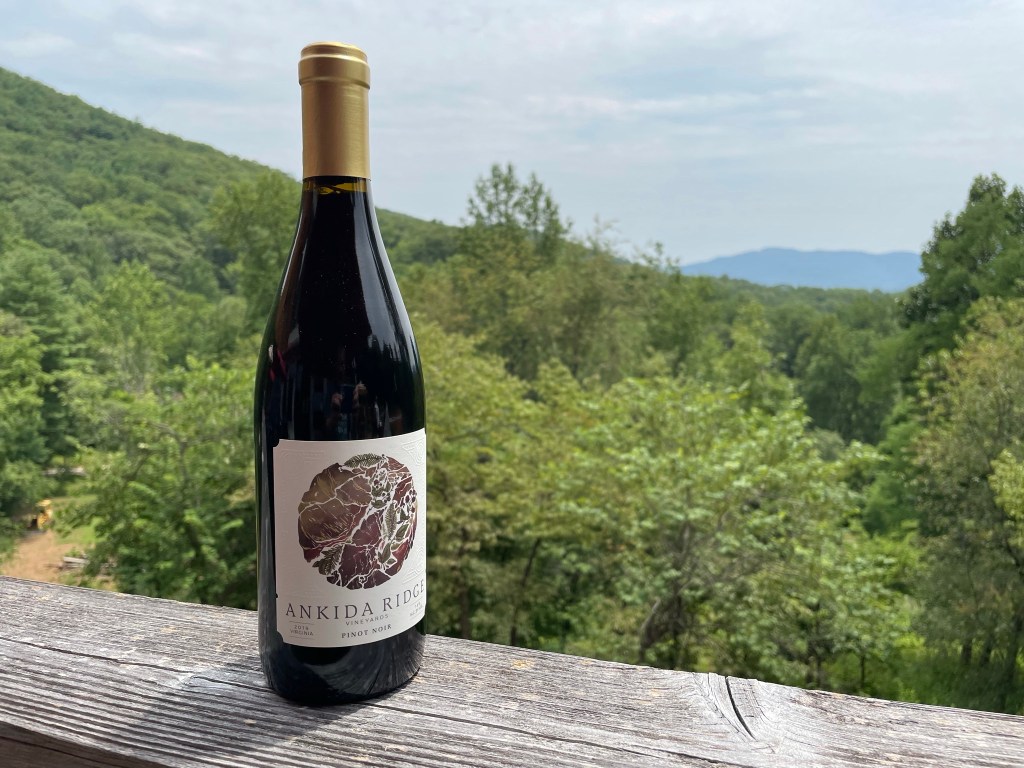
Standing on the deck of her tasting room, Ankida Ridge Farm & Vineyards owner Christine Vrooman gestured at the scenery before her. “We have a little valley here and a little valley there, and cold air moves down them to the bottom of the mountain. We’ve never been touched by spring frost, and our disease pressure is low since we never get morning dew. I could have called it Utopia Ridge.”

The benefits Christine described are the main reasons winemakers around the world prize mountaintop sites. While farming high, steep slopes is difficult, the grapes’ access to cool temperatures and direct sunlight gives them the ability to produce complex, high-quality wine.

Ankida is one of Virginia’s first high mountain vineyards, but it’s not alone. While there’s no specific definition of what constitutes ‘high altitude’, a handful of Virginia wineries including 12 Ridges Vineyard (highest elevation 3,300 feet), Rock Roadhouse (3,000 feet), Ankida Ridge (1,800 feet), Fox Meadow (1,800 feet), Stone Mountain (1,750 feet) and Hazy Mountain’s Little North Mountain Vineyard in Swoope (1,700 feet) easily qualify for this prestigious club.

The Advantages (and Tradeoffs) of High Altitude

Christine’s description of how frosty air bypasses her vineyard isn’t an exaggeration. The phenomenon that allows mountaintop vineyards to avoid frost is called a ‘thermal belt,’ and is one of the most important advantages of growing at higher altitudes.

Cold air is dense, and like water, flows to the lowest point available. The influx of cold air displaces lighter warm air, which rises. This results in a narrow zone where the temperature is warmer than the air above and below it.

As Ankida is 1,000 feet higher than the bottom of the valley the morning cold air passes through the vineyard, but like an unwanted guest is shown the way out. This lets the vines stay within a consistent temperature range, one that is conducive for growing grapes.

“Mornings start off warmer than the town below, but in the afternoon, the vineyard is typically 5-15 degrees cooler than the surrounding lower regions. Even in a hot summer, the temperature almost never hits 90 degrees,” Christine explained.

Higher altitude vineyards have several other advantages. Grapes grown in such locations are subjected to stronger UV rays, resulting in thicker skins that provide more intense color and bolder tannins.

Strong winds also mean mountaintop vineyards have less disease pressure, as good airflow keeps the canopy free from moisture.

But as with nearly everything, there’s a tradeoff.

As the second highest elevation vineyard on the East Coast, 12 Ridges is an especially cool climate site. During a tour of their vineyard adjacent to the Blue Ridge Parkway, winegrower Josh Seaman discussed how bud break doesn’t even start until late April. While this puts them past much of the ‘danger zone’ of a spring frost, being 3-4 weeks behind the rest of the state elevates their risk to hurricane season.

Cool weather sites must also juggle the tradeoff between ripeness and acidity. Heat ripens grapes on the vine but simultaneously causes their acidity to drop. This means 12 Ridges’ fruit struggles to ripen even into September. Windy conditions also make fruit set more difficult.

Virginia Wines That Showcase High Altitude Terroir

The cool yet consistent temperature range found at higher altitudes also allows for different options in the vineyard. It’s not a coincidence several of these wineries are the state’s biggest producers of pinot noir, a wine so notoriously difficult its nickname is “the heartbreak grape.”

“One of the things that drew me to pinot is it has a shorter growing season, so it’s ideal for up here in the mountains,” said Stone Mountain owner Deanne Gephart. “Now that we have pinot we finish earlier. No matter the bear pressure or what crazy weather happens, our grapes are off the vine.”

While ripening fruit in cooler temperatures can be challenging, the opportunity to create wines with high acidity is too good of an opportunity for most winemakers to pass up. Acidity makes wines crisp, food friendly, and ageable, and is increasingly difficult to attain in an era of global warming.

Acidity is also one of the key components for sparkling wine. Not coincidentally, many high altitude wineries focus on chardonnay and pinot noir, Champagne’s most famous grapes. Ankida already makes both a Blanc de Blancs and Blanc de Noirs, and 12 Ridges plans on making sparkling wine in the future.

Virginia has a long roster of high altitude wines, so no one list can do it justice. Nevertheless, here are a few favorites:

  • 12 Ridges 2021 Chardonnay: With high acidity and surprising weight, this wine has light apple notes reminiscent of a golden delicious. Its crispness and minerality makes it more Chablis than Burgundy in style. This is possibly the best chardonnay I’ve had all year.
  • Ankida Ridge 2022 “Verday”: How does one pick a favorite at Ankida? You don’t; but this wine earns points for being the most ‘fun’ wine of their lineup. Their “Verday” is a light, refreshing, pinot-based wine with the same zestiest of a Vinho Verde.
  • Fox Meadow 2022 Pinot Grigio: Comparing this to the stellar 2021 Pinot Grigo (best in class at the Atlantic Seaboard Wine Association Competition) is a tough challenge, but this vintage may prove its equal. Notes of honeydew and grapefruit makes this an easy-drinking sipper.
  • Hazy Mountain 2019 Pinot Noir: A great example of a grape rarely seen in Virginia. Aged with French oak (30% new), this pinot is more reminiscent of Old World pinots than those found on the West Coast. Bright fruit (especially cherry), with a firm tannin structure.
  • Stone Mountain 2020 Stainless Steel Chardonnay: While I’ll have to wait for Stone Mountain’s pinot (2023 is their first harvest!) this crisp, balanced chardonnay with notes of citrus will tide me over.

Meet the Chefs Elevating Food in Virginia Wine Country

Click here for my latest article for the Old Town Crier – Meet the Chefs Elevating Food in Virginia Wine Country.

It’s easy to find light fare at a Virginia winery. It’s far more difficult to find places that elevate the food to be on par with the wine. Victoria Cosner, Executive Chef of Pippin Hill Farm & Vineyard’s Executive Chef said it best – “If they don’t have food, it’s hard for me to justify going there on my one day off. I want to expect good food.”

Be sure to check out one of the dishes from Jeff Judge of EagleTree Farm & Vineyard, Victoria Cosner of Pippin Hill Farm, and Tim Moore of Early Mountain Vineyards.