Virginia’s capital isn’t famous as a wine region – but it should be. Richmond is deeply connected to Virginia wine, from the industry’s earliest days to the vineyards and cideries that surround the city today.
It was in Richmond that Norton, Virginia’s first rockstar grape, was “born”. According to the book The Wild Vine, Dr. Daniel Norton was an amateur horticulturalist who experimented with crossing different breeds of grapes. In 1821 he discovered a new variety in his nursery, eventually bequeathing it his name.
The Norton grape was a mainstay of the American wine industry during the later half of the 19th century, only to largely disappear upon the advent of prohibition. It’s now making something of a comeback as winegrowers find new appreciation for Norton’s weather-hardiness, especially as climate change takes hold.
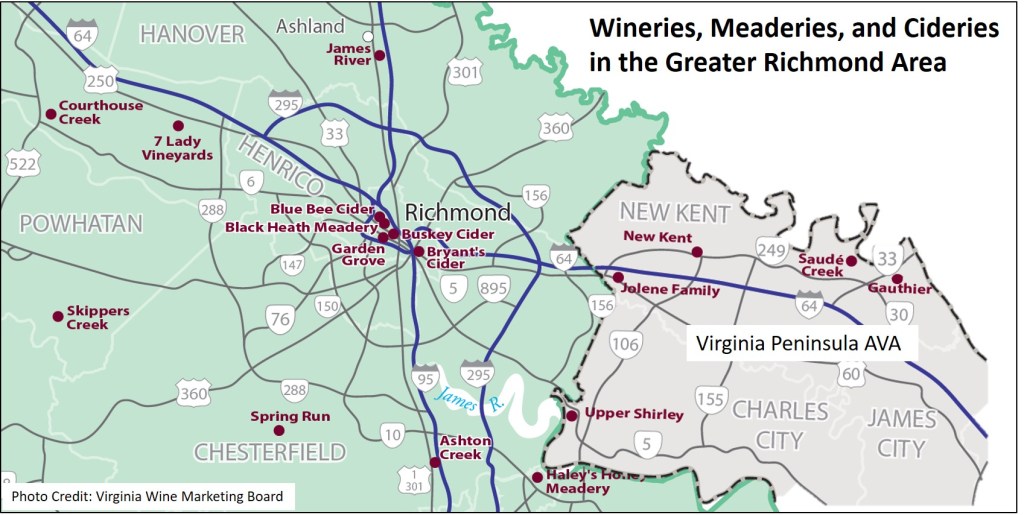
Today, Richmond is surrounded by wine trails on all sides. North of the city is the “Heart of Virginia” wine trail, encompassing a half-dozen locations. To the city’s east is the “Virginia Peninsula” wine trail, and westward lies the Richmond West Trail, which includes wine, cider, beer, and spirits. Further out is the Central Virginia Fermentation Farm Trail, which stretches from Richmond to almost Charlottesville.
Richmond is also home to a growing craft beverage scene. 30+ award-winning breweries and cideries dot its neighborhoods, as well as both an urban winery and meadery.
Understanding RVA Wineries
Unlike the Shenandoah Valley or the nearby Northern Neck peninsula, most Richmond-adjacent wineries aren’t part of a specific wine growing region.
The major exception to this is the Virginia Peninsula American Viticultural Area (AVA), which was established in 2021. AVAs are federally recognized for their distinct growing conditions, allowing wine grown inside their boundaries to be associated with a “sense of place”. The Virginia Peninsula AVA is located just east of the city, stretching 50-miles down to Hampton Roads.
This area is characterized by its subtropical climate, moderate weather, and soil types ranging from sandstone, gravel, and sandy-clay. Many grape varieties are grown here, but local winemakers report it’s particularly suitable for warm-weather varieties, such as Albariño.
While many of these growing conditions apply to other nearby vineyards, the area around Richmond is too diverse to be placed in a single geological or stylistic basket. If anything, for the dozen wineries within a roughly 30-minute drive of the city, diversity is their hallmark.
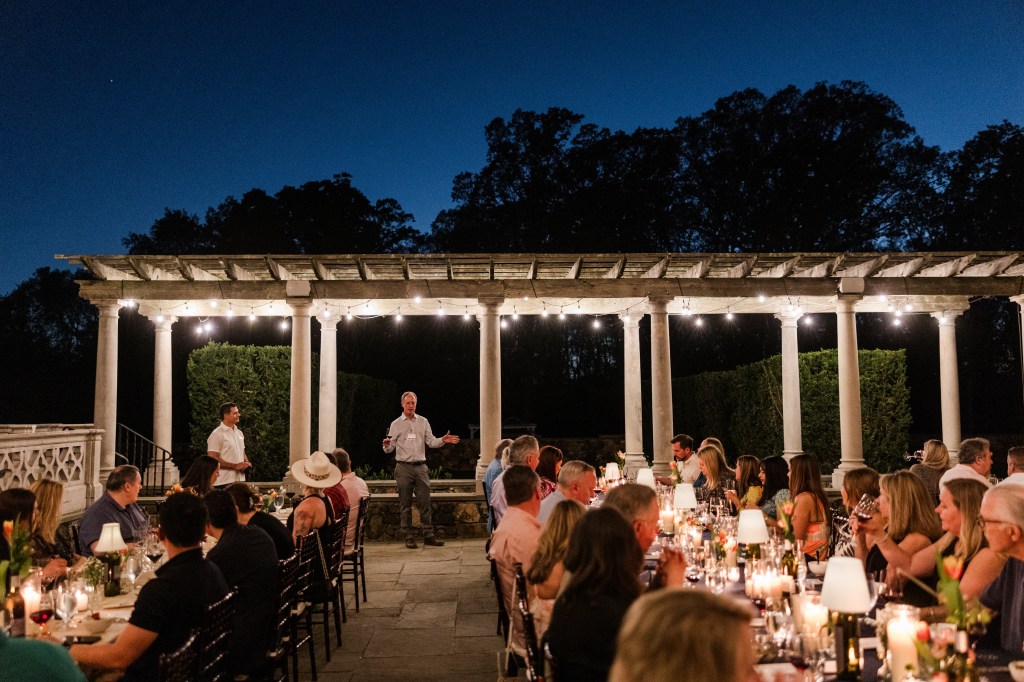
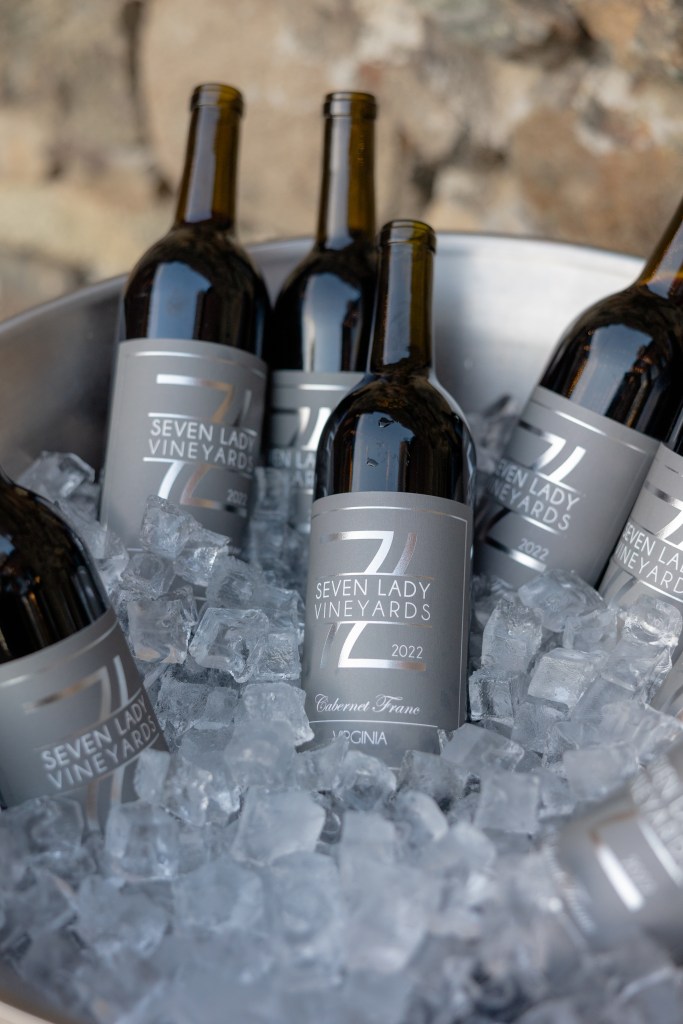
7 Lady Vineyards at Dover HallBen Jordan at Dover Hall
Some locations such as Skipper’s Creek are quaint venues where your server is likely to be the owner/winemaker, while others including Jolene Family offer lake-side picnicking. Saudé Creek’s tasting room may evoke images of an old colonial inn, while Resolution is an urban winery and one of a handful of Black-owned wineries in the state.
A Combined Food & Wine Experience
If there’s one aspect of Richmond’s wine scene that sets it apart from Virginia’s other regions, it’s their focus on providing an all-inclusive experience. A number of local wineries have full-service kitchens, providing fare that go beyond the normal charcuterie plates or food trucks usually found elsewhere.
With that in mind, here are several must-visit wineries to fully experience what Richmond-adjacent wineries have to offer:
Dover Hall is the home of 7 Lady Vineyards, one of Virginia’s newest wineries. Founders Chad Hornik & Jeff Ottaviano teamed up with winemakers Ben & Tim Jordan of Commonwealth Crush to provide an assortment of Virginia-grown wines as well as varietally-correct styles from around the world.
7 Lady is offering pop-up tastings and wine dinners at Dover Hall while the tasting room is being built. But the wine club is up & running and they are already booking weddings, rehearsal dinners, and corporate events.
According to winemaker Alan Thibault,opening a kitchen has as much to do with practicality as it does with providing complimentary food and wine pairings. “There’s not many local restaurants in our area, so we wanted to provide options so people have everything they want right here. We keep it as farm-to-table as we can.”
Ashton Creek’s food focuses on handheld dishes and shareables. Alan’s favorite food combination is his 2022 Gravity red blend (67% Noiret, 22% Merlot, and 11% Tannat) with lamb lollipops, using a wine reduction sauce using his Chambourcin.
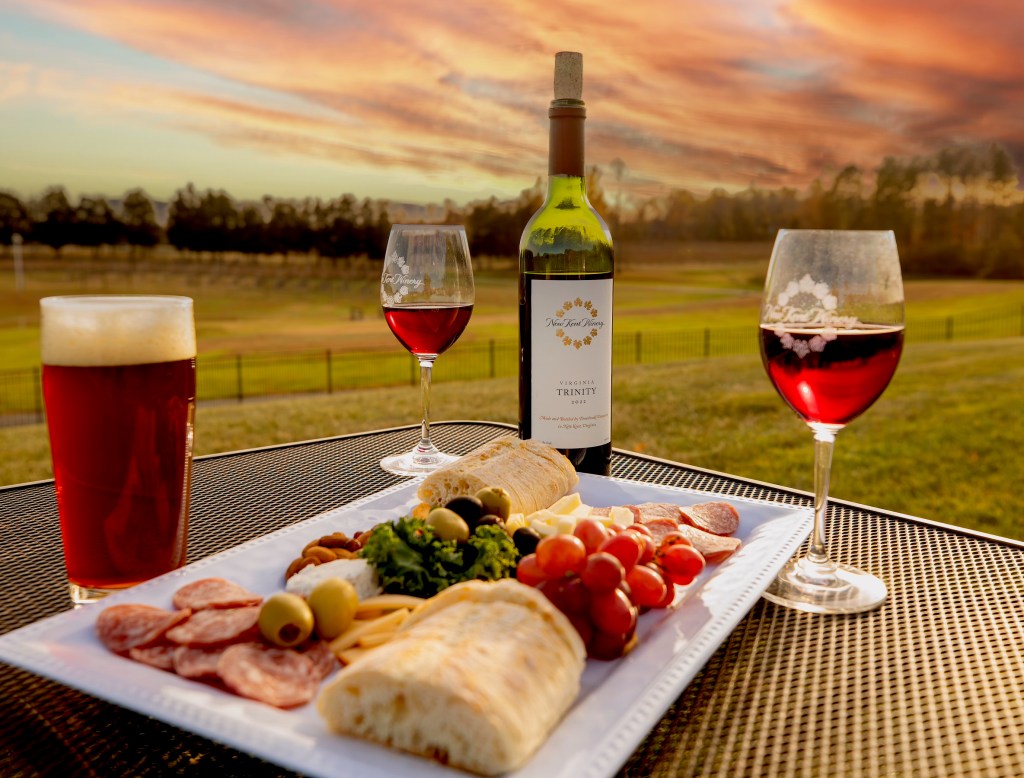
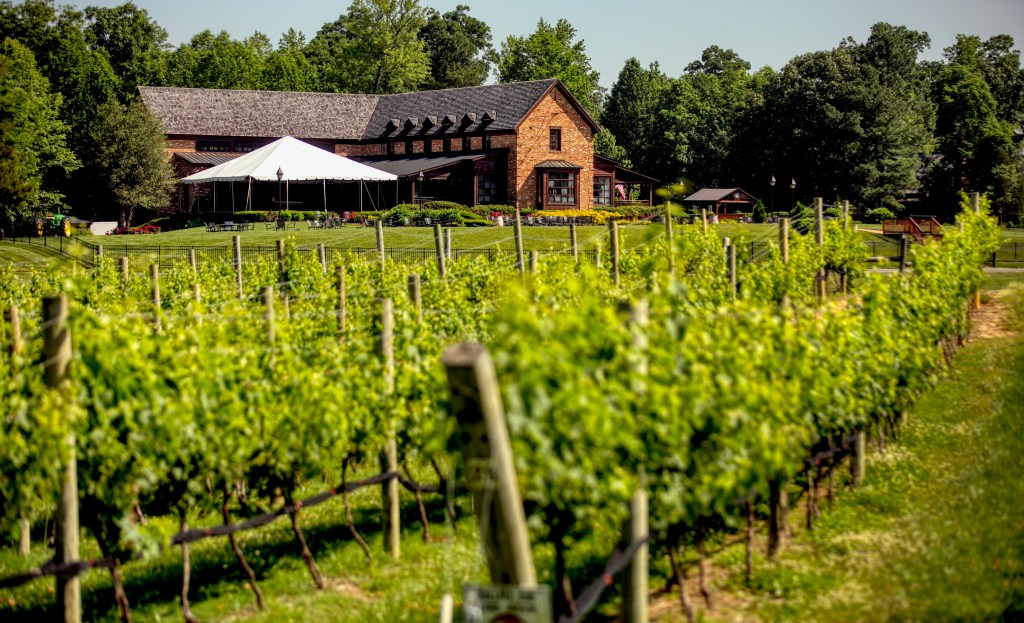
Located less than 30-minutes outside the city down I-64, New Kent is not only a farm winery with 38 acres under vine, but a brewery as well.
The tasting room uses pre-Civil War bricks and reclaimed old-heart pine to blend modern and historic aesthetics. Its trusses came from a 1901 railroad depot in Richmond, while the floors and timbers were reclaimed from a Connecticut warehouse that was built in 1852.
Try their BBQ pork sliders with an IPA, and have a taste of their flagship Reserve Chardonnay and Merlot, both of which earned Gold medals in the 2024 Virginia Wine Governor’s Cup.
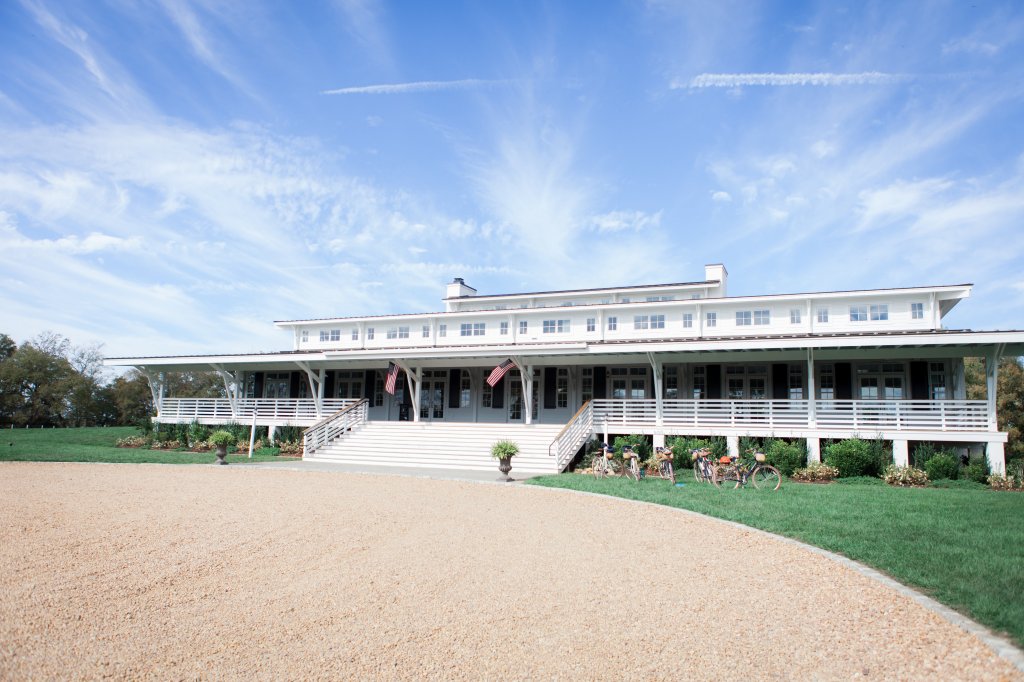
Upper Shirley is the brainchild of Suzy and Tayloe Dameron, who saw potential in an otherwise undeveloped stretch of land on the bank of the James River. They soon partnered with Michael Shaps, who’s won more wine awards than anyone in Virginia.
Their kitchen offers everything from brunch to pre-fix dinners, while in 2024 alone their wine won 3 Gold medals at the 2024 Virginia Wine Governor’s Cup. Check out the view from their porch while dining on a burger or crab cakes.
“Out of all the grapes, you must grow Nebbiolo. It’s beautiful, it’s the wine of kings”.
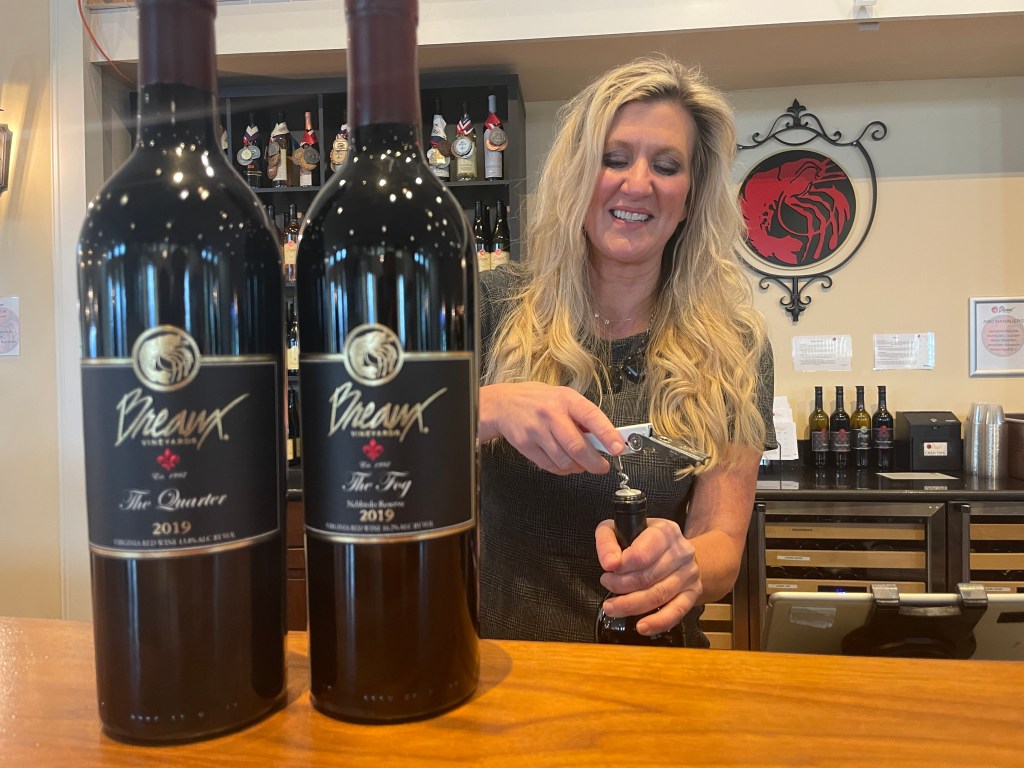
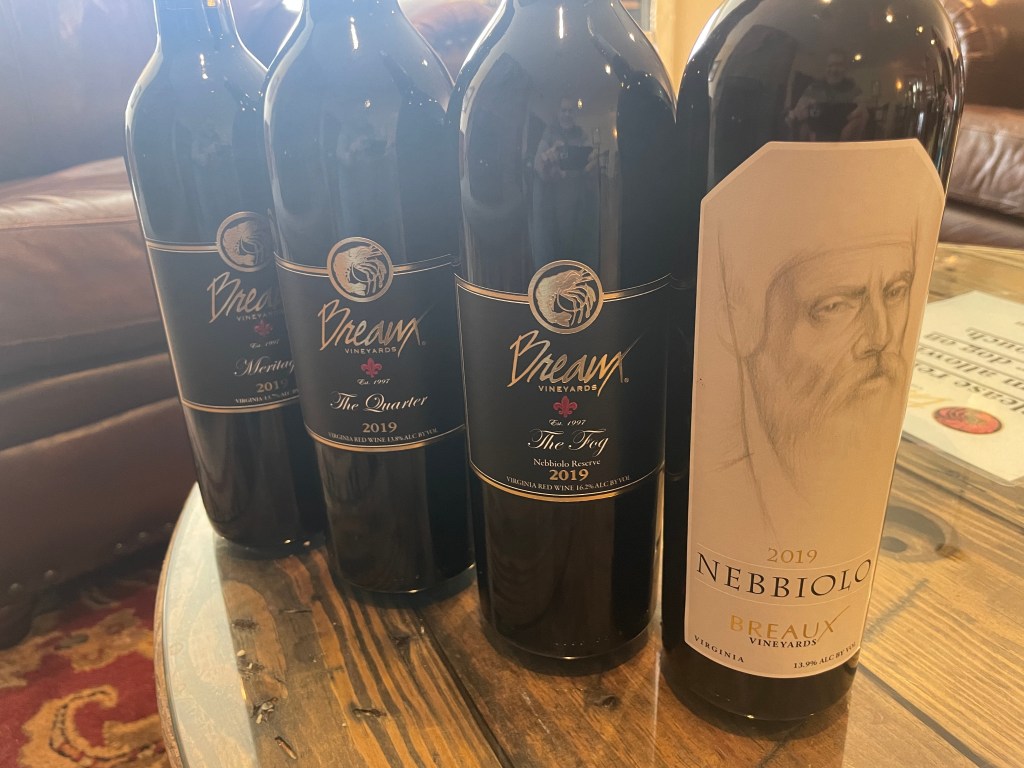
These words were spoken by an Italian winemaker (who’s identity is still unknown) to Paul Breaux during his 1996 research trip to Alba, Italy. This gentleman overheard Paul order a glass of wine with dinner and walked over to his table to insist he try Nebbiolo.
A long conversation ensued. Paul was so impressed by the wine and the man’s passion for it, he decided on the spot Breaux Vineyards needed this grape. It was a huge leap of faith for a variety that was then untested in Virginia.
This chance encounter had a profound impact on Breaux Vineyards. Jen Breaux went on to explain, “Nebbiolo has given us a name in Virginia wine. I truly believe that”.
I recount this story because not only does Nebbiolo evoke such passion, only winegrowers truly in love with this grape would be willing to deal with such a finicky, difficult to grow variety.
While the Italian Piedmont has the near-goldilocks conditions to produce the world’s finest Nebbiolos, it’s a far riskier proposition here in Virginia. Early budding, late ripening, and with inconsistent yields even when things go well, Nebbiolo flies in the face of any logical growing strategy. That’s likely why Virginia has only 39 acres of Nebbiolo planted, divided between about a dozen wineries.
Bill Gadino of Gadino Cellars gave one of my favorite answers. When deciding what red grape to plant, he approached Luca Paschina of Barboursville for advice. Luca told him, “If you’re going to pick one, go for the gold and grow Nebbiolo.”
Tasting & Scoring Methodology
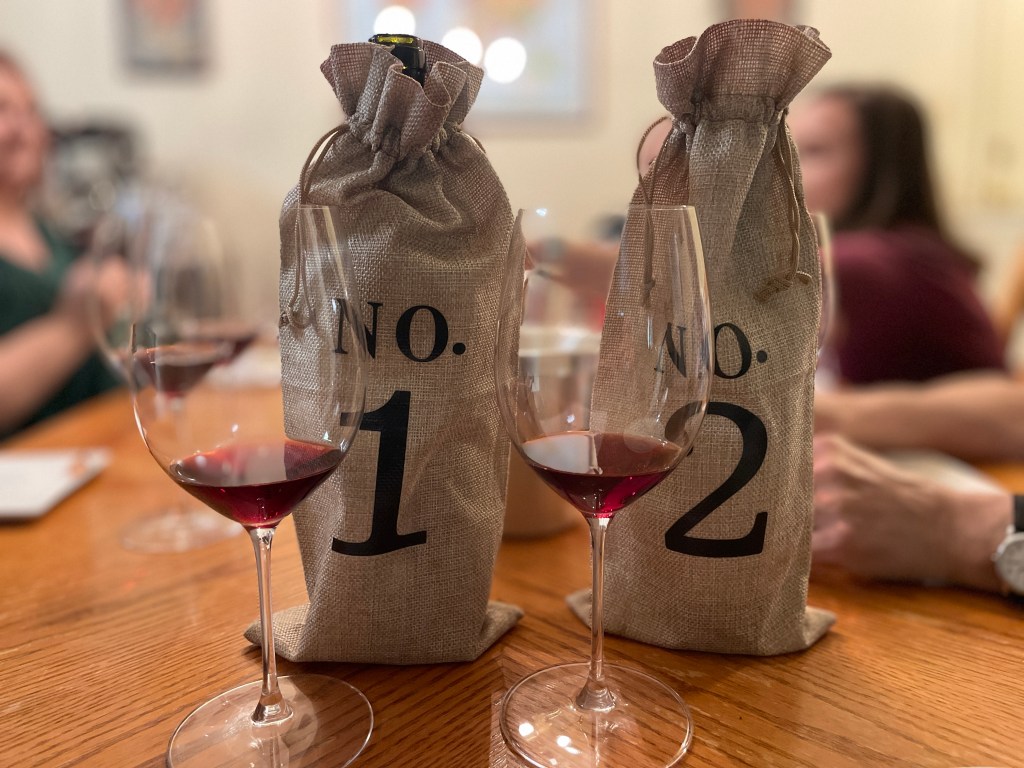
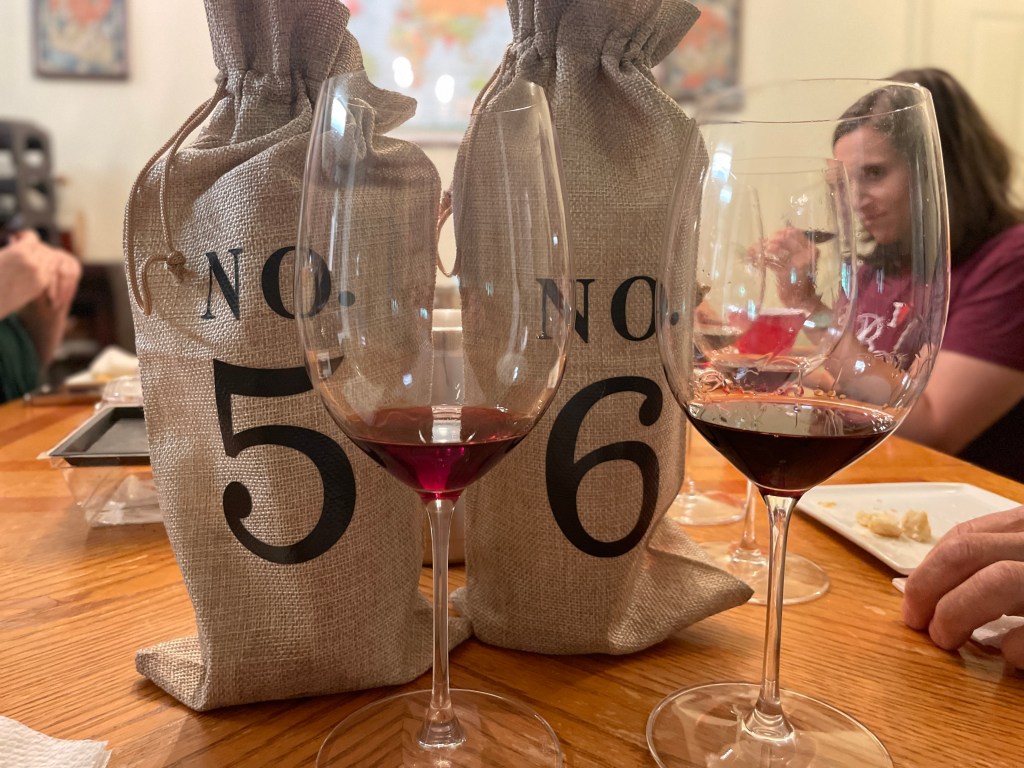
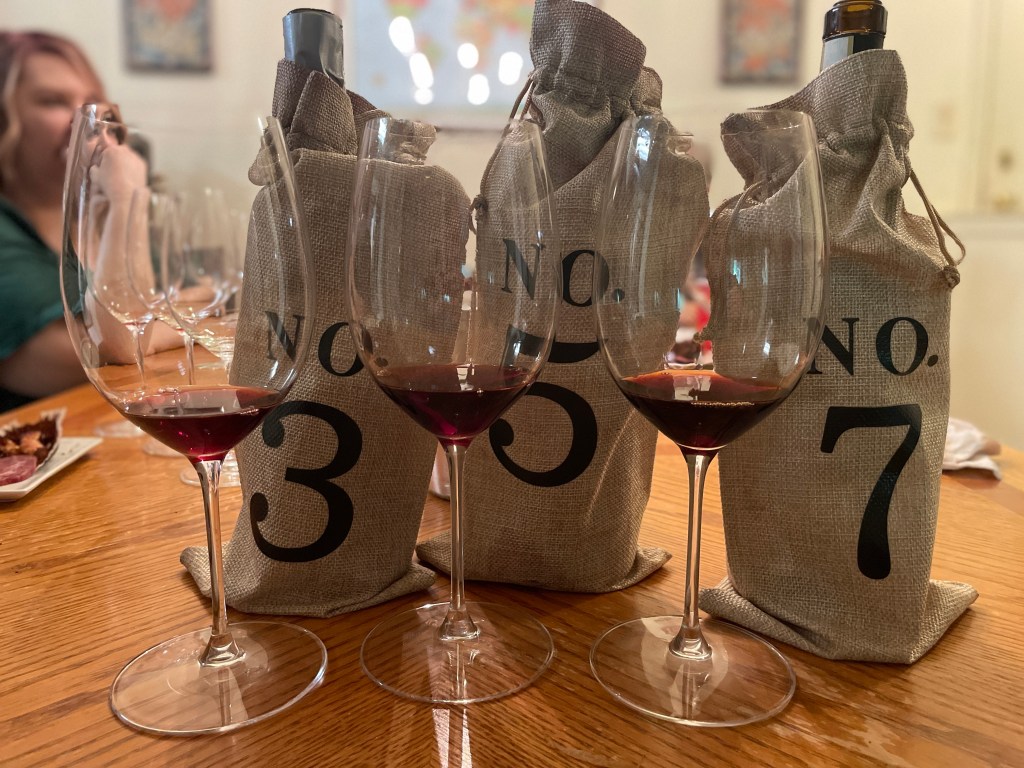
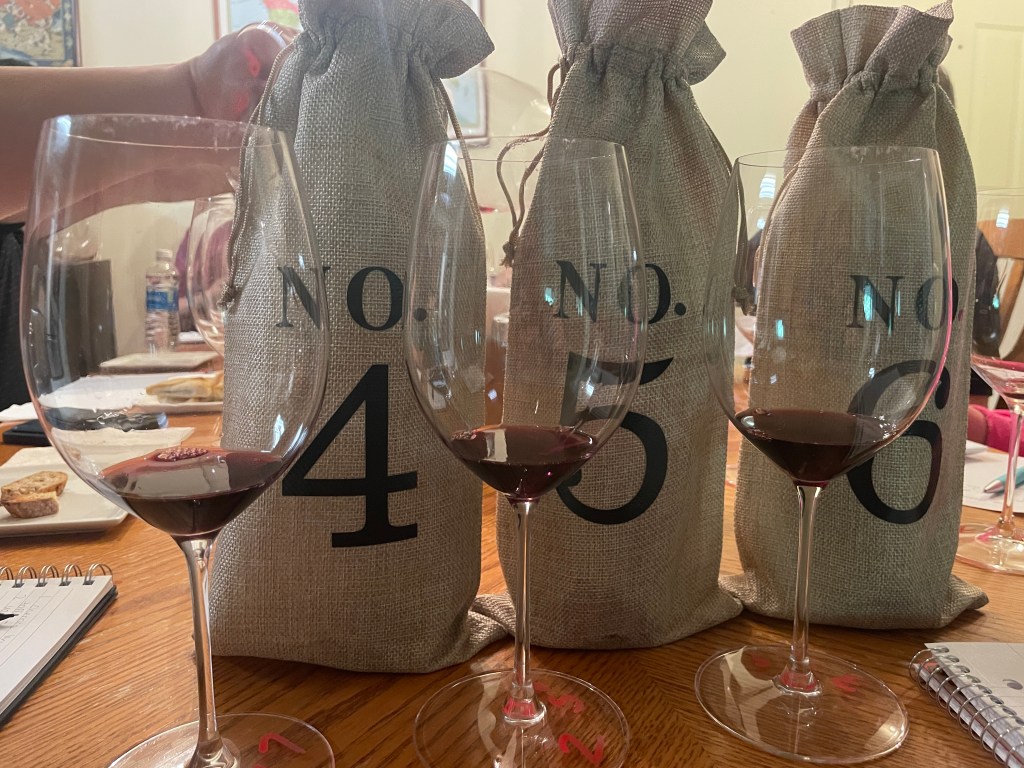
A group of friends & I blind tasted 8 wines in 4 comparison flights, youngest to oldest. All the flights were bagged blind.
3 of the 4 East Coast wines came from Virginia, and 1 was from Pennsylvania. The Italian wines included 1 Barbaresco and 3 Barolos, widely considered the best expressions of this grape. Except for a 2015 vs a 2017, all pairings were matched by vintage year.
The goal was to pick a ‘favorite’ in every flight, as opposed to rating them according to a sophisticated scoring system. After the 4 flights, we selected 3 bottles to go into a ‘finalist’ round. Our resident chef also prepared a meal that went with the wine.
It’s important to point out that ‘favorite’ was a very subjective term. It wasn’t a requirement we choose the most ‘varietally correct’ wine as a ‘favorite’. That said, my guests often used ‘varietally correct’ as part of their own criteria. To satisfy my curiosity, I also asked which wine they thought was from Italy.
The lack of Virginia producers greatly limited our options, especially when it came to finding older vintages. By contrast, you can pick up great Italian Nebbiolos anywhere.
No doubt this biased the outcome in favor of Italy. But hey – if you want to play in the big leagues, you come with the team you have!
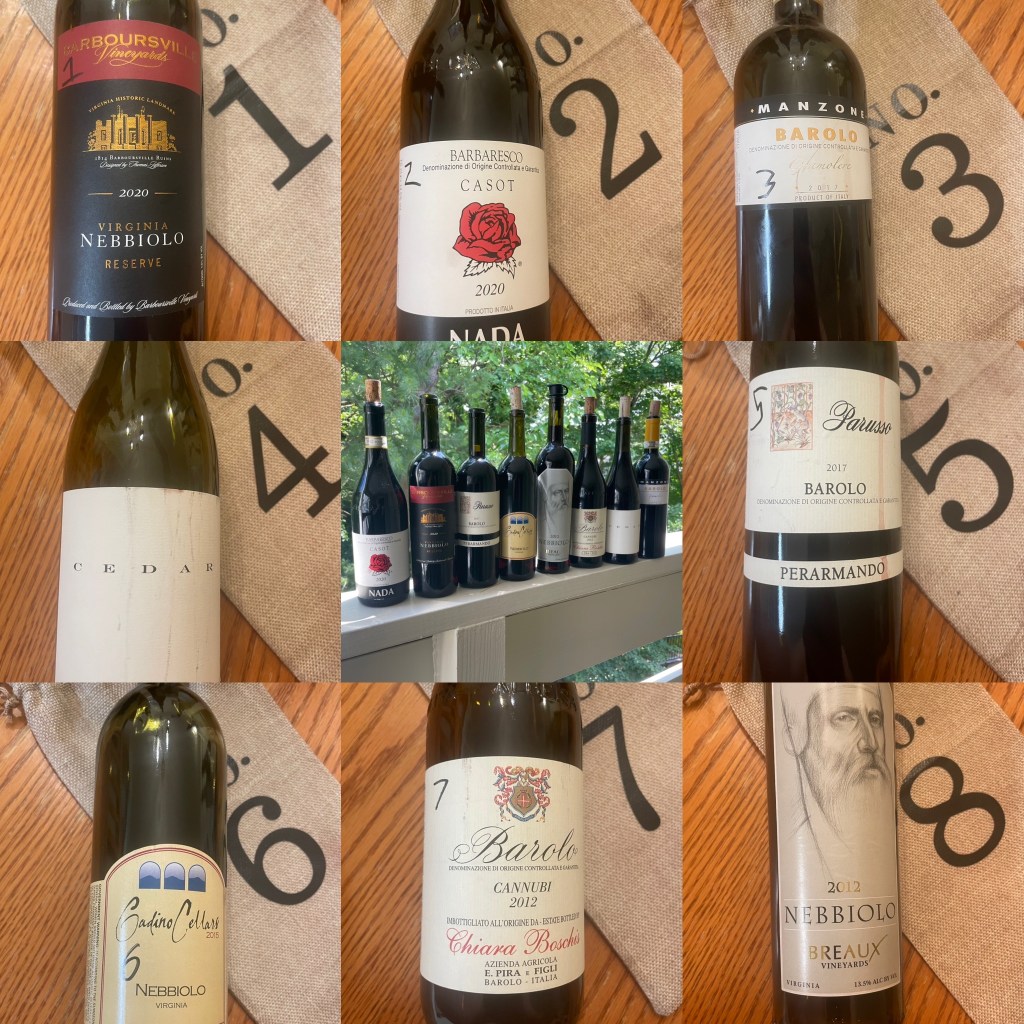
The contenders:
2020 Barboursville ($40 on website) vs 2020 Nada Giuseppe Barbaresco Casot ($49 Wine.com)
2017 Va La Vineyards ‘Cedar’ (~$50 for the current vintage?) vs 2017 Manzone Barolo Gramolere ($59 – $69.99 Wine.com)
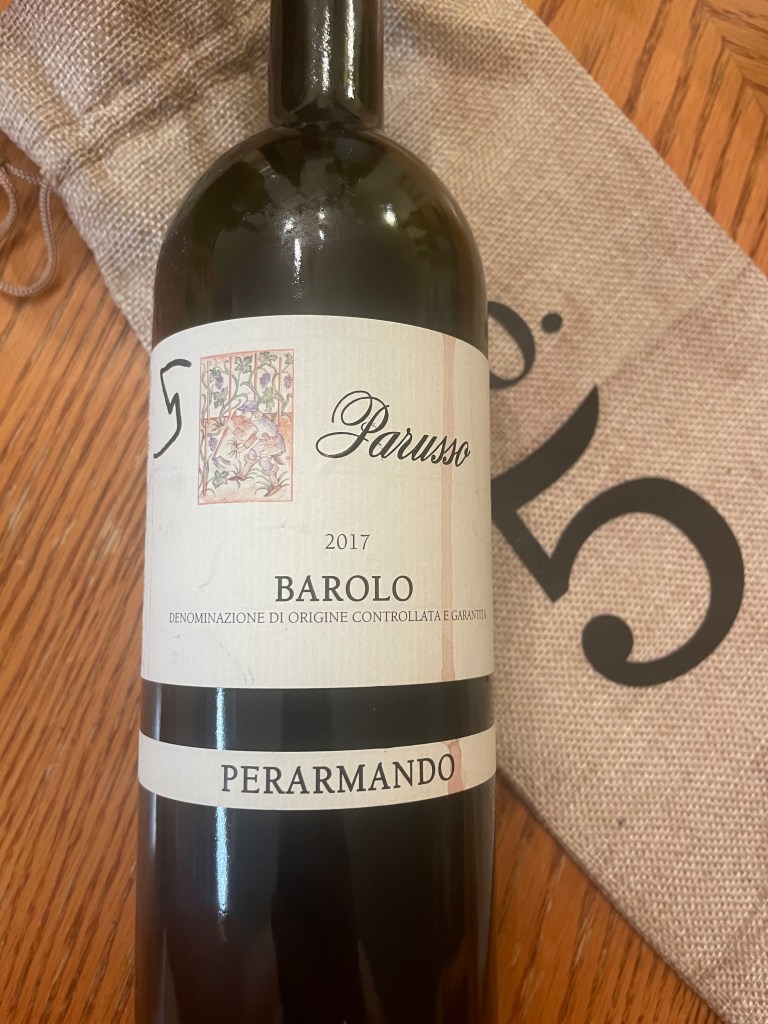
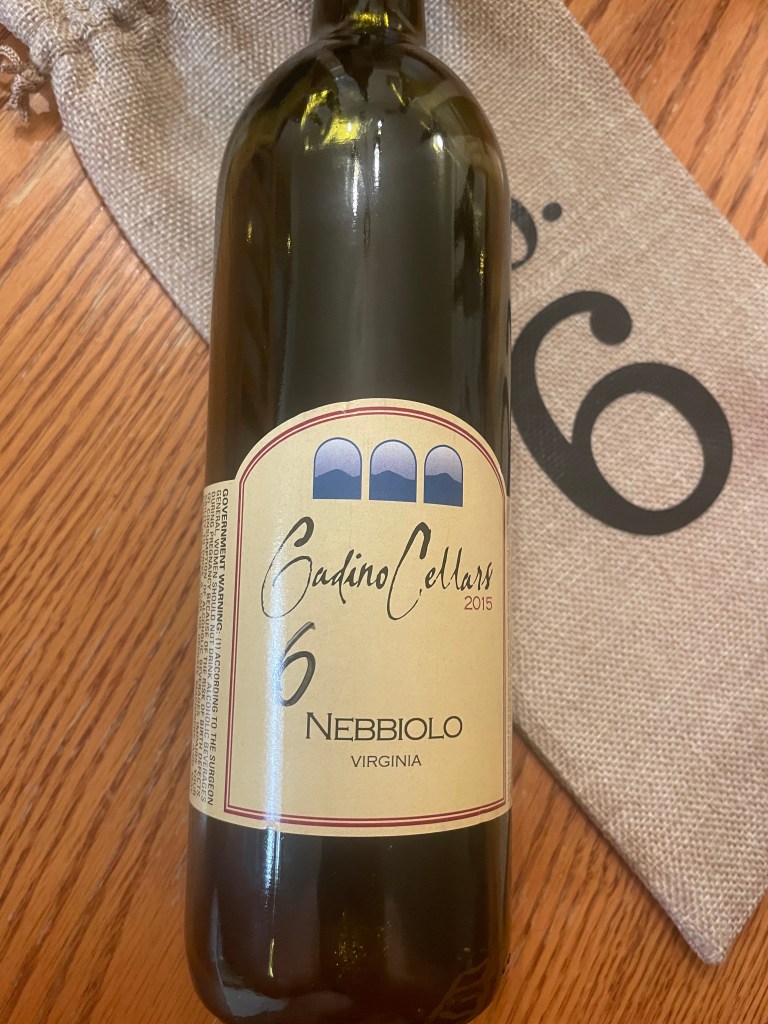
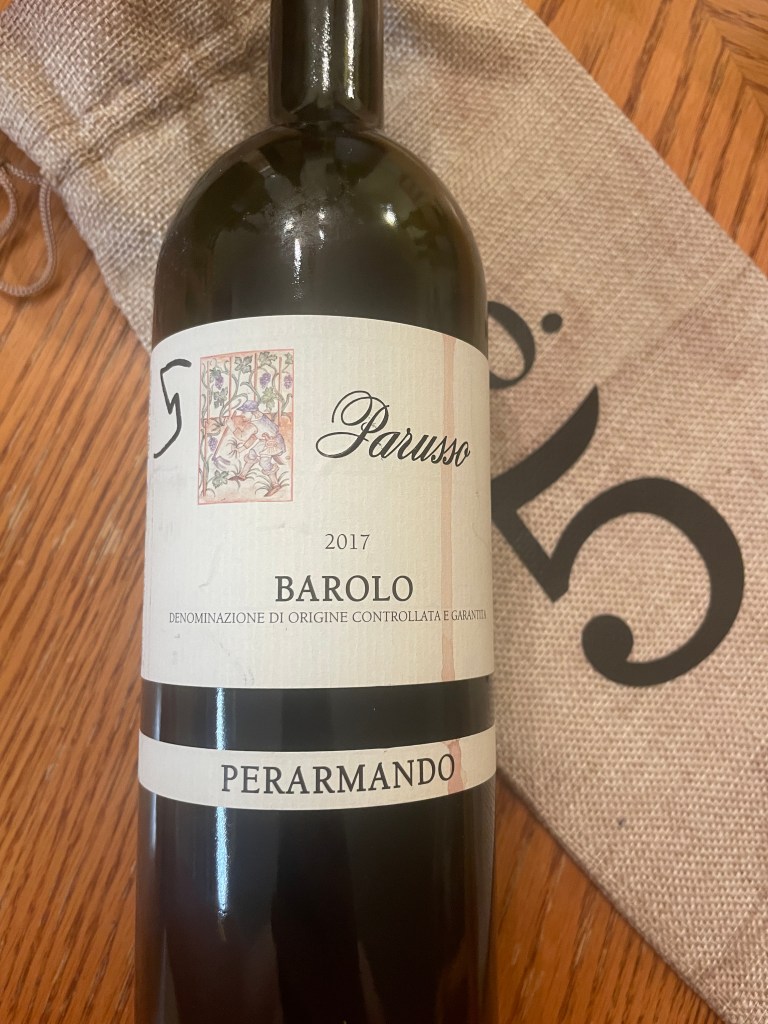
2015 Gadino Cellars ($51 on website) vs 2017 Parusso Barolo Perarmando ($65 Wine.com)
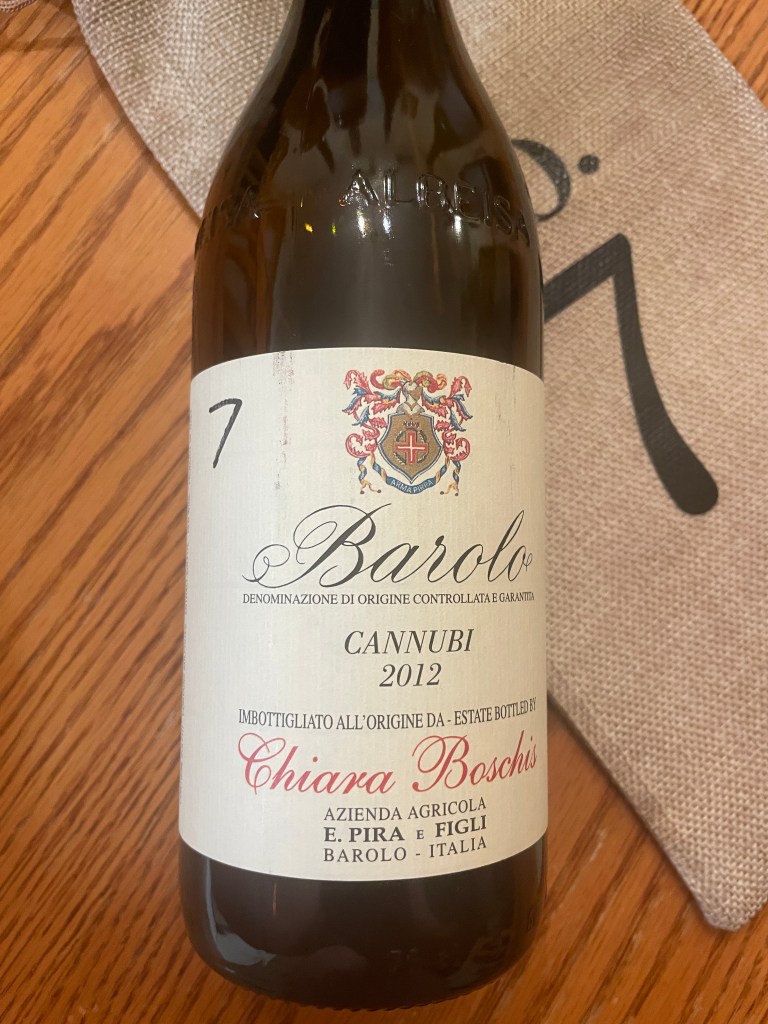
2012 Breaux ($80 on website) vs 2012 E. Pira Chiara Boschis “Cannubi” Barolo ($99.99 on Wine.Com, $84 at a nearby wine store)
Bottle #2: 2020 Nada Giuseppe Barbaresco Casot (3 votes)
This was the closest matchup of the day in terms of votes. We needed to let these wines open up before we could fairly judge them, and the tasters wine went back-and-forth in selecting which was their ‘favorite’.
Eventually, 5 of 7 guests settled on #1 being Virginia, as those subtle pyrazine notes were suggestive of the East Coast. They weren’t prominent by any means, but ‘green’ notes of any type were so uncharacteristic of Nebbiolo that just a hint was enough to identify its origins. This trend continued over the course of the event.
Bottle #1 / 2020 Barboursville Nebbiolo (Virginia). Light but noticeable nose. Lots of pepper notes, with an undertone of pyrazines. Rustic. Complex, with earthy/leathery notes. Dried herbs also came up. Ruby colored.
Bottle #2 / 2020 Nada Giuseppe Casot (Barbaresco). VERY light, almost unnoticeable nose unless you swirled it a lot. Notes of anise was mentioned. “Smooth” tobacco came up. Garnet color.
Alex: Favorite was #1/2020 Barboursville and thought #1 was East Coast (correct). Loved the nose of #1 and thought it was ‘drink now’ while #2 needed more time.
Kathy: Favorite was #2/2020 Nada, and thought #1 was East Coast (correct)
Lindsay: Favorite was #2/2020 Nada, and didn’t guess country of origin.
Matt: Favorite was #1/2020 Barboursville and thought #1 was Italy (inaccurate). I thought #1 had an Old World quality to it while #2 was smoother & easy to drink, hence I thought #1 was Italy while #2 was Virginia.
Ryan: Favorite was #2/2020 Nada, and thought #1 was East Coast (correct)
Sarah: Favorite was #2/2020 Nada and thought #1 was East Coast (correct). Thought #2 had ‘deeper’ fruit.
Vincent: Favorite was #1/2020 Barboursville and thought #1 was East Coast (correct). Thought #1 was more complex.
Bottle #4: 2017 Va La Vineyards ‘Cedar’ (Pennsylvania) (2 votes)
Wine #4/Va La was noticeably different than anything else we had that day. Hard to put my finger on it…maybe it was the filtering (or lack of it)? It was a bigger & bolder wine than we were expecting. Wine #3/Manzone was one of the most ‘varietally correct’ wines of the day.
Bottle #3 / 2017 Manzone Barolo Gramolere. Very balanced and ‘classic’. Notes of dried roses and tar were mentioned, but they weren’t overwhelming. Very tannic. Ruby color.
Bottle #4 / 2017 Va La Vineyards ‘Cedar’. Oh boy, this wine was complex! Punch you in the face ‘big’. Acidic and ‘weird’ but in a good way. Garnet color.
#4 had the oddest descriptor I’ve heard in a long time; “caramel/chocolate/olive oil”.
Alex: Favorite was #3/2017 Manzone and thought #4 was East Coast (correct). Thought #3 was varietally correct while #4 was ‘interesting’.
Kathy: Favorite was #3/2017 Manzone and thought #4 was East Coast (correct)
Lindsay: Favorite was #3/2017 Manzone and didn’t guess the region. Went with #3 because of its balance.
Matt: Favorite was #4/2017 Va La and thought #4 was East Coast (correct). I thought #4 wasn’t varietally-correct but I didn’t care. I was completely fascinated by this wine so picked it as my ‘favorite’, even if arguably #3 was ‘better’.
Ryan: Favorite was #3/2017 Manzone and thought #3 was East Coast (inaccurate)
Sarah: Favorite was #3/2017 Manzone and thought #4 was East Coast (correct)
Vincent: Favorite was #4/2017 Va La and thought #4 was East Coast (correct). Thought the results were very close but leaned towards #4 because he thought it was denser and had more going on.
This round was more of a blowout because #6 veered pretty dramatically away from varietal-correctness, to the point we thought it was almost a California Cab.
I was surprised when I unveiled the bottle and found it to be our 2015 Gadino. I’ve had this bottle before and didn’t remember it diverging from ‘traditional’ Nebbiolo characteristics, so I can’t quite explain it. Maybe the comparison showcased qualities we otherwise would have overlooked? Or was it something in my storage?
Bottle #5 / 2017 Parusso Barolo Perarmando. Light nose, looooong finish. Ripe fruit, with notes of liquorish. Spearmint gum or cedar on the nose, or maybe herbal notes (depending who you asked). Balanced.
Bottle #6 / 2015 Gadino Cellars. A little caramelly, with a tar nose. But we also found notes of toasted vanilla and blackberry. This was the least varietally correct wine of the day.
Votes:
Alex: Favorite #5/Parusso, thought #6 was East Coast (correct).
Kathy: Favorite #5/Parusso, thought #6 was East Coast (correct)
Lindsay: Favorite #5/Parusso, thought #6 was East Coast (correct)
Matt: Favorite #5/Parusso, thought #6 was East Coast (correct)
Ryan: Favorite #5/Parusso, thought #6 was East Coast (correct)
Sarah: Favorite #5/Parusso, thought #6 was East Coast (correct)
Vincent: Favorite #5/Parusso, thought #6 was East Coast (correct)
This was the highlight of our 1 vs 1 comparisons. Our biggest challenge is Wine #7 had a ‘hot’ note caused some initial worry that maybe it was cooked during storage. Fortunately, after a short time that quality blew off and became much more enjoyable.
Bottle #7/ 2012 E. Pira Chiara Boschis “Cannubi” Barolo. Notes of cherry, blackberry, and menthol were mentioned, but stewed fruit, tar, dry cherry, and star anise came up even more. Not a lot of fruit on the palate but there was a tremendous depth of flavor. One person mentioned a note of bell pepper.
FYI – 97 points from James Suckling; 95 points Vinous.
Bottle #8 / 2012 Breaux Nebbiolo. “Light and well balanced” were the key descriptors, but there were a lot of other descriptors to go along with this. It was almost the complete opposite of #7.
Green pepper on the nose (and one person mentioned green pepper on the palate), with maybe a barnyard quality. At least one person said it was jammy on the palate with tighter tannins. Sweet tobacco on the palate was also mentioned. Char notes.
If this is what Virginia Nebbiolo can taste like after 12 years…sign me up! Very impressive.
Votes:
Alex: Favorite was #7/E. Pira Chiara, thought #8 was East Coast (correct). Went with the depth of flavor with #7.
Kathy: Favorite was #7/E. Pira Chiara, thought #8 was East Coast (correct). Thought this was the closest flight of the day.
Lindsay: Favorite was #8/Breaux, thought #8 was East Coast (correct)
Matt: Favorite was #7/E. Pira Chiara, didn’t guess the geographic region
Ryan: Favorite was #7/E. Pira Chiara, thought #7 was East Coast (inaccurate). Liked the nose of #7 but palate of #8.
Sarah: Favorite was #7/E. Pira Chiara, thought #8 was East Coast (correct). Detected some pyrazines on #8 but overall a good wine.
Vincent: Favorite was #8/Breaux thought #8 was East Coast (correct)
Finalist Round:
Bottle #3: 2017 Barolo Gramolere (Event Winner)
Bottle #5: 2017 Parusso Barolo Perarmando
Bottle #7: 2012 E. Piara Chiara Boschis (Runner Up)
We voted and collectively came up with our 3 ‘finalists’, based on the previous round winners. That said, it was a shame we didn’t include wine #8/Breaux Vineyards as one of the finalists, because it deserved to be there.
I didn’t take extensive tasting notes this round. In the end, #3/Barolo Gramolere was by far the consensus favorite of the day. It was nearly a toss-up between the next two for runner-up, but the #7/2012 Chiara came 2nd by a small margin.
Votes:
Alex: 5/3/7
Kathy: 5/3/7. #5 was ‘talking to me’
Lindsay: 3/7/5. #3 was balanced and classic
Matt: 3/7/5. Loved the nose and the rusticity of #3’s palate
Ryan: 3/7/5
Sarah: 7/3/5. Thought there was a lot going on with #7, and it was still getting better over time, while #3 had already peaked
Vincent: (absent)
Lessons Learned:
First off, I want to say that I’m really proud how Team Virginia (with an assist from Pennsylvania’s Va La Vineyards) showed here. While none made it to the final round (although we agreed the 2012 Breaux should have), the East Coast contenders brought their A-game.
But as good as they were, these East Coast wines went up against exceptional producers from one of the most highly regarded wine regions in the entire world. This tasting was the equivalent of a World Cup soccer match between Team America and Team Italy. While the US has some great players…come on…it’s ITALY we’re dealing with.
That said, the results were far closer than I could have expected. We uniformly enjoyed the East Coast wines, especially the ones from Barboursville and Breaux.
Two main lessons learned:
Point #1: Age matters – and the East Coast Nebbiolos showed they could do that. There were many compliments about how that 2012 Breaux was able to last 12 years. Having had older Barboursville vintages I could say the same for them as well.
Point #2: East Coast Nebbiolos (at least in this round) were rarely ‘varietally correct’. Out of the 7 of us, we almost always guessed the correct region for each of the 4 rounds. I’m convinced while the East Coast wines were consistently good, being ‘different’ lost them some points.
What made the East Coast wines easily-identifiable were the light pyrazine and overall earthy notes, which were suggestive of their non-Italian origin.
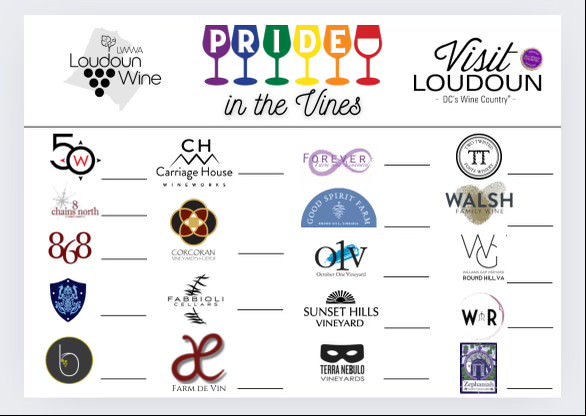
Starting June 1st, fifteen participating Loudoun County wineries are celebrating Pride Month with a special month-long wine trail. Passport holders for “Pride in the Vines” who obtain ten different stamps will be eligible to win a prize drawing which includes private wine tastings, bottles of wine, gear, tickets to events, and tours of the vineyards and wineries.
Pride Month has its roots in the Stonewall riots, which started on June 28, 1969. Coincidentally, Pride in the Vines celebrates a movement that was galvanized at a drinking establishment.
Located in New York’s Greenwich Village, the Stonewall Inn was one of the few local bars that catered to an openly gay clientele despite state laws which made it risky for them to show affection in public. The Stonewall was run by the Mafia, who saw gay bars as a good business opportunity. Police raids against such establishments were common but corrupt officers would typically tip the managers off in advance, allowing business to continue with limited interruptions.
This time was different. Not only was the raid unannounced (possibly due to the police not getting sufficient kickbacks), the patrol wagon responsible for picking up arrested patrons took longer than usual to respond. The gathering crowd became increasingly agitated as they watched the police manhandle those they detained, including those arrested for violating the state’s gender-appropriate clothing statute.
The final trigger was a scuffle between a lesbian woman who was roughly escorted to the awaiting wagon. She fought back, calling on the crowd for support.
The resulting riots (Stonewall veterans prefer the term ‘uprising’) continued for several days. It was a turning point in the gay rights movement, leading to the formation of several new LGBT advocacy groups. The first gay pride parades were held on the 1st anniversary of the riots.
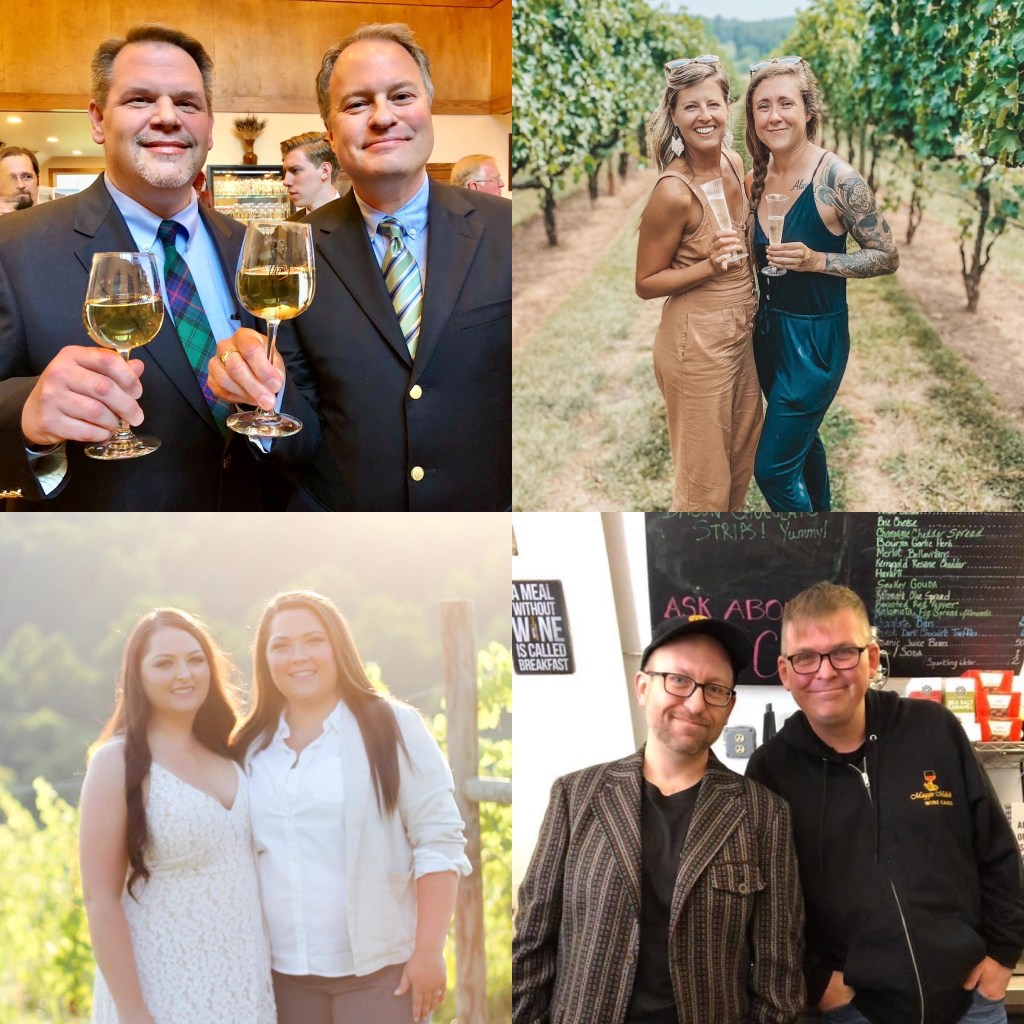
Bottom left: Sydney and Bridgette Smith, Williams Gap and Greenhill wineries
Bottom right: Brian Pace and Chris Sexton, Maggie Malick Wine Caves
How Loudoun’s First Pride Wine Trail Started
The idea behind Pride in the Vines in Loudoun County blossomed with Two Twisted Posts Winery, which has hosted gay pride events since opening in 2014. For the family that owns it, namely Krista Cato, her partner Lynda Dattilo and fellow owners and parents, Theresa and Brad Robertson, the topic is a personal one.
“We wanted to create a safe space for people to gather regardless of their orientation or race,” explained Krista. “From Day 1, we hung a Pride flag. It wasn’t always a smooth journey and we received some hate.
My family decided to host an event to celebrate National Coming Out Day (October 11). We thought about celebrating Pride, but Pride is already a big event in D.C. and we didn’t want to overlap with another important celebration.
We advertised it in a local paper, and they came back to us and asked, ‘Do you really want to publish this?’ And we replied; ‘yes we do!’
So we posted the ad and put out flyers in local businesses. We found a lot of them were afraid to post them out of fear of creating animosity with their customers. But a few did.
Simple things like getting a food truck was difficult. The first two canceled but eventually we found one that would support us.
When the day came, Two Twisted Posts had over 200 people come out from all walks of life. Since it was so well received, we couldn’t imagine not continuing annually.”
More Wineries Involved Than Ever Before
Over time, more wineries joined Two Twisted Posts in celebrating gay pride events. In 2019, Bob and Teri Riggs of nearby Forever Farm Vineyard noticed the Pride flag and asked what they could do to get involved. They were soon joined by Williams Gap Vineyard.
The issue hit home for Bob and Teri, whose son is gay. Teri explained, “My participation is to get families involved. We’re all in it together.”
This trio of wineries hosted an informal Pride trail for several years. But as the world around them became more accepting, the idea of a larger wine trail took shape.
“One of the things we’re learning in this journey is there are other people out there who hear them and see them,” said Bridgette Smith, tasting room manager at Williams Gap Vineyard. “So when I brought it up at the Loudoun Wineries and Winegrowers Association (LWWA) I was surprised how many wineries wanted to participate. I think there are more people out there who are willing to speak out loud to support their neighbors than we realize.”
Krista added, “The support is like 300 times more than when we opened. In the beginning, I don’t remember seeing a Pride flag anywhere. When we started hosting events for National Coming Out Day, we were so focused on the event, we didn’t reach out to anybody.
With the partnership of Forever Farm Vineyard, Williams Gap Vineyard and now so many others, it’s safe to say this year’s Pride in the Vines Wine trail is indicative of the changes that have happened in Loudoun.”
Guests can acquire a passport at any of these participating wineries. For more announcements, see the LWWA webpage at https://www.loudounwine.org/new-events.
This event was three years in the making. Petit Verdot has long been one of my favorite grape varieties, so serving PV in a blind tasting was a no brainer.
Each of these blind tastings produced three top contenders. I did my best to collect those specific vintages, or at least the closest I could find. Thanks to the generosity of several wineries who opened up their wine libraries, I was able to collect 7 of the 9 of these top-scoring wines.
There were two exceptions. I wasn’t able to get a 2017 Cave Ridge Petit Verdot. But since I had a 2019 Cave Ridge PV, I figured that’s close enough.
Neither was I wasn’t able to get a bottle of a 2018 True Heritage Petit Verdot (used in my second event). But I did get the next best thing; a 2020 Petit Verdot from Southwest Mountains Vineyards, which is actually from the same vineyard (Castalia Farm) and winemaker (Emily Pelton).
Tasting & Scoring Methodology
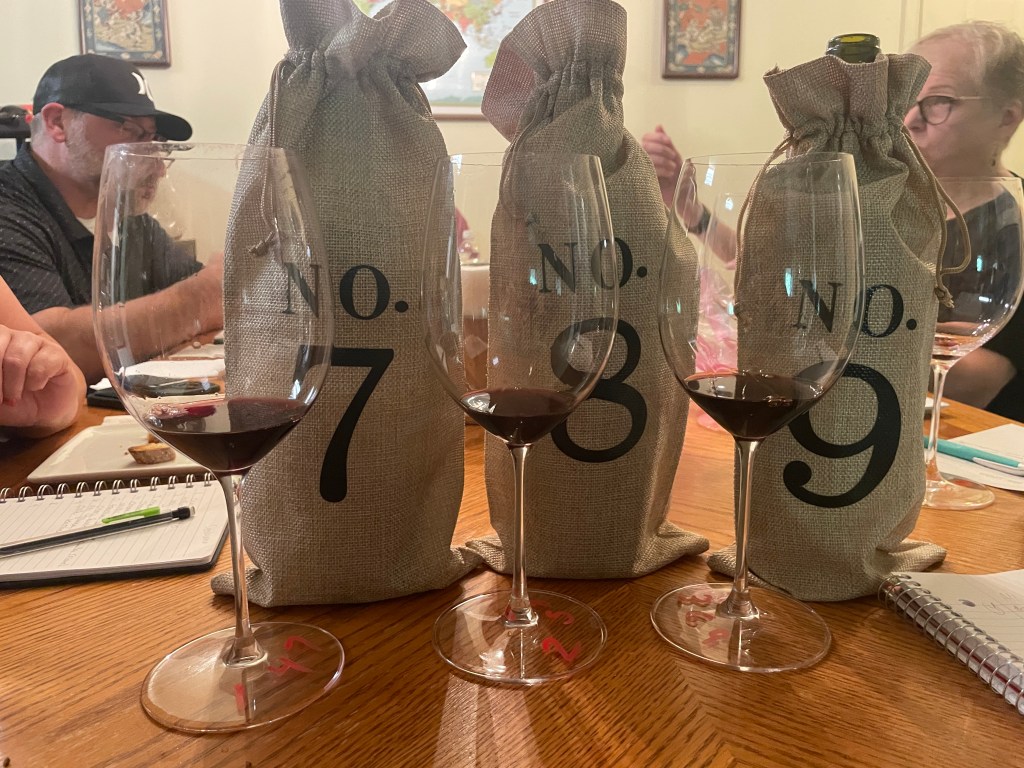
A group of friends & I blind tasted 9 wines in 3 flights. All the flights were bagged blind.
We didn’t have a sophisticated scoring system. The goal was to pick a ‘favorite’ in every flight, as opposed to rating them and determining which one we thought was the ‘best’.
The favorite of every flight went to a ‘finalist’ round. I took the extra step of hiding the ‘finalists’ with a second bag, so any biases of an earlier tasting hopefully didn’t carry over to the final round.
After finishing the final round, we unveiled all the wines and crowned the overall favorite of the day.
This group was composed of Virginia wine aficionados, so all were very familiar with Petit Verdot.
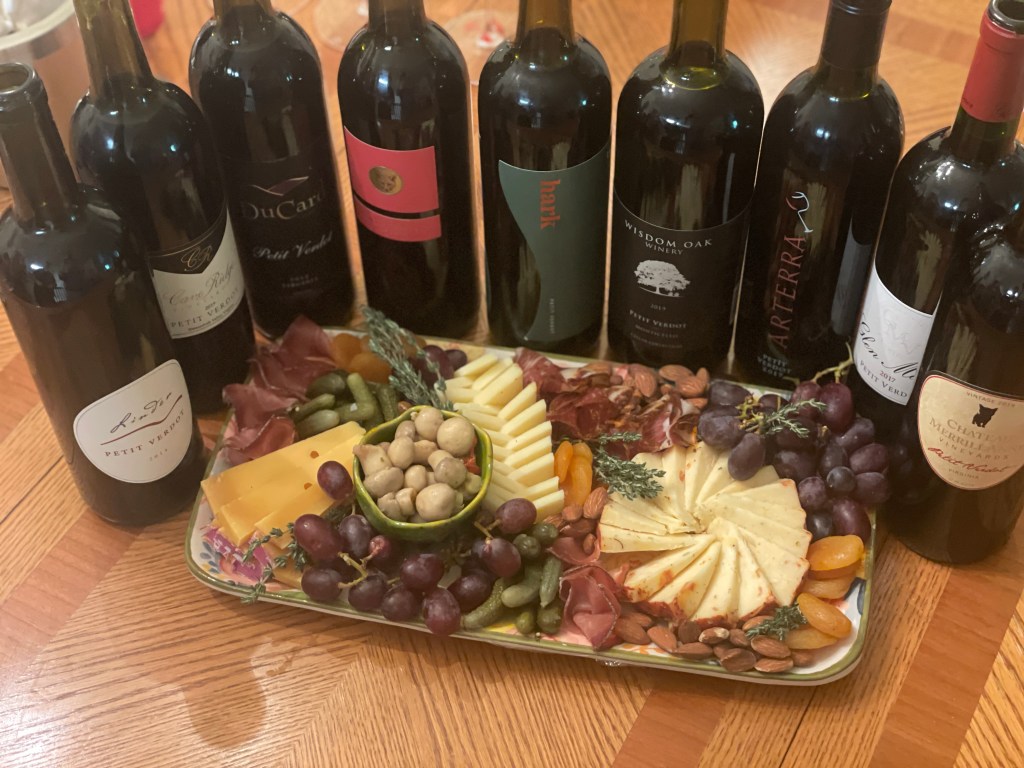
The contenders:
2019 Wisdom Oak Winery
2017 Glen Manor Vineyards
2017 Arterra Wines
2017 Hark Vineyards
2020 Southwest Mountains Vineyards
2019 Chateau MerrillAnne
2019 Cave Ridge Vineyard
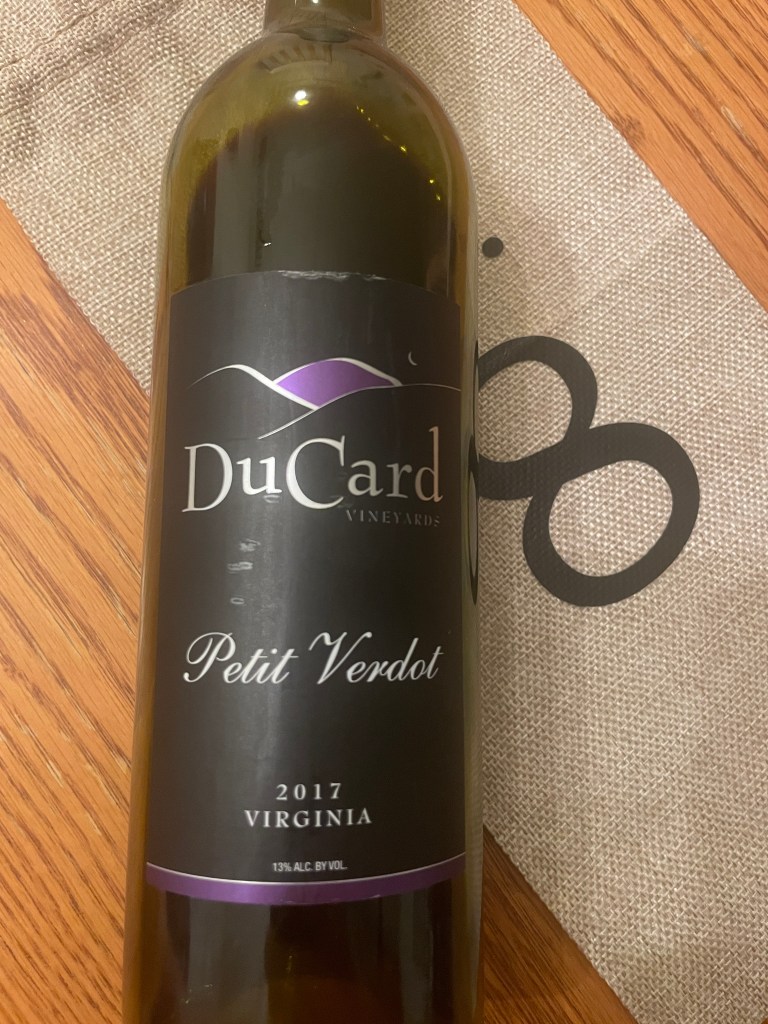
2017 DuCard Vineyards
2014 Linden Vineyards
We also kicked things off with a pet-nat Petit Verdot from Early Mountain Vineyard.
Flight #1:
Bottle #1: 2019 Wisdom Oak (round winner)
Bottle #2: 2017 Glen Manor
Bottle #3: 2017 Arterra Wines
Bottle #1 / 2019 Wisdom Oak. This was the fruitiest wine of the flight (and turned out, of the event). Very nice aroma which reminded us of “sweet cherries and brandy”; at least one person mentioned they found some coconut as well. Notes of stewed strawberry, plumb, and maybe some vanilla on the palate, followed by some barrel notes.
Bottle #2 / 2017 Glen Manor. Soft, aromatic nose, with notes of barnyard and black cherry. Someone mentioned ‘forest floor’ as well. Black plumb or more general ‘dark fruit’ on the palate. A few detected a ‘hot note’ of higher alcohol (which turned out to be true; at 14.7% it was the highest-alcohol wine of the day).
Bottle #3 / 2017 Arterra Wines. Rustic nose. Tart cherry on the palate. Notes of leather. Someone mentioned ‘meaty’ notes, which I would agree with. It was pretty easy to tell this was a natural ferment, since everything just seemed ‘different’. In retrospect I probably should have opened it up much earlier, since wines from Arterra need extra time to open up.
Votes: When it came time to pick a favorite, this was probably the first time I’ve had 100% of my attendees vote the exact same way, for the exact reasons. All seven of us gravitated towards Wine #1/Wisdom Oak very quickly.
That said, I wish I had more time with this round. #2/Glen Manor was just hitting its stride as I took votes, and some guests seemed conflicted if they should stick with their original vote or change it.
Arterra likewise need time to open up, since their wine isn’t designed to be ‘showy’. I had a glass the next day and it definitely smoothed out.
Alex: 1/2/3. Thought #1 had the best nose and best balance
Allison: 1/2/3.
Dave: 1/2/3. Liked #1 from start to finish.
Kathy: 1/2/3.
Matt: 1/2/3.
Stephanie: 1/2/3.
Vicki: 1/2/3. Liked the fruit-forward nature of the wine.
This was probably the most difficult round to pick a favorite as we really, really enjoyed them all. All of these wines were also very aromatic, which was unusual for Petit Verdot.
Bottle #4 / 2017 Hark Vineyards. I was immediately taken by the very plush, almost ‘juicy’ aroma. Others mentioned the nose had notes of purple flower, graphite, forest floor, or grassy. Very dark in color.
The palate had dark fruit and rougher & aggressive tannins. Someone mentioned they found a ‘metallic’ note, but didn’t mean to use that as a negative.
Bottle #5 / 2020 Southwest Mountains Vineyards. Long, juicy finish. Bright, lightly colored, “sweet” nose; it almost reminded me of a Nebbiolo. The palate was on the lighter side, with a sweet barrel note to it.
I later learned this had 20% Merlot, so the softness made a lot of sense.
Bottle #6 / 2019 Chateau MerrillAnne. Soft aromatics; maybe notes of caramel? Not a lot of fruit on the palate; someone mentioned they felt the barrel was overpowering it. My favorite descriptor was ‘cherry cordial”, which several agreed with.
Votes: We gravitated towards SWM Vineyards, but really liked all of these wines. I suspect the softness of the SWM was a huge attraction.
Alex: 5/6/4.
Allison: 5/6/4.
Dave: 5/6/4.
Kathy: 5/4/6. Voted #5 for the ‘juicy-fruit’ quality of it, but also liked the cherry/tannin combo of #4.
Matt: 5/4/6.
Stephanie: 5/6/4. Toss-up between 4 & 6, but liked #5 all the way through, from nose to finish.
Vicki: 5/6/4. Voted for #5 because of the cherry/vanilla qualities. Thought #4 was too acidic.
Flight #3:
Bottle #7: 2019 Cave Ridge Vineyard
Bottle #8: 2017 DuCard Vineyards
Bottle #9: 2014 Linden Vineyards
This was our tannic, heavier-alcohol, ‘food wine’ round. We started to heavily snack during this round and anything with fattiness greatly improved nearly all of these wines.
It really came down to a narrow finish between #8 and #9.
Bottle #7 / 2019 Cave Ridge Vineyard. Lots of different notes on this one. I found blueberry on the nose (and palate), while others said it was more toasty, maybe toffee.
Descriptors on the palate varied greatly. Some mentioned raspberry/cherry, others mentioned dark chocolate; even bitter chocolate (I suspect those were the tannins talking to me).
Bottle #8 / 2017 DuCard Vineyards: Caramel nose. Palate descriptors ranged from dark chocolate to caramel to sweet fruit. The fruit was most prominent on the finish.
Bottle #9 / 2014 Linden Vineyards: Stewed red berries and tart on the palate, with a sweet cherry finish. The nose wasn’t well received; the higher alcohol was a turn-off (it was actually slightly less alcoholic than other bottles but didn’t wear that alcohol as well).
Many mentioned they wished the nose was as good as the palate, although the nose seemed to lighten up the longer the tasting went on. That helped greatly, which swayed some votes from #8 towards #9. This was actually 88% PV, with 8% Cab Sauv and 4% Carmenere’.
Votes:
Alex: 8/7/9. The nose of #8 was well integrated, while #7 and #9 had more alcohol.
Allison: 8/7/9
Dave: 9/8/7. Thought #9 had a little more complexity than the others.
Kathy: 9/8/7
Matt: 9/8/7. Thought #9 opened up enough to put it ahead.
Stephanie: 9/8/7. Also liked #9 more as it opened up.
Vicki: 8/7/9. Also agreed with Alex; thought #8 was well integrated.
Finalist Round:
Bottle #1: 2019 Wisdom Oak Winery (Event Winner)
Bottle #5: 2020 Southwest Mountains Vineyards
Bottle #9: 2014 Linden Vineyards (Runner Up)
I didn’t take extensive tasting notes this round. Neither did I bother re-bagging them. These wines were so memorable, a new bag wouldn’t have done anything.
All of us were really struck by the fruitiness of wine #1 (Wisdom Oak). That fruitiness really stood out, especially compared to some of these tannic heavy-hitters.
We loved it so much that when I did the vote tally, 6 out of 7 participants decreed the 2019 Wisdom Oak Petit Verdot was the best wine of the event. It was just really well balanced, with a strong fruit quality that really put it over the top.
I contacted owner/winemaker Jason Lavallee for details on this wine (PS – except for some library bottles, it’s sold out) and he explained his opinion where those fruit notes came from.
According to Jason, the particular barrels he used were actually designed for white wine, specifically for those whites to showcase more fruit qualities. Surprisingly this only got a Silver at the Monticello Cup; maybe it just wasn’t ready yet? Well, it’s ready now!
Votes:
Alex: 1/5/9
Allison: 1/5/9
Dave: 1/5/9
Kathy: 1/9/5
Matt: 9/5/1
Stephanie: 1/9/5
Vicki: 1/5/9
Lessons Learned:
This was a tough one to judge. I don’t really have any ‘lessons learned’, but do have a few observations. I just wish I knew how to best enact them.
First, many of these wines presented very differently than other bottles of the SAME VINTAGE did even a few months back. I can’t explain why they tasted so differently.
Second, nearly all these bottles could have greatly benefited from decanting. I thought about that in advance and opened them up around noon (we started tasting around 3 PM), even sampling them to ensure more air entered the bottle (you know…quality control…). But that limited amount of air wasn’t nearly enough. I think we would have enjoyed them much more if I had given them a full decanting.
Third, I understand what people say about “Petit Verdot overload”. By that third round my mouth was drying out. I also suspect that it wasn’t a coincidence that the 2 of the 3 top bottles had 12-20% of another grape blended in to smooth the tannic nature of PV down.
I’m undecided if serving food with these wines would have helped. Granted, that would have been unfair since a wine should be judged on its own, not on the quality of the pairing. But this entire event really did cry out for more food. Something to keep in mind in the future.






















 Wine Trails and Wanderlust