
When oenophiles think of events that changed the course of the American wine industry, they’ll likely mention the 1976 “Judgement of Paris.” During that event, a group of French wine judges blind tasted a lineup of American and French chardonnays and red blends, and ranked a pair of Napa wines as the best in both categories.
While not as famous, the Virginia wine industry has made its own contributions to the modern wine industry. Here are a few pieces of Virginia wine trivia that everyone should know.
The Carter Family – Colonial America’s First Internationally Recognized Winemakers
Thomas Jefferson is America’s most famous oenophile, yet he never made his own wine. While he believed America had great potential as a wine region and spent decades trying to grow European grapes, Jefferson’s experiments were constantly thwarted by pests and weather.
Few realize that almost 20 years prior to his viticultural trials at Monticello, the Carter family succeeded where even Jefferson failed.
The Carters were one of the “First Families of Virginia,” a group of early settlers who rose to social and political prominence. Looking to diversify their crops away from tobacco, Virginia farmers were encouraged to plant vines.
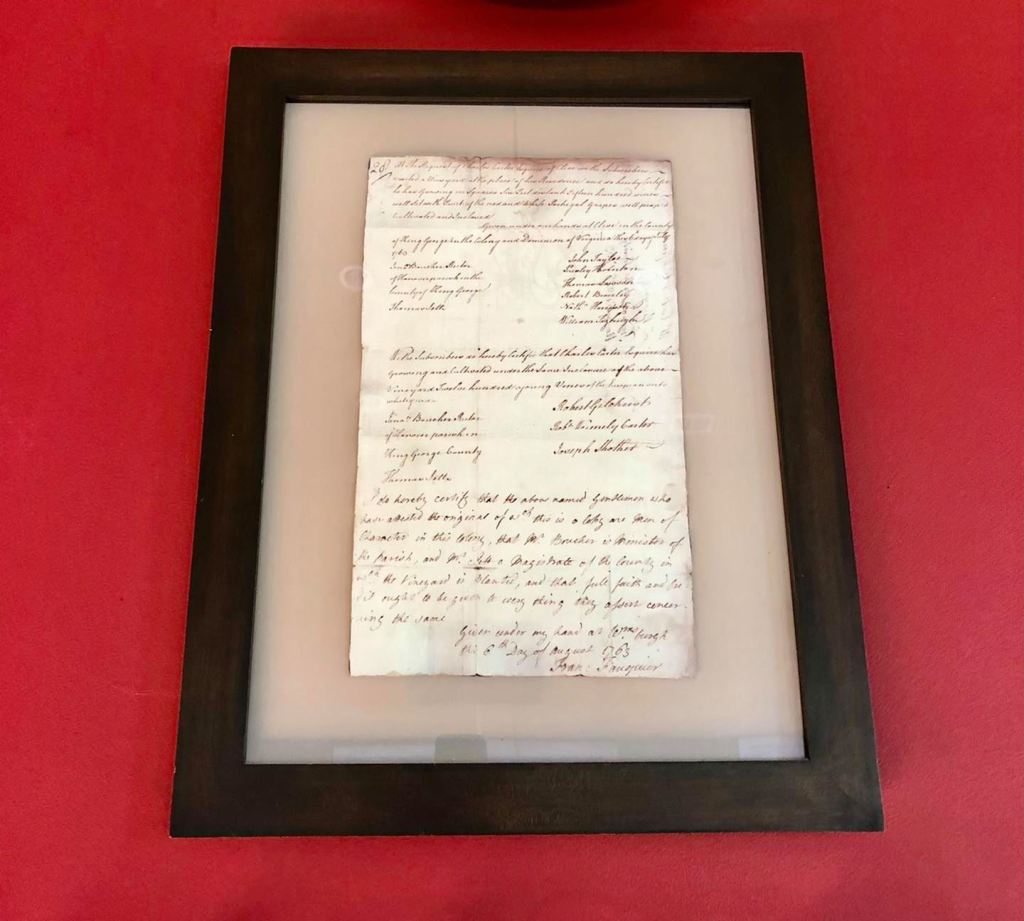
In 1762, Charles Carter sent a dozen bottles of wine produced at his plantation of Cleve (located in today’s King George County) to London’s Royal Society of Arts. The exact grapes he used is unknown, although they likely came from a mix of domestic and European vines.
Impressed with what they sampled, the Society awarded him a gold medal for his “spirited attempt towards the accomplishment of their views, respecting wine in America.” A year later, the Royal Governor of Virginia certified that the Carter family successfully grew European grapes.
The Carter family’s vines were short-lived, likely the victim of the same issues that beset Jefferson. Nevertheless, the Carters were the first successful winegrowers in Virginia (if only for a few years), and possibly all Colonial America.
The Story of Woburn Winery, America’s First Black Owned and Operated Winery
The American wine industry is notorious for its lack of diversity. According to a 2019 survey of 3,100 wine industry professionals by SevenFifty Daily, only 2% of participants identified as Black.
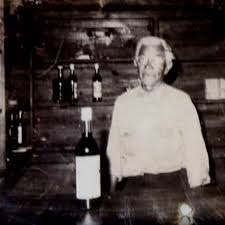
John June Lewis, Sr (1894–1974) was one of the pioneers of this movement, a Black man born from a former slave owner and Confederate veteran.
Born in Mecklenburg County, Lewis is listed in the 1910 United States Federal Census as a mulatto servant of Armistead Burwell. John’s son John June “Duckie” Lewis, Jr. previously indicated Burwell was also Lewis Sr’s father, and census records further link the Burwell and Lewis families.
Burwell taught the older Lewis winemaking when Lewis was a child, though it wasn’t until Lewis Sr. was stationed in Europe with the US Army during the aftermath of WW I that he discovered a passion for wine. He would later inherit the former Burwell farm and planted 10 acres of vines there following the repeal of Prohibition.
This land became known as Woburn Winery, widely regarded as America’s first Black-owned and operated winery. Woburn made wine from native and hybrid grapes for 30 years and closed shortly after Lewis Sr.’s death in 1974.
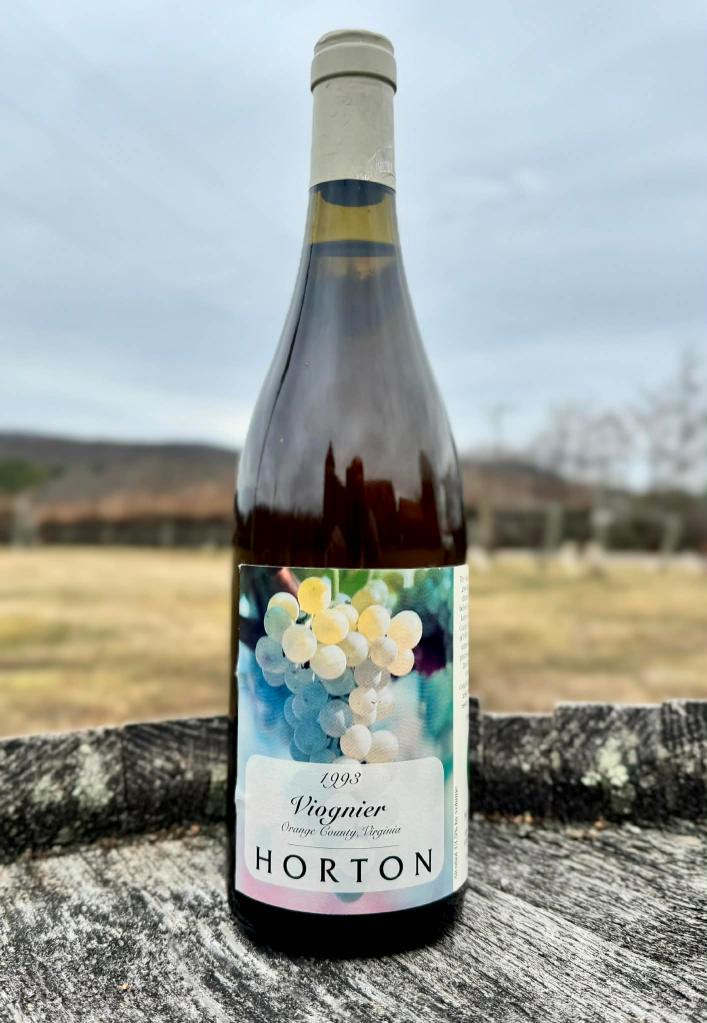
Horton Vineyards’ 1993 Viognier – The Wine That Helped Put Virginia On The Wine Map
The 1990s were a time of experimentation for the Virginia wine industry. Vineyards were finally reappearing after a long prohibition-induced absence, and information on how to grow vinifera (European-based grapes) in Virginia’s humid weather was scarce.
Few vineyards embraced this spirit of experimentation as passionately as Dennis Horton. According to Horton Vineyards winemaker (and Dennis’s granddaughter) Caitlin Horton, “My grandfather really didn’t like chardonnay. He wanted a white that he could pair with heavier food. While traveling in France he found viognier in the Rhône valley and fell in love with it. So he planted 14 acres off the bat – didn’t even do a test planting. People thought he was crazy.”
At the time, viognier was essentially dying out. When Jancis Robinson wrote Vines, Grapes & Wine in 1985 she could only identify records for 80 acres planted in the entire world, most of it in viognier’s home of Condrieu.
Dennis’s intuition paid off. Horton’s 1993 Viognier won first place at a California wine competition, providing Virginia some of its earliest national recognition as a wine region. The Napa-based French Laundry (one of the most esteemed restaurants in the United States) took notice, and selected it as the first Virginia wine to have a place on their wine list.
Horton’s success not only gave a publicity boost to the nascent Virginia wine industry, it was also instrumental in saving this grape, which now has around 40,000 acres worldwide.
 Wine Trails and Wanderlust